

A comprehensive method for amplicon-based and metagenomic characterization of viruses, bacteria, and eukaryotes in freshwater samples
Open accessThe DOI matches its Crossref record; 143 of the 144 references it cites were found in a registry or an index.
Abstract
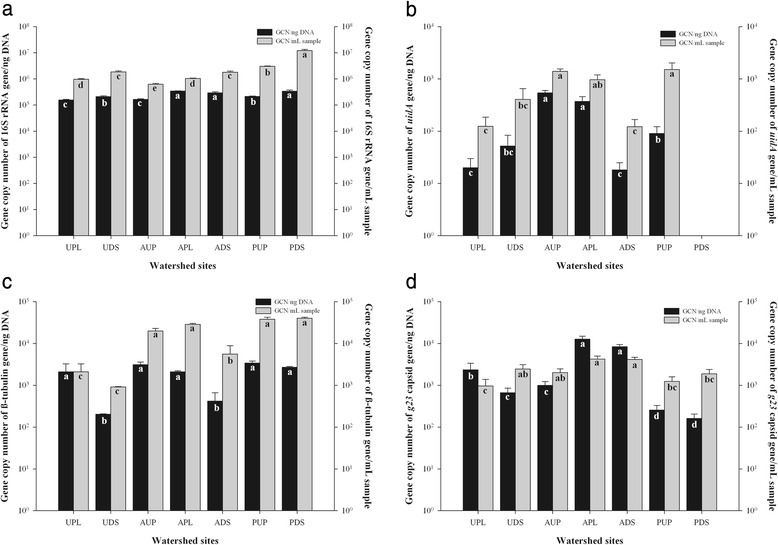
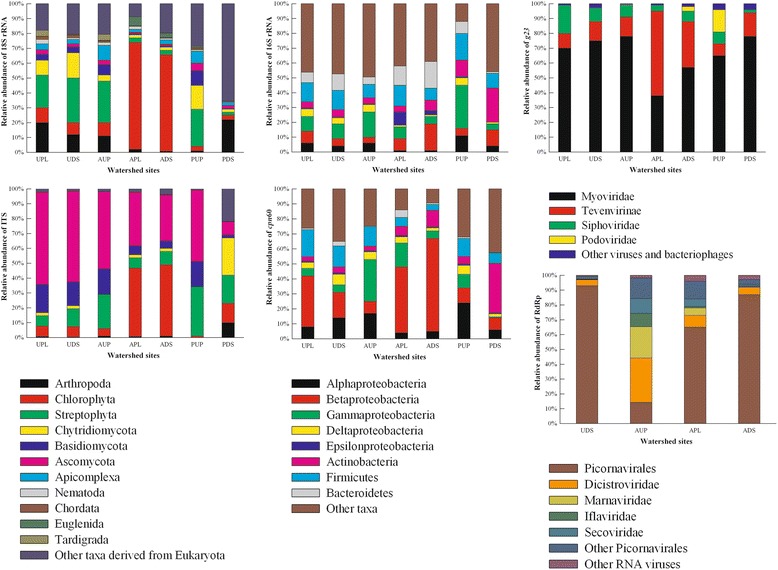
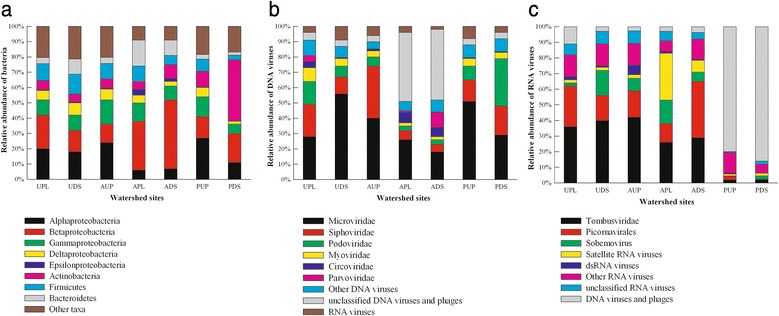
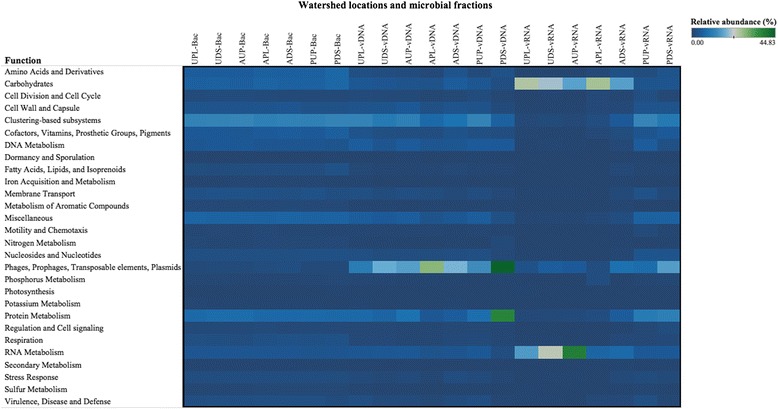
BACKGROUND: Studies of environmental microbiota typically target only specific groups of microorganisms, with most focusing on bacteria through taxonomic classification of 16S rRNA gene sequences. For a more holistic understanding of a microbiome, a strategy to characterize the viral, bacterial, and eukaryotic components is necessary. RESULTS: We developed a method for metagenomic and amplicon-based analysis of freshwater samples involving the concentration and size-based separation of eukaryotic, bacterial, and viral fractions. Next-generation sequencing and culture-independent approaches were used to describe and quantify microbial communities in watersheds with different land use in British Columbia. Deep amplicon sequencing was used to investigate the distribution of certain viruses (g23 and RdRp), bacteria (16S rRNA and cpn60), and eukaryotes (18S rRNA and ITS). Metagenomic sequencing was used to further characterize the gene content of the bacterial and viral fractions at both taxonomic and functional levels. CONCLUSION: This study provides a systematic approach to separate and characterize eukaryotic-, bacterial-, and viral-sized particles. Methodologies described in this research have been applied in temporal and spatial studies to study the impact of land use on watershed microbiomes in British Columbia.
Overview
The claims and statistics of this paper haven’t been checked yet.
Free: it reads the open-access text and checks the first 5 claims that cite a source we can check. Create a free account to check every claim.
Integrity signals
Registry
Cites
Statistics
Figures
Verification
Claims the paper makes
The claims and statistics of this paper haven’t been checked yet.
Free: it reads the open-access text and checks the first 5 claims that cite a source we can check. Create a free account to check every claim.
Claims other papers make about this one
Each is checked against this paper’s own text: does it say what the citing paper says it does?
The check wasn’t confident either way, so it gives no verdict — never disputed.
In the citing paper
“Microalgae such as Chlorella, Chlamydomonas, or Scenedesmus can accumulate high carbohydrate content of about 12–32% on a dry biomass basis (Uyaguari-Diaz et al. 2016; Mayers et al. 2018).”
From Production of microalgae with high lipid content and their potential as sources of nutraceuticals (2023) · cites this paper as Uyaguari-Diaz et al. 2016
Experimental — accuracy not yet measured
Self-check
Percentages, sums and reported differences re-computed from the paper’s own numbers.
The self-check needs the paper’s full text.
Citations
Cites
Standard methods: For the examination of water and waste water
(1990) · Analytical Biochemistry · doi:10.1016/0003-2697(90)90598-4 · Cited by 72,091
Trimmomatic: a flexible trimmer for Illumina sequence data
Bolger, A. M., Lohse, M., & Usadel, B. (2014) · Bioinformatics · doi:10.1093/bioinformatics/btu170 · Cited by 65,548 · cited 1×
“32 [51].”
Amplification and direct sequencing of fungal ribosomal RNA genes for phylogenetics
White, T. J., Bruns, T., Lee, S., & Taylor, J. (1990) · PCR Protocols · doi:10.1016/b978-0-12-372180-8.50042-1 · Cited by 36,648
QIIME allows analysis of high-throughput community sequencing data
Caporaso, J. G., Kuczynski, J., Stombaugh, J., Bittinger, K., Bushman, F. D., Costello, E. K., Fierer, N., Peña, A. G., Goodrich, J. K., Gordon, J. I., et al. (2010) · Nature Methods · doi:10.1038/nmeth.f.303 · Cited by 34,887 · cited 2×
“Caporaso JG, Kuczynski J, Stombaugh J, Bittinger K, Bushman FD, Costello EK, et al. QIIME allows analysis of high-throughput community sequencing data.”
MethodCutadapt removes adapter sequences from high-throughput sequencing reads
Martin, M. (2011) · EMBnet.journal · doi:10.14806/ej.17.1.200 · Cited by 33,889
A modified single solution method for the determination of phosphate in natural waters
Murphy, J., & Riley, J. P. (1962) · Analytica Chimica Acta · doi:10.1016/s0003-2670(00)88444-5 · Cited by 21,093 · cited 3×
“Additionally, nutrients (orthophosphates, nitrites, and nitrates) were analyzed following methods described by Murphy and Riley [30] and Wood et al. [31], respectively.”
MethodInfluentialMuyzer, G., de Waal, E. C., & Uitterlinden, A. G. (1993) · Applied and Environmental Microbiology · doi:10.1128/aem.59.3.695-700.1993 · Cited by 11,429 · cited 1×
“[44, 45]”
Global patterns of 16S rRNA diversity at a depth of millions of sequences per sample
Caporaso, J. G., Lauber, C. L., Walters, W. A., Berg-Lyons, D., Lozupone, C. A., Turnbaugh, P. J., Fierer, N., & Knight, R. (2011) · Proceedings of the National Academy of Sciences · doi:10.1073/pnas.1000080107 · Cited by 9,711 · cited 1×
“[44, 45]”
Global threats to human water security and river biodiversity
Vörösmarty, C. J., McIntyre, P. B., Gessner, M. O., Dudgeon, D., Prusevich, A., Green, P., Glidden, S., Bunn, S. E., Sullivan, C. A., Liermann, C. R., et al. (2010) · Nature · doi:10.1038/nature09440 · Cited by 7,582 · cited 1×
“While water is a renewable resource, an expanding population and increased land use create stress on the aquatic environment and threats to water quality [1–3].”
BackgroundMeyer, F., Paarmann, D., D'Souza, M., Olson, R., Glass, E., Kubal, M., Paczian, T., Rodriguez, A., Stevens, R., Wilke, A., et al. (2008) · BMC Bioinformatics · doi:10.1186/1471-2105-9-386 · Cited by 3,565 · cited 5×
“Forward reads of amplicon and viral libraries were uploaded to the Metagenomic Rapid Annotations using Subsystems Technology (MG-RAST) [52] and Metavir [53], respectively.”
MethodInfluential
Research works printed but not linked: 1
- Vaulot D CYTOPC: processing software for flow cytometric data Signal Noise 1989 2 8
Cited by
Karst, S. M., Ziels, R. M., Kirkegaard, R. H., Sørensen, E. A., McDonald, D., Zhu, Q., Knight, R., & Albertsen, M. (2021) · Nature Methods · doi:10.1038/s41592-020-01041-y · Cited by 423
“igh-throughput amplicon sequencing is a ubiquitous method for studying genetics with low-abundance variants or high heterogeneity, including cancer driver genes 1–3 , viral 4–6 and microbial communities 7 .”
MethodProduction of microalgae with high lipid content and their potential as sources of nutraceuticals
Udayan, A., Pandey, A. K., Sirohi, R., Sreekumar, N., Sang, B.-I., Sim, S. J., Kim, S. H., & Pandey, A. (2023) · Phytochemistry Reviews · doi:10.1007/s11101-021-09784-y · Cited by 302
“Microalgae such as Chlorella, Chlamydomonas, or Scenedesmus can accumulate high carbohydrate content of about 12–32% on a dry biomass basis (Uyaguari-Diaz et al. 2016; Mayers et al. 2018).”
BackgroundExpanding Ecological Assessment by Integrating Microorganisms into Routine Freshwater Biomonitoring
Sagova-Mareckova, M., Boenigk, J., Bouchez, A., Cermakova, K., Chonova, T., Cordier, T., Eisendle, U., Elersek, T., Fazi, S., Fleituch, T., et al. (2021) · Water Research · doi:10.1016/j.watres.2020.116767 · Cited by 232
Recent insights into the tick microbiome gained through next-generation sequencing
Greay, T. L., Gofton, A. W., Paparini, A., Ryan, U. M., Oskam, C. L., & Irwin, P. J. (2018) · Parasites & Vectors · doi:10.1186/s13071-017-2550-5 · Cited by 226
“Shotgun sequencing of viral cDNA is a more comprehensive approach than amplicon sequencing for studying the tick virome due to the lack of universal genes in viruses [96].”
BackgroundProliferation of hydrocarbon-degrading microbes at the bottom of the Mariana Trench
Liu, J., Zheng, Y., Lin, H., Wang, X., Li, M., Liu, Y., Yu, M., Zhao, M., Pedentchouk, N., Lea-Smith, D. J., et al. (2019) · Microbiome · doi:10.1186/s40168-019-0652-3 · Cited by 192
“Such differences may have resulted from biases in PCR amplification, variation in gene copy number, and genome size [10].”
BackgroundNext generation sequencing approaches to evaluate water and wastewater quality
Garner, E., Davis, B. C., Milligan, E., Blair, M. F., Keenum, I. M., Maile-Moskowitz, A., Pan, J., Gnegy, M., Liguori, K., Gupta, S., et al. (2021) · Water Research · doi:10.1016/j.watres.2021.116907 · Cited by 142
A critical perspective on interpreting amplicon sequencing data in soil ecological research
Alteio, L. V., Séneca, J., Canarini, A., Angel, R., Jansa, J., Guseva, K., Kaiser, C., Richter, A. A., & Schmidt, H. (2021) · Soil Biology and Biochemistry · doi:10.1016/j.soilbio.2021.108357 · Cited by 123
Nakajima, A., Sasaki, T., Itoh, K., Kitahara, T., Takema, Y., Hiramatsu, K., Ishikawa, D., Shibuya, T., Kobayashi, O., Osada, T., et al. (2020) · Applied and Environmental Microbiology · doi:10.1128/aem.00405-20 · Cited by 103
Considerations for constructing a protein sequence database for metaproteomics
Blakeley‐Ruiz, J. A., & Kleiner, M. (2022) · Computational and Structural Biotechnology Journal · doi:10.1016/j.csbj.2022.01.018 · Cited by 100
“16S rRNA gene for Archaea and Bacteria, and 18S rRNA gene and Internal Transcribed Spacer (ITS) for various eukaryotes) [109].”
BackgroundA fungal mock community control for amplicon sequencing experiments
Bakker, M. G. (2018) · Molecular Ecology Resources · doi:10.1111/1755-0998.12760 · Cited by 98
“…a standard tool for profiling complex microbial communities across diverse habitat types, from the human body (Hill et al., 2017; Yu et al., 2017), to soil (Bakker, Chaparro, Manter, & Vivanco, 2015; Sun et al., 2016) and aquatic environments (Fahimipour et al., 2017; Uyaguari-Diaz et al., 2016).”
BackgroundBiodiversity of biological soil crusts from the Polar Regions revealed by metabarcoding
Rippin, M., Lange, S., Sausen, N., & Becker, B. (2018) · FEMS Microbiology Ecology · doi:10.1093/femsec/fiy036 · Cited by 76
Raza, S., Jo, H., Kim, J., Shin, H., Hur, H., & Unno, T. (2020) · The Science of The Total Environment · doi:10.1016/j.scitotenv.2020.142755 · Cited by 65
Jankowski, P., Gan, J., Le, T., McKennitt, M., Garcia, A., Yanaç, K., Yuan, Q., & Uyaguari, M. (2022) · Environmental Microbiome · doi:10.1186/s40793-022-00398-1 · Cited by 72
Uyaguari, M., Croxen, M. A., Luo, Z., Cronin, K. I., Chan, M., Baticados, W. N., Nesbitt, M. J., Li, S., Miller, K. M., Dooley, D., et al. (2018) · Frontiers in Microbiology · doi:10.3389/fmicb.2018.00852 · Cited by 67
“…HV sampling capsules (Pall Corporation, Ann Harbor, MI, United States), followed by further filtration using a 0.22-µm 142 mm Supor200 membrane disc filters (Pall Corporation, Ann Harbor, MI, United States) that retained bacterial cells as previously described (Uyaguari-Diaz et al., 2015, 2016).”
BackgroundMethodInfluentialSelf-citationMorrison, J. M., Baker, K., Zamor, R. M., Nikolai, S., Elshahed, M. S., & Youssef, N. H. (2017) · PLoS ONE · doi:10.1371/journal.pone.0177488 · Cited by 64
Metagenomic analysis of viruses, bacteria and protozoa in irrigation water
Rusiñol, M., Martínez‐Puchol, S., Timoneda, N., Fernández-Cassi, X., Pérez‐Cataluña, A., Fernández-Bravo, A., Moreno‐Mesonero, L., Moreno, Y., Alonso, J. L., Figueras, M. J., et al. (2019) · International Journal of Hygiene and Environmental Health · doi:10.1016/j.ijheh.2019.113440 · Cited by 68
Ishikawa, D., Sasaki, T., Takahashi, M., Kuwahara‐Arai, K., Haga, K., Ito, S., Okahara, K., Nakajima, A., Shibuya, T., Osada, T., et al. (2018) · Inflammatory Bowel Diseases · doi:10.1093/ibd/izy266 · Cited by 59
Hempel, C. A., Wright, N., Harvie, J., Hleap, J. S., Adamowicz, S. J., & Steinke, D. (2022) · Nucleic Acids Research · doi:10.1093/nar/gkac689 · Cited by 63
“To date, several studies compared the taxonomic composition of environmental microbial communities obtained through total RNA-Seq and metabarcoding (47,48) or metagenomics (29,48–50).”
Karst, S. M., Ziels, R. M., Kirkegaard, R. H., Sørensen, E. A., McDonald, D. T., Zhu, Q., Knight, R. D., & Albertsen, M. (2019) · bioRxiv (Cold Spring Harbor Laboratory) · doi:10.1101/645903 · Cited by 55
“The method is therefore ideal for studying genetic populations with low abundant variants or high heterogeneity such as cancer driver genes 1–3 , virus populations 4–6 and microbial communities 7 .”
MethodBaudy, P., Zubrod, J. P., Konschak, M., Kolbenschlag, S., Pollitt, A., Baschien, C., Schulz, R., & Bundschuh, M. (2021) · Ecology · doi:10.1002/ecy.3471 · Cited by 56
Santamaría, M., Fosso, B., Licciulli, F., Balech, B., Larini, I., Grillo, G., Caro, G. D., Liuni, S., & Pesole, G. (2017) · Nucleic Acids Research · doi:10.1093/nar/gkx855 · Cited by 47
Meng, L., Li, X., Cheng, X., & Zhang, H. (2019) · Frontiers in Microbiology · doi:10.3389/fmicb.2019.01948 · Cited by 39
Olive, M., Gan, C., Carratalà, A., & Kohn, T. (2019) · Applied and Environmental Microbiology · doi:10.1128/aem.01992-19 · Cited by 39
Pereira, R. P. A., Peplies, J., Brettar, I., & Höfle, M. G. (2017) · BMC Microbiology · doi:10.1186/s12866-017-0987-5 · Cited by 52
“microbiome, the methodologies to address all major pathogenic microorganisms are very complex [1].”
DNA sequencing, genomes and genetic markers of microbes on fruits and vegetables
Shen, Y., Nie, J., Kuang, L., Zhang, J., & Li, H. (2020) · Microbial Biotechnology · doi:10.1111/1751-7915.13560 · Cited by 41
“To address the short read length and PCR dependence of NGS, TGS-based metagenomics is promising and powerful (Uyaguari-Diaz et al., 2016).”
BackgroundLangenfeld, K. L., Chin, K., Roy, A., Wigginton, K. R., & Duhaime, M. B. (2021) · PeerJ · doi:10.7717/peerj.11111 · Cited by 45
Fitri, L. E., Candradikusuma, D., Setia, Y. D., Wibawa, P. A., Iskandar, A., Winaris, N., & Pawestri, A. R. (2022) · Tropical Medicine and Infectious Disease · doi:10.3390/tropicalmed7100253 · Cited by 36
“ITS, 18S rRNA, or the large ribosomal subunit (LSU)/28S rRNA genes are often used as targets in metagenomics studies related to protozoa [53,57,58].”
BackgroundYanaç, K., Adegoke, A., Wang, L., Uyaguari, M., & Yuan, Q. (2022) · The Science of The Total Environment · doi:10.1016/j.scitotenv.2022.153906 · Cited by 37
“disc filters (Pall Corporation, Ann Harbor, MI), respectively, to remove large particles, 140 sediments, eukaryotes, and bacteria (Uyaguari-Diaz et al., 2016).”
Liu, L., Zhang, Y., Chen, H., & Teng, Y. (2022) · The Science of The Total Environment · doi:10.1016/j.scitotenv.2022.157226 · Cited by 31
Mthethwa, N. P., Amoah, I. D., Reddy, P., Bux, F., & Kumari, S. (2021) · Journal of Microbiological Methods · doi:10.1016/j.mimet.2021.106269 · Cited by 38
Brumfield, K. D., Cotruvo, J. A., Shanks, O. C., Sivaganesan, M., Hey, J., Hasan, N. A., Huq, A., Colwell, R. R., & Leddy, M. B. (2021) · Frontiers in Water · doi:10.3389/frwa.2021.626849 · Cited by 40
Tian, Q., Zhang, P., Zhai, Y., Wang, Y., & Zou, Q. (2024) · Genome Biology and Evolution · doi:10.1093/gbe/evae102 · Cited by 28
“Accurate taxonomic classification is not merely an academic concern; it is crucial for uncovering biological diversity, conducting disease-associated metagenome studies, and undertaking environmental surveillance (Uyaguari-Diaz et al. 2016; Kim et al. 2017; Nooij et al. 2018).”
BackgroundLu, Y., Sasaki, T., Kuwahara‐Arai, K., Uehara, Y., & Hiramatsu, K. (2018) · Applied and Environmental Microbiology · doi:10.1128/aem.00517-18 · Cited by 25
Microbial communities and gene contributions in smokeless tobacco products
Rivera, A. J., Tyx, R. E., Keong, L. M., Stanfill, S. B., & Watson, C. H. (2020) · Applied Microbiology and Biotechnology · doi:10.1007/s00253-020-10999-w · Cited by 26
“Thus, it is important to note that a number of reads in these products mapped to tobacco plant genes in the Streptophyta phylum as has been previously observed (Behzad et al. 2015; Chang et al. 2017; Uyaguari-Diaz et al. 2016).”
Background20 years of research on giant viruses
Bosmon, T., Abergel, C., & Claverie, J. (2025) · npj Viruses · doi:10.1038/s44298-025-00093-1 · Cited by 22
Keepers, K. G., Pogoda, C. S., White, K. H., Stewart, C. R. A., Hoffman, J. R., Ruiz, A. M., McCain, C. M., Lendemer, J. C., Kane, N. C., & Tripp, E. A. (2019) · Frontiers in Ecology and Evolution · doi:10.3389/fevo.2019.00484 · Cited by 26
Vlok, M., Gibbs, A. J., & Suttle, C. A. (2019) · Viruses · doi:10.3390/v11030299 · Cited by 22
Self-citationDo you cov me? Effect of coverage reduction on metagenome shotgun sequencing studies
Cattonaro, F., Spadotto, A., Radović, S., & Marroni, F. (2020) · F1000Research · doi:10.12688/f1000research.16804.4 · Cited by 23
Lifestyle alters GUT-bacteria function: Linking immune response and host
Jazayeri, O., Daghighi, S. M., & Rezaee, F. (2017) · Best Practice & Research Clinical Gastroenterology · doi:10.1016/j.bpg.2017.09.009 · Cited by 21
Desdouits, M., Wacrenier, C., Ollivier, J., Schaeffer, J., & Guyader, F. S. L. (2020) · Viruses · doi:10.3390/v12090978 · Cited by 17
“Some studies have applied this approach to a specific virus [24,35,36] or viral families sharing a conserved gene such as T4-like DNA bacteriophages or picorna-like RNA viruses [37].”
BackgroundCharacterization of Legionella Species from Watersheds in British Columbia, Canada
Peabody, M. A., Caravas, J., Morrison, S. S., Mercante, J. W., Prystajecky, N., Raphael, B. H., & Brinkman, F. S. L. (2017) · mSphere · doi:10.1128/msphere.00246-17 · Cited by 18
Self-citationMicrobial remediation and detoxification of heavy metals by plants and microbes
Kumar, A., Hussain, T., Susmita, C., Maurya, D. K., Danish, M., & Farooqui, S. A. (2021) · Elsevier eBooks · doi:10.1016/b978-0-12-822956-9.00030-1 · Cited by 15
Garcia, A., Le, T., Jankowski, P., Yanaç, K., Yuan, Q., & Uyaguari, M. (2022) · PeerJ · doi:10.7717/peerj.12957 · Cited by 19
Luk, A. W. S., Beckmann, S., & Manefield, M. (2018) · FEMS Microbiology Ecology · doi:10.1093/femsec/fiy146 · Cited by 15
Oral dysbiosis in the onset and carcinogenesis of oral epithelial dysplasia: A systematic review
Shen, X., Zhang, Y., Zhu, J., & Xu, B. (2023) · Archives of Oral Biology · doi:10.1016/j.archoralbio.2023.105630 · Cited by 17
Cattonaro, F., Spadotto, A., Radović, S., & Marroni, F. (2018) · F1000Research · doi:10.12688/f1000research.16804.1 · Cited by 16
Spatiotemporal dynamics of river viruses, bacteria and microeukaryotesPreprint
Rossum, T. V., Uyaguari, M., Vlok, M., Peabody, M. A., Tian, A., Cronin, K. I., Chan, M., Croxen, M. A., Hsiao, W., Isaac‐Renton, J. L., et al. (2018) · bioRxiv (Cold Spring Harbor Laboratory) · doi:10.1101/259861 · Cited by 14
Self-citationHempel, C. A., Buchner, D., Mack, L., Brasseur, M. V., Tulpan, D., Leese, F., & Steinke, D. (2023) · Frontiers in Microbiology · doi:10.3389/fmicb.2023.1217750 · Cited by 14
Kyritsi, M., Tsoureki, A., Κουκάρας, Κ., Kamidis, N., Krey, G. D., Michailidou, S., & Argiriou, A. (2023) · Journal of Marine Science and Engineering · doi:10.3390/jmse11071332 · Cited by 16
Love, C. J., Gubert, C., Kodikara, S., Kong, G., Cao, K. L., & Hannan, A. J. (2022) · STAR Protocols · doi:10.1016/j.xpro.2022.101772 · Cited by 20
Chen, J., Lin, W., Xie, L., Huang, J., & Wang, W. (2019) · Journal of Nanomaterials · doi:10.1155/2019/3242136 · Cited by 11
Raime, K., Krjutškov, K., & Remm, M. (2020) · Frontiers in Plant Science · doi:10.3389/fpls.2020.00646 · Cited by 17
“On the other hand, the identification of different microbial and eukaryotic taxa from metagenomic samples with these methods requires different primers and library preparations and cause problems associated with bias in the amplification of the targeted sequence (Brooks et al., 2015; Uyaguari-Diaz et al., 2016).”
BackgroundMetagenomic Analysis of Low-Temperature Environments
Aliyu, H., Maayer, P. D., Sjöling, S., & Cowan, D. A. (2017) · Springer eBooks · doi:10.1007/978-3-319-57057-0_16 · Cited by 11
Concepts and Trends for Extraction and Application of Microalgae Carbohydrates
de Souza, M. P., Sanchez-Barrios, A., Rizzetti, T. M., Benitez, L. B., Hoeltz, M., Schneider, R. D. C. D. S., & Neves, F. D. F. (2020) · IntechOpen eBooks · doi:10.5772/intechopen.89323 · Cited by 16
Yu, G., Wang, X., Song, Z., & Cai, Y. (2024) · Frontiers of Environmental Science & Engineering · doi:10.1007/s11783-024-1910-6 · Cited by 11
Assessing the efficiency of COI primers in eDNA metabarcoding for marine metazoan biodiversity
Ren, W., Zhou, P., & Zhang, D. (2025) · Marine Environmental Research · doi:10.1016/j.marenvres.2025.107450 · Cited by 13
Baker, S. S., Alhassan, M. S., Asenov, K. Z., Choi, J. J., Craig, G. E., Dastidar, Z. A., Karim, S. J., Sheardy, E. E., Sloulin, S. Z., Aggarwal, N., et al. (2021) · Frontiers in Microbiology · doi:10.3389/fmicb.2021.579325 · Cited by 11
Metagenomics in the fight against zoonotic viral infections: A focus on SARS-CoV-2 analogues
Wani, A. K., Chopra, C., Dhanjal, D. S., Akhtar, N., Singh, H., Bhau, P., Singh, A., Sharma, V., Pinheiro, R. S. B., Américo‐Pinheiro, J. H. P., et al. (2023) · Journal of Virological Methods · doi:10.1016/j.jviromet.2023.114837 · Cited by 11
Sadeghi, J., Shahraki, A. H., Chaganti, S. R., & Heath, D. D. (2023) · Environmental Research · doi:10.1016/j.envres.2023.116298 · Cited by 8
Feckler, A., Baudy, P., Friedrichs, L., Gonçalves, S., Lüderwald, S., Risse‐Buhl, U., & Bundschuh, M. (2023) · Microbial Ecology · doi:10.1007/s00248-023-02268-w · Cited by 10
“Other unicellular organisms with a size smaller than 1.2 µm (e.g., archaea) only contribute to a minor share to the microbial biomass in the solution, justifying our assumption to mainly work with a diverse bacterial community in solution [22, 23].”
BackgroundInfluentialImpact of artisanal refining activities on bacterial diversity in a Niger Delta fallow land
Fenibo, E. O., Nkuna, R., & Matambo, T. S. (2024) · Scientific Reports · doi:10.1038/s41598-024-53147-4 · Cited by 12
“…in each tube amounted to 50 μl containing: buffer (5 μl: 100 mM), MgCl 2 (1.5 μl: 25 mM), universal primer1 (2 μl forward: 20 μM), primer2 (2 μl reverse: 20 μM), dNTP mix (1 μl: 200 μM), Dream Taq DNA Polymerase (0.25 μl: 1.25 units/50 μl), sterile water (35.25 μl) and DNA samples (3 μl) 109–111 .”
InfluentialKeanu: a novel visualization tool to explore biodiversity in metagenomes
Thrash, A., Arick, M. A., Barbato, R. A., Jones, R. M., Douglas, T. A., Esdale, J., Perkins, E. J., & García‐Reyero, N. (2019) · BMC Bioinformatics · doi:10.1186/s12859-019-2629-4 · Cited by 7
“Characterization of the viral, bacterial, and eukaryotic components is critical to obtaining a holistic understanding of the diversity present in a specific sample [1].”
BackgroundMicrobes in the built environment
Ciric, L. (2022) · Scientific Reports · doi:10.1038/s41598-022-12254-w · Cited by 7
Mirzaei, S., Gorczyca, B., Uyaguari, M., Sparling, R., & Maksimova, E. (2025) · Water Research · doi:10.1016/j.watres.2025.124065 · Cited by 7
Metagenomic insights into the diversity and functions of microbial assemblages in lakes
Salam, L. B. (2019) · Elsevier eBooks · doi:10.1016/b978-0-12-817495-1.00005-0 · Cited by 8
Bravo, I. L., Dominguez, M. F., Mionetto, A. C., Franca, D., Naya, H., Spangenberg, L., & Fernández-Calero, T. (2024) · Heliyon · doi:10.1016/j.heliyon.2024.e34148 · Cited by 5
“For 18S amplification the selected primers (see Supplementary Table S1) amplified a 500bp fragment containing the hypervariable V1 region and the most conserved V3 region [14].”
Ramakodi, M. P. (2024) · FEMS Microbiology Letters · doi:10.1093/femsle/fnae009 · Cited by 6
Zambrano-Alvarado, J. I., & Uyaguari, M. (2024) · PeerJ · doi:10.7717/peerj.18277 · Cited by 4
“Other microorganisms such as eukaryotes and fungi have also been described in aquatic environments using 18S rRNA and Internal Transcribed Spacer (ITS) ( Weber et al., 2009 ; Pereira et al., 2010 ; Schoch et al., 2012 ; Uyaguari et al., 2016 ).”
BackgroundMethodInfluentialMolecular and associated approaches for studying soil biota and their functioning
Karaöz, U., Emerson, J., & Brodie, E. (2024) · Elsevier eBooks · doi:10.1016/b978-0-12-822941-5.00006-5 · Cited by 7
VHost-Classifier: virus-host classification using natural language processing
Kitson, E., & Suttle, C. A. (2019) · Bioinformatics · doi:10.1093/bioinformatics/btz151 · Cited by 4
Self-citationUyaguari, M., Croxen, M. A., Luo, Z., Cronin, K. I., Chan, M., Baticados, W. N., Nesbitt, M. J., Li, S., Miller, K. M., Dooley, D., et al. (2017) · bioRxiv (Cold Spring Harbor Laboratory) · doi:10.1101/104851 · Cited by 4
Self-citationMicrobial pollution characterization at a TMDL site in Michigan: Source identification
Wu, H., Oun, A., Kline-Robach, R., & Xagoraraki, I. (2018) · Journal of Great Lakes Research · doi:10.1016/j.jglr.2018.02.006 · Cited by 4
Nyman, I. B., Wessel, Ø., Bjørgen, H., Alarcón, M., Tengs, T., & Rimstad, E. (2024) · Pathogens · doi:10.3390/pathogens13090744 · Cited by 2
“Table S1: Primers used for different classes of organisms [38–48].”
BackgroundHempel, C. A., Carson, S. E. E., Elliott, T. A., Adamowicz, S. J., & Steinke, D. (2023) · Methods in Ecology and Evolution · doi:10.1111/2041-210x.14149 · Cited by 7
“…compared the performance of total RNA-Seq and metabarcoding (Lanzén et al., 2011; Yan et al., 2018) or metagenomics (Hempel et al., 2022; Lanzén et al., 2011; Shi, Tyson, Eppley, & Delong, 2011; Urich et al., 2014; Uyaguari-Diaz et al., 2016) for the analysis of microbial community composition.”
BackgroundYanaç, K., Francis, J., Zambrano-Alvarado, J. I., Yuan, Q., & Uyaguari, M. (2023) · Journal of Visualized Experiments · doi:10.3791/65058 · Cited by 2
vAMPirus : A versatile amplicon processing and analysis program for studying viruses
Veglia, A. J., Rivera‐Vicéns, R. E., Grupstra, C. G. B., Howe‐Kerr, L. I., & Correa, A. M. S. (2024) · Molecular Ecology Resources · doi:10.1111/1755-0998.13978 · Cited by 2
“…unculturable virosphere (Labadie et al., 2020 ; Metcalf et al., 1995; Paez-Espino et al., 2017; Zayed et al., 2022 ) and helping iden - tify the impacts of viruses on ecosystem and host function (Braga et al., 2020; Breitbart et al., 2018; Thurber et al., 2017; Uyaguari-Diaz et al., 2016 ).”
Optimized preprocessing methods for marine RNA metavirome studies
Shin, J. W., Kim, S. M., Kim, K. E., Kim, Y. J., Jung, S. W., Park, J. S., & Kim, M.-J. (2025) · The Science of The Total Environment · doi:10.1016/j.scitotenv.2025.180202 · Cited by 1
Lee, G.-E., Kim, M.-J., & Jeong, R. (2026) · Water Air & Soil Pollution · doi:10.1007/s11270-026-09126-8 · Cited by 1
“…various concentration meth-ods have been employed, such as ultracentrifugation, PEG (polyethylene glycol) precipitation, and tangential flow filtration (TFF) to maximize the recovery of viral particles and nucleic acids (Furtak et al., 2016; Masachessi et al., 2022; Uyaguari-Diaz et al., 2016).”
Rodriguez, J., Covington, M. D., Gibson, K. E., Almeida, G., & Jackson, J. M. (2017) · Abstracts with programs - Geological Society of America · doi:10.1130/abs/2017sc-289443 · Cited by 1
“29 different taxonomic levels, ranging from phylum to genus (Toze, 1999; Vaz-Moreira et al., 2011; McLellan et al., 2015; Uyaguari-Diaz et al., 2016).”
BackgroundResultCattonaro, F., Spadotto, A., Radović, S., & Marroni, F. (2019) · F1000Research · doi:10.12688/f1000research.16804.2 · Cited by 1
LIU, K. S., LI, Y. T., SUN, L. L., Hou, J.-J., Liu, X., WU, Q., & BI, Y. H. (2022) · Applied Ecology and Environmental Research · doi:10.15666/aeer/2002_12851300 · Cited by 1
“With the emergence of new molecular technologies, the field of microbial ecology has been promoted and developed, which makes the study of microorganisms in the freshwater environment more mature (Uyaguari-Diaz et al., 2016).”
BackgroundTeng, Y., Liu, L., Zhang, Y., & Chen, H. (2022) · SSRN Electronic Journal · doi:10.2139/ssrn.4118445 · Cited by 1
Salama, Y. (2016) · MacSphere (McMaster University) · doi:10.71548/21081
Metagenomic analysis of river microbial communities
Rossum, T. V. (2017) · Summit (Simon Fraser University) · Cited by 1
Janelle, N. S.-O. (2017) · eScholarship (California Digital Library)
de Moura, E. M. M. (2018) · Digital Library of Theses and Dissertations (Universidade de São Paulo) · doi:10.11606/t.42.2018.tde-13032018-135121
A Review on Metagenomic Approaches to Assess Microalgal Diversity: Options & Challenges
Demirbağ, Z., Zayadan, K. B., Balouch, H., Sadvakasova, A. K., Bolatkhan, K., Karabekova, A., & Kozhan, D. (2019) · Eurasian Journal of Ecology · doi:10.26577/eje.2019.v59.i2.01 · Cited by 1
Advances in Microbiome Detection Technologies and Application in Antirheumatic Drug Design
Wu, X., Chen, X., Lyu, X., & Zheng, H. (2020) · Current Pharmaceutical Design · doi:10.2174/1381612826666201211114609
Cattonaro, F., Spadotto, A., Radović, S., & Marroni, F. (2019) · F1000Research · doi:10.12688/f1000research.16804.3
(2021) · PeerJ · doi:10.7287/peerj.11111v0.1/reviews/1
“While a multitude of studies have demonstrated the ability to produce aquatic viral metagenomes using various protocols (Hjelmso et al., 2017; Hurwitz et al., 2013; Uyaguari-Diaz et al., 2016; Wang et al., 2020), none have evaluated viral recovery or removal of cellular DNA.”
Jochheim, A. (2022) · eDiss (Georg-August-Universität Göttingen) · doi:10.53846/goediss-9608
Seasonal patterns of viromes in urban aquatic environments of Manitoba
Francis, J., Yanaç, K., & Uyaguari, M. (2025) · Applied and Environmental Microbiology · doi:10.1128/aem.00408-24 · Cited by 1
“Microbial fractions were processed from the sampling capsules of 0.45 µm size as previously described (59).”
InfluentialJankowski, P., Gan, J., Le, T., McKennitt, M., Garcia, A., Yanaç, K., Yuan, Q., & Uyaguari-Diaz, M. (2022) · Figshare · doi:10.6084/m9.figshare.18482520
Self-citationCappelli, A., Damiani, C., Baldassarri, C., Rotondi, G., Zubair, M. S., Fiorini, D., Cecarini, V., Amantini, C., Favia, G., & Ricci, I. (2026) · Research Square · doi:10.21203/rs.3.rs-8958698/v1
Kumar, D. S., Agrawal, S., Prajapati, M., Sahoo, S., & Sahoo, D. (2026) · Applied Food Research · doi:10.1016/j.afres.2026.102062 · Cited by 1
Metadata
- Authors
- Uyaguari-Diaz, M. I., Chan, M., Chaban, B. L., Croxen, M. A., Finke, J. F., Hill, J. E., Peabody, M. A., Van Rossum, T., Suttle, C. A., Brinkman, F. S. L., Isaac-Renton, J., Prystajecky, N. A., & Tang, P.
- Affiliations
- BC Centre for Disease Control (CA)
- Imperial College London (GB)
- University of British Columbia (CA)
- University of Saskatchewan (CA)
- Simon Fraser University (CA)
- Canadian Institute for Advanced Research (CA)
- Sidra Medical and Research Center (QA)
- Corresponding author
- Tang, Patrick
- ORCID
- Venue
- Microbiome
- Published
- 2016-07-11
- Volume
- 4
- Issue
- 1
- Pages
- 20-20
- ISSN
- 2049-2618 (ISSN-L)
- PMC
- PMC5011856
- OpenAlex
- W2345132669
- Cited by
- 104
- References
- 144
- Citations by year
- 2026: 7 · 2025: 5 · 2024: 9 · 2023: 8 · 2022: 17 · 2021: 12 · 2020: 9 · 2019: 15 · 2018: 11 · 2017: 10 · 2016: 1
- FWCI
- 10.76
- Type
- journal article
- Language
- en
- Open access
- gold
- doi.org
- Licence
- cc-by
- Locations
- Microbiome (publishedVersion, cc-by)
- PubMed Central (publishedVersion, cc-by)
- PubMed (publishedVersion)
- cIRcle (University of British Columbia) (submittedVersion, cc-by)
- Spiral (Imperial College London) (submittedVersion, other-oa)
- Funders
- Genome Canada (LSARP-165WAT)
- Genome British Columbia (LSARP-165WAT)
- Mitacs (IT04560)
- Simon Fraser University (31-571015)
- NSERC Canada Graduate scholarship (CGS-D3-459671-2014)
- CIHR/MSFHR Bioinformatics Training Program and NSERC (PGSD3-443921-2013)
- Topics
- Physical Sciences › Environmental Science › Ecology › Microbial Community Ecology and Physiology
- Physical Sciences › Environmental Science › Ecology › Environmental DNA in Biodiversity Studies
- Life Sciences › Biochemistry, Genetics and Molecular Biology › Molecular Biology › Genomics and Phylogenetic Studies
- Keywords
- freshwater microbiome, bacterial fractions, amplicon sequencing, metagenomics, 16S rRNA, 18S rRNA, ITS, cpn60, RdRp gene, land use, British Columbia
- MeSH terms
- Bacteria, Base Sequence, British Columbia, Fresh Water, RNA, Ribosomal, 16S, RNA, Ribosomal, 18S, Viruses, Water Microbiology, Water Pollution, Sequence Analysis, DNA, DNA, Intergenic, Metagenome, Eukaryota, High-Throughput Nucleotide Sequencing, Microbiota
About these checks
Registry, retraction, Cites and statistics results are computed, not judged, with one exception: a printed reference that no index lists is read once by a model before it counts as a citation error. Claims are extracted by a model and kept only when their quote appears verbatim in the text; each cited source is then checked, with a model’s help, for whether it says what the claim relies on. Those verdicts can be wrong — read the claim’s quote and the cited source before relying on one.
Statistics and arithmetic are recomputed, not judged.
Confidence bands are shown only for fields calibrated on our annotated test set. None is calibrated yet, so no band is shown.
What counts as a claim ›How we measure confidence ›How we check this ›
Are you an author, or do you see a problem with this page? Request a review
Data sources
Bibliographic data: Semantic Scholar, OpenAlex, Crossref.
Contains information from the Semantic Scholar Academic Graph Datasets, made available under the ODC Attribution License (ODC-BY 1.0).
Semantic Scholar’s data is described in: Kinney, R., et al. (2023). The Semantic Scholar Open Data Platform. arXiv:2301.10140.
