

The DOI matches its Crossref record; 64 of the 65 references it cites were found in a registry or an index.
Maternal inheritance of bifidobacterial communities and bifidophages in infants through vertical transmission
Open accessAbstract
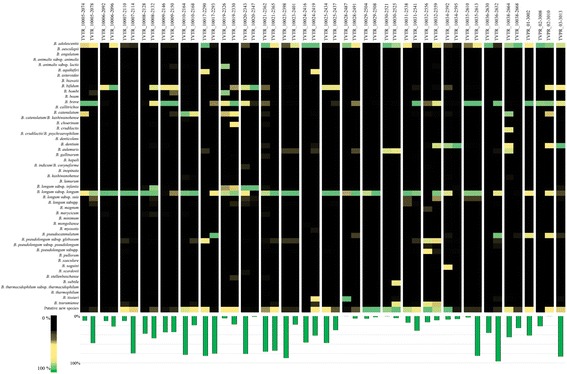
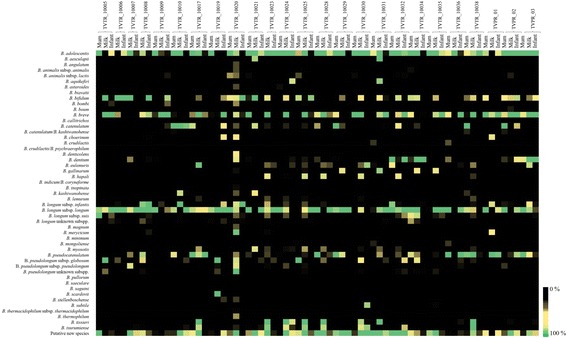
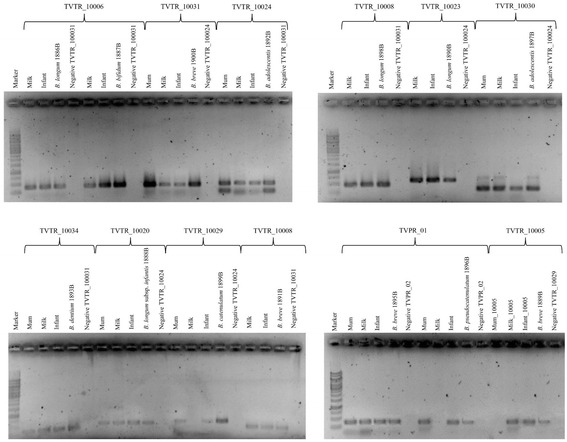
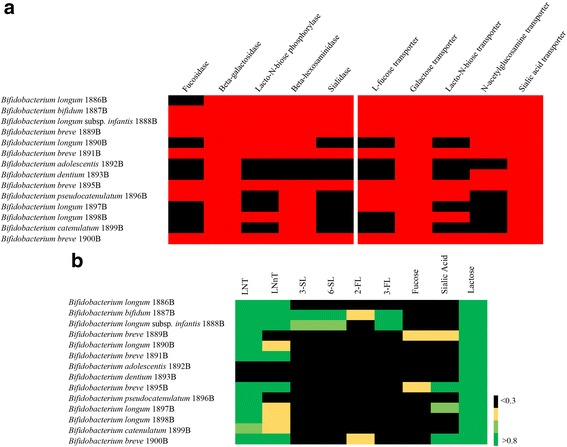
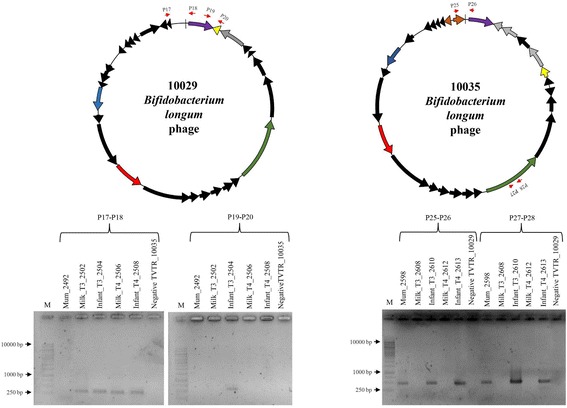
BACKGROUND: The correct establishment of the human gut microbiota represents a crucial development that commences at birth. Different hypotheses propose that the infant gut microbiota is derived from, among other sources, the mother's fecal/vaginal microbiota and human milk. RESULTS: The composition of bifidobacterial communities of 25 mother-infant pairs was investigated based on an internal transcribed spacer (ITS) approach, combined with cultivation-mediated and genomic analyses. We identified bifidobacterial strains/communities that are shared between mothers and their corresponding newborns. Notably, genomic analyses together with growth profiling assays revealed that bifidobacterial strains that had been isolated from human milk are genetically adapted to utilize human milk glycans. In addition, we identified particular bacteriophages specific of bifidobacterial species that are common in the viromes of mother and corresponding child. CONCLUSIONS: This study highlights the transmission of bifidobacterial communities from the mother to her child and implies human milk as a potential vehicle to facilitate this acquisition. Furthermore, these data represent the first example of maternal inheritance of bifidobacterial phages, also known as bifidophages in infants following a vertical transmission route.
Overview
The claims and statistics of this paper haven’t been checked yet.
Run the check — free, no account needed. It reads the open-access text and checks the sources it cites.
Integrity signals
Registry
Cites
Statistics
Figures
Verification
Claims the paper makes
The claims and statistics of this paper haven’t been checked yet.
Run the check — free, no account needed. It reads the open-access text and checks the sources it cites.
Claims other papers make about this one
Each is checked against this paper’s own text: does it say what the citing paper says it does?
In the citing paper
“that have been found to be highly transmitted from mother to child in several studies10,15,16,17,41 and that are also present but not shared in pairs from non-westernized populations (Figure 2C).”
From Maternal and food microbial sources shape the infant microbiome of a rural Ethiopian population (2023) · cites this paper as [41]
In the citing paper
“While Escherichia coli and Bifidobacterium spp. are the most shared within the European pairs, as previously described,10,15,16,17,41”
From Maternal and food microbial sources shape the infant microbiome of a rural Ethiopian population (2023) · cites this paper as [41]
Self-check
Percentages, sums and reported differences re-computed from the paper’s own numbers.
The self-check needs the paper’s full text.
Citations
Cites
SPAdes: A New Genome Assembly Algorithm and Its Applications to Single-Cell Sequencing
Bankevich, A., Nurk, S., Antipov, D., Gurevich, A. A., Dvorkin, M. V., Kulikov, A. S., Lesin, V. M., Nikolenko, S., Pham, S., Prjibelski, A. D., et al. (2012) · Journal of Computational Biology · doi:10.1089/cmb.2012.0021 · Cited by 26,312
Prodigal: prokaryotic gene recognition and translation initiation site identification
Hyatt, D., Chen, G.-L., LoCascio, P. F., Land, M., Larimer, F. W., & Hauser, L. (2010) · BMC Bioinformatics · doi:10.1186/1471-2105-11-119 · Cited by 12,692
Structure, function and diversity of the healthy human microbiome
The Human Microbiome Project Consortium (2012) · Nature · doi:10.1038/nature11234 · Cited by 11,726
Changes of Intestinal Functions in Liver Cirrhosis
Fukui, H., & Wiest, R. (2016) · Inflammatory Intestinal Diseases · doi:10.1159/000444436 · Cited by 6,820
Diversity, stability and resilience of the human gut microbiota
Lozupone, C. A., Stombaugh, J. I., Gordon, J. I., Jansson, J. K., & Knight, R. (2012) · Nature · doi:10.1038/nature11550 · Cited by 5,533
Host-Bacterial Mutualism in the Human Intestine
Bäckhed, F., Ley, R. E., Sonnenburg, J. L., Peterson, D. A., & Gordon, J. I. (2005) · Science · doi:10.1126/science.1104816 · Cited by 5,277
The gut microbiota shapes intestinal immune responses during health and disease
Round, J. L., & Mazmanian, S. K. (2009) · Nature Reviews Immunology · doi:10.1038/nri2515 · Cited by 5,029
Dominguez-Bello, M. G., Costello, E. K., Contreras, M., Magris, M., Hidalgo, G., Fierer, N., & Knight, R. (2010) · Proceedings of the National Academy of Sciences · doi:10.1073/pnas.1002601107 · Cited by 4,774
The composition of the gut microbiota throughout life, with an emphasis on early life
Rodríguez, J. M., Murphy, K., Stanton, C., Ross, R. P., Kober, O. I., Juge, N., Avershina, E., Rudi, K., Narbad, A., Jenmalm, M. C., et al. (2015) · Microbial Ecology in Health and Disease · doi:10.3402/mehd.v26.26050 · Cited by 1,414
Gut microbiota of healthy Canadian infants: profiles by mode of delivery and infant diet at 4 months
Azad, M. B., Konya, T., Maughan, H., Guttman, D. S., Field, C. J., Chari, R. S., Sears, M. R., Becker, A. B., Scott, J. A., & Kozyrskyj, A. L. (2013) · Canadian Medical Association Journal · doi:10.1503/cmaj.121189 · Cited by 989
Cited by
Sorted by citations
Items 301–328 of 328
Kan, Z., Luo, B., Cai, J., Zhang, Y., Tian, F., & Ni, Y. (2020) · Figshare · doi:10.6084/m9.figshare.12940791
Fukuda, R., Pak, K., Kiuchi, M., Hirata, N., Mochimaru, N., Tanaka, R., Mitsui, M., Ohya, Y., & Yoshida, K. (2024) · Nutrients · doi:10.3390/nu16121897
Little Peacemakers: Microbes Can Promote Nonviolent Conflict Resolution by Their Hosts
Bendett, Y., & Hadany, L. (2025) · Ecology and Evolution · doi:10.1002/ece3.71129
Wang, X., Feng, Y., Li, Y., Tian, Y., Zhang, S., Li, J., Zhang, J., Liu, F., Zhou, J., Li, T., et al. (2025) · Frontiers in Nutrition · doi:10.3389/fnut.2025.1566376
Wanelik, K. M., Raulo, A., Troitsky, T. S., Husby, A., & Knowles, S. C. L. (2023) · Figshare · doi:10.6084/m9.figshare.23273356
Wanelik, K. M., Raulo, A., Troitsky, T. S., Husby, A., & Knowles, S. C. L. (2023) · Figshare · doi:10.6084/m9.figshare.23273353
Wanelik, K. M., Raulo, A., Troitsky, T. S., Husby, A., & Knowles, S. C. L. (2023) · Figshare · doi:10.6084/m9.figshare.23273350
Kan, Z., Luo, B., Cai, J., Zhang, Y., Tian, F., & Ni, Y. (2020) · Figshare · doi:10.6084/m9.figshare.12940794
Wanelik, K. M., Raulo, A., Troitsky, T. S., Husby, A., & Knowles, S. C. L. (2023) · Figshare · doi:10.6084/m9.figshare.23273347
Comparison of gut virome in Kenyan infants born to women with and without HIV
Begnel, E. R., Maqsood, R., Holland, L. A., Ojee, E., Owiti, P., Adhiambo, J., Mabele, E., Gantt, S. M., Chohan, B. H., Kinuthia, J., et al. (2026) · iScience · doi:10.1016/j.isci.2026.114900
Fernández-Pato, A., Gulyaeva, A. A., Kuzub, N., Sinha, T., Brushett, S., Spreckels, J. E., Gois, M. F. B., Goumagias, A., Ruiz-Moreno, A. J., Camargo, A. P., et al. (2026) · bioRxiv (Cold Spring Harbor Laboratory) · doi:10.64898/2026.03.05.709809
The Benefits of Human Breast Milk in Neonates and Infants: A Narrative Review
Mouratidou, A., Katsaras, G. Ν., & Chatziioannidis, I. (2026) · Dietetics · doi:10.3390/dietetics5010016
Existe-t-il un microbiote placentaire ?
Gschwind, R. (2019) · theses.fr (ABES) · doi:10.70675/17e6f238z574fz4359z923dz6aa21459d1a2
The Infant Gut Virome: Knowns, Unknowns, and Avenues for Future Studies
Kuzub, N., Fernández-Pato, A., Garmaeva, S., & Zhernakova, A. (2026) · Engineering · doi:10.1016/j.eng.2026.03.018
A Comprehensive Review of the Effect of Diet on Intestinal Phages
Zhang, Z., Zhao, X., Yu, B., & Cui, B. (2026) · Food Reviews International · doi:10.1080/87559129.2026.2669386
A Systematic Review to Reassess the Formula for Early Life Growth
Nilaweera, K. N., van Sinderen, D., & Cotter, P. D. (2026) · Advances in Nutrition · doi:10.1016/j.advnut.2026.100660
Bonsu, P. B., Fosu, K., & Nyarko, S. B. (2026) · Advanced Gut & Microbiome Research · doi:10.1155/agm3/9059847
Yu, L. C.-H., & Chan, J. Y.-H. (2026) · Elsevier eBooks · doi:10.1016/b978-0-443-40306-4.00002-8
Yahia, S., Murugesan, S., & Khodor, S. A. (2026) · Journal of Translational Medicine · doi:10.1186/s12967-026-08599-9
Tian, S., Zhao, F., Meng, Z., Sun, W., Teng, M., Zhu, W., Li, C., & Yan, S. (2026) · Environmental Science & Technology · doi:10.1021/acs.est.6c03403
Preferential sharing of virus populations between mothers and infants in early lifePreprint
Krishnamurthy, R., Cook, R., Ponsero, A. J., Mijic, L., Tiwari, S., Tálas, J., Dyball, X., Pye, H. V., Telatin, A., Baker, D., et al. (2026) · Research Square · doi:10.21203/rs.3.rs-9843599/v1
Orobinskaya, Y. V., Sugian, N. G., Игоревич, К. С., Odintsova, V. Y., Zakharova, I. N., & Макаркин, Д. В. (2026) · Meditsinskiy sovet = Medical Council · doi:10.21518/ms2026-270
Glenn, E., Titus, C., Kasthuriarachchi, T. D. W., Burke, K., Chow, D., Lin, C., Liu, E., Zhang, H., Zhang, T., & Li, Y. (2026) · Journal of Pharmaceutical Sciences · doi:10.1016/j.xphs.2026.104509
Bifidobacteria: biogeography, host adaptation and ecological functions
Tarracchini, C., Milani, C., Jones, C. N. L., Turroni, F., Burgess, G., Mahony, J., Hall, L. J., Ventura, M., & van Sinderen, D. (2026) · Nature Reviews Microbiology · doi:10.1038/s41579-026-01367-y
Self-citationZhen, Z., Shuhua, L., Baihe, M., Xin, C., Guo, M., Fanxin, L., & Lianrui, L. (2026) · Bacteriophage · doi:10.1016/j.phage.2026.100017
The developmental, genetic, and epigenetic basis of polyendocrine metabolic ovarian syndrome
Mahdi, A., Qannan, A., & Hajj, N. E. (2026) · Frontiers in Endocrinology · doi:10.3389/fendo.2026.1924187
Metadata
- Authors
- Duranti, S., Lugli, G. A., Mancabelli, L., Armanini, F., Turroni, F., James, K., Ferretti, P., Gorfer, V., Ferrario, C., Milani, C., Mangifesta, M., Anzalone, R., Zolfo, M., Viappiani, A., Pasolli, E., Bariletti, I., Canto, R., Clementi, R., Cologna, M., Crifò, T., Cusumano, G., Fedi, S., Gottardi, S., Innamorati, C., Masè, C., Postai, D., Savoi, D., Soffiati, M., Tateo, S., Pedrotti, A., Segata, N., van Sinderen, D., & Ventura, M.
- Affiliations
- University of Parma (IT)
- University of Trento (IT)
- National University of Ireland (IE)
- Provincia Autonoma di Trento (IT)
- Corresponding author
- Ventura, Marco
- ORCID
- Venue
- Microbiome
- Published
- 2017-06-26
- Volume
- 5
- Issue
- 1
- Pages
- 66-66
- ISSN
- 2049-2618 (ISSN-L)
- PMC
- PMC5485682
- OpenAlex
- W2717530497
- Cited by
- 327
- References
- 65
- Citations by year
- 2026: 21 · 2025: 40 · 2024: 31 · 2023: 33 · 2022: 41 · 2021: 62 · 2020: 37 · 2019: 28 · 2018: 26 · 2017: 8
- FWCI
- 11.16
- Type
- journal article
- Language
- en
- Open access
- gold
- doi.org
- Licence
- cc-by
- Locations
- Microbiome (publishedVersion, cc-by)
- PubMed Central (publishedVersion, cc-by)
- PubMed (publishedVersion)
- Institutional Research Information System (Università degli Studi di Trento) (submittedVersion, cc-by)
- DOAJ (DOAJ: Directory of Open Access Journals) (submittedVersion, cc-by-sa)
- Funders
- Fondazione Caritro, Trento, Italy
- EU Joint Programming Initiative – A Healthy Diet for a Healthy Life
- Ministero dell’Istruzione, dell’Università e della Ricerca
- Fondazione Cariparma
- Science Foundation Ireland (SFI/12/RC/2273)
- GenProbio srl
- EU Joint Programming Initiative - A Healthy Diet for a Healthy Life
- Topics
- Life Sciences › Biochemistry, Genetics and Molecular Biology › Molecular Biology › Gut microbiota and health
- Health Sciences › Nursing › Nutrition and Dietetics › Infant Nutrition and Health
- Life Sciences › Immunology and Microbiology › Virology › Bacteriophages and microbial interactions
- Keywords
- maternal inheritance, vertical transmission, Bifidobacterium, infant gut microbiota, breast milk, mother-infant dyads
- MeSH terms
- Gastrointestinal Microbiome, Bacteriophages, Bifidobacterium, Breast Feeding, Feces, Humans, Infant, Infant, Newborn, Milk, Human, Mothers, Polysaccharides, Sequence Analysis, DNA
About these checks
Registry, retraction, Cites and statistics results are computed, not judged, with one exception: a printed reference that no index lists is read once by a model before it counts as a citation error. Claims are extracted by a model and kept only when their quote appears verbatim in the text; each cited source is then checked, with a model’s help, for whether it says what the claim relies on. Those verdicts can be wrong — read the claim’s quote and the cited source before relying on one.
Statistics and arithmetic are recomputed, not judged.
Confidence bands are shown only for fields calibrated on our annotated test set. None is calibrated yet, so no band is shown.
What counts as a claim ›How we measure confidence ›How we check this ›
Are you an author, or do you see a problem with this page? Request a review
