

A comprehensive assessment of demographic, environmental, and host genetic associations with gut microbiome diversity in healthy individuals
Open accessPublished version of a preprint
The DOI matches its Crossref record; 69 of the 69 references it cites were found in a registry or an index.
Abstract
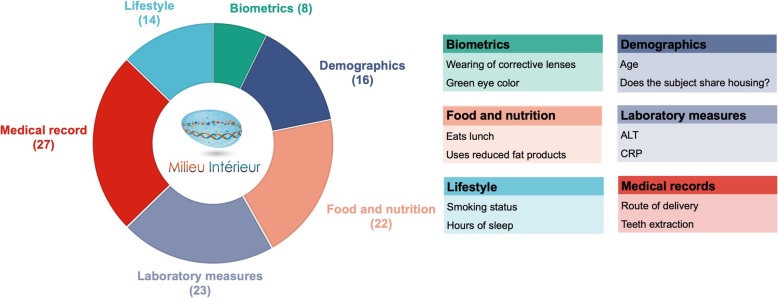
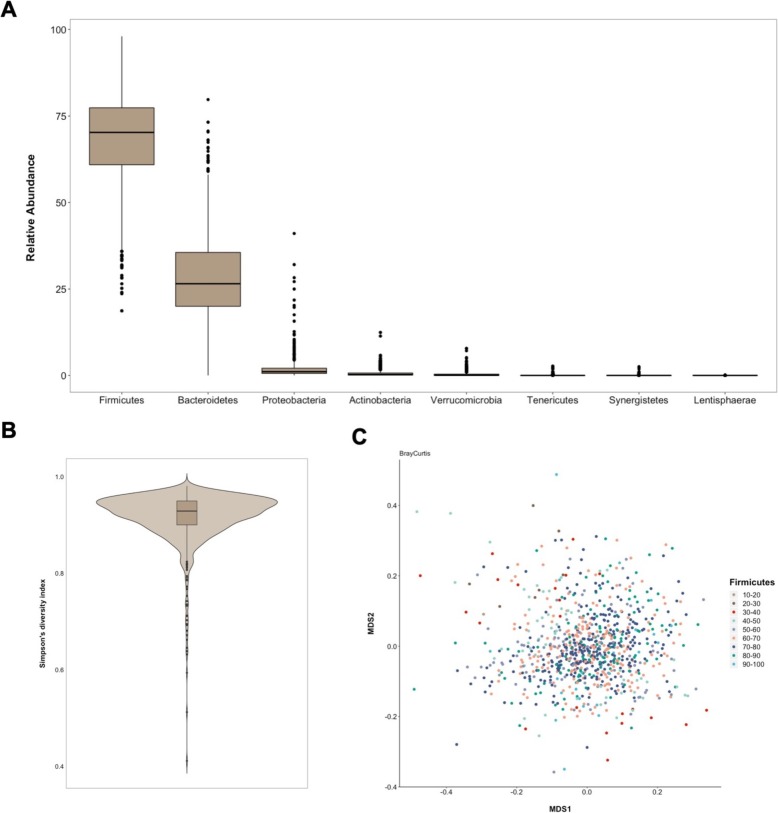
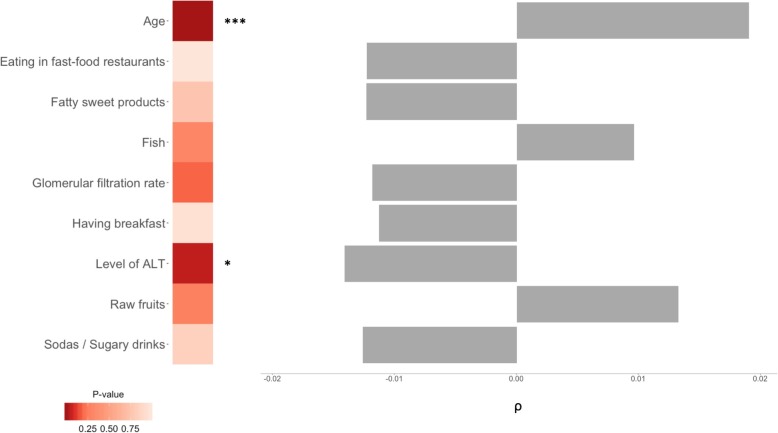
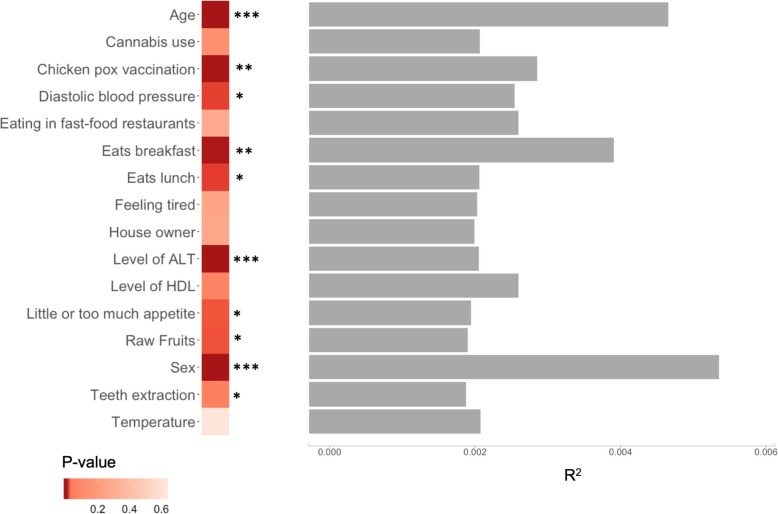
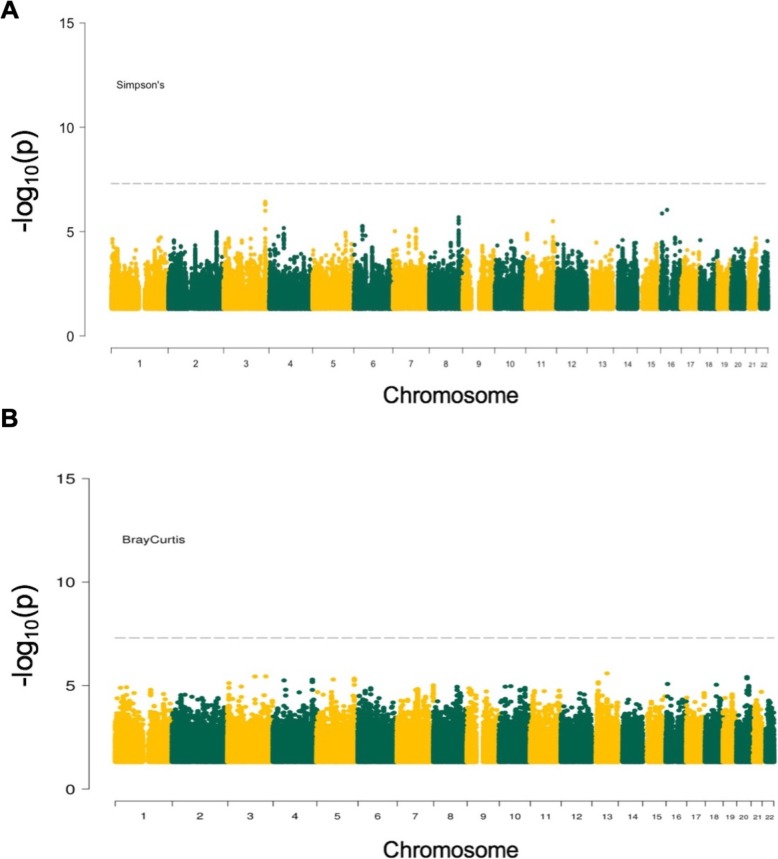
Background: The gut microbiome is an important determinant of human health. Its composition has been shown to be influenced by multiple environmental factors and likely by host genetic variation. In the framework of the Milieu Intérieur Consortium, a total of 1000 healthy individuals of western European ancestry, with a 1:1 sex ratio and evenly stratified across five decades of life (age 20–69), were recruited. We generated 16S ribosomal RNA profiles from stool samples for 858 participants. We investigated genetic and non-genetic factors that contribute to individual differences in fecal microbiome composition. Results: Among 110 demographic, clinical, and environmental factors, 11 were identified as significantly correlated with α -diversity, ß -diversity, or abundance of specific microbial communities in multivariable models. Age and blood alanine aminotransferase levels showed the strongest associations with microbiome diversity. In total, all non-genetic factors explained 16.4% of the variance. We then searched for associations between > 5 million single nucleotide polymorphisms and the same indicators of fecal microbiome diversity, including the significant non-genetic factors as covariates. No genome-wide significant associations were identified after correction for multiple testing. A small fraction of previously reported associations between human genetic variants and specific taxa could be replicated in our cohort, while no replication was observed for any of the diversity metrics. Conclusion: In a well-characterized cohort of healthy individuals, we identified several non-genetic variables associated with fecal microbiome diversity. In contrast, host genetics only had a negligible influence. Demographic and environmental factors are thus the main contributors to fecal microbiome composition in healthy individuals. Trial registration: ClinicalTrials.gov identifier NCT01699893
Overview
The claims and statistics of this paper haven’t been checked yet.
Free: it reads the open-access text and checks the first 5 claims that cite a source we can check. Create a free account to check every claim.
Integrity signals
Registry
Cites
Statistics
Figures
Verification
Claims the paper makes
The claims and statistics of this paper haven’t been checked yet.
Free: it reads the open-access text and checks the first 5 claims that cite a source we can check. Create a free account to check every claim.
Claims other papers make about this one
Each is checked against this paper’s own text: does it say what the citing paper says it does?
The source backs part of the claim, not all of it — or backs it for a different population, condition or comparison.
In the citing paper
“The top contributors were age and sex, with lesser contributions from diet, such as consumption of raw fruit and cooked and cured meats, as well as frequency of fast food consumption, in line with previous reports of 16S rRNA analyses from this cohort (Partula et al., 2019; Scepanovic et al., 2019).”
From Gut microbiome stability and dynamics in healthy donors and patients with non-gastrointestinal cancers (2021) · cites this paper as Scepanovic et al., 2019
Experimental — accuracy not yet measured
Self-check
Percentages, sums and reported differences re-computed from the paper’s own numbers.
The self-check needs the paper’s full text.
Citations
Cites
SPAdes: A New Genome Assembly Algorithm and Its Applications to Single-Cell Sequencing
Bankevich, A., Nurk, S., Antipov, D., Gurevich, A. A., Dvorkin, M., Kulikov, A. S., Lesin, V. M., Nikolenko, S. I., Pham, S., Prjibelski, A. D., et al. (2012) · Journal of Computational Biology · doi:10.1089/cmb.2012.0021 · Cited by 25,987 · cited 2×
“Raw reads were trimmed using sickle [43], then error corrected using SPAdes [44] and merged using PEAR [45].”
Methodvegan: Community Ecology Package
Oksanen, J., Simpson, G. L., Blanchet, F. G., Kindt, R., Legendre, P., Minchin, P. R., O'Hara, R. B., Solymos, P., Stevens, M. H. H., Szoecs, E., et al. (2001) · CRAN: Contributed Packages · doi:10.32614/cran.package.vegan · Cited by 22,615
UCHIME improves sensitivity and speed of chimera detection
Edgar, R. C., Haas, B. J., Clemente, J. C., Quince, C., & Knight, R. (2011) · Bioinformatics · doi:10.1093/bioinformatics/btr381 · Cited by 15,114
FastTree 2 – Approximately Maximum-Likelihood Trees for Large Alignments
Price, M. N., Dehal, P. S., & Arkin, A. P. (2010) · PLoS ONE · doi:10.1371/journal.pone.0009490 · Cited by 14,894
mice: Multivariate Imputation by Chained Equations in R
Buuren, S. V., & Groothuis-Oudshoorn, K. (2011) · Journal of Statistical Software · doi:10.18637/jss.v045.i03 · Cited by 13,870
Second-generation PLINK: rising to the challenge of larger and richer datasets
Chang, C. C., Chow, C. C., Tellier, L. C., Vattikuti, S., Purcell, S. M., & Lee, J. J. (2015) · Gigascience · doi:10.1186/s13742-015-0047-8 · Cited by 12,709
Structure, function and diversity of the healthy human microbiome
The Human Microbiome Project Consortium (2012) · Nature · doi:10.1038/nature11234 · Cited by 11,726
A human gut microbial gene catalogue established by metagenomic sequencing
MetaHIT Consortium, Qin, J., Li, R., Raes, J., Arumugam, M., Burgdorf, K. S., Manichanh, C., Nielsen, T., Pons, N., Levenez, F., et al. (2010) · Nature · doi:10.1038/nature08821 · Cited by 11,624
VSEARCH: a versatile open source tool for metagenomics
(2016) · doi:10.7717/peerj.2584 · Cited by 10,773
Human gut microbiome viewed across age and geography
Yatsunenko, T., Rey, F. E., Manary, M. J., Trehan, I., Dominguez-Bello, M. G., Contreras, M., Magris, M., Hidalgo, G., Baldassano, R. N., Anokhin, A. P., et al. (2012) · Nature · doi:10.1038/nature11053 · Cited by 7,815 · cited 2×
“In line with previous reports [6, 14, 26], we observed sex and age as the strongest influencers on all β-diversity indexes, with the lowest association p values”
BackgroundResult
Research works printed but not linked: 1
- Joshi NA Fass JN Sickle: a sliding-window, adaptive, quality-based trimming tool for FastQ files 2011
Cited by
Items 101–181 of 181
The effect of heart failure on gut microbial richness and diversity
Kilic, O., Kaya, H. I., Seçme, M., Kilinc, M., Sevgican, C. İ., Büber, İ., Dodurga, Y., Şimşek, Ö., Ergin, Ç., & Kılıç, İ. D. (2023) · Revista Portuguesa de Cardiologia · doi:10.1016/j.repc.2022.06.016 · Cited by 8
Zhang, J., Sun, Y., He, J., Wu, G., Wang, R., & Zhang, J. (2023) · Current Drug Metabolism · doi:10.2174/0113892002272030231005103840 · Cited by 7
The Use of Confidence Intervals in Differential Abundance Analysis of Microbiome Data
Vinogradova, E. B., Kushugulova, A. R., Kozhakhmetov, S., & Baltin, M. E. (2026) · Applied Microbiology · doi:10.3390/applmicrobiol6010007 · Cited by 6
Partula, V., Deschasaux, M., Mondot, S., Bala, A. V., Bouchemal, N., Lécuyer, L., Bobin‐Dubigeon, C., Torres, M. J., Kesse‐Guyot, E., Charbit, B., et al. (2020) · British Journal Of Nutrition · doi:10.1017/s0007114520004870 · Cited by 8
Self-citationBailey, S., & Fraser, K. (2023) · Frontiers in Endocrinology · doi:10.3389/fendo.2023.1229796 · Cited by 9
Kehrmann, J., Dostmohammadi, A., Stumpf, A.-L., Best, L., Consten, L., Sievert, H., Maischack, F., Sammet, S., Albayrak-Rena, S., Dörr, A.-K., et al. (2025) · Frontiers in Cellular and Infection Microbiology · doi:10.3389/fcimb.2025.1568352 · Cited by 6
Smithmyer, M. E., Hu, A. K., Dufort, M. J., Hocking, A. M., WIEDEMAN, A. E., Fasano, K. J., Torgerson, T. R., Skene, P. J., Reading, J., Li, X., et al. (2025) · Science Translational Medicine · doi:10.1126/scitranslmed.adt4605 · Cited by 9
Wojciechowski, S., Majchrzak-Gorecka, M., Biernat, P., Odrzywołek, K., Pruss, Ł., Zych, K., Majta, J., & Milanowska, K. (2022) · International Journal of Medical Microbiology · doi:10.1016/j.ijmm.2022.151560 · Cited by 6
Medicine-food homology substances: Ecological engineers of gut microbiota for precision nutrition
Zhou, S., Huang, Y., & Chu, W. (2026) · Food and Humanity · doi:10.1016/j.foohum.2026.101007 · Cited by 6
Indigenous gut microbes modulate neural cell state and neurodegenerative disease susceptibility
Blackmer‐Raynolds, L., Lipson, L. D., Kozlov, A., Yang, A., Hill, E. J., Sampson, M. M., Hamilton, A. M., Fraccaroli, I., Kelly, S. D., Chopra, P., et al. (2026) · Cell Systems · doi:10.1016/j.cels.2025.101481 · Cited by 6
Gut microbiota composition in patients with Crohn’s disease in Saudi Arabia
Alahdal, H. M., Almuneef, G., Alkhulaifi, M. M., Aldibasi, O. S., Aljouie, A., Alharbi, O., Almohawes, Z. N., Basingab, F. S., & Rejili, M. S. (2024) · PLoS ONE · doi:10.1371/journal.pone.0299749 · Cited by 4
“Gender has been recently indicated as one of the most influence factors on gut microbiota composition [49–51].”
BackgroundHoffbeck, C., Middleton, D. R. M. L., Keall, S. N., Huang, C.-M., Pas, A., Irving, K. R., Nelson, N. J., & Taylor, M. W. (2024) · FEMS Microbiology Ecology · doi:10.1093/femsec/fiae141 · Cited by 5
“…and age of the animal (Colston and Jac kson 2016 ), behaviour al pr efer ences (Cusic k et al. 2021 ), genetic differences (Blekhman et al. 2015 , Scepanovic et al. 2019 ), or e v en the pr e vious envir onment of the tuatar a may be contributing to the individual-le v el v ariation observ ed in…”
BackgroundMeaddough, E. L., Abenavoli, L., Sarasua, S. M., & Boccuto, L. (2021) · Minerva Gastroenterology · doi:10.23736/s2724-5985.21.02927-2 · Cited by 4
The many genomes of Parkinson's disease
Payami, H. (2022) · International review of neurobiology · doi:10.1016/bs.irn.2022.07.007 · Cited by 5
Gum Arabic modulates the microbiota-gut-brain axis and affects general fitness in zebrafish
Assaf, J. A., de Coriolis, J., Godden, A. M., Redhead, E., Bartram, J., Cohen‐Krais, J., Silova, K., Crighton, Z., Gall, G. L., Sami, S. A. K., et al. (2025) · Scientific Reports · doi:10.1038/s41598-025-17665-z · Cited by 9
Linking the microbiome to the complement system in geographic atrophy
Spörri, L. A., Studer, J. M., Kreuzer, M., Rotzetter, J., Schärer, D., Largiadèr, C. R., Jaggi, D., Zinkernagel, M. S., & Zysset‐Burri, D. C. (2026) · npj Genomic Medicine · doi:10.1038/s41525-026-00550-7 · Cited by 5
Prinelli, F., Mastropietro, A., Bernini, S., Camboni, T., Consolandi, C., Conti, S., Costa, A. C., Ramusino, M. C., Jesuthasan, N., Pansarasa, O., et al. (2026) · Clinical Nutrition · doi:10.1016/j.clnu.2026.106585 · Cited by 3
Jiang, S., Luo, T., Huang, Y., Yang, Z., Yang, Z., & Meng, X. (2026) · Journal of Future Foods · doi:10.1016/j.jfutfo.2026.03.020 · Cited by 3
When antidepressants meet the gut microbiota: implications and challenges
Cussotto, S., Colle, R., David, D. J. P., & Corruble, E. (2024) · International Clinical Psychopharmacology · doi:10.1097/yic.0000000000000558 · Cited by 3
Precision Nutrition from the View of the Gut Microbiome
Dikarlo, P., Dorst, I., Moskalenko, O., & Yateem, M. (2022) · Springer eBooks · doi:10.1007/978-3-031-10153-3_4 · Cited by 4
Underlying Mechanism of Drug and Non-drug Interactions
Ogbu, J. I., Moreira, C. V. L., Saavedra, R., & Fajemiroye, J. O. (2025) · Springer eBooks · doi:10.1007/978-3-031-80107-5_8 · Cited by 2
Dong, Y., Zhang, Z., Zhu, Z., Hu, T., Chen, J., Teng, L., & Liu, Z. (2025) · Frontiers in Microbiology · doi:10.3389/fmicb.2025.1553622 · Cited by 2
Interplay between host genetics and gut microbiome composition in the Japanese population
Ortega-Reyes, D., Takeuchi, T., Ogata, Y., Iwami, T., Suda, W., Kubota, T., Kubota, N., Kadowaki, T., Tomizuka, K., Ohno, H., et al. (2025) · Frontiers in Microbiomes · doi:10.3389/frmbi.2025.1635907 · Cited by 2
Govender, P., Cason, E. D., & Ghai, M. (2026) · Applied Microbiology and Biotechnology · doi:10.1007/s00253-025-13652-6 · Cited by 3
“…studies have suggested that environmental and external factors may have a more substantial impact on microbiome variation, with host genetics playing a comparatively smaller role in determining microbial diversity (Araújo et al. 2023; Gacesa et al. 2022; Morton et al. 2015; Scepanovic et al. 2019).”
Genome‐wide association study of Helicobacter pylori serological status in Latin American children
Lima, I. S., da Silva, T. M., Weiß, S., Homuth, G., Lerch, M. M., Figueiredo, C. A., Alcântara‐Neves, N. M., Barreto, M. L., & Marques, C. R. (2023) · Helicobacter · doi:10.1111/hel.13008 · Cited by 3
Sapoval, N., Tanevski, M., & Treangen, T. J. (2023) · Pacific Symposium on Biocomputing (PSB) · doi:10.1142/9789811286421_0039 · Cited by 3
Dilhari, A., Campbell, P. M., Munasinghe, A., Brown, H., Kaluarachchi, T., Gunasekara, C. P., Pathirage, S., Fernando, N., Weerasekara, D., Humphreys, G. J., et al. (2024) · Journal of Applied Microbiology · doi:10.1093/jambio/lxae262 · Cited by 2
Shahzad, M. A., Arshad, M., Ahmad, H. A., Iddrisu, I., Bailey, E. H., Dru, N., Saeedullah, A., Khan, M. S., Khan, H., & Andrews, S. C. (2025) · Nutrition Research · doi:10.1016/j.nutres.2025.04.004 · Cited by 3
What Is the Microbiome? A Description of a Social Network
van Praagh, J. B., & Havenga, K. (2023) · Clinics in Colon and Rectal Surgery · doi:10.1055/s-0043-1760863 · Cited by 2
Assessing Engraftment Following Fecal Microbiota TransplantPreprint
Herman, C., Barker, B. M., Bartelli, T. F., Chandra, V., Krajmalnik‐Brown, R., Jewell, M., Li, L., Liao, C., McAllister, F. M., Nirmalkar, K., et al. (2024) · PubMed · doi:10.48550/arxiv.2404.07325 · Cited by 2
“Since gut microbiome health is often correlated with higher microbial richness 50–52 , richness is often used as a metric of gut microbiome health, although no clear causative relationship between the two has been generally established.”
BackgroundRueff, J., Conde, J., & Castro, G. (2025) · Translational Oncology · doi:10.1016/j.tranon.2025.102356 · Cited by 1
“As the specific gut microbiota of a population group is known to determine genetic variants [8], we must infer its role in the germinal process of cancer.”
Yuan, Y., Tang, Y., & Sun, Y. (2025) · Cureus · doi:10.7759/cureus.99600 · Cited by 3
Vieira, A. R., & Modesto, A. M. (2022) · Frontiers in Dental Medicine · doi:10.3389/fdmed.2022.875953 · Cited by 1
Gene-environment factors influence microbiota composition, diversity, and function
Foster, J. A., & Clarke, G. A. (2024) · Elsevier eBooks · doi:10.1016/b978-0-12-814800-6.00005-4 · Cited by 1
Chen, Z., Zhao, Y., Xu, L., Teng, T., & Ma, D. (2025) · Animals · doi:10.3390/ani15172625 · Cited by 1
Gut Microbiota and Antibiotics: Dysbiosis and Antimicrobial Resistance
Imchen, M., Moopantakath, J., & Kumavath, R. (2021) · Elsevier eBooks · doi:10.1016/b978-0-12-819265-8.00049-8 · Cited by 1
Zhang, Z., Hou, Q., Wang, Y., Xiang, F., & Guo, Z. (2022) · Microbiology Spectrum · doi:10.1128/spectrum.01442-21 · Cited by 2
Early-life feeding in piglets: the impact on intestinal microbiota and mucosal development
Choudhury, R. (2021) · doi:10.18174/533912 · Cited by 1
Nunes, O. C., Manaia, C. M., & Vaz‐Moreira, I. (2021) · Bergey's Manual of Systematics of Archaea and Bacteria · doi:10.1002/9781118960608.gbm01829 · Cited by 1
Assaf, J. A., de Coriolis, J., Godden, A. M., Redhead, E., Bartram, J., Cohen‐Krais, J., Silova, K., Crighton, Z., Gall, G. L., Sami, S. A. K., et al. (2024) · bioRxiv (Cold Spring Harbor Laboratory) · doi:10.1101/2024.10.04.616708 · Cited by 1
Predation impacts late but not early community assembly in model marine biofilmsPreprint
Tobias-Hünefeldt, S. P., Wenley, J., Baltar, F., & Morales, S. E. (2020) · bioRxiv (Cold Spring Harbor Laboratory) · doi:10.1101/2020.08.06.233379
Li, D., Tian, S., Zhu, W. Y., Su, Y., Wang, T., Ma, T., Mishra, S. K., Shi, L., Wei, R., Xu, Z., et al. (2020) · doi:10.21203/rs.2.23607/v2
“humans [40] and chickens [25], and microorganisms play crucial roles in chicken fat accumulation [25], and microbes have important effects on host traits independent of host genetics.”
BackgroundInflammatory biomarkers in ischemic heart disease
Groot, H. E. (2021) · University of Groningen research database (University of Groningen / Centre for Information Technology) · doi:10.33612/diss.156111034
Une histoire génétique : notre diversité, notre évolution, notre adaptation
Quintana‐Murci, L. (2021) · Collège de France eBooks · doi:10.4000/books.cdf.11407
Self-citationThe influence of benzene air pollution on leukemia incidence and mortality rates
Pilarska, A., & Pospieszyńska, A. (2021) · Bulletin of Geography Physical Geography Series · doi:10.2478/bgeo-2021-0001
Vickers, M. L. (2021) · Queensland University of Technology · doi:10.5204/thesis.eprints.213222
Ahmad, S., Ashktorab, H., Brim, H., & Housseau, F. (2022) · World Journal of Gastroenterology · doi:10.3748/wjg.v28.i25.2783
Génomique humaine et évolution
Quintana‐Murci, L. (2023) · L’annuaire du Collège de France · doi:10.4000/annuaire-cdf.18277
Self-citationThe Impact of the Gut Microbiome Alterations in Psoriasis
KESKIN, S., CAKIR, M., & ACIKGOZ, E. (2023) · doi:10.59287/nfhs.906
Sustenance and Its Consequences
Palkovich, A. M. (2024) · Bioarchaeology and social theory · doi:10.1007/978-3-031-56023-1_6
Nutritional Status Impacts the Gut Microbiota of an Adolescent Refugee PopulationPreprint
Shahzad, M. A., Arshad, M. I., Ahmad, H. A., Iddrisu, I., Bailey, E. H., Drou, N., Saeedullah, A., Khan, M. S., Khan, H. M., & Andrews, S. C. (2024) · SSRN Electronic Journal · doi:10.2139/ssrn.4818801
A Framework to Connect Viral Quasispecies, Microbiome, and Host
Nehri, L. N., & Koçoğlu, S. E. (2024) · Journal of Immunology and Clinical Microbiology · doi:10.58854/jicm.1465143
Han, Y., Mwesigwa, S., Wu, Q., Laska, M. N., Pitts, S. J., Moran, N. E., & Hanchard, N. A. (2024) · medRxiv · doi:10.1101/2024.12.20.24319465
Cereal mixed-linkage beta-glucans: occurrence, structure, and health effects
Vilaplana, F., & Rebaque, D. (2025) · Elsevier eBooks · doi:10.1016/b978-0-443-15700-4.00015-8
Shi, J., Nguyen, S. M., Yu, D., Wang, L., Liu, L., Cai, H., Wu, J., Long, J., Cai, Q., Shrubsole, M. J., et al. (2025) · Gut Microbes Reports · doi:10.1080/29933935.2025.2589861
Nagarajan, A., Scoggin, K., Gupta, J., Threadgill, D. W., & Andrews‐Polymenis, H. L. (2024) · Figshare · doi:10.6084/m9.figshare.26603017
Nagarajan, A., Scoggin, K., Gupta, J., Threadgill, D. W., & Andrews‐Polymenis, H. L. (2024) · Figshare · doi:10.6084/m9.figshare.26602987
Nagarajan, A., Scoggin, K., Gupta, J., Threadgill, D. W., & Andrews‐Polymenis, H. L. (2024) · Figshare · doi:10.6084/m9.figshare.26603011
Nagarajan, A., Scoggin, K., Gupta, J., Threadgill, D. W., & Andrews‐Polymenis, H. L. (2024) · Figshare · doi:10.6084/m9.figshare.26603002
Nagarajan, A., Scoggin, K., Gupta, J., Threadgill, D. W., & Andrews‐Polymenis, H. L. (2024) · Figshare · doi:10.6084/m9.figshare.26602999
Nagarajan, A., Scoggin, K., Gupta, J., Threadgill, D. W., & Andrews‐Polymenis, H. L. (2024) · Figshare · doi:10.6084/m9.figshare.26603008
Nagarajan, A., Scoggin, K., Gupta, J., Threadgill, D. W., & Andrews‐Polymenis, H. L. (2024) · Figshare · doi:10.6084/m9.figshare.26602993
Nagarajan, A., Scoggin, K., Gupta, J., Threadgill, D. W., & Andrews‐Polymenis, H. L. (2023) · Figshare · doi:10.6084/m9.figshare.26602981
Nagarajan, A., Scoggin, K., Gupta, J., Threadgill, D. W., & Andrews‐Polymenis, H. L. (2024) · Figshare · doi:10.6084/m9.figshare.26603014
Nagarajan, A., Scoggin, K., Gupta, J., Threadgill, D. W., & Andrews‐Polymenis, H. L. (2024) · Figshare · doi:10.6084/m9.figshare.26603005
Nagarajan, A., Scoggin, K., Gupta, J., Threadgill, D. W., & Andrews‐Polymenis, H. L. (2024) · Figshare · doi:10.6084/m9.figshare.26602996
Nagarajan, A., Scoggin, K., Gupta, J., Threadgill, D. W., & Andrews‐Polymenis, H. L. (2023) · Figshare · doi:10.6084/m9.figshare.26602978
Nagarajan, A., Scoggin, K., Gupta, J., Threadgill, D. W., & Andrews‐Polymenis, H. L. (2024) · Figshare · doi:10.6084/m9.figshare.26602990
Nagarajan, A., Scoggin, K., Gupta, J., Threadgill, D. W., & Andrews‐Polymenis, H. L. (2023) · Figshare · doi:10.6084/m9.figshare.26602984
Alaeddini, Z., Nemati, I., & Gholizadeh, S. (2025) · BMC Microbiology · doi:10.1186/s12866-025-04544-w
Introduction to Microbiome and Nutrition
Falak, A., Hassan, S., Anas, M., Iqbal, J., Abbasi, B. A., Yaseen, T., & Imtiaz, M. (2026) · IGI Global eBooks · doi:10.4018/979-8-3373-4382-2.ch001
Partula, V. (2019) · theses.fr (ABES) · doi:10.70675/ed420225z3678z4c8fzaa75zc1b5ebec21e7
Self-citationBeaufrère, M. (2024) · theses.fr (ABES) · doi:10.70675/e2ad4bb8zc461z4159z99eaz2d8e71144ddf
Gut microbiome stratification reveals functional metabolic signatures linked to host healthPreprint
Sola, M., Hiol, A. N., Viatli, G., Fromentin, S., Gilles, M., Chatelier, E. L., Morabito, C., Oñate, F. P., Pons, N., Quinquis, B., et al. (2026) · bioRxiv (Cold Spring Harbor Laboratory) · doi:10.64898/2026.05.05.722951
Akram, F., Zainab, S., Shabbir, I., & Haq, I. U. (2026) · Folia Microbiologica · doi:10.1007/s12223-026-01515-0
Potential role of Akkermansia massiliensis in multiple sclerosis protection by the FcRL3 gene
Orrù, V., Marongiu, M., Cocco, E. E., & Żołędziewska, M. (2026) · Genes and Immunity · doi:10.1038/s41435-026-00404-3
Soler-Sáez, I., Galiana‐Roselló, C., Grillo-Risco, R., Falony, G., Tepavčević, V., Vieira‐Silva, S., & Garcia‐García, F. (2026) · mSystems · doi:10.1128/msystems.00416-26 · Cited by 1
“Beyond technical factors, this data set-driven variability may also reflect biological heterogeneity among individuals and environmen tal factors (46).”
Gany, S. L. S., Sahardi, N. F. N. M., Rusli, N., Zaffarin, A. S. M., Razak, A. M., & Makpol, S. (2026) · Frontiers in Pharmacology · doi:10.3389/fphar.2026.1809547
“Each harbours a unique microbial composition, which is estimated at around 100 trillion organisms, and is shaped by diet, lifestyle, and environmental factors, and is as distinctive as a fingerprint (Thursby and Juge, 2017; Scepanovic et al., 2019).”
Dietary Fiber Structural Diversity Shapes Gut Microbiome Function: A Glycocentric Perspective
Vilaplana, F. (2026) · JACS Au · doi:10.1021/jacsau.6c01032
The gut microbiome and the pathogenesis of trans-arterial chemoembolization-associated liver injury
Engelman, J., Jia, K., & Riordan, S. M. (2026) · Hepatoma Research · doi:10.20517/2394-5079.2026.61
Metadata
- Authors
- The Milieu Intérieur Consortium, Scepanovic, P., Hodel, F., Mondot, S., Partula, V., Byrd, A., Hammer, C., Alanio, C., Bergstedt, J., Patin, E., Touvier, M., Lantz, O., Albert, M. L., Duffy, D., Quintana-Murci, L., & Fellay, J.
- Affiliations
- SIB Swiss Institute of Bioinformatics (CH)
- AgroParisTech (FR)
- Inserm (FR)
- Genentech (US)
- University of Pennsylvania (US)
- Lund University (SE)
- Corresponding author
- Fellay, Jacques
- ORCID
- Venue
- Microbiome
- Published
- 2019-09-13
- Volume
- 7
- Issue
- 1
- Pages
- 130-130
- ISSN
- 2049-2618 (ISSN-L)
- PMC
- PMC6744716
- OpenAlex
- W2972758657
- Cited by
- 171
- References
- 68
- Citations by year
- 2026: 15 · 2025: 20 · 2024: 27 · 2023: 27 · 2022: 32 · 2021: 29 · 2020: 19 · 2019: 2
- FWCI
- 6.79
- Type
- journal article
- Language
- en
- Open access
- gold
- doi.org
- Licence
- cc-by
- creativecommons.org/licenses/by/4.0/ (tdm)
- creativecommons.org/licenses/by/4.0/ (vor)
- Locations
- Microbiome (publishedVersion, cc-by)
- bioRxiv (Cold Spring Harbor Laboratory) (acceptedVersion, cc-by-nc-nd)
- PubMed Central (publishedVersion, cc-by)
- PubMed (publishedVersion)
- HAL (submittedVersion, cc-by)
- DOAJ (DOAJ: Directory of Open Access Journals) (submittedVersion, cc-by-sa)
- Infoscience (Ecole Polytechnique Fédérale de Lausanne) (submittedVersion, cc-by-nc-nd)
- Lund University Publications (Lund University) (submittedVersion)
- Funders
- Agence Nationale de la Recherche (10-LABX-69-01)
- Schweizerischer Nationalfonds zur Förderung der Wissenschaftlichen Forschung (31003A_175603)
- Topics
- Life Sciences › Biochemistry, Genetics and Molecular Biology › Molecular Biology › Gut microbiota and health
- Health Sciences › Dentistry › Periodontics › Oral microbiology and periodontitis research
- Physical Sciences › Environmental Science › Ecology › Microbial Community Ecology and Physiology
- Keywords
- gut microbiota, host genetics, single nucleotide polymorphisms, environmental factors, demographic factors, age, alanine aminotransferase, alpha diversity, beta diversity, 16S rRNA, healthy individuals, microbial taxa abundance
- MeSH terms
- Gastrointestinal Microbiome, Adult, Aged, Bacteria, Demography, Environment, Feces, Female, Humans, Life Style, Male, Middle Aged, Cohort Studies, Young Adult, Healthy Volunteers
About these checks
Registry, retraction, Cites and statistics results are computed, not judged, with one exception: a printed reference that no index lists is read once by a model before it counts as a citation error. Claims are extracted by a model and kept only when their quote appears verbatim in the text; each cited source is then checked, with a model’s help, for whether it says what the claim relies on. Those verdicts can be wrong — read the claim’s quote and the cited source before relying on one.
Statistics and arithmetic are recomputed, not judged.
Confidence bands are shown only for fields calibrated on our annotated test set. None is calibrated yet, so no band is shown.
What counts as a claim ›How we measure confidence ›How we check this ›
Are you an author, or do you see a problem with this page? Request a review
Data sources
Bibliographic data: Semantic Scholar, OpenAlex, Crossref.
Contains information from the Semantic Scholar Academic Graph Datasets, made available under the ODC Attribution License (ODC-BY 1.0).
Semantic Scholar’s data is described in: Kinney, R., et al. (2023). The Semantic Scholar Open Data Platform. arXiv:2301.10140.
