

A comprehensive assessment of demographic, environmental, and host genetic associations with gut microbiome diversity in healthy individuals
Open accessPublished version of a preprint
The DOI matches its Crossref record; 69 of the 69 references it cites were found in a registry or an index.
Abstract
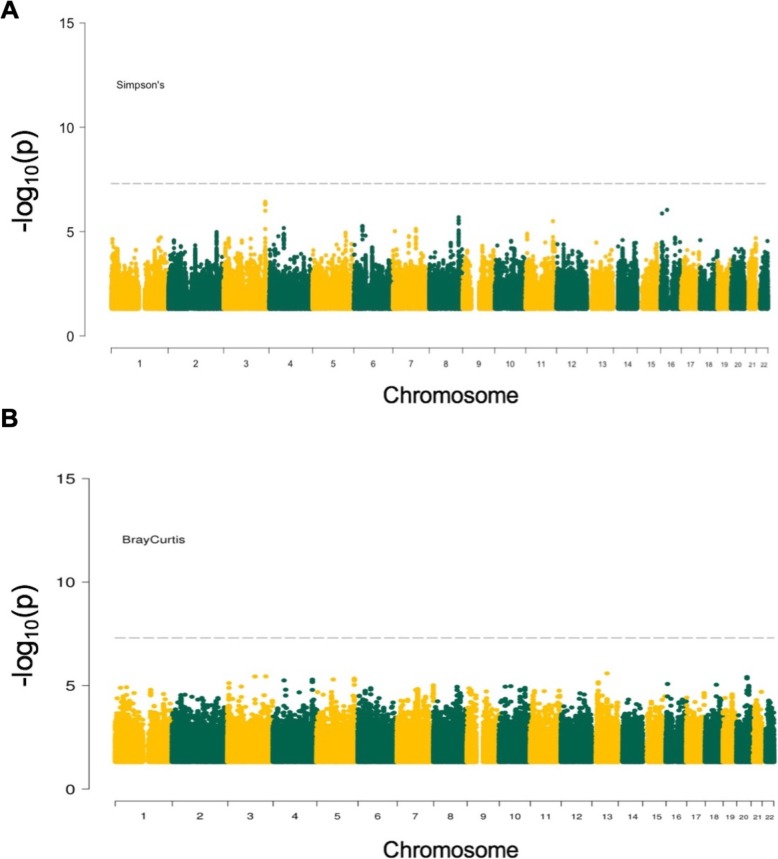
Background: The gut microbiome is an important determinant of human health. Its composition has been shown to be influenced by multiple environmental factors and likely by host genetic variation. In the framework of the Milieu Intérieur Consortium, a total of 1000 healthy individuals of western European ancestry, with a 1:1 sex ratio and evenly stratified across five decades of life (age 20–69), were recruited. We generated 16S ribosomal RNA profiles from stool samples for 858 participants. We investigated genetic and non-genetic factors that contribute to individual differences in fecal microbiome composition. Results: Among 110 demographic, clinical, and environmental factors, 11 were identified as significantly correlated with α -diversity, ß -diversity, or abundance of specific microbial communities in multivariable models. Age and blood alanine aminotransferase levels showed the strongest associations with microbiome diversity. In total, all non-genetic factors explained 16.4% of the variance. We then searched for associations between > 5 million single nucleotide polymorphisms and the same indicators of fecal microbiome diversity, including the significant non-genetic factors as covariates. No genome-wide significant associations were identified after correction for multiple testing. A small fraction of previously reported associations between human genetic variants and specific taxa could be replicated in our cohort, while no replication was observed for any of the diversity metrics. Conclusion: In a well-characterized cohort of healthy individuals, we identified several non-genetic variables associated with fecal microbiome diversity. In contrast, host genetics only had a negligible influence. Demographic and environmental factors are thus the main contributors to fecal microbiome composition in healthy individuals. Trial registration: ClinicalTrials.gov identifier NCT01699893
Overview
The claims and statistics of this paper haven’t been checked yet.
Free: it reads the open-access text and checks the first 5 claims that cite a source we can check. Create a free account to check every claim.
Integrity signals
Registry
Cites
Statistics
Figures
Verification
Claims the paper makes
The claims and statistics of this paper haven’t been checked yet.
Free: it reads the open-access text and checks the first 5 claims that cite a source we can check. Create a free account to check every claim.
Claims other papers make about this one
Each is checked against this paper’s own text: does it say what the citing paper says it does?
The source backs part of the claim, not all of it — or backs it for a different population, condition or comparison.
In the citing paper
“The top contributors were age and sex, with lesser contributions from diet, such as consumption of raw fruit and cooked and cured meats, as well as frequency of fast food consumption, in line with previous reports of 16S rRNA analyses from this cohort (Partula et al., 2019; Scepanovic et al., 2019).”
From Gut microbiome stability and dynamics in healthy donors and patients with non-gastrointestinal cancers (2021) · cites this paper as Scepanovic et al., 2019
Experimental — accuracy not yet measured
Self-check
Percentages, sums and reported differences re-computed from the paper’s own numbers.
The self-check needs the paper’s full text.
Citations
Cites
SPAdes: A New Genome Assembly Algorithm and Its Applications to Single-Cell Sequencing
Bankevich, A., Nurk, S., Antipov, D., Gurevich, A. A., Dvorkin, M., Kulikov, A. S., Lesin, V. M., Nikolenko, S. I., Pham, S., Prjibelski, A. D., et al. (2012) · Journal of Computational Biology · doi:10.1089/cmb.2012.0021 · Cited by 25,987 · cited 2×
“Raw reads were trimmed using sickle [43], then error corrected using SPAdes [44] and merged using PEAR [45].”
Methodvegan: Community Ecology Package
Oksanen, J., Simpson, G. L., Blanchet, F. G., Kindt, R., Legendre, P., Minchin, P. R., O'Hara, R. B., Solymos, P., Stevens, M. H. H., Szoecs, E., et al. (2001) · CRAN: Contributed Packages · doi:10.32614/cran.package.vegan · Cited by 22,615
UCHIME improves sensitivity and speed of chimera detection
Edgar, R. C., Haas, B. J., Clemente, J. C., Quince, C., & Knight, R. (2011) · Bioinformatics · doi:10.1093/bioinformatics/btr381 · Cited by 15,114
FastTree 2 – Approximately Maximum-Likelihood Trees for Large Alignments
Price, M. N., Dehal, P. S., & Arkin, A. P. (2010) · PLoS ONE · doi:10.1371/journal.pone.0009490 · Cited by 14,894
mice: Multivariate Imputation by Chained Equations in R
Buuren, S. V., & Groothuis-Oudshoorn, K. (2011) · Journal of Statistical Software · doi:10.18637/jss.v045.i03 · Cited by 13,870
Second-generation PLINK: rising to the challenge of larger and richer datasets
Chang, C. C., Chow, C. C., Tellier, L. C., Vattikuti, S., Purcell, S. M., & Lee, J. J. (2015) · Gigascience · doi:10.1186/s13742-015-0047-8 · Cited by 12,709
Structure, function and diversity of the healthy human microbiome
The Human Microbiome Project Consortium (2012) · Nature · doi:10.1038/nature11234 · Cited by 11,726
A human gut microbial gene catalogue established by metagenomic sequencing
MetaHIT Consortium, Qin, J., Li, R., Raes, J., Arumugam, M., Burgdorf, K. S., Manichanh, C., Nielsen, T., Pons, N., Levenez, F., et al. (2010) · Nature · doi:10.1038/nature08821 · Cited by 11,624
VSEARCH: a versatile open source tool for metagenomics
(2016) · doi:10.7717/peerj.2584 · Cited by 10,773
Human gut microbiome viewed across age and geography
Yatsunenko, T., Rey, F. E., Manary, M. J., Trehan, I., Dominguez-Bello, M. G., Contreras, M., Magris, M., Hidalgo, G., Baldassano, R. N., Anokhin, A. P., et al. (2012) · Nature · doi:10.1038/nature11053 · Cited by 7,815 · cited 2×
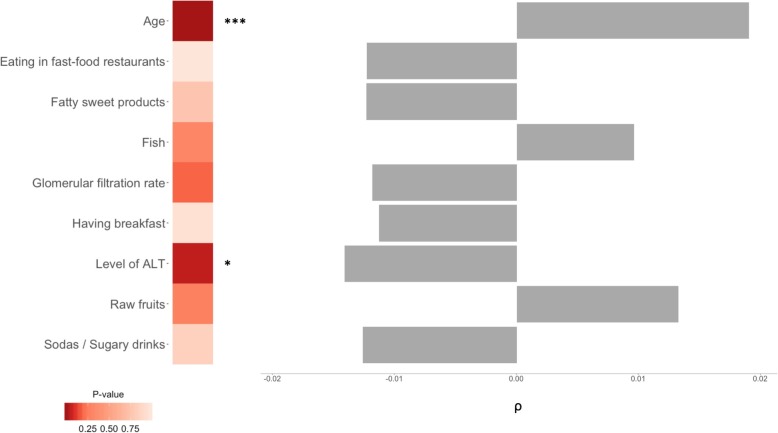
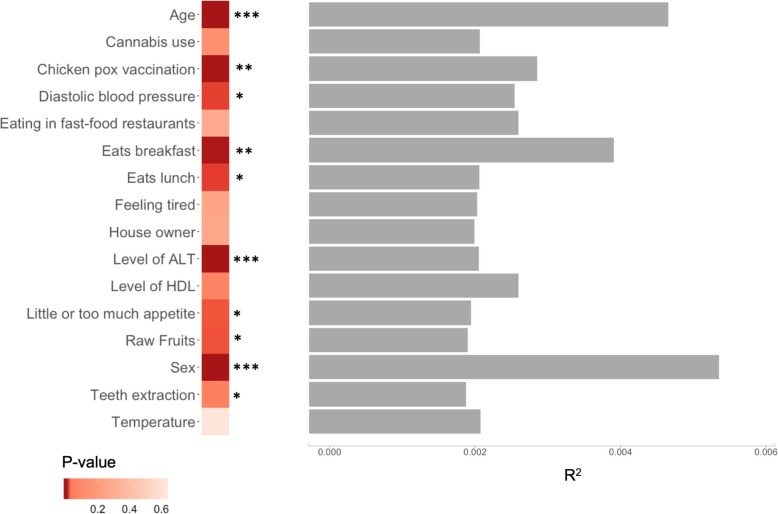
“In line with previous reports [6, 14, 26], we observed sex and age as the strongest influencers on all β-diversity indexes, with the lowest association p values”
BackgroundResultKozich, J. J., Westcott, S. L., Baxter, N. T., Highlander, S. K., & Schloss, P. D. (2013) · Applied and Environmental Microbiology · doi:10.1128/aem.01043-13 · Cited by 7,112
Changes of Intestinal Functions in Liver Cirrhosis
Fukui, H., & Wiest, R. (2016) · Inflammatory Intestinal Diseases · doi:10.1159/000444436 · Cited by 6,808
Vegan : community ecology package. R package version 1.17-9
Oksanen, J. (2007) · Medical Entomology and Zoology · Cited by 6,549
Population Structure and Eigenanalysis
Patterson, N., Price, A. L., & Reich, D. (2006) · PLoS Genetics · doi:10.1371/journal.pgen.0020190 · Cited by 5,280
The Ribosomal Database Project: improved alignments and new tools for rRNA analysis
Cole, J. R., Wang, Q., Cardenas, E., Fish, J., Chai, B., Farris, R. J., Kulam-Syed-Mohideen, A. S., McGarrell, D. M., Marsh, T., Garrity, G. M., et al. (2009) · Nucleic Acids Research · doi:10.1093/nar/gkn879 · Cited by 4,762
Metagenomic Analysis of the Human Distal Gut Microbiome
Gill, S. R., Pop, M., DeBoy, R. T., Eckburg, P. B., Turnbaugh, P. J., Samuel, B. S., Gordon, J. I., Relman, D. A., Fraser-Liggett, C. M., & Nelson, K. E. (2006) · Science · doi:10.1126/science.1124234 · Cited by 4,699 · cited 2×
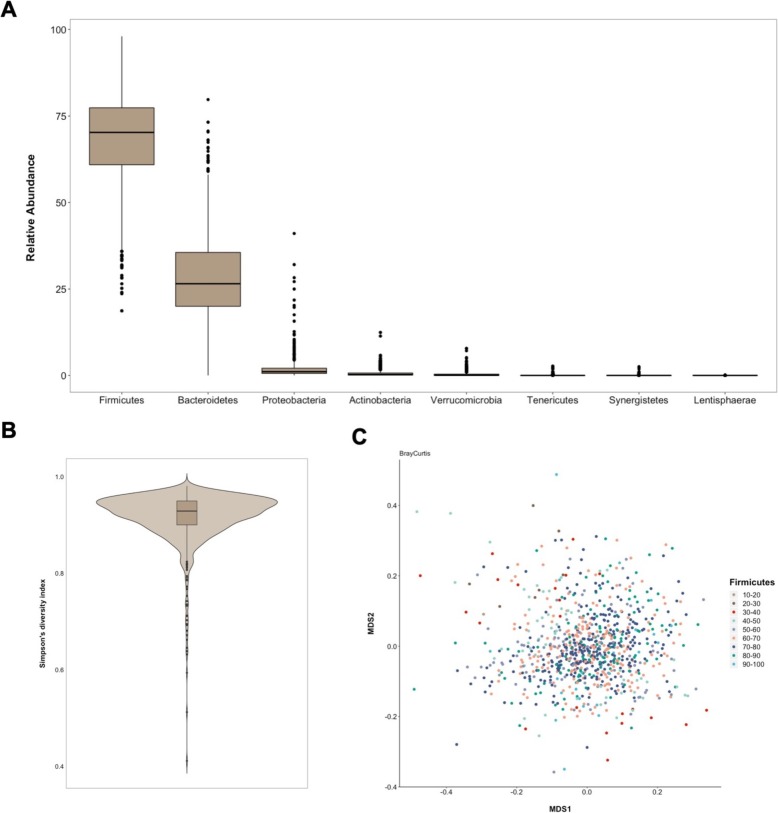
“Typically, the human gut microbiome is dominated by five bacterial phyla: Firmicutes, Bacteroidetes, Proteobacteria, Actinobacteria and Verrucomicrobia [6, 7].”
BackgroundPEAR: a fast and accurate Illumina Paired-End reAd mergeR
Zhang, J., Kobert, K., Flouri, T., & Stamatakis, A. (2014) · Bioinformatics · doi:10.1093/bioinformatics/btt593 · Cited by 4,497
Gut microbiota in health and disease
Sekirov, I., Russell, S. L., Antunes, L. C. M., & Finlay, B. B. (2010) · Physiological Reviews · doi:10.1152/physrev.00045.2009 · Cited by 4,182 · cited 1×
“through a range of different functions [1].”
Robust relationship inference in genome-wide association studies
Manichaikul, A., Mychaleckyj, J. C., Rich, S. S., Daly, K., Sale, M., & Chen, W.-M. (2010) · Bioinformatics · doi:10.1093/bioinformatics/btq559 · Cited by 3,541
Dynamics and Stabilization of the Human Gut Microbiome during the First Year of Life
Bäckhed, F., Roswall, J., Peng, Y., Feng, Q., Jia, H., Kovatcheva-Datchary, P., Li, Y., Xia, Y., Xie, H., Zhong, H., et al. (2015) · Cell Host & Microbe · doi:10.1016/j.chom.2015.04.004 · Cited by 3,315
Human Genetics Shape the Gut Microbiome
Goodrich, J. K., Waters, J. L., Poole, A. C., Sutter, J. L., Koren, O., Blekhman, R., Beaumont, M., Van Treuren, W., Knight, R., Bell, J. T., et al. (2014) · Cell · doi:10.1016/j.cell.2014.09.053 · Cited by 3,164
Personalized nutrition by prediction of glycemic responses
Zeevi, D., Korem, T., Zmora, N., Israeli, D., Rothschild, D., Weinberger, A., Ben-Yacov, O., Lador, D., Avnit-Sagi, T., Lotan-Pompan, M., et al. (2015) · Cell · doi:10.1016/j.cell.2015.11.001 · Cited by 2,929
Environment dominates over host genetics in shaping human gut microbiota
Rothschild, D., Weissbrod, O., Barkan, E., Kurilshikov, A., Korem, T., Zeevi, D., Costea, P. I., Godneva, A., Kalka, I. N., Bar, N., et al. (2018) · Nature · doi:10.1038/nature25973 · Cited by 2,859
A reference panel of 64,976 haplotypes for genotype imputation
the Haplotype Reference Consortium (2016) · Nature Genetics · doi:10.1038/ng.3643 · Cited by 2,836
Dysfunction of the intestinal microbiome in inflammatory bowel disease and treatment
Morgan, X. C., Tickle, T. L., Sokol, H., Gevers, D., Devaney, K. L., Ward, D. V., Reyes, J. A., Shah, S. A., LeLeiko, N., Snapper, S. B., et al. (2012) · Genome Biology · doi:10.1186/gb-2012-13-9-r79 · Cited by 2,713
Population-level analysis of gut microbiome variation
Falony, G., Joossens, M., Vieira-Silva, S., Wang, J., Darzi, Y., Faust, K., Kurilshikov, A., Bonder, M. J., Valles-Colomer, M., Vandeputte, D., et al. (2016) · Science · doi:10.1126/science.aad3503 · Cited by 2,400 · cited 4×
“Multiple studies have shown that diet and medications are the main forces influencing gut microbial diversity [15, 16, 17, 18, 19, 20, 21, 22].”
BackgroundResultInfluentialThe Long-Term Stability of the Human Gut Microbiota
Faith, J. J., Guruge, J. L., Charbonneau, M., Subramanian, S., Seedorf, H., Goodman, A. L., Clemente, J. C., Knight, R., Heath, A. C., Leibel, R. L., et al. (2013) · Science · doi:10.1126/science.1237439 · Cited by 2,058
Blundell, J. E., Baker, J. L., Boyland, E., Blaak, E., Charzewska, J., de Henauw, S., Frühbeck, G., Gonzalez-Gross, M., Hebebrand, J., Holm, L., et al. (2017) · Obesity Facts · doi:10.1159/000455952 · Cited by 1,945
Population-based metagenomics analysis reveals markers for gut microbiome composition and diversity
Zhernakova, A., Kurilshikov, A., Bonder, M. J., Tigchelaar, E. F., Schirmer, M., Vatanen, T., Mujagic, Z., Vila, A. V., Falony, G., Vieira-Silva, S., et al. (2016) · Science · doi:10.1126/science.aad3369 · Cited by 1,914
Lloyd-Price, J., Abu-Ali, G., & Huttenhower, C. (2016) · Genome Medicine · doi:10.1186/s13073-016-0307-y · Cited by 1,891
Reference-based phasing using the Haplotype Reference Consortium panel
Loh, P.-R., Danecek, P., Palamara, P. F., Fuchsberger, C., A Reshef, Y., K Finucane, H., Schoenherr, S., Forer, L., McCarthy, S., Abecasis, G. R., et al. (2016) · Nature Genetics · doi:10.1038/ng.3679 · Cited by 1,723
Improved extraction of PCR-quality community DNA from digesta and fecal samples
Yu, Z., & Morrison, M. (2004) · BioTechniques · doi:10.2144/04365st04 · Cited by 1,664
Odamaki, T., Kato, K., Sugahara, H., Hashikura, N., Takahashi, S., Xiao, J.-Z., Abe, F., & Osawa, R. (2016) · BMC Microbiology · doi:10.1186/s12866-016-0708-5 · Cited by 1,521
The gut-liver axis and the intersection with the microbiome
Tripathi, A., Debelius, J., Brenner, D. A., Karin, M., Loomba, R., Schnabl, B., & Knight, R. (2018) · Nature Reviews Gastroenterology & Hepatology · doi:10.1038/s41575-018-0011-z · Cited by 1,480 · cited 1×
“Indeed, much work is still needed to get a better understanding of the interplay between the gut microbiome and liver disease [31].”
BackgroundInfernal 1.0: inference of RNA alignments
Nawrocki, E. P., Kolbe, D. L., & Eddy, S. R. (2009) · Bioinformatics · doi:10.1093/bioinformatics/btp157 · Cited by 1,436
Signals from the gut microbiota to distant organs in physiology and disease
Schroeder, B. O., & Bäckhed, F. (2016) · Nature Medicine · doi:10.1038/nm.4185 · Cited by 1,409
Strains, functions and dynamics in the expanded Human Microbiome Project
Lloyd-Price, J., Mahurkar, A., Rahnavard, G., Crabtree, J., Orvis, J., Hall, A. B., Brady, A., Creasy, H. H., McCracken, C., Giglio, M. G., et al. (2017) · Nature · doi:10.1038/nature23889 · Cited by 1,267
Genetic determinants of the gut microbiome in UK twins
Goodrich, J. K., Davenport, E. R., Beaumont, M., Jackson, M. A., Knight, R., Ober, C., Spector, T. D., Bell, J. T., Clark, A. G., & Ley, R. E. (2016) · Cell Host & Microbe · doi:10.1016/j.chom.2016.04.017 · Cited by 1,048
The Human Gut Microbiome: From Association to Modulation
Schmidt, T. S. B., Raes, J., & Bork, P. (2018) · Cell · doi:10.1016/j.cell.2018.02.044 · Cited by 845
Microbial strain-level population structure and genetic diversity from metagenomes
Truong, D. T., Tett, A., Pasolli, E., Huttenhower, C., & Segata, N. (2017) · Genome Research · doi:10.1101/gr.216242.116 · Cited by 839
The effect of host genetics on the gut microbiome
Bonder, M. J., Kurilshikov, A., Tigchelaar, E. F., Mujagic, Z., Imhann, F., Vila, A. V., Deelen, P., Vatanen, T., Schirmer, M., Smeekens, S. P., et al. (2016) · Nature Genetics · doi:10.1038/ng.3663 · Cited by 819
The microbiome in infectious disease and inflammation
Honda, K., & Littman, D. R. (2012) · Annual Review of Immunology · doi:10.1146/annurev-immunol-020711-074937 · Cited by 791
Host genetic variation impacts microbiome composition across human body sites
Blekhman, R., Goodrich, J. K., Huang, K., Sun, Q., Bukowski, R., Bell, J. T., Spector, T. D., Keinan, A., Ley, R. E., Gevers, D., et al. (2015) · Genome Biology · doi:10.1186/s13059-015-0759-1 · Cited by 745
The VGAM Package for Categorical Data Analysis
Yee, T. W. (2010) · Journal of Statistical Software · doi:10.18637/jss.v032.i10 · Cited by 651
Imputing Amino Acid Polymorphisms in Human Leukocyte Antigens
Jia, X., Han, B., Onengut-Gumuscu, S., Chen, W.-M., Concannon, P. J., Rich, S. S., Raychaudhuri, S., & de Bakker, P. I. W. (2013) · PLoS ONE · doi:10.1371/journal.pone.0064683 · Cited by 645
An insider's perspective: Bacteroides as a window into the microbiome
Wexler, A. G., & Goodman, A. L. (2017) · Nature Microbiology · doi:10.1038/nmicrobiol.2017.26 · Cited by 641
Wang, J., Thingholm, L. B., Skiecevičienė, J., Rausch, P., Kummen, M., Hov, J. R., Degenhardt, F., Heinsen, F.-A., Rühlemann, M. C., Szymczak, S., et al. (2016) · Nature Genetics · doi:10.1038/ng.3695 · Cited by 625
Jackson, M. A., Verdi, S., Maxan, M.-E., Shin, C. M., Zierer, J., Bowyer, R. C. E., Martin, T., Williams, F. M. K., Menni, C., Bell, J. T., et al. (2018) · Nature Communications · doi:10.1038/s41467-018-05184-7 · Cited by 616
A General Approach for Haplotype Phasing across the Full Spectrum of Relatedness
O'Connell, J., Gurdasani, D., Delaneau, O., Pirastu, N., Ulivi, S., Cocca, M., Traglia, M., Huang, J., Huffman, J. E., Rudan, I., et al. (2014) · PLoS Genetics · doi:10.1371/journal.pgen.1004234 · Cited by 593
A human gut bacterial genome and culture collection for improved metagenomic analyses
Forster, S. C., Kumar, N., Anonye, B. O., Almeida, A., Viciani, E., Stares, M. D., Dunn, M., Mkandawire, T. T., Zhu, A., Shao, Y., et al. (2019) · Nature Biotechnology · doi:10.1038/s41587-018-0009-7 · Cited by 580
Association of host genome with intestinal microbial composition in a large healthy cohort
GEM Project Research Consortium, Turpin, W., Espin-Garcia, O., Xu, W., Silverberg, M. S., Kevans, D., Smith, M. I., Guttman, D. S., Griffiths, A., Panaccione, R., et al. (2016) · Nature Genetics · doi:10.1038/ng.3693 · Cited by 460
Rhea: a transparent and modular R pipeline for microbial profiling based on 16S rRNA gene amplicons
Lagkouvardos, I., Fischer, S., Kumar, N., & Clavel, T. (2017) · PeerJ · doi:10.7717/peerj.2836 · Cited by 429
The Microbiome and Human Biology
Knight, R., Callewaert, C., Marotz, C., Hyde, E. R., Debelius, J. W., McDonald, D., & Sogin, M. L. (2017) · Annual Review of Genomics and Human Genetics · doi:10.1146/annurev-genom-083115-022438 · Cited by 373
Predominant Role of Host Genetics in Controlling the Composition of Gut Microbiota
Khachatryan, Z. A., Ktsoyan, Z. A., Manukyan, G. P., Kelly, D., Ghazaryan, K. A., & Aminov, R. I. (2008) · PLoS ONE · doi:10.1371/journal.pone.0003064 · Cited by 322
A Taxonomic Signature of Obesity in the Microbiome? Getting to the Guts of the Matter
Finucane, M. M., Sharpton, T. J., Laurent, T. J., & Pollard, K. S. (2014) · PLoS ONE · doi:10.1371/journal.pone.0084689 · Cited by 321
The Milieu Intérieur Consortium, Patin, E., Hasan, M., Bergstedt, J., Rouilly, V., Libri, V., Urrutia, A., Alanio, C., Scepanovic, P., Hammer, C., et al. (2018) · Nature Immunology · doi:10.1038/s41590-018-0049-7 · Cited by 296
Self-citationGenome-Wide Association Studies of the Human Gut Microbiota
Davenport, E. R., Cusanovich, D. A., Michelini, K., Barreiro, L. B., Ober, C., & Gilad, Y. (2015) · PLOS ONE · doi:10.1371/journal.pone.0140301 · Cited by 251
Vatanen, T., Plichta, D. R., Somani, J., Münch, P. C., Arthur, T. D., Hall, A. B., Rudolf, S., Oakeley, E. J., Ke, X., Young, R. A., et al. (2018) · Nature Microbiology · doi:10.1038/s41564-018-0321-5 · Cited by 225
for The Milieu Intérieur Consortium, Scepanovic, P., Alanio, C., Hammer, C., Hodel, F., Bergstedt, J., Patin, E., Thorball, C. W., Chaturvedi, N., Charbit, B., et al. (2018) · Genome Medicine · doi:10.1186/s13073-018-0568-8 · Cited by 194 · cited 2×
“As described previously [54], we used Positional Burrows-Wheeler Transform for genotype imputation, starting with the 661,332 quality-controlled SNPs genotyped on the HumanOmniExpress array.”
MethodSelf-citationHost genetic variation and its microbiome interactions within the Human Microbiome Project
Kolde, R., Franzosa, E. A., Rahnavard, G., Hall, A. B., Vlamakis, H., Stevens, C., Daly, M. J., Xavier, R. J., & Huttenhower, C. (2018) · Genome Medicine · doi:10.1186/s13073-018-0515-8 · Cited by 182
Meta-analysis of human genome-microbiome association studies: the MiBioGen consortium initiative
MiBioGen Consortium Initiative, Wang, J., Kurilshikov, A., Radjabzadeh, D., Turpin, W., Croitoru, K., Bonder, M. J., Jackson, M. A., Medina-Gomez, C., Frost, F., et al. (2018) · Microbiome · doi:10.1186/s40168-018-0479-3 · Cited by 181
Willems, A. (2014) · The Prokaryotes · doi:10.1007/978-3-642-30197-1_238 · Cited by 181
Partula, V., Mondot, S., Torres, M. J., Kesse-Guyot, E., Deschasaux, M., Assmann, K., Latino-Martel, P., Buscail, C., Julia, C., Galan, P., et al. (2019) · The American Journal of Clinical Nutrition · doi:10.1093/ajcn/nqz029 · Cited by 100
Self-citationThe Milieu Intérieur study — An integrative approach for study of human immunological variance
Thomas, S., Rouilly, V., Patin, E., Alanio, C., Dubois, A., Delval, C., Marquier, L.-G., Fauchoux, N., Sayegrih, S., Vray, M., et al. (2015) · Clinical Immunology · doi:10.1016/j.clim.2014.12.004 · Cited by 96 · cited 4×
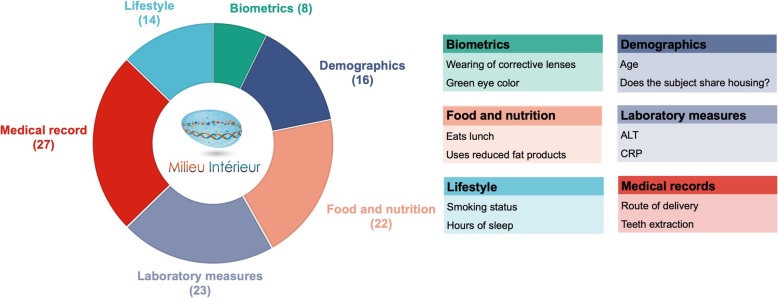
“A large number of demographical, environmental and clinical variables are available in the Milieu Intérieur cohort [30].”
BackgroundMethodInfluentialSelf-citationImputation of KIR Types from SNP Variation Data
Vukcevic, D., Traherne, J. A., Næss, S., Ellinghaus, E., Kamatani, Y., Dilthey, A., Lathrop, M. G., Karlsen, T. H., Franke, A., Moffatt, M. F., et al. (2015) · The American Journal of Human Genetics · doi:10.1016/j.ajhg.2015.09.005 · Cited by 79
Madden, R. H., Bryder, M. J., & POOLE, N. J. (1982) · International Journal of Systematic Bacteriology · doi:10.1099/00207713-32-1-87 · Cited by 71
Cuív, P. Ó., de Cárcer, D. A., Jones, M., Klaassens, E. S., Worthley, D. L., Whitehall, V., Kang, S., McSweeney, C. S., Leggett, B., & Morrison, M. (2010) · Microbial Ecology · doi:10.1007/s00248-010-9771-x · Cited by 68
MicrobiomeGWAS: A Tool for Identifying Host Genetic Variants Associated with Microbiome Composition
Hua, X., Song, L., Yu, G., Vogtmann, E., Goedert, J. J., Abnet, C. C., Landi, M. T., & Shi, J. (2022) · Genes · doi:10.3390/genes13071224 · Cited by 39
MicrobiomeGWAS: a tool for identifying host genetic variants associated with microbiome compositionPreprint
Hua, X., Song, L., Yu, G., et al. (2015) · bioRxiv (Cold Spring Harbor Laboratory) · doi:10.1101/031187 · Cited by 28
Research works printed but not linked: 1
- Joshi NA Fass JN Sickle: a sliding-window, adaptive, quality-based trimming tool for FastQ files 2011
Cited by
The Gut Virome Database Reveals Age-Dependent Patterns of Virome Diversity in the Human Gut
Gregory, A. C., Zablocki, O., Zayed, A. A., Howell, A., Bolduc, B., & Sullivan, M. B. (2020) · Cell Host & Microbe · doi:10.1016/j.chom.2020.08.003 · Cited by 658
“…the human gut bacteriome displays distinct, age-dependent patterns of diversity (i.e., species richness, assessed with 16S rRNA sequencing), in response to an array of factors including immune status fluctuations during life (Claesson et al., 2012; Odamaki et al., 2016; Scepanovic et al., 2019).”
BackgroundProbiotic Gastrointestinal Transit and Colonization After Oral Administration: A Long Journey
Han, S., Lu, Y., Xie, J., Fei, Y., Zheng, G., Wang, Z., Liu, J., Lv, L., Ling, Z., Berglund, B., et al. (2021) · Frontiers in Cellular and Infection Microbiology · doi:10.3389/fcimb.2021.609722 · Cited by 481
Drug-microbiota interactions: an emerging priority for precision medicine
Zhao, Q., Chen, Y., Huang, W., Zhou, H., & Zhang, W. (2023) · Signal Transduction and Targeted Therapy · doi:10.1038/s41392-023-01619-w · Cited by 268
Gut–Skin Axis: Unravelling the Connection between the Gut Microbiome and Psoriasis
Thye, A. Y.-K., Bah, Y.-R., Law, J. W.-F., Tan, L. T.-H., He, Y.-W., Wong, S.-H., Thurairajasingam, S., Chan, K.-G., Lee, L.-H., & Letchumanan, V. (2022) · Biomedicines · doi:10.3390/biomedicines10051037 · Cited by 156
Amin, N., Liu, J., Bonnechère, B., MahmoudianDehkordi, S., Arnold, M., Batra, R., Chiou, Y., Fernandes, M., Ikram, M. A., Kraaij, R., et al. (2023) · JAMA Psychiatry · doi:10.1001/jamapsychiatry.2023.0685 · Cited by 168
Metadata
- Authors
- The Milieu Intérieur Consortium, Scepanovic, P., Hodel, F., Mondot, S., Partula, V., Byrd, A., Hammer, C., Alanio, C., Bergstedt, J., Patin, E., Touvier, M., Lantz, O., Albert, M. L., Duffy, D., Quintana-Murci, L., & Fellay, J.
- Affiliations
- SIB Swiss Institute of Bioinformatics (CH)
- AgroParisTech (FR)
- Inserm (FR)
- Genentech (US)
- University of Pennsylvania (US)
- Lund University (SE)
- Corresponding author
- Fellay, Jacques
- ORCID
- Venue
- Microbiome
- Published
- 2019-09-13
- Volume
- 7
- Issue
- 1
- Pages
- 130-130
- ISSN
- 2049-2618 (ISSN-L)
- PMC
- PMC6744716
- OpenAlex
- W2972758657
- Cited by
- 171
- References
- 68
- Citations by year
- 2026: 15 · 2025: 20 · 2024: 27 · 2023: 27 · 2022: 32 · 2021: 29 · 2020: 19 · 2019: 2
- FWCI
- 6.79
- Type
- journal article
- Language
- en
- Open access
- gold
- doi.org
- Licence
- cc-by
- creativecommons.org/licenses/by/4.0/ (tdm)
- creativecommons.org/licenses/by/4.0/ (vor)
- Locations
- Microbiome (publishedVersion, cc-by)
- bioRxiv (Cold Spring Harbor Laboratory) (acceptedVersion, cc-by-nc-nd)
- PubMed Central (publishedVersion, cc-by)
- PubMed (publishedVersion)
- HAL (submittedVersion, cc-by)
- DOAJ (DOAJ: Directory of Open Access Journals) (submittedVersion, cc-by-sa)
- Infoscience (Ecole Polytechnique Fédérale de Lausanne) (submittedVersion, cc-by-nc-nd)
- Lund University Publications (Lund University) (submittedVersion)
- Funders
- Agence Nationale de la Recherche (10-LABX-69-01)
- Schweizerischer Nationalfonds zur Förderung der Wissenschaftlichen Forschung (31003A_175603)
- Topics
- Life Sciences › Biochemistry, Genetics and Molecular Biology › Molecular Biology › Gut microbiota and health
- Health Sciences › Dentistry › Periodontics › Oral microbiology and periodontitis research
- Physical Sciences › Environmental Science › Ecology › Microbial Community Ecology and Physiology
- Keywords
- gut microbiota, host genetics, single nucleotide polymorphisms, environmental factors, demographic factors, age, alanine aminotransferase, alpha diversity, beta diversity, 16S rRNA, healthy individuals, microbial taxa abundance
- MeSH terms
- Gastrointestinal Microbiome, Adult, Aged, Bacteria, Demography, Environment, Feces, Female, Humans, Life Style, Male, Middle Aged, Cohort Studies, Young Adult, Healthy Volunteers
About these checks
Registry, retraction, Cites and statistics results are computed, not judged, with one exception: a printed reference that no index lists is read once by a model before it counts as a citation error. Claims are extracted by a model and kept only when their quote appears verbatim in the text; each cited source is then checked, with a model’s help, for whether it says what the claim relies on. Those verdicts can be wrong — read the claim’s quote and the cited source before relying on one.
Statistics and arithmetic are recomputed, not judged.
Confidence bands are shown only for fields calibrated on our annotated test set. None is calibrated yet, so no band is shown.
What counts as a claim ›How we measure confidence ›How we check this ›
Are you an author, or do you see a problem with this page? Request a review
Data sources
Bibliographic data: Semantic Scholar, OpenAlex, Crossref.
Contains information from the Semantic Scholar Academic Graph Datasets, made available under the ODC Attribution License (ODC-BY 1.0).
Semantic Scholar’s data is described in: Kinney, R., et al. (2023). The Semantic Scholar Open Data Platform. arXiv:2301.10140.
