

Reservoirs of antimicrobial resistance genes in retail raw milk
Open accessThe DOI matches its Crossref record; 65 of the 65 references it cites were found in a registry or an index.
Abstract
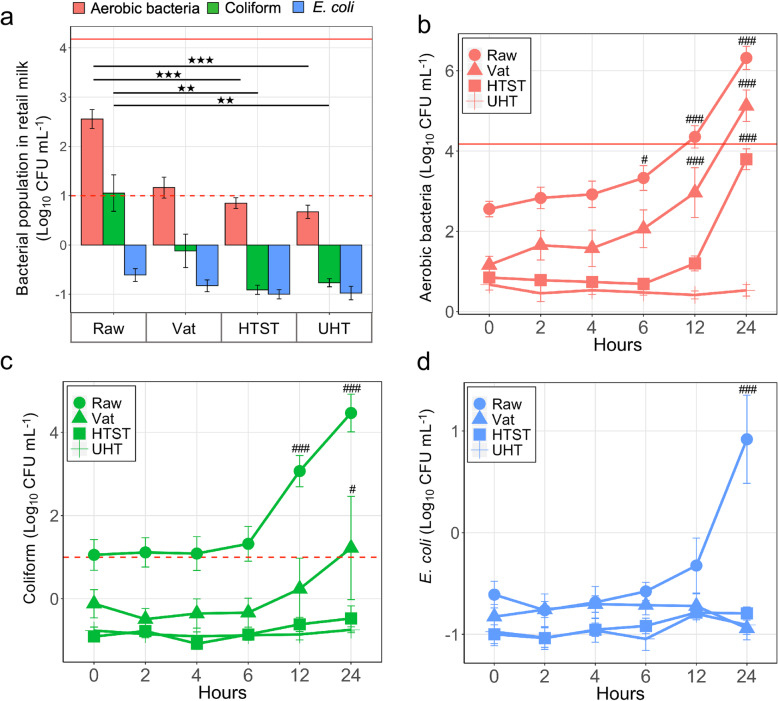
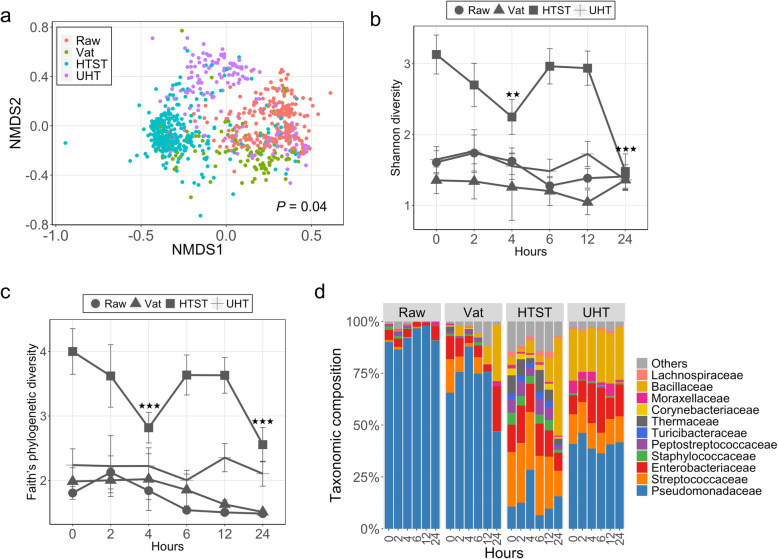
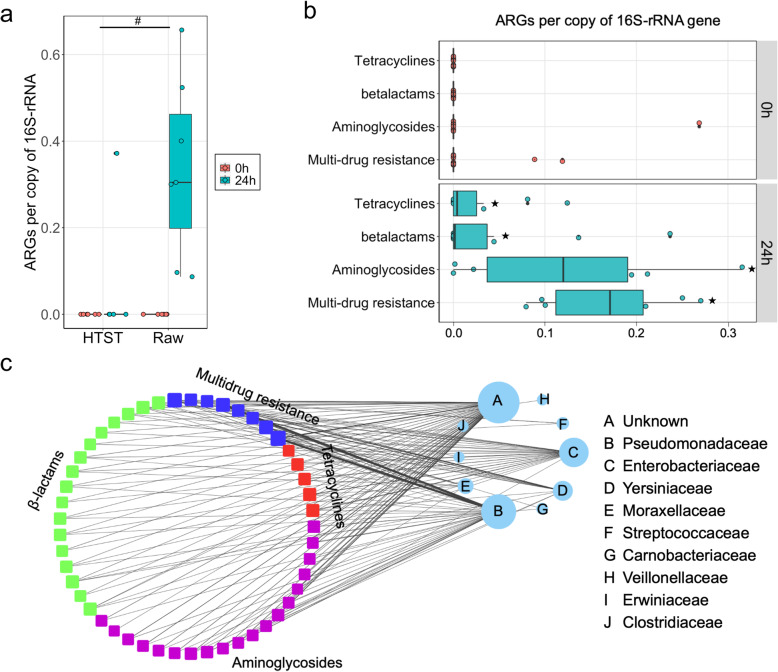
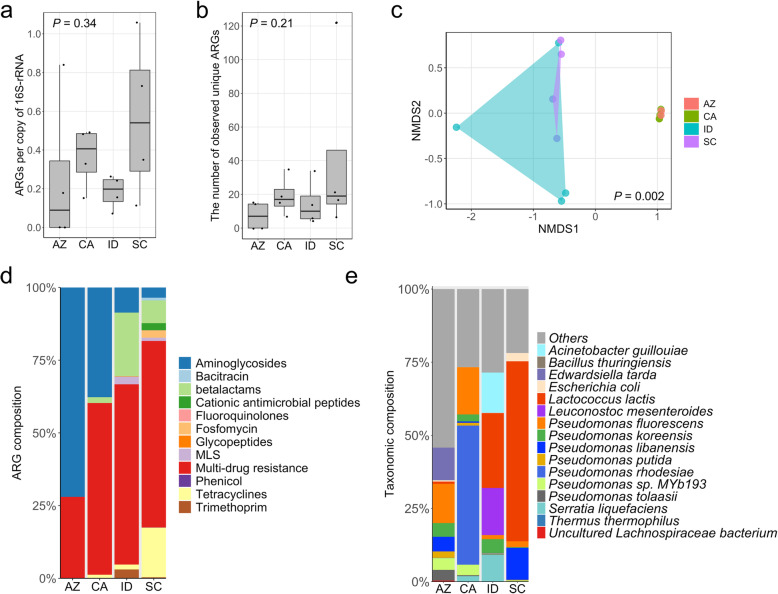
Background: It has been estimated that at least 3% of the USA population consumes unpasteurized (raw) milk from animal sources, and the demand to legalize raw milk sales continues to increase. However, consumption of raw milk can cause foodborne illness and be a source of bacteria containing transferrable antimicrobial resistance genes (ARGs). To obtain a comprehensive understanding of the microbiome and antibiotic resistome in both raw and processed milk, we systematically analyzed 2034 retail milk samples including unpasteurized milk and pasteurized milk via vat pasteurization, high-temperature-short-time pasteurization, and ultra-pasteurization from the United States using complementary culture-based, 16S rRNA gene, and metagenomic sequencing techniques. Results: Raw milk samples had the highest prevalence of viable bacteria which were measured as all aerobic bacteria, coliform, and Escherichia coli counts, and their microbiota was distinct from other types of milk. 16S rRNA gene sequencing revealed that Pseudomonadaceae dominated raw milk with limited levels of lactic acid bacteria. Among all milk samples, the microbiota remained stable with constant bacterial populations when stored at 4 °C. In contrast, storage at room temperature dramatically enriched the bacterial populations present in raw milk samples and, in parallel, significantly increased the richness and abundance of ARGs. Metagenomic sequencing indicated raw milk possessed dramatically more ARGs than pasteurized milk, and a conjugation assay documented the active transfer of bla CMY-2 , one ceftazidime resistance gene present in raw milk-borne E. coli , across bacterial species. The room temperature-enriched resistome differed in raw milk from distinct geographic locations, a difference likely associated with regionally distinct milk microbiota. Conclusion: Despite advertised “probiotic” effects, our results indicate that raw milk microbiota has minimal lactic acid bacteria. In addition, retail raw milk serves as a reservoir of ARGs, populations of which are readily amplified by spontaneous fermentation. There is an increased need to understand potential food safety risks from improper transportation and storage of raw milk with regard to ARGs.
Overview
The claims and statistics of this paper haven’t been checked yet.
Free: it reads the open-access text and checks the first 5 claims that cite a source we can check. Create a free account to check every claim.
Integrity signals
Registry
Cites
Statistics
Figures
Verification
Claims the paper makes
The claims and statistics of this paper haven’t been checked yet.
Free: it reads the open-access text and checks the first 5 claims that cite a source we can check. Create a free account to check every claim.
Claims other papers make about this one
Each is checked against this paper’s own text: does it say what the citing paper says it does?
The cited source says what the claim attributes to it.
In the citing paper
“Our findings align with the observations of Liu, Zhu, Jay-Russell, Lemay, and Mills (2020), who reported a higher prevalence of ARGs in raw retail milk than in pasteurized milk (J. Liu et al., 2020).”
From Exploring the resistome of probiotics, starter cultures, and cheeses via metagenomic analysis (2025) · cites this paper as J. Liu et al., 2020
Self-check
Percentages, sums and reported differences re-computed from the paper’s own numbers.
The self-check needs the paper’s full text.
Citations
Cites
R: A Language and Environment for Statistical Computing
R Core Team (2025) · doi:10.32614/r.manuals · Cited by 352,181
Fitting Linear Mixed-Effects Models Using lme4
Bates, D., Mächler, M., Bolker, B., & Walker, S. (2015) · Journal of Statistical Software · doi:10.18637/jss.v067.i01 · Cited by 86,835
Trimmomatic: a flexible trimmer for Illumina sequence data
Bolger, A. M., Lohse, M., & Usadel, B. (2014) · Bioinformatics · doi:10.1093/bioinformatics/btu170 · Cited by 65,548 · cited 1×
“36) [61] and merged using FLASH (version 1.”
MethodFast and accurate short read alignment with Burrows-Wheeler transform
Li, H., & Durbin, R. (2009) · Bioinformatics · doi:10.1093/bioinformatics/btp324 · Cited by 58,607
Cytoscape: A software Environment for integrated models of biomolecular interaction networks
Shannon, P., Markiel, A., Ozier, O., Baliga, N. S., Wang, J. T., Ramage, D., Amin, N., Schwikowski, B., & Ideker, T. (2003) · Genome Research · doi:10.1101/gr.1239303 · Cited by 51,888
DADA2: High–resolution sample inference from Illumina amplicon data
Callahan, B. J., McMurdie, P. J., Rosen, M. J., Han, A. W., Johnson, A. J. A., & Holmes, S. P. (2016) · Nature Methods · doi:10.1038/nmeth.3869 · Cited by 35,698 · cited 2×
“The sequence quality control and feature table construction were performed using DADA2 [53] (qiime dada2 denoise-paired --p-trim-left-f 21 --p-trim-left-r 23 --p-trunc-len-f 242 --ptrunc-len-r 250).”
MethodThe SILVA ribosomal RNA gene database project: improved data processing and web-based tools
Quast, C., Pruesse, E., Yilmaz, P., Gerken, J., Schweer, T., Yarza, P., Peplies, J., & Glöckner, F. O. (2012) · Nucleic Acids Research · doi:10.1093/nar/gks1219 · Cited by 33,055 · cited 1×
“Taxonomy was assigned using QIIME2 (qiime feature-classifier classify-sklearn) against the SILVA database (release 132, [60]).”
MethodReproducible, interactive, scalable and extensible microbiome data science using QIIME 2
Bolyen, E., Rideout, J. R., Dillon, M. R., Bokulich, N. A., Abnet, C. C., Al-Ghalith, G. A., Alexander, H., Alm, E. J., Arumugam, M., Asnicar, F., et al. (2019) · Nature Biotechnology · doi:10.1038/s41587-019-0209-9 · Cited by 23,742 · cited 1×
“1, [52]) (qiime tools import --type ‘SampleData [PairedEndSequencesWithQuality]’ --sourceformat PairedEndFastqManifestPhred33).”
FLASH: fast length adjustment of short reads to improve genome assemblies
Magoč, T., & Salzberg, S. L. (2011) · Bioinformatics · doi:10.1093/bioinformatics/btr507 · Cited by 15,366
Simultaneous Inference in General Parametric Models
Hothorn, T., Bretz, F., & Westfall, P. (2008) · Biometrical Journal · doi:10.1002/bimj.200810425 · Cited by 13,847
Li, D., Liu, C.-M., Luo, R., Sadakane, K., & Lam, T.-W. (2015) · Bioinformatics · doi:10.1093/bioinformatics/btv033 · Cited by 9,893
O'Leary, N. A., Wright, M. W., Brister, J. R., Ciufo, S., Haddad, D., McVeigh, R., Rajput, B., Robbertse, B., Smith-White, B., Ako-Adjei, D., et al. (2016) · Nucleic Acids Research · doi:10.1093/nar/gkv1189 · Cited by 6,357 · cited 4×
“Taxonomy profiling of metagenomes were performed using Kraken2 [63] to map against a custom database including RefSeq [64] and 4941 metagenome-assembled rumen genomes [65].”
MethodInfluentialAntibiotic resistance threats in the United States, 2019
(U.S.), C. F. D. C. A. P. (2019) · doi:10.15620/cdc:82532 · Cited by 5,782
Least-Squares Means: The R Package lsmeans
Lenth, R. V. (2016) · Journal of Statistical Software · doi:10.18637/jss.v069.i01 · Cited by 5,075 · cited 1×
“10) in combination with the lsm function in lsmeans package [56] (version 2.”
BackgroundIdentification of acquired antimicrobial resistance genes
Zankari, E., Hasman, H., Cosentino, S., Vestergaard, M., Rasmussen, S., Lund, O., Aarestrup, F. M., & Larsen, M. V. (2012) · Journal of Antimicrobial Chemotherapy · doi:10.1093/jac/dks261 · Cited by 4,980
Carattoli, A., Zankari, E., García-Fernández, A., Voldby Larsen, M., Lund, O., Villa, L., Møller Aarestrup, F., & Hasman, H. (2014) · Antimicrobial Agents and Chemotherapy · doi:10.1128/aac.02412-14 · Cited by 4,877 · cited 1×
“0, [47]) to assess the presence of acquired ARGs and plasmids in E.”
BackgroundKraken: ultrafast metagenomic sequence classification using exact alignments
Wood, D. E., & Salzberg, S. L. (2014) · Genome Biology · doi:10.1186/gb-2014-15-3-r46 · Cited by 4,521 · cited 2×
“For all shotgun metagenomic sequencing involved in this study (i.e., HiSeq and NovaSeq), we obtained sufficient sequencing depth to capture the bacterial species (profiled by Kraken2) and ARGs (identified by MEGARes) in retail milk samples (Supplementary figure 6).”
MethodDavis, N. M., Proctor, D. M., Holmes, S. P., Relman, D. A., & Callahan, B. J. (2018) · Microbiome · doi:10.1186/s40168-018-0605-2 · Cited by 3,493
Reagent and laboratory contamination can critically impact sequence-based microbiome analyses
Salter, S. J., Cox, M. J., Turek, E. M., Calus, S. T., Cookson, W. O., Moffatt, M. F., Turner, P., Parkhill, J., Loman, N. J., & Walker, A. W. (2014) · BMC Biology · doi:10.1186/s12915-014-0087-z · Cited by 3,463 · cited 1×
“In light of the low-biomass nature of milk samples, the inferred microbial ecology from high-throughput sequencing is often mixed with various contaminants [37].”
BackgroundCARD 2020: Antibiotic Resistome Surveillance with the Comprehensive Antibiotic Resistance Database
Alcock, B. P., Raphenya, A. R., Lau, T. T. Y., Tsang, K. K., Bouchard, M., Edalatmand, A., Huynh, W., Nguyen, A.-L. V., Cheng, A. A., Liu, S., et al. (2019) · Nucleic Acids Research · doi:10.1093/nar/gkz935 · Cited by 3,202 · cited 5×
“Sequencing reads did not survive the RGI-based confirmation were excluded from the SAM file, and the remaining alignments were then analyzed through ResistomeAnalyzer (-t 80; at least 80% of nucleotides in the reference sequence that were aligned to by at least one sequence read) to quantify ARGs (https://github.com/c…”
MethodInfluentialDifferential abundance analysis for microbial marker-gene surveys
Paulson, J. N., Stine, O. C., Bravo, H. C., & Pop, M. (2013) · Nature Methods · doi:10.1038/nmeth.2658 · Cited by 2,428 · cited 1×
“Beta diversity was examined with Bray-Curtis distance matrices based on a CSS [57] normalized feature table and was visualized using non-metric multidimensional scaling (NMDS) in R [58].”
MethodBracken: estimating species abundance in metagenomics data
(2016) · doi:10.7717/peerj-cs.104 · Cited by 2,333 · cited 2×
“Lu J, Breitwieser FP, Thielen P, Salzberg SL. Bracken: estimating species abundance in metagenomics data.”
MethodClarridge, J. E. (2004) · Clinical Microbiology Reviews · doi:10.1128/cmr.17.4.840-862.2004 · Cited by 2,148 · cited 1×
“The bacterial species identities were further confirmed by examining the entire 16S rRNA gene via Sanger sequencing [44].”
BackgroundBacterial phylogeny structures soil resistomes across habitats
Forsberg, K. J., Patel, S., Gibson, M. K., Lauber, C. L., Knight, R., Fierer, N., & Dantas, G. (2014) · Nature · doi:10.1038/nature13377 · Cited by 1,287 · cited 1×
“Given that milk microbes could originate from animal skin, feces, and the local environment [31], raw milk samples from different geographical locations likely possess a regional-specific resistome [32].”
BackgroundLi, B., Yang, Y., Ma, L., Ju, F., Guo, F., Tiedje, J. M., & Zhang, T. (2015) · The ISME Journal · doi:10.1038/ismej.2015.59 · Cited by 1,238
The Complex Microbiota of Raw Milk
Quigley, L., O'Sullivan, O., Stanton, C., Beresford, T. P., Ross, R. P., Fitzgerald, G. F., & Cotter, P. D. (2013) · FEMS Microbiology Reviews · doi:10.1111/1574-6976.12030 · Cited by 919 · cited 1×
“The bovine raw milk microbiota has been relatively wellstudied on farms [17, 18], in tanker trucks, and in processing facilities [19], but the microbiome of retail raw and pasteurized milk, remain elusive.”
BackgroundStewart, R. D., Auffret, M. D., Warr, A., Walker, A. W., Roehe, R., & Watson, M. (2019) · Nature Biotechnology · doi:10.1038/s41587-019-0202-3 · Cited by 604 · cited 2×
“Taxonomy profiling of metagenomes were performed using Kraken2 [63] to map against a custom database including RefSeq [64] and 4941 metagenome-assembled rumen genomes [65].”
MethodBengtsson‐Palme, J., Hartmann, M., Eriksson, K. M., Pal, C., Thorell, K., Larsson, D. G. J., & Nilsson, R. H. (2015) · Molecular Ecology Resources · doi:10.1111/1755-0998.12399 · Cited by 459 · cited 1×
“3) [72], and 1432 bp was used for calculations as the average length of 16S rRNA gene.”
MethodDoster, E., Lakin, S. M., Dean, C. J., Wolfe, C., Young, J. G., Boucher, C., Belk, K. E., Noyes, N. R., & Morley, P. S. (2020) · Nucleic Acids Research · doi:10.1093/nar/gkz1010 · Cited by 441 · cited 1×
“This secondary analysis is critical to rule out false-positive ARGs which often require single nucleotide mutations to confer resistance [69].”
BackgroundFood Safety Hazards Associated with Consumption of Raw Milk
Oliver, S. P., Boor, K. J., Murphy, S. C., & Murinda, S. E. (2009) · Foodborne Pathogens and Disease · doi:10.1089/fpd.2009.0302 · Cited by 417
Dangour, A. D., Watson, L., Cumming, O., Boisson, S., Che, Y., Velleman, Y., Cavill, S., Allen, E., & Uauy, R. (2013) · Cochrane Database of Systematic Reviews · doi:10.1002/14651858.cd009382.pub2 · Cited by 374 · cited 1×
“Our findings also have implications for low-income countries, where consumption of unpasteurized dairy products is common [35, 36].”
MEGARes: an antimicrobial resistance database for high throughput sequencing
Lakin, S. M., Dean, C., Noyes, N. R., Dettenwanger, A., Ross, A. S., Doster, E., Rovira, P., Abdo, Z., Jones, K. L., Ruiz, J., et al. (2017) · Nucleic Acids Research · doi:10.1093/nar/gkw1009 · Cited by 369 · cited 3×
“1) [67] using BWA with default settings [68].”
BackgroundMethodThe protective effect of farm milk consumption on childhood asthma and atopy: The GABRIELA study
Loss, G., Apprich, S., Waser, M., Kneifel, W., Genuneit, J., Büchele, G., Weber, J., Sozanska, B., Danielewicz, H., Horak, E., et al. (2011) · Journal of Allergy and Clinical Immunology · doi:10.1016/j.jaci.2011.07.048 · Cited by 290
Waser, M., Michels, K. B., Bieli, C., Flöistrup, H., Pershagen, G., Von Mutius, E., Ege, M., Riedler, J., Schram‐Bijkerk, D., Brunekreef, B., et al. (2007) · Clinical & Experimental Allergy · doi:10.1111/j.1365-2222.2006.02640.x · Cited by 279
The fecal resistome of dairy cattle is associated with diet during nursing
Liu, J., Taft, D. H., Maldonado-Gomez, M. X., Johnson, D., Treiber, M. L., Lemay, D. G., DePeters, E. J., & Mills, D. A. (2019) · Nature Communications · doi:10.1038/s41467-019-12111-x · Cited by 222 · cited 4×
“Metagenomic assembly was employed to track the bacterial host of the observed ARGs [30].”
BackgroundMethodInfluentialSelf-citationNonpasteurized Dairy Products, Disease Outbreaks, and State Laws—United States, 1993–2006
Langer, A. J., Ayers, T., Grass, J., Lynch, M., Angulo, F. J., & Mahon, B. E. (2012) · Emerging Infectious Diseases · doi:10.3201/eid1803.111370 · Cited by 221
Influence of Storage Conditions on the Growth of Pseudomonas Species in Refrigerated Raw Milk
De Jonghe, V., Coorevits, A., Van Hoorde, K., Messens, W., Van Landschoot, A., De Vos, P., & Heyndrickx, M. (2011) · Applied and Environmental Microbiology · doi:10.1128/aem.00521-10 · Cited by 194
Zhao, S., White, D. G., McDermott, P. F., Friedman, S., English, L., Ayers, S., Meng, J., Maurer, J. J., Holland, R., & Walker, R. D. (2001) · Antimicrobial Agents and Chemotherapy · doi:10.1128/aac.45.12.3647-3650.2001 · Cited by 193
Variation in Raw Milk Microbiota Throughout 12 Months and the Impact of Weather Conditions
Li, N., Wang, Y., You, C., Ren, J., Chen, W., Zheng, H., & Liu, Z. (2018) · Scientific Reports · doi:10.1038/s41598-018-20862-8 · Cited by 187 · cited 1×
“The bovine raw milk microbiota has been relatively wellstudied on farms [17, 18], in tanker trucks, and in processing facilities [19], but the microbiome of retail raw and pasteurized milk, remain elusive.”
BackgroundDoyle, C. J., Gleeson, D., O'Toole, P. W., & Cotter, P. D. (2017) · Applied and Environmental Microbiology · doi:10.1128/aem.02694-16 · Cited by 182 · cited 1×
“Given that milk microbes could originate from animal skin, feces, and the local environment [31], raw milk samples from different geographical locations likely possess a regional-specific resistome [32].”
BackgroundCostard, S., Espejo, L., Groenendaal, H., & Zagmutt, F. J. (2017) · Emerging Infectious Diseases · doi:10.3201/eid2306.151603 · Cited by 173
Kable, M. E., Srisengfa, Y., Laird, M., Zaragoza, J., McLeod, J., Heidenreich, J., & Marco, M. L. (2016) · mBio · doi:10.1128/mbio.00836-16 · Cited by 169 · cited 1×
“The bovine raw milk microbiota has been relatively wellstudied on farms [17, 18], in tanker trucks, and in processing facilities [19], but the microbiome of retail raw and pasteurized milk, remain elusive.”
BackgroundAntimicrobial resistance among children in sub-Saharan Africa
Williams, P. C. M., Isaacs, D., & Berkley, J. A. (2018) · The Lancet Infectious Diseases · doi:10.1016/s1473-3099(17)30467-x · Cited by 169 · cited 1×
“Our findings also have implications for low-income countries, where consumption of unpasteurized dairy products is common [35, 36].”
BackgroundHeat Resistant Proteases Produced in Milk by Psychrotorophic Bacteria of Dairy Origin
Adams, D. M., Barach, J. T., & Speck, M. L. (1975) · Journal of Dairy Science · doi:10.3168/jds.s0022-0302(75)84645-5 · Cited by 167
Increased Outbreaks Associated with Nonpasteurized Milk, United States, 2007–2012
Mungai, E. A., Behravesh, C. B., & Gould, L. H. (2015) · Emerging Infectious Diseases · doi:10.3201/eid2101.140447 · Cited by 162
Dröge, J., Gregor, I., & McHardy, A. C. (2015) · Bioinformatics · doi:10.1093/bioinformatics/btu745 · Cited by 155 · cited 1×
“3) [74], a software designed to perform taxonomic analysis of assembled metagenomes, was applied to predict the bacterial origin of contigs.”
MethodGweon, H. S., Shaw, L. P., Swann, J., Maio, N. D., AbuOun, M., Niehus, R., Hubbard, A. T. M., Bowes, M. J., Bailey, M., Peto, T., et al. (2019) · Environmental Microbiome · doi:10.1186/s40793-019-0347-1 · Cited by 145 · cited 1×
“, increases the rate of false negatives) present in retail milk if the short sequencing reads did not capture the SNP required to confer resistance [39].”
BackgroundIncidence and Diversity of Potentially Highly Heat-Resistant Spores Isolated at Dairy Farms
Scheldeman, P., Pil, A., Herman, L., Vos, P. D., & Heyndrickx, M. (2005) · Applied and Environmental Microbiology · doi:10.1128/aem.71.3.1480-1494.2005 · Cited by 141 · cited 1×
“This is consistent with the fact that HTST milk commonly comes from multiple dairies and bacteria that remain after heat-treatment are likely also diverse [26, 27].”
ResultBracken: Estimating species abundance in metagenomics dataPreprint
Lu, J., Breitwieser, F. P., Thielen, P., et al. (2016) · bioRxiv (Cold Spring Harbor Laboratory) · doi:10.1101/051813 · Cited by 129
Consumption of unprocessed cow's milk protects infants from common respiratory infections
Loss, G. J., Depner, M., Ulfman, L. H., van Neerven, R. J. J., Hose, A., Genuneit, J., Karvonen, A. M., Hyvärinen, A., Kaulek, V., Roduit, C., et al. (2014) · Journal of Allergy and Clinical Immunology · doi:10.1016/j.jaci.2014.08.044 · Cited by 125
Unpasteurized Milk: The Hazards of a Health Fetish
Potter, M. E. (1984) · JAMA · doi:10.1001/jama.252.15.2048 · Cited by 120
Bifidobacterial Dominance of the Gut in Early Life and Acquisition of Antimicrobial Resistance
Taft, D. H., Liu, J., Maldonado-Gomez, M. X., Akre, S., Huda, M. N., Ahmad, S. M., Stephensen, C. B., & Mills, D. A. (2018) · mSphere · doi:10.1128/msphere.00441-18 · Cited by 107
Self-citationCaudell, M. A., Mair, C., Subbiah, M., Matthews, L., Quinlan, R. J., Quinlan, M. B., Zadoks, R. N., Keyyu, J. D., & Call, D. R. (2018) · The Lancet Planetary Health · doi:10.1016/s2542-5196(18)30225-0 · Cited by 84 · cited 6×
“All isolates were subjected to antibiotic susceptibility testing with a breakpoint assay [12].”
BackgroundMethodInfluentialAntibiotic resistance of raw-milk-associated psychrotrophic bacteria
Munsch-Alatossava, P., & Alatossava, T. (2006) · Microbiological Research · doi:10.1016/j.micres.2006.01.015 · Cited by 50
Colostrum of Healthy Slovenian Mothers: Microbiota Composition and Bacteriocin Gene Prevalence
Obermajer, T., Lipoglavšek, L., Tompa, G., Treven, P., Lorbeg, P. M., Matijašić, B. B., & Rogelj, I. (2015) · PLoS ONE · doi:10.1371/journal.pone.0123324 · Cited by 48 · cited 2×
“For all the collected samples, approximately 2mL vortexed milk was centrifuged at 10,000×g for 10min (4 °C) to separate cells and fat from whey [43].”
MethodBacterial spore levels in bulk tank raw milk are influenced by environmental and cow hygiene factors
Martin, N. H., Kent, D. J., Evanowski, R. L., Hrobuchak, T. J. Z., & Wiedmann, M. (2019) · Journal of Dairy Science · doi:10.3168/jds.2019-16304 · Cited by 47 · cited 1×
“This is consistent with the fact that HTST milk commonly comes from multiple dairies and bacteria that remain after heat-treatment are likely also diverse [26, 27].”
ResultBurakoff, A. W., Brown, K. B., Knutsen, J., Hopewell, C., Rowe, S., Bennett, C., & Cronquist, A. (2018) · MMWR Morbidity and Mortality Weekly Report · doi:10.15585/mmwr.mm6705a2 · Cited by 43
Alexa, E. A., Walsh, C. J., Coughlan, L. M., Awad, A., Simon, C., Ruíz, L., Crispie, F., Cotter, P. D., & Álvarez‐Ordóñez, A. (2020) · mSystems · doi:10.1128/msystems.00723-19 · Cited by 41
Yassine, H., Bientz, L., Cros, J., Goret, J., Bébéar, C., Quentin, C., & Arpin, C. (2014) · Journal of Antimicrobial Chemotherapy · doi:10.1093/jac/dku472 · Cited by 32 · cited 1×
“The blaCMY-2 gene, known to confer high-level ceftazidime resistance [25], appeared to reside on an IncI1 ST12 plasmid in”
BackgroundRaw (Unpasteurized) Milk: Are Health‐Conscious Consumers Making an Unhealthy Choice?
Jay‐Russell, M. T. (2010) · Clinical Infectious Diseases · doi:10.1086/657305 · Cited by 30 · cited 1×
“legalized for sale in 30 states either in retail stores (n = 13) or at local farms (n = 17) [1] in the USA, and the demand for raw milk is increasing [2, 3].”
BackgroundSelf-citationDetection in raw cow's milk of coliform bacteria - reservoir of antibiotic resistance
Godziszewska, J., Pogorzelska-Nowicka, E., Brodowska, M., Jagura‐Burdzy, G., & Wierzbicka, A. (2018) · LWT · doi:10.1016/j.lwt.2018.04.019 · Cited by 28
Raw Milk in Court: Implications for Public Health Policy and Practice
David, S. (2012) · Public Health Reports · doi:10.1177/003335491212700610 · Cited by 21 · cited 1×
“Currently, the production of this “naturally fermented” milk is increasing with the public’s interest in traditional foods [21, 22].”
BackgroundLiu, J., Yang, Y., Li, Y., Liu, D., Tuo, H., Wang, H., Call, D. R., Davis, M. A., & Zhang, A. (2018) · International Journal of Antimicrobial Agents · doi:10.1016/j.ijantimicag.2017.12.030 · Cited by 12 · cited 1×
“A conjugation assay [48] was performed to determine”
MethodSelf-citationDrug-Resistant Infections from Raw Milk
Kuehn, B. M. (2018) · JAMA · doi:10.1001/jama.2018.2363 · Cited by 6
Global Outbreaks Threaten US Economy
Kuehn, B. M. (2018) · JAMA · doi:10.1001/jama.2018.2595 · Cited by 4
Research works printed but not linked: 3
- 1. Davis BJ, Li CX, Nachman KE: A literature review of the risks and benefits of consuming raw and pasteurized cow’s milk. In.; 2014..
- 23. IDFA. Pasteurization. 2020.
- 45. CLSI: Performance standards for antimicrobial susceptibility testing. In. Edited by Wayne PCaLSI, 28th Edition edn; 2018.
Cited by
A One-Health Perspective of Antimicrobial Resistance (AMR): Human, Animals and Environmental Health
Al-Khalaifah, H. S., Rahman, M. H., Al-Surrayai, T., Aldhameer, A., & Al-Hasan, M. (2025) · Life · doi:10.3390/life15101598 · Cited by 185
“Studies have shown that both raw and pasteurized milk can harbor resistance genes, which pose a significant public health risk, particularly when transmitted through consumption of contaminated milk or meat [9,10].”
Vinayamohan, P. G., Pellissery, A. J., & Venkitanarayanan, K. (2022) · Current Opinion in Food Science · doi:10.1016/j.cofs.2022.100882 · Cited by 156
Singh, A., & Kumar, S. (2025) · Fermentation · doi:10.3390/fermentation11060300 · Cited by 99
Wang, C., Mantilla‐Calderon, D., Xiong, Y., Alkahtani, M., Bashawri, Y. M., Qarni, H. A., & Hong, P. (2022) · Environmental Science & Technology · doi:10.1021/acs.est.2c01834 · Cited by 78
Essential Oil-Based Nanoparticles as Antimicrobial Agents in the Food Industry
Takeuchi, M. G., Ribeiro, L. N. D. M., dos Santos, F. A. L., Rossi, D. A., Lúcia, F. D., & de Melo, R. T. (2022) · Microorganisms · doi:10.3390/microorganisms10081504 · Cited by 72
Metadata
- Authors
- Liu, J., Zhu, Y., Jay-Russell, M., Lemay, D. G., & Mills, D. A.
- Affiliations
- University of California, Davis (US)
- Western Human Nutrition Research Center (US)
- Corresponding author
- Mills, David A.
- Venue
- Microbiome
- Published
- 2020-06-26
- Volume
- 8
- Issue
- 1
- Pages
- 99-99
- ISSN
- 2049-2618 (ISSN-L)
- PMC
- PMC7320593
- OpenAlex
- W3037513456
- Cited by
- 99
- References
- 65
- Citations by year
- 2026: 12 · 2025: 21 · 2024: 17 · 2023: 21 · 2022: 12 · 2021: 15 · 2020: 1
- FWCI
- 4.17
- Type
- journal article
- Language
- en
- Open access
- gold
- doi.org
- Licence
- cc-by
- creativecommons.org/licenses/by/4.0 (tdm)
- creativecommons.org/licenses/by/4.0 (vor)
- Locations
- Microbiome (publishedVersion, cc-by)
- PubMed Central (publishedVersion, cc-by)
- PubMed (publishedVersion)
- eScholarship (California Digital Library) (submittedVersion, cc-by)
- DOAJ (DOAJ: Directory of Open Access Journals) (submittedVersion, cc-by-sa)
- eScholarship (California Digital Library) (submittedVersion)
- Funders
- National Institutes of Health (R01AT007079, R01AT008759)
- Agricultural Research Service (2032-51530-026-00-D)
- Topics
- Health Sciences › Medicine › Microbiology (medical) › Antibiotic Resistance in Bacteria
- Physical Sciences › Environmental Science › Pollution › Pharmaceutical and Antibiotic Environmental Impacts
- Life Sciences › Agricultural and Biological Sciences › Animal Science and Zoology › Milk Quality and Mastitis in Dairy Cows
- Keywords
- antimicrobial resistance genes, raw milk, pasteurized milk, milk microbiota, resistome, Escherichia coli, blaCMY-2, horizontal gene transfer, lactic acid bacteria, Pseudomonadaceae, milk storage temperature, room temperature storage, spontaneous fermentation, food safety, retail milk
- MeSH terms
- Animals, Escherichia coli, Fermentation, Food Contamination, Milk, RNA, Ribosomal, 16S, Drug Resistance, Bacterial, Lactobacillales, Food Safety
About these checks
Registry, retraction, Cites and statistics results are computed, not judged, with one exception: a printed reference that no index lists is read once by a model before it counts as a citation error. Claims are extracted by a model and kept only when their quote appears verbatim in the text; each cited source is then checked, with a model’s help, for whether it says what the claim relies on. Those verdicts can be wrong — read the claim’s quote and the cited source before relying on one.
Statistics and arithmetic are recomputed, not judged.
Confidence bands are shown only for fields calibrated on our annotated test set. None is calibrated yet, so no band is shown.
What counts as a claim ›How we measure confidence ›How we check this ›
Are you an author, or do you see a problem with this page? Request a review
Data sources
Bibliographic data: Semantic Scholar, OpenAlex, Crossref.
Contains information from the Semantic Scholar Academic Graph Datasets, made available under the ODC Attribution License (ODC-BY 1.0).
Semantic Scholar’s data is described in: Kinney, R., et al. (2023). The Semantic Scholar Open Data Platform. arXiv:2301.10140.
