

p53‐mediated adaptation to serine starvation is retained by a common tumour‐derived mutant
Open accessThe DOI matches its Crossref record; 37 of the 37 references it cites were found in a registry or an index.
Abstract
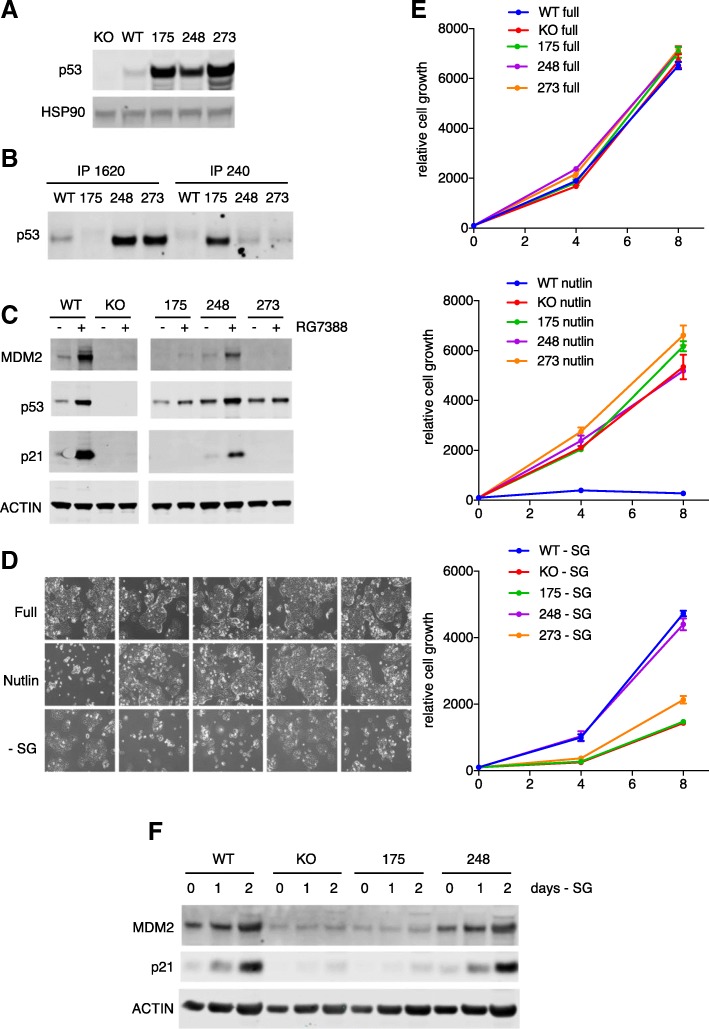
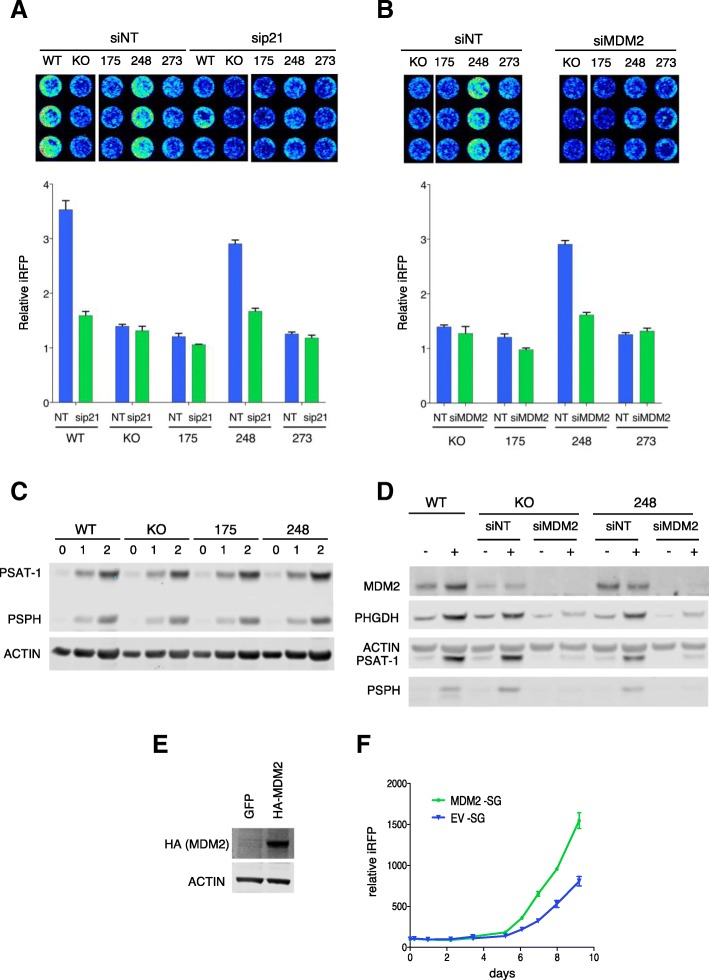
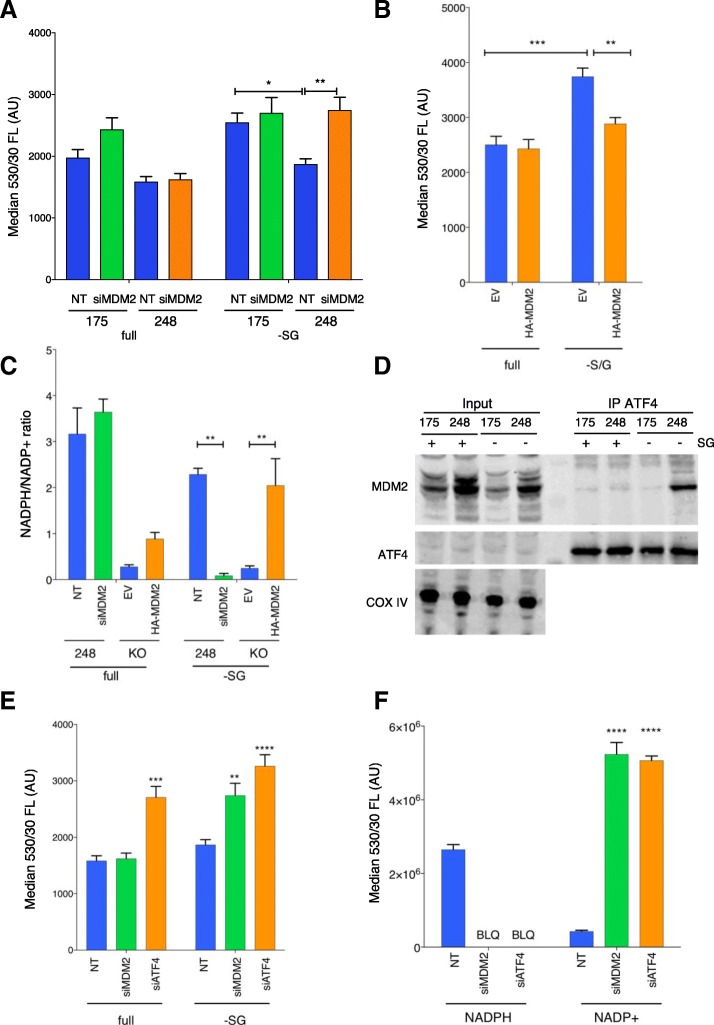
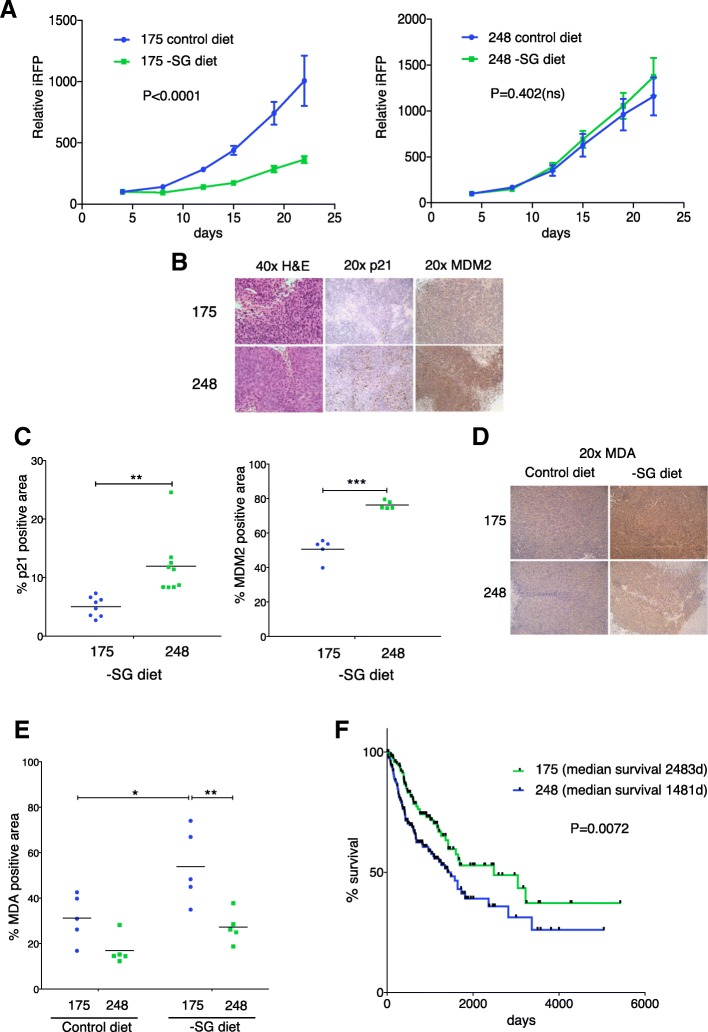
BACKGROUND: In response to oncogenic stress, the tumour suppressor protein p53 can induce the elimination of cells through induction of cell death or senescence, helping to restrain malignant progression. Conversely, under nutrient stress, p53 can protect cells by supporting metabolic adaptation. Many cancers express mutant p53 proteins that have lost the cell-elimination properties of wild-type p53. However, a previous report showed that a tumour-derived mutant can retain the ability to support cells under glutamine starvation. RESULTS: We show that a commonly occurring p53 mutant, R248W, retains wild-type ability to support survival under serine starvation. R248W, but not R175H, can engage p21 and MDM2, which both function to limit oxidative stress and facilitate the switch to de novo serine synthesis. In vivo, the growth of R248W-expressing tumours is resistant to dietary depletion of serine and glycine, correlating with an increased capacity to limit ROS compared to tumours expressing R175H. Human cancers expressing this p53 mutant show a worse outcome. CONCLUSION: Our work shows that mutant p53s can selectively retain wild-type p53 functions that allow adaptation to serine starvation through the activation of antioxidant defence pathways. Tumours containing this p53 mutation are resistant to serine-limited conditions and less responsive to therapy.
Overview
The claims and statistics of this paper haven’t been checked yet.
Free: it reads the open-access text and checks the first 5 claims that cite a source we can check. Create a free account to check every claim.
Integrity signals
Registry
Cites
Statistics
Figures
Verification
Claims the paper makes
The claims and statistics of this paper haven’t been checked yet.
Free: it reads the open-access text and checks the first 5 claims that cite a source we can check. Create a free account to check every claim.
Claims other papers make about this one
Each is checked against this paper’s own text: does it say what the citing paper says it does?
The source backs part of the claim, not all of it — or backs it for a different population, condition or comparison.
In the citing paper
“For example, dietary restriction of serine‐glycine is beneficial in tumors lacking p53 because of their inability to counteract reactive oxygen species (ROS)‐associated oxidative stress [241, 242].”
From Tumor microenvironment signaling and therapeutics in cancer progression (2023) · cites this paper as [241]
Experimental — accuracy not yet measured
Self-check
Percentages, sums and reported differences re-computed from the paper’s own numbers.
The self-check needs the paper’s full text.
Citations
Cites
p53 Mutations in Human Cancers
Hollstein, M., Sidransky, D., Vogelstein, B., & Harris, C. C. (1991) · Science · doi:10.1126/science.1905840 · Cited by 8,018 · cited 1×
“The p53 protein plays an important role as a tumour suppressor, with loss of wild-type p53 activity evident in many human tumours [1].”
An Integrated Stress Response Regulates Amino Acid Metabolism and Resistance to Oxidative Stress
Harding, H. P., Zhang, Y., Zeng, H., Novoa, I., Lu, P. D., Calfon, M., Sadri, N., Yun, C., Popko, B., Paules, R., et al. (2003) · Molecular Cell · doi:10.1016/s1097-2765(03)00105-9 · Cited by 3,323
Kastenhuber, E. R., & Lowe, S. W. (2017) · Cell · doi:10.1016/j.cell.2017.08.028 · Cited by 1,906
Mutant p53 in Cancer: New Functions and Therapeutic Opportunities
Muller, P. A. J., & Vousden, K. H. (2014) · Cancer Cell · doi:10.1016/j.ccr.2014.01.021 · Cited by 1,545 · cited 1×
“However, comparison of p53-null and mutant p53 expressing tumours has shown that the expression of mutant p53 can result in a gain of function, leading to a more aggressive phenotype [10, 11] generally associated with an enhanced ability to promote invasion and metastasis [12].”
Self-citationMutant p53 gain of function in two mouse models of Li-Fraumeni syndrome
Olive, K. P., Tuveson, D. A., Ruhe, Z. C., Yin, B., Willis, N. A., Bronson, R. T., Crowley, D., & Jacks, T. (2004) · Cell · doi:10.1016/j.cell.2004.11.004 · Cited by 1,308 · cited 1×
“However, comparison of p53-null and mutant p53 expressing tumours has shown that the expression of mutant p53 can result in a gain of function, leading to a more aggressive phenotype [10, 11] generally associated with an enhanced ability to promote invasion and metastasis [12].”
Mutant p53: one name, many proteins
Freed-Pastor, W. A., & Prives, C. (2012) · Genes & Development · doi:10.1101/gad.190678.112 · Cited by 1,247
P53 in survival, death and metabolic health: a lifeguard with a licence to kill.
Kruiswijk, F., Labuschagne, C. F., & Vousden, K. H. (2015) · Nature Reviews Molecular Cell Biology · doi:10.1038/nrm4007 · Cited by 1,080 · cited 1×
“These different and opposing functions of p53 have been rationalised in a model where p53 responds to transient metabolic stress by supporting cell survival and repair, while more severe damage or persistent stress promotes p53 responses that eliminate the affected cell [5].”
Self-citationGain of function of a p53 hot spot mutation in a mouse model of Li-Fraumeni syndrome
Lang, G. A., Iwakuma, T., Suh, Y.-A., Liu, G., Rao, V. A., Parant, J. M., Valentin-Vega, Y. A., Terzian, T., Caldwell, L. C., Strong, L. C., et al. (2004) · Cell · doi:10.1016/j.cell.2004.11.006 · Cited by 1,069
Serine starvation induces stress and p53-dependent metabolic remodelling in cancer cells
Maddocks, O. D. K., Berkers, C. R., Mason, S. M., Zheng, L., Blyth, K., Gottlieb, E., & Vousden, K. H. (2013) · Nature · doi:10.1038/nature11743 · Cited by 1,007 · cited 8×
“For HCT116 xenograft experiments, athymic female nude (nu/nu) mice (obtained from The Jackson Laboratory, 7–8 weeks old) were fed specified diets either containing or lacking serine and glycine as previously described [13, 21] for a period of 1 week prior to the start of the experiment.”
InfluentialSelf-citationThe p53 Pathway: Origins, Inactivation in Cancer, and Emerging Therapeutic Approaches
Joerger, A. C., & Fersht, A. R. (2016) · Annual Review of Biochemistry · doi:10.1146/annurev-biochem-060815-014710 · Cited by 661
Modulating the therapeutic response of tumours to dietary serine and glycine starvation
Maddocks, O. D. K., Athineos, D., Cheung, E. C., Lee, P., Zhang, T., van den Broek, N. J. F., Mackay, G. M., Labuschagne, C. F., Gay, D., Kruiswijk, F., et al. (2017) · Nature · doi:10.1038/nature22056 · Cited by 603 · cited 2×
“For HCT116 xenograft experiments, athymic female nude (nu/nu) mice (obtained from The Jackson Laboratory, 7–8 weeks old) were fed specified diets either containing or lacking serine and glycine as previously described [13, 21] for a period of 1 week prior to the start of the experiment.”
Self-citationDiscovery of RG7388, a Potent and Selective p53–MDM2 Inhibitor in Clinical Development
Ding, Q., Zhang, Z., Liu, J.-J., Jiang, N., Zhang, J., Ross, T. M., Chu, X.-J., Bartkovitz, D., Podlaski, F., Janson, C., et al. (2013) · Journal of Medicinal Chemistry · doi:10.1021/jm400487c · Cited by 595 · cited 3×
“Ding Q, Zhang Z, Liu JJ, Jiang N, Zhang J, Ross TM, et al. Discovery of RG7388, a potent and selective p53-MDM2 inhibitor in clinical development.”
Serine, but not glycine, supports one-carbon metabolism and proliferation of cancer cells
Labuschagne, C. F., van den Broek, N. J. F., Mackay, G. M., Vousden, K. H., & Maddocks, O. D. K. (2014) · Cell Reports · doi:10.1016/j.celrep.2014.04.045 · Cited by 576 · cited 1×
“Liquid chromatography-mass spectrometry (LC-MS) sample preparation and analysis were performed broadly as described previously [18, 19].”
Self-citationMurray-Zmijewski, F., Lane, D. P., & Bourdon, J.-C. (2006) · Cell Death & Differentiation · doi:10.1038/sj.cdd.4401914 · Cited by 523
Structure–function–rescue: the diverse nature of common p53 cancer mutants
Joerger, A. C., & Fersht, A. R. (2007) · Oncogene · doi:10.1038/sj.onc.1210291 · Cited by 434
Jackson, J. G., Pant, V., Li, Q., Chang, L. L., Quintás-Cardama, A., Garza, D., Tavana, O., Yang, P., Manshouri, T., Li, Y., et al. (2012) · Cancer Cell · doi:10.1016/j.ccr.2012.04.027 · Cited by 329
p53 protein stability in tumour cells is not determined by mutation but is dependent on Mdm2 binding
Midgley, C. A., & Lane, D. P. (1997) · Oncogene · doi:10.1038/sj.onc.1201459 · Cited by 311
Sur, S., Pagliarini, R., Bunz, F., Rago, C., Diaz, L. A., Kinzler, K. W., Vogelstein, B., & Papadopoulos, N. (2009) · Proceedings of the National Academy of Sciences · doi:10.1073/pnas.0813333106 · Cited by 295
Inherited TP53 Mutations and the Li–Fraumeni Syndrome
Guha, T., & Malkin, D. (2017) · Cold Spring Harbor Perspectives in Medicine · doi:10.1101/cshperspect.a026187 · Cited by 253
A Role for p53 in the Adaptation to Glutamine Starvation through the Expression of SLC1A3
Tajan, M., Hock, A. K., Blagih, J., Robertson, N. A., Labuschagne, C. F., Kruiswijk, F., Humpton, T. J., Adams, P. D., & Vousden, K. H. (2018) · Cell Metabolism · doi:10.1016/j.cmet.2018.07.005 · Cited by 230 · cited 1×
“HCT116 p53 KO clones and p53 KO clones stably expressing p53 mutants R175H, R248W, and R273H were created using CRISPR/Cas9 and subsequent infection with pWZL-p53mut-BLAST and pBabe-iRFP-PURO plasmids as previously described [16].”
Self-citationHot-spot mutants of p53 core domain evince characteristic local structural changes
Wong, K.-B., DeDecker, B. S., Freund, S. M. V., Proctor, M. R., Bycroft, M., & Fersht, A. R. (1999) · Proceedings of the National Academy of Sciences · doi:10.1073/pnas.96.15.8438 · Cited by 221
Analysis of Cell Metabolism Using LC-MS and Isotope Tracers
Mackay, G. M., Zheng, L., van den Broek, N. J. F., & Gottlieb, E. (2015) · Methods in Enzymology · doi:10.1016/bs.mie.2015.05.016 · Cited by 197
Regulation of Mdm2-Directed Degradation by the C Terminus of p53
Kubbutat, M. H. G., Ludwig, R. L., Ashcroft, M., & Vousden, K. H. (1998) · Molecular and Cellular Biology · doi:10.1128/mcb.18.10.5690 · Cited by 193
Self-citationHeme-regulated eIF2α kinase activated Atf4 signaling pathway in oxidative stress and erythropoiesis
Suragani, R. N. V. S., Zachariah, R. S., Velazquez, J. G., Liu, S., Sun, C.-W., Townes, T. M., & Chen, J.-J. (2012) · Blood · doi:10.1182/blood-2011-10-388132 · Cited by 163
Interaction of p53 with the CCT Complex Promotes Protein Folding and Wild-Type p53 Activity
Trinidad, A. G., Muller, P. A. J., Cuellar, J., Klejnot, M., Nobis, M., Valpuesta, J. M., & Vousden, K. H. (2013) · Molecular Cell · doi:10.1016/j.molcel.2013.05.002 · Cited by 151
Self-citationChromatin-Bound MDM2 Regulates Serine Metabolism and Redox Homeostasis Independently of p53
Riscal, R., Schrepfer, E., Arena, G., Cissé, M. Y., Bellvert, F., Heuillet, M., Rambow, F., Bonneil, É., Sabourdy, F., Vincent, C., et al. (2016) · Molecular Cell · doi:10.1016/j.molcel.2016.04.033 · Cited by 150
p53 directly transactivates Δ133p53α, regulating cell fate outcome in response to DNA damage
Aoubala, M., Murray-Zmijewski, F., Khoury, M. P., Fernandes, K., Perrier, S., Bernard, H., Prats, A.-C., Lane, D. P., & Bourdon, J.-C. (2011) · Cell Death & Differentiation · doi:10.1038/cdd.2010.91 · Cited by 131
TP53 Status and Response to Chemotherapy in Breast Cancer
Bertheau, P., Espié, M., Turpin, E., Lehmann, J., Plassa, L.-F., Varna, M., Janin, A., & de Thé, H. (2008) · Pathobiology · doi:10.1159/000123851 · Cited by 108
Huggins, C. J., Mayekar, M. K., Martin, N., Saylor, K. L., Gonit, M., Jailwala, P., Kasoji, M., Haines, D. C., Quiñones, O. A., & Johnson, P. F. (2016) · Molecular and Cellular Biology · doi:10.1128/mcb.00911-15 · Cited by 106
Xu, J., Wang, J., Hu, Y., Qian, J., Xu, B., Chen, H., Zou, W., & Fang, J.-Y. (2014) · Cell Death & Disease · doi:10.1038/cddis.2014.75 · Cited by 96
What have animal models taught us about the p53 pathway?
Lozano, G., & Zambetti, G. P. (2005) · The Journal of Pathology · doi:10.1002/path.1704 · Cited by 76
Tran, T. Q., Lowman, X. H., Reid, M. A., Mendez-Dorantes, C., Pan, M., Yang, Y., & Kong, M. (2017) · Oncogene · doi:10.1038/onc.2016.360 · Cited by 76
iRFP is a sensitive marker for cell number and tumor growth in high-throughput systems
Hock, A. K., Lee, P., Maddocks, O. D., Mason, S. M., Blyth, K., & Vousden, K. H. (2014) · Cell Cycle · doi:10.4161/cc.26985 · Cited by 36
Self-citationHock, A. K., Cheung, E. C., Humpton, T. J., Monteverde, T., Paulus-Hock, V., Lee, P., McGhee, E. J., Scopelliti, A., Murphy, D. J., Strathdee, D., et al. (2017) · Scientific Reports · doi:10.1038/s41598-017-01741-0 · Cited by 25
Self-citationAbdel‐Rahman, W. M., Aravind, S. R., Nair, V. A., Bajbouj, K., Valo, S., & Peltomäki, P. (2018) · ESMO Open · doi:10.1136/esmoopen-2018-eacr25.46 · Cited by 19
SPOT-010 A role for P53 in the adaptation to glutamine starvation through the expression of Slc1a3
Tajan, M., Hock, A. K., Blagih, J., Robertson, N., Labuschagne, C. F., Kruiswijk, F., Adams, P. D., & Vousden, K. H. (2018) · ESMO Open · doi:10.1136/esmoopen-2018-eacr25.43 · Cited by 2
Self-citation(1991) · PubMed
Cited by
The role of ROS in tumour development and progression
Cheung, E. C., & Vousden, K. H. (2022) · Nature Reviews Cancer · doi:10.1038/s41568-021-00435-0 · Cited by 1,595
Self-citationMetabolites and the Tumour Microenvironment: From Cellular Mechanisms to Systemic Metabolism
Elia, I., & Haigis, M. C. (2021) · Nature Metabolism · doi:10.1038/s42255-020-00317-z · Cited by 651
Tumor glycolysis, an essential sweet tooth of tumor cells
Paul, S., Ghosh, S., & Kumar, S. (2022) · Seminars in Cancer Biology · doi:10.1016/j.semcancer.2022.09.007 · Cited by 449
p53, cancer and the immune response
Blagih, J., Buck, M. D., & Vousden, K. H. (2020) · Journal of Cell Science · doi:10.1242/jcs.237453 · Cited by 333
“Many cancers express high levels of point-mutated versions of p53 that generally lose the ability to inhibit cell growth, but in some cases retain survival functions and acquire neomorphic oncogenic activity (Freed-Pastor and Prives, 2012; Humpton et al., 2018; Kim and Lozano, 2018; Tran et al., 2017).”
BackgroundSelf-citationTumor microenvironment signaling and therapeutics in cancer progression
Goenka, A., Khan, F., Verma, B., Sinha, P., Dmello, C. C., Jogalekar, M. P., Gangadaran, P., & Ahn, B. (2023) · Cancer Communications · doi:10.1002/cac2.12416 · Cited by 323
Metadata
- Authors
- Humpton, T. J., Hock, A. K., Maddocks, O. D. K., & Vousden, K. H.
- Affiliations
- Cancer Research UK Scotland Institute (GB)
- University of Glasgow (GB)
- The Francis Crick Institute (GB)
- Corresponding author
- Vousden, Karen H.
- Venue
- Cancer & Metabolism
- Published
- 2018-12
- Volume
- 6
- Issue
- 1
- Pages
- 18-18
- ISSN
- 2049-3002 (ISSN-L)
- PMC
- PMC6276204
- OpenAlex
- W2901565715
- Cited by
- 58
- References
- 37
- Citations by year
- 2026: 4 · 2025: 14 · 2024: 5 · 2023: 6 · 2022: 11 · 2021: 9 · 2020: 6 · 2019: 3
- FWCI
- 1.69
- Type
- journal article
- Language
- en
- Open access
- gold
- doi.org
- Licence
- cc-by
- creativecommons.org/licenses/by/4.0/ (tdm)
- Locations
- Cancer & Metabolism (publishedVersion, cc-by)
- Europe PMC (PubMed Central) (publishedVersion, other-oa)
- PubMed Central (publishedVersion, cc-by)
- PubMed (publishedVersion)
- ENLIGHTEN (Jurnal Bimbingan dan Konseling Islam) (acceptedVersion, cc-by-sa)
- DOAJ (DOAJ: Directory of Open Access Journals) (submittedVersion, cc-by-sa)
- Figshare (submittedVersion, cc-by)
- Funders
- Cancer Research UK (C596/A10418, C596/A26855, C53309/A19702)
- European Research Council (322842-METABOp53)
- Francis Crick Institute (FC001557)
- Topics
- Health Sciences › Medicine › Oncology › Cancer-related Molecular Pathways
- Life Sciences › Biochemistry, Genetics and Molecular Biology › Cancer Research › Cancer, Hypoxia, and Metabolism
- Life Sciences › Biochemistry, Genetics and Molecular Biology › Molecular Biology › Metabolism, Diabetes, and Cancer
- Keywords
- mutant p53, p21, MDM2, oxidative stress, antioxidant defense, de novo serine synthesis, tumor growth
About these checks
Registry, retraction, Cites and statistics results are computed, not judged, with one exception: a printed reference that no index lists is read once by a model before it counts as a citation error. Claims are extracted by a model and kept only when their quote appears verbatim in the text; each cited source is then checked, with a model’s help, for whether it says what the claim relies on. Those verdicts can be wrong — read the claim’s quote and the cited source before relying on one.
Statistics and arithmetic are recomputed, not judged.
Confidence bands are shown only for fields calibrated on our annotated test set. None is calibrated yet, so no band is shown.
What counts as a claim ›How we measure confidence ›How we check this ›
Are you an author, or do you see a problem with this page? Request a review
Data sources
Bibliographic data: Semantic Scholar, OpenAlex, Crossref.
Contains information from the Semantic Scholar Academic Graph Datasets, made available under the ODC Attribution License (ODC-BY 1.0).
Semantic Scholar’s data is described in: Kinney, R., et al. (2023). The Semantic Scholar Open Data Platform. arXiv:2301.10140.
