

Unified theory of Alzheimer’s disease (UTAD): implications for prevention and curative therapy
Open accessThe DOI matches its Crossref record; 644 of the 644 references it cites were found in a registry or an index.
Abstract
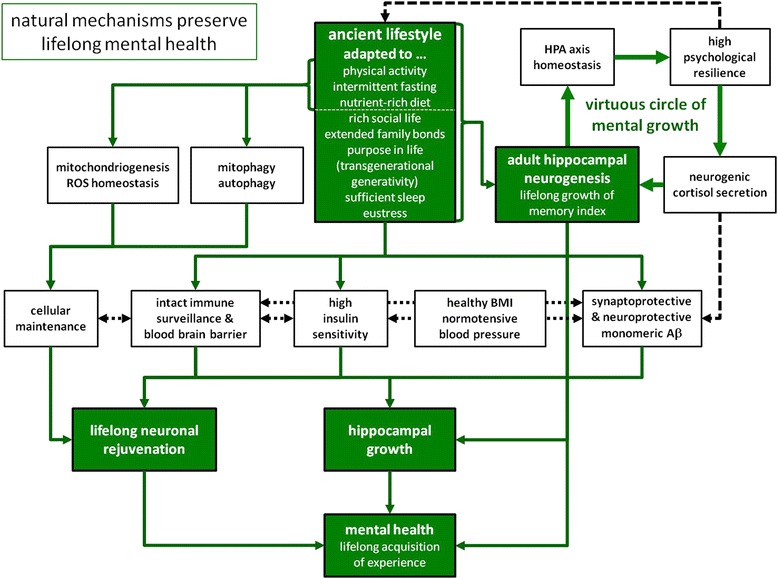
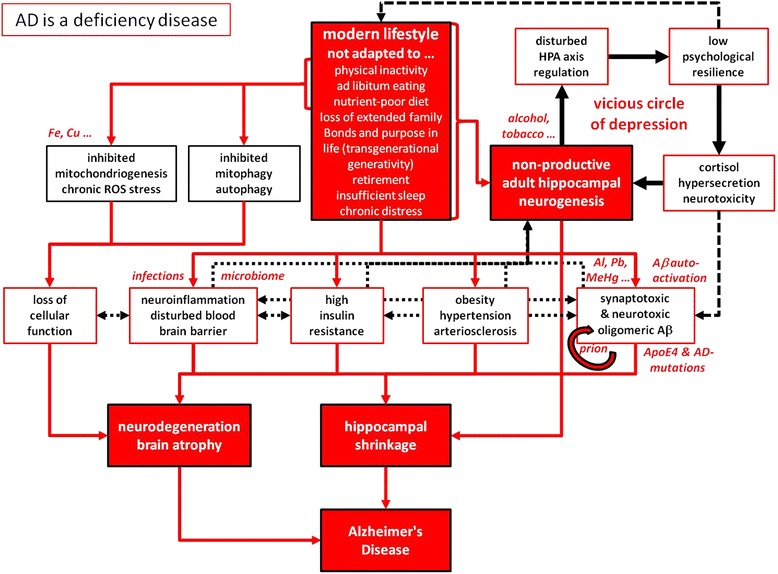
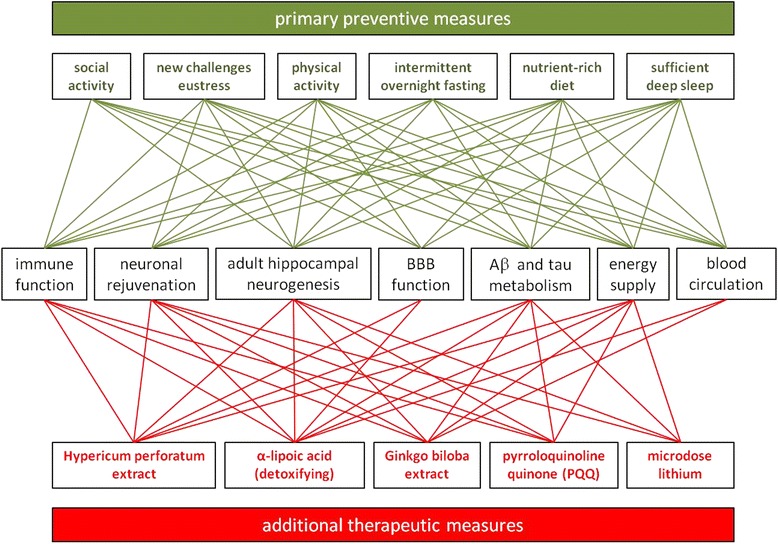
The aim of this review is to propose a Unified Theory of Alzheimer's disease (UTAD) that integrates all key behavioural, genetic and environmental risk factors in a causal chain of etiological and pathogenetic events. It is based on three concepts that emanate from human's evolutionary history: (1) The grandmother-hypothesis (GMH), which explains human longevity due to an evolutionary advantage in reproduction by trans-generational transfer of acquired knowledge. Consequently it is argued that mental health at old-age must be the default pathway of humans' genetic program and not development of AD. (2) Therefore, mechanism like neuronal rejuvenation (NRJ) and adult hippocampal neurogenesis (AHN) that still function efficiently even at old age provide the required lifelong ability to memorize personal experiences important for survival. Cumulative evidence from a multitude of experimental and epidemiological studies indicate that behavioural and environmental risk factors, which impair productive AHN, result in reduced episodic memory performance and in reduced psychological resilience. This leads to avoidance of novelty, dysregulation of the hypothalamic-pituitary-adrenal (HPA)-axis and cortisol hypersecretion, which drives key pathogenic mechanisms of AD like the accumulation and oligomerization of synaptotoxic amyloid beta, chronic neuroinflammation and neuronal insulin resistance. (3) By applying to AHN the law of the minimum (LOM), which defines the basic requirements of biological growth processes, the UTAD explains why and how different lifestyle deficiencies initiate the AD process by impairing AHN and causing dysregulation of the HPA-axis, and how environmental and genetic risk factors such as toxins or ApoE4, respectively, turn into disease accelerators under these unnatural conditions. Consequently, the UTAD provides a rational strategy for the prevention of mental decline and a system-biological approach for the causal treatment of AD, which might even be curative if the systemic intervention is initiated early enough in the disease process. Hence an individualized system-biological treatment of patients with early AD is proposed as a test for the validity of UTAD and outlined in this review.
Overview
The claims and statistics of this paper haven’t been checked yet.
Free: it reads the open-access text and checks the first 5 claims that cite a source we can check. Create a free account to check every claim.
Integrity signals
Registry
Cites
Statistics
Figures
Verification
Claims the paper makes
The claims and statistics of this paper haven’t been checked yet.
Free: it reads the open-access text and checks the first 5 claims that cite a source we can check. Create a free account to check every claim.
Claims other papers make about this one
Each is checked against this paper’s own text: does it say what the citing paper says it does?
The source backs part of the claim, not all of it — or backs it for a different population, condition or comparison.
In the citing paper
“Decades of intensive research on a relatively narrow set of pathogenic processes occurring in the brain and body have produced few effective new drugs or other significant advances in the prevention and treatment of Alzheimer’s disease and related dementias (ADRD).1–3”
From Why the cognitive ‘fountain of youth’ may be upstream: pathways to dementia risk and resilience through social connectedness (2022) · cites this paper as [2]
Experimental — accuracy not yet measuredIn the citing paper
“Neurologists have argued that any successful intervention for ADRD must target multiple pathophysiological processes simultaneously.2”
From Why the cognitive ‘fountain of youth’ may be upstream: pathways to dementia risk and resilience through social connectedness (2022) · cites this paper as [2]
Self-check
Percentages, sums and reported differences re-computed from the paper’s own numbers.
The self-check needs the paper’s full text.
Citations
Cites
4 retracted
Rao, J. S., Ertley, R. N., Lee, H.-J., DeMar, J. C., Arnold, J. T., Rapoport, S. I., & Bazinet, R. P. (2007) · Molecular Psychiatry · doi:10.1038/sj.mp.4001888 · Cited by 279 · cited 1×
“DHA depletion has been shown to result in decreased BDNF levels [513], in impeded productive AHN [514] and in neuroinflammation [308].”
BackgroundRetractedGao, Y., Huang, C., Zhao, K., Ma, L., Qiu, X., Zhang, L., Xiu, Y., Chen, L., Lu, W., Huang, C., et al. (2013) · International Journal of Geriatric Psychiatry · doi:10.1002/gps.3845 · Cited by 155
RetractedRetracted: Nutrition, adult hippocampal neurogenesis and mental health
Zainuddin, M. S. A., & Thuret, S. (2012) · British Medical Bulletin · doi:10.1093/bmb/lds021 · Cited by 116 · cited 1×
“There is a long list of nutrients that are essential building blocks for (adult) neurogenesis and synaptogenesis (for review, see [264]) and which are also important for NRJ.”
BackgroundRetractedChae, C.-H., Lee, H.-C., Jung, S.-L., Kim, T., Kim, J.-H., Kim, N.-J., & Kim, H.-T. (2012) · Neuroscience · doi:10.1016/j.neuroscience.2012.03.030 · Cited by 29
RetractedNeuropathological stageing of Alzheimer-related changes.
Braak, H., & Braak, E. (1991) · Acta Neuropathologica · doi:10.1007/bf00308809 · Cited by 16,123 · cited 1×
“It is of interest that in AD, the perirhinal (PRH) and lateral entorhinal cortex (LEC) of the HC are among the first cortical regions to be affected [160, 161].”
BackgroundThe Amyloid Hypothesis of Alzheimer’s Disease: Progress and Problems on the Road to Therapeutics
Hardy, J., & Selkoe, D. J. (2002) · Science · doi:10.1126/science.1072994 · Cited by 13,864
Ng, M., Fleming, T., Robinson, M., Thomson, B., Graetz, N., Margono, C., Mullany, E. C., Biryukov, S., Abbafati, C., Abera, S. F., et al. (2014) · The Lancet · doi:10.1016/s0140-6736(14)60460-8 · Cited by 11,952
Amyloid oligomers exacerbate tau pathology in a mouse model of tauopathy
Selenica, M.-L. B., Brownlow, M., Jimenez, J. P., Lee, D. C., Pena, G., Dickey, C. A., Gordon, M. N., & Morgan, D. (2013) · Neurodegenerative Diseases · doi:10.1159/000337230 · Cited by 10,359
Corder, E. H., Saunders, A. M., Strittmatter, W. J., Schmechel, D. E., Gaskell, P. C., Small, G. W., Roses, A. D., Haines, J. L., & Pericak-Vance, M. A. (1993) · Science · doi:10.1126/science.8346443 · Cited by 9,429
Molecular Mechanisms of Depression: Perspectives on New Treatment Strategies
Lang, U. E., & Borgwardt, S. (2013) · Cellular Physiology and Biochemistry · doi:10.1159/000350094 · Cited by 8,475
Research works printed but not linked: 5
- Boyd W A textbook of pathology: an introduction to medicine, Lea and febiger 1938
- Sprengel PC Von der Substanz der Ackerkrume und des Untergrundes 1828 Leipzig Journal für Technische und Ökonomische Chemie
- Jørgensen JR Fjord-Larsen L Wahlberg LU Andrade NGM Johansen TE Therapeutic use of a growth factor METRNL. US-patent 2012 8334264 B2
- Miklossy J.J. Neuroinflammation. Alzheimer’s disease - a neurospirochetosis. Analysis of the evidence following Koch’s and Hill’s criteria. 2011;8:90. doi: 10.1186/1742-2094-8-90. PMC3171359 21816039 · DOI · Paper page
- Nakano M Effect of pyrroloquinoline quinone (PQQ) on mental status of middle-aged and elderly persons Food Style 2009 13 50 53
Cited by
Alzheimer’s Disease: An Updated Overview of Its Genetics
Andrade-Guerrero, J., Santiago-Balmaseda, A., Jeronimo-Aguilar, P., Vargas-Rodríguez, I., Cadena-Suárez, A. R., Sánchez-Garibay, C., Pozo-Molina, G., Méndez-Catalá, C. F., Cardenas-Aguayo, M.-D.-C., Diaz-Cintra, S., et al. (2023) · International Journal of Molecular Sciences · doi:10.3390/ijms24043754 · Cited by 336
Advancements in nanotherapeutics for Alzheimer’s disease: current perspectives
Harilal, S., Jose, J., Parambi, D. G. T., Kumar, R., Mathew, G. E., Uddin, M. S., Kim, H., & Mathew, B. (2019) · Journal of Pharmacy and Pharmacology · doi:10.1111/jphp.13132 · Cited by 154
Neuroinflammation—A Crucial Factor in the Pathophysiology of Depression—A Comprehensive Review
Sălcudean, A., Bodo, C.-R., Popovici, R. A., Lica, M. M., Păcurar, M., Crăciun, R.-E., Crișan, A., ENĂTESCU, V. R., Marinescu, I. P., Cîmpian, D. M., et al. (2025) · Biomolecules · doi:10.3390/biom15040502 · Cited by 202
“Elevated cortisol levels have been linked to increased neuroin fl ammation in conditions such as Alzheimer’s disease, in which in fl ammation is considered a feature of the disease process [312].”
The Immunopathogenesis of Alzheimer’s Disease Is Related to the Composition of Gut Microbiota
Leblhuber, F., Ehrlich, D., Steiner, K., Geisler, S., Fuchs, D., Lanser, L., & Kurz, K. (2021) · Nutrients · doi:10.3390/nu13020361 · Cited by 159
Nanomedicine: A Promising Way to Manage Alzheimer’s Disease
Khan, N. H., Mir, M., Ngowi, E. E., Zafar, U., Khakwani, M. M. A. K., Khattak, S., Zhai, Y., Jiang, E., Zheng, M., Duan, S., et al. (2021) · Frontiers in Bioengineering and Biotechnology · doi:10.3389/fbioe.2021.630055 · Cited by 88
“Although the mechanisms of this association are complex, it is considered that hypertension can influence AD through the association of cerebrovascular pathology (Diaz-Ruiz et al., 2009; Nehls, 2016).”
BackgroundPerry, B. L., McConnell, W. R., Coleman, M. E., Roth, A. R., Peng, S., & Apostolova, L. G. (2022) · Alzheimer's & Dementia · doi:10.1002/alz.12443 · Cited by 77
“Three groups of subjects from the IADRC cohort were recruited (89% response rate): (1) cognitively normal (CN) older adults, (2) MCI, and (3) early-stage Alzheimer’s disease (AD).”
BackgroundMethodNeuropsychiatric Symptoms and the Diagnostic Stability of Mild Cognitive Impairment
Sugarman, M. A., Alosco, M. L., Tripodis, Y., Steinberg, E. G., & Stern, R. A. (2018) · Journal of Alzheimer s Disease · doi:10.3233/jad-170527 · Cited by 57
“Acute stress is associated with dysregulation of the hypothalamic-pituitary-adrenal (HPA) axis, which can in turn trigger hippocampal cell death via glutamate excitotoxicity [21] and increase production of hippocampal Aß [22].”
The application of nanotechnology in treatment of Alzheimer’s disease
Cao, Y., & Zhang, R. (2022) · Frontiers in Bioengineering and Biotechnology · doi:10.3389/fbioe.2022.1042986 · Cited by 59
“According to the research, hypertension is the cause of increased plaque development in the brain Nehls (2016) Homocysteine It contributes to the progression of beta amyloid (Aβ) plaque development.”
MethodZhou, Y., Lv, X., Wang, L., Li, J., & Gao, X. (2022) · Computers in Human Behavior · doi:10.1016/j.chb.2022.107647 · Cited by 93
Evaluation of dietary and lifestyle changes as modifiers of S100β levels in Alzheimer’s disease
D'Cunha, N. M., McKune, A. J., Panagiotakos, D. B., Georgousopoulou, E. N., Thomas, J., Mellor, D. D., & Naumovski, N. (2017) · Nutritional Neuroscience · doi:10.1080/1028415x.2017.1349032 · Cited by 47
“Several reviews have discussed the potential application of the KD and KB in the treatment and prevention of neurodegenerative conditions including AD, through the management of dysfunctional insulin signalling and glucose metabolism (140, 188-191).”
BackgroundAnti-Amyloidogenic Properties of Some Phenolic Compounds
Porzoor, A., Alford, B., Hügel, H., Grando, D., Caine, J., & Macreadie, I. (2015) · Biomolecules · doi:10.3390/biom5020505 · Cited by 45
Molecular Insights into Therapeutic Potentials of Hybrid Compounds Targeting Alzheimer’s Disease
Jana, A., Bhattacharjee, A., Das, S. S., Srivastava, A., Choudhury, A., Bhattacharjee, R., De, S., Perveen, A., Iqbal, D., Gupta, P. K., et al. (2022) · Molecular Neurobiology · doi:10.1007/s12035-022-02779-6 · Cited by 52
Fessel, J. (2019) · Alzheimer s & Dementia Translational Research & Clinical Interventions · doi:10.1016/j.trci.2019.11.007 · Cited by 23
“Although it has been held that age is a necessary factor merely by virtue of the gradual accumulation of many deleterious events [1], this argument fails because many individuals would be exposed to all of those presumably necessary events at a much younger age than do others, creating a continuum of AD incidence betw…”
BackgroundFu, L., Li, Y., Hu, Y., Zheng, Y., Yu, B., Zhang, H., Wu, J., Wu, H., Yu, X., & Kong, W. (2017) · Scientific Reports · doi:10.1038/srep41041 · Cited by 22
A Scoping Review of Alzheimers Disease Hypotheses: An Array of Uni- and Multi-Factorial Theories
Duchesne, S., Rousseau, L., Belzile, F., Welch, L., Cournoyer, B., Arseneau, M., Lapierre, V., Poulin, S., Potvin, O., & Hudon, C. (2024) · Journal of Alzheimer s Disease · doi:10.3233/jad-230772 · Cited by 25
Why Study the History of Neuroscience?
Brown, R. E. (2019) · Frontiers in Behavioral Neuroscience · doi:10.3389/fnbeh.2019.00082 · Cited by 20
“, 2018; Table 1), and new research attempts to integrate behavioral, genetic and environmental risk factors into an over-arching theory of AD (Nehls, 2016).”
BackgroundTrace elements and APOE polymorphisms in pregnant women and their new-borns
Trdin, A., Tratnik, J. S., Stajnko, A., Marc, J., Mazej, D., Briški, A. S., Kastelec, D., Prpić, I., Petrović, O., Špirić, Z., et al. (2020) · Environment International · doi:10.1016/j.envint.2020.105626 · Cited by 15
Drobyshev, E. J., Solovyev, N. D., Gorokhovskiy, B. M., & Анатольевич, К. В. (2018) · Biological Trace Element Research · doi:10.1007/s12011-018-1247-8 · Cited by 15
Towards the design of anti-amyloid short peptide helices
Roterman, I., Banach, M., & Konieczny, L. (2018) · Bioinformation · doi:10.6026/97320630014001 · Cited by 11
Trebesova, H., Olivero, G., Marchi, M., & Grilli, M. (2022) · Biomedicines · doi:10.3390/biomedicines10092231 · Cited by 10
“Alzheimer’s disease is a terrible pathology without meaningful care [37].”
BackgroundBukanova, J. V., Sharonova, I. N., & Skrebitsky, V. G. (2016) · Brain Research · doi:10.1016/j.brainres.2016.09.016 · Cited by 8
Wertman, E. (2024) · Journal of Clinical Medicine · doi:10.3390/jcm13144202 · Cited by 6
“They include non-modulable networks (e.g., genetics [424,425] and aging [425–428]), modulable networks (e.g., resilience [169], lifestyle [429–433], and environment [404]), and regulatory networks (e.g., allostasis [434] and homeostasis [435]).”
BackgroundSharma, R., Tiwari, A., Rahi, S., & Mehan, S. (2020) · Current Psychopharmacologye · doi:10.2174/1389203721999200820165117 · Cited by 6
Mécanismes, facteurs de risque et stratégies thérapeutiques dans la maladie d’Alzheimer
Maître, M., Klein, C., & Mensah‐Nyagan, A. G. (2017) · NPG. Neurologie, psychiatrie, gériatrie/NPG · doi:10.1016/j.npg.2016.12.006 · Cited by 8
Recent Advances in Nanotherapeutic Interventions for the Treatment of Alzheimer’s Disease
Dogra, A., Narang, R. S., & Narang, J. K. (2020) · Current Pharmaceutical Design · doi:10.2174/1381612826666200422092620 · Cited by 6
Spike protein-related proteinopathies: A focus on the neurological side of spikeopathies
Posa, A. (2025) · Annals of Anatomy - Anatomischer Anzeiger · doi:10.1016/j.aanat.2025.152662 · Cited by 4
“Among other things, it helps to ensure that new memories do not overwrite previously made ones (Nehls, 2016; Wells et al., 2021).”
Yang, X., Wang, Z., Zhang, Q., Liu, R., Xu, H., Bi, K., & Li, Q. (2019) · Journal of Separation Science · doi:10.1002/jssc.201801298 · Cited by 3
Santos, G., & Díaz, M. L. (2021) · International Journal of Molecular Sciences · doi:10.3390/ijms222212181 · Cited by 3
“Despite decades of research on the etiology of LOAD, the original cause of the disease development is still unknown, and the only solidly established risk factor for AD is aging [2].”
BackgroundA brain health framework with application to the study of neurodegeneration
Duchesne, S., Potvin, O., Hudon, C., & Bocti, C. (2025) · Journal of Alzheimer s Disease · doi:10.1177/13872877251364867 · Cited by 2
Preventing Dementia? Critical Perspectives on a New Paradigm of Preparing for Old Age
Leibing, A., Schicktanz, S., & SSHRC (Social Sciences and Humanities Council of Canada) (2020) · Berghahn Books · doi:10.1515/9781800734982 · Cited by 2
Zhu, Y., Han, X., Li, X., Qin, Y., Rang, Y., Zhai, X., & Lu, Y. (2021) · Biomedical Chromatography · doi:10.1002/bmc.5200 · Cited by 3
Wu, J. (2022) · IntechOpen eBooks · doi:10.5772/intechopen.101579 · Cited by 2
“Sarcopenia is common in older people, but can also earlier in their 40s life without exercise intervention causes skeletal muscle mass and strength begin to decline and accelerate with aging [42].”
BackgroundCurrent Perspectives of Nanotherapeutics for the Treatment of Alzheimer’s Disease
Mishra, S., Senthilkumar, D., & Yadav, V. K. (2024) · BENTHAM SCIENCE PUBLISHERS eBooks · doi:10.2174/9789815256505124010010 · Cited by 1
Reconsidering Psychopharmacology: The Logical Approach
David, C., & Pardo, N. T. (2018) · Journal of Traditional Medicine & Clinical Naturopathy · doi:10.4172/2573-4555.1000266 · Cited by 1
“For this reason, it has been central to recognize the importance of a healthy lifestyle [18].”
BackgroundSchicktanz, S. (2020) · Berghahn Books · doi:10.1515/9781800734982-005 · Cited by 4
Combined Ketogenic Diet and Walking Exercise Interventions in Community Older GroupsPreprint
Wu, J. (2021) · Preprints.org · doi:10.20944/preprints202110.0106.v1 · Cited by 1
“A ketogenic diet contains 5% carbohydrates, carbohydrates are vital, as they can fuel your muscles before exercise [40].”
BackgroundA SCOPING REVIEW OF ALZHEIMER’S DISEASE HYPOTHESES: THE CASE FOR A MULTI-FACTORIAL THEORYPreprint
Duchesne, S., Rousseau, L., Belzile, F., Welsh, L.-A., Cournoyer, B., Arseneau, M., Lapierre, V., Poulin, S., Potvin, O., & Hudon, C. (2023) · medRxiv · doi:10.1101/2023.07.26.23293030 · Cited by 1
“Proteinopathy Tau, TDP43, and/or other proteins dysregulation (84, 85, 86, 87) White matter disease Degeneration and disruption of white matter connections (88, 89) Others Calcium channel blockers; nerve growth factors; autophagy, neuronal cell cycle abnormalities (90, 91, 92, 93, 94, 95, 96, 97, 98, 99, 100, 101, 102…”
Nehls, M. C. (2017) · Erfahrungsheilkunde · doi:10.1055/s-0043-103001
“Aktivierung der Autophagie) seine Nervenzellen zu regenerieren und leistungsfähiger zu machen [8].”
BackgroundInfluentialSelf-citationAlzheimer’s disease as a syndrome of overloaded amyloidic synaptic tagging in memory networksPreprint
Murphy, N. (2021) · OSF Preprints (OSF Preprints) · doi:10.31219/osf.io/7gsaz
Is Alzheimer’s disease a single illness or multiple illnesses?
Paret, H., & Vahia, I. V. (2023) · International Psychogeriatrics · doi:10.1017/s1041610222001065 · Cited by 1
“There have even been calls for a single unifying theory of Alzheimer ’ s disease that may explain the interactivity between these various factors (Khacha-turian, 2000; Nehls, 2016).”
BackgroundNanotechnology Based Therapeutic Approach in Alzheimer's
Samiullah, M., Chauhan, K., Manimekalai, K., Sherief, S. H., Pandya, M. K., Ahmed, S., Bhaskar, R., & Prakash, J. (2024) · Journal for Research in Applied Sciences and Biotechnology · doi:10.55544/jrasb.3.3.24
“Chronic hypertension may have an effect on Alzheimer's disease (AD) through the connection of cerebrovascular pathology, despite the fact that the processes involved in this correlation are challenging to understand[23].”
Background
Metadata
- Authors
- Nehls, M.
- Corresponding author
- Nehls, Michael
- ORCID
- Nehls, Michael
- Venue
- Journal of Molecular Psychiatry
- Published
- 2016-07-15
- Volume
- 4
- Issue
- 1
- Pages
- 3-3
- ISSN
- 2049-9256 (ISSN-L)
- PMC
- PMC4947325
- OpenAlex
- W2463416598
- Semantic Scholar
- 8b9ae770b3b9385674eedcae15a95e9bb562a0dd
- Cited by
- 41
- References
- 644
- Citations by year
- 2025: 3 · 2024: 4 · 2023: 3 · 2022: 4 · 2021: 8 · 2020: 5 · 2019: 4 · 2018: 4 · 2017: 4 · 2016: 1
- FWCI
- 0.51
- Type
- journal article
- Language
- en
- Open access
- hybrid
- doi.org
- Licence
- cc-by
- Locations
- Journal of Molecular Psychiatry (publishedVersion, cc-by)
- Europe PMC (PubMed Central) (publishedVersion, cc-by)
- PubMed Central (publishedVersion, cc-by)
- PubMed (publishedVersion)
- Funders
- Not applicable (Not applicable, independent researcher)
- Topics
- Life Sciences › Neuroscience › Cellular and Molecular Neuroscience › Alzheimer's disease research and treatments
- Health Sciences › Medicine › Psychiatry and Mental health › Dementia and Cognitive Impairment Research
- Life Sciences › Neuroscience › Developmental Neuroscience › Neurogenesis and neuroplasticity mechanisms
- Keywords
- Alzheimer's disease, grandmother hypothesis, adult hippocampal neurogenesis, HPA axis dysregulation, cortisol hypersecretion, amyloid-beta oligomerization, neuroinflammation, insulin resistance, APOE ε4, law of the minimum, behavioral risk factors, environmental risk factors, episodic memory, psychological resilience, early intervention, curative treatment
About these checks
Registry, retraction, Cites and statistics results are computed, not judged, with one exception: a printed reference that no index lists is read once by a model before it counts as a citation error. Claims are extracted by a model and kept only when their quote appears verbatim in the text; each cited source is then checked, with a model’s help, for whether it says what the claim relies on. Those verdicts can be wrong — read the claim’s quote and the cited source before relying on one.
Statistics and arithmetic are recomputed, not judged.
Confidence bands are shown only for fields calibrated on our annotated test set. None is calibrated yet, so no band is shown.
What counts as a claim ›How we measure confidence ›How we check this ›
Are you an author, or do you see a problem with this page? Request a review
Data sources
Bibliographic data: Semantic Scholar, OpenAlex, Crossref.
Contains information from the Semantic Scholar Academic Graph Datasets, made available under the ODC Attribution License (ODC-BY 1.0).
Semantic Scholar’s data is described in: Kinney, R., et al. (2023). The Semantic Scholar Open Data Platform. arXiv:2301.10140.
