

Unified theory of Alzheimer’s disease (UTAD): implications for prevention and curative therapy
Open accessThe DOI matches its Crossref record; 644 of the 644 references it cites were found in a registry or an index.
Abstract
The aim of this review is to propose a Unified Theory of Alzheimer's disease (UTAD) that integrates all key behavioural, genetic and environmental risk factors in a causal chain of etiological and pathogenetic events. It is based on three concepts that emanate from human's evolutionary history: (1) The grandmother-hypothesis (GMH), which explains human longevity due to an evolutionary advantage in reproduction by trans-generational transfer of acquired knowledge. Consequently it is argued that mental health at old-age must be the default pathway of humans' genetic program and not development of AD. (2) Therefore, mechanism like neuronal rejuvenation (NRJ) and adult hippocampal neurogenesis (AHN) that still function efficiently even at old age provide the required lifelong ability to memorize personal experiences important for survival. Cumulative evidence from a multitude of experimental and epidemiological studies indicate that behavioural and environmental risk factors, which impair productive AHN, result in reduced episodic memory performance and in reduced psychological resilience. This leads to avoidance of novelty, dysregulation of the hypothalamic-pituitary-adrenal (HPA)-axis and cortisol hypersecretion, which drives key pathogenic mechanisms of AD like the accumulation and oligomerization of synaptotoxic amyloid beta, chronic neuroinflammation and neuronal insulin resistance. (3) By applying to AHN the law of the minimum (LOM), which defines the basic requirements of biological growth processes, the UTAD explains why and how different lifestyle deficiencies initiate the AD process by impairing AHN and causing dysregulation of the HPA-axis, and how environmental and genetic risk factors such as toxins or ApoE4, respectively, turn into disease accelerators under these unnatural conditions. Consequently, the UTAD provides a rational strategy for the prevention of mental decline and a system-biological approach for the causal treatment of AD, which might even be curative if the systemic intervention is initiated early enough in the disease process. Hence an individualized system-biological treatment of patients with early AD is proposed as a test for the validity of UTAD and outlined in this review.
Overview
The claims and statistics of this paper haven’t been checked yet.
Free: it reads the open-access text and checks the first 5 claims that cite a source we can check. Create a free account to check every claim.
Integrity signals
Registry
Cites
Statistics
Figures
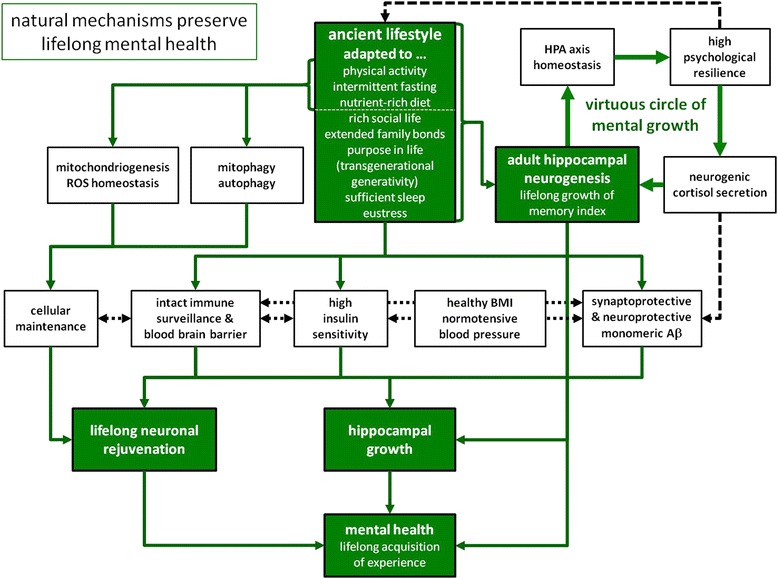
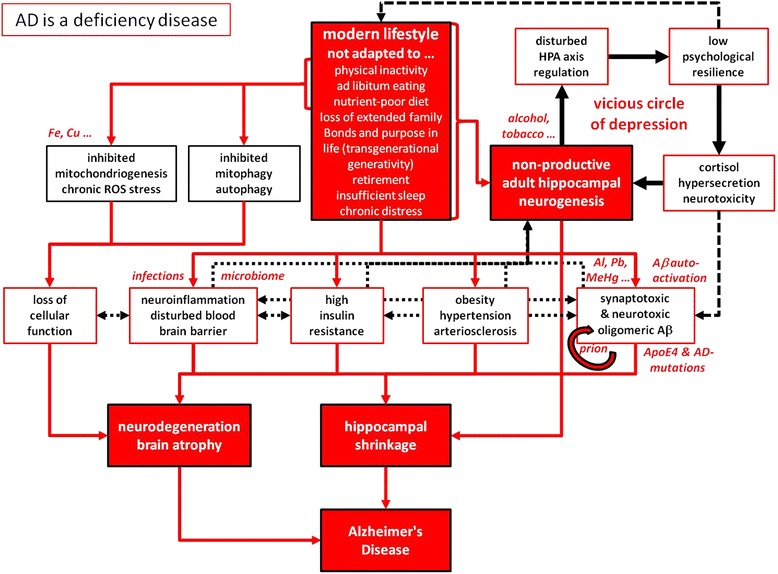
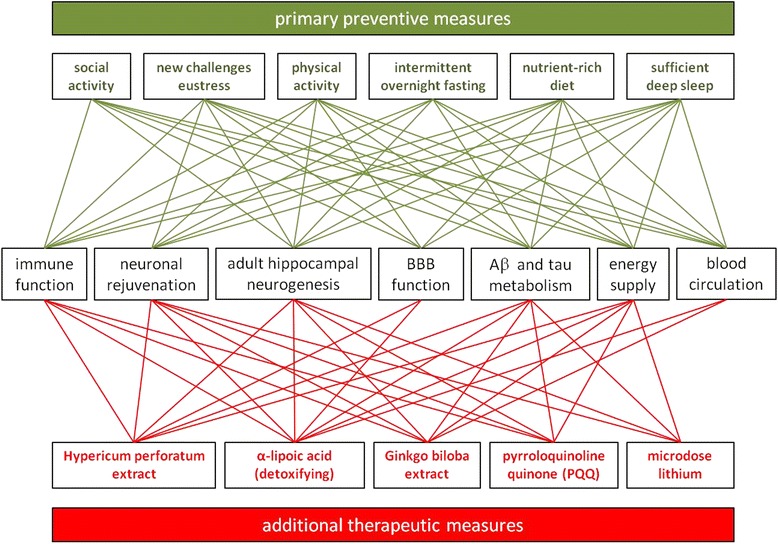
Verification
Claims the paper makes
The claims and statistics of this paper haven’t been checked yet.
Free: it reads the open-access text and checks the first 5 claims that cite a source we can check. Create a free account to check every claim.
Claims other papers make about this one
Each is checked against this paper’s own text: does it say what the citing paper says it does?
The source backs part of the claim, not all of it — or backs it for a different population, condition or comparison.
In the citing paper
“Decades of intensive research on a relatively narrow set of pathogenic processes occurring in the brain and body have produced few effective new drugs or other significant advances in the prevention and treatment of Alzheimer’s disease and related dementias (ADRD).1–3”
From Why the cognitive ‘fountain of youth’ may be upstream: pathways to dementia risk and resilience through social connectedness (2022) · cites this paper as [2]
Experimental — accuracy not yet measuredIn the citing paper
“Neurologists have argued that any successful intervention for ADRD must target multiple pathophysiological processes simultaneously.2”
From Why the cognitive ‘fountain of youth’ may be upstream: pathways to dementia risk and resilience through social connectedness (2022) · cites this paper as [2]
Self-check
Percentages, sums and reported differences re-computed from the paper’s own numbers.
The self-check needs the paper’s full text.
Citations
Cites
4 retracted
Rao, J. S., Ertley, R. N., Lee, H.-J., DeMar, J. C., Arnold, J. T., Rapoport, S. I., & Bazinet, R. P. (2007) · Molecular Psychiatry · doi:10.1038/sj.mp.4001888 · Cited by 279 · cited 1×
“DHA depletion has been shown to result in decreased BDNF levels [513], in impeded productive AHN [514] and in neuroinflammation [308].”
BackgroundRetractedGao, Y., Huang, C., Zhao, K., Ma, L., Qiu, X., Zhang, L., Xiu, Y., Chen, L., Lu, W., Huang, C., et al. (2013) · International Journal of Geriatric Psychiatry · doi:10.1002/gps.3845 · Cited by 155
RetractedRetracted: Nutrition, adult hippocampal neurogenesis and mental health
Zainuddin, M. S. A., & Thuret, S. (2012) · British Medical Bulletin · doi:10.1093/bmb/lds021 · Cited by 116 · cited 1×
“There is a long list of nutrients that are essential building blocks for (adult) neurogenesis and synaptogenesis (for review, see [264]) and which are also important for NRJ.”
BackgroundRetractedChae, C.-H., Lee, H.-C., Jung, S.-L., Kim, T., Kim, J.-H., Kim, N.-J., & Kim, H.-T. (2012) · Neuroscience · doi:10.1016/j.neuroscience.2012.03.030 · Cited by 29
RetractedNeuropathological stageing of Alzheimer-related changes.
Braak, H., & Braak, E. (1991) · Acta Neuropathologica · doi:10.1007/bf00308809 · Cited by 16,123 · cited 1×
“It is of interest that in AD, the perirhinal (PRH) and lateral entorhinal cortex (LEC) of the HC are among the first cortical regions to be affected [160, 161].”
BackgroundThe Amyloid Hypothesis of Alzheimer’s Disease: Progress and Problems on the Road to Therapeutics
Hardy, J., & Selkoe, D. J. (2002) · Science · doi:10.1126/science.1072994 · Cited by 13,864
Ng, M., Fleming, T., Robinson, M., Thomson, B., Graetz, N., Margono, C., Mullany, E. C., Biryukov, S., Abbafati, C., Abera, S. F., et al. (2014) · The Lancet · doi:10.1016/s0140-6736(14)60460-8 · Cited by 11,952
Amyloid oligomers exacerbate tau pathology in a mouse model of tauopathy
Selenica, M.-L. B., Brownlow, M., Jimenez, J. P., Lee, D. C., Pena, G., Dickey, C. A., Gordon, M. N., & Morgan, D. (2013) · Neurodegenerative Diseases · doi:10.1159/000337230 · Cited by 10,359
Corder, E. H., Saunders, A. M., Strittmatter, W. J., Schmechel, D. E., Gaskell, P. C., Small, G. W., Roses, A. D., Haines, J. L., & Pericak-Vance, M. A. (1993) · Science · doi:10.1126/science.8346443 · Cited by 9,429
Molecular Mechanisms of Depression: Perspectives on New Treatment Strategies
Lang, U. E., & Borgwardt, S. (2013) · Cellular Physiology and Biochemistry · doi:10.1159/000350094 · Cited by 8,475
Glutamate neurotoxicity and diseases of the nervous system
CHOI, D. (1988) · Neuron · doi:10.1016/0896-6273(88)90162-6 · Cited by 7,972
Epigenetic programming by maternal behavior
Weaver, I. C. G., Cervoni, N., Champagne, F. A., D'Alessio, A. C., Sharma, S., Seckl, J. R., Dymov, S., Szyf, M., & Meaney, M. J. (2004) · Nature Neuroscience · doi:10.1038/nn1276 · Cited by 6,177
Sleep Drives Metabolite Clearance from the Adult Brain
Xie, L., Kang, H., Xu, Q., Chen, M. J., Liao, Y., Thiyagarajan, M., O’Donnell, J., Christensen, D. J., Nicholson, C., Iliff, J. J., et al. (2013) · Science · doi:10.1126/science.1241224 · Cited by 5,411
Global prevalence of dementia: a Delphi consensus study
Ferri, C. P., Prince, M., Brayne, C., Brodaty, H., Fratiglioni, L., Ganguli, M., Hall, K., Hasegawa, K., Hendrie, H., Huang, Y., et al. (2005) · The Lancet · doi:10.1016/s0140-6736(05)67889-0 · Cited by 5,332 · cited 1×
“For instance, the age-specific AD incidence rate in rural India was shown to be about four times lower than in the USA [29], its rise rather parallels the rate of economic growth, which strongly influences the lifestyle [30].”
BackgroundExercise training increases size of hippocampus and improves memory
Erickson, K. I., Voss, M. W., Prakash, R. S., Basak, C., Szabo, A., Chaddock, L., Kim, J. S., Heo, S., Alves, H., White, S. M., et al. (2011) · Proceedings of the National Academy of Sciences · doi:10.1073/pnas.1015950108 · Cited by 4,855 · cited 1×
“In a well-controlled randomized study, 120 older adults without dementia were randomly assigned either to an aerobic exercise group (n = 60, average age 67, 6 years) or to a stretching control group (n = 60, average age 65,5 years) [211].”
Alzheimer's Disease Is a Synaptic Failure
Selkoe, D. J. (2002) · Science · doi:10.1126/science.1074069 · Cited by 4,420 · cited 1×
“impaired neuronal rejuvenation (NRJ) [14], synaptic failure [15], and a growing list of many others.”
BackgroundCalamita, E., Schmid, M., Kunz, M., Ndebele-Murisa, M. R., Magadza, C. H. D., Nyambe, I., & Wehrli, B. (2019) · Figshare · doi:10.26181/6153922fe919c · Cited by 4,222
Triple-Transgenic Model of Alzheimer’s Disease with Plaques and Tangles
Oddo, S., Caccamo, A., Shepherd, J. D., Murphy, M. P., Golde, T. E., Kayed, R., Metherate, R., Mattson, M. P., Akbari, Y., & LaFerla, F. M. (2003) · Neuron · doi:10.1016/s0896-6273(03)00434-3 · Cited by 4,126 · cited 3×
“For example, one year of IMF prevented cognitive decline even in a triple-transgenic mouse model of AD (which express the APPswe, PS1M146V, and tauP301L mutations [42]), providing evidence that not aging but rather the feeding pattern have long-lasting effects on memory [43].”
BackgroundNgandu, T., Lehtisalo, J., Solomon, A., Levälahti, E., Ahtiluoto, S., Antikainen, R., Bäckman, L., Hänninen, T., Jula, A., Laatikainen, T., et al. (2015) · The Lancet · doi:10.1016/s0140-6736(15)60461-5 · Cited by 3,689 · cited 1×
“In addition, prevention trials, which rather base their regimen on the correction of more or less arbitrarily selected risk factors than on a complete theory of AD, were so far also limited in their overall success [17, 18].”
BackgroundEpigenetic regulation of the glucocorticoid receptor in human brain associates with childhood abuse
McGowan, P. O., Sasaki, A., D'Alessio, A. C., Dymov, S., Labonté, B., Szyf, M., Turecki, G., & Meaney, M. J. (2009) · Nature Neuroscience · doi:10.1038/nn.2270 · Cited by 3,531 · cited 1×
“For example, childhood abuse altered HPA stress responses and increased risk of suicide, which was found to be closely linked to epigenetic differences in a neuron-specific GR promoter [438].”
BackgroundEuropean Guidelines for Obesity Management in Adults
Yumuk, V., Tsigos, C., Fried, M., Schindler, K., Busetto, L., Micic, D., & Toplak, H. (2015) · Obesity Facts · doi:10.1159/000442721 · Cited by 3,432
Extending Healthy Life Span—From Yeast to Humans
Fontana, L., Partridge, L., & Longo, V. D. (2010) · Science · doi:10.1126/science.1172539 · Cited by 3,023 · cited 1×
“sentially all eukaryotic organism [86].”
Jessen, F., Amariglio, R. E., van Boxtel, M., Breteler, M., Ceccaldi, M., Chételat, G., Dubois, B., Dufouil, C., Ellis, K. A., van der Flier, W. M., et al. (2014) · Alzheimer's & Dementia · doi:10.1016/j.jalz.2014.01.001 · Cited by 3,014 · cited 1×
“AD advanced in stages from stage 1 or subjective cognitive decline (SCD) (for a detailed classification, see [545]), to stage 2 or MCI [546], to stage 3 or mild/early AD; stage 4 or middle/moderate AD, to stage 5 or late/severe AD.”
BackgroundMechanisms and Functional Implications of Adult Neurogenesis
Zhao, C., Deng, W., & Gage, F. H. (2008) · Cell · doi:10.1016/j.cell.2008.01.033 · Cited by 3,007
Regional Brain Changes in Aging Healthy Adults: General Trends, Individual Differences and Modifiers
Raz, N., Lindenberger, U., Rodrigue, K. M., Kennedy, K. M., Head, D., Williamson, A., Dahle, C., Gerstorf, D., & Acker, J. D. (2005) · Cerebral Cortex · doi:10.1093/cercor/bhi044 · Cited by 2,875 · cited 1×
“After the one-year intervention, the aerobic exercise group showed an increase in hippocampal volume of about 2 %, counteracting the usual hippocampal shrinkage in volume of 1–2 % annually in older adults even without dementia [212].”
Rasch, B., & Born, J. (2013) · Physiological Reviews · doi:10.1152/physrev.00032.2012 · Cited by 2,783 · cited 1×
“In order to remember important (emotionally exiting) life events lifelong, the content information is being consolidated in the neocortex during the slow-wave sleep (SWS) phases in the early part of the following nocturnal sleep [109].”
BackgroundAdult Neurogenesis in the Mammalian Brain: Significant Answers and Significant Questions
Ming, G.-L., & Song, H. (2011) · Neuron · doi:10.1016/j.neuron.2011.05.001 · Cited by 2,651 · cited 1×
“Besides the fact, that proliferation itself is tightly controlled, requiring both activation and removal from inhibitory signals, only a single digit percentage of newborn progenitor cells become mature, integrated DGneurons, with most of the cells dying early [206, 207].”
BackgroundPhysiological Roles of Mitochondrial Reactive Oxygen Species
Sena, L. A., & Chandel, N. S. (2012) · Molecular Cell · doi:10.1016/j.molcel.2012.09.025 · Cited by 2,632 · cited 1×
“a by-product of an imperfect oxidative metabolism, ROS are now recognized for having an essential signalling function in cellular physiology [70].”
BackgroundLack of Exercise Is a Major Cause of Chronic Diseases
Booth, F. W., Roberts, C. K., & Laye, M. J. (2012) · Comprehensive Physiology · doi:10.1002/cphy.c110025 · Cited by 2,575 · cited 1×
“Physical inactivity leads to many so-called “lifestyle diseases”, which are sometimes rather inappropriately named diseases of longevity, as if age were the cause rather than a chronically unhealthy lifestyle [218].”
BackgroundInflammatory Blockade Restores Adult Hippocampal Neurogenesis
Monje, M. L., Toda, H., & Palmer, T. D. (2003) · Science · doi:10.1126/science.1088417 · Cited by 2,426 · cited 1×
“AGE (not age!)-induced neuroinflammatory processes are mediated by inflammatory cytokines like interleukin-1 (Il-1) [273], interleukin-6 (IL-6) [274] or tumour necrosis factor-alpha (TNF-α) [275] and aggravate neurodegenerative processes and were shown to further decrease productive AHN [276].”
BackgroundTononi, G., & Cirelli, C. (2014) · Neuron · doi:10.1016/j.neuron.2013.12.025 · Cited by 2,356
Alzheimer's disease: cell-specific pathology isolates the hippocampal formation.
Hyman, B. T., Van Hoesen, G. W., Damasio, A. R., & Barnes, C. L. (1984) · Science · doi:10.1126/science.6474172 · Cited by 2,268
Aerobic Exercise Training Increases Brain Volume in Aging Humans
Colcombe, S. J., Erickson, K. I., Scalf, P. E., Kim, J. S., Prakash, R., McAuley, E., Elavsky, S., Marquez, D. X., Hu, L., & Kramer, A. F. (2006) · The Journals of Gerontology Series A: Biological Sciences and Medical Sciences · doi:10.1093/gerona/61.11.1166 · Cited by 2,134 · cited 1×
“1 and 2): Moderate but extended physical activity increases brain volume even in aging humans [210].”
BackgroundBlood-brain barrier breakdown in the aging human hippocampus
Montagne, A., Barnes, S. R., Sweeney, M. D., Halliday, M. R., Sagare, A. P., Zhao, Z., Toga, A. W., Jacobs, R. E., Liu, C. Y., Amezcua, L., et al. (2015) · Neuron · doi:10.1016/j.neuron.2014.12.032 · Cited by 2,102 · cited 19×
“Indeed, sleep restriction in general [463] and REM sleep restriction in particular was found to increase BBB permeability, but even brief periods of deep sleep rapidly and effectively restored even severe alterations of BBB function [464].”
BackgroundInfluentialNutrient-dependent mTORC1 Association with the ULK1–Atg13–FIP200 Complex Required for Autophagy
Hosokawa, N., Hara, T., Kaizuka, T., Kishi, C., Takamura, A., Miura, Y., Iemura, S.-I., Natsume, T., Takehana, K., Yamada, N., et al. (2009) · Molecular Biology of the Cell · doi:10.1091/mbc.e08-12-1248 · Cited by 2,076
Hatori, M., Vollmers, C., Zarrinpar, A., DiTacchio, L., Bushong, E. A., Gill, S., Leblanc, M., Chaix, A., Joens, M., Fitzpatrick, J. A. J., et al. (2012) · Cell Metabolism · doi:10.1016/j.cmet.2012.04.019 · Cited by 1,986 · cited 1×
“IMF for 16 h daily) are resistant to high-fat diet-induced obesity [393], without altering the overall calorie intake.”
BackgroundTwo Phase 3 Trials of Bapineuzumab in Mild-to-Moderate Alzheimer's Disease
Salloway, S., Sperling, R., Fox, N. C., Blennow, K., Klunk, W., Raskind, M., Sabbagh, M., Honig, L. S., Porsteinsson, A. P., Ferris, S., et al. (2014) · New England Journal of Medicine · doi:10.1056/nejmoa1304839 · Cited by 1,960 · cited 1×
“It has been concluded that this unexpected finding provides a possible cellular explanation for the lack of cognitive improvement by immunotherapy in human studies [135, 136].”
BackgroundMucke, L., Masliah, E., Yu, G.-Q., Mallory, M., Rockenstein, E. M., Tatsuno, G., Hu, K., Kholodenko, D., Johnson-Wood, K., & McConlogue, L. (2000) · The Journal of Neuroscience · doi:10.1523/jneurosci.20-11-04050.2000 · Cited by 1,856 · cited 1×
“Subsequently, higher concentrations of soluble oligomeric Aβ form and exert synaptotoxic effects, even without plaque formation [121].”
BackgroundDynamics of hippocampal neurogenesis in adult humans
Spalding, K. L., Bergmann, O., Alkass, K., Bernard, S., Salehpour, M., Huttner, H. B., Boström, E., Westerlund, I., Vial, C., Buchholz, B. A., et al. (2013) · Cell · doi:10.1016/j.cell.2013.05.002 · Cited by 1,841 · cited 2×
“What they were not aware of is that the neurogenic potential even at higher age is still there, following the results from a landmark study published in 2013 [150].”
BackgroundResultUltra‐processed products are becoming dominant in the global food system
Monteiro, C. A., Moubarac, J. ‐., Cannon, G., Ng, S. W., & Popkin, B. (2013) · Obesity Reviews · doi:10.1111/obr.12107 · Cited by 1,827 · cited 1×
“rarely occurs [406, 407].”
The ageing systemic milieu negatively regulates neurogenesis and cognitive function
Villeda, S. A., Luo, J., Mosher, K. I., Zou, B., Britschgi, M., Bieri, G., Stan, T. M., Fainberg, N., Ding, Z., Eggel, A., et al. (2011) · Nature · doi:10.1038/nature10357 · Cited by 1,763
mTOR is a key modulator of ageing and age-related disease
Johnson, S. C., Rabinovitch, P. S., & Kaeberlein, M. (2013) · Nature · doi:10.1038/nature11861 · Cited by 1,676 · cited 1×
“and even to rhesus monkeys [87], thereby decelerating mTOR-driven aging [88].”
BackgroundBrain Metabolism during Fasting*
Owen, O. E., Morgan, A. P., Kemp, H. G., Sullivan, J. M., Herrera, M. G., & Cahill, G. F. (1967) · Journal of Clinical Investigation · doi:10.1172/jci105650 · Cited by 1,646 · cited 1×
“Importantly, when blood glucose and insulin are low [94], up to 60 % of the brain energy needs can be derived from ketone bodies, replacing glucose as its primary fuel [95].”
BackgroundAPP Processing and Synaptic Function
Kamenetz, F., Tomita, T., Hsieh, H., Seabrook, G., Borchelt, D., Iwatsubo, T., Sisodia, S., & Malinow, R. (2003) · Neuron · doi:10.1016/s0896-6273(03)00124-7 · Cited by 1,644
Microglia Shape Adult Hippocampal Neurogenesis through Apoptosis-Coupled Phagocytosis
Sierra, A., Encinas, J. M., Deudero, J. J. P., Chancey, J. H., Enikolopov, G., Overstreet-Wadiche, L. S., Tsirka, S. E., & Maletic-Savatic, M. (2010) · Cell Stem Cell · doi:10.1016/j.stem.2010.08.014 · Cited by 1,622 · cited 1×
“Besides the fact, that proliferation itself is tightly controlled, requiring both activation and removal from inhibitory signals, only a single digit percentage of newborn progenitor cells become mature, integrated DGneurons, with most of the cells dying early [206, 207].”
BackgroundPattern Separation in the Dentate Gyrus and CA3 of the Hippocampus
Leutgeb, J. K., Leutgeb, S., Moser, M.-B., & Moser, E. I. (2007) · Science · doi:10.1126/science.1135801 · Cited by 1,601 · cited 18×
“This is of particular interest, as a recent study elucidated that endogenous ACh-signalling through α7containing nicotinic receptors (α7-nAChRs) promotes maturation and integration of adult-born DG-neurons in the hippocampus.”
BackgroundInfluentialAmyloid-β Dynamics Are Regulated by Orexin and the Sleep-Wake Cycle
Kang, J.-E., Lim, M. M., Bateman, R. J., Lee, J. J., Smyth, L. P., Cirrito, J. R., Fujiki, N., Nishino, S., & Holtzman, D. M. (2009) · Science · doi:10.1126/science.1180962 · Cited by 1,565
Inflammation is detrimental for neurogenesis in adult brain
Ekdahl, C. T., Claasen, J.-H., Bonde, S., Kokaia, Z., & Lindvall, O. (2003) · Proceedings of the National Academy of Sciences · doi:10.1073/pnas.2234031100 · Cited by 1,559 · cited 1×
“Besides the insufficient activation of AHN [258] that initiates the above outlined detrimental causal chain of Nehls Journal of Molecular Psychiatry (2016) 4:3 Page 16 of 52”
BackgroundAdult hippocampal neurogenesis buffers stress responses and depressive behaviour
Snyder, J. S., Soumier, A., Brewer, M., Pickel, J., & Cameron, H. A. (2011) · Nature · doi:10.1038/nature10287 · Cited by 1,473
Fasting: molecular mechanisms and clinical applications
Longo, V. D., & Mattson, M. P. (2014) · Cell Metabolism · doi:10.1016/j.cmet.2013.12.008 · Cited by 1,425 · cited 1×
“IMF also induces FGF2 and BDNF expression in the hippocampus [378], which promotes the survival of newly generated neurons and thereby contributes to the enhancement of AHN [379].”
BackgroundSo depression is an inflammatory disease, but where does the inflammation come from?
Berk, M., Williams, L. J., Jacka, F. N., O’Neil, A., Pasco, J. A., Moylan, S., Allen, N. B., Stuart, A. L., Hayley, A. C., Byrne, M. L., et al. (2013) · BMC Medicine · doi:10.1186/1741-7015-11-200 · Cited by 1,423 · cited 1×
“UTAD, “So depression is an inflammatory disease, but where does the inflammation come from?” Their answer: Modifiable risk factors [484], which, in essence, can also be argued for AD.”
BackgroundObesity-Induced Hypertension: Interaction of Neurohumoral and Renal Mechanisms
Hall, J. E., do Carmo, J. M., da Silva, A. A., Wang, Z., & Hall, M. E. (2015) · Circulation Research · doi:10.1161/circresaha.116.305697 · Cited by 1,360 · cited 1×
“In particular, the epidemic visceral obesity causes a rise of several disease risks for AD like the development of chronic inflammation [411], insulin resistance [412], hypertension [413], hypercholesterolemia [414], arteriosclerosis [415] and finally, the metabolic syndrome, a condition composed of more or less all t…”
BackgroundThe Diagnosis and Management of Mild Cognitive Impairment: A Clinical Review
Langa, K. M., & Levine, D. A. (2014) · JAMA · doi:10.1001/jama.2014.13806 · Cited by 1,337 · cited 17×
“However, despite the fact that lowering homocysteinelevels by supplementing B vitamins was shown to significantly slow-down the rate of accelerated brain atrophy in MCI (from 1.08 % per year in the placebo group to 0.76 % in the active treatment group) [329], no full prevention nor cure of AD can be expected, accordin…”
BackgroundInfluentialCahill, G. F. (2006) · Annual Review of Nutrition · doi:10.1146/annurev.nutr.26.061505.111258 · Cited by 1,319 · cited 1×
“Importantly, when blood glucose and insulin are low [94], up to 60 % of the brain energy needs can be derived from ketone bodies, replacing glucose as its primary fuel [95].”
BackgroundDong, X.-X., Wang, Y., & Qin, Z.-H. (2009) · Acta Pharmacologica Sinica · doi:10.1038/aps.2009.24 · Cited by 1,297 · cited 1×
“portant for survival, these alterations harbour the risk of information overload and hippocampal neurotoxicity due to excessive excitatory glutamate release [187, 188].”
BackgroundApolipoprotein E controls cerebrovascular integrity via cyclophilin A
Bell, R. D., Winkler, E. A., Singh, I., Sagare, A. P., Deane, R., Wu, Z., Holtzman, D. M., Betsholtz, C., Armulik, A., Sallstrom, J., et al. (2012) · Nature · doi:10.1038/nature11087 · Cited by 1,293 · cited 1×
“In ApoE4-expressing animal models, those vascular defects precede neuronal dysfunction and can initiate neurodegenerative changes [48].”
BackgroundRole of pro-inflammatory cytokines released from microglia in Alzheimer's disease.
(2015) · Europe PMC (PubMed Central) · doi:10.3978/j.issn.2305-5839.2015.03.49 · Cited by 1,288 · cited 1×
“Starting with age as the main cause and primary risk factor, AD is being explained by the oligomeric amyloid beta (Aβ) cascade hypothesis, which includes hyperphosphorylated and dysregulated tau [1], the intoxication hypothesis [2–4], chronic infections [5–7], microbiome composition [8], neuronal insulin resistance [9…”
BackgroundMitochondria and the Autophagy–Inflammation–Cell Death Axis in Organismal Aging
Green, D. R., Galluzzi, L., & Kroemer, G. (2011) · Science · doi:10.1126/science.1201940 · Cited by 1,245
The Opposing Effects of N-3 and n-6 Fatty Acids
Schmitz, G., & Ecker, J. (2008) · Progress in Lipid Research · doi:10.1016/j.plipres.2007.12.004 · Cited by 1,245 · cited 1×
“For example, DHA-derived neuroprotectin D1 (NPD1) induces signalling for homeostatic maintenance of cellular integrity, and is neuroprotective due to its ability to inactivate pro-apoptotic and pro-inflammatory signalling pathways [294, 295].”
BackgroundGlutamate receptors, neurotoxicity and neurodegeneration
Lau, A., & Tymianski, M. (2010) · Pflügers Archiv - European Journal of Physiology · doi:10.1007/s00424-010-0809-1 · Cited by 1,185 · cited 1×
“portant for survival, these alterations harbour the risk of information overload and hippocampal neurotoxicity due to excessive excitatory glutamate release [187, 188].”
BackgroundAlzheimer’s disease is type 3 diabetes—Evidence reviewed
de la Monte, S. M., & Wands, J. R. (2008) · Journal of Diabetes Science and Technology · doi:10.1177/193229680800200619 · Cited by 1,158 · cited 1×
“Starting with age as the main cause and primary risk factor, AD is being explained by the oligomeric amyloid beta (Aβ) cascade hypothesis, which includes hyperphosphorylated and dysregulated tau [1], the intoxication hypothesis [2–4], chronic infections [5–7], microbiome composition [8], neuronal insulin resistance [9…”
BackgroundKivipelto, M., Ngandu, T., Laatikainen, T., Winblad, B., Soininen, H., & Tuomilehto, J. (2006) · The Lancet Neurology · doi:10.1016/s1474-4422(06)70537-3 · Cited by 1,126 · cited 1×
“It is more likely that AD follows similar lifestyle changes that parallel the well-known increases of type2-diabetes, obesity, high blood pressure and arteriosclerosis, all well-known risk-factors for AD [44].”
BackgroundTangle and neuron numbers, but not amyloid load, predict cognitive status in Alzheimer’s disease
Giannakopoulos, P., Herrmann, F. R., Bussière, T., Bouras, C., Kövari, E., Perl, D. P., Morrison, J. H., Gold, G., & Hof, P. R. (2003) · Neurology · doi:10.1212/01.wnl.0000063311.58879.01 · Cited by 1,118 · cited 1×
“Hence not only high concentrations of oligomeric Aβ but maybe rather dysfunctional p-tau might be regarded as a key driver of AD progression, which is corroborated by the fact that p-tau deposition more closely correlates with disease stage [131].”
Cumulative Use of Strong Anticholinergics and Incident Dementia: A Prospective Cohort Study
Gray, S. L., Anderson, M. L., Dublin, S., Hanlon, J. T., Hubbard, R., Walker, R., Yu, O., Crane, P. K., & Larson, E. B. (2015) · JAMA Internal Medicine · doi:10.1001/jamainternmed.2014.7663 · Cited by 1,111 · cited 1×
“Increases in incident dementia are associated with long-term use (over three years) of anticholinergic drugs like for example the tricyclic antidepressant doxepin, the antihistamines chlorpheniramine and diphenhydramine, and bladder control drugs like for instance oxybutynin [540].”
BackgroundState of the art paper Biochemistry of adipose tissue: an endocrine organ
Coelho, M., Oliveira, T., & Fernandes, R. (2013) · Archives of Medical Science · doi:10.5114/aoms.2013.33181 · Cited by 1,110 · cited 1×
“has negative consequences also on brain function, since adipocytes produce adipokines (like muscle cells myokines) with endocrine functions that affect the physiology of essentially all organs, including the brain [410].”
BackgroundKimura, I., Inoue, D., Maeda, T., Hara, T., Ichimura, A., Miyauchi, S., Kobayashi, M., Hirasawa, A., & Tsujimoto, G. (2011) · Proceedings of the National Academy of Sciences · doi:10.1073/pnas.1016088108 · Cited by 1,106
The role of exercise and PGC1α in inflammation and chronic disease
Handschin, C., & Spiegelman, B. M. (2008) · Nature · doi:10.1038/nature07206 · Cited by 1,083 · cited 2×
“Activating PGC-1α through exercise also plays a key role in inhibiting AD-driving neuroinflammation [237].”
BackgroundLeisure-time physical activity at midlife and the risk of dementia and Alzheimer's disease
Rovio, S., Kåreholt, I., Helkala, E.-L., Viitanen, M., Winblad, B., Tuomilehto, J., Soininen, H., Nissinen, A., & Kivipelto, M. (2005) · The Lancet Neurology · doi:10.1016/s1474-4422(05)70198-8 · Cited by 1,054 · cited 1×
“But correlation with age does not equal causality [220, 221].”
BackgroundIncidence of dementia over three decades in the Framingham heart study
Satizabal, C. L., Beiser, A. S., Chouraki, V., Chêne, G., Dufouil, C., & Seshadri, S. (2016) · New England Journal of Medicine · doi:10.1056/nejmoa1504327 · Cited by 1,051
Autophagy and apoptosis dysfunction in neurodegenerative disorders
Ghavami, S., Shojaei, S., Yeganeh, B., Ande, S. R., Jangamreddy, J. R., Mehrpour, M., Christoffersson, J., Chaabane, W., Moghadam, A. R., Kashani, H. H., et al. (2014) · Progress in Neurobiology · doi:10.1016/j.pneurobio.2013.10.004 · Cited by 1,039 · cited 12×
“Rapamycin treatment was found to activate autophagy by inhibiting mTOR [80], thereby slowing down both aging and cognitive decline of caged mice [81], suggesting that inefficient autophagy as part of the NRJ-program might be a central element of both processes.”
BackgroundInfluentialPolyunsaturated fatty acids in the food chain in the United States
Kris-Etherton, P., Taylor, D. S., Yu-Poth, S., Huth, P., Moriarty, K., Fishell, V., Hargrove, R. L., Zhao, G., & Etherton, T. D. (2000) · The American Journal of Clinical Nutrition · doi:10.1093/ajcn/71.1.179s · Cited by 1,023 · cited 13×
“In contrast and as will be detailed below, lack of physical exercise, loneliness (actual or perceived), chronic distress or an unhealthy Western diet (WeDi) combined with a constant (ad libitum) eating pattern are negative regulators of AHN, with the detrimental consequences outlined above.”
BackgroundInfluentialAdult hippocampal neurogenesis and its role in Alzheimer’s disease
Mu, Y., & Gage, F. H. (2011) · Molecular Neurodegeneration · doi:10.1186/1750-1326-6-85 · Cited by 1,021 · cited 1×
“The assumption that AHN could be of great therapeutic potential is not new and raised the hope that transplanting NSC might one day cure AD [68, 633].”
BackgroundModerate exercise is an antioxidant: Upregulation of antioxidant genes by training
Gomez-Cabrera, M.-C., Domenech, E., & Viña, J. (2008) · Free Radical Biology and Medicine · doi:10.1016/j.freeradbiomed.2007.02.001 · Cited by 1,020 · cited 1×
“Similarly, while moderate physical activity enhances antioxidant defence mechanisms, intense levels of physical activity deplete the antioxidant reserve [256].”
BackgroundTrejo, J. L., Carro, E., & Torres-Alemán, I. (2001) · The Journal of Neuroscience · doi:10.1523/jneurosci.21-05-01628.2001 · Cited by 1,017 · cited 6×
“GH [241] and IGF-1 [242] also respond to repeated bouts of aerobic exercise, stimulate AHN and are neuroprotective.”
BackgroundInfluentialImmune function in sport and exercise
Gleeson, M. (2007) · Journal of Applied Physiology · doi:10.1152/japplphysiol.00008.2007 · Cited by 1,016 · cited 1×
“In contrast, regular and moderate physical exercise reduces systemic inflammation [255].”
BackgroundPhysiological roles of ketone bodies as substrates and signals in mammalian tissues.
Robinson, A. M., & Williamson, D. H. (1980) · Physiological Reviews · doi:10.1152/physrev.1980.60.1.143 · Cited by 1,012 · cited 2×
“In humans, basal serum levels of βOHB are in the low micromolar range, but rise up to several hundred micromole after 12 to 16 h of fasting [92].”
BackgroundDistinct Tau Prion Strains Propagate in Cells and Mice and Define Different Tauopathies
Sanders, D. W., Kaufman, S. K., DeVos, S. L., Sharma, A. M., Mirbaha, H., Li, A., Barker, S. J., Foley, A. C., Thorpe, J. R., Serpell, L. C., et al. (2014) · Neuron · doi:10.1016/j.neuron.2014.04.047 · Cited by 986 · cited 1×
“Aβ-activated GSK-3β not only leads to more Aβ but also phosphorylates tau, which also was shown to behave like a prion [497], thereby driving neurodegeneration.”
BackgroundLithium induces autophagy by inhibiting inositol monophosphatase
Sarkar, S., Floto, R. A., Berger, Z., Imarisio, S., Cordenier, A., Pasco, M., Cook, L. J., & Rubinsztein, D. C. (2005) · The Journal of Cell Biology · doi:10.1083/jcb.200504035 · Cited by 985 · cited 1×
“activity induces autophagy, independent of mTOR [366].”
Lee, J., Duan, W., & Mattson, M. P. (2002) · Journal of Neurochemistry · doi:10.1046/j.1471-4159.2002.01085.x · Cited by 975 · cited 2×
“Comparisons of the effects of energy restriction and physical exercise on gene expression in various brain regions support the notion that these two different environmental factors have both overlapping but also distinct effects on brain cell plasticity [66]: While running exercise primarily enhances the proliferation…”
BackgroundKetone bodies as signaling metabolites
Newman, J. C., & Verdin, E. (2014) · Trends in Endocrinology & Metabolism · doi:10.1016/j.tem.2013.09.002 · Cited by 966 · cited 12×
“Intriguingly, the ketone body βOHB is not only a carrier of energy from the liver to peripheral tissues like the brain during IMF or exercise, βOHB was also found to be an important signalling metabolite [91].”
BackgroundInfluentialEarly human use of marine resources and pigment in South Africa during the Middle Pleistocene
Marean, C. W., Bar-Matthews, M., Bernatchez, J., Fisher, E., Goldberg, P., Herries, A. I. R., Jacobs, Z., Jerardino, A., Karkanas, P., Minichillo, T., et al. (2007) · Nature · doi:10.1038/nature06204 · Cited by 949 · cited 1×
“with advancements in human’s cultural development, as exemplified by the bladelet stone tool technology and other cultural advancements [304].”
BackgroundDyall, S. C. (2015) · Frontiers in Aging Neuroscience · doi:10.3389/fnagi.2015.00052 · Cited by 943 · cited 1×
“Furthermore, many different neuroprotecting cellular mediators derive from DHA, EPA as well as another important n-3 PUFA, docosapentaenoic acid (DPA) (for review see [293]).”
BackgroundPrevalence and correlates of vitamin D deficiency in US adults
Forrest, K. Y. Z., & Stuhldreher, W. L. (2011) · Nutrition Research · doi:10.1016/j.nutres.2010.12.001 · Cited by 942 · cited 1×
“ing to a recent study [333].”
Recurrent Concussion and Risk of Depression in Retired Professional Football Players
GUSKIEWICZ, K. M., MARSHALL, S. W., BAILES, J., MCCREA, M., HARDING, H. P., MATTHEWS, A., MIHALIK, J. R., & CANTU, R. C. (2007) · Medicine & Science in Sports & Exercise · doi:10.1249/mss.0b013e3180383da5 · Cited by 928 · cited 1×
“Compared to the general population, players in the national football league (NFL) have a threefold increased risk of developing major depression [45] and those who incurred three or more concussions during their careers had a fivefold higher risk for amnestic mild cognitive impairment (MCI) [46].”
BackgroundMolteni, R., Barnard, R. J., Ying, Z., Roberts, C. K., & Gómez-Pinilla, F. (2002) · Neuroscience · doi:10.1016/s0306-4522(02)00123-9 · Cited by 916
Evidence for a release of brain-derived neurotrophic factor from the brain during exercise
Rasmussen, P., Brassard, P., Adser, H., Pedersen, M. V., Leick, L., Hart, E., Secher, N. H., Pedersen, B. K., & Pilegaard, H. (2009) · Experimental Physiology · doi:10.1113/expphysiol.2009.048512 · Cited by 914
Kempermann, G., Gast, D., & Gage, F. H. (2002) · Annals of Neurology · doi:10.1002/ana.10262 · Cited by 889 · cited 1×
“adult hippocampal neurogenesis (AHN) [39], which is”
Health Implications of High Dietary Omega-6 Polyunsaturated Fatty Acids
Patterson, E., Wall, R., Fitzgerald, G. F., Ross, R. P., & Stanton, C. (2012) · Journal of Nutrition and Metabolism · doi:10.1155/2012/539426 · Cited by 883 · cited 1×
“In general, chemokines derived from the n-6 PUFA arachidonic acid (AA) are pro-inflammatory, while those derived from n-3 PUFAs, like for instance docosahexaenoic acid (DHA), have anti-inflammatory properties [278].”
BackgroundMR‐based hippocampal volumetry in the diagnosis of Alzheimer's disease
Jack, C. R., Petersen, R. C., O'Brien, P. C., & Tangalos, E. G. (1992) · Neurology · doi:10.1212/wnl.42.1.183 · Cited by 878 · cited 1×
“The findings that hippocampus degeneration is one of the most prominent and earliest characteristics of AD [165] with the perforant pathway being one of the very first structures to suffer damage [166], and that intra-hippocampal white matter lesion load is strongly associated with progressive MCI [167], supports the…”
ResultVEGF is necessary for exercise‐induced adult hippocampal neurogenesis
Fabel, K., Fabel, K., Tam, B., Kaufer, D., Baiker, A., Simmons, N., Kuo, C. J., & Palmer, T. D. (2003) · European Journal of Neuroscience · doi:10.1111/j.1460-9568.2003.03041.x · Cited by 861 · cited 1×
“VEGF was even shown to be necessary for exercise-induced AHN [230, 231].”
BackgroundApolipoprotein E in Alzheimer’s disease and other neurological disorders
Verghese, P. B., Castellano, J. M., & Holtzman, D. M. (2011) · The Lancet Neurology · doi:10.1016/s1474-4422(10)70325-2 · Cited by 857 · cited 1×
“Although ApoE4 is neither necessary nor sufficient for the development of AD, having one or two copies of the ApoE4 allele increases late-onset AD risk about 3- to 12-fold, respectively [49].”
BackgroundBrandhorst, S., Choi, I. Y., Wei, M., Cheng, C. W., Sedrakyan, S., Navarrete, G., Dubeau, L., Yap, L. P., Park, R., Vinciguerra, M., et al. (2015) · Cell Metabolism · doi:10.1016/j.cmet.2015.05.012 · Cited by 850 · cited 1×
“enhanced cognitive performance, and healthspan [376].”
Vitamin D deficiency and depression in adults: systematic review and meta-analysis
Anglin, R. E. S., Samaan, Z., Walter, S. D., & McDonald, S. D. (2013) · British Journal of Psychiatry · doi:10.1192/bjp.bp.111.106666 · Cited by 820 · cited 1×
“mised controlled trials to find out for instance, if vitamin D supplementation could indeed be useful for the prevention and treatment of depression [335] or cognitive decline [336].”
BackgroundSmith, A. D., Smith, S. M., de Jager, C. A., Whitbread, P., Johnston, C., Agacinski, G., Oulhaj, A., Bradley, K. M., Jacoby, R., & Refsum, H. (2010) · PLoS ONE · doi:10.1371/journal.pone.0012244 · Cited by 813 · cited 1×
“76 % in the active treatment group) [329], no full prevention nor cure of AD can be expected, according to the LOM, as long as other essential risk factors are not eliminated as well.”
BackgroundA review of fatty acid profiles and antioxidant content in grass-fed and grain-fed beef
Daley, C. A., Abbott, A., Doyle, P. S., Nader, G. A., & Larson, S. (2010) · Nutrition Journal · doi:10.1186/1475-2891-9-10 · Cited by 807 · cited 1×
“impacts the n-6 PUFA to n-3 PUFA ratio in their products [286, 287].”
BackgroundStarvation physiology: Reviewing the different strategies animals use to survive a common challenge
McCue, M. D. (2010) · Comparative Biochemistry and Physiology Part A: Molecular & Integrative Physiology · doi:10.1016/j.cbpa.2010.01.002 · Cited by 797 · cited 1×
“during fasting, which enables a profound increase in the capacity for survival [98].”
BackgroundThe case for rejecting the amyloid cascade hypothesis
Herrup, K. (2015) · Nature Neuroscience · doi:10.1038/nn.4017 · Cited by 768 · cited 1×
“It has been concluded that this unexpected finding provides a possible cellular explanation for the lack of cognitive improvement by immunotherapy in human studies [135, 136].”
BackgroundGoshen, I., Kreisel, T., Ben-Menachem-Zidon, O., Licht, T., Weidenfeld, J., Ben-Hur, T., & Yirmiya, R. (2008) · Molecular Psychiatry · doi:10.1038/sj.mp.4002055 · Cited by 762 · cited 1×
“AGE (not age!)-induced neuroinflammatory processes are mediated by inflammatory cytokines like interleukin-1 (Il-1) [273], interleukin-6 (IL-6) [274] or tumour necrosis factor-alpha (TNF-α) [275] and aggravate neurodegenerative processes and were shown to further decrease productive AHN [276].”
BackgroundHippocampal Neurogenesis Regulates Forgetting During Adulthood and Infancy
Akers, K. G., Martinez-Canabal, A., Restivo, L., Yiu, A. P., De Cristofaro, A., Hsiang, H.-L. (., Wheeler, A. L., Guskjolen, A., Niibori, Y., Shoji, H., et al. (2014) · Science · doi:10.1126/science.1248903 · Cited by 761 · cited 1×
“The reduced interference of new with former experiences in an expanding archive of indexes explains comprehensively the importance of AHN and how this process promotes persistence [154], as well as precision of contextual memory [155].”
BackgroundFrailty and cognitive impairment—A review of the evidence and causal mechanisms
Robertson, D. A., Savva, G. M., & Kenny, R. A. (2013) · Ageing Research Reviews · doi:10.1016/j.arr.2013.06.004 · Cited by 751 · cited 1×
“blaming frailty or aging per se as the primary cause of physical and in particular cognitive decline [106].”
BackgroundSleep Quality and Preclinical Alzheimer Disease
Ju, Y.-E. S., McLeland, J. S., Toedebusch, C. D., Xiong, C., Fagan, A. M., Duntley, S. P., Morris, J. C., & Holtzman, D. M. (2013) · JAMA Neurology · doi:10.1001/jamaneurol.2013.2334 · Cited by 744 · cited 1×
“Interestingly, Aβ deposition even in the preclinical stage of AD causes disturbed sleep quality [460], leading to a vicious circle that needs to be addressed in any systemic therapeutic approach.”
BackgroundPicomolar Amyloid-β Positively Modulates Synaptic Plasticity and Memory in Hippocampus
Puzzo, D., Privitera, L., Leznik, E., Fà, M., Staniszewski, A., Palmeri, A., & Arancio, O. (2008) · The Journal of Neuroscience · doi:10.1523/jneurosci.2692-08.2008 · Cited by 740 · cited 1×
“In any case, the concentration of soluble Aβ in the normal healthy brain has been estimated in the picomolar range with species ranging from monomers to higher oligomers [116].”
BackgroundTotal daily physical activity and the risk of AD and cognitive decline in older adults
Buchman, A. S., Boyle, P. A., Yu, L., Shah, R. C., Wilson, R. S., & Bennett, D. A. (2012) · Neurology · doi:10.1212/wnl.0b013e3182535d35 · Cited by 730
Blood BDNF Concentrations Reflect Brain-Tissue BDNF Levels across Species
Klein, A. B., Williamson, R., Santini, M. A., Clemmensen, C., Ettrup, A., Rios, M., Knudsen, G. M., & Aznar, S. (2011) · The International Journal of Neuropsychopharmacology · doi:10.1017/s1461145710000738 · Cited by 726 · cited 1×
“In the above outlined aerobic walking intervention study, increased hippocampal volume in the exercise group was also associated with increased levels of serum BDNF, which were shown, at least in rats and pig, to parallel hippocampal BDNF concentrations [227].”
BackgroundEladak, S., Grisin, T., Moison, D., Guerquin, M.-J., N'Tumba-Byn, T., Pozzi-Gaudin, S., Benachi, A., Livera, G., Rouiller-Fabre, V., & Habert, R. (2015) · Fertility and Sterility · doi:10.1016/j.fertnstert.2014.11.005 · Cited by 714 · cited 1×
“(in order to advertise BPA-free products) show similar detrimental effects [518].”
BackgroundEvolution of the neuropathology of Alzheimer's disease
Braak, H., & Braak, E. (1996) · Acta Neurologica Scandinavica · doi:10.1111/j.1600-0404.1996.tb05866.x · Cited by 710 · cited 1×
“The findings that hippocampus degeneration is one of the most prominent and earliest characteristics of AD [165] with the perforant pathway being one of the very first structures to suffer damage [166], and that intra-hippocampal white matter lesion load is strongly associated with progressive MCI [167], supports the…”
ResultNoble, W., Planel, E., Zehr, C., Olm, V., Meyerson, J., Suleman, F., Gaynor, K., Wang, L., LaFrancois, J., Feinstein, B., et al. (2005) · Proceedings of the National Academy of Sciences · doi:10.1073/pnas.0500466102 · Cited by 709 · cited 1×
“Since GSK-3β-activation by oligomeric Aβ promotes neuroinflammation, phosphorylation of tau and disturbance of AHN [360], all key mechanisms in the AD process, in inhibition of GSK-3 by lithium results in reduced tauopathy and neurodegeneration in vivo [361].”
BackgroundMortality and Morbidity Trends: Is There Compression of Morbidity?
Crimmins, E. M., & Beltran-Sanchez, H. (2011) · The Journals of Gerontology Series B: Psychological Sciences and Social Sciences · doi:10.1093/geronb/gbq088 · Cited by 694 · cited 1×
“[107].”
A Manual of Diseases of the Nervous System.
(1892) · JAMA: The Journal of the American Medical Association · doi:10.1001/jama.1892.02420130030009 · Cited by 679
Longevity Among Hunter‐ Gatherers: A Cross‐Cultural Examination
Gurven, M., & Kaplan, H. (2007) · Population and Development Review · doi:10.1111/j.1728-4457.2007.00171.x · Cited by 670
Aimone, J. B., Deng, W., & Gage, F. H. (2011) · Neuron · doi:10.1016/j.neuron.2011.05.010 · Cited by 663 · cited 1×
“The reduced interference of new with former experiences in an expanding archive of indexes explains comprehensively the importance of AHN and how this process promotes persistence [154], as well as precision of contextual memory [155].”
BackgroundHealth effects of trans-fatty acids: experimental and observational evidence
Mozaffarian, D., Aro, A., & Willett, W. C. (2009) · European Journal of Clinical Nutrition · doi:10.1038/sj.ejcn.1602973 · Cited by 662 · cited 2×
“Both sources were shown to equally efficiently increase low density lipoprotein (LDL)-cholesterol [507] and cause negative health effects [508].”
BackgroundComputerized Cognitive Training with Older Adults: A Systematic Review
Kueider, A. M., Parisi, J. M., Gross, A. L., & Rebok, G. W. (2012) · PLoS ONE · doi:10.1371/journal.pone.0040588 · Cited by 656 · cited 1×
“Although computerbased mental training has it benefits for the skills being trained [431], it is therefore no surprise that cognitive training was not found to be associated with a lower rate of incidence in dementia [432].”
BackgroundMetabolic control of cell death
Green, D. R., Galluzzi, L., & Kroemer, G. (2014) · Science · doi:10.1126/science.1250256 · Cited by 647
Evolutionary Aspects of Diet: The Omega-6/Omega-3 Ratio and the Brain
Simopoulos, A. P. (2011) · Molecular Neurobiology · doi:10.1007/s12035-010-8162-0 · Cited by 627 · cited 13×
“In contrast and as will be detailed below, lack of physical exercise, loneliness (actual or perceived), chronic distress or an unhealthy Western diet (WeDi) combined with a constant (ad libitum) eating pattern are negative regulators of AHN, with the detrimental consequences outlined above.”
BackgroundInfluentialVitamin D: An overview of vitamin D status and intake in Europe
Spiro, A., & Buttriss, J. L. (2014) · Nutrition Bulletin · doi:10.1111/nbu.12108 · Cited by 626 · cited 1×
“, too low selenium concentrations in food produced in European countries caused by low amounts of selenium in the soil, or low vitamin D production in the skin when people live far in the north or in winter when simply not sufficient ultraviolet light reaches the skin [544], or insufficient lithium intake due to low c…”
BackgroundGlucocorticoids increase amyloid-β and tau pathology in a mouse model of alzheimer’s disease
Green, K. N., Billings, L. M., Roozendaal, B., McGaugh, J. L., & LaFerla, F. M. (2006) · The Journal of Neuroscience · doi:10.1523/jneurosci.2797-06.2006 · Cited by 623
Targeting Chelatable Iron as a Therapeutic Modality in Parkinson's Disease
Devos, D., Moreau, C., Devedjian, J. C., Kluza, J., Petrault, M., Laloux, C., Jonneaux, A., Ryckewaert, G., Garçon, G., Rouaix, N., et al. (2014) · Antioxidants & Redox Signaling · doi:10.1089/ars.2013.5593 · Cited by 619
Amyloid β-Protein Assembly and Alzheimer Disease
Roychaudhuri, R., Yang, M., Hoshi, M. M., & Teplow, D. B. (2009) · Journal of Biological Chemistry · doi:10.1074/jbc.r800036200 · Cited by 615
Brain fuel metabolism, aging, and Alzheimer’s disease
Cunnane, S., Nugent, S., Roy, M., Courchesne-Loyer, A., Croteau, E., Tremblay, S., Castellano, A., Pifferi, F., Bocti, C., Paquet, N., et al. (2011) · Nutrition · doi:10.1016/j.nut.2010.07.021 · Cited by 614
Austin, S., & St-Pierre, J. (2012) · Journal of Cell Science · doi:10.1242/jcs.113662 · Cited by 608
Vegetarian dietary patterns and mortality in Adventist Health Study 2
Orlich, M. J., Singh, P. N., Sabaté, J., Jaceldo-Siegl, K., Fan, J., Knutsen, S., Beeson, W. L., & Fraser, G. E. (2013) · JAMA Internal Medicine · doi:10.1001/jamainternmed.2013.6473 · Cited by 607 · cited 1×
“This might be one of the reasons, why a diet low in animal products reduces AD risk; and pesco-vegetarians have the lowest mortality when compared to other common diets [531].”
BackgroundThe inflammation highway: metabolism accelerates inflammatory traffic in obesity
Johnson, A. R., Justin Milner, J., & Makowski, L. (2012) · Immunological Reviews · doi:10.1111/j.1600-065x.2012.01151.x · Cited by 603 · cited 1×
“In particular, the epidemic visceral obesity causes a rise of several disease risks for AD like the development of chronic inflammation [411], insulin resistance [412], hypertension [413], hypercholesterolemia [414], arteriosclerosis [415] and finally, the metabolic syndrome, a condition composed of more or less all t…”
BackgroundExercise and the brain: something to chew on
van Praag, H. (2009) · Trends in Neurosciences · doi:10.1016/j.tins.2008.12.007 · Cited by 599 · cited 1×
“In this regard it is obvious that exercise and energy restriction show additive effects on AHN [404] as well as neuroplasticity: Both running wheel exercise and daily energy restriction resulted in increased dendritic spine density in hippocampal DG neurons when compared to mice that only run or are only energy restri…”
BackgroundMemory retrieval by activating engram cells in mouse models of early Alzheimer’s disease
Roy, D. S., Arons, A., Mitchell, T. I., Pignatelli, M., Ryan, T. J., & Tonegawa, S. (2016) · Nature · doi:10.1038/nature17172 · Cited by 599 · cited 1×
“Recently it was shown that in transgenic mouse models of early AD, direct optogenetic activation of hippocampal memory engram (index) cells results in memory retrieval despite the fact that these mice are amnesic in long-term memory tests when natural recall cues are used, which reveals a retrieval, rather than a stor…”
BackgroundFitness benefits of prolonged post-reproductive lifespan in women
Lahdenperä, M., Lummaa, V., Helle, S., Tremblay, M., & Russell, A. F. (2004) · Nature · doi:10.1038/nature02367 · Cited by 587 · cited 1×
“Humans, on the other end, only have to generate relatively low numbers of descendents in order to survive as a species, since their large brain permits them to engage in complex social collaborations and to use acquired knowledge to enhance the chance of their progeny’s survival: According to large and complete multi-…”
BackgroundProton Pump Inhibitor and Histamine 2 Receptor Antagonist Use and Vitamin B12Deficiency
Lam, J. R., Schneider, J. L., Zhao, W., & Corley, D. A. (2013) · JAMA · doi:10.1001/jama.2013.280490 · Cited by 582 · cited 1×
“B12 deficiency [538], a risk factor for AD.”
BackgroundBrain-derived neurotrophic factor is reduced in Alzheimer's disease
Connor, B., Young, D., Yan, Q., Faull, R. L. M., Synek, B., & Dragunow, M. (1997) · Molecular Brain Research · doi:10.1016/s0169-328x(97)00125-3 · Cited by 581 · cited 1×
“The observation that BDNF secretion in the hippocampus can be induced by exercise is an important finding as this member of the nerve growth factor family was found to be reduced in the hippocampus and the temporal cortex of AD patients [228].”
BackgroundHalagappa, V. K. M., Guo, Z., Pearson, M., Matsuoka, Y., Cutler, R. G., LaFerla, F. M., & Mattson, M. P. (2007) · Neurobiology of Disease · doi:10.1016/j.nbd.2006.12.019 · Cited by 580
Boyle, P. A., Buchman, A. S., Barnes, L. L., & Bennett, D. A. (2010) · Archives of General Psychiatry · doi:10.1001/archgenpsychiatry.2009.208 · Cited by 580 · cited 1×
“4 times increased risk of AD when compared to those rating themselves at a high score [427].”
BackgroundOligomeric Aβ-induced synaptic dysfunction in Alzheimer’s disease
Tu, S., Okamoto, S.-I., Lipton, S. A., & Xu, H. (2014) · Molecular Neurodegeneration · doi:10.1186/1750-1326-9-48 · Cited by 576 · cited 1×
“This restorative action regarding memory function also reduces the risk of the concentration-dependent aggregation of larger quantities of potentially oligomeric synaptotoxic Aβ [139].”
BackgroundBlood–Brain Barrier Dysfunction as a Cause and Consequence of Alzheimer's Disease
Erickson, M. A., & Banks, W. A. (2013) · Journal of Cerebral Blood Flow & Metabolism · doi:10.1038/jcbfm.2013.135 · Cited by 572 · cited 2×
“Hence BBB dysfunction was seen as a cause and consequence of AD [462].”
BackgroundVitamin D and the risk of dementia and Alzheimer disease
Littlejohns, T. J., Henley, W. E., Lang, I. A., Annweiler, C., Beauchet, O., Chaves, P. H. M., Fried, L., Kestenbaum, B. R., Kuller, L. H., Langa, K. M., et al. (2014) · Neurology · doi:10.1212/wnl.0000000000000755 · Cited by 572 · cited 3×
“Furthermore, a recent study provided evidence that serum 25-Hydroxyvitamin D levels of 70 nmol/L were associated with the lowest cardiovascular disease mortality risk [341], close to the values that showed an over two-fold reduced brain atrophy (>50 nmol/L), when compared to insufficient vitamin D levels [339].”
BackgroundResultGomm, W., von Holt, K., Thomé, F., Broich, K., Maier, W., Fink, A., Doblhammer, G., & Haenisch, B. (2016) · JAMA Neurology · doi:10.1001/jamaneurol.2015.4791 · Cited by 563 · cited 1×
“association with an increased risk of dementia in humans [539].”
BackgroundBenzodiazepine use and risk of Alzheimer's disease: case-control study
Billioti de Gage, S., Moride, Y., Ducruet, T., Kurth, T., Verdoux, H., Tournier, M., Pariente, A., & Begaud, B. (2014) · BMJ · doi:10.1136/bmj.g5205 · Cited by 558 · cited 1×
“A case–control study showed an association between the use of benzodiazepines (used for sleep and anxiety control) and the risk of AD [541].”
BackgroundHill, A. S., Sahay, A., & Hen, R. (2015) · Neuropsychopharmacology · doi:10.1038/npp.2015.85 · Cited by 557
Wang, J.-W., David, D. J., Monckton, J. E., Battaglia, F., & Hen, R. (2008) · The Journal of Neuroscience · doi:10.1523/jneurosci.3632-07.2008 · Cited by 550 · cited 1×
“For example, one study showed that maturation and functional properties of young neurons are necessary for the anxiolytic/antidepressant activity of the chronically administered SSRI-type drug fluoxetine and thus explained the well-known delayed onset of therapeutic efficacy [549].”
BackgroundHenderson, S. T., Vogel, J. L., Barr, L. J., Garvin, F., Jones, J. J., & Costantini, L. C. (2009) · Nutrition & Metabolism · doi:10.1186/1743-7075-6-31 · Cited by 548 · cited 1×
“And indeed, the acute administration of MCTGs appears to improve somewhat memory performance in AD patients [400, 401], whereby the degree of memory improvement was found to being positively correlated with plasma levels of generated βOHB.”
Deane, R., Bell, R., Sagare, A., & Zlokovic, B. (2009) · CNS & Neurological Disorders - Drug Targets · doi:10.2174/187152709787601867 · Cited by 548 · cited 1×
“Starting with age as the main cause and primary risk factor, AD is being explained by the oligomeric amyloid beta (Aβ) cascade hypothesis, which includes hyperphosphorylated and dysregulated tau [1], the intoxication hypothesis [2–4], chronic infections [5–7], microbiome composition [8], neuronal insulin resistance [9…”
Backgroundd -β-Hydroxybutyrate protects neurons in models of Alzheimer's and Parkinson's disease
Kashiwaya, Y., Takeshima, T., Mori, N., Nakashima, K., Clarke, K., & Veech, R. L. (2000) · Proceedings of the National Academy of Sciences · doi:10.1073/pnas.97.10.5440 · Cited by 535
Jack, C. R., Wiste, H. J., Vemuri, P., Weigand, S. D., Senjem, M. L., Zeng, G., Bernstein, M. A., Gunter, J. L., Pankratz, V. S., Aisen, P. S., et al. (2010) · Brain · doi:10.1093/brain/awq277 · Cited by 531 · cited 1×
“Further evidence, that one the earliest pathogenic events in AD might be caused by an inefficient AHN came from magnetic resonance imaging (MRI) studies: hippocampal atrophy more so than Aβ measures predicted the timeto-progression from MCI to AD [183].”
BackgroundDepression and Hippocampal Neurogenesis: A Road to Remission?
Eisch, A. J., & Petrik, D. (2012) · Science · doi:10.1126/science.1222941 · Cited by 516 · cited 1×
“One way to overcome this depression-like predicament could be treatment with standard antidepressants like the SSRI-class, as they are also known to increase AHN as a key mechanism of action [548].”
BackgroundJanssen, C. I. F., & Kiliaan, A. J. (2014) · Progress in Lipid Research · doi:10.1016/j.plipres.2013.10.002 · Cited by 514 · cited 2×
“The resulting serious imbalance of n-6 to n-3 PUFAs drives premature aging, neuroinflammatory processes, depression and AD [289, 290].”
BackgroundKawahara, M., & Kato-Negishi, M. (2011) · International Journal of Alzheimer’s Disease · doi:10.4061/2011/276393 · Cited by 509 · cited 1×
“In fact, every biochemical function in brain cells appears to be affected by aluminium (reviewed in [2]).”
BackgroundEffects of β-hydroxybutyrate on cognition in memory-impaired adults
Reger, M. A., Henderson, S. T., Hale, C., Cholerton, B., Baker, L. D., Watson, G. S., Hyde, K., Chapman, D., & Craft, S. (2004) · Neurobiology of Aging · doi:10.1016/s0197-4580(03)00087-3 · Cited by 508 · cited 1×
“And indeed, the acute administration of MCTGs appears to improve somewhat memory performance in AD patients [400, 401], whereby the degree of memory improvement was found to being positively correlated with plasma levels of generated βOHB.”
BackgroundDietary selenium's protective effects against methylmercury toxicity
Ralston, N. V. C., & Raymond, L. J. (2010) · Toxicology · doi:10.1016/j.tox.2010.06.004 · Cited by 502 · cited 1×
“Inhibition of selenoenzymes appears to be the proximal cause of the pathological effects known to accompany MeHg toxicity [525].”
BackgroundAmyloid-β as a positive endogenous regulator of release probability at hippocampal synapses
Abramov, E., Dolev, I., Fogel, H., Ciccotosto, G. D., Ruff, E., & Slutsky, I. (2009) · Nature Neuroscience · doi:10.1038/nn.2433 · Cited by 499
Black, D. S., O’Reilly, G. A., Olmstead, R., Breen, E. C., & Irwin, M. R. (2015) · JAMA Internal Medicine · doi:10.1001/jamainternmed.2014.8081 · Cited by 491 · cited 1×
“gov/pubmedhealth/PMH0072504), mindfulness training [467] and cognitive behavioural ther-”
BackgroundDepressive symptoms and risk of dementia: The Framingham Heart Study
Saczynski, J. S., Beiser, A., Seshadri, S., Auerbach, S., Wolf, P. A., & Au, R. (2010) · Neurology · doi:10.1212/wnl.0b013e3181e62138 · Cited by 488
Kinch, C. D., Ibhazehiebo, K., Jeong, J.-H., Habibi, H. R., & Kurrasch, D. M. (2015) · Proceedings of the National Academy of Sciences · doi:10.1073/pnas.1417731112 · Cited by 485 · cited 1×
“Hence BPA-free products are not necessarily safer and support the removal of all bisphenols from consumer merchandise [519].”
BackgroundThe impact of environmental enrichment in laboratory rats—Behavioural and neurochemical aspects
Simpson, J., & Kelly, J. P. (2011) · Behavioural Brain Research · doi:10.1016/j.bbr.2011.04.002 · Cited by 480 · cited 1×
“iety and depression-like behaviours [40], and show improved memory performance compared to animals maintained under standard housing condition [41].”
BackgroundSt John's wort for major depression
Linde, K., Berner, M. M., & Kriston, L. (2008) · Cochrane Database of Systematic Reviews · doi:10.1002/14651858.cd000448.pub3 · Cited by 477
Antidepressants recruit new neurons to improve stress response regulation
Surget, A., Tanti, A., Leonardo, E. D., Laugeray, A., Rainer, Q., Touma, C., Palme, R., Griebel, G., Ibarguen-Vargas, Y., Hen, R., et al. (2011) · Molecular Psychiatry · doi:10.1038/mp.2011.48 · Cited by 471 · cited 1×
“denced by the observation that antidepressants like fluoxetine, member of the selective serotonin reuptake inhibitor (SSRI) class, were shown to require an intact hippocampal neurogenic niche and a productive AHN to exert their antidepressant effect [172].”
BackgroundEadie, B. D., Redila, V. A., & Christie, B. R. (2005) · Journal of Comparative Neurology · doi:10.1002/cne.20493 · Cited by 466 · cited 1×
“elimination as well as increased survival rates of the maturing neurons [157].”
BackgroundLipoic acid – biological activity and therapeutic potential
Gorąca, A., Huk-Kolega, H., Piechota, A., Kleniewska, P., Ciejka, E., & Skibska, B. (2011) · Pharmacological Reports · doi:10.1016/s1734-1140(11)70600-4 · Cited by 465
(1995) · American Journal of Psychiatry · doi:10.1176/ajp.152.10.1485 · Cited by 464 · cited 1×
“Similarly, the prevalence of AD among African-American populations living in the US is several-fold higher when compared to age matched Africans in their homelands [31, 32].”
BackgroundIosif, R. E., Ekdahl, C. T., Ahlenius, H., Pronk, C. J. H., Bonde, S., Kokaia, Z., Jacobsen, S.-E. W., & Lindvall, O. (2006) · The Journal of Neuroscience · doi:10.1523/jneurosci.2723-06.2006 · Cited by 463 · cited 5×
“-induced neuroinflammatory processes are mediated by inflammatory cytokines like interleukin-1 (Il-1) [273], interleukin-6 (IL-6) [274] or tumour necrosis factor-alpha (TNF-α) [275] and aggravate neurodegenerative processes and were shown to further decrease productive AHN [276].”
BackgroundInfluentialBiology and Genetics of Prions Causing Neurodegeneration
Prusiner, S. B. (2013) · Annual Review of Genetics · doi:10.1146/annurev-genet-110711-155524 · Cited by 455 · cited 1×
“1) Aβ as well as tau protein, the capital agents for the senile plaques and intracellular neurofibrillary tangles, are also called ‘prionoids’ indicating that proteins exhibit prion-like properties [488], which is characterized by propagation of protein misfolding [489], hence they share key biophysical and biochemica…”
BackgroundGSK-3β, a pivotal kinase in Alzheimer disease
Llorens-MarÃtin, M., Jurado, J., Hernández, F., & Ãvila, J. (2014) · Frontiers in Molecular Neuroscience · doi:10.3389/fnmol.2014.00046 · Cited by 451 · cited 2×
“apoptosis (for review see [126]).”
BackgroundGlobal trends of lung cancer mortality and smoking prevalence.
Islami, F., Torre, L. A., & Jemal, A. (2015) · PubMed · doi:10.3978/j.issn.2218-6751.2015.08.04 · Cited by 451 · cited 1×
“lung cancer from smoking [27].”
Brain Insulin Resistance and Deficiency as Therapeutic Targets in Alzheimers Disease
M. de la Monte, S. (2012) · Current Alzheimer Research · doi:10.2174/156720512799015037 · Cited by 448 · cited 1×
“Both toxic Aβ and chronically elevated cortisol concentrations enhance hippocampal (temporal lobe) insulin resistance [496].”
BackgroundMatsuzawa, Y., Funahashi, T., & Nakamura, T. (2011) · Journal of Atherosclerosis and Thrombosis · doi:10.5551/jat.7922 · Cited by 446 · cited 1×
“In particular, the epidemic visceral obesity causes a rise of several disease risks for AD like the development of chronic inflammation [411], insulin resistance [412], hypertension [413], hypercholesterolemia [414], arteriosclerosis [415] and finally, the metabolic syndrome, a condition composed of more or less all t…”
BackgroundNeuroprotective and disease-modifying effects of the ketogenic diet
Gasior, M., Rogawski, M. A., & Hartman, A. L. (2006) · Behavioural Pharmacology · doi:10.1097/00008877-200609000-00009 · Cited by 445 · cited 1×
“Importantly, these lifestyle adaptations, which take advantage of our genetic program, are not only important for AD prevention but should also be an indispensable part of any prevention and curative treatment program for many chronic disorders [383].”
BackgroundBazan, N. G., Molina, M. F., & Gordon, W. C. (2011) · Annual Review of Nutrition · doi:10.1146/annurev.nutr.012809.104635 · Cited by 441
Vitamin D for Cancer Prevention: Global Perspective
Garland, C. F., Gorham, E. D., Mohr, S. B., & Garland, F. C. (2009) · Annals of Epidemiology · doi:10.1016/j.annepidem.2009.03.021 · Cited by 438 · cited 1×
“[331] as well as cognitive impairment in older but also younger adults [332].”
BackgroundOoms, S., Overeem, S., Besse, K., Rikkert, M. O., Verbeek, M., & Claassen, J. A. H. R. (2014) · JAMA Neurology · doi:10.1001/jamaneurol.2014.1173 · Cited by 438 · cited 1×
“It is therefore an important finding that lack of sleep in mice and humans increases Aβ concentration above the critical threshold where massive oligomeric aggregation occurs [140, 141].”
BackgroundThe β-hydroxybutyrate receptor HCA2 activates a neuroprotective subset of macrophages
Rahman, M., Muhammad, S., Khan, M. A., Chen, H., Ridder, D. A., Müller-Fielitz, H., Pokorná, B., Vollbrandt, T., Stölting, I., Nadrowitz, R., et al. (2014) · Nature Communications · doi:10.1038/ncomms4944 · Cited by 427 · cited 1×
“In addition, βOHB counteracts neuroinflammation [389], protects against insulin glycation (insulin-AGEs) as a mechanism for neuronal insulin resistance, and increases microglia viability by an anti-lipid peroxidation effect [390].”
BackgroundPlasma Cortisol and Progression of Dementia in Subjects With Alzheimer-Type Dementia
Csernansky, J. G., Dong, H., Fagan, A. M., Wang, L., Xiong, C., Holtzman, D. M., & Morris, J. C. (2006) · American Journal of Psychiatry · doi:10.1176/ajp.2006.163.12.2164 · Cited by 426
Plasma Cortisol and Progression of Dementia in Subjects With Alzheimer-Type Dementia
Csernansky, J. G., Dong, H., Fagan, A. M., Wang, L., Xiong, C., Holtzman, D. M., & Morris, J. C. (2006) · American Journal of Psychiatry · doi:10.1176/appi.ajp.163.12.2164 · Cited by 426
Grandmothering and the evolution ofHomo erectus
O’Connell, J. F., Hawkes, K., & Blurton Jones, N. G. (1999) · Journal of Human Evolution · doi:10.1006/jhev.1998.0285 · Cited by 424 · cited 1×
“This particular evolutionary strategy developed early in human history and is known today as the grandmotherhypothesis (GMH) [62].”
Backgroundβ-Amyloid Monomers Are Neuroprotective
Giuffrida, M. L., Caraci, F., Pignataro, B., Cataldo, S., De Bona, P., Bruno, V., Molinaro, G., Pappalardo, G., Messina, A., Palmigiano, A., et al. (2009) · The Journal of Neuroscience · doi:10.1523/jneurosci.1736-09.2009 · Cited by 421 · cited 1×
“Furthermore, Aβ monomers activate the phosphatidylinositol-3-kinase pathway, thereby inhibiting apoptosis and protecting neurons from excitotoxic death [190].”
BackgroundBlood-Based Protein Biomarkers for Diagnosis of Alzheimer Disease
Doecke, J. D. (2012) · Archives of Neurology · doi:10.1001/archneurol.2012.1282 · Cited by 421
Skeletal muscle as an endocrine organ: PGC-1α, myokines and exercise
Schnyder, S., & Handschin, C. (2015) · Bone · doi:10.1016/j.bone.2015.02.008 · Cited by 419 · cited 18×
“By activating PGC-1α, the effects of ALA are not organelle-limited, but reside on the functional and effective coordination of mitochondria-cytosol-nucleus communication that restores age-associated impairment of brain energy metabolism [572].”
BackgroundInfluentialMeta-Analysis of the Effects of Eicosapentaenoic Acid (EPA) in Clinical Trials in Depression
Sublette, M. E., Ellis, S. P., Geant, A. L., & Mann, J. J. (2011) · The Journal of Clinical Psychiatry · doi:10.4088/jcp.10m06634 · Cited by 417 · cited 1×
“While a lack of essential n-3 PUFA is causing neuroinflammation and a disturbed AHN (wherefore supplements containing EPA and DHA were shown to have a positive effect on primary depression [306]), there is also substantial convergence of research findings to date indicating that seafood consumption reduces the risk of…”
ResultDocosahexaenoic acid promotes neurogenesis in vitro and in vivo
Kawakita, E., Hashimoto, M., & Shido, O. (2006) · Neuroscience · doi:10.1016/j.neuroscience.2006.01.021 · Cited by 410 · cited 1×
“Taken together, a diet deficient of DHA limits neurogenesis, making its supply critical for healthy brain development and maintenance of neural plasticity in later life [301].”
BackgroundThe involvement of BDNF, NGF and GDNF in aging and Alzheimer's disease
Josiane, Tatiani, Francielle, Michelle, & Alexandra (2015) · Aging and disease · doi:10.14336/ad.2015.0825 · Cited by 407 · cited 1×
“Declining levels of expression of neurotrophic factors level such as BDNF, nerve growth factor (NGF) and glial cell-derived neurotrophic factor (GDNF) are strongly implicated in aging and AD [219].”
BackgroundOn the Origin of the Theory of Mineral Nutrition of Plants and the Law of the Minimum
van der Ploeg, R. R., Böhm, W., & Kirkham, M. B. (1999) · Soil Science Society of America Journal · doi:10.2136/sssaj1999.6351055x · Cited by 407 · cited 1×
“The principle that productive growth is restricted by limiting factors was first formulated in agricultural science by Carl Sprengel in 1828 [208] and was extended and popularized by Justus von Liebig as the law of the minimum (LOM) in 1840 (for references and history of the Sprengel-Liebig LOM see [209]).”
BackgroundWu, Y., Wu, Z., Butko, P., Christen, Y., Lambert, M. P., Klein, W. L., Link, C. D., & Luo, Y. (2006) · The Journal of Neuroscience · doi:10.1523/jneurosci.3448-06.2006 · Cited by 406 · cited 1×
“Each of its constituents has different effects on the pathological mechanisms of AD (for review see [591]): In addition to the two effects mentioned above, (3) EGb-761 is able to reduce Aβ42-induced cell apoptosis [592], (4) Aβtoxicity [593] and even (5) Aβ-production [594]; (6) EGbs positively modulate tau-metabolism…”
BackgroundEffect of St John's Wort on Drug Metabolism by Induction of Cytochrome P450 3A4 Enzyme
Markowitz, J. S. (2003) · JAMA · doi:10.1001/jama.290.11.1500 · Cited by 403
Forlenza, O. V., Diniz, B. S., Radanovic, M., Santos, F. S., Talib, L. L., & Gattaz, W. F. (2011) · British Journal of Psychiatry · doi:10.1192/bjp.bp.110.080044 · Cited by 402
Sink, K. M., Espeland, M. A., Castro, C. M., Church, T., Cohen, R., Dodson, J. A., Guralnik, J., Hendrie, H. C., Jennings, J., Katula, J., et al. (2015) · JAMA · doi:10.1001/jama.2015.9617 · Cited by 402 · cited 2×
“Nevertheless, in most studies, the LOM was ignored and in some studies, in addition, the amount of daily exercise of the intervention group was very low, which led the researchers to devalue exercise for the prevention of AD [263].”
BackgroundInvolvement of PGC-1α in the formation and maintenance of neuronal dendritic spines
Cheng, A., Wan, R., Yang, J.-L., Kamimura, N., Son, T. G., Ouyang, X., Luo, Y., Okun, E., & Mattson, M. P. (2012) · Nature Communications · doi:10.1038/ncomms2238 · Cited by 401 · cited 1×
“The importance of physical activity in the prevention of chronic diseases and in particular AD is also exemplified by BDNF’s ability to stimulate both, PGC-1αdependent mitochondrial biogenesis in hippocampal neurons and promotion of synapse formation and maintenance [236].”
BackgroundHamacher-Brady, A., & Brady, N. R. (2016) · Cellular and Molecular Life Sciences · doi:10.1007/s00018-015-2087-8 · Cited by 397 · cited 1×
“process of NRJ [72].”
NT-3 and BDNF protect CNS neurons against metabolic/excitotoxic insults
Cheng, B., & Mattson, M. P. (1994) · Brain Research · doi:10.1016/0006-8993(94)91857-0 · Cited by 396 · cited 1×
“BDNF also protects DG-neurons against excitotoxicity, energy deprivation and oxidative stress [380, 381].”
BackgroundExercise and the stress system.
Mastorakos, G. P., Pavlatou, M. G., Diamanti‐Kandarakis, E., & Chrousos, G. P. (2005) · PubMed · Cited by 396
Ertel, K. A., Glymour, M. M., & Berkman, L. F. (2008) · American Journal of Public Health · doi:10.2105/ajph.2007.113654 · Cited by 395 · cited 1×
“Indeed, human studies revealed that higher baseline social integration predicted slower memory decline in a representative US sample of elderly adults [430].”
BackgroundMediterranean diet and cardiovascular health: teachings of the PREDIMED study
Ros, E., Martínez-González, M. A., Estruch, R., Salas-Salvadó, J., Fitó, M., Martínez, J. A., & Corella, D. (2014) · Advances in Nutrition · doi:10.3945/an.113.005389 · Cited by 393 · cited 1×
“micro-algae [309].”
Cirrito, J. R., Disabato, B. M., Restivo, J. L., Verges, D. K., Goebel, W. D., Sathyan, A., Hayreh, D., D'Angelo, G., Benzinger, T., Yoon, H., et al. (2011) · Proceedings of the National Academy of Sciences · doi:10.1073/pnas.1107411108 · Cited by 377 · cited 1×
“Apparently, stimulation of serotonin receptors quickly activates the extracellular-signal regulated kinase (ERK) signalling cascade, which was shown to be required for serotonindependent suppression of Aβ [551].”
BackgroundThe hippocampal indexing theory and episodic memory: Updating the index
Teyler, T. J., & Rudy, J. W. (2007) · Hippocampus · doi:10.1002/hipo.20350 · Cited by 373
Dementia in western Europe: epidemiological evidence and implications for policy making
Wu, Y.-T., Fratiglioni, L., Matthews, F. E., Lobo, A., Breteler, M. M. B., Skoog, I., & Brayne, C. (2016) · The Lancet Neurology · doi:10.1016/s1474-4422(15)00092-7 · Cited by 371
Neuroprotective effects of Ginkgo biloba extract
Ahlemeyer, B., & Krieglstein, J. (2003) · Cellular and Molecular Life Sciences (CMLS) · doi:10.1007/s00018-003-3080-1 · Cited by 369 · cited 1×
“Each of its constituents has different effects on the pathological mechanisms of AD (for review see [591]): In addition to the two effects mentioned above, (3) EGb-761 is able to reduce Aβ42-induced cell apoptosis [592], (4) Aβtoxicity [593] and even (5) Aβ-production [594]; (6) EGbs positively modulate tau-metabolism…”
BackgroundLithium and risk for Alzheimer's disease in elderly patients with bipolar disorder
Nunes, P. V., Forlenza, O. V., & Gattaz, W. F. (2007) · British Journal of Psychiatry · doi:10.1192/bjp.bp.106.029868 · Cited by 368 · cited 1×
“33 %, respectively [356].”
Ecological Knowledge, Leadership, and the Evolution of Menopause in Killer Whales
Brent, L. J. N., Franks, D. W., Foster, E. A., Balcomb, K. C., Cant, M. A., & Croft, D. P. (2015) · Current Biology · doi:10.1016/j.cub.2015.01.037 · Cited by 367 · cited 1×
“by observations of extended Orca whale families [65].”
BackgroundNelson, P. T., Head, E., Schmitt, F. A., Davis, P. R., Neltner, J. H., Jicha, G. A., Abner, E. L., Smith, C. D., Van Eldik, L. J., Kryscio, R. J., et al. (2011) · Acta Neuropathologica · doi:10.1007/s00401-011-0826-y · Cited by 365 · cited 1×
“But, fortunately, many lines of evidence disagree with this explanation (for example see [21, 22]).”
BackgroundIncreasing Psychological Well‐Being and Resilience by Psychotherapeutic Methods
Fava, G. A., & Tomba, E. (2009) · Journal of Personality · doi:10.1111/j.1467-6494.2009.00604.x · Cited by 362 · cited 1×
“As a consequence, yoga or mindfulness-based stress-reduction programs [452], as well as psychotherapy to overcome stressful life experiences of the past, thereby increasing psychological resilience, should be part of any AD prevention and treatment strategy [453].”
BackgroundRamsden, C. E., Zamora, D., Majchrzak-Hong, S., Faurot, K. R., Broste, S. K., Frantz, R. P., Davis, J. M., Ringel, A., Suchindran, C. M., & Hibbeln, J. R. (2016) · BMJ · doi:10.1136/bmj.i1246 · Cited by 359 · cited 1×
“78 mmol/L) reduction in serum cholesterol [280].”
Body Fat Distribution and Insulin Resistance
Patel, P., & Abate, N. (2013) · Nutrients · doi:10.3390/nu5062019 · Cited by 356 · cited 1×
“In particular, the epidemic visceral obesity causes a rise of several disease risks for AD like the development of chronic inflammation [411], insulin resistance [412], hypertension [413], hypercholesterolemia [414], arteriosclerosis [415] and finally, the metabolic syndrome, a condition composed of more or less all t…”
BackgroundKim, B., & Feldman, E. L. (2015) · Experimental & Molecular Medicine · doi:10.1038/emm.2015.3 · Cited by 355 · cited 1×
“In particular, the epidemic visceral obesity causes a rise of several disease risks for AD like the development of chronic inflammation [411], insulin resistance [412], hypertension [413], hypercholesterolemia [414], arteriosclerosis [415] and finally, the metabolic syndrome, a condition composed of more or less all t…”
BackgroundMiklossy, J. (2011) · Journal of Neuroinflammation · doi:10.1186/1742-2094-8-90 · Cited by 355
Inducible Expression of Tau Repeat Domain in Cell Models of Tauopathy
Khlistunova, I., Biernat, J., Wang, Y., Pickhardt, M., von Bergen, M., Gazova, Z., Mandelkow, E., & Mandelkow, E.-M. (2006) · Journal of Biological Chemistry · doi:10.1074/jbc.m507753200 · Cited by 351 · cited 1×
“neurons via both, loss of tau function [129] and gain of toxic function from pathologic p-tau aggregates [130].”
Background
Research works printed but not linked: 5
- Boyd W A textbook of pathology: an introduction to medicine, Lea and febiger 1938
- Sprengel PC Von der Substanz der Ackerkrume und des Untergrundes 1828 Leipzig Journal für Technische und Ökonomische Chemie
- Jørgensen JR Fjord-Larsen L Wahlberg LU Andrade NGM Johansen TE Therapeutic use of a growth factor METRNL. US-patent 2012 8334264 B2
- Miklossy J.J. Neuroinflammation. Alzheimer’s disease - a neurospirochetosis. Analysis of the evidence following Koch’s and Hill’s criteria. 2011;8:90. doi: 10.1186/1742-2094-8-90. PMC3171359 21816039 · DOI · Paper page
- Nakano M Effect of pyrroloquinoline quinone (PQQ) on mental status of middle-aged and elderly persons Food Style 2009 13 50 53
Cited by
Alzheimer’s Disease: An Updated Overview of Its Genetics
Andrade-Guerrero, J., Santiago-Balmaseda, A., Jeronimo-Aguilar, P., Vargas-Rodríguez, I., Cadena-Suárez, A. R., Sánchez-Garibay, C., Pozo-Molina, G., Méndez-Catalá, C. F., Cardenas-Aguayo, M.-D.-C., Diaz-Cintra, S., et al. (2023) · International Journal of Molecular Sciences · doi:10.3390/ijms24043754 · Cited by 336
Advancements in nanotherapeutics for Alzheimer’s disease: current perspectives
Harilal, S., Jose, J., Parambi, D. G. T., Kumar, R., Mathew, G. E., Uddin, M. S., Kim, H., & Mathew, B. (2019) · Journal of Pharmacy and Pharmacology · doi:10.1111/jphp.13132 · Cited by 154
Neuroinflammation—A Crucial Factor in the Pathophysiology of Depression—A Comprehensive Review
Sălcudean, A., Bodo, C.-R., Popovici, R. A., Lica, M. M., Păcurar, M., Crăciun, R.-E., Crișan, A., ENĂTESCU, V. R., Marinescu, I. P., Cîmpian, D. M., et al. (2025) · Biomolecules · doi:10.3390/biom15040502 · Cited by 202
“Elevated cortisol levels have been linked to increased neuroin fl ammation in conditions such as Alzheimer’s disease, in which in fl ammation is considered a feature of the disease process [312].”
The Immunopathogenesis of Alzheimer’s Disease Is Related to the Composition of Gut Microbiota
Leblhuber, F., Ehrlich, D., Steiner, K., Geisler, S., Fuchs, D., Lanser, L., & Kurz, K. (2021) · Nutrients · doi:10.3390/nu13020361 · Cited by 159
Nanomedicine: A Promising Way to Manage Alzheimer’s Disease
Khan, N. H., Mir, M., Ngowi, E. E., Zafar, U., Khakwani, M. M. A. K., Khattak, S., Zhai, Y., Jiang, E., Zheng, M., Duan, S., et al. (2021) · Frontiers in Bioengineering and Biotechnology · doi:10.3389/fbioe.2021.630055 · Cited by 88
“Although the mechanisms of this association are complex, it is considered that hypertension can influence AD through the association of cerebrovascular pathology (Diaz-Ruiz et al., 2009; Nehls, 2016).”
Background
Metadata
- Authors
- Nehls, M.
- Corresponding author
- Nehls, Michael
- ORCID
- Nehls, Michael
- Venue
- Journal of Molecular Psychiatry
- Published
- 2016-07-15
- Volume
- 4
- Issue
- 1
- Pages
- 3-3
- ISSN
- 2049-9256 (ISSN-L)
- PMC
- PMC4947325
- OpenAlex
- W2463416598
- Cited by
- 41
- References
- 644
- Citations by year
- 2025: 3 · 2024: 4 · 2023: 3 · 2022: 4 · 2021: 8 · 2020: 5 · 2019: 4 · 2018: 4 · 2017: 4 · 2016: 1
- FWCI
- 0.51
- Type
- journal article
- Language
- en
- Open access
- hybrid
- doi.org
- Licence
- cc-by
- Locations
- Journal of Molecular Psychiatry (publishedVersion, cc-by)
- Europe PMC (PubMed Central) (publishedVersion, cc-by)
- PubMed Central (publishedVersion, cc-by)
- PubMed (publishedVersion)
- Funders
- Not applicable (Not applicable, independent researcher)
- Topics
- Life Sciences › Neuroscience › Cellular and Molecular Neuroscience › Alzheimer's disease research and treatments
- Health Sciences › Medicine › Psychiatry and Mental health › Dementia and Cognitive Impairment Research
- Life Sciences › Neuroscience › Developmental Neuroscience › Neurogenesis and neuroplasticity mechanisms
- Keywords
- Alzheimer's disease, grandmother hypothesis, adult hippocampal neurogenesis, HPA axis dysregulation, cortisol hypersecretion, amyloid-beta oligomerization, neuroinflammation, insulin resistance, APOE ε4, law of the minimum, behavioral risk factors, environmental risk factors, episodic memory, psychological resilience, early intervention, curative treatment
About these checks
Registry, retraction, Cites and statistics results are computed, not judged, with one exception: a printed reference that no index lists is read once by a model before it counts as a citation error. Claims are extracted by a model and kept only when their quote appears verbatim in the text; each cited source is then checked, with a model’s help, for whether it says what the claim relies on. Those verdicts can be wrong — read the claim’s quote and the cited source before relying on one.
Statistics and arithmetic are recomputed, not judged.
Confidence bands are shown only for fields calibrated on our annotated test set. None is calibrated yet, so no band is shown.
What counts as a claim ›How we measure confidence ›How we check this ›
Are you an author, or do you see a problem with this page? Request a review
Data sources
Bibliographic data: Semantic Scholar, OpenAlex, Crossref.
Contains information from the Semantic Scholar Academic Graph Datasets, made available under the ODC Attribution License (ODC-BY 1.0).
Semantic Scholar’s data is described in: Kinney, R., et al. (2023). The Semantic Scholar Open Data Platform. arXiv:2301.10140.
