

A scoping literature review of the associations between highly visual social media use and eating disorders and disordered eating: a changing landscape
Open accessPublished version of a preprint
The DOI matches its Crossref record; 88 of the 88 references it cites were found in a registry or an index.
Abstract
Background: Although the etiology of eating disorders (ED) and disorder eating (DE) is multifactorial, exposure to highly visual social media (HVSM) may be an important contributor to the onset or worsening of DE and ED symptoms. We aim to understand HVSM use, ED, and DE with a particular focus on gender differences, as well as details of engagement on “selfies” in adolescents and young adults (AYA) through a scoping review of the literature. Methods: We conducted a literature search in Psycho ED, PubMed, MEDLINE of articles, including participants with DE/ED and users of HVSM, focused on AYA. Studies in which the study population did not include AYA, the SM platforms used did not include HVSM platforms, and the methodology to assess ED/HVSM use was not robust were excluded. Results: We found a strong relationship between HVSM and ED and DE with existing gender differences related to the nature of engagement and preference of content. The literature also shows effects of the specific mechanisms of use of these platforms involving “selfie” preparation and posting. Existing research is limited and consists of mostly cross-sectional studies with no uniform methodology and with participant populations that are not well-defined. Conclusions: The use of unregulated and profit-driven SM platforms can increase risk for ED. To use these HVSM platforms for positive influence, there is a need to have more transparency, and involvement of clinicians, researchers, and educators. Public significance: Due to HVSM’s popularity among the AYA population, it is important to identify its effects on the development of DE and ED, as well as recognize any gender differences. Clinicians, parents, and other adults working with youth should be aware of HVSM’s impact on DE/ED, as described in this review.
Overview
The claims and statistics of this paper haven’t been checked yet.
Free: it reads the open-access text and checks the first 5 claims that cite a source we can check. Create a free account to check every claim.
Integrity signals
Registry
Cites
Statistics
Figures
Verification
Claims the paper makes
The claims and statistics of this paper haven’t been checked yet.
Free: it reads the open-access text and checks the first 5 claims that cite a source we can check. Create a free account to check every claim.
Claims other papers make about this one
Each is checked against this paper’s own text: does it say what the citing paper says it does?
The source backs part of the claim, not all of it — or backs it for a different population, condition or comparison.
In the citing paper
“This finding is consistent results of the literature review, which examined the relationship between Internet use, body image and eating issues (Rodgers & Melioli, 2016) and found certain online content on social media that endorses specific body shapes or extreme behaviors to be strongly associated with appearance concerns (Sharma & Vidal, 2023).”
From Relation Between Social Media Use and Body Image Concerns and Disordered Eating in Adolescence: A Systematic Review and Meta-Analysis (2026) · cites this paper as Sharma & Vidal, 2023
Experimental — accuracy not yet measuredThe cited source says what the claim attributes to it.
In the citing paper
“It was noted that the relationship between photobased social media use and disordered eating is complex (Sharma & Vidal, 2023) and a dynamic interplay between individual predisposing factors, social use, and, thus that real-world and virtual environmental factors may combine to influence the development and exacerbation of ED behaviors.”
From Relation Between Social Media Use and Body Image Concerns and Disordered Eating in Adolescence: A Systematic Review and Meta-Analysis (2026) · cites this paper as Sharma & Vidal, 2023
The cited source says what the claim attributes to it.
In the citing paper
“It was noted that the relationship between photobased social media use and disordered eating is complex (Sharma & Vidal, 2023) and a dynamic interplay between individual predisposing factors, social use, and, thus that real-world and virtual environmental factors may combine to influence the development and exacerbation of ED behaviors.”
From Relation Between Social Media Use and Body Image Concerns and Disordered Eating in Adolescence: A Systematic Review and Meta-Analysis (2026) · cites this paper as Sharma & Vidal, 2023
Self-check
Percentages, sums and reported differences re-computed from the paper’s own numbers.
The self-check needs the paper’s full text.
Citations
Cites
Preferred Reporting Items for Systematic Reviews and Meta-Analyses: the PRISMA statement
Moher, D., Liberati, A., Tetzlaff, J., Altman, D. G., & for the PRISMA Group (2009) · BMJ · doi:10.1136/bmj.b2535 · Cited by 83,823
Preferred Reporting Items for Systematic Reviews and Meta-Analyses: The PRISMA Statement
Moher, D., Liberati, A., Tetzlaff, J., Altman, D. G., & The PRISMA Group (2009) · PLoS Medicine · doi:10.1371/journal.pmed.1000097 · Cited by 64,042 · cited 1×
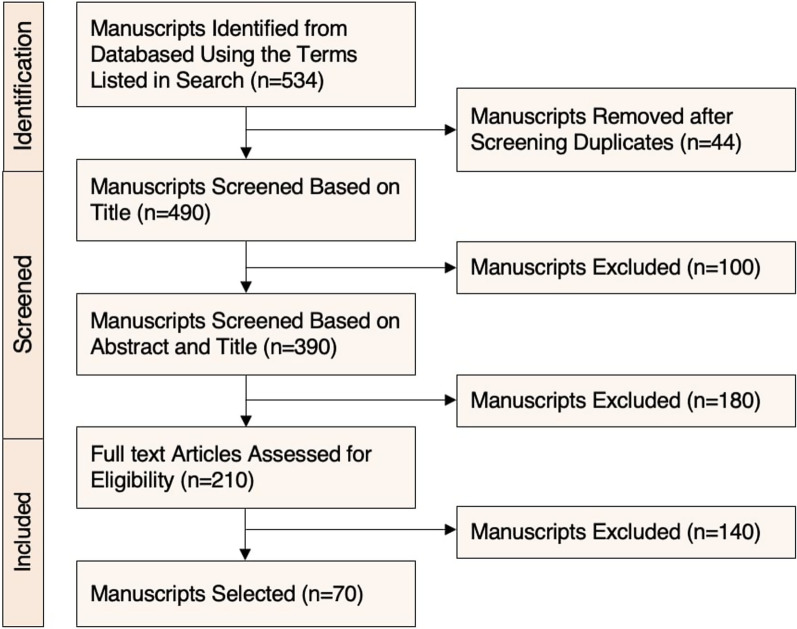
“In compliance with the PRISMA like guidelines, a flow-chart was used to provide a general overview of the article selection process [29].”
Wang, G., Ma, R., Qiao, G., Wada, K., Aizawa, Y., & Satoh, T. (2015) · Integrative Medicine International · doi:10.1159/000368408 · Cited by 18,657
Holland, G., & Tiggemann, M. (2016) · Body Image · doi:10.1016/j.bodyim.2016.02.008 · Cited by 1,395 · cited 2×
“There is robust evidence regarding the negative effects of HVSM on body image, depression, social comparison, and DE [28].”
BackgroundMethodMaturation of the adolescent brain
Sharma, S., Arain, Mathur, Rais, Nel, Sandhu, Haque, & Johal (2013) · Neuropsychiatric Disease and Treatment · doi:10.2147/ndt.s39776 · Cited by 1,249 · cited 1×
“Simultaneously, the critical developmental period of adolescence [3] is characterized by an increased focus on body image, which is linked to both self and social worth, and is influenced by body weight and shape [4].”
BackgroundWomen and weight a normative discontent
Rodin, J., Silberstein, L. R., & Moore, R. S. (1985) · Cited by 1,048
Treasure, J., Duarte, T. A., & Schmidt, U. (2020) · The Lancet · doi:10.1016/s0140-6736(20)30059-3 · Cited by 1,026
Social Media and Body Image Concerns: Current Research and Future Directions
Fardouly, J., & Vartanian, L. R. (2016) · Current Opinion in Psychology · doi:10.1016/j.copsyc.2015.09.005 · Cited by 801 · cited 1×
“However, current research recognizes the increasing role of appearance-based engagement on SM platforms [30] and the complex interactions with body image and body satisfaction [31].”
BackgroundNetGirls: The Internet, Facebook, and body image concern in adolescent girls
Tiggemann, M., & Slater, A. (2013) · International Journal of Eating Disorders · doi:10.1002/eat.22141 · Cited by 741 · cited 2×
“While many friends are linked to body image concerns and dieting, neuroimaging studies highlight the rewarding nature of likes, influencing self-presentation and affecting self-esteem [60].”
Background“Exercise to be fit, not skinny,”: the effect of fitspiration imagery on women's body image
Tiggemann, M., & Zaccardo, M. (2015) · Body Image · doi:10.1016/j.bodyim.2015.06.003 · Cited by 737
Cited by
Effects of Social Media Use on Youth and Adolescent Mental Health: A Scoping Review of Reviews
Agyapong-Opoku, N., Agyapong-Opoku, F., & Greenshaw, A. J. (2025) · Behavioral Sciences · doi:10.3390/bs15050574 · Cited by 84
“Four of the twenty-five studies reviewed by McCrory et al. (2020) suggested a null relationship between social media use and mental health among young people.”
Xiang, K., & Kong, F. (2024) · Appetite · doi:10.1016/j.appet.2024.107360 · Cited by 34
Ganson, K. T., Testa, A. M., Rodgers, R. F., & Nagata, J. M. (2025) · Body Image · doi:10.1016/j.bodyim.2025.101903 · Cited by 21
The associations between social comparison on social media and young adults’ mental health
Le Blanc-Brillon, J., Fortin, J.-S., Lafrance, L., & Hétu, S. (2025) · Frontiers in Psychology · doi:10.3389/fpsyg.2025.1597241 · Cited by 16
Prevention of eating disorders: 2023 in review
Levine, M. P. (2024) · Eating Disorders · doi:10.1080/10640266.2024.2345995 · Cited by 10
Coco, G. L., & Rodgers, R. F. (2025) · Addictive Behaviors Reports · doi:10.1016/j.abrep.2025.100623 · Cited by 10
“…previous research evidence has indicated that mere time spent on social networks does not primarily influence the development of disordered eating or body dissatisfaction (Sharma & Vidal, 2023) and the multiple dynamics underlying these associations need to be further conceptualized and explored.”
Levin, T., Tiggemann, M., Harriger, J. A., & Fardouly, J. (2025) · Body Image · doi:10.1016/j.bodyim.2025.102000 · Cited by 24
Athanasoula, D., Salpa, A., Apergi, F.-S., & Vlachos, I. I. (2025) · Nutrients · doi:10.3390/nu17203288 · Cited by 13
“Similarly, previous reviews have found that frequent exposure to, as well as high engagement with, visual content are also associated with increased odds of developing an eating disorder [20–22].”
Parnell, T., Hunt, D. S., Wilkins, J., İnce, B., Sharpe, H., Schmidt, U. H., & Bartel, H. (2025) · Journal of Eating Disorders · doi:10.1186/s40337-025-01505-6 · Cited by 15
Photo editing and the risk of anorexia nervosa among children and adolescents
Bozzola, E., Scarpato, E., Caruso, C., Russo, R., Aversa, T., & Agostiniani, R. (2024) · Italian Journal of Pediatrics · doi:10.1186/s13052-024-01803-w · Cited by 5
Weber, S., Sadler, M., & Mengelkamp, C. (2025) · Social Sciences · doi:10.3390/socsci14080450 · Cited by 6
Keeler, J. L., Ludtke, L. C., Yang, Q., Rameh, V. R., Ward, R., Treasure, J. L., & Carter, B. (2026) · JMIR Mental Health · doi:10.2196/88572 · Cited by 7
Fortunato, L., Gullo, S., Muscolino, A., La Tona, A., Rodgers, R. F., & Lo Coco, G. (2026) · Adolescent Research Review · doi:10.1007/s40894-026-00285-7 · Cited by 7
“…ED symptoms (Blackburn & Hogg, 2024 ), some of which may promote the development of disordered eating behaviors (Holland & Tiggemann, 2016 ; Fioravanti et al., 2022), while others offer information on weight-loss methods, potentially encouraging users to aspire to thinness (Sharma & Vidal, 2023 ).”
InfluentialHaidt, J., & Rausch, Z. M. (2026) · SSRN Electronic Journal · doi:10.2139/ssrn.6069268 · Cited by 9
Ruggieri, S., Contentezza, R., Casella, M., Cernigliaro, A., Cosentini, I., Drago, G., Coco, G. L., Semola, M., & Gullo, S. (2025) · Child and Adolescent Psychiatry and Mental Health · doi:10.1186/s13034-025-00940-2 · Cited by 7
Höld, E., Rathmanner, T., & Heller, M. (2025) · JMIR Formative Research · doi:10.2196/70964 · Cited by 5
“…like Instagram (Meta Platforms, Inc) have become more popular and seem to have a greater impact on appearance comparisons, body image and consequently body image perception, body dissatisfaction [13-15], and eating disorders [16] than text-centered ones like Facebook (Meta Platforms, Inc [17, 18]).”
The interplay between social media use, poor sleep, and disordered eating: a narrative review
Cerolini, S., Nowicki, G. P., & Rodgers, R. F. (2025) · Cogent Mental Health · doi:10.1080/28324765.2025.2594799 · Cited by 5
“…evidence has linked high social media use, especially problematic use, to poor sleep quality and negative mental health in youth, including disordered eating and body image concerns, anxiety, depression, and psychological distress (Alonzo et al., 2021; Mazzeo et al., 2024; Sharma & Vidal, 2023).”
Beyond the screen: The relationships between online activities and eating disorder risk
Ding, X. (2025) · Eating Behaviors · doi:10.1016/j.eatbeh.2025.101963 · Cited by 2
Is Instagram emerging as a site for self-objectification of women? A systematic literature review
Kumawat, S., & Garg, C. (2025) · Women s Studies International Forum · doi:10.1016/j.wsif.2025.103191 · Cited by 4
Delgado‐Ron, J. A., Whitehead, J., Kaufmann, J., Wu, J., Maluf, G. D. A., Dhaliwal, H., Coelho, J. S., Toulany, A., & Samji, H. (2025) · Journal of Adolescent Health · doi:10.1016/j.jadohealth.2025.08.022 · Cited by 3
Digital Media Use and Psychosocial Health among Adolescent Boys and Young Men
Nagata, J. M., Low, P., Lee, E. D., Yu, S., Leong, A. W., Bao, K., Wong, J. H., Moreno, M. A., & Lavender, J. M. (2026) · Current Psychiatry Reports · doi:10.1007/s11920-026-01681-5 · Cited by 7
Social Media use is Associated with, but is not a Major Cause of Mental Disorder among Adolescents
Elhai, J. D., Demetrovics, Z., Casale, S., & Montag, C. (2026) · Current Addiction Reports · doi:10.1007/s40429-026-00769-5 · Cited by 3
Hahn, S. L., Burnette, C. B., Bornstein, C., Nagata, J. M., Loth, K. A., & Neumark‐Sztainer, D. (2025) · Journal of Nutrition Education and Behavior · doi:10.1016/j.jneb.2025.03.006 · Cited by 2
Fan, L., Zhu, Y., & Yang, K. (2025) · Psychological Reports · doi:10.1177/00332941251343534 · Cited by 5
In-person and cyber sexual violence are common in young women who have eating disordered symptoms
Albertino, E., Martz, D. M., Wingrove, T., & Curtin, L. (2025) · Eating Disorders · doi:10.1080/10640266.2025.2471210 · Cited by 1
“A strong relationship exists between highly visual social media—including photo editing preoccupation and total time spent on social media—and both eating disorders and eating disordered symptoms, including low self-esteem, poor body image, and body dissatisfaction (Sharma & Vidal, 2023).”
Albano, G., Teti, A., Gullo, S., & Coco, G. L. (2025) · BMC Psychiatry · doi:10.1186/s12888-025-07591-9 · Cited by 2
“Studies investigating the relationship between social media use and mental health have consistently shown that social media can have a negative impact on the development of disordered eating behaviors [33, 34].”
Bazi, S., Khmaiseh, H., & Hajawi, D. (2025) · Acta Psychologica · doi:10.1016/j.actpsy.2025.105978 · Cited by 6
Shields, A. N., Alejandro, N., DeFazio, C., Laska, C., & Evans, J. L. (2025) · Journal of Eating Disorders · doi:10.1186/s40337-025-01467-9 · Cited by 3
Feminine Gender Norms Among Women with Eating Disorders: Findings from an Exploratory Pilot Study
Gras, R. M. L., Patiño-Ortega, M., López-Hernández, P., & Galvez-Sánchez, C. M. (2026) · Women · doi:10.3390/women6010015 · Cited by 1
“According to the American Psychiatric Association [2], these disorders are characterized by persistent to the description of this phenomenon as normative discontent , reflecting its normalization in adolescent female experience [23].”
Kutwah, M. A., David-Kigaru, D. M., & Kobia, J. (2026) · BMC Nutrition · doi:10.1186/s40795-026-01276-6 · Cited by 3
Gendelman, L., Peleg, O., & Hadar, E. (2026) · Nutrients · doi:10.3390/nu18101497 · Cited by 1
Maheux, A. J., & Maes, C. (2026) · Perspectives on Psychological Science · doi:10.1177/17456916261460771 · Cited by 3
“Moreover, GenAI chatbots are also used to seek personalized beauty advice, which can reinforce societal standards of attractiveness and commercialized ideals (Hunter, 2025), potentially contributing to harmful behaviors (e.g., disordered eating; Sharma & Vidal, 2023).”
Hussain, M. S., Bahl, G., Saraswat, N., Agarwal, M., Bisht, A. S., Sharma, R., Singh, G., & Kumar, R. (2024) · Current Psychiatry Research and Reviews · doi:10.2174/0126660822295146240523114116 · Cited by 1
Monaco, F., Vignapiano, A., Landi, S., Boccia, A., Palermo, S., Caputo, A., Forte, I., Longobardi, A., Di Pierro, M., Ferrara, E., et al. (2024) · Annals of Case Reports · doi:10.29011/2574-7754.101905
Fiacco, D. (2024) · Dominican Scholar (Dominican University of California) · doi:10.33015/dominican.edu/2024.at.phd.02 · Cited by 1
Same gender typicality, risky technology use, and disordered eating among adolescents
Salomon, I., & Brown, C. S. (2024) · Social Development · doi:10.1111/sode.12783 · Cited by 1
Delgado‐Ron, J. A., Whitehead, J., Kaufmann, J., Wu, J., Maluf, G. D. A., Dhaliwal, H., Coelho, J. S., Toulany, A., & Samji, H. (2024) · SSRN Electronic Journal · doi:10.2139/ssrn.5064073
Baba, A., Suzuki, M., Yoshitake, R., Inose, Y., & Omi, N. (2025) · European Journal of Investigation in Health Psychology and Education · doi:10.3390/ejihpe15070125
“This suggests that the highly visual SNSs may influence the overestimation of body image, the fear of weight gain, and the obsession with body image, promoting eating disorders (Sharma & Vidal, 2023).”
Sharp, G., Stafrace, S., Hu, H., & Wigley, P. (2025) · Journal of Eating Disorders · doi:10.1186/s40337-025-01336-5
Dietel, F. A., Pletzer-Zelgert, E., Portenhauser, A. A., Baumeister, H., Reininghaus, U., Pryss, R. C., Stach, M., Vocks, S., & Terhorst, Y. (2025) · doi:10.2196/preprints.82765
Panea-Pizarro, I., de Benito, S. P., García-Notario, A. I., Sánchez-Calabuig, M. A., López‐Sánchez, C., García-López, V., & López‐Espuela, F. (2026) · Healthcare · doi:10.3390/healthcare14040476
Amorós-Reche, V., Espada, J. P., & Orgilés, M. (2026) · Current Psychology · doi:10.1007/s12144-026-09311-2
“However, Sharma and Vidal (2023) acknowledge the importance of considering the specific platforms used, with effects varying across contexts.”
Khelalfa, Z. (2026) · Current Issues of Mass Communication · doi:10.17721/cimc.2026.39.60-70 · Cited by 2
Ursachen und Risikofaktoren von problematischem Essverhalten und Essstörungen
Kröller, K. (2026) · Springer eBooks · doi:10.1007/978-3-662-72399-9_15
Psychology in Social Media and Individual Restricted Diets
王, 雨. (2026) · Advances in Social Sciences · doi:10.12677/ass.2026.154352
Montag, C. (2026) · Nervenheilkunde · doi:10.1055/a-2839-2620
Orhan, B. E. (2026) · Behavioral Sciences · doi:10.3390/bs16060864 · Cited by 1
“…across platforms, is conceptually and operationally distinct from content-specific exposure to platforms or feeds dominated by fitness, “clean eating,” body-transformation, or influencer-driven nutrition content (Athanasoula et al., 2025; Sharma & Vidal, 2023; Usta Uluta¸s & Okan Bakır, 2025).”
Winstone, L., Parsonage, J. T. I., Muir, C., Randhawa, A., Cross, L., MacArthur, G., Asiedu-Addo, E., & Garavini, E. (2026) · Journal of Adolescence · doi:10.1002/jad.70231 · Cited by 2
Zhou, W., & Zuo, Y. (2026) · Social Science & Medicine · doi:10.1016/j.socscimed.2026.119638
Dietel, F. A., Pletzer-Zelgert, E., Portenhauser, A. A., Baumeister, H., Reininghaus, U., Pryss, R. C., Stach, M., Vocks, S., & Terhorst, Y. (2025) · JMIR mhealth and uhealth · doi:10.2196/82765
Barrio, T. V., Barandalla, L. M., & de Ibarra, A. T. S. (2026) · Revista de Comunicación y Salud · doi:10.35669/rcys.2026.16.e413
“Así mismo, la distancia entre el cuerpo real y el ideal digital puede favorecer conductas alimentarias desordenadas (Lo Coco y Rodgers, 2025; Sharma y Vidal, 2023) y síntomas de dismorfia corporal, caracterizados por una preocupación excesiva por defectos percibidos (Bonfanti et al ., 2025;…”
Park, J. J., Zhang, K., Lee, G., & Potenza, M. N. (2026) · Reviews in Endocrine and Metabolic Disorders · doi:10.1007/s11154-026-10089-8
Prevalence of eating disorders in Australian general from 2017 to 2022: a retrospective cohortPreprint
Bernardo, C., Caceres, V. D. M., González‐Chica, D. A., Thompson, C. H., Sandhu, A. K., Rami, T., Siew, J. Y., O’Connell, A., Lukacejda, C., & Russell, P. T. (2026) · Research Square · doi:10.21203/rs.3.rs-11210606/v1
Metadata
- Authors
- Sharma, A., & Vidal, C.
- Affiliations
- Johns Hopkins University (US)
- Corresponding author
- Sharma, Ashley
- Venue
- Journal of Eating Disorders
- Published
- 2023-09-26
- Volume
- 11
- Issue
- 1
- Pages
- 170-170
- ISSN
- 2050-2974 (ISSN-L)
- PMC
- PMC10521472
- OpenAlex
- W4387059293
- Semantic Scholar
- a75011e04b49c84b6bff98dec1c4d55620232c4b
- Cited by
- 53
- References
- 88
- Citations by year
- 2026: 21 · 2025: 24 · 2024: 8
- FWCI
- 2.68
- Type
- journal article
- Language
- en
- Open access
- gold
- doi.org
- Licence
- cc-by
- creativecommons.org/licenses/by/4.0 (tdm)
- creativecommons.org/licenses/by/4.0 (vor)
- Locations
- Journal of Eating Disorders (publishedVersion, cc-by)
- Research Square (acceptedVersion, cc-by)
- PubMed Central (publishedVersion, cc-by)
- PubMed (publishedVersion)
- DOAJ (DOAJ: Directory of Open Access Journals) (submittedVersion, cc-by-sa)
- Funders
- National Institute on Drug Abuse (K12DA000357)
- Topics
- Social Sciences › Psychology › Clinical Psychology › Eating Disorders and Behaviors
- Social Sciences › Sociology and Political Science › Impact of Technology on Adolescents
- Social Sciences › Psychology › Clinical Psychology › Body Image and Dysmorphia Studies
- Keywords
- eating disorders, disordered eating, adolescents and young adults, gender differences, selfies, social media use, platform transparency, youth mental health
About these checks
Registry, retraction, Cites and statistics results are computed, not judged, with one exception: a printed reference that no index lists is read once by a model before it counts as a citation error. Claims are extracted by a model and kept only when their quote appears verbatim in the text; each cited source is then checked, with a model’s help, for whether it says what the claim relies on. Those verdicts can be wrong — read the claim’s quote and the cited source before relying on one.
Statistics and arithmetic are recomputed, not judged.
Confidence bands are shown only for fields calibrated on our annotated test set. None is calibrated yet, so no band is shown.
What counts as a claim ›How we measure confidence ›How we check this ›
Are you an author, or do you see a problem with this page? Request a review
Data sources
Bibliographic data: Semantic Scholar, OpenAlex, Crossref.
Contains information from the Semantic Scholar Academic Graph Datasets, made available under the ODC Attribution License (ODC-BY 1.0).
Semantic Scholar’s data is described in: Kinney, R., et al. (2023). The Semantic Scholar Open Data Platform. arXiv:2301.10140.
