

Psychometric evaluation of the depression, anxiety, and stress scale-21 (DASS-21) among Chinese primary and middle school teachers
Open accessThe DOI matches its Crossref record; 71 of the 72 references it cites were found in a registry or an index.
Abstract
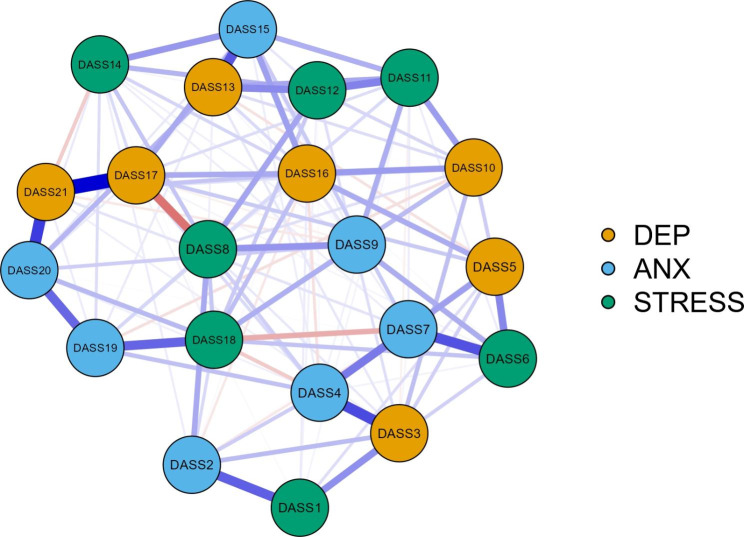
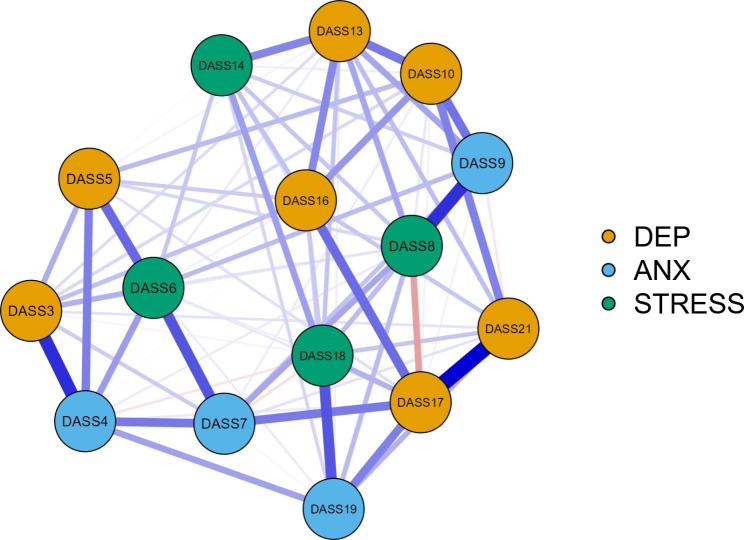
Background: Teachers in high-stress roles face increasing psychological distress such as anxiety and depression, underscoring the need for validated assessment instruments. Given the current absence of a comprehensive, designated, and time-efficient scale capable of evaluating depression, anxiety, and stress among the teacher population, the Depression, Anxiety, and Stress Scale-21 (DASS-21) presents itself as a promising alternative. Despite the widespread application of the DASS-21 for assessing psychological distress across various populations, its validity among teachers, along with questions about its factor structure and its potential property of time equivalence, remain unverified. This study endeavors to address these considerations by investigating the psychometric properties of the DASS-21 specifically within the population of Chinese primary and middle school teachers. Methods: Cross-sectional (n = 9,030) and longitudinal surveys (n = 1,642) were conducted using a non-probability sampling method. In addition to the DASS-21, the Chinese version of Chinese Teachers’ Job Burnout Questionnaire (CTJBO) was utilized to evaluate the criterion validity of this scale. Three different approaches, namely confirmatory factor analysis, Rasch analysis, and network analysis, were employed to evaluate internal reliability, construct validity, as well as time invariance of the DASS-21. Results: The DASS-21 demonstrated a high degree of internal consistency (Cronbach’s α > 0.85) as well as excellent convergent validity, despite poor discriminant validity as determined by average variance extracted. Confirmatory factor analysis and network analysis further supported convergent validity. The three-factor structure outperformed one- and two-factor alternatives, establishing time invariance. Rasch analysis at the item level identified six inappropriate items within the anxiety and stress subscales, which were subsequently removed. Network analysis presented a better revised network. Regression analysis with emotional exhaustion as the criterion provided logical and accurate results. Conclusion: The DASS-21 was found to be a reliable and valid tool for measuring the mental health of teachers over time. To assess the instrument’s psychometric properties, a combination of confirmatory factor analysis, Rasch analysis, and network analysis was utilized, which proved effective and is recommended for evaluating contentious instruments. Based on the results of the study, researchers and healthcare professionals are recommended to use the DASS-21 for assessing teachers’ psychological distress. However, certain items identified in the study may need to be removed to enhance the instrument’s appropriateness for this specific population.
Overview
The claims and statistics of this paper haven’t been checked yet.
Free: it reads the open-access text and checks the first 5 claims that cite a source we can check. Create a free account to check every claim.
Integrity signals
Registry
Cites
Statistics
Figures
Verification
Claims the paper makes
The claims and statistics of this paper haven’t been checked yet.
Free: it reads the open-access text and checks the first 5 claims that cite a source we can check. Create a free account to check every claim.
Claims other papers make about this one
Each is checked against this paper’s own text: does it say what the citing paper says it does?
The source backs part of the claim, not all of it — or backs it for a different population, condition or comparison.
In the citing paper
“The DASS-21 has shown good internal consistency and convergent and discriminant validity in Chinese samples [39,40].”
From Effectiveness of an Internet-Based Acceptance and Commitment Therapy Intervention for Reducing Psychological Distress in Health Care Professionals: Randomized Controlled Trial (2024) · cites this paper as [40]
Experimental — accuracy not yet measured
Self-check
Percentages, sums and reported differences re-computed from the paper’s own numbers.
The self-check needs the paper’s full text.
Citations
Cites
Hu, L., & Bentler, P. M. (1999) · Structural Equation Modeling A Multidisciplinary Journal · doi:10.1080/10705519909540118 · Cited by 108,788
The measurement of experienced burnout
Maslach, C., & Jackson, S. E. (1981) · Journal of Organizational Behavior · doi:10.1002/job.4030020205 · Cited by 14,496 · cited 4×
“Job Burnout Questionnaire MBI Maslach Burnout Inventory CFI Comparative fit index NNFI Non-normed fit index AIC Akaike information criterion CR Composite reliability AVE Average variance extracted SRMR Standardized root mean square residual RSM Andrich Rating Scale Model PCM Partial Credit Rasch Model PCA principal co…”
BackgroundInfluentialSensitivity of Goodness of Fit Indexes to Lack of Measurement Invariance
Chen, F. F. (2007) · Structural Equation Modeling: A Multidisciplinary Journal · doi:10.1080/10705510701301834 · Cited by 12,217
(1995) · Cited by 6,909
Estimating psychological networks and their accuracy: A tutorial paper
Epskamp, S., Borsboom, D., & Fried, E. I. (2018) · Behavior Research Methods · doi:10.3758/s13428-017-0862-1 · Cited by 5,715
qgraph: Network Visualizations of Relationships in Psychometric Data
Epskamp, S., Cramer, A. O. J., Waldorp, L. J., Schmittmann, V. D., & Borsboom, D. (2012) · Journal of Statistical Software · doi:10.18637/jss.v048.i04 · Cited by 4,856
Network analysis: An integrative approach to the structure of psychopathology
Borsboom, D., & Cramer, A. O. J. (2013) · Annual Review of Clinical Psychology · doi:10.1146/annurev-clinpsy-050212-185608 · Cited by 4,359
Psychological Testing: Principles, Applications, and Issues
Kaplan, R. M. (1982) · Cited by 1,799
Teacher self-efficacy and teacher burnout: A study of relations
Skaalvik, E. M., & Skaalvik, S. (2010) · Teaching and Teacher Education · doi:10.1016/j.tate.2009.11.001 · Cited by 1,787
Identifying highly influential nodes in the complicated grief network.
Robinaugh, D. J., Millner, A. J., & McNally, R. J. (2016) · Journal of Abnormal Psychology · doi:10.1037/abn0000181 · Cited by 1,787
Tennant, A., & Conaghan, P. G. (2007) · Arthritis Care & Research · doi:10.1002/art.23108 · Cited by 1,638
Network analysis of depression and anxiety symptom relationships in a psychiatric sample
Beard, C., Millner, A. J., Forgeard, M. J. C., Fried, E. I., Hsu, K. J., Treadway, M. T., Leonard, C. V., Kertz, S. J., & Björgvinsson, T. (2016) · Psychological Medicine · doi:10.1017/s0033291716002300 · Cited by 929 · cited 1×
“As a method of visualizing the complex relationships between symptoms on the basis of the dynamic systems modeling [47], the network analysis can be used to represent, analyze, and study systems in their full complexity [48].”
Rasch Analysis for Instrument Development: Why, When, and How?
Boone, W. J. (2016) · CBE—Life Sciences Education · doi:10.1187/cbe.16-04-0148 · Cited by 701
A Meta-Analysis for Exploring the Diverse Causes and Effects of Stress in Teachers
Montgomery, C., & Rupp, A. A. (2005) · Canadian Journal of Education / Revue canadienne de l'éducation · doi:10.2307/4126479 · Cited by 688 · cited 1×
“In a meta-analysis, Montgomery and Rupp scrutinized the causes and effects of stress among teachers, concluding that stress was correlated with emotional responses in this population, such that experiences of stress evoked distress, anxiety, and depression [14].”
BackgroundDevelopment and evaluation of the conceptual inventory of natural selection
Anderson, D. L., Fisher, K. M., & Norman, G. J. (2002) · Journal of Research in Science Teaching · doi:10.1002/tea.10053 · Cited by 572
Wu, H., & Estabrook, R. (2016) · Psychometrika · doi:10.1007/s11336-016-9506-0 · Cited by 523
A Preliminary Test of a Stress-Strain-Outcome Model for Reconceptualizing the Burnout Phenomenon
Koeske, G. F., & Koeske, R. D. (1993) · Journal of Social Service Research · doi:10.1300/j079v17n03_06 · Cited by 499
Tran, T. D., Tran, T., & Fisher, J. (2013) · BMC Psychiatry · doi:10.1186/1471-244x-13-24 · Cited by 476 · cited 1×
“In addition, different factor structures with regard to this scale have been reported: Some studies have supported a one-factor structure [34], or bifactor structure [28, 35], while others are in favor of the traditional oblique three-factor structure [36, 37].”
A meta-analysis of the effects of teacher personality on teacher effectiveness and burnout
Kim, L. E., Jörg, V., & Klassen, R. M. (2019) · Educational Psychology Review · doi:10.1007/s10648-018-9458-2 · Cited by 406
Burnout syndrome in secondary school teachers: a systematic review and meta-analysis
García-Carmona, M., Marín, M. D., & Aguayo, R. (2019) · Social Psychology of Education · doi:10.1007/s11218-018-9471-9 · Cited by 370 · cited 1×
“These encompass issues such as unsatisfactory income, time pressure, overcrowded classrooms, inadequate facilities, and a dearth of training or promotional opportunities [10].”
BackgroundImpact of Educational Technology on Teacher Stress and Anxiety: A Literature Review
Fernández-Batanero, J.-M., Román-Graván, P., Reyes-Rebollo, M.-M., & Montenegro-Rueda, M. (2021) · International Journal of Environmental Research and Public Health · doi:10.3390/ijerph18020548 · Cited by 313
Yin, H., Huang, S., & Chen, G. (2019) · Educational Research Review · doi:10.1016/j.edurev.2019.100283 · Cited by 300
Lee, J., Lee, E.-H., & Moon, S. H. (2019) · Quality of Life Research · doi:10.1007/s11136-019-02177-x · Cited by 265
Psychometric properties of the Chinese versions of DASS-21 in Chinese college students.
Gong, X., Xie, X., Xu, R., & Luo, Y. (2010) · Zhongguo linchuang xinlixue zazhi · Cited by 262
Slocum-Gori, S. L., & Zumbo, B. D. (2011) · Social Indicators Research · doi:10.1007/s11205-010-9682-8 · Cited by 251
Occupational stress, anxiety and depression among Egyptian teachers
Desouky, D., & Allam, H. (2017) · Journal of Epidemiology and Global Health · doi:10.1016/j.jegh.2017.06.002 · Cited by 246
Teacher stress interventions: A systematic review
von der Embse, N., Ryan, S. V., Gibbs, T., & Mankin, A. (2019) · Psychology in the Schools · doi:10.1002/pits.22279 · Cited by 241
Model Selection and Multimodel Inference
Korner-Nievergelt, F., Roth, T., von Felten, S., Guélat, J., Almasi, B., & Korner-Nievergelt, P. (2015) · Bayesian Data Analysis in Ecology Using Linear Models with R, BUGS, and STAN · doi:10.1016/b978-0-12-801370-0.00011-3 · Cited by 232
Chen, I.-H., Strong, C., Lin, Y.-C., Tsai, M.-C., Leung, H., Lin, C.-Y., Pakpour, A. H., & Griffiths, M. D. (2020) · Addictive Behaviors · doi:10.1016/j.addbeh.2019.04.018 · Cited by 229
Self-citationLee, D. (2019) · Journal of Affective Disorders · doi:10.1016/j.jad.2019.06.036 · Cited by 196 · cited 1×
“Moreover, in line with a prior study [72], the test results of the DASS-21’s convergent validity and discriminant validity demonstrated quite different outcomes; the former was found to be excellent, but the latter was poor, indicating that items were highly correlated.”
ResultRasch model analysis of the Depression, Anxiety and Stress Scales (DASS)
Shea, T. L., Tennant, A., & Pallant, J. F. (2009) · BMC Psychiatry · doi:10.1186/1471-244x-9-21 · Cited by 184
Rasch analysis of the Patient and Observer Scar Assessment Scale (POSAS) in burn scars
van der Wal, M. B. A., Tuinebreijer, W. E., Bloemen, M. C. T., Verhaegen, P. D. H. M., Middelkoop, E., & van Zuijlen, P. P. M. (2011) · Quality of Life Research · doi:10.1007/s11136-011-9924-5 · Cited by 180
Personal and contextual factors related to teachers’ experience with stress and burnout
R. Richards, K. A., Hemphill, M. A., & Templin, T. J. (2018) · Teachers and Teaching · doi:10.1080/13540602.2018.1476337 · Cited by 178
Bibi, A., Lin, M., Zhang, X. C., & Margraf, J. (2020) · International Journal of Psychology · doi:10.1002/ijop.12671 · Cited by 176
Phillips, A. C., Carroll, D., & Der, G. (2015) · Anxiety, Stress, & Coping · doi:10.1080/10615806.2015.1005078 · Cited by 166 · cited 1×
“Moreover, stress has been implicated in the development of depression [13].”
BackgroundDevelopment and validation of a 6‐item Revised UCLA Loneliness Scale (RULS‐6) using Rasch analysis
Wongpakaran, N., Wongpakaran, T., Pinyopornpanish, M., Simcharoen, S., Suradom, C., Varnado, P., & Kuntawong, P. (2020) · British Journal of Health Psychology · doi:10.1111/bjhp.12404 · Cited by 151
Carroll, A., York, A., Fynes‐Clinton, S., O’Connor, E. S., Flynn, L. M., Bower, J., Forrest, K., & Ziaei, M. (2021) · Frontiers in Psychology · doi:10.3389/fpsyg.2021.689628 · Cited by 150
Kakemam, E., Navvabi, E., Albelbeisi, A. H., Saeedikia, F., Rouhi, A., & Majidi, S. (2022) · BMC Health Services Research · doi:10.1186/s12913-022-07514-4 · Cited by 150
Martínez-Monteagudo, M. C., Inglés, C. J., Granados, L., Aparisi, D., & García-Fernández, J. M. (2019) · Personality and Individual Differences · doi:10.1016/j.paid.2019.01.036 · Cited by 149
Collie, R. J., & Mansfield, C. F. (2022) · Teaching and Teacher Education · doi:10.1016/j.tate.2022.103759 · Cited by 136
Teachers’ mental health becoming worse: The case of China
Ruijuan, Y., You, X., Zhang, Y., Lian, L., & Feng, W. (2019) · International Journal of Educational Development · doi:10.1016/j.ijedudev.2019.102077 · Cited by 129
Cai, Y., Dong, S., Yuan, S., & Chuan-Peng, H. (2020) · Advances in Psychological Science · doi:10.3724/sp.j.1042.2020.00178 · Cited by 114
Psychological distress and coping styles in teachers: A preliminary study
Stapleton, P., Garby, S., & Sabot, D. (2020) · Australian Journal of Education · doi:10.1177/0004944120908960 · Cited by 113
Ozoemena, E. L., Agbaje, O. S., Ogundu, L., Ononuju, A. H., Umoke, P. C. I., Iweama, C. N., Kato, G. U., Isabu, A. C., & Obute, A. J. (2021) · BMC Public Health · doi:10.1186/s12889-021-12397-x · Cited by 110
Reilly, C. J., Atkinson, P., Memon, A. M., Jones, C. S., Dabydeen, L., Das, K. B., Gillberg, C., Neville, B. G. R., & Scott, R. C. (2018) · Epilepsy & Behavior · doi:10.1016/j.yebeh.2017.12.020 · Cited by 103
Ali, A. M., & Green, J. (2019) · Substance Abuse Treatment Prevention and Policy · doi:10.1186/s13011-019-0226-1 · Cited by 98
Vaughan, R. S., Edwards, E. J., & MacIntyre, T. E. (2020) · Frontiers in Psychology · doi:10.3389/fpsyg.2020.590559 · Cited by 97
Thiyagarajan, A., James, T. G., & Marzo, R. R. (2022) · Humanities and Social Sciences Communications · doi:10.1057/s41599-022-01229-x · Cited by 96
The psychometric properties of the Depression Anxiety Stress Scale-21 (DASS-21) Bangla version
Ahmed, O., Faisal, R. A., Alim, S. M. A. H. M., Sharker, T., & Hiramoni, F. A. (2022) · Acta Psychologica · doi:10.1016/j.actpsy.2022.103509 · Cited by 85
Anxiety, Depression, and Tension/Stress in Children
Szabó, M., & Lovibond, P. F. (2006) · Journal of Psychopathology and Behavioral Assessment · doi:10.1007/s10862-005-9008-3 · Cited by 76
The Geriatric Depression Scale should be shortened: results of Rasch analysis
Tang, W. K., Wong, E. Y. L., Chiu, H. F. K., Lum, C., & Ungvari, G. S. (2005) · International Journal of Geriatric Psychiatry · doi:10.1002/gps.1360 · Cited by 71
Kumar, K., Kumar, S., Mehrotra, D., Tiwari, S. C., Kumar, V., & Dwivedi, R. C. (2018) · Journal of Cancer Research and Therapeutics · doi:10.4103/jcrt.jcrt_281_17 · Cited by 67
Kukreti, S., Ahorsu, D. K., Strong, C., Chen, I., Lin, C., Ko, N., Griffiths, M. D., Chen, Y., Kuo, Y., & Pakpour, A. H. (2021) · Healthcare · doi:10.3390/healthcare9101288 · Cited by 66
Self-citationden Bergh, N. V., Marchetti, I., & Koster, E. H. W. (2020) · Cognitive Therapy and Research · doi:10.1007/s10608-020-10153-w · Cited by 64
Morris, R. L., Soh, S., Hill, K., Buchbinder, R., Lowthian, J. A., Redfern, J., Etherton‐Beer, C., Hill, A., Osborne, R. H., Arendts, G., et al. (2017) · BMC Health Services Research · doi:10.1186/s12913-017-2520-9 · Cited by 63
Cao, C.-H., Dang, C.-Y., Zheng, X., Chen, W.-G., Chen, I., & Gamble, J. H. (2023) · Healthcare · doi:10.3390/healthcare11050700 · Cited by 62
Self-citationGomez, R., Stavropoulos, V., & Griffiths, M. D. (2020) · PLoS ONE · doi:10.1371/journal.pone.0233998 · Cited by 61
Lee, B., & Kim, Y. E. (2020) · Current Psychology · doi:10.1007/s12144-020-00914-x · Cited by 59
Sbeglia, G. C., & Nehm, R. H. (2019) · Science Education · doi:10.1002/sce.21494 · Cited by 56
Titheradge, D., Hayes, R., Longdon, B., Allen, K., Price, A., Hansford, L., Nye, E., Ukoumunne, O. C., Byford, S., Norwich, B., et al. (2019) · Public Health · doi:10.1016/j.puhe.2018.09.022 · Cited by 54
Evans, L. N., Haeberlein, K. A., Chang, A., & Handal, P. J. (2020) · Child Psychiatry & Human Development · doi:10.1007/s10578-020-01050-0 · Cited by 54
Religious Belief and Mental Health in Lay and Consecrated Italian Teachers
Chirico, F. (2016) · Journal of Religion and Health · doi:10.1007/s10943-016-0242-7 · Cited by 49
Medvedev, O. N., Krägeloh, C. U., Titkova, E. A., & Siegert, R. J. (2020) · Journal of Health Psychology · doi:10.1177/1359105318755261 · Cited by 48
Job strain and sense of coherence: Associations with stress-related outcomes among teachers
Ramberg, J., Låftman, S. B., Nilbrink, J., Olsson, G., & Toivanen, S. (2021) · Scandinavian Journal of Public Health · doi:10.1177/14034948211011812 · Cited by 47
Bilbao‐González, A., Martín‐Fernández, J., García‐Pérez, L., Mendezona, J. I., Arrasate, M., Candela, R., Acosta, F. J., Estebanez, S., & Retolaza, A. (2021) · Journal of Mental Health · doi:10.1080/09638237.2021.1875422 · Cited by 43
Chen, I.-H., Chen, C.-Y., Zhao, K.-Y., Gamble, J. H., Lin, C.-Y., Griffiths, M. D., & Pakpour, A. H. (2022) · Current Psychology · doi:10.1007/s12144-021-02471-3 · Cited by 40
Self-citationPerceptions of Social–Emotional Learning Among K-12 Teachers in the USA During the COVID-19 Pandemic
Cooper, C. M., Przeworski, A., Smith, A. C. G., Obeid, R., & Short, E. J. (2023) · School Mental Health · doi:10.1007/s12310-022-09563-w · Cited by 35
Teachers use of fear appeals: Association with student and teacher mental health
Belcher, J., Wuthrich, V. M., & Lowe, C. (2021) · British Journal of Educational Psychology · doi:10.1111/bjep.12467 · Cited by 32
Carrozzino, D., Siri, C., & Bech, P. (2018) · Progress in Neuro-Psychopharmacology and Biological Psychiatry · doi:10.1016/j.pnpbp.2018.07.012 · Cited by 28
Baek, J. J. H., Soares, G. H., da Rosa, G. C., Mialhe, F. L., Biazevic, M. G. H., & Michel‐Crosato, E. (2021) · International Journal of Medical Informatics · doi:10.1016/j.ijmedinf.2021.104532 · Cited by 20
Chen, I., Chen, X.-M., Liao, X.-L., Zhao, K., Zhi-hui, W., Lin, C., & Gamble, J. H. (2022) · Frontiers in Psychology · doi:10.3389/fpsyg.2022.943449 · Cited by 18
Self-citation
Research works printed but not linked: 2
- Van den Bergh N, Marchetti I, Koster EH. Bridges over troubled waters: mapping the interplay between anxiety, depression and stress through network analysis of the DASS-21. Cogn Therapy and Res. 2021;45:46–60. · DOI
- Wu X-c Qi Y-j Yu R-r Zang W-w: revision of chinese primary and secondary school teachers’ job burnout questionnaire Chin J Clin Psychol 2016 24 5 856 60
Cited by
Cao, C.-H., Liao, X.-L., Gamble, J. H., Li, L., Jiang, X.-Y., Li, X.-D., Griffiths, M. D., Chen, I., & Lin, C. (2023) · Child and Adolescent Psychiatry and Mental Health · doi:10.1186/s13034-023-00655-2 · Cited by 107
Self-citationQi, S., & Derakhshan, A. (2024) · Education and Information Technologies · doi:10.1007/s10639-024-13167-z · Cited by 100
Liu, Y., Xiao, T., Zhang, W., Xu, L., & Zhang, T. (2024) · Psychology Health & Medicine · doi:10.1080/13548506.2024.2357694 · Cited by 80
Qu, J., & Wang, Y. (2024) · European Journal of Education · doi:10.1111/ejed.12727 · Cited by 74
Application of DASS-21 in Chinese students: invariance testing and network analysis
Zhang, Z., Lin, R., Qiu, A., Wu, H., Wu, S., Zhang, L., Wu, Z., Li, M., Zhang, X., & Zhou, J. (2024) · BMC Public Health · doi:10.1186/s12889-024-20123-6 · Cited by 61
Metadata
- Authors
- Cao, C.-H., Liao, X.-L., Jiang, X.-Y., Li, X.-D., Chen, I.-H., & Lin, C.-Y.
- Affiliations
- Qufu Normal University (CN)
- Jiangxi Science and Technology Normal University (CN)
- National Cheng Kung University Hospital (TW)
- Corresponding author
- Chen, I-Hua
- Lin, Chung-Ying
- Venue
- BMC Psychology
- Published
- 2023-07-14
- Volume
- 11
- Issue
- 1
- Pages
- 209-209
- ISSN
- 2050-7283 (ISSN-L)
- PMC
- PMC10349442
- OpenAlex
- W4384338767
- Semantic Scholar
- 852ccd5c335480d461a1a4ae2c061c9ada5f1007
- Cited by
- 113
- References
- 72
- Citations by year
- 2026: 21 · 2025: 39 · 2024: 44 · 2023: 9
- FWCI
- 20.76
- Type
- journal article
- Language
- en
- Open access
- gold
- doi.org
- Licence
- cc-by
- creativecommons.org/licenses/by/4.0 (tdm)
- creativecommons.org/licenses/by/4.0 (vor)
- Locations
- BMC Psychology (publishedVersion, cc-by)
- PubMed Central (publishedVersion, cc-by)
- PubMed (publishedVersion)
- DOAJ (DOAJ: Directory of Open Access Journals) (submittedVersion, cc-by-sa)
- Funders
- Shandong Province Social Science Planning Research Project, China (20CWZJ40)
- Topics
- Social Sciences › Decision Sciences › Management Science and Operations Research › Psychometric Methodologies and Testing
- Social Sciences › Psychology › Experimental and Cognitive Psychology › Anxiety, Depression, Psychometrics, Treatment, Cognitive Processes
- Health Sciences › Medicine › Public Health, Environmental and Occupational Health › Occupational Health and Burnout
- Keywords
- DASS-21, depression, anxiety, stress, teachers, elementary and middle school teachers, Chinese teachers, psychometric validation, factor structure, time invariance, Rasch analysis, network analysis, convergent validity, discriminant validity, internal consistency, emotional exhaustion, burnout, psychological distress
- MeSH terms
- School Teachers, Anxiety, Cross-Sectional Studies, Depression, Humans, Psychometrics, Surveys and Questionnaires, Stress, Psychological, Reproducibility of Results
About these checks
Registry, retraction, Cites and statistics results are computed, not judged, with one exception: a printed reference that no index lists is read once by a model before it counts as a citation error. Claims are extracted by a model and kept only when their quote appears verbatim in the text; each cited source is then checked, with a model’s help, for whether it says what the claim relies on. Those verdicts can be wrong — read the claim’s quote and the cited source before relying on one.
Statistics and arithmetic are recomputed, not judged.
Confidence bands are shown only for fields calibrated on our annotated test set. None is calibrated yet, so no band is shown.
What counts as a claim ›How we measure confidence ›How we check this ›
Are you an author, or do you see a problem with this page? Request a review
Data sources
Bibliographic data: Semantic Scholar, OpenAlex, Crossref.
Contains information from the Semantic Scholar Academic Graph Datasets, made available under the ODC Attribution License (ODC-BY 1.0).
Semantic Scholar’s data is described in: Kinney, R., et al. (2023). The Semantic Scholar Open Data Platform. arXiv:2301.10140.
