

The DOI matches its Crossref record; 90 of the 90 references it cites were found in a registry or an index.
eToxPred: a machine learning-based approach to estimate the toxicity of drug candidates
Open accessAbstract
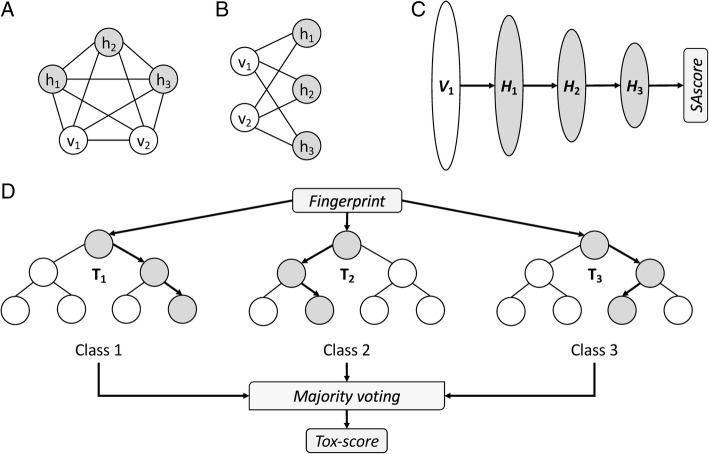
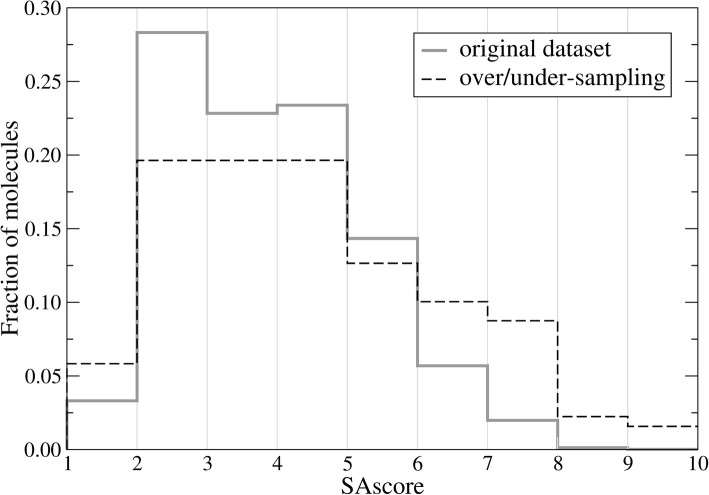
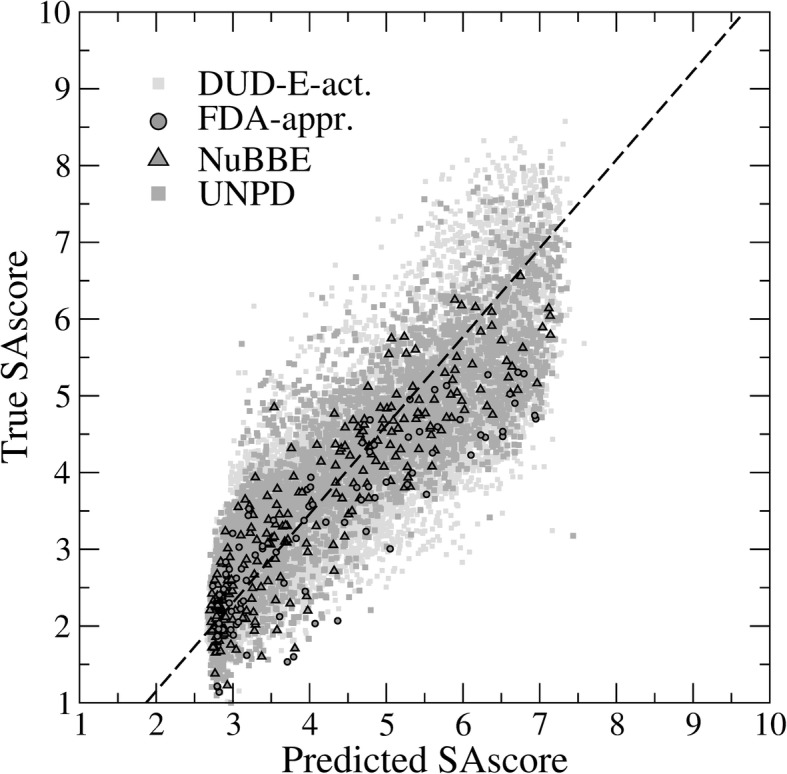
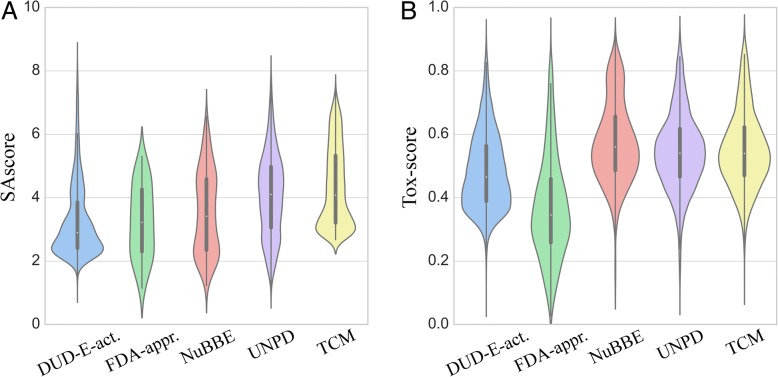
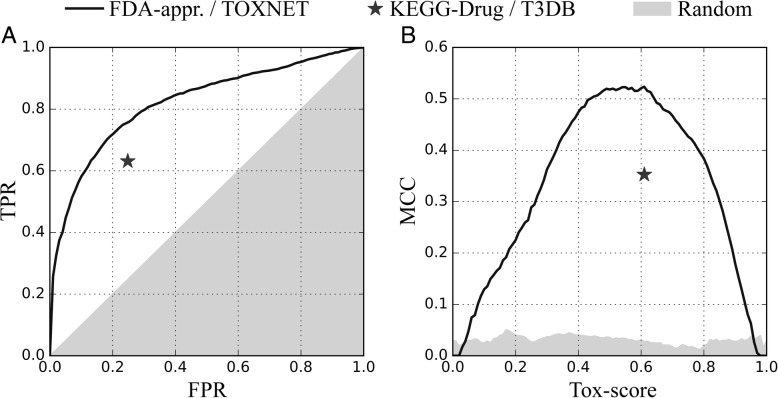
BACKGROUND: The efficiency of drug development defined as a number of successfully launched new pharmaceuticals normalized by financial investments has significantly declined. Nonetheless, recent advances in high-throughput experimental techniques and computational modeling promise reductions in the costs and development times required to bring new drugs to market. The prediction of toxicity of drug candidates is one of the important components of modern drug discovery. RESULTS: In this work, we describe eToxPred, a new approach to reliably estimate the toxicity and synthetic accessibility of small organic compounds. eToxPred employs machine learning algorithms trained on molecular fingerprints to evaluate drug candidates. The performance is assessed against multiple datasets containing known drugs, potentially hazardous chemicals, natural products, and synthetic bioactive compounds. Encouragingly, eToxPred predicts the synthetic accessibility with the mean square error of only 4% and the toxicity with the accuracy of as high as 72%. CONCLUSIONS: eToxPred can be incorporated into protocols to construct custom libraries for virtual screening in order to filter out those drug candidates that are potentially toxic or would be difficult to synthesize. It is freely available as a stand-alone software at https://github.com/pulimeng/etoxpred .
Overview
The claims and statistics of this paper haven’t been checked yet.
Run the check — free, no account needed. It reads the open-access text and checks the sources it cites.
Integrity signals
Registry
Cites
Statistics
Figures
Verification
Claims the paper makes
The claims and statistics of this paper haven’t been checked yet.
Run the check — free, no account needed. It reads the open-access text and checks the sources it cites.
Claims other papers make about this one
Each is checked against this paper’s own text: does it say what the citing paper says it does?
In the citing paper
“AI-based methods have also been able to predict the toxicity of drug candidates [6].”
From The role of AI in drug discovery: challenges, opportunities, and strategies (2023) · cites this paper as [6]
Self-check
Percentages, sums and reported differences re-computed from the paper’s own numbers.
The self-check needs the paper’s full text.
Citations
Cites
Breiman, L. (2001) · Machine Learning · doi:10.1023/a:1010933404324 · Cited by 133,538 · cited 1×
“DeepTox was reported to outperform deep neural networks (DNNs) [31], support vector machines (SVMs) [32], random forests (RF) [33], and elastic nets [34].”
BackgroundTrott, O., & Olson, A. J. (2010) · Journal of Computational Chemistry · doi:10.1002/jcc.21334 · Cited by 38,412 · cited 1×
“VS performed with high-performance computing machines renders docking programs such as AutoDock Vina [19], rDock [20], Glide [21], and FlexX [22] capable to search through millions of compounds in a matter of days or even hours.”
MethodClassification and Regression Trees.
Ryzin, J. V., Breiman, L., Friedman, J. H., Olshen, R. A., & Stone, C. J. (1986) · Journal of the American Statistical Association · doi:10.2307/2288003 · Cited by 21,030
Regularization Paths for Generalized Linear Models via Coordinate Descent
Friedman, J., Hastie, T., & Tibshirani, R. (2010) · Journal of Statistical Software · doi:10.18637/jss.v033.i01 · Cited by 19,927 · cited 1×
“DeepTox was reported to outperform deep neural networks (DNNs) [31], support vector machines (SVMs) [32], random forests (RF) [33], and elastic nets [34].”
BackgroundDeep learning in neural networks: an overview
Schmidhuber, J. (2015) · Neural Networks · doi:10.1016/j.neunet.2014.09.003 · Cited by 18,570
Stochastic relaxation, gibbs distributions, and the bayesian restoration of images.
Geman, S., & Geman, D. (1984) · IEEE Transactions on Pattern Analysis and Machine Intelligence · doi:10.1109/tpami.1984.4767596 · Cited by 17,949 · cited 1×
“The training process involves the optimization of the weight vector through Gibbs sampling [38].”
MethodAn Introduction to Statistical Learning
James, G., Witten, D., Hastie, T., & Tibshirani, R. (2013) · Springer Texts in Statistics · doi:10.1007/978-1-4614-7138-7 · Cited by 12,106 · cited 1×
“In this work, the SAscore predictor is evaluated with a 5-fold cross-validation protocol, which was empirically demonstrated to be sufficient for most applications [64].”
MethodClassification And Regression Trees
Breiman, L., Friedman, J. H., Olshen, R. A., & Stone, C. J. (2017) · doi:10.1201/9781315139470 · Cited by 11,417
Open Babel: An open chemical toolbox
O'Boyle, N. M., Banck, M. S., James, C. A. J., Morley, C., Vandermeersch, T., & Hutchison, G. R. (2011) · Journal of Cheminformatics · doi:10.1186/1758-2946-3-33 · Cited by 10,745 · cited 1×
“Input data to machine learning models are 1024-bit Day-light fingerprints constructed for dataset compounds with Open Babel [61].”
MethodFriesner, R. A., Banks, J. L., Murphy, R. B., Halgren, T. A., Klicic, J. J., Mainz, D. T., Repasky, M. P., Knoll, E. H., Shelley, M., Perry, J. K., et al. (2004) · Journal of Medicinal Chemistry · doi:10.1021/jm0306430 · Cited by 10,057 · cited 1×
“VS performed with high-performance computing machines renders docking programs such as AutoDock Vina [19], rDock [20], Glide [21], and FlexX [22] capable to search through millions of compounds in a matter of days or even hours.”
Method
Research works printed but not linked: 2
- Theano_Development_Team: Theano: A Python framework for fast computation of mathematical expressions. arXiv e-prints 2016:abs/1605.02688.
- Tanimoto TT. An elementary mathematical theory of classification and prediction. In: Book An elementary mathematical theory of classification and prediction. (editor ed.^eds.). City; 1958.
Cited by
Sorted by citations
Artificial intelligence in drug discovery and development
Paul, D., Sanap, G., Shenoy, S., Kalyane, D., Kalia, K., & Tekade, R. K. (2021) · Drug Discovery Today · doi:10.1016/j.drudis.2020.10.010 · Cited by 1,695
Artificial intelligence to deep learning: machine intelligence approach for drug discovery
Gupta, R., Srivastava, D., Sahu, M., Tiwari, S., Ambasta, R. K., & Kumar, P. (2021) · Molecular Diversity · doi:10.1007/s11030-021-10217-3 · Cited by 1,473
“…prediction software and web-based tools such as Tox21 (https:// ntp. niehs. nih. gov/ whatw estudy/ tox21/ index. html) [327], SEA (http:// sea. bkslab. org/) [328], eToxPred (https:// www. bryli nski. org/ etoxp red-0) [329], and TargeTox (https:// github. com/ artem-lysen ko/ Targe Tox) [330].”
The role of AI in drug discovery: challenges, opportunities, and strategies
Blanco-González, A., Cabezón, A., Seco-González, A., Conde-Torres, D., Antelo-Riveiro, P., Piñeiro, Á., & Garcia-Fandino, R. (2023) · Pharmaceuticals · doi:10.3390/ph16060891 · Cited by 690
ToxinPred2: an improved method for predicting toxicity of proteins
Sharma, N., Naorem, L. D., Jain, S., & Raghava, G. P. S. (2022) · Briefings in Bioinformatics · doi:10.1093/bib/bbac174 · Cited by 380
Artificial intelligence and machine learning in drug discovery and development
Patel, V. J., & Shah, M. (2021) · Intelligent Medicine · doi:10.1016/j.imed.2021.10.001 · Cited by 234
Metadata
- Authors
- Pu, L., Naderi, M., Liu, T., Wu, H.-C., Mukhopadhyay, S., & Brylinski, M.
- Affiliations
- Louisiana State University (US)
- Venue
- BMC Pharmacology and Toxicology
- Published
- 2019-01-08
- Volume
- 20
- Issue
- 1
- Pages
- 2-2
- ISSN
- 2050-6511 (ISSN-L)
- PMC
- PMC6325674
- OpenAlex
- W2918544128
- Cited by
- 212
- References
- 90
- Citations by year
- 2026: 21 · 2025: 33 · 2024: 50 · 2023: 44 · 2022: 29 · 2021: 20 · 2020: 10 · 2019: 5
- FWCI
- 10.88
- Type
- journal article
- Language
- en
- Open access
- gold
- doi.org
- Locations
- BMC Pharmacology and Toxicology (publishedVersion, cc-by)
- Europe PMC (PubMed Central) (publishedVersion, cc-by)
- PubMed Central (publishedVersion, cc-by)
- PubMed (publishedVersion)
- Civil War Book Review (submittedVersion)
- DOAJ (DOAJ: Directory of Open Access Journals) (submittedVersion, cc-by-sa)
- Funders
- National Institute of General Medical Sciences (R35GM119524)
- Topics
- Life Sciences › Pharmacology, Toxicology and Pharmaceutics › Drug Discovery › Computational Drug Discovery Methods
- Physical Sciences › Materials Science › Materials Chemistry › Machine Learning in Materials Science
- Health Sciences › Veterinary › Small Animals › Animal testing and alternatives
- Keywords
- toxicity prediction, drug candidates, synthetic accessibility, molecular fingerprints, machine learning, virtual screening, small organic molecules, drug-likeness, chemical toxicity
- MeSH terms
- Machine Learning, Algorithms, Animals, Humans, Drug Discovery, Drug-Related Side Effects and Adverse Reactions
About these checks
Registry, retraction, Cites and statistics results are computed, not judged, with one exception: a printed reference that no index lists is read once by a model before it counts as a citation error. Claims are extracted by a model and kept only when their quote appears verbatim in the text; each cited source is then checked, with a model’s help, for whether it says what the claim relies on. Those verdicts can be wrong — read the claim’s quote and the cited source before relying on one.
Statistics and arithmetic are recomputed, not judged.
Confidence bands are shown only for fields calibrated on our annotated test set. None is calibrated yet, so no band is shown.
What counts as a claim ›How we measure confidence ›How we check this ›
Are you an author, or do you see a problem with this page? Request a review
