

Combining surgery and immunotherapy: turning an immunosuppressive effect into a therapeutic opportunity
Open accessThe DOI matches its Crossref record; 105 of the 105 references it cites were found in a registry or an index.
Abstract
BACKGROUND: Cancer surgery is necessary and life-saving. However, the majority of patients develop postoperative recurrence and metastasis, which are the main causes of cancer-related deaths. The postoperative stress response encompasses a broad set of physiological changes that have evolved to safeguard the host following major tissue trauma. These stress responses, however, intersect with cellular mediators and signaling pathways that contribute to cancer proliferation. MAIN: Previous descriptive and emerging mechanistic studies suggest that the surgery-induced prometastatic effect is linked to impairment of both innate and adaptive immunity. Existing studies that combine surgery and immunotherapies have revealed that this combination strategy is not straightforward and patients have experienced both therapeutic benefit and drawbacks. This review will specifically assess the immunological pathways that are disrupted by oncologic surgical stress and provide suggestions for rationally combining cancer surgery with immunotherapies to improve immune and treatment outcomes. SHORT CONCLUSION: Given the prevalence of surgery as frontline therapy for solid cancers, the emerging data on postoperative immunosuppression and the rapid development of immunotherapy for oncologic treatment, we believe that future targeted studies of perioperative immunotherapy are warranted.
Overview
The claims and statistics of this paper haven’t been checked yet.
Free: it reads the open-access text and checks the first 5 claims that cite a source we can check. Create a free account to check every claim.
Integrity signals
Registry
Cites
Statistics
Figures
Verification
Claims the paper makes
The claims and statistics of this paper haven’t been checked yet.
Free: it reads the open-access text and checks the first 5 claims that cite a source we can check. Create a free account to check every claim.
Claims other papers make about this one
Each is checked against this paper’s own text: does it say what the citing paper says it does?
The source backs part of the claim, not all of it — or backs it for a different population, condition or comparison.
In the citing paper
“neoadjuvant ICIs can induce a more robust immune response than adjuvant ICIs, given the immunosuppressive systemic effects of invasive surgery125–127.”
From Adjuvant and neoadjuvant immunotherapies in hepatocellular carcinoma (2024) · cites this paper as [127]
Experimental — accuracy not yet measured
Self-check
Percentages, sums and reported differences re-computed from the paper’s own numbers.
The self-check needs the paper’s full text.
Citations
Cites
Commensal Bifidobacterium promotes antitumor immunity and facilitates anti–PD-L1 efficacy
Sivan, A., Corrales, L., Hubert, N., Williams, J. B., Aquino-Michaels, K., Earley, Z. M., Benyamin, F. W., Man Lei, Y., Jabri, B., Alegre, M.-L., et al. (2015) · Science · doi:10.1126/science.aac4255 · Cited by 3,888 · cited 1×
“Enhanced DC function leading to increased CD8 T-cell priming and tumor infiltration was suggested to be the underlying mechanism of combination therapy [99].”
BackgroundAnticancer immunotherapy by CTLA-4 blockade relies on the gut microbiota
Vétizou, M., Pitt, J. M., Daillère, R., Lepage, P., Waldschmitt, N., Flament, C., Rusakiewicz, S., Routy, B., Roberti, M. P., Duong, C. P. M., et al. (2015) · Science · doi:10.1126/science.aad1329 · Cited by 3,488 · cited 1×
“thetaiotaomicron influencing antitumor response through IL-2 dependent Th1 immunity, while simultaneously limiting anti-CTLA-4-mediated intestinal adverse effects [100] (Fig.”
BackgroundLanier, L. L. (2005) · Annual Review of Immunology · doi:10.1146/annurev.immunol.23.021704.115526 · Cited by 2,769
Neoadjuvant PD-1 Blockade in Resectable Lung Cancer
Forde, P. M., Chaft, J. E., Smith, K. N., Anagnostou, V., Cottrell, T. R., Hellmann, M. D., Zahurak, M., Yang, S. C., Jones, D. R., Broderick, S., et al. (2018) · New England Journal of Medicine · doi:10.1056/nejmoa1716078 · Cited by 2,099 · cited 1×
“In addition, rapid expansion of mutationassociated, neoantigen-specific T-cells was observed as early as 2 to 4 weeks following initial nivolumab administration demonstrating the additional benefit of neoadjuvant treatment [66].”
BackgroundLanier, L. L. (1998) · Annual Review of Immunology · doi:10.1146/annurev.immunol.16.1.359 · Cited by 1,648
Gross, K. S., Brandner, D. D., Martinez, L. A., Olive, M. F., Meisel, R. L., & Mermelstein, P. G. (2016) · PLOS ONE · doi:10.1371/journal.pone.0162755 · Cited by 1,609
Improved Efficacy of Neoadjuvant Compared to Adjuvant Immunotherapy to Eradicate Metastatic Disease
Liu, J., Blake, S. J., Yong, M. C. R., Harjunpää, H., Ngiow, S. F., Takeda, K., Young, A., O'Donnell, J. S., Allen, S., Smyth, M. J., et al. (2016) · Cancer Discovery · doi:10.1158/2159-8290.cd-16-0577 · Cited by 894
Mirnezami, A., Mirnezami, R., Chandrakumaran, K., Sasapu, K., Sagar, P., & Finan, P. (2011) · Annals of Surgery · doi:10.1097/sla.0b013e3182128929 · Cited by 875
Receptors, Mediators, and Mechanisms Involved in Bacterial Sepsis and Septic Shock
Van Amersfoort, E. S., Van Berkel, T. J. C., & Kuiper, J. (2003) · Clinical Microbiology Reviews · doi:10.1128/cmr.16.3.379-414.2003 · Cited by 750
Gupta, K., Kshirsagar, S. A., Chang, L., Schwartz, R. E., Law, P., Yee, D., & Hebbel, R. P. (2002) · PubMed · Cited by 598
Cited by
Adjuvant and neoadjuvant immunotherapies in hepatocellular carcinoma
Llovet, J. M., Pinyol, R., Yarchoan, M., Singal, A. G., Marron, T. U., Schwartz, M., Pikarsky, E., Kudo, M., & Finn, R. S. (2024) · Nature Reviews Clinical Oncology · doi:10.1038/s41571-024-00868-0 · Cited by 391
“In addition, as discussed, neoadjuvant ICIs can induce a more robust immune response than adjuvant ICIs, given the immunosuppressive systemic effects of invasive surgery 125–127 .”
Immunotherapy for Ovarian Cancer: Adjuvant, Combination, and Neoadjuvant
Yang, C., Xia, B.-R., Zhang, Z.-C., Zhang, Y.-J., Lou, G., & Jin, W.-L. (2020) · Frontiers in Immunology · doi:10.3389/fimmu.2020.577869 · Cited by 350
“Neoadjuvant immunotherapy has demonstrated remarkable efficacy in cancer patients as compared to surgery followed by adjuvant immunotherapy, as the adverse effects of surgeryinduced metastasis are associated with innate and adaptive immunity damage (184) (Figure 3B).”
BackgroundSurgical stress and cancer progression: the twisted tango
Chen, Z., Zhang, P., Xu, Y., Yan, J., Liu, Z., Lau, W. B., Lau, B., Li, Y., Zhao, X., Wei, Y., et al. (2019) · Molecular Cancer · doi:10.1186/s12943-019-1058-3 · Cited by 223
“pletely, indicating the potential of immunotherapy in surgical stress and tumor therapy [148].”
BackgroundSurgical trauma‐induced immunosuppression in cancer: Recent advances and the potential therapies
Tang, F., Tie, Y., Tu, C., & Wei, X. (2020) · Clinical and Translational Medicine · doi:10.1002/ctm2.24 · Cited by 206
Mountzios, G., Remon, J., Hendriks, L. E. L., García-Campelo, R., Rolfo, C., Van Schil, P., Forde, P. M., Besse, B., Subbiah, V., Reck, M., et al. (2023) · Nature Reviews Clinical Oncology · doi:10.1038/s41571-023-00794-7 · Cited by 199
Li, Z., Ding, Y., Liu, J., Wang, J., Mo, F., Wang, Y., Chen-Mayfield, T.-J., Sondel, P. M., Hong, S., & Hu, Q. (2022) · Nature Communications · doi:10.1038/s41467-022-29388-0 · Cited by 195
Tumor Burden and Immunotherapy: Impact on Immune Infiltration and Therapeutic Outcomes
Kim, S. I., Cassella, C. R., & Byrne, K. T. (2021) · Frontiers in Immunology · doi:10.3389/fimmu.2020.629722 · Cited by 168
Remon, J., Passiglia, F., Ahn, M.-J., Barlesi, F., Forde, P. M., Garon, E. B., Gettinger, S., Goldberg, S. B., Herbst, R. S., Horn, L., et al. (2020) · Journal of Thoracic Oncology · doi:10.1016/j.jtho.2020.03.006 · Cited by 169
Song, C., Phuengkham, H., Kim, Y. S., Dinh, V. V., Lee, I., Shin, I. W., Shin, H. S., Jin, S. M., Um, S. H., Lee, H., et al. (2019) · Nature Communications · doi:10.1038/s41467-019-11730-8 · Cited by 159
Management of locally advanced non‐small cell lung cancer: State of the art and future directions
Miao, D., Zhao, J., Han, Y., Zhou, J., Li, X., Zhang, T., Li, W., & Xia, Y. (2023) · 癌症:英文版 · doi:10.1002/cac2.12505 · Cited by 188
“…enhance T-cell activation, kill in situ tumors, and shrink preoperative lesions; it can also eliminate micrometastases, establish systemic immune surveillance, and enable patients to be sustained throughout the duration of the immunodeficiency state, leading to long-term survival benefits [46–48].”
BackgroundCurrent status of immune checkpoint inhibition in early-stage NSCLC
Vansteenkiste, J., Wauters, E., Reymen, B. J. T., Ackermann, C. J., Peters, S., & Ruysscher, D. D. (2019) · Annals of Oncology · doi:10.1093/annonc/mdz175 · Cited by 148
Surgery-mediated tumor-promoting effects on the immune microenvironment
Cheng, X., Zhang, H., Hamad, A., Huang, H., & Tsung, A. (2022) · Seminars in Cancer Biology · doi:10.1016/j.semcancer.2022.01.006 · Cited by 136
Combinatorial therapy in tumor microenvironment: Where do we stand?
Kumari, S., Advani, D., Sharma, S., Ambasta, R. K., & Kumar, P. (2021) · Biochimica et Biophysica Acta (BBA) - Reviews on Cancer · doi:10.1016/j.bbcan.2021.188585 · Cited by 130
Niavarani, S. R., Lawson, C., Bakos, O., Boudaud, M., Batenchuk, C., Rouleau, S., & Tai, L.-H. (2019) · BMC Cancer · doi:10.1186/s12885-019-6045-y · Cited by 114
“We have used this model previously to establish the mediating role of NK cells in the increase of cancer metastases following surgical stress [4].”
MethodSelf-citationChoi, J., Sun, I., Hwang, H. S., Yoon, H. Y., & Kim, K. (2022) · Advanced Drug Delivery Reviews · doi:10.1016/j.addr.2022.114344 · Cited by 101
Targeting the Tumor Microenvironment in Colorectal Peritoneal Metastases
Ceelen, W., Ramsay, R. G., Narasimhan, V., Heriot, A. G., & De Wever, O. (2020) · Trends in Cancer · doi:10.1016/j.trecan.2019.12.008 · Cited by 94
Improving Cancer Immunotherapy Outcomes Using Biomaterials
Yan, S., Luo, Z., Li, Z., Wang, Y., Tao, J., Gong, C., & Liu, X. (2020) · Angewandte Chemie International Edition · doi:10.1002/anie.202002780 · Cited by 93
Tumor Immunology and Immunotherapy of Non-Small-Cell Lung Cancer
Cascone, T., Fradette, J. J., Pradhan, M., & Gibbons, D. L. (2021) · Cold Spring Harbor Perspectives in Medicine · doi:10.1101/cshperspect.a037895 · Cited by 100
Li, M., Bhoori, S., Mehta, N. J., & Mazzaferro, V. (2024) · Journal of Hepatology · doi:10.1016/j.jhep.2024.05.037 · Cited by 81
Immune-based therapies in penile cancer
Joshi, V. B., Spiess, P. E., Necchi, A., Pettaway, C. A., & Chahoud, J. (2022) · Nature Reviews Urology · doi:10.1038/s41585-022-00617-x · Cited by 70
Abbosh, C., Hodgson, D., Doherty, G. J., Gale, D. G., Black, J. R., Horn, L., Reis-Filho, J. S., & Swanton, C. (2024) · Trends in cancer · doi:10.1016/j.trecan.2024.04.004 · Cited by 78
Perioperative Immunosuppressive Factors during Cancer Surgery: An Updated Review
Bezu, L., Öksüz, D. A., Bell, M., Buggy, D. J., Díaz‐Cambronero, Ó., Enlund, M., Forget, P., Gupta, A. K., Hollmann, M. W., Ionescu, D. C., et al. (2024) · Cancers · doi:10.3390/cancers16132304 · Cited by 77
“The goal of immunotherapy is to enhance cellular and/or humoral immune responses to minimal residual disease by several pathways: immunogenic cell death, antibody-dependent cellular cytotoxicity, and complement-dependent cytotoxicity [71,72].”
BackgroundGodoy, L. A., Chen, J., Ma, W., Lally, J., Toomey, K. A., Rajappa, P., Sheridan, R., Mahajan, S., Stollenwerk, N. S., Phan, C. T., et al. (2023) · Biomarker Research · doi:10.1186/s40364-022-00444-7 · Cited by 74
“Preclinical rationales of neoadjuvant immunotherapy As lung cancer and surgical intervention can be prometastatic and immunosuppressive, neoadjuvant immunotherapy can attack micromestasis early and mitigate its immunosuppressive effects to improve surgical and survival outcomes [41, 51].”
BackgroundAdvances in Preclinical Research Models of Radiation-Induced Cardiac Toxicity
Schlaak, R. A., SenthilKumar, G., Boerma, M., & Bergom, C. R. (2020) · Cancers · doi:10.3390/cancers12020415 · Cited by 62
“Additionally, anesthesia has been shown to reduce proliferation rates of natural killer cells and T-cells in rats and humans, which could potentially alter the effects of combining radiation and immunotherapy [173,174].”
BackgroundMoya‐Plana, A., Auperin, A., Obongo, R., Baglin, A., Ferrand, F. R., BAUJAT, B., Saroul, N., Casiraghi, O., Vergèz, S., Herman, P., et al. (2019) · European Journal of Cancer · doi:10.1016/j.ejca.2019.09.007 · Cited by 58
Amilo, D., Sadri, K., Kaymakamzade, B., & Hınçal, E. (2023) · Communications in Nonlinear Science and Numerical Simulation · doi:10.1016/j.cnsns.2023.107756 · Cited by 60
Current Panorama and Challenges for Neoadjuvant Cancer Immunotherapy
Benítez, J. C., Remón, J., & Besse, B. (2020) · Clinical Cancer Research · doi:10.1158/1078-0432.ccr-19-3255 · Cited by 60
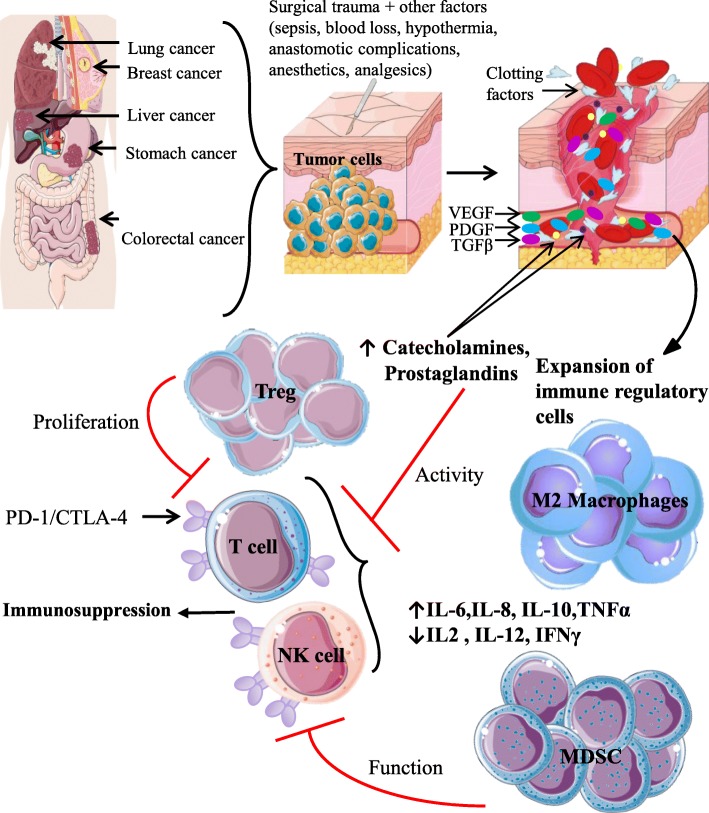
“Cancer surgerymay trigger a stress response leading to expansion of Tregs and M2 macrophages, and impaired NK-cell cytotoxicity, resulting in an overall immunosuppressive state that may contribute to cancer proliferation (10).”
BackgroundResearch progress of natural silk fibroin and the application for drug delivery in chemotherapies
Yu, B., Li, Y., Lin, Y., Zhu, Y., Hao, T., Wu, Y., Sun, Z., Yang, X., & Xu, H. (2023) · Frontiers in Pharmacology · doi:10.3389/fphar.2022.1071868 · Cited by 55
“However, many anticancer drugs potentially cause toxicity in patients, resulting in high drug resistance and poor prognosis quality of life (Chen et al., 2016; Bakos et al., 2018; Messina et al., 2019; Abravan et al., 2020).”
BackgroundGenomics-Guided Immunotherapy for Precision Medicine in Cancer
Mukherjee, S. (2019) · Cancer Biotherapy and Radiopharmaceuticals · doi:10.1089/cbr.2018.2758 · Cited by 58
“Therefore, it is speculated that applying immunotherapy after surgery can be an effective method to destroy cancer cells that remain after surgery.(45) However, immunotherapy is not equally effective in all cancer types and efficacy varies between patients.”
Mahdevar, E., Kefayat, A., Safavi, A., Behnia, A., Hejazi, S. H., Javid, A., & Ghahremani, F. H. (2021) · Scientific Reports · doi:10.1038/s41598-021-01770-w · Cited by 48
Photothermal therapies to improve immune checkpoint blockade for cancer
Balakrishnan, P. B., Sweeney, E. E., Ramanujam, A. S., & Fernandes, R. (2020) · International Journal of Hyperthermia · doi:10.1080/02656736.2020.1797190 · Cited by 49
“ICB has been tested in combination with many standard-of-care cancer therapies including surgery, chemotherapy and radiation therapy [25 – 30].”
Neurotransmitters: promising immune modulators in the tumor microenvironment
Xiao, L., Li, X., Fang, C., Yu, J., & Chen, T. (2023) · Frontiers in Immunology · doi:10.3389/fimmu.2023.1118637 · Cited by 50
Adjuvant immunotherapy in early-stage resectable non–small cell lung cancer: A new milestone
Tang, W., Ye, H.-Y., Tang, X., Su, J., Xu, K.-M., Zhong, W., & Liang, Y. (2023) · Frontiers in Oncology · doi:10.3389/fonc.2023.1063183 · Cited by 47
Beta-Adrenergic Signaling in Tumor Immunology and Immunotherapy
Wang, W., & Cao, X. (2019) · Critical Reviews in Immunology · doi:10.1615/critrevimmunol.2019031188 · Cited by 47
Safavi, A., Kefayat, A., Mahdevar, E., Ghahremani, F. H., Nezafat, N., & Modarressi, M. H. (2020) · Human Vaccines & Immunotherapeutics · doi:10.1080/21645515.2020.1763693 · Cited by 39
“Therefore, the combination of surgery and immunotherapy to prevent postoperative cancer recurrence and metastasis has gained lots of attention.(85,86) As surgery is the main Figure 9.”
BackgroundMays, A. C., Yarlagadda, B. B., Achim, V., Jackson, R. S., Pipkorn, P. J., Huang, A. T., Rajasekaran, K., Sridharan, S., Rosko, A. J., Orosco, R. K., et al. (2021) · Head & Neck · doi:10.1002/hed.26601 · Cited by 43
“Unresectable disease 14 (16) High risk features on path 13 (15)”
BackgroundPrecise subcellular targeting approaches for organelle-related disorders
Shim, G., & Youn, Y. S. (2024) · Advanced Drug Delivery Reviews · doi:10.1016/j.addr.2024.115411 · Cited by 38
Advancements in conventional cancer therapy combined with immunotherapy
Li, H., Han, S., Dong, C., & Liu, Z. (2024) · Oncology and Translational Medicine · doi:10.1097/ot9.0000000000000067 · Cited by 45
Neuroscience in peripheral cancers: tumors hijacking nerves and neuroimmune crosstalk
Fan, H., Liang, X., & Tang, Y. (2024) · MedComm · doi:10.1002/mco2.784 · Cited by 40
Gao, N., Huang, Y., Jing, S., Zhang, M., Liu, E., Qiu, L., Huang, J., Muhitdinov, B. I., & Huang, Y. (2024) · Theranostics · doi:10.7150/thno.94354 · Cited by 30
“However, physical resection often results in immune suppression, which persists for weeks or even months as controlled by the healing process in the surgical wound [3-5].”
BackgroundImproving Cancer Immunotherapy Outcomes Using Biomaterials
Yan, S., Luo, Z., Li, Z., Wang, Y., Tao, J., Gong, C., & Liu, X. (2020) · Angewandte Chemie · doi:10.1002/ange.202002780 · Cited by 28
Li, C. M. Y., Tomita, Y., Dhakal, B., Li, R., Li, J., Drew, P. A., Price, T. J., Smith, E., Maddern, G. J., & Fenix, K. A. (2023) · Journal for ImmunoTherapy of Cancer · doi:10.1136/jitc-2023-006764 · Cited by 27
The effects of RNA methylation on immune cells development and function
Zha, L., Wang, J., & Cheng, X. (2022) · The FASEB Journal · doi:10.1096/fj.202200716r · Cited by 27
International expert consensus on immunotherapy for early-stage non-small cell lung cancer
on behalf of CATO consensus group, Liang, W., Cai, K., Cao, Q., Chen, C., Chen, H., Chen, J., Chen, K., Chen, Q., Chu, T., et al. (2022) · Translational Lung Cancer Research · doi:10.21037/tlcr-22-617 · Cited by 29
“On the other hand, adjuvant immunotherapy can further activate effector T cells and modulate the post-operative immunosuppressive status (21).”
BackgroundIntegrating Immunotherapy into Multimodal Treatment of Head and Neck Cancer
Rao, Y. J., Goodman, J., Haroun, F., & Bauman, J. E. (2023) · Cancers · doi:10.3390/cancers15030672 · Cited by 33
“Surgery necessarily results in substantial tissue and vascular disruption, and surgery-induced necrotic cell death leads to a release of a number of sequestered cellular factors such as growth factors, clotting factors, stress hormones, and cytokines [10].”
BackgroundImmunometabolic Interactions in Obesity: Implications for Therapeutic Strategies
Fei, Q., Huang, J., He, Y., Zhang, Y., Zhang, X., Wang, J., & Fu, Q. (2025) · Biomedicines · doi:10.3390/biomedicines13061429 · Cited by 32
“Such combinations could mitigate the side effects associated with immunotherapy—namely, the heightened risk of infections due to immuno-suppressive agents like tumor necrosis factor alpha (TNF-α ) and interleukin 1 beta (IL-1 β ) inhibitors [130,131].”
He, T., Shi, Y., Kou, X., Shen, M., Liang, X., Li, X., Wu, R., You, Y., Wu, Q., & Gong, C. (2023) · Biomaterials · doi:10.1016/j.biomaterials.2023.122218 · Cited by 26
Cancer Immunotherapies: What the Perioperative Physician Needs to Know
Ackerman, R. S., Muncey, A. R., Aldawoodi, N. N., Kotha, R., & Getting, R. E. G. (2022) · Current Oncology Reports · doi:10.1007/s11912-022-01202-6 · Cited by 23
Zhao, M., Chen, S., Li, C., Du, Y., & Li, P. (2023) · Cancers · doi:10.3390/cancers15030600 · Cited by 25
Cheng, Z., Xue, C., Liu, M., Cheng, Z., Tian, G., Li, M., Xue, R., Yao, X., Zhang, Y., & Luo, Z. Y. (2023) · Acta Biomaterialia · doi:10.1016/j.actbio.2023.08.002 · Cited by 23
Yan, Y., Chen, Y. E., Huang, L., Cai, M., Xia, Y. Y., Zhu, Y. Z., & Ye, L. (2025) · Journal of Functional Biomaterials · doi:10.3390/jfb16100381 · Cited by 27
“This persistent failure stems from residual tumor cells surviving in the immunosuppressive microenvironment created by surgical trauma—a paradox where curative resection inadvertently fosters metastatic progression [2,3].”
Remón, J., Menis, J., Lévy, A., Ruysscher, D. D., & Hendriks, L. E. L. (2021) · Translational Lung Cancer Research · doi:10.21037/tlcr-20-1065 · Cited by 19
“Finally, as stated before, cancer surgery may trigger a stress response leading to expansion of T-regs and M2 macrophages, and impaired NK-cell cytotoxicity, resulting in an overall immunosuppressive state (76), which can reduce the potential benefit of continuing ICI after surgery in OMD.”
BackgroundOkada, H., Takahashi, K., Yaku, H., Kobiyama, K., Iwaisako, K., Zhao, X., Shiokawa, M., Uza, N., Kodama, Y., Ishii, K. J., et al. (2022) · Scientific Reports · doi:10.1038/s41598-022-05702-0 · Cited by 23
Käsmann, L., Eze, C., Dantes, M., Roengvoraphoj, O., Niyazi, M., Belka, C., & Manapov, F. (2019) · European Journal of Cancer · doi:10.1016/j.ejca.2018.11.026 · Cited by 20
Neoadjuvant Immunotherapy for Hepatocellular Carcinoma
Marron, T. U., Schwartz, M., Corbett, V., & Mérad, M. (2022) · Journal of Hepatocellular Carcinoma · doi:10.2147/jhc.s340935 · Cited by 23
Black phosphorous nanomaterials as a new paradigm for postoperative tumor treatment regimens
Hou, Y., Fei, Y., Liu, Z., Liu, Y., Li, M., & Luo, Z. Y. (2022) · Journal of Nanobiotechnology · doi:10.1186/s12951-022-01579-3 · Cited by 20
“However, the surgery treatment would severely disrupt the metabolic homeostasis and the endocrine systems, thus significantly impairing the wound healing capacities of tissues in the surgical site as well as enhancing the risk of tumor relapse [73].”
BackgroundThe role of immunotherapy in early-stage and metastatic NSCLC
Lieber, A., Makai, A., Orosz, Z. Z., Kardos, T., Isaac, S. J., Tornyi, I., & Bittner, N. (2024) · Pathology & Oncology Research · doi:10.3389/pore.2024.1611713 · Cited by 21
“It is known that cancer-related immune dysfunction can occur after surgical resection and may be a theoretical target of ICI, since the immune system reacts to surgery with various in fl ammatory responses and metabolic events [36, 37].”
BackgroundActivable Multi-Modal Nanoprobes for Imaging Diagnosis and Therapy of Tumors
Yang, Y., Yue, S., Qiao, Y., Zhang, P., Jiang, N., Ning, Z., Liu, C., & Hou, Y. (2021) · Frontiers in Chemistry · doi:10.3389/fchem.2020.572471 · Cited by 22
“In recent years, cancer immunotherapy has made great success in clinic, with chimeric antigen receptor (CAR) T-cell therapies and checkpoint blockade treatment with immunomodulatory agents that block the inhibitory receptors cytotoxic T lymphocyte antigen-4 (CTLA-4) or programmed death-1 (PD-1) (Fridman et al., 2012;…”
BackgroundInfluentialAdjuvant Therapy for Renal Cell Carcinoma: Hype or Hope?
Cosso, F., Roviello, G., Nesi, G., Shabani, S., Spatafora, P., Villari, D., & Catalano, M. (2023) · International Journal of Molecular Sciences · doi:10.3390/ijms24044243 · Cited by 18
“These effects lie within the “postoperative period”, which lasts days to weeks after tumor surgical resection, potentially creating an immunosuppressive window for the expansion and escape of occult tumors [31].”
BackgroundInfluentialNeoadjuvant Immunotherapy: An Evolving Paradigm Shift?
Bilušić, M., & Gulley, J. L. (2020) · JNCI Journal of the National Cancer Institute · doi:10.1093/jnci/djaa217 · Cited by 22
Delayed cytokine release syndrome after neoadjuvant nivolumab: a case report and literature review
Ciner, A., Höchster, H. S., August, D. A., Carpizo, D. R., & Spencer, K. R. (2021) · Immunotherapy · doi:10.2217/imt-2020-0329 · Cited by 17
Curative-Intent Treatment with Durvalumab in Early-Stage Cancers
Melillo, G., Chand, V. K., Yovine, A. J., Gupta, A. K., & Massacesi, C. (2021) · Advances in Therapy · doi:10.1007/s12325-021-01675-0 · Cited by 18
Lara-Velazquez, M. A., Shireman, J. M., Lehrer, E. J., Bowman, K., Ruiz-Garcia, H. J., Paukner, M. J., Chappell, R. J., & Dey, M. (2021) · Frontiers in Oncology · doi:10.3389/fonc.2021.662302 · Cited by 20
Role of immunotherapy in stage IIIA non-small cell lung cancer: a narrative review
Calvo, V., Sierra‐Rodero, B., Cruz‐Bermúdez, A., & Provencio, M. (2021) · Current Challenges in Thoracic Surgery · doi:10.21037/ccts-20-82 · Cited by 15
“Moreover, several immunological pathways are disrupted by surgical stress (19).”
BackgroundD’Aiello, A., Stiles, B. M., Ohri, N., Levy, B. P., Cohen, P. R., & Halmos, B. (2024) · Clinical Lung Cancer · doi:10.1016/j.cllc.2024.02.004 · Cited by 19
Stage I and II nonsmall cell lung cancer treatment options
Hardavella, G. F., Magouliotis, D. E., Chalela, R., Januszewski, A. P., Dennstädt, F., Putora, P. M., So, A., & Bhowmik, A. (2024) · Breathe · doi:10.1183/20734735.0219-2023 · Cited by 19
“Adjuvant immunotherapy may have the advantage of overcoming the post-operative immunosuppressive environment and activating T-cells to target residual micrometastatic disease [60].”
Li, X., Yu, Z., & Li, S. (2021) · Materials & Design · doi:10.1016/j.matdes.2021.109958 · Cited by 17
What are the advantages of neoadjuvant immunotherapy over adjuvant immunotherapy?
Bilušić, M. (2022) · Expert Review of Anticancer Therapy · doi:10.1080/14737140.2022.2069097 · Cited by 16
“Several in vitro studies have demonstrated that neoadjuvant immunotherapy can increase the frequency of tumorspecific CD8 + T-cells in several organs [4], as well as increased T-cell clonality [5], leading to superior activity over adjuvant immunotherapy in decreasing disease recurrence and improving survival [4].”
BackgroundInfluentialThe dynamic role of ferroptosis in cancer immunoediting: Implications for immunotherapy
Lan, J., Cai, D., Gou, S., Bai, Y., Lei, H., Li, Y., Chen, Y., Zhao, Y., Shen, J., Wu, S., et al. (2025) · Pharmacological Research · doi:10.1016/j.phrs.2025.107674 · Cited by 16
Dutsch-Wicherek, M. M., Szubert, S., Dziobek, K., Wiśniewski, M., Łukaszewska, E., Wicherek, Ł., Jóźwicki, W., Rokitaⴕ, W., & Koper, K. (2019) · Ginekologia Polska · doi:10.5603/gp.2019.0032 · Cited by 15
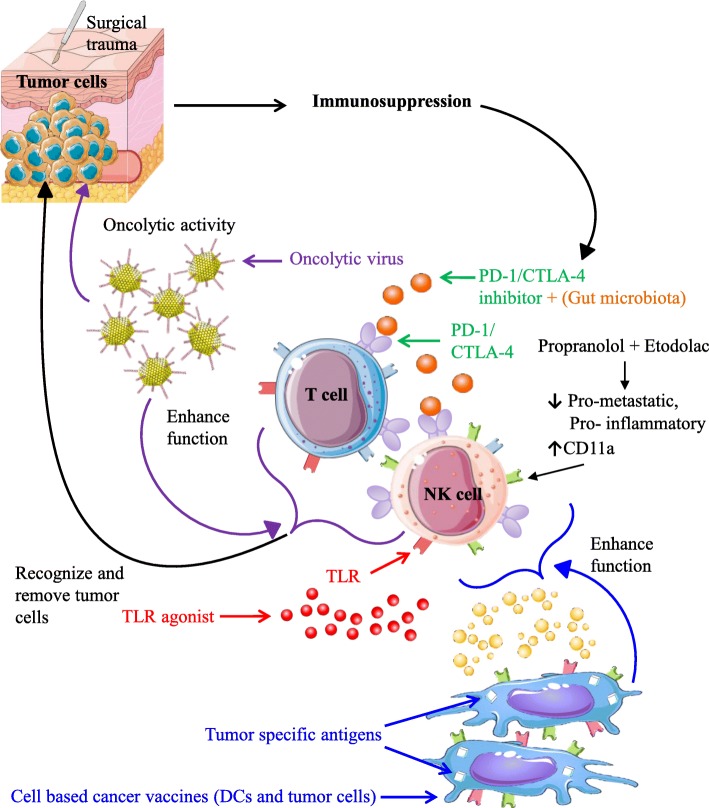
“Rationally combining cancer surgery with immunotherapies can transform the immunosuppressive effect into a therapeutic opportunity [26].”
BackgroundGhasemi, A., Ghavimi, R., Momenzadeh, N., Hajian, S., & Mohammadi, M. (2021) · International Journal of Peptide Research and Therapeutics · doi:10.1007/s10989-021-10260-6 · Cited by 15
Niavarani, S.-R., St-Cyr, G., Daniel, L., Lawson, C., Giguère, H., Alkayyal, A. A., & Tai, L. (2023) · Frontiers in Immunology · doi:10.3389/fimmu.2023.1098344 · Cited by 14
“Perioperative factors including immunosuppression, anesthesia, hypothermia, and posteoperative complications may accompany later stage resections and contribute as potential deleterious factors contributing to worse outcome in patients (40).”
BackgroundSelf-citationReview of cancer therapies for the perioperative physician
Dabo-Trubelja, A., & Gottumukkala, V. N. R. (2023) · Perioperative Medicine · doi:10.1186/s13741-023-00315-1 · Cited by 14
Immune checkpoint inhibition in early-stage non-small cell lung cancer
Cuppens, K., Pont, B. D., Knegjens, J., Maes, B., & Baas, P. (2024) · Lung Cancer · doi:10.1016/j.lungcan.2024.107855 · Cited by 18
Bruyn, C. D., Ceusters, J., Landolfo, C., Baert, T., Thirion, G., Claes, S., Vankerckhoven, A., Wouters, R., Schols, D., Timmerman, D., et al. (2021) · Cancers · doi:10.3390/cancers13235899 · Cited by 18
“) were shown to aggravate the immunosuppressed state [39].”
BackgroundGruijs, M., Braster, R., Overdijk, M. B., Hellingman, T., Verploegen, S. A. B. W., Korthouwer, R., van der Wilk, B. J., Parren, P. W. H. I., van der Vliet, H. J., Bögels, M., et al. (2022) · Journal of Oncology · doi:10.1155/2022/3577928 · Cited by 15
Donlon, N. E., Davern, M., Hayes, C., Power, R. F., Sheppard, A. D., Donohoe, C. L., Lysaght, J., & Reynolds, J. V. (2022) · Critical Reviews in Oncology/Hematology · doi:10.1016/j.critrevonc.2022.103729 · Cited by 15
Reassessing the Role of Cytoreductive Nephrectomy for Metastatic Renal Cell Carcinoma in 2019
Psutka, S. P., Chang, S. L., Cahn, D. B., Uzzo, R. G., & McGregor, B. A. (2019) · American Society of Clinical Oncology Educational Book · doi:10.1200/edbk_237453 · Cited by 16
Rao, Z., Zhu, Y., Chen, Z., Luo, Y., Yang, Z., Liu, W., Qiao, C., Xia, Y., Yang, P., Ye, D., et al. (2024) · Advanced Science · doi:10.1002/advs.202408415 · Cited by 13
Thiol-Responsive Gold Nanodot Swarm with Glycol Chitosan for Photothermal Cancer Therapy
Jo, S., Sun, I., Yun, W. S., Kim, J., Lim, D., Ahn, C.-H., & Kim, K. (2021) · Molecules · doi:10.3390/molecules26195980 · Cited by 13
“The active immune cells and their immunological memory against primary tumors prevent metastasis and cancer recurrence [3,4].”
BackgroundDonlon, N. E., Davern, M., Sheppard, A. D., O’Connell, F., Dunne, M. R., Hayes, C., Mylod, E., Ramjit, S., Temperley, H. C., Lean, M. M., et al. (2022) · Frontiers in Immunology · doi:10.3389/fimmu.2022.823225 · Cited by 17
“At this time, it is also unclear whether immunotherapy has therapeutic benefit during the potentially immunosuppressive perioperative period (14).”
BackgroundBotticelli, A., Mezi, S., Pomati, G., Sciattella, P., Cerbelli, B., Roberto, M., Mammone, G., Cirillo, A., Cassano, A., Dio, C. D., et al. (2020) · Vaccines · doi:10.3390/vaccines8020191 · Cited by 12
“All these events are peculiar to the immunosuppressive postoperative phase which can constitute an important therapeutic window in which immunotherapy could represent a promising opportunity [29,30].”
BackgroundImmunotherapy in Neuroendocrine Neoplasms: A Diamond to Cut
Torralba, E. G., Garcia-Lorenzo, E., Doger, B., Spada, F., & Lamarca, Á. (2024) · Cancers · doi:10.3390/cancers16142530 · Cited by 15
Qin, W., & Wu, X. (2025) · Nonlinear Dynamics · doi:10.1007/s11071-024-10847-w · Cited by 12
Bao, W., & Li, Z. (2023) · Critical Reviews in Oncology/Hematology · doi:10.1016/j.critrevonc.2023.104238 · Cited by 13
Duerinck, J., Tuyaerts, S., Movahedi, K., & Neyns, B. (2023) · Frontiers in Immunology · doi:10.3389/fimmu.2023.1183641 · Cited by 13
Zhang, M., Zhou, Y., Wu, B., Lu, C. T., Quan, G., Huang, Z., Wu, C., & Pan, X. (2023) · Materials Advances · doi:10.1039/d3ma00382e · Cited by 11
Gu, Z., Chen, G., Gao, N., Yao, S., Zhang, X., Xu, Q., Xiong, W., Liu, L., Liu, Q., Yin, D., et al. (2025) · Chemical Engineering Journal · doi:10.1016/j.cej.2025.159426 · Cited by 12
Cancer Vaccine in Cold Tumors: Clinical Landscape, Challenges, and Opportunities
Rezaei, M., Danilova, N. D., Soltani, M., Savvateeva, L. V., Tarasov, V. V., Ganjalıkhani-Hakemi, M., Bazhin, A. V., & Zamyatnin, A. A. (2022) · Current Cancer Drug Targets · doi:10.2174/1568009622666220214103533 · Cited by 12
Böhrnsen, F., Holzenburg, J., Godek, F., Kauffmann, P., Moser, N., & Schliephake, H. (2019) · International Journal of Oral and Maxillofacial Surgery · doi:10.1016/j.ijom.2019.06.001 · Cited by 11
Mansouri, S., Daniel, L., Amhis, N., Léveillé, M., Boudreau, J. E., Alkayyal, A. A., Collin, Y., & Tai, L. (2023) · Frontiers in Oncology · doi:10.3389/fonc.2023.1071751 · Cited by 12
“Cell-mediated immunity may be more effectively activated immediately prior to the immunosuppressive effects of surgery (49, 118).”
BackgroundSelf-citationJiang, J., Feng, K., Zhang, L., & Ma, K. (2025) · Oncology and Translational Medicine · doi:10.1097/ot9.0000000000000086 · Cited by 10
Breaking Barriers with Sound: The Implementation of Histotripsy in Cancer
Raman, A. P., Kotlarz, P. L., Giff, A. E., Goundry, K. A., Laeseke, P. F., Koepsel, E. M. K., Alhamami, M., & Daye, D. (2025) · Cancers · doi:10.3390/cancers17152548 · Cited by 10
“…these types of surgical resection still require significant refinement to enhance combinatorial tumor clearance and to significantly debulk tumor mass, while also minimizing treatment-associated complications like thrombosis, recurrence, and unintended iatrogenic damage of nearby tissue [10].”
Graham-Gurysh, E. G., Woodring, R. N., Simpson, S. R., Mendell, S. E., Lukesh, N. R., Pena, E. S., Moore, K. M., Ontiveros-Padilla, L. A., Hendricksen, A. T., Lopez, A. M., et al. (2025) · Nature Communications · doi:10.1038/s41467-025-63692-9 · Cited by 19
“This suggests that perioperative immunotherapy could both capitalize on the reduced tumor burden and disrupted TME, as well as potentially mitigate concerns of later surgical-induced tumorigenesis 33 .”
Ng, T., Liu, J., Yeung, O. W. H., Pang, L., Shiu, H. C., Liu, H., Yang, X. X., Chan, A. C. Y., Wong, T. C.-L., Lo, C. M., et al. (2023) · Hepatology International · doi:10.1007/s12072-023-10566-1 · Cited by 11
“…patients classified in the P3C High-group (high CCL11, high IFNa, and low IL17A) may be associated with a higher immunosuppressive status after LT. Recent studies have indicated that even a short period of post-surgical immunosuppression can increase postoperative tumor dissemination [42].”
BackgroundZhang, Q., Silver, M. P., Chen, Y.-J., Wolf, J. L., Hayek, J., & Alagkiozidis, I. (2023) · Healthcare · doi:10.3390/healthcare11243122 · Cited by 10
Moya‐Plana, A., Guerlain, J., Casiraghi, O., Bidault, F., Grimaldi, S., Breuskin, I., Gorphe, P., & Temam, S. (2019) · Bulletin du Cancer · doi:10.1016/j.bulcan.2019.06.014 · Cited by 9
Guo, K., Chen, D., Ren, S., Younis, M. R., Teng, Z., Zhang, L. J., Wang, Z., & Tian, Y. (2023) · ACS Applied Materials & Interfaces · doi:10.1021/acsami.2c19790 · Cited by 12
Timing of Adjuvant Immunotherapy in Stage III Melanoma, Does it Matter?
Rhodin, K. E., Jung, S., Elleson, K. M., DePalo, D. K., Straker, R. J., McKinley, S. K., Beekman, K. E., Parker, L. M., Chen, S. C., Iyer, M. K., et al. (2023) · Annals of Surgical Oncology · doi:10.1245/s10434-023-13935-0 · Cited by 12
Kawaguchi, J., Ota, D., Niwa, H., Sugo, Y., Kushikata, T., & Hirota, K. (2020) · Molecular and Clinical Oncology · doi:10.3892/mco.2020.2060 · Cited by 9
Metadata
- Authors
- Bakos, O., Lawson, C., Rouleau, S., & Tai, L.-H.
- Affiliations
- Université de Sherbrooke (CA)
- Corresponding author
- Tai, Lee-Hwa
- Venue
- Journal for ImmunoTherapy of Cancer
- Publisher
- BMJ
- Published
- 2018-09-03
- Volume
- 6
- Issue
- 1
- Pages
- 86-86
- ISSN
- 2051-1426 (ISSN-L)
- PMC
- PMC6122574
- OpenAlex
- W2888941300
- Cited by
- 192
- References
- 102
- Citations by year
- 2026: 19 · 2025: 24 · 2024: 23 · 2023: 38 · 2022: 33 · 2021: 20 · 2020: 18 · 2019: 16 · 2018: 1
- FWCI
- 10.65
- Type
- journal article
- Language
- en
- Open access
- gold
- doi.org
- Licence
- cc-by
- creativecommons.org/licenses/by/4.0/ (tdm)
- Locations
- Journal for ImmunoTherapy of Cancer (publishedVersion, cc-by)
- Europe PMC (PubMed Central) (publishedVersion, other-oa)
- PubMed Central (publishedVersion, cc-by)
- PubMed (publishedVersion)
- DOAJ (DOAJ: Directory of Open Access Journals) (submittedVersion)
- Funders
- Cancer Research Society
- Natural Sciences and Engineering Research Council of Canada
- Topics
- Life Sciences › Biochemistry, Genetics and Molecular Biology › Cancer Research › Cancer, Stress, Anesthesia, and Immune Response
- Health Sciences › Medicine › Oncology › Cancer Immunotherapy and Biomarkers
- Life Sciences › Immunology and Microbiology › Immunology › Immune cells in cancer
- Keywords
- cancer surgery, immunotherapy, perioperative immunotherapy, postoperative immunosuppression, surgical stress response, metastasis, postoperative recurrence, innate immunity, adaptive immunity
- MeSH terms
- Animals, Combined Modality Therapy, Humans, Immunosuppression Therapy, Immunotherapy, Neoplasms, Treatment Outcome, Disease Management, Cancer Vaccines, Perioperative Care, Molecular Targeted Therapy, Standard of Care
About these checks
Registry, retraction, Cites and statistics results are computed, not judged, with one exception: a printed reference that no index lists is read once by a model before it counts as a citation error. Claims are extracted by a model and kept only when their quote appears verbatim in the text; each cited source is then checked, with a model’s help, for whether it says what the claim relies on. Those verdicts can be wrong — read the claim’s quote and the cited source before relying on one.
Statistics and arithmetic are recomputed, not judged.
Confidence bands are shown only for fields calibrated on our annotated test set. None is calibrated yet, so no band is shown.
What counts as a claim ›How we measure confidence ›How we check this ›
Are you an author, or do you see a problem with this page? Request a review
Data sources
Bibliographic data: Semantic Scholar, OpenAlex, Crossref.
Contains information from the Semantic Scholar Academic Graph Datasets, made available under the ODC Attribution License (ODC-BY 1.0).
Semantic Scholar’s data is described in: Kinney, R., et al. (2023). The Semantic Scholar Open Data Platform. arXiv:2301.10140.
