

Combining surgery and immunotherapy: turning an immunosuppressive effect into a therapeutic opportunity
Open accessThe DOI matches its Crossref record; 105 of the 105 references it cites were found in a registry or an index.
Abstract
BACKGROUND: Cancer surgery is necessary and life-saving. However, the majority of patients develop postoperative recurrence and metastasis, which are the main causes of cancer-related deaths. The postoperative stress response encompasses a broad set of physiological changes that have evolved to safeguard the host following major tissue trauma. These stress responses, however, intersect with cellular mediators and signaling pathways that contribute to cancer proliferation. MAIN: Previous descriptive and emerging mechanistic studies suggest that the surgery-induced prometastatic effect is linked to impairment of both innate and adaptive immunity. Existing studies that combine surgery and immunotherapies have revealed that this combination strategy is not straightforward and patients have experienced both therapeutic benefit and drawbacks. This review will specifically assess the immunological pathways that are disrupted by oncologic surgical stress and provide suggestions for rationally combining cancer surgery with immunotherapies to improve immune and treatment outcomes. SHORT CONCLUSION: Given the prevalence of surgery as frontline therapy for solid cancers, the emerging data on postoperative immunosuppression and the rapid development of immunotherapy for oncologic treatment, we believe that future targeted studies of perioperative immunotherapy are warranted.
Overview
The claims and statistics of this paper haven’t been checked yet.
Free: it reads the open-access text and checks the first 5 claims that cite a source we can check. Create a free account to check every claim.
Integrity signals
Registry
Cites
Statistics
Figures
Verification
Claims the paper makes
The claims and statistics of this paper haven’t been checked yet.
Free: it reads the open-access text and checks the first 5 claims that cite a source we can check. Create a free account to check every claim.
Claims other papers make about this one
Each is checked against this paper’s own text: does it say what the citing paper says it does?
The source backs part of the claim, not all of it — or backs it for a different population, condition or comparison.
In the citing paper
“neoadjuvant ICIs can induce a more robust immune response than adjuvant ICIs, given the immunosuppressive systemic effects of invasive surgery125–127.”
From Adjuvant and neoadjuvant immunotherapies in hepatocellular carcinoma (2024) · cites this paper as [127]
Experimental — accuracy not yet measured
Self-check
Percentages, sums and reported differences re-computed from the paper’s own numbers.
The self-check needs the paper’s full text.
Citations
Cites
Commensal Bifidobacterium promotes antitumor immunity and facilitates anti–PD-L1 efficacy
Sivan, A., Corrales, L., Hubert, N., Williams, J. B., Aquino-Michaels, K., Earley, Z. M., Benyamin, F. W., Man Lei, Y., Jabri, B., Alegre, M.-L., et al. (2015) · Science · doi:10.1126/science.aac4255 · Cited by 3,888 · cited 1×
“Enhanced DC function leading to increased CD8 T-cell priming and tumor infiltration was suggested to be the underlying mechanism of combination therapy [99].”
BackgroundAnticancer immunotherapy by CTLA-4 blockade relies on the gut microbiota
Vétizou, M., Pitt, J. M., Daillère, R., Lepage, P., Waldschmitt, N., Flament, C., Rusakiewicz, S., Routy, B., Roberti, M. P., Duong, C. P. M., et al. (2015) · Science · doi:10.1126/science.aad1329 · Cited by 3,488 · cited 1×
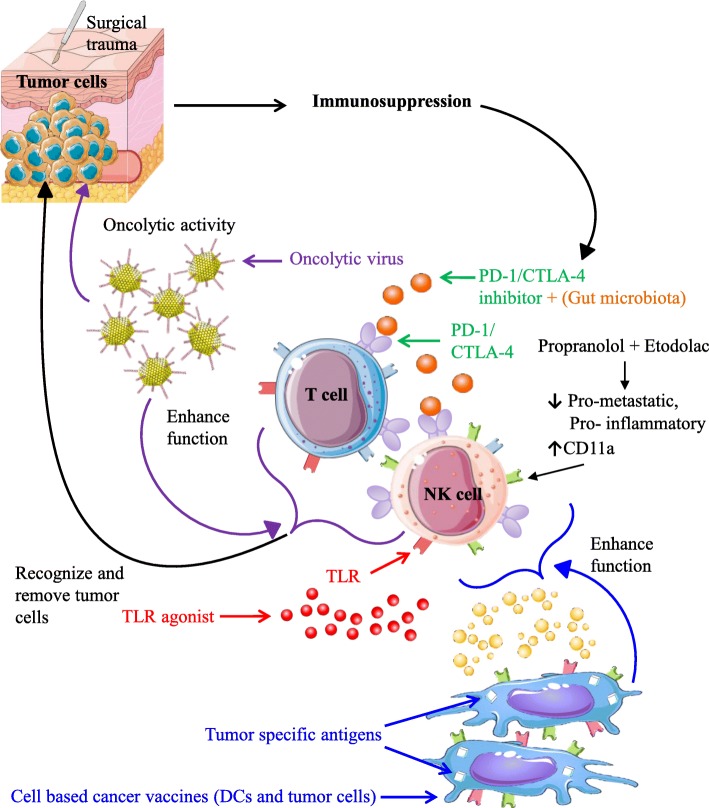
“thetaiotaomicron influencing antitumor response through IL-2 dependent Th1 immunity, while simultaneously limiting anti-CTLA-4-mediated intestinal adverse effects [100] (Fig.”
BackgroundLanier, L. L. (2005) · Annual Review of Immunology · doi:10.1146/annurev.immunol.23.021704.115526 · Cited by 2,769
Neoadjuvant PD-1 Blockade in Resectable Lung Cancer
Forde, P. M., Chaft, J. E., Smith, K. N., Anagnostou, V., Cottrell, T. R., Hellmann, M. D., Zahurak, M., Yang, S. C., Jones, D. R., Broderick, S., et al. (2018) · New England Journal of Medicine · doi:10.1056/nejmoa1716078 · Cited by 2,099 · cited 1×
“In addition, rapid expansion of mutationassociated, neoantigen-specific T-cells was observed as early as 2 to 4 weeks following initial nivolumab administration demonstrating the additional benefit of neoadjuvant treatment [66].”
BackgroundLanier, L. L. (1998) · Annual Review of Immunology · doi:10.1146/annurev.immunol.16.1.359 · Cited by 1,648
Gross, K. S., Brandner, D. D., Martinez, L. A., Olive, M. F., Meisel, R. L., & Mermelstein, P. G. (2016) · PLOS ONE · doi:10.1371/journal.pone.0162755 · Cited by 1,609
Improved Efficacy of Neoadjuvant Compared to Adjuvant Immunotherapy to Eradicate Metastatic Disease
Liu, J., Blake, S. J., Yong, M. C. R., Harjunpää, H., Ngiow, S. F., Takeda, K., Young, A., O'Donnell, J. S., Allen, S., Smyth, M. J., et al. (2016) · Cancer Discovery · doi:10.1158/2159-8290.cd-16-0577 · Cited by 894
Mirnezami, A., Mirnezami, R., Chandrakumaran, K., Sasapu, K., Sagar, P., & Finan, P. (2011) · Annals of Surgery · doi:10.1097/sla.0b013e3182128929 · Cited by 875
Receptors, Mediators, and Mechanisms Involved in Bacterial Sepsis and Septic Shock
Van Amersfoort, E. S., Van Berkel, T. J. C., & Kuiper, J. (2003) · Clinical Microbiology Reviews · doi:10.1128/cmr.16.3.379-414.2003 · Cited by 750
Gupta, K., Kshirsagar, S. A., Chang, L., Schwartz, R. E., Law, P., Yee, D., & Hebbel, R. P. (2002) · PubMed · Cited by 598
Hinnebusch, B. F., Meng, S., Wu, J. T., Archer, S. Y., & Hodin, R. A. (2002) · The Journal of Nutrition · doi:10.1093/jn/132.5.1012 · Cited by 544 · cited 1×
“Specific to CRC surgery, additional perioperative factors such as changes in the gut microbiome of the patient leading to depletion of short-chain fatty acids [95] and the development of anastomotic complications have been associated with increased risk of local tumor recur-”
BackgroundIn situ activation of platelets with checkpoint inhibitors for post-surgical cancer immunotherapy
Wang, C., Sun, W., Ye, Y., Hu, Q., Bomba, H. N., & Gu, Z. (2017) · Nature Biomedical Engineering · doi:10.1038/s41551-016-0011 · Cited by 526
Exploiting the critical perioperative period to improve long-term cancer outcomes
Horowitz, M., Neeman, E., Sharon, E., & Ben-Eliyahu, S. (2015) · Nature Reviews Clinical Oncology · doi:10.1038/nrclinonc.2014.224 · Cited by 487
Carthon, B. C., Wolchok, J. D., Yuan, J., Kamat, A., Ng Tang, D. S., Sun, J., Ku, G., Troncoso, P., Logothetis, C. J., Allison, J. P., et al. (2010) · Clinical Cancer Research · doi:10.1158/1078-0432.ccr-10-0569 · Cited by 460 · cited 1×
“Following a retrospective analyses in a separate patient group with either unresectable stage III or metastatic/recurrent stage IV melanoma, improved overall survival correlated with a consistent increase in CD4ICOS T- cell populations at 12 weeks following 4 dosing cycles of ipilimumab [62].”
BackgroundMarkert, J. M., Liechty, P. G., Wang, W., Gaston, S., Braz, E., Karrasch, M., Nabors, L. B., Markiewicz, M., Lakeman, A. D., Palmer, C. A., et al. (2009) · Molecular Therapy · doi:10.1038/mt.2008.228 · Cited by 401
Excisional surgery for cancer cure: therapy at a cost
Coffey, J., Wang, J., Smith, M., Bouchier-Hayes, D., Cotter, T., & Redmond, H. (2003) · The Lancet Oncology · doi:10.1016/s1470-2045(03)01282-8 · Cited by 374
Williams, M. D., Braun, L. A., Cooper, L. M., Johnston, J., Weiss, R. V., Qualy, R. L., & Linde-Zwirble, W. (2004) · Critical Care · doi:10.1186/cc2893 · Cited by 364
TLR agonists: our best frenemy in cancer immunotherapy
Kaczanowska, S., Joseph, A. M., & Davila, E. (2013) · Journal of Leukocyte Biology · doi:10.1189/jlb.1012501 · Cited by 339
Yamaguchi, K., Takagi, Y., Aoki, S., Futamura, M., & Saji, S. (2000) · Annals of Surgery · doi:10.1097/00000658-200007000-00009 · Cited by 323
Management of Bleeding in Patients with Advanced Cancer
Pereira, J., & Phan, T. (2004) · The Oncologist · doi:10.1634/theoncologist.9-5-561 · Cited by 323
Tarhini, A. A., Edington, H., Butterfield, L. H., Lin, Y., Shuai, Y., Tawbi, H., Sander, C., Yin, Y., Holtzman, M., Johnson, J., et al. (2014) · PLoS ONE · doi:10.1371/journal.pone.0087705 · Cited by 310
The Role of the Perioperative Period in Recurrence After Cancer Surgery
Gottschalk, A., Sharma, S., Ford, J., Durieux, M. E., & Tiouririne, M. (2010) · Anesthesia & Analgesia · doi:10.1213/ane.0b013e3181de0ab6 · Cited by 309 · cited 3×
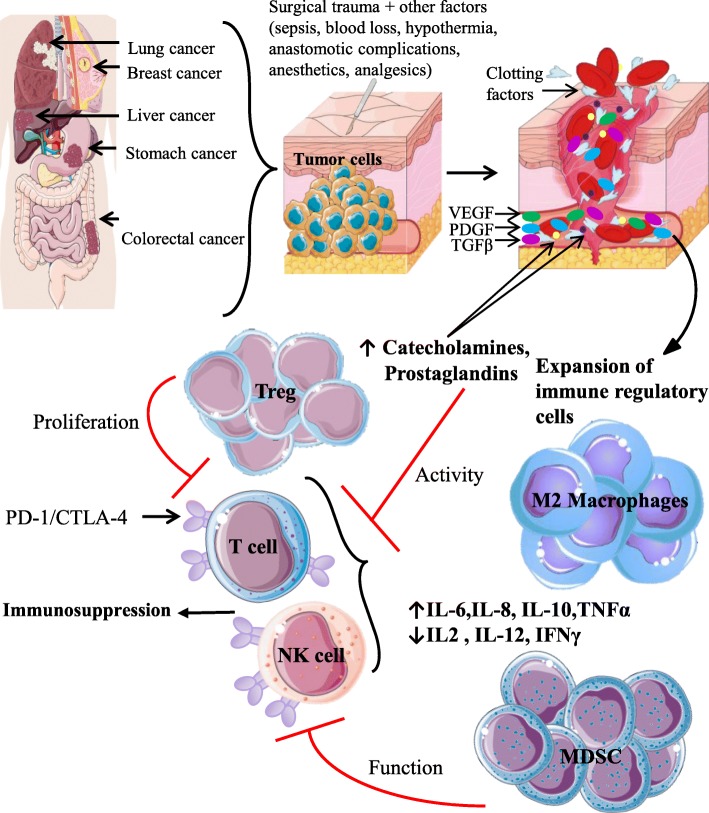
“Surgical debulking initiates inflammatory, neuroendocrine and metabolic events, which result in altered cytokine levels (decrease in IL-2, IL-12 and IFN-γ; increase in IL-6/8, IL-10 and TNF-α) and release of growth factors (VEGF - green oval, PDGF - blue oval, TGF-β - pink oval), clotting factors, and stress hormones…”
BackgroundMorphine Inhibits Spontaneous and Cytokine-enhanced Natural Killer Cell Cytotoxicity in Volunteers
Yeager, M. P., Colacchio, T. A., Yu, C. T., Hildebrandt, L., Howell, A. L., Weiss, J., & Guyre, P. M. (1995) · Anesthesiology · doi:10.1097/00000542-199509000-00008 · Cited by 305
Evidence that postoperative pain is a mediator of the tumor-promoting effects of surgery in rats
Page, G. G., Blakely, W. P., & Ben-Eliyahu, S. (2001) · Pain · doi:10.1016/s0304-3959(00)00403-6 · Cited by 297
Benish, M., Bartal, I., Goldfarb, Y., Levi, B., Avraham, R., Raz, A., & Ben-Eliyahu, S. (2008) · Annals of Surgical Oncology · doi:10.1245/s10434-008-9890-5 · Cited by 281 · cited 1×
“NK-cell functional impairment is associated with progressive metastatic disease in animal experimental models [4, 11, 31, 32].”
BackgroundShaashua, L., Shabat-Simon, M., Haldar, R., Matzner, P., Zmora, O., Shabtai, M., Sharon, E., Allweis, T., Barshack, I., Hayman, L., et al. (2017) · Clinical Cancer Research · doi:10.1158/1078-0432.ccr-17-0152 · Cited by 276
Lerut, T., Moons, J., Coosemans, W., Van Raemdonck, D., De Leyn, P., Decaluwé, H., Decker, G., & Nafteux, P. (2009) · Annals of Surgery · doi:10.1097/sla.0b013e3181bdd5a8 · Cited by 272
Suppression of cellular immunity by surgical stress
Ogawa, K., Hirai, M., Katsube, T., Murayama, M., Hamaguchi, K., Shimakawa, T., Naritake, Y., Hosokawa, T., & Kajiwara, T. (2000) · Surgery · doi:10.1067/msy.2000.103498 · Cited by 268
Goldfarb, Y., Sorski, L., Benish, M., Levi, B., Melamed, R., & Ben-Eliyahu, S. (2011) · Annals of Surgery · doi:10.1097/sla.0b013e318211d7b5 · Cited by 262
Townsend, M. F., Sanders, W. H., Northway, R. O., & Graham, S. D. (1997) · Cancer · doi:10.1002/(sici)1097-0142(19970201)79:3<545::aid-cncr17>3.0.co;2-3 · Cited by 260
Tai, L.-H., de Souza, C. T., Bélanger, S., Ly, L., Alkayyal, A. A., Zhang, J., Rintoul, J. L., Ananth, A. A., Lam, T., Breitbach, C. J., et al. (2013) · Cancer Research · doi:10.1158/0008-5472.can-12-1993 · Cited by 241
Self-citationGlasner, A., Avraham, R., Rosenne, E., Benish, M., Zmora, O., Shemer, S., Meiboom, H., & Ben-Eliyahu, S. (2010) · The Journal of Immunology · doi:10.4049/jimmunol.0903301 · Cited by 239
The Immunologic Response To Injury
Mannick, J. A., Rodrick, M. L., & Lederer, J. A. (2001) · Journal of the American College of Surgeons · doi:10.1016/s1072-7515(01)01011-0 · Cited by 226
van der Bij, G. J., Oosterling, S. J., Beelen, R. H. J., Meijer, S., Coffey, J. C., & van Egmond, M. (2009) · Annals of Surgery · doi:10.1097/sla.0b013e3181a3ddbd · Cited by 208
Melamed, R., Rosenne, E., Shakhar, K., Schwartz, Y., Abudarham, N., & Ben-Eliyahu, S. (2005) · Brain, Behavior, and Immunity · doi:10.1016/j.bbi.2004.07.004 · Cited by 199
Increased surgical stress promotes tumor metastasis
Tsuchiya, Y., Sawada, S., Yoshioka, I., Ohashi, Y., Matsuo, M., Harimaya, Y., Tsukada, K., & Saiki, I. (2003) · Surgery · doi:10.1067/msy.2003.141 · Cited by 194
Cell Carriage, Delivery, and Selective Replication of an Oncolytic Virus in Tumor in Patients
Adair, R. A., Roulstone, V., Scott, K. J., Morgan, R., Nuovo, G. J., Fuller, M., Beirne, D., West, E. J., Jennings, V. A., Rose, A., et al. (2012) · Science Translational Medicine · doi:10.1126/scitranslmed.3003578 · Cited by 192 · cited 1×
“Significantly, surgical patients suffered most commonly from mild flu-like symptoms with no reported grade 3 or 4 toxicities [72].”
BackgroundThe Prognostic Significance of Natural Killer Cytotoxicity in Patients With Colorectal Cancer
Tartter, P. I. (1987) · Archives of Surgery · doi:10.1001/archsurg.1987.01400230050009 · Cited by 191
Effects of Fentanyl on Natural Killer Cell Activity and on Resistance to Tumor Metastasis in Rats
Shavit, Y., Ben-Eliyahu, S., Zeidel, A., & Beilin, B. (2004) · Neuroimmunomodulation · doi:10.1159/000078444 · Cited by 189
Trauma equals danger—damage control by the immune system
Stoecklein, V. M., Osuka, A., & Lederer, J. A. (2012) · Journal of Leukocyte Biology · doi:10.1189/jlb.0212072 · Cited by 185
Activation of Natural Killer Cells by Newcastle Disease Virus Hemagglutinin-Neuraminidase
Jarahian, M., Watzl, C., Fournier, P., Arnold, A., Djandji, D., Zahedi, S., Cerwenka, A., Paschen, A., Schirrmacher, V., & Momburg, F. (2009) · Journal of Virology · doi:10.1128/jvi.00211-09 · Cited by 177 · cited 1×
“However, the NDV based vaccine approach has not resulted in any adverse events for treated patients and the prime boost approach with oncolytic rhabdovirus in human late stage melanoma patients is ongoing with no safety concerns reported [82].”
BackgroundPotentiating Cancer Immunotherapy Using an Oncolytic Virus
Bridle, B. W., Stephenson, K. B., Boudreau, J. E., Koshy, S., Kazdhan, N., Pullenayegum, E., Brunellière, J., Bramson, J. L., Lichty, B. D., & Wan, Y. (2010) · Molecular Therapy · doi:10.1038/mt.2010.98 · Cited by 176
Maraba Virus as a Potent Oncolytic Vaccine Vector
Pol, J. G., Zhang, L., Bridle, B. W., Stephenson, K. B., Rességuier, J., Hanson, S., Chen, L., Kazdhan, N., Bramson, J. L., Stojdl, D. F., et al. (2014) · Molecular Therapy · doi:10.1038/mt.2013.249 · Cited by 173
Morphine attenuates surgery-induced enhancement of metastatic colonization in rats
Page, G. G., Ben-Eliyahu, S., Yirmiya, R., & Liebeskind, J. C. (1993) · Pain · doi:10.1016/0304-3959(93)90095-7 · Cited by 165
Eberhardt, J. M., Kiran, R. P., & Lavery, I. C. (2009) · Diseases of the Colon & Rectum · doi:10.1007/dcr.0b013e31819ad488 · Cited by 155
Schirrmacher, V. (2004) · Cancer Immunology Immunotherapy · doi:10.1007/s00262-004-0602-0 · Cited by 139
Seth, R., Tai, L., Falls, T. J., de Souza, C. T., Bell, J. C., Carrier, M., Atkins, H. L., Boushey, R. P., & Auer, R. C. (2012) · Annals of Surgery · doi:10.1097/sla.0b013e31826fcbdb · Cited by 135 · cited 1×
“Unfortunately, disease recurs within 5 years in the majority of these patients and they tend to not respond to frontline therapies [1].”
BackgroundSelf-citationSalvans, S., Mayol, X., Alonso, S., Messeguer, R., Pascual, M., Mojal, S., Grande, L., & Pera-Román, M. (2014) · Annals of Surgery · doi:10.1097/sla.0000000000000958 · Cited by 128
Prostaglandin E2 Suppresses NK Activity In Vivo and Promotes Postoperative Tumor Metastasis in Rats
Yakar, I., Melamed, R., Shakhar, G., Shakhar, K., Rosenne, E., Abudarham, N., Page, G. G., & Ben‐Eliyahu, S. (2003) · Annals of Surgical Oncology · doi:10.1245/aso.2003.08.017 · Cited by 124
Factors in the Production and Growth of tumor Metastases.
Tyzzer, E. E. (1913) · PubMed · Cited by 124
Schantz, S. P., Brown, B. W., Lira, E., Taylor, D. L., & Beddingfield, N. (1987) · Cancer Immunology Immunotherapy · doi:10.1007/bf00199955 · Cited by 121
Belizon, A., Balık, E., Feingold, D. L., Bessler, M., Arnell, T. D., Forde, K. A., Horst, P. K., Jain, S., Cekic, V., Kirman, I., et al. (2006) · Annals of Surgery · doi:10.1097/01.sla.0000225272.52313.e2 · Cited by 120
Zhu, X., Pribis, J. P., Rodriguez, P. C., Morris, S. M., Vodovotz, Y., Billiar, T. R., & Ochoa, J. B. (2014) · Annals of Surgery · doi:10.1097/sla.0b013e31828611f8 · Cited by 119
Zhou, L., Li, Y., Li, X., Chen, G., Liang, H., Wu, Y., Tong, J., & Ouyang, W. (2016) · The Journal of Immunology · doi:10.4049/jimmunol.1501677 · Cited by 113 · cited 1×
“tients undergoing radical mastectomy [22].”
Bartal, I. B.-A., Melamed, R., Greenfeld, K., Atzil, S., Glasner, A., Domankevich, V., Naor, R., Beilin, B., Yardeni, I. Z., & Ben‐Eliyahu, S. (2009) · Brain Behavior and Immunity · doi:10.1016/j.bbi.2009.02.010 · Cited by 106
Gao, D., Li, C., Xie, X., Zhao, P., Wei, X., Sun, W., Liu, H.-C., Alexandrou, A. T., Jones, J., Zhao, R., et al. (2014) · PLoS ONE · doi:10.1371/journal.pone.0093886 · Cited by 106
De, A. K., Kodys, K., Pellegrini, J. D., Yeh, B., Furse, R. K., Bankey, P. E., & Miller‐Graziano, C. L. (2000) · Clinical Immunology · doi:10.1006/clim.2000.4879 · Cited by 105 · cited 1×
“Postoperative dysfunctional T-cell responses have been shown to include the inability to recall antigens, diminished membrane expression of the T-cell receptor (TCR) and loss of the zeta (ζ) chain, decreased proliferation and production of IFN-γ along with other impairments [41, 42].”
BackgroundLaparotomy and laparoscopy differentially accelerate experimental flank tumour growth
Costa, M. L. D., Redmond, H. P., Finnegan, N., Flynn, M., & Bouchier‐Hayes, D. (1998) · British journal of surgery · doi:10.1046/j.1365-2168.1998.00853.x · Cited by 103
Ben-Eliyahu, S., Shakhar, G., Rosenne, E., Levinson, Y., & Beilin, B. (1999) · Anesthesiology · doi:10.1097/00000542-199909000-00026 · Cited by 102 · cited 1×
“In colon cancer bearing rat models, perioperative hypothermia was found to accelerate tumor growth [93], in addition to suppressing NK-cell activity [27].”
BackgroundYeager, M. P., Procopio, M. A., DeLeo, J. A., Arruda, J. L., Hildebrandt, L., & Howell, A. L. (2002) · Anesthesia & Analgesia · doi:10.1097/00000539-200201000-00018 · Cited by 101
Tai, L.-H., Alkayyal, A. A., Leslie, A. L., Sahi, S., Bennett, S., Tanese de Souza, C., Baxter, K., Angka, L., Xu, R., Kennedy, M. A., et al. (2018) · OncoImmunology · doi:10.1080/2162402x.2018.1431082 · Cited by 101 · cited 2×
“The impairment in NK-cell function also directly correlates with MDSC expansion [37] (Fig.”
BackgroundSelf-citationPollock, R. E., Lotzová, E., & Stanford, S. D. (1992) · Cancer · doi:10.1002/1097-0142(19921015)70:8<2192::aid-cncr2820700830>3.0.co;2-6 · Cited by 100
Antitumor effect of deferoxamine on human hepatocellular carcinoma growing in athymic nude mice
Hann, H.-W. L., Stahlhut, M. W., Rubin, R., & Maddrey, W. C. (1992) · Cancer · doi:10.1002/1097-0142(19921015)70:8<2051::aid-cncr2820700806>3.0.co;2-1 · Cited by 95
Alonso, S., Pascual, M., Salvans, S., Mayol, X., Mojal, S., Gil, M. J., Grande, L., & Pera, M. (2014) · European Journal of Surgical Oncology · doi:10.1016/j.ejso.2014.10.052 · Cited by 94
Prestwich, R. J. D., Errington‐Mais, F., Steele, L. P., Ilett, E. J., Morgan, R. S. M., Harrington, K. J., Pandha, H., Selby, P. J., Vile, R. G., & Melcher, A. A. (2009) · The Journal of Immunology · doi:10.4049/jimmunol.0901074 · Cited by 88
Kottke, T. J., Hall, G. D., Pulido, J. S., Díaz, R. M., Thompson, J., Chong, H., Selby, P. J., Coffey, M. C., Pandha, H., Chester, J. D., et al. (2010) · Journal of Clinical Investigation · doi:10.1172/jci41431 · Cited by 88 · cited 1×
“Lastly, the enhanced release of growth factors such as vascular endothelial factor (VEGF) following surgery, may allow for better infection and replication of OV in tumor cells [70, 71].”
BackgroundPan, K., Guan, X.-X., Li, Y.-Q., Zhao, J.-J., Li, J.-J., Qiu, H.-J., Weng, D.-S., Wang, Q.-J., Liu, Q., Huang, L.-X., et al. (2014) · Clinical Cancer Research · doi:10.1158/1078-0432.ccr-14-0082 · Cited by 88 · cited 1×
“Mechanistically, the CIK based vaccine resulted in the intratumoral release IL-2, IFN-γ, and TNFα thereby increasing immunosurveillance and antitumor immunity [76] (Fig.”
BackgroundAnanth, A. A., Tai, L.-H., Lansdell, C., Alkayyal, A. A., Baxter, K. E., Angka, L., Zhang, J., Tanese de Souza, C., Stephenson, K. B., Parato, K., et al. (2016) · PLOS ONE · doi:10.1371/journal.pone.0155947 · Cited by 88 · cited 1×
“altered in surgically stressed mice [12].”
Self-citationZhang, J., Tai, L., Ilkow, C. S., Alkayyal, A. A., Ananth, A. A., de Souza, C. T., Wang, J., Sahi, S., Ly, L., Lefebvre, C. A., et al. (2014) · Molecular Therapy · doi:10.1038/mt.2014.60 · Cited by 86
Self-citationRosenne, E., Sorski, L., Shaashua, L., Neeman, E., Matzner, P., Levi, B., & Ben-Eliyahu, S. (2014) · Brain, Behavior, and Immunity · doi:10.1016/j.bbi.2013.12.007 · Cited by 85
Sorski, L., Melamed, R., Matzner, P., Lavon, H., Shaashua, L., Rosenne, E., & Ben-Eliyahu, S. (2016) · Brain, Behavior, and Immunity · doi:10.1016/j.bbi.2016.05.017 · Cited by 85
Evidence for an opioid inhibitory effect on T cell proliferation
Manfredi, B., Sacerdote, P., Bianchi, M., Locatelli, L. D., Radulović, J., & Panerai, A. E. (1993) · Journal of Neuroimmunology · doi:10.1016/0165-5728(93)90266-2 · Cited by 82
Greenfeld, K., Avraham, R., Benish, M., Goldfarb, Y., Rosenne, E., Shapira, Y., Rudich, T., & Ben‐Eliyahu, S. (2007) · Brain Behavior and Immunity · doi:10.1016/j.bbi.2006.12.006 · Cited by 81
The etiology and management of inadvertent perioperative hypothermia
Forstot, R. M. (1995) · Journal of Clinical Anesthesia · doi:10.1016/0952-8180(95)00099-2 · Cited by 78
Yeager, M. P., Procopio, M. A., DeLeo, J. A., et al. (2002) · Anesthesia & Analgesia · doi:10.1213/00000539-200201000-00018 · Cited by 76 · cited 1×
“Similarly, intravenous administration of fentanyl in healthy human volunteers was found to significantly enhance NK-cell cytotoxicity, in addition to increasing CD16 and CD8 lymphocyte numbers [88] (Fig.”
BackgroundFujisawa, T., & Yamaguchi, Y. (1997) · Cancer · doi:10.1002/(sici)1097-0142(19970201)79:3<474::aid-cncr8>3.0.co;2-i · Cited by 68
Xu, P., Zhang, P., Sun, Z., Wang, Y., Chen, J., & Miao, C. (2015) · Cancer Immunology Immunotherapy · doi:10.1007/s00262-015-1740-2 · Cited by 63
Pera, M., Nelson, H., Rajkumar, S. V., Young‐Fadok, T. M., & Burgart, L. J. (2003) · Journal of Gastrointestinal Surgery · doi:10.1016/s1091-255x(03)00111-2 · Cited by 58 · cited 1×
“Various perioperative changes have been proposed to describe the promotion of metastases following surgery, including tumor cell dissemination into nearby blood vessels and lymphatics [7, 8], local and systematic release of growth factors [9, 10], and cellular immune suppression [11–15].”
BackgroundEarliest “Domestic” Cats in China Identified as Leopard Cat (Prionailurus bengalensis)
Vigne, J., Evin, A., Cucchi, T., Dai, L., Yu, C., Hu, S., Soulages, N., Wang, W., Sun, Z., Gao, J., et al. (2016) · PLoS ONE · doi:10.1371/journal.pone.0147295 · Cited by 58
Matzner, P., Sorski, L., Shaashua, L., Elbaz, E., Lavon, H., Melamed, R., Rosenne, E., Gotlieb, N., Benbenishty, A., Reed, S. G., et al. (2015) · International Journal of Cancer · doi:10.1002/ijc.29885 · Cited by 57
Relationship of curative surgery on natural killer cell activity in colorectal cancer
Espí, A., Arenas, J., García‐Granero, E., Martí, E., & Lledó, S. (1996) · Diseases of the Colon & Rectum · doi:10.1007/bf02054059 · Cited by 56
Nichols, P., Ramsden, C. W., Ward, U., Sedman, P. C., & Primrose, J. M. (1992) · PubMed · Cited by 53
Kebria, M. M., El‐Nashar, S. A., Aletti, G. D., & Cliby, W. A. (2012) · Obstetrics and Gynecology · doi:10.1097/aog.0b013e3182475f8a · Cited by 52
Zhang, L., Bridle, B. W., Chen, L., Pol, J. G., Spaner, D., Boudreau, J. E., Rosen, A., Bassett, J. D., Lichty, B. D., Bramson, J. L., et al. (2013) · Blood · doi:10.1182/blood-2012-06-438481 · Cited by 48
Brivio, F., Lissoni, P., Alderi, G., Barni, S., Lavorato, F., & Fumagalli, L. A. M. (2009) · Oncology · doi:10.1159/000227571 · Cited by 45
Klatte, T., Ittenson, A., Röhl, F.-W., Ecke, M., Allhoff, E. P., & Böhm, M. (2006) · British Journal of Cancer · doi:10.1038/sj.bjc.6603391 · Cited by 42
Foy, S. P., Mandl, S. J., Cruz, T. D., Cote, J. J., Gordon, E. J., Trent, E., Delcayre, A. X., Breitmeyer, J. B., Franzusoff, A., & Rountree, R. B. (2016) · Cancer Immunology Immunotherapy · doi:10.1007/s00262-016-1816-7 · Cited by 41
Inadvertent spread of cancer at surgery
Fortner, J. G. (1993) · Journal of Surgical Oncology · doi:10.1002/jso.2930530313 · Cited by 40
Wu, M. C., Chen, X., Lou, J., Zhang, S., Zhang, X., Huang, L., Sun, R., Huang, P., Pan, S., & Wang, F. (2017) · International Immunopharmacology · doi:10.1016/j.intimp.2017.04.004 · Cited by 38
Goldfarb, Y., Benish, M., Rosenne, E., Melamed, R., Levi, B., Glasner, A., & Ben-Eliyahu, S. (2009) · Journal of Immunotherapy · doi:10.1097/cji.0b013e31819a2982 · Cited by 35 · cited 1×
“strated efficacy in preclinical models in both prophylactic and therapeutic treatment settings [50, 51].”
BackgroundMA, W., Wang, K., DU, J., Luan, J., & Lou, G. (2014) · Molecular Medicine Reports · doi:10.3892/mmr.2014.3003 · Cited by 32
Kottke, T. J., Chester, J. D., Ilett, E. J., Thompson, J., Díaz, R. M., Coffey, M. C., Selby, P. J., Nuovo, G. J., Pulido, J. S., Mukhopadhyay, D., et al. (2011) · Molecular Therapy · doi:10.1038/mt.2011.147 · Cited by 31
Intraperitoneal hypothermia during surgery enhances postoperative tumor growth
Nduka, C. C., Puttick, M., Coates, P., Yong, L., Peck, D. H., & Darzi, A. W. (2001) · Surgical Endoscopy · doi:10.1007/s00464-001-9055-0 · Cited by 31
Oosterling, S. J., van der Bij, G. J., Mels, A. K., Beelen, R. H. J., Meijer, S., van Egmond, M., & van Leeuwen, P. A. M. (2006) · PubMed · doi:10.14670/hh-21.753 · Cited by 28 · cited 16×
“We demonstrated that surgical stress results in reduced proliferation and function as shown by a decrease in the number of CD8+ T-cell that produce cytokines (IFN-γ, TNF-α, Granzyme B), in response to dopachrome tautomerase, a tumor associated Fig.”
InfluentialSurgical Stress Induces Decreased Expression of Signal-Transducing Zeta Molecules in T Cells
Ichihara, F., Kono, K., Sekikawa, T., & Matsumoto, Y. (1999) · European Surgical Research · doi:10.1159/000008632 · Cited by 28
Naor, R., Domankevich, V., Shemer, S., Sominsky, L., Rosenne, E., Levi, B. Z., & Ben‐Eliyahu, S. (2008) · Brain Behavior and Immunity · doi:10.1016/j.bbi.2008.10.001 · Cited by 26
Sun, Z., Mao, A., Wang, Y., Zhao, Y.-J., Chen, J., Xu, P., & Miao, C. (2017) · Biomedicine & Pharmacotherapy · doi:10.1016/j.biopha.2017.03.014 · Cited by 26 · cited 1×
“hibitors was found to restore postoperative T-cell function completely [60].”
BackgroundSun, T., Yan, W., Yang, C. M., Zhang, L. F., Tang, H. L., Chen, Y., Hu, H., & Wei, X. (2015) · Genetics and Molecular Research · doi:10.4238/2015.december.8.12 · Cited by 24
Brivio, F., Fumagalli, L. A. M., Lissoni, P., Nardone, A., Nespoli, L. C., Fattori, L., Denova, M., Chiarelli, M. E., & Nespoli, A. (2006) · PubMed · Cited by 23
Attacking Postoperative Metastases using Perioperative Oncolytic Viruses and Viral Vaccines
Tai, L., & Auer, R. C. (2014) · Frontiers in Oncology · doi:10.3389/fonc.2014.00217 · Cited by 20
Self-citationOchoa, J. B., & Makarenkova, V. (2005) · Critical Care Medicine · doi:10.1097/01.ccm.0000186788.71460.53 · Cited by 19
Klatte, T., Ittenson, A., Roehl, F.-W., Ecke, M., Allhoff, E. P., & HM, M. B. (2008) · Onkologie · doi:10.1159/000112214 · Cited by 12
Acute T-cell leukemia/lymphoma mimicking Hodgkin's disease with secondary HTLV I seroconversion
Picard, F., Dreyfus, F., Guern, M. L., Tulliez, M., d’Auriol, L., Neron, S., Galibert, F., Saragosti, S., & Varet, B. R. (1990) · Cancer · doi:10.1002/1097-0142(19901001)66:7<1517::aid-cncr2820660714>3.0.co;2-i · Cited by 12 · cited 1×
“Using oncolytic Newcastle Disease Virus (NDV) to infect autologous tumor cells ex vivo from glioblastoma, colorectal and renal cell carcinoma patients, followed by postoperative injection of this OV modified tumor vaccine, researchers found enhanced survival in vaccinated patients compared to unvaccinated cohorts [43,…”
BackgroundSepsis increases perioperative metastases in a murine model
Tai, L., Ananth, A. A., Seth, R., Alkayyal, A. A., Zhang, J., de Souza, C. T., Staibano, P., Kennedy, M. A., & Auer, R. C. (2018) · BMC Cancer · doi:10.1186/s12885-018-4173-4 · Cited by 9
Self-citationThe expression of activating natural killer cell receptors in patients with primary breast cancer.
Carter, C., Hogan, B., Cole, J., Shenoy, H., Horgan, K., & Hughes, T. A. (2009) · Cancer Research · doi:10.1158/0008-5472.sabcs-5047 · Cited by 3
Cited by
Adjuvant and neoadjuvant immunotherapies in hepatocellular carcinoma
Llovet, J. M., Pinyol, R., Yarchoan, M., Singal, A. G., Marron, T. U., Schwartz, M., Pikarsky, E., Kudo, M., & Finn, R. S. (2024) · Nature Reviews Clinical Oncology · doi:10.1038/s41571-024-00868-0 · Cited by 391
“In addition, as discussed, neoadjuvant ICIs can induce a more robust immune response than adjuvant ICIs, given the immunosuppressive systemic effects of invasive surgery 125–127 .”
Immunotherapy for Ovarian Cancer: Adjuvant, Combination, and Neoadjuvant
Yang, C., Xia, B.-R., Zhang, Z.-C., Zhang, Y.-J., Lou, G., & Jin, W.-L. (2020) · Frontiers in Immunology · doi:10.3389/fimmu.2020.577869 · Cited by 350
“Neoadjuvant immunotherapy has demonstrated remarkable efficacy in cancer patients as compared to surgery followed by adjuvant immunotherapy, as the adverse effects of surgeryinduced metastasis are associated with innate and adaptive immunity damage (184) (Figure 3B).”
BackgroundSurgical stress and cancer progression: the twisted tango
Chen, Z., Zhang, P., Xu, Y., Yan, J., Liu, Z., Lau, W. B., Lau, B., Li, Y., Zhao, X., Wei, Y., et al. (2019) · Molecular Cancer · doi:10.1186/s12943-019-1058-3 · Cited by 223
“pletely, indicating the potential of immunotherapy in surgical stress and tumor therapy [148].”
BackgroundSurgical trauma‐induced immunosuppression in cancer: Recent advances and the potential therapies
Tang, F., Tie, Y., Tu, C., & Wei, X. (2020) · Clinical and Translational Medicine · doi:10.1002/ctm2.24 · Cited by 206
Mountzios, G., Remon, J., Hendriks, L. E. L., García-Campelo, R., Rolfo, C., Van Schil, P., Forde, P. M., Besse, B., Subbiah, V., Reck, M., et al. (2023) · Nature Reviews Clinical Oncology · doi:10.1038/s41571-023-00794-7 · Cited by 199
Metadata
- Authors
- Bakos, O., Lawson, C., Rouleau, S., & Tai, L.-H.
- Affiliations
- Université de Sherbrooke (CA)
- Corresponding author
- Tai, Lee-Hwa
- Venue
- Journal for ImmunoTherapy of Cancer
- Publisher
- BMJ
- Published
- 2018-09-03
- Volume
- 6
- Issue
- 1
- Pages
- 86-86
- ISSN
- 2051-1426 (ISSN-L)
- PMC
- PMC6122574
- OpenAlex
- W2888941300
- Cited by
- 192
- References
- 102
- Citations by year
- 2026: 19 · 2025: 24 · 2024: 23 · 2023: 38 · 2022: 33 · 2021: 20 · 2020: 18 · 2019: 16 · 2018: 1
- FWCI
- 10.65
- Type
- journal article
- Language
- en
- Open access
- gold
- doi.org
- Licence
- cc-by
- creativecommons.org/licenses/by/4.0/ (tdm)
- Locations
- Journal for ImmunoTherapy of Cancer (publishedVersion, cc-by)
- Europe PMC (PubMed Central) (publishedVersion, other-oa)
- PubMed Central (publishedVersion, cc-by)
- PubMed (publishedVersion)
- DOAJ (DOAJ: Directory of Open Access Journals) (submittedVersion)
- Funders
- Cancer Research Society
- Natural Sciences and Engineering Research Council of Canada
- Topics
- Life Sciences › Biochemistry, Genetics and Molecular Biology › Cancer Research › Cancer, Stress, Anesthesia, and Immune Response
- Health Sciences › Medicine › Oncology › Cancer Immunotherapy and Biomarkers
- Life Sciences › Immunology and Microbiology › Immunology › Immune cells in cancer
- Keywords
- cancer surgery, immunotherapy, perioperative immunotherapy, postoperative immunosuppression, surgical stress response, metastasis, postoperative recurrence, innate immunity, adaptive immunity
- MeSH terms
- Animals, Combined Modality Therapy, Humans, Immunosuppression Therapy, Immunotherapy, Neoplasms, Treatment Outcome, Disease Management, Cancer Vaccines, Perioperative Care, Molecular Targeted Therapy, Standard of Care
About these checks
Registry, retraction, Cites and statistics results are computed, not judged, with one exception: a printed reference that no index lists is read once by a model before it counts as a citation error. Claims are extracted by a model and kept only when their quote appears verbatim in the text; each cited source is then checked, with a model’s help, for whether it says what the claim relies on. Those verdicts can be wrong — read the claim’s quote and the cited source before relying on one.
Statistics and arithmetic are recomputed, not judged.
Confidence bands are shown only for fields calibrated on our annotated test set. None is calibrated yet, so no band is shown.
What counts as a claim ›How we measure confidence ›How we check this ›
Are you an author, or do you see a problem with this page? Request a review
Data sources
Bibliographic data: Semantic Scholar, OpenAlex, Crossref.
Contains information from the Semantic Scholar Academic Graph Datasets, made available under the ODC Attribution License (ODC-BY 1.0).
Semantic Scholar’s data is described in: Kinney, R., et al. (2023). The Semantic Scholar Open Data Platform. arXiv:2301.10140.
