

Baseline T cell dysfunction by single cell network profiling in metastatic breast cancer patients
Open accessThe DOI matches its Crossref record; 23 of the 23 references it cites were found in a registry or an index.
Abstract
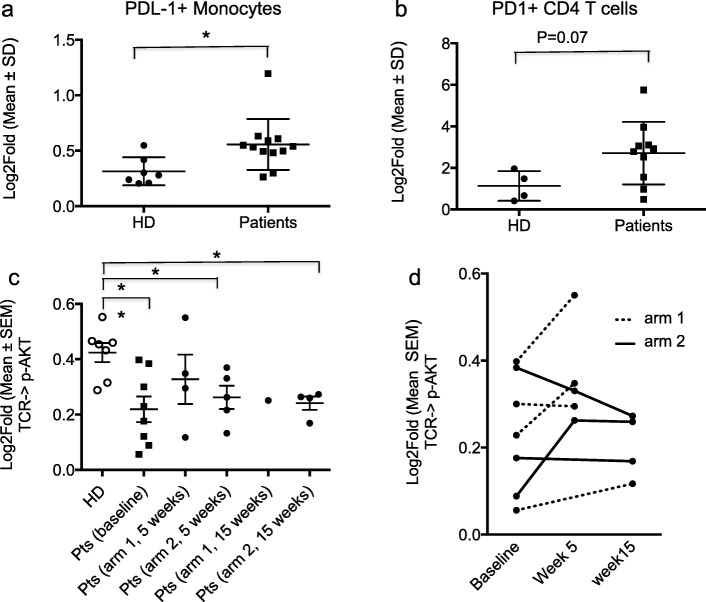
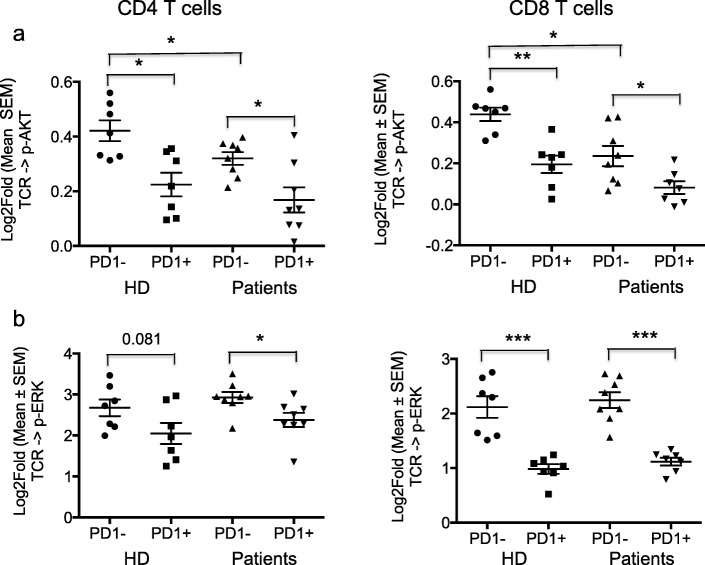
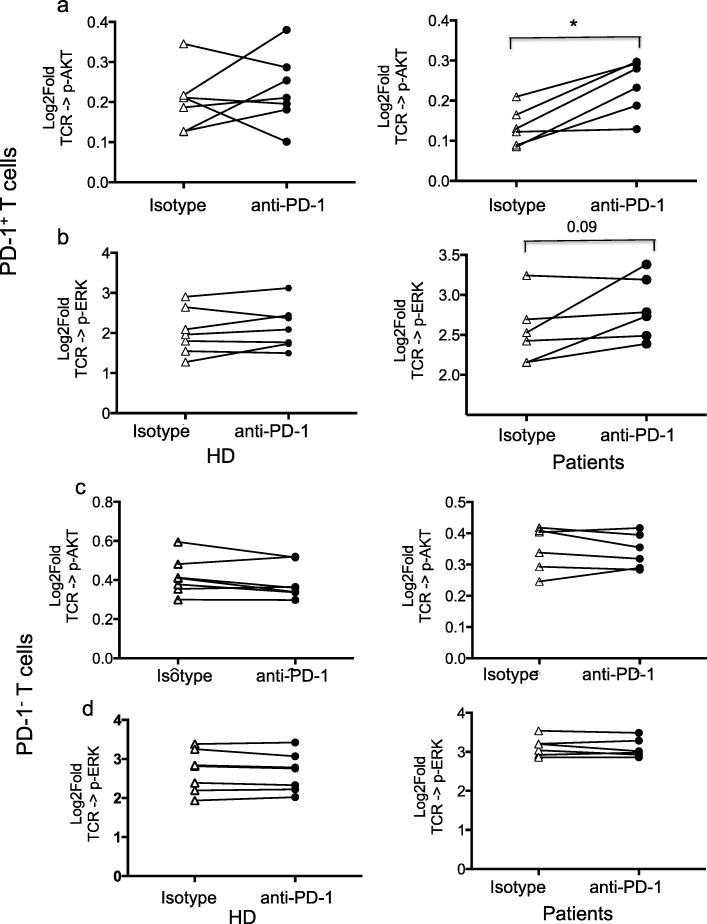
Background We previously reported the results of a multicentric prospective randomized trial of chemo-refractory metastatic breast cancer patients testing the efficacy of two doses of TGFβ blockade during radiotherapy. Despite a lack of objective responses to the combination, patients who received a higher dose of TGFβ blocking antibody fresolimumab had a better overall survival when compared to those assigned to lower dose (hazard ratio of 2.73, p = 0.039). They also demonstrated an improved peripheral blood mononuclear cell (PBMC) counts and increase in the CD8 central memory pool. We performed additional analysis on residual PBMC using single cell network profiling (SCNP). Methods The original trial randomized metastatic breast cancer patients to either 1 or 10 mg/kg of fresolimumab, every 3 weeks for 5 cycles, combined with radiotherapy to a metastatic site at week 1 and 7 (22.5 Gy given in 3 doses of 7.5 Gy). Trial immune monitoring results were previously reported. In 15 patients with available residual blood samples, additional functional studies were performed, and compared with data obtained in parallel from seven healthy female donors (HD): SCNP was applied to analyze T cell receptor (TCR) modulated signaling via CD3 and CD28 crosslinking and measurement of evoked phosphorylation of AKT and ERK in CD4 and CD8 T cell subsets defined by PD-1 expression. Results At baseline, a significantly higher level of expression (p < 0.05) of PD-L1 was identified in patient monocytes compared to HD. TCR modulation revealed dysfunction of circulating T-cells in patient baseline samples as compared to HD, and this was more pronounced in PD-1+ cells. Treatment with radiotherapy and fresolimumab did not resolve this dyfunctional signaling. However, in vitro PD-1 blockade enhanced TCR signaling in patient PD-1+ T cells and not in PD-1- T cells or in PD-1+ T cells from HD. Conclusions Functional T cell analysis suggests that baseline T cell functionality is hampered in metastatic breast cancer patients, at least in part mediated by the PD-1 signaling pathway. These preliminary data support the rationale for investigating the possible beneficial effects of adding PD-1 blockade to improve responses to TGFβ blockade and radiotherapy. Trial registration NCT01401062.
Overview
The claims and statistics of this paper haven’t been checked yet.
Free: it reads the open-access text and checks the first 5 claims that cite a source we can check. Create a free account to check every claim.
Integrity signals
Registry
Cites
Statistics
Figures
Verification
Claims the paper makes
The claims and statistics of this paper haven’t been checked yet.
Free: it reads the open-access text and checks the first 5 claims that cite a source we can check. Create a free account to check every claim.
Claims other papers make about this one
Each is checked against this paper’s own text: does it say what the citing paper says it does?
The cited source says what the claim attributes to it.
In the citing paper
“at least in part reflecting PD-1dependent functional defects of the T-cell compartment at baseline”
From Immunomodulation by targeted anticancer agents (2021) · cites this paper as Formenti et al., 2019
In the citing paper
“clinical responses in this study were limited, most likely as a consequence of PD-1-dependent functional defects of the T-cell compartment at baseline”
From Immunomodulation by targeted anticancer agents (2021) · cites this paper as Formenti et al., 2019
Self-check
Percentages, sums and reported differences re-computed from the paper’s own numbers.
The self-check needs the paper’s full text.
Citations
Cites
PD-1 and PD-L1 Immune Checkpoint Blockade to Treat Breast Cancer
Hartkopf, A. D., Taran, F.-A., Wallwiener, M., Walter, C. B., Krämer, B., Grischke, E.-M., & Brucker, S. Y. (2016) · Breast Care · doi:10.1159/000453569 · Cited by 30,845
TGFβ attenuates tumour response to PD-L1 blockade by contributing to exclusion of T cells
Mariathasan, S., Turley, S. J., Nickles, D., Castiglioni, A., Yuen, K., Wang, Y., Kadel III, E. E., Koeppen, H., Astarita, J. L., Cubas, R., et al. (2018) · Nature · doi:10.1038/nature25501 · Cited by 5,400
Atezolizumab and nab-paclitaxel in advanced triple-negative breast cancer
Schmid, P., Adams, S., Rugo, H. S., Schneeweiss, A., Barrios, C. H., Iwata, H., Diéras, V., Hegg, R., Im, S.-A., Shaw Wright, G., et al. (2018) · New England Journal of Medicine · doi:10.1056/nejmoa1809615 · Cited by 4,350
Wolchok, J. D., Hoos, A., O'Day, S., Weber, J. S., Hamid, O., Lebbé, C., Maio, M., Binder, M., Bohnsack, O., Nichol, G., et al. (2009) · Clinical Cancer Research · doi:10.1158/1078-0432.ccr-09-1624 · Cited by 3,222
TGFβ drives immune evasion in genetically reconstituted colon cancer metastasis
Tauriello, D. V. F., Palomo-Ponce, S., Stork, D., Berenguer-Llergo, A., Badia-Ramentol, J., Iglesias, M., Sevillano, M., Ibiza, S., Cañellas, A., Hernando-Momblona, X., et al. (2018) · Nature · doi:10.1038/nature25492 · Cited by 1,851
Breast Cancer Immunotherapy: Facts and Hopes
Emens, L. A. (2018) · Clinical Cancer Research · doi:10.1158/1078-0432.ccr-16-3001 · Cited by 863
Gorelik, L., & Flavell, R. A. (2001) · Nature Medicine · doi:10.1038/nm1001-1118 · Cited by 770
TGF-β inhibition enhances chemotherapy action against triple-negative breast cancer
Bhola, N. E., Balko, J. M., Dugger, T. C., Kuba, M. G., Sánchez, V., Sanders, M., Stanford, J., Cook, R. S., & Arteaga, C. L. (2013) · Journal of Clinical Investigation · doi:10.1172/jci65416 · Cited by 590
TGFβ is a master regulator of radiation therapy-induced antitumor immunity
Vanpouille-Box, C., Diamond, J. M., Pilones, K. A., Zavadil, J., Babb, J. S., Formenti, S. C., Barcellos-Hoff, M. H., & Demaria, S. (2015) · Cancer Research · doi:10.1158/0008-5472.can-14-3511 · Cited by 514
Self-citationRadiation and the microenvironment – tumorigenesis and therapy
Barcellos-Hoff, M. H., Park, C., & Wright, E. G. (2005) · Nature Reviews Cancer · doi:10.1038/nrc1735 · Cited by 513
Cited by
Immunostimulation with chemotherapy in the era of immune checkpoint inhibitors
Galluzzi, L., Humeau, J., Buqué, A., Zitvogel, L., & Kroemer, G. (2020) · Nature Reviews Clinical Oncology · doi:10.1038/s41571-020-0413-z · Cited by 1,349
TGFβ biology in cancer progression and immunotherapy
Derynck, R., Turley, S. J., & Akhurst, R. J. (2021) · Nature Reviews Clinical Oncology · doi:10.1038/s41571-020-0403-1 · Cited by 944
Cold and hot tumors: from molecular mechanisms to targeted therapy
Wu, B., Zhang, B., Li, B., Wu, H., & Jiang, M. (2024) · Signal Transduction and Targeted Therapy · doi:10.1038/s41392-024-01979-x · Cited by 682
Targeting TGFβ signal transduction for cancer therapy
Liu, S., Ren, J., & ten Dijke, P. (2021) · Signal Transduction and Targeted Therapy · doi:10.1038/s41392-020-00436-9 · Cited by 413
“In a phase 2 clinical trial, the TGFβ-blocking antibody fresolimumab (GC1008) was combined with focal irradiation for the treatment of metastatic breast cancer, and it was found to prolong median overall survival and demonstrated a favorable systemic immune response.(268,269) In addition, fresolimumab (GC1008) combine…”
BackgroundTargeting the tumor stroma for cancer therapy
Xu, M., Zhang, T., Xia, R., Wei, Y., & Wei, X. (2022) · Molecular Cancer · doi:10.1186/s12943-022-01670-1 · Cited by 319
“Several TGF-β-targeted drugs have been actively assessed in clinic to potentiate antitumor effects [338, 339] (NCT01401062, NCT02581787).”
BackgroundCD4 T-Cell Exhaustion: Does It Exist and What Are Its Roles in Cancer?
Miggelbrink, A. M., Jackson, J. D., Lorrey, S. J., Srinivasan, E. S., Waibl-Polania, J., Wilkinson, D. S., & Fecci, P. E. (2021) · Clinical Cancer Research · doi:10.1158/1078-0432.ccr-21-0206 · Cited by 236
“* Clonal expansion was observed among tumor-infiltrating CD4 T cells (8) Breast PD1, TIM3 * aPD-1 treatment increased TCR signaling (97), proliferation (146), cytokine”
BackgroundTumor promoting roles of IL-10, TGF-β, IL-4, and IL-35: Its implications in cancer immunotherapy
Mirlekar, B. (2022) · SAGE Open Medicine · doi:10.1177/20503121211069012 · Cited by 258
Radiotherapy as a tool to elicit clinically actionable signalling pathways in cancer
Petroni, G., Cantley, L. C., Santambrogio, L., Formenti, S. C., & Galluzzi, L. (2022) · Nature Reviews Clinical Oncology · doi:10.1038/s41571-021-00579-w · Cited by 213
Self-citationImmunomodulation by targeted anticancer agents
Petroni, G., Buqué, A., Zitvogel, L., Kroemer, G., & Galluzzi, L. (2021) · Cancer Cell · doi:10.1016/j.ccell.2020.11.009 · Cited by 212
Endothelial-to-Mesenchymal Transition in Cancer
Clere, N., Renault, S., & Corre, I. (2020) · Frontiers in Cell and Developmental Biology · doi:10.3389/fcell.2020.00747 · Cited by 199
“As such, fresolimumab, initially developed for the treatment of idiopathic pulmonary fibrosis, has been investigated in phase-II trials in renal cell carcinoma and melanoma, but also metastatic breast cancer (NCT01401062) (Formenti et al., 2019) where TGF-β blocking was also associated with an increase of the immune a…”
BackgroundTargeting oncogene and non-oncogene addiction to inflame the tumour microenvironment
Petroni, G., Buqué, A., Coussens, L. M., & Galluzzi, L. (2022) · Nature Reviews Drug Discovery · doi:10.1038/s41573-022-00415-5 · Cited by 160
Impairment of NKG2D-Mediated Tumor Immunity by TGF-β
Lazarova, M., & Steinle, A. (2019) · Frontiers in Immunology · doi:10.3389/fimmu.2019.02689 · Cited by 149
“Exploratory analyses of circulating T cells from these patients indicated that this treatment regimen with fresolimumab was not sufficient to reverse the impaired T cell function observed in these cancer patients (139).”
BackgroundCharacteristics of the cancer stem cell niche and therapeutic strategies
Ju, F., Atyah, M. M., Horstmann, N., Gul, S., Vago, R., Bruns, C. J., Zhao, Y., Dong, Q., & Ren, N. (2022) · Stem Cell Research & Therapy · doi:10.1186/s13287-022-02904-1 · Cited by 143
“Furthermore, two doses of fresolimumab were explored in metastatic breast cancer in a prospective randomized trial, patients receiving the higher fresolimumab dose had a better systemic immune response and longer median overall survival compared to the lower dose group [130].”
BackgroundPrognostic and therapeutic role of tumor-infiltrating lymphocyte subtypes in breast cancer
Nelson, M. A., Ngamcherdtrakul, W., Luoh, S., & Yantasee, W. (2021) · Cancer and Metastasis Reviews · doi:10.1007/s10555-021-09968-0 · Cited by 134
The Role of TGF-β in Bone Metastases
Trivedi, T., Pagnotti, G. M., Guise, T. A., & Mohammad, K. S. (2021) · Biomolecules · doi:10.3390/biom11111643 · Cited by 108
TGFβ-Directed Therapeutics: 2020
Teicher, B. A. (2020) · Pharmacology & Therapeutics · doi:10.1016/j.pharmthera.2020.107666 · Cited by 109
Greco, R., Qu, H., Qu, H., Theilhaber, J., Shapiro, G., Gregory, R., Winter, C., Malkova, N., Sun, F., Jaworski, J., et al. (2020) · OncoImmunology · doi:10.1080/2162402x.2020.1811605 · Cited by 58
The role of CD4+ T cells in tumor and chronic viral immune responses
Xie, L., Fang, J., Yu, J., Zhang, W., He, Z., Ye, L., & Wang, H. (2023) · MedComm · doi:10.1002/mco2.390 · Cited by 62
Epithelial to Mesenchymal Transition History: From Embryonic Development to Cancers
Lachat, C., Peixoto, P., & Hervouet, É. (2021) · Biomolecules · doi:10.3390/biom11060782 · Cited by 56
Gaponova, A. V., Rodin, S., Mazina, A. A., & Volchkov, P. (2020) · Acta Naturae · doi:10.32607/actanaturae.11010 · Cited by 49
Deciphering the complexities of cancer cell immune evasion: Mechanisms and therapeutic implications
Gupta, I., Hussein, O., Sastry, K. S., Bougarn, S., Gopinath, N., Chin-Smith, E. C., Sinha, Y., Korashy, H. M., & Maccalli, C. (2023) · Advances in Cancer Biology - Metastasis · doi:10.1016/j.adcanc.2023.100107 · Cited by 44
Zhu, W., Cui, Y., Qiu, J., Zhang, X., Gao, Y., Shang, Z., & Huang, L. (2025) · Journal of Clinical and Translational Hepatology · doi:10.14218/jcth.2025.00029 · Cited by 34
Radiotherapy and radiosensitization in breast cancer: Molecular targets and clinical applications
Bhat, V., Pellizzari, S., Allan, A. L., Wong, E., Lock, M., Brackstone, M., Lohmann, A. E., Cescon, D. W., & Parsyan, A. (2022) · Critical Reviews in Oncology/Hematology · doi:10.1016/j.critrevonc.2021.103566 · Cited by 31
Corneal fibrosis: From in vitro models to current and upcoming drug and gene medicines
Cubillo, L. T., Gürdal, M., & Zeugolis, D. I. (2024) · Advanced Drug Delivery Reviews · doi:10.1016/j.addr.2024.115317 · Cited by 33
TGF-β in tumor development and progression: mechanisms and therapeutics
Liu, J., Wang, Y., Tang, C., Zhang, L., Xiong, S., Wang, J., & Dong, C. (2026) · Molecular Biomedicine · doi:10.1186/s43556-026-00403-w · Cited by 31
“…breast cancer receiving the high-dose Fresoli-mumab during radiotherapy experienced longer median overall survival than the lower dose group, which was associated with increased cell counts and a strikingly boosted CD8 + central memory pool in the peripheral blood (NCT01401062) [249, 250].”
ERK Inhibition Promotes Engraftment of Allografts by Reprogramming T‐Cell Metabolism
Tan, X., Qi, C., Zhao, X., Sun, L., Wu, M., Sun, W., Gu, L., Wang, F., Feng, H., Huang, X., et al. (2023) · Advanced Science · doi:10.1002/advs.202206768 · Cited by 32
Clinically Translatable Approaches of Inhibiting TGF-β to Target Cancer Stem Cells in TNBC
Sulaiman, A., McGarry, S., Chilumula, S. C., Kandunuri, R., & Vinod, V. (2021) · Biomedicines · doi:10.3390/biomedicines9101386 · Cited by 29
“The CD44+/CD24- CSC population in breast cancer is associated with a mesenchymal phenotype, increased N-cadherin expression, decreased E-cadherin, and increased YAP, Twist, Snail, and Slug gene expression[47,50-52].”
BackgroundExploiting Radiation Therapy to Restore Immune Reactivity of Glioblastoma
Martino, M. D., Padilla, O. A., Daviaud, C., Wu, C., Gartrell, R. D., & Vanpouille‐Box, C. (2021) · Frontiers in Oncology · doi:10.3389/fonc.2021.671044 · Cited by 27
“org 6 blockade with focal RT has shown some promises in patients with metastatic breast cancer (132, 133), which underscore that blocking TGFb in the context of RT might be required to elicit potent anti-tumor immunity.”
BackgroundSelf-citationTargeting Lipid Metabolism in Cancer Stem Cells for Anticancer Treatment
Singh, M. K., Han, S., Kim, S. S., & Kang, I. (2024) · International Journal of Molecular Sciences · doi:10.3390/ijms252011185 · Cited by 26
“Fresolimumab, a TGF-β blocker, has improved immune response and extended survival in clinical studies involving breast cancer patients [173].”
BackgroundMechanobiological Strategies to Augment Cancer Treatment
Kumari, A., Veena, S., Luha, R., & Tijore, A. (2023) · ACS Omega · doi:10.1021/acsomega.3c06451 · Cited by 24
Emerging Therapeutic Targets for Portal Hypertension
Felli, É., Nulan, Y., Selicean, S. E., Wang, C., Gracia‐Sancho, J., & Bosch, J. (2023) · Current Hepatology Reports · doi:10.1007/s11901-023-00598-4 · Cited by 24
“Monoclonal antibodies such as fresolimumab, currently in phase II clinical trial, can neutralize all isoforms of TFGβ [106].”
BackgroundLeveraging cellular mechano-responsiveness for cancer therapy
Hyun, J., & Kim, H. (2021) · Trends in Molecular Medicine · doi:10.1016/j.molmed.2021.11.006 · Cited by 23
Nicolini, A., Ferrari, P., Silvestri, R., & Gemignani, F. (2024) · Journal of the National Cancer Center · doi:10.1016/j.jncc.2024.01.004 · Cited by 25
Breast Cancer Immune Landscape: Interplay Between Systemic and Local Immunity
Gerashchenko, T. S., Frolova, A. A., Patysheva, M. R., Fedorov, A. A., Stakheyeva, M. N., Denisov, E. V., & Чердынцева, Н. В. (2024) · Advanced Biology · doi:10.1002/adbi.202400140 · Cited by 26
Naji, O., Ghouzlani, A., Rafii, S., Sadiqi, R. U., Kone, A.-S., Harmak, Z., Choukri, K., Kandoussi, S., Karkouri, M., & Badou, A. (2024) · Frontiers in Immunology · doi:10.3389/fimmu.2024.1399754 · Cited by 23
Shifting Shapes: The Endothelial-to-Mesenchymal Transition as a Driver for Cancer Progression
Giordanengo, L., Proment, A., Botta, V., Picca, F., Munir, H., Tao, J., Olivero, M., Taulli, R., Bersani, F., Sangiolo, D., et al. (2025) · International Journal of Molecular Sciences · doi:10.3390/ijms26136353 · Cited by 20
“The two EndMT inhibitors more extensively studied in the clinical setting are the two aforementioned compounds, galunisertib and fresolimumab [50,208–210].”
The transcriptomic revolution and radiation biology
Amundson, S. A. (2021) · International Journal of Radiation Biology · doi:10.1080/09553002.2021.1987562 · Cited by 17
“Reconstructing cell-type specific radiation signaling networks from single-cell sequencing data has also provided insights into the interplay between radiotherapy and immune cell activity (Formenti et al. 2019).”
BackgroundWall, I., Boulat, V., Shah, A., Blenman, K., Wu, Y., Alberts, E., Calado, D. P., Salgado, R., & Grigoriadis, A. E. (2022) · Cancers · doi:10.3390/cancers14184505 · Cited by 19
Natural Killer Cell‐Mediated Antitumor Immunity: Molecular Mechanisms and Clinical Applications
Luo, N., Chen, C., Zhou, W., Hao, J., He, S., Liu, Y., Ku, Y., Huang, L., Zhang, C., Shu, Y., et al. (2025) · MedComm · doi:10.1002/mco2.70387 · Cited by 12
“A 2018 prospective trial (NCT01401062) also examines fresolimumab as an adjuvant treatment in patients with metastatic breast cancer, finding that fresolimumab is well tolerated and has a strong safety profile to improve the immune response [263].”
Porada, M., & Bułdak, Ł. (2025) · Metabolites · doi:10.3390/metabo15020072 · Cited by 12
“Monoclonal antibodies, such as fresolimumab, which is currently undergoing phase II clinical trials, have been developed to neutralize all isoforms of TGF-β [275].”
Roscigno, G., Jacobs, S., Toledo, B., Borea, R., Russo, G., Pepe, F., Serrano, M. J., Calabrò, V., Troncone, G., Giovannoni, R., et al. (2025) · Seminars in Cancer Biology · doi:10.1016/j.semcancer.2025.05.003 · Cited by 10
“When it is used in combination with radiotherapy, in patients with distant metastases, high-dose fresolimumab resulted in longer OS than low-dose fresolimumab (NCT01401062) [118,119].”
Du, B., Wang, J., Zheng, J., Huo, J., & Wang, P. (2023) · Scientific Reports · doi:10.1038/s41598-023-43732-4 · Cited by 9
“Partial functioning can be restored with the application of checkpoint inhibitors 43,44 .”
BackgroundZhu, W., & Jin, X. (2021) · Annals of Palliative Medicine · doi:10.21037/apm-21-2062 · Cited by 8
“Baseline T cell functionality is partly impeded in metastatic BC patients with radiotherapy, the addition of PD-1 blockade may improve TGFβ blockade and radiotherapy response (53).”
BackgroundOhno, Y., Ohshima, S., Miyamoto, A., Kametani, F., Ito, R., Tsuda, B., Kasama, Y., Nakada, S., Kashiwagi, H., Seki, T., et al. (2021) · Scientific Reports · doi:10.1038/s41598-021-92311-y · Cited by 9
Recent advances in nanoparticles targeting TGF-β signaling for cancer treatment
Li, Z., Ji, X., Cong, X., Gao, Y., & Gao, J. (2026) · Theranostics · doi:10.7150/thno.126517 · Cited by 7
“Additionally, an analysis of functional T cells suggested that combining radiotherapy with GC1008 was ineffective at ameliorating T cell restriction by PD-1 [52], which encouraged the strategy of the combination of dual PD-1 and TGF-β suppression and radiotherapy.”
Hall, M. H., Amobi, O., Khalaf, J., Afees, O. J., & Brantley, E. J. (2026) · International Journal of Molecular Sciences · doi:10.3390/ijms27031510 · Cited by 6
“Despite this, these data suggest that TGF β blockade can be optimal when used in combination with PD-1 blockade [96] (Table 1).”
Inhibiting TGF-β signaling pathway for disease therapy: challenges and opportunities
Gao, X., Li, X., Zhang, C., Zhou, J., Gu, K., Liu, X., & Bai, C. (2025) · Cytokine · doi:10.1016/j.cyto.2025.157048 · Cited by 4
Self-citationZhang, Y. N., Wang, W. N., Liu, G. Q., Wang, L. N., Zhang, X., Mei, J., & Yang, K. N. (2025) · Frontiers in Bioscience-Landmark · doi:10.31083/fbl45052 · Cited by 4
Cheng, D., Qiu, K., Li, D., Mao, M., Rao, Y., Song, Y., Feng, L., Shao, X., Jiang, C., Wang, Y., et al. (2024) · MedComm · doi:10.1002/mco2.572 · Cited by 3
Deciphering MOSPD1’s impact on breast cancer progression and therapeutic response
Jiang, Y., Liu, X., Wu, S., Jiang, B., Zeng, L., Tang, Y., Luo, L., Ouyang, L., Du, W. F., & Li, Y. (2024) · Biology Direct · doi:10.1186/s13062-024-00531-9 · Cited by 2
“PD-L1 has recently emerged as a significant target for BC immunotherapy [43].”
BackgroundTranslational insights and clinical challenges of targeting cancer stem cells
Ahmed, M., Al-Haidari, A., Agarwal, S., Sun, J., Hammarlund, E. U., Rönnstrand, L., Pienta, K. J., Tatlı, Ö., & Kazi, J. U. (2026) · Signal Transduction and Targeted Therapy · doi:10.1038/s41392-026-02887-y · Cited by 2
Zanoni, M., Simonetti, G., Ulivi, P., & di Rorà, A. G. L. (2024) · Elsevier eBooks · doi:10.1016/b978-0-443-15717-2.00109-8
Cao, J., Qiao, E., Shao, H., Wang, C., Xia, M., & Qin, B. (2025) · Breast Cancer Targets and Therapy · doi:10.2147/bctt.s566995
“For example, Formenti et al 21 reported that the combination of TGF-β1 inhibitors and radiotherapy can enhance the antitumor immune response.”
The bright side of the stroma: the tumor-suppressive roles of cancer-associated fibroblasts
Chastel, T., Schmitt, L.-M., Augenstein, C. L., Tomasini, R., & Turtoï, A. (2026) · Molecular Cancer · doi:10.1186/s12943-026-02769-5
Ning, J. Y., Wang, B., Yamamoto, M. I., & Yamada, K. H. (2026) · Cells · doi:10.3390/cells15191772
“Although it has not been clinically evaluated for subretinal fibrosis or nAMD, similar TGF-β antibodies, such as Fresolimumab (Sanofi, Paris, France), have been evaluated in Clinical Trials for breast cancer [330,331], sclerosis [332], osteogenesis imperfecta [333], and myelofibrosis [334].”
Metadata
- Authors
- Formenti, S. C., Hawtin, R. E., Dixit, N., Evensen, E., Lee, P., Goldberg, J. D., Li, X., Vanpouille-Box, C., Schaue, D., McBride, W. H., & Demaria, S.
- Affiliations
- Weill Cornell Medicine (US)
- Gilead Sciences (United States) (US)
- Nodality (United States) (US)
- University of California, Los Angeles (US)
- New York University (US)
- Corresponding author
- Formenti, Silvia C.
- Demaria, Sandra
- ORCID
- Venue
- Journal for ImmunoTherapy of Cancer
- Publisher
- BMJ
- Published
- 2019-07-11
- Volume
- 7
- Issue
- 1
- Pages
- 177-177
- ISSN
- 2051-1426 (ISSN-L)
- PMC
- PMC6624899
- OpenAlex
- W2959936824
- Cited by
- 53
- References
- 23
- Citations by year
- 2026: 4 · 2025: 7 · 2024: 9 · 2023: 7 · 2022: 5 · 2021: 13 · 2020: 7 · 2019: 1
- FWCI
- 2.72
- Type
- journal article
- Language
- en
- Open access
- gold
- doi.org
- Licence
- cc-by
- creativecommons.org/licenses/by/4.0/ (tdm)
- Locations
- Journal for ImmunoTherapy of Cancer (publishedVersion, cc-by)
- PubMed Central (publishedVersion, cc-by)
- PubMed (publishedVersion)
- DOAJ (DOAJ: Directory of Open Access Journals) (submittedVersion, cc-by-sa)
- eScholarship (California Digital Library) (submittedVersion)
- eScholarship (California Digital Library) (submittedVersion, cc-by)
- Funders
- U.S. Department of Defense (W81XWH-11-1-0530, W81XWH-11-1-0531)
- Breast Cancer Research Foundation
- National Cancer Institute (5P30CA16087)
- Topics
- Health Sciences › Medicine › Oncology › Cancer Immunotherapy and Biomarkers
- Life Sciences › Immunology and Microbiology › Immunology › T-cell and B-cell Immunology
- Life Sciences › Biochemistry, Genetics and Molecular Biology › Molecular Biology › TGF-β signaling in diseases
- Keywords
- metastatic breast cancer, T cell dysfunction, TGF-beta blockade, radiotherapy, PD-1 signaling, PD-L1, T cell receptor signaling, anti-PD-1 therapy, immune monitoring
- MeSH terms
- Adult, Aged, Antineoplastic Agents, Breast Neoplasms, Combined Modality Therapy, Female, Humans, Middle Aged, Receptors, Antigen, T-Cell, CD4-Positive T-Lymphocytes, Transforming Growth Factor beta, CD8-Positive T-Lymphocytes, Young Adult, B7-H1 Antigen, Programmed Cell Death 1 Receptor, Antibodies, Monoclonal, Humanized
About these checks
Registry, retraction, Cites and statistics results are computed, not judged, with one exception: a printed reference that no index lists is read once by a model before it counts as a citation error. Claims are extracted by a model and kept only when their quote appears verbatim in the text; each cited source is then checked, with a model’s help, for whether it says what the claim relies on. Those verdicts can be wrong — read the claim’s quote and the cited source before relying on one.
Statistics and arithmetic are recomputed, not judged.
Confidence bands are shown only for fields calibrated on our annotated test set. None is calibrated yet, so no band is shown.
What counts as a claim ›How we measure confidence ›How we check this ›
Are you an author, or do you see a problem with this page? Request a review
Data sources
Bibliographic data: Semantic Scholar, OpenAlex, Crossref.
Contains information from the Semantic Scholar Academic Graph Datasets, made available under the ODC Attribution License (ODC-BY 1.0).
Semantic Scholar’s data is described in: Kinney, R., et al. (2023). The Semantic Scholar Open Data Platform. arXiv:2301.10140.
