

MDM2 inhibitor APG-115 synergizes with PD-1 blockade through enhancing antitumor immunity in the tumor microenvironment
Open accessThe DOI matches its Crossref record; 49 of the 51 references it cites were found in a registry or an index.
Abstract
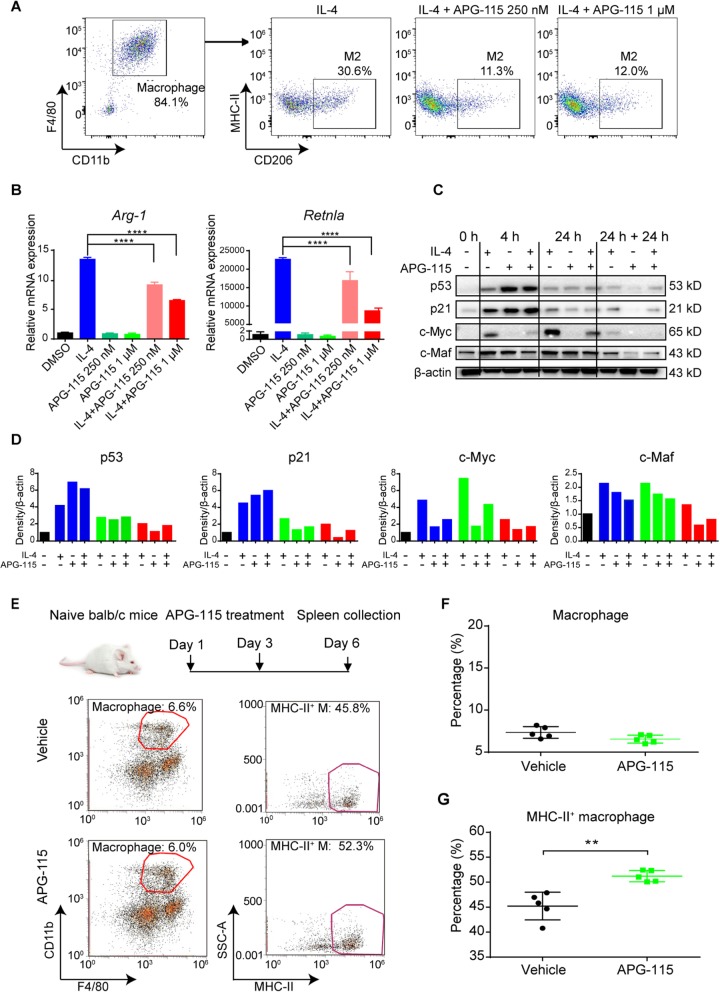
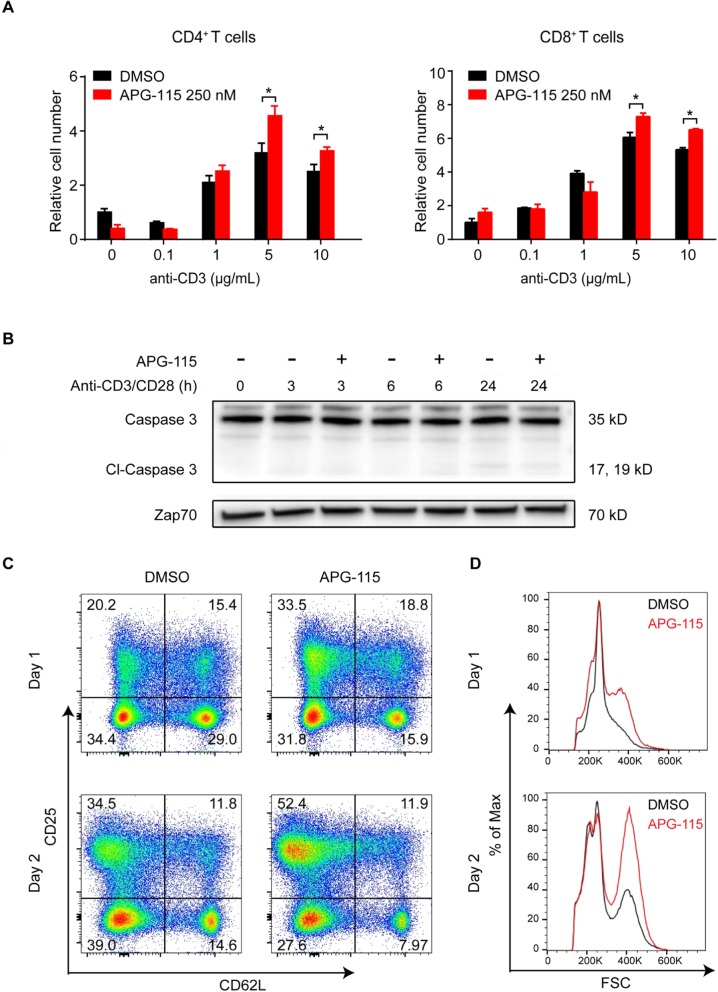
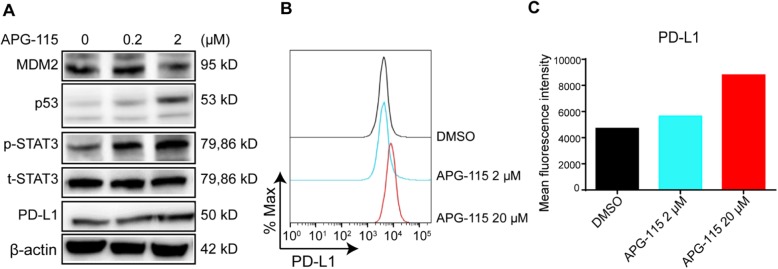
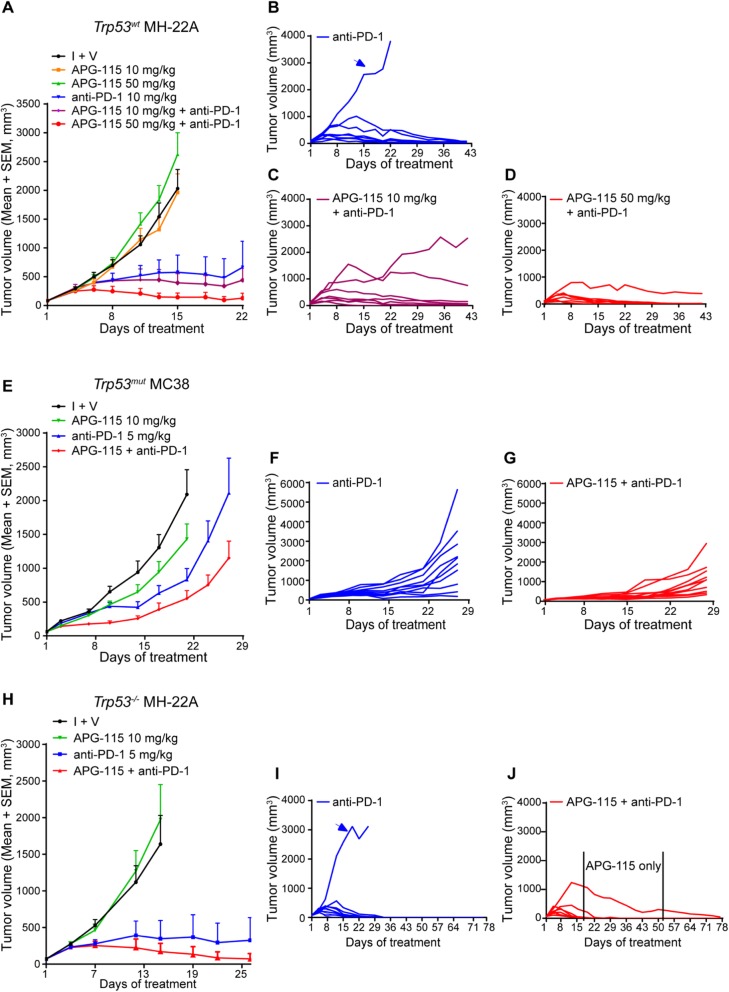
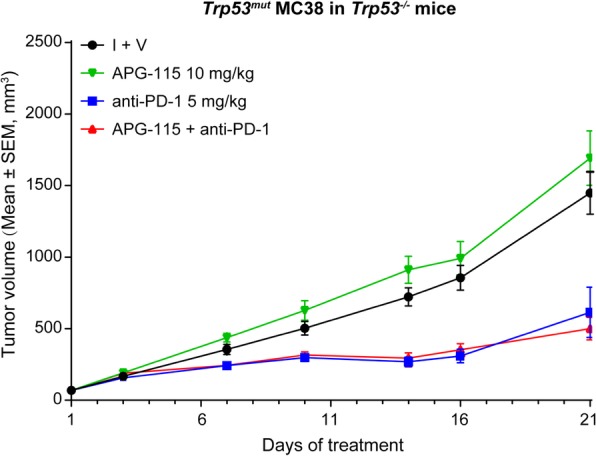
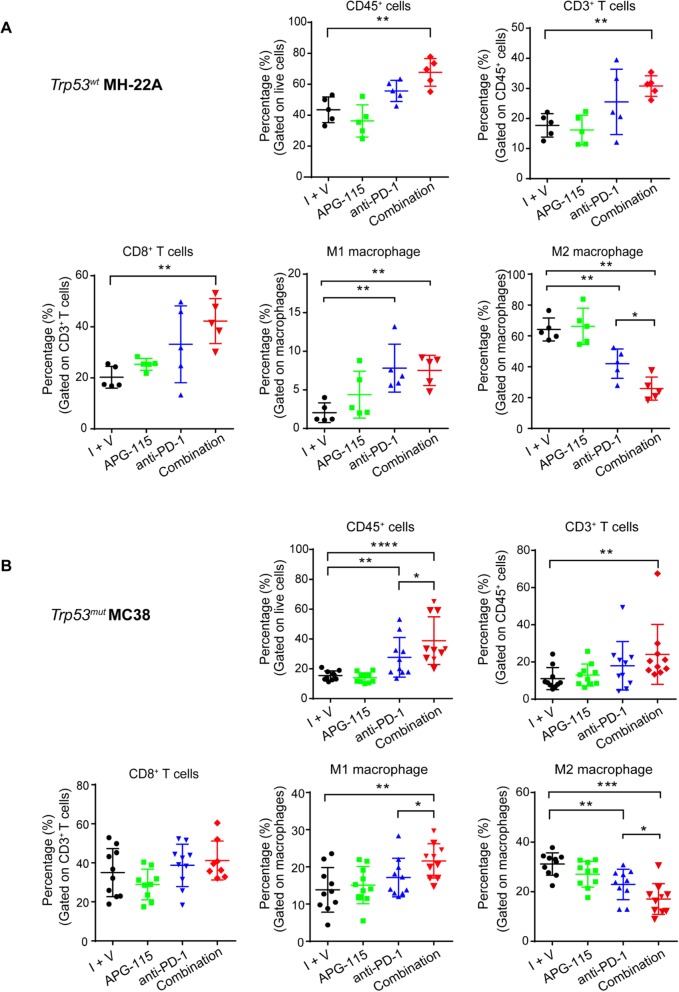
Background Programmed death-1 (PD-1) immune checkpoint blockade has achieved clinical successes in cancer therapy. However, the response rate of anti-PD-1 agents remains low. Additionally, a subpopulation of patients developed hyperprogressive disease upon PD-1 blockade therapy. Combination therapy with targeted agents may improve immunotherapy. Recent studies show that p53 activation in the myeloid linage suppresses alternative (M2) macrophage polarization, and attenuates tumor development and invasion, leading to the hypothesis that p53 activation may augment antitumor immunity elicited by anti-PD-1 therapy. Method Using APG-115 that is a MDM2 antagonist in clinical development as a pharmacological p53 activator, we investigated the role of p53 in immune modulation and combination therapy with PD-1 blockade. Results In vitro treatment of bone marrow-derived macrophages with APG-115 resulted in activation of p53 and p21, and a decrease in immunosuppressive M2 macrophage population through downregulation of c-Myc and c-Maf. Increased proinflammatory M1 macrophage polarization was observed in the spleen from mice treated with APG-115. Additionally, APG-115 has co-stimulatory activity in T cells and increases PD-L1 expression in tumor cells. In vivo, APG-115 plus anti-PD-1 combination therapy resulted in enhanced antitumor activity in Trp53wt, Trp53mut, and Trp53-deficient (Trp53−/−) syngeneic tumor models. Importantly, such enhanced activity was abolished in a syngeneic tumor model established in Trp53 knockout mice. Despite differential changes in tumor-infiltrating leukocytes (TILs), including the increases in infiltrated cytotoxic CD8+ T cells in Trp53wt tumors and M1 macrophages in Trp53mut tumors, a decrease in the proportion of M2 macrophages consistently occurred in both Trp53wt and Trp53mut tumors upon combination treatment. Conclusion Our results demonstrate that p53 activation mediated by APG-115 promotes antitumor immunity in the tumor microenvironment (TME) regardless of the Trp53 status of tumors per se. Instead, such an effect depends on p53 activation in Trp53 wild-type immune cells in the TME. Based on the data, a phase 1b clinical trial has been launched for the evaluation of APG-115 in combination with pembrolizumab in solid tumor patients including those with TP53mut tumors.
Overview
The claims and statistics of this paper haven’t been checked yet.
Free: it reads the open-access text and checks the first 5 claims that cite a source we can check. Create a free account to check every claim.
Integrity signals
Registry
Cites
Statistics
Figures
Verification
Claims the paper makes
The claims and statistics of this paper haven’t been checked yet.
Free: it reads the open-access text and checks the first 5 claims that cite a source we can check. Create a free account to check every claim.
Claims other papers make about this one
Each is checked against this paper’s own text: does it say what the citing paper says it does?
The source backs part of the claim, not all of it — or backs it for a different population, condition or comparison.
In the citing paper
“Most likely reflecting such a robust immunostimulation, MDM2 inhibitors reportedly favor PD-L1 upregulation in vivo (Fang et al., 2019; Li et al., 2020a; Thiem et al., 2019), pointing to a potential value for combinatorial regimens involving ICIs.”
From Immunomodulation by targeted anticancer agents (2021) · cites this paper as Fang et al., 2019
Experimental — accuracy not yet measured
Self-check
Percentages, sums and reported differences re-computed from the paper’s own numbers.
The self-check needs the paper’s full text.
Citations
Cites
PD-1 and PD-L1 Immune Checkpoint Blockade to Treat Breast Cancer
Hartkopf, A. D., Taran, F.-A., Wallwiener, M., Walter, C. B., Krämer, B., Grischke, E.-M., & Brucker, S. Y. (2016) · Breast Care · doi:10.1159/000453569 · Cited by 30,845
New Guidelines to Evaluate the Response to Treatment in Solid Tumors
Therasse, P., Arbuck, S. G., Eisenhauer, E. A., Wanders, J., Kaplan, R. S., Rubinstein, L., Verweij, J., Van Glabbeke, M., van Oosterom, A. T., Christian, M. C., et al. (2000) · JNCI: Journal of the National Cancer Institute · doi:10.1093/jnci/92.3.205 · Cited by 15,660
Exploring the full spectrum of macrophage activation
Mosser, D. M., & Edwards, J. P. (2008) · Nature Reviews Immunology · doi:10.1038/nri2448 · Cited by 9,144
Mutational landscape determines sensitivity to PD-1 blockade in non–small cell lung cancer
Rizvi, N. A., Hellmann, M. D., Snyder, A., Kvistborg, P., Makarov, V., Havel, J. J., Lee, W., Yuan, J., Wong, P., Ho, T. S., et al. (2015) · Science · doi:10.1126/science.aaa1348 · Cited by 7,802
PD-1 blockade induces responses by inhibiting adaptive immune resistance
Tumeh, P. C., Harview, C. L., Yearley, J. H., Shintaku, I. P., Taylor, E. J. M., Robert, L., Chmielowski, B., Spasic, M., Henry, G., Ciobanu, V., et al. (2014) · Nature · doi:10.1038/nature13954 · Cited by 6,609
Predictive correlates of response to the anti-PD-L1 antibody MPDL3280A in cancer patients
Herbst, R. S., Soria, J.-C., Kowanetz, M., Fine, G. D., Hamid, O., Gordon, M. S., Sosman, J. A., McDermott, D. F., Powderly, J. D., Gettinger, S. N., et al. (2014) · Nature · doi:10.1038/nature14011 · Cited by 5,231
Macrophage Diversity Enhances Tumor Progression and Metastasis
Qian, B.-Z., & Pollard, J. W. (2010) · Cell · doi:10.1016/j.cell.2010.03.014 · Cited by 5,188
Neoantigens in cancer immunotherapy
Schumacher, T. N., & Schreiber, R. D. (2015) · Science · doi:10.1126/science.aaa4971 · Cited by 4,783
Tumor-Associated Macrophages: From Mechanisms to Therapy
Noy, R., & Pollard, J. W. (2014) · Immunity · doi:10.1016/j.immuni.2014.06.010 · Cited by 4,089
Tumour-associated macrophages as treatment targets in oncology
Mantovani, A., Marchesi, F., Malesci, A., Laghi, L., & Allavena, P. (2017) · Nature Reviews Clinical Oncology · doi:10.1038/nrclinonc.2016.217 · Cited by 4,033
Cited by
Items 101–160 of 160
Protein ubiquitination in ovarian cancer immunotherapy: The progress and therapeutic strategy
Guo, H., Wei, J., Zhang, Y., Wang, L., Wan, J., Wang, W., Gao, L., Li, J., Sun, T., & Ma, L. (2023) · Genes & Diseases · doi:10.1016/j.gendis.2023.101158 · Cited by 10
“69,148 AMG232 is an investigational orally bioavailable selective MDM2 inhibitor, and the combination of AMG232 and pembrolizumab anti-PD-1 treatment reduces IL-6 expression as well as enhances T cell-mediated tumor killing in ovarian cancer cell lines.”
BackgroundZhang, T., Zhang, C., Fu, Z., & Gao, Q. (2022) · Pharmaceutics · doi:10.3390/pharmaceutics14091768 · Cited by 9
Guo, P.-D., Yang, Y., Wang, L., Zhang, Y., Zhang, B., Cai, J., de Melo, F. F., Strickland, M. R., Huang, M., & Liu, B. (2024) · Journal of Gastrointestinal Oncology · doi:10.21037/jgo-24-345 · Cited by 8
“…that the inhibitors for MDM2 and MYC can work synergistically with programmed cell death protein 1 (PD-1)/PD-L1 blockade to enhance anti-tumor efficacy in multiple tumors (26-32), suggesting the potential for testing PD-1/PD-L1 antibodies in combination with MDM2 and MYC inhibitors in this subtype.”
Ke, Y., & Zhou, F. (2025) · Frontiers in Immunology · doi:10.3389/fimmu.2025.1656108 · Cited by 9
“The strategy proves most effective when TP53 remains functionally intact, allowing restored p53 signaling to eliminate malignant cells (61).”
SDCBP modulates tumor microenvironment, tumor progression and anti-PD1 efficacy in colorectal cancer
Yu, J., Yu, S., Bai, J., Zhu, Z., Gao, Y., & Li, Y. (2024) · Cancer Gene Therapy · doi:10.1038/s41417-024-00758-8 · Cited by 8
“In addition, M2-TAMs directly affect the migration and in fi ltration of CD8 + T cells into tumors [10 – 12].”
Vuaroqueaux, V., Hendriks, H. R., Al-Hasani, H., Peille, A.-L., Das, S., & Fiebig, H. (2021) · npj Precision Oncology · doi:10.1038/s41698-021-00235-7 · Cited by 8
Witkowski, J., Polak, S., Rogulski, Z., & Pawelec, D. (2022) · International Journal of Molecular Sciences · doi:10.3390/ijms231911939 · Cited by 9
Targeting MDM2 in Soft-Tissue Sarcomas (and Other Solid Tumors): The Revival?
Italiano, A. (2023) · Cancer Discovery · doi:10.1158/2159-8290.cd-23-0605 · Cited by 8
Jin, K., Ding, Y., Xu, J., Liu, Z., Zeng, H., Su, X., Zhang, L., Sun, J., Wu, Y., Liu, H., et al. (2025) · Journal for ImmunoTherapy of Cancer · doi:10.1136/jitc-2024-010964 · Cited by 7
APG-115 Induces SLC7A11-Mediated Ferroptosis and Upregulates PD-L1 Expression in Thyroid Cancer
Liang, L., Chen, Z., Lei, D., Mo, C., Lan, D., Ke, J., Wang, W., Yang, Z., Guo, X., Chen, D., et al. (2025) · ACS Omega · doi:10.1021/acsomega.5c04710 · Cited by 8
Siriki, A., Ragland, G., Vasireddy, J., & Chitneni, S. K. (2025) · Bioorganic & Medicinal Chemistry Letters · doi:10.1016/j.bmcl.2025.130394 · Cited by 8
Luo, J., Ng, W., Liu, Y., Wang, L., Gong, C., Zhou, Y., Cheng, F., Zhu, S., & Yao, C. (2024) · Cancer Immunology Immunotherapy · doi:10.1007/s00262-024-03706-5 · Cited by 8
Shroff, R. T., & Bachini, M. (2024) · Future Oncology · doi:10.1080/14796694.2024.2340959 · Cited by 7
Cordycepin Augments the Efficacy of Anti-PD1 against Colon Cancer
Chang, W., Chen, Y., Lin, C.-P., Wang, C., Shieh, H.-R., Chi, C., Tsai, T., & Chen, Y.-J. (2024) · Biomedicines · doi:10.3390/biomedicines12071568 · Cited by 7
Liu, S., Knochelmann, H. M., Lomeli, S. H., Hong, A., Richardson, M., Yang, Z., Lim, R., Wang, Y., Dumitras, C., Krysan, K., et al. (2021) · immuneACCESS · doi:10.21417/sl2021crm · Cited by 7
Chen, D., Wu, R., Liu, Z., Wei, Y., & Kuang, D. (2026) · Chinese Medical Journal · doi:10.1097/cm9.0000000000004035 · Cited by 6
“[84] Similarly, neoadjuvant immunotherapy reshapes macrophage dynamics by expanding CD16 + CX3C chemokine receptor 1 (CX3CR1) + “patrolling” monocytes that strengthen immune surveillance while reducing secreted phosphoprotein 1 (SPP1) + macrophages associated with PD-L1 + IDO1 + CCL3 + senescent…”
Cui, Y., Shao, X., Yang, H., Xin, J., Liu, Y., Zhang, M., Sun, C., Chen, G., Shen, G., Meng, X., et al. (2024) · Frontiers in Pharmacology · doi:10.3389/fphar.2024.1441383 · Cited by 7
Luo, D., Wang, H., Liu, J., Chen, X., Xu, Y., Liang, Y., Wang, G., Zheng, J., Chen, Y., Wang, X., et al. (2025) · Cancer Letters · doi:10.1016/j.canlet.2025.217500 · Cited by 6
Targeting MDM2 for the development of a new cancer therapy: progress and challenges
Aguilar, A., Thomas, J. E., & Wang, S. (2023) · Medicinal Chemistry Research · doi:10.1007/s00044-023-03102-1 · Cited by 6
“A preclinical study of the MDM2 inhibitor APG-115 showed that MDM2 inhibition and activation of p53 supports immune regulation in the tumor microenvironment and achieves an antitumor immune response, regardless of the p53 mutation status of the tumors [37].”
BackgroundClinicopathologic and prognostic characteristics of tumor budding‐like in giant cell tumor of bone
Zheng, B., Zheng, B., Yang, Z., Niu, H., Zhu, G., Zou, M., Liu, F., & Xia, C. (2024) · Cancer · doi:10.1002/cncr.35551 · Cited by 6
Yan, X., Xu, W., Yao, H., Wu, Z., Ning, J., Zhao, S., Liu, Y., Zhang, M., Xu, D., Shen, Z., et al. (2025) · Cancer Discovery · doi:10.1158/2159-8290.cd-25-0649 · Cited by 6
APG-115 synergizes with bortezomib to induce apoptosis in cervical cancer cells
Sun, C., Meng, X., Cui, X., Liang, S., Sun, J. L., Zhang, B., Cui, Y., Zhao, Y., Chen, N., Tian, K., et al. (2025) · Anti-Cancer Drugs · doi:10.1097/cad.0000000000001735 · Cited by 5
“A clinical trial evaluating the combination of APG-115 and the PD-1 mAb pem-brolizumab in solid tumor patients is currently underway [31].”
Xue, J., Wang, M., Zhao, Q., Wang, Y., Yang, Q., & Han, B. (2022) · Advanced Synthesis & Catalysis · doi:10.1002/adsc.202200846 · Cited by 5
Chen, Y., Wu, Z., Cen, K., Guo, Y., & Jiang, J. (2024) · Scientific Reports · doi:10.1038/s41598-024-75948-3 · Cited by 4
“However, more research is still needed to determine how these genes affect ccRCC. TME consists of a range of interstitial cells, immune cells, tumor blood vessels, and extracellular matrix, all of which contribute to the initiation and progression of cancer 38–40 .”
BackgroundGanesan, I. P., & Kiyokawa, H. (2025) · Cancers · doi:10.3390/cancers17040626 · Cited by 4
“Preclinical models combining MDM2 inhibitors with ICIs have shown that p53 stabilization may enhance recognition of cancer cells by the immune system, resulting in synergistic tumor regression [136].”
MDM2 as a therapeutic target in advanced biliary tract cancers
Spencer, K. R., & King, G. T. (2025) · The Oncologist · doi:10.1093/oncolo/oyaf094 · Cited by 4
Sun, J., Wang, H., Zhang, R., Sun, X., Wu, Z., Wang, J., & Wang, Y. (2024) · The Clinical Respiratory Journal · doi:10.1111/crj.70031 · Cited by 4
Self-citationSurgery/anesthesia may cause monocytes to promote tumor development
Wang, Y., Zhu, R., Chang, E., Liu, X. L., Wang, G., Li, N., Zhang, W., Zhou, J. F., Sun, M., Zou, X., et al. (2025) · Molecular Medicine · doi:10.1186/s10020-025-01213-6 · Cited by 3
Transcription factor c-Maf: a checkpoint that programs autoimmunity
Liu, N., Zhang, J., Wang, P., Jin, S., Yang, C., Yan, X., Xu, J., Wang, H., Sun, W., & Xu, D. (2025) · Frontiers in Immunology · doi:10.3389/fimmu.2025.1682098 · Cited by 3
Li, Y., Xu, L., Lu, X., Fu, B., Jiang, Q., Xiong, W., Tang, W., & Wu, D. (2025) · Digestive Diseases and Sciences · doi:10.1007/s10620-025-09576-w · Cited by 3
“In addition, when combined with anti-PD-1 therapy, APG-115 can enhance therapeutic efficacy [12].”
Yi, H., Han, Y., Wang, X., Li, Q., Xiong, L., & Li, S. (2026) · Clinical and Experimental Medicine · doi:10.1007/s10238-026-02049-y · Cited by 3
“Our findings further support prior reports showing that MDM2– p53 inhibitors may modulate the tumor microenvironment by reducing VEGF expression and impairing angiogenesis, which could additionally contribute to enhanced radiothera-peutic response [22].”
Zhao, N., You, W., Zheng, X., Yan, J., Wang, P., Yao, Y., He, W., & Liu, T. (2025) · Materials Today Bio · doi:10.1016/j.mtbio.2025.102136 · Cited by 4
Witkowski, J., Polak, S., Pawelec, D., & Rogulski, Z. (2023) · International Journal of Molecular Sciences · doi:10.3390/ijms24032239 · Cited by 3
Wang, X., Zhang, M., Jiang, H., Li, Y., Chen, Y., Song, X., Qu, L., Chen, P., & Xiaochen, D. (2025) · Advanced Healthcare Materials · doi:10.1002/adhm.202505037 · Cited by 2
“As depicted in Scheme 1, the FAB system was constructed by encapsulating Alrizomadlin (APG-115), a MDM2-p53 inhibitor, within BSA-coated γ -Fe 2 O 3 nanoparticles [23, 24].”
Advanced Mucosal Melanoma Therapies: Current Status and Future Directions
Zhang, Y., Zhao, D., & Wu, D. (2026) · Current Treatment Options in Oncology · doi:10.1007/s11864-025-01372-y · Cited by 2
“Alrizomadlin has also been shown to restore anti-tumor activity in patients who have failed PD-1/PD-L1 blockade [ 132].”
Bao, N., Cheng, L., Wang, Y., Peng, Z., Wang, Z., & Chen, S. (2022) · Frontiers in Pharmacology · doi:10.3389/fphar.2022.1025922 · Cited by 2
“, 2021), and APG-115 targeting MDM2 (Mouse double minute 2 homolog)-p53 interactions in antitumor therapy (Fang et al., 2019; Fang et al., 2021).”
BackgroundHu, Q., Chen, Y., Zhou, Q., Deng, S., Mu, B., & Tang, J. (2024) · Journal of Cancer · doi:10.7150/jca.93066 · Cited by 2
“Another MDM2 inhibitor APG-115 synergized with PD1 inhibitors in a mouse model of cancer immunotherapy by promoting M1 macrophage polarization and T cell activation [53].”
BackgroundYi, N., Yin, X., Xiao, F., Ren, M., & Ma, C. (2024) · Discover Oncology · doi:10.1007/s12672-024-01694-7 · Cited by 2
“The IC 50 values of several classical antineoplastic drugs were determined using the R package "pRRophetic" (version:0.5) [19].”
InfluentialCombinatorial Strategies for T Lymphocyte-Based Cancer Immunotherapy
Hargadon, K. M., & Wall, J. B. (2022) · Springer eBooks · doi:10.1007/978-3-030-80962-1_211-1 · Cited by 2
Nieznanska, A., Statkiewicz, M., Sandowska-Markiewicz, Z., Unrug-Bielawska, K., Majewska, A., Kocik-Krol, J., Czepiel, M., Gałuszka-Bulaga, A., Mikuła, M., Ostrowski, J., et al. (2025) · Biomedicine & Pharmacotherapy · doi:10.1016/j.biopha.2025.118868 · Cited by 1
Combinatorial Strategies for T Lymphocyte-Based Cancer Immunotherapy
Hargadon, K. M., & Wall, J. B. (2025) · Springer eBooks · doi:10.1007/978-3-032-00767-4_211 · Cited by 1
Deng, W., Gao, S., Yan, L., Su, Q., & Chen, S. (2026) · Pharmaceuticals · doi:10.3390/ph19030476 · Cited by 1
“APG-115 also enhances the efficacy of anti-PD-1 antibodies by activating p53 within immune cells [109].”
Li, Q., Xu, J., Zhang, Y., Qian, J., Ong, D. B., Mun, K. S., Tang, Y. H., Geng, X., & Phang, K. C. (2026) · Biomolecules · doi:10.3390/biom16060906 · Cited by 1
“Inhibiting this axis may attenuate immune checkpoints like PD-L1 and promote cytotoxic T-lymphocyte recruitment, potentially augmenting immune checkpoint block-https ade [50,51].”
MDM2 inhibitors: Targeting p53-MDM2 interaction to anti-cancer
Zhang, X. (2021) · E3S Web of Conferences · doi:10.1051/e3sconf/202130802015
“The research found that APG-115 upregulates PD-L1 expression on tumor cells [39], and APG-115 enhances the anti-PD-1-mediated antitumor effect [40].”
BackgroundHan, Y., Hu, X., Wang, H., Tian, Z., Zhang, X., Hu, S., Zhang, Y., & Wang, X. (2022) · Research Square · doi:10.21203/rs.3.rs-1983828/v1
Wang, H. Q., Mulford, I. J., Sharp, F. A., Liang, J., Kurtuluş, S., Trabucco, G. M., Quinn, D. S., Longmire, T. A., Patel, N., Patil, R. A., et al. (2023) · doi:10.1158/0008-5472.c.6513468.v1
Xu, W., Zhang, T., Zhang, W., Jia, W., liu, S., Peng, H. F., Zhang, H., Yang, R., & Zhang, Y. (2023) · Research Square · doi:10.21203/rs.3.rs-3209111/v1
Perspectives in ROS/Redox Regulation Cancer Therapy
Bansal, M. P. (2023) · Springer eBooks · doi:10.1007/978-981-99-7342-2_10
Wong, S., Xu, L. X., You, W., He, W., Zheng, X., & Qi, Z. (2025) · International Journal of Nanomedicine · doi:10.2147/ijn.s533208
“6,13 In lung cancer models, for instance, MDM2 and MDMX inhibition have been associated with p53 activity restoration, 14,15 which improves tumor repression and immune system reactivation.”
Aptullahoğlu, E. (2025) · Black Sea Journal of Engineering and Science · doi:10.34248/bsengineering.1696059
Li, L., Li, R., Zhan, W., Zhuo, Z., Zhang, J., Li, Q., Mu, S., Chen, W., Li, L., & He, S. (2025) · The FASEB Journal · doi:10.1096/fj.202501953r · Cited by 1
Liu, T., Zhu, K., & Deng, J. (2025) · PubMed Central · doi:10.3779/j.issn.1009-3419.2025.106.27
Fang, D. D., Tao, R., Wang, G., Li, Y., Zhang, K., Xu, C., Zhai, G., Wang, Q., Wang, J., Tang, C., et al. (2022) · Figshare · doi:10.6084/m9.figshare.20296312
Self-citationFang, D. D., Tao, R., Wang, G., Li, Y., Zhang, K., Xu, C., Zhai, G., Wang, Q., Wang, J., Tang, C., et al. (2022) · Figshare · doi:10.6084/m9.figshare.20296315
Self-citationThe p53/Mdm2 Pathway in Hepatocellular Carcinoma: From Molecular Pathogenesis to Targeted Therapies
Kirkness, K., & Mann, D. A. (2026) · Livers · doi:10.3390/livers6030039
“Recent in vitro and in vivo studies demonstrated that APG-115 inhibits cellular proliferation at nanomolar concentrations, induces cell cycle arrest at the G0/G1 phase, and stimulates apoptosis [111,112,144–147].”
Li, D. J., Hou, M., Wang, S., Wan, X., Wang, H., Han, Y.-H., Liu, X., Cheng, C., Zhang, J., & Hu, X. (2026) · bioRxiv (Cold Spring Harbor Laboratory) · doi:10.64898/2026.07.06.736685
Yang, Q., Xing, X., Wang, Y., Wang, X., Han, Y., Ren, J., Zhang, Z., Tang, J., & Zhao, J. (2026) · Molecular Cancer · doi:10.1186/s12943-026-02739-x
“…wild-type p53 through pharmacological intervention not only induces an “in situ vaccine effect” in tumors but also clinically validates its critical role in reshaping the immune microenvironment, reversing ICB resistance, and synergistically enhancing the radioimmunological response [100–102].”
Kalita, R. C., Bezbaruah, S., & Patle, D. (2026) · ChemMedChem · doi:10.1002/cmdc.70468
“In addition, spirooxindole-derived MDM2 inhibitors, including SAR405838 (MI-77301) [25], APG-115 [26], and milademetan (DS-3032b) [27], have demonstrated potent antitumor activity through reactivation of the p53 signaling pathway and have progressed into clinical molecules.”
Rusin, M., Krześniak, M., & Łasut-Szyszka, B. (2026) · International Journal of Molecular Sciences · doi:10.3390/ijms27208964
“Interesting data were published by Fang et al. [71].”
Cell death: from basic principles to translational developments
Xu, L., Liu, R., Han, Q., Wang, T., 王淑玉, Xue, L., Huanhai, L., Sun, J., Zhang, Y., & Zhuang, C. (2026) · Signal Transduction and Targeted Therapy · doi:10.1038/s41392-026-03073-w
Metadata
- Authors
- Fang, D. D., Tang, Q., Kong, Y., Wang, Q., Gu, J., Fang, X., Zou, P., Rong, T., Wang, J., Yang, D., & Zhai, Y.
- Affiliations
- WuXi AppTec (China) (CN)
- Sun Yat-sen University (CN)
- Ascentage Pharma Group Inc. (United States) (US)
- Corresponding author
- Yang, Dajun
- Venue
- Journal for ImmunoTherapy of Cancer
- Publisher
- BMJ
- Published
- 2019-11-28
- Volume
- 7
- Issue
- 1
- Pages
- 327-327
- ISSN
- 2051-1426 (ISSN-L)
- PMC
- PMC6883539
- OpenAlex
- W2990863896
- Cited by
- 151
- References
- 51
- Citations by year
- 2026: 7 · 2025: 26 · 2024: 26 · 2023: 28 · 2022: 27 · 2021: 27 · 2020: 10
- FWCI
- 6.79
- Type
- journal article
- Language
- en
- Open access
- gold
- doi.org
- Licence
- cc-by
- creativecommons.org/licenses/by/4.0/ (tdm)
- Locations
- Journal for ImmunoTherapy of Cancer (publishedVersion, cc-by)
- PubMed Central (publishedVersion, cc-by)
- PubMed (publishedVersion)
- DOAJ (DOAJ: Directory of Open Access Journals) (submittedVersion, cc-by-sa)
- Funders
- National Science and Technology Major Project (2018ZX09301015-001.)
- National Nature Science Foundation of China (81602066, 81772587)
- Topics
- Health Sciences › Medicine › Oncology › Cancer Immunotherapy and Biomarkers
- Health Sciences › Medicine › Oncology › Cancer-related Molecular Pathways
- Life Sciences › Immunology and Microbiology › Immunology › Immune cells in cancer
- Keywords
- MDM2 inhibitors, p53 activation, anti-PD-1 therapy, immune checkpoint blockade, M2 macrophage polarization, M1 macrophage polarization, tumor microenvironment, antitumor immunity, combination immunotherapy, PD-L1 expression, c-Myc, c-Maf, p21, tumor-infiltrating lymphocytes, CD8+ T cells
- MeSH terms
- Animals, Antineoplastic Agents, Disease Models, Animal, Dose-Response Relationship, Drug, Drug Synergism, Female, Humans, Macrophages, Neoplasms, T-Lymphocytes, Cytotoxic, Biomarkers, Tumor, Gene Expression, Immunophenotyping, Tumor Suppressor Protein p53, Xenograft Model Antitumor Assays, Cell Line, Tumor, Mice, Proto-Oncogene Proteins c-mdm2, Immunomodulation, Tumor Microenvironment, Programmed Cell Death 1 Receptor
About these checks
Registry, retraction, Cites and statistics results are computed, not judged, with one exception: a printed reference that no index lists is read once by a model before it counts as a citation error. Claims are extracted by a model and kept only when their quote appears verbatim in the text; each cited source is then checked, with a model’s help, for whether it says what the claim relies on. Those verdicts can be wrong — read the claim’s quote and the cited source before relying on one.
Statistics and arithmetic are recomputed, not judged.
Confidence bands are shown only for fields calibrated on our annotated test set. None is calibrated yet, so no band is shown.
What counts as a claim ›How we measure confidence ›How we check this ›
Are you an author, or do you see a problem with this page? Request a review
Data sources
Bibliographic data: Semantic Scholar, OpenAlex, Crossref.
Contains information from the Semantic Scholar Academic Graph Datasets, made available under the ODC Attribution License (ODC-BY 1.0).
Semantic Scholar’s data is described in: Kinney, R., et al. (2023). The Semantic Scholar Open Data Platform. arXiv:2301.10140.
