

MDM2 inhibitor APG-115 synergizes with PD-1 blockade through enhancing antitumor immunity in the tumor microenvironment
Open accessThe DOI matches its Crossref record; 51 of the 51 references it cites were found in a registry or an index.
Abstract
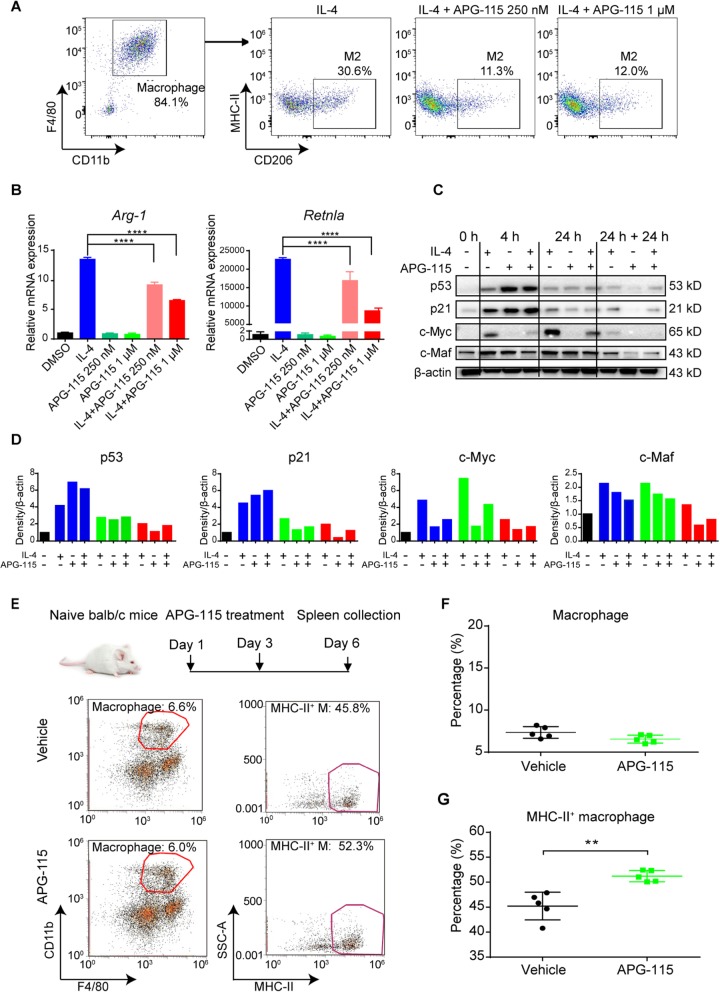
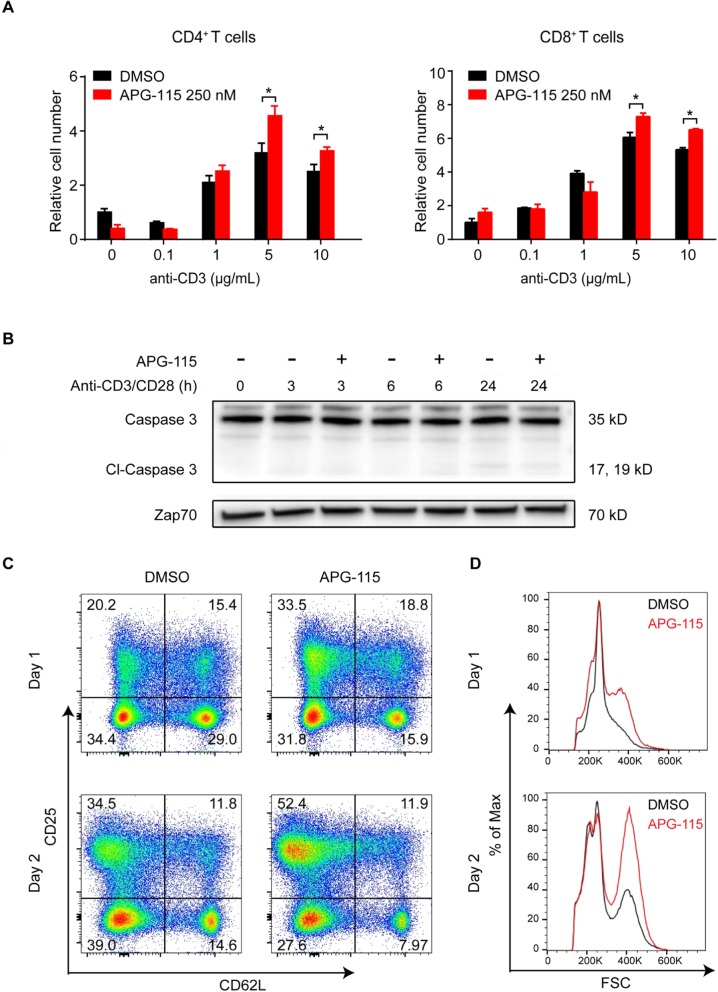
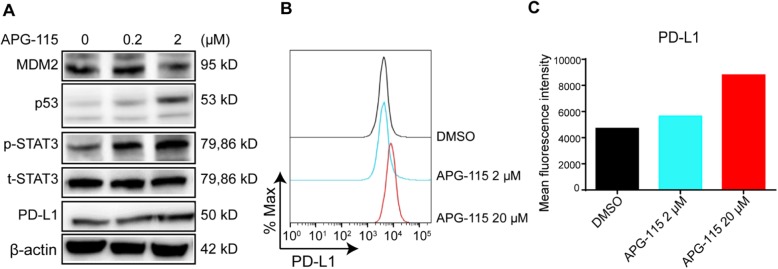
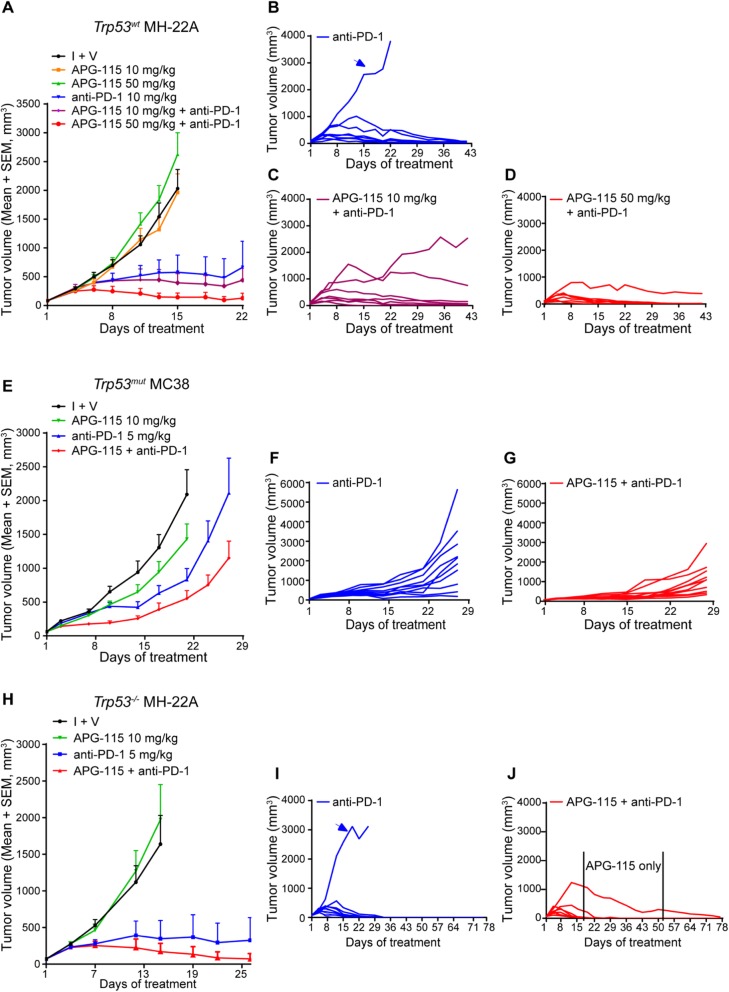
Background Programmed death-1 (PD-1) immune checkpoint blockade has achieved clinical successes in cancer therapy. However, the response rate of anti-PD-1 agents remains low. Additionally, a subpopulation of patients developed hyperprogressive disease upon PD-1 blockade therapy. Combination therapy with targeted agents may improve immunotherapy. Recent studies show that p53 activation in the myeloid linage suppresses alternative (M2) macrophage polarization, and attenuates tumor development and invasion, leading to the hypothesis that p53 activation may augment antitumor immunity elicited by anti-PD-1 therapy. Method Using APG-115 that is a MDM2 antagonist in clinical development as a pharmacological p53 activator, we investigated the role of p53 in immune modulation and combination therapy with PD-1 blockade. Results In vitro treatment of bone marrow-derived macrophages with APG-115 resulted in activation of p53 and p21, and a decrease in immunosuppressive M2 macrophage population through downregulation of c-Myc and c-Maf. Increased proinflammatory M1 macrophage polarization was observed in the spleen from mice treated with APG-115. Additionally, APG-115 has co-stimulatory activity in T cells and increases PD-L1 expression in tumor cells. In vivo, APG-115 plus anti-PD-1 combination therapy resulted in enhanced antitumor activity in Trp53wt, Trp53mut, and Trp53-deficient (Trp53−/−) syngeneic tumor models. Importantly, such enhanced activity was abolished in a syngeneic tumor model established in Trp53 knockout mice. Despite differential changes in tumor-infiltrating leukocytes (TILs), including the increases in infiltrated cytotoxic CD8+ T cells in Trp53wt tumors and M1 macrophages in Trp53mut tumors, a decrease in the proportion of M2 macrophages consistently occurred in both Trp53wt and Trp53mut tumors upon combination treatment. Conclusion Our results demonstrate that p53 activation mediated by APG-115 promotes antitumor immunity in the tumor microenvironment (TME) regardless of the Trp53 status of tumors per se. Instead, such an effect depends on p53 activation in Trp53 wild-type immune cells in the TME. Based on the data, a phase 1b clinical trial has been launched for the evaluation of APG-115 in combination with pembrolizumab in solid tumor patients including those with TP53mut tumors.
Overview
The claims and statistics of this paper haven’t been checked yet.
Free: it reads the open-access text and checks the first 5 claims that cite a source we can check. Create a free account to check every claim.
Integrity signals
Registry
Cites
Statistics
Figures
Verification
Claims the paper makes
The claims and statistics of this paper haven’t been checked yet.
Free: it reads the open-access text and checks the first 5 claims that cite a source we can check. Create a free account to check every claim.
Claims other papers make about this one
Each is checked against this paper’s own text: does it say what the citing paper says it does?
The source backs part of the claim, not all of it — or backs it for a different population, condition or comparison.
In the citing paper
“Most likely reflecting such a robust immunostimulation, MDM2 inhibitors reportedly favor PD-L1 upregulation in vivo (Fang et al., 2019; Li et al., 2020a; Thiem et al., 2019), pointing to a potential value for combinatorial regimens involving ICIs.”
From Immunomodulation by targeted anticancer agents (2021) · cites this paper as Fang et al., 2019
Experimental — accuracy not yet measured
Self-check
Percentages, sums and reported differences re-computed from the paper’s own numbers.
The self-check needs the paper’s full text.
Citations
Cites
PD-1 and PD-L1 Immune Checkpoint Blockade to Treat Breast Cancer
Hartkopf, A. D., Taran, F.-A., Wallwiener, M., Walter, C. B., Krämer, B., Grischke, E.-M., & Brucker, S. Y. (2016) · Breast Care · doi:10.1159/000453569 · Cited by 30,845
New Guidelines to Evaluate the Response to Treatment in Solid Tumors
Therasse, P., Arbuck, S. G., Eisenhauer, E. A., Wanders, J., Kaplan, R. S., Rubinstein, L., Verweij, J., Van Glabbeke, M., van Oosterom, A. T., Christian, M. C., et al. (2000) · JNCI: Journal of the National Cancer Institute · doi:10.1093/jnci/92.3.205 · Cited by 15,660
Exploring the full spectrum of macrophage activation
Mosser, D. M., & Edwards, J. P. (2008) · Nature Reviews Immunology · doi:10.1038/nri2448 · Cited by 9,144
Mutational landscape determines sensitivity to PD-1 blockade in non–small cell lung cancer
Rizvi, N. A., Hellmann, M. D., Snyder, A., Kvistborg, P., Makarov, V., Havel, J. J., Lee, W., Yuan, J., Wong, P., Ho, T. S., et al. (2015) · Science · doi:10.1126/science.aaa1348 · Cited by 7,802
PD-1 blockade induces responses by inhibiting adaptive immune resistance
Tumeh, P. C., Harview, C. L., Yearley, J. H., Shintaku, I. P., Taylor, E. J. M., Robert, L., Chmielowski, B., Spasic, M., Henry, G., Ciobanu, V., et al. (2014) · Nature · doi:10.1038/nature13954 · Cited by 6,609
Predictive correlates of response to the anti-PD-L1 antibody MPDL3280A in cancer patients
Herbst, R. S., Soria, J.-C., Kowanetz, M., Fine, G. D., Hamid, O., Gordon, M. S., Sosman, J. A., McDermott, D. F., Powderly, J. D., Gettinger, S. N., et al. (2014) · Nature · doi:10.1038/nature14011 · Cited by 5,231
Macrophage Diversity Enhances Tumor Progression and Metastasis
Qian, B.-Z., & Pollard, J. W. (2010) · Cell · doi:10.1016/j.cell.2010.03.014 · Cited by 5,188
Neoantigens in cancer immunotherapy
Schumacher, T. N., & Schreiber, R. D. (2015) · Science · doi:10.1126/science.aaa4971 · Cited by 4,783
Tumor-Associated Macrophages: From Mechanisms to Therapy
Noy, R., & Pollard, J. W. (2014) · Immunity · doi:10.1016/j.immuni.2014.06.010 · Cited by 4,089
Tumour-associated macrophages as treatment targets in oncology
Mantovani, A., Marchesi, F., Malesci, A., Laghi, L., & Allavena, P. (2017) · Nature Reviews Clinical Oncology · doi:10.1038/nrclinonc.2016.217 · Cited by 4,033
Macrophage plasticity and interaction with lymphocyte subsets: cancer as a paradigm
Biswas, S. K., & Mantovani, A. (2010) · Nature Immunology · doi:10.1038/ni.1937 · Cited by 3,840
IFN-γ–related mRNA profile predicts clinical response to PD-1 blockade
Ayers, M., Lunceford, J., Nebozhyn, M., Murphy, E., Loboda, A., Kaufman, D. R., Albright, A., Cheng, J. D., Kang, S. P., Shankaran, V., et al. (2017) · Journal of Clinical Investigation · doi:10.1172/jci91190 · Cited by 3,788
Genomic and Transcriptomic Features of Response to Anti-PD-1 Therapy in Metastatic Melanoma
Hugo, W., Zaretsky, J. M., Sun, L., Song, C., Moreno, B. H., Hu-Lieskovan, S., Berent-Maoz, B., Pang, J., Chmielowski, B., Cherry, G., et al. (2016) · Cell · doi:10.1016/j.cell.2016.02.065 · Cited by 3,448
CSF-1R inhibition alters macrophage polarization and blocks glioma progression
Pyonteck, S. M., Akkari, L., Schuhmacher, A. J., Bowman, R. L., Sevenich, L., Quail, D. F., Olson, O. C., Quick, M. L., Huse, J. T., Teijeiro, V., et al. (2013) · Nature Medicine · doi:10.1038/nm.3337 · Cited by 2,463
TP53 mutations in human cancers: origins, consequences, and clinical use.
Olivier, M., Hollstein, M., & Hainaut, P. (2010) · Cold Spring Harbor Perspectives in Biology · doi:10.1101/cshperspect.a001008 · Cited by 2,199
Targeting macrophages: therapeutic approaches in cancer
Cassetta, L., & Pollard, J. W. (2018) · Nature Reviews Drug Discovery · doi:10.1038/nrd.2018.169 · Cited by 2,048
Macrophages and Therapeutic Resistance in Cancer
Ruffell, B., & Coussens, L. M. (2015) · Cancer Cell · doi:10.1016/j.ccell.2015.02.015 · Cited by 1,474
Gao, H., Korn, J. M., Ferretti, S., Monahan, J. E., Wang, Y., Singh, M., Zhang, C., Schnell, C., Yang, G., Zhang, Y., et al. (2015) · Nature Medicine · doi:10.1038/nm.3954 · Cited by 1,393
Ries, C. H., Cannarile, M. A., Hoves, S., Benz, J., Wartha, K., Runza, V., Rey-Giraud, F., Pradel, L. P., Feuerhake, F., Klaman, I., et al. (2014) · Cancer Cell · doi:10.1016/j.ccr.2014.05.016 · Cited by 1,384
Macrophage polarization in tumour progression
Sica, A., Larghi, P., Mancino, A., Rubino, L., Porta, C., Totaro, M. G., Rimoldi, M., Biswas, S. K., Allavena, P., & Mantovani, A. (2008) · Seminars in Cancer Biology · doi:10.1016/j.semcancer.2008.03.004 · Cited by 1,241
Champiat, S., Dercle, L., Ammari, S., Massard, C., Hollebecque, A., Postel-Vinay, S., Chaput, N., Eggermont, A., Marabelle, A., Soria, J.-C., et al. (2017) · Clinical Cancer Research · doi:10.1158/1078-0432.ccr-16-1741 · Cited by 1,190
Immune cell promotion of metastasis
Kitamura, T., Qian, B.-Z., & Pollard, J. W. (2015) · Nature Reviews Immunology · doi:10.1038/nri3789 · Cited by 1,158
Immunogenic Chemotherapy Sensitizes Tumors to Checkpoint Blockade Therapy
Pfirschke, C., Engblom, C., Rickelt, S., Cortez-Retamozo, V., Garris, C., Pucci, F., Yamazaki, T., Poirier-Colame, V., Newton, A., Redouane, Y., et al. (2016) · Immunity · doi:10.1016/j.immuni.2015.11.024 · Cited by 952
(2017) · doi:10.1158/1078-0432.ccr-16-3133 · Cited by 831
Non-Cell-Autonomous Tumor Suppression by p53
Lujambio, A., Akkari, L., Simon, J., Grace, D., Tschaharganeh, D. F., Bolden, J. E., Zhao, Z., Thapar, V., Joyce, J. A., Krizhanovsky, V., et al. (2013) · Cell · doi:10.1016/j.cell.2013.03.020 · Cited by 766
PDL1 Regulation by p53 via miR-34
Cortez, M. A., Ivan, C., Valdecanas, D., Wang, X., Peltier, H. J., Ye, Y., Araujo, L., Carbone, D. P., Shilo, K., Giri, D. K., et al. (2016) · JNCI: Journal of the National Cancer Institute · doi:10.1093/jnci/djv303 · Cited by 683 · cited 1×
“Earlier studies suggest that p53 is also involved in the regulation of PD-L1 expression [37].”
BackgroundGeorgoudaki, A.-M., Prokopec, K. E., Boura, V. F., Hellqvist, E., Sohn, S., Östling, J., Dahan, R., Harris, R. A., Rantalainen, M., Klevebring, D., et al. (2016) · Cell Reports · doi:10.1016/j.celrep.2016.04.084 · Cited by 609
Saâda-Bouzid, E., Defaucheux, C., Karabajakian, A., Coloma, V. P., Servois, V., Paoletti, X., Even, C., Fayette, J., Guigay, J., Loirat, D., et al. (2017) · Annals of Oncology · doi:10.1093/annonc/mdx178 · Cited by 596
Host expression of PD-L1 determines efficacy of PD-L1 pathway blockade–mediated tumor regression
Lin, H., Wei, S., Hurt, E. M., Green, M. D., Zhao, L., Vatan, L., Szeliga, W., Herbst, R., Harms, P. W., Fecher, L. A., et al. (2018) · Journal of Clinical Investigation · doi:10.1172/jci96113 · Cited by 584
Targeting tumor-associated macrophages as a novel strategy against breast cancer
Luo, Y. (2006) · Journal of Clinical Investigation · doi:10.1172/jci27648 · Cited by 552
Lo Russo, G., Moro, M., Sommariva, M., Cancila, V., Boeri, M., Centonze, G., Ferro, S., Ganzinelli, M., Gasparini, P., Huber, V., et al. (2019) · Clinical Cancer Research · doi:10.1158/1078-0432.ccr-18-1390 · Cited by 408 · cited 1×
“In addition, recent studies suggested a crucial role of macrophage reprogramming, upon Fc receptor engagement by immune checkpoint inhibitor, in the development of hyperprogressive disease in non-small cell lung cancer patients [4].”
BackgroundZika Virus Causes Testis Damage and Leads to Male Infertility in Mice
Ma, W., Li, S., Ma, S., Jia, L., Zhang, F., Zhang, Y., Zhang, J., Wong, G., Zhang, S., Lu, X., et al. (2016) · Cell · doi:10.1016/j.cell.2016.11.016 · Cited by 402
Role of c-MYC in alternative activation of human macrophages and tumor-associated macrophage biology
Pello, O. M., De Pizzol, M., Mirolo, M., Soucek, L., Zammataro, L., Amabile, A., Doni, A., Nebuloni, M., Swigart, L. B., Evan, G. I., et al. (2012) · Blood · doi:10.1182/blood-2011-02-339911 · Cited by 386
Emerging roles of p53 and other tumour-suppressor genes in immune regulation
Muñoz-Fontela, C., Mandinova, A., Aaronson, S. A., & Lee, S. W. (2016) · Nature Reviews Immunology · doi:10.1038/nri.2016.99 · Cited by 341
Aguilar, A., Lu, J., Liu, L., Du, D., Bernard, D., McEachern, D., Przybranowski, S., Li, X., Luo, R., Wen, B., et al. (2017) · Journal of Medicinal Chemistry · doi:10.1021/acs.jmedchem.6b01665 · Cited by 211 · cited 1×
“APG-115 is an orally active, selective, potent small molecule inhibitor of the MDM2-P53 protein-protein interaction, which destabilizes MDM2-P53 complex and promotes P53 activation [31].”
BackgroundSelf-citationKulkarni, A., Chandrasekar, V., Natarajan, S. K., Ramesh, A., Pandey, P., Nirgud, J., Bhatnagar, H., Ashok, D., Ajay, A. K., & Sengupta, S. (2018) · Nature Biomedical Engineering · doi:10.1038/s41551-018-0254-6 · Cited by 194 · cited 1×
“Similarly, the supramolecule blocking the CD47-SIRP α signaling axis while sustainably inhibiting CSF-1R enhanced M2 to M1 repolarization within the TME and significantly improved antitumor and antimetastatic efficacies in animal models of melanoma and breast cancer [46].”
BackgroundLi, H. Y., McSharry, M., Bullock, B., Nguyen, T. T., Kwak, J., Poczobutt, J. M., Sippel, T. R., Heasley, L. E., Weiser-Evans, M. C., Clambey, E. T., et al. (2017) · Cancer Immunology Research · doi:10.1158/2326-6066.cir-16-0365 · Cited by 187
A unique role for p53 in the regulation of M2 macrophage polarization
Li, L., Ng, D. S. W., Mah, W.-C., Almeida, F. F., Rahmat, S. A., Rao, V. K., Leow, S. C., Laudisi, F., Peh, M. T., Goh, A. M., et al. (2015) · Cell Death & Differentiation · doi:10.1038/cdd.2014.212 · Cited by 168
Guo, G., Yu, M., Xiao, W., Celis, E., & Cui, Y. (2017) · Cancer Research · doi:10.1158/0008-5472.can-16-2832 · Cited by 168
Liu, M., Luo, F., Ding, C., Albeituni, S., Hu, X., Ma, Y., Cai, Y., McNally, L., Sanders, M. A., Jain, D., et al. (2015) · The Journal of Immunology · doi:10.4049/jimmunol.1501158 · Cited by 165 · cited 1×
“In addition, transcription factor c-Maf is highly expressed in mouse and human polarized M2 macrophages [35, 36].”
BackgroundCaught in the cross fire: p53 in inflammation
Cooks, T., Harris, C. C., & Oren, M. (2014) · Carcinogenesis · doi:10.1093/carcin/bgu134 · Cited by 162
Tumor Suppressor p53 Inhibits Autoimmune Inflammation and Macrophage Function
Zheng, S.-J., Lamhamedi-Cherradi, S.-E., Wang, P., Xu, L., & Chen, Y. H. (2005) · Diabetes · doi:10.2337/diabetes.54.5.1423 · Cited by 141 · cited 1×
“A recent study using genetic methods demonstrated that p53 restoration or re-activation in myeloid cells led to tumor regression and clearance, which was at least partially caused by the activation of innate antitumor immunity [26, 27].”
Host expression of PD-L1 determines efficacy of PD-L1 pathway blockade–mediated tumor regression
Lin, H., Wei, S., Hurt, E. M., Green, M. D., Zhao, L., Vatan, L., Szeliga, W., Herbst, R., Harms, P. W., Fecher, L. A., et al. (2018) · Journal of Clinical Investigation · doi:10.1172/jci120803 · Cited by 141
He, X.-Y., Xiang, C., Zhang, C.-X., Xie, Y.-Y., Chen, L., Zhang, G.-X., Lu, Y., & Liu, G. (2015) · Cell Reports · doi:10.1016/j.celrep.2015.09.045 · Cited by 62 · cited 5×
“In genetically engineered mouse models, it has been demonstrated that p53 activation within the myeloid lineage of the TME is capable of suppressing M2 macrophage polarization and inhibiting tumor growth and progression [30].”
BackgroundInfluentialTumor immune microenvironment characterization and response to anti-PD-1 therapy
Mariacarmela, Santarpia, Niki, & Karachaliou (2015) · 癌症生物学与医学:英文版 · Cited by 58
Tumor immune microenvironment characterization and response to anti-PD-1 therapy.
Santarpía, M., & Karachaliou, N. (2015) · PubMed · doi:10.7497/j.issn.2095-3941.2015.0022 · Cited by 47 · cited 1×
“Pre-existing tumor microenvironment (TME) also influences the responsiveness to immunotherapy [5, 6].”
Backgroundc-Maf is essential for the F4/80 expression in macrophages in vivo
Nakamura, M., Hamada, M., Hasegawa, K., Kusakabe, M., Suzuki, H., Greaves, D. R., Moriguchi, T., Kudo, T., & Takahashi, S. (2009) · Gene · doi:10.1016/j.gene.2009.06.003 · Cited by 35
TLR Agonists That Induce IFN-β Abrogate Resident Macrophage Suppression of T Cells
Hamilton, M. J., Antignano, F., von Rossum, A., Boucher, J., Bennewith, K. L., & Krystal, G. (2010) · The Journal of Immunology · doi:10.4049/jimmunol.1002045 · Cited by 22
Rudolph, D., Reschke, M., Blake, S. M., Rinnenthal, J., Wernitznig, A., Weyer-Czernilofsky, U., Gollner, A., Haslinger, C., Garin‐Chesa, P., Quant, J., et al. (2018) · Cancer Research · doi:10.1158/1538-7445.am2018-4866 · Cited by 11
A conversation with Doug Lowy and John Schiller
Neill, U. S. (2018) · Journal of Clinical Investigation · doi:10.1172/jci97861 · Cited by 6
Abstract 5560: PD-1/PD-L1 blockade enhances MDM2 inhibitor activity in p53 wild-type cancers
Wang, H. Q., Liang, J., Mulford, I. J., Sharp, F. A., Gaulis, S., Chen, Y., Trabucco, G. M., Quinn, D. S., Growney, J. D., Meyer, M. J., et al. (2018) · Cancer Research · doi:10.1158/1538-7445.am2018-5560 · Cited by 3
Cited by
Drugging p53 in cancer: one protein, many targets
Hassin, O., & Oren, M. (2023) · Nature Reviews Drug Discovery · doi:10.1038/s41573-022-00571-8 · Cited by 697
Targeting mutant p53 for cancer therapy: direct and indirect strategies
Hu, J., Cao, J., Topatana, W., Juengpanich, S., Li, S., Zhang, B., Shen, J., Cai, L., Cai, X., & Chen, M. (2021) · Journal of Hematology & Oncology · doi:10.1186/s13045-021-01169-0 · Cited by 483
Fucikova, J., Spisek, R., Kroemer, G., & Galluzzi, L. (2021) · Cell Research · doi:10.1038/s41422-020-0383-9 · Cited by 400
Ubiquitination and deubiquitination in cancer: from mechanisms to novel therapeutic approaches
Liu, F., Chen, J., Li, K., Li, H., Zhu, Y., Zhai, Y., Lu, B., Fan, Y., Liu, Z., Chen, X., et al. (2024) · Molecular Cancer · doi:10.1186/s12943-024-02046-3 · Cited by 326
“In addition, the MDM2 inhibitor APG-115 showed a synergistic effect with PD-1 blockade to enhance antitumor immunity within the TME [471].”
BackgroundSelf-citationMDM2 inhibition: an important step forward in cancer therapy
Konopleva, M., Martinelli, G., Daver, N., Papayannidis, C., Wei, A., Higgins, B., Ott, M., Mascarenhas, J., & Andreeff, M. (2020) · Leukemia · doi:10.1038/s41375-020-0949-z · Cited by 376
Metadata
- Authors
- Fang, D. D., Tang, Q., Kong, Y., Wang, Q., Gu, J., Fang, X., Zou, P., Rong, T., Wang, J., Yang, D., & Zhai, Y.
- Affiliations
- WuXi AppTec (China) (CN)
- Sun Yat-sen University (CN)
- Ascentage Pharma Group Inc. (United States) (US)
- Corresponding author
- Yang, Dajun
- Venue
- Journal for ImmunoTherapy of Cancer
- Publisher
- BMJ
- Published
- 2019-11-28
- Volume
- 7
- Issue
- 1
- Pages
- 327-327
- ISSN
- 2051-1426 (ISSN-L)
- PMC
- PMC6883539
- OpenAlex
- W2990863896
- Cited by
- 151
- References
- 51
- Citations by year
- 2026: 7 · 2025: 26 · 2024: 26 · 2023: 28 · 2022: 27 · 2021: 27 · 2020: 10
- FWCI
- 6.79
- Type
- journal article
- Language
- en
- Open access
- gold
- doi.org
- Licence
- cc-by
- creativecommons.org/licenses/by/4.0/ (tdm)
- Locations
- Journal for ImmunoTherapy of Cancer (publishedVersion, cc-by)
- PubMed Central (publishedVersion, cc-by)
- PubMed (publishedVersion)
- DOAJ (DOAJ: Directory of Open Access Journals) (submittedVersion, cc-by-sa)
- Funders
- National Science and Technology Major Project (2018ZX09301015-001.)
- National Nature Science Foundation of China (81602066, 81772587)
- Topics
- Health Sciences › Medicine › Oncology › Cancer Immunotherapy and Biomarkers
- Health Sciences › Medicine › Oncology › Cancer-related Molecular Pathways
- Life Sciences › Immunology and Microbiology › Immunology › Immune cells in cancer
- Keywords
- MDM2 inhibitors, p53 activation, anti-PD-1 therapy, immune checkpoint blockade, M2 macrophage polarization, M1 macrophage polarization, tumor microenvironment, antitumor immunity, combination immunotherapy, PD-L1 expression, c-Myc, c-Maf, p21, tumor-infiltrating lymphocytes, CD8+ T cells
- MeSH terms
- Animals, Antineoplastic Agents, Disease Models, Animal, Dose-Response Relationship, Drug, Drug Synergism, Female, Humans, Macrophages, Neoplasms, T-Lymphocytes, Cytotoxic, Biomarkers, Tumor, Gene Expression, Immunophenotyping, Tumor Suppressor Protein p53, Xenograft Model Antitumor Assays, Cell Line, Tumor, Mice, Proto-Oncogene Proteins c-mdm2, Immunomodulation, Tumor Microenvironment, Programmed Cell Death 1 Receptor
About these checks
Registry, retraction, Cites and statistics results are computed, not judged, with one exception: a printed reference that no index lists is read once by a model before it counts as a citation error. Claims are extracted by a model and kept only when their quote appears verbatim in the text; each cited source is then checked, with a model’s help, for whether it says what the claim relies on. Those verdicts can be wrong — read the claim’s quote and the cited source before relying on one.
Statistics and arithmetic are recomputed, not judged.
Confidence bands are shown only for fields calibrated on our annotated test set. None is calibrated yet, so no band is shown.
What counts as a claim ›How we measure confidence ›How we check this ›
Are you an author, or do you see a problem with this page? Request a review
Data sources
Bibliographic data: Semantic Scholar, OpenAlex, Crossref.
Contains information from the Semantic Scholar Academic Graph Datasets, made available under the ODC Attribution License (ODC-BY 1.0).
Semantic Scholar’s data is described in: Kinney, R., et al. (2023). The Semantic Scholar Open Data Platform. arXiv:2301.10140.
