

MDM2 inhibitor APG-115 synergizes with PD-1 blockade through enhancing antitumor immunity in the tumor microenvironment
Open accessThe DOI matches its Crossref record; 51 of the 51 references it cites were found in a registry or an index.
Abstract
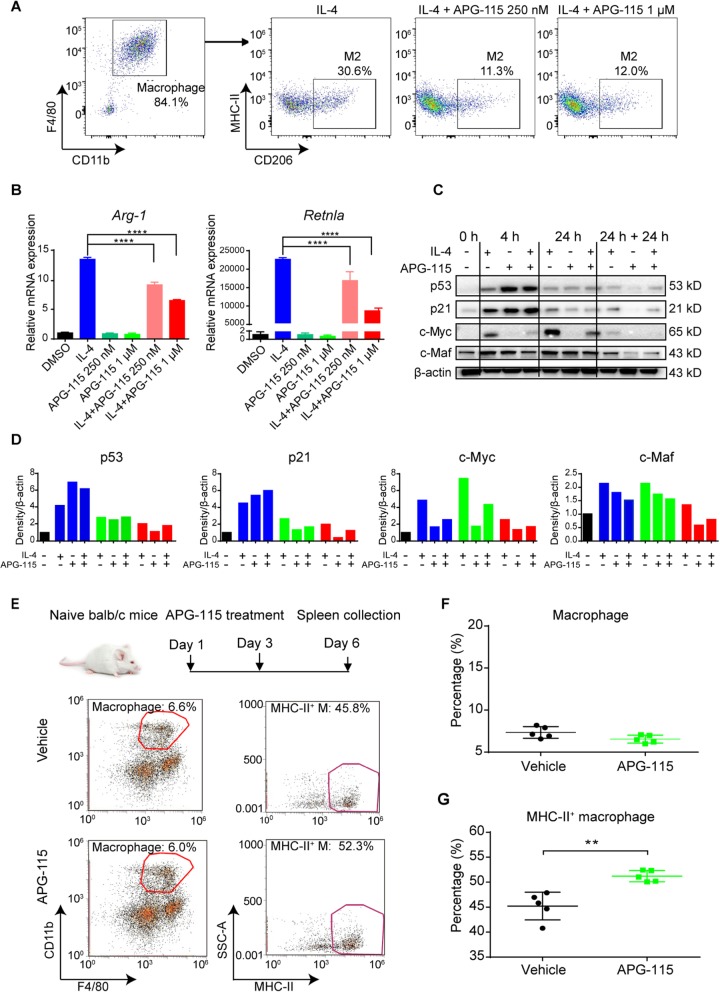
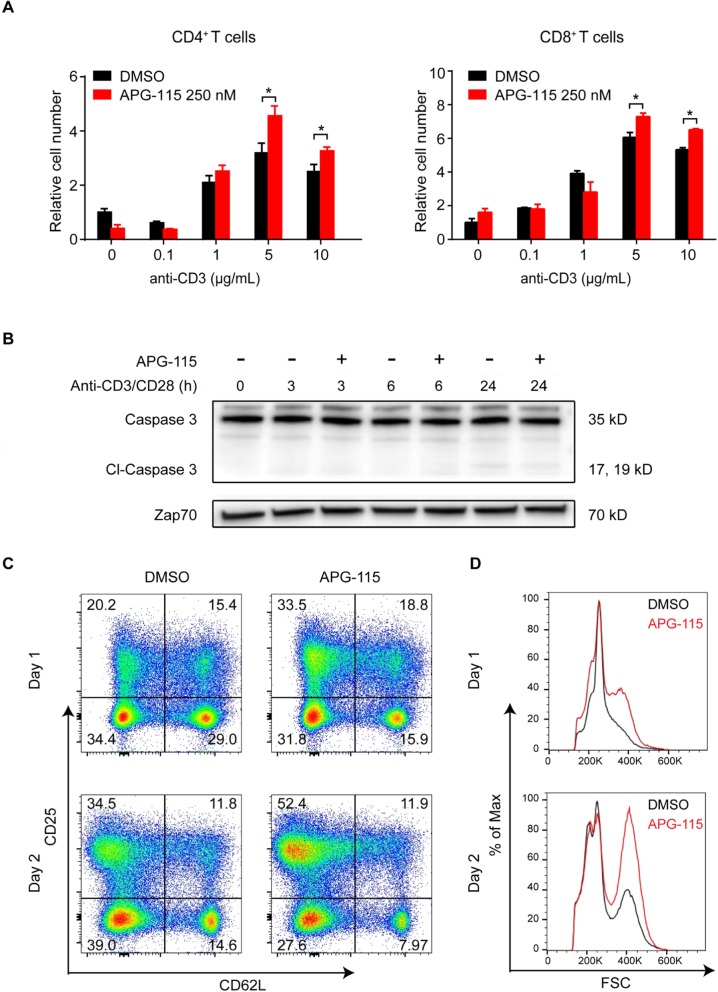
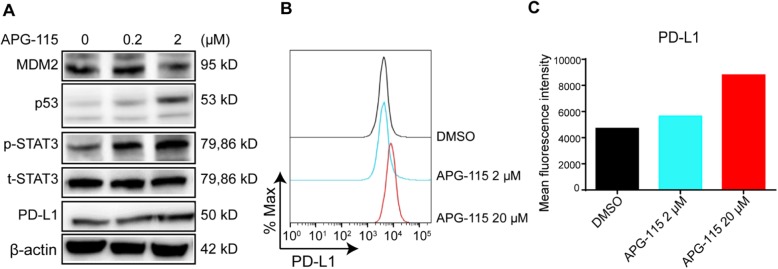
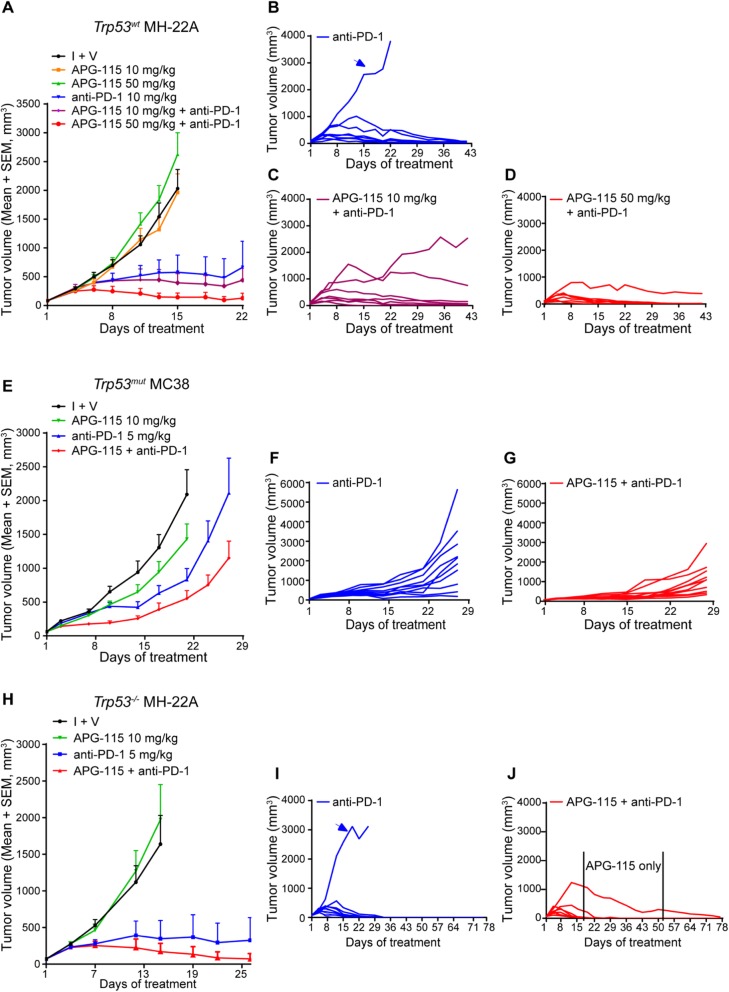
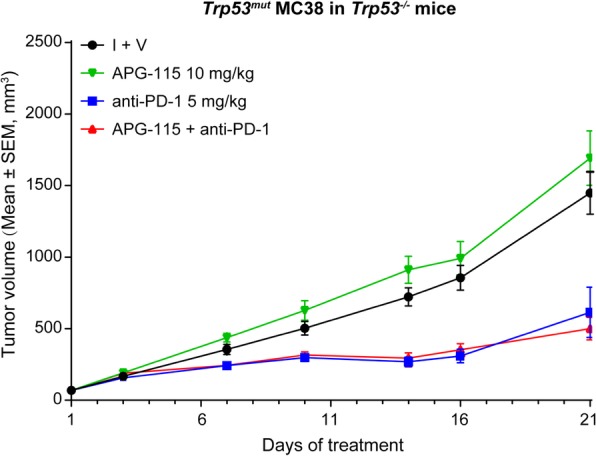
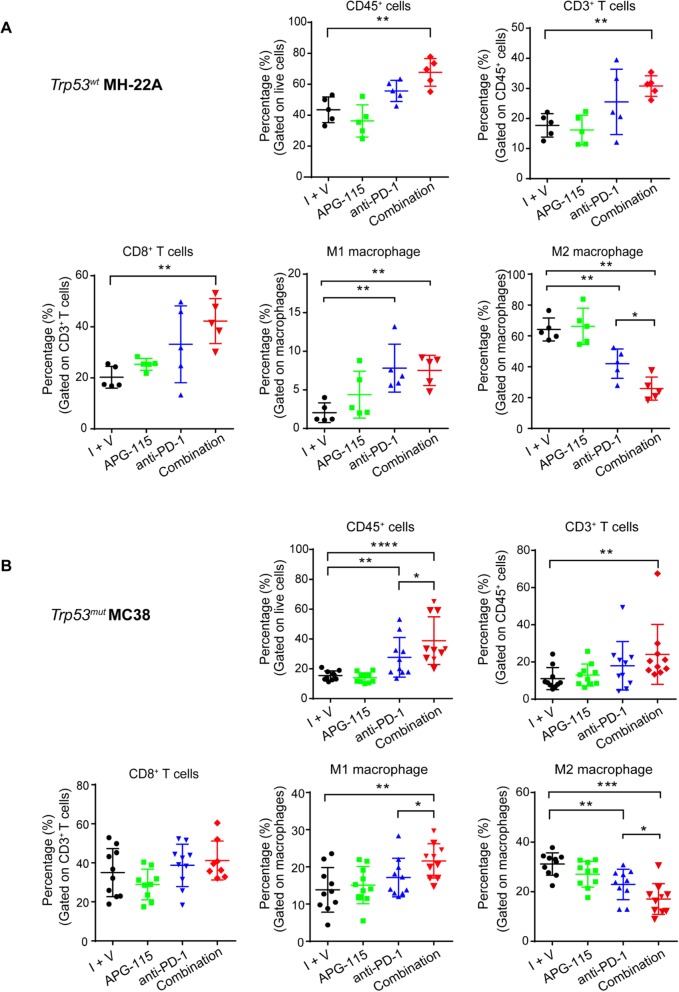
Background Programmed death-1 (PD-1) immune checkpoint blockade has achieved clinical successes in cancer therapy. However, the response rate of anti-PD-1 agents remains low. Additionally, a subpopulation of patients developed hyperprogressive disease upon PD-1 blockade therapy. Combination therapy with targeted agents may improve immunotherapy. Recent studies show that p53 activation in the myeloid linage suppresses alternative (M2) macrophage polarization, and attenuates tumor development and invasion, leading to the hypothesis that p53 activation may augment antitumor immunity elicited by anti-PD-1 therapy. Method Using APG-115 that is a MDM2 antagonist in clinical development as a pharmacological p53 activator, we investigated the role of p53 in immune modulation and combination therapy with PD-1 blockade. Results In vitro treatment of bone marrow-derived macrophages with APG-115 resulted in activation of p53 and p21, and a decrease in immunosuppressive M2 macrophage population through downregulation of c-Myc and c-Maf. Increased proinflammatory M1 macrophage polarization was observed in the spleen from mice treated with APG-115. Additionally, APG-115 has co-stimulatory activity in T cells and increases PD-L1 expression in tumor cells. In vivo, APG-115 plus anti-PD-1 combination therapy resulted in enhanced antitumor activity in Trp53wt, Trp53mut, and Trp53-deficient (Trp53−/−) syngeneic tumor models. Importantly, such enhanced activity was abolished in a syngeneic tumor model established in Trp53 knockout mice. Despite differential changes in tumor-infiltrating leukocytes (TILs), including the increases in infiltrated cytotoxic CD8+ T cells in Trp53wt tumors and M1 macrophages in Trp53mut tumors, a decrease in the proportion of M2 macrophages consistently occurred in both Trp53wt and Trp53mut tumors upon combination treatment. Conclusion Our results demonstrate that p53 activation mediated by APG-115 promotes antitumor immunity in the tumor microenvironment (TME) regardless of the Trp53 status of tumors per se. Instead, such an effect depends on p53 activation in Trp53 wild-type immune cells in the TME. Based on the data, a phase 1b clinical trial has been launched for the evaluation of APG-115 in combination with pembrolizumab in solid tumor patients including those with TP53mut tumors.
Overview
The claims and statistics of this paper haven’t been checked yet.
Free: it reads the open-access text and checks the first 5 claims that cite a source we can check. Create a free account to check every claim.
Integrity signals
Registry
Cites
Statistics
Figures
Verification
Claims the paper makes
The claims and statistics of this paper haven’t been checked yet.
Free: it reads the open-access text and checks the first 5 claims that cite a source we can check. Create a free account to check every claim.
Claims other papers make about this one
Each is checked against this paper’s own text: does it say what the citing paper says it does?
The source backs part of the claim, not all of it — or backs it for a different population, condition or comparison.
In the citing paper
“Most likely reflecting such a robust immunostimulation, MDM2 inhibitors reportedly favor PD-L1 upregulation in vivo (Fang et al., 2019; Li et al., 2020a; Thiem et al., 2019), pointing to a potential value for combinatorial regimens involving ICIs.”
From Immunomodulation by targeted anticancer agents (2021) · cites this paper as Fang et al., 2019
Experimental — accuracy not yet measured
Self-check
Percentages, sums and reported differences re-computed from the paper’s own numbers.
The self-check needs the paper’s full text.
Citations
Cites
PD-1 and PD-L1 Immune Checkpoint Blockade to Treat Breast Cancer
Hartkopf, A. D., Taran, F.-A., Wallwiener, M., Walter, C. B., Krämer, B., Grischke, E.-M., & Brucker, S. Y. (2016) · Breast Care · doi:10.1159/000453569 · Cited by 30,845
New Guidelines to Evaluate the Response to Treatment in Solid Tumors
Therasse, P., Arbuck, S. G., Eisenhauer, E. A., Wanders, J., Kaplan, R. S., Rubinstein, L., Verweij, J., Van Glabbeke, M., van Oosterom, A. T., Christian, M. C., et al. (2000) · JNCI: Journal of the National Cancer Institute · doi:10.1093/jnci/92.3.205 · Cited by 15,660
Exploring the full spectrum of macrophage activation
Mosser, D. M., & Edwards, J. P. (2008) · Nature Reviews Immunology · doi:10.1038/nri2448 · Cited by 9,144
Mutational landscape determines sensitivity to PD-1 blockade in non–small cell lung cancer
Rizvi, N. A., Hellmann, M. D., Snyder, A., Kvistborg, P., Makarov, V., Havel, J. J., Lee, W., Yuan, J., Wong, P., Ho, T. S., et al. (2015) · Science · doi:10.1126/science.aaa1348 · Cited by 7,802
PD-1 blockade induces responses by inhibiting adaptive immune resistance
Tumeh, P. C., Harview, C. L., Yearley, J. H., Shintaku, I. P., Taylor, E. J. M., Robert, L., Chmielowski, B., Spasic, M., Henry, G., Ciobanu, V., et al. (2014) · Nature · doi:10.1038/nature13954 · Cited by 6,609
Predictive correlates of response to the anti-PD-L1 antibody MPDL3280A in cancer patients
Herbst, R. S., Soria, J.-C., Kowanetz, M., Fine, G. D., Hamid, O., Gordon, M. S., Sosman, J. A., McDermott, D. F., Powderly, J. D., Gettinger, S. N., et al. (2014) · Nature · doi:10.1038/nature14011 · Cited by 5,231
Macrophage Diversity Enhances Tumor Progression and Metastasis
Qian, B.-Z., & Pollard, J. W. (2010) · Cell · doi:10.1016/j.cell.2010.03.014 · Cited by 5,188
Neoantigens in cancer immunotherapy
Schumacher, T. N., & Schreiber, R. D. (2015) · Science · doi:10.1126/science.aaa4971 · Cited by 4,783
Tumor-Associated Macrophages: From Mechanisms to Therapy
Noy, R., & Pollard, J. W. (2014) · Immunity · doi:10.1016/j.immuni.2014.06.010 · Cited by 4,089
Tumour-associated macrophages as treatment targets in oncology
Mantovani, A., Marchesi, F., Malesci, A., Laghi, L., & Allavena, P. (2017) · Nature Reviews Clinical Oncology · doi:10.1038/nrclinonc.2016.217 · Cited by 4,033
Cited by
Drugging p53 in cancer: one protein, many targets
Hassin, O., & Oren, M. (2023) · Nature Reviews Drug Discovery · doi:10.1038/s41573-022-00571-8 · Cited by 697
Targeting mutant p53 for cancer therapy: direct and indirect strategies
Hu, J., Cao, J., Topatana, W., Juengpanich, S., Li, S., Zhang, B., Shen, J., Cai, L., Cai, X., & Chen, M. (2021) · Journal of Hematology & Oncology · doi:10.1186/s13045-021-01169-0 · Cited by 483
Fucikova, J., Spisek, R., Kroemer, G., & Galluzzi, L. (2021) · Cell Research · doi:10.1038/s41422-020-0383-9 · Cited by 400
Ubiquitination and deubiquitination in cancer: from mechanisms to novel therapeutic approaches
Liu, F., Chen, J., Li, K., Li, H., Zhu, Y., Zhai, Y., Lu, B., Fan, Y., Liu, Z., Chen, X., et al. (2024) · Molecular Cancer · doi:10.1186/s12943-024-02046-3 · Cited by 326
“In addition, the MDM2 inhibitor APG-115 showed a synergistic effect with PD-1 blockade to enhance antitumor immunity within the TME [471].”
BackgroundSelf-citationMDM2 inhibition: an important step forward in cancer therapy
Konopleva, M., Martinelli, G., Daver, N., Papayannidis, C., Wei, A., Higgins, B., Ott, M., Mascarenhas, J., & Andreeff, M. (2020) · Leukemia · doi:10.1038/s41375-020-0949-z · Cited by 376
Advances in the clinical management of uveal melanoma
Carvajal, R. D., Sacco, J. J., Jager, M. J., Eschelman, D. J., Olofsson Bagge, R., Harbour, J. W., Chieng, N. D., Patel, S. P., Joshua, A. M., & Piperno-Neumann, S. (2023) · Nature Reviews Clinical Oncology · doi:10.1038/s41571-022-00714-1 · Cited by 278
The p53 network: cellular and systemic DNA damage responses in cancer and aging
Vaddavalli, P. L., & Schumacher, B. (2022) · Trends in Genetics · doi:10.1016/j.tig.2022.02.010 · Cited by 279
Association of the Epithelial–Mesenchymal Transition (EMT) with Cisplatin Resistance
Ashrafizadeh, M., Zarrabi, A., Hushmandi, K., Kalantari, M., Mohammadinejad, R., Javaheri, T., & Sethi, G. (2020) · International Journal of Molecular Sciences · doi:10.3390/ijms21114002 · Cited by 248
Immunomodulation by targeted anticancer agents
Petroni, G., Buqué, A., Zitvogel, L., Kroemer, G., & Galluzzi, L. (2021) · Cancer Cell · doi:10.1016/j.ccell.2020.11.009 · Cited by 212
Zhou, X., Singh, M., Sanz Santos, G., Guerlavais, V., Carvajal, L. A., Aivado, M., Zhan, Y., Oliveira, M. M. S., Westerberg, L. S., Annis, D. A., et al. (2021) · Cancer Discovery · doi:10.1158/2159-8290.cd-20-1741 · Cited by 169
“While p53 is not a direct regulator of PD-L1, MDM2 inhibitors have been shown to induce PD-L1, most likely indirectly via the IFN pathway (34, 35).”
BackgroundTargeting apoptotic pathways for cancer therapy
Tian, X., Srinivasan, P. R., Tajiknia, V., Uruchurtu, A. S. S., Seyhan, A. A., Carneiro, B. A., Cruz, A. D. L., Pinho-Schwermann, M. P., George, A., Zhao, S., et al. (2024) · Journal of Clinical Investigation · doi:10.1172/jci179570 · Cited by 173
“By activating the P53/ P21 pathway, APG-115 exhibited potent antiproliferative activities and induced cell-cycle arrest in TP53 WT AML cell lines.”
InfluentialTargeting oncogene and non-oncogene addiction to inflame the tumour microenvironment
Petroni, G., Buqué, A., Coussens, L. M., & Galluzzi, L. (2022) · Nature Reviews Drug Discovery · doi:10.1038/s41573-022-00415-5 · Cited by 160
MDM2 Inhibitors for Cancer Therapy: The Past, Present, and Future
Wang, W., Albadari, N. G., Du, Y., Fowler, J. F., Sang, H. T., Xian, W., McKeon, F., Li, W., Zhou, J., & Zhang, R. (2024) · Pharmacological Reviews · doi:10.1124/pharmrev.123.001026 · Cited by 173
“This has been further supported by the observation that pharmacological inhibition of MDM2 enhanced the response of cancer cells to ICIs (Fang et al., 2019).”
BackgroundInfluentialGao, H., Yin, J., Ji, C., Yu, X., Xue, J., Guan, X., Zhang, S., Liu, X., & Xing, F. (2023) · Journal of Experimental & Clinical Cancer Research · doi:10.1186/s13046-023-02805-y · Cited by 144
“The possible combination of immunological regulation and p53 restoration through USP7 inhibition is especially fascinating to minimize chemotherapy-induced damage in vivo and in vitro [65].”
BackgroundInfluentialWang, G., Xu, D., Zhang, Z., Li, X., Shi, J., Sun, J., Li, X., Li, X., Zhou, M., & Zheng, T. (2021) · npj Precision Oncology · doi:10.1038/s41698-021-00200-4 · Cited by 131
“MDM2 amplification can promote EMT and suppresses cancer immunity.(50,51) Mutations of P53 are well known to promote EMT in various types of cancer.”
BackgroundJiang, M., Li, X., Zhang, J., Lu, Y., Shi, Y., Zhu, C., Liu, Y., Qin, B., Luo, Z., Du, Y., et al. (2021) · ACS Nano · doi:10.1021/acsnano.1c04068 · Cited by 123
Barnestein, R., Galland, L., Kalfeist, L., Ghiringhelli, F., Ladoire, S., & Limagne, E. (2022) · OncoImmunology · doi:10.1080/2162402x.2022.2120676 · Cited by 124
“Furthermore, inhibiting MDM2 upregulates PD-L1 expression on tumor cells and may lead to high immunogenicity, confirmed by an improvement in the cytotoxic activity of CD8 T cells when an anti PD-1 is added to APG 115.(215) Still concerning cell cycle modulation, CDK4/6 inhibitors (abemaciclib or palbociclib) in precli…”
ResultThe DNA Damage Response and Inflammation in Cancer
Klapp, V., Álvarez-Abril, B., Leuzzi, G., Kroemer, G., Ciccia, A., & Galluzzi, L. (2023) · Cancer Discovery · doi:10.1158/2159-8290.cd-22-1220 · Cited by 123
The ubiquitin ligase MDM2 sustains STAT5 stability to control T cell-mediated antitumor immunity
Zhou, J., Kryczek, I., Li, S., Li, X., Aguilar, A., Wei, S., Grove, S., Vatan, L., Yu, J., Yan, Y., et al. (2021) · Nature Immunology · doi:10.1038/s41590-021-00888-3 · Cited by 107
The role of p53 in anti-tumor immunity and response to immunotherapy
Carlsen, L., Zhang, S., Tian, X., De La Cruz, A., George, A., Arnoff, T. E., & El-Deiry, W. S. (2023) · Frontiers in Molecular Biosciences · doi:10.3389/fmolb.2023.1148389 · Cited by 100
“For example, the p53-reactivating compound APG-115 synergizes with ICI (Fang et al., 2019) and the efficacy of another p53-reactivating compound DS-5272 is dependent on natural killer (NK) cell activity (Hayashi et al.”
BackgroundInfluentialCell fate regulation governed by p53: Friends or reversible foes in cancer therapy
Song, B., Yang, P., & Zhang, S. (2024) · 癌症:英文版 · doi:10.1002/cac2.12520 · Cited by 109
Dugage, M. R., Nassif, E. F., Italiano, A., & Bahleda, R. (2021) · Frontiers in Immunology · doi:10.3389/fimmu.2021.775761 · Cited by 106
Targeting ubiquitin signaling for cancer immunotherapy
Zhou, X., & Sun, S. (2021) · Signal Transduction and Targeted Therapy · doi:10.1038/s41392-020-00421-2 · Cited by 100
Targeting Biomolecular Condensation and Protein Aggregation against Cancer
Silva, J. L., Foguel, D., Ferreira, V. F., Vieira, T. C. R. G., Marques, M. A., Ferretti, G. D. S., Outeiro, T. F., Cordeiro, Y., & de Oliveira, G. A. P. (2023) · Chemical Reviews · doi:10.1021/acs.chemrev.3c00131 · Cited by 89
Zhang, C., Wei, S., Dai, S., Li, X., Wang, H., Zhang, H., Sun, G., Shan, B., & Zhao, L. (2023) · Journal for ImmunoTherapy of Cancer · doi:10.1136/jitc-2022-006230 · Cited by 90
Liao, Q., Deng, J., Tong, J., Gan, Y., Hong, W., Dong, H., Cao, M., Chen, X., Chen, Y., Xie, B., et al. (2024) · Molecular Cell · doi:10.1016/j.molcel.2024.11.013 · Cited by 91
The Current State of Treatment and Future Directions in Cutaneous Malignant Melanoma
Ernst, M. K., & Giubellino, A. (2022) · Biomedicines · doi:10.3390/biomedicines10040822 · Cited by 90
The effects of MYC on tumor immunity and immunotherapy
Li, J., Dong, T., Wu, Z., Zhu, D., & Gu, H. (2023) · Cell Death Discovery · doi:10.1038/s41420-023-01403-3 · Cited by 80
“Simultaneously, another study reported that APG-115 plus anti-PD-1 combination therapy remarkably reversed the immunosuppressive TIME into an antitumor immune environment, which led to enhanced therapeutic benefits in mice [108].”
BackgroundTP53 Mutation-Mediated Immune Evasion in Cancer: Mechanisms and Therapeutic Implications
Wang, C., Tan, J. Y. M., Chitkara, N., & Bhatt, S. (2024) · Cancers · doi:10.3390/cancers16173069 · Cited by 68
Hároníková, L., Bonczek, O., Zatloukalová, P., Kokas, F. Z., Kucerikova, M., Coates, P. J., Fåhræus, R., & Vojtěšek, B. (2021) · Cellular & Molecular Biology Letters · doi:10.1186/s11658-021-00293-6 · Cited by 76
“In addition, recent results indicate that MDM2 inhibitors may sensitise tumours to T-cell mediated killing in combination with antiPD-1 therapy, regardless of changes in PD-L1 expression [183, 188].”
ResultThe role of the MDM2/p53 axis in antitumor immune responses
Brummer, T., & Zeiser, R. (2024) · Blood · doi:10.1182/blood.2023020731 · Cited by 60
Restoring p53 Function in Head and Neck Squamous Cell Carcinoma to Improve Treatments
de Bakker, T., Journé, F., Descamps, G., Saussez, S., Dragan, T., Ghanem, G., Krayem, M., & Gestel, D. V. (2022) · Frontiers in Oncology · doi:10.3389/fonc.2021.799993 · Cited by 70
“Their results were very encouraging as they demonstrated that p53 activation promotes antitumor immunity in the TME, with a decrease in M2 macrophages, both in TP53 wild-type and TP53 mutated mice tumors (102).”
BackgroundAMG-232 sensitizes high MDM2-expressing tumor cells to T-cell-mediated killing
Sahin, I., Zhang, S., Navaraj, A., Zhou, L., Dizon, D., Safran, H., & El-Deiry, W. S. (2020) · Cell Death Discovery · doi:10.1038/s41420-020-0292-1 · Cited by 66
Wang, H. Q., Mulford, I. J., Sharp, F., Liang, J., Kurtulus, S., Trabucco, G., Quinn, D. S., Longmire, T. A., Patel, N., Patil, R., et al. (2021) · Cancer Research · doi:10.1158/0008-5472.can-20-0189 · Cited by 60
“Combination benefit of HDM201 with antiPD-1 antibody/anti-PD-L1 antibody in p53 WT tumors is in agreement with this potential mechanism of action (46).”
Deng, J., Paulus, A., Fang, D. D., Manna, A., Wang, G., Wang, H., Zhu, S., Chen, J., Min, P., Yin, Y., et al. (2022) · Clinical Cancer Research · doi:10.1158/1078-0432.ccr-21-4037 · Cited by 65
Self-citationTolba, M. F. (2020) · International Journal of Cancer · doi:10.1002/ijc.33056 · Cited by 74
“with APG-115 monotherapy augmented the antitumor immune response.(50) Moreover, APG-115 boosted the antitumor activity of anti-PD-1 mAb in both TP53 wild-type or mutant tumors.”
BackgroundInfluentialCamelliti, S., Noci, V. L., Bianchi, F., Moscheni, C., Arnaboldi, F., Gagliano, N., Balsari, A., Garassino, M. C., Tagliabue, E., Sfondrini, L., et al. (2020) · Journal of Experimental & Clinical Cancer Research · doi:10.1186/s13046-020-01721-9 · Cited by 68
Liu, S., Knochelmann, H. M., Lomeli, S. H., Hong, A., Richardson, M. S., Yang, Z., Lim, R. J., Wang, Y., Dumitras, C., Krysan, K., et al. (2021) · Cell Reports Medicine · doi:10.1016/j.xcrm.2021.100411 · Cited by 67
“Also, MDM2 amplification, which has been linked to hyperprogression on anti-PD-1 therapy,(23) can be targeted by small-molecule inhibitors to improve anti-PD-1 responsiveness and T cell killing of cancer cells.(24,25) Concordant with these gDNA amplification”
BackgroundFang, D. D., Tang, Q., Kong, Y., Rong, T., Wang, Q., Li, N., Fang, X., Gu, J., Xiong, D., Yin, Y., et al. (2021) · Cell Death Discovery · doi:10.1038/s41420-021-00465-5 · Cited by 58
Self-citationGavali, S., Liu, J., Li, X., & Paolino, M. (2021) · International Journal of Molecular Sciences · doi:10.3390/ijms221910800 · Cited by 59
Recent advances on the intervention sites targeting USP7-MDM2-p53 in cancer therapy
Harakandi, C., Nininahazwe, L., Xu, H., Liu, B., He, C., Zheng, Y., & Zhang, H. (2021) · Bioorganic Chemistry · doi:10.1016/j.bioorg.2021.105273 · Cited by 60
Potential of E3 Ubiquitin Ligases in Cancer Immunity: Opportunities and Challenges
Ye, P., Chi, X., Cha, J., Luo, S., Yang, G., Yan, X., & Yang, W. (2021) · Cells · doi:10.3390/cells10123309 · Cited by 54
Lu, Z., Yan, W., Liang, J., Yu, M., Liu, J., Hao, J., Wan, Q., Liu, J., Luo, C., & Chen, Y. (2020) · Frontiers in Oncology · doi:10.3389/fonc.2020.00341 · Cited by 52
Tong, J., Tan, Y., Ouyang, W., & Chang, H. (2025) · Experimental Hematology and Oncology · doi:10.1186/s40164-025-00636-5 · Cited by 47
“The MDM2 antagonist APG-115, a pharmacological activator of p53, has been shown to enhance the antitumor immune response induced by PD-1 therapy, thereby inhibiting tumor progression [208].”
Hou, B., Chen, T., Zhang, H., Li, J., Wang, P., & Shang, G. (2023) · Frontiers in Immunology · doi:10.3389/fimmu.2023.1123244 · Cited by 48
“Moreover, APG-115 in combination with anti-PD-1 therapy contributed to enhanced tumor suppressive activity in mice (86).”
BackgroundInfluentialUSP7 Inhibitors in Cancer Immunotherapy: Current Status and Perspective
Korenev, G., Yakukhnov, S., Druk, A., Golovina, A., Chasov, V. V., Mirgayazova, R., Ivanov, R. A., & Bulatov, E. (2022) · Cancers · doi:10.3390/cancers14225539 · Cited by 48
Zhang, L., Jiang, Z., Yang, X., Qian, Y., Wang, M., Wu, S., Li, L., Jia, F., Wang, Z., Hu, Z., et al. (2022) · Advanced Materials · doi:10.1002/adma.202207330 · Cited by 43
p53 in colorectal cancer: from a master player to a privileged therapy target
Yan, S., Zhan, F., He, Y., Zhu, Y., & Ma, Z. (2025) · Journal of Translational Medicine · doi:10.1186/s12967-025-06566-4 · Cited by 44
MDM2/X inhibitors as radiosensitizers for glioblastoma targeted therapy
Miles, X., Vandevoorde, C., Hunter, A., & Bolcaen, J. (2021) · Frontiers in Oncology · doi:10.3389/fonc.2021.703442 · Cited by 40
Pignata, S., Califano, D., Lorusso, D., Arenare, L., Bartoletti, M., Giorgi, U. D., Andreetta, C., Pisano, C., Scambia, G., Lombardi, D., et al. (2024) · Annals of Oncology · doi:10.1016/j.annonc.2024.04.007 · Cited by 41
A first-in-human phase I study of a novel MDM2/p53 inhibitor alrizomadlin in advanced solid tumors
Zhang, X., Wen, X., Peng, R., Pan, Q., Weng, D., Ma, Y., Zhang, Y., Yang, J., Men, L., Wang, H., et al. (2024) · ESMO Open · doi:10.1016/j.esmoop.2024.103636 · Cited by 41
“15 Targeting p53 e MDM2 interaction with alrizo-madlin increases MDM2 expression on T cells, augments T-cell function, and causes an interferon-g signature, thus potentially enabling synergy in combination therapy with checkpoint inhibitors (CPIs) in dif fi cult-to-treat solid tumors.”
BackgroundSelf-citationp53 mutation and deletion contribute to tumor immune evasion
Liu, S. M., Liu, T., Jiang, J., Guo, H., & Yang, R. L. (2023) · Frontiers in Genetics · doi:10.3389/fgene.2023.1088455 · Cited by 41
Chahat, Bhatia, R., & Kumar, B. (2022) · European Journal of Medicinal Chemistry · doi:10.1016/j.ejmech.2022.115020 · Cited by 40
Yi, R., Hong, S., Zhang, Y., Lin, A., Ying, H., Zou, W., Wang, Q., Wei, T., Cheng, Q., Zhu, W., et al. (2022) · Frontiers in Cell and Developmental Biology · doi:10.3389/fcell.2022.757137 · Cited by 37
“It has been reported that an MDM2 antagonist, APG115, was found to decrease the immunosuppressiveM2macrophage population and increase the proinflammatory M1 macrophage polarization in the spleen of mice treated with APG-115 (Fang et al., 2019), which is consistent with our results.”
ResultSelf-citationAlaseem, A. M. (2023) · Saudi Pharmaceutical Journal · doi:10.1016/j.jsps.2023.101790 · Cited by 40
“As a result, a phase 1b clinical trial is presently in progress to examine the potential of combining APG-115 and pembrolizumab in patients with solid tumors, including those harboring p53 mutations (Fang et al., 2019).”
BackgroundLi, W., Peng, X., Lang, J., & Xu, C. S. (2020) · Frontiers in Pharmacology · doi:10.3389/fphar.2020.00631 · Cited by 39
“This evidence suggests the combination of APG and immunotherapy may be a new anti-tumor regimen (Fang et al., 2019).”
BackgroundLi, R., Zatloukalová, P., Müller, P., Gil-Mir, M., Kote, S., Wilkinson, S., Kemp, A. J., Hernychová, L., Wang, Y., Ball, K. L., et al. (2020) · Cellular & Molecular Biology Letters · doi:10.1186/s11658-020-00233-w · Cited by 35
Fang, D. D., Tao, R., Wang, G., Li, Y., Zhang, K., Xu, C., Zhai, G., Wang, Q., Wang, J., Tang, C., et al. (2022) · BMC Cancer · doi:10.1186/s12885-022-09799-4 · Cited by 35
“Western blot analysis Western blot analysis was performed as described previously [23].”
MethodSelf-citationLi, X., Zhu, S., Yin, P., Zhang, S., Xu, J., Zhang, Q., Shi, S., & Zhang, T. (2021) · Drug Delivery · doi:10.1080/10717544.2021.1971797 · Cited by 32
“PD-1 blockade therapy has been shown to enhance the activity of CD8þT cells and has demonstrated clinical benefits in a variety of cancer types (Taube et al., 2014; Fang et al., 2019).”
BackgroundSun, D., Qian, H., Li, J., & Xing, P. (2024) · Journal of Biomedical Science · doi:10.1186/s12929-024-01004-x · Cited by 33
“Combined with data from preclinical tumor models, these findings suggest the potential of APG-115 as a supportive agent for anti-cancer immunotherapy [50].”
Methodp53: from understanding its structure to advances in therapeutic targeting
Wang, W., Liu, X., Liu, H., Abolhassani, H., Yan, H., Zhang, H., & Wang, X. (2026) · Signal Transduction and Targeted Therapy · doi:10.1038/s41392-025-02549-5 · Cited by 30
“141”
Coupled deglycosylation-ubiquitination cascade in regulating PD-1 degradation by MDM2
Wu, Z., Cao, Z., Yao, H., Yan, X., Xu, W., Zhang, M., Jiao, Z., Zhang, Z., Chen, J., Liu, Y., et al. (2023) · Cell Reports · doi:10.1016/j.celrep.2023.112693 · Cited by 30
Targeting p53 for immune modulation: Exploring its functions in tumor immunity and inflammation
Wu, H. H., Leng, S., Eisenstat, D. D., Sergi, C. M., & Leng, R. P. (2025) · Cancer Letters · doi:10.1016/j.canlet.2025.217614 · Cited by 33
Lakhani, N. J., Rasco, D. W., Wang, H., Men, L., Liang, E., Fu, T., Collins, M. C., Min, P., Yin, Y., Davids, M. S., et al. (2023) · Clinical Cancer Research · doi:10.1158/1078-0432.ccr-23-1525 · Cited by 31
Self-citationTian, S., Xu, M., Geng, X., Fang, J., Xu, H., Xue, X., Hu, H., Zhang, Q., Yu, D., Guo, M., et al. (2024) · Advanced Science · doi:10.1002/advs.202410285 · Cited by 35
Self-citationState-of-the-art in Metastatic Uveal Melanoma Treatment: A 2025 Update
Ziogas, D. C., Foteinou, D., Theocharopoulos, C., Martinos, A., Petsiou, D., Anastasopoulou, A. N., & Gogas, H. J. (2025) · Current Oncology Reports · doi:10.1007/s11912-025-01684-0 · Cited by 29
“APG-115, a MDM2 antagonist, was shown to activate p53 and p21, increase M1 macrophage polarization and achieve significantly enhanced anitumor activity in combination withn PD-1 blockade, compared to PD-1 inhibition alone [93].”
Li, D., Yan, M., Sun, F., Jun-mei, S., Xing-sheng, H., Yu, S., Tang, L., & Deng, S. (2021) · Epigenomics · doi:10.2217/epi-2020-0341 · Cited by 28
Fang, D. D., Zhu, H., Tang, Q., Wang, G., Min, P., Wang, Q., Li, N., Yang, D., & Zhai, Y. (2021) · Translational Oncology · doi:10.1016/j.tranon.2021.101244 · Cited by 29
“The assay was performed as described previously [34].”
Self-citationDifferential p53-Mediated Cellular Responses to DNA-Damaging Therapeutic Agents
Carlsen, L., & El‐Deiry, W. S. (2021) · International Journal of Molecular Sciences · doi:10.3390/ijms222111828 · Cited by 32
“The p53-reactivating compound APG-115 demonstrated synergy with immune checkpoint blockade [71], local activation of p53 in the TME enhances antitumor immunity through ICD and p53-dependent elimination of immunosuppressive MDSCs [72], and NK cells were shown to be crucial for efficacy of the p53-activating drug DS-527…”
BackgroundKou, Y., Li, Z., Sun, Q., Yang, S., Wang, Y., Chen, H., Gu, H., Wang, H., Xu, H., Li, Y., et al. (2022) · Scandinavian Journal of Immunology · doi:10.1111/sji.13137 · Cited by 30
Hong, Z., Liu, F., & Zhang, Z. (2024) · Experimental Hematology and Oncology · doi:10.1186/s40164-024-00552-0 · Cited by 25
“The combination of APG-115 and PD-1 antibodies demonstrated enhanced anti-tumor activity, which was independent of the p53 status of tumor cells but depended on the activation of p53 in immune cells [193].”
BackgroundStructure and function of MDM2 and MDM4 in health and disease
Zhu, I. Y., Lloyd, A., Critchley, W. R., Saikia, Q., Jade, D., Divan, A., Zeqiraj, E., Harrison, M. A., Brown, C. J., & Ponnambalam, S. (2025) · Biochemical Journal · doi:10.1042/bcj20240757 · Cited by 29
“Pre-clinical study showed that treatment with a combination of alrizomadlin and anti-PD-1 in mice was able to elicit anti-tumor activity with increased efficiency than anti-PD-1 alone and is irrespective of TP53 mutation status [147].”
InfluentialHow Macrophages Become Transcriptionally Dysregulated: A Hidden Impact of Antitumor Therapy
Medvedeva, G. F., Kuzmina, D. O., Nuzhina, J., Shtil, A. A., & Dukhinova, M. (2021) · International Journal of Molecular Sciences · doi:10.3390/ijms22052662 · Cited by 24
MDM2 inhibitors in cancer immunotherapy: Current status and perspective
Zeng, Q., Zeng, S., Dai, X., Ding, Y., Huang, C., Ruan, R., Xiong, J., Tang, X., & Deng, J. (2024) · Genes & Diseases · doi:10.1016/j.gendis.2024.101279 · Cited by 25
“34 Moreover, several studies have shown that MDM2 regulates T cells through p53-independent MDM2 signaling pathways.”
Li, J., Nie, Y., Wu, W., 雷, 鑫., Zhang, T., Mao, Z., Wang, Y., Cao, Z., Tao, K., & Song, W. (2022) · Cancers · doi:10.3390/cancers14205157 · Cited by 23
Emerging therapeutic strategies for metastatic uveal melanoma: Targeting driver mutations
Liu, X., Run‐hua, Z., Pan, J., Li, Z., Yu, L., & Li, Y. (2024) · Pigment Cell & Melanoma Research · doi:10.1111/pcmr.13161 · Cited by 23
“These findings suggest that p53 activation may augment antitumor immunity elicited by anti- PD-1 therapy (Fang et al., 2019).”
BackgroundRUNX3 Meets the Ubiquitin-Proteasome System in Cancer
Toska, A., Modi, N., & Chen, L. (2023) · Cells · doi:10.3390/cells12050717 · Cited by 20
Kono, M., Kumai, T., Hayashi, R., Yamaki, H., Komatsuda, H., Wakisaka, R., Nagato, T., Ohkuri, T., Kosaka, A., Ohara, K., et al. (2021) · Cancer Immunology Immunotherapy · doi:10.1007/s00262-021-02940-5 · Cited by 21
“have shown that MDM2 inhibitor decreased M2 macrophage population through c-Myc and c-Maf, and combination therapy with anti-PD-1 enhanced antitumor activity in syngeneic tumor models [44].”
BackgroundLudwig, M. P., Galbraith, M. D., Eduthan, N. P., Hill, A. A., Clay, M. R., Tellez, C. M., Wilky, B. A., ELIAS, A. D., Espinosa, J. M., & Sullivan, K. D. (2023) · Cancer Research · doi:10.1158/0008-5472.can-22-3173 · Cited by 20
Nistor, C., Găvan, C. S., Birceanu, A., Betianu, C., Carşote, M., Cucu, A.-P., Stanciu, M., Popa, F. L., Ciuche, A., & Ciobica, M.-L. (2024) · Diagnostics · doi:10.3390/diagnostics14090919 · Cited by 18
Mechanism underlying the immune checkpoint inhibitor-induced hyper-progressive state of cancer
Ding, P., Wen, L., Tong, F., Zhang, R., Huang, Y., & Dong, X. (2022) · Cancer Drug Resistance · doi:10.20517/cdr.2021.104 · Cited by 20
Feng, D., Guan, Y., Liu, M., He, S., Zhao, W., Yin, B., Liang, J., Li, Y., & Wang, J. (2021) · Frontiers in Immunology · doi:10.3389/fimmu.2021.608292 · Cited by 17
“The increases in the number of infiltrated CD8+ T cells and proinflammatory M1 macrophage polarization are linked to the antitumor efficacy of this combination (29).”
BackgroundSelf-citationWang, M., Zhang, Z., Li, Z., Zhu, Y., & Xu, C. (2023) · Frontiers in Immunology · doi:10.3389/fimmu.2023.1226057 · Cited by 17
“APG-115 can enhance the efficacy of PD-L1 blockade (103) and AMG-232 (104) can increase the ability to kill T cells.”
BackgroundZheng, J., Miao, F., Wang, Z., Ma, Y., Lin, Z., Chen, Y., Kong, X., Wang, Y., Zhuang, A., Wu, T., et al. (2023) · Life Sciences · doi:10.1016/j.lfs.2023.121832 · Cited by 17
The Therapeutic Potential of Spirooxindoles in Cancer: A Focus on p53–MDM2 Modulation
Girgis, A. S., Zhao, Y., Nkosi, A. K., Ismail, N. S. M., Bekheit, M. S., Aboshouk, D. R., Aziz, M. N., Youssef, M. A., & Panda, S. S. (2025) · Pharmaceuticals · doi:10.3390/ph18020274 · Cited by 17
“Phase 1 studies showed similar observations in patients with solid tumors [46].”
Functional roles of E3 ubiquitin ligases in prostate cancer
Zhao, Y., Li, J., Chen, J., Ye, M., & Jin, X. (2022) · Journal of Molecular Medicine · doi:10.1007/s00109-022-02229-9 · Cited by 16
“RITA Blocking MDM2 and p53 interactions Preclinical [146]”
BackgroundDas, A., Saha, M., Mandal, S., Das, S., Saha, K. D., & Mondal, T. K. (2023) · New Journal of Chemistry · doi:10.1039/d3nj00334e · Cited by 16
Genomic alterations and clinical outcomes in patients with dedifferentiated liposarcoma
Jagosky, M. H., Anderson, C. J., Symanowski, J. T., Steuerwald, N., Farhangfar, C. J., Baldrige, E. A., Benbow, J. H., Livingston, M. B., Patt, J. C., Ahrens, W. A., et al. (2022) · Cancer Medicine · doi:10.1002/cam4.5502 · Cited by 15
Luo, D., Liao, S., Liu, Y., Lin, Y., Li, Y., & Liao, X. (2022) · Pathology & Oncology Research · doi:10.3389/pore.2022.1610506 · Cited by 14
Immunotherapy for Liposarcoma: Emerging Opportunities and Challenges
Song, Z., Lu, L., Gao, Z., Zhou, Q., Wang, Z., Sun, L., & Zhou, Y. (2022) · Future Oncology · doi:10.2217/fon-2021-1549 · Cited by 13
Wege, A. K., Rom‐Jurek, E., Jank, P., Denkert, C., Ugocsai, P., Solbach, C., Blohmer, J., Sinn, B. V., van Mackelenbergh, M., Möbus, V. J., et al. (2021) · International Journal of Cancer · doi:10.1002/ijc.33911 · Cited by 15
“In addition, they observed polarization of M1 macrophages by inhibition of M2 differentiation.(37) Alternatively, Zou et al stabilized mdm2 by the deubiquitinases USP15, which reduced T cell activation.”
BackgroundZhang, G. (2025) · American Journal of Cancer Research · doi:10.62347/brto3272 · Cited by 12
The role of ubiquitin pathway‐mediated regulation of immune checkpoints in cancer immunotherapy
Zhou, X., Fu, C., & Chen, X. (2023) · Cancer · doi:10.1002/cncr.34729 · Cited by 12
“Because MDM2 targets p53 for proteasomal degradation and inhibits its transcriptional activity, MDM2 antagonist APG‐115 disrupts the MDM2‐p53 protein–protein interaction, restores the normal active conformation of p53, and synergizes with PD‐1 blockade through promoting antitumor immunity in the TME.(121)”
BackgroundInfluentialRole of the ubiquitin–proteasome system on macrophages in the tumor microenvironment
Xiao, Y., Liu, R., Li, N., Li, Y., & Huang, X. (2024) · Journal of Cellular Physiology · doi:10.1002/jcp.31180 · Cited by 13
Identification of key genes in the tumor microenvironment of lung adenocarcinoma
Long, W., Li, Q., Zhang, J., & Xie, H. (2021) · Medical Oncology · doi:10.1007/s12032-021-01529-3 · Cited by 13
“It has previously been shown that activation of immune cells in TME through drug treatments promotes antitumor immunity [27].”
BackgroundThe role of E3 ubiquitin ligases and deubiquitinases in bladder cancer development and immunotherapy
Wang, X., Zhang, Y., Wu, Y., Cheng, H., & Wang, X. (2023) · Frontiers in Immunology · doi:10.3389/fimmu.2023.1202633 · Cited by 13
State of the Art of Pharmacological Activators of p53 in Ocular Malignancies
Casciano, F., Zauli, E., Busin, M., Caruso, L., Al-Mesfer, S., Al-Swailem, S. A., Zauli, G., & Yu, A. C. (2023) · Cancers · doi:10.3390/cancers15143593 · Cited by 11
Extended molecular profiling in mesenchymal tumors: a consensus paper from the Italian Sarcoma Group
D’Ambrosio, L., Sbaraglia, M., Merlini, A., Rabino, M., Grignani, G., Appolloni, V., Badalamenti, G., Baldi, G. G., Bellan, E., Benelli, M., et al. (2025) · Critical Reviews in Oncology/Hematology · doi:10.1016/j.critrevonc.2025.104960 · Cited by 12
“…in these tumors (Lucchesi et al., 2018; Gounder et al., 2023; Dei Tos et al., 1997; Haupt et al., 1997; Ray-Coquard et al., 2012a; Wagner et al., 2017; de Jonge et al., 2017; Fang et al., 2019; Assi et al., 2020; Gluck et al., 2020; Frezza et al., 2020; Wang et al., 2021; LoRusso et al., 2023).”
Role and therapeutic potential of E3s in the tumor microenvironment of hepatocellular carcinoma
Wang, H., Li, Q., Tang, Q., Shi, G., Wu, G., Mao, X., Wu, C., Zhang, L., Liu, J., Li, J., et al. (2024) · Frontiers in Immunology · doi:10.3389/fimmu.2024.1483721 · Cited by 10
Self-citationExpanding Horizons in Cholangiocarcinoma: Emerging Targets Beyond FGFR2 and IDH1
Darman, L., Kaurich, Q., Hassan, S., von Holzen, U. W., & Awasthi, N. (2025) · International Journal of Molecular Sciences · doi:10.3390/ijms262110755 · Cited by 11
Metadata
- Authors
- Fang, D. D., Tang, Q., Kong, Y., Wang, Q., Gu, J., Fang, X., Zou, P., Rong, T., Wang, J., Yang, D., & Zhai, Y.
- Affiliations
- WuXi AppTec (China) (CN)
- Sun Yat-sen University (CN)
- Ascentage Pharma Group Inc. (United States) (US)
- Corresponding author
- Yang, Dajun
- Venue
- Journal for ImmunoTherapy of Cancer
- Publisher
- BMJ
- Published
- 2019-11-28
- Volume
- 7
- Issue
- 1
- Pages
- 327-327
- ISSN
- 2051-1426 (ISSN-L)
- PMC
- PMC6883539
- OpenAlex
- W2990863896
- Cited by
- 151
- References
- 51
- Citations by year
- 2026: 7 · 2025: 26 · 2024: 26 · 2023: 28 · 2022: 27 · 2021: 27 · 2020: 10
- FWCI
- 6.79
- Type
- journal article
- Language
- en
- Open access
- gold
- doi.org
- Licence
- cc-by
- creativecommons.org/licenses/by/4.0/ (tdm)
- Locations
- Journal for ImmunoTherapy of Cancer (publishedVersion, cc-by)
- PubMed Central (publishedVersion, cc-by)
- PubMed (publishedVersion)
- DOAJ (DOAJ: Directory of Open Access Journals) (submittedVersion, cc-by-sa)
- Funders
- National Science and Technology Major Project (2018ZX09301015-001.)
- National Nature Science Foundation of China (81602066, 81772587)
- Topics
- Health Sciences › Medicine › Oncology › Cancer Immunotherapy and Biomarkers
- Health Sciences › Medicine › Oncology › Cancer-related Molecular Pathways
- Life Sciences › Immunology and Microbiology › Immunology › Immune cells in cancer
- Keywords
- MDM2 inhibitors, p53 activation, anti-PD-1 therapy, immune checkpoint blockade, M2 macrophage polarization, M1 macrophage polarization, tumor microenvironment, antitumor immunity, combination immunotherapy, PD-L1 expression, c-Myc, c-Maf, p21, tumor-infiltrating lymphocytes, CD8+ T cells
- MeSH terms
- Animals, Antineoplastic Agents, Disease Models, Animal, Dose-Response Relationship, Drug, Drug Synergism, Female, Humans, Macrophages, Neoplasms, T-Lymphocytes, Cytotoxic, Biomarkers, Tumor, Gene Expression, Immunophenotyping, Tumor Suppressor Protein p53, Xenograft Model Antitumor Assays, Cell Line, Tumor, Mice, Proto-Oncogene Proteins c-mdm2, Immunomodulation, Tumor Microenvironment, Programmed Cell Death 1 Receptor
About these checks
Registry, retraction, Cites and statistics results are computed, not judged, with one exception: a printed reference that no index lists is read once by a model before it counts as a citation error. Claims are extracted by a model and kept only when their quote appears verbatim in the text; each cited source is then checked, with a model’s help, for whether it says what the claim relies on. Those verdicts can be wrong — read the claim’s quote and the cited source before relying on one.
Statistics and arithmetic are recomputed, not judged.
Confidence bands are shown only for fields calibrated on our annotated test set. None is calibrated yet, so no band is shown.
What counts as a claim ›How we measure confidence ›How we check this ›
Are you an author, or do you see a problem with this page? Request a review
Data sources
Bibliographic data: Semantic Scholar, OpenAlex, Crossref.
Contains information from the Semantic Scholar Academic Graph Datasets, made available under the ODC Attribution License (ODC-BY 1.0).
Semantic Scholar’s data is described in: Kinney, R., et al. (2023). The Semantic Scholar Open Data Platform. arXiv:2301.10140.
