

Tunneling nanotube (TNT)-mediated neuron-to neuron transfer of pathological Tau protein assemblies
Open accessThe DOI matches its Crossref record; 74 of the 74 references it cites were found in a registry or an index.
Abstract
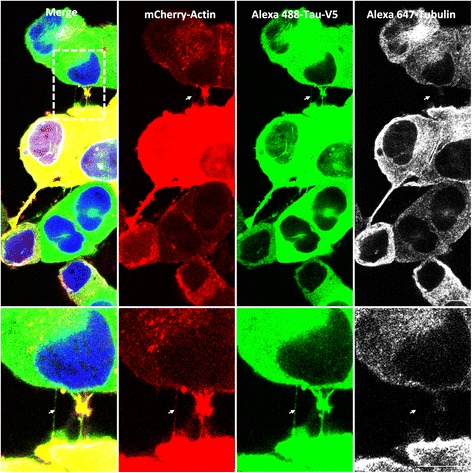
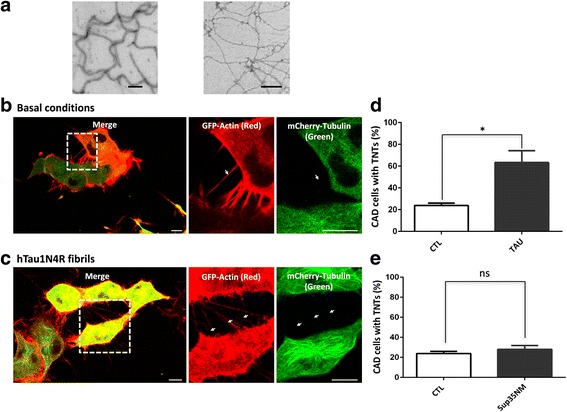
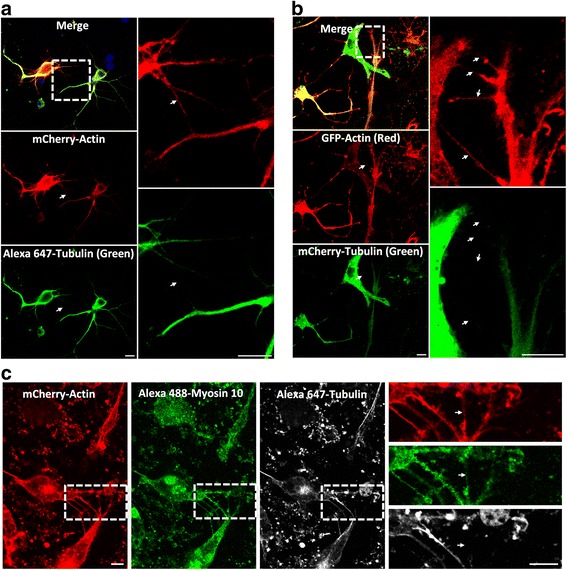
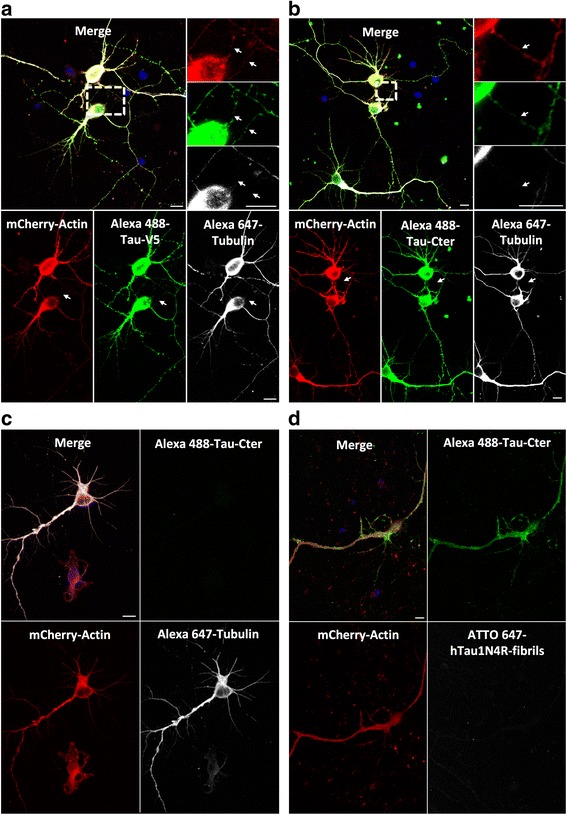
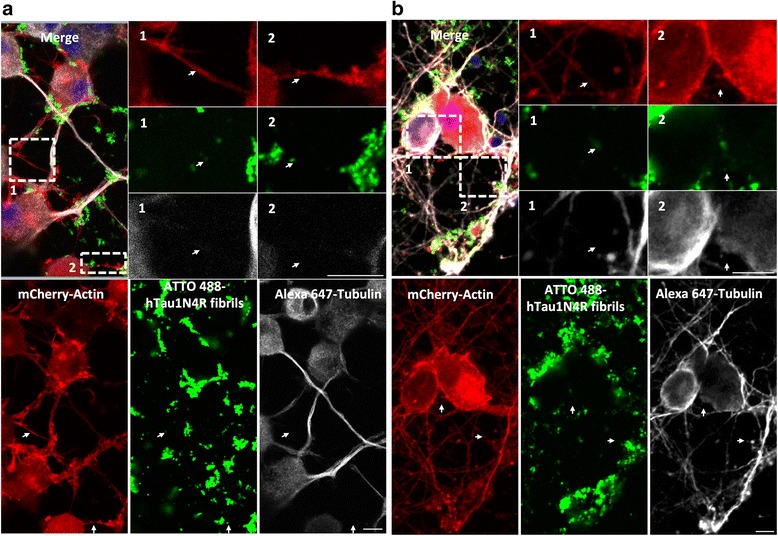
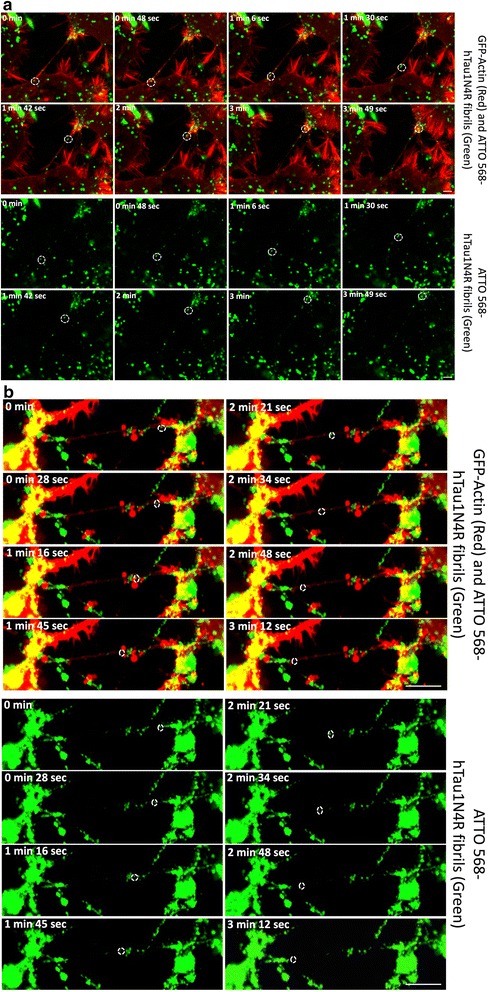
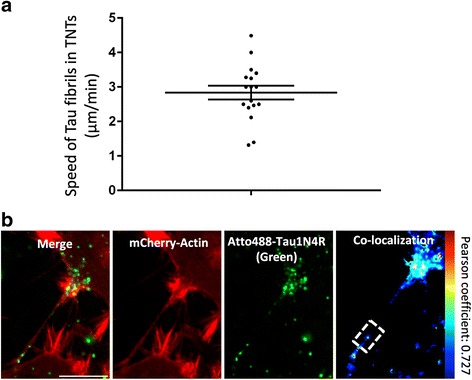
A given cell makes exchanges with its neighbors through a variety of means ranging from diffusible factors to vesicles. Cells use also tunneling nanotubes (TNTs), filamentous-actin-containing membranous structures that bridge and connect cells. First described in immune cells, TNTs facilitate HIV-1 transfer and are found in various cell types, including neurons. We show that the microtubule-associated protein Tau, a key player in Alzheimer's disease, is a bona fide constituent of TNTs. This is important because Tau appears beside filamentous actin and myosin 10 as a specific marker of these fine protrusions of membranes and cytosol that are difficult to visualize. Furthermore, we observed that exogenous Tau species increase the number of TNTs established between primary neurons, thereby facilitating the intercellular transfer of Tau fibrils. In conclusion, Tau may contribute to the formation and function of the highly dynamic TNTs that may be involved in the prion-like propagation of Tau assemblies.
Overview
The claims and statistics of this paper haven’t been checked yet.
Free: it reads the open-access text and checks the first 5 claims that cite a source we can check. Create a free account to check every claim.
Integrity signals
Registry
Cites
Statistics
Figures
Verification
Claims the paper makes
The claims and statistics of this paper haven’t been checked yet.
Free: it reads the open-access text and checks the first 5 claims that cite a source we can check. Create a free account to check every claim.
Claims other papers make about this one
Each is checked against this paper’s own text: does it say what the citing paper says it does?
The source backs part of the claim, not all of it — or backs it for a different population, condition or comparison.
In the citing paper
“Ultimately, Aβ and tau propagate to other neurons via TNT and exosomes [98,99,100,101].”
From The Impact of Neurotoxin Proteins Trafficked by Primary Cilia and Extracellular Vesicles in Neurodegenerative Diseases (2025) · cites this paper as [100]
Experimental — accuracy not yet measuredThe source backs part of the claim, not all of it — or backs it for a different population, condition or comparison.
In the citing paper
“Concurrently, AD-related cellular stressors, such as Aβ exposure, activate actin remodeling pathways that may drive TNT formation, enabling direct neuron-to-neuron transfer of pathological tau protein [100,101].”
From The Impact of Neurotoxin Proteins Trafficked by Primary Cilia and Extracellular Vesicles in Neurodegenerative Diseases (2025) · cites this paper as [100]
Experimental — accuracy not yet measuredThe source backs part of the claim, not all of it — or backs it for a different population, condition or comparison.
In the citing paper
“These coordinated defects in ciliary signaling and intracellular trafficking may collectively facilitate the EV and TNT-dependent propagation of neurotoxic proteins across neural networks, thereby potentially reinforcing progressive circuit dysfunction (Figure 3A) [98,100,101,105].”
From The Impact of Neurotoxin Proteins Trafficked by Primary Cilia and Extracellular Vesicles in Neurodegenerative Diseases (2025) · cites this paper as [100]
Experimental — accuracy not yet measuredThe cited source says what the claim attributes to it.
In the citing paper
“As mentioned above, TNTs may play a significant role in the spreading of misfolded proteins like Aβ and Tau, which are central to AD pathology [100].”
From The Impact of Neurotoxin Proteins Trafficked by Primary Cilia and Extracellular Vesicles in Neurodegenerative Diseases (2025) · cites this paper as [100]
The cited source says what the claim attributes to it.
In the citing paper
“Given their role in intercellular communication and the spread of protein aggregates, TNTs are emerging as potential therapeutic targets for slowing the disease’s progression [100,123,124].”
From The Impact of Neurotoxin Proteins Trafficked by Primary Cilia and Extracellular Vesicles in Neurodegenerative Diseases (2025) · cites this paper as [100]
Self-check
Percentages, sums and reported differences re-computed from the paper’s own numbers.
The self-check needs the paper’s full text.
Citations
Cites
Neuropathological stageing of Alzheimer-related changes.
Braak, H., & Braak, E. (1991) · Acta Neuropathologica · doi:10.1007/bf00308809 · Cited by 16,123
Amyloid oligomers exacerbate tau pathology in a mouse model of tauopathy
Selenica, M.-L. B., Brownlow, M., Jimenez, J. P., Lee, D. C., Pena, G., Dickey, C. A., Gordon, M. N., & Morgan, D. (2013) · Neurodegenerative Diseases · doi:10.1159/000337230 · Cited by 10,359
A protein factor essential for microtubule assembly
Weingarten, M. D., Lockwood, A. H., Hwo, S. Y., & Kirschner, M. W. (1975) · Proceedings of the National Academy of Sciences · doi:10.1073/pnas.72.5.1858 · Cited by 3,089
Nanotubular Highways for Intercellular Organelle Transport
Rustom, A., Saffrich, R., Markovic, I., Walther, P., & Gerdes, H.-H. (2004) · Science · doi:10.1126/science.1093133 · Cited by 2,038
Dendritic Function of Tau Mediates Amyloid-β Toxicity in Alzheimer's Disease Mouse Models
Ittner, L. M., Ke, Y. D., Delerue, F., Bi, M., Gladbach, A., van Eersel, J., Wölfing, H., Chieng, B. C., Christie, M. J., Napier, I. A., et al. (2010) · Cell · doi:10.1016/j.cell.2010.06.036 · Cited by 1,821
Self-propagation of pathogenic protein aggregates in neurodegenerative diseases
Jucker, M., & Walker, L. C. (2013) · Nature · doi:10.1038/nature12481 · Cited by 1,663
Depletion of microglia and inhibition of exosome synthesis halt tau propagation
Asai, H., Ikezu, S., Tsunoda, S., Medalla, M., Luebke, J., Haydar, T., Wolozin, B., Butovsky, O., Kügler, S., & Ikezu, T. (2015) · Nature Neuroscience · doi:10.1038/nn.4132 · Cited by 1,591
Distinct Tau Prion Strains Propagate in Cells and Mice and Define Different Tauopathies
Sanders, D. W., Kaufman, S. K., DeVos, S. L., Sharma, A. M., Mirbaha, H., Li, A., Barker, S. J., Foley, A. C., Thorpe, J. R., Serpell, L. C., et al. (2014) · Neuron · doi:10.1016/j.neuron.2014.04.047 · Cited by 986
Saman, S., Kim, W., Raya, M., Visnick, Y., Miro, S., Saman, S., Jackson, B., McKee, A. C., Alvarez, V. E., Lee, N. C. Y., et al. (2012) · Journal of Biological Chemistry · doi:10.1074/jbc.m111.277061 · Cited by 985
Goedert, M. (2015) · Science · doi:10.1126/science.1255555 · Cited by 976
Research works printed but not linked: 1
- Sautiere PE, Caillet-Boudin ML, Wattez A, Delacourte A. Detection of Alzheimer-type tau proteins in okadaic acid-treated SKNSH-SY5Y neuroblastoma cells. Neurodegeneration. 1994;3:53-60.
Cited by
Items 101–200 of 355
Wang, X., Williams, D., Müller, I., Lemieux, M., Dukart, R., Maia, I. B. L., Wang, H., Woerman, A. L., & Schmitt-Ulms, G. (2019) · Scientific Reports · doi:10.1038/s41598-019-52543-5 · Cited by 37
Amro, Z., Yool, A. J., & Collins-Praino, L. E. (2021) · Brain, Behavior, & Immunity - Health · doi:10.1016/j.bbih.2021.100242 · Cited by 36
Raghavan, A., Rao, P., Neužil, J., Pountney, D. L., & Nath, S. (2021) · Cellular and Molecular Life Sciences · doi:10.1007/s00018-021-04040-0 · Cited by 44
Recent Insights on Alzheimer’s Disease Originating from Yeast Models
Seynnaeve, D., Vecchio, M. D., Fruhmann, G., Verelst, J., Cools, M., Beckers, J., Mulvihill, D. P., Winderickx, J., & Franssens, V. (2018) · International Journal of Molecular Sciences · doi:10.3390/ijms19071947 · Cited by 43
Annadurai, N., Sanctis, J. B. D., Hajdúch, M., & Das, V. (2021) · Experimental Neurology · doi:10.1016/j.expneurol.2021.113756 · Cited by 42
Carroll, T., Guha, S. K., Nehrke, K. W., & Johnson, G. V. W. (2021) · Biology · doi:10.3390/biology10101047 · Cited by 43
Hu, J., Sha, W., Yuan, S., Wu, J., & Huang, Y. (2023) · International Journal of Molecular Sciences · doi:10.3390/ijms241915023 · Cited by 41
Pharmacological Modulators of Tau Aggregation and Spreading
Dominguez‐Meijide, A., Vasili, E., & Outeiro, T. F. (2020) · Brain Sciences · doi:10.3390/brainsci10110858 · Cited by 42
Dysfunctional microglia and tau pathology in Alzheimer’s disease
Ayyubova, G. (2023) · Reviews in the Neurosciences · doi:10.1515/revneuro-2022-0087 · Cited by 35
Tau truncation in the pathogenesis of Alzheimer’s disease: a narrative review
Chu, D., Yang, X., Wang, J., Zhou, Y., Gu, J., Miao, J., Wu, F., & Liu, F. (2023) · Neural Regeneration Research · doi:10.4103/1673-5374.385853 · Cited by 41
Etiology of Alzheimer's Disease
Zhang, C. M. (2023) · Discovery Medicine · doi:10.24976/discov.med.202335178.71 · Cited by 40
Alpha-Synuclein Aggregates Associated with Mitochondria in Tunnelling Nanotubes
Valdinocci, D., Kovářová, J., Neužil, J., & Pountney, D. L. (2020) · Neurotoxicity Research · doi:10.1007/s12640-020-00285-y · Cited by 41
Suppression of tau propagation using an inhibitor that targets the DK-switch of nSMase2
Bilousova, T., Elias, C., Miyoshi, E., Alam, M. P., Zhu, C., Campagna, J., Vadivel, K., Jagodzinska, B., Gylys, K. H., & John, V. (2018) · Biochemical and Biophysical Research Communications · doi:10.1016/j.bbrc.2018.03.209 · Cited by 35
Zhu, C., Shi, Y., & You, J. (2021) · Molecular Pharmaceutics · doi:10.1021/acs.molpharmaceut.0c01248 · Cited by 39
Overlaps and divergences between tauopathies and synucleinopathies: a duet of neurodegeneration
Li, W., & Li, J. (2024) · Translational Neurodegeneration · doi:10.1186/s40035-024-00407-y · Cited by 38
Unconventional Secretion and Intercellular Transfer of Mutant Huntingtin
Tang, B. L. (2018) · Cells · doi:10.3390/cells7060059 · Cited by 38
Chen, J., & Cao, J. (2021) · Scientific Reports · doi:10.1038/s41598-021-96332-5 · Cited by 38
Tau Seeding Mouse Models with Patient Brain-Derived Aggregates
Robert, A., Schöll, M., & Vogels, T. (2021) · International Journal of Molecular Sciences · doi:10.3390/ijms22116132 · Cited by 38
Traumatic brain injury and the pathways to cerebral tau accumulation
Flavin, W. P., Hosseini, H. C., Ruberti, J. W., Kavehpour, H. P., Giza, C. C., & Prins, M. L. (2023) · Frontiers in Neurology · doi:10.3389/fneur.2023.1239653 · Cited by 38
Baluška, F., Miller, W. B., & Reber, A. S. (2023) · The MIT Press eBooks · doi:10.7551/mitpress/14642.003.0006 · Cited by 36
Rho GTPases and the emerging role of tunneling nanotubes in physiology and disease
Zhang, S., Kazanietz, M. G., & Cooke, M. (2020) · American Journal of Physiology-Cell Physiology · doi:10.1152/ajpcell.00351.2020 · Cited by 36
Hebisch, M., Klostermeier, S., Wolf, K., Boccaccini, A. R., Wolf, S. E., Tanzi, R. E., & Kim, D. Y. (2023) · Advanced Science · doi:10.1002/advs.202205037 · Cited by 35
Role of cellular prion protein in interneuronal amyloid transmission
del Río, J. A., Ferrer, I., & Gavín, R. (2018) · Progress in Neurobiology · doi:10.1016/j.pneurobio.2018.03.001 · Cited by 36
Transcellular Spreading of Tau in Tauopathies
Demaegd, K. C., Schymkowitz, J. W. H., & Rousseau, F. (2018) · ChemBioChem · doi:10.1002/cbic.201800288 · Cited by 34
Rhes protein transits from neuron to neuron and facilitates mutant huntingtin spreading in the brain
Ramírez-Jarquín, U. N., Sharma, M., Shahani, N., Li, Y., Boregowda, S. V., & Subramaniam, S. (2022) · Science Advances · doi:10.1126/sciadv.abm3877 · Cited by 33
Role of Tunneling Nanotubes in the Nervous System
Tarasiuk, O., & Scuteri, A. (2022) · International Journal of Molecular Sciences · doi:10.3390/ijms232012545 · Cited by 33
Intercellular transmission of pathogenic proteins in ALS: Exploring the pathogenic wave
Arnold, F. J., Nguyen, A., Bedlack, R., Bennett, C. L., & Spada, A. R. L. (2023) · Neurobiology of Disease · doi:10.1016/j.nbd.2023.106218 · Cited by 31
Guix, F. X. (2019) · Journal of Neuroscience Research · doi:10.1002/jnr.24526 · Cited by 32
Avallone, M., Pardo, J., Mergiya, T. F., Rájová, J., Räsänen, A., Davidsson, M., Åkerblom, M., Quintino, L., Kumar, D., Bramham, C. R., et al. (2023) · Frontiers in Molecular Neuroscience · doi:10.3389/fnmol.2023.1140785 · Cited by 30
Jing, H., Saed, B., Pálmai, M., Gunasekara, H., Snee, P. T., & Hu, Y. (2022) · Nano Letters · doi:10.1021/acs.nanolett.2c00629 · Cited by 30
Meisl, G., Knowles, T. P. J., & Klenerman, D. (2022) · Frontiers in Neuroscience · doi:10.3389/fnins.2022.909861 · Cited by 30
Actin dynamics in protein homeostasis
Williams, T. D., & Rousseau, A. (2022) · Bioscience Reports · doi:10.1042/bsr20210848 · Cited by 30
Prion-like properties of disease-relevant proteins in amyotrophic lateral sclerosis
Bräuer, S., Zimyanin, V. L., & Hermann, A. (2018) · Journal of Neural Transmission · doi:10.1007/s00702-018-1851-y · Cited by 32
Mycoplasma exploits mammalian tunneling nanotubes for cell-to-cell dissemination
Kim, B., Lee, J., & Ko, Y. (2019) · BMB Reports · doi:10.5483/bmbrep.2019.52.8.243 · Cited by 30
Xiong, R., Verstraelen, P., Demeester, J., Skirtach, A. G., Timmermans, J., Smedt, S. C. D., Vos, W. H. D., & Braeckmans, K. (2018) · Frontiers in Cellular Neuroscience · doi:10.3389/fncel.2018.00080 · Cited by 30
Specialized Intercellular Communications via Tunnelling Nanotubes in Acute and Chronic Leukemia
Allegra, A., Gioacchino, M. D., Cancemi, G., Casciaro, M., Petrarca, C., Musolino, C., & Gangemi, S. (2022) · Cancers · doi:10.3390/cancers14030659 · Cited by 28
Tau Protein as Therapeutic Target for Cancer? Focus on Glioblastoma
Hedna, R., Kovacic, H., Pagano, A., Peyrot, V., Robin, M., Devred, F., & Breuzard, G. (2022) · Cancers · doi:10.3390/cancers14215386 · Cited by 28
Ferrer, I. (2018) · Neuroglia · doi:10.3390/neuroglia1010010 · Cited by 27
Potential mechanisms of microRNA mobility
Lemcke, H., & David, R. (2018) · Traffic · doi:10.1111/tra.12606 · Cited by 28
Brainbank Neuro-CEB Neuropathology Network, Thierry, M., Boluda, S., Delatour, B., Marty, S., Seilhean, D., Potier, M., & Duyckaerts, C. J. (2019) · Acta Neuropathologica · doi:10.1007/s00401-019-02108-7 · Cited by 28
Kotarba, S., Kozłowska, M., Scios, M., Saramowicz, K., Barczuk, J., Granek, Z., Siwecka, N., Wiese, W., Golberg, M., Galita, G., et al. (2024) · International Journal of Molecular Sciences · doi:10.3390/ijms251910797 · Cited by 26
Arc mediates intercellular tau transmission via extracellular vesicles
Tyagi, M., de Hoog, E., Grega, M., Sullivan, K. R., Walker, A., Chadha, R., Northrop, A., Fábián, B., Hummer, G., Fuxreiter, M., et al. (2026) · Cell · doi:10.1016/j.cell.2026.06.008 · Cited by 26
Mitochondrial dysfunction and Alzheimer’s disease: pathogenesis of mitochondrial transfer
Wei, Y., Du, X., Guo, H., Han, J., & Liu, M. (2024) · Frontiers in Aging Neuroscience · doi:10.3389/fnagi.2024.1517965 · Cited by 28
Selective neuronal vulnerability in Alzheimer’s disease
Wang, Z.-T., Zhang, C. M., Wang, Y., Dong, Q., Tan, L., & Yu, J. (2020) · Ageing Research Reviews · doi:10.1016/j.arr.2020.101114 · Cited by 26
Hunting for the cause: Evidence for prion-like mechanisms in Huntington’s disease
Donnelly, K. M., Coleman, C. M., Fuller, M. L., Reed, V. L., Smerina, D., Tomlinson, D. S., & Pearce, M. M. P. (2022) · Frontiers in Neuroscience · doi:10.3389/fnins.2022.946822 · Cited by 26
Tunneling Nanotube: An Enticing Cell–Cell Communication in the Nervous System
Dagar, S., & Subramaniam, S. (2023) · Biology · doi:10.3390/biology12101288 · Cited by 26
Dangerous Liaisons: Tau Interaction with Muscarinic Receptors
Wysocka, A., Pałasz, E., Steczkowska, M., & Niewiadomska, G. (2020) · Current Alzheimer Research · doi:10.2174/1567205017666200424134311 · Cited by 25
Tau assemblies do not behave like independently acting prion-like particles in mouse neural tissue
Mukadam, A. S., Miller, L. V. C., Durrant, C. S., Vaysburd, M. J., Katsinelos, T., Tuck, B. J., Sanford, S., Sheppard, O., Knox, C., Cheng, S., et al. (2021) · Acta Neuropathologica Communications · doi:10.1186/s40478-021-01141-6 · Cited by 25
Prion-like strain effects in tauopathies
Han, Z. Z., Kang, S.-G., Arce, L., & Westaway, D. (2022) · Cell and Tissue Research · doi:10.1007/s00441-022-03620-1 · Cited by 16
Doering, S., McCullough, A. A., Gordon, B. A., Chen, C. D., McKay, N. S., Hobbs, D. A., Keefe, S., Flores, S. E., Scott, J., Smith, H. D., et al. (2024) · EBioMedicine · doi:10.1016/j.ebiom.2024.105080 · Cited by 24
Tunneling nanotube‐like structures in brain tumors
Osswald, M., Jung, E., Wick, W., & Winkler, F. (2019) · Cancer Reports · doi:10.1002/cnr2.1181 · Cited by 24
Epigenetic modifications of DNA and RNA in Alzheimer’s disease
Martínez-Feduchi, P., Jin, P., & Yao, B. (2024) · Frontiers in Molecular Neuroscience · doi:10.3389/fnmol.2024.1398026 · Cited by 25
Okafo, G. N., Valdebenito, S., Donoso, M., Luu, R. H., Ajasin, D., Prideaux, B., Gorantla, S., & Eugenín, E. A. (2020) · The Journal of Immunology · doi:10.4049/jimmunol.2000803 · Cited by 24
Alyenbaawi, H., Allison, W. T., & Mok, S. (2020) · Biomolecules · doi:10.3390/biom10111487 · Cited by 24
Ruan, Z., & Ikezu, T. (2019) · Advances in experimental medicine and biology · doi:10.1007/978-981-32-9358-8_11 · Cited by 24
Rescue of mitochondrial import failure by intercellular organellar transfer
Needs, H. I., Glover, E., Pereira, G. C., Witt, A., Hübner, W., Dodding, M. P., Henley, J. M., & Collinson, I. R. (2024) · Nature Communications · doi:10.1038/s41467-024-45283-2 · Cited by 23
Raghavan, A., Kashyap, R., Sreedevi, P. R., Jos, S., Chatterjee, S., Alex, A., D’Souza, M. N., Giridharan, M., Muddashetty, R. S., Manjithaya, R. R., et al. (2024) · iScience · doi:10.1016/j.isci.2024.110565 · Cited by 24
Tau-Mediated Dysregulation of Neuroplasticity and Glial Plasticity
Koller, E. J., & Chakrabarty, P. (2020) · Frontiers in Molecular Neuroscience · doi:10.3389/fnmol.2020.00151 · Cited by 24
Tunneling Nanotubes between Cells Migrating in ECM Mimicking Fibrous Environments
Jana, A., Ladner, K. J., Lou, E., & Nain, A. S. (2022) · Cancers · doi:10.3390/cancers14081989 · Cited by 23
Tunneling nanotubes: A novel pharmacological target for neurodegenerative diseases?
Wang, X.-T., Sun, H., Chen, N.-H., & Yuan, Y.-H. (2021) · Pharmacological Research · doi:10.1016/j.phrs.2021.105541 · Cited by 22
Respondek, G., Levin, J., & Höglinger, G. U. (2018) · Current Opinion in Neurology · doi:10.1097/wco.0000000000000581 · Cited by 22
Needs, H. I., Wilkinson, K. A., Henley, J. M., & Collinson, I. R. (2023) · Journal of Cell Science · doi:10.1242/jcs.260993 · Cited by 21
Pérez, M., Medina, M., Hernández, F., & Ávila, J. (2018) · BioMolecular Concepts · doi:10.1515/bmc-2018-0001 · Cited by 21
Atomic Force Microscopy Imaging and Nanomechanical Properties of Six Tau Isoform Assemblies
Makky, A., Bousset, L., Madiona, K., & Melki, R. (2020) · Biophysical Journal · doi:10.1016/j.bpj.2020.10.045 · Cited by 21
Self-citationMembrane interaction to intercellular spread of pathology in Alzheimer’s disease
Valappil, D. K., Mini, N. J., Dilna, A., & Nath, S. (2022) · Frontiers in Neuroscience · doi:10.3389/fnins.2022.936897 · Cited by 19
“Similarly, extracellularly applied tau aggregates can induce the formation of TNTs in neuronal cells and tau proteins were found inside the TNTs (Abounit et al., 2016; Tardivel et al., 2016).”
BackgroundExtracellular vesicles in TDP-43 proteinopathies: pathogenesis and biomarker potential
Dellar, E. R., Nikel, L., Fowler, S. L., Vahsen, B. F., Dafinca, R., Feneberg, E., Talbot, K., Turner, M. R., & Thompson, A. G. (2025) · Molecular Neurodegeneration · doi:10.1186/s13024-025-00859-4 · Cited by 19
Manalo, R. V. M., Silvestre, M., Barbosa, A., & Medina, P. M. B. (2017) · Biomedicines · doi:10.3390/biomedicines5020017 · Cited by 20
Li, L., Miao, J., Chu, D., Jin, N., Tung, Y. C., Dai, C., Hu, W. H., Gong, C., Iqbal, K., & Liu, F. (2022) · CNS Neuroscience & Therapeutics · doi:10.1111/cns.13970 · Cited by 18
Davidson, R., Krider, R. I., Borsellino, P., Noorda, K., Alhwayek, G., & Vida, T. A. (2023) · Current Issues in Molecular Biology · doi:10.3390/cimb45110553 · Cited by 17
“Tau can also be released through nanotubes, filamentous cell membrane structures that bridge cellular connections, which can link the cytoplasmic compartments of adjacent cells [130,131].”
BackgroundFurnon, W., Fender, P., Confort, M.-P., Desloire, S., Nangola, S., Kitidee, K., Leroux, C., Ratinier, M., Arnaud, F., Lecollinet, S., et al. (2019) · Viruses · doi:10.3390/v11100901 · Cited by 17
Biological lipid nanotubes and their potential role in evolution
Gözen, İ., & Dommersnes, P. (2020) · The European Physical Journal Special Topics · doi:10.1140/epjst/e2020-000130-7 · Cited by 17
Guarascio, R., Salih, D. A. M., Yasvoina, M. V., Edwards, F. A., Cheetham, M. E., & van der Spuy, J. (2019) · Human Molecular Genetics · doi:10.1093/hmg/ddz255 · Cited by 17
Chakraborty, R., Belian, S., & Zurzolo, C. (2023) · Extracellular Vesicles and Circulating Nucleic Acids · doi:10.20517/evcna.2023.05 · Cited by 16
Kammula, S. V., Tripathi, S., Wang, N., Dawson, V. L., Dawson, T. M., & Mao, X. (2023) · Ageing and Neurodegenerative Diseases · doi:10.20517/and.2023.20 · Cited by 16
Connectivity as a universal predictor of tau progression in atypical Alzheimer’s disease
de Bruin, H., Groot, C., Barthel, H., Bischof, G. N., Blazhenets, G., Boellaard, R., Boon, B. D. C., Brendel, M., Cash, D. M., Coath, W., et al. (2025) · Brain · doi:10.1093/brain/awaf279 · Cited by 16
Ferrer, I., Andrés‐Benito, P., Sala‐Jarque, J., Gil, V., & del Río, J. A. (2020) · Frontiers in Molecular Neuroscience · doi:10.3389/fnmol.2020.00101 · Cited by 16
Beyond microtubule regulation: the multifaceted roles of tau in neuronal function and dysfunction
Bakota, L., Tulva, K., Trushina, N. I., & Brandt, R. (2026) · Translational Psychiatry · doi:10.1038/s41398-026-03947-1 · Cited by 15
Rhes Tunnels: A Radical New Way of Communication in the Brain's Striatum?
Subramaniam, S. (2020) · BioEssays · doi:10.1002/bies.201900231 · Cited by 15
Tokuo, H. (2020) · Advances in experimental medicine and biology · doi:10.1007/978-3-030-38062-5_17 · Cited by 15
Liu, Z., Joshi, R., Zhou, Z., Liu, F., Gong, Y., Sun, M., Li, X., Jiang, T., Zou, L., Wang, S., et al. (2025) · Nature Communications · doi:10.1038/s41467-025-65017-2 · Cited by 14
The IDIP framework for assessing protein function and its application to the prion protein
Schmitt‐Ulms, G., Mehrabian, M., Williams, D., & Ehsani, S. (2021) · Biological reviews/Biological reviews of the Cambridge Philosophical Society · doi:10.1111/brv.12731 · Cited by 15
Intercellular communication and aging
Ribeiro‐Rodrigues, T., Kelly, G., Korolchuk, V. I., & Girão, H. (2022) · Elsevier eBooks · doi:10.1016/b978-0-12-823761-8.00005-7 · Cited by 14
Striatal Induction and Spread of the Huntington’s Disease Protein: A Novel Rhes Route
Subramaniam, S. (2022) · Journal of Huntington s Disease · doi:10.3233/jhd-220548 · Cited by 13
Synucleinopathies Take Their Toll: Are TLRs a Way to Go?
Mazzotta, G. M., Ceccato, N., & Conte, C. (2023) · Cells · doi:10.3390/cells12091231 · Cited by 13
Lee, E., Park, H., & Kim, S. (2024) · Molecules and Cells · doi:10.1016/j.mocell.2024.100089 · Cited by 13
Intercellular Tunneling Nanotubes as Natural Biophotonic Conveyors
Gong, Z., Wu, T., Zhao, Y., Guo, J., Zhang, Y., Li, B., & Li, Y. (2024) · ACS Nano · doi:10.1021/acsnano.4c12681 · Cited by 12
Role of tunneling nanotubes in neuroglia
Xu, W., Yang, X., Zheng, H., Chen, C., & Yuan, J. (2025) · Neural Regeneration Research · doi:10.4103/nrr.nrr-d-24-01129 · Cited by 12
Valdebenito, S., Ono, A., Rong, L., & Eugenín, E. A. (2023) · NeuroImmune Pharmacology and Therapeutics · doi:10.1515/nipt-2022-0015 · Cited by 12
The Adult Neurogenesis Theory of Alzheimer’s Disease
Abbate, C. (2023) · Journal of Alzheimer s Disease · doi:10.3233/jad-221279 · Cited by 12
Alzheimer’s Disease and Its Possible Evolutionary Origin: Hypothesis
Whitfield, J. F., Rennie, K., & Chakravarthy, B. (2023) · Cells · doi:10.3390/cells12121618 · Cited by 12
Capobianco, D. L., Simone, L., Svelto, M., & Pisani, F. (2023) · Frontiers in Physiology · doi:10.3389/fphys.2023.1214210 · Cited by 12
Ferric–Tannic Nanoparticles Increase Neuronal Cellular Clearance
Phiwchai, I., Chariyarangsitham, W., Phatruengdet, T., & Pilapong, C. (2019) · ACS Chemical Neuroscience · doi:10.1021/acschemneuro.9b00345 · Cited by 12
Diverse influences on tau aggregation and implications for disease progression
Alstyne, M. V., Pratt, J., & Parker, R. (2025) · Genes & Development · doi:10.1101/gad.352551.124 · Cited by 11
Solving the Amyloid Paradox: Unveiling the Complex Pathogenicity of Amyloid Fibrils
Sulatsky, M. I., Stepanenko, O. V., Stepanenko, O. V., & Sulatskaya, A. I. (2025) · Aggregate · doi:10.1002/agt2.70078 · Cited by 11
Nguyen, D. L., Okolicsanyi, R. K., & Haupt, L. M. (2024) · Molecular and Cellular Neuroscience · doi:10.1016/j.mcn.2024.103936 · Cited by 10
MSUT2 regulates tau spreading via adenosinergic signaling mediated ASAP1 pathway in neurons
Xu, H. W., Qiu, Q., Hu, P., Hoxha, K., Jang, E., O’Reilly, M., Kim, C., He, Z., Marotta, N. P., Changolkar, L. N., et al. (2024) · Acta Neuropathologica · doi:10.1007/s00401-024-02703-3 · Cited by 10
The Fate of Tau Aggregates Between Clearance and Transmission
Seitkazina, A., Kim, K. H., Fagan, E., Sung, Y., Kim, Y. K., & Lim, S. (2022) · Frontiers in Aging Neuroscience · doi:10.3389/fnagi.2022.932541 · Cited by 10
Spreading of P301S Aggregated Tau Investigated in Organotypic Mouse Brain Slice Cultures
Korde, D. S., & Humpel, C. (2022) · Biomolecules · doi:10.3390/biom12091164 · Cited by 10
Ferrer, I., Andrés‐Benito, P., Carmona, M., & del Río, J. A. (2022) · International Journal of Molecular Sciences · doi:10.3390/ijms232415940 · Cited by 10
Girolamo, F., Lim, Y., Virgintino, D., Stonestreet, B. S., & Chen, X. F. (2023) · International Journal of Molecular Sciences · doi:10.3390/ijms24076743 · Cited by 10
Metadata
- Authors
- Tardivel, M., Bégard, S., Bousset, L., Dujardin, S., Coens, A., Melki, R., Buée, L., & Colin, M.
- Affiliations
- Inserm (FR)
- Centre National de la Recherche Scientifique (FR)
- Corresponding author
- Buée, Luc
- Colin, Morvane
- Venue
- Acta Neuropathologica Communications
- Published
- 2016-11-04
- Volume
- 4
- Issue
- 1
- Pages
- 117-117
- ISSN
- 2051-5960 (ISSN-L)
- PMC
- PMC5096005
- OpenAlex
- W2548465653
- Cited by
- 305
- References
- 74
- Citations by year
- 2026: 21 · 2025: 24 · 2024: 32 · 2023: 23 · 2022: 46 · 2021: 40 · 2020: 36 · 2019: 36 · 2018: 31 · 2017: 15 · 2016: 1
- FWCI
- 22.25
- Type
- journal article
- Language
- en
- Open access
- gold
- doi.org
- Licence
- cc-by
- Locations
- Acta Neuropathologica Communications (publishedVersion, cc-by)
- PubMed Central (publishedVersion, cc-by)
- PubMed (publishedVersion)
- HAL (submittedVersion, other-oa)
- Funders
- Development of Innovative Strategies for a Transdisciplinary approach to ALZheimer's disease
- Agence Nationale de la Recherche (ANR-14-CE13-0031)
- Institut National de la Santé et de la Recherche Médicale
- Association France Alzheimer
- Centre National de la Recherche Scientifique
- Fondation Bettencourt Schueller
- Topics
- Life Sciences › Neuroscience › Cellular and Molecular Neuroscience › Alzheimer's disease research and treatments
- Life Sciences › Biochemistry, Genetics and Molecular Biology › Molecular Biology › Extracellular vesicles in disease
- Life Sciences › Neuroscience › Neurology › Neuroinflammation and Neurodegeneration Mechanisms
- Keywords
- tunneling nanotubes, tau protein, intercellular transfer, Alzheimer's disease, tau fibrils, prion-like propagation, neurons, actin, myosin 10, intercellular communication, neurodegeneration
- MeSH terms
- Actins, Animals, Biological Transport, Cell Communication, Cell Line, Cerebral Cortex, Extracellular Space, Genetic Vectors, Humans, Luminescent Proteins, Myosins, Neurons, Tubulin, Lentivirus, tau Proteins, Rats, Wistar, Mice
About these checks
Registry, retraction, Cites and statistics results are computed, not judged, with one exception: a printed reference that no index lists is read once by a model before it counts as a citation error. Claims are extracted by a model and kept only when their quote appears verbatim in the text; each cited source is then checked, with a model’s help, for whether it says what the claim relies on. Those verdicts can be wrong — read the claim’s quote and the cited source before relying on one.
Statistics and arithmetic are recomputed, not judged.
Confidence bands are shown only for fields calibrated on our annotated test set. None is calibrated yet, so no band is shown.
What counts as a claim ›How we measure confidence ›How we check this ›
Are you an author, or do you see a problem with this page? Request a review
Data sources
Bibliographic data: Semantic Scholar, OpenAlex, Crossref.
Contains information from the Semantic Scholar Academic Graph Datasets, made available under the ODC Attribution License (ODC-BY 1.0).
Semantic Scholar’s data is described in: Kinney, R., et al. (2023). The Semantic Scholar Open Data Platform. arXiv:2301.10140.
