

Tunneling nanotube (TNT)-mediated neuron-to neuron transfer of pathological Tau protein assemblies
Open accessThe DOI matches its Crossref record; 74 of the 74 references it cites were found in a registry or an index.
Abstract
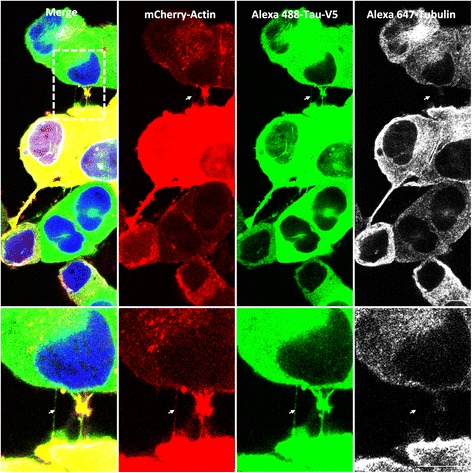
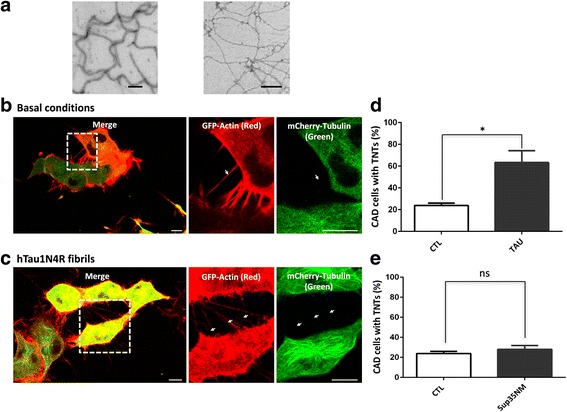
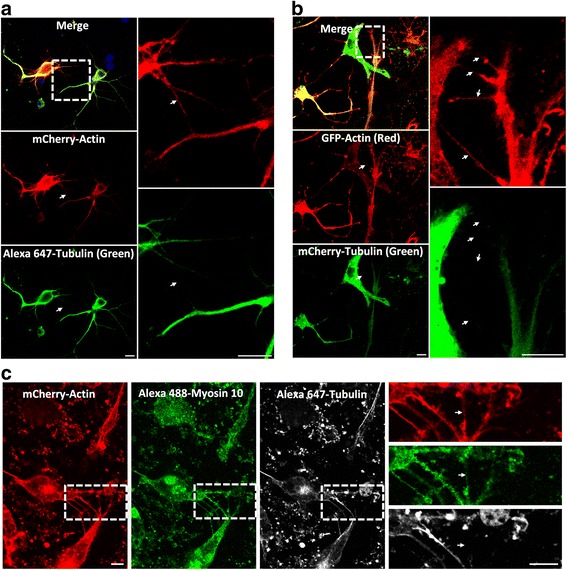
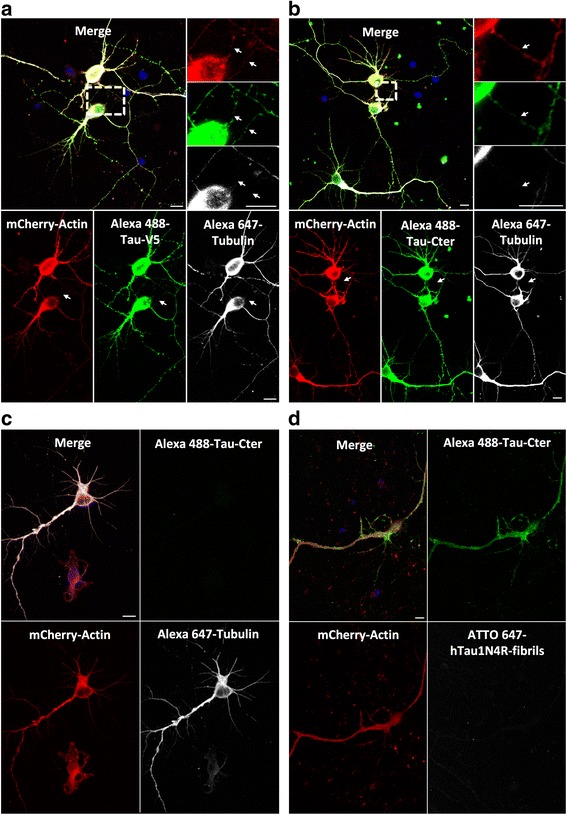
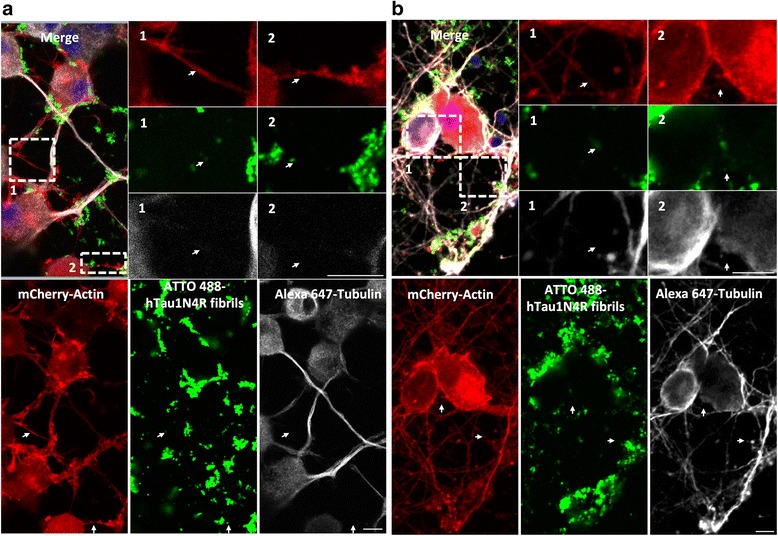
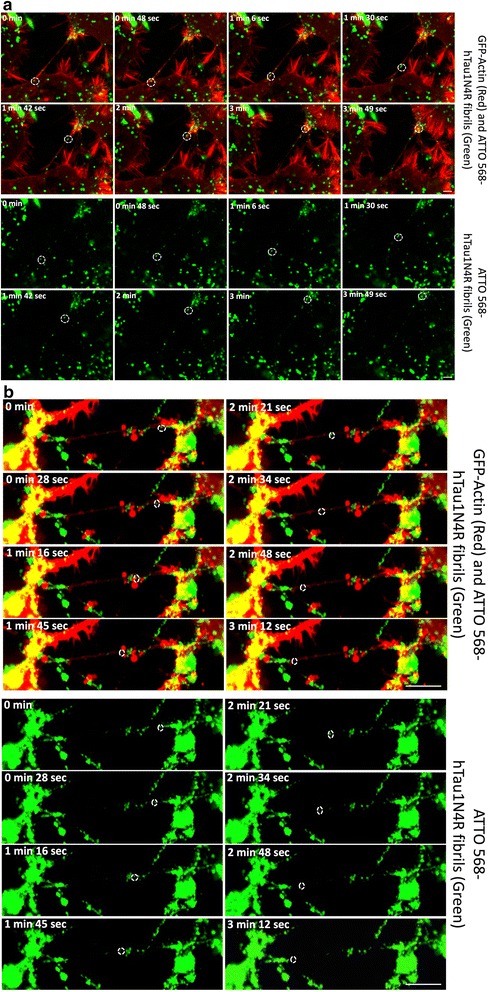
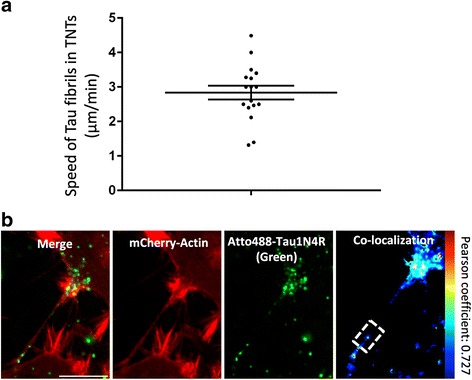
A given cell makes exchanges with its neighbors through a variety of means ranging from diffusible factors to vesicles. Cells use also tunneling nanotubes (TNTs), filamentous-actin-containing membranous structures that bridge and connect cells. First described in immune cells, TNTs facilitate HIV-1 transfer and are found in various cell types, including neurons. We show that the microtubule-associated protein Tau, a key player in Alzheimer's disease, is a bona fide constituent of TNTs. This is important because Tau appears beside filamentous actin and myosin 10 as a specific marker of these fine protrusions of membranes and cytosol that are difficult to visualize. Furthermore, we observed that exogenous Tau species increase the number of TNTs established between primary neurons, thereby facilitating the intercellular transfer of Tau fibrils. In conclusion, Tau may contribute to the formation and function of the highly dynamic TNTs that may be involved in the prion-like propagation of Tau assemblies.
Overview
The claims and statistics of this paper haven’t been checked yet.
Free: it reads the open-access text and checks the first 5 claims that cite a source we can check. Create a free account to check every claim.
Integrity signals
Registry
Cites
Statistics
Figures
Verification
Claims the paper makes
The claims and statistics of this paper haven’t been checked yet.
Free: it reads the open-access text and checks the first 5 claims that cite a source we can check. Create a free account to check every claim.
Claims other papers make about this one
Each is checked against this paper’s own text: does it say what the citing paper says it does?
The source backs part of the claim, not all of it — or backs it for a different population, condition or comparison.
In the citing paper
“Ultimately, Aβ and tau propagate to other neurons via TNT and exosomes [98,99,100,101].”
From The Impact of Neurotoxin Proteins Trafficked by Primary Cilia and Extracellular Vesicles in Neurodegenerative Diseases (2025) · cites this paper as [100]
Experimental — accuracy not yet measuredThe source backs part of the claim, not all of it — or backs it for a different population, condition or comparison.
In the citing paper
“Concurrently, AD-related cellular stressors, such as Aβ exposure, activate actin remodeling pathways that may drive TNT formation, enabling direct neuron-to-neuron transfer of pathological tau protein [100,101].”
From The Impact of Neurotoxin Proteins Trafficked by Primary Cilia and Extracellular Vesicles in Neurodegenerative Diseases (2025) · cites this paper as [100]
Experimental — accuracy not yet measuredThe source backs part of the claim, not all of it — or backs it for a different population, condition or comparison.
In the citing paper
“These coordinated defects in ciliary signaling and intracellular trafficking may collectively facilitate the EV and TNT-dependent propagation of neurotoxic proteins across neural networks, thereby potentially reinforcing progressive circuit dysfunction (Figure 3A) [98,100,101,105].”
From The Impact of Neurotoxin Proteins Trafficked by Primary Cilia and Extracellular Vesicles in Neurodegenerative Diseases (2025) · cites this paper as [100]
Experimental — accuracy not yet measuredThe cited source says what the claim attributes to it.
In the citing paper
“As mentioned above, TNTs may play a significant role in the spreading of misfolded proteins like Aβ and Tau, which are central to AD pathology [100].”
From The Impact of Neurotoxin Proteins Trafficked by Primary Cilia and Extracellular Vesicles in Neurodegenerative Diseases (2025) · cites this paper as [100]
The cited source says what the claim attributes to it.
In the citing paper
“Given their role in intercellular communication and the spread of protein aggregates, TNTs are emerging as potential therapeutic targets for slowing the disease’s progression [100,123,124].”
From The Impact of Neurotoxin Proteins Trafficked by Primary Cilia and Extracellular Vesicles in Neurodegenerative Diseases (2025) · cites this paper as [100]
Self-check
Percentages, sums and reported differences re-computed from the paper’s own numbers.
The self-check needs the paper’s full text.
Citations
Cites
Neuropathological stageing of Alzheimer-related changes.
Braak, H., & Braak, E. (1991) · Acta Neuropathologica · doi:10.1007/bf00308809 · Cited by 16,123
Amyloid oligomers exacerbate tau pathology in a mouse model of tauopathy
Selenica, M.-L. B., Brownlow, M., Jimenez, J. P., Lee, D. C., Pena, G., Dickey, C. A., Gordon, M. N., & Morgan, D. (2013) · Neurodegenerative Diseases · doi:10.1159/000337230 · Cited by 10,359
A protein factor essential for microtubule assembly
Weingarten, M. D., Lockwood, A. H., Hwo, S. Y., & Kirschner, M. W. (1975) · Proceedings of the National Academy of Sciences · doi:10.1073/pnas.72.5.1858 · Cited by 3,089
Nanotubular Highways for Intercellular Organelle Transport
Rustom, A., Saffrich, R., Markovic, I., Walther, P., & Gerdes, H.-H. (2004) · Science · doi:10.1126/science.1093133 · Cited by 2,038
Dendritic Function of Tau Mediates Amyloid-β Toxicity in Alzheimer's Disease Mouse Models
Ittner, L. M., Ke, Y. D., Delerue, F., Bi, M., Gladbach, A., van Eersel, J., Wölfing, H., Chieng, B. C., Christie, M. J., Napier, I. A., et al. (2010) · Cell · doi:10.1016/j.cell.2010.06.036 · Cited by 1,821
Self-propagation of pathogenic protein aggregates in neurodegenerative diseases
Jucker, M., & Walker, L. C. (2013) · Nature · doi:10.1038/nature12481 · Cited by 1,663
Depletion of microglia and inhibition of exosome synthesis halt tau propagation
Asai, H., Ikezu, S., Tsunoda, S., Medalla, M., Luebke, J., Haydar, T., Wolozin, B., Butovsky, O., Kügler, S., & Ikezu, T. (2015) · Nature Neuroscience · doi:10.1038/nn.4132 · Cited by 1,591
Distinct Tau Prion Strains Propagate in Cells and Mice and Define Different Tauopathies
Sanders, D. W., Kaufman, S. K., DeVos, S. L., Sharma, A. M., Mirbaha, H., Li, A., Barker, S. J., Foley, A. C., Thorpe, J. R., Serpell, L. C., et al. (2014) · Neuron · doi:10.1016/j.neuron.2014.04.047 · Cited by 986
Saman, S., Kim, W., Raya, M., Visnick, Y., Miro, S., Saman, S., Jackson, B., McKee, A. C., Alvarez, V. E., Lee, N. C. Y., et al. (2012) · Journal of Biological Chemistry · doi:10.1074/jbc.m111.277061 · Cited by 985
Goedert, M. (2015) · Science · doi:10.1126/science.1255555 · Cited by 976
Research works printed but not linked: 1
- Sautiere PE, Caillet-Boudin ML, Wattez A, Delacourte A. Detection of Alzheimer-type tau proteins in okadaic acid-treated SKNSH-SY5Y neuroblastoma cells. Neurodegeneration. 1994;3:53-60.
Cited by
Roles of tau protein in health and disease
Guo, T., Noble, W., & Hanger, D. P. (2017) · Acta Neuropathologica · doi:10.1007/s00401-017-1707-9 · Cited by 1,003
Molecular and cellular mechanisms underlying the pathogenesis of Alzheimer’s disease
Guo, T., Zhang, D., Zeng, Y., Huang, T. Y., Xu, H., & Zhao, Y. (2020) · Molecular Neurodegeneration · doi:10.1186/s13024-020-00391-7 · Cited by 994
“Alternatively, tau seeds may be transferred through cell-to-cell contact [241, 242].”
BackgroundWhat is the evidence that tau pathology spreads through prion-like propagation?
Mudher, A., Colin, M., Dujardin, S., Medina, M., Dewachter, I., Alavi Naini, S. M., Mandelkow, E.-M., Mandelkow, E., Buée, L., Goedert, M., et al. (2017) · Acta Neuropathologica Communications · doi:10.1186/s40478-017-0488-7 · Cited by 384
“Recent papers showed that nanotubes support interneuronal transfer of tau fibrils in neurons [1, 128].”
BackgroundSelf-citationTau and neuroinflammation: what impact for Alzheimer's disease and tauopathies?
Laurent, C., Buée, L., & Blum, D. (2018) · Biomedical Journal · doi:10.1016/j.bj.2018.01.003 · Cited by 348
“The cellular mechanisms of this prion-like trans-synaptic transmission were evaluated and different pathways were identified, including free forms, Tunneling nanotubes (TNTs) structures, ectosomes or exosomes [46,58].”
BackgroundSelf-citationMechanisms of secretion and spreading of pathological tau protein
Brunello, C. A., Merezhko, M., Uronen, R.-L., & Huttunen, H. J. (2020) · Cellular and Molecular Life Sciences · doi:10.1007/s00018-019-03349-1 · Cited by 304
Sengupta, U., & Kayed, R. (2022) · Progress in Neurobiology · doi:10.1016/j.pneurobio.2022.102270 · Cited by 293
Exosomes in the Pathology of Neurodegenerative Diseases
Howitt, J., & Hill, A. F. (2016) · Journal of Biological Chemistry · doi:10.1074/jbc.r116.757955 · Cited by 288
Role of tau protein in Alzheimer’s disease: The prime pathological player
Muralidar, S., Ambi, S. V., Sekaran, S., Thirumalai, D., & Palaniappan, B. (2020) · International Journal of Biological Macromolecules · doi:10.1016/j.ijbiomac.2020.07.327 · Cited by 278
Ariazi, J., Benowitz, A., De Biasi, V., Den Boer, M. L., Cherqui, S., Cui, H., Douillet, N., Eugenin, E. A., Favre, D., Goodman, S., et al. (2017) · Frontiers in Molecular Neuroscience · doi:10.3389/fnmol.2017.00333 · Cited by 250
“These data were confirmed in other cell types (Gousset et al., 2013; Schiller et al., 2013; Reichert et al., 2016; Tardivel et al., 2016), andM-Sec through Ral-mediated actin remodeling was shown to be involved in TNT formation as reported by Dr.”
BackgroundResultInfluentialClayton, K., Delpech, J. C., Herron, S., Iwahara, N., Ericsson, M., Saito, T., Saido, T. C., Ikezu, S., & Ikezu, T. (2021) · Molecular Neurodegeneration · doi:10.1186/s13024-021-00440-9 · Cited by 245
Cellular and pathological functions of tau
Parra Bravo, C., Naguib, S. A., & Gan, L. (2024) · Nature Reviews Molecular Cell Biology · doi:10.1038/s41580-024-00753-9 · Cited by 238
“Tau might also spread via membranous protrusions called tunnelling nanotubes, which form membrane structures that connect donor and recipient cells 186,187 , although this mechanism needs to be further explored.”
A Brief Overview of Tauopathy: Causes, Consequences, and Therapeutic Strategies
Orr, M. E., Sullivan, A. C., & Frost, B. (2017) · Trends in Pharmacological Sciences · doi:10.1016/j.tips.2017.03.011 · Cited by 235
“Tunneling nanotubes, membranous structures that facilitate exchange of factors between cells, could also facilitate transfer of physiological and pathogenic tau between cells [71].”
BackgroundRösler, T. W., Tayaranian Marvian, A., Brendel, M., Nykänen, N.-P., Höllerhage, M., Schwarz, S. C., Hopfner, F., Koeglsperger, T., Respondek, G., Schweyer, K., et al. (2019) · Progress in Neurobiology · doi:10.1016/j.pneurobio.2019.101644 · Cited by 224
Scheiblich, H., Eikens, F., Wischhof, L., Opitz, S., Jüngling, K., Cserép, C., Schmidt, S. V., Lambertz, J., Bellande, T., Pósfai, B., et al. (2024) · Neuron · doi:10.1016/j.neuron.2024.06.029 · Cited by 207
“16,17,19,60,61 In contrast to these studies, we recently demonstrated that microglia use TNTs to remove a -syn from interconnected burdened microglia.”
ResultSelf-citationIntersection of pathological tau and microglia at the synapse
Vogels, T., Murgoci, A.-N., & Hromádka, T. (2019) · Acta Neuropathologica Communications · doi:10.1186/s40478-019-0754-y · Cited by 197
Tapia-Rojas, C., Cabezas-Opazo, F., Deaton, C. A., Vergara, E. H., Johnson, G. V. W., & Quintanilla, R. A. (2019) · Progress in Neurobiology · doi:10.1016/j.pneurobio.2018.12.005 · Cited by 191
“, 2016), or transferred from cell to cell through tunneling nanotubes (Tardivel et al., 2016).”
BackgroundFrom the prion-like propagation hypothesis to therapeutic strategies of anti-tau immunotherapy
Colin, M., Dujardin, S., Schraen-Maschke, S., Meno-Tetang, G., Duyckaerts, C., Courade, J.-P., & Buée, L. (2020) · Acta Neuropathologica · doi:10.1007/s00401-019-02087-9 · Cited by 187
Self-citationVignais, M.-L., Caicedo, A., Brondello, J.-M., & Jorgensen, C. (2017) · Stem Cells International · doi:10.1155/2017/6917941 · Cited by 186
“For instance, the protein Tau was reported to associate with both microtubules and the actin network and to contribute to the formation of TNTs, bridging neurons together [7].”
BackgroundInfluentialDetection of Aggregation-Competent Tau in Neuron-Derived Extracellular Vesicles
Guix, F., Corbett, G., Cha, D., Mustapic, M., Liu, W., Mengel, D., Chen, Z., Aikawa, E., Young-Pearse, T., Kapogiannis, D., et al. (2018) · International Journal of Molecular Sciences · doi:10.3390/ijms19030663 · Cited by 183
Exosomes taken up by neurons hijack the endosomal pathway to spread to interconnected neurons
Polanco, J. C., Li, C., Durisic, N., Sullivan, R., & Götz, J. (2018) · Acta Neuropathologica Communications · doi:10.1186/s40478-018-0514-4 · Cited by 179
“mediated transfer of tau aggregates between interconnected neurons [15, 23], tunneling nanotubes [61] or the”
BackgroundPeering into tunneling nanotubes—The path forward
Cordero Cervantes, D., & Zurzolo, C. (2021) · The EMBO Journal · doi:10.15252/embj.2020105789 · Cited by 176
Mechanisms of Pathogenic Tau and Aβ Protein Spreading in Alzheimer’s Disease
d‘Errico, P., & Meyer-Luehmann, M. (2020) · Frontiers in Aging Neuroscience · doi:10.3389/fnagi.2020.00265 · Cited by 175
“Nevertheless, amyloid plaques in general first appear in the neocortex from where they spread into the allocortex and the subcortical regions (Thal et al., 2002; SerranoPozo et al., 2011; Grothe et al., 2017).”
BackgroundBIN1 favors the spreading of Tau via extracellular vesicles
Crotti, A., Sait, H. R., McAvoy, K. M., Estrada, K., Ergun, A., Szak, S., Marsh, G., Jandreski, L., Peterson, M., Reynolds, T. L., et al. (2019) · Scientific Reports · doi:10.1038/s41598-019-45676-0 · Cited by 171
Nachman, E., Wentink, A. S., Madiona, K., Bousset, L., Katsinelos, T., Allinson, K., Kampinga, H., McEwan, W. A., Jahn, T. R., Melki, R., et al. (2020) · Journal of Biological Chemistry · doi:10.1074/jbc.ra120.013478 · Cited by 170
Self-citationThe basis of cellular and regional vulnerability in Alzheimer’s disease
Mrdjen, D., Fox, E. J., Bukhari, S. A., Montine, K. S., Bendall, S. C., & Montine, T. J. (2019) · Acta Neuropathologica · doi:10.1007/s00401-019-02054-4 · Cited by 160
Niewiadomska, G., Niewiadomski, W., Steczkowska, M., & Gasiorowska, A. (2021) · Life · doi:10.3390/life11010028 · Cited by 131
Cell-to-Cell Transmission of Tau and α-Synuclein
Uemura, N., Uemura, M. T., Luk, K. C., Lee, V. M.-Y., & Trojanowski, J. Q. (2020) · Trends in Molecular Medicine · doi:10.1016/j.molmed.2020.03.012 · Cited by 149
The Prion-Like Spreading of Alpha-Synuclein in Parkinson’s Disease: Update on Models and Hypotheses
Jan, A., Gonçalves, N. P., Vægter, C. B., Jensen, P. H., & Ferreira, N. (2021) · International Journal of Molecular Sciences · doi:10.3390/ijms22158338 · Cited by 144
Effects of oligomer toxicity, fibril toxicity and fibril spreading in synucleinopathies
Cascella, R., Bigi, A., Cremades, N., & Cecchi, C. (2022) · Cellular and Molecular Life Sciences · doi:10.1007/s00018-022-04166-9 · Cited by 142
Neuropathogenesis-on-chips for neurodegenerative diseases
Amartumur, S., Nguyen, H. M., Huynh, T., Kim, T. S., Woo, R., Oh, E., Kim, K. K., Lee, L. P., & Heo, C. (2024) · Nature Communications · doi:10.1038/s41467-024-46554-8 · Cited by 144
Microglia in Alzheimer’s Disease in the Context of Tau Pathology
Perea, J. R., Bolós, M., & Avila, J. (2020) · Biomolecules · doi:10.3390/biom10101439 · Cited by 123
Valdebenito, S., Malik, S., Luu, R. H., Loudig, O. D., Mitchell, M. I., Okafo, G. N., Bhat, K., Prideaux, B., & Eugenín, E. A. (2021) · Scientific Reports · doi:10.1038/s41598-021-93775-8 · Cited by 137
Dilsizoglu Senol, A., Samarani, M., Syan, S., Guardia, C. M., Nonaka, T., Liv, N., Latour-Lambert, P., Hasegawa, M., Klumperman, J., Bonifacino, J. S., et al. (2021) · PLOS Biology · doi:10.1371/journal.pbio.3001287 · Cited by 134
“In addition to α-syn fibrils, other amyloidogenic proteins such as prion protein [50–52], huntingtin [53], and tau [52,54,55] use TNTs as highways for transfer to naive cells, suggesting that TNTs are common routes for the spread of pathogenic proteins between cells.”
BackgroundThe Wnt/Ca 2+ pathway is involved in interneuronal communication mediated by tunneling nanotubes
Vargas, J. Y., Loria, F., Wu, Y., Córdova, G., Nonaka, T., Bellow, S., Syan, S., Hasegawa, M., van Woerden, G. M., Trollet, C., et al. (2019) · The EMBO Journal · doi:10.15252/embj.2018101230 · Cited by 125
Intercellular Spread of Protein Aggregates in Neurodegenerative Disease
Davis, A. A., Leyns, C. E. G., & Holtzman, D. M. (2018) · Annual Review of Cell and Developmental Biology · doi:10.1146/annurev-cellbio-100617-062636 · Cited by 131
Polanco, J. C., Hand, G. R., Briner, A., Li, C., & Götz, J. (2021) · Acta Neuropathologica · doi:10.1007/s00401-020-02254-3 · Cited by 131
Chemotherapy-Induced Tunneling Nanotubes Mediate Intercellular Drug Efflux in Pancreatic Cancer
Desir, S., O’Hare, P., Vogel, R. I., Sperduto, W., Sarkari, A., Dickson, E. L., Wong, P., Nelson, A., Fong, Y., Steer, C. J., et al. (2018) · Scientific Reports · doi:10.1038/s41598-018-27649-x · Cited by 128
Jiang, S., & Bhaskar, K. (2020) · Frontiers in Molecular Neuroscience · doi:10.3389/fnmol.2020.586731 · Cited by 114
Trem2 deletion enhances tau dispersion and pathology through microglia exosomes
Zhu, B., Liu, Y., Hwang, S., Archuleta, K., Huang, H., Campos, A., Murad, R., Piña-Crespo, J., Xu, H., & Huang, T. Y. (2022) · Molecular Neurodegeneration · doi:10.1186/s13024-022-00562-8 · Cited by 127
Extracellular Vesicles, Tunneling Nanotubes, and Cellular Interplay: Synergies and Missing Links
Nawaz, M., & Fatima, F. (2017) · Frontiers in Molecular Biosciences · doi:10.3389/fmolb.2017.00050 · Cited by 123
Spreading of α-Synuclein and Tau: A Systematic Comparison of the Mechanisms Involved
Vasili, E., Dominguez-Meijide, A., & Outeiro, T. F. (2019) · Frontiers in Molecular Neuroscience · doi:10.3389/fnmol.2019.00107 · Cited by 115
Okafo, G., Prevedel, L., & Eugenin, E. (2017) · Scientific Reports · doi:10.1038/s41598-017-16600-1 · Cited by 116
LRP1 is a neuronal receptor for α-synuclein uptake and spread
Chen, K., Martens, Y. A., Meneses, A., Ryu, D. H., Lu, W., Raulin, A. C., Li, F., Zhao, J., Chen, Y., Jin, Y., et al. (2022) · Molecular Neurodegeneration · doi:10.1186/s13024-022-00560-w · Cited by 115
Cell communication by tunneling nanotubes: Implications in disease and therapeutic applications
Mittal, R., Karhu, E., Wang, J., Delgado, S., Zukerman, R. J., Mittal, J., & Jhaveri, V. M. (2018) · Journal of Cellular Physiology · doi:10.1002/jcp.27072 · Cited by 114
Specialized Intercellular Communications via Cytonemes and Nanotubes
Yamashita, Y. M., Inaba, M., & Buszczak, M. (2018) · Annual Review of Cell and Developmental Biology · doi:10.1146/annurev-cellbio-100617-062932 · Cited by 113
Different tau species lead to heterogeneous tau pathology propagation and misfolding
Dujardin, S., Bégard, S., Caillierez, R., Lachaud, C., Carrier, S., Lieger, S., Gonzalez, J. A., Deramecourt, V., Déglon, N., Maurage, C.-A., et al. (2018) · Acta Neuropathologica Communications · doi:10.1186/s40478-018-0637-7 · Cited by 109
Self-citationPossible Mechanisms of Tau Spread and Toxicity in Alzheimer’s Disease
Zhang, H., Cao, Y., Ma, L., Wei, Y., & Li, H. (2021) · Frontiers in Cell and Developmental Biology · doi:10.3389/fcell.2021.707268 · Cited by 103
Shrivastava, A. N., Aperia, A. C., Melki, R., & Triller, A. (2017) · Neuron · doi:10.1016/j.neuron.2017.05.026 · Cited by 98
Self-citationGuo, L., Zhang, Y., Yang, Z., Peng, H., Wei, R., Wang, C., & Feng, M. (2019) · ACS Nano · doi:10.1021/acsnano.8b08872 · Cited by 97
Propagation of Tau Pathology: Integrating Insights From Postmortem and In Vivo Studies
Vogels, T., Leuzy, A., Cicognola, C., Ashton, N. J., Smolek, T., Novak, M., Blennow, K., Zetterberg, H., Hromadka, T., Zilka, N., et al. (2020) · Biological Psychiatry · doi:10.1016/j.biopsych.2019.09.019 · Cited by 95
Role of Tunneling Nanotubes in Viral Infection, Neurodegenerative Disease, and Cancer
Tiwari, V., Koganti, R., Russell, G., Sharma, A., & Shukla, D. (2021) · Frontiers in Immunology · doi:10.3389/fimmu.2021.680891 · Cited by 89
Nanotube-like processes facilitate material transfer between photoreceptors
Kalargyrou, A. A., Basche, M., Hare, A., West, E. L., Smith, A. J., Ali, R. R., & Pearson, R. A. (2021) · EMBO Reports · doi:10.15252/embr.202153732 · Cited by 88
Tau fibrils induce nanoscale membrane damage and nucleate cytosolic tau at lysosomes
Rose, K., Jepson, T., Shukla, S., Maya-Romero, A., Kampmann, M., Xu, K., & Hurley, J. H. (2024) · Proceedings of the National Academy of Sciences · doi:10.1073/pnas.2315690121 · Cited by 78
Tau prion-like propagation: state of the art and current challenges
Dujardin, S., & Hyman, B. T. (2019) · Advances in Experimental Medicine and Biology · doi:10.1007/978-981-32-9358-8_23 · Cited by 84
Self-citationFate and propagation of endogenously formed Tau aggregates in neuronal cells
Chastagner, P., Loria, F., Vargas, J. Y., Tois, J., I Diamond, M., Okafo, G., Brou, C., & Zurzolo, C. (2020) · EMBO Molecular Medicine · doi:10.15252/emmm.202012025 · Cited by 80
Propagation of tau and α-synuclein in the brain: therapeutic potential of the glymphatic system
Lopes, D. M., Llewellyn, S. K., & Harrison, I. F. (2022) · Translational Neurodegeneration · doi:10.1186/s40035-022-00293-2 · Cited by 81
Gilvesy, A., Husén, E., Maglóczky, Z., Mihály, O. S., Hortobágyi, T., Kanatani, S., Heinsen, H., Renier, N., Hökfelt, T. G. M., Mulder, J., et al. (2022) · Acta Neuropathologica · doi:10.1007/s00401-022-02477-6 · Cited by 80
Proteostatic imbalance and protein spreading in amyotrophic lateral sclerosis
Cicardi, M. E., Marrone, L., Azzouz, M., & Trotti, D. (2021) · The EMBO Journal · doi:10.15252/embj.2020106389 · Cited by 80
SARS-CoV-2: A Master of Immune Evasion
Rubio‐Casillas, A., Redwan, E. M. M. M., & Uversky, V. N. (2022) · Biomedicines · doi:10.3390/biomedicines10061339 · Cited by 81
Valdebenito, S., Audia, A., Bhat, K., Okafo, G. N., & Eugenín, E. A. (2020) · iScience · doi:10.1016/j.isci.2020.101450 · Cited by 78
Ultrastructural and biochemical classification of pathogenic tau, α-synuclein and TDP-43
Tarutani, A., Adachi, T., Akatsu, H., Hashizume, Y., Hasegawa, K., Saito, Y., Robinson, A., Mann, D. M. A., Yoshida, M., Murayama, S., et al. (2022) · Acta Neuropathologica · doi:10.1007/s00401-022-02426-3 · Cited by 78
The Enigma of Tau Protein Aggregation: Mechanistic Insights and Future Challenges
Zheng, H., Sun, H., Cai, Q., & Tai, H. (2024) · International Journal of Molecular Sciences · doi:10.3390/ijms25094969 · Cited by 79
Rhes travels from cell to cell and transports Huntington disease protein via TNT-like protrusion
Sharma, M., & Subramaniam, S. (2019) · Journal of Cell Biology · doi:10.1083/jcb.201807068 · Cited by 76
Danis, C., Dupré, E., Zejneli, O., Caillierez, R., Arrial, A., Bégard, S., Mortelecque, J., Eddarkaoui, S., Loyens, A., Cantrelle, F.-X., et al. (2022) · Molecular Therapy · doi:10.1016/j.ymthe.2022.01.009 · Cited by 76
Self-citationA critical appraisal of tau‐targeting therapies for primary and secondary tauopathies
Imbimbo, B. P., Ippati, S., Watling, M., & Balducci, C. (2022) · Alzheimer's & Dementia · doi:10.1002/alz.12453 · Cited by 75
Scialó, C., de Cecco, E., Manganotti, P., & Legname, G. (2019) · Viruses · doi:10.3390/v11030261 · Cited by 52
Tau Secretion: Good and Bad for Neurons
Pernègre, C., Duquette, A., & Leclerc, N. (2019) · Frontiers in Neuroscience · doi:10.3389/fnins.2019.00649 · Cited by 61
Liu, S., Hossinger, A., Heumüller, S.-E., Hornberger, A., Buravlova, O., Konstantoulea, K., Müller, S. A., Paulsen, L., Rousseau, F., Schymkowitz, J., et al. (2021) · Nature Communications · doi:10.1038/s41467-021-25855-2 · Cited by 72
Mitochondria Transfer in Brain Injury and Disease
Fairley, L. H., Grimm, A., & Eckert, A. (2022) · Cells · doi:10.3390/cells11223603 · Cited by 71
Impact of Tau on Neurovascular Pathology in Alzheimer's Disease
Canepa, E., & Fossati, S. (2021) · Frontiers in Neurology · doi:10.3389/fneur.2020.573324 · Cited by 67
Lebouvier, T., Pasquier, F., & Buée, L. (2017) · Current Opinion in Neurology · doi:10.1097/wco.0000000000000502 · Cited by 67
Self-citationIntercellular Mitochondrial Transfer in the Tumor Microenvironment
Sahinbegovic, H., Jelínek, T., Hrdinka, M., Bagó, J. R., Turi, M., Ševčíková, T., Kurtović-Kozarić, A., Hájek, R., & Šimíček, M. (2020) · Cancers · doi:10.3390/cancers12071787 · Cited by 64
Shrivastava, A. N., Redeker, V., Pieri, L., Bousset, L., Renner, M., Madiona, K., Mailhes‐Hamon, C., Coens, A., Buée, L., Hantraye, P., et al. (2019) · The EMBO Journal · doi:10.15252/embj.201899871 · Cited by 55
Self-citationJellinger, K. A. (2019) · Journal of Neural Transmission · doi:10.1007/s00702-019-02028-6 · Cited by 60
Ferrer, I., Andrés-Benito, P., Zelaya, M. V., Aguirre, M. E. E., Carmona, M., Ausín, K., Lachén-Montes, M., Fernández-Irigoyen, J., Santamaría, E., & del Rio, J. A. (2020) · Acta Neuropathologica · doi:10.1007/s00401-019-02122-9 · Cited by 60
Intercellular Communication in the Brain through Tunneling Nanotubes
Khattar, K. E., Safi, J., Rodriguez, A., & Vignais, M. (2022) · Cancers · doi:10.3390/cancers14051207 · Cited by 58
Unraveling In Vivo Brain Transport of Protein‐Coated Fluorescent Nanodiamonds
Moscariello, P., Raabe, M., Liu, W., Bernhardt, S., Qi, H., Kaiser, U. A., Wu, Y., Weil, T., Luhmann, H. J., & Hedrich, J. (2019) · Small · doi:10.1002/smll.201902992 · Cited by 58
Myosin-X is essential to the intercellular spread of HIV-1 Nef through tunneling nanotubes
Uhl, J., Gujarathi, S., Waheed, A. A., Gordon, A., Freed, E. O., & Gousset, K. (2019) · Journal of Cell Communication and Signaling · doi:10.1007/s12079-018-0493-z · Cited by 57
Brain clearance of protein aggregates: a close-up on astrocytes
Giusti, V., Kaur, G., Giusto, E., & Civiero, L. (2024) · Molecular Neurodegeneration · doi:10.1186/s13024-024-00703-1 · Cited by 57
Cecco, E. D., Celauro, L., Vanni, S., Grandolfo, M., Bistaffa, E., Moda, F., Aguzzi, A., & Legname, G. (2020) · Journal of Neurochemistry · doi:10.1111/jnc.15040 · Cited by 58
The Cell Biology of Tau Secretion
Merezhko, M., Uronen, R.-L., & Huttunen, H. J. (2020) · Frontiers in Molecular Neuroscience · doi:10.3389/fnmol.2020.569818 · Cited by 56
Natale, F., Fusco, S., & Grassi, C. (2022) · Translational Neurodegeneration · doi:10.1186/s40035-022-00326-w · Cited by 54
McAllister, B. B., Lacoursiere, S. G., Sutherland, R. J., & Mohajerani, M. H. (2020) · Neuroscience & Biobehavioral Reviews · doi:10.1016/j.neubiorev.2020.01.026 · Cited by 54
Tau Spreading Mechanisms; Implications for Dysfunctional Tauopathies
Fuster-Matanzo, A., Hernández, F., & Ávila, J. (2018) · International Journal of Molecular Sciences · doi:10.3390/ijms19030645 · Cited by 52
Dilna, A., Deepak, K. V., Damodaran, N., Kielkopf, C. S., Kagedal, K., Ollinger, K., & Nath, S. (2021) · Biochimica et Biophysica Acta (BBA) - Molecular Basis of Disease · doi:10.1016/j.bbadis.2021.166246 · Cited by 51
Opportunities and Challenges in Tunneling Nanotubes Research: How Far from Clinical Application?
Han, X., & Wang, X. (2021) · International Journal of Molecular Sciences · doi:10.3390/ijms22052306 · Cited by 50
Knockin’ on heaven’s door: Molecular mechanisms of neuronal tau uptake
De La‐Rocque, S., Moretto, E., Butnaru, I., & Schiavo, G. (2021) · Journal of Neurochemistry · doi:10.1111/jnc.15144 · Cited by 39
Tau internalization: A complex step in tau propagation
Zhao, J., Wu, H., & Tang, X. (2021) · Ageing Research Reviews · doi:10.1016/j.arr.2021.101272 · Cited by 49
Palese, F., Rakotobé, M., & Zurzolo, C. (2025) · Physiological Reviews · doi:10.1152/physrev.00023.2024 · Cited by 49
Katsinelos, T., Tuck, B. J., Mukadam, A. S., & McEwan, W. A. (2019) · Frontiers in Immunology · doi:10.3389/fimmu.2019.01139 · Cited by 48
The cellular prion protein (PrPC) as neuronal receptor for α-synuclein
Urrea, L., Ferrer, I., Gavín, R., & del Río, J. A. (2017) · Prion · doi:10.1080/19336896.2017.1334748 · Cited by 47
Tunneling Nanotubes Facilitate Intercellular Protein Transfer and Cell Networks Function
Turos-Korgul, L., Kolba, M. D., Chrościcki, P., Zieminska, A., & Piwocka, K. (2022) · Frontiers in Cell and Developmental Biology · doi:10.3389/fcell.2022.915117 · Cited by 47
Selective Neuronal Death in Neurodegenerative Diseases: The Ongoing Mystery.
Subramaniam, S. (2019) · PubMed Central · Cited by 48
Rab35 and its effectors promote formation of tunneling nanotubes in neuronal cells
Bhat, S., Ljubojević, N., Zhu, S., Fukuda, M., Échard, A., & Zurzolo, C. (2020) · Scientific Reports · doi:10.1038/s41598-020-74013-z · Cited by 47
The propagation mechanisms of extracellular tau in Alzheimer’s disease
Wei, Y., Liu, M., & Wang, D. (2021) · Journal of Neurology · doi:10.1007/s00415-021-10573-y · Cited by 47
Mechanisms of Mitochondrial Transfer Through TNTs: From Organelle Dynamics to Cellular Crosstalk
Zamberlan, M., & Semenzato, M. (2025) · International Journal of Molecular Sciences · doi:10.3390/ijms262110581 · Cited by 46
RNA transfer through tunneling nanotubes
Haimovich, G., Dasgupta, S., & Gerst, J. E. (2020) · Biochemical Society Transactions · doi:10.1042/bst20200113 · Cited by 46
Exosomal and vesicle‐free tau seeds—propagation and convergence in endolysosomal permeabilization
Polanco, J. C., & Götz, J. (2022) · The FEBS Journal · doi:10.1111/febs.16055 · Cited by 42
Intercellular communication in the brain through a dendritic nanotubular network
Chang, M., Krüssel, S., Parajuli, L. K., Kim, J., Lee, D., Merodio, A., Kwon, J., Okabe, S., & Kwon, H. (2025) · Science · doi:10.1126/science.adr7403 · Cited by 43
Cellular mechanisms responsible for cell-to-cell spreading of prions
Vilette, D., Courte, J., Peyrin, J., Coudert, L., Schaeffer, L., Andréoletti, O., & Leblanc, P. (2018) · Cellular and Molecular Life Sciences · doi:10.1007/s00018-018-2823-y · Cited by 44
Metadata
- Authors
- Tardivel, M., Bégard, S., Bousset, L., Dujardin, S., Coens, A., Melki, R., Buée, L., & Colin, M.
- Affiliations
- Inserm (FR)
- Centre National de la Recherche Scientifique (FR)
- Corresponding author
- Buée, Luc
- Colin, Morvane
- Venue
- Acta Neuropathologica Communications
- Published
- 2016-11-04
- Volume
- 4
- Issue
- 1
- Pages
- 117-117
- ISSN
- 2051-5960 (ISSN-L)
- PMC
- PMC5096005
- OpenAlex
- W2548465653
- Cited by
- 305
- References
- 74
- Citations by year
- 2026: 21 · 2025: 24 · 2024: 32 · 2023: 23 · 2022: 46 · 2021: 40 · 2020: 36 · 2019: 36 · 2018: 31 · 2017: 15 · 2016: 1
- FWCI
- 22.25
- Type
- journal article
- Language
- en
- Open access
- gold
- doi.org
- Licence
- cc-by
- Locations
- Acta Neuropathologica Communications (publishedVersion, cc-by)
- PubMed Central (publishedVersion, cc-by)
- PubMed (publishedVersion)
- HAL (submittedVersion, other-oa)
- Funders
- Development of Innovative Strategies for a Transdisciplinary approach to ALZheimer's disease
- Agence Nationale de la Recherche (ANR-14-CE13-0031)
- Institut National de la Santé et de la Recherche Médicale
- Association France Alzheimer
- Centre National de la Recherche Scientifique
- Fondation Bettencourt Schueller
- Topics
- Life Sciences › Neuroscience › Cellular and Molecular Neuroscience › Alzheimer's disease research and treatments
- Life Sciences › Biochemistry, Genetics and Molecular Biology › Molecular Biology › Extracellular vesicles in disease
- Life Sciences › Neuroscience › Neurology › Neuroinflammation and Neurodegeneration Mechanisms
- Keywords
- tunneling nanotubes, tau protein, intercellular transfer, Alzheimer's disease, tau fibrils, prion-like propagation, neurons, actin, myosin 10, intercellular communication, neurodegeneration
- MeSH terms
- Actins, Animals, Biological Transport, Cell Communication, Cell Line, Cerebral Cortex, Extracellular Space, Genetic Vectors, Humans, Luminescent Proteins, Myosins, Neurons, Tubulin, Lentivirus, tau Proteins, Rats, Wistar, Mice
About these checks
Registry, retraction, Cites and statistics results are computed, not judged, with one exception: a printed reference that no index lists is read once by a model before it counts as a citation error. Claims are extracted by a model and kept only when their quote appears verbatim in the text; each cited source is then checked, with a model’s help, for whether it says what the claim relies on. Those verdicts can be wrong — read the claim’s quote and the cited source before relying on one.
Statistics and arithmetic are recomputed, not judged.
Confidence bands are shown only for fields calibrated on our annotated test set. None is calibrated yet, so no band is shown.
What counts as a claim ›How we measure confidence ›How we check this ›
Are you an author, or do you see a problem with this page? Request a review
Data sources
Bibliographic data: Semantic Scholar, OpenAlex, Crossref.
Contains information from the Semantic Scholar Academic Graph Datasets, made available under the ODC Attribution License (ODC-BY 1.0).
Semantic Scholar’s data is described in: Kinney, R., et al. (2023). The Semantic Scholar Open Data Platform. arXiv:2301.10140.
