

Tunneling nanotube (TNT)-mediated neuron-to neuron transfer of pathological Tau protein assemblies
Open accessThe DOI matches its Crossref record; 74 of the 74 references it cites were found in a registry or an index.
Abstract
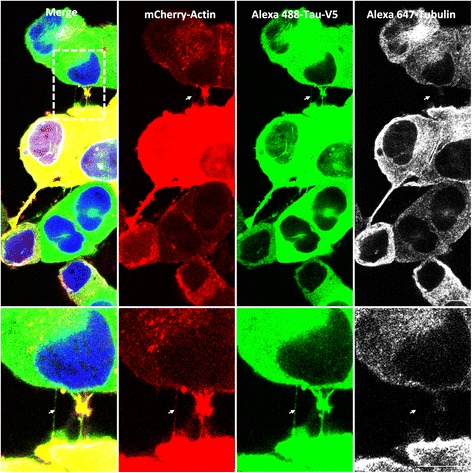
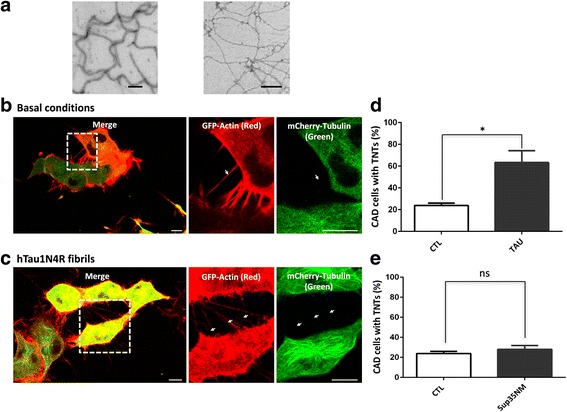
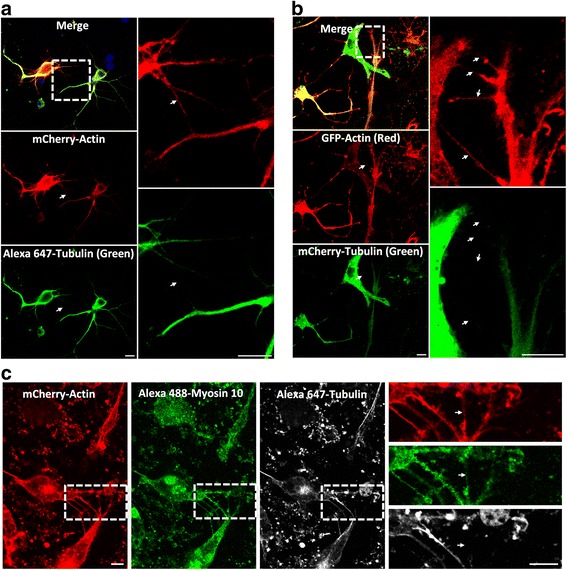
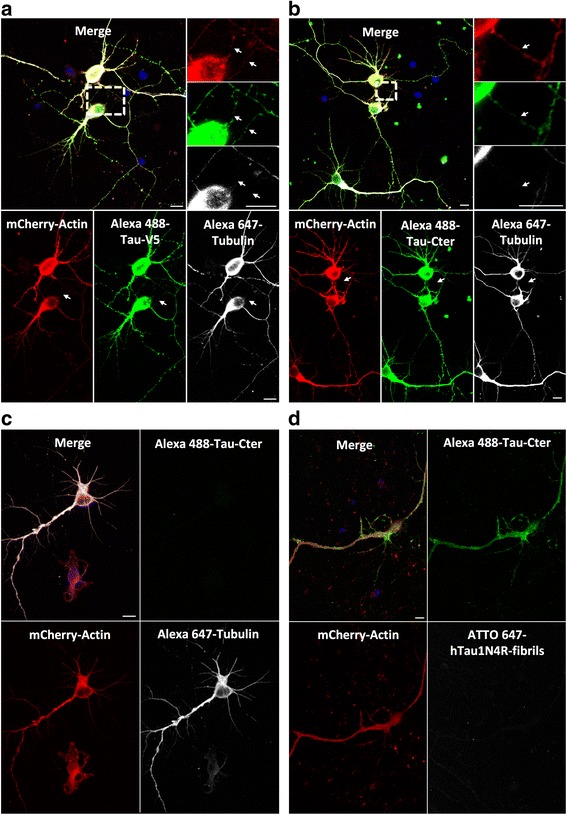
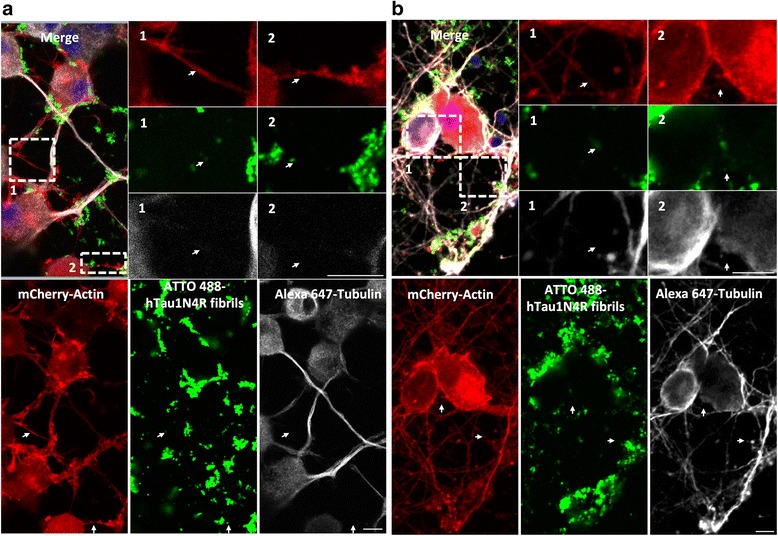
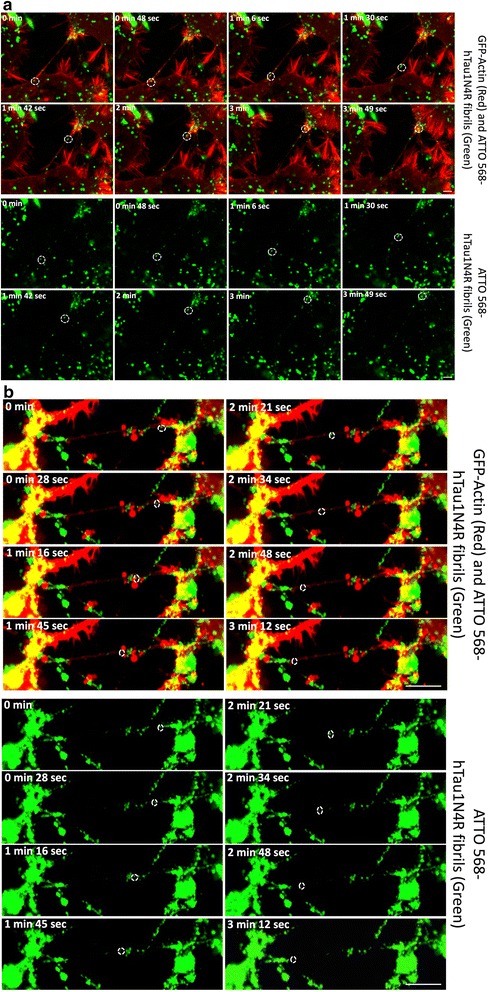
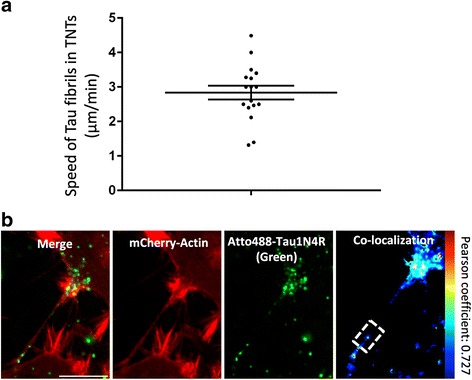
A given cell makes exchanges with its neighbors through a variety of means ranging from diffusible factors to vesicles. Cells use also tunneling nanotubes (TNTs), filamentous-actin-containing membranous structures that bridge and connect cells. First described in immune cells, TNTs facilitate HIV-1 transfer and are found in various cell types, including neurons. We show that the microtubule-associated protein Tau, a key player in Alzheimer's disease, is a bona fide constituent of TNTs. This is important because Tau appears beside filamentous actin and myosin 10 as a specific marker of these fine protrusions of membranes and cytosol that are difficult to visualize. Furthermore, we observed that exogenous Tau species increase the number of TNTs established between primary neurons, thereby facilitating the intercellular transfer of Tau fibrils. In conclusion, Tau may contribute to the formation and function of the highly dynamic TNTs that may be involved in the prion-like propagation of Tau assemblies.
Overview
The claims and statistics of this paper haven’t been checked yet.
Free: it reads the open-access text and checks the first 5 claims that cite a source we can check. Create a free account to check every claim.
Integrity signals
Registry
Cites
Statistics
Figures
Verification
Claims the paper makes
The claims and statistics of this paper haven’t been checked yet.
Free: it reads the open-access text and checks the first 5 claims that cite a source we can check. Create a free account to check every claim.
Claims other papers make about this one
Each is checked against this paper’s own text: does it say what the citing paper says it does?
The source backs part of the claim, not all of it — or backs it for a different population, condition or comparison.
In the citing paper
“Ultimately, Aβ and tau propagate to other neurons via TNT and exosomes [98,99,100,101].”
From The Impact of Neurotoxin Proteins Trafficked by Primary Cilia and Extracellular Vesicles in Neurodegenerative Diseases (2025) · cites this paper as [100]
Experimental — accuracy not yet measuredThe source backs part of the claim, not all of it — or backs it for a different population, condition or comparison.
In the citing paper
“Concurrently, AD-related cellular stressors, such as Aβ exposure, activate actin remodeling pathways that may drive TNT formation, enabling direct neuron-to-neuron transfer of pathological tau protein [100,101].”
From The Impact of Neurotoxin Proteins Trafficked by Primary Cilia and Extracellular Vesicles in Neurodegenerative Diseases (2025) · cites this paper as [100]
Experimental — accuracy not yet measuredThe source backs part of the claim, not all of it — or backs it for a different population, condition or comparison.
In the citing paper
“These coordinated defects in ciliary signaling and intracellular trafficking may collectively facilitate the EV and TNT-dependent propagation of neurotoxic proteins across neural networks, thereby potentially reinforcing progressive circuit dysfunction (Figure 3A) [98,100,101,105].”
From The Impact of Neurotoxin Proteins Trafficked by Primary Cilia and Extracellular Vesicles in Neurodegenerative Diseases (2025) · cites this paper as [100]
Experimental — accuracy not yet measuredThe cited source says what the claim attributes to it.
In the citing paper
“As mentioned above, TNTs may play a significant role in the spreading of misfolded proteins like Aβ and Tau, which are central to AD pathology [100].”
From The Impact of Neurotoxin Proteins Trafficked by Primary Cilia and Extracellular Vesicles in Neurodegenerative Diseases (2025) · cites this paper as [100]
The cited source says what the claim attributes to it.
In the citing paper
“Given their role in intercellular communication and the spread of protein aggregates, TNTs are emerging as potential therapeutic targets for slowing the disease’s progression [100,123,124].”
From The Impact of Neurotoxin Proteins Trafficked by Primary Cilia and Extracellular Vesicles in Neurodegenerative Diseases (2025) · cites this paper as [100]
Self-check
Percentages, sums and reported differences re-computed from the paper’s own numbers.
The self-check needs the paper’s full text.
Citations
Cites
Neuropathological stageing of Alzheimer-related changes.
Braak, H., & Braak, E. (1991) · Acta Neuropathologica · doi:10.1007/bf00308809 · Cited by 16,123
Amyloid oligomers exacerbate tau pathology in a mouse model of tauopathy
Selenica, M.-L. B., Brownlow, M., Jimenez, J. P., Lee, D. C., Pena, G., Dickey, C. A., Gordon, M. N., & Morgan, D. (2013) · Neurodegenerative Diseases · doi:10.1159/000337230 · Cited by 10,359
A protein factor essential for microtubule assembly
Weingarten, M. D., Lockwood, A. H., Hwo, S. Y., & Kirschner, M. W. (1975) · Proceedings of the National Academy of Sciences · doi:10.1073/pnas.72.5.1858 · Cited by 3,089
Nanotubular Highways for Intercellular Organelle Transport
Rustom, A., Saffrich, R., Markovic, I., Walther, P., & Gerdes, H.-H. (2004) · Science · doi:10.1126/science.1093133 · Cited by 2,038
Dendritic Function of Tau Mediates Amyloid-β Toxicity in Alzheimer's Disease Mouse Models
Ittner, L. M., Ke, Y. D., Delerue, F., Bi, M., Gladbach, A., van Eersel, J., Wölfing, H., Chieng, B. C., Christie, M. J., Napier, I. A., et al. (2010) · Cell · doi:10.1016/j.cell.2010.06.036 · Cited by 1,821
Self-propagation of pathogenic protein aggregates in neurodegenerative diseases
Jucker, M., & Walker, L. C. (2013) · Nature · doi:10.1038/nature12481 · Cited by 1,663
Depletion of microglia and inhibition of exosome synthesis halt tau propagation
Asai, H., Ikezu, S., Tsunoda, S., Medalla, M., Luebke, J., Haydar, T., Wolozin, B., Butovsky, O., Kügler, S., & Ikezu, T. (2015) · Nature Neuroscience · doi:10.1038/nn.4132 · Cited by 1,591
Distinct Tau Prion Strains Propagate in Cells and Mice and Define Different Tauopathies
Sanders, D. W., Kaufman, S. K., DeVos, S. L., Sharma, A. M., Mirbaha, H., Li, A., Barker, S. J., Foley, A. C., Thorpe, J. R., Serpell, L. C., et al. (2014) · Neuron · doi:10.1016/j.neuron.2014.04.047 · Cited by 986
Saman, S., Kim, W., Raya, M., Visnick, Y., Miro, S., Saman, S., Jackson, B., McKee, A. C., Alvarez, V. E., Lee, N. C. Y., et al. (2012) · Journal of Biological Chemistry · doi:10.1074/jbc.m111.277061 · Cited by 985
Goedert, M. (2015) · Science · doi:10.1126/science.1255555 · Cited by 976
Phosphorylation affects the ability of tau protein to promote microtubule assembly.
Lindwall, G., & Cole, R. D. (1984) · Journal of Biological Chemistry · doi:10.1016/s0021-9258(17)42989-9 · Cited by 901
The biochemical pathway of neurofibrillary degeneration in aging and Alzheimer's disease.
Delacourte, A., David, J. P., Sergeant, N., Buée, L., Wattez, A., Vermersch, P., Ghozali, F., Fallet-Bianco, C., Pasquier, F., Lebert, F., et al. (1999) · Neurology · doi:10.1212/wnl.52.6.1158 · Cited by 828
Tau and neurodegenerative disease: the story so far
Iqbal, K., Liu, F., & Gong, C.-X. (2016) · Nature Reviews Neurology · doi:10.1038/nrneurol.2015.225 · Cited by 806 · cited 1×
“The role of this protein is widely documented in neurodegenerative diseases collectively known as tauopathies [45].”
BackgroundBrain homogenates from human tauopathies induce tau inclusions in mouse brain
Clavaguera, F., Akatsu, H., Fraser, G., Crowther, R. A., Frank, S., Hench, J., Probst, A., Winkler, D. T., Reichwald, J., Staufenbiel, M., et al. (2013) · Proceedings of the National Academy of Sciences · doi:10.1073/pnas.1301175110 · Cited by 760
Sowinski, S., Jolly, C., Berninghausen, O., Purbhoo, M. A., Chauveau, A., Köhler, K., Oddos, S., Eissmann, P., Brodsky, F. M., Hopkins, C., et al. (2008) · Nature Cell Biology · doi:10.1038/ncb1682 · Cited by 754 · cited 4×
“Indeed, in addition to allowing the long-range intercellular transfer of cytoplasmic macromolecules, plasma membrane components, vesicles and organelles, TNTs have been shown to allow the transfer of pathogens such as HIV, of infectious prion particles, and of huntingtin-Exon1 aggregates from affected donor to naive r…”
BackgroundInfluentialMechanism of Actin-Based Motility
Pantaloni, D., Clainche, C. L., & Carlier, M.-F. (2001) · Science · doi:10.1126/science.1059975 · Cited by 700
Physiological release of endogenous tau is stimulated by neuronal activity
Pooler, A. M., Phillips, E. C., Lau, D. H. W., Noble, W., & Hanger, D. P. (2013) · The EMBO Reports · doi:10.1038/embor.2013.15 · Cited by 642 · cited 1×
“In addition, Tau has been identified as physiologically secreted into the extracellular space [57, 58].”
BackgroundBrandt, R., Léger, J., & Lee, G. (1995) · The Journal of cell biology · doi:10.1083/jcb.131.5.1327 · Cited by 625
Prions hijack tunnelling nanotubes for intercellular spread
Gousset, K., Schiff, E., Langevin, C., Marijanovic, Z., Caputo, A., Browman, D. T., Chenouard, N., de Chaumont, F., Martino, A., Enninga, J., et al. (2009) · Nature Cell Biology · doi:10.1038/ncb1841 · Cited by 615
Neuronal activity regulates extracellular tau in vivo
Yamada, K., Holth, J. K., Liao, F., Stewart, F. R., Mahan, T. E., Jiang, H., Cirrito, J. R., Patel, T. K., Hochgräfe, K., Mandelkow, E.-M., et al. (2014) · Journal of Experimental Medicine · doi:10.1084/jem.20131685 · Cited by 581
Nuclear Tau, a Key Player in Neuronal DNA Protection
Sultan, A., Nesslany, F., Violet, M., Bégard, S., Loyens, A., Talahari, S., Mansuroglu, Z., Marzin, D., Sergeant, N., Humez, S., et al. (2011) · Journal of Biological Chemistry · doi:10.1074/jbc.m110.199976 · Cited by 421
Self-citationTunneling-nanotube development in astrocytes depends on p53 activation
Wang, Y., Cui, J., Sun, X., & Zhang, Y. (2011) · Cell Death & Differentiation · doi:10.1038/cdd.2010.147 · Cited by 417
M-Sec promotes membrane nanotube formation by interacting with Ral and the exocyst complex
Hase, K., Kimura, S., Takatsu, H., Ohmae, M., Kawano, S., Kitamura, H., Ito, M., Watarai, H., Hazelett, C. C., Yeaman, C., et al. (2009) · Nature Cell Biology · doi:10.1038/ncb1990 · Cited by 402
Cutting Edge: Membrane Nanotubes Connect Immune Cells
Önfelt, B., Nedvetzki, S., Yanagi, K., & Davis, D. M. (2004) · The Journal of Immunology · doi:10.4049/jimmunol.173.3.1511 · Cited by 397
Membrane nanotubes: dynamic long-distance connections between animal cells
Davis, D. M., & Sowinski, S. (2008) · Nature Reviews Molecular Cell Biology · doi:10.1038/nrm2399 · Cited by 374
Takeda, S., Wegmann, S., Cho, H., DeVos, S. L., Commins, C., Roe, A. D., Nicholls, S. B., Carlson, G. A., Pitstick, R., Nobuhara, C. K., et al. (2015) · Nature Communications · doi:10.1038/ncomms9490 · Cited by 371
Yamada, K., Cirrito, J. R., Stewart, F. R., Jiang, H., Finn, M. B., Holmes, B. B., Binder, L. I., Mandelkow, E.-M., Diamond, M. I., Lee, V. M.-Y., et al. (2011) · The Journal of Neuroscience · doi:10.1523/jneurosci.2569-11.2011 · Cited by 351
Eugenin, E. A., Gaskill, P. J., & Berman, J. W. (2009) · Cellular Immunology · doi:10.1016/j.cellimm.2008.08.005 · Cited by 304
Tunneling nanotubes: A new route for the exchange of components between animal cells
Gerdes, H.-H., Bukoreshtliev, N. V., & Barroso, J. F. V. (2007) · FEBS Letters · doi:10.1016/j.febslet.2007.03.071 · Cited by 304
Cho, J., & Johnson, G. V. W. (2004) · Journal of Neurochemistry · doi:10.1111/j.1471-4159.2004.02155.x · Cited by 282
Dysregulation of human brain microtubule-associated tau mRNA maturation in myotonic dystrophy type 1
Sergeant, N. (2001) · Human Molecular Genetics · doi:10.1093/hmg/10.19.2143 · Cited by 280
Cutting Edge: Membrane Nanotubes In Vivo: A Feature of MHC Class II+ Cells in the Mouse Cornea
Chinnery, H. R., Pearlman, E., & McMenamin, P. G. (2008) · The Journal of Immunology · doi:10.4049/jimmunol.180.9.5779 · Cited by 277
Mondragón-Rodríguez, S., Trillaud-Doppia, E., Dudilot, A., Bourgeois, C., Lauzon, M., Leclerc, N., & Boehm, J. (2012) · Journal of Biological Chemistry · doi:10.1074/jbc.m112.401240 · Cited by 272
Violet, M., Delattre, L., Tardivel, M., Sultan, A., Chauderlier, A., Caillierez, R., Talahari, S., Nesslany, F., Lefebvre, B., Bonnefoy, E., et al. (2014) · Frontiers in Cellular Neuroscience · doi:10.3389/fncel.2014.00084 · Cited by 251
Self-citationCytonemes and tunneling nanotubules in cell–cell communication and viral pathogenesis
Sherer, N. M., & Mothes, W. (2008) · Trends in Cell Biology · doi:10.1016/j.tcb.2008.07.003 · Cited by 241
Tunneling nanotubes: Diversity in morphology and structure
Austefjord, M. W., Gerdes, H.-H., & Wang, X. (2014) · Communicative & Integrative Biology · doi:10.4161/cib.27934 · Cited by 234
Bukoreshtliev, N. V., Wang, X., Hodneland, E., Gurke, S., Barroso, J. F. V., & Gerdes, H.-H. (2009) · FEBS Letters · doi:10.1016/j.febslet.2009.03.065 · Cited by 230
Constitutive secretion of tau protein by an unconventional mechanism
Chai, X., Dage, J. L., & Citron, M. (2012) · Neurobiology of Disease · doi:10.1016/j.nbd.2012.05.021 · Cited by 224
Ectosomes: A New Mechanism for Non-Exosomal Secretion of Tau Protein
Dujardin, S., Bégard, S., Caillierez, R., Lachaud, C., Delattre, L., Carrier, S., Loyens, A., Galas, M.-C., Bousset, L., Melki, R., et al. (2014) · PLoS ONE · doi:10.1371/journal.pone.0100760 · Cited by 219
Self-citationVallabhaneni, K. C., Haller, H., & Dumler, I. (2012) · Stem Cells and Development · doi:10.1089/scd.2011.0691 · Cited by 216
Transfer of polyglutamine aggregates in neuronal cells occurs in tunneling nanotubes
Costanzo, M., Abounit, S., Marzo, L., Danckaert, A., Chamoun, Z., Roux, P., & Zurzolo, C. (2013) · Journal of Cell Science · doi:10.1242/jcs.126086 · Cited by 210 · cited 4×
“Indeed, in addition to allowing the long-range intercellular transfer of cytoplasmic macromolecules, plasma membrane components, vesicles and organelles, TNTs have been shown to allow the transfer of pathogens such as HIV, of infectious prion particles, and of huntingtin-Exon1 aggregates from affected donor to naive r…”
BackgroundInfluentialChauveau, A., Aucher, A., Eissmann, P., Vivier, E., & Davis, D. M. (2010) · Proceedings of the National Academy of Sciences · doi:10.1073/pnas.0910074107 · Cited by 204
Tau co-organizes dynamic microtubule and actin networks
Elie, A., Prezel, E., Guérin, C., Denarier, E., Ramirez-Rios, S., Serre, L., Andrieux, A., Fourest-Lieuvin, A., Blanchoin, L., & Arnal, I. (2015) · Scientific Reports · doi:10.1038/srep09964 · Cited by 200
Myo10 is a key regulator of TNT formation in neuronal cells
Gousset, K., Marzo, L., Commere, P.-H., & Zurzolo, C. (2013) · Journal of Cell Science · doi:10.1242/jcs.129239 · Cited by 199
Ding, X., Ma, M., Teng, J., Teng, R. K. F., Zhou, S., Yin, J., Fonkem, E., Huang, J. H., Wu, E., & Wang, X. (2015) · Oncotarget · doi:10.18632/oncotarget.4680 · Cited by 176
Multifaceted Roles of Tunneling Nanotubes in Intercellular Communication
Marzo, L., Gousset, K., & Zurzolo, C. (2012) · Frontiers in Physiology · doi:10.3389/fphys.2012.00072 · Cited by 169
Tau protein binds to pericentromeric DNA: a putative role for nuclear tau in nucleolar organization
Sjöberg, M. K., Shestakova, E., Mansuroglu, Z., Maccioni, R. B., & Bonnefoy, E. (2006) · Journal of Cell Science · doi:10.1242/jcs.02907 · Cited by 166
Cell Biology of Prions and Prionoids: A Status Report
Aguzzi, A., & Lakkaraju, A. K. (2015) · Trends in Cell Biology · doi:10.1016/j.tcb.2015.08.007 · Cited by 162
Johnson, G. V. W., Seubert, P., Cox, T. M., Motter, R., Brown, J. P., & Galasko, D. (1997) · Journal of Neurochemistry · doi:10.1046/j.1471-4159.1997.68010430.x · Cited by 162
Gurke, S., Barroso, J. F., Hodneland, E., Bukoreshtliev, N. V., Schlicker, O., & Gerdes, H. (2008) · Experimental Cell Research · doi:10.1016/j.yexcr.2008.08.022 · Cited by 157
Modeling the Relation Between Neurofibrillary Tangles and Intellectual Status
Duyckaerts, C. (1997) · Neurobiology of Aging · doi:10.1016/s0197-4580(97)80306-5 · Cited by 150
Dynamic association of tau with neuronal membranes is regulated by phosphorylation
Pooler, A. M., Usardi, A., Evans, C. J., Philpott, K. L., Noble, W., & Hanger, D. P. (2012) · Neurobiology of Aging · doi:10.1016/j.neurobiolaging.2011.01.005 · Cited by 148 · cited 1×
“These new functions related to specific locations (nucleus [49–52], plasma membrane [53, 54], synapses [55, 56].”
BackgroundHyperphosphorylation and Cleavage at D421 Enhance Tau Secretion
Plouffe, V., Mohamed, N.-V., Rivest-McGraw, J., Bertrand, J., Lauzon, M., & Leclerc, N. (2012) · PLoS ONE · doi:10.1371/journal.pone.0036873 · Cited by 146
The proline-rich domain of tau plays a role in interactions with actin
He, H. J., Wang, X. S., Pan, R., Wang, D. L., Liu, M. N., & He, R. Q. (2009) · BMC Cell Biology · doi:10.1186/1471-2121-10-81 · Cited by 142
Toxic effects of amyloid fibrils on cell membranes: the importance of ganglioside GM1
Bucciantini, M., Nosi, D., Forzan, M., Russo, E., Calamai, M., Pieri, L., Formigli, L., Quercioli, F., Soria, S., Pavone, F. S., et al. (2011) · The FASEB Journal · doi:10.1096/fj.11-189381 · Cited by 137
Self-citationTunneling-nanotube direction determination in neurons and astrocytes
Sun, X., Wang, Y., Zhang, J., Tu, J., Wang, X.-J., Su, X.-D., Wang, L., & Zhang, Y. (2012) · Cell Death & Disease · doi:10.1038/cddis.2012.177 · Cited by 119
Multi-Level Communication of Human Retinal Pigment Epithelial Cells via Tunneling Nanotubes
Wittig, D., Wang, X., Walter, C., Gerdes, H.-H., Funk, R. H. W., & Roehlecke, C. (2012) · PLoS ONE · doi:10.1371/journal.pone.0033195 · Cited by 118
Molecular chaperones and the assembly of the prion Sup35p, an in vitro study
Krzewska, J., & Melki, R. (2006) · The EMBO Journal · doi:10.1038/sj.emboj.7600985 · Cited by 111
Self-citationIdentification and Characterization of Tunneling Nanotubes for Intercellular Trafficking
Abounit, S., Delage, E., & Zurzolo, C. (2015) · Current Protocols in Cell Biology · doi:10.1002/0471143030.cb1210s67 · Cited by 104
Lipid droplets as a novel cargo of tunnelling nanotubes in endothelial cells
Astanina, K., Koch, M., Jüngst, C., Zumbusch, A., & Kiemer, A. K. (2015) · Scientific Reports · doi:10.1038/srep11453 · Cited by 104
Kadiu, I., & Gendelman, H. E. (2011) · Journal of Neuroimmune Pharmacology · doi:10.1007/s11481-011-9298-z · Cited by 100 · cited 1×
“TNTs have been shown to be involved in the spread of various pathogens and protein fibrils implicated in neurodegenerative and infectious diseases [6, 9, 11, 13, 39, 40].”
BackgroundTau Overexpression Results in Its Secretion via Membrane Vesicles
Simón, D., García-García, E., Gómez-Ramos, A., Falcón-Pérez, J. M., Díaz-Hernández, M., Hernández, F., & Avila, J. (2012) · Neurodegenerative Diseases · doi:10.1159/000334915 · Cited by 100
Seyed‐Razavi, Y., Hickey, M. J., Kuffová, L., McMenamin, P. G., & Chinnery, H. R. (2013) · Immunology & Cell Biology · doi:10.1038/icb.2012.52 · Cited by 68
Tunneling nanotubes (TNT): a potential mechanism for intercellular trafficking
Eugenin, E. A., Gaskill, P. J., & Berman, J. W. (2009) · Communicative & Integrative Biology · doi:10.4161/cib.2.3.8165 · Cited by 68
The yeast Sup35NM domain propagates as a prion in mammalian cells
Krammer, C., Kryndushkin, D., Suhre, M. H., Kremmer, E., Hofmann, A., Pfeifer, A., Scheibel, T., Wickner, R. B., Schätzl, H. M., & Vorberg, I. (2009) · Proceedings of the National Academy of Sciences · doi:10.1073/pnas.0811571106 · Cited by 66
Bénard, M., Schapman, D., Lebon, A., Monterroso, B., Bellenger, M., Le Foll, F., Pasquier, J., Vaudry, H., Vaudry, D., & Galas, L. (2015) · Biology of the Cell · doi:10.1111/boc.201500004 · Cited by 52
Fas Signalling Promotes Intercellular Communication in T Cells
Luchetti, F., Canonico, B., Arcangeletti, M., Guescini, M., Cesarini, E., Stocchi, V., Degli Esposti, M., & Papa, S. (2012) · PLoS ONE · doi:10.1371/journal.pone.0035766 · Cited by 47
Caillierez, R., Bégard, S., Lécolle, K., Deramecourt, V., Zommer, N., Dujardin, S., Loyens, A., Dufour, N., Aurégan, G., Winderickx, J., et al. (2013) · Molecular Therapy · doi:10.1038/mt.2013.66 · Cited by 44
Self-citationPreliminary characterisation of nanotubes connecting T‐cells and their use by HIV‐1
Lachambre, S., Chopard, C., & Beaumelle, B. (2014) · Biology of the Cell · doi:10.1111/boc.201400037 · Cited by 38
Neuronal tau induces DNA conformational changes observed by atomic force microscopy.
Qu, M., Li, H., Tian, R., Nie, C.-I., Liu, Y. M., Bao-Shan, H., & He, R. (2004) · PubMed · Cited by 36
CD2 Promotes Human Natural Killer Cell Membrane Nanotube Formation
Comerci, C. J., Mace, E. M., Banerjee, P. P., & Orange, J. S. (2012) · PLoS ONE · doi:10.1371/journal.pone.0047664 · Cited by 30
Prion, prionoids and infectious amyloid
Liberski, P. P. (2013) · Parkinsonism & Related Disorders · doi:10.1016/s1353-8020(13)70021-x · Cited by 17
Nussbaum-Krammer, C. I., Suhre, M. H., Kremmer, E., Diemer, C., Hess, S., Schätzl, H. M., Scheibel, T., & Vorberg, I. M. (2007) · The FASEB Journal · doi:10.1096/fj.07-8733com · Cited by 17
Sautière, P. E., Caillet‐Boudin, M., Wattez, A., Buée‐Scherrer, V., & Delacourte, A. (1993) · PubMed · Cited by 9
Research works printed but not linked: 1
- Sautiere PE, Caillet-Boudin ML, Wattez A, Delacourte A. Detection of Alzheimer-type tau proteins in okadaic acid-treated SKNSH-SY5Y neuroblastoma cells. Neurodegeneration. 1994;3:53-60.
Cited by
Roles of tau protein in health and disease
Guo, T., Noble, W., & Hanger, D. P. (2017) · Acta Neuropathologica · doi:10.1007/s00401-017-1707-9 · Cited by 1,003
Molecular and cellular mechanisms underlying the pathogenesis of Alzheimer’s disease
Guo, T., Zhang, D., Zeng, Y., Huang, T. Y., Xu, H., & Zhao, Y. (2020) · Molecular Neurodegeneration · doi:10.1186/s13024-020-00391-7 · Cited by 994
“Alternatively, tau seeds may be transferred through cell-to-cell contact [241, 242].”
BackgroundWhat is the evidence that tau pathology spreads through prion-like propagation?
Mudher, A., Colin, M., Dujardin, S., Medina, M., Dewachter, I., Alavi Naini, S. M., Mandelkow, E.-M., Mandelkow, E., Buée, L., Goedert, M., et al. (2017) · Acta Neuropathologica Communications · doi:10.1186/s40478-017-0488-7 · Cited by 384
“Recent papers showed that nanotubes support interneuronal transfer of tau fibrils in neurons [1, 128].”
BackgroundSelf-citationTau and neuroinflammation: what impact for Alzheimer's disease and tauopathies?
Laurent, C., Buée, L., & Blum, D. (2018) · Biomedical Journal · doi:10.1016/j.bj.2018.01.003 · Cited by 348
“The cellular mechanisms of this prion-like trans-synaptic transmission were evaluated and different pathways were identified, including free forms, Tunneling nanotubes (TNTs) structures, ectosomes or exosomes [46,58].”
BackgroundSelf-citationMechanisms of secretion and spreading of pathological tau protein
Brunello, C. A., Merezhko, M., Uronen, R.-L., & Huttunen, H. J. (2020) · Cellular and Molecular Life Sciences · doi:10.1007/s00018-019-03349-1 · Cited by 304
Metadata
- Authors
- Tardivel, M., Bégard, S., Bousset, L., Dujardin, S., Coens, A., Melki, R., Buée, L., & Colin, M.
- Affiliations
- Inserm (FR)
- Centre National de la Recherche Scientifique (FR)
- Corresponding author
- Buée, Luc
- Colin, Morvane
- Venue
- Acta Neuropathologica Communications
- Published
- 2016-11-04
- Volume
- 4
- Issue
- 1
- Pages
- 117-117
- ISSN
- 2051-5960 (ISSN-L)
- PMC
- PMC5096005
- OpenAlex
- W2548465653
- Cited by
- 305
- References
- 74
- Citations by year
- 2026: 21 · 2025: 24 · 2024: 32 · 2023: 23 · 2022: 46 · 2021: 40 · 2020: 36 · 2019: 36 · 2018: 31 · 2017: 15 · 2016: 1
- FWCI
- 22.25
- Type
- journal article
- Language
- en
- Open access
- gold
- doi.org
- Licence
- cc-by
- Locations
- Acta Neuropathologica Communications (publishedVersion, cc-by)
- PubMed Central (publishedVersion, cc-by)
- PubMed (publishedVersion)
- HAL (submittedVersion, other-oa)
- Funders
- Development of Innovative Strategies for a Transdisciplinary approach to ALZheimer's disease
- Agence Nationale de la Recherche (ANR-14-CE13-0031)
- Institut National de la Santé et de la Recherche Médicale
- Association France Alzheimer
- Centre National de la Recherche Scientifique
- Fondation Bettencourt Schueller
- Topics
- Life Sciences › Neuroscience › Cellular and Molecular Neuroscience › Alzheimer's disease research and treatments
- Life Sciences › Biochemistry, Genetics and Molecular Biology › Molecular Biology › Extracellular vesicles in disease
- Life Sciences › Neuroscience › Neurology › Neuroinflammation and Neurodegeneration Mechanisms
- Keywords
- tunneling nanotubes, tau protein, intercellular transfer, Alzheimer's disease, tau fibrils, prion-like propagation, neurons, actin, myosin 10, intercellular communication, neurodegeneration
- MeSH terms
- Actins, Animals, Biological Transport, Cell Communication, Cell Line, Cerebral Cortex, Extracellular Space, Genetic Vectors, Humans, Luminescent Proteins, Myosins, Neurons, Tubulin, Lentivirus, tau Proteins, Rats, Wistar, Mice
About these checks
Registry, retraction, Cites and statistics results are computed, not judged, with one exception: a printed reference that no index lists is read once by a model before it counts as a citation error. Claims are extracted by a model and kept only when their quote appears verbatim in the text; each cited source is then checked, with a model’s help, for whether it says what the claim relies on. Those verdicts can be wrong — read the claim’s quote and the cited source before relying on one.
Statistics and arithmetic are recomputed, not judged.
Confidence bands are shown only for fields calibrated on our annotated test set. None is calibrated yet, so no band is shown.
What counts as a claim ›How we measure confidence ›How we check this ›
Are you an author, or do you see a problem with this page? Request a review
Data sources
Bibliographic data: Semantic Scholar, OpenAlex, Crossref.
Contains information from the Semantic Scholar Academic Graph Datasets, made available under the ODC Attribution License (ODC-BY 1.0).
Semantic Scholar’s data is described in: Kinney, R., et al. (2023). The Semantic Scholar Open Data Platform. arXiv:2301.10140.
