

Review of deep learning: concepts, CNN architectures, challenges, applications, future directions
Open accessThe DOI matches its Crossref record; 360 of the 372 references it cites were found in a registry or an index; 138 of the 246 sources its claims cite were checked for support.
Abstract
In the last few years, the deep learning (DL) computing paradigm has been deemed the Gold Standard in the machine learning (ML) community. Moreover, it has gradually become the most widely used computational approach in the field of ML, thus achieving outstanding results on several complex cognitive tasks, matching or even beating those provided by human performance. One of the benefits of DL is the ability to learn massive amounts of data. The DL field has grown fast in the last few years and it has been extensively used to successfully address a wide range of traditional applications. More importantly, DL has outperformed well-known ML techniques in many domains, e.g., cybersecurity, natural language processing, bioinformatics, robotics and control, and medical information processing, among many others. Despite it has been contributed several works reviewing the State-of-the-Art on DL, all of them only tackled one aspect of the DL, which leads to an overall lack of knowledge about it. Therefore, in this contribution, we propose using a more holistic approach in order to provide a more suitable starting point from which to develop a full understanding of DL. Specifically, this review attempts to provide a more comprehensive survey of the most important aspects of DL and including those enhancements recently added to the field. In particular, this paper outlines the importance of DL, presents the types of DL techniques and networks. It then presents convolutional neural networks (CNNs) which the most utilized DL network type and describes the development of CNNs architectures together with their main features, e.g., starting with the AlexNet network and closing with the High-Resolution network (HR.Net). Finally, we further present the challenges and suggested solutions to help researchers understand the existing research gaps. It is followed by a list of the major DL applications. Computational tools including FPGA, GPU, and CPU are summarized along with a description of their influence on DL. The paper ends with the evolution matrix, benchmark datasets, and summary and conclusion.
Overview
CoChat Summary
## TL;DR
This paper is a broad review of deep learning that explains core concepts, classifies DL approaches, and surveys CNN architectures from AlexNet to HRNet. It also summarizes major challenges, applications, and computational platforms, with a heavy emphasis on medical imaging and CNN-based solutions.
## Key findings
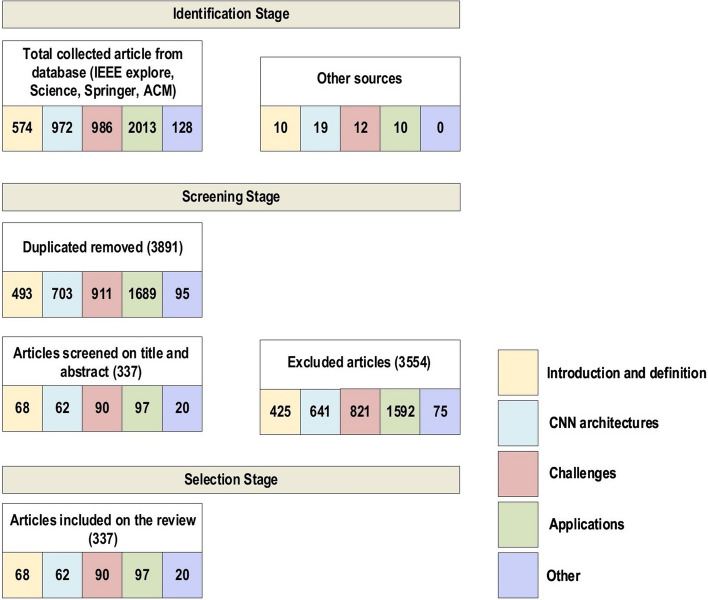
- The authors reviewed more than 300 papers on deep learning topics, with 108 papers from 2020, 76 from 2019, and 48 from 2018.
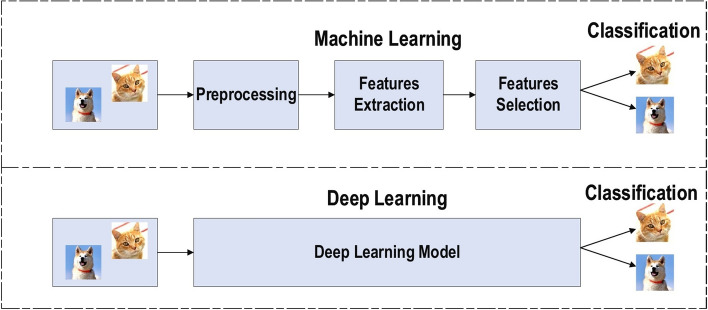
- They argue that DL can reduce manual feature engineering by learning features automatically and that it has already achieved strong results in tasks such as image classification, detection, segmentation, and registration.
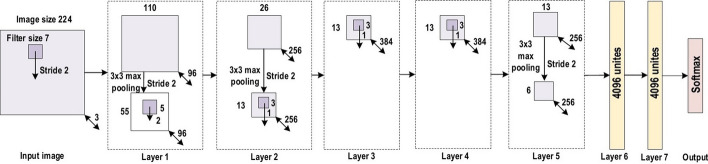
- The paper highlights that CNNs are the most used DL network type and reviews their architectural evolution from AlexNet (2012) to HRNet (2020).
- It identifies major DL challenges including lack of training data, imbalanced data, interpretability, uncertainty scaling, catastrophic forgetting, model compression, overfitting, vanishing/exploding gradients, and underspecification.
## Methods
- This is a survey/review paper, not an experimental study.
- The authors report reviewing literature from 2010–2020 (mainly 2020 and 2019, with some 2021 papers), drawing from publishers including IEEE, Elsevier, MDPI, Nature, ACM, and Springer, plus some arXiv papers.
- Their review was organized to cover DL approaches and network types, CNN architectures, challenges and solutions, applications, and computational approaches.
## Limitations
- The paper itself states that the review is not exhaustive for every topic; for example, in registration it says it is “out of the scope of this work to provide an extensive review of this topic.”
- The text also makes evident that some sections are descriptive rather than systematic: it summarizes many studies and architectures but does not report a formal meta-analysis or quantitative comparison across all included papers. (This is evident from the text.)
- Several sections are labeled only as headings or brief placeholders in the provided text, suggesting the supplied version is fragmentary/incomplete in places. (This is evident from the text.)
Model-written summary. Check it against the paper before relying on it.
Integrity signals
Registry
Cites
Statistics
Figures
Verification
Claims the paper makes
81 Valid · 72 Not valid · 63 Not checked · 158 Own results and interpretations
Some cited sources support this claim and some don’t — read each source’s verdict below.
In the paper
“Increase the depth (or width) of the model.”
§ Review of deep learning: concepts, CNN architectures, challenges, applications, future directions > Types of DL networks > Convolutional neural networks
What the sources say
- Disputedcites [86] Alzubaidi L Fadhel MA Al-Shamma O Zhang J Duan Y Deep learning models for classification of red blood cells in microscopy images to aid in sickle cell anemia diagnosis Electronics 2020 9 3 427 10.3390/electronics9030427 sourceExperimental — accuracy not yet measured
In the paper’s model-comparison discussion (page not available in our copy), the authors say they increased network depth to improve performance, but it did not help; Model 2 performed best. The cited passage therefore does not support recommending greater depth as a way to improve performance, and it gives no corresponding result for greater width. (LLM, conf=0.86)
Checked by a reasoning model — may be wrong.
- Not checked yetcites [87] Alzubaidi L Fadhel MA Al-Shamma O Zhang J Santamaría J Duan Y Oleiwi SR Towards a better understanding of transfer learning for medical imaging: a case study Appl Sci 2020 10 13 4523 10.3390/app10134523 source
Checked before — its earlier verdict is held back until a new check runs.
- Partly supportedcites [88] Alzubaidi L Al-Shamma O Fadhel MA Farhan L Zhang J Duan Y Optimizing the performance of breast cancer classification by employing the same domain transfer learning from hybrid deep convolutional neural network model Electronics 2020 9 3 445 10.3390/electronics9030445 sourceExperimental — accuracy not yet measured
Section 3.5 (Proposed Model; page unavailable) says a deep CNN with improved feature extraction is needed for breast-biopsy classification and describes a multi-branch architecture. It does not establish that simply increasing a model’s depth or width improves CNN performance; the proposed model also uses residual links and other design choices. (LLM, conf=0.78)
plainstates a possible cause- Asserted: passes — The authors put it forward as true.
- Checkable: passes — It can be checked against evidence.
- Load-bearing: unclear — It is unclear whether the paper’s conclusions depend on it.
- Based: passes — The paper gives a reason why it holds.
- Disputed
The cited sources support only part of this claim — read each source’s verdict below.
In the paper
“The main benefit of CNN compared to its predecessors is that it automatically identifies the relevant features without any human supervision [76].”
§ Review of deep learning: concepts, CNN architectures, challenges, applications, future directions > Types of DL networks > Convolutional neural networks
What the sources say
- Partly supportedcites [76] Gu J Wang Z Kuen J Ma L Shahroudy A Shuai B Liu T Wang X Wang G Cai J Recent advances in convolutional neural networks Pattern Recogn 2018 77 354 377 10.1016/j.patcog.2017.10.013 sourceExperimental — accuracy not yet measured
The paper says CNNs learn features automatically rather than relying on handcrafted features (5.3, p. 22), supporting the feature-learning part of the claim. But it does not support “without any human supervision”: the Conclusions (p. 28) say training requires manually collected labeled data and identify unsupervised CNN learning as a goal for further work. (LLM, conf=0.88)
plainstates a cause- Asserted: passes — The authors put it forward as true.
- Checkable: passes — It can be checked against evidence.
- Load-bearing: unclear — It is unclear whether the paper’s conclusions depend on it.
- Based: passes — The paper gives a reason why it holds.
- Partly supported
The cited sources support only part of this claim — read each source’s verdict below.
In the paper
“Add regularization.”
§ Review of deep learning: concepts, CNN architectures, challenges, applications, future directions > Types of DL networks > Convolutional neural networks
What the sources say
- Supportedcites [86] Alzubaidi L Fadhel MA Al-Shamma O Zhang J Duan Y Deep learning models for classification of red blood cells in microscopy images to aid in sickle cell anemia diagnosis Electronics 2020 9 3 427 10.3390/electronics9030427 source
Section 3.2 (p. 8) says data augmentation enhances classification performance and helps prevent CNN overfitting. The paper thus supports the hedged claim that adding an overfitting-control technique may improve CNN performance, specifically in red-blood-cell classification. (LLM, conf=0.82)
- Partly supportedcites [87] Alzubaidi L Fadhel MA Al-Shamma O Zhang J Santamaría J Duan Y Oleiwi SR Towards a better understanding of transfer learning for medical imaging: a case study Appl Sci 2020 10 13 4523 10.3390/app10134523 sourceExperimental — accuracy not yet measured
Our copy places regularization among techniques for limiting overfitting (Sec. 5.2.4 Dropout: 'A limited number of solutions are used to reduce the risk of overfitting... Other techniques involve the use of regularization and enlargement of the training dataset'), and lists 'regularization strategies' among the attributes in which DCNNs advanced (Sec. 2.2). That supports regularization as a performance-related device, but the paper never states that adding regularization improves CNN performance; on the contrary, its only comparative statement favours the alternative: 'Compared to regularization, dropout performs well in accelerating the process of training, as well as reducing the overfitting risk' (Sec. 5.2.4). The claim's asserted benefit of adding regularization is therefore only partly carried by this source. (LLM, conf=0.68)
- Supportedcites [88] Alzubaidi L Al-Shamma O Fadhel MA Farhan L Zhang J Duan Y Optimizing the performance of breast cancer classification by employing the same domain transfer learning from hybrid deep convolutional neural network model Electronics 2020 9 3 445 10.3390/electronics9030445 source
Section 3.5 (Proposed Model; page unavailable) says the authors placed a dropout layer in their CNN to prevent overfitting. Dropout is a form of regularization, so this supports the qualified claim that adding regularization may improve CNN performance. (LLM, conf=0.85)
plainstates a possible cause- Asserted: passes — The authors put it forward as true.
- Checkable: passes — It can be checked against evidence.
- Load-bearing: unclear — It is unclear whether the paper’s conclusions depend on it.
- Based: passes — The paper gives a reason why it holds.
- Supported
Every source the paper cites for this claim was checked and supports it.
In the paper
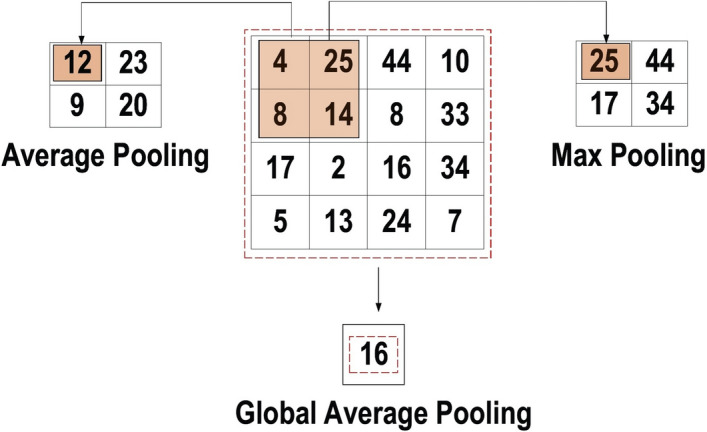
“As a substitution for a FC layer, the GAP is also employed, which represents the second novel concept and enables a significant reduction in the number of model parameters.”
§ Review of deep learning: concepts, CNN architectures, challenges, applications, future directions > CNN architectures > Network-in-network
What the sources say
- Supportedcites [94] Lin M, Chen Q, Yan S. Network in network; 2013. arXiv preprint arXiv:1312.4400. source
Section 3.2 (p. 4) proposes global average pooling as a replacement for fully connected layers and says the pooling layer has no parameters to optimize. Section 4.6 (p. 7) contrasts this with fully connected layers’ trainable dense transformation matrices, supporting the claimed reduction in parameters, though it does not quantify the reduction. (LLM, conf=0.90)
plainstates a cause- Asserted: passes — The authors put it forward as true.
- Checkable: passes — It can be checked against evidence.
- Load-bearing: unclear — It is unclear whether the paper’s conclusions depend on it.
- Based: passes — The paper gives a reason why it holds.
- Supported
Every source the paper cites for this claim was checked and supports it.
In the paper
“In 2015, Srivastava et al. [105] suggested a novel CNN architecture, called Highway Network, to overcome this issue.”
§ Review of deep learning: concepts, CNN architectures, challenges, applications, future directions > CNN architectures > Highway network
What the sources say
- Supportedcites [105] Srivastava RK, Greff K, Schmidhuber J. Highway networks; 2015. arXiv preprint arXiv:1505.00387. source
The Introduction (p. 1) presents highway networks as a novel architecture intended to make very deep networks easier to optimize. Section 2.1 (p. 2) describes convolutional highway layers, supporting the CNN characterization, although the architecture is not limited to CNNs. (LLM, conf=0.93)
plainstates a cause- Asserted: passes — The authors put it forward as true.
- Checkable: passes — It can be checked against evidence.
- Load-bearing: unclear — It is unclear whether the paper’s conclusions depend on it.
- Based: passes — The paper gives a reason why it holds.
- Rests on 2 assumptions not shown here.
- Supported
93 more claims · 31 with their cited sources checked
Create a free account to see all 374 claims and to verify the 24 references still open.
- Probably not a substantial claim. 224
- It may state two separate claims as one. 109
- The quote only partly states this claim. 2
Claims other papers make about this one
Each is checked against this paper’s own text: does it say what the citing paper says it does?
The source backs part of the claim, not all of it — or backs it for a different population, condition or comparison.
In the citing paper
“Previous methodologies, such as, artificial neural networks (NNs), and the more recent DL techniques, have been preferred in SOC estimation because of their applicability to depict more intricate correlation systems of input parameters and SOC [44].”
From Review Paper for SOC Estimation Techniques: Challenges and Future Areas for Improvement (2024) · cites this paper as [44]
Experimental — accuracy not yet measured
Self-check
Percentages, sums and reported differences re-computed from the paper’s own numbers.
Self-check results appear here once an independent check has confirmed them.
Cited works that were retracted
Works this paper cites that were later retracted, from the retraction notices publishers deposit. Major when the notice came out before this paper was published.
Rated major: it would touch a result — a value a result rests on, reported and recomputed p-values on opposite sides of the significance level, two passages that conflict with no sign which is right, or a cited work retracted before this paper was published.
In the paper
“Min Z. Public welfare organization management system based on FPGA and deep learning. Microprocess Microsyst. 2020;80:103333.”
Cited work 10.1016/j.micpro.2020.103333 · retracted 2021-02-01 · notice 10.1016/j.micpro.2020.103333 · this paper published 2021-03-31
Citations
Cites
1 retracted
RETRACTED: Public welfare organization management system based on FPGA and deep learning
Min, Z. (2020) · Microprocessors and Microsystems · doi:10.1016/j.micpro.2020.103333 · Cited by 16
RetractedDeep Residual Learning for Image Recognition
He, K., Zhang, X., Ren, S., & Sun, J. (2016) · 2016 IEEE Conference on Computer Vision and Pattern Recognition (CVPR) · doi:10.1109/cvpr.2016.90 · Cited by 235,474
Very Deep Convolutional Networks for Large-Scale Image Recognition
Simonyan, K., & Zisserman, A. (2014) · arXiv · doi:10.48550/arxiv.1409.1556 · Cited by 114,148
ImageNet classification with deep convolutional neural networks
Krizhevsky, A., Sutskever, I., & Hinton, G. E. (2017) · Communications of the ACM · doi:10.1145/3065386 · Cited by 112,155
U-Net: Convolutional Networks for Biomedical Image Segmentation
Ronneberger, O., Fischer, P., & Brox, T. (2015) · Lecture notes in computer science · doi:10.1007/978-3-319-24574-4_28 · Cited by 99,404
LeCun, Y., Bengio, Y., & Hinton, G. (2015) · Nature · doi:10.1038/nature14539 · Cited by 84,126
ImageNet: A large-scale hierarchical image database
Deng, J., Dong, W., Socher, R., Li, L.-J., Li, K., & Fei-Fei, L. (2009) · 2009 IEEE Conference on Computer Vision and Pattern Recognition · doi:10.1109/cvpr.2009.5206848 · Cited by 65,333
Densely Connected Convolutional Networks
Huang, G., Liu, Z., Van Der Maaten, L., & Weinberger, K. Q. (2017) · 2017 IEEE Conference on Computer Vision and Pattern Recognition (CVPR) · doi:10.1109/cvpr.2017.243 · Cited by 48,566
Going deeper with convolutions
Szegedy, C., Liu, W., Jia, Y., Sermanet, P., Reed, S., Anguelov, D., Erhan, D., Vanhoucke, V., & Rabinovich, A. (2015) · 2015 IEEE Conference on Computer Vision and Pattern Recognition (CVPR) · doi:10.1109/cvpr.2015.7298594 · Cited by 48,562
Squeeze-and-Excitation Networks
Hu, J., Shen, L., & Sun, G. (2018) · 2018 IEEE/CVF Conference on Computer Vision and Pattern Recognition · doi:10.1109/cvpr.2018.00745 · Cited by 35,667
Research works printed but not linked: 4
- Erhan D Bengio Y Courville A Vincent P Visualizing higher-layer features of a deep network Univ Montreal 2009 1341 3 1
- Ribeiro AH, Tiels K, Aguirre LA, Schön T. Beyond exploding and vanishing gradients: analysing RNN training using attractors and smoothness. In: International conference on artificial intelligence and statistics, PMLR; 2020. p. 2370–80.
- Zhao H, Han Z, Yang Z, Zhang Q, Yang F, Zhou L, Yang M, Lau FC, Wang Y, Xiong Y, et al. Hived: sharing a {GPU} cluster for deep learning with guarantees. In: 14th {USENIX} symposium on operating systems design and implementation ({OSDI} 20); 2020. p. 515–32.
- Rakotomamonyj A. Optimizing area under roc with SVMS. In: Proceedings of the European conference on artificial intelligence workshop on ROC curve and artificial intelligence (ROCAI 2004), 2004. p. 71–80.
Cited by
Items 7,201–7,300 of 7,963
New Data Processing Method for Acoustic Emission Signals for Metalworking Fluid Classification
Wei, X. L., & Soeffker, D. (2022) · Annual Conference of the PHM Society · doi:10.36001/phmconf.2022.v14i1.3145
Tang, N., Fang, Z., Yang, Z., et al. (2025) · Aerospace Science and Technology · doi:10.1016/j.ast.2025.111508
Vu, M. T., & Jardani, A. (2025) · Hydrological Processes · doi:10.1002/hyp.70118
Real-Time Emotion Recognition in Intelligent Tutoring Systems
Alcauter, I., & Martínez-Villaseñor, L. (2025) · Lecture notes in computer science · doi:10.1007/978-3-032-09044-7_26
Data-driven Modelling of Cognitive and Affective Variables of Perception of Multimedia Content
Población, R. F.-C. (2023) · UPM Digital Archive (Technical University of Madrid) · doi:10.20868/upm.thesis.76521 · Cited by 1
Machine Learning in Drug–Drug Interactions
Jain, R., Kushwah, R., Agarwal, D., & Garg, P. (2026) · Royal Society of Chemistry eBooks · doi:10.1039/9781837070206-00359
Orekan, F., & Igbinosa, G. O. (2024) · IEEE Nigeria International Conference on Disruptive Technologies for Sustainable Development (NIGERCON) · doi:10.1109/nigercon62786.2024.10927247
Automated Detection of Cetaceans in Their Natural Habitats via R-CNN and Computer Vision Techniques
Ruiz, M. R., Domínguez, S., & Rossi, C. (2024) · doi:10.1109/robot61475.2024.10797363
Teklemariam, T. A., Chou, F., Kumaravel, P., et al. (2023) · SSRN Electronic Journal · doi:10.2139/ssrn.4620446
Morales, G. C. J., Rodríguez, J. C., Patiño-Pérez, D., et al. (2022) · LACCEI International Multiconference on Entrepreneurship, Innovation and Regional Development (LEIRD) · doi:10.18687/leird2022.1.1.187
Integrating LMDI and Machine Learning for Industrial Carbon Emissions AnalysisPreprint
James, J., Collins, O. C., & Olanrewaju, O. A. (2026) · SSRN Electronic Journal · doi:10.2139/ssrn.7199661
Enhancing and up-scaling of integrated photonic 4F convolution neural networks
Yang, H., Pesericoa, N., Li, S., Motlagh, B. F., Virdi, J. S., Gupta, P., Sorger, V. J., & Wong, C. W. (2024) · Smart Photonic and Optoelectronic Integrated Circuits · doi:10.1117/12.2692958
Khuriyati, N., & Kasih, A. N. (2026) · Bulgarian Journal of Agricultural Science · doi:10.61308/kwxsxg18
“The training epoch represents a complete repetition of the parameter update that involves the complete training dataset at one time (Alzubaidi et al., 2021).”
Miranda, A. (2022) · Earth system science data · doi:10.5194/essd-2021-467-ac1
Improving Transferability of Adversarial Attacks via Frequency-Consistent Regularization
Shi, T., Wang, S., & Liu, B. (2026) · Applied Sciences · doi:10.3390/app16083748
Rahman, M. M., Biswas, S., Rayhan, S. N. M., Mia, M. S., & Tusher, M. M. R. (2025) · International Conference on Electrical Information and Communication Technology (EICT) · doi:10.1109/eict68394.2025.11355605
Diagnosis of Malaria using Machine Learning Models
Shastry, K. A., Senthil, K., Sriranjan, S., et al. (2022) · IEEE Mysore Sub Section International Conference (MysuruCon) · doi:10.1109/mysurucon55714.2022.9972568
Efficient Federated Learning Based On Domain Adaptation and Knowledge Distillation LossesPreprint
Liu, J.-C., Ku, C., & Wang, S.-C. (2025) · Research Square · doi:10.21203/rs.3.rs-7644110/v1
IoT Based Website for Identification of Acute Lymphoblastic Leukemia using DL
Ambika, R., Thejaswini, S., Babu, N. R., Sheikh, T. H., Bhat, N., & Rasool, Z. (2023) · BENTHAM SCIENCE PUBLISHERS eBooks · doi:10.2174/9789815136531123010003
Verma, A. S., Parmar, A. S., & Godiya, A. (2026) · Lecture notes in nanoscale science and technology · doi:10.1007/978-3-032-04008-4_22
Oktaviano, K. H., Apriandy, K. I., & Sunardiyanta, M. S. (2026) · Jurnal Teknologi Terapan G-Tech · doi:10.70609/g-tech.v10i1.8942 · Cited by 1
Performance Analysis of Communication Scheduling Schemes for Distributed Deep Learning
Luo, J.-H., Wang, H., Wang, J.-R., et al. (2025) · IEEE Conference on Local Computer Networks · doi:10.1109/lcn65610.2025.11146375
Zhao, S., Chang, B., Zhang, Y., Qiao, Z., & Wang, J. (2026) · Agronomy · doi:10.3390/agronomy16161570
LAP-Net: a lightweight PCB defect detection network combined with attention mechanisms
Li, Z., Ai, Q., Peng, E., Mao, S., & Han, T. (2025) · Journal of Real-Time Image Processing · doi:10.1007/s11554-025-01749-0
Real-Time Traffic Detection for Lightweight Blockchain
Tang, S., Jiang, P., & Zhu, L. (2025) · IEEE International Conference on Cyber Security and Cloud Computing (CSCloud) · doi:10.1109/cscloud66326.2025.00040
Adapting Medical Imaging: Transfer Learning for Chest X-ray Diagnosis
Gambhir, S., Sumit, Raj, A., & Sharma, K. (2025) · Lecture notes in networks and systems · doi:10.1007/978-981-96-7523-4_4
Hybrid Deep Learning Models for Short-Term Forecasting Item Demands in Retail
Hdia, S. B., Salem, Z. N. B., & Bouziri, H. (2025) · Communications in computer and information science · doi:10.1007/978-3-032-04225-5_14
MedImg: An Integrated Database for Public Medical Images
Zhong, B., Fan, R., Ma, Y., Ji, X., Cui, Q., & Cui, C. (2025) · Genomics Proteomics & Bioinformatics · doi:10.1093/gpbjnl/qzaf068
Amudha, R., Kavitha, M. S., Karthik, S., & Balakrishnan, B. (2026) · Optical and Quantum Electronics · doi:10.1007/s11082-026-09047-0
“…years, ResNet is effective in extracting discriminative features from high-dimensional biomedical signals and medical imaging data, and has stable training performance and improved classifica - tion accuracy (Alzubaidi et al. 2021, Minaee et al. 2022, Raghu et al. 2019, Eltoukhy et al. 2022).”
Enhanced stress detection via intermediate fusion of intermodal signals
Shetty, N. P., Gujar, A., Srivastava, Y. R., Gandluri, M. S., Liya, K., Tetala, R. R., Sivakumar, B. N., Dokania, A., Das, A., Hegde, V., et al. (2026) · Intelligence-Based Medicine · doi:10.1016/j.ibmed.2026.100406
CNN Inference Workload Distribution Considering Accumulative Effect of Receptive Fields
Ho, I.-T., Yen, L., & Chen, Y. (2024) · International Computer Symposium · doi:10.1109/ics64339.2024.00011
Li, T., & Zhang, H. (2026) · International Journal of Knowledge Management · doi:10.4018/ijkm.418734 · Cited by 1
Nguyen, D. V., Jebahi, M., & Chinesta, F. (2025) · SSRN Electronic Journal · doi:10.2139/ssrn.5788951
Suleman, M. A. R., & Khaiter, P. A. (2026) · Ecological Modelling · doi:10.1016/j.ecolmodel.2026.111572
Optical system to detect and calculate moving object speed
Abd, B. R., & Abbas, H. K. (2025) · Journal of Physics Conference Series · doi:10.1088/1742-6596/2974/1/012006
Functional Semantic Inference Method for Industrial Control Proprietary Protocol
Yang, Y., Geng, Y., Wei, Q., Zhou, M., Lv, Z., & He, L. (2026) · IEEE Internet of Things Journal · doi:10.1109/jiot.2026.3695272
“The convolutional neural network (CNN) [35] was used to learn the evolutionary features of di ff erent field types, thereby predicting the semantic types of unknown fields.”
Inverse design of two-dimensional tunable acoustic valley-Hall insulators via deep learning
Li, B., Sun, X.-W., Hu, L.-W., Xu, G.-G., Tan, M.-T., & Wang, Y.-Q. (2026) · Journal of Applied Physics · doi:10.1063/5.0304039 · Cited by 1
NetVault: A Lightweight IP Protection Framework for Inference on Embedded IoT Devices
Wiatrek, N., Chen, P., & Xie, M. (2026) · ACM Great Lakes Symposium on VLSI (GLSVLSI) · doi:10.1145/3787109.3815217
“Neural networks, renowned for their excellent pattern recognition abilities, are extensively utilized across diverse fields such as analytics, image classification, and natural language processing [2].”
Machine learning-based predictive models for digital behavioral analysis
Cruz, J. L. S. (2025) · Data & Metadata · doi:10.56294/dm2025994 · Cited by 2
DETECTION OF KERATOCONUS USING DEEP LEARNING CNN MODELS
(2024) · International Research Journal of Modernization in Engineering Technology and Science · doi:10.56726/irjmets50305
Wang, L., Sun, H., Huo, S., et al. (2026) · SSRN Electronic Journal · doi:10.2139/ssrn.6233482
Malekmohamadi, H., Lu, X., Ojji, I. O., et al. (2025) · International Conference on Advances in Artificial Intelligence (ICAAI) · doi:10.1145/3787279.3788496
Image Forensics of Compressed Image on Social Media with Lightweight Deep Learning
Islami, A. M., & Studiawan, H. (2023) · International Arab Conference on Information Technology (ACIT) · doi:10.1109/acit58888.2023.10453792
Artificial intelligence-based smart devices for biomedical applications
Sahu, D., Neelapu, B. C., Sivaraman, J., Ray, S. S., & Pal, K. (2024) · Elsevier eBooks · doi:10.1016/b978-0-443-19073-5.00016-1
Radha, D. S., & Kavitha, M. G. (2025) · BENTHAM SCIENCE PUBLISHERS eBooks · doi:10.2174/9798898810337125010008
Sathiyanathan, S. D., & Poravi, G. (2026) · International Conference on Inventive Research in Computing Applications (ICIRCA) · doi:10.1109/icirca69024.2026.11570532
Moafa, K., Antico, M., Vukovic, D., Edwards, C. R., Canty, D. J., Serra, X. C., Royse, A. G., Royse, C. F., Haji, K., Dowling, J., et al. (2024) · Research Square · doi:10.21203/rs.3.rs-4487345/v1
Kim, C. G., & Na, H. J. (2026) · Sustainability · doi:10.3390/su18094553
Improving Visual Recognition with Enhanced Convolutional Neural Networks
Patil, Y. M., Chandhok, G. A., Supreeth, B. R., Pundir, S., Kunisetti, S., & Gayathri, S. (2024) · International Conference on Contemporary Computing and Informatics (IC3I) · doi:10.1109/ic3i61595.2024.10829121
Babu Rao, K., Sridevi, N. H., Bandela, H. B., et al. (2025) · doi:10.1109/icvadv63329.2025.10961339
Majumdar, A., & Everschor‐Sitte, K. (2026) · Machine intelligence for materials science · doi:10.1007/978-3-032-04129-6_19 · Cited by 1
Automated Brachial Plexus Localization in Ultrasound Using Lightweight Convolutional Neural NetworksPreprint
Shiju, A., & Britto, J. (2026) · Research Square · doi:10.21203/rs.3.rs-11118424/v1
Τεχνητή Νοημοσύνη στον τουρισμό
Παπαθανασίου, Ι., Δημητριάδης, Δ., & Τζιόκας, Γ. (2025) · Ετήσιο Ελληνόφωνο Επιστημονικό Συνέδριο Εργαστηρίων Επικοινωνίας · doi:10.12681/cclabs.8075
Kernel Functions in CNNs: Enhancing Robustness to Image Noise
Gao, F., Zhang, H., Yan, H., & Chen, C. (2025) · Asia Conference on Algorithms, Computing and Machine Learning (CACML) · doi:10.1109/cacml64929.2025.11010952
Aldhahery, M. A. (2026) · PeerJ Computer Science · doi:10.7717/peerj-cs.3471
Tang, J., Yu, Z., Zhang, B. M., Xia, C., & Li, F. (2026) · IEEE Sensors Journal · doi:10.1109/jsen.2026.3703033
“Deep learning has been widely applied to anomaly detection [3], [10], with achievements using LSTM [11], convolutional neural network (CNN) [12], autoencoders, and variational autoencoders (VAEs) [13].”
Hybrid RS-ML framework for forecasting mechanical responses of TiC-Reinforced Udimet 500 composites
Kumaresan, G., Rao, M. S. S., Doss, S. M., et al. (2026) · Interactions · doi:10.1007/s10751-026-02524-8
AI/ML Approach for Predictive Modeling of RNA Structures and Chemical Reactivity Profiles
Sarabu, J., & Zaidi, S. (2025) · IEEE Integrated STEM Education Conference (ISEC) · doi:10.1109/isec64801.2025.11147372
FEFDNet: A Frequency-Domain Feature-Enhanced Infrared and Visible Image Fusion Network
Ma, Z., Xiong, A., Zheng, W., et al. (2026) · International Conference on Image and Graphics Processing (ICIGP) · doi:10.1109/icigp68997.2026.11619707
“Researchers have employed architectures like CNNs [1], GANs [19], Transformers [6], and Diffusion Models [27] to boost fused-image quality and robustness.”
Classification of Ulos Batak Toba Motifs Using a Convolutional Neural Network (CNN) And HN Adam
Pasaribu, H. A., Haryadi, D., & Ilmi, N. (2025) · International Seminar on Research of Information Technology and Intelligent Systems (ISRITI) · doi:10.1109/isriti68345.2025.11393336
Mylvaganam, P., Dissanayake, M. B., & Niranjan, M. (2026) · Information · doi:10.3390/info17060595
Pulse-Fi: A Low-Cost System for Accurate Heart Rate Monitoring Using Wi-Fi Channel State Information
Kocheta, P., Bhatia, N. S., & Obraczka, K. (2025) · International Conference on Distributed Computing in Smart Systems and the Internet of Things (DCOSS-IoT) · doi:10.1109/dcoss-iot65416.2025.00037 · Cited by 3
Li, Y., Mao, Q., Chen, Z., & Zhu, G. (2025) · Marine Ecology Progress Series · doi:10.3354/meps14842 · Cited by 1
Padmaja, K., & Mukhopadhyay, D. (2023) · IEEE India Council International Subsections Conference (INDISCON) · doi:10.1109/indiscon58499.2023.10270496
Kim, H., Alnemari, M. H., & Bagherzadeh, N. (2022) · PeerJ Computer Science · doi:10.7717/peerj-cs.924
The Deep Learning for Recommender System: Architecture, Advancements and Future Trends
Jeet, & Khurana, D. (2025) · International Conference on Inventive Research in Computing Applications (ICIRCA) · doi:10.1109/icirca65293.2025.11089530
Early Detection of Crop Pest Infestation Using Hybrid HOG and VGG-16 Feature Fusion
Kaur, S., Nagpal, D., & Kaur, I. (2025) · Agricultural Research Journal · doi:10.5958/2395-146x.2025.00069.8
Yang, R., & He, J. (2024) · Applied Mathematics and Nonlinear Sciences · doi:10.2478/amns-2024-3448
Estimating Solar Energy within the scope of environmental factors by the Neural Network algorithm
Atalan, Y. A. (2024) · Mühendislik Bilimleri ve Araştırmaları Dergisi · doi:10.46387/bjesr.1377273
Li, X., Feng, W., Wang, X., Guo, J., Chen, Y., Yang, Y., Wang, C., Zuo, X., & Xu, M. (2023) · Electronics · doi:10.3390/electronics12183745
A Pipe Inner Wall Surface Defect Detection Method Based on RT-DETR-RP
Xu, P., Lv, Z., Zhou, J., et al. (2025) · IEEE International Conference on Sensing, Diagnostics, Prognostics, and Control (SDPC) · doi:10.1109/sdpc68151.2025.11347874
Ilamathi, P., & Chidambaram, S. (2026) · International Journal of Remote Sensing · doi:10.1080/01431161.2026.2684248
“Nevertheless, CNN-based approaches face challenges such as overfitting, high computational requirements due to the large number of parameters in deep architectures and high inter-band correlation in HSI (Alzubaidi et al. 2021; L. Zhong et al. 2024).”
Erkennungsverfahren für KI-generierte Texte: Überblick und Architekturentwurf
Pröhl, T., Mohrhardt, R., Förster, N., Putzier, E., & Zarnekow, R. (2024) · HMD Praxis der Wirtschaftsinformatik · doi:10.1365/s40702-024-01051-w · Cited by 1
İsazadə, P. Z. E. (2022) · PAHTEI-Procedings of Azerbaijan High Technical Educational Institutions · doi:10.36962/pahtei23122022-62
Enhancing Yam Quality Detection Through Computer Vision in Iot and Robotics ApplicationsPreprint
Audu, J., Adegbenjo, A., Ajisegiri, E., & Irtwange, S. V. (2024) · SSRN Electronic Journal · doi:10.2139/ssrn.4681504
Yapıcıoğlu, C., Demirci, S., & Demirci, M. (2026) · Ad Hoc Networks · doi:10.1016/j.adhoc.2026.104178 · Cited by 1
Prediction Models for Concrete Aging Using Machine Learning
Javvaji, J. S. R. N., Sujatha, M. G., Mamaghani, I. H. P., & Ranganathan, P. (2025) · Cyber Awareness and Research Symposium (CARS) · doi:10.1109/cars67163.2025.11337865
Impact of Background Removal and Pose on Deep Learning Industrial Action Recognition
Yang, C.-L., Liang, S.-H., Lin, P. T., Hsiao, Z.-S., & Yen, T.-Y. (2026) · International Conference on Knowledge and Smart Technology · doi:10.1109/kst67832.2026.11432375
“Deep learning models, including convolutional neural networks (CNNs) [29], long short-term memory (LSTM) networks [30], 3D convolutional neural networks (3D CNNs) [31], [40], and transformers, deliver outstanding performance in automatic feature extraction and spatiotemporal modeling, greatly…”
Wang, W., & Hu, X. (2026) · Building and Environment · doi:10.1016/j.buildenv.2026.114465
Zhang, Y., Huang, Q., Yan, X., Song, Y., Wang, Z., Lu, Z., Zhang, L., Yang, H., Ma, L., & Bai, Z. (2026) · ENGINEERING Chemical Engineering · doi:10.1007/s11705-026-2647-5
Brain Malignant Tumor Classification Using MRI Scans and Optimized CNNs
Cohen, M. W. (2024) · International Conference on Bioinformatics and Computational Biology (ICBCB) · doi:10.1109/icbcb61507.2024.11011993
Integrated monitoring of pests and diseases in paddy plants based on convolutional neural network
Yuliana, M., & Tirtabuana, J. (2025) · AIP conference proceedings · doi:10.1063/5.0295027
Optimization of Deep Neural Network Based on Sine Genetic Algorithm for Electric Theft DetectionPreprint
Jia, S. (2024) · SSRN Electronic Journal · doi:10.2139/ssrn.4755077
Kundapura, S., Venkatesh, A. K., & Kandpal, U. (2025) · Journal of The Institution of Engineers (India) Series A · doi:10.1007/s40030-025-00936-3
Deep Learning Approach for Tunisian Postal Address Segmentation
Bouafif, F., & Abdellatif, L. (2025) · Communications in computer and information science · doi:10.1007/978-3-031-82153-0_1
SMMNet: A Plug-and-Play Lightweight Detection Framework for UAV Aerial Imagery
Liu, M., Luo, Z., Hu, Y., & Liu, J. (2026) · Remote Sensing · doi:10.3390/rs18132232
Lai, P.-J., & Lu, C. (2022) · International Conference on System Science and Engineering · doi:10.1109/icsse55923.2022.9948265
Osagie, E. R., Ji, W., & Na Helian, B. (2024) · Lecture notes in networks and systems · doi:10.1007/978-3-031-65522-7_10
Automated Application-Specific CNN Design with Adversarial Defense and LLM-Based Evaluation
Samir, K. B., Fouad, F. F., Shalaby, M. S., Mohsen, M. F., Ghaly, R. T., Sabry, S. E., Awaad, T. A., Hassan, M. A., & El-Kharashi, M. W. (2025) · Novel Intelligent and Leading Emerging Sciences Conference (NILES) · doi:10.1109/niles68063.2025.11232180
Improving Dog Image Classification with CNN Model and Image Distance method
Rangkuti, A. H., Kurniawan, A., Yustian, E. N., et al. (2024) · International Seminar on Research of Information Technology and Intelligent Systems (ISRITI) · doi:10.1109/isriti64779.2024.10963412
A Review: Low-Dose Computed Tomography Image Reconstruction Using Deep Learning Techniques
Balakrishna, K., & Rao, A. N. (2024) · IEEE International Conference on Cybernetics, Cognition and Machine Learning Applications (ICCCMLA) · doi:10.1109/icccmla63077.2024.10871771
Enhancing Transparency in Healthcare Analytics Through Explainable Association Rule Mining
Sekti, B. A. (2026) · Advances in computational intelligence and robotics book series · doi:10.4018/979-8-3373-6691-3.ch010
Structural health monitoring: Emerging technologies and data analytics
Çatbaş, F. N., & Luleci, F. (2026) · Elsevier eBooks · doi:10.1016/b978-0-443-38315-1.00009-x · Cited by 1
Wolfrum, J., Meyer, J., Petroll, C., et al. (2026) · Journal of Nondestructive Evaluation · doi:10.1007/s10921-026-01393-z
“This is a first important assessment criterion for measuring, interpreting and comparing the performance of a NN as an intuitive percentage-value using the aforementioned metric [25, 30].”
Aprendizado Federado com Geração de Embeddings para Controle da Heterogeneidade Estatística
Guaragna, G. S., da Costa, J. B. D., Villas, L. A., & Souza, A. M. D. (2026) · doi:10.5753/sbrc.2026.19960
Brain Tumor Classification from MRI Scans Using a Novel CNN Architecture and Optimization Techniques
Hussain, S. J., Devi, B. R., Mahalakshmi, V. J., Harikala, Parveen, S., & Athinarayanan, S. (2024) · Communications in computer and information science · doi:10.1007/978-3-031-73477-9_9
Metadata
- Authors
- Alzubaidi, L., Zhang, J., Humaidi, A. J., Al-Dujaili, A., Duan, Y., Al-Shamma, O., Santamaría, J., Fadhel, M. A., Al-Amidie, M., & Farhan, L.
- Affiliations
- Queensland University of Technology (AU)
- University of Technology - Iraq (IQ)
- Middle Technical University (IQ)
- University of Missouri (US)
- University of Information Technology and Communications (IQ)
- Universidad de Jaén (ES)
- University of Sumer (IQ)
- Manchester Metropolitan University (GB)
- Corresponding author
- Alzubaidi, Laith
- ORCID
- Venue
- Journal of Big Data
- Published
- 2021-03-31
- Volume
- 8
- Issue
- 1
- Pages
- 53-53
- ISSN
- 2196-1115 (ISSN-L)
- PMC
- PMC8010506
- OpenAlex
- W3140854437
- Semantic Scholar
- 0084f3cb0a1754272151c5268a783f24bf5676a0
- Cited by
- 7,906
- References
- 372
- Citations by year
- 2026: 1140 · 2025: 2146 · 2024: 2166 · 2023: 1583 · 2022: 719 · 2021: 152
- FWCI
- 414.94
- Type
- journal article
- Language
- en
- Open access
- gold
- doi.org
- Licence
- cc-by
- creativecommons.org/licenses/by/4.0 (tdm)
- creativecommons.org/licenses/by/4.0 (vor)
- Locations
- Journal Of Big Data (publishedVersion, cc-by)
- PubMed Central (publishedVersion, cc-by)
- PubMed (publishedVersion)
- RUJA. Institutional Repository of Scientific Production of the University of Jaén (University of Jaén) (publishedVersion, cc-by-nc-nd)
- QUT ePrints (Queensland University of Technology) (submittedVersion, cc-by)
- DOAJ (DOAJ: Directory of Open Access Journals) (submittedVersion, cc-by-sa)
- Funders
- Queensland University of Technology
- Topics
- Physical Sciences › Computer Science › Computer Vision and Pattern Recognition › Advanced Neural Network Applications
- Physical Sciences › Computer Science › Artificial Intelligence › Neural Networks and Applications
- Physical Sciences › Computer Science › Artificial Intelligence › Domain Adaptation and Few-Shot Learning
- Keywords
- deep learning, convolutional neural networks, convolutional neural network architecture, AlexNet, HRNet, deep learning applications, FPGA, graphics processing units, CPU, benchmark dataset
About these checks
Registry, retraction, Cites and statistics results are computed, not judged, with one exception: a printed reference that no index lists is read once by a model before it counts as a citation error. Claims are extracted by a model and kept only when their quote appears verbatim in the text; each cited source is then checked, with a model’s help, for whether it says what the claim relies on. Those verdicts can be wrong — read the claim’s quote and the cited source before relying on one.
The claim verdicts this report counts are experimental: their accuracy is not yet measured.
A language model drew the claims from the paper on 2026-09-28, under version 3 of the claim definition (model deepseek-v4.1-flash, prompt extract-v3).
A second model labelled each claim on 2026-09-28 (model jev-1.13-20260917, definition revision gold-guideline-v0.2).
Cited sources are checked with a language model’s help (gpt-6-sol and qwen3.8-omni-flash).
Statistics and arithmetic are recomputed, not judged.
Confidence bands are shown only for fields calibrated on our annotated test set. None is calibrated yet, so no band is shown.
What counts as a claim ›How we measure confidence ›How we check this ›
Are you an author, or do you see a problem with this page? Request a review
Data sources
Bibliographic data: Semantic Scholar, OpenAlex, Crossref.
Contains information from the Semantic Scholar Academic Graph Datasets, made available under the ODC Attribution License (ODC-BY 1.0).
Semantic Scholar’s data is described in: Kinney, R., et al. (2023). The Semantic Scholar Open Data Platform. arXiv:2301.10140.
