

Review of deep learning: concepts, CNN architectures, challenges, applications, future directions
Open accessThe DOI matches its Crossref record; 361 of the 372 references it cites were found in a registry or an index; 138 of the 246 sources its claims cite were checked for support.
Abstract
In the last few years, the deep learning (DL) computing paradigm has been deemed the Gold Standard in the machine learning (ML) community. Moreover, it has gradually become the most widely used computational approach in the field of ML, thus achieving outstanding results on several complex cognitive tasks, matching or even beating those provided by human performance. One of the benefits of DL is the ability to learn massive amounts of data. The DL field has grown fast in the last few years and it has been extensively used to successfully address a wide range of traditional applications. More importantly, DL has outperformed well-known ML techniques in many domains, e.g., cybersecurity, natural language processing, bioinformatics, robotics and control, and medical information processing, among many others. Despite it has been contributed several works reviewing the State-of-the-Art on DL, all of them only tackled one aspect of the DL, which leads to an overall lack of knowledge about it. Therefore, in this contribution, we propose using a more holistic approach in order to provide a more suitable starting point from which to develop a full understanding of DL. Specifically, this review attempts to provide a more comprehensive survey of the most important aspects of DL and including those enhancements recently added to the field. In particular, this paper outlines the importance of DL, presents the types of DL techniques and networks. It then presents convolutional neural networks (CNNs) which the most utilized DL network type and describes the development of CNNs architectures together with their main features, e.g., starting with the AlexNet network and closing with the High-Resolution network (HR.Net). Finally, we further present the challenges and suggested solutions to help researchers understand the existing research gaps. It is followed by a list of the major DL applications. Computational tools including FPGA, GPU, and CPU are summarized along with a description of their influence on DL. The paper ends with the evolution matrix, benchmark datasets, and summary and conclusion.
Overview
CoChat Summary
## TL;DR
This paper is a broad review of deep learning that explains core concepts, classifies DL approaches, and surveys CNN architectures from AlexNet to HRNet. It also summarizes major challenges, applications, and computational platforms, with a heavy emphasis on medical imaging and CNN-based solutions.
## Key findings
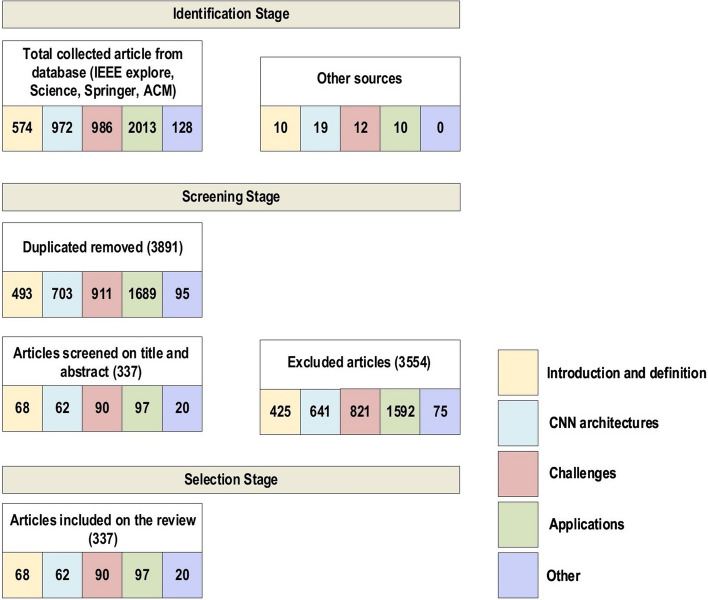
- The authors reviewed more than 300 papers on deep learning topics, with 108 papers from 2020, 76 from 2019, and 48 from 2018.
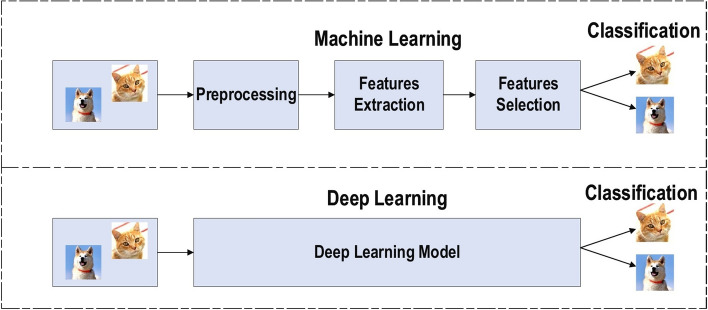
- They argue that DL can reduce manual feature engineering by learning features automatically and that it has already achieved strong results in tasks such as image classification, detection, segmentation, and registration.
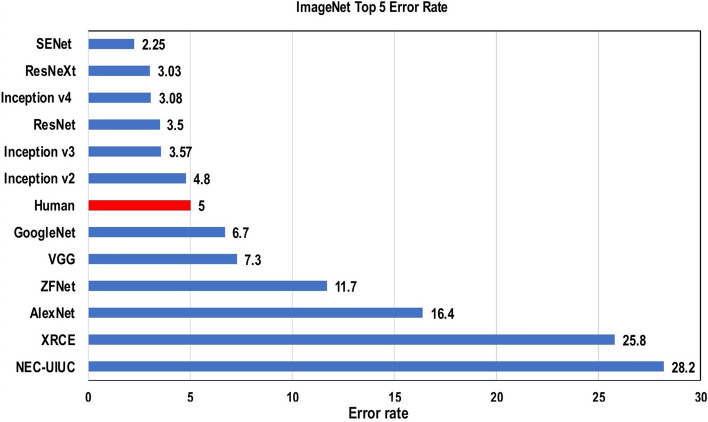
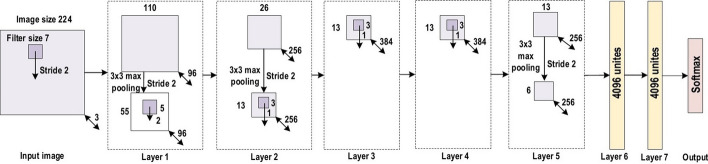
- The paper highlights that CNNs are the most used DL network type and reviews their architectural evolution from AlexNet (2012) to HRNet (2020).
- It identifies major DL challenges including lack of training data, imbalanced data, interpretability, uncertainty scaling, catastrophic forgetting, model compression, overfitting, vanishing/exploding gradients, and underspecification.
## Methods
- This is a survey/review paper, not an experimental study.
- The authors report reviewing literature from 2010–2020 (mainly 2020 and 2019, with some 2021 papers), drawing from publishers including IEEE, Elsevier, MDPI, Nature, ACM, and Springer, plus some arXiv papers.
- Their review was organized to cover DL approaches and network types, CNN architectures, challenges and solutions, applications, and computational approaches.
## Limitations
- The paper itself states that the review is not exhaustive for every topic; for example, in registration it says it is “out of the scope of this work to provide an extensive review of this topic.”
- The text also makes evident that some sections are descriptive rather than systematic: it summarizes many studies and architectures but does not report a formal meta-analysis or quantitative comparison across all included papers. (This is evident from the text.)
- Several sections are labeled only as headings or brief placeholders in the provided text, suggesting the supplied version is fragmentary/incomplete in places. (This is evident from the text.)
Model-written summary. Check it against the paper before relying on it.
Integrity signals
Registry
Cites
Statistics
Figures
Verification
Claims the paper makes
81 Valid · 72 Not valid · 63 Not checked · 158 Own results and interpretations
Some cited sources support this claim and some don’t — read each source’s verdict below.
In the paper
“Increase the depth (or width) of the model.”
§ Review of deep learning: concepts, CNN architectures, challenges, applications, future directions > Types of DL networks > Convolutional neural networks
What the sources say
- Disputedcites [86] Alzubaidi L Fadhel MA Al-Shamma O Zhang J Duan Y Deep learning models for classification of red blood cells in microscopy images to aid in sickle cell anemia diagnosis Electronics 2020 9 3 427 10.3390/electronics9030427 sourceExperimental — accuracy not yet measured
In the paper’s model-comparison discussion (page not available in our copy), the authors say they increased network depth to improve performance, but it did not help; Model 2 performed best. The cited passage therefore does not support recommending greater depth as a way to improve performance, and it gives no corresponding result for greater width. (LLM, conf=0.86)
Checked by a reasoning model — may be wrong.
- Not checked yetcites [87] Alzubaidi L Fadhel MA Al-Shamma O Zhang J Santamaría J Duan Y Oleiwi SR Towards a better understanding of transfer learning for medical imaging: a case study Appl Sci 2020 10 13 4523 10.3390/app10134523 source
Checked before — its earlier verdict is held back until a new check runs.
- Partly supportedcites [88] Alzubaidi L Al-Shamma O Fadhel MA Farhan L Zhang J Duan Y Optimizing the performance of breast cancer classification by employing the same domain transfer learning from hybrid deep convolutional neural network model Electronics 2020 9 3 445 10.3390/electronics9030445 sourceExperimental — accuracy not yet measured
Section 3.5 (Proposed Model; page unavailable) says a deep CNN with improved feature extraction is needed for breast-biopsy classification and describes a multi-branch architecture. It does not establish that simply increasing a model’s depth or width improves CNN performance; the proposed model also uses residual links and other design choices. (LLM, conf=0.78)
plainstates a possible cause- Asserted: passes — The authors put it forward as true.
- Checkable: passes — It can be checked against evidence.
- Load-bearing: unclear — It is unclear whether the paper’s conclusions depend on it.
- Based: passes — The paper gives a reason why it holds.
- Disputed
The cited sources support only part of this claim — read each source’s verdict below.
In the paper
“The main benefit of CNN compared to its predecessors is that it automatically identifies the relevant features without any human supervision [76].”
§ Review of deep learning: concepts, CNN architectures, challenges, applications, future directions > Types of DL networks > Convolutional neural networks
What the sources say
- Partly supportedcites [76] Gu J Wang Z Kuen J Ma L Shahroudy A Shuai B Liu T Wang X Wang G Cai J Recent advances in convolutional neural networks Pattern Recogn 2018 77 354 377 10.1016/j.patcog.2017.10.013 sourceExperimental — accuracy not yet measured
The paper says CNNs learn features automatically rather than relying on handcrafted features (5.3, p. 22), supporting the feature-learning part of the claim. But it does not support “without any human supervision”: the Conclusions (p. 28) say training requires manually collected labeled data and identify unsupervised CNN learning as a goal for further work. (LLM, conf=0.88)
plainstates a cause- Asserted: passes — The authors put it forward as true.
- Checkable: passes — It can be checked against evidence.
- Load-bearing: unclear — It is unclear whether the paper’s conclusions depend on it.
- Based: passes — The paper gives a reason why it holds.
- Partly supported
The cited sources support only part of this claim — read each source’s verdict below.
In the paper
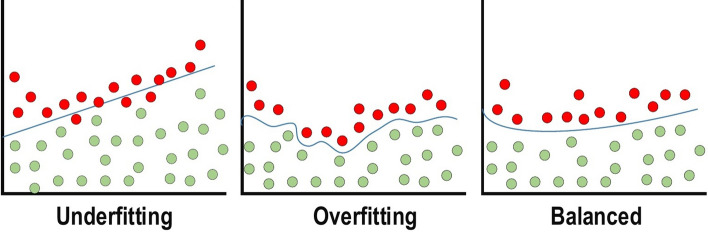
“Add regularization.”
§ Review of deep learning: concepts, CNN architectures, challenges, applications, future directions > Types of DL networks > Convolutional neural networks
What the sources say
- Supportedcites [86] Alzubaidi L Fadhel MA Al-Shamma O Zhang J Duan Y Deep learning models for classification of red blood cells in microscopy images to aid in sickle cell anemia diagnosis Electronics 2020 9 3 427 10.3390/electronics9030427 source
Section 3.2 (p. 8) says data augmentation enhances classification performance and helps prevent CNN overfitting. The paper thus supports the hedged claim that adding an overfitting-control technique may improve CNN performance, specifically in red-blood-cell classification. (LLM, conf=0.82)
- Partly supportedcites [87] Alzubaidi L Fadhel MA Al-Shamma O Zhang J Santamaría J Duan Y Oleiwi SR Towards a better understanding of transfer learning for medical imaging: a case study Appl Sci 2020 10 13 4523 10.3390/app10134523 sourceExperimental — accuracy not yet measured
Our copy places regularization among techniques for limiting overfitting (Sec. 5.2.4 Dropout: 'A limited number of solutions are used to reduce the risk of overfitting... Other techniques involve the use of regularization and enlargement of the training dataset'), and lists 'regularization strategies' among the attributes in which DCNNs advanced (Sec. 2.2). That supports regularization as a performance-related device, but the paper never states that adding regularization improves CNN performance; on the contrary, its only comparative statement favours the alternative: 'Compared to regularization, dropout performs well in accelerating the process of training, as well as reducing the overfitting risk' (Sec. 5.2.4). The claim's asserted benefit of adding regularization is therefore only partly carried by this source. (LLM, conf=0.68)
- Supportedcites [88] Alzubaidi L Al-Shamma O Fadhel MA Farhan L Zhang J Duan Y Optimizing the performance of breast cancer classification by employing the same domain transfer learning from hybrid deep convolutional neural network model Electronics 2020 9 3 445 10.3390/electronics9030445 source
Section 3.5 (Proposed Model; page unavailable) says the authors placed a dropout layer in their CNN to prevent overfitting. Dropout is a form of regularization, so this supports the qualified claim that adding regularization may improve CNN performance. (LLM, conf=0.85)
plainstates a possible cause- Asserted: passes — The authors put it forward as true.
- Checkable: passes — It can be checked against evidence.
- Load-bearing: unclear — It is unclear whether the paper’s conclusions depend on it.
- Based: passes — The paper gives a reason why it holds.
- Supported
Every source the paper cites for this claim was checked and supports it.
In the paper
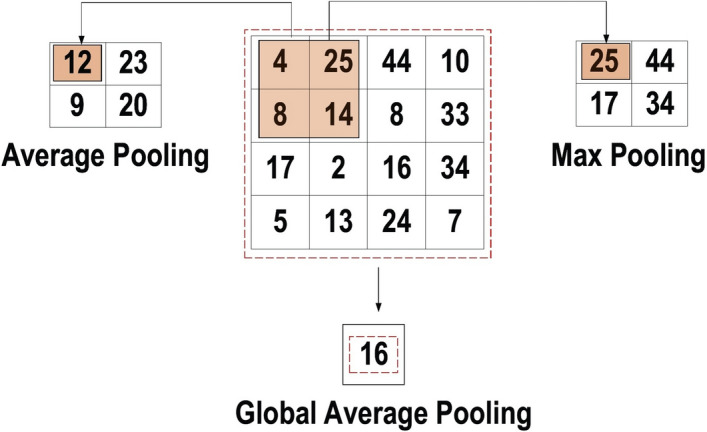
“As a substitution for a FC layer, the GAP is also employed, which represents the second novel concept and enables a significant reduction in the number of model parameters.”
§ Review of deep learning: concepts, CNN architectures, challenges, applications, future directions > CNN architectures > Network-in-network
What the sources say
- Supportedcites [94] Lin M, Chen Q, Yan S. Network in network; 2013. arXiv preprint arXiv:1312.4400. source
Section 3.2 (p. 4) proposes global average pooling as a replacement for fully connected layers and says the pooling layer has no parameters to optimize. Section 4.6 (p. 7) contrasts this with fully connected layers’ trainable dense transformation matrices, supporting the claimed reduction in parameters, though it does not quantify the reduction. (LLM, conf=0.90)
plainstates a cause- Asserted: passes — The authors put it forward as true.
- Checkable: passes — It can be checked against evidence.
- Load-bearing: unclear — It is unclear whether the paper’s conclusions depend on it.
- Based: passes — The paper gives a reason why it holds.
- Supported
Every source the paper cites for this claim was checked and supports it.
In the paper
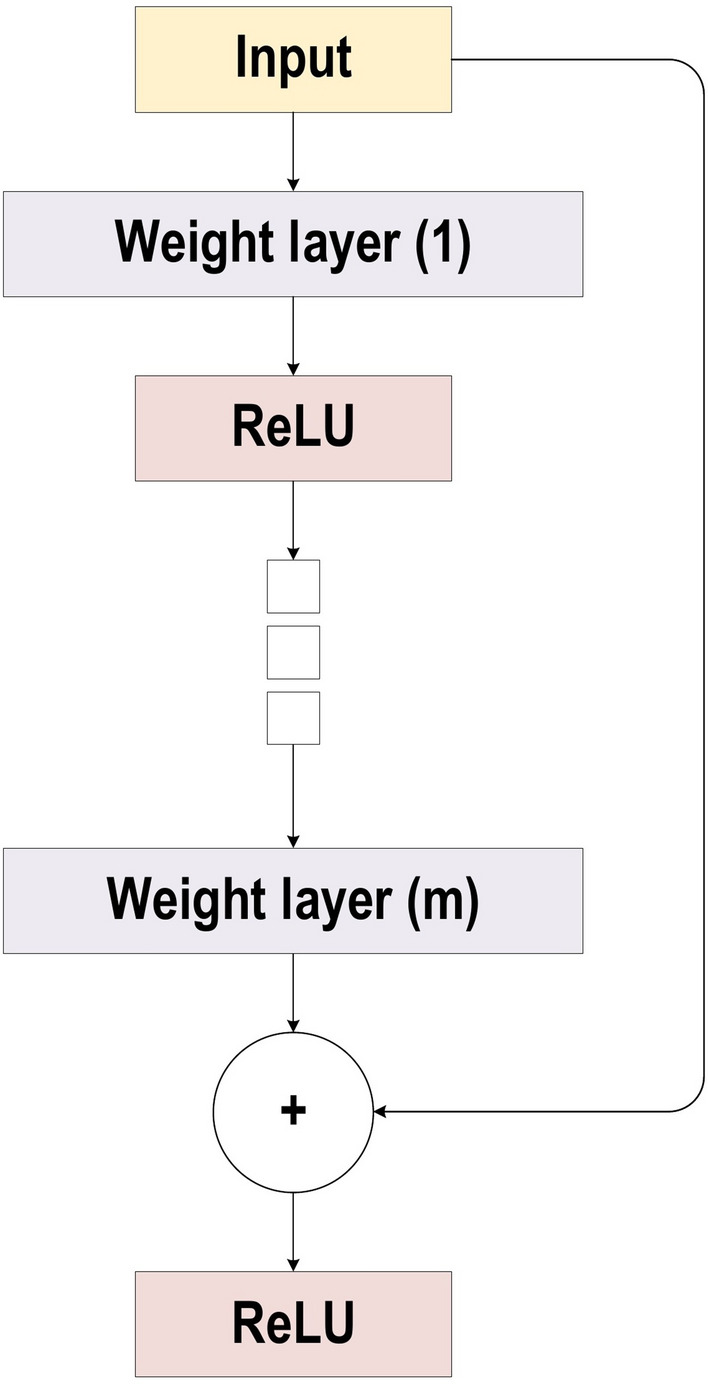
“In 2015, Srivastava et al. [105] suggested a novel CNN architecture, called Highway Network, to overcome this issue.”
§ Review of deep learning: concepts, CNN architectures, challenges, applications, future directions > CNN architectures > Highway network
What the sources say
- Supportedcites [105] Srivastava RK, Greff K, Schmidhuber J. Highway networks; 2015. arXiv preprint arXiv:1505.00387. source
The Introduction (p. 1) presents highway networks as a novel architecture intended to make very deep networks easier to optimize. Section 2.1 (p. 2) describes convolutional highway layers, supporting the CNN characterization, although the architecture is not limited to CNNs. (LLM, conf=0.93)
plainstates a cause- Asserted: passes — The authors put it forward as true.
- Checkable: passes — It can be checked against evidence.
- Load-bearing: unclear — It is unclear whether the paper’s conclusions depend on it.
- Based: passes — The paper gives a reason why it holds.
- Rests on 2 assumptions not shown here.
- Supported
93 more claims · 31 with their cited sources checked
Create a free account to see all 374 claims and to verify the 24 references still open.
- Probably not a substantial claim. 224
- It may state two separate claims as one. 109
- The quote only partly states this claim. 2
Claims other papers make about this one
Each is checked against this paper’s own text: does it say what the citing paper says it does?
The source backs part of the claim, not all of it — or backs it for a different population, condition or comparison.
In the citing paper
“Previous methodologies, such as, artificial neural networks (NNs), and the more recent DL techniques, have been preferred in SOC estimation because of their applicability to depict more intricate correlation systems of input parameters and SOC [44].”
From Review Paper for SOC Estimation Techniques: Challenges and Future Areas for Improvement (2024) · cites this paper as [44]
Experimental — accuracy not yet measured
Self-check
Percentages, sums and reported differences re-computed from the paper’s own numbers.
Self-check results appear here once an independent check has confirmed them.
Cited works that were retracted
Works this paper cites that were later retracted, from the retraction notices publishers deposit. Major when the notice came out before this paper was published.
Rated major: it would touch a result — a value a result rests on, reported and recomputed p-values on opposite sides of the significance level, two passages that conflict with no sign which is right, or a cited work retracted before this paper was published.
In the paper
“Min Z. Public welfare organization management system based on FPGA and deep learning. Microprocess Microsyst. 2020;80:103333.”
Cited work 10.1016/j.micpro.2020.103333 · retracted 2021-02-01 · notice 10.1016/j.micpro.2020.103333 · this paper published 2021-03-31
Citations
Cites
1 retracted
RETRACTED: Public welfare organization management system based on FPGA and deep learning
Min, Z. (2020) · Microprocessors and Microsystems · doi:10.1016/j.micpro.2020.103333 · Cited by 16
RetractedDeep Residual Learning for Image Recognition
He, K., Zhang, X., Ren, S., & Sun, J. (2016) · 2016 IEEE Conference on Computer Vision and Pattern Recognition (CVPR) · doi:10.1109/cvpr.2016.90 · Cited by 235,474
Very Deep Convolutional Networks for Large-Scale Image Recognition
Simonyan, K., & Zisserman, A. (2014) · arXiv · doi:10.48550/arxiv.1409.1556 · Cited by 114,148
ImageNet classification with deep convolutional neural networks
Krizhevsky, A., Sutskever, I., & Hinton, G. E. (2017) · Communications of the ACM · doi:10.1145/3065386 · Cited by 112,155
U-Net: Convolutional Networks for Biomedical Image Segmentation
Ronneberger, O., Fischer, P., & Brox, T. (2015) · Lecture notes in computer science · doi:10.1007/978-3-319-24574-4_28 · Cited by 99,404
LeCun, Y., Bengio, Y., & Hinton, G. (2015) · Nature · doi:10.1038/nature14539 · Cited by 84,126
ImageNet: A large-scale hierarchical image database
Deng, J., Dong, W., Socher, R., Li, L.-J., Li, K., & Fei-Fei, L. (2009) · 2009 IEEE Conference on Computer Vision and Pattern Recognition · doi:10.1109/cvpr.2009.5206848 · Cited by 65,333
Densely Connected Convolutional Networks
Huang, G., Liu, Z., Van Der Maaten, L., & Weinberger, K. Q. (2017) · 2017 IEEE Conference on Computer Vision and Pattern Recognition (CVPR) · doi:10.1109/cvpr.2017.243 · Cited by 48,566
Going deeper with convolutions
Szegedy, C., Liu, W., Jia, Y., Sermanet, P., Reed, S., Anguelov, D., Erhan, D., Vanhoucke, V., & Rabinovich, A. (2015) · 2015 IEEE Conference on Computer Vision and Pattern Recognition (CVPR) · doi:10.1109/cvpr.2015.7298594 · Cited by 48,562
Squeeze-and-Excitation Networks
Hu, J., Shen, L., & Sun, G. (2018) · 2018 IEEE/CVF Conference on Computer Vision and Pattern Recognition · doi:10.1109/cvpr.2018.00745 · Cited by 35,667
Research works printed but not linked: 4
- Erhan D Bengio Y Courville A Vincent P Visualizing higher-layer features of a deep network Univ Montreal 2009 1341 3 1
- Ribeiro AH, Tiels K, Aguirre LA, Schön T. Beyond exploding and vanishing gradients: analysing RNN training using attractors and smoothness. In: International conference on artificial intelligence and statistics, PMLR; 2020. p. 2370–80.
- Zhao H, Han Z, Yang Z, Zhang Q, Yang F, Zhou L, Yang M, Lau FC, Wang Y, Xiong Y, et al. Hived: sharing a {GPU} cluster for deep learning with guarantees. In: 14th {USENIX} symposium on operating systems design and implementation ({OSDI} 20); 2020. p. 515–32.
- Rakotomamonyj A. Optimizing area under roc with SVMS. In: Proceedings of the European conference on artificial intelligence workshop on ROC curve and artificial intelligence (ROCAI 2004), 2004. p. 71–80.
Cited by
Items 7,401–7,500 of 7,963
Exploring Important Features in Continuous Spectral Datasets Using Supervised Learning
Sun, R., Gardner, W., O’Shea, R., Rajesh, S., Fong, C., Bamford, S. E., Reynolds, N. P., Winkler, D. A., Muir, B. W., & Pigram, P. J. (2026) · Analytical Chemistry · doi:10.1021/acs.analchem.6c00048
Feature Extraction and Fusion of Multiple Convolutional Neural Networks for Firearm Detection
Dhillon, A., & Verma, G. K. (2022) · Lecture notes in electrical engineering · doi:10.1007/978-981-19-0840-8_34
Ayoade, O. B., Raji, M. O., Akindele, A. A., et al. (2025) · African Scientific Reports · doi:10.46481/asr.2025.4.3.320
Mitigating Cybercrime Through Automated Darknet Traffic Detection Using CNNs
Choorod, P., Janpuangtong, S., Weir, G. R. S., & Aßmuth, A. (2025) · International Conference on Electrical Engineering/Electronics, Computer, Telecommunications and Information Technology (ECTI-CON) · doi:10.1109/ecti-con64996.2025.11101120
Fowdur, T. P., & Babooram, L. (2024) · Apress eBooks · doi:10.1007/979-8-8688-0354-3_1
Wei, Q., Islam, M. T., Wu, W. E., & Xing, L. (2025) · IEEE Journal of Biomedical and Health Informatics · doi:10.1109/jbhi.2025.3617167
Li, R., Huang, A., Ding, X., et al. (2026) · Frontiers in Plant Science · doi:10.3389/fpls.2026.1897082
Santos, F., Moreno, S., Mejía-Guerrero, M., & Graw, V. (2026) · Frontiers in Ecology and Evolution · doi:10.3389/fevo.2026.1904087
Computational Approaches for Air Pollution Assessment
Yadav, A. K., & Maity, S. (2026) · Springer eBooks · doi:10.1007/978-3-032-13953-5_1
САРИН, К. С. (2025) · Scientific and Technical Information Processing · doi:10.3103/s0147688225700418
Hierarchical Approaches to Handwritten Digit Recognition: A Study of Modern Neural Networks
Sadhin, M. I. H., Bandhan, E. M., & -, M. A. A. M. (2024) · International Journal For Multidisciplinary Research · doi:10.36948/ijfmr.2024.v06i06.32390
Perbandingan Matriks Loss Pada Model Deep Learning Resnet50 dan Xception dalam Deteksi Objek
Herimanto, H. (2023) · JURNAL MEDIA INFORMATIKA BUDIDARMA · doi:10.30865/mib.v7i4.6849 · Cited by 2
Oh, W., Shin, J., & Park, C. (2025) · Journal of Mechanics in Medicine and Biology · doi:10.1142/s0219519425400019
De, A., Rakshit, S., & Bhattacharya, D. (2023) · Journal of Mines Metals and Fuels · doi:10.18311/jmmf/2023/34170
Efficient Model Based Decision Boundary to Improve Otolith Classification Using Deep Neural Networks
Ouriha, M., Mourabit, Y. E., Habouz, Y. E., et al. (2026) · Annals of Data Science · doi:10.1007/s40745-026-00699-z
Classification of Baleen Whale Social Calls Using Convolutional Neural Networks and Melspectrograms
Samardzija, A. (2025) · Telecommunications Forum (TELFOR) · doi:10.1109/telfor67910.2025.11314153
Bhuiyan, M. T. A., Rahman, M. A., Khan, F. I., et al. (2026) · Frontiers in Public Health · doi:10.3389/fpubh.2026.1769078
“Deep learning, especially transformer-based models, has revolutionized medical imaging, as the models are able to model hierarchical and global image dependencies (27).”
InterQ: a Job Interview Training Platform Using Facial Expression Detection and Answer Scoring
Boer, Y., Permatasari, A. C., Kevin, K., et al. (2025) · International Seminar on Research of Information Technology and Intelligent Systems (ISRITI) · doi:10.1109/isriti68345.2025.11393150
A Sectoral Electricity Sales Forecasting Method Based on Multi-Task Learning and Attention Mechanism
Xu, Q., Wang, X., Zhao, C., et al. (2025) · doi:10.1109/epee67527.2025.11428536
Kang, M., Zhang, Z., Zhao, Z., et al. (2025) · Remote Sensing · doi:10.3390/rs17071211
DQN-based Adaptive Network Architecture for High-Fidelity NGN Flow Classification
Alvin, A. P. C., Mohan, P., Loh, P. K. K., et al. (2024) · IEEE Conference on Communications and Network Security · doi:10.1109/cns62487.2024.10735584
Dynamically Reconfigurable Perception using Dataflow Parameterization of Channel Attention
Mal, Y., Nikha, K., Boutellier, J. J., Riggan, B. S., & Bhattacharyya, S. S. (2023) · Asilomar Conference on Signals, Systems and Computers (ACSSC) · doi:10.1109/ieeeconf59524.2023.10476908
Dataset Generating Methods for Best Facial Expressions Classification in Machine Learning
Robert, Kusuma, T. M., Hustinawati, & Madenda, S. (2025) · Lecture notes in networks and systems · doi:10.1007/978-981-96-6929-5_33
Perspective Chapter: Sensory Lifetime Optimization Using Artificial Intelligence
Ávila, B. P., Macedo, L. D., & Gularte, M. A. (2025) · Food science and nutrition · doi:10.5772/intechopen.1012279
Contactless Fingerprint Presentation Attack Detection Using Kolmogorov–Arnold Networks
Sharma, A., Tanuj, & Sharma, R. P. (2025) · IEEE Transactions on Biometrics Behavior and Identity Science · doi:10.1109/tbiom.2025.3632290
“In this work, we investigate the integration of Kolmogorov-Arnold Networks (KAN) [5] with Convolutional Neural Networks (CNN) [6] to enhance the performance of PAD in contactless fingerprint systems.”
Sekar, V., Govindarajan, L., Sirivuri, K. K., Cantwell, W. J., Liao, K., Ravaud, N., Berton, B., Jacquart, P.-M., & Al‐Rub, R. K. A. (2026) · Journal of low frequency noise, vibration and active control · doi:10.1177/14613484251412011 · Cited by 1
“49 Unlike traditional machine learning models that assume normality, CNN leverages its convolutional layers to capture local and global dependencies within the data.”
Deep Learning Architecture for Drone Pose Classification Towards Capture Maneuvers
Ferreira, J., & Guerreiro, B. J. (2026) · Lecture notes in networks and systems · doi:10.1007/978-3-032-30156-7_55
Shipboard Near-Field Prediction with Latent Diffusion Models
Tao, L., Fu, S., Dai, X., et al. (2025) · doi:10.23919/aces-china66523.2025.11332887
Ramadhani, F., Rahardiantoro, S., & Masjkur, M. (2024) · Indonesian Journal of Statistics and Its Applications · doi:10.29244/ijsa.v8i2p112-128 · Cited by 3
Comparative Analysis of Neural Network-Based Models for Sentiment Analysis on Twitter Data
Singh, K. N., Raghuwanshi, B. S., Shroti, H., Dubey, P., & Mewada, A. (2025) · International Conference on Communication, Security and Artificial Intelligence (ICCSAI) · doi:10.1109/iccsai64074.2025.11063787
Giannakoulias, S. G., Ferrie, J. J., Apicello, A., & Mitchell, C. A. (2023) · bioRxiv (Cold Spring Harbor Laboratory) · doi:10.1101/2023.09.01.555932 · Cited by 1
Li, Y., Zhang, Z., Yin, Z., et al. (2025) · SSRN Electronic Journal · doi:10.2139/ssrn.5740839
Particle identification in the GlueX detector with machine learning
Habjan, E., Dube, R., McIntyre, J., et al. (2025) · Journal of Instrumentation · doi:10.1088/1748-0221/20/10/p10024
Wang, E., Sun, X., Li, F., et al. (2026) · Engineering Research Express · doi:10.1088/2631-8695/ae6d80
“Owing to local receptive fields and weight sharing, CNNs can efficiently learn local patterns and have demonstrated strong effectiveness in both image analysis and time-series forecasting [28, 29].”
Fibonacci Array-Based Temporal-Spatial Localization with Neural NetworksPreprint
Tang, J., Qu, Y., Ma, E., et al. (2024) · SSRN Electronic Journal · doi:10.2139/ssrn.4775674
Teknik Random Undersampling untuk Mengatasi Ketidakseimbangan Kelas pada CT Scan Kista Ginjal
Ramadhan, I. S., & Salam, A. (2024) · Techno Com · doi:10.62411/tc.v23i1.9738
Towards Advanced Emotional Care: Embodied Emotional Care System for Humanoid Robots
Chang, Y., Li, A. L., Lin, Y., Wang, J., Liu, L., Liu, Y., Liu, J., Cao, L., Wang, Y., Gan, Z., et al. (2025) · IEEE International Conference on Multimedia and Expo (ICME) · doi:10.1109/icme59968.2025.11208942
Zhang, X. (2025) · International Conference on Digital Transformation and Management · doi:10.1145/3795546.3795580
Wei, J., Zhang, H., Penzel, T., Qiu, H., Zhang, Y., & Vai, M. I. (2025) · IEEE Transactions on Affective Computing · doi:10.1109/taffc.2025.3643454 · Cited by 1
Reconstructing Missing Data in Bridge Monitoring Using CNN-enhanced KANs
Ma, C., Tang, Z., Su, Z., et al. (2025) · doi:10.1109/icbdse65491.2025.11220123
Park, Y. M., & Jung, D.-H. (2026) · Biosensors · doi:10.3390/bios16060320
“Particularly, convolutional neural networks (CNNs) are representative deep learning models demonstrating powerful performance in computer vision, extracting features through filters and learning spatial information [11].”
Image recognition for post-impact residual compressive strength prediction in composite structures
Su, S. (2026) · Journal of Composite Materials · doi:10.1177/00219983261418178
Computational Geometry and its Applications in Advanced Algorithm Design
Kalidas, N., Bhushan, B., Vijayalakshmi, G., Singh, J., Makhija, P., & Maral, V. (2024) · 2024 IEEE 4th International Conference on ICT in Business Industry & Government (ICTBIG) · doi:10.1109/ictbig64922.2024.10911440
Li, X., Wu, S. J., Wang, Y., Yasin, Y., Gupta, A. K., Huang, H., & Lee, K. (2025) · Journal of Ambient Intelligence and Smart Environments · doi:10.1177/18761364241305552 · Cited by 1
Classification Techniques to Predict the Risk of Myelodysplastic Syndromes using Deep Learning
Srilakshmi, K., & Lakshmi, D. V. (2023) · International Conference on Data Science, Agents & Artificial Intelligence (ICDSAAI) · doi:10.1109/icdsaai59313.2023.10452580
Humeniuk, R., & Fedirko, Y. (2025) · Computer Design Systems Theory and Practice · doi:10.23939/cds2025.01.124
Multi-class Brain Tumour Classification Using Optimized ResNet50
Rajamanickam, S., Iyer, A., & Ushasukhanya, S. (2024) · Communications in computer and information science · doi:10.1007/978-3-031-68908-6_20
Rashidi, P., Ghorbani, M., Bakhsh, M. J. N., et al. (2026) · Communications in computer and information science · doi:10.1007/978-3-032-17020-0_2
Classification of Hydroponic Lettuce Leaves Using Convolutional Neural Networks
Swamy, K. V., Deepthi, D. S., Rani, T., et al. (2025) · Lecture notes of the Institute for Computer Sciences, Social Informatics and Telecommunications Engineering · doi:10.1007/978-3-031-94280-8_27
The Magic of Artificial Intelligence-1
Nazir, A., Hussain, A. B., Singh, M., & Assad, A. (2025) · Springer eBooks · doi:10.1007/978-981-96-8176-1_1
Improving Cell Nuclei Segmentation in Pathological Tissues Using Self-Supervised Regression Method
Ali, H., Hammouda, M. A., Elattar, M., & Selim, S. (2025) · IEEE Access · doi:10.1109/access.2025.3583069 · Cited by 1
Deep Residual Xception Network-Based Lung Cancer Detection Using CT Images
Balasubramaniam, S. R., Gnanasekaran, D., Sargunan, I., et al. (2025) · Cancer Investigation · doi:10.1080/07357907.2025.2580957
Automatic Classification of Heart Sounds Utilizing Hybrid Model of Convolutional Neural Networks
Shyaa, M. A., Hasan, A. S., Ibrahim, H. M., & Hamza, W. S. (2021) · Communications in computer and information science · doi:10.1007/978-3-030-93417-0_7
Lin, J., Yeo, L. Y., Afrouzi, H. N., et al. (2025) · SSRN Electronic Journal · doi:10.2139/ssrn.5429510
AM-DETR: adaptive multi-granularity detection transformer for PCB defect detection
Zhang, L., Zhang, X., Chen, Y., Yang, S., Feng, Q., & Zhang, J. (2026) · Engineering Research Express · doi:10.1088/2631-8695/ae638b
“Recent efforts to improve Transformer multiscale adaptation integrate CNN [34], feature pyramid networks (FPNs) [35] or PANets [22], but their static fusion strategies fail to adapt to dynamic scale variations in PCB defects, where a 50 µ m microcrack may coexist with a 10 mm missing pad.”
Self-citationObject‐Based Flow Map Classification Combining Speckle Imaging and Machine Learning
Abookasis, D., Berolsky, I., Zinn, I., et al. (2026) · International Journal of Optics · doi:10.1155/ijo/8614469
Exploring Vision Transformers for Enhanced MRI-Based Alzheimer’s Disease Classification
Muthukumar, K., Gurung, A., & Ranjan, P. (2025) · Learning and analytics in intelligent systems · doi:10.1007/978-3-031-82706-8_7
Capistrano, B. S., Oliveira, D. D. L., Batista, D. D. J., Zica, G. M., de Barros, V. N., Revoredo, T. D. M., Furkim, A. M., & de Andrade, R. A. (2026) · Revista CEFAC · doi:10.1590/1982-0216/202628211025
S-FINCH: An Optimized Streaming Adaptation to FINCH Clustering
Cunningham, J., Davis, J., Tarplee, K. M., & Vasquez, J. (2022) · Proceedings - International Conference on Pattern Recognition/Proceedings/International Conference on Pattern Recognition · doi:10.1109/icpr56361.2022.9956513
Wei, H., Diao, Z., Diao, J., Wen, L., Sun, B., Chen, X., & Yin, L. (2026) · Electronics · doi:10.3390/electronics15102158
Improving groundwater level prediction based on optimized deep learning model with Coati algorithm
Ikram, R. M. A., Han, J., Wang, M., Samantaray, S., Sahoo, A., Abdulameer, S. F., Al-Suwaiyan, M. S., & Yaseen, Z. M. (2026) · Environmental Modelling & Software · doi:10.1016/j.envsoft.2026.107071
AquaNetCT: Detecting and Representing Urban Drainage Networks from Video Analysis
Ma, T.-T., Benferhat, S., Tran-Nguyen, M.-T., & Do, T. (2025) · Communications in computer and information science · doi:10.1007/978-981-95-3358-9_3 · Cited by 1
Zhang, J., Yang, Z., Smith, A., Talbot, A., Liu, Z., Shang, X., Dash, S. S., & Zou, Y. (2026) · Journal of Manufacturing Systems · doi:10.1016/j.jmsy.2026.06.018 · Cited by 1
Self-citationUncertainty Quantification for Neutron Shield Using Convolutional Neural Networks
Zamora, J. C., Bollen, G., Ginter, T. N., et al. (2025) · Nuclear Technology · doi:10.1080/00295450.2025.2521881
Alshareef, S. M. (2026) · Sustainability · doi:10.3390/su18062729
Ballaji, W. K., & Hadadi, H. M. (2021) · World Family Medicine Journal/Middle East Journal of Family Medicine · doi:10.5742/mewfm.2021.94186
Research and Analysis on Artificial Intelligence in Integrated Circuits
Yu, F. (2024) · Transactions on Computer Science and Intelligent Systems Research · doi:10.62051/pp9kq078
Development of cold damage classifiers for peach flowers using hyperspectral imagery
Choi, J. W., Cho, S. B., Jo, M. J., et al. (2026) · Korean Journal of Agricultural Science · doi:10.7744/kjoas.530202
Pemodelan Wilayah Titik Api Kebakaran Hutan Menggunakan Deep Learning
Dwiasnati, S., Devianto, Y., Arif, S. M., et al. (2024) · Jurnal Ilmiah FIFO · doi:10.22441/fifo.2024.v16i1.001
Agriculture meets artificial intelligence: revolutionizing farming practices through technology
Agarwal, T., & Uttam, S. (2026) · Elsevier eBooks · doi:10.1016/b978-0-443-40316-3.00005-9
Detection of Electrical Fires in Residential Buildings Using a Gradient Boosting Machine Algorithm
Ahmed, S., & Aula, F. T. (2025) · Polytechnic Journal · doi:10.59341/2707-7799.1860
Chandrakala, H. T., Gowda, Y. N., & Thippeswamy, G. (2026) · Cureus Journal of Computer Science. · doi:10.7759/s44389-026-00084-0
“Consequently, Xception can achieve higher learning efficiency and better performance without reducing the number of parameters, as per Alzubaidi et al. [24].”
InfluentialJung, J., & Oh, Y. (2025) · International Conference on Machine Learning and Human-Computer Interaction (MLHMI) · doi:10.1109/mlhmi66056.2025.00009
Recombination rate inference via deep learning is limited by sequence diversityPreprint
Johnson, M. M., & Wilke, C. O. (2022) · bioRxiv (Cold Spring Harbor Laboratory) · doi:10.1101/2022.07.01.498489 · Cited by 1
Chakraborty, A., Tarczy-Hornoch, P. Z., Long, D. R., & Yetişgen, M. (2026) · JMIR Perioperative Medicine · doi:10.2196/87896
“Second, deep learning approaches reduce the need for labor-intensive rule design and manual feature engineering, which have historically been required for rule-based or traditional ML surveillance systems [22].”
Artificial intelligence in plant disease mitigation and nutrient acquisition
Nthebere, K., Yadav, M. B. N., Gowda, G. R. V., Kumar, N. V., Joshi, N. C., & Tyagi, J. (2025) · Methods in microbiology · doi:10.1016/bs.mim.2024.12.007
Othman, Z., Sabri, N., Roslan, N. A., Jasman, W. A. S. B. B., Dahalan, N. M., Ghazalli, H. I. M., Samah, K. A. F. A., & Zain, N. H. M. (2026) · Journal of Information System and Technology Management · doi:10.35631/jistm.1142024
FoodNet-CNN: A Deep Learning Model for Multi-Class Food Image Classification
Nguyen, P.-T., Do, T. T., Pham, N. T., et al. (2026) · Lecture notes in electrical engineering · doi:10.1007/978-981-95-7896-2_7
Knowledge, Attitude and Practice of Non-Psychiatric Physicians about Addiction
Al-Ahmari, S. M., Almusa, A. A., Alshomrani, A. A., Ahmary, W. S. H. A., Assiry, Z. S. A., Alqahtany, S. M. S., Asiri, A. Y., Alqahtani, T. S., Alassiri, N. S., & Mostafa, O. A. (2021) · World Family Medicine Journal/Middle East Journal of Family Medicine · doi:10.5742/mewfm.2021.94185
Song, H., Wang, Y., Lu, N., et al. (2025) · Chinese Control and Decision Conference (CCDC) · doi:10.1109/ccdc65474.2025.11090971
Putra, Y. H., Triwibowo, B. A., Delenia, E., et al. (2024) · Ingénierie des systèmes d information · doi:10.18280/isi.290438
Kernels with peripheral vison: weights of different significance
He, Z. (2023) · Journal of Physics Conference Series · doi:10.1088/1742-6596/2580/1/012051
Wang, C., Yu, Y., Wang, W., et al. (2026) · Composites Part A Applied Science and Manufacturing · doi:10.1016/j.compositesa.2026.110294
Generation of realistic synthetic cable images to train Deep Learning segmentation modelsPreprint
Fresnillo, P. M., Mohammed, W. M., Vasudevan, S., et al. (2024) · Research Square · doi:10.21203/rs.3.rs-3959243/v1
Severity Classification of Diabetic Retinopathy Using Customized CNN
Firke, S. N., & Jain, R. B. (2022) · Lecture notes on data engineering and communications technologies · doi:10.1007/978-981-16-7610-9_14
DLIoMT: Deep Learning Approaches for IoMT-Overview, challenges and the future
Harshni, V., Singh, S., Indhumathi, R., Kumar, N. S., Chowdhury, S., & Patra, S. S. (2025) · International Conference on Computer, Electrical & Communication Engineering (ICCECE) · doi:10.1109/iccece61355.2025.10940162 · Cited by 9
Towards Accurate Brain Tumor Detection: Comparative Analysis on MRI Images
Sutjipta, J. D., Michaeline, C. V., & Sutoyo, R. (2025) · International Conference of Science and Information Technology in Smart Administration (ICSINTESA) · doi:10.1109/icsintesa68165.2025.11413719
Neural network learning of multi-scale and discrete temporal features in directed percolation
Gao, F., Shen, J., Wang, S., et al. (2025) · Physics Letters A · doi:10.1016/j.physleta.2025.131071
Wan, J., Sun, Q., & Wu, S. (2026) · Nuclear Engineering and Technology · doi:10.1016/j.net.2026.104342
Investigating the Impact of Dataset Size on Model Complexity for Leaf Disease Recognition using CNN
Shruthi, K., Naveen, B., & Shivashankara, S. (2023) · International Conference on Recent Advances in Science and Engineering Technology (ICRASET) · doi:10.1109/icraset59632.2023.10420294
Künstliche Intelligenz (KI): Die Technologie des Jahrhunderts?
Demiri, A., Thomas, L., & Späth, L. (2026) · Springer eBooks · doi:10.1007/978-3-658-50439-7_2
Evrişimli Sinir Ağı Kullanarak El yazısı Rakamların Tanımasında Hiper Parametre Analizi
Yiğit, T., ATMACA, Ş., Gürfidan, R., & Çolak, R. (2023) · Gazi Journal of Engineering Sciences · doi:10.30855/gmbd.0705s25
Compressed domain classification of remote sensing scene images based on sub-band data fusion
Arıcan, B., Akkul, E. S., Çarkacıoğlu, L., & Töreyın, B. U. (2022) · Image and signal processing for remote sensing. Conference · doi:10.1117/12.2635862
Machine Learning-Based Anomaly Detection for Modbus and DNP3 Protocols in Industrial Control Systems
Supeno, B. A., Radzi, N. A. M., & Al-Haiqi, A. (2025) · International Conference on Technology and Policy in Energy and Electric Power (ICT-PEP) · doi:10.1109/ict-pep67281.2025.11232367 · Cited by 1
Bhandari, B., Tahmid, S., & Yang, J. (2026) · Journal of Biomechanical Engineering · doi:10.1115/1.4072487
Kanthasamy, D., & Kumar, C. N. S. V. (2026) · Australian Journal of Electrical & Electronics Engineering · doi:10.1080/1448837x.2025.2612429
Rahman, M., & Mollah, A. F. (2025) · Lecture notes in networks and systems · doi:10.1007/978-981-97-8476-9_15
Autonomous Evolutionary Control Learning
Valdez, P. G. (2025) · Lecture notes in networks and systems · doi:10.1007/978-3-032-04725-0_15
MACHINE LEARNING FOR DATA ASSIMILATION/INVERSE MODELING IN THERMAL PROBLEMS
Yadu Krishnan, S., Baxter, M., & Nithiarasu, P. (2025) · Annual Reviews of Heat Transfer · doi:10.1615/annualrevheattransfer.2025060593
Metadata
- Authors
- Alzubaidi, L., Zhang, J., Humaidi, A. J., Al-Dujaili, A., Duan, Y., Al-Shamma, O., Santamaría, J., Fadhel, M. A., Al-Amidie, M., & Farhan, L.
- Affiliations
- Queensland University of Technology (AU)
- University of Technology - Iraq (IQ)
- Middle Technical University (IQ)
- University of Missouri (US)
- University of Information Technology and Communications (IQ)
- Universidad de Jaén (ES)
- University of Sumer (IQ)
- Manchester Metropolitan University (GB)
- Corresponding author
- Alzubaidi, Laith
- ORCID
- Venue
- Journal of Big Data
- Published
- 2021-03-31
- Volume
- 8
- Issue
- 1
- Pages
- 53-53
- ISSN
- 2196-1115 (ISSN-L)
- PMC
- PMC8010506
- OpenAlex
- W3140854437
- Semantic Scholar
- 0084f3cb0a1754272151c5268a783f24bf5676a0
- Cited by
- 7,906
- References
- 372
- Citations by year
- 2026: 1140 · 2025: 2146 · 2024: 2166 · 2023: 1583 · 2022: 719 · 2021: 152
- FWCI
- 414.94
- Type
- journal article
- Language
- en
- Open access
- gold
- doi.org
- Licence
- cc-by
- creativecommons.org/licenses/by/4.0 (tdm)
- creativecommons.org/licenses/by/4.0 (vor)
- Locations
- Journal Of Big Data (publishedVersion, cc-by)
- PubMed Central (publishedVersion, cc-by)
- PubMed (publishedVersion)
- RUJA. Institutional Repository of Scientific Production of the University of Jaén (University of Jaén) (publishedVersion, cc-by-nc-nd)
- QUT ePrints (Queensland University of Technology) (submittedVersion, cc-by)
- DOAJ (DOAJ: Directory of Open Access Journals) (submittedVersion, cc-by-sa)
- Funders
- Queensland University of Technology
- Topics
- Physical Sciences › Computer Science › Computer Vision and Pattern Recognition › Advanced Neural Network Applications
- Physical Sciences › Computer Science › Artificial Intelligence › Neural Networks and Applications
- Physical Sciences › Computer Science › Artificial Intelligence › Domain Adaptation and Few-Shot Learning
- Keywords
- deep learning, convolutional neural networks, convolutional neural network architecture, AlexNet, HRNet, deep learning applications, FPGA, graphics processing units, CPU, benchmark dataset
About these checks
Registry, retraction, Cites and statistics results are computed, not judged, with one exception: a printed reference that no index lists is read once by a model before it counts as a citation error. Claims are extracted by a model and kept only when their quote appears verbatim in the text; each cited source is then checked, with a model’s help, for whether it says what the claim relies on. Those verdicts can be wrong — read the claim’s quote and the cited source before relying on one.
The claim verdicts this report counts are experimental: their accuracy is not yet measured.
A language model drew the claims from the paper on 2026-09-28, under version 3 of the claim definition (model deepseek-v4.1-flash, prompt extract-v3).
A second model labelled each claim on 2026-09-28 (model jev-1.13-20260917, definition revision gold-guideline-v0.2).
Cited sources are checked with a language model’s help (gpt-6-sol and qwen3.8-omni-flash).
Statistics and arithmetic are recomputed, not judged.
Confidence bands are shown only for fields calibrated on our annotated test set. None is calibrated yet, so no band is shown.
What counts as a claim ›How we measure confidence ›How we check this ›
Are you an author, or do you see a problem with this page? Request a review
Data sources
Bibliographic data: Semantic Scholar, OpenAlex, Crossref.
Contains information from the Semantic Scholar Academic Graph Datasets, made available under the ODC Attribution License (ODC-BY 1.0).
Semantic Scholar’s data is described in: Kinney, R., et al. (2023). The Semantic Scholar Open Data Platform. arXiv:2301.10140.
