

Review of deep learning: concepts, CNN architectures, challenges, applications, future directions
Open accessThe DOI matches its Crossref record; 361 of the 372 references it cites were found in a registry or an index; 138 of the 246 sources its claims cite were checked for support.
Abstract
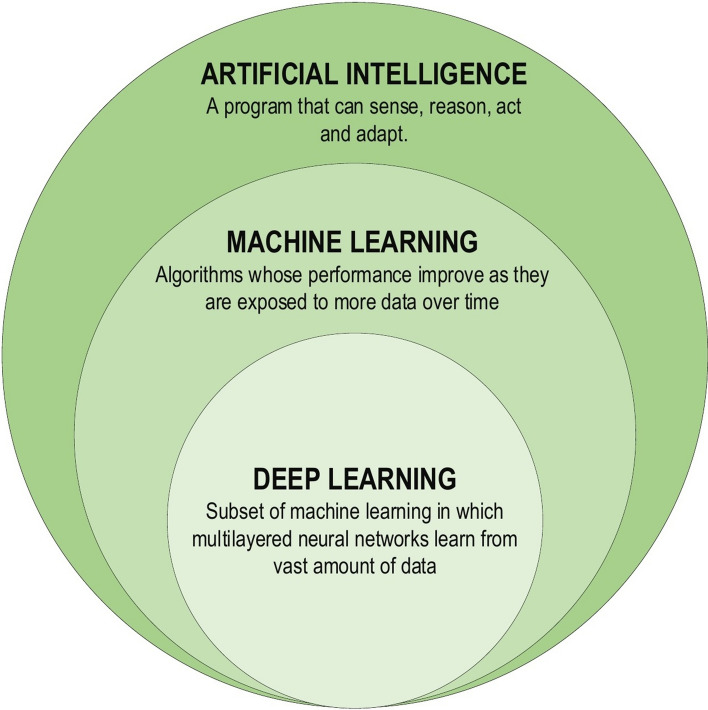
In the last few years, the deep learning (DL) computing paradigm has been deemed the Gold Standard in the machine learning (ML) community. Moreover, it has gradually become the most widely used computational approach in the field of ML, thus achieving outstanding results on several complex cognitive tasks, matching or even beating those provided by human performance. One of the benefits of DL is the ability to learn massive amounts of data. The DL field has grown fast in the last few years and it has been extensively used to successfully address a wide range of traditional applications. More importantly, DL has outperformed well-known ML techniques in many domains, e.g., cybersecurity, natural language processing, bioinformatics, robotics and control, and medical information processing, among many others. Despite it has been contributed several works reviewing the State-of-the-Art on DL, all of them only tackled one aspect of the DL, which leads to an overall lack of knowledge about it. Therefore, in this contribution, we propose using a more holistic approach in order to provide a more suitable starting point from which to develop a full understanding of DL. Specifically, this review attempts to provide a more comprehensive survey of the most important aspects of DL and including those enhancements recently added to the field. In particular, this paper outlines the importance of DL, presents the types of DL techniques and networks. It then presents convolutional neural networks (CNNs) which the most utilized DL network type and describes the development of CNNs architectures together with their main features, e.g., starting with the AlexNet network and closing with the High-Resolution network (HR.Net). Finally, we further present the challenges and suggested solutions to help researchers understand the existing research gaps. It is followed by a list of the major DL applications. Computational tools including FPGA, GPU, and CPU are summarized along with a description of their influence on DL. The paper ends with the evolution matrix, benchmark datasets, and summary and conclusion.
Overview
CoChat Summary
## TL;DR
This paper is a broad review of deep learning that explains core concepts, classifies DL approaches, and surveys CNN architectures from AlexNet to HRNet. It also summarizes major challenges, applications, and computational platforms, with a heavy emphasis on medical imaging and CNN-based solutions.
## Key findings
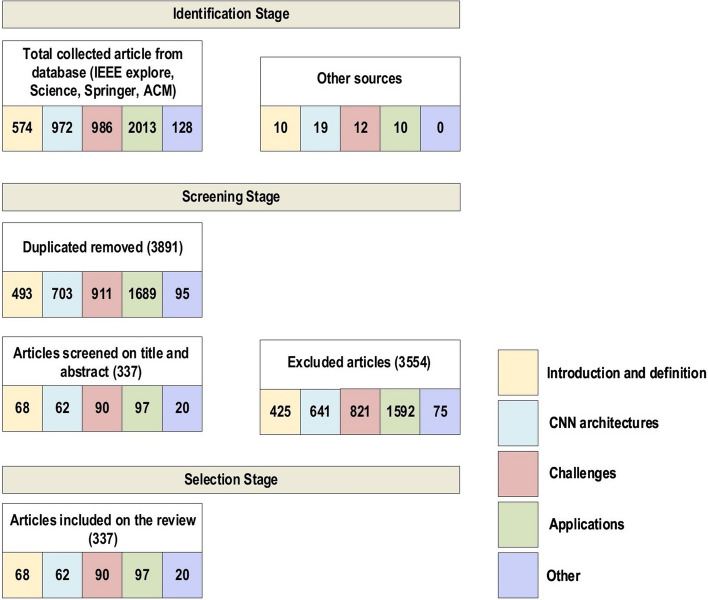
- The authors reviewed more than 300 papers on deep learning topics, with 108 papers from 2020, 76 from 2019, and 48 from 2018.
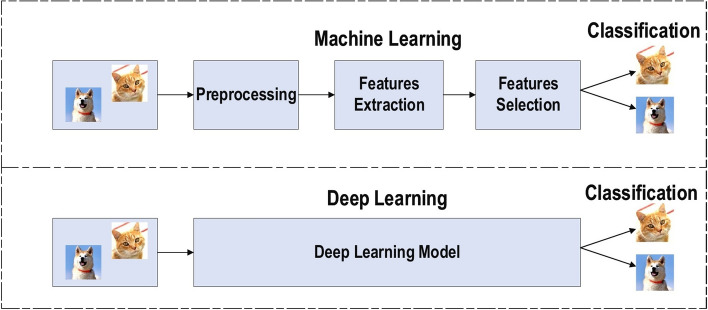
- They argue that DL can reduce manual feature engineering by learning features automatically and that it has already achieved strong results in tasks such as image classification, detection, segmentation, and registration.
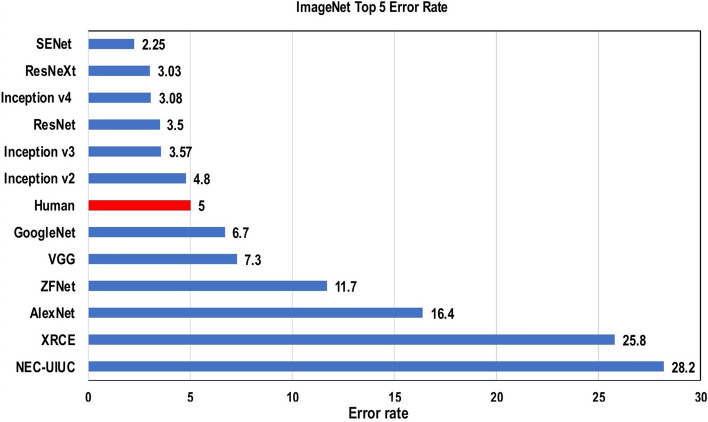
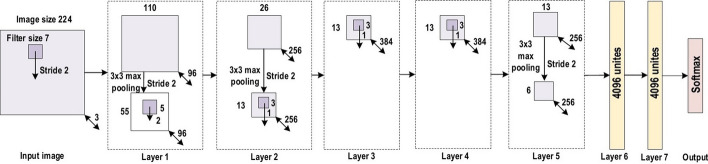
- The paper highlights that CNNs are the most used DL network type and reviews their architectural evolution from AlexNet (2012) to HRNet (2020).
- It identifies major DL challenges including lack of training data, imbalanced data, interpretability, uncertainty scaling, catastrophic forgetting, model compression, overfitting, vanishing/exploding gradients, and underspecification.
## Methods
- This is a survey/review paper, not an experimental study.
- The authors report reviewing literature from 2010–2020 (mainly 2020 and 2019, with some 2021 papers), drawing from publishers including IEEE, Elsevier, MDPI, Nature, ACM, and Springer, plus some arXiv papers.
- Their review was organized to cover DL approaches and network types, CNN architectures, challenges and solutions, applications, and computational approaches.
## Limitations
- The paper itself states that the review is not exhaustive for every topic; for example, in registration it says it is “out of the scope of this work to provide an extensive review of this topic.”
- The text also makes evident that some sections are descriptive rather than systematic: it summarizes many studies and architectures but does not report a formal meta-analysis or quantitative comparison across all included papers. (This is evident from the text.)
- Several sections are labeled only as headings or brief placeholders in the provided text, suggesting the supplied version is fragmentary/incomplete in places. (This is evident from the text.)
Model-written summary. Check it against the paper before relying on it.
Integrity signals
Registry
Cites
Statistics
Figures
Verification
Claims the paper makes
81 Valid · 72 Not valid · 63 Not checked · 158 Own results and interpretations
Some cited sources support this claim and some don’t — read each source’s verdict below.
In the paper
“Increase the depth (or width) of the model.”
§ Review of deep learning: concepts, CNN architectures, challenges, applications, future directions > Types of DL networks > Convolutional neural networks
What the sources say
- Disputedcites [86] Alzubaidi L Fadhel MA Al-Shamma O Zhang J Duan Y Deep learning models for classification of red blood cells in microscopy images to aid in sickle cell anemia diagnosis Electronics 2020 9 3 427 10.3390/electronics9030427 sourceExperimental — accuracy not yet measured
In the paper’s model-comparison discussion (page not available in our copy), the authors say they increased network depth to improve performance, but it did not help; Model 2 performed best. The cited passage therefore does not support recommending greater depth as a way to improve performance, and it gives no corresponding result for greater width. (LLM, conf=0.86)
Checked by a reasoning model — may be wrong.
- Not checked yetcites [87] Alzubaidi L Fadhel MA Al-Shamma O Zhang J Santamaría J Duan Y Oleiwi SR Towards a better understanding of transfer learning for medical imaging: a case study Appl Sci 2020 10 13 4523 10.3390/app10134523 source
Checked before — its earlier verdict is held back until a new check runs.
- Partly supportedcites [88] Alzubaidi L Al-Shamma O Fadhel MA Farhan L Zhang J Duan Y Optimizing the performance of breast cancer classification by employing the same domain transfer learning from hybrid deep convolutional neural network model Electronics 2020 9 3 445 10.3390/electronics9030445 sourceExperimental — accuracy not yet measured
Section 3.5 (Proposed Model; page unavailable) says a deep CNN with improved feature extraction is needed for breast-biopsy classification and describes a multi-branch architecture. It does not establish that simply increasing a model’s depth or width improves CNN performance; the proposed model also uses residual links and other design choices. (LLM, conf=0.78)
plainstates a possible cause- Asserted: passes — The authors put it forward as true.
- Checkable: passes — It can be checked against evidence.
- Load-bearing: unclear — It is unclear whether the paper’s conclusions depend on it.
- Based: passes — The paper gives a reason why it holds.
- Disputed
The cited sources support only part of this claim — read each source’s verdict below.
In the paper
“The main benefit of CNN compared to its predecessors is that it automatically identifies the relevant features without any human supervision [76].”
§ Review of deep learning: concepts, CNN architectures, challenges, applications, future directions > Types of DL networks > Convolutional neural networks
What the sources say
- Partly supportedcites [76] Gu J Wang Z Kuen J Ma L Shahroudy A Shuai B Liu T Wang X Wang G Cai J Recent advances in convolutional neural networks Pattern Recogn 2018 77 354 377 10.1016/j.patcog.2017.10.013 sourceExperimental — accuracy not yet measured
The paper says CNNs learn features automatically rather than relying on handcrafted features (5.3, p. 22), supporting the feature-learning part of the claim. But it does not support “without any human supervision”: the Conclusions (p. 28) say training requires manually collected labeled data and identify unsupervised CNN learning as a goal for further work. (LLM, conf=0.88)
plainstates a cause- Asserted: passes — The authors put it forward as true.
- Checkable: passes — It can be checked against evidence.
- Load-bearing: unclear — It is unclear whether the paper’s conclusions depend on it.
- Based: passes — The paper gives a reason why it holds.
- Partly supported
The cited sources support only part of this claim — read each source’s verdict below.
In the paper
“Add regularization.”
§ Review of deep learning: concepts, CNN architectures, challenges, applications, future directions > Types of DL networks > Convolutional neural networks
What the sources say
- Supportedcites [86] Alzubaidi L Fadhel MA Al-Shamma O Zhang J Duan Y Deep learning models for classification of red blood cells in microscopy images to aid in sickle cell anemia diagnosis Electronics 2020 9 3 427 10.3390/electronics9030427 source
Section 3.2 (p. 8) says data augmentation enhances classification performance and helps prevent CNN overfitting. The paper thus supports the hedged claim that adding an overfitting-control technique may improve CNN performance, specifically in red-blood-cell classification. (LLM, conf=0.82)
- Partly supportedcites [87] Alzubaidi L Fadhel MA Al-Shamma O Zhang J Santamaría J Duan Y Oleiwi SR Towards a better understanding of transfer learning for medical imaging: a case study Appl Sci 2020 10 13 4523 10.3390/app10134523 sourceExperimental — accuracy not yet measured
Our copy places regularization among techniques for limiting overfitting (Sec. 5.2.4 Dropout: 'A limited number of solutions are used to reduce the risk of overfitting... Other techniques involve the use of regularization and enlargement of the training dataset'), and lists 'regularization strategies' among the attributes in which DCNNs advanced (Sec. 2.2). That supports regularization as a performance-related device, but the paper never states that adding regularization improves CNN performance; on the contrary, its only comparative statement favours the alternative: 'Compared to regularization, dropout performs well in accelerating the process of training, as well as reducing the overfitting risk' (Sec. 5.2.4). The claim's asserted benefit of adding regularization is therefore only partly carried by this source. (LLM, conf=0.68)
- Supportedcites [88] Alzubaidi L Al-Shamma O Fadhel MA Farhan L Zhang J Duan Y Optimizing the performance of breast cancer classification by employing the same domain transfer learning from hybrid deep convolutional neural network model Electronics 2020 9 3 445 10.3390/electronics9030445 source
Section 3.5 (Proposed Model; page unavailable) says the authors placed a dropout layer in their CNN to prevent overfitting. Dropout is a form of regularization, so this supports the qualified claim that adding regularization may improve CNN performance. (LLM, conf=0.85)
plainstates a possible cause- Asserted: passes — The authors put it forward as true.
- Checkable: passes — It can be checked against evidence.
- Load-bearing: unclear — It is unclear whether the paper’s conclusions depend on it.
- Based: passes — The paper gives a reason why it holds.
- Supported
Every source the paper cites for this claim was checked and supports it.
In the paper
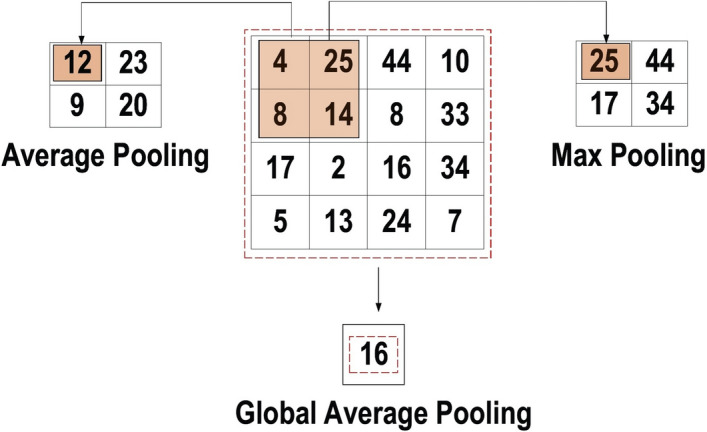
“As a substitution for a FC layer, the GAP is also employed, which represents the second novel concept and enables a significant reduction in the number of model parameters.”
§ Review of deep learning: concepts, CNN architectures, challenges, applications, future directions > CNN architectures > Network-in-network
What the sources say
- Supportedcites [94] Lin M, Chen Q, Yan S. Network in network; 2013. arXiv preprint arXiv:1312.4400. source
Section 3.2 (p. 4) proposes global average pooling as a replacement for fully connected layers and says the pooling layer has no parameters to optimize. Section 4.6 (p. 7) contrasts this with fully connected layers’ trainable dense transformation matrices, supporting the claimed reduction in parameters, though it does not quantify the reduction. (LLM, conf=0.90)
plainstates a cause- Asserted: passes — The authors put it forward as true.
- Checkable: passes — It can be checked against evidence.
- Load-bearing: unclear — It is unclear whether the paper’s conclusions depend on it.
- Based: passes — The paper gives a reason why it holds.
- Supported
Every source the paper cites for this claim was checked and supports it.
In the paper
“In 2015, Srivastava et al. [105] suggested a novel CNN architecture, called Highway Network, to overcome this issue.”
§ Review of deep learning: concepts, CNN architectures, challenges, applications, future directions > CNN architectures > Highway network
What the sources say
- Supportedcites [105] Srivastava RK, Greff K, Schmidhuber J. Highway networks; 2015. arXiv preprint arXiv:1505.00387. source
The Introduction (p. 1) presents highway networks as a novel architecture intended to make very deep networks easier to optimize. Section 2.1 (p. 2) describes convolutional highway layers, supporting the CNN characterization, although the architecture is not limited to CNNs. (LLM, conf=0.93)
plainstates a cause- Asserted: passes — The authors put it forward as true.
- Checkable: passes — It can be checked against evidence.
- Load-bearing: unclear — It is unclear whether the paper’s conclusions depend on it.
- Based: passes — The paper gives a reason why it holds.
- Rests on 2 assumptions not shown here.
- Supported
93 more claims · 31 with their cited sources checked
Create a free account to see all 374 claims and to verify the 24 references still open.
- Probably not a substantial claim. 224
- It may state two separate claims as one. 109
- The quote only partly states this claim. 2
Claims other papers make about this one
Each is checked against this paper’s own text: does it say what the citing paper says it does?
The source backs part of the claim, not all of it — or backs it for a different population, condition or comparison.
In the citing paper
“Previous methodologies, such as, artificial neural networks (NNs), and the more recent DL techniques, have been preferred in SOC estimation because of their applicability to depict more intricate correlation systems of input parameters and SOC [44].”
From Review Paper for SOC Estimation Techniques: Challenges and Future Areas for Improvement (2024) · cites this paper as [44]
Experimental — accuracy not yet measured
Self-check
Percentages, sums and reported differences re-computed from the paper’s own numbers.
Self-check results appear here once an independent check has confirmed them.
Cited works that were retracted
Works this paper cites that were later retracted, from the retraction notices publishers deposit. Major when the notice came out before this paper was published.
Rated major: it would touch a result — a value a result rests on, reported and recomputed p-values on opposite sides of the significance level, two passages that conflict with no sign which is right, or a cited work retracted before this paper was published.
In the paper
“Min Z. Public welfare organization management system based on FPGA and deep learning. Microprocess Microsyst. 2020;80:103333.”
Cited work 10.1016/j.micpro.2020.103333 · retracted 2021-02-01 · notice 10.1016/j.micpro.2020.103333 · this paper published 2021-03-31
Citations
Cites
1 retracted
RETRACTED: Public welfare organization management system based on FPGA and deep learning
Min, Z. (2020) · Microprocessors and Microsystems · doi:10.1016/j.micpro.2020.103333 · Cited by 16
RetractedDeep Residual Learning for Image Recognition
He, K., Zhang, X., Ren, S., & Sun, J. (2016) · 2016 IEEE Conference on Computer Vision and Pattern Recognition (CVPR) · doi:10.1109/cvpr.2016.90 · Cited by 235,474
Very Deep Convolutional Networks for Large-Scale Image Recognition
Simonyan, K., & Zisserman, A. (2014) · arXiv · doi:10.48550/arxiv.1409.1556 · Cited by 114,148
ImageNet classification with deep convolutional neural networks
Krizhevsky, A., Sutskever, I., & Hinton, G. E. (2017) · Communications of the ACM · doi:10.1145/3065386 · Cited by 112,155
U-Net: Convolutional Networks for Biomedical Image Segmentation
Ronneberger, O., Fischer, P., & Brox, T. (2015) · Lecture notes in computer science · doi:10.1007/978-3-319-24574-4_28 · Cited by 99,404
LeCun, Y., Bengio, Y., & Hinton, G. (2015) · Nature · doi:10.1038/nature14539 · Cited by 84,126
ImageNet: A large-scale hierarchical image database
Deng, J., Dong, W., Socher, R., Li, L.-J., Li, K., & Fei-Fei, L. (2009) · 2009 IEEE Conference on Computer Vision and Pattern Recognition · doi:10.1109/cvpr.2009.5206848 · Cited by 65,333
Densely Connected Convolutional Networks
Huang, G., Liu, Z., Van Der Maaten, L., & Weinberger, K. Q. (2017) · 2017 IEEE Conference on Computer Vision and Pattern Recognition (CVPR) · doi:10.1109/cvpr.2017.243 · Cited by 48,566
Going deeper with convolutions
Szegedy, C., Liu, W., Jia, Y., Sermanet, P., Reed, S., Anguelov, D., Erhan, D., Vanhoucke, V., & Rabinovich, A. (2015) · 2015 IEEE Conference on Computer Vision and Pattern Recognition (CVPR) · doi:10.1109/cvpr.2015.7298594 · Cited by 48,562
Squeeze-and-Excitation Networks
Hu, J., Shen, L., & Sun, G. (2018) · 2018 IEEE/CVF Conference on Computer Vision and Pattern Recognition · doi:10.1109/cvpr.2018.00745 · Cited by 35,667
Research works printed but not linked: 4
- Erhan D Bengio Y Courville A Vincent P Visualizing higher-layer features of a deep network Univ Montreal 2009 1341 3 1
- Ribeiro AH, Tiels K, Aguirre LA, Schön T. Beyond exploding and vanishing gradients: analysing RNN training using attractors and smoothness. In: International conference on artificial intelligence and statistics, PMLR; 2020. p. 2370–80.
- Zhao H, Han Z, Yang Z, Zhang Q, Yang F, Zhou L, Yang M, Lau FC, Wang Y, Xiong Y, et al. Hived: sharing a {GPU} cluster for deep learning with guarantees. In: 14th {USENIX} symposium on operating systems design and implementation ({OSDI} 20); 2020. p. 515–32.
- Rakotomamonyj A. Optimizing area under roc with SVMS. In: Proceedings of the European conference on artificial intelligence workshop on ROC curve and artificial intelligence (ROCAI 2004), 2004. p. 71–80.
Cited by
Items 7,501–7,600 of 7,963
Arrhythmia on ECG Classification Using Deep Learning
Karuppathal, E., Kumar, T. R., Pratika, B. S., et al. (2025) · Studies in systems, decision and control · doi:10.1007/978-3-031-89771-9_84
A novel approach to monitoring IVD devices via Machine Learning and Computer Vision
Tufo, G., Zribi, M., & Pitolli, F. (2025) · Computers & Industrial Engineering · doi:10.1016/j.cie.2025.111443
A Promptless Circle Search: An Innovative Approach for Efficient Query-Free Retrieval
Pardeshi, K. R., Pujar, A. M., Kote, G. M., et al. (2025) · International Conference on Inventive Computing and Informatics (ICICI) · doi:10.1109/icici65870.2025.11069886
Identification of the Sub-motifs of Batik Kawung Using Deep Learning
Sunarko, B., Subiyanto, S., Wibawanto, H., Zakaria, A. R. Z., Alifian, A., Muhammad, N., & Rismawan, Y. A. (2026) · Matrik Jurnal Manajemen Teknik Informatika dan Rekayasa Komputer · doi:10.30812/matrik.v25i2.5818 · Cited by 1
“Unlike traditional machine learning approaches, which rely on ❒ 303 handcrafted features, CNNs are designed to derive hierarchical feature representations directly from the data through the use of convolutional, pooling, and fully connected layers [20, 21].”
Hamida, S. B. E. (2024) · theses.fr (ABES) · doi:10.70675/873a48aaz47edz437bzbf80z38865003c357
Residual Noise Learning for Atmospheric Correction of InSAR Unwrapped Maps
Li, Y., & Sagiya, T. (2026) · Remote Sensing · doi:10.3390/rs18142359
Enhancing Fish Species Recognition: A Holistic Performance Evaluation of Deep Learning Models
Verma, N., Singh, J. P., Gourisaria, M. K., et al. (2024) · International Conference on Data Science and Network Security (ICDSNS) · doi:10.1109/icdsns62112.2024.10691150
Significant wave height prediction based on multi-feature fusion with contrastive learning
Zhao, P., Kong, Q., Song, M., Li, W., Chen, X. M., Zheng, S., & Liu, S. (2026) · Ocean Engineering · doi:10.1016/j.oceaneng.2026.126515 · Cited by 1
Xing, L., Luo, Z., Gao, J., Deng, K., Wu, H., & Ma, H. (2026) · IEEE Transactions on Mobile Computing · doi:10.1109/tmc.2026.3689261
“Most existing FL architectures are built upon convolutional neural networks (CNNs), which are particularly vulnerable to client-side non-IID data distributions [43], [44], [45], [46], [47].”
Basak, C. K., Sarkar, G., & Kundu, P. (2026) · SSRN Electronic Journal · doi:10.2139/ssrn.6473761
WEB MINING: DATA MINING ON THE INTERNET
Babayev, N. B. N. (2022) · PAHTEI-Procedings of Azerbaijan High Technical Educational Institutions · doi:10.36962/pahtei23122022-182
Brantson, E. T., Abdulkadir, M., Yeboah, R., Abakah, E. K., Otubuah, E. W., & Afirim, M. L. (2026) · Fluids · doi:10.3390/fluids11090210
Iqbal, M., Lee, C. K. M., & Hou, Z. (2026) · Responsible innovation in industry · doi:10.1007/978-981-95-5819-3_14
ERYXNet: a lightweight yet robust architecture for multi-type wound classification
Acharjee, T., Chatterjee, R., Acharya, B., & Moreira, F. (2026) · Neural Computing and Applications · doi:10.1007/s00521-026-11934-2
Həşimova, E. H. E. (2022) · PAHTEI-Procedings of Azerbaijan High Technical Educational Institutions · doi:10.36962/pahtei23122022-13
Hyperspectral Methane Plume Segmentation Through Foundation Computer Vision Models
Zi, Y., Zhou, C., Chen, J., Han, Z., Huang, Y., & Wu, X. (2025) · IEEE Access · doi:10.1109/access.2025.3597991 · Cited by 1
Towards Accurate SDG Research Categorization: A Hybrid Deep Learning Approach Using Scopus Metadata
Al-Bayati, J. S. H., Tawfeeq, F. N., & Al-Shammaa, M. (2025) · Journal of Advances in Information Technology · doi:10.12720/jait.16.11.1604-1623 · Cited by 1
A Novel Coronavirus Speech Dataset: CoSDa
Yılmaz, G., Tektaş, R., Kazan, M. S., Ndigande, A. P., & Pehlivanoğlu, M. K. (2021) · Innovations in Intelligent Systems and Applications Conference (ASYU) · doi:10.1109/asyu52992.2021.9598944
Ao, D., Han, S., Wang, C., Rong, N., Bu, L., & Pan, Y. (2026) · Energy Conversion and Management X · doi:10.1016/j.ecmx.2026.102146
Yaşar, A., & Gölcük, A. (2026) · Multimedia Tools and Applications · doi:10.1007/s11042-026-21216-7
“[ 44].”
Analysis of various CNN models for Placenta Cell Classification
Perumal, V., Kartikeyan, T. R., Suriyaa, V., et al. (2023) · International Conference on System, Computation, Automation and Networking (ICSCAN) · doi:10.1109/icscan58655.2023.10395212
TweetScope: Unlocking Sentiment Insights with Machine Learning and Deep Learning Synergy
Aditya, A., & Gambhir, S. (2025) · Lecture notes in networks and systems · doi:10.1007/978-981-96-6715-4_7
VLSI and Neural Networks Integration in Industry 4.0: A Comprehensive Approach
Shah, O. A., Khan, I. A., & Rai, A. (2025) · Transactions on computer systems and networks · doi:10.1007/978-981-96-5269-3_2
Gu, L., Ma, W. Y., Yu, M., Chen, P., & Hou, S. (2024) · Research Square · doi:10.21203/rs.3.rs-4115134/v1
Hidayattullah, M. F., Hapsari, Y., Malani, M. T. P., Puspita, L. D., Hilmy, S. M., & Lorosae, Z. O. (2025) · Journal of Innovation Information Technology and Application (JINITA) · doi:10.35970/jinita.v7i2.2596
DINOv3-Driven Wildfire Classification Using Robust Visual Features Learning
Fan, X., Zhu, T., Zi, X., et al. (2026) · Lecture notes in computer science · doi:10.1007/978-981-92-2487-6_26
Assessing the advantages and limitations of quantum neural networks in regression tasks
de Lima, G. G., Farias, T. D. S., Ricardo, A. C., & Villas-Bôas, C. J. (2026) · Quantum Machine Intelligence · doi:10.1007/s42484-026-00370-z · Cited by 1
Neural Decoding of Chinese Sign Language with EEG Signals
Zhang, H., Wang, Y., & Mao, Z. (2025) · Chinese Control and Decision Conference (CCDC) · doi:10.1109/ccdc65474.2025.11090651
An Interpretable Hybrid Model for PDF Malware Detection Using CNN and Vision Transformer
Baah, E. K., Asamoah, D., Ledi, F., et al. (2026) · International Conference on Advanced Communications Technology (ICACT) · doi:10.23919/icact68090.2026.11431538
“Finally, Alzubaidi et al. [27] highlighted that there exist dense layers that, through the features learned, make predictions that are displayed by the output layer of the architecture.”
Automated Blood Group Identification using Biometrics
Marry, P., Jeny, J. R. V., Sathvika, S. V., Rohith.K, Jagannath Preetham., J., & Tejeshwar Reddy., K. (2025) · International Conference on Ubiquitous Computing and Intelligent Information Systems (ICUIS) · doi:10.1109/icuis67429.2025.11380249
Chagas Parasite Semi-Supervised Classification in Blood Sample Images Using Different Deep Learning
Kumar, P., Loeza, C. F. B., & Rada, L. (2025) · International Conference on Image Processing Theory, Tools and Applications (IPTA) · doi:10.1109/ipta66025.2025.11222044
Comparative Analysis of Deep Convolution Networks Based Image Super-Resolution Techniques
Sindge, R. S., Dutta, M., & Saini, J. (2023) · Soft Computing Research Society eBooks · doi:10.52458/978-81-955020-5-9-96
Jin, C., Li, J., & Shen, Y. (2026) · Remote Sensing · doi:10.3390/rs18020238 · Cited by 1
Lahyouli, I., Harnekar, A., Lagorre, C., et al. (2025) · IEEE Annual Computers, Software, and Applications Conference (COMPSAC) · doi:10.1109/compsac65507.2025.00297
Yang, X., Nie, L., Niu, Q., et al. (2026) · Poultry Science · doi:10.1016/j.psj.2026.107539
“One possible explanation is that the relatively short sliding windows (1-5 s) used in this study primarily contain local temporal patterns, which can already be effectively captured by convolutional operations (Alzubaidi et al., 2021).”
A neutrosophic transfer learning approach for enhanced recyclable waste identification
Baskaran, S., & Ezhilmaran, D. (2026) · Matéria (Rio de Janeiro) · doi:10.1590/1517-7076-rmat-2025-0574
Classification of Marine Traffic Activities Using ES Sensors and A VAE-CapsNet Approach
Salim, O., & Lynar, T. (2023) · IEEE International Radar Conference · doi:10.1109/radar54928.2023.10371112
Federated Transformer–CNN Hybrid Framework for Privacy-Aware Multi-Hospital Disease Risk Prediction
Gundabatini, S. G., Sravani, B. D., Priscilla, Y. S., et al. (2026) · doi:10.1109/icsedis68157.2026.11517936
“S. Alzubaidi et al [12] introduced to address the multicomponentiality and complexity of modern medical data, particularly multi-modal data (i.e. imaging and electronic health records, EHRs), researchers are transitioning to more complex than classic Convolutional Neural Networks (CNNs) to hybrid…”
Xiao, F., Xie, Y.-X., Fan, Z., et al. (2026) · Nuclear Science and Techniques · doi:10.1007/s41365-026-01995-2
“This model integrates the efficiency of CNN in parallel computing and local feature extraction [36, 37], as well as the advantages of RNNs in modeling long-term dependencies [38, 39].”
Ahmad, W., Khan, S., Naz, N. S., Ahmed, F., Shahzad, T., BiBi, A., Khan, M. A., & Mazhar, T. (2026) · Telematics and Informatics Reports · doi:10.1016/j.teler.2026.100341 · Cited by 1
DieleNet: Dielectric properties based breast cancer classification using deep learning
Abdelmotagally, H., Allam, J. P., Iratni, R., Atef, M., & Hussein, M. I. (2025) · Biomedical Signal Processing and Control · doi:10.1016/j.bspc.2025.108981
Measuring Sound Symbolism In Audio-Visual Models
Tseng, W.-C., Shih, Y.-J., Harwath, D. F., & Mooney, R. J. (2024) · IEEE Spoken Language Technology Workshop (SLT) · doi:10.1109/slt61566.2024.10832254 · Cited by 3
Yin, T., Peng, Y., Chao, K., Qin, J., Tao, F., Li, Y., & Ma, Z. (2024) · SPIE Conference on Sensing for Agriculture and Food Quality and Safety · doi:10.1117/12.3013271
ERYXSeg: a hybrid CNN architecture for robust and resource-aware wound segmentation
Acharjee, T., Chatterjee, R., Gourisaria, M. K., Sahni, M., & León-Castro, E. (2026) · Frontiers in Surgery · doi:10.3389/fsurg.2026.1790725
Sugarcane stem node detection using computer vision and convolutional transfer learningPreprint
Kumar, A., Saini, A. K., Ashok, A., et al. (2023) · Research Square · doi:10.21203/rs.3.rs-3326826/v1
Deep Neural Network Applications in Cybersecurity for Proactive Threat Detection
Yellanki, V. S., Susmitha, N., Gnanaprakasam, C., et al. (2025) · International Conference on IoT, Communication and Automation Technology (ICICAT) · doi:10.1109/icicat68430.2025.11414472
Bai, H., Zhang, J., Kang, W., et al. (2026) · Ocean Engineering · doi:10.1016/j.oceaneng.2026.127909
Self-citationDevelopment of Deep Learning Models for AI-Enhanced Telemedicine in Nursing Home Care
Reigal, N. L., Cantón-Habas, V., Rich‐Ruiz, M., Sabater-García, G., Cosculluela-Fernández, Á., & Ávila-Jiménez, J. L. (2026) · Journal of Clinical Medicine · doi:10.3390/jcm15020828 · Cited by 2
Fan, J., Shen, J., Zhao, Z., et al. (2025) · SSRN Electronic Journal · doi:10.2139/ssrn.5123338
Wijayanto, A. Y., Andreano, Y., Rizky, M. A. Y., et al. (2024) · Journal of Materials Exploration and Findings · doi:10.7454/jmef.v3i2.1066
Uyar, T., Erdamar, A., & Erkoç, F. Ü. (2025) · The European Zoological Journal · doi:10.1080/24750263.2025.2587506
Implementing CNN Algorithm for Medical Image Analysis
Chourey, V., Arsh, M., Chourey, J., & Gautam, S. (2025) · Wiley eBooks · doi:10.1002/9781394336043.ch17
Detecção de Fraudes com IA: Previdência Social na Era da Sociedade 5.0
de Andrade, M. C. G. (2026) · Revista ANPPREV de Seguridade Social. · doi:10.70444/2966-330x.v3.n1.0002 · Cited by 1
BuckTracker: System For Multi Banknotes Tracking
Elbarrany, A. M., Mosallam, K., & Atia, A. (2023) · Intelligent Methods, Systems, and Applications (IMSA) · doi:10.1109/imsa58542.2023.10217421
Coronel, L. P., Fajardo, A. C., & Medina, R. P. (2024) · International Conference on Big Data Analytics and Practices (IBDAP) · doi:10.1109/ibdap62940.2024.10689699
Ali, M., Khan, A., Ramli, D. A., et al. (2025) · Scientific Reports · doi:10.1038/s41598-025-26030-z
Beyond accuracy: Reliability and uncertainty estimation in convolutional neural networks
Ruijs, S., Kosiakova, A., & Javed, F. (2026) · Neurocomputing · doi:10.2139/ssrn.6030753
SNEIDF: A Privacy-Preserving data fusion framework for encrypted inference based on sigmoid neurons
Ye, J., & An, F. (2026) · Information Fusion · doi:10.1016/j.inffus.2026.104637
Gupta, R., & Sharma, S. J. (2026) · Elsevier eBooks · doi:10.1016/b978-0-443-33172-5.00009-1
Feature Aggregation for Efficient Continual Learning of Complex Facial Expressions
Geoffroy, T., Maumy‐Bertrand, M., & Prévost, L. (2026) · Information systems engineering and management · doi:10.1007/978-3-032-14778-3_7
Takase, H., Fukunaga, M., Yu, W., & Gomez-Tames, J. D. (2026) · AI · doi:10.3390/ai7080285
“This benefit may have been modest and difficult to detect consistently under HOS-SIV because of the limited number of participants available for subject-wise validation and evaluation with https://doi.org/10.3390/ai7080285 sufficient training data [37].”
InfluentialSun, X., Shi, L., Wei, L., He, M., & Lian, H. (2025) · Globecom · doi:10.1109/globecom59602.2025.11432772
Time series based adaptive forecasting model for equity market price prediction
Bhuvaneswari, M., & Kumaravel, S. (2024) · AIP conference proceedings · doi:10.1063/5.0232768
Multimodel AI Prediction Network (MAPNet) Applied to Temperature Forecasts
Rozante, J. R., & Jorge, A. A. S. (2025) · Artificial Intelligence for the Earth Systems · doi:10.1175/aies-d-24-0041.1
Corbera, P. R., Ortega, M., Barrot‐Feixat, C., & Casadesús-Tohà, G. (2026) · American Journal of Forensic Medicine & Pathology · doi:10.1097/paf.0000000000001169
Integrated photonic 3D tensor processing enginePreprint
Lu, L., Wu, Y., Ni, Z., Li, X., Wang, Y., Chen, J., & Zhou, L. (2025) · Research Square · doi:10.21203/rs.3.rs-5399911/v1
Research on PGNAA online multi-element quantitative method based on SE-Auto-MBR neural network
Zhang, Y.-J., Zhang, Y., Zhang, H.-R., et al. (2026) · Journal of Radioanalytical and Nuclear Chemistry · doi:10.1007/s10967-026-10745-y
An MQTT IoT Intrusion Detection System Using Deep-Learning
Andrew, G., Deepika, M. P., & Chandran, S. H. (2024) · Lecture notes in networks and systems · doi:10.1007/978-981-97-0892-5_12
A Topology-Guided Learning Framework for Security-Constraint Unit CommitmentPreprint
Gao, L., Fang, J., Ai, X., et al. (2024) · SSRN Electronic Journal · doi:10.2139/ssrn.4718365
Malaria Prediction using Fusion Learning with Enhanced Trust and Transparency
Gangone, A., Abraham, A., Gangone, S., & J, B. K. G. (2024) · Intelligent Systems and Machine Learning Conference (ISML) · doi:10.1109/isml60050.2024.11007407
DOT-HAZMAT: An Android Application for Detection of Hazardous Materials (HAZMAT) SignsPreprint
Pamnani, M., Gala, T., Walawalkar, S., et al. (2022) · SSRN Electronic Journal · doi:10.2139/ssrn.4111847
Sonar-neus:voxel-based efficient neural implicit surface reconstruction for forward-looking sonar
Qiu, S., Hu, Z., Zhang, T., Liu, Z., Dong, J., & Cai, Q. (2026) · Neural Networks · doi:10.1016/j.neunet.2026.108664 · Cited by 3
A qubit-efficient quantum algorithm for convolutional feature extraction
Roshanshah, M. R., Kazemikhah, P., Aghababa, H., & Barati, M. (2026) · Quantum Machine Intelligence · doi:10.1007/s42484-026-00425-1
“At the heart of processing such high-dimensional data lies the task of feature extraction, a critical step for distilling raw information into a compact, meaningful representation suitable for analysis (Goodfellow 2016; Alzubaidi et al. 2021; Pei et al. 2025).”
Ma, G., Wu, F., Xiang, K., Pi, W., & Wei, W. (2026) · Signal Image and Video Processing · doi:10.1007/s11760-026-05254-0 · Cited by 1
Thalla, A., Kumar, S. J. S., Thomas, G. A. S., & Karthikeyan, B. J. (2026) · Springer eBooks · doi:10.1007/978-981-96-9650-5_21
Data-Driven AI Techniques in Raman Spectroscopy for Biomedical Applications: A Comprehensive Review
Ahmed, S., Raza, M. R., & Varol, A. (2026) · International Symposium on Digital Forensics and Security (ISDFS) · doi:10.1109/isdfs69419.2026.11458934
“Generally, many of the advanced deep learning models, especially those utilizing artificial neural networks (ANNs) and convolutional neural networks (CNNs), exhibit certain similarities in their structures and operations [27–29].”
Evaluating the Effectiveness of GraphSAGE with Reinforcement Learning in Suicide Risk Prediction
Rappai, S., Ramasamy, G., Rohini, V., et al. (2026) · Studies in systems, decision and control · doi:10.1007/978-3-032-10016-0_36
Das, S., Verma, R., Sarkar, A., Gupta, S., Thakur, S., Padnekar, M., Jain, S., Keshari, A., Kumari, P., & Banerjee, S. (2025) · SSRN Electronic Journal · doi:10.2139/ssrn.5422006
Leh, N. A. M., Ibrahim, M. N., Osman, M. K., et al. (2025) · doi:10.1109/isiea65768.2025.11138359
Deep Learning Approach Based on PSOBPNN Classification Using IoT Healthcare Environment
Balakumar, C., & Venkatesh, B. (2026) · Lecture notes in networks and systems · doi:10.1007/978-981-96-8104-4_52
Hand gestures sign language recognition using CNN model
Sumadi, F. D. S., Muhammad, R. A., Putra, B. P., Sari, Z., & Nastiti, V. R. S. (2025) · AIP conference proceedings · doi:10.1063/5.0260727
Convolutional neural networks to characterise particle suspensions from ultrasonic backscatter
Hartley, J., Mortimer, L. F., Peakall, J., et al. (2025) · Flow Measurement and Instrumentation · doi:10.1016/j.flowmeasinst.2025.102926
Performance Analysis of Pre-Trained Convolutional Models for Brain Tumor Classification
Chauhan, R., & Aggarwal, G. (2023) · Advances in computational intelligence and robotics book series · doi:10.4018/978-1-6684-6980-4.ch010
Sea surface wind field retrieval under typhoon sea state using DenseNet
Li, X., Yan, Q., Fan, C., et al. (2025) · International Conference on Geoscience and Remote Sensing Mapping (GRSM) · doi:10.1117/12.3057530
Self-citationSheeba, F., Mammen, J., Minnie, D., et al. (2025) · Lecture notes in networks and systems · doi:10.1007/978-981-96-2697-7_19
A Survey on Hybrid Modelling using Data Science Techniques and Computer Simulation
Fakhimi, M., Feldkamp, N., & Mustafee, N. (2026) · ACM Transactions on Modeling and Computer Simulation · doi:10.1145/3811538 · Cited by 2
“The full survey instrument used in the study is provided in Appendix A.”
The Influence of Computer Vision on Road Traffic
Mulia, M. V., Tirta, H. D., Achmad, S., et al. (2024) · International Conference on Informatics, Multimedia, Cyber and Information System (ICIMCIS) · doi:10.1109/icimcis63449.2024.10957360
Brain Tumor Detection Using VGG-16
Nandy, T., Devi, L. M., & Chakraborty, I. (2024) · Communications in computer and information science · doi:10.1007/978-3-031-47224-4_8
Imbalanced node classification on graphs with graph neural networks: A survey
Wang, C., Huang, Z., Xu, Y., Xu, Y., & Purple Mountain Laboratories for Network and Communication Security, N. 2. (2026) · Electronic Research Archive · doi:10.3934/era.2026079 · Cited by 2
Dorsal Hand Vein Based Authentication Systems Using Chicken Swarm Optimization
Charaya, N. (2023) · International Conference on Contemporary Computing and Informatics (IC3I) · doi:10.1109/ic3i59117.2023.10398123
Krishnan, Y. R. V., & El‐Sharkawy, M. (2025) · Lecture notes in electrical engineering · doi:10.1007/978-981-97-4784-9_4
Hasan, M. A., Azhar, M., Sarkar, M. A., et al. (2025) · Lecture notes in networks and systems · doi:10.1007/978-981-96-6063-6_25
ANALYSIS OF DATA OF ELECTRIC ENERGY METERING MANAGEMENT SYSTEM BY CNN ALGORITHM OF MECHATRONICS
(2023) · International Journal of Mechatronics and Applied Mechanics · doi:10.17683/ijomam/issue14.24
Intelligent Typing of Gangrenous Cholecystitis Based on LSTM-XGBoost Integrated Model
Zhang, D. (2025) · International Conference on Complex Medical Engineering · doi:10.1109/cme67420.2025.11239388
X 2 -Gait: A Framework for Dual-Level Interpretable Gait-Based Subthreshold Depression Recognition
Gao, H., Zhang, S., Lu, C., Zhang, Z., Li, Q., Zhang, Y., Shen, J. G., & Hu, B. (2025) · IEEE International Conference on Bioinformatics and Biomedicine (BIBM) · doi:10.1109/bibm66473.2025.11356147
Omer, A. A., Wang, D., Wang, Y., et al. (2026) · Advances in Colloid and Interface Science · doi:10.1016/j.cis.2026.104032
Tapia-Mendez, E., Cruz-Albarrán, I. A., Tovar‐Arriaga, S., González‐Islas, D., Orea‐Tejeda, A., & Morales-Hernandez, L. A. (2026) · AI · doi:10.3390/ai7050155
Metadata
- Authors
- Alzubaidi, L., Zhang, J., Humaidi, A. J., Al-Dujaili, A., Duan, Y., Al-Shamma, O., Santamaría, J., Fadhel, M. A., Al-Amidie, M., & Farhan, L.
- Affiliations
- Queensland University of Technology (AU)
- University of Technology - Iraq (IQ)
- Middle Technical University (IQ)
- University of Missouri (US)
- University of Information Technology and Communications (IQ)
- Universidad de Jaén (ES)
- University of Sumer (IQ)
- Manchester Metropolitan University (GB)
- Corresponding author
- Alzubaidi, Laith
- ORCID
- Venue
- Journal of Big Data
- Published
- 2021-03-31
- Volume
- 8
- Issue
- 1
- Pages
- 53-53
- ISSN
- 2196-1115 (ISSN-L)
- PMC
- PMC8010506
- OpenAlex
- W3140854437
- Semantic Scholar
- 0084f3cb0a1754272151c5268a783f24bf5676a0
- Cited by
- 7,906
- References
- 372
- Citations by year
- 2026: 1140 · 2025: 2146 · 2024: 2166 · 2023: 1583 · 2022: 719 · 2021: 152
- FWCI
- 414.94
- Type
- journal article
- Language
- en
- Open access
- gold
- doi.org
- Licence
- cc-by
- creativecommons.org/licenses/by/4.0 (tdm)
- creativecommons.org/licenses/by/4.0 (vor)
- Locations
- Journal Of Big Data (publishedVersion, cc-by)
- PubMed Central (publishedVersion, cc-by)
- PubMed (publishedVersion)
- RUJA. Institutional Repository of Scientific Production of the University of Jaén (University of Jaén) (publishedVersion, cc-by-nc-nd)
- QUT ePrints (Queensland University of Technology) (submittedVersion, cc-by)
- DOAJ (DOAJ: Directory of Open Access Journals) (submittedVersion, cc-by-sa)
- Funders
- Queensland University of Technology
- Topics
- Physical Sciences › Computer Science › Computer Vision and Pattern Recognition › Advanced Neural Network Applications
- Physical Sciences › Computer Science › Artificial Intelligence › Neural Networks and Applications
- Physical Sciences › Computer Science › Artificial Intelligence › Domain Adaptation and Few-Shot Learning
- Keywords
- deep learning, convolutional neural networks, convolutional neural network architecture, AlexNet, HRNet, deep learning applications, FPGA, graphics processing units, CPU, benchmark dataset
About these checks
Registry, retraction, Cites and statistics results are computed, not judged, with one exception: a printed reference that no index lists is read once by a model before it counts as a citation error. Claims are extracted by a model and kept only when their quote appears verbatim in the text; each cited source is then checked, with a model’s help, for whether it says what the claim relies on. Those verdicts can be wrong — read the claim’s quote and the cited source before relying on one.
The claim verdicts this report counts are experimental: their accuracy is not yet measured.
A language model drew the claims from the paper on 2026-09-28, under version 3 of the claim definition (model deepseek-v4.1-flash, prompt extract-v3).
A second model labelled each claim on 2026-09-28 (model jev-1.13-20260917, definition revision gold-guideline-v0.2).
Cited sources are checked with a language model’s help (gpt-6-sol and qwen3.8-omni-flash).
Statistics and arithmetic are recomputed, not judged.
Confidence bands are shown only for fields calibrated on our annotated test set. None is calibrated yet, so no band is shown.
What counts as a claim ›How we measure confidence ›How we check this ›
Are you an author, or do you see a problem with this page? Request a review
Data sources
Bibliographic data: Semantic Scholar, OpenAlex, Crossref.
Contains information from the Semantic Scholar Academic Graph Datasets, made available under the ODC Attribution License (ODC-BY 1.0).
Semantic Scholar’s data is described in: Kinney, R., et al. (2023). The Semantic Scholar Open Data Platform. arXiv:2301.10140.
