

Using an adaptive learning tool to improve student performance and satisfaction in online and face-to-face education for a more personalized approach
Open accessThe DOI matches its Crossref record; 39 of the 39 references it cites were found in a registry or an index; 12 of the 35 sources its claims cite were checked for support.
Abstract
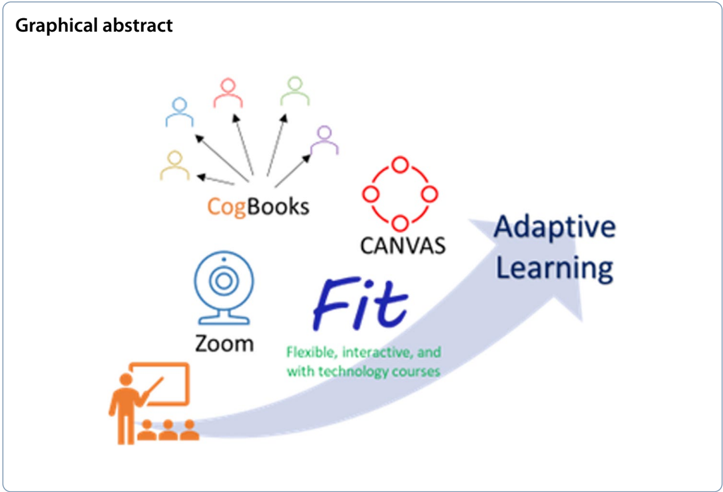
It is becoming increasingly clear that not all students require the same education, and the requirement of personalized education is increasingly in demand. The incorporation of adaptive learning (AL) has increased in recent years. However, research on this subject is still evolving at the university level. In this study, we investigated the impact of integrating an AL tool (CogBooks®) in a university course (statistics for decision making) taught in an innovative online modality called FIT (flexible, interactive, and with technology), in which the course is designed in the CANVAS® platform and uses Zoom® as a means of communication with students. Learning outcomes were compared between the FIT courses with or without AL and between AL strategies in online and face-to-face courses. It was clear that AL improved the students’ achievement regardless of the modality. In addition, we conclude that students achieve better in AL courses in the classroom than in distance courses. Satisfaction surveys favor a preference for FIT courses with AL over classroom classes with AL. Our results suggest that AL is a solid strategy for teaching undergraduate courses. Graphical abstract
Overview
CoChat Summary
TL;DR
This study evaluated integrating the adaptive learning tool CogBooks into a university business statistics course across FIT online and face-to-face modalities. It found that adaptive learning improved student achievement overall, with face-to-face adaptive courses generally producing higher exam and final grades than FIT adaptive courses, while satisfaction tended to favor FIT courses with adaptive learning over classroom adaptive courses.
Key findings
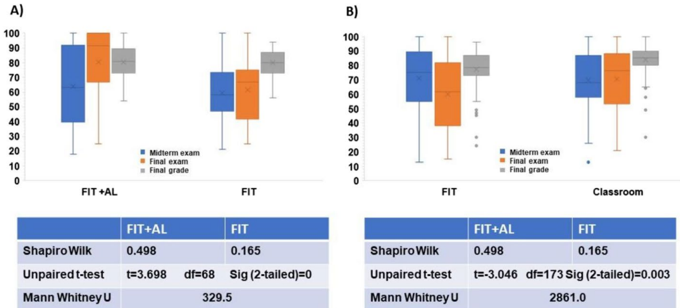
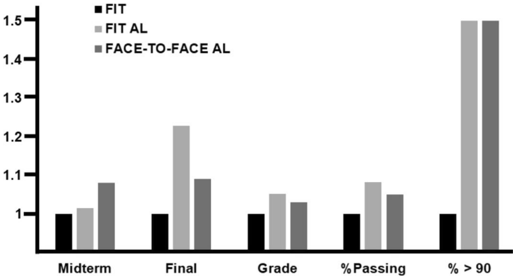
- In August–December Year 1, FIT + AL students had higher average midterm, final exam, and final grades than FIT-only students: 63.9 vs. 59.3, 80.6 vs. 61.4, and 80.3 vs. 79.9, respectively. The FIT + AL group had a lower passing rate (89.2% vs. 97%) but a higher percentage of grades above 90 (24.3% vs. 15.2%).
- In January–May Year 2, face-to-face + AL students outperformed FIT + AL students on final exam average (70.4 vs. 59.8), final grade (83.7 vs. 77.3), passing rate (92.4% vs. 85.7%), and grades above 90 (29.3% vs. 15.5%).
- In another comparison reported in Table 10, face-to-face + AL again exceeded FIT + AL on final exam average (77.9 vs. 71.4), final grade (84.2 vs. 80.8), passing rate (96.1% vs. 90.8%), and grades above 90 (31.8% vs. 18.5%).
- Satisfaction survey results favored FIT courses with AL over FIT courses without AL, and the paper reports that FIT courses with AL were preferred over face-to-face courses with AL.
Methods
- Comparative quantitative design in a single course, “Statistical Methods for Decision Making,” at Tecnologico de Monterrey over three semesters; 24 groups and 530 students total, with voluntary response sampling of instructors and groups.
- Year 1 compared FIT vs. FIT + AL; Year 2 compared FIT + AL vs. face-to-face + AL. The adaptive tool was CogBooks, integrated with CANVAS and Zoom for FIT courses; exams were common multiple-choice midterm and final exams taken in person.
- Analysis used Shapiro-Wilks normality tests, Student’s t-tests and Mann-Whitney U tests, Alpha-Cronbach reliability on final grades (0.779, 0.7694, and 0.8190 across periods), and Student Opinion Survey (SOS) responses on a 0–10 Likert scale, analyzed in SPSS version 25.
Limitations
- The paper states limitations including a study period of only three semesters, focus on a single subject, a private university with a specific student profile and strong educational-technology focus, and the fact that not all instructors taught in all three modalities, so instructor characteristics may influence results.
- The paper also states that students were first-semester students, results may differ for more advanced students, and because all students took the same quizzes and tests, scores can be compared only within the same test and not across different tests or scales.
- Evident from the text: instructor and group assignment was voluntary and only partly randomized, group sizes varied, and SOS response rates were 80–100% rather than complete, which may introduce selection or response bias.
Model-written summary. Check it against the paper before relying on it.
Integrity signals
Registry
Cites
Statistics
Figures
Verification
Claims the paper makes
12 Valid · 0 Not valid · 23 Not checked · 66 Own results and interpretations
The cited sources support only part of this claim — read each source’s verdict below.
In the paper
“Additionally, students who took courses with AL performed better in the following calculus courses”
§ Smart Learning Environments > Introduction
What the sources say
- Partly supportedcites Daines et al., 2016 matched to “Improving Performance in Trigonometry and Pre-Calculus by Incorporating Adaptive Learning Technology into Blended Models on Campus” (2016) sourceExperimental — accuracy not yet measured
The Results report that overall Calculus I pass rates rose from 69% to 86% after the adaptive-learning pilot. But students who took the adaptive-learning prerequisites passed Calculus I at about the same rate as those who took the prerequisites before the pilot (79% versus 80%), so the paper does not show that those students performed better. (LLM, conf=0.87)
plainstates a cause- Asserted: passes — The authors put it forward as true.
- Checkable: passes — It can be checked against evidence.
- Load-bearing: passes — The paper’s conclusions depend on it.
- Based: passes — The paper gives a reason why it holds.
- Partly supported
Every source the paper cites for this claim was checked and supports it.
In the paper
“A similar result was obtained by Hwang et al. (2020) when comparing the results of mathematics tests of an experimental group using an AL strategy with the results of a control group.”
§ Smart Learning Environments > Discussion
What the sources say
- Supportedcites Hwang et al., 2020 matched to “A fuzzy expert system-based adaptive learning approach to improving students’ learning performances by considering affective and cognitive factors” (2020) source
Section 4.2 identifies an experimental group using an adaptive learning system and a control group using a conventional system. Section 5.1 compares their mathematics achievement test scores and reports that experimental group A scored significantly higher than the control group. (LLM, conf=0.94)
plain- Asserted: passes — The authors put it forward as true.
- Checkable: passes — It can be checked against evidence.
- Load-bearing: unclear — It is unclear whether the paper’s conclusions depend on it.
- Based: passes — The paper gives a reason why it holds.
- Supported
A result the paper reports from its own data — it cites no other source for it, so there is none to check. The quote shows it is in the paper.
In the paper
“when the same instructor (in this case, I2) taught the same course during the same semester in two different modalities, FIT and in-person (classroom), both with AL, the opinion of the students was consistently better in the classroom than in the FIT mode.”
§ Smart Learning Environments > Results
plainstates an associationSingle case- Asserted: passes — The authors put it forward as true.
- Checkable: passes — It can be checked against evidence.
- Load-bearing: unclear — It is unclear whether the paper’s conclusions depend on it.
- Based: passes — The paper gives a reason why it holds.
- Rests on 2 assumptions not shown here.
A result the paper reports from its own data — it cites no other source for it, so there is none to check. The quote shows it is in the paper.
In the paper
“the percentage of passers with grades higher than 90/100 is higher in the FIT + AL (24.3%) compared to FIT (15.2%).”
§ Smart Learning Environments > Results
plainstates an association- Asserted: passes — The authors put it forward as true.
- Checkable: passes — It can be checked against evidence.
- Load-bearing: passes — The paper’s conclusions depend on it.
- Based: passes — The paper gives a reason why it holds.
- Rests on an assumption not shown here.
A result the paper reports from its own data — it cites no other source for it, so there is none to check. The quote shows it is in the paper.
In the paper
“Satisfaction surveys favor a preference for FIT courses with AL over classroom classes with AL.”
§ Smart Learning Environments > Abstract
plainstates an association- Asserted: passes — The authors put it forward as true.
- Checkable: passes — It can be checked against evidence.
- Load-bearing: passes — The paper’s conclusions depend on it.
- Based: passes — The paper gives a reason why it holds.
- Rests on an assumption not shown here.
43 more claims
Create a free account to see all 101 claims and every source verdict.
- It may state two separate claims as one. 32
- Probably not a substantial claim. 29
- The quote only partly states this claim. 1
Self-check
Percentages, sums and reported differences re-computed from the paper’s own numbers.
Each contradiction between two passages listed here was confirmed by an independent check.
Rated major: it would touch a result — a value a result rests on, reported and recomputed p-values on opposite sides of the significance level, two passages that conflict with no sign which is right, or a cited work retracted before this paper was published.
In the paper
§ Smart Learning Environments > Discussion
“However, our study suggests that using an AL strategy improves the grades and the percentage of passing, regardless of the mode of delivery.”
§ Smart Learning Environments > Results
“the percentage of students approved (with a grade higher than or equal to 70) in the FIT course (97%) is higher than the FIT + AL course (89.2%)”
Rated major: it would touch a result — a value a result rests on, reported and recomputed p-values on opposite sides of the significance level, two passages that conflict with no sign which is right, or a cited work retracted before this paper was published.
In the paper
§ Smart Learning Environments > Limitations and future work
“| Semester AUG-DIC | FIT | | | FIT + AL | | | | --- | --- | --- | --- | --- | --- | --- | | | *I1 | I2 | AVG | I3 | I4 | AVG |”
§ Smart Learning Environments > Limitations and future work
“| I4 FIT | 8.79 | 9.21 | 8.93 | 9.00 | 9.07 | 8.79 | 8.79 | 0.64 | | I3 FIT | 8.13 | 8.20 | 7.73 | 8.53 | 8.00 | 8.40 | 7.13 | 0.53 | | I2 FIT + AL | 9.59 | 9.53 | 9.76 | 9.76 | 9.76 | 9.71 | 9.65 | 0.82 | | I1 FIT + AL | 9.25 | 9.00 | 9.94 | 9.94 | 9.47 | 9.44 | 9.38 | 0.75 |”
Rated minor: it would not touch a result — a value no result rests on, a p-value that stays on the same side of the significance level, or a conflict that is clerical, resolved elsewhere in the paper, or outside its own findings.
In the paper
§ Smart Learning Environments > Results
“when the same instructor (in this case, I2) taught the same course during the same semester in two different modalities, FIT and in-person (classroom), both with AL, the opinion of the students was consistently better in the classroom than in the FIT mode.”
§ Smart Learning Environments > Limitations and future work
“| I2 classroom AL | 9.46 | 9.39 | 9.64 | 9.36 | 9.61 | 9.50 | 9.39 | 0.56 |”
Citations
Cites
How to Design and Evaluate Research in Education
Fraenkel, J. R., & Wallen, N. E. (1990) · Cited by 15,027
Descriptive statistics and normality tests for statistical data
Gupta, A., Mishra, P., Pandey, C., Singh, U., Sahu, C., & Keshri, A. (2019) · Annals of Cardiac Anaesthesia · doi:10.4103/aca.aca_157_18 · Cited by 2,628 · cited 2×
“These tests were included in our study (Mishra et al., 2019).”
MethodEssentials of Psychological Testing
Urbina, S. (2014) · doi:10.1002/9781394259458 · Cited by 1,845
Literature Review of Information Technology Adoption Models at Firm Level
(2011) · Portuguese National Funding Agency for Science, Research and Technology (RCAAP Project by FCT) · Cited by 1,341
Xie, H., Chu, H.-C., Hwang, G.-J., & Wang, C.-C. (2019) · Computers & Education · doi:10.1016/j.compedu.2019.103599 · Cited by 713 · cited 1×
“There is a lack of quantitative studies that demonstrate a difference in student’s grades and satisfaction when using integrated (sequence and structure) and contextualized AL strategies in higher education (Xie et al., 2019).”
BackgroundPeng, H., Ma, S., & Spector, J. M. (2019) · Smart Learning Environments · doi:10.1186/s40561-019-0089-y · Cited by 548 · cited 2×
“Personalized learning refers to an educational strategy where the objectives, the sequence of the content, the learning pace, and the instruction can vary according to the student’s needs (Peng et al., 2019).”
BackgroundAlamri, H., Lowell, V., Watson, W., & Watson, S. L. (2020) · Journal of Research on Technology in Education · doi:10.1080/15391523.2020.1728449 · Cited by 323 · cited 1×
“To meet each student’s educational needs to improve their knowledge and increase their engagement, personalized learning emerged (Alamri et al., 2020; Walkington & Bernacki, 2020).”
BackgroundMartin, F., Chen, Y., Moore, R. L., & Westine, C. D. (2020) · Educational Technology Research and Development · doi:10.1007/s11423-020-09793-2 · Cited by 306 · cited 1×
“According to Martin et al. (2020), the objective of AL is to generate a unique learning experience taking into account the individual differences of the student, either defined as a process (focusing on how the contents are presented to the student, which is adapted depending on the increase in the…”
BackgroundWalkington, C., & Bernacki, M. L. (2020) · Journal of Research on Technology in Education · doi:10.1080/15391523.2020.1747757 · Cited by 291 · cited 1×
“To meet each student’s educational needs to improve their knowledge and increase their engagement, personalized learning emerged (Alamri et al., 2020; Walkington & Bernacki, 2020).”
BackgroundAlamri, H. A., Watson, S., & Watson, W. (2021) · TechTrends · doi:10.1007/s11528-020-00530-3 · Cited by 285 · cited 2×
“Nowadays, technological developments present an opportunity to generate customized teaching by allowing students to choose their learning path (Alamri et al., 2021).”
Background
Research works printed but not linked: 4
- 12. Dziuban, C., Moskal, P., Johnson, C., & Evans, D. (2017). Adaptive learning: A tale of two context. Current Issues in Emerging eLearning, 4(1), 25-62.
- 30. Savio-Ramos, C. (2015). A Study of the Self-Efficacy of Personalized Learning as a Remediation Tool in Algebra. Ph.D. Dissertation, Arizona State University. Retrieved from https:// repos itory. asu. edu/ attac hments/ 162099/ conte nt/ Savio Ramos_ asu_ 0010E_ 15384. pdf. Accessed12 Jun 2022.
- 35. Vasyliuk, A., & Lytvyn, T. B. V. (2023). Design and Implementation of a Ukrainian-Language Educational Platform for Learn- ing Programming Languages. https:// ceur-ws. org/ Vol-3426/ paper 32. pdf. Accessed 28 September 2023.
- 40. Weber, N. (2019). Adaptive learning: Understanding its progress and potential. Horizon Report: 2019 Higher Education Edition, 34-35. Retrieved from https:// libra ry. educa use. edu/-/ media/ files/ libra ry/ 2019/4/ 2019h orizo nrepo rt. pdf? la= en& hash= C8E8D 444AF 372E7 05FA1 BF9D4 FF0DD 4CC6F 0FDD1
Cited by
AI‐driven adaptive learning for sustainable educational transformation
Strielkowski, W., Grebennikova, V., Lisovskiy, A., Rakhimova, G., & Vasileva, T. (2025) · Sustainable Development · doi:10.1002/sd.3221 · Cited by 581
Improving the learning-teaching process through adaptive learning strategy
Rincón-Flores, E. G., Castano, L., Solis, S. L. G., Olmos, O., Rodríguez-Hernández, C. F., Lara, L. A. C., & Aldape, P. (2024) · Smart Learning Environments · doi:10.1186/s40561-024-00314-9 · Cited by 231
“…course agreed that they are sound, sufficient, and well-dosed, although both suggested diversifying their presentation, for attending different learning styles, in this sense, Contrino et al. (2024) find that one advantage of CogBooks is to offer students the same content in a variety of ways.”
BackgroundMethodResultInfluentialKhan, S., Mazhar, T., Shahzad, T., Khan, M. A., Rehman, A. U., Saeed, M. M. A., & Hamam, H. (2025) · Discover Sustainability · doi:10.1007/s43621-025-00809-6 · Cited by 153
“Predictive analytics also play a crucial role by identifying at-risk students and offering timely interventions to improve retention rates [24, 25].”
Enhancing academic integrity among students in GenAI Era:A holistic framework
Rasul, T., Nair, S., Kalendra, D., Balaji, M. S., Santini, F. D. O., Ladeira, W. J., Rather, R. A., Yasin, N., Rodriguez, R. V., Kokkalis, P., et al. (2024) · The International Journal of Management Education · doi:10.1016/j.ijme.2024.101041 · Cited by 82
Transforming Education: Adaptive Learning, AI, and Online Platforms for Personalization
Rizvi, I., Bose, C., & Tripathi, N. (2025) · Springer eBooks · doi:10.1007/978-981-96-1721-0_4 · Cited by 52
Luo, L., & Yusuf, A. (2026) · Assessment & Evaluation in Higher Education · doi:10.1080/02602938.2025.2548919 · Cited by 21
“For this reason, we developed the AI-adaptive feedback scale (AI-AFS), grounded within the lens of adaptive learning theory (Clark, Kaw, and Braga Gomes 2022; Contrino et al. 2024).”
Aldogiher, A. S., Halim, Y. T., El-Deeb, M. S., Maree, A. M., & Kamel, E. M. (2025) · Sustainability · doi:10.3390/su17052062 · Cited by 47
Artificial Intelligence: Solutions in Special Education
Ahmad, W., Shokeen, R., & Raj, R. (2024) · Advances in educational technologies and instructional design book series · doi:10.4018/979-8-3693-5538-1.ch017 · Cited by 28
Akinsemolu, A. A., & Onyeaka, H. N. (2025) · Journal of language and Education · doi:10.17323/jle.2025.22118 · Cited by 40
“…of studies focusing on language education, with emphasis on innovations such as language learning ap - plications, adaptive learning systems, interactive e-learning tutoring systems, and chatbot technology (Liu, 2023; Kaur, Kumar and Kaushar, 2023; Gligorea et al., 2023; Contrino et al., 2024).”
Revolutionizing Moroccan Education with AI: A Path to Customized Learning
-, R. E. (2024) · International Journal For Multidisciplinary Research · doi:10.36948/ijfmr.2024.v06i03.19462 · Cited by 53
“This strategy improves the learning experience and helps close the digital divide by making advanced educational resources available to all students across the country, regardless of where they live or their socioeconomic status [73].”
BackgroundIntegrating emerging technologies to enhance special education teacher preparation
Howorth, S. K., Marino, M. T., Flanagan, S. M., Cuba, M. J., & Lemke, C. (2024) · Journal of Research in Innovative Teaching & Learning · doi:10.1108/jrit-08-2024-0208 · Cited by 17
Abulibdeh, A. O. (2025) · Sustainable Futures · doi:10.1016/j.sftr.2025.101033 · Cited by 47
Troussas, C., Krouska, A., Mylonas, P., & Sgouropoulou, C. (2025) · Future Internet · doi:10.3390/fi17040166 · Cited by 18
“Using AUIs improves retention, motivation, and learning efficiency by eliminating cognitive load, preventing students from becoming either disengaged due to too much cognitive load or uninterested because of low challenge [15–20].”
Rad, H. S., Alipour, J., Jafarpour, A., & Hashemian, M. (2024) · System · doi:10.1016/j.system.2024.103454 · Cited by 30
Decision-making criteria for AI tools in digital education
Madanchian, M., & Taherdoost, H. (2025) · Digital engineering. · doi:10.1016/j.dte.2025.100069 · Cited by 32
Multi-Agentic LLMs for Personalizing STEM Texts
Vaccaro, M., Friday, M., & Zaghi, A. E. (2025) · Applied Sciences · doi:10.3390/app15137579 · Cited by 24
Zaimoğlu, S., & Dağtaş, A. (2025) · Behavioral Sciences · doi:10.3390/bs15091202 · Cited by 46
Yuvapriya, P., Subramanian, P., & Surendran, R. (2025) · International Conference on Trends in Electronics and Informatics (ICOEI) · doi:10.1109/icoei65986.2025.11013491 · Cited by 11
“The integration of optimal user grouping and performance classification enhances the adaptability of e-learning systems [7].”
Evaluación de las plataformas de aprendizaje adaptativo en educación secundaria
Arteaga-Alcívar, Y. A., Jiménez, L. A. V., Cevallos, P. A. E., & Arguello, E. V. (2024) · Revista Científica Kosmos. · doi:10.62943/rck.v3n2.2024.120 · Cited by 12
Adeyemi, V. (2025) · Premier Journal of Psychology · doi:10.70389/pjp.100006 · Cited by 28
Komolafe, O. O., Mustofa, J., Daley, M., Walton, D. M., & Tawiah, A. K. (2025) · PLoS ONE · doi:10.1371/journal.pone.0325649 · Cited by 16
Subandiyah, H., Nasrullah, R., Ramadhan, R. M., Supratno, H., Raharjo, R. P., & Lukman, F. (2025) · Cogent Education · doi:10.1080/2331186x.2025.2516378 · Cited by 9
“Flexible ways of teaching have to be employed by teachers to ensure that they meet the needs of learners whose language proficiency, learning styles and academic readiness levels are heterogeneous (Contrino et al., 2024; Gelles et al., 2020; Jeong, 2022; Subandiyah et al., 2024).”
Peran inovasi dalam pembangunan ekonomi dan pendidikan menuju visi Indonesia Maju 2045
Lase, D., Waruwu, E., Zebua, H. P., & Ndraha, A. B. (2024) · Tuhenori Jurnal Ilmiah Multidisiplin · doi:10.62138/tuhenori.v2i2.18 · Cited by 7
Ademi, N., & Loshkovska, S. (2025) · Education Sciences · doi:10.3390/educsci15060771 · Cited by 15
Adaptive learning in bionics: transforming science education
Honke, N., & Becker, S. (2025) · Frontiers in Education · doi:10.3389/feduc.2025.1427083 · Cited by 18
Коробкова, О. К., Александровна, Г. Н., Orekhovskaya, N. A., Drozdova, E. A., Zakharova, O. V., & Lobuteva, A. V. (2025) · Contemporary Educational Technology · doi:10.30935/cedtech/17517 · Cited by 15
Koukaras, C., Stavrinides, S. G., Hatzikraniotis, E., Mitsiaki, M., Koukaras, P., & Tjortjis, C. (2026) · Telecom · doi:10.3390/telecom7010002 · Cited by 15
“This adjustment of the complexity and sequence of the instructional material can optimise learning outcomes for each individual [53,54].”
Nsabayezu, E., Habimana, O., Nzabalirwa, W., & Niyonzima, F. N. (2024) · Education and Information Technologies · doi:10.1007/s10639-024-13075-2 · Cited by 7
“…and encouraging hands-on experimentation (Crucho et al., 2020; Sukmawati, 2020), Technology improves learning by offering access to virtual simulations, interactive lessons, and online resources, allowing for greater comprehension and involvement with the subject matter (Contrino et al., 2024).”
Joshi, D. R., & Khanal, J. (2025) · Computers in Human Behavior Reports · doi:10.1016/j.chbr.2025.100782 · Cited by 8
In AI We Trust? Exploring the Role of Explainable GenAI and Expertise in Education
Safarov, C., Gadzinski, G., & Schlögl, S. (2025) · Human Factors The Journal of the Human Factors and Ergonomics Society · doi:10.1177/00187208251401773 · Cited by 12
“Personalization and adaptive feedback should be sensitive to learners ’ expertise, providing scaffolding for novice judgment without fostering uncritical reliance, and amplifying expert strengths without undermining independent reasoning (Contrino et al., 2024; Peres et al., 2023).”
Ruzimboev, K. R., Avezmatov, I. D., & Shermatov, B. I. (2025) · International Conference on Computer Science and Engineering (UBMK) · doi:10.1109/ubmk67458.2025.11242231 · Cited by 6
“If the players can leverage the same effectively, Uzbekistan’s schools can be the benchmark for other developing economies seeking to upgrade their curriculums through state-of-the-art AI-based platforms [2].”
InfluentialCano, L. A. R. (2025) · Education for Chemical Engineers · doi:10.1016/j.ece.2025.07.004 · Cited by 3
An Adaptive Learning System Integrated with Fuzzy Logic to Improve Higher-Order Thinking Skills
Purwandari, E. P., Winarni, E. W., Junus, K. M., & Soraya, S. (2025) · Engineering Technology & Applied Science Research · doi:10.48084/etasr.12751 · Cited by 5
Artificial intelligence innovations challenges and emerging trends in engineering education
Rahman, A., Khandakar, A., Ayari, M. A., Naji, K. K., Al-Ali, A. K., Sellami, A., & Alhazbi, S. (2026) · Discover Education · doi:10.1007/s44217-026-01137-1 · Cited by 19
Gidisu, P., Abroampa, W. K., & Nyatsikor, M. K. (2026) · Social Sciences & Humanities Open · doi:10.1016/j.ssaho.2026.102780 · Cited by 8
Ruangkanjanases, A., Sivarak, O., Chen, C.-T., Khan, A., & Chen, S. (2024) · Heliyon · doi:10.1016/j.heliyon.2024.e39460 · Cited by 6
RetractedUse of AI in the Curriculum Development of Transnational Higher Education
Alfayez, A. A., & Rasool, A. (2024) · Advances in educational marketing, administration, and leadership book series · doi:10.4018/979-8-3693-7016-2.ch019 · Cited by 10
CHATWISE “ChatGPT: As a High School Academic Tool for Writing, Innovation, Skills, and Education”
Nouzri, S., Fatimi, M. E., & Cuba, A. (2024) · Springer eBooks · doi:10.1007/978-3-031-65691-0_8 · Cited by 3
Curbo, S., & Hultgren, C. (2025) · Cogent Education · doi:10.1080/2331186x.2025.2485526 · Cited by 2
“An enhanced academic performance is achieved when applying a more student-activating approach (Contrino et al., 2024; Holm & Beckman, 2022).”
Tudor, I., Dlab, M. H., & Hoić-Božić, N. (2025) · International Journal of Educational Methodology · doi:10.12973/ijem.11.3.359 · Cited by 9
Sarlis, I., Kotsifakos, D., & Douligeris, C. (2025) · Multimodal Technologies and Interaction · doi:10.3390/mti9090092 · Cited by 4
Bali, B. (2025) · Journal of Social and Scientific Education · doi:10.58230/josse.v2i3.351 · Cited by 8
Adiyono, A., Rahayu, A. P., Besari, A., Wahib, A., Arianti, S., & Kojin, K. (2025) · doi:10.1109/icaie64856.2025.11158040 · Cited by 12
“…elements such as points, badges, and leaderboards with AI's ability to analyze data and customize content in real-time [8], [9], this approach not only increases motivation but also ensures that each student receives support that is tailored to their learning progress and preferences [10], [11].”
Efficiency algorithm: new AI-based tools for an adaptive learning environment
Zabian, A. (2025) · Frontiers in Education · doi:10.3389/feduc.2025.1702662 · Cited by 2
From One-Size-Fits-All to AI-Driven Personalization in Education
Salendab, F. A., Baraguir, R. S., Nuñez, R. A. S., & Cogo, D. A. (2026) · Advances in computational intelligence and robotics book series · doi:10.4018/979-8-3373-2752-5.ch009 · Cited by 3
Vlachopanou, P. (2026) · Discover Psychology · doi:10.1007/s44202-026-00623-9 · Cited by 3
Artificial intelligence enabled smart education systems
Sharma, A. K., & Kumar, T. V. V. (2026) · International Journal of Systems Assurance Engineering and Management · doi:10.1007/s13198-026-03196-x · Cited by 3
Lytras, M. D., Șerban, A. C., & Ntanos, S. (2025) · Journal of Business Economics and Management · doi:10.3846/jbem.2025.23030 · Cited by 4
Meletiadou, E. (2025) · Advances in computational intelligence and robotics book series · doi:10.4018/979-8-3693-5623-4.ch001 · Cited by 2
EduFlex – An Adaptive E learning Platform Using RAG and Integrated APIs
Meena, R. D., Bahauddin, A., Swamy, V. K., Reddy, S. A., Vivek, S. T. S., & Aarya, V. S. N. (2025) · International Conference on Knowledge Engineering and Communication Systems (ICKECS) · doi:10.1109/ickecs65700.2025.11035512 · Cited by 2
“Contrino's [2] research has established that the use of adaptive platforms in both online and campus-based university classes showed a 17.3% increase in performance and a 22.5% boost in engagement than control groups.”
InfluentialLECTURE-GROUNDED CHATGPT-4 TUTOR: ENHANCING ADULT LEARNER ENGAGEMENT IN DISTANCE LEARNING
Kim, H., Yoon, J., Lee, S. M., Cho, S., Kim, Y. J., Noh, G., & Lee, J. (2025) · doi:10.20319/ictel.2025.324342 · Cited by 1
Beyond the lesson plan: Reflective practice as a catalyst for teacher professional growth
Harsono, A. M. B., Mahmudah, F. N., Putra, E. C. S., Rahman, A., Dewantara, B. A., Arsyad, M. Z. T., & Alfarisa, F. (2025) · Priviet Social Sciences Journal · doi:10.55942/pssj.v5i11.698 · Cited by 2
“Using AI, teachers can review the pre-and post-intervention data, assess the effectiveness of an intervention and determine if they should continue or change their teaching practices (Contrino et al., 2024).”
Smart Tutoring Systems in Education 4.0: A Systematic Review
Lafham, M., & Bachari, E. E. (2025) · International Conference on Intelligent Systems: Theories and Applications · doi:10.1109/sita67914.2025.11273659 · Cited by 3
“LLMs and tutoring support [5], [15]; Adaptive systems [6], [13]; Metaverse interaction [11]; AI-IoT in assessments [12]; Smart MOOCs [14]; Topic modeling and trend analysis [16] Learning Outcomes and User Experience Quantitative and mixed-methods studies report consistent improvements in learner…”
Amaral, Â., Amaral, C. D. C., & Borges, M. A. F. (2026) · Lecture notes in computer science · doi:10.1007/978-3-032-13174-4_6 · Cited by 1
Philosophical leadership in education: Rethinking pedagogy in an AI-driven world
Márquez, F. O. S., Ortiz, G. E. R., & Meruvia, H. R. T. (2026) · Social Sciences & Humanities Open · doi:10.1016/j.ssaho.2026.102699 · Cited by 4
Boecking, N. W., Reichel, S., Hoffmann, S. F., de Carvalho, A. F. P., & Wulf, V. (2026) · Computer Supported Cooperative Work (CSCW) · doi:10.1007/s10606-026-09544-6 · Cited by 1
An Ontology-Driven Framework for Adaptive and Transparent AI-Assisted Student Assessment
Hadyaoui, A., & Cheniti‐Belcadhi, L. (2026) · Lecture notes in business information processing · doi:10.1007/978-3-032-25534-1_11 · Cited by 1
OPTIMIZATION OF ADAPTIVE LANGUAGE LEARNING USING ARTIFICIAL INTELLIGENCE
Chicherina, N. V., Zharkynbekova, S. K., Azamatova, А. K., & Akhmetbekova, A. M. (2024) · Bulletin of Shokan Ualikhanov Kokshetau University Philological Series · doi:10.59102/kufil/2024/iss3pp279-290 · Cited by 3
Hamidi, S. (2023) · International Journal of New Trends in Social Sciences · doi:10.18844/ijss.v7i2.9220 · Cited by 1
“Of course, distance teaching was made easier thanks to tools and platforms such as Zoom, Google Meet, Moodle, and Teams (Almahasees et al., 2021; Contrino et al., 2024).”
MethodHonke, N., & Becker, S. (2024) · doi:10.35542/osf.io/8735z
Minsih, M., Destya, A., Laila, A., Yasin, M. H. M., Mujahid, I., & Helzi, H. (2024) · Salud Ciencia y Tecnología · doi:10.56294/saludcyt20251085 · Cited by 4
(2025) · IGI Global eBooks · doi:10.4018/979-8-3693-7733-8.ch009
Educational Quality in Teaching Magnetism Using Dedicated Mobile Devices
Junta-Andagana, C., Aldás, J. V., Collay, W., et al. (2024) · IEEE Silchar Subsection Conference (SILCON) · doi:10.1109/silcon63976.2024.10910336
“Through this methodology, we seek to identify if there is a preference or greater affinity towards technology-assisted teaching compared to more conventional methods as reflected in [28], focusing on how these means influence perceptions of educational quality and classroom interaction.”
Lin, H. Y., Quan, X., Wang, A., & Du, A. (2025) · SSRN Electronic Journal · doi:10.2139/ssrn.5281726
Formative Quizzes in L2 Chinese Classrooms: Effects on Summative Assessment Outcomes
Cai, Q.-Y. (2025) · International Journal of Multilingual Education · doi:10.22333/ijme.2025.9078
AI and the Future of Education: A Transformative Vision
Wang, V., & Torrisi‐Steele, G. (2025) · Advances in computational intelligence and robotics book series · doi:10.4018/979-8-3373-2397-8.ch001 · Cited by 2
Islah, R. S., & Rizqiyana (2025) · JIEMAN Journal of Islamic Educational Management · doi:10.35719/jieman.v7i1.228 · Cited by 2
Kigundu, S. (2025) · Journal of Education and Learning Technology · doi:10.38159/jelt.2025682
Yang, L. (2025) · International Conference on Educational Digitalization and Computer Science in the Guangdong-Hong Kong-Macao Greater Bay Area · doi:10.1145/3746469.3746501 · Cited by 1
“I used This is consistent with the previous research by [3], [4], [11] in which they support the positive effect of the AI driven system in academic outcomes.”
Personalised AI-Driven Conversational Agents for Adaptive Self-learning
Valtolina, S., Matamoros, R. A., Epifania, F., & Orlandi, A. (2025) · Lecture notes in computer science · doi:10.1007/978-3-032-04999-5_14 · Cited by 1
Harnessing Technology: The Future of Online Learning Communities
Dhakal, R., Heske, K., & Davis, B. (2025) · IGI Global eBooks · doi:10.4018/979-8-3373-6960-0.ch011
Vlachopanou, P. (2025) · Research Square · doi:10.21203/rs.3.rs-7381980/v1
Deep Neural Networks based Personalized Learning Systems for Adaptive Education
Bommana, R., Alfilh, R. H. C., Patel, L., Senthil, P., & Durgadevi, G. (2025) · International Conference on Intelligent Computing and Knowledge Extraction (ICICKE) · doi:10.1109/icicke65317.2025.11136395
“Monica F. Contrino et al. [17] demonstrated adaptive learning tools for improving the student performance and satisfaction.”
Artificial intelligence in chemical engineering and applied sciences education
Ajanović, T., Sher, F., Farhat, E. K., Khatoon, R., Daci, M., Egesa, D., & Pinjić, E. (2025) · Elsevier eBooks · doi:10.1016/b978-0-443-34076-5.00006-7
Masepo, D., & Banele, S. D. (2025) · African Journal of Empirical Research · doi:10.51867/ajernet.6.4.38
“Research shows that systems that adapt to learners’ needs increase both satisfaction and performance by customizing content for each individual (Contrino et al., 2024).”
Ethical Challenges of AI-Empowered Higher Education
Qin, F., Yang, X., & Zhang, Y. (2025) · Research of Chinese education · doi:10.1007/978-981-96-9005-3_3 · Cited by 1
Tekesbaeva, N., Oshanova, N. T., Bukanova, A., et al. (2025) · Habaršy. Fizika-matematikalyķ ġylymdary seriâsy · doi:10.51889/2959-5894.2025.91.3.028
de Castro, M. A. C., Porras, E. J. L., Galarza, K. W. H., Etelvina, N., & Infante, O. A. V. (2025) · Revista Multidisciplinar Epistemología de las Ciencias · doi:10.71112/k2gp8n40
Natteshan, N. V. S., Sabri, M. O., Satyanarayana, T., Babu, M., Karthikeyan, G., & Balasubramaniyan, R. (2025) · Asian Conference on Innovation in Technology (ASIANCON) · doi:10.1109/asiancon66527.2025.11281376
Li, H., Chen, X., Tang, R., et al. (2025) · International Conference on Intelligent Human-Machine Systems and Cybernetics · doi:10.1109/ihmsc66529.2025.00009
“Contrino et al. [2] finding that adaptive learning improved student performance across both online and face-to-face formats, with higher satisfaction in FIT courses.”
Kausar, F., Rakhi, S., & Sampada, H. K. (2025) · Information systems engineering and management · doi:10.1007/978-3-032-05306-0_5
ACDKAN: An Advanced Cognitive Diagnosis Model for Foreign Language Education
Liu, Q., Zhu, H., Li, C., et al. (2025) · doi:10.1109/icdm68174.2025.11309694
“In addition, teachers can communicate the expected learning outcomes to their students, making them partners in the teaching and learning process and helping them to better understand the goals of foreign language literacy acquisition [7], [8].”
Supporting Designers in the Personalization of Educational Video Games: A Dashboard-Based Instrument
Dankov, Y. (2026) · Lecture notes in networks and systems · doi:10.1007/978-3-032-10827-2_5
Guessoum, A., Berkani, L., Ameur, M. S. H., & Aouichat, A. (2026) · Springer eBooks · doi:10.1007/978-3-031-99068-7_15 · Cited by 2
龙, 路. (2026) · International Journal of Knowledge Management · doi:10.4018/ijkm.398363 · Cited by 2
Pliasun, B. (2025) · Bulletin of Luhansk Taras Shevchenko National University Pedagogical Sciences · doi:10.12958/3083-6514-2025-4-31-37
Dlamini, P. N., Ajani, Y. A., & Ailakhu, U. V. (2024) · De Gruyter eBooks · doi:10.1515/9783111176987-019
Sany, D. S., Zikri, F., Putro, B. E., Angkasa, M. M., & Assyidiq, R. M. R. (2025) · Jurnal Altifani Penelitian dan Pengabdian kepada Masyarakat · doi:10.59395/altifani.v6i1.906
Integrating Artificial Intelligence in Knowledge Management for Transnational Higher Education
al Kalbani, H. R. (2026) · Advances in computational intelligence and robotics book series · doi:10.4018/979-8-3373-5403-3.ch016 · Cited by 1
Shalini, P. V., Bharathi., C., Rao, C. S. V. M., Namitha, K. Y., & Mohankumar., S. (2025) · International Conference on Software, Systems and Information Technology (SSITCON) · doi:10.1109/ssitcon66133.2025.11342190
“…highlight that adaptive learning systems, when effectively implemented, enhance student engagement, improve academic performance, and reduce course withdrawal rates, demonstrating the potential of personalized learning to support diverse learner needs across various educational contexts [10].”
Widiastuti, N. P. W., Redhana, I. W., Suja, I. W., & Tika, I. N. (2025) · Jurnal Penelitian Pendidikan IPA · doi:10.29303/jppipa.v11i9.11977
Chen, X., & Min, F. (2025) · doi:10.1109/ic3it66137.2025.11341648
“Contrino et al. [14] presented an adaptable learning approach to increased student satisfaction and performance in higher education.”
Babadzhanova, D. S. (2026) · Вестник Самарского университета. История, педагогика, филология · doi:10.18287/2542-0445-2025-31-4-152-158
Balushi, A. M. A. A. (2026) · Advances in computational intelligence and robotics book series · doi:10.4018/979-8-3373-4982-4.ch009 · Cited by 1
Setiawan, I., Prayitno, B. A., & Sugiharto, B. (2026) · Jurnal Penelitian Pendidikan IPA · doi:10.29303/jppipa.v12i1.11451
“Studies by Contrino et al. (2024) show that adaptive learning systems allow students to access materials at their own pace while providing continuous feedback for deeper understanding.”
Machkour, M., Gharbaoui, H., Lamalif, L., Faris, S., & Mansouri, K. (2026) · Frontiers in Education · doi:10.3389/feduc.2026.1742242 · Cited by 2
Luke, J. Y., Pawestri, N., Rusgowanto, F. H., & Nathanael, J. A. (2025) · International Conference on ICT for Smart Society (ICISS) · doi:10.1109/iciss66954.2025.11389450
Cognitive and Cultural Dimensions of AI-Generated Language
Ismail, N. M. (2026) · Advances in computational intelligence and robotics book series · doi:10.4018/979-8-3373-4397-6.ch008
Dumiyati, D., Apriono, D., Supiyanto, Y., & Wiratsiwi, W. (2026) · AIP conference proceedings · doi:10.1063/5.0317779
Towards a Closed-Loop Gamified e-Learning Framework for Stress Management
Tsaousi, E., Panagiotopoulou, E., Politi, E., Ανδρούτσου, Θ., Pitoglou, S., Giannakopoulou, O., Anastasiou, T., & Dimitrakopoulos, G. J. (2025) · International Conference on Modeling, Simulation & Intelligent Computing (MoSICom) · doi:10.1109/mosicom67153.2025.11398166
“Personalization capabilities further enhance user engagement and performance by adapting content to user needs, skills, and psychosocial profiles [9] [24].”
Influential
Metadata
- Authors
- Contrino, M. F., Reyes-Millán, M., Vázquez-Villegas, P., & Membrillo-Hernández, J.
- Affiliations
- Tecnológico de Monterrey (MX)
- Venue
- Smart Learning Environments
- Published
- 2024-02-05
- Volume
- 11
- Issue
- 1
- ISSN
- 2196-7091 (ISSN-L)
- OpenAlex
- W4391537361
- Cited by
- 158
- References
- 39
- Citations by year
- 2026: 71 · 2025: 67 · 2024: 19
- FWCI
- 23.26
- Type
- journal article
- Language
- en
- Open access
- gold
- doi.org
- Licence
- cc-by
- creativecommons.org/licenses/by/4.0 (tdm)
- creativecommons.org/licenses/by/4.0 (vor)
- Locations
- Smart Learning Environments (publishedVersion, cc-by)
- DOAJ (DOAJ: Directory of Open Access Journals) (submittedVersion)
- Topics
- Physical Sciences › Computer Science › Artificial Intelligence › Intelligent Tutoring Systems and Adaptive Learning
- Physical Sciences › Computer Science › Computer Science Applications › Online Learning and Analytics
- Social Sciences › Education › Online and Blended Learning
- Keywords
- adaptive learning, personalized learning, online learning, face-to-face teaching, student satisfaction, learning outcomes, statistics education, Zoom, university teaching, blended learning
About these checks
Registry, retraction, Cites and statistics results are computed, not judged, with one exception: a printed reference that no index lists is read once by a model before it counts as a citation error. Claims are extracted by a model and kept only when their quote appears verbatim in the text; each cited source is then checked, with a model’s help, for whether it says what the claim relies on. Those verdicts can be wrong — read the claim’s quote and the cited source before relying on one.
The claim verdicts this report counts are experimental: their accuracy is not yet measured.
A language model drew the claims from the paper on 2026-10-01, under version 3 of the claim definition (model deepseek-v4.1-flash, prompt extract-v3).
A second model labelled each claim on 2026-10-01 (model jev-1.13-20260917, definition revision gold-guideline-v0.2).
Cited sources are checked with a language model’s help (gpt-6-sol).
Statistics and arithmetic are recomputed, not judged.
Confidence bands are shown only for fields calibrated on our annotated test set. None is calibrated yet, so no band is shown.
What counts as a claim ›How we measure confidence ›How we check this ›
Are you an author, or do you see a problem with this page? Request a review
Data sources
Bibliographic data: Semantic Scholar, OpenAlex, Crossref.
Contains information from the Semantic Scholar Academic Graph Datasets, made available under the ODC Attribution License (ODC-BY 1.0).
Semantic Scholar’s data is described in: Kinney, R., et al. (2023). The Semantic Scholar Open Data Platform. arXiv:2301.10140.
