

Increased ACL direct insertion coverage provided more positive biomechanical effects on graft and bone tunnel during knee flexion: a simulation study
Open accessThe DOI matches its Crossref record; 32 of the 33 references it cites were found in a registry or an index.
Abstract
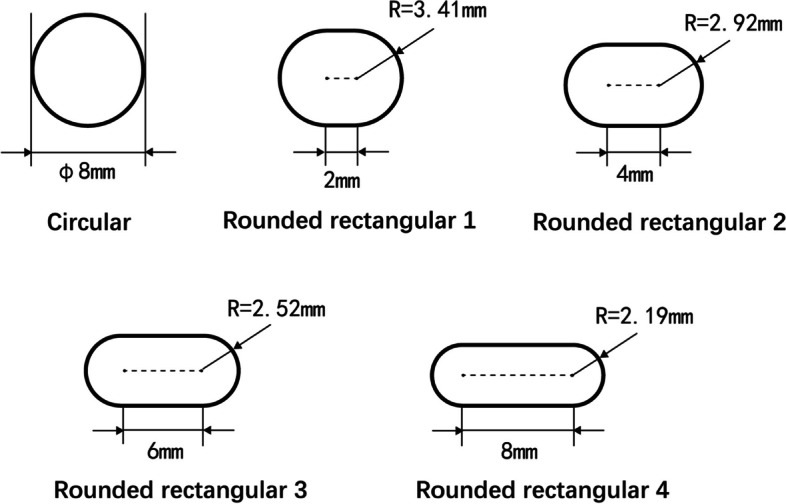
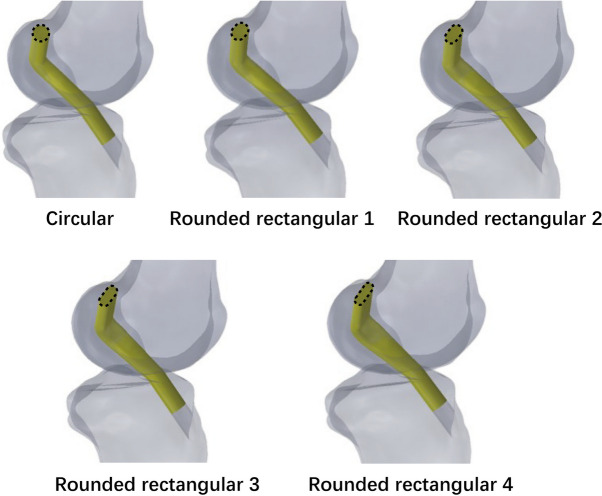
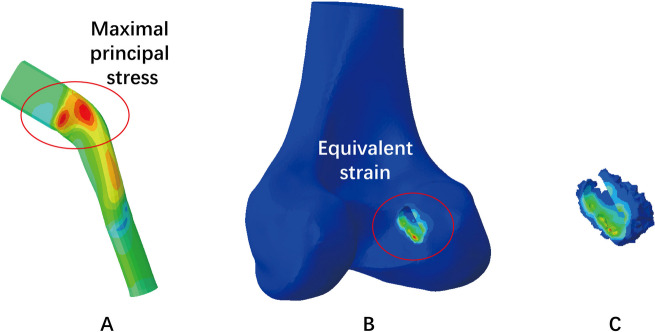
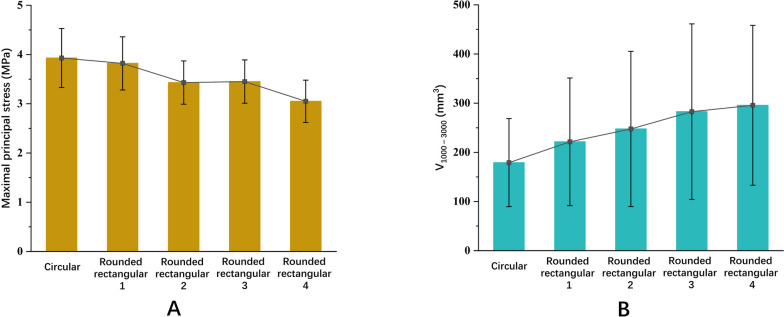
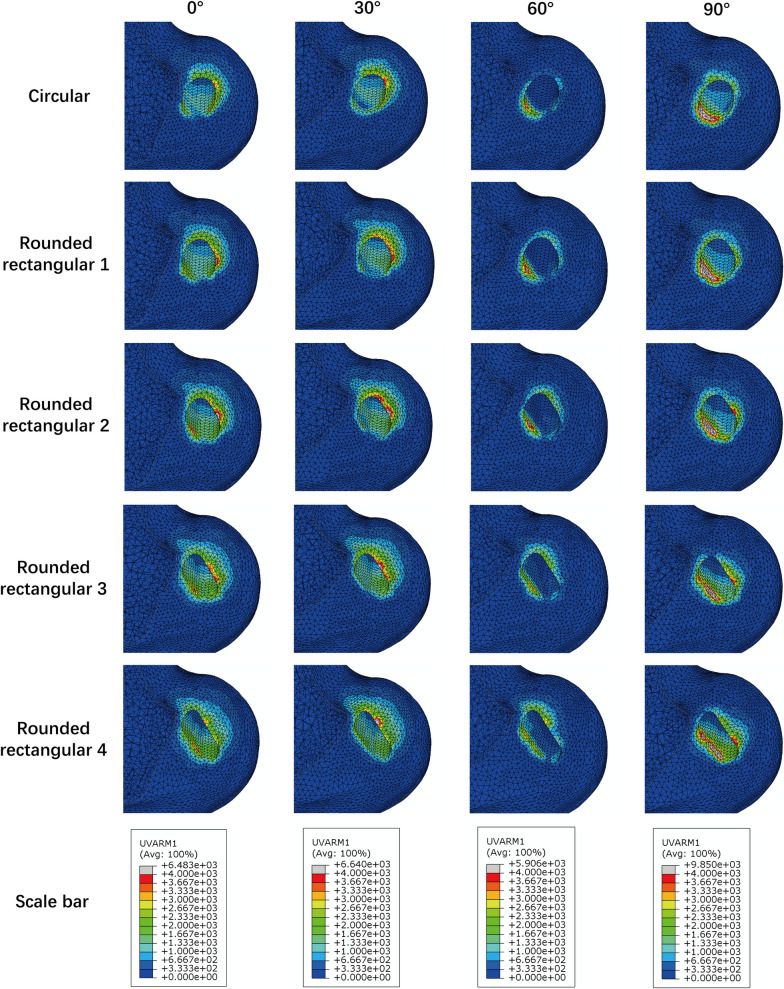
Purpose: Flattened femoral tunnels were recently applied in anatomical single‐bundle anterior cruciate ligament (ACL) reconstruction. Little is known about the biomechanical effect of such changes during knee flexion. The aim of the present simulation study was to assess the effect of altered ACL direct insertion coverage on the biomechanics of the graft and bone tunnel. Methods: Five finite element (FE) models, including a round femoral tunnel and four progressively flattened rounded rectangular femoral tunnels, were established to represent the ACL reconstructions. In vivo knee kinematics data obtained from the validated dual fluoroscopic imaging techniques controlled the FE models to simulate lunge motions. The maximal principal stress of the graft and the volume of equivalent strain within 1000–3000 microstrain (V 1000‐3000 ) of the cancellous bone were subsequently calculated at 0°, 30°, 60° and 90° of knee flexion. Results: A lower stress state on the graft and a more beneficial strain state on the cancellous bone were observed when the femoral tunnel better covered the ACL direct insertion. The average maximal principal stress of each model were 3.93 ± 0.60 MPa, 3.82 ± 0.54 MPa, 3.43 ± 0.44 MPa, 3.45 ± 0.44 MPa and 3.05 ± 0.43 MPa, respectively. The average V 1000‐3000 of the cancellous bone of each model were 179.06 ± 89.62 mm 3 , 221.40 ± 129.83 mm 3 , 247.57 ± 157.78 mm 3 , 282.74 ± 178.51 mm 3 and 295.71 ± 162.59 mm 3 , respectively. Both the stress and strain values exhibited two peaks during the flexion simulation. The highest value occurred at 30° of flexion, and the second highest value occurred at 90° of flexion. Conclusions: Increased ACL direct insertion coverage provided more positive biomechanical effects after anatomical single‐bundle ACL reconstruction during knee flexion.
Overview
The claims and statistics of this paper haven’t been checked yet.
Free: it reads the open-access text and checks the first 5 claims that cite a source we can check. Create a free account to check every claim.
Integrity signals
Registry
Cites
Statistics
Figures
Verification
Claims the paper makes
The claims and statistics of this paper haven’t been checked yet.
Free: it reads the open-access text and checks the first 5 claims that cite a source we can check. Create a free account to check every claim.
Self-check
Percentages, sums and reported differences re-computed from the paper’s own numbers.
The self-check needs the paper’s full text.
Citations
Cites
Peña, E., Calvo, B., Martínez, M. A., & Doblaré, M. (2006) · Journal of Biomechanics · doi:10.1016/j.jbiomech.2005.04.030 · Cited by 506 · cited 1×
“…I 1 is the first invariant of the modified Cauchy-Green tensor, F 2 is the isochoric part of the strain-energy function depending on the collagen fibres, is the stretch of the fibre, C 1 is the neo-Hookean constant, and D is the inverse of the bulk modulus k = 1/ D ( C 1 = 1.95, D = 0.00683) [20].”
BackgroundInfluentialAnterior Cruciate Ligament Tear
Musahl, V., & Karlsson, J. (2019) · New England Journal of Medicine · doi:10.1056/nejmcp1805931 · Cited by 391
Mellal, A., Wiskott, H. W. A., Botsis, J., Scherrer, S. S., & Belser, U. C. (2004) · Clinical Oral Implants Research · doi:10.1111/j.1600-0501.2004.01000.x · Cited by 244
Iwahashi, T., Shino, K., Nakata, K., Otsubo, H., Suzuki, T., Amano, H., & Nakamura, N. (2010) · Arthroscopy: The Journal of Arthroscopic & Related Surgery · doi:10.1016/j.arthro.2010.01.023 · Cited by 204 · cited 1×
“Indirect insertion is located in the posterior area of the footprint near the femoral articular cartilage, consisting of membrane-like tissue [8, 22].”
BackgroundSasaki, N., Ishibashi, Y., Tsuda, E., Yamamoto, Y., Maeda, S., Mizukami, H., Toh, S., Yagihashi, S., & Tonosaki, Y. (2012) · Arthroscopy: The Journal of Arthroscopic & Related Surgery · doi:10.1016/j.arthro.2011.12.021 · Cited by 164 · cited 1×
“Indirect insertion is located in the posterior area of the footprint near the femoral articular cartilage, consisting of membrane-like tissue [8, 22].”
BackgroundMochizuki, T., Fujishiro, H., Nimura, A., Mahakkanukrauh, P., Yasuda, K., Muneta, T., & Akita, K. (2014) · Knee Surgery, Sports Traumatology, Arthroscopy · doi:10.1007/s00167-013-2404-4 · Cited by 105 · cited 1×
“In recent years, anatomical studies have shown that the native ACL femoral footprint includes direct and indirect insertion [14, 19].”
BackgroundKawaguchi, Y., Kondo, E., Takeda, R., Akita, K., Yasuda, K., & Amis, A. A. (2014) · Arthroscopy The Journal of Arthroscopic and Related Surgery · doi:10.1016/j.arthro.2014.08.033 · Cited by 105 · cited 1×
“Previous biomechanical studies have clarified that direct fibres lead to higher loads than indirect fibres when restraining anterior tibial translation and rotation [10, 18].”
BackgroundEl-Sheikh, H. F., MacDonald, B., & Hashmi, M. S. J. (2003) · Journal of Materials Processing Technology · doi:10.1016/s0924-0136(03)00352-2 · Cited by 80 · cited 1×
“The cancellous bone of the femur was defined as isotropic linear elastic with Young’s modulus E = 389 MPa and Poisson’s ratio v = 0.3 [4].”
MethodInfluentialSuzuki, T., Shino, K., Otsubo, H., Suzuki, D., Mae, T., Fujimiya, M., Yamashita, T., & Fujie, H. (2014) · Arthroscopy The Journal of Arthroscopic and Related Surgery · doi:10.1016/j.arthro.2014.05.027 · Cited by 67 · cited 1×
“Firstly, cadaver experiments showed that a flattened femoral tunnel improves the stability of the knee joint [7, 24].”
BackgroundNawabi, D. H., Tucker, S. M., Schafer, K. A., Zuiderbaan, H. A., Nguyen, J., Wickiewicz, T. L., Imhauser, C. W., & Pearle, A. D. (2016) · The American Journal of Sports Medicine · doi:10.1177/0363546516652876 · Cited by 63 · cited 2×
“Previous biomechanical studies have clarified that direct fibres lead to higher loads than indirect fibres when restraining anterior tibial translation and rotation [10, 18].”
BackgroundHerbort, M., Tecklenburg, K., Zantop, T., Raschke, M. C. E. J., Hoser, C., Schulze, M., Petersen, W. J., & Fink, C. (2013) · Arthroscopy The Journal of Arthroscopic and Related Surgery · doi:10.1016/j.arthro.2013.08.030 · Cited by 62
Histological analysis of the tibial anterior cruciate ligament insertion
Oka, S., Schuhmacher, P., Brehmer, A., Traut, U., Kirsch, J., & Siebold, R. (2015) · Knee Surgery Sports Traumatology Arthroscopy · doi:10.1007/s00167-015-3924-x · Cited by 60 · cited 1×
“In recent years, anatomical studies have shown that the native ACL femoral footprint includes direct and indirect insertion [14, 19].”
BackgroundTechnique of anatomical single bundle ACL reconstruction with rounded rectangle femoral dilator
Nakase, J., Toratani, T., Kosaka, M., Ohashi, Y., Numata, H., Oshima, T., Takata, Y., & Tsuchiya, H. (2015) · The Knee · doi:10.1016/j.knee.2015.07.005 · Cited by 52 · cited 1×
“Since the anatomy of the native ACL is the basis for anatomical ACL reconstruction, investigators tried to change the shape of the femoral tunnel, such as rounded rectangular and rectangular [5, 16, 25, 27].”
BackgroundMechanisms of Bone Tunnel Enlargement Following Anterior Cruciate Ligament Reconstruction
Li, Y., DeFroda, S. F., Sullivan, K., Garcia, D. R., & Owens, B. D. (2020) · JBJS Reviews · doi:10.2106/jbjs.rvw.19.00120 · Cited by 50 · cited 2×
“Bone tunnel enlargement is a common phenomenon after ACL reconstruction caused by mechanical and biological factors [30].”
BackgroundACL graft failure location differs between allografts and autografts
Magnussen, R. A., Taylor, D. C., Toth, A. P., & Garrett, W. E. J. (2012) · Sports Medicine Arthroscopy Rehabilitation Therapy & Technology · doi:10.1186/1758-2555-4-22 · Cited by 37 · cited 1×
“This study indicated that the maximal principal stress on the graft is near the entrance of the femoral tunnel, which is the most frequent location of graft failure in autograft [11].”
BackgroundMiddleton, K. K., Muller, B., Araújo, P., Fujimaki, Y., Rabuck, S. J., Irrgang, J. J., Tashman, S., & Fu, F. H. (2014) · Knee Surgery Sports Traumatology Arthroscopy · doi:10.1007/s00167-014-3043-0 · Cited by 35 · cited 2×
“These tailoring tunnels were flatter than the traditional round tunnel, which were expected to better restore the insertion site and morphology of the native ACL [13].”
BackgroundTachibana, Y., Shino, K., Mae, T., Iuchi, R., Take, Y., & Nakagawa, S. (2018) · Knee Surgery Sports Traumatology Arthroscopy · doi:10.1007/s00167-018-5300-0 · Cited by 35 · cited 1×
“Since the anatomy of the native ACL is the basis for anatomical ACL reconstruction, investigators tried to change the shape of the femoral tunnel, such as rounded rectangular and rectangular [5, 16, 25, 27].”
BackgroundZhao, F., Hu, X., Zhang, J., Shi, W., Ren, B., Huang, H., & Ao, Y. (2019) · Knee Surgery Sports Traumatology Arthroscopy · doi:10.1007/s00167-019-05420-7 · Cited by 32 · cited 1×
“Secondly, an animal experiment showed that a flattened femoral tunnel accelerates tendon-bone healing in the early period after ACL reconstruction [32].”
BackgroundBae, J. Y., Kim, G.-H., Seon, J. K., & Jeon, I. (2016) · Medical & Biological Engineering & Computing · doi:10.1007/s11517-015-1372-x · Cited by 29 · cited 2×
“Finite element (FE) analysis is a powerful tool for assessing the biomechanics of the knee joint [1, 28, 29].”
Fink, C., Śmigıelski, R., Siebold, R., Abermann, E., & Herbort, M. (2020) · Arthroscopy Techniques · doi:10.1016/j.eats.2019.10.005 · Cited by 28 · cited 1×
“Since the anatomy of the native ACL is the basis for anatomical ACL reconstruction, investigators tried to change the shape of the femoral tunnel, such as rounded rectangular and rectangular [5, 16, 25, 27].”
BackgroundOrigin of the anterior cruciate ligament and the surrounding osseous landmarks of the femur
Zauleck, M., Gabriel, S., Fischmeister, M. F., & Hirtler, L. (2014) · Clinical Anatomy · doi:10.1002/ca.22440 · Cited by 25 · cited 1×
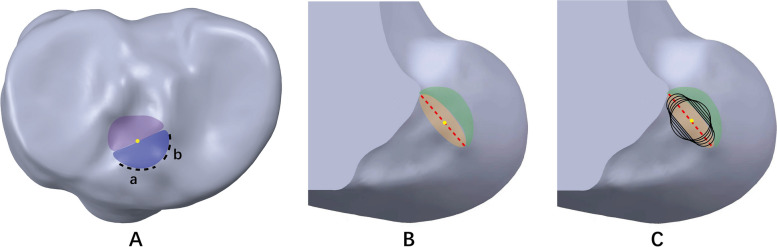
“The lateral intercondylar ridge was identified and used to determine the ACL direct insertion on the femoral model [31].”
MethodOrsi, A. D., Chakravarthy, S., Canavan, P. K., Peña, E., Goebel, R., Vaziri, A., & Nayeb-Hashemi, H. (2016) · Computer Methods in Biomechanics and Biomedical Engineering · doi:10.1080/10255842.2015.1043626 · Cited by 24
Uchida, R., Shiozaki, Y., Tanaka, Y., Kita, K., Amano, H., Kanamoto, T., Mae, T., Tachibana, Y., Takao, R., & Horibe, S. (2018) · Knee Surgery Sports Traumatology Arthroscopy · doi:10.1007/s00167-018-5224-8 · Cited by 19 · cited 1×
“Since the anatomy of the native ACL is the basis for anatomical ACL reconstruction, investigators tried to change the shape of the femoral tunnel, such as rounded rectangular and rectangular [5, 16, 25, 27].”
BackgroundTakata, Y., Nakase, J., Numata, H., Oshima, T., & Tsuchiya, H. (2016) · Archives of Orthopaedic and Trauma Surgery · doi:10.1007/s00402-016-2541-6 · Cited by 16 · cited 1×
“A previous study showed that the CT value of the femoral bone tunnel was significantly higher for the rounded rectangular tunnel than the round tunnel [26].”
BackgroundXiao, Y., Ling, M., Liang, Z., Ding, J., Zhan, S., Hu, H., & Chen, B. (2021) · International Journal of Computer Assisted Radiology and Surgery · doi:10.1007/s11548-021-02307-2 · Cited by 14
Self-citationKang, K., & Bae, T. S. (2017) · The International Journal of Medical Robotics and Computer Assisted Surgery · doi:10.1002/rcs.1817 · Cited by 10 · cited 1×
“Moreover, stress concentration on the graft was thought to be closely related to graft injuries after surgery [9].”
BackgroundWan, C., & Hao, Z. (2018) · Computer Methods in Biomechanics and Biomedical Engineering · doi:10.1080/10255842.2018.1447103 · Cited by 10 · cited 3×
“Finite element (FE) analysis is a powerful tool for assessing the biomechanics of the knee joint [1, 28, 29].”
MethodClinical study of anatomical ACL reconstruction using a rounded rectangular dilator
Nakase, J., Takata, Y., Shimozaki, K., Asai, K., Yoshimizu, R., Kimura, M., & Tsuchiya, H. (2021) · BMC Musculoskeletal Disorders · doi:10.1186/s12891-020-03913-y · Cited by 10 · cited 1×
“Orthopaedic surgeons have used the rounded rectangular femoral tunnel in primary or revision ACL reconstruction, yielding good clinical outcomes [7, 17, 23].”
BackgroundCheng, R., Wang, H., Dimitriou, D., Jiang, Z., Cheng, C., & Tsai, T. (2022) · International Journal for Numerical Methods in Biomedical Engineering · doi:10.1002/cnm.3590 · Cited by 8
Delaloye, J., Hartog, C., Blatter, S. C., Schläppi, M., Müller, D., Schwenke, T., Murar, J., & Koch, P. P. (2023) · The American Journal of Sports Medicine · doi:10.1177/03635465231159069 · Cited by 2
Shao, J., Niu, X., Wang, Y., & Ao, Y. (2020) · Orthopaedic Journal of Sports Medicine · doi:10.1177/2325967120944901 · Cited by 1
Frost (2004) · doi:10.1043/0003-3219(2004)074<0003:auobpa>2.0.co;2 · cited 3×
“A previous study demonstrated that the strain value inside the bones was an essential factor determining bone formation or resorption in response to mechanical loading [6].”
BackgroundInfluential
Cited by
Deichsel, A., Peez, C., Raschke, M. J., Albert, A., Herbort, M., Kittl, C., Fink, C., & Herbst, E. (2024) · The American Journal of Sports Medicine · doi:10.1177/03635465241280984 · Cited by 20
Deichsel, A., Gellhaus, F., Peez, C., Raschke, M. J., Martinovic, M., Herbst, E., Herbort, M., Fink, C., & Kittl, C. (2024) · Knee Surgery Sports Traumatology Arthroscopy · doi:10.1002/ksa.12572 · Cited by 4
“Furthermore, a fl at PCLR might lead to improved graft ‐ to ‐ bone healing, due to optimized tendon surface, inside the bone tunnel [46, 47].”
Xiao, Y., chen, Y., Li, H., Lu, J., Ding, Z., Jiang, G., & Chen, B. (2025) · Journal of Biomechanics · doi:10.1016/j.jbiomech.2025.112690 · Cited by 3
Self-citationBiomechanische In-vitro-Testmethoden am Kniegelenk: Eine Einführung
Deichsel, A., Günther, D., Ackermann, J., Münch, L. N., Mathis, D. T., Schüttler, K. F., Wafaisade, A., Laky, B., Eggeling, L., & Herbst, E. (2024) · Arthroskopie · doi:10.1007/s00142-024-00712-8 · Cited by 1
Yücel, M. O., Dalaslan, R. E., Sağlam, S., Karaduman, Z. O., Arıcan, M., Akar, B., & Tural, V. (2025) · Diagnostics · doi:10.3390/diagnostics15101237 · Cited by 1
“Interestingly, previous studies have demonstrated that 3D evaluations of knee kinematics can be conducted using bidirectional knee X-rays acquired through fluoroscopic imaging, suggesting a promising alternative for assessing the tunnel orientation with less complexity and cost [26,27].”
Metadata
- Authors
- Xiao, Y., Liang, Z., Shen, S., Liu, F., Hu, H., & Chen, B.
- Affiliations
- Nanfang Hospital (CN)
- Southern Medical University (CN)
- Shanghai Jiao Tong University (CN)
- Corresponding author
- Chen, Bin
- Venue
- Journal of Experimental Orthopaedics
- Publisher
- Wiley
- Published
- 2023-01
- Volume
- 10
- Issue
- 1
- Pages
- 108-108
- ISSN
- 2197-1153 (ISSN-L)
- PMC
- PMC10613193
- OpenAlex
- W4388002342
- Semantic Scholar
- 91858b285c52a785641b89a0b3a5d4386ed9c245
- Cited by
- 10
- References
- 33
- Citations by year
- 2026: 2 · 2025: 3 · 2024: 5
- FWCI
- 2.68
- Type
- journal article
- Language
- en
- Open access
- gold
- doi.org
- Licence
- cc-by
- creativecommons.org/licenses/by/4.0/ (vor, 300 d)
- creativecommons.org/licenses/by/4.0 (tdm)
- creativecommons.org/licenses/by/4.0 (vor, 300 d)
- Locations
- Journal of Experimental Orthopaedics (publishedVersion, cc-by)
- PubMed Central (publishedVersion, cc-by)
- PubMed (publishedVersion)
- DOAJ (DOAJ: Directory of Open Access Journals) (submittedVersion, cc-by-sa)
- Funders
- National Natural Science Foundation of China (12272164)
- Science and Technology Program of Guangzhou, China (202102080570)
- Innovation Programme among Guangdong, Hong Kong and Macao (2021A0505110011)
- Topics
- Health Sciences › Medicine › Surgery › Knee injuries and reconstruction techniques
- Health Sciences › Medicine › Orthopedics and Sports Medicine › Foot and Ankle Surgery
- Health Sciences › Medicine › Orthopedics and Sports Medicine › Tendon Structure and Treatment
- Keywords
- anterior cruciate ligament reconstruction, graft biomechanics, knee flexion, finite element model
About these checks
Registry, retraction, Cites and statistics results are computed, not judged, with one exception: a printed reference that no index lists is read once by a model before it counts as a citation error. Claims are extracted by a model and kept only when their quote appears verbatim in the text; each cited source is then checked, with a model’s help, for whether it says what the claim relies on. Those verdicts can be wrong — read the claim’s quote and the cited source before relying on one.
Statistics and arithmetic are recomputed, not judged.
Confidence bands are shown only for fields calibrated on our annotated test set. None is calibrated yet, so no band is shown.
What counts as a claim ›How we measure confidence ›How we check this ›
Are you an author, or do you see a problem with this page? Request a review
Data sources
Bibliographic data: Semantic Scholar, OpenAlex, Crossref.
Contains information from the Semantic Scholar Academic Graph Datasets, made available under the ODC Attribution License (ODC-BY 1.0).
Semantic Scholar’s data is described in: Kinney, R., et al. (2023). The Semantic Scholar Open Data Platform. arXiv:2301.10140.
