

The DOI matches its Crossref record; 315 of the 316 references it cites were found in a registry or an index.
Biomimetic natural biomaterials for tissue engineering and regenerative medicine: new biosynthesis methods, recent advances, and emerging applications
Open accessAbstract
Biomimetic materials have emerged as attractive and competitive alternatives for tissue engineering (TE) and regenerative medicine. In contrast to conventional biomaterials or synthetic materials, biomimetic scaffolds based on natural biomaterial can offer cells a broad spectrum of biochemical and biophysical cues that mimic the in vivo extracellular matrix (ECM). Additionally, such materials have mechanical adaptability, microstructure interconnectivity, and inherent bioactivity, making them ideal for the design of living implants for specific applications in TE and regenerative medicine. This paper provides an overview for recent progress of biomimetic natural biomaterials (BNBMs), including advances in their preparation, functionality, potential applications and future challenges. We highlight recent advances in the fabrication of BNBMs and outline general strategies for functionalizing and tailoring the BNBMs with various biological and physicochemical characteristics of native ECM. Moreover, we offer an overview of recent key advances in the functionalization and applications of versatile BNBMs for TE applications. Finally, we conclude by offering our perspective on open challenges and future developments in this rapidly-evolving field.
Overview
The claims and statistics of this paper haven’t been checked yet.
Run the check — free, no account needed. It reads the open-access text and checks the sources it cites.
Integrity signals
Registry
Cites
Statistics
Figures
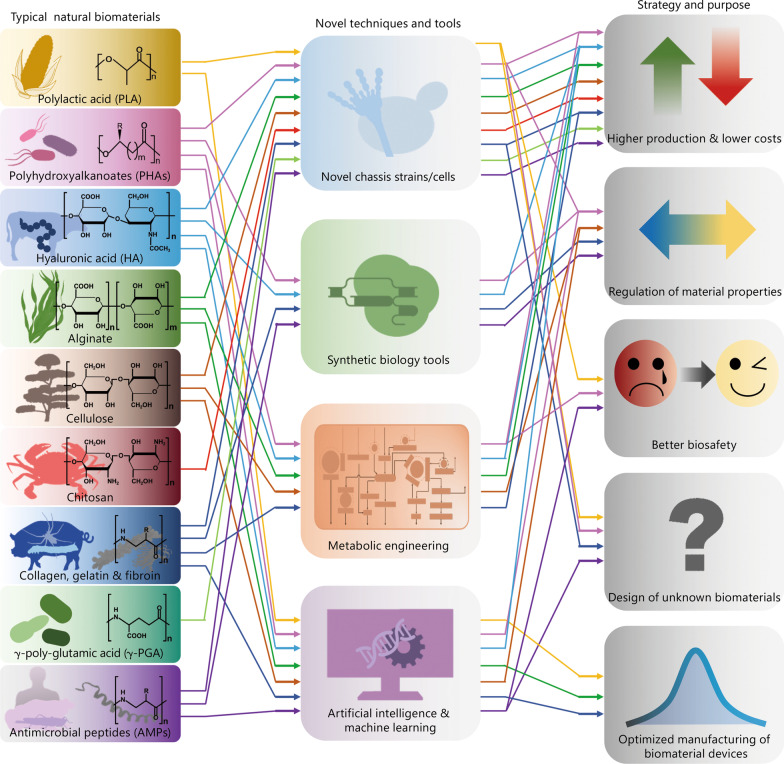
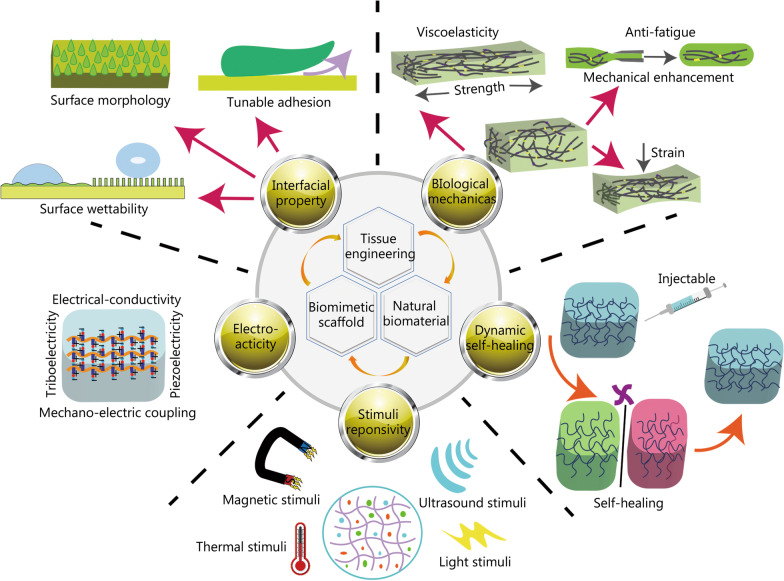
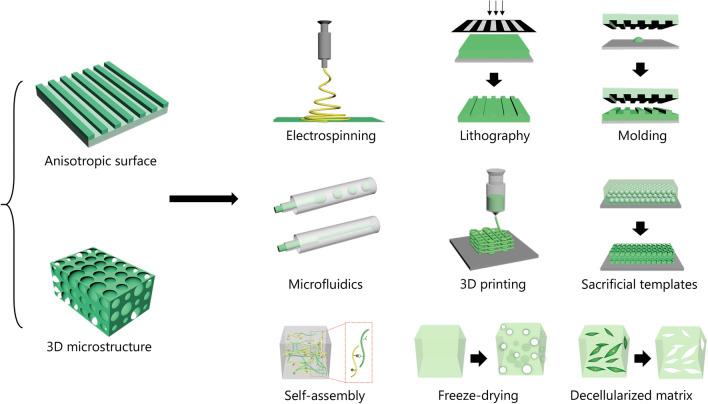
Verification
Claims the paper makes
The claims and statistics of this paper haven’t been checked yet.
Run the check — free, no account needed. It reads the open-access text and checks the sources it cites.
Claims other papers make about this one
Each is checked against this paper’s own text: does it say what the citing paper says it does?
The source backs part of the claim, not all of it — or backs it for a different population, condition or comparison.
In the citing paper
“Biomimetic materials, including engineered scaffolds and autologous protein solutions, aim to mimic native tissue environments but require further refinement in delivery methods and long-term safety [129,130].”
From Advancements in Regenerative Therapies for Orthopedics: A Comprehensive Review of Platelet-Rich Plasma, Mesenchymal Stem Cells, Peptide Therapies, and Biomimetic Applications (2025) · cites this paper as [129]
Experimental — accuracy not yet measured
Self-check
Percentages, sums and reported differences re-computed from the paper’s own numbers.
The self-check needs the paper’s full text.
Citations
Cites
Cellulose: Fascinating Biopolymer and Sustainable Raw Material
Klemm, D., Heublein, B., Fink, H., & Bohn, A. (2005) · Angewandte Chemie International Edition · doi:10.1002/anie.200460587 · Cited by 7,551
A Literature Review of Poly(Lactic Acid)
Garlotta, D. (2001) · Journal of Polymers and the Environment · doi:10.1023/a:1020200822435 · Cited by 3,707
Perfusion-decellularized matrix: using nature's platform to engineer a bioartificial heart
Ott, H. C., Matthiesen, T. S., Goh, S.-K., Black, L. D., Kren, S. M., Netoff, T. I., & Taylor, D. A. (2008) · Nature Medicine · doi:10.1038/nm1684 · Cited by 2,650
Hydrogels with tunable stress relaxation regulate stem cell fate and activity
Chaudhuri, O., Gu, L., Klumpers, D., Darnell, M., Bencherif, S. A., Weaver, J. C., Huebsch, N., Lee, H.-P., Lippens, E., Duda, G. N., et al. (2016) · Nature Materials · doi:10.1038/nmat4489 · Cited by 2,443
Why are double network hydrogels so tough?
Gong, J. P. (2010) · Soft Matter · doi:10.1039/b924290b · Cited by 2,334
Effects of extracellular matrix viscoelasticity on cellular behaviour
Chaudhuri, O., Cooper-White, J., Janmey, P. A., Mooney, D. J., & Shenoy, V. B. (2020) · Nature · doi:10.1038/s41586-020-2612-2 · Cited by 2,224
Polyionic hydrocolloids for the intestinal delivery of protein drugs: alginate and chitosan—a review
George, M., & Abraham, T. E. (2006) · Journal of Controlled Release · doi:10.1016/j.jconrel.2006.04.017 · Cited by 2,012
Protein release from alginate matrices
Gombotz, W. R. (1998) · Advanced Drug Delivery Reviews · doi:10.1016/s0169-409x(97)00124-5 · Cited by 1,636
Biomimetic materials for tissue engineering
Shin, H., Jo, S., & Mikos, A. G. (2003) · Biomaterials · doi:10.1016/s0142-9612(03)00339-9 · Cited by 1,616
Emerging Droplet Microfluidics
Shang, L., Cheng, Y., & Zhao, Y. (2017) · Chemical Reviews · doi:10.1021/acs.chemrev.6b00848 · Cited by 1,606
Research works printed but not linked: 1
- Pazhamannil RV, Govindan P, Sooraj P. Prediction of the tensile strength of polylactic acid fused deposition models using artificial neural network technique. Mater Today. 2021;46:9187–93.
Cited by
Sorted by citations
Items 301–357 of 357
Tissue Engineering Strategies for Environmental Sustainability
Ali, H., Faiyazuddin, M., Akbar, M., & Normakhamatov, N. S. (2025) · Springer eBooks · doi:10.1007/978-3-031-91790-5_4
Studies on Endometrial Mesenchymal Stem Cells in Female Regenerative Pelvic Floor Medicine
Russu, M. C. (2025) · Obstetrics and gynecology. · doi:10.5772/intechopen.1010815
Advancement of Synthetic Biology Strategies for Bioinspired Regenerative Medicine
Khoshnevisan, K., Maleki, H., & Baharifar, H. (2025) · Springer eBooks · doi:10.1007/978-3-031-87744-5_14
Aykora, D., ŞAHİN, S., Aydeğer, C., Yülek, Ö., Alkan, S., ORAL, A., & JAJERE, M. U. (2025) · Namık Kemal Tıp Dergisi · doi:10.4274/nkmj.galenos.2025.58966
Recent Advancement of Sustainable Scaffolds in Regenerative Medicine
Mohanty, S. S., Pati, S., & Samal, S. K. (2025) · Springer eBooks · doi:10.1007/978-3-031-96274-5_1 · Cited by 1
Natarajan, A., Vadrevu, L. R., Kora, A. J., & Rangan, K. (2025) · Nanoscale Advances · doi:10.1039/d5na00228a
Design and development of biomimetic materials for regenerative medicine applications
Reddy, R. T., Varanasi, V. S. H. P., Singh, H., Gupta, M., Tewari, P., & Dhamija, K. (2025) · AIP conference proceedings · doi:10.1063/5.0261408
Use of Natural Biomaterials in Tissue Regeneration
Yari-Ilkhchi, A. (2025) · Biomedical engineering · doi:10.5772/intechopen.1011108
Introduction to Biomaterials in Design of Regenerative Medicine
Pardeshi, S. R., Gholap, A. D., Sen, N. K., Shinde, P. J., & Khandagale, P. D. (2025) · Springer eBooks · doi:10.1007/978-3-031-96070-3_1
Biomaterial-Based Drug Delivery Systems: Bridging Advances and Applications in Regenerative Medicine
Ansari, I., Yadav, S., & Prajapati, S. (2025) · Drug Metabolism and Bioanalysis · doi:10.2174/0118723128382078250818143502
Biomaterials for Muscle Tissue Regeneration: Innovations and Applications
Ceccarelli, G. (2025) · Biomedical engineering · doi:10.5772/intechopen.1011409
Microbial and Cell Culture Systems for Bio-Manufacturing
Pamuru, R. R., Chandrasekhar, T., Mohammed, A., Tariq, M., Sainath, S. B., & Ramesh, K. (2025) · IGI Global eBooks · doi:10.4018/979-8-3373-2873-7.ch002
Natural versus synthetic polymers: advances, limitations, and opportunities
Sarkar, K., & Patra, R. (2025) · Elsevier eBooks · doi:10.1016/b978-0-443-27350-6.00001-8
Stacey, E., Maddock, M. L., Dottori, M., Beirne, S., & Yue, Z. (2025) · Biomedical Materials & Devices · doi:10.1007/s44174-025-00560-6
Zhao, D., Anupan, W., Kannan, P. R., Santavalimp, K., Thuaksuban, N., Meesane, J., Zhu, T., Zhou, Q., Buatong, J., Kemavongse, K., et al. (2025) · International Journal of Biological Macromolecules · doi:10.1016/j.ijbiomac.2025.148459
Biomaterials in the development of medical devices
Sarkar, N., Ghosh, S., & Ray, R. R. (2025) · Elsevier eBooks · doi:10.1016/b978-0-443-32828-2.00005-3
Effect of Porosity on the Wear Performance of Ti-18Nb-9Cu Alloy
Faaik, M. S., Anaee, R. A. M., & Demirtaş, H. (2025) · Journal of Engineering Materials and Technology · doi:10.1115/1.4070517
Bioinspired polymeric constructs in management of burn wounds: current trends and future
Jha, A. N., Gaikwad, V. R., Gupta, A. K., & Singh, S. K. (2025) · Polymer Bulletin · doi:10.1007/s00289-025-06073-y
Yurtsever, M. Ç., Cetin, I. N., & İyigündoğdu, Z. (2025) · Fibers and Polymers · doi:10.1007/s12221-025-01290-8
Wang, X., Yang, X., Chen, K., Ke, X., Han, H., & Yanxia, Y. (2026) · Nanotechnology · doi:10.1088/1361-6528/ae376b
González, A. G., Zambrano-Robledo, P. C., de la Torre, R. J. L., & Ortega, S. G. (2026) · Lecture notes in networks and systems · doi:10.1007/978-3-031-96157-1_36
Zhang, S., Linghu, C., Li, G., Chen, Q., Zhang, J., & Zhang, J. (2026) · Advanced Healthcare Materials · doi:10.1002/adhm.202502549
Biocompatibility and safety assessment of hemostatic biomaterials
Sadhu, T., Adam, A. K., Varaprasad, K., & Gangireddygari, V. S. R. (2026) · Elsevier eBooks · doi:10.1016/b978-0-443-34246-2.00007-2
Advances in Atom Transfer Radical Polymerization
Jerczyński, K., Purohit, V. B., Rahimi, M., Kornatowska, Z., Kariminezhad, Z., & Pietrasik, J. (2026) · Elsevier eBooks · doi:10.1016/b978-0-323-95486-0.00196-4
Oyervides‐Guajardo, V. G., Claudio‐Rizo, J. A., León‐Campos, M. I., Cabrera‐Munguía, D. A., González‐Díaz, M. O., Soriano‐Corral, F., Herrera‐Guerrero, A., & Rivera, C. A. S. (2026) · Biopolymers · doi:10.1002/bip.70089 · Cited by 2
Other disciplines and sustainability – comprehensive synopses
Mammino, L. (2026) · Elsevier eBooks · doi:10.1016/b978-0-443-13417-3.00004-4
Immuno-materials: exploring the translational aspects among immunology, biomaterials and biomedicine
Tatullo, M., Pacifici, A., Ruggiero, R., Innocenzi, F., Palumbo, G., Facente, A., & Paduano, F. (2026) · Exploration of Immunology · doi:10.37349/ei.2026.1003242
Mussoni, C., Heinze, C., Ryma, M., Jun, I., Lamberger, Z., Andelovic, K., Kade, J. C., Stahlhut, P., Lang, G., Ahmad, T., et al. (2026) · Bioactive Materials · doi:10.1016/j.bioactmat.2026.03.020
Mierke, C. T. (2026) · Elsevier eBooks · doi:10.1016/b978-0-443-30048-6.00002-4
Biocomposites-Based Artificial Tissues
Chanda, A., & Sharma, D. (2026) · Biomedical materials for multi-functional applications · doi:10.1007/978-981-92-1307-8_6
Applications of fiber-based natural biomaterials in nerve tissue engineering
Halagali, P., Tippavajhala, V. K., Sharma, H., & Pathak, R. (2026) · Elsevier eBooks · doi:10.1016/b978-0-443-34248-6.00007-9
Introduction to fiber-based natural biomaterials for tissue engineering and regeneration
Yadav, K., Sharma, R., Jaiswal, S., Chandel, A., Pandey, P., Sodhi, R. K., & Dhiman, B. (2026) · Elsevier eBooks · doi:10.1016/b978-0-443-34248-6.00012-2
Applications of fiber based natural biomaterials in skin tissue engineering
Gajbhiye, S. L., Kapoor, V., Dhoble, S. J., & Tobin, D. (2026) · Elsevier eBooks · doi:10.1016/b978-0-443-34248-6.00006-7
Toxicological and regulatory aspects of natural biomaterials for tissue engineering
Sharma, D., Singh, G., Sharmah, H., Kumari, K., Kapoor, D. U., Gupta, D., & Chatterjee, A. (2026) · Elsevier eBooks · doi:10.1016/b978-0-443-34248-6.00018-3
Biglari, N., Mehri, M., Rezaei, M., Azimi, G., Maghsoudi, M. A. F., & Samadi, A. (2026) · International Journal of Biological Macromolecules · doi:10.1016/j.ijbiomac.2026.152877
Bioinspired Electrospun Chitosan–Based Materials for Tissue Regeneration
Mokhena, T. C., Mtibe, A., Hlekelele, L., Nhlapo, T. A., Shingange, K., Mapukata, S., Mapossa, A. B., Mochane, M. J., Mathete, E., Shumbula, N. P., et al. (2026) · Advances in Polymer Technology · doi:10.1155/adv/8830315
Developing Peptide-Based Hydrogels for Soft Tissue Repair
Ross, A., Nguyen, D., Salazar, G. A. M., İleri, R., Guzmán‐Soto, I., Ruel, M., Suuronen, E. J., & Alarcon, E. I. (2026) · ACS Materials Letters · doi:10.1021/acsmaterialslett.6c00136
Biomaterials for bone and cartilage tissue engineering
Chinnappan, B. A., Santhini, E., Bal, T., Sharif, F., Smrithi, N. S., Misra, N., & Pillai, P. (2026) · Elsevier eBooks · doi:10.1016/b978-0-443-36767-0.00007-9
Polyphenols and matrix metalloproteinase in wound healing
Raza, A., & Hussain, N. (2026) · Elsevier eBooks · doi:10.1016/b978-0-443-45193-5.00016-8
Advanced Biomaterials for Tissue Repair and Regeneration
Ghosh, S., Roy, S., & Pal, D. (2026) · IGI Global eBooks · doi:10.4018/979-8-2600-0060-1.ch007 · Cited by 1
Jia, M., Wang, L., Zhao, Y., Jin, X., Shen, H., Shang, Y., Zhao, X., Xing, L., Wu, H., & Li, G. (2026) · Colloids and Surfaces A Physicochemical and Engineering Aspects · doi:10.1016/j.colsurfa.2026.141316
Characterization of 3D scaffold based on carboxymethyl chitosan and PVP
Szulc, M., Lewandowska, S., Jędrzejewski, T., & Lewandowska, K. (2026) · Journal of Materials Science Materials in Engineering · doi:10.1186/s40712-026-00557-z
Immune-Phase-Aware Protein Delivery via Polymeric Nanomedicines for Tissue Regeneration: A Review
Yang, S.-H., Lu, S.-C., Cai, F.-C., & Hsu, R. (2026) · ACS Applied Nano Materials · doi:10.1021/acsanm.6c01967
Shi, B., Li, D., Chen, M., Wang, B., Liu, X., Zhang, Y., Li, M., & Xu, Y. (2026) · Journal of Polymers and the Environment · doi:10.1007/s10924-026-03950-z
Lei, S., Sun, D., Zhang, Y., Guo, Y., Chen, Y., Jiang, W., Zhang, Z., Luo, C., Wang, Z., Sun, J., et al. (2026) · Bioactive Materials · doi:10.1016/j.bioactmat.2026.08.018
A compression-torsion combined loading method for soft materials based on metamaterials
Yin, Z., Hu, L., & Zhang, Y. (2026) · Applied Mathematics and Mechanics · doi:10.1007/s10483-026-3430-8
Regulatory aspects of tissue engineering
Yadav, S., Nair, A., Shukla, V. K., & Sharma, N. (2026) · Elsevier eBooks · doi:10.1016/b978-0-443-33455-9.00031-6
Tyagi, N., & Gupta, S. (2026) · Elsevier eBooks · doi:10.1016/b978-0-443-33455-9.00026-2
Comprehending the role of in vivo models in tissue engineering
Pareek, S., Saran, M., & Bagaria, A. (2026) · Elsevier eBooks · doi:10.1016/b978-0-443-33455-9.00005-5
Wu, J., Wang, X., Li, H., Pei, X., Feng, H., & Wang, J. (2026) · SusMat · doi:10.1002/sus2.70105
Zhu, H., Xie, Y., Li, J., Li, L., Wang, Z., Li, J., Hua, X., Hao, Y., Zhu, Z., Song, Z., et al. (2026) · ACS Nano · doi:10.1021/acsnano.6c12492
Shaji, S. S., Radhakrishnan, R., P, A. K., & Kamalasanan, K. (2026) · Journal of Biomaterials Applications · doi:10.1177/08853282261496664
Barron‐Veloz, C., León‐Campos, M. I., Usme-Duque, L. K., Becerra‐Rodríguez, J. J., Betancourt‐Galindo, R., Enríquez‐Medrano, F. J., Flores‐Guía, T. E., & Claudio‐Rizo, J. A. (2026) · ChemistrySelect · doi:10.1002/slct.74938
3D-printed polymer composite hydrogels for biomedical applications
Latiyan, S., & Dash, P. (2026) · Elsevier eBooks · doi:10.1016/b978-0-443-40547-1.00008-6
Biomechanics-guided design of polymeric membranes and thin films for smart medical devices
Kaur, S., Dubey, K., Singh, G., & Thakur, V. (2026) · Frontiers in Bioengineering and Biotechnology · doi:10.3389/fbioe.2026.2011948
Hodel, K. V. S., Machado, B. A. S., & Godoy, A. L. P. C. (2026) · SN Comprehensive Clinical Medicine · doi:10.1007/s42399-026-02732-x
Metadata
- Authors
- Liu, S., Yu, J.-M., Gan, Y.-C., Qiu, X.-Z., Gao, Z.-C., Wang, H., Chen, S.-X., Xiong, Y., Liu, G.-H., Lin, S.-E., McCarthy, A., John, J. V., Wei, D.-X., & Hou, H.-H.
- Affiliations
- Southern Medical University (CN)
- Shanghai Jiao Tong University (CN)
- Sun Yat-sen University (CN)
- Huazhong University of Science and Technology (CN)
- Terasaki Foundation (US)
- University of Nebraska Medical Center (US)
- Corresponding author
- Wang, Huan
- Wei, Dai-Xu
- Venue
- Military Medical Research
- Publisher
- Elsevier BV
- Published
- 2023-03-28
- Volume
- 10
- Issue
- 1
- Pages
- 16-16
- ISSN
- 2054-9369 (ISSN-L)
- PMC
- PMC10047482
- OpenAlex
- W4361206153
- Cited by
- 357
- References
- 316
- Citations by year
- 2026: 60 · 2025: 146 · 2024: 118 · 2023: 33
- FWCI
- 23.10
- Type
- journal article
- Language
- en
- Open access
- diamond
- doi.org
- Locations
- Military Medical Research (publishedVersion, cc-by)
- PubMed Central (publishedVersion, cc-by)
- PubMed (publishedVersion)
- DOAJ (DOAJ: Directory of Open Access Journals) (submittedVersion, cc-by-sa)
- Funders
- National Natural Science Foundation of China (52003113, 31900950, 82102334, 82002313, 82072444)
- Guangdong Basic and Applied Basic Research Foundation (2021A1515010745, 2020A1515110356, 2019A1515111155)
- Shenzhen Fundamental Research Program (JCYJ20190808120405672)
- Key Program of the National Natural Science Foundation of Zhejiang Province (LZ22C100001)
- Natural Science Foundation of Shanghai (20ZR1469800)
- Science and Technology Projects of Guangzhou City (202102020359)
- Startup Grant of the University of Chinese Academy of Sciences (WIUCASQD2021026)
- National Key Research & Development Program of China (2018YFC2001502, 2018YFB1105705)
- China Postdoctoral Science Foundation (2021TQ0118, 2022M721490)
- Topics
- Health Sciences › Medicine › Surgery › Tissue Engineering and Regenerative Medicine
- Physical Sciences › Engineering › Biomedical Engineering › Bone Tissue Engineering Materials
- Physical Sciences › Materials Science › Biomaterials › Silk-based biomaterials and applications
- Keywords
- tissue engineering, regenerative medicine, extracellular matrix mimics, biomimetic scaffolds, biomaterial functionalization, bioactivity (biomaterials), mechanical properties
- MeSH terms
- Biocompatible Materials, Humans, Tissue Engineering, Biomimetics, Biomimetic Materials, Regenerative Medicine
About these checks
Registry, retraction, Cites and statistics results are computed, not judged, with one exception: a printed reference that no index lists is read once by a model before it counts as a citation error. Claims are extracted by a model and kept only when their quote appears verbatim in the text; each cited source is then checked, with a model’s help, for whether it says what the claim relies on. Those verdicts can be wrong — read the claim’s quote and the cited source before relying on one.
Statistics and arithmetic are recomputed, not judged.
Confidence bands are shown only for fields calibrated on our annotated test set. None is calibrated yet, so no band is shown.
What counts as a claim ›How we measure confidence ›How we check this ›
Are you an author, or do you see a problem with this page? Request a review
