

Guided self-help for anxiety among Huntington’s disease gene expansion carriers (GUIDE-HD) compared to treatment as usual: a randomised controlled feasibility trial
Open accessPublished version of a preprint
The DOI matches its Crossref record; 45 of the 45 references it cites were found in a registry or an index; 13 of the 23 sources its claims cite were checked for support.
Abstract
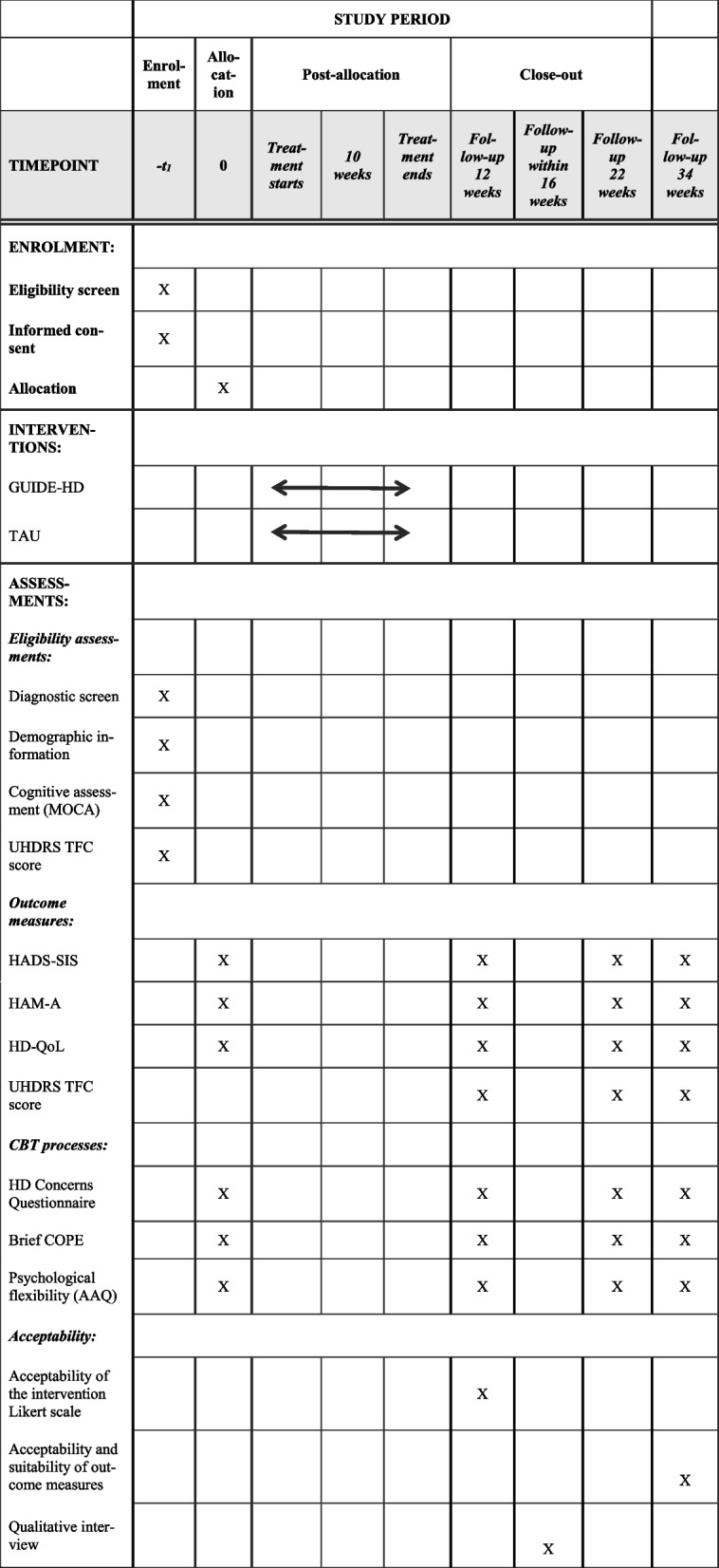
Background: Huntington’s disease (HD) is an adult-onset genetic neurodegenerative condition associated with cognitive decline, motor impairments, and emotional difficulties. Anxiety affects up to 71% of HD gene expansion carriers (i.e., those with the version of the gene that causes HD) and can negatively impact quality of life, worsen other HD symptoms, and increase suicide risk. Therefore, helping people with their anxiety should be a clinical priority. A significant evidence base now exists for low-cost talking therapies for anxiety, such as guided self-help, and with people with other neurodegenerative conditions (e.g., Parkinson’s disease). However, this type of intervention has not been specifically assessed with HD gene expansion carriers. Methods: This protocol describes an exploratory randomised controlled feasibility study of a psychological intervention for anxiety for HD gene expansion carriers. The 10 session guided self-help intervention ('GUIDE-HD') is based on a blend of second and third wave cognitive behavioural models of anxiety (cognitive behaviour therapy [CBT] and acceptance and commitment therapy [ACT]) and is adapted to meet the specific needs of an HD population. This study will compare guided self-help with treatment as usual (TAU), with 15 HD gene expansion carriers randomly allocated to each group. Participants will be recruited across the UK. Quantitative data will be collected pre-intervention, immediately post-intervention, 3-month post-intervention and 6-month post-intervention. Qualitative data will be collected at one month post-intervention from participants, including HD carers. The data will be analysed to assess whether the current intervention and study design are feasible to progress to a larger randomised controlled trial. Feasibility has been defined in terms of recruitment rate, retention rate to both trial arms, intervention adherence, and acceptability of the intervention and measurement tools. Discussion: Given the lack of evidenced interventions to date to support the wellbeing of people with the expanded Huntington’s gene, this study will assess the feasibility of progressing this particular intervention to a full trial. To try and increase the acceptability of the intervention, a number of stakeholders, including those affected by HD and in caring roles, have been fundamental to the creation of the intervention (e.g., therapy manual, planned therapy process) to date. Trial registration: Trial ID: ISRCTN47330596 . Date registered: 28/09/2022. Protocol version and date: Version 2, 09/06/22. Trial sponsor organisation and contact: Leicestershire Partnership NHS Trust (Dave Clarke). Role of sponsor: Overall responsibility for the conduct and governance of the trial. Role of funder: Review of initial research proposal. © 2023, BioMed Central Ltd., part of Springer Nature.
Overview
CoChat Summary
## TL;DR
This paper is a protocol for GUIDE-HD, a 2-arm randomised controlled feasibility trial testing whether a 10-session guided self-help intervention for anxiety can be delivered and accepted in Huntington’s disease gene expansion carriers, compared with treatment as usual. The trial is designed to inform whether a full efficacy RCT is feasible, using recruitment, retention, adherence, and acceptability as the main go/no-go criteria.
## Key findings
- Not stated in the paper.
- The background states anxiety affects up to 71% of HD gene expansion carriers and can negatively affect quality of life, worsen other HD symptoms, and increase suicide risk.
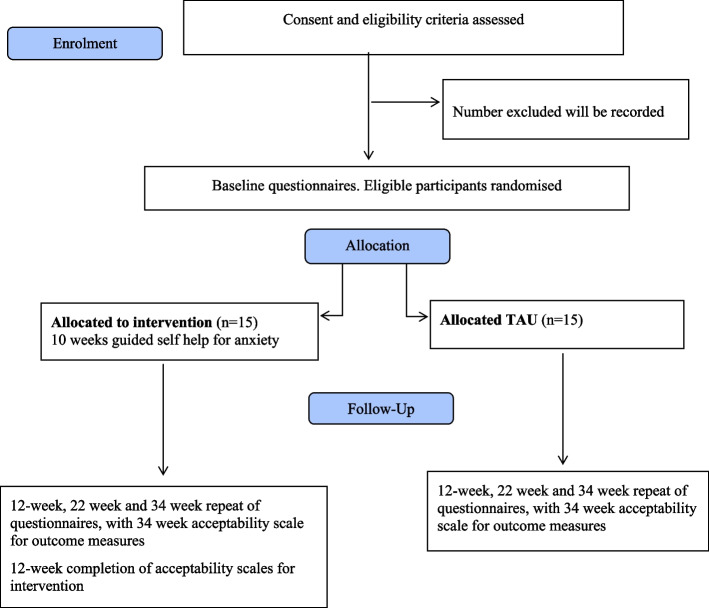
- The protocol sets a target sample of 30 HD participants (15 per arm), with a total sample aimed at 36 including carers.
- Progression criteria are explicitly defined: ≥60% of eligible participants consenting, ≥70% retention at 3- and 6-month follow-up, ≥90% completion of at least one primary outcome measure including 6-month follow-up, >75% of intervention activities completed, and >75% of completers rating the intervention acceptable.
## Methods
- Design: 2-arm randomised controlled feasibility trial with 1:1 allocation to guided self-help plus treatment as usual versus treatment as usual alone; quantitative and qualitative data are collected.
- Sample/data: HD gene expansion carriers in the UK with confirmed HTT CAG ≥ 36, clinical anxiety, and premanifest or early-stage manifest HD; carers may also participate in qualitative work and some intervention support.
- Analysis: Feasibility outcomes are analysed with descriptive statistics; qualitative interviews are analysed using framework analysis; stratified/block randomisation is used to balance premanifest vs manifest participants.
## Limitations
- The paper states this is a feasibility study, so no formal power calculation was done and the sample is small.
- As stated in the paper, the intervention team cannot be blinded for post-intervention acceptability ratings and repeated outcome measures; blind assessment will not be possible.
- Evident from the protocol text: the paper reports planned methods only, so it provides no results on feasibility, acceptability, or clinical outcomes.
Model-written summary. Check it against the paper before relying on it.
Integrity signals
Registry
Cites
Statistics
Figures
Verification
Claims the paper makes
10 Valid · 1 Not valid · 5 Not checked · 31 Own results and interpretations
The cited sources support only part of this claim — read each source’s verdict below.
In the paper
“Guided self-help predominantly uses techniques from cognitive-behavioural therapies (CBTs)”
§ Guided self-help for anxiety among Huntington’s disease gene expansion carriers (GUIDE-HD) compared to treatment as usual: a randomised controlled feasibility trial > Background
What the sources say
- Partly supportedcites [20] Coull G, Morris PG. The clinical effectiveness of CBT-based guided self-help interventions for anxiety and depressive disorders: a systematic review. Psychol Med. 2011/06/15. Cambridge University Press; 2011;41:2239–52. 21672297 sourceExperimental — accuracy not yet measured
The paper’s opening summary (p. 2) identifies CBT-based guided self-help as the subject of its review, supporting the link between guided self-help and CBT. It does not establish that guided self-help in general predominantly uses CBT techniques; its reviewed interventions were selected for being CBT-based. (LLM, conf=0.84)
plain- Asserted: passes — The authors put it forward as true.
- Checkable: passes — It can be checked against evidence.
- Load-bearing: unclear — It is unclear whether the paper’s conclusions depend on it.
- Based: passes — The paper gives a reason why it holds.
- Partly supported
The cited sources support only part of this claim — read each source’s verdict below.
In the paper
“Guided self-help is a cost-effective psychological therapy for anxiety”
§ Guided self-help for anxiety among Huntington’s disease gene expansion carriers (GUIDE-HD) compared to treatment as usual: a randomised controlled feasibility trial > Background
What the sources say
- Partly supportedcites [20] Coull G, Morris PG. The clinical effectiveness of CBT-based guided self-help interventions for anxiety and depressive disorders: a systematic review. Psychol Med. 2011/06/15. Cambridge University Press; 2011;41:2239–52. 21672297 sourceExperimental — accuracy not yet measured
The Conclusions (p. 12) say CBT-based guided self-help may be effective immediately after treatment for less clinically representative groups, but find limited effectiveness in routine clinical settings and over the longer term. The paper evaluates clinical effectiveness, not cost-effectiveness; the cost-effectiveness wording found in the copy is in a cited work’s title (References, p. 12). Thus it does not establish that guided self-help is a cost-effective therapy for anxiety. (LLM, conf=0.88)
plainstates a cause- Asserted: passes — The authors put it forward as true.
- Checkable: passes — It can be checked against evidence.
- Load-bearing: passes — The paper’s conclusions depend on it.
- Based: passes — The paper gives a reason why it holds.
- Partly supported
Every source the paper cites for this claim was checked and supports it.
In the paper
“Higher anxiety has also been found to predict greater workplace impairment for premanifest (i.e., not motor symptomatic) HD gene expansion carriers [17].”
§ Guided self-help for anxiety among Huntington’s disease gene expansion carriers (GUIDE-HD) compared to treatment as usual: a randomised controlled feasibility trial > Background
What the sources say
- Supportedcites [17] Goh AMY You E Perin S Clay FJ Loi S Ellis K Predictors of workplace disability in a premanifest Huntington’s disease cohort J Neuropsychiatry Clin Neurosci 2018 30 115 121 10.1176/appi.neuropsych.17040086 29183234 source
The Abstract reports that, among employed premanifest HD participants, higher anxiety symptoms were associated with significantly higher odds of workplace impairment. The Discussion likewise identifies increased anxiety as significantly associated with impairment while working and overall work productivity loss. The study is cross-sectional, so “predicts” describes a statistical association, not a demonstrated causal effect. (LLM, conf=0.93)
plainstates an association- Asserted: passes — The authors put it forward as true.
- Checkable: passes — It can be checked against evidence.
- Load-bearing: passes — The paper’s conclusions depend on it.
- Based: passes — The paper gives a reason why it holds.
- Supported
Every source the paper cites for this claim was checked and supports it.
In the paper
“people with the HD gene expansion can experience emotional difficulties approximately 15 years before motor signs [11]”
§ Guided self-help for anxiety among Huntington’s disease gene expansion carriers (GUIDE-HD) compared to treatment as usual: a randomised controlled feasibility trial > Background
What the sources say
- Supportedcites [11] JS Paulsen Cognitive impairment in Huntington disease: diagnosis and treatment Curr Neurol Neurosci Rep 2011 11 474– 83 10.1007/s11910-011-0215-x 21861097 PMC3628771 source
The Recent Cognitive Findings in HD section reports impaired emotion recognition in gene-expansion carriers more than 15 years before predicted motor diagnosis. The Diagnosis of HD section also describes cognitive and psychiatric manifestations up to 15 years before motor signs. The claim’s approximate timing and cautious wording are consistent with these passages. (LLM, conf=0.87)
plainstates an association- Asserted: passes — The authors put it forward as true.
- Checkable: passes — It can be checked against evidence.
- Load-bearing: passes — The paper’s conclusions depend on it.
- Based: passes — The paper gives a reason why it holds.
- Supported
What the paper did — it cites no source for this, so there is none to check. The quote shows it is in the paper.
In the paper
“Since the senior research associate is undertaking the post-intervention acceptability ratings and qualitative interviews for the intervention group, as well as the repeated outcome measures, blind assessment will not be possible.”
§ Guided self-help for anxiety among Huntington’s disease gene expansion carriers (GUIDE-HD) compared to treatment as usual: a randomised controlled feasibility trial > Methods/design > Feasibility outcomes
plainstates a cause- Asserted: passes — The authors put it forward as true.
- Checkable: passes — It can be checked against evidence.
- Load-bearing: unclear — It is unclear whether the paper’s conclusions depend on it.
- Based: passes — The paper gives a reason why it holds.
5 more claims
Create a free account to see all 47 claims and every source verdict.
- It may state two separate claims as one. 9
- Probably not a substantial claim. 33
Citations
Cites
Diagnostic and Statistical Manual of Mental Disorders
American Psychiatric Association (2013) · doi:10.1176/appi.books.9780890425596 · Cited by 116,369
The Hospital Anxiety and Depression Scale
Zigmond, A. S., & Snaith, R. P. (1983) · Acta Psychiatrica Scandinavica · doi:10.1111/j.1600-0447.1983.tb09716.x · Cited by 47,139 · cited 2×
“All participants will be assessed for anxiety using the HADS-anxiety subscale [33] and Hamilton Anxiety Rating Scale (HAM-A; [32]).”
BackgroundMethodThe Montreal Cognitive Assessment, MoCA: a brief screening tool for mild cognitive impairment
Nasreddine, Z. S., Phillips, N. A., Bédirian, V., Charbonneau, S., Whitehead, V., Collin, I., Cummings, J. L., & Chertkow, H. (2005) · Journal of the American Geriatrics Society · doi:10.1111/j.1532-5415.2005.53221.x · Cited by 25,553 · cited 1×
“At this assessment point, if the threshold for an anxiety disorder is reached, then cognitive functioning will also be assessed using a brief measure (the Montreal Cognitive Assessment, MoCA; [31]).”
MethodDepression and quality of life in older persons: A review
Sivertsen, H., Bjørkløf, G. H., Engedal, K., Selbæk, G., & Helvik, A.-S. (2015) · Dementia and Geriatric Cognitive Disorders · doi:10.1159/000437299 · Cited by 14,152
The assessment of anxiety states by rating
HAMILTON, M. (1959) · British Journal of Medical Psychology · doi:10.1111/j.2044-8341.1959.tb00467.x · Cited by 11,455 · cited 2×
“All participants will be assessed for anxiety using the HADS-anxiety subscale [33] and Hamilton Anxiety Rating Scale (HAM-A; [32]).”
BackgroundMethodGale, N. K., Heath, G., Cameron, E., Rashid, S., & Redwood, S. (2013) · BMC Medical Research Methodology · doi:10.1186/1471-2288-13-117 · Cited by 10,865 · cited 1×
“Framework analysis [39] will be used as this provides an efficient, focused approach involving specific questions to discuss pre-identified issues [40].”
MethodYou want to measure coping but your protocol’ too long: Consider the brief cope
Carver, C. S. (1997) · International Journal of Behavioral Medicine · doi:10.1207/s15327558ijbm0401_6 · Cited by 7,361 · cited 1×
“The putative process or mechanism measures are the HD Concerns Questionnaire [36], a measure of coping (the brief COPE; [37]), and a psychological flexibility questionnaire (AAQ; [38]).”
MethodQualitative data analysis for applied policy research
Ritchie, J., & Spencer, L. (2010) · Analyzing qualitative data · doi:10.4324/9780203413081_chapter_9 · Cited by 4,800
Bond, F. W., Hayes, S. C., Baer, R. A., Carpenter, K. M., Guenole, N., Orcutt, H. K., Waltz, T., & Zettle, R. D. (2011) · Behavior Therapy · doi:10.1016/j.beth.2011.03.007 · Cited by 3,950 · cited 1×
“The putative process or mechanism measures are the HD Concerns Questionnaire [36], a measure of coping (the brief COPE; [37]), and a psychological flexibility questionnaire (AAQ; [38]).”
MethodSample size of 12 per group rule of thumb for a pilot study
Julious, S. A. (2005) · Pharmaceutical Statistics · doi:10.1002/pst.185 · Cited by 3,068 · cited 1×
“Consequently, we have assumed that 12 participants per group will be sufficient to determine reliably the primary feasibility outcomes [28].”
BackgroundHuntington's disease: a clinical review
Roos, R. A. (2010) · Orphanet Journal of Rare Diseases · doi:10.1186/1750-1172-5-40 · Cited by 1,037 · cited 1×
“Background Huntington’s disease (HD) is a genetic neurodegenerative condition caused by the expansion of a gene (HTT) on a chromosome linked to basal ganglia function, and particularly the corpus striatum [1].”
BackgroundHuntington disease: Clinical care and evaluation
Shoulson, I., & Fahn, S. (1979) · Neurology · doi:10.1212/wnl.29.1.1 · Cited by 746
Cognitive Impairment in Huntington Disease: Diagnosis and Treatment
Paulsen, J. S. (2011) · Current Neurology and Neuroscience Reports · doi:10.1007/s11910-011-0215-x · Cited by 364 · cited 1×
“Moreover, people with the HD gene expansion can experience emotional difficulties approximately 15 years before motor signs [11] and are equally affected by anxiety as those with the clinical diagnosis [10].”
BackgroundA Clinical Scale for the Self-assessment of Irritability
Snaith, R. P., Constantopoulos, A. A., Jardine, M. Y., & McGuffin, P. (1978) · British Journal of Psychiatry · doi:10.1192/bjp.132.2.164 · Cited by 305 · cited 1×
“Reductions on these measures would be the expected primary outcomes of a full RCT. Prior to randomisation, measures will also be collected on depression (HADS-D; [33]), irritability (Snaith Irritability Scale; [34]), quality of life (HD-QoL; [35]), and functional ability (UHDRS TFC; [29]).”
BackgroundHayes, S. C., & Hofmann, S. G. (2021) · World Psychiatry · doi:10.1002/wps.20884 · Cited by 260 · cited 1×
“The intervention uses both content and process-based cognitive behaviour therapies, using a recent framework [26] whereby evidence-based processes of change will be targeted.”
MethodA brief introduction to the COM-B Model of behaviour and the PRIME Theory of motivation
West, R., & Michie, S. (2020) · Qeios · doi:10.32388/ww04e6 · Cited by 182 · cited 1×
“In workbook 1, participants will identify how their engagement may be impacted by their capability, opportunity, and motivation (using the COM-B model) [27] and consider what may support them to take part in the intervention.”
BackgroundHans, E., & Hiller, W. (2013) · Clinical Psychology Review · doi:10.1016/j.cpr.2013.07.003 · Cited by 158
Biological and clinical manifestations of juvenile Huntington’s disease: A retrospective analysis
Fusilli, C., Migliore, S., Mazza, T., Consoli, F., De Luca, A., Barbagallo, G., Ciammola, A., Gatto, E. M., Cesarini, M., Etcheverry, J. L., et al. (2018) · The Lancet Neurology · doi:10.1016/s1474-4422(18)30294-1 · Cited by 148 · cited 1×
“Once individuals with the gene expansion are symptomatic - often in their 30s-40s, although juvenile onset is possible [2] - increasing damage to these neurological areas progressively affects a number of functions associated with movement and cognition [3].”
BackgroundEhde, D. M., Elzea, J. L., Verrall, A. M., Gibbons, L. E., Smith, A. E., & Amtmann, D. (2015) · Archives of Physical Medicine and Rehabilitation · doi:10.1016/j.apmr.2015.07.015 · Cited by 132 · cited 1×
“Building upon guided selfhelp CBT practices in other neurological conditions [21, 22], HD-specific guided self-help workbooks and a therapist manual were developed.”
BackgroundCoull, G., & Morris, P. G. (2011) · Psychological Medicine · doi:10.1017/s0033291711000900 · Cited by 126 · cited 1×
“Guided self-help is a cost-effective psychological therapy for anxiety and involves support from a psychological therapist to ‘guide’ the patient to use a self-help intervention [20].”
BackgroundAnderson, K. E., van Duijn, E., Craufurd, D., Drazinic, C., Edmondson, M., Goodman, N., van Kammen, D., Loy, C., Priller, J., & Goodman, L. V. (2018) · Journal of Huntington's Disease · doi:10.3233/jhd-180293 · Cited by 108 · cited 1×
“Nonetheless, recent expert guidelines have recommended psychological therapy as the first treatment offered to people experiencing anxiety in early-stage HD [19].”
BackgroundAnxiety in Huntington’s Disease
Dale, M., & van Duijn, E. (2015) · The Journal of Neuropsychiatry and Clinical Neurosciences · doi:10.1176/appi.neuropsych.14100265 · Cited by 83 · cited 4×
“In a systematic review of anxiety among HD gene expansion carriers, it was concluded that anxiety was associated with several modifiable targets of change used in evidence-based psychological treatments, such as CBT [10].”
BackgroundInfluentialSelf-citationMcCabe, M. P., Firth, L., & O’Connor, E. (2009) · Journal of Clinical Psychology in Medical Settings · doi:10.1007/s10880-009-9168-5 · Cited by 76
Psychological Interventions for People with Huntington’s Disease: A Call to Arms
Zarotti, N., Dale, M., Eccles, F., & Simpson, J. (2020) · Journal of Huntington's Disease · doi:10.3233/jhd-200418 · Cited by 59 · cited 1×
“The current evidence around the effectiveness of targeted psychological interventions for people with HD (pwHD) and their effectiveness for different psychological outcomes is limited [18].”
BackgroundSelf-citationSimpson, J., McMillan, H., & Reeve, D. (2013) · Parkinson's Disease · doi:10.1155/2013/608562 · Cited by 56
Self-citationRelationships Among Apathy, Health-Related Quality of Life, and Function in Huntington’s Disease
Fritz, N. E., Boileau, N. R., Stout, J. C., Ready, R., Perlmutter, J. S., Paulsen, J. S., Quaid, K., Barton, S., McCormack, M. K., Perlman, S. L., et al. (2018) · The Journal of Neuropsychiatry and Clinical Neurosciences · doi:10.1176/appi.neuropsych.17080173 · Cited by 56 · cited 1×
“HD gene expansion carriers with anxiety also report greater depression, irritability, apathy, pain, involuntary movements/chorea, and suicidality [10, 12–16].”
BackgroundStigma, self-compassion, and psychological distress among people with Parkinson’s
Eccles, F. J. R., Sowter, N., Spokes, T., Zarotti, N., & Simpson, J. (2023) · Disability and Rehabilitation · doi:10.1080/09638288.2022.2037743 · Cited by 54
Self-citationHocaoglu, M., Gaffan, E., & Ho, A. (2012) · Clinical Genetics · doi:10.1111/j.1399-0004.2011.01823.x · Cited by 48 · cited 1×
“Reductions on these measures would be the expected primary outcomes of a full RCT. Prior to randomisation, measures will also be collected on depression (HADS-D; [33]), irritability (Snaith Irritability Scale; [34]), quality of life (HD-QoL; [35]), and functional ability (UHDRS TFC; [29]).”
BackgroundThird wave cognitive behavioural therapies for people with multiple sclerosis: a scoping review
Zarotti, N., Eccles, F., Broyd, A., Longinotti, C., Mobley, A., & Simpson, J. (2023) · Disability and Rehabilitation · doi:10.1080/09638288.2022.2069292 · Cited by 40 · cited 1×
“Guided self-help predominantly uses techniques from cognitive-behavioural therapies (CBTs), evidence-based psychological interventions which have shown promising results in other similar conditions such as multiple sclerosis and Parkinson’s disease [21–23].”
MethodSelf-citation(2014) · Oxford University Press eBooks · doi:10.1093/med/9780199929146.001.0001 · Cited by 39
Personalized Telemedicine for Depression in Parkinson’s Disease: A Pilot Trial
Dobkin, R. D., Interian, A., Durland, J. L., Gara, M. A., & Menza, M. A. (2018) · Journal of Geriatric Psychiatry and Neurology · doi:10.1177/0891988718783274 · Cited by 39 · cited 2×
“…a toolkit of resources containing psychological techniques that are known to help reduce anxiety and designed specifically for HD. Building upon guided self-help CBT practices in other neurological conditions [21, 22], HD-specific guided self-help workbooks and a therapist manual were developed.”
BackgroundMethodExperiences of Mindfulness-Based Cognitive Therapy for Premanifest Huntington’s Disease
Eccles, F. J. R., Craufurd, D., Smith, A. M. S., Davies, R., Glenny, K., Homberger, M., Rose, L., Theed, R., Peeren, S., Rogers, D., et al. (2021) · Journal of Huntington s Disease · doi:10.3233/jhd-210471 · Cited by 33 · cited 1×
“Individuals also often experience a range of psychological difficulties, although the onset/ development of these is not uniquely linked to neurodegeneration [4].”
BackgroundSelf-citationThorley, E. M., Iyer, R. G., Wicks, P., Curran, C., Gandhi, S. K., Abler, V., Anderson, K. E., & Carlozzi, N. E. (2018) · The Patient - Patient-Centered Outcomes Research · doi:10.1007/s40271-018-0312-x · Cited by 32
Zarotti, N., Dale, M., Eccles, F. J. R., & Simpson, J. (2022) · Journal of Personalized Medicine · doi:10.3390/jpm12010064 · Cited by 29 · cited 1×
“Improving psychological well-being, including reducing anxiety, for this group also involves a more radical approach to conceptualising psychological distress from all perspectives — individual and societal [43].”
BackgroundSelf-citationSimpson, J., Zarotti, N., Varey, S., Anestis, E., Holland, C., Murray, C. D., & Eccles, F. J. R. (2021) · Chronic Illness · doi:10.1177/17423953211043101 · Cited by 28 · cited 1×
“As with many neurodegenerative conditions [7], psychological difficulties can also emerge through the experience of living with the challenges and uncertainties of a chronic health condition in a society where stigmatising attitudes to illness are still evident (e.g., [8, 9]).”
BackgroundSelf-citationHuntington's Disease: Prevalence and Psychological Indicators of Pain
Underwood, M., Bonas, S., Dale, M., & REGISTRY Investigators of the European Huntington's Disease Network (2017) · Movement Disorders Clinical Practice · doi:10.1002/mdc3.12376 · Cited by 24 · cited 1×
“HD gene expansion carriers with anxiety also report greater depression, irritability, apathy, pain, involuntary movements/chorea, and suicidality [10, 12–16].”
BackgroundSelf-citationRisk factors for suicidality in Huntington disease: An analysis of the 2CARE clinical trial
McGarry, A., McDermott, M. P., Kieburtz, K., Fung, W. L. A., McCusker, E., Peng, J., de Blieck, E. A., Cudkowicz, M., & for the Huntington Study Group 2CARE Investigators and Coordinators (2019) · Neurology · doi:10.1212/wnl.0000000000007244 · Cited by 24
Do Attachment Style and Emotion Regulation Strategies Indicate Distress in Predictive Testing?
van der Meer, L. B., van Duijn, E., Giltay, E. J., & Tibben, A. (2015) · Journal of Genetic Counseling · doi:10.1007/s10897-015-9822-z · Cited by 23 · cited 1×
“For example, they can occur before the onset of movement difficulties [5] and be related to the difficulties and challenges encountered in growing up in a family where perhaps a number of relatives (including a parent) have HD [6].”
BackgroundTheed, R., Eccles, F. J. R., & Simpson, J. (2018) · Psychology and Psychotherapy: Theory, Research and Practice · doi:10.1111/papt.12157 · Cited by 19 · cited 1×
“Moreover, pwHD are accepting and open to psychological interventions [25].”
BackgroundSelf-citationCiriegio, A. E., Watson, K. H., Pfalzer, A. C., Hale, L., Huitz, E., Moroz, S., Roth, M. C., Snow, A. L. B., Jones, M. T., Guthrie, C. S., et al. (2022) · Neuropsychology · doi:10.1037/neu0000793 · Cited by 14 · cited 1×
“Another recent study found that people with HD who used greater coping strategies involving adapting to the stress of having HD experienced fewer symptoms of anxiety [24].”
BackgroundSimpson, J., Eccles, F., & Zarotti, N. (2021) · Zenodo · doi:10.5281/zenodo.4593882 · Cited by 13
Self-citationPredictors of Workplace Disability in a Premanifest Huntington’s Disease Cohort
Goh, A. M. Y., You, E., Perin, S., Clay, F. J., Loi, S., Ellis, K., Chong, T., Ames, D., & Lautenschlager, N. (2018) · The Journal of Neuropsychiatry and Clinical Neurosciences · doi:10.1176/appi.neuropsych.17040086 · Cited by 8 · cited 1×
“Higher anxiety has also been found to predict greater workplace impairment for premanifest (i.e., not motor symptomatic) HD gene expansion carriers [17].”
BackgroundPsychiatric symptoms in huntington’s disease
Peixoto, C., Rêgo, D. C., Bicho, M., Coelho, J. M., & Medeiros, H. (2021) · European Psychiatry · doi:10.1192/j.eurpsy.2021.682 · Cited by 5 · cited 1×
“For example, they can occur before the onset of movement difficulties [5] and be related to the difficulties and challenges encountered in growing up in a family where perhaps a number of relatives (including a parent) have HD [6].”
Background(2021) · British Psychological Society eBooks · doi:10.53841/bpsrep.2021.rep143 · Cited by 2
(2017) · Neurotherapeutics · doi:10.1007/s13311-017-0579-y · Cited by 1
Cited by
Schriger, S. H., Nurse, C. N., & O’Hayer, C. V. (2025) · Journal of Huntington s Disease · doi:10.1177/18796397251315162 · Cited by 9
“77 Additionally, a study was recently registered to examine use of ACT in a group format to support HD caregivers.”
Introduction to Neurodegenerative Diseases
Seyedebrahimi, R., Yang, P., Azimzadeh, M., Farsani, M. E., Ababzadeh, S., Kalhor, N., & Sheykhhasan, M. (2024) · Advances in medical diagnosis, treatment, and care (AMDTC) book series · doi:10.4018/979-8-3693-1281-0.ch002 · Cited by 9
Acceptance and Commitment Therapy for People Affected by Huntington’s Disease
Buswell, S., Lindo, P., & Gunn, S. (2025) · Springer eBooks · doi:10.1007/978-3-031-40858-8_419-1 · Cited by 2
Dale, M., Melvin, K., Eccles, F. J. R., Bell-Jones, L., Khan, Z., Wells, R., Johnson, J. K., Zarotti, N., & Simpson, J. (2025) · Neuropsychological Rehabilitation · doi:10.1080/09602011.2025.2600422
“The full GUIDE-HD trial intervention protocol (trial reference: ISRCTN47330596), which was approved by the UK Health Research Authority and NHS ethical committee, is summarized in Dale et al. (2023) Recruitment took place between 2022 and 2024.”
Self-citation
Metadata
- Authors
- Dale, M., Eccles, F. J. R., Melvin, K., Khan, Z., Jones, L., Zarotti, N., Kiani, R., Johnson, J., Wells, R., & Simpson, J.
- Affiliations
- Leicestershire Partnership NHS Trust (GB)
- Lancaster University (GB)
- Salford Royal Hospital (GB)
- Corresponding author
- Simpson, Jane
- Venue
- Pilot and Feasibility Studies
- Published
- 2023-09-12
- Volume
- 9
- Issue
- 1
- Pages
- 159-159
- ISSN
- 2055-5784 (ISSN-L)
- PMC
- PMC10496323
- OpenAlex
- W4386688402
- Semantic Scholar
- bb306d31035593004b679124f278233b328aacb3
- Cited by
- 4
- References
- 45
- Citations by year
- 2025: 3 · 2024: 1
- FWCI
- 1.03
- Type
- journal article
- Language
- en
- Open access
- gold
- doi.org
- Licence
- cc-by
- creativecommons.org/licenses/by/4.0 (tdm)
- creativecommons.org/licenses/by/4.0 (vor)
- Locations
- Pilot and Feasibility Studies (publishedVersion, cc-by)
- Research Square (acceptedVersion, cc-by)
- PubMed Central (publishedVersion, cc-by)
- PubMed (publishedVersion)
- Lancaster EPrints (Lancaster University) (acceptedVersion)
- DOAJ (DOAJ: Directory of Open Access Journals) (submittedVersion, cc-by-sa)
- Funders
- Jacques und Gloria Gossweiler-Stiftung
- Topics
- Social Sciences › Psychology › Applied Psychology › Digital Mental Health Interventions
- Life Sciences › Neuroscience › Cellular and Molecular Neuroscience › Genetic Neurodegenerative Diseases
- Social Sciences › Psychology › Experimental and Cognitive Psychology › Anxiety, Depression, Psychometrics, Treatment, Cognitive Processes
- Keywords
- Huntington's disease, gene expansion carriers, anxiety, guided self-help, cognitive behavioral therapy, acceptance and commitment therapy, feasibility, psychological intervention, neurodegenerative diseases, caregivers, treatment acceptability, trial recruitment and retention, suicide risk, quality of life, treatment as usual comparison
About these checks
Registry, retraction, Cites and statistics results are computed, not judged, with one exception: a printed reference that no index lists is read once by a model before it counts as a citation error. Claims are extracted by a model and kept only when their quote appears verbatim in the text; each cited source is then checked, with a model’s help, for whether it says what the claim relies on. Those verdicts can be wrong — read the claim’s quote and the cited source before relying on one.
The claim verdicts this report counts are experimental: their accuracy is not yet measured.
A language model drew the claims from the paper on 2026-10-11, under version 3 of the claim definition (model deepseek-v4.1-flash, prompt extract-v3).
A second model labelled each claim on 2026-10-11 (model jev-1.13-20260917, definition revision gold-guideline-v0.2).
Cited sources are checked with a language model’s help (gpt-6-sol).
Statistics and arithmetic are recomputed, not judged.
Confidence bands are shown only for fields calibrated on our annotated test set. None is calibrated yet, so no band is shown.
What counts as a claim ›How we measure confidence ›How we check this ›
Are you an author, or do you see a problem with this page? Request a review
Data sources
Bibliographic data: Semantic Scholar, OpenAlex, Crossref.
Contains information from the Semantic Scholar Academic Graph Datasets, made available under the ODC Attribution License (ODC-BY 1.0).
Semantic Scholar’s data is described in: Kinney, R., et al. (2023). The Semantic Scholar Open Data Platform. arXiv:2301.10140.
