

Residential schools and the effects on Indigenous health and well-being in Canada—a scoping review
Open accessThe DOI matches its Crossref record; 57 of the 58 references it cites were found in a registry or an index, and 1 are not checked yet; 9 of the 26 sources its claims cite were checked for support.
Abstract
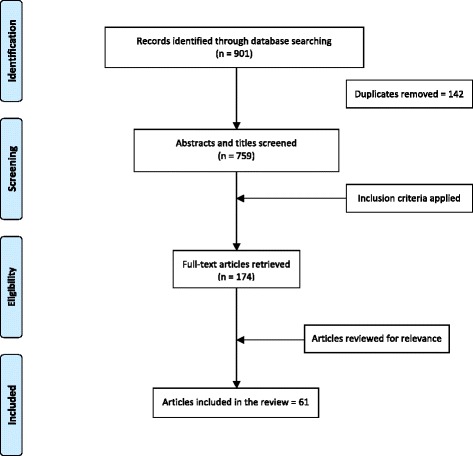
BACKGROUND: The history of residential schools has been identified as having long lasting and intergenerational effects on the physical and mental well-being of Indigenous populations in Canada. Our objective was to identify the extent and range of research on residential school attendance on specific health outcomes and the populations affected. METHODS: A scoping review of the empirical peer-reviewed literature was conducted, following the methodological framework of Arksey and O'Malley (2005). For this review, nine databases were used: Bibliography of Native North Americans, Canadian Health Research Collection, CINAHL, Google Scholar, Indigenous Studies Portal, PubMed, Scopus, Statistics Canada, and Web of Science. Citations that did not focus on health and residential school among a Canadian Indigenous population were excluded. Papers were coded using the following categories: Indigenous identity group, geography, age-sex, residential school attendance, and health status. RESULTS: Sixty-one articles were selected for inclusion in the review. Most focused on the impacts of residential schooling among First Nations, but some included Métis and Inuit. Physical health outcomes linked to residential schooling included poorer general and self-rated health, increased rates of chronic and infectious diseases. Effects on mental and emotional well-being included mental distress, depression, addictive behaviours and substance mis-use, stress, and suicidal behaviours. CONCLUSION: The empirical literature can be seen as further documenting the negative health effects of residential schooling, both among former residential school attendees and subsequent generations. Future empirical research should focus on developing a clearer understanding of the aetiology of these effects, and particularly on identifying the characteristics that lead people and communities to be resilient to them.
Verified 2026-11-25 · 1 reference not checked yet
Overview
CoChat Summary
## TL;DR
This scoping review mapped empirical research on residential school attendance and health among Indigenous peoples in Canada, identifying 61 included studies. The literature consistently links residential schooling to poorer physical health, mental health, and general well-being in Survivors and in some family members and later generations.
## Key findings
- The review included 61 studies; most focused on First Nations (43 studies), with 18 including Inuit and 17 Métis.
- Physical health outcomes linked to residential schooling included poorer general and self-rated health, and increased rates of chronic and infectious diseases, including diabetes, obesity, tuberculosis, hepatitis C, HIV/AIDS, and STIs.
- Mental and emotional well-being outcomes were reported in 43 studies and included mental distress, depression, addictive behaviours/substance misuse, stress, and suicidal behaviours.
- Reported study samples ranged from 1 to 51,080 participants; 48 studies included both men and women, and 46 included adults over 18.
## Methods
- The authors conducted a scoping review using the Arksey and O’Malley framework to map empirical peer-reviewed literature on residential schooling and Indigenous health in Canada.
- They searched nine databases: Bibliography of Native North Americans, Canadian Health Research Collection, CINAHL, Google Scholar, Indigenous Studies Portal, PubMed, Scopus, Statistics Canada, and Web of Science; they also sought grey literature for support.
- Included papers had to be in English (or translated abstract), use primary or secondary data, focus on an Indigenous population in Canada, and examine residential school attendance in relation to health; studies were coded by Indigenous identity, geography, age-sex/gender, residential school attendance, and health status.
## Limitations
- The paper states that, because this is a scoping review, it did not appraise study quality and did not provide a synthesis of the data.
- The authors state that study inclusion was subject to the reviewers’ interpretation, making it more subjective in nature.
- Evident from the text: the included literature was mostly correlational and few studies examined mechanisms linking residential schooling to health outcomes, limiting causal interpretation.
Model-written summary. Check it against the paper before relying on it.
Integrity signals
Registry
Cites
Statistics
Figures
Verification
Claims the paper makes
8 Valid · 0 Not valid · 18 Not checked · 36 Own results and interpretations
The cited sources support only part of this claim — read each source’s verdict below.
In the paper
“Some of the papers were able to identify specific intergenerational effects, including higher risk of negative outcomes for those whose parents or grandparents attended, whether they themselves were residential school Survivors [9].”
§ Residential schools and the effects on Indigenous health and well-being in Canada—a scoping review > Discussion This review aimed to summarize the current literature on residential schools and Indigenous health and well-being using Arksey and O’Malley’s scoping review framework [19]. In general, the empirical literature further documented the wide ranging negative effects of residential schools that had previously been identified by Survivors themselves [15] and confirmed that residential schooling is likely an important contributor to the current health conditions of Indigenous populations in Canada. The studies included revealed a range of poorer physical, mental and emotional, and general health outcomes in both residential school attendees and their families compared with those without these experiences. This included evidence of poorer general health, higher risk of chronic conditions such as diabetes, as well as infectious diseases such as STIs. Many of the studies related residential schooling to poorer mental health, including depressions and substance misuse. Although the majority of studies focused on First Nations, various effects were observed among Métis and Inuit as well, and in urban, rural and reserve populations, and in all regions, strongly suggesting that the effects of residential schooling are felt by Indigenous peoples across Canada. The regional and historical variations in the implementation of residential schooling [10] would lead us to expect geographic variability in these effects. While only one study reviewed examined these differences, it is indicated that variation in health status among community members may be related to various colonial histories in different areas [43]. Importantly, given the vast consequences and predominately negative impact of attendance at these schools, the literature reviewed suggests that younger generations continue to experience the negative health consequences associated with residential schooling. Some of the papers were able to identify specific intergenerational effects, including higher risk of negative outcomes for those whose parents or grandparents attended, whether they themselves were residential school Survivors [9]. Others only considered whether family members had attended, suggesting that the effects are clustered within families, rather than isolating the intergenerational transmission of trauma related to residential schooling. Overall, the newness of the literature indicates that this is a recent and growing area of research. One of the likely consequences of this is that much of the research reviewed was correlational, and few studies explicitly examined the mechanisms that connected residential school experience to health outcomes. Although some of the studies examining mental health identified substance use resulting from a need to cope with psychological pain [44, 45, 54] or to provide individuals with feelings of regaining power and control [45], most of the studies of physical health effects or general health did not attempt to unpack the range of proximate and mediating factors in the causal chain between residential schooling and the health of Survivors or of their family members. A strength of this review is that it was conducted systematically and provides methodological accounts to ensure the transparency of the findings. Additionally, the findings of this research highlight the extent and range of the available literature on this important topic in health and suggest areas that require further research. It is important to acknowledge its limitations, however. Firstly, while a scoping review provides a rapid summary of a range of literature, it does not include an appraisal of the quality of the studies included nor provide a synthesis of the data. Secondly, the inclusion of studies is determined by the reviewer’s interpretation of the literature and therefore may be more subjective in nature.
What the sources say
- Partly supportedcites [9] Bombay A Matheson K Anisman H The intergenerational effects of Indian residential schools: implications for the concept of historical trauma Transcult Psychiatry 2014 51 3 320 338 10.1177/1363461513503380 24065606 PMC4232330 sourceExperimental — accuracy not yet measured
The section “Historical trauma responses related to familial IRS attendance” reports higher rates of adverse outcomes among people whose parents or grandparents attended residential schools. But the paper does not establish that this elevated risk holds whether or not those people attended themselves. In “The risk associated with IRS attendance accumulates across generations,” the authors explicitly exclude respondents who attended from their analysis of intergenerational effects (page not provided). (LLM, conf=0.88)
hedgedstates an association- Asserted: passes — The authors put it forward as true.
- Checkable: passes — It can be checked against evidence.
- Load-bearing: passes — The paper’s conclusions depend on it.
- Based: passes — The paper gives a reason why it holds.
- Partly supported
The cited sources support only part of this claim — read each source’s verdict below.
In the paper
“In addition to chronic conditions, residential school attendance has been associated with poorer sexual health in general [34, 35]”
§ Residential schools and the effects on Indigenous health and well-being in Canada—a scoping review > Results > Characteristics of the included studies
What the sources say
- Partly supportedcites [34] Healey G: Inuit parent perspectives on sexual health communication with adolescent children in Nunavut: “it’s kinda hard for me to try to find the words”. Int J Circumpolar Health. 2014;73:25070. PMC4215723 25405104 sourceExperimental — accuracy not yet measured
The Discussion (page not specified) says trauma from the settlement and residential school era continues to affect Inuit family relationships and parent–adolescent communication about sexual health. It does not establish an association between an individual's residential school attendance and poorer sexual health in general; its finding is narrower and does not isolate residential school attendance from other experiences of that era. (LLM, conf=0.84)
- Partly supportedcites [35] Healey GK Inuit family understandings of sexual health and relationships in Nunavut Can J Public Health 2014 105 2 e133 137 10.17269/cjph.105.4189 24886849 PMC6972209 sourceExperimental — accuracy not yet measured
Our copy (Healey 2014, a qualitative study with Inuit parents in two Nunavut communities) does link residential school attendance to sexual harms: the 'Residential school' results section reports mothers 'experiencing child abuse (physical, sexual, emotional and/or mental) while attending residential school,' and the following section states that family separation during settlement 'fractured family communication about sexuality,' with the DISCUSSION repeating that 'settlement and displacement fractured family relationships and communication about sexuality.' However, the paper reports no association between residential school attendance and poorer sexual health outcomes as such (its STI/pregnancy data are community-level Nunavut statistics, not linked to school attendance, and the one participant who 'engaged in sex for money' is attributed to her parent's TB medical evacuation rather than to residential school). The claim's generalization 'poorer sexual health in general' therefore overstates a source that documents abuse and disrupted sexuality communication in a small Inuit parent sample. (LLM, conf=0.72)
plainstates an association- Asserted: passes — The authors put it forward as true.
- Checkable: passes — It can be checked against evidence.
- Load-bearing: unclear — It is unclear whether the paper’s conclusions depend on it.
- Based: passes — The paper gives a reason why it holds.
- Partly supported
Every source the paper cites for this claim was checked and supports it.
In the paper
“a finding that was reproduced with the 2006 APS by Kaspar [27], who found that 12% of those who had attended residential school reported poor health, compared with 7% of those who did not attend.”
§ Residential schools and the effects on Indigenous health and well-being in Canada—a scoping review > Results > Characteristics of the included studies
What the sources say
- Supportedcites [27] Kaspar V The lifetime effect of residential school attendance on Indigenous health status Am J Public Health 2014 104 11 2184 2190 10.2105/AJPH.2013.301479 24328622 PMC4202939 source
The RESULTS section (Table 1 discussion) states verbatim that "about 12% of individuals who attended an IRS reported poor health compared with 7% of nonattenders reporting poor health," matching both figures in the claim. The same passage and Table 1 caption confirm the data come from the Aboriginal Peoples Survey: Adult Core, Canada, 2006, as the citing sentence asserts. (LLM, conf=0.95)
plainstates an association- Asserted: passes — The authors put it forward as true.
- Checkable: passes — It can be checked against evidence.
- Load-bearing: unclear — It is unclear whether the paper’s conclusions depend on it.
- Based: passes — The paper gives a reason why it holds.
- Supported
A result the paper reports from its own data — it cites no other source for it, so there is none to check. The quote shows it is in the paper.
In the paper
“In terms of residential school attendance, 42 of the studies reviewed included residential school attendees themselves (personal attendance) and 38 examined the effects of having a parent or other family members who had attended (familial attendance).”
§ Residential schools and the effects on Indigenous health and well-being in Canada—a scoping review > Results > Characteristics of the included studies
plain- Asserted: passes — The authors put it forward as true.
- Checkable: passes — It can be checked against evidence.
- Load-bearing: unclear — It is unclear whether the paper’s conclusions depend on it.
- Based: passes — The paper gives a reason why it holds.
23 more claims
Create a free account to see all 62 claims and to verify the 1 reference still open.
- Probably not a substantial claim. 28
- It may state two separate claims as one. 14
Citations
Cites
Scoping studies: towards a methodological framework
Arksey, H., & O'Malley, L. (2005) · International Journal of Social Research Methodology · doi:10.1080/1364557032000119616 · Cited by 36,742 · cited 7×
“Although a scoping review may not describe research findings in detail, it provides a way of navigating the area of research where the range of material is uncertain [19].”
BackgroundMethodInfluentialScoping studies: advancing the methodology
Levac, D., Colquhoun, H., & O'Brien, K. K. (2010) · Implementation Science · doi:10.1186/1748-5908-5-69 · Cited by 15,268 · cited 1×
“Scoping studies therefore typically have broad research questions and focus on summarizing the available evidence [20].”
BackgroundIndigenous health part 1: Determinants and disease patterns
Gracey, M., & King, M. (2009) · The Lancet · doi:10.1016/s0140-6736(09)60914-4 · Cited by 1,303
'Scoping the scope' of a cochrane review
Armstrong, R., Hall, B. J., Doyle, J., & Waters, E. (2011) · Journal of Public Health · doi:10.1093/pubmed/fdr015 · Cited by 1,260 · cited 1×
“According to Armstrong and colleagues, a scoping review also differs from a systematic review in that the inclusion/exclusion criteria can be developed in an iterative process, the quality of studies might not be discussed in the review, and that the synthesis tends to be more qualitative in nature with the review use…”
BackgroundThe Embodiment of Inequity: Health Disparities in Aboriginal Canada
Adelson, N. (2005) · Canadian Journal of Public Health · doi:10.1007/bf03403702 · Cited by 877
Rethinking Resilience from Indigenous Perspectives
Kirmayer, L. J., Dandeneau, S., Marshall, E., Phillips, M. K., & Williamson, K. J. (2011) · The Canadian Journal of Psychiatry · doi:10.1177/070674371105600203 · Cited by 774 · cited 1×
“These attempts of forced assimilation have failed, in part due to the resilience and resistance of many Indigenous communities [12].”
BackgroundKirmayer, L. J., Gone, J. P., & Moses, J. (2014) · Transcultural Psychiatry · doi:10.1177/1363461514536358 · Cited by 652 · cited 3×
“According to Kirmayer, Gone, and Moses, historical trauma provides a way to conceptualize the transgenerational effects of residential schooling, whereby “traumatic events endured by communities negatively impact on individual lives in ways that result in future problems for their descendants” [14].”
BackgroundHealing Traditions: Culture, Community and Mental Health Promotion with Canadian Aboriginal Peoples
Kirmayer, L., Simpson, C., & Cargo, M. (2003) · Australasian Psychiatry · doi:10.1046/j.1038-5282.2003.02010.x · Cited by 580 · cited 2×
“Nonetheless, it is apparent that they have had profound effects “at every level of experience from individual identity and mental health, to the structure and integrity of families, communities, bands and nations” [6].”
BackgroundBombay, A., Matheson, K., & Anisman, H. (2014) · Transcultural Psychiatry · doi:10.1177/1363461513503380 · Cited by 566 · cited 16×
“Some of the papers were able to identify specific intergenerational effects, including higher risk of negative outcomes for those whose parents or grandparents attended, whether they themselves were residential school Survivors [9].”
BackgroundInfluentialGone, J. P. (2013) · Transcultural Psychiatry · doi:10.1177/1363461513487669 · Cited by 533
Research works printed but not linked: 14
- National Aboriginal Health Organization Ways of knowing: A framework for health research 2003 1 29
- Reading J Elias B Chapter 2—an examination of residential schools and elder health First Nations and Inuit Health Survey 1999
- Corrado RR Cohen IM Mental Health Profiles for a Sample of British Columbia’s Aboriginal Survivors of the Canadian Residential School System 2003 Ottawa Aboriginal Healing Foundation
- Loppie Reading C Wien F Health Inequalities and the Social Determinants of Aboriginal Peoples’ Health 2009 Prince George National Collaborating Centre for Aboriginal Health
- Truth and Reconciliation Commission of Canada They Came for the Children: Canada, Aboriginal Peoples, and Residential Schools 2012 Winnipeg Truth and Reconciliation Commission of Canada
- Archibald L Decolonization and Healing: Indigenous Experiences in the Unites States 2006 Ottawa Australia and Greenland
- Truth and Reconciliation Commission of Canada Truth and Reconciliation Commission of Canada: Calls to Action 2015 Winnipeg Truth and Reconciliation Commission of Canada
- Stout R Kiskâyitamawin Miyo-mamitonecikan: Urban Aboriginal Women and Mental Health 2010 Winnipeg Prairie Women’s Health Centre of Excellence
- Chansonneuve D Addictive Behaviours Among Aboriginal People in Canada 2007 Ottawa Aboriginal Healing Foundation
- Iwasaki Y Bartlett J Stress-coping among aboriginal individuals with diabetes in an urban Canadian city J Aborig Health 2006 3 11
- Jackson R Cain R Prentice T Depression among Aboriginal People Living with HIV/AIDS: Research Report 2008 Ottawa Canadian Aboriginal AIDS Network
- Jones LE “Killing the Indian, Saving the Man”: The Long-run Cultural, Health, and Social Effects of Canada’s Indian Residential Schools 2014 Ithaca Cornell University
- Robertson LH The residential school experience: syndrome or historic trauma Pimatisiwin 2006 4 1 1 28
- van Niekerk M Bombay A Risk for psychological distress among cancer patients with a familial history of Indian residential school attendance: results from the 2008-10 First Nations Regional Health Survey Psychooncology 2016 25 SP. S3) 3 3
Cited by
Items 101–200 of 289
Gittings, L., Malama, K., Logie, C. H., Lys, C. L., Taylor, S. B., Mackay, K. I., Kanbari, A., Parker, S. J., & McNamee, C. (2022) · International Journal of Circumpolar Health · doi:10.1080/22423982.2022.2125489 · Cited by 9
Poverty and the Human Rights of Children and Youth through the Lenses of Psychology and Sociology
Gilles, J. K.-J., Pells, K., Morrow, V., & Ruck, M. D. (2020) · Cambridge University Press eBooks · doi:10.1017/9781108348607.007 · Cited by 5
Colonial Education in the Canadian Context
Dei, G. J. S., Karanja, W. W., & Erger, G. (2022) · Critical studies of education · doi:10.1007/978-3-030-84201-7_3 · Cited by 11
Advocates’ perspectives on the Canadian prison mother child program
Paynter, M. J., Heggie, C., Martin‐Misener, R., Iftene, A., & Murphy, G. T. (2022) · SSM - Qualitative Research in Health · doi:10.1016/j.ssmqr.2022.100189 · Cited by 5
Canadian School Psychology and Indigenous Peoples: Opportunities and Recommendations
Bernett, P., Spence, S., Wilson, C., Gurr, E., Zentner, D., & Wendt, D. C. (2023) · Canadian Journal of School Psychology · doi:10.1177/08295735231151281 · Cited by 9
“continues to affect many individuals’ health and wellness (Bombay et al., 2014b; Gone et al., 2019; Wilk et al., 2017).”
BackgroundDudgeon, P., Carey, T. A., Hammond, S., Hirvonen, T., Kyrios, M., Roufeil, L., & Smith, P. (2020) · Cambridge University Press eBooks · doi:10.1017/9781108348607.038 · Cited by 6
Gittings, L., Malama, K., Logie, C. H., Lys, C. L., Taylor, S. B., McNamee, C., Mackay, K. I., & Admassu, Z. (2024) · PLoS ONE · doi:10.1371/journal.pone.0298166 · Cited by 6
Nguyen, A. T., Duckworth, E., Kandi, L. A., Li, R. A., Williams, T., Coles, B. M., & Galiano, R. D. (2025) · Annals of Surgical Oncology · doi:10.1245/s10434-025-17005-5 · Cited by 4
“12–14 This mistrust often results in delayed medical care, which further exacerbates the observed disparities in breast cancer outcomes.”
Temple, J., Wong, H., Ferdinand, A. S., Avery, S., Paradies, Y., & Kelaher, M. (2020) · BMC Public Health · doi:10.1186/s12889-020-09684-4 · Cited by 5
Pathways for sexual health promotion among Indigenous boys and men: stakeholder perspectives
Biderman, M., Doria, N. A., Sinno, J., Rand, J., Hackett, L., Miller, A. D., McMillan, J., Lekas, S., & Numer, M. (2021) · AlterNative An International Journal of Indigenous Peoples · doi:10.1177/11771801211023207 · Cited by 6
“The link between Indigenous peoples’ health outcomes and the IRS system is well established, and several studies have specifically noted adverse sexual health outcomes (Healey, 2014a; Wilk et al., 2017).”
BackgroundIndigenous Women’s Perspectives on Heart Health and Well-being: A Scoping Review
Gomes, Z., Hart, D. E., & Downey, B. (2022) · CJC Open · doi:10.1016/j.cjco.2022.10.007 · Cited by 4
“The effects of colonization have transcended into all aspects of indigenous peoples’ health and well-being, on physical, mental, emotional, and spiritual levels.(3) Inequities are most pronounced for indigenous women, who tend to have higher rates of chronic disease and are less likely to report their health as excell…”
BackgroundCullen, G. J. (2023) · Children and Youth Services Review · doi:10.1016/j.childyouth.2023.106971 · Cited by 5
Zhong, A., Yin, L., O’Sullivan, B., & Ruetz, A. T. (2023) · Health Promotion and Chronic Disease Prevention in Canada · doi:10.24095/hpcdp.43.9.04 · Cited by 8
NorthBEAT: exploring the service needs of youth experiencing early psychosis in Northern Ontario
Cheng, C., Nadin, S., Bohonis, H., Katt, M., & Dewa, C. S. (2023) · Frontiers in Health Services · doi:10.3389/frhs.2023.1163452 · Cited by 5
Nystad, K., Ingstad, B., & Spein, A. R. (2021) · Journal of Northern Studies · doi:10.36368/jns.v14i1.975 · Cited by 3
“A Canadian review by Wiik et al .”
Oppliger, K., Blair, S. A., Price, R., Nahanee, L. M., Nahanee, D., Duncan, R. (., Lamont, E., Beverly, A., Dawson, A., & Conklin, A. (2024) · Journal of Nutrition Education and Behavior · doi:10.1016/j.jneb.2024.04.003 · Cited by 4
Garvey, N., Hankey, J. R., Bohr, Y. M., & Barnhardt, J. (2025) · American Indian Culture and Research Journal · doi:10.17953/a3.1482 · Cited by 5
A Theoretical Framework for Mixed Methods Research with Canadian Families Living with Low Income
Ginn, C., Benzies, K., Keown, L.-A., Bouchal, S. R., & Thurston, W. E. (2019) · International Journal of Multiple Research Approaches · doi:10.29034/ijmra.v11n3a2 · Cited by 4
Human Rights Developments from the Universal Declaration to the Present
McFarland, S. G., & Zamora, R. I. (2020) · Cambridge University Press eBooks · doi:10.1017/9781108348607.003 · Cited by 4
Sharma, R., Pooyak, S. D., Thomas, V., Zamar, D., Jongbloed, K. A., Pearce, M., Mazzuca, A., Cassidy-Matthews, C., Bizzotto, R. N., Jafari, G., et al. (2023) · PLOS Global Public Health · doi:10.1371/journal.pgph.0001914 · Cited by 9
“Mounting evidence points to the role of imposed colonial systems and racism in post-traumatic stress disorder (PTSD) and other markers of trauma among Indigenous peoples [13, 14].”
BackgroundOgden, C. L., & Tutty, L. M. (2024) · Violence Against Women · doi:10.1177/10778012241233002 · Cited by 6
“…down family life, spiritual beliefs, and languages, systemic discrimination, and racism (Andersson et al., 2010; Baskin, 2012, 2020; Brave Heart et al., 2011; National Inquiry into Missing and Murdered Indigenous Women and Girls, 2019; Olsen Harper, 2011; Wilk et al., 2017; Williams et al., 2019).”
A Longitudinal Study to Better Understand Child Protection Intervention for First Nations Children
Sablonnière-Griffin, M. D. L., Collin‐Vézina, D., ESPOSITO, T., & Dion, J. (2024) · First Peoples Child & Family Review An Interdisciplinary Journal Honouring the Voices Perspectives and Knowledges of First Peoples · doi:10.7202/1109657ar · Cited by 9
“…life circumstances lie in colonialist and discriminatory policies, both past and contemporary (Bombay et al., 2020; Czyzewski, 2011; Gone et al., 2019; TRC, 2015; Viens, 2019; Wilk et al., 2017), further limiting CP services’ capacity to support families in altering their life circumstances.”
BackgroundMental Health and Human Rights
Marks, S. P., Verdeli, L., & Willis, S. (2020) · Cambridge University Press eBooks · doi:10.1017/9781108348607.013 · Cited by 8
Clark, E., Cranston, E., Polin, T., Ndumbe-Eyoh, S., MacDonald, D., Betker, C., & Dobbins, M. (2022) · Research Square · doi:10.21203/rs.3.rs-1769321/v1 · Cited by 4
Ginn, C., Ginn, C. W. C., Barnabe, C. C. M., Bergum, D. D. V., Gentes, J., & Tatrallyay, P. (2025) · BMJ Open · doi:10.1136/bmjopen-2024-089503 · Cited by 4
Indigenous Education in Taiwan: Policy Gaps, Community Voices, and Pathways Forward
Mao, J., & Chui, H. (2025) · Genealogy · doi:10.3390/genealogy9030088 · Cited by 3
“In Canada, for instance, the legacy of residential schools continues to impact Indigenous families and communi‑ ties (Wilk et al. 2017).”
Hamilton, S. L., Maslen, S., Jones, L., Penny, M., Pell, C., Michie, C., Mutch, R. C., O’Donnell, M., Shepherd, C., & Farrant, B. M. (2025) · Studies in the Education of Adults · doi:10.1080/02660830.2025.2563919 · Cited by 3
“…disease, ancestral land dispossession, loss of language and ceremony, and the forced removal of Indigenous children to reserves, missions, and residential schools (Human Rights and Equal Opportunities Commission 1997, Evans-Campbell 2008, Wilk et al. 2017, Moewaka Barnes and McCreanor 2019).”
Decolonising hydrology: Reflecting on positionalities for sustainable and just futures
Chun, K. P., Octavianti, T., Bradford, L., Reeves, M., Nagheeby, M., Olusola, A. O., Howard, B. C., Ceperley, N., Castelli, G., Nkwasa, A., et al. (2026) · Environmental Science & Policy · doi:10.1016/j.envsci.2026.104340 · Cited by 11
The Role of Elders and Their Cultural Knowledges in Schools
Dei, G. J. S., Karanja, W. W., & Erger, G. (2022) · Critical studies of education · doi:10.1007/978-3-030-84201-7_6 · Cited by 10
George, M. S., Ramu, K. A., Prasad, R., Prashanth, N. S., Kenjoor, S., & Grant, J. B. (2024) · Transcultural Psychiatry · doi:10.1177/13634615231213834 · Cited by 11
“One key strategy of assimilation used in many of these colonial contexts was (and in some countries, continues to be) the practice of taking Indigenous children from their families and communities and placing them in residential schools (Smith, 2009; Wilk et al., 2017).”
BackgroundYoorrook: truth telling in the Victorian Treaty process
Moore, K., Stanton, P., Fan, S. X., Rose, M., & Jones, M. (2024) · Equality Diversity and Inclusion An International Journal · doi:10.1108/edi-05-2022-0104 · Cited by 5
Hamilton, K., Dooley, K., Sihota, M., & Marriott, B. (2024) · Canadian Journal of Criminology and Criminal Justice/La Revue canadienne de criminologie et de justice pénale · doi:10.3138/cjccj-2024-0011 · Cited by 6
Hsieh, J., Chang, E. Y.-T., & Lakaw, S. (2021) · Sinophone and Taiwan studies · doi:10.1007/978-981-15-4178-0_4 · Cited by 4
Nastasi, B. K., & Naser, S. C. (2020) · Cambridge University Press eBooks · doi:10.1017/9781108348607.016 · Cited by 4
MacDonald, C., & Steenbeek, A. (2021) · Universal Journal of Public Health · doi:10.13189/ujph.2021.090306 · Cited by 3
“Historical trauma has been directly related to colonization, residential schooling and assimilation; resulting in cultural and identity loss [58, 62].”
BackgroundWorkplace mental health characteristics of the Indigenous workforce in Canada: A descriptive study
Nowrouzi‐Kia, B., Gohar, B., Sithamparanathan, G., Sun, R. Y., & Casole, J. (2022) · Work · doi:10.3233/wor-210927 · Cited by 3
“It is also important to critically reflect on how culturally compatible these common interventions developed surrounding the needs of the Canadian population are [9].”
Special community health needs
Tulchinsky, T. H., Varavikova, E. A., & Cohen, M. J. (2023) · Elsevier eBooks · doi:10.1016/b978-0-12-822957-6.00013-2 · Cited by 6
Stevenson, P., & Tobias, J. (2023) · Western Undergraduate Research Journal Health and Natural Sciences · doi:10.5206/wurjhns.2022-23.3 · Cited by 4
Hu, M., Hajizadeh, M., & Bombay, A. (2024) · Canadian Public Policy · doi:10.3138/cpp.2022-077 · Cited by 3
“Scholars have also highlighted how this jurisdictional framework does not meet the unique health and social services needs of SFN and NFN living off-reserve (Allan & Smylie 2015; Greenwood et al. 2018; Richmond & Cook 2016; Wilk et al. 2017).”
Paraphilic offending: another privilege of White men?
Thompson, N., & Hanson, R. K. (2024) · Journal of Sexual Aggression · doi:10.1080/13552600.2024.2328046 · Cited by 5
Sasakamoose, J., Pete, S., O’Soup, F., & Wolfe, T. (2024) · Frontiers in Public Health · doi:10.3389/fpubh.2024.1419250 · Cited by 12
Moving towards inclusion and connection: practitioners’ conceptualisations of walking pedagogy
Friedman, S., Morrison, S. A., & Rickards, A. (2025) · Children s Geographies · doi:10.1080/14733285.2025.2476427 · Cited by 4
“…in Canada, a country that has recently undergone a reckoning around the oppression and abuse native people endured at residential schools (Wilk, Maltby, and Cooke 2017), walking pedagogy was a way to engage students and their family members with school in a way that did not trigger or…”
Peltier, S., & Ansloos, J. P. (2025) · Counselling Psychology Quarterly · doi:10.1080/09515070.2025.2521818 · Cited by 6
“Colonial policies have caused intergenerational harm and historical trauma, which persist in shaping the mental and physical health of Indigenous peoples (Bombay et al., 2014; Matheson et al., 2022; Wilk et al., 2017).”
Reflecting on the relationship between residential schools and TB in Canada
Heffernan, C., Ferrara, G., & Long, R. (2022) · The International Journal of Tuberculosis and Lung Disease · doi:10.5588/ijtld.22.0371 · Cited by 4
From Refugees to Immigrants: The Role of Psychology in the Struggle for Human Rights
Khoury, B. A., & Hakim-Larson, J. A. (2020) · Cambridge University Press eBooks · doi:10.1017/9781108348607.015 · Cited by 3
Human Rights and Well-Being of Older Persons: Challenges and Opportunities
Sigal, J. A., Quintero, N., & Valente, E. (2020) · Cambridge University Press eBooks · doi:10.1017/9781108348607.021 · Cited by 3
Human Rights and Psychology from Indigenous Perspectives
Blume, A. W., Morse, G. S., & Love, C. (2020) · Cambridge University Press eBooks · doi:10.1017/9781108348607.018 · Cited by 3
Choate, P. W. (2018) · Research Repository (Kingston University London) · Cited by 6
Self-determination, sustainability, and wellbeing in the Alaska Native community of Ninilchik
Gordon, H. (2019) · ScholarWorks - UA (University of Alaska System) · Cited by 6
Towards a Haudenosaunee Developmental Science: Perspectives From the Two Row WampumPreprint
Fish, J. (2021) · doi:10.31234/osf.io/pwn2m · Cited by 3
The Dire Socio-Economic State of SaskatchewanPreprint
Eaton, A. D., & Kwan, S. (2023) · SocArXiv (OSF Preprints) · doi:10.31235/osf.io/gwumq · Cited by 3
Stevenson, P., & Tobias, J. (2023) · Western Undergraduate Research Journal Health and Natural Sciences · doi:10.5206/wurjhns.2021-22.4 · Cited by 3
Cultivating Our Common Humanity: Reflections on Freedom of Thought, Conscience, and Religion
Penn, M. L., Groff, M. Z., & Kourosh, N. (2020) · Cambridge University Press eBooks · doi:10.1017/9781108348607.014 · Cited by 2
Children and Violence across the Life Span: A Global and Socioecological Perspective
Farrar, J., Thomson, D., & Betancourt, T. S. (2020) · Cambridge University Press eBooks · doi:10.1017/9781108348607.027 · Cited by 5
Thompson, A. D., & Çiftçi, A. (2020) · Cambridge University Press eBooks · doi:10.1017/9781108348607.035 · Cited by 2
Collaboration in Virtual Environments: Honouring the Métis Method of Visiting
McDonald, F. P., & Paul, H. M. (2021) · Anthropologica · doi:10.18357/anthropologica6312021351 · Cited by 2
Subjective Well-Being of Children and Adolescents from Ethnic Minorities in Chile
Torres‐Vallejos, J., Casas, F., Bilbao, M., López, V., Caqueo‐Urízar, A., Flores, J., Squicciarini, A. M., & Sánchez, P. (2022) · Child Indicators Research · doi:10.1007/s12187-022-09955-z · Cited by 3
‘…and yet there’s still no peace’ Catholic Indigenous Residential Schools in Canada
McKinney, S. J. (2022) · Journal of Religious Education · doi:10.1007/s40839-022-00182-w · Cited by 8
Indigenous participation in pediatric Indigenous health research in Canada: a systematic review
Hyett, S., Rafael, J., Downey, B., Mancini, R., Lickers, E., & Marjerrison, S. (2022) · Pediatric Research · doi:10.1038/s41390-022-02361-9 · Cited by 2
“Poor physical, mental, and emotional health outcomes have been directly linked to residential schooling.(5) Medical experimentation on Indigenous children also occurred in racially segregated Indian Hospitals as described by Dr Maureen Lux’s work, who also details the experimentation on Indigenous infants to test the…”
BackgroundA Decolonial Future for Education and Schools
Gandolfi, H. E. (2024) · Education, equity, economy · doi:10.1007/978-3-031-64900-4_8 · Cited by 5
Falkenstein, D. K., Jarvis, J. N., & Wright, J. L. (2024) · Academic Pediatrics · doi:10.1016/j.acap.2023.09.017 · Cited by 2
Dunn, K. P. R., Biondi, M. J., & Lee, S. S. (2024) · Microorganisms · doi:10.3390/microorganisms12112364 · Cited by 2
“The intergenerational and ongoing impacts of experiencing colonial jurisdiction and control as an Indigenous person in health-related issues has fostered a mistrust of healthcare systems, healthcare providers, health messaging, and medical diagnostics [24].”
The Canadian Reconciliation Barometer: a rigorous tool for tracking reconciliation in Canada
Starzyk, K. B., Neufeld, K. H. S., Efimoff, I. H., Fontaine, A. S. M., White, E. E.-L., Moran, R., Peachey, D., Fontaine, L. S., & Welch, M. A. (2024) · Frontiers in Social Psychology · doi:10.3389/frsps.2024.1369816 · Cited by 4
Schwartz, F. D., Pride, T. M., Stewart, S. H., Mackinnon, S. P., & Robinson, M. (2025) · BMJ Open · doi:10.1136/bmjopen-2023-082276 · Cited by 2
The Impact of Substance Use and Addiction on Families’ Quality of Life in the Canadian Context
Maina, G., & Jagoe, L. (2024) · International handbooks of quality-of-life · doi:10.1007/978-3-031-65873-0_26 · Cited by 3
Poggats, T., & Axelsson, P. (2025) · Ethnicity and Health · doi:10.1080/13557858.2025.2459766 · Cited by 3
“…ff ectively used in recent studies to map research fi elds related to the impact of residential schools on the health and wellbeing of Indigenous peoples (Wilk, Maltby, and Cooke 2017), the e ff ects of xenophobia on health (Suleman, Garber, and Rutkow 2018), and culturally safe health initiatives…”
DeSouza, A., Taylor, D., Ward, J. L., Vizza, J., Yu, H., Murnaghan, K., Cancelliere, C., Hogg‐Johnson, S., Sheppard, A. J., & Côté, P. (2025) · Canadian Journal of Public Health · doi:10.17269/s41997-025-01047-z · Cited by 3
“…of residential schools involving the forced removal of children from their communities, and the ban of cultural practices have had detrimental effects, which continue to be felt throughout multiple generations (Truth & Reconciliation Commission of Canada, 2015; Wilk et al., 2017; Woolford, 2009).”
Trump’s Zero-tolerance Policy: Would a Political Response to a Humanitarian Crisis Work?
Karamouzian, M. (2018) · International Journal of Health Policy and Management · doi:10.15171/ijhpm.2018.80 · Cited by 5
Climate Change: A Challenge to Human Rights, Justice, Equality, and Human Well-Being
Feygina, I., Chapman, D. A., & Markowitz, E. M. (2020) · Cambridge University Press eBooks · doi:10.1017/9781108348607.031 · Cited by 7
Koch, J. M., Chiao, H., & Nel, J. A. (2020) · Cambridge University Press eBooks · doi:10.1017/9781108348607.036 · Cited by 4
Reproductive Justice, Psychology, and Human Rights
Chrisler, J. C., & Sagrestano, L. M. (2020) · Cambridge University Press eBooks · doi:10.1017/9781108348607.022 · Cited by 2
Canetto, S. S., & Burn, S. M. (2020) · Cambridge University Press eBooks · doi:10.1017/9781108348607.009 · Cited by 3
Promoting Resilience Within Public Health Approaches for Indigenous Communities
Mushquash, C. J., Toombs, E., Kowatch, K. R., Lund, J. I., Dalicandro, L., & Boles, K. (2021) · Oxford University Press eBooks · doi:10.1093/oso/9780190095888.003.0005 · Cited by 2
Beyond Care: Validating a First Nations Mental Wellness Framework
Achan, G. K., Ibrahim, N. H. M., Eni, R., Phillips-Beck, W., Lavoie, J. G., Kinew, K. A., & Katz, A. (2021) · Canadian Journal of Community Mental Health · doi:10.7870/cjcmh-2021-005 · Cited by 6
Imperial and post-imperial healthcare before welfare states
Clark, H.-L., & Doyle, B. M. (2021) · European Review of History Revue européenne d histoire · doi:10.1080/13507486.2021.1991894 · Cited by 2
Bowers, R., Turner, G., Graham, I. D., Furgal, C. M., & Dubois, L. (2022) · Food Culture & Society · doi:10.1080/15528014.2021.2025311 · Cited by 6
Ginn, C., Ginn, C. W. C., Barnabe, C. C. M., Gervais, L., Gentes, J., Bergum, D. D. V., Rees, N., & Camponi, A. (2022) · Qualitative Inquiry · doi:10.1177/10778004221099968 · Cited by 7
Desrosiers, J., Tuck, J., Awashish, M., Verreault-Paul, F., Lecourt, V., Rochette, M., Vézeau-Beaulieu, K., Vaillancourt, N., & Lavoie, M. (2022) · Quality Advancement in Nursing Education - Avancées en formation infirmière · doi:10.17483/2368-6669.1362 · Cited by 2
“…largement documentées dans les dernières décennies (Adelson, 2005; Centre de collaboration nationale sur la santé des autochtones, 2013; Commission de la santé et des services sociaux des Premières Nations du Québec et du Labrador, 2007; Gracey et King, 2009; King et al., 2009; Wilk et al., 2017).”
BackgroundHuman Rights Seen through a Cultural Lens: Perspectives from Africa and Asia
Jaipal, R., & Gaba, A. (2020) · Cambridge University Press eBooks · doi:10.1017/9781108348607.020 · Cited by 4
Okorodudu, C., Kuriansky, J., Walker, P. R., & Denmark, F. L. (2020) · Cambridge University Press eBooks · doi:10.1017/9781108348607.005 · Cited by 3
Flores, R. L., Okorodudu, C., & Shepherd, V. A. (2020) · Cambridge University Press eBooks · doi:10.1017/9781108348607.006 · Cited by 2
Psychosocial Features of Movements That Have Advanced Human Rights
Christie, D. J., Bretherton, D., & Lunn, L. (2020) · Cambridge University Press eBooks · doi:10.1017/9781108348607.024 · Cited by 4
Tools for Tragedy: Procedures for Assessing Historic Redress Claims
Winter, S. (2020) · Politics & Policy · doi:10.1111/polp.12385 · Cited by 1
Hsieh, J., Chang, E. Y.-T., & Lakaw, S. (2019) · Junctures The Journal for Thematic Dialogue · doi:10.34074/junc.20071 · Cited by 1
Lafrenaye-Dugas, A.-J., Bélanger, R. E., Poliakova, N., Riva, M., Fletcher, C. M., Godbout, N., Fraser, S. L., Courtemanche, Y., Moisan, C., & Muckle, G. (2023) · Canadian Journal of Public Health · doi:10.17269/s41997-023-00750-z · Cited by 2
“Selection bias by death is particularly relevant with regard to the group having experienced residential schooling because this group is the oldest of our sample but also because of known deleterious effects of residential school attendance on health and well-being (Wilk et al., 2017).”
BackgroundWhy China Cares about Canada’s Indigenous Residential Schools: from Whataboutism to Internal Denial
Xia, X. (2023) · Genocide Studies and Prevention · doi:10.5038/1911-9933.17.1.1906 · Cited by 4
Cancer Prevention and Cultural Continuity for Métis Peoples in Canada: A Scoping Review
Vega, M. D., Santos, J. D. M., Witham, S., Friesen, M., Brock, T., Laroque, S., Sedgewick, J. R., Carr, T., & Groot, G. (2024) · Current Oncology · doi:10.3390/curroncol31070289 · Cited by 3
“Although the M é tis have been found to experience poorer health outcomes compared to the overall Canadian population, the effects of past and present colonial policies on M é tis health are often underestimated [3].”
ResultMayangsari, M. D., Rachmah, D. N., Febriani, W. U., Rahman, N. K., Luthfi, M., & Hanifa, I. M. (2025) · International Journal of Islamic Educational Psychology · doi:10.18196/ijiep.v6i1.26374 · Cited by 4
A systematic scoping review of indigenous-specific research evidence on child sexual abuse
Graham, S., Mathew, S. A., Minto, K., O'Dea, B., Harfield, S. G., Dean, J. A., Ward, J. S., & Shakeshaft, A. P. (2026) · Child Abuse & Neglect · doi:10.1016/j.chiabu.2026.107921 · Cited by 1
Decolonization and Liberation Psychology: The Case of Psychology in South Africa
de la Rey, C., & Thompson, C. E. F. (2020) · Cambridge University Press eBooks · doi:10.1017/9781108348607.032 · Cited by 4
Human Rights: A Psychologist’s Path to “Do No Harm”
Sveaass, N., & Woolf, L. M. (2020) · Cambridge University Press eBooks · doi:10.1017/9781108348607.010 · Cited by 1
Brown, H. J., Isaac, T., Timler, K., Newman, E. V., Cranmer, A., & Cranmer, D. (2021) · AlterNative An International Journal of Indigenous Peoples · doi:10.1177/11771801211058401 · Cited by 4
Ineese-Nash, N., Stein, M., & Patel, K. (2022) · International Journal of Indigenous Health · doi:10.32799/ijih.v17i1.36721 · Cited by 2
The Best Available Parent and Duties of Justice
Walters, J. D. T. (2022) · Journal of Ethics and Social Philosophy · doi:10.26556/jesp.v23i2.2113 · Cited by 1
Applications of Foresight for Defence and Security: The Future of Crime
Dasselaar, T. V., Giddings, J., & Stewart, S. (2023) · Advanced sciences and technologies for security applications · doi:10.1007/978-3-031-21530-8_5 · Cited by 1
Homeless-Youth Education and Its Hidden Capitalism: a Composite Case Study in North America
Qualiter, D., & Neuman, S. (2023) · International Journal of Qualitative Research · doi:10.47540/ijqr.v3i1.855 · Cited by 1
“…of indigenous people of North America into school grounds of student abuse and student torture (Barlow, 2003; Burrage et al., 2022; Jack, 2000; Wilk et al., 2017) forms critical context into trauma, substance-use behavior, self-medicating behavior, and barriers in economic development for…”
BackgroundLévesque, M., Kutcher, A., Roy, L., Linton, P., Trapper, L., Torrie, J., & Macdonald, M. E. (2024) · Journal of Occupational Science · doi:10.1080/14427591.2023.2290011 · Cited by 4
“…history and colonization by European settlers, the Cree experienced many phases of locational, political, economic, cultural, and social change and upheaval, notably that resulting from state assimilation programs such as the Canadian residential school system (La Rusic, 1970; Wilk et al., 2017).”
Logie, C. H., Lys, C. L., Taylor, S. B., Lad, A., Mackay, K. I., Hasham, A., Gittings, L., Malama, K., Pooyak, S. D., Monchalin, R., et al. (2024) · AIDS and Behavior · doi:10.1007/s10461-024-04397-w · Cited by 2
“These sexual health disparities experienced by Indigenous peoples in Canada, as in other global contexts, can be situated within historical and current colonization processes [9, 10].”
Hayvon, J. C. (2024) · Journal of Prevention & Intervention in the Community · doi:10.1080/10852352.2024.2410585 · Cited by 3
“…limited merely to theoretical contemplations: significant research surrounds concrete attempts to offer education for the precise purpose of cultural assimilation, most notably seen in the valuable scholarship on the Canadian residential school experience (Bombay et al., 2014; Wilk et al., 2017).”
Biswas, S., Singh, R., & Das, N. (2024) · Social Indicators Research · doi:10.1007/s11205-024-03446-0 · Cited by 1
“However, colonization affects their physical health and mental, emotional, and spiritual wellness (Wilk et al., 2017).”
Metadata
- Authors
- Wilk, P., Maltby, A., & Cooke, M.
- Affiliations
- Western University (CA)
- University of Waterloo (CA)
- Corresponding author
- Wilk, Piotr
- Venue
- Public Health Reviews
- Published
- 2017-03-02
- Volume
- 38
- Issue
- 1
- Pages
- 8-8
- ISSN
- 0301-0422 (ISSN-L)
- 2107-6952
- PMC
- PMC5809999
- OpenAlex
- W2591707197
- Cited by
- 293
- References
- 57
- Citations by year
- 2026: 13 · 2025: 45 · 2024: 41 · 2023: 35 · 2022: 41 · 2021: 30 · 2020: 65 · 2019: 9 · 2018: 11 · 2017: 2
- FWCI
- 4.11
- Type
- journal article
- Language
- en
- Open access
- gold
- doi.org
- Licence
- cc-by
- Locations
- Public health reviews (publishedVersion, cc-by)
- Europe PMC (PubMed Central) (publishedVersion, cc-by)
- PubMed Central (publishedVersion, cc-by)
- PubMed (publishedVersion)
- Scholarship@Western (Western University) (submittedVersion, other-oa)
- Scholarship@Western (Western University) (submittedVersion)
- Funders
- The Western Libraries Open Access Fund
- Topics
- Social Sciences › Health › Indigenous Health, Education, and Rights
- Social Sciences › Anthropology › Indigenous Cultures and History
- Health Sciences › Medicine › Public Health, Environmental and Occupational Health › Indigenous Health and Education
- Keywords
- residential schools, Indigenous health, First Nations, Métis, Inuit, intergenerational effects, physical health, mental health, chronic disease, substance use, depression, suicide, self-rated health
About these checks
Registry, retraction, Cites and statistics results are computed, not judged, with one exception: a printed reference that no index lists is read once by a model before it counts as a citation error. Claims are extracted by a model and kept only when their quote appears verbatim in the text; each cited source is then checked, with a model’s help, for whether it says what the claim relies on. Those verdicts can be wrong — read the claim’s quote and the cited source before relying on one.
The claim verdicts this report counts are experimental: their accuracy is not yet measured.
A language model drew the claims from the paper on 2026-10-09, under version 3 of the claim definition (model deepseek-v4.1-flash, prompt extract-v3).
A second model labelled each claim on 2026-10-09 (model jev-1.13-20260917, definition revision gold-guideline-v0.2).
Cited sources are checked with a language model’s help (gpt-6-sol and qwen3.8-omni-flash).
Statistics and arithmetic are recomputed, not judged.
Confidence bands are shown only for fields calibrated on our annotated test set. None is calibrated yet, so no band is shown.
What counts as a claim ›How we measure confidence ›How we check this ›
Are you an author, or do you see a problem with this page? Request a review
Data sources
Bibliographic data: Semantic Scholar, OpenAlex, Crossref.
Contains information from the Semantic Scholar Academic Graph Datasets, made available under the ODC Attribution License (ODC-BY 1.0).
Semantic Scholar’s data is described in: Kinney, R., et al. (2023). The Semantic Scholar Open Data Platform. arXiv:2301.10140.
