

Residential schools and the effects on Indigenous health and well-being in Canada—a scoping review
Open accessThe DOI matches its Crossref record; 57 of the 58 references it cites were found in a registry or an index, and 1 are not checked yet; 9 of the 26 sources its claims cite were checked for support.
Abstract
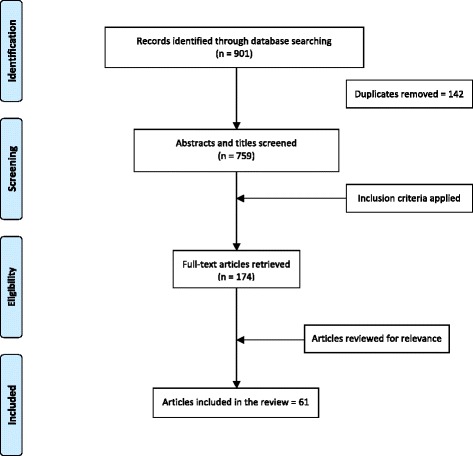
BACKGROUND: The history of residential schools has been identified as having long lasting and intergenerational effects on the physical and mental well-being of Indigenous populations in Canada. Our objective was to identify the extent and range of research on residential school attendance on specific health outcomes and the populations affected. METHODS: A scoping review of the empirical peer-reviewed literature was conducted, following the methodological framework of Arksey and O'Malley (2005). For this review, nine databases were used: Bibliography of Native North Americans, Canadian Health Research Collection, CINAHL, Google Scholar, Indigenous Studies Portal, PubMed, Scopus, Statistics Canada, and Web of Science. Citations that did not focus on health and residential school among a Canadian Indigenous population were excluded. Papers were coded using the following categories: Indigenous identity group, geography, age-sex, residential school attendance, and health status. RESULTS: Sixty-one articles were selected for inclusion in the review. Most focused on the impacts of residential schooling among First Nations, but some included Métis and Inuit. Physical health outcomes linked to residential schooling included poorer general and self-rated health, increased rates of chronic and infectious diseases. Effects on mental and emotional well-being included mental distress, depression, addictive behaviours and substance mis-use, stress, and suicidal behaviours. CONCLUSION: The empirical literature can be seen as further documenting the negative health effects of residential schooling, both among former residential school attendees and subsequent generations. Future empirical research should focus on developing a clearer understanding of the aetiology of these effects, and particularly on identifying the characteristics that lead people and communities to be resilient to them.
Verified 2026-11-22 · 1 reference not checked yet
Overview
CoChat Summary
## TL;DR
This scoping review mapped empirical research on residential school attendance and health among Indigenous peoples in Canada, identifying 61 included studies. The literature consistently links residential schooling to poorer physical health, mental health, and general well-being in Survivors and in some family members and later generations.
## Key findings
- The review included 61 studies; most focused on First Nations (43 studies), with 18 including Inuit and 17 Métis.
- Physical health outcomes linked to residential schooling included poorer general and self-rated health, and increased rates of chronic and infectious diseases, including diabetes, obesity, tuberculosis, hepatitis C, HIV/AIDS, and STIs.
- Mental and emotional well-being outcomes were reported in 43 studies and included mental distress, depression, addictive behaviours/substance misuse, stress, and suicidal behaviours.
- Reported study samples ranged from 1 to 51,080 participants; 48 studies included both men and women, and 46 included adults over 18.
## Methods
- The authors conducted a scoping review using the Arksey and O’Malley framework to map empirical peer-reviewed literature on residential schooling and Indigenous health in Canada.
- They searched nine databases: Bibliography of Native North Americans, Canadian Health Research Collection, CINAHL, Google Scholar, Indigenous Studies Portal, PubMed, Scopus, Statistics Canada, and Web of Science; they also sought grey literature for support.
- Included papers had to be in English (or translated abstract), use primary or secondary data, focus on an Indigenous population in Canada, and examine residential school attendance in relation to health; studies were coded by Indigenous identity, geography, age-sex/gender, residential school attendance, and health status.
## Limitations
- The paper states that, because this is a scoping review, it did not appraise study quality and did not provide a synthesis of the data.
- The authors state that study inclusion was subject to the reviewers’ interpretation, making it more subjective in nature.
- Evident from the text: the included literature was mostly correlational and few studies examined mechanisms linking residential schooling to health outcomes, limiting causal interpretation.
Model-written summary. Check it against the paper before relying on it.
Integrity signals
Registry
Cites
Statistics
Figures
Verification
Claims the paper makes
8 Valid · 0 Not valid · 18 Not checked · 36 Own results and interpretations
The cited sources support only part of this claim — read each source’s verdict below.
In the paper
“Some of the papers were able to identify specific intergenerational effects, including higher risk of negative outcomes for those whose parents or grandparents attended, whether they themselves were residential school Survivors [9].”
§ Residential schools and the effects on Indigenous health and well-being in Canada—a scoping review > Discussion This review aimed to summarize the current literature on residential schools and Indigenous health and well-being using Arksey and O’Malley’s scoping review framework [19]. In general, the empirical literature further documented the wide ranging negative effects of residential schools that had previously been identified by Survivors themselves [15] and confirmed that residential schooling is likely an important contributor to the current health conditions of Indigenous populations in Canada. The studies included revealed a range of poorer physical, mental and emotional, and general health outcomes in both residential school attendees and their families compared with those without these experiences. This included evidence of poorer general health, higher risk of chronic conditions such as diabetes, as well as infectious diseases such as STIs. Many of the studies related residential schooling to poorer mental health, including depressions and substance misuse. Although the majority of studies focused on First Nations, various effects were observed among Métis and Inuit as well, and in urban, rural and reserve populations, and in all regions, strongly suggesting that the effects of residential schooling are felt by Indigenous peoples across Canada. The regional and historical variations in the implementation of residential schooling [10] would lead us to expect geographic variability in these effects. While only one study reviewed examined these differences, it is indicated that variation in health status among community members may be related to various colonial histories in different areas [43]. Importantly, given the vast consequences and predominately negative impact of attendance at these schools, the literature reviewed suggests that younger generations continue to experience the negative health consequences associated with residential schooling. Some of the papers were able to identify specific intergenerational effects, including higher risk of negative outcomes for those whose parents or grandparents attended, whether they themselves were residential school Survivors [9]. Others only considered whether family members had attended, suggesting that the effects are clustered within families, rather than isolating the intergenerational transmission of trauma related to residential schooling. Overall, the newness of the literature indicates that this is a recent and growing area of research. One of the likely consequences of this is that much of the research reviewed was correlational, and few studies explicitly examined the mechanisms that connected residential school experience to health outcomes. Although some of the studies examining mental health identified substance use resulting from a need to cope with psychological pain [44, 45, 54] or to provide individuals with feelings of regaining power and control [45], most of the studies of physical health effects or general health did not attempt to unpack the range of proximate and mediating factors in the causal chain between residential schooling and the health of Survivors or of their family members. A strength of this review is that it was conducted systematically and provides methodological accounts to ensure the transparency of the findings. Additionally, the findings of this research highlight the extent and range of the available literature on this important topic in health and suggest areas that require further research. It is important to acknowledge its limitations, however. Firstly, while a scoping review provides a rapid summary of a range of literature, it does not include an appraisal of the quality of the studies included nor provide a synthesis of the data. Secondly, the inclusion of studies is determined by the reviewer’s interpretation of the literature and therefore may be more subjective in nature.
What the sources say
- Partly supportedcites [9] Bombay A Matheson K Anisman H The intergenerational effects of Indian residential schools: implications for the concept of historical trauma Transcult Psychiatry 2014 51 3 320 338 10.1177/1363461513503380 24065606 PMC4232330 sourceExperimental — accuracy not yet measured
The section “Historical trauma responses related to familial IRS attendance” reports higher rates of adverse outcomes among people whose parents or grandparents attended residential schools. But the paper does not establish that this elevated risk holds whether or not those people attended themselves. In “The risk associated with IRS attendance accumulates across generations,” the authors explicitly exclude respondents who attended from their analysis of intergenerational effects (page not provided). (LLM, conf=0.88)
hedgedstates an association- Asserted: passes — The authors put it forward as true.
- Checkable: passes — It can be checked against evidence.
- Load-bearing: passes — The paper’s conclusions depend on it.
- Based: passes — The paper gives a reason why it holds.
- Partly supported
The cited sources support only part of this claim — read each source’s verdict below.
In the paper
“In addition to chronic conditions, residential school attendance has been associated with poorer sexual health in general [34, 35]”
§ Residential schools and the effects on Indigenous health and well-being in Canada—a scoping review > Results > Characteristics of the included studies
What the sources say
- Partly supportedcites [34] Healey G: Inuit parent perspectives on sexual health communication with adolescent children in Nunavut: “it’s kinda hard for me to try to find the words”. Int J Circumpolar Health. 2014;73:25070. PMC4215723 25405104 sourceExperimental — accuracy not yet measured
The Discussion (page not specified) says trauma from the settlement and residential school era continues to affect Inuit family relationships and parent–adolescent communication about sexual health. It does not establish an association between an individual's residential school attendance and poorer sexual health in general; its finding is narrower and does not isolate residential school attendance from other experiences of that era. (LLM, conf=0.84)
- Partly supportedcites [35] Healey GK Inuit family understandings of sexual health and relationships in Nunavut Can J Public Health 2014 105 2 e133 137 10.17269/cjph.105.4189 24886849 PMC6972209 sourceExperimental — accuracy not yet measured
Our copy (Healey 2014, a qualitative study with Inuit parents in two Nunavut communities) does link residential school attendance to sexual harms: the 'Residential school' results section reports mothers 'experiencing child abuse (physical, sexual, emotional and/or mental) while attending residential school,' and the following section states that family separation during settlement 'fractured family communication about sexuality,' with the DISCUSSION repeating that 'settlement and displacement fractured family relationships and communication about sexuality.' However, the paper reports no association between residential school attendance and poorer sexual health outcomes as such (its STI/pregnancy data are community-level Nunavut statistics, not linked to school attendance, and the one participant who 'engaged in sex for money' is attributed to her parent's TB medical evacuation rather than to residential school). The claim's generalization 'poorer sexual health in general' therefore overstates a source that documents abuse and disrupted sexuality communication in a small Inuit parent sample. (LLM, conf=0.72)
plainstates an association- Asserted: passes — The authors put it forward as true.
- Checkable: passes — It can be checked against evidence.
- Load-bearing: unclear — It is unclear whether the paper’s conclusions depend on it.
- Based: passes — The paper gives a reason why it holds.
- Partly supported
Every source the paper cites for this claim was checked and supports it.
In the paper
“a finding that was reproduced with the 2006 APS by Kaspar [27], who found that 12% of those who had attended residential school reported poor health, compared with 7% of those who did not attend.”
§ Residential schools and the effects on Indigenous health and well-being in Canada—a scoping review > Results > Characteristics of the included studies
What the sources say
- Supportedcites [27] Kaspar V The lifetime effect of residential school attendance on Indigenous health status Am J Public Health 2014 104 11 2184 2190 10.2105/AJPH.2013.301479 24328622 PMC4202939 source
The RESULTS section (Table 1 discussion) states verbatim that "about 12% of individuals who attended an IRS reported poor health compared with 7% of nonattenders reporting poor health," matching both figures in the claim. The same passage and Table 1 caption confirm the data come from the Aboriginal Peoples Survey: Adult Core, Canada, 2006, as the citing sentence asserts. (LLM, conf=0.95)
plainstates an association- Asserted: passes — The authors put it forward as true.
- Checkable: passes — It can be checked against evidence.
- Load-bearing: unclear — It is unclear whether the paper’s conclusions depend on it.
- Based: passes — The paper gives a reason why it holds.
- Supported
A result the paper reports from its own data — it cites no other source for it, so there is none to check. The quote shows it is in the paper.
In the paper
“In terms of residential school attendance, 42 of the studies reviewed included residential school attendees themselves (personal attendance) and 38 examined the effects of having a parent or other family members who had attended (familial attendance).”
§ Residential schools and the effects on Indigenous health and well-being in Canada—a scoping review > Results > Characteristics of the included studies
plain- Asserted: passes — The authors put it forward as true.
- Checkable: passes — It can be checked against evidence.
- Load-bearing: unclear — It is unclear whether the paper’s conclusions depend on it.
- Based: passes — The paper gives a reason why it holds.
23 more claims
Create a free account to see all 62 claims and to verify the 1 reference still open.
- Probably not a substantial claim. 28
- It may state two separate claims as one. 14
Citations
Cites
Scoping studies: towards a methodological framework
Arksey, H., & O'Malley, L. (2005) · International Journal of Social Research Methodology · doi:10.1080/1364557032000119616 · Cited by 36,742 · cited 7×
“Although a scoping review may not describe research findings in detail, it provides a way of navigating the area of research where the range of material is uncertain [19].”
BackgroundMethodInfluentialScoping studies: advancing the methodology
Levac, D., Colquhoun, H., & O'Brien, K. K. (2010) · Implementation Science · doi:10.1186/1748-5908-5-69 · Cited by 15,268 · cited 1×
“Scoping studies therefore typically have broad research questions and focus on summarizing the available evidence [20].”
BackgroundIndigenous health part 1: Determinants and disease patterns
Gracey, M., & King, M. (2009) · The Lancet · doi:10.1016/s0140-6736(09)60914-4 · Cited by 1,303
'Scoping the scope' of a cochrane review
Armstrong, R., Hall, B. J., Doyle, J., & Waters, E. (2011) · Journal of Public Health · doi:10.1093/pubmed/fdr015 · Cited by 1,260 · cited 1×
“According to Armstrong and colleagues, a scoping review also differs from a systematic review in that the inclusion/exclusion criteria can be developed in an iterative process, the quality of studies might not be discussed in the review, and that the synthesis tends to be more qualitative in nature with the review use…”
BackgroundThe Embodiment of Inequity: Health Disparities in Aboriginal Canada
Adelson, N. (2005) · Canadian Journal of Public Health · doi:10.1007/bf03403702 · Cited by 877
Rethinking Resilience from Indigenous Perspectives
Kirmayer, L. J., Dandeneau, S., Marshall, E., Phillips, M. K., & Williamson, K. J. (2011) · The Canadian Journal of Psychiatry · doi:10.1177/070674371105600203 · Cited by 774 · cited 1×
“These attempts of forced assimilation have failed, in part due to the resilience and resistance of many Indigenous communities [12].”
BackgroundKirmayer, L. J., Gone, J. P., & Moses, J. (2014) · Transcultural Psychiatry · doi:10.1177/1363461514536358 · Cited by 652 · cited 3×
“According to Kirmayer, Gone, and Moses, historical trauma provides a way to conceptualize the transgenerational effects of residential schooling, whereby “traumatic events endured by communities negatively impact on individual lives in ways that result in future problems for their descendants” [14].”
BackgroundHealing Traditions: Culture, Community and Mental Health Promotion with Canadian Aboriginal Peoples
Kirmayer, L., Simpson, C., & Cargo, M. (2003) · Australasian Psychiatry · doi:10.1046/j.1038-5282.2003.02010.x · Cited by 580 · cited 2×
“Nonetheless, it is apparent that they have had profound effects “at every level of experience from individual identity and mental health, to the structure and integrity of families, communities, bands and nations” [6].”
BackgroundBombay, A., Matheson, K., & Anisman, H. (2014) · Transcultural Psychiatry · doi:10.1177/1363461513503380 · Cited by 566 · cited 16×
“Some of the papers were able to identify specific intergenerational effects, including higher risk of negative outcomes for those whose parents or grandparents attended, whether they themselves were residential school Survivors [9].”
BackgroundInfluentialGone, J. P. (2013) · Transcultural Psychiatry · doi:10.1177/1363461513487669 · Cited by 533
Elias, B., Mignone, J., Hall, M., Hong, S. P., Hart, L., & Sareen, J. (2012) · Social Science & Medicine · doi:10.1016/j.socscimed.2012.01.026 · Cited by 293 · cited 1×
“Elias and colleagues [41] found that residential school attendees who suffered abuse were more likely to have a history of suicide attempts or thoughts.”
BackgroundIntergenerational Trauma: Convergence of Multiple Processes among First Nations peoples in Canada
Bombay, A., Matheson, K., & Anisman, H. (2009) · International Journal of Indigenous Health · doi:10.18357/ijih53200912337 · Cited by 218
Review of research on aboriginal populations in Canada: relevance to their health needs
Young, T. K. (2003) · BMJ · doi:10.1136/bmj.327.7412.419 · Cited by 202 · cited 3×
“The papers selected for inclusion were coded following similar categories used by Wilson and Young [22] and Young [23] in their reviews of Indigenous health research.”
MethodThe impact of stressors on second generation Indian residential school survivors
Bombay, A., Matheson, K., & Anisman, H. (2011) · Transcultural Psychiatry · doi:10.1177/1363461511410240 · Cited by 184
Smith, D., Varcoe, C., & Edwards, N. C. (2005) · PubMed · Cited by 167
Oster, R. T., Grier, A., Lightning, R., Mayan, M. J., & Toth, E. L. (2014) · International Journal for Equity in Health · doi:10.1186/s12939-014-0092-4 · Cited by 164
Evans-Campbell, T., Walters, K. L., Pearson, C. R., & Campbell, C. D. (2012) · The American Journal of Drug and Alcohol Abuse · doi:10.3109/00952990.2012.701358 · Cited by 144 · cited 1×
“The concept of historical trauma suggests that the effects of these disruptive historical events are collective, affecting not only individual Survivors, but also their families and communities [13, 14].”
BackgroundImpact of residential schooling and of child abuse on substance use problem in Indigenous Peoples
Ross, A., Dion, J., Cantinotti, M. A., Collin‐Vézina, D., & Paquette, L. (2015) · Addictive Behaviors · doi:10.1016/j.addbeh.2015.07.014 · Cited by 117
Distress among Indigenous North Americans: Generalized and Culturally Relevant Stressors
Walls, M. L., & Whitbeck, L. B. (2011) · Society and Mental Health · doi:10.1177/2156869311414919 · Cited by 84 · cited 2×
“Walls ML, Whitbeck LB. Distress among Indigenous North Americans: generalized and culturally relevant stressors.”
BackgroundHackett, C., Feeny, D., & Tompa, E. (2016) · Journal of Epidemiology and Community Health · doi:10.1136/jech-2016-207380 · Cited by 80 · cited 2×
“Familial residential school attendance has been associated with lower selfperceived mental health and a higher risk of distress and suicidal behaviours [28].”
BackgroundThe Mental Health of Aboriginal Peoples in Canada: Transformations of Identity and Community
Kirmayer, L. J., Tait, C. L., & Simpson, C. (2009) · University of British Columbia Press eBooks · doi:10.59962/9780774815253-004 · Cited by 75
Wilson, K., & Young, K. (2008) · International Journal of Circumpolar Health · doi:10.3402/ijch.v67i2-3.18260 · Cited by 72 · cited 3×
“The papers selected for inclusion were coded following similar categories used by Wilson and Young [22] and Young [23] in their reviews of Indigenous health research.”
MethodAn examination of stress among Aboriginal women and men with diabetes in Manitoba, Canada
Iwasaki, Y., Bartlett, J. G., & O’Neil, J. (2004) · Ethnicity and Health · doi:10.1080/1355785042000222888 · Cited by 72
The Lifetime Effect of Residential School Attendance on Indigenous Health Status
Kaspar, V. (2014) · American Journal of Public Health · doi:10.2105/ajph.2013.301479 · Cited by 70 · cited 3×
“Kaspar V.”
BackgroundResultIwasaki, Y., & Bartlett, J. G. (2006) · Journal of Leisure Research · doi:10.1080/00222216.2006.11950081 · Cited by 69
Bombay, A., Matheson, K., & Anisman, H. (2014) · Cultural Diversity & Ethnic Minority Psychology · doi:10.1037/a0033352 · Cited by 61
Aboriginal peoples, health and healing approaches: The effects of age and place on health
Wilson, K., Rosenberg, M. W., & Abonyi, S. (2011) · Social Science & Medicine · doi:10.1016/j.socscimed.2010.09.022 · Cited by 58 · cited 2×
“Using Statistics Canada’s 2001 Aboriginal Peoples Survey (APS), Wilson and colleagues found that those who had attended residential schools had poorer overall self-rated health than those who did not attend [26], a finding that was reproduced with the 2006 APS by Kaspar [27], who found that 12% of those who had attend…”
BackgroundResultSöchting, I., Corrado, R. R., Cohen, I. M., Ley, R. G., & Brasfield, C. R. (2007) · Cited by 56
Kral, M. J. (2013) · Medical Anthropology Quarterly · doi:10.1111/maq.12016 · Cited by 56
Diversity within: Deconstructing Aboriginal community health in Wikwemikong Unceded Indian Reserve
Jacklin, K. M. (2009) · Social Science & Medicine · doi:10.1016/j.socscimed.2008.12.035 · Cited by 56 · cited 1×
“While only one study reviewed examined these differences, it is indicated that variation in health status among community members may be related to various colonial histories in different areas [43].”
BackgroundCanadian Residential Schools and Urban Indigenous Knowledge Production about Diabetes
Howard, H. (2014) · Medical Anthropology · doi:10.1080/01459740.2013.828722 · Cited by 53 · cited 1×
“Howard [31] found similar results and suggested that residential schooling contributed to the urbanization of Indigenous peoples in Canada, which has led to diabetes and other problems.”
Result“Rebuilding our community”: Hearing silenced voices on Aboriginal youth suicide
Walls, M. L., Hautala, D. S., & Hurley, J. (2013) · Transcultural Psychiatry · doi:10.1177/1363461513506458 · Cited by 51
Decolonizing Diet: Healing by Reclaiming Traditional Indigenous Foodways
Bodirsky, M., & Johnson, J. (2008) · Cuizine The Journal of Canadian Food Cultures · doi:10.7202/019373ar · Cited by 49 · cited 1×
“Many of the illnesses and conditions that are disproportionately experienced by Indigenous peoples, including obesity, diabetes, and cardiovascular disease, have therefore been attributed to the lasting effects of colonialism, including the Indian Act, the reserve system, and residential schooling [7].”
BackgroundLemstra, M., Rogers, M., Thompson, A., Moraros, J., & Buckingham, R. (2011) · The Canadian Journal of Psychiatry · doi:10.1177/070674371105600607 · Cited by 47
Varcoe, C., & Dick, S. (2013) · International Journal of Indigenous Health · doi:10.18357/ijih41200812314 · Cited by 45 · cited 6×
“In a study conducted by Varcoe and Dick [36], a participant associates her drinking and drug use to the sexual, physical, emotional, and mental abuse experienced at residential school.”
BackgroundInfluentialHealey, G. (2014) · International Journal of Circumpolar Health · doi:10.3402/ijch.v73.25070 · Cited by 41 · cited 1×
“In addition to chronic conditions, residential school attendance has been associated with poorer sexual health in general [34, 35], infectious diseases such as HIV/AIDS and STIs [36] and has been identified as an independent risk factor for HCV [37].”
Background(2009) · PubMed Central · Cited by 40
Mota, N., Elias, B., Tefft, B., Medved, M., Munro, G., & Sareen, J. (2012) · American Journal of Public Health · doi:10.2105/ajph.2011.300385 · Cited by 38
Kumar, M. B., Walls, M. L., Janz, T. A., Hutchinson, P., Turner, T., & Graham, C. (2012) · International Journal of Circumpolar Health · doi:10.3402/ijch.v71i0.18829 · Cited by 37
Risk indicators associated with injection drug use in the Aboriginal population
Lemstra, M., Rogers, M., Thompson, A., Moraros, J., & Buckingham, R. W. (2012) · AIDS Care · doi:10.1080/09540121.2011.650678 · Cited by 34
Health and Quality of Life of Aboriginal Residential School Survivors, Bella Coola Valley, 2001
Barton, S. S., Thommasen, H. V., Tallio, B., Zhang, W., & Michalos, A. C. (2017) · Springer eBooks · doi:10.1007/978-3-319-51161-0_5 · Cited by 30
Health And Quality Of Life Of Aboriginal Residential School Survivors, Bella Coola Valley, 2001
Barton, S. S., Thommasen, H. V., Tallio, B., Zhang, W., & Michalos, A. C. (2005) · Social Indicators Research · doi:10.1007/s11205-004-6169-5 · Cited by 29
For the Cedar Project Partnership, Moniruzzaman, A., Pearce, M., Patel, S., Chavoshi, N., Teegee, M. P., Adam, W., Christian, W. M., Henderson, E., Craib, K. J. P., et al. (2009) · International Journal of Circumpolar Health · doi:10.3402/ijch.v68i3.18338 · Cited by 27
Juutilainen, S., Miller, R., Heikkilä, L., & Rautio, A. (2014) · International Indigenous Policy Journal · doi:10.18584/iipj.2014.5.3.3 · Cited by 26
Predictors of Obesity Among Métis Children: Socio-economic, Behavioural and Cultural Factors
Cooke, M. J., Wilk, P., Paul, K. W., & Gonneville, S. L. H. (2013) · Canadian Journal of Public Health · doi:10.17269/cjph.104.3765 · Cited by 24 · cited 1×
“Residential school attendance has also been found to be a positive predictor of obesity among younger Métis boys and girls, but a negative predictor among older girls [33].”
BackgroundSelf-citationInuit family understandings of sexual health and relationships in Nunavut
Healey, G. K. (2014) · Canadian Journal of Public Health · doi:10.17269/cjph.105.4189 · Cited by 18 · cited 1×
“In addition to chronic conditions, residential school attendance has been associated with poorer sexual health in general [34, 35], infectious diseases such as HIV/AIDS and STIs [36] and has been identified as an independent risk factor for HCV [37].”
BackgroundAn Exploratory Sutdy of Binge Drinking in the Aboriginal Population
Wardman (2005) · American Indian and Alaska Native Mental Health Research · doi:10.5820/aian.1201.2005.49 · Cited by 17
Rothe, P. J., Makokis, P., Steinhauer, L., Aguiar, W., Makokis, L., & Brertton, G. (2006) · International Journal of Circumpolar Health · doi:10.3402/ijch.v65i4.18126 · Cited by 17
on behalf of the First Nations Lung Health Team, Dyck, R. F., Karunanayake, C., Janzen, B., Lawson, J., Ramsden, V. R., Rennie, D. C., Gardipy, P. J., McCallum, L., Abonyi, S., et al. (2015) · BMC Public Health · doi:10.1186/s12889-015-2551-2 · Cited by 15 · cited 1×
“Dyck and colleagues also reported that those who attended residential school had a slightly higher prevalence of diabetes than those who did not, although the finding was not statistically significant [32].”
BackgroundGhosh, H. (2012) · Archivaria (Association of Canadian Archivists) · Cited by 12
Moving Beyond Residential School Trauma Abuse: A Phenomenological Hermeneutic Analysis
Dionne, D., & Nixon, G. (2014) · International Journal of Mental Health and Addiction · doi:10.1007/s11469-013-9457-y · Cited by 11 · cited 2×
“Although some of the studies examining mental health identified substance use resulting from a need to cope with psychological pain [44, 45, 54] or to provide individuals with feelings of regaining power and control [45], most of the studies of physical health effects or general health did not attempt to unpack the ra…”
BackgroundRecovery in the residential school abuse aftermath : a new healing paradigm
Dionne, D. (2008) · Open ULeth Scholarship (OPUS) (University of Lethbridge) · Cited by 8
What are the Predictors of Volatile Substance Use in an Urban Community of Adults Who are Homeless?
DeBoer, T., Distasio, J., Isaak, C. A., Roos, L. E., Bolton, J. M., Medved, M. I., Katz, L. Y., Goering, P. N., Bruce, L., & Sareen, J. (2015) · Canadian Journal of Community Mental Health · doi:10.7870/cjcmh-2015-003 · Cited by 7
Stirbys, C. (2016) · uO Research (University of Ottawa) · doi:10.20381/ruor-5328 · Cited by 5
The Intergenerational Effect of Forcible Assimilation Policy on EducationPreprint
Feir, D. L. (2015) · RePEc: Research Papers in Economics · Cited by 4
Owen-Williams, E. (2012) · doi:10.21007/etd.cghs.2012.0232 · Cited by 3
Comparing the Lived Experience of Urban Aboriginal Peoples with Canadian Rights to Quality of Life
Findlay, I. M. (2016) · doi:10.13140/rg.2.1.3566.3761 · Cited by 1
Research works printed but not linked: 14
- National Aboriginal Health Organization Ways of knowing: A framework for health research 2003 1 29
- Reading J Elias B Chapter 2—an examination of residential schools and elder health First Nations and Inuit Health Survey 1999
- Corrado RR Cohen IM Mental Health Profiles for a Sample of British Columbia’s Aboriginal Survivors of the Canadian Residential School System 2003 Ottawa Aboriginal Healing Foundation
- Loppie Reading C Wien F Health Inequalities and the Social Determinants of Aboriginal Peoples’ Health 2009 Prince George National Collaborating Centre for Aboriginal Health
- Truth and Reconciliation Commission of Canada They Came for the Children: Canada, Aboriginal Peoples, and Residential Schools 2012 Winnipeg Truth and Reconciliation Commission of Canada
- Archibald L Decolonization and Healing: Indigenous Experiences in the Unites States 2006 Ottawa Australia and Greenland
- Truth and Reconciliation Commission of Canada Truth and Reconciliation Commission of Canada: Calls to Action 2015 Winnipeg Truth and Reconciliation Commission of Canada
- Stout R Kiskâyitamawin Miyo-mamitonecikan: Urban Aboriginal Women and Mental Health 2010 Winnipeg Prairie Women’s Health Centre of Excellence
- Chansonneuve D Addictive Behaviours Among Aboriginal People in Canada 2007 Ottawa Aboriginal Healing Foundation
- Iwasaki Y Bartlett J Stress-coping among aboriginal individuals with diabetes in an urban Canadian city J Aborig Health 2006 3 11
- Jackson R Cain R Prentice T Depression among Aboriginal People Living with HIV/AIDS: Research Report 2008 Ottawa Canadian Aboriginal AIDS Network
- Jones LE “Killing the Indian, Saving the Man”: The Long-run Cultural, Health, and Social Effects of Canada’s Indian Residential Schools 2014 Ithaca Cornell University
- Robertson LH The residential school experience: syndrome or historic trauma Pimatisiwin 2006 4 1 1 28
- van Niekerk M Bombay A Risk for psychological distress among cancer patients with a familial history of Indian residential school attendance: results from the 2008-10 First Nations Regional Health Survey Psychooncology 2016 25 SP. S3) 3 3
Cited by
Nguyen, N. H., Subhan, F. B., Williams, K., & Chan, C. B. (2020) · Healthcare · doi:10.3390/healthcare8020112 · Cited by 173
“, residential schools, Sixties Scoop) have plagued the survivors and later generations with physical and mental trauma, which can generate self-destructive behaviors such as alcoholism and violence [43].”
BackgroundRedvers, J. (2020) · International Journal of Indigenous Health · doi:10.32799/ijih.v15i1.34046 · Cited by 99
“The forcible alteration of the connection between land and identity, which sustains a sense of well-being, is within living memory in northern Canada with the last residential school closing in the late 1990’s (Igloliorte, 2011; Wilk et al., 2017).”
BackgroundClark, E., Cranston, E., Polin, T., Ndumbe-Eyoh, S., MacDonald, D., Betker, C., & Dobbins, M. (2022) · BMC Public Health · doi:10.1186/s12889-022-14603-w · Cited by 98
Indigenous Culture-as-Health: A Systematized Literature Review
Yamane, C. Y. E. W., & Helm, S. (2022) · Journal of Prevention · doi:10.1007/s10935-022-00666-3 · Cited by 84
“In comparison to many non-Indigenous populations, Indigenous people face greater social disadvantages, disproportionate burdens of diseases, and deleterious social determinants of health, much of which are related to forced migration and colonization (Pulver et al., 2010; Wilk et al., 2017).”
Spiegel, S. J., Thomas, S. E., O’Neill, K., Brondgeest, C., Thomas, J., Beltran, J., Hunt, T., & Yassi, A. (2020) · International Journal of Environmental Research and Public Health · doi:10.3390/ijerph17072362 · Cited by 83
“There are profound intergenerational impacts of the structural violence created by Canada’s oppressive policies, including the residential school system [52] and 60s scoop [53], combined with the destructive impact of the loss of food sovereignty on cultural continuity [41,45,54].”
Background
Metadata
- Authors
- Wilk, P., Maltby, A., & Cooke, M.
- Affiliations
- Western University (CA)
- University of Waterloo (CA)
- Corresponding author
- Wilk, Piotr
- Venue
- Public Health Reviews
- Published
- 2017-03-02
- Volume
- 38
- Issue
- 1
- Pages
- 8-8
- ISSN
- 0301-0422 (ISSN-L)
- 2107-6952
- PMC
- PMC5809999
- OpenAlex
- W2591707197
- Cited by
- 293
- References
- 57
- Citations by year
- 2026: 13 · 2025: 45 · 2024: 41 · 2023: 35 · 2022: 41 · 2021: 30 · 2020: 65 · 2019: 9 · 2018: 11 · 2017: 2
- FWCI
- 4.11
- Type
- journal article
- Language
- en
- Open access
- gold
- doi.org
- Licence
- cc-by
- Locations
- Public health reviews (publishedVersion, cc-by)
- Europe PMC (PubMed Central) (publishedVersion, cc-by)
- PubMed Central (publishedVersion, cc-by)
- PubMed (publishedVersion)
- Scholarship@Western (Western University) (submittedVersion, other-oa)
- Scholarship@Western (Western University) (submittedVersion)
- Funders
- The Western Libraries Open Access Fund
- Topics
- Social Sciences › Health › Indigenous Health, Education, and Rights
- Social Sciences › Anthropology › Indigenous Cultures and History
- Health Sciences › Medicine › Public Health, Environmental and Occupational Health › Indigenous Health and Education
- Keywords
- residential schools, Indigenous health, First Nations, Métis, Inuit, intergenerational effects, physical health, mental health, chronic disease, substance use, depression, suicide, self-rated health
About these checks
Registry, retraction, Cites and statistics results are computed, not judged, with one exception: a printed reference that no index lists is read once by a model before it counts as a citation error. Claims are extracted by a model and kept only when their quote appears verbatim in the text; each cited source is then checked, with a model’s help, for whether it says what the claim relies on. Those verdicts can be wrong — read the claim’s quote and the cited source before relying on one.
The claim verdicts this report counts are experimental: their accuracy is not yet measured.
A language model drew the claims from the paper on 2026-10-09, under version 3 of the claim definition (model deepseek-v4.1-flash, prompt extract-v3).
A second model labelled each claim on 2026-10-09 (model jev-1.13-20260917, definition revision gold-guideline-v0.2).
Cited sources are checked with a language model’s help (gpt-6-sol and qwen3.8-omni-flash).
Statistics and arithmetic are recomputed, not judged.
Confidence bands are shown only for fields calibrated on our annotated test set. None is calibrated yet, so no band is shown.
What counts as a claim ›How we measure confidence ›How we check this ›
Are you an author, or do you see a problem with this page? Request a review
Data sources
Bibliographic data: Semantic Scholar, OpenAlex, Crossref.
Contains information from the Semantic Scholar Academic Graph Datasets, made available under the ODC Attribution License (ODC-BY 1.0).
Semantic Scholar’s data is described in: Kinney, R., et al. (2023). The Semantic Scholar Open Data Platform. arXiv:2301.10140.
