

Mechanisms of interstrand DNA crosslink repair and human disorders
Open accessThe DOI matches its Crossref record; 97 of the 97 references it cites were found in a registry or an index.
Abstract
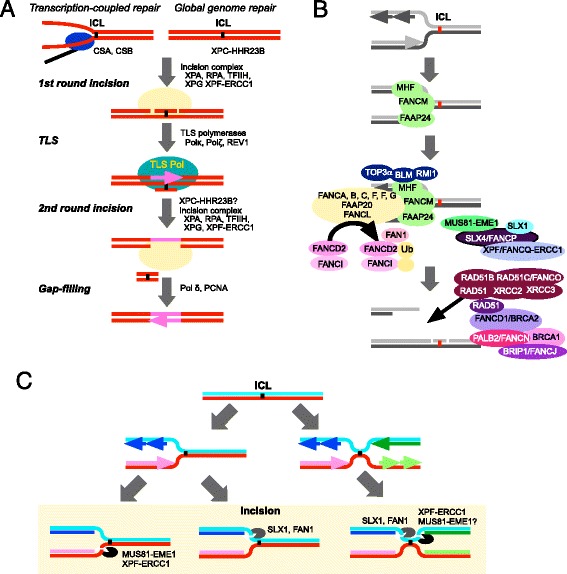
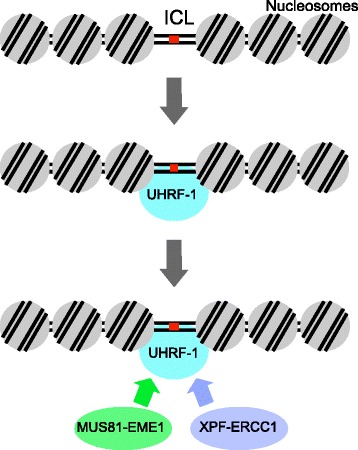
Interstrand DNA crosslinks (ICLs) are the link between Watson-Crick strands of DNAs with the covalent bond and prevent separation of DNA strands. Since the ICL lesion affects both strands of the DNA, the ICL repair is not simple. So far, nucleotide excision repair (NER), structure-specific endonucleases, translesion DNA synthesis (TLS), homologous recombination (HR), and factors responsible for Fanconi anemia (FA) are identified to be involved in ICL repair. Since the presence of ICL lesions causes severe defects in transcription and DNA replication, mutations in these DNA repair pathways give rise to a various hereditary disorders. NER plays an important role for the ICL recognition and removal in quiescent cells, and defects of NER causes congential progeria syndrome, such as xeroderma pigmentosum, Cockayne syndrome, and trichothiodystrophy. On the other hand, the ICL repair in S phase requires more complicated orchestration of multiple factors, including structure-specific endonucleases, and TLS, and HR. Disturbed this ICL repair orchestration in S phase causes genome instability resulting a cancer prone disease, Fanconi anemia. So far more than 30 factors in ICL repair have already identified. Recently, a new factor, UHRF1, was discovered as a sensor of ICLs. In addition to this, numbers of nucleases that are involved in the first incision, also called unhooking, of ICL lesions have also been identified. Here we summarize the recent studies of ICL associated disorders and repair mechanism, with emphasis in the first incision of ICLs.
Overview
The claims and statistics of this paper haven’t been checked yet.
Free: it reads the open-access text and checks the first 5 claims that cite a source we can check. Create a free account to check every claim.
Integrity signals
Registry
Cites
Statistics
Figures
Verification
Claims the paper makes
The claims and statistics of this paper haven’t been checked yet.
Free: it reads the open-access text and checks the first 5 claims that cite a source we can check. Create a free account to check every claim.
Claims other papers make about this one
Each is checked against this paper’s own text: does it say what the citing paper says it does?
The check wasn’t confident either way, so it gives no verdict — never disputed.
In the citing paper
“Evidence has shown that NER proteins are involved in repairing oxidatively generated damage [201,[209][210][211][212][213].”
From Sunlight damage to cellular DNA: focus on oxidatively generated lesions (2017) · cites this paper as [209]
Experimental — accuracy not yet measured
Self-check
Percentages, sums and reported differences re-computed from the paper’s own numbers.
The self-check needs the paper’s full text.
Citations
Cites
Hoeijmakers, J. H. J. (2009) · New England Journal of Medicine · doi:10.1056/nejmra0804615 · Cited by 2,239 · cited 4×
“TTD has a distinct sulfur-deficient brittle hair and neuroectodermal symptoms [41, 43, 44].”
InfluentialBiallelic Inactivation of BRCA2 in Fanconi Anemia
Howlett, N. G., Taniguchi, T., Olson, S., Cox, B., Waisfisz, Q., de Die-Smulders, C., Persky, N., Grompe, M., Joenje, H., Pals, G., et al. (2002) · Science · doi:10.1126/science.1073834 · Cited by 1,149 · cited 1×
“FANCD1 (BRCA2) HR FA, HBOC [60]”
PALB2, which encodes a BRCA2-interacting protein, is a breast cancer susceptibility gene
The Breast Cancer Susceptibility Collaboration (UK), Rahman, N., Seal, S., Thompson, D., Kelly, P., Renwick, A., Elliott, A., Reid, S., Spanova, K., Barfoot, R., et al. (2007) · Nature Genetics · doi:10.1038/ng1959 · Cited by 1,003
Meindl, A., Hellebrand, H., Wiek, C., Erven, V., Wappenschmidt, B., Niederacher, D., Freund, M., Lichtner, P., Hartmann, L., Schaal, H., et al. (2010) · Nature Genetics · doi:10.1038/ng.569 · Cited by 743 · cited 1×
“FANCO (RAD51C) HR FA, HBOC [73, 74]”
Troelstra, C., van Gool, A., de Wit, J., Vermeulen, W., Bootsma, D., & Hoeijmakers, J. H. J. (1992) · Cell · doi:10.1016/0092-8674(92)90390-x · Cited by 729 · cited 1×
“CSB NER CS, COFS [94]”
Identification of the FANCI Protein, a Monoubiquitinated FANCD2 Paralog Required for DNA Repair
Smogorzewska, A., Matsuoka, S., Vinciguerra, P., McDonald, E. R., Hurov, K. E., Luo, J., Ballif, B. A., Gygi, S. P., Hofmann, K., D'Andrea, A. D., et al. (2007) · Cell · doi:10.1016/j.cell.2007.03.009 · Cited by 700 · cited 1×
“FANCI FAN1 recruitment FA [66, 67]”
A new progeroid syndrome reveals that genotoxic stress suppresses the somatotroph axis
Niedernhofer, L. J., Garinis, G. A., Raams, A., Lalai, A. S., Robinson, A. R., Appeldoorn, E., Odijk, H., Oostendorp, R., Ahmad, A., van Leeuwen, W., et al. (2006) · Nature · doi:10.1038/nature05456 · Cited by 669 · cited 1×
“FANCQ (XPF) NER, Structure-specific endonuclease FA, XP, CS, COFS [76–78]”
Biallelic mutations in PALB2 cause Fanconi anemia subtype FA-N and predispose to childhood cancer
Reid, S., Schindler, D., Hanenberg, H., Barker, K., Hanks, S., Kalb, R., Neveling, K., Kelly, P., Seal, S., Freund, M., et al. (2007) · Nature Genetics · doi:10.1038/ng1947 · Cited by 642 · cited 1×
“FANCN (PALB2) HR FA, HBOC [71, 72]”
Cloning of cDNAs for Fanconi's anaemia by functional complementation
Strathdee, C. A., Gavish, H., Shannon, W. R., & Buchwald, M. (1992) · Nature · doi:10.1038/356763a0 · Cited by 624 · cited 1×
“FANCC FA core complex FA [59]”
Repair of DNA interstrand cross-links
Dronkert, M. L. G., & Kanaar, R. (2001) · Mutation Research/DNA Repair · doi:10.1016/s0921-8777(01)00092-1 · Cited by 555 · cited 1×
“They are formed in the presence of bifunctional alkylating agents [1–4].”
Cited by
Sunlight damage to cellular DNA: focus on oxidatively generated lesions
Schuch, A. P., Moreno, N. C., Schuch, N. J., Menck, C. F. M., & Garcia, C. C. M. (2017) · Free Radical Biology and Medicine · doi:10.1016/j.freeradbiomed.2017.01.029 · Cited by 436
Comet assay: a versatile but complex tool in genotoxicity testing
Cordelli, E., Bignami, M., & Pacchierotti, F. (2021) · Toxicology Research · doi:10.1093/toxres/tfaa093 · Cited by 186
“NER plays an important role in ICLs removal in quiescent cells, whereas the ICLs repair in S phase requires a more complex orchestration of multiple factors, including structure-specific endonucleases, TLS and HR [29].”
BackgroundBoot, A., Huang, M. N., Ng, A. W. T., Ho, S.-C., Lim, J. Q., Kawakami, Y., Chayama, K., Teh, B. T., Nakagawa, H., & Rozen, S. G. (2018) · Genome Research · doi:10.1101/gr.230219.117 · Cited by 181
“The mechanisms of interstrand-crosslink repair have not yet been fully elucidated but appear to be complicated (Hashimoto et al. 2016; Roy and Scharer 2016).”
BackgroundInfluentialThe BRCA Tumor Suppressor Network in Chromosome Damage Repair by Homologous Recombination
Zhao, W., Wiese, C., Kwon, Y., Hromas, R., & Sung, P. (2019) · Annual Review of Biochemistry · doi:10.1146/annurev-biochem-013118-111058 · Cited by 160
“Interestingly, biallelic mutations in BRCA1, BRCA2, and PALB2 can cause FA (44–46) and, hence, these genes are also known as FANCS, FANCD1 and FANCN, respectively (21).”
BackgroundMethodInfluentialSignalling pathways in UHRF1-dependent regulation of tumor suppressor genes in cancer
Alhosin, M., Omran, Z., Zamzami, M. A., Al-Malki, A. L., Choudhry, H., Mousli, M., & Bronner, C. (2016) · Journal of Experimental & Clinical Cancer Research · doi:10.1186/s13046-016-0453-5 · Cited by 138
DNA Damage Response and Oxidative Stress in Systemic Autoimmunity
Souliotis, V. L., Vlachogiannis, N. I., Pappa, M. B., Argyriou, A., Ntouros, P. A., & Sfikakis, P. P. (2019) · International Journal of Molecular Sciences · doi:10.3390/ijms21010055 · Cited by 142
“The formation of cross-links between the two strands of DNA is considered a critical event, causing cell cycle and replication arrest and eventually cell death if not repaired [54].”
BackgroundThe multi-functionality of UHRF1: epigenome maintenance and preservation of genome integrity
Mancini, M., Magnani, E., Macchi, F., & Bonapace, I. M. (2021) · Nucleic Acids Research · doi:10.1093/nar/gkab293 · Cited by 103
“In ICLs, the two complementary DNA strands are covalently bound to each other (116).”
BackgroundMicroDNA levels are dependent on MMEJ, repressed by c-NHEJ pathway, and stimulated by DNA damage
Paulsen, T., Malapati, P., Shibata, Y., Wilson, B., Eki, R., Benamar, M., Abbas, T., & Dutta, A. (2021) · Nucleic Acids Research · doi:10.1093/nar/gkab984 · Cited by 99
“Cisplatin, which leads to DNA crosslinking that is repaired by a pathway causing a DSB (18), increased the abundance of microDNA (Figure 2B).”
Brosh, R. M., & Matson, S. W. (2020) · Genes · doi:10.3390/genes11030255 · Cited by 105
Xiao, Y., Lin, F., & Lin, W.-C. (2021) · Proceedings of the National Academy of Sciences · doi:10.1073/pnas.2015808118 · Cited by 86
“Alternatively, SWI/ SNF may regulate other proteins involved in ICL repair, such as FA, TLS polymerase, HR, etc., to promote repair of cisplatinDNA lesions.”
BackgroundDNA repair, recombination, and damage signaling
Gartner, A., & Engebrecht, J. (2021) · Genetics · doi:10.1093/genetics/iyab178 · Cited by 77
DNA repair as a shared hallmark in cancer and ageing
Clarke, T. L., & Mostoslavsky, R. (2022) · Molecular Oncology · doi:10.1002/1878-0261.13285 · Cited by 85
Liang, F., Miller, A. S., Longerich, S., Tang, C., Maranon, D. G., Williamson, E. A., Hromas, R., Wiese, C., Kupfer, G. M., & Sung, P. (2019) · Nature Communications · doi:10.1038/s41467-019-10408-5 · Cited by 63
Functions of the major abasic endonuclease (APE1) in cell viability and genotoxin resistance
McNeill, D. R., Whitaker, A. M., Stark, W. J., Illuzzi, J. L., McKinnon, P. J., Freudenthal, B., & Wilson, D. M. (2019) · Mutagenesis · doi:10.1093/mutage/gez046 · Cited by 60
“More information on the processing of lethal DNA interstrand crosslinks can be found elsewhere (8,9).”
BackgroundWang, H., Kodavati, M. M., Britz, G. W., & Hegde, M. L. (2021) · Frontiers in Molecular Neuroscience · doi:10.3389/fnmol.2021.784361 · Cited by 63
Genome instability syndromes caused by impaired DNA repair and aberrant DNA damage responses
Terabayashi, T., & Hanada, K. (2018) · Cell Biology and Toxicology · doi:10.1007/s10565-018-9429-x · Cited by 65
Self-citationPietrasik, S., Zajac, G., Morawiec, J., Soszyński, M., Fila, M., & Błasiak, J. (2020) · International Journal of Molecular Sciences · doi:10.3390/ijms21030870 · Cited by 59
“As mentioned, NER may play an essential role in the removal of interstrand crosslinks (ICLs) [41].”
BackgroundInhibition of DNA Repair in Cancer Therapy: Toward a Multi-Target Approach
Lodovichi, S., Cervelli, T., Pellicioli, A., & Galli, A. (2020) · International Journal of Molecular Sciences · doi:10.3390/ijms21186684 · Cited by 59
“In quiescent cells (G0/G1), an ICL is recognized by NER pathway, which is also involved in the repair of intra-strand crosslinks and UV-damage [85] (Figure 4).”
BackgroundInterstrand Crosslink Repair as a Target for HDAC Inhibition
Nikolova, T., Kiweler, N., & Krämer, O. H. (2017) · Trends in Pharmacological Sciences · doi:10.1016/j.tips.2017.05.009 · Cited by 54
PD-1/PD-L1 and DNA Damage Response in Cancer
Kciuk, M., Kołat, D., Kałuzińska‐Kołat, Ż., Gawrysiak, M., Drozda, R., Çelik, İ., & Kontek, R. (2023) · Cells · doi:10.3390/cells12040530 · Cited by 50
“The repair is carried out with the cooperative aid of at least five repair pathways i.e., the Fanconi anemia (FA) pathway, HR, NER, MMR, and translesion DNA synthesis (TLS) [164,165].”
BackgroundDNA damage response signaling: A common link between cancer and cardiovascular diseases
Nikfarjam, S., & Singh, K. K. (2022) · Cancer Medicine · doi:10.1002/cam4.5274 · Cited by 52
Differential role of base excision repair proteins in mediating cisplatin cytotoxicity
Sawant, A., Floyd, A. M., Dangeti, M., Lei, W. H., Sobol, R. W., & Patrick, S. M. (2017) · DNA repair · doi:10.1016/j.dnarep.2017.01.002 · Cited by 40
p21 Activated kinase 1: Nuclear activity and its role during DNA damage repair
Pérez-Yépez, E. A., Saldívar-Cerón, H. I., Cruz, O. V., Pérez‐Plasencia, C., & Arias‐Romero, L. E. (2018) · DNA repair · doi:10.1016/j.dnarep.2018.03.004 · Cited by 40
Unhooking of an interstrand cross-link at DNA fork structures by the DNA glycosylase NEIL3
Nejad, M. I., Housh, K., Rodriguez, A. A., Haldar, T., Kathe, S. D., Wallace, S. S., Eichman, B. F., & Gates, K. S. (2019) · DNA repair · doi:10.1016/j.dnarep.2019.102752 · Cited by 40
Lin, Y.-C., Wang, Y., Hsu, R. Y. C., Giri, S., Wopat, S., Arif, M. K., Chakraborty, A., Prasanth, K. V., & Prasanth, S. G. (2018) · Proceedings of the National Academy of Sciences · doi:10.1073/pnas.1814521115 · Cited by 39
“DNA ICLs are links between the two strands of DNA with a covalent bond, and many pathways including nucleotide excision repair, structure-specific endonucleases, translesion DNA synthesis (TLS), and homologous recombination (HR) have been implicated in resolving such errors (4).”
BackgroundThe UHRF protein family in epigenetics, development, and carcinogenesis
Unoki, M., & Sasaki, H. (2022) · Proceedings of the Japan Academy Series B · doi:10.2183/pjab.98.021 · Cited by 42
Mitochondrial DNA Instability in Mammalian Cells
Carvalho, G., Repolês, B. M., Mendes, I. C., & Wanrooij, P. H. (2022) · Antioxidants and Redox Signaling · doi:10.1089/ars.2021.0091 · Cited by 39
SLX4IP acts with SLX4 and XPF–ERCC1 to promote interstrand crosslink repair
Zhang, H., Chen, Z. B., Yin, Y., Ye, Z., Cao, D., Xiong, Y., Srivastava, M., Feng, X., Tang, M., Wang, C., et al. (2019) · Nucleic Acids Research · doi:10.1093/nar/gkz769 · Cited by 37
Chen, P., Winne, N. D., Jaeger, G. D., Ito, M. A., Heese, M., & Schnittger, A. (2023) · The EMBO Journal · doi:10.15252/embj.2022111980 · Cited by 31
“How ICLs are repaired in eukaryotes is still not fully understood, but different lines of research using mammalian and yeast cells indicate a coordinated and cell-cycle phase-specific action of multiple DNA repair pathways (Dronkert & Kanaar, 2001; Muniandy et al , 2010; Hashimoto et al , 2016).”
RetractedInoue, N., Terabayashi, T., Takiguchi-Kawashima, Y., Fujinami, D., Matsuoka, S., Kawano, M., Tanaka, K., Tsumura, H., Ishizaki, T., Narahara, H., et al. (2021) · Scientific Reports · doi:10.1038/s41598-021-87344-2 · Cited by 35
Self-citationDNA- and DNA-Protein-Crosslink Repair in Plants
Enderle, J., Dorn, A., & Puchta, H. (2019) · International Journal of Molecular Sciences · doi:10.3390/ijms20174304 · Cited by 30
LC-MS Quantification of Malondialdehyde-Dansylhydrazine Derivatives in Urine and Serum Samples
Kartavenka, K., Panuwet, P., Yakimavets, V., Jaikang, C., Thipubon, K., D'Souza, P. E., Barr, D. B., & Ryan, P. B. (2019) · Journal of Analytical Toxicology · doi:10.1093/jat/bkz112 · Cited by 30
“These arrangements could interfere with DNA replication and transcription (27).”
BackgroundHeyza, J. R., Lei, W. H., Watza, D., Zhang, H., Chen, W., Back, J. B., Schwartz, A. G., Bepler, G., & Patrick, S. M. (2019) · Clinical Cancer Research · doi:10.1158/1078-0432.ccr-18-3094 · Cited by 34
Wilson, D. M., Rieckher, M., Williams, A. B., & Schumacher, B. (2017) · Nucleic Acids Research · doi:10.1093/nar/gkx660 · Cited by 28
“The most well characterized pathways are those linked to DNA replication, called into play when the replication fork collides with an ICL (8,9).”
BackgroundCoordinated roles of SLX4 and MutSβ in DNA repair and the maintenance of genome stability
Young, S. J., & West, S. C. (2021) · Critical Reviews in Biochemistry and Molecular Biology · doi:10.1080/10409238.2021.1881433 · Cited by 29
“Following ‘unhooking’, the lesion is bypassed by translesion synthesis (TLS), and the resulting DSB is repaired by HR (Hashimoto et al. 2016).”
BackgroundImpact of DNA repair and stability defects on cortical development
Bianchi, F. T., Berto, G. E., & Cunto, F. D. (2018) · Cellular and Molecular Life Sciences · doi:10.1007/s00018-018-2900-2 · Cited by 23
Identification of UHRF2 as a novel DNA interstrand crosslink sensor protein
Motnenko, A., Liang, C., Yang, D., Martínez, D. L., Yoshikawa, Y., Zhan, B., Ward, K. E., Tian, J., Haas, W., Spingardi, P., et al. (2018) · PLoS Genetics · doi:10.1371/journal.pgen.1007643 · Cited by 21
Urulangodi, M., & Mohanty, A. (2019) · Journal of Cell Communication and Signaling · doi:10.1007/s12079-019-00538-2 · Cited by 23
“D e f e c t i v e T C - N E R m a c h i n e r y r e s u l t s i n Trichothiodystrophy (TTD), Cockayne Syndrome (CS), and infantile lethal cerebro-oculo-facio-skeletal syndrome (Kraemer et al. 2007; Laugel et al. 2010; McKinnon 2013; Hashimoto et al. 2016).”
Stoof, J., Harrold, E. C., Mariottino, S., Lowery, M. A., & Walsh, N. (2021) · Frontiers in Cell and Developmental Biology · doi:10.3389/fcell.2021.749490 · Cited by 23
Ovejero, S., Viziteu, E., Dutrieux, L., Devin, J., Lin, Y., Alaterre, E., Jourdan, M., Basbous, J., Requirand, G., Robert, N., et al. (2022) · Frontiers in Immunology · doi:10.3389/fimmu.2022.983181 · Cited by 23
Meier, B., Volkova, N. V., Hong, Y., Bertolini, S., González‐Huici, V., Petrova, T., Boulton, S. J., Campbell, P. J., Gerstung, M., & Gartner, A. (2021) · PLoS ONE · doi:10.1371/journal.pone.0250291 · Cited by 24
Hirata, Y., Takahashi, M., Yamada, Y., Matsui, R., Inoue, A., Ashida, R., Noguchi, T., & Matsuzawa, A. (2021) · Scientific Reports · doi:10.1038/s41598-021-89506-8 · Cited by 23
Compromised repair of radiation-induced DNA double-strand breaks in Fanconi anemia fibroblasts in G2
Zahnreich, S., Weber, B., Rösch, G., Schindler, D., & Schmidberger, H. (2020) · DNA repair · doi:10.1016/j.dnarep.2020.102992 · Cited by 21
DNA Damage and the Gut Microbiome: From Mechanisms to Disease Outcomes
Hsiao, Y.-C., Liu, C., Yang, Y., Feng, J., Zhao, H., & Lü, K. (2023) · DNA · doi:10.3390/dna3010002 · Cited by 22
Premature aging in genetic diseases: what conclusions can be drawn for physiological aging
Milosic, F., Hengstschläger, M., & Osmanagic‐Myers, S. (2024) · Frontiers in Aging · doi:10.3389/fragi.2023.1327833 · Cited by 25
“In the S phase of the cell cycle ICLR engages HR components but also additionally factors responsible for Fanconi anemia such as proteins encoded by FANC genes (Figure 1; reviewed in (Hashimoto et al., 2016; Fiesco-Roa et al., 2022).”
BackgroundA Novel Mutation in ERCC8 Gene Causing Cockayne Syndrome
Taghdiri, M., Dastsooz, H., Fardaei, M., Mohammadi, S., Fard, M. A. F., & Faghihi, M. A. (2017) · Frontiers in Pediatrics · doi:10.3389/fped.2017.00169 · Cited by 17
“Mutations in ERCC genes have been linked to CS (17).”
BackgroundDNA repair mechanisms in response to genotoxicity of warfare agent sulfur mustard
Panahi, Y., Fattahi, A., Nejabati, H. R., Abroon, S., Latifi, Z., Akbarzadeh, A., & Ghasemnejad, T. (2018) · Environmental Toxicology and Pharmacology · doi:10.1016/j.etap.2018.01.012 · Cited by 18
Kulkarni, S., Gajjar, K. B., & Madhusudan, S. (2024) · Frontiers in Oncology · doi:10.3389/fonc.2024.1414112 · Cited by 16
A Potential Role for HUWE1 in Modulating Cisplatin Sensitivity
Wenmaekers, S., Viergever, B. J., Kumar, G., Kranenburg, O., Black, P. C., Daugaard, M., & Meijer, R. P. (2021) · Cells · doi:10.3390/cells10051262 · Cited by 16
“Factors of the NER system are not merely involved in lesion processing prior to encounter with the RF, but also facilitate more complex replication-coupled ICL repair [36,37].”
BackgroundCleary, J. M., Wolpin, B. M., Dougan, S. K., Raghavan, S., Singh, H., Huffman, B. M., Sethi, N. S., Nowak, J. A., Shapiro, G. I., Aguirre, A. J., et al. (2021) · Clinical Cancer Research · doi:10.1158/1078-0432.ccr-21-1367 · Cited by 18
“Repair of the DNA damage caused by platinum chemotherapy is now understood to be a complex process that can involve multiple mechanisms of DNA repair including NER, HR, and translesion DNA synthesis (63, 64).”
BackgroundTang, H., Kulkarni, S., Peters, C., Eddison, J., Al-Ani, M., & Madhusudan, S. (2023) · International Journal of Molecular Sciences · doi:10.3390/ijms24087293 · Cited by 14
“Whilst ICL repair is reviewed in detail elsewhere [56,57], it is relevant to note that platinum agents, which are often used in the management of advanced ovarian cancer, primarily act through generating ICLs.”
BackgroundGenomic Instability Evolutionary Footprints on Human Health: Driving Forces or Side Effects?
Veschetti, L., Treccani, M., Tomi, E. D., & Malerba, G. (2023) · International Journal of Molecular Sciences · doi:10.3390/ijms241411437 · Cited by 17
“Finally, inter-strand crosslinks can be processed via the Fanconi anaemia (FA) pathway and nucleotide excision repair (NER), which removes bulky, helix-distorting lesions, including intra-strand crosslinks [17].”
BackgroundImportance of finding the bona fide target of the Fanconi anemia pathway
Sakai, W., & Sugasawa, K. (2019) · Genes and Environment · doi:10.1186/s41021-019-0122-y · Cited by 13
“mechanisms of the canonical FA pathway, see a review in [34] Sakai and Sugasawa Genes and Environment (2019) 41:6 Page 2 of 4”
BackgroundLiang, F., Miller, A. S., Tang, C., Maranon, D. G., Williamson, E. A., Hromas, R., Wiese, C., Zhao, W., Sung, P., & Kupfer, G. M. (2020) · Journal of Biological Chemistry · doi:10.1074/jbc.ra120.013714 · Cited by 14
“FA cells exhibit elevated sensitivity to DNA interstrand cross-linking (ICL) agents such as mitomycin C (MMC) and cisplatin (5).”
BackgroundDNA Damage Response Pathways in Dinoflagellates
Li, C., & Wong, J. T. Y. (2019) · Microorganisms · doi:10.3390/microorganisms7070191 · Cited by 13
Bradley, N. P., Washburn, L. A., Christov, P. P., Watanabe, C. M. H., & Eichman, B. F. (2020) · Nucleic Acids Research · doi:10.1093/nar/gkaa346 · Cited by 15
Aliyaskarova, U., Baiken, Y., Renaud, F., Couvé, S., Kisselev, A. F., Saparbaev, M. K., & Groisman, R. (2023) · Scientific Reports · doi:10.1038/s41598-023-32186-3 · Cited by 12
Culture media, DMSO and efflux affect the antibacterial activity of cisplatin and oxaliplatin
Gupta, A., Bernacchia, L., & Kad, N. M. (2022) · Letters in Applied Microbiology · doi:10.1111/lam.13767 · Cited by 14
Papanikolaou, C., Rapti, V., Stellas, D., Stefanou, D. T., Syrigos, K., Pavlakis, G. N., & Souliotis, V. L. (2022) · Vaccines · doi:10.3390/vaccines10101764 · Cited by 13
“This pathway repairs cross-links between the two strands of DNA, a critical event that usually results in cell cycle and replication arrest and eventually cell death [118].”
BackgroundReplication-Independent ICL Repair: From Chemotherapy to Cell Homeostasis
Ahmed, A., Kato, N., & Gautier, J. (2024) · Journal of Molecular Biology · doi:10.1016/j.jmb.2024.168618 · Cited by 9
Gabellier, L., Bret, C., Bossis, G., Cartron, G., & Moreaux, J. (2020) · Cancers · doi:10.3390/cancers12102874 · Cited by 11
“NER pathway is involved in the recognition and repair of lesions that disrupt DNA double helices, such as adducts or inter-strand crosslinks (ICL) [46,47].”
BackgroundAwate, S., Sommers, J. A., Datta, A., Nayak, S. U., Bellani, M. A., Yang, O., Dunn, C., Nicolae, C. M., Moldovan, G., Seidman, M. M., et al. (2020) · Nucleic Acids Research · doi:10.1093/nar/gkaa660 · Cited by 11
“Interstrand cross-links (ICLs) are a formidable type of DNA damage that interfere with cellular DNA replication and transcription (1).”
BackgroundMeaza, I., Cahill, C. R., Speer, R. M., Kouokam, J. C., & Wise, J. P. (2024) · Journal of Hazardous Materials · doi:10.1016/j.jhazmat.2024.136892 · Cited by 10
ZNF212 promotes genomic integrity through direct interaction with TRAIP
Chung, H. J., Lee, J. R., Kim, T. M., Kim, S.-M., Park, K., Kim, M.-J., Jung, E. Y., Kim, S., Lee, E. A., Ra, J. S., et al. (2023) · Nucleic Acids Research · doi:10.1093/nar/gkac1226 · Cited by 7
Diseases Associated with Mutation of Replication and Repair Proteins
Cotterill, S. (2018) · Advances in experimental medicine and biology · doi:10.1007/978-981-13-0529-0_12 · Cited by 7
Glaas, M. F., Wiek, C., Wolter, L.-M., Roellecke, K., Balz, V., Okpanyi, V., Wagenmann, M., Hoffmann, T. K., Grässlin, R., Plettenberg, C., et al. (2018) · Anticancer Research · doi:10.21873/anticanres.12354 · Cited by 7
Atkins, J., Kukuyan, A.-M., Toma, M. M., Drzewiecka, M., Vekariya, U. M., Karami, A., Nieborowska-Skorska, M., Nejati, R., Hadzijusufovic, E., Valent, P., et al. (2025) · Leukemia · doi:10.1038/s41375-025-02687-3 · Cited by 8
“ICLs and DPCs can impede DNA replication and transcription [3, 17].”
Advancing Genotoxicity Assessment by Building a Global AOP Network
Demuynck, E., Vanhaecke, T., Thienpont, A., Cappoen, D., Goethem, F. V., Winkelman, L. M. T., Beltman, J. B., Murugadoss, S., Olsen, A.-K. H., Marcon, F., et al. (2025) · Environmental and Molecular Mutagenesis · doi:10.1002/em.70022 · Cited by 8
“• “Formation, DNA interstrand crosslinks” (Figure 2—MIE 8): Interstrand DNA crosslinks (ICLs) are lesions characterized by covalent bonds forming between the opposite strands of double-stranded DNA (Luong et al. 2022; Hashimoto et al. 2016; Dronkert and Kanaar 2001).”
Expression quantitative trait loci influence DNA damage-induced apoptosis in cancer
Bigge, J., Koebbe, L. L., Giel, A.-S., Bornholdt, D., Buerfent, B. C., Dasmeh, P., Zink, A. M., Maj, C., & Schumacher, J. H. (2024) · BMC Genomics · doi:10.1186/s12864-024-11068-6 · Cited by 7
Horak, J., Dolníková, A., Cumaoğulları, Ö., Čumová, A., Navvabi, N., Vodičková, Ľ., Levý, M., Schneiderová, M., Liška, V., Anděra, L., et al. (2022) · Frontiers in Oncology · doi:10.3389/fonc.2022.959407 · Cited by 9
“One of the most crucial repair pathways to deal with DNA crosslinks is homologous recombination (HR), a constituent of double-strand break (DSB) repair (6).”
BackgroundBhoir, S., Ogundepo, O., Yu, X., Shi, R., & Benedetti, A. D. (2023) · Biomedicines · doi:10.3390/biomedicines11112987 · Cited by 8
“The repair of inter-strand crosslinks is more complicated, requiring the participation of Fanconi anemia (FA) proteins and subsets of proteins involved in NER, TLS, HRR, NHEJ and BER [15,16].”
BackgroundOpening and changing: mammalian SWI/SNF complexes in organ development and carcinogenesis
Sailik, F. A., Emerald, B. S., & Ansari, S. A. (2024) · Open Biology · doi:10.1098/rsob.240039 · Cited by 7
“…prevent DNA repair, as shown in in vitro studies, SWI/SNF may affect other repair proteins, including Fanconi anaemia (FA), homologous recombination (HR) structure-specific endonucleases and gap-filling translesion DNA synthesis (TLS), to aid in the healing of cisplatin-DNA lesions [39].”
BackgroundRidpath, J. R., & Nakamura, J. (2019) · Genes and Environment · doi:10.1186/s41021-019-0136-5 · Cited by 5
Multi-omics tumor profiling technologies to develop precision medicine in multiple myeloma
Ovejero, S., & Moreaux, J. (2021) · Exploration of Targeted Anti-tumor Therapy · doi:10.37349/etat.2021.00034 · Cited by 8
“Melphalan is a nitrogen mustard that alkylates guanine bases in DNA, causing interstrand crosslinks (ICLs) that impair DNA replication and transcription, which results in cytotoxicity (reviewed in [51-53]).”
BackgroundWang, J., Takyi, N. A., Hsiao, Y.-C., Tang, Q., Chen, Y.-T., Liu, C., Ma, J., Qi, R., Bian, K., Peng, Z., et al. (2024) · Journal of the American Chemical Society · doi:10.1021/jacs.3c12890 · Cited by 5
Khazaei, S., Ayubi, E., Mansori, K., Gholamaliee, B., Khazaei, S., Shadmani, F. K., Soheylizad, M., Sani, M., & Hanis, S. M. (2017) · DOAJ (DOAJ: Directory of Open Access Journals) · Cited by 5
Toyoshima-Sasatani, M., Imura, F., Hamatake, Y., Fukunaga, A., & Negishi, T. (2023) · Genes and Environment · doi:10.1186/s41021-023-00267-4 · Cited by 6
Bernacchia, L., Gupta, A., Paris, A., Moores, A., & Kad, N. M. (2023) · PLoS Pathogens · doi:10.1371/journal.ppat.1011875 · Cited by 6
DNA Damage and Repair in Pancreatic Cancer—The Latest Findings
Kozłowska, M., Mik, M., Nowicki, M., & Śliwińska, A. (2025) · International Journal of Molecular Sciences · doi:10.3390/ijms262010106 · Cited by 4
“ICLs are linkers between DNA strands that prevent their separation [90].”
InfluentialXue, C., Liu, Y.-H., Yu, Y., Liu, Y., Zhou, Y., & Zhang, X. (2024) · Analytica Chimica Acta · doi:10.1016/j.aca.2024.343238 · Cited by 4
Patel, D., Dickson, A. L., Zickuhr, G. M., Um, I. H., Read, O. J., Czekster, C. M., Mullen, P., Harrison, D. J., & Bré, J. (2024) · Translational Oncology · doi:10.1016/j.tranon.2024.102114 · Cited by 4
Oxocarbon Acids and their Derivatives in Biological and Medicinal Chemistry
Ratto, A., & Honek, J. F. (2023) · Current Medicinal Chemistry · doi:10.2174/0929867330666230313141452 · Cited by 5
Dissecting the interstrand crosslink DNA repair system of Trypanosoma cruzi
Martinez, M. Z., Olmo, F., Taylor, M. C., Caudron, F., & Wilkinson, S. R. (2023) · DNA repair · doi:10.1016/j.dnarep.2023.103485 · Cited by 4
Deciphering the interstrand crosslink DNA repair network expressed by Trypanosoma brucei
Dattani, A., & Wilkinson, S. R. (2019) · DNA repair · doi:10.1016/j.dnarep.2019.04.009 · Cited by 4
Долгова, Е. В., Evdokimov, A. N., Proskurina, A. S., Efremov, Y. R., Bayborodin, S. I., Potter, E. A., Popov, A. A., Petruseva, I. O., Lavrik, O. I., & Bogachev, S. S. (2019) · Nucleic Acid Therapeutics · doi:10.1089/nat.2019.0786 · Cited by 4
“For the final restoration of the original DNA structure, the second, newly assembled NER complex is responsible [18].”
van Kan, M., Burns, K. E., Browett, P., & Helsby, N. A. (2019) · Scientific Reports · doi:10.1038/s41598-019-55161-3 · Cited by 4
Oh, S., Bae, W., Alfhili, M. A., & Lee, M. (2020) · Biochemistry · doi:10.1021/acs.biochem.0c00719 · Cited by 4
Fontenot, R., Biyani, N., Bhatia, K. G., Ewesuedo, R., Chamberlain, M., & Sharma, P. (2025) · Frontiers in Oncology · doi:10.3389/fonc.2025.1577468 · Cited by 3
Nucleic Acid Drugs in Radiotherapy
Yang, Y., Cai, Y., Deng, K., Xiao, Y., Liu, X., & Du, Z. H. (2025) · ChemBioChem · doi:10.1002/cbic.202400854 · Cited by 4
Sowmini, P., Kumar, M., Velayutham, S., Revathy, G., & Arunan, S. (2018) · Neurology India · doi:10.4103/0028-3886.241349 · Cited by 5
Structure and Function of SNM1 Family Nucleases
Wu, H.-Y., Zheng, Y., Laciak, A. R., Huang, N. N., Koszelak‐Rosenblum, M., Flint, A. J., Carr, G., & Zhu, G. (2022) · Advances in experimental medicine and biology · doi:10.1007/5584_2022_724 · Cited by 4
Paulsen, T., Malapati, P., Eki, R., Abbas, T., & Dutta, A. (2020) · bioRxiv (Cold Spring Harbor Laboratory) · doi:10.1101/2020.12.03.410480 · Cited by 4
Jones, K., Dye, E., Gilkes, N., Xia, D., Jiang, S., & Li, W. (2025) · Journal of Environmental Science and Health Part C · doi:10.1080/26896583.2025.2545086 · Cited by 5
“89 Following this, DNA polymerase δ attempts gap filling but stalls at the ICL site.”
Osman, J. A., Onizuka, K., Yamano, Y., & Nagatsugi, F. (2025) · Communications Chemistry · doi:10.1038/s42004-025-01853-z · Cited by 2
“Furthermore, they provide deeper insights into biological processes that maintain genomic integrity, thereby aiding investigations into DNA repair mechanisms and cellular responses to DNA damage 17,18 .”
Genomic homeostasis and congenital cranio-maxillofacial malformations
Pan, Z., Li, J., Wang, H., Lin, G., Zhang, X., & Dai, J. (2025) · Oral Science and Homeostatic Medicine · doi:10.26599/oshm.2025.9610008 · Cited by 2
Arai, H., Xiao, Y., Millstein, J., Wang, J., Battaglin, F., Kawanishi, N. K., Jayachandran, P., Soni, S., Zhang, W., Mancao, C., et al. (2021) · British Journal of Cancer · doi:10.1038/s41416-021-01592-7 · Cited by 2
“Conversely, inter-strand crosslinks are more toxic because they physically block DNA replication and induce DSBs by covalently linking both DNA strands [27].”
BackgroundSystematic analysis of mutational spectra associated with DNA repair deficiency in C. elegansPreprint
Meier, B., Volkova, N. V., Hong, Y., Bertolini, S., González‐Huici, V., Petrova, T., Boulton, S. J., Campbell, P., Gerstung, M., & Gartner, A. (2020) · bioRxiv (Cold Spring Harbor Laboratory) · doi:10.1101/2020.06.04.133306 · Cited by 2
“It involves the Fanconi Anaemia (FA) proteins required for sensing ICLs and assembling various repair factors at the site of damage (Kottemann and Smogorzewska 2013; Hashimoto et al. 2016; Ceccaldi et al. 2016).”
BackgroundBhoir, S., Ogundepo, O., Yu, X., & Benedetti, A. D. (2023) · Preprints.org · doi:10.20944/preprints202308.0250.v2 · Cited by 1
Bhoir, S., Ogundepo, O., Yu, X., Shi, R., & Benedetti, A. D. (2023) · Preprints.org · doi:10.20944/preprints202308.0250.v3 · Cited by 1
Molecular basis for CSB stimulation of the SNM1A DNA repair nucleasePreprint
Roddan, R., Schaich, M. A., Nathan, W. J., Kis, I., Pierangelini, A., Henderson, L. R., van Wee, R., Martin, L., El-Sagheer, A. H., Kukura, P., et al. (2024) · Research Square · doi:10.1101/2024.09.05.611390 · Cited by 3
Metadata
- Authors
- Hashimoto, S., Anai, H., & Hanada, K.
- Affiliations
- Oita University (JP)
- Corresponding author
- Hanada, Katsuhiro
- Venue
- Genes and Environment
- Published
- 2016-05-01
- Volume
- 38
- Issue
- 1
- Pages
- 9-9
- ISSN
- 1880-7046 (ISSN-L)
- 1880-7062
- PMC
- PMC4918140
- OpenAlex
- W2343455000
- Cited by
- 140
- References
- 96
- Citations by year
- 2026: 5 · 2025: 17 · 2024: 14 · 2023: 19 · 2022: 10 · 2021: 24 · 2020: 13 · 2019: 17 · 2018: 13 · 2017: 6 · 2016: 1
- FWCI
- 1.11
- Type
- journal article
- Language
- en
- Open access
- gold
- doi.org
- Licence
- cc-by
- Locations
- Genes and Environment (publishedVersion, cc-by)
- Europe PMC (PubMed Central) (publishedVersion, cc-by)
- PubMed Central (publishedVersion, cc-by)
- PubMed (publishedVersion)
- Funders
- Grant-in-Aid for Scientific Research (C), Japan Society for the Promotion of Science (JSPS) (15K06758)
- Inamori Foundation
- Grant-in-Aid for Young Scientists (A) , Japan Society for the Promotion of Science (JSPS) (25710010)
- Topics
- Life Sciences › Biochemistry, Genetics and Molecular Biology › Molecular Biology › DNA Repair Mechanisms
- Life Sciences › Biochemistry, Genetics and Molecular Biology › Molecular Biology › DNA and Nucleic Acid Chemistry
- Health Sciences › Medicine › Pathology and Forensic Medicine › Genetic factors in colorectal cancer
- Keywords
- DNA repair, nucleotide excision repair, structure-specific endonuclease, translesion synthesis, homologous recombination, Fanconi anemia, xeroderma pigmentosum, Cockayne syndrome, trichothiodystrophy, UHRF1, genomic instability, genetic disorders
About these checks
Registry, retraction, Cites and statistics results are computed, not judged, with one exception: a printed reference that no index lists is read once by a model before it counts as a citation error. Claims are extracted by a model and kept only when their quote appears verbatim in the text; each cited source is then checked, with a model’s help, for whether it says what the claim relies on. Those verdicts can be wrong — read the claim’s quote and the cited source before relying on one.
Statistics and arithmetic are recomputed, not judged.
Confidence bands are shown only for fields calibrated on our annotated test set. None is calibrated yet, so no band is shown.
What counts as a claim ›How we measure confidence ›How we check this ›
Are you an author, or do you see a problem with this page? Request a review
Data sources
Bibliographic data: Semantic Scholar, OpenAlex, Crossref.
Contains information from the Semantic Scholar Academic Graph Datasets, made available under the ODC Attribution License (ODC-BY 1.0).
Semantic Scholar’s data is described in: Kinney, R., et al. (2023). The Semantic Scholar Open Data Platform. arXiv:2301.10140.
