

Mechanisms of interstrand DNA crosslink repair and human disorders
Open accessThe DOI matches its Crossref record; 97 of the 97 references it cites were found in a registry or an index.
Abstract
Interstrand DNA crosslinks (ICLs) are the link between Watson-Crick strands of DNAs with the covalent bond and prevent separation of DNA strands. Since the ICL lesion affects both strands of the DNA, the ICL repair is not simple. So far, nucleotide excision repair (NER), structure-specific endonucleases, translesion DNA synthesis (TLS), homologous recombination (HR), and factors responsible for Fanconi anemia (FA) are identified to be involved in ICL repair. Since the presence of ICL lesions causes severe defects in transcription and DNA replication, mutations in these DNA repair pathways give rise to a various hereditary disorders. NER plays an important role for the ICL recognition and removal in quiescent cells, and defects of NER causes congential progeria syndrome, such as xeroderma pigmentosum, Cockayne syndrome, and trichothiodystrophy. On the other hand, the ICL repair in S phase requires more complicated orchestration of multiple factors, including structure-specific endonucleases, and TLS, and HR. Disturbed this ICL repair orchestration in S phase causes genome instability resulting a cancer prone disease, Fanconi anemia. So far more than 30 factors in ICL repair have already identified. Recently, a new factor, UHRF1, was discovered as a sensor of ICLs. In addition to this, numbers of nucleases that are involved in the first incision, also called unhooking, of ICL lesions have also been identified. Here we summarize the recent studies of ICL associated disorders and repair mechanism, with emphasis in the first incision of ICLs.
Overview
The claims and statistics of this paper haven’t been checked yet.
Free: it reads the open-access text and checks the first 5 claims that cite a source we can check. Create a free account to check every claim.
Integrity signals
Registry
Cites
Statistics
Figures
Verification
Claims the paper makes
The claims and statistics of this paper haven’t been checked yet.
Free: it reads the open-access text and checks the first 5 claims that cite a source we can check. Create a free account to check every claim.
Claims other papers make about this one
Each is checked against this paper’s own text: does it say what the citing paper says it does?
The check wasn’t confident either way, so it gives no verdict — never disputed.
In the citing paper
“Evidence has shown that NER proteins are involved in repairing oxidatively generated damage [201,[209][210][211][212][213].”
From Sunlight damage to cellular DNA: focus on oxidatively generated lesions (2017) · cites this paper as [209]
Experimental — accuracy not yet measured
Self-check
Percentages, sums and reported differences re-computed from the paper’s own numbers.
The self-check needs the paper’s full text.
Citations
Cites
Hoeijmakers, J. H. J. (2009) · New England Journal of Medicine · doi:10.1056/nejmra0804615 · Cited by 2,239 · cited 4×
“TTD has a distinct sulfur-deficient brittle hair and neuroectodermal symptoms [41, 43, 44].”
InfluentialBiallelic Inactivation of BRCA2 in Fanconi Anemia
Howlett, N. G., Taniguchi, T., Olson, S., Cox, B., Waisfisz, Q., de Die-Smulders, C., Persky, N., Grompe, M., Joenje, H., Pals, G., et al. (2002) · Science · doi:10.1126/science.1073834 · Cited by 1,149 · cited 1×
“FANCD1 (BRCA2) HR FA, HBOC [60]”
PALB2, which encodes a BRCA2-interacting protein, is a breast cancer susceptibility gene
The Breast Cancer Susceptibility Collaboration (UK), Rahman, N., Seal, S., Thompson, D., Kelly, P., Renwick, A., Elliott, A., Reid, S., Spanova, K., Barfoot, R., et al. (2007) · Nature Genetics · doi:10.1038/ng1959 · Cited by 1,003
Meindl, A., Hellebrand, H., Wiek, C., Erven, V., Wappenschmidt, B., Niederacher, D., Freund, M., Lichtner, P., Hartmann, L., Schaal, H., et al. (2010) · Nature Genetics · doi:10.1038/ng.569 · Cited by 743 · cited 1×
“FANCO (RAD51C) HR FA, HBOC [73, 74]”
Troelstra, C., van Gool, A., de Wit, J., Vermeulen, W., Bootsma, D., & Hoeijmakers, J. H. J. (1992) · Cell · doi:10.1016/0092-8674(92)90390-x · Cited by 729 · cited 1×
“CSB NER CS, COFS [94]”
Identification of the FANCI Protein, a Monoubiquitinated FANCD2 Paralog Required for DNA Repair
Smogorzewska, A., Matsuoka, S., Vinciguerra, P., McDonald, E. R., Hurov, K. E., Luo, J., Ballif, B. A., Gygi, S. P., Hofmann, K., D'Andrea, A. D., et al. (2007) · Cell · doi:10.1016/j.cell.2007.03.009 · Cited by 700 · cited 1×
“FANCI FAN1 recruitment FA [66, 67]”
A new progeroid syndrome reveals that genotoxic stress suppresses the somatotroph axis
Niedernhofer, L. J., Garinis, G. A., Raams, A., Lalai, A. S., Robinson, A. R., Appeldoorn, E., Odijk, H., Oostendorp, R., Ahmad, A., van Leeuwen, W., et al. (2006) · Nature · doi:10.1038/nature05456 · Cited by 669 · cited 1×
“FANCQ (XPF) NER, Structure-specific endonuclease FA, XP, CS, COFS [76–78]”
Biallelic mutations in PALB2 cause Fanconi anemia subtype FA-N and predispose to childhood cancer
Reid, S., Schindler, D., Hanenberg, H., Barker, K., Hanks, S., Kalb, R., Neveling, K., Kelly, P., Seal, S., Freund, M., et al. (2007) · Nature Genetics · doi:10.1038/ng1947 · Cited by 642 · cited 1×
“FANCN (PALB2) HR FA, HBOC [71, 72]”
Cloning of cDNAs for Fanconi's anaemia by functional complementation
Strathdee, C. A., Gavish, H., Shannon, W. R., & Buchwald, M. (1992) · Nature · doi:10.1038/356763a0 · Cited by 624 · cited 1×
“FANCC FA core complex FA [59]”
Repair of DNA interstrand cross-links
Dronkert, M. L. G., & Kanaar, R. (2001) · Mutation Research/DNA Repair · doi:10.1016/s0921-8777(01)00092-1 · Cited by 555 · cited 1×
“They are formed in the presence of bifunctional alkylating agents [1–4].”
Takata, M., Sasaki, M. S., Tachiiri, S., Fukushima, T., Sonoda, E., Schild, D., Thompson, L. H., & Takeda, S. (2001) · Molecular and Cellular Biology · doi:10.1128/mcb.21.8.2858-2866.2001 · Cited by 523
The Fanconi Anemia Pathway Promotes Replication-Dependent DNA Interstrand Cross-Link Repair
Knipscheer, P., Räschle, M., Smogorzewska, A., Enoiu, M., Ho, T. V., Schärer, O. D., Elledge, S. J., & Walter, J. C. (2009) · Science · doi:10.1126/science.1182372 · Cited by 518 · cited 1×
“Recently, a dual fork convergence model was proposed based on biochemical studies of Xenopus egg extracts [48–51].”
Mechanism of Replication-Coupled DNA Interstrand Crosslink Repair
Räschle, M., Knipscheer, P., Enoiu, M., Angelov, T., Sun, J., Griffith, J. D., Ellenberger, T. E., Schärer, O. D., & Walter, J. C. (2008) · Cell · doi:10.1016/j.cell.2008.08.030 · Cited by 511 · cited 1×
“Recently, a dual fork convergence model was proposed based on biochemical studies of Xenopus egg extracts [48–51].”
Henning, K. A., Li, L., Iyer, N., McDaniel, L. D., Reagan, M. S., Legerski, R., Schultz, R. A., Stefanini, M., Lehmann, A. R., Mayne, L. V., et al. (1995) · Cell · doi:10.1016/0092-8674(95)90028-4 · Cited by 507 · cited 1×
“CSA NER CS [93]”
Niedernhofer, L. J., Odijk, H., Budzowska, M., van Drunen, E., Maas, A., Theil, A. F., de Wit, J., Jaspers, N. G. J., Beverloo, H. B., Hoeijmakers, J. H. J., et al. (2004) · Molecular and Cellular Biology · doi:10.1128/mcb.24.13.5776-5787.2004 · Cited by 492 · cited 2×
“Previously, two distinct models of incision were proposed to explain stalling of a single replication fork [26].”
Silva, I. U. D., McHugh, P. J., Clingen, P. H., & Hartley, J. A. (2000) · Molecular and Cellular Biology · doi:10.1128/.20.21.7980-7990.2000 · Cited by 441 · cited 10×
“Many studies have observed that treatment with ICL-causing agents introduces double-stranded DNA breaks (DSBs) in S phase cells [7, 25, 26].”
InfluentialThe DNA helicase BRIP1 is defective in Fanconi anemia complementation group J
Levitus, M., Waisfisz, Q., Godthelp, B. C., Vries, Y. D., Hussain, S., Wiegant, W. W., Elghalbzouri-Maghrani, E., Steltenpool, J., Rooimans, M. A., Pals, G., et al. (2005) · Nature Genetics · doi:10.1038/ng1625 · Cited by 432
Xeroderma Pigmentosum Group E Cells Lack a Nuclear Factor That Binds to Damaged DNA
Chu, G., & Chang, E. (1988) · Science · doi:10.1126/science.3175673 · Cited by 416 · cited 1×
“XPE NER XP [90]”
Uhrf1-dependent H3K23 ubiquitylation couples maintenance DNA methylation and replication
Nishiyama, A., Yamaguchi, L., Sharif, J., Johmura, Y., Kawamura, T., Nakanishi, K., Shimamura, S., Arita, K., Kodama, T., Ishikawa, F., et al. (2013) · Nature · doi:10.1038/nature12488 · Cited by 408 · cited 1×
“UHRF1 recognizes specific forms of histones and hemi-methylated DNA, and recruits DNMT1 [54, 55].”
Mutation of the RAD51C gene in a Fanconi anemia–like disorder
Vaz, F., Hanenberg, H., Schuster, B., Barker, K., Wiek, C., Erven, V., Neveling, K., Endt, D., Kesterton, I., Autore, F., et al. (2010) · Nature Genetics · doi:10.1038/ng.570 · Cited by 408 · cited 1×
“FANCO (RAD51C) HR FA, HBOC [73, 74]”
Positional Cloning of a Novel Fanconi Anemia Gene, FANCD2
Timmers, C., Taniguchi, T., Hejna, J., Reifsteck, C., Lucas, L., Bruun, D., Thayer, M., Cox, B., Olson, S., D'Andrea, A. D., et al. (2001) · Molecular Cell · doi:10.1016/s1097-2765(01)00172-1 · Cited by 404 · cited 1×
“FANCD2 FAN1 recruitment FA [61]”
Litman, R., Peng, M., Jin, Z., Zhang, F., Zhang, J., Powell, S., Andreassen, P. R., & Cantor, S. B. (2005) · Cancer Cell · doi:10.1016/j.ccr.2005.08.004 · Cited by 396 · cited 3×
“BER: base excision repair; CS: Cockayne syndrome; COFS: cerebro-oculo-facioskeletal syndrome; DSB: double-strand break; FA: Fanconi anemia; HBOC: hereditary breast and/or ovary cancer syndrome; HR: homologous recombination; ICL: interstand crosslink; MMR: mismatch repair; NER: nucleotide excision repair; NHEJ: non-hom…”
Molecular pathogenesis of Fanconi anemia: recent progress
Taniguchi, T., & D'Andrea, A. D. (2006) · Blood · doi:10.1182/blood-2005-10-4240 · Cited by 393 · cited 2×
“Mutations in one of the FANC genes cause severe sensitivity to ICL agents and genomic instability [38].”
Tanaka, K., Miura, N., Satokata, I., Miyamoto, I., Yoshida, M. C., Satoh, Y., Kondo, S., Yasui, A., Okayama, H., & Okada, Y. (1990) · Nature · doi:10.1038/348073a0 · Cited by 388
Genotoxic consequences of endogenous aldehydes on mouse haematopoietic stem cell function
Garaycoechea, J. I., Crossan, G. P., Langevin, F., Daly, M., Arends, M. J., & Patel, K. J. (2012) · Nature · doi:10.1038/nature11368 · Cited by 387 · cited 1×
“What is the pathophysiological accelerator of ICL repair defected patients? Recent study suggested the interesting story that aldehyde, one of the endogenous reactive metabolites, at least partially leads to genotoxic of FA patients [45].”
Repair of DNA interstrand crosslinks: molecular mechanisms and clinical relevance
McHugh, P. J., Spanswick, V. J., & Hartley, J. A. (2001) · The Lancet Oncology · doi:10.1016/s1470-2045(01)00454-5 · Cited by 376 · cited 1×
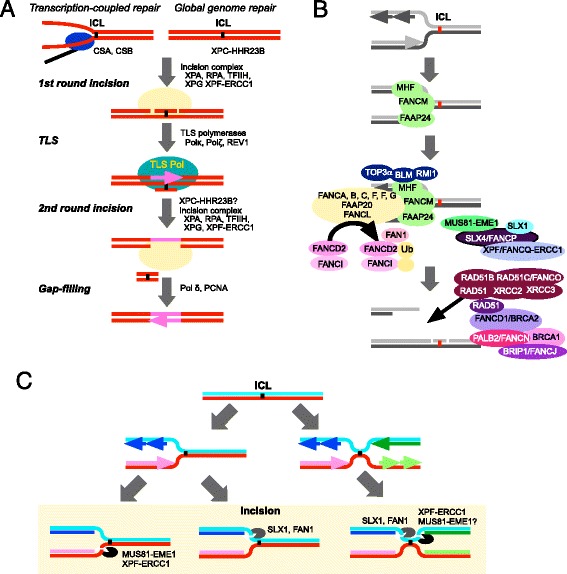
“However, in the case of ICLs, repair mechanisms involving a simple excision followed by template resynthesis are not sufficient [18].”
Liu, X., Gao, Q., Li, P., Zhao, Q., Zhang, J., Li, J., Koseki, H., & Wong, J. (2013) · Nature Communications · doi:10.1038/ncomms2562 · Cited by 374 · cited 1×
“UHRF1 recognizes specific forms of histones and hemi-methylated DNA, and recruits DNMT1 [54, 55].”
Pathways of mammalian replication fork restart
Petermann, E., & Helleday, T. (2010) · Nature Reviews Molecular Cell Biology · doi:10.1038/nrm2974 · Cited by 340 · cited 1×
“It is likely that HR plays a role in not only repairing DSBs but also in restarting stalled DNA replication forks [7, 35].”
The initial clinical trial of nitrogen mustard
Gilman, A. (1963) · The American Journal of Surgery · doi:10.1016/0002-9610(63)90232-0 · Cited by 338 · cited 1×
“Historically, nitrogen mustard was the first DNA damaging agent used for chemotherapy [11].”
The Fanconi anaemia group G gene FANCG is identical with XRCC9
de Winter, J. P., Waisfisz, Q., Rooimans, M. A., van Berkel, C. G. M., Bosnoyan-Collins, L., Alon, N., Carreau, M., Bender, O., Demuth, I., Schindler, D., et al. (1998) · Nature Genetics · doi:10.1038/3093 · Cited by 335 · cited 1×
“FANCG FA core complex FA [65]”
Solution Structure of a Cisplatin-Induced DNA Interstrand Cross-Link
Huang, H., Zhu, L., Reid, B. R., Drobny, G. P., & Hopkins, P. B. (1995) · Science · doi:10.1126/science.270.5243.1842 · Cited by 314 · cited 1×
“The ICL formed by cisplatin shows the largest distortion of the DNA strands, compared to other ICL formed by agents described below, and it distortion is 45° of bending and 79° of unwinding [9].”
Mutations of the SLX4 gene in Fanconi anemia
Kim, Y., Lach, F. P., Desetty, R., Hanenberg, H., Auerbach, A. D., & Smogorzewska, A. (2011) · Nature Genetics · doi:10.1038/ng.750 · Cited by 294 · cited 1×
“FANCP (SLX4) Structure-specific endonuclease FA [75]”
Hanada, K., Budzowska, M., Modesti, M., Maas, A., Wyman, C., Essers, J., & Kanaar, R. (2006) · The EMBO Journal · doi:10.1038/sj.emboj.7601344 · Cited by 289 · cited 4×
“Interestingly, the homologous structure-specific endonucleases MUS81-EME1 and XPF-ERCC1, are also involved in the repair process of ICL removal [7, 29].”
Self-citationBiallelic Mutations in BRCA1 Cause a New Fanconi Anemia Subtype
Sawyer, S. L., Tian, L., Kähkönen, M., Schwartzentruber, J., Kircher, M., University of Washington Centre for Mendelian Genomics, FORGE Canada Consortium, Majewski, J., Dyment, D. A., Innes, A. M., et al. (2015) · Cancer Discovery · doi:10.1158/2159-8290.cd-14-1156 · Cited by 283
Human Mus81-Associated Endonuclease Cleaves Holliday Junctions In Vitro
Chen, X.-B., Melchionna, R., Denis, C.-M., Gaillard, P.-H. L., Blasina, A., Van de Weyer, I., Boddy, M. N., Russell, P., Vialard, J., & McGowan, C. H. (2001) · Molecular Cell · doi:10.1016/s1097-2765(01)00375-6 · Cited by 267 · cited 1×
“MUS81-EME1 preferentially binds double-stranded branched structures, 3 -flaps, and Holliday junctions [30].”
The Fanconi anaemia gene FANCF encodes a novel protein with homology to ROM
de Winter, J. P., Rooimans, M. A., van der Weel, L., van Berkel, C. G. M., Alon, N., Bosnoyan-Collins, L., de Groot, J., Zhi, Y., Waisfisz, Q., Pronk, J. C., et al. (2000) · Nature Genetics · doi:10.1038/71626 · Cited by 266 · cited 1×
“FANCF FA core complex FA [64]”
Kraakman-van der Zwet, M., Overkamp, W. J. I., van Lange, R. E. E., Essers, J., van Duijn-Goedhart, A., Wiggers, I., Swaminathan, S., van Buul, P. P. W., Errami, A., Tan, R. T. L., et al. (2002) · Molecular and Cellular Biology · doi:10.1128/mcb.22.2.669-679.2002 · Cited by 254
Advances in Understanding the Complex Mechanisms of DNA Interstrand Cross-Link Repair
Clauson, C., Scharer, O. D., & Niedernhofer, L. (2013) · Cold Spring Harbor Perspectives in Biology · doi:10.1101/cshperspect.a012732 · Cited by 246 · cited 3×
“Although the biological roles of FA gene products are not entirely characterized [36], they are known to control HR at DNA replication forks [4].”
Mechanism of RAD51-Dependent DNA Interstrand Cross-Link Repair
Long, D. T., Räschle, M., Joukov, V., & Walter, J. C. (2011) · Science · doi:10.1126/science.1204258 · Cited by 241 · cited 1×
“Recently, a dual fork convergence model was proposed based on biochemical studies of Xenopus egg extracts [48–51].”
Cockayne syndrome: The expanding clinical and mutational spectrum
Laugel, V. (2013) · Mechanisms of Ageing and Development · doi:10.1016/j.mad.2013.02.006 · Cited by 239 · cited 1×
“CS has wide spectrum clinical features, and the most severely affected patients are included in a category of COFS syndrome [42].”
Expression cloning of a human DNA repair gene involved in xeroderma pigmentosum group C
Legerski, R., & Peterson, C. (1992) · Nature · doi:10.1038/359070a0 · Cited by 238
Isolation of a cDNA Representing the Fanconi Anemia Complementation Group E Gene
de Winter, J. P., Léveillé, F., van Berkel, C. G. M., Rooimans, M. A., van der Weel, L., Steltenpool, J., Demuth, I., Morgan, N. V., Alon, N., Bosnoyan-Collins, L., et al. (2000) · The American Journal of Human Genetics · doi:10.1016/s0002-9297(07)62959-0 · Cited by 222
Rothfuss, A., & Grompe, M. (2004) · Molecular and Cellular Biology · doi:10.1128/mcb.24.1.123-134.2004 · Cited by 220 · cited 1×
“1b) [7, 31].”
Jaspers, N. G. J., Raams, A., Silengo, M. C., Wijgers, N., Niedernhofer, L. J., Robinson, A. R., Giglia-Mari, G., Hoogstraten, D., Kleijer, W. J., Hoeijmakers, J. H. J., et al. (2007) · The American Journal of Human Genetics · doi:10.1086/512486 · Cited by 214
A mutation in the XPB/ERCC3 DNA repair transcription gene, associated with trichothiodystrophy.
Weeda, G., Eveno, E., Donker, I., Vermeulen, W., Chevallier, O., Taïeb, A., Stary, A., Hoeijmakers, J. H. J., Mezzina, M., & Sarasin, A. R. (1997) · Europe PMC (PubMed Central) · Cited by 199
The active site of the DNA repair endonuclease XPF-ERCC1 forms a highly conserved nuclease motif
Enzlin, J. H. (2002) · The EMBO Journal · doi:10.1093/emboj/21.8.2045 · Cited by 196 · cited 1×
“The gene products of XPF and ERCC1 form a hetero-dimeric endonuclease that specifically recognizes and cleaves single-stranded branched structures [28].”
Mechanism and regulation of incisions during DNA interstrand cross-link repair
Zhang, J., & Walter, J. C. (2014) · DNA Repair · doi:10.1016/j.dnarep.2014.03.018 · Cited by 190 · cited 2×
“Another model is that the first incision occurs on the lagging strand [46].”
Mutzhas, M. F., Hölzle, E., Hofmann, C., & Plewig, G. (1981) · Journal of Investigative Dermatology · doi:10.1111/1523-1747.ep12524813 · Cited by 173 · cited 1×
“In Egypt, Ammi majus would be used in phototherapy during several millennia for treatment of psoriasis and leukoderma vulgaris [13].”
McHugh, P. J., Sones, W. R., & Hartley, J. A. (2000) · Molecular and Cellular Biology · doi:10.1128/.20.10.3425-3433.2000 · Cited by 164 · cited 8×
“cerevisiae, hypersensitivity to ICL-causing agents is observed in rad51, rad52, rad54, rad59, and mre11 mutants, but not in yku70 mutants, and the hypersensitivity of rad52 yku70 double mutants to ICLs is comparable to that of rad52 mutants [12].”
InfluentialDNA interstrand crosslink repair during G1 involves nucleotide excision repair and DNA polymerase ζ
Sarkar, S., Davies, A. A., Ulrich, H. D., & McHugh, P. J. (2006) · The EMBO Journal · doi:10.1038/sj.emboj.7600993 · Cited by 163 · cited 4×
“In particular, DNA polymerases κ, and ζ, and REV1 seem to be important for this step [19, 21, 22, 24].”
InfluentialNishimura, K., Ishiai, M., Horikawa, K., Fukagawa, T., Takata, M., Takisawa, H., & Kanemaki, M. T. (2012) · Molecular Cell · doi:10.1016/j.molcel.2012.05.047 · Cited by 160 · cited 1×
“Although it was suggested that MCM89 is involved in ICL repair to promote HR, the mechanism through which the complete DNA replication machinery is reconstructed at the recombination sites has not yet been characterized [47].”
Mammalian nucleotide excision repair proteins and interstrand crosslink repair
Wood, R. D. (2010) · Environmental and Molecular Mutagenesis · doi:10.1002/em.20569 · Cited by 159 · cited 1×
“1a) [19, 20].”
Wesoly, J., Agarwal, S., Sigurdsson, S., Bussen, W., Van Komen, S., Qin, J., van Steeg, H., van Benthem, J., Wassenaar, E., Baarends, W. M., et al. (2006) · Molecular and Cellular Biology · doi:10.1128/mcb.26.3.976-989.2006 · Cited by 157 · cited 1×
“Hypersensitivity to ICLs is seen in HR-deficient cells, such as cells carrying mutations in RAD51 paralogs, RAD54, RAD54B, and BRCA2, but not in NHEJdeficient cells [32–34].”
Psoralen and Ultraviolet A Light Therapy for Psoriasis
Stern, R. S. (2007) · New England Journal of Medicine · doi:10.1056/nejmct072317 · Cited by 149 · cited 1×
“Particularly, the selective inhibitory effect of ICL agents on DNA replication—crucial for proliferation and cell survival—is used in both chemotherapy and phototherapy to treat various cancers and skin diseases [8].”
Eme1 is involved in DNA damage processing and maintenance of genomic stability in mammalian cells
Abraham, J., Lemmers, B., Hande, M. P., Moynahan, M. E., Chahwan, C., Ciccia, A., Essers, J., Hanada, K., Chahwan, R., Khaw, A. K., et al. (2003) · The EMBO Journal · doi:10.1093/emboj/cdg580 · Cited by 147 · cited 1×
“Interestingly, the homologous structure-specific endonucleases MUS81-EME1 and XPF-ERCC1, are also involved in the repair process of ICL removal [7, 29].”
Self-citationRickman, K. A., Lach, F. P., Abhyankar, A., Donovan, F. X., Sanborn, E. M., Kennedy, J. A., Sougnez, C., Gabriel, S. B., Elemento, O., Chandrasekharappa, S. C., et al. (2015) · Cell Reports · doi:10.1016/j.celrep.2015.06.014 · Cited by 140 · cited 1×
“FANCT (UBE2T) E2 ubiquitin conjugating enzyme FA [80]”
Regulation of the Rev1–pol ζ complex during bypass of a DNA interstrand cross‐link
Budzowska, M., Graham, T. G. W., Sobeck, A., Waga, S., & Walter, J. C. (2015) · The EMBO Journal · doi:10.15252/embj.201490878 · Cited by 139
p8/TTD-A as a Repair-Specific TFIIH Subunit
Coin, F., Proietti‐De‐Santis, L., Nardò, T., Zlobinskaya, O., Stefanini, M., & Egly, J. (2006) · Molecular Cell · doi:10.1016/j.molcel.2005.10.024 · Cited by 137 · cited 5×
“ICL repair genes and human disorders Proteins implicated in the repair of ICLs have a critical role in the pathophysiology of several hereditary disorders, known as FA, xeroderma pigmentosum (XP), Cockayne syndrome (CS), cerebro-oculo-facio-skeletal syndrome (COFS), and trichothyodistrophy (TTD, Table 1) [37].”
InfluentialSilva, I. U. D., McHugh, P. J., Clingen, P. H., & Hartley, J. A. (2002) · Nucleic Acids Research · doi:10.1093/nar/gkf479 · Cited by 137 · cited 2×
“In contrast, only XPF- and ERCC1-deficient cells are extremely hypersensitive to ICL agents, such as mitomycin C and nitrogen mustard in mammalian cells [25, 27].”
Role for DNA Polymerase κ in the Processing of N2-N2-Guanine Interstrand Cross-links
Minko, I. G., Harbut, M. B., Kozekov, I. D., Kozekova, A., Jakobs, P. M., Olson, S. B., Moses, R. E., Harris, T. M., Rizzo, C. J., & Lloyd, R. S. (2008) · Journal of Biological Chemistry · doi:10.1074/jbc.m801238200 · Cited by 134 · cited 1×
“In particular, DNA polymerases κ, and ζ, and REV1 seem to be important for this step [19, 21, 22, 24].”
Mutations in the Gene Encoding the E2 Conjugating Enzyme UBE2T Cause Fanconi Anemia
Hira, A., Yoshida, K., Sato, K., Okuno, Y., Shiraishi, Y., Chiba, K., Tanaka, H., Miyano, S., Shimamoto, A., Tahara, H., et al. (2015) · The American Journal of Human Genetics · doi:10.1016/j.ajhg.2015.04.022 · Cited by 133 · cited 1×
“So far, at least 18 genes have been implicated in FA, and all the genes products act on the ICLs repair in S phase [4, 40].”
Broughton, B. C., Steingrimsdottir, H., Weber, C. A., & Lehmann, A. R. (1994) · Nature Genetics · doi:10.1038/ng0694-189 · Cited by 132 · cited 1×
“XPD NER, Helicase in TFIIH XP, CS, TTD, COFS [87–89]”
Muto, M., Kanari, Y., Kubo, E., Takabe, T., Kurihara, T., Fujimori, A., & Tatsumi, K. (2002) · Journal of Biological Chemistry · doi:10.1074/jbc.m205189200 · Cited by 125
Identification of the Fanconi Anemia Complementation Group I Gene, FANCI
Dorsman, J. C., Levitus, M., Rockx, D., Rooimans, M. A., Oostra, A. B., Haitjema, A., Bakker, S. T., Steltenpool, J., Schuler, D., Mohan, S., et al. (2007) · Analytical Cellular Pathology · doi:10.1155/2007/151968 · Cited by 124
Oh, K.-S., Khan, S. G., Jaspers, N. G. J., Raams, A., Ueda, T., Lehmann, A., Friedmann, P. S., Emmert, S., Gratchev, A., Lachlan, K., et al. (2006) · Human Mutation · doi:10.1002/humu.20392 · Cited by 118 · cited 1×
“XPB NER, Helicase in TFIIH XP, CS, TTD [83–85]”
Xeroderma pigmentosum complementation group G associated with Cockayne syndrome.
Vermeulen, W., Jaeken, J., Jaspers, N. G. J., Bootsma, D., & Hoeijmakers, J. H. J. (1993) · Europe PMC (PubMed Central) · Cited by 117
FANCL Replaces BRCA1 as the Likely Ubiquitin Ligase Responsible for FANCD2 Monoubiquitination
Meetei, A. R., Yan, Z., & Wang, W. (2004) · Cell Cycle · doi:10.4161/cc.3.2.656 · Cited by 101 · cited 1×
“FANCL Ubiquitin ligase FA [70]”
UHRF1 Contributes to DNA Damage Repair as a Lesion Recognition Factor and Nuclease Scaffold
Tian, Y., Paramasivam, M., Ghosal, G., Chen, D., Shen, X. H., Huang, Y., Akhter, S., Legerski, R. J., Chen, J., Seidman, M. M., et al. (2015) · Cell Reports · doi:10.1016/j.celrep.2015.03.038 · Cited by 99 · cited 1×
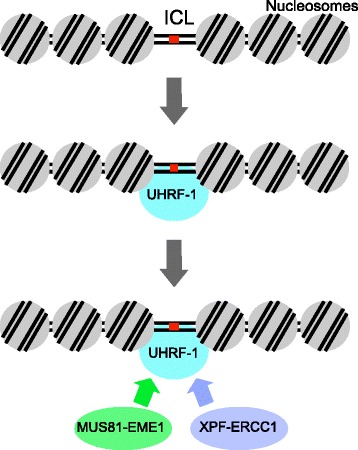
“argued that recruitment of nucleases is required for FA functions [52], while Liang et al.”
Liang, C.-C., Zhan, B., Yoshikawa, Y., Haas, W., Gygi, S. P., & Cohn, M. A. (2015) · Cell Reports · doi:10.1016/j.celrep.2015.02.053 · Cited by 88 · cited 2×
“UHRF1 strongly responds to ICLs formed by trimethyl psoralen and mitomycin C, and exhibits a weaker response to those formed by cisplatin [53].”
Aging: not all DNA damage is equal
Vermeij, W. P., Hoeijmakers, J. H. J., & Pothof, J. (2014) · Current Opinion in Genetics & Development · doi:10.1016/j.gde.2014.06.006 · Cited by 83 · cited 2×
“CS is an inherited syndrome characterized by short stature, mental deficiency, photosensitivity, disproportionately large hands, feet, and ears, ocular defects, and extensive demyelination [37].”
Replication-Independent Repair of DNA Interstrand Crosslinks
Williams, H. L., Gottesman, M. E., & Gautier, J. (2012) · Molecular Cell · doi:10.1016/j.molcel.2012.05.001 · Cited by 82 · cited 1×
“In particular, DNA polymerases κ, and ζ, and REV1 seem to be important for this step [19, 21, 22, 24].”
Guainazzi, A., & Schärer, O. D. (2010) · Cellular and Molecular Life Sciences · doi:10.1007/s00018-010-0492-6 · Cited by 82 · cited 2×
“In contrast, ICLs formed by cisplatin cause a major distortion [2].”
Norman, D., Live, D. H., Sastry, M., Lipman, R., Hingerty, B. E., Tomasz, M., Broyde, S. B., & Patel, D. J. (1990) · Biochemistry · doi:10.1021/bi00463a032 · Cited by 80
A mechlorethamine-induced DNA interstrand cross-link bends duplex DNA
Rink, S. M., & Hopkins, P. B. (1995) · Biochemistry · doi:10.1021/bi00004a039 · Cited by 75
Trichothiodystrophy view from the molecular basis of DNA repair/transcription factor TFIIH
Hashimoto, S., & Egly, J. M. (2009) · Human Molecular Genetics · doi:10.1093/hmg/ddp390 · Cited by 74 · cited 1×
“TTD has a distinct sulfur-deficient brittle hair and neuroectodermal symptoms [41, 43, 44].”
Self-citationInherited bone marrow failure syndromes in adolescents and young adults
Wilson, D. B., Link, D. C., Mason, P. J., & Bessler, M. (2014) · Annals of Medicine · doi:10.3109/07853890.2014.915579 · Cited by 69 · cited 1×
“FA is a genetic disorder characterized by aplastic anaemia, bone marrow failure, and cancers (typically acute myelogenous leukemia) [38, 39].”
Learning from a paradox: recent insights into Fanconi anaemia through studying mouse models
Bakker, S. T., de Winter, J. P., & Riele, H. T. (2013) · Disease Models & Mechanisms · doi:10.1242/dmm.009795 · Cited by 66 · cited 1×
“Although the biological roles of FA gene products are not entirely characterized [36], they are known to control HR at DNA replication forks [4].”
Bending of DNA by the Mitomycin C-Induced, GpG Intrastrand Cross-Link
Rink, S. M., Lipman, R., Alley, S. C., Hopkins, P. B., & Tomasz, M. (1996) · Chemical Research in Toxicology · doi:10.1021/tx950156q · Cited by 66 · cited 1×
“The ICL formed by mitomycin C does not significantly distort the double helix [16, 17].”
Mutations that disable the DNA repair gene XPG in a xeroderma pigmentosum group G patient
Nouspikel, T., & Clarkson, S. G. (1994) · Human Molecular Genetics · doi:10.1093/hmg/3.6.963 · Cited by 62 · cited 1×
“XPG NER XP, CS [91, 92]”
Fei, P., Yin, J., & Wang, W. (2004) · Cell Cycle · doi:10.4161/cc.4.1.1358 · Cited by 56 · cited 1×
“FANCB FA core complex FA [58]”
DNA Interstrand Cross-Link Repair in the Cell Cycle: A Critical Role for Polymerase ζ in G1 Phase
McHugh, P. J., & Sarkar, S. (2006) · Cell Cycle · doi:10.4161/cc.5.10.2763 · Cited by 54
Marie, S., Cuppens, H., Heuterspreute, M., Jaspers, M., Zambrano, E. V., Gu, X. X., Legius, E., Vincent, M.-F., Jaeken, J., Cassiman, J. J., et al. (1999) · Human Mutation · doi:10.1002/(sici)1098-1004(1999)13:3<256::aid-humu12>3.0.co;2-m · Cited by 52
Molecular cloning of the human nucleotide-excision-repair gene ERCC4.
Thompson, L. H., Brookman, K. W., Weber, C. A., Salazar, E. P., Reardon, J. T., Sancar, A., Deng, Z., & Siciliano, M. J. (1994) · Proceedings of the National Academy of Sciences · doi:10.1073/pnas.91.15.6855 · Cited by 51 · cited 1×
“FANCQ (XPF) NER, Structure-specific endonuclease FA, XP, CS, COFS [76–78]”
The Fanconi Anemia Group E Gene, FANCE, Maps to Chromosome 6p
Waisfisz, Q., Altay, Ç., Leegwater, P. A. J., de Winter, J. P., Komatsu, K., Evans, D. G., Wegner, R., Reis, A., Joenje, H., Arwert, F., et al. (1999) · The American Journal of Human Genetics · doi:10.1086/302385 · Cited by 45 · cited 1×
“FANCE FA core complex FA [62, 63]”
Osório, A., Bogliolo, M., Fernández, M. V., Barroso, A., de la Hoya, M., Caldés, T., Lasa, A., y Cajal, T. R., Santamariña, M., Vega, A. I., et al. (2013) · Human Mutation · doi:10.1002/humu.22438 · Cited by 44 · cited 1×
“FANCQ (XPF) NER, Structure-specific endonuclease FA, XP, CS, COFS [76–78]”
Liu, X., Lao, Y., Yang, I.-Y., Hecht, S. S., & Moriya, M. (2006) · Biochemistry · doi:10.1021/bi060792v · Cited by 43
Repair of DNA interstrand cross‐links during S phase of the mammalian cell cycle
Legerski, R. J. (2010) · Environmental and Molecular Mutagenesis · doi:10.1002/em.20566 · Cited by 42 · cited 1×
“Typical ICL lesions Chemical structures of ICL lesions have been comprehensively reviewed by Guainazzi and Schärer, and by Legerski [2, 3] and will not be discussed in detail in this review.”
Nucleotide excision repair in chronic neurodegenerative diseases
Sepe, S., Payán‐Gómez, C., Milanese, C., Hoeijmakers, J. H. J., & Mastroberardino, P. G. (2013) · DNA repair · doi:10.1016/j.dnarep.2013.04.009 · Cited by 39
van Hoffen, A. (1999) · Nucleic Acids Research · doi:10.1093/nar/27.14.2898 · Cited by 39
Genes and environment: effects on the development of second malignancies in retinoblastoma survivors
Schefler, A. C., Kleinerman, R. A., & Abramson, D. H. (2008) · Expert Review of Ophthalmology · doi:10.1586/17469899.3.1.51 · Cited by 37
Tachibana, A., Kato, T., Ejima, Y., Yamada, T., Shimizu, T., Yang, L., Tsunematsu, Y., & Sasaki, M. S. (1999) · Human Mutation · Cited by 37
Koken, M. H. M., Vreeken, C., Bol, S. A. M., Cheng, N. C., Jaspers-Dekker, I., Hoeijmakers, J. H. J., Eeken, J. C. J., Weeda, G., & Pastink, A. (1992) · Nucleic Acids Research · doi:10.1093/nar/20.21.5541 · Cited by 35 · cited 1×
“XPB NER, Helicase in TFIIH XP, CS, TTD [83–85]”
Phased psoralen cross-links do not bend the DNA double helix
Haran, T. E., & Crothers, D. M. (1988) · Biochemistry · doi:10.1021/bi00418a044 · Cited by 34 · cited 1×
“The ICL formed by psoralen induces 25° of unwinding and a minor local distortion of helical structure [14, 15].”
Arrand, J. E., Bone, N. M., & Johnson, R. T. (1989) · Proceedings of the National Academy of Sciences · doi:10.1073/pnas.86.18.6997 · Cited by 33 · cited 1×
“XPD NER, Helicase in TFIIH XP, CS, TTD, COFS [87–89]”
Zhu, G., Song, L., & Lippard, S. J. (2013) · Cancer Research · doi:10.1158/0008-5472.can-13-0198 · Cited by 33 · cited 1×
“ICLs are extremely cytotoxic, as even a single ICL in the genome can cause severe defects in a variety of vital DNA metabolic processes, such as transcription and DNA replication [6, 7].”
Replication Bypass of N2-Deoxyguanosine Interstrand Cross-Links by Human DNA Polymerases η and ι
Klug, A., Harbut, M. B., Lloyd, R. S., & Minko, I. G. (2012) · Chemical Research in Toxicology · doi:10.1021/tx300011w · Cited by 29
The Solution Structure of a Psoralen Cross-Linked DNA Duplex by NMR and Relaxation Matrix Refinement
Hwang, G., Kim, J.-K., & Choi, B. (1996) · Biochemical and Biophysical Research Communications · doi:10.1006/bbrc.1996.0204 · Cited by 24 · cited 1×
“The ICL formed by psoralen induces 25° of unwinding and a minor local distortion of helical structure [14, 15].”
Cited by
Sunlight damage to cellular DNA: focus on oxidatively generated lesions
Schuch, A. P., Moreno, N. C., Schuch, N. J., Menck, C. F. M., & Garcia, C. C. M. (2017) · Free Radical Biology and Medicine · doi:10.1016/j.freeradbiomed.2017.01.029 · Cited by 436
Comet assay: a versatile but complex tool in genotoxicity testing
Cordelli, E., Bignami, M., & Pacchierotti, F. (2021) · Toxicology Research · doi:10.1093/toxres/tfaa093 · Cited by 186
“NER plays an important role in ICLs removal in quiescent cells, whereas the ICLs repair in S phase requires a more complex orchestration of multiple factors, including structure-specific endonucleases, TLS and HR [29].”
BackgroundBoot, A., Huang, M. N., Ng, A. W. T., Ho, S.-C., Lim, J. Q., Kawakami, Y., Chayama, K., Teh, B. T., Nakagawa, H., & Rozen, S. G. (2018) · Genome Research · doi:10.1101/gr.230219.117 · Cited by 181
“The mechanisms of interstrand-crosslink repair have not yet been fully elucidated but appear to be complicated (Hashimoto et al. 2016; Roy and Scharer 2016).”
BackgroundInfluentialThe BRCA Tumor Suppressor Network in Chromosome Damage Repair by Homologous Recombination
Zhao, W., Wiese, C., Kwon, Y., Hromas, R., & Sung, P. (2019) · Annual Review of Biochemistry · doi:10.1146/annurev-biochem-013118-111058 · Cited by 160
“Interestingly, biallelic mutations in BRCA1, BRCA2, and PALB2 can cause FA (44–46) and, hence, these genes are also known as FANCS, FANCD1 and FANCN, respectively (21).”
BackgroundMethodInfluentialSignalling pathways in UHRF1-dependent regulation of tumor suppressor genes in cancer
Alhosin, M., Omran, Z., Zamzami, M. A., Al-Malki, A. L., Choudhry, H., Mousli, M., & Bronner, C. (2016) · Journal of Experimental & Clinical Cancer Research · doi:10.1186/s13046-016-0453-5 · Cited by 138
Metadata
- Authors
- Hashimoto, S., Anai, H., & Hanada, K.
- Affiliations
- Oita University (JP)
- Corresponding author
- Hanada, Katsuhiro
- Venue
- Genes and Environment
- Published
- 2016-05-01
- Volume
- 38
- Issue
- 1
- Pages
- 9-9
- ISSN
- 1880-7046 (ISSN-L)
- 1880-7062
- PMC
- PMC4918140
- OpenAlex
- W2343455000
- Cited by
- 140
- References
- 96
- Citations by year
- 2026: 5 · 2025: 17 · 2024: 14 · 2023: 19 · 2022: 10 · 2021: 24 · 2020: 13 · 2019: 17 · 2018: 13 · 2017: 6 · 2016: 1
- FWCI
- 1.11
- Type
- journal article
- Language
- en
- Open access
- gold
- doi.org
- Licence
- cc-by
- Locations
- Genes and Environment (publishedVersion, cc-by)
- Europe PMC (PubMed Central) (publishedVersion, cc-by)
- PubMed Central (publishedVersion, cc-by)
- PubMed (publishedVersion)
- Funders
- Grant-in-Aid for Scientific Research (C), Japan Society for the Promotion of Science (JSPS) (15K06758)
- Inamori Foundation
- Grant-in-Aid for Young Scientists (A) , Japan Society for the Promotion of Science (JSPS) (25710010)
- Topics
- Life Sciences › Biochemistry, Genetics and Molecular Biology › Molecular Biology › DNA Repair Mechanisms
- Life Sciences › Biochemistry, Genetics and Molecular Biology › Molecular Biology › DNA and Nucleic Acid Chemistry
- Health Sciences › Medicine › Pathology and Forensic Medicine › Genetic factors in colorectal cancer
- Keywords
- DNA repair, nucleotide excision repair, structure-specific endonuclease, translesion synthesis, homologous recombination, Fanconi anemia, xeroderma pigmentosum, Cockayne syndrome, trichothiodystrophy, UHRF1, genomic instability, genetic disorders
About these checks
Registry, retraction, Cites and statistics results are computed, not judged, with one exception: a printed reference that no index lists is read once by a model before it counts as a citation error. Claims are extracted by a model and kept only when their quote appears verbatim in the text; each cited source is then checked, with a model’s help, for whether it says what the claim relies on. Those verdicts can be wrong — read the claim’s quote and the cited source before relying on one.
Statistics and arithmetic are recomputed, not judged.
Confidence bands are shown only for fields calibrated on our annotated test set. None is calibrated yet, so no band is shown.
What counts as a claim ›How we measure confidence ›How we check this ›
Are you an author, or do you see a problem with this page? Request a review
Data sources
Bibliographic data: Semantic Scholar, OpenAlex, Crossref.
Contains information from the Semantic Scholar Academic Graph Datasets, made available under the ODC Attribution License (ODC-BY 1.0).
Semantic Scholar’s data is described in: Kinney, R., et al. (2023). The Semantic Scholar Open Data Platform. arXiv:2301.10140.
