

Mechanisms of interstrand DNA crosslink repair and human disorders
Open accessThe DOI matches its Crossref record; 97 of the 97 references it cites were found in a registry or an index.
Abstract
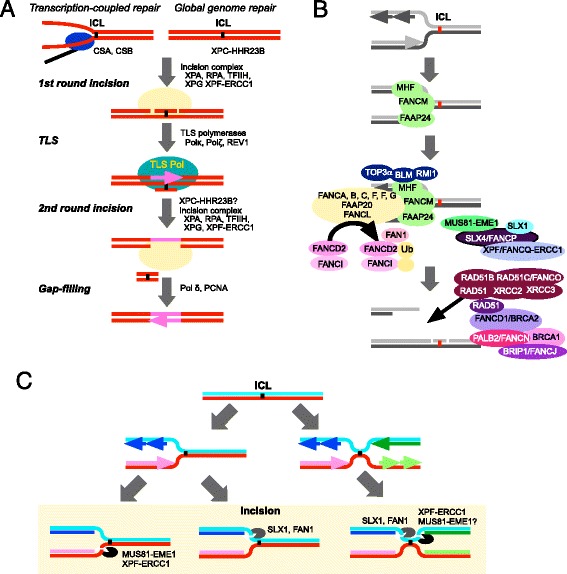
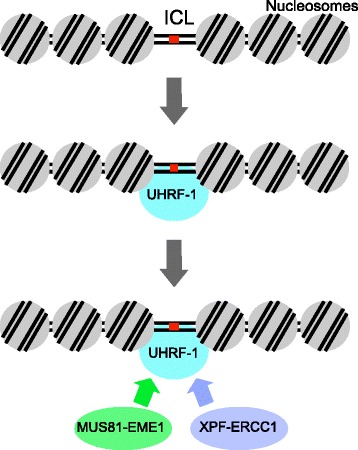
Interstrand DNA crosslinks (ICLs) are the link between Watson-Crick strands of DNAs with the covalent bond and prevent separation of DNA strands. Since the ICL lesion affects both strands of the DNA, the ICL repair is not simple. So far, nucleotide excision repair (NER), structure-specific endonucleases, translesion DNA synthesis (TLS), homologous recombination (HR), and factors responsible for Fanconi anemia (FA) are identified to be involved in ICL repair. Since the presence of ICL lesions causes severe defects in transcription and DNA replication, mutations in these DNA repair pathways give rise to a various hereditary disorders. NER plays an important role for the ICL recognition and removal in quiescent cells, and defects of NER causes congential progeria syndrome, such as xeroderma pigmentosum, Cockayne syndrome, and trichothiodystrophy. On the other hand, the ICL repair in S phase requires more complicated orchestration of multiple factors, including structure-specific endonucleases, and TLS, and HR. Disturbed this ICL repair orchestration in S phase causes genome instability resulting a cancer prone disease, Fanconi anemia. So far more than 30 factors in ICL repair have already identified. Recently, a new factor, UHRF1, was discovered as a sensor of ICLs. In addition to this, numbers of nucleases that are involved in the first incision, also called unhooking, of ICL lesions have also been identified. Here we summarize the recent studies of ICL associated disorders and repair mechanism, with emphasis in the first incision of ICLs.
Overview
The claims and statistics of this paper haven’t been checked yet.
Free: it reads the open-access text and checks the first 5 claims that cite a source we can check. Create a free account to check every claim.
Integrity signals
Registry
Cites
Statistics
Figures
Verification
Claims the paper makes
The claims and statistics of this paper haven’t been checked yet.
Free: it reads the open-access text and checks the first 5 claims that cite a source we can check. Create a free account to check every claim.
Claims other papers make about this one
Each is checked against this paper’s own text: does it say what the citing paper says it does?
The check wasn’t confident either way, so it gives no verdict — never disputed.
In the citing paper
“Evidence has shown that NER proteins are involved in repairing oxidatively generated damage [201,[209][210][211][212][213].”
From Sunlight damage to cellular DNA: focus on oxidatively generated lesions (2017) · cites this paper as [209]
Experimental — accuracy not yet measured
Self-check
Percentages, sums and reported differences re-computed from the paper’s own numbers.
The self-check needs the paper’s full text.
Citations
Cites
Hoeijmakers, J. H. J. (2009) · New England Journal of Medicine · doi:10.1056/nejmra0804615 · Cited by 2,239 · cited 4×
“TTD has a distinct sulfur-deficient brittle hair and neuroectodermal symptoms [41, 43, 44].”
InfluentialBiallelic Inactivation of BRCA2 in Fanconi Anemia
Howlett, N. G., Taniguchi, T., Olson, S., Cox, B., Waisfisz, Q., de Die-Smulders, C., Persky, N., Grompe, M., Joenje, H., Pals, G., et al. (2002) · Science · doi:10.1126/science.1073834 · Cited by 1,149 · cited 1×
“FANCD1 (BRCA2) HR FA, HBOC [60]”
PALB2, which encodes a BRCA2-interacting protein, is a breast cancer susceptibility gene
The Breast Cancer Susceptibility Collaboration (UK), Rahman, N., Seal, S., Thompson, D., Kelly, P., Renwick, A., Elliott, A., Reid, S., Spanova, K., Barfoot, R., et al. (2007) · Nature Genetics · doi:10.1038/ng1959 · Cited by 1,003
Meindl, A., Hellebrand, H., Wiek, C., Erven, V., Wappenschmidt, B., Niederacher, D., Freund, M., Lichtner, P., Hartmann, L., Schaal, H., et al. (2010) · Nature Genetics · doi:10.1038/ng.569 · Cited by 743 · cited 1×
“FANCO (RAD51C) HR FA, HBOC [73, 74]”
Troelstra, C., van Gool, A., de Wit, J., Vermeulen, W., Bootsma, D., & Hoeijmakers, J. H. J. (1992) · Cell · doi:10.1016/0092-8674(92)90390-x · Cited by 729 · cited 1×
“CSB NER CS, COFS [94]”
Identification of the FANCI Protein, a Monoubiquitinated FANCD2 Paralog Required for DNA Repair
Smogorzewska, A., Matsuoka, S., Vinciguerra, P., McDonald, E. R., Hurov, K. E., Luo, J., Ballif, B. A., Gygi, S. P., Hofmann, K., D'Andrea, A. D., et al. (2007) · Cell · doi:10.1016/j.cell.2007.03.009 · Cited by 700 · cited 1×
“FANCI FAN1 recruitment FA [66, 67]”
A new progeroid syndrome reveals that genotoxic stress suppresses the somatotroph axis
Niedernhofer, L. J., Garinis, G. A., Raams, A., Lalai, A. S., Robinson, A. R., Appeldoorn, E., Odijk, H., Oostendorp, R., Ahmad, A., van Leeuwen, W., et al. (2006) · Nature · doi:10.1038/nature05456 · Cited by 669 · cited 1×
“FANCQ (XPF) NER, Structure-specific endonuclease FA, XP, CS, COFS [76–78]”
Biallelic mutations in PALB2 cause Fanconi anemia subtype FA-N and predispose to childhood cancer
Reid, S., Schindler, D., Hanenberg, H., Barker, K., Hanks, S., Kalb, R., Neveling, K., Kelly, P., Seal, S., Freund, M., et al. (2007) · Nature Genetics · doi:10.1038/ng1947 · Cited by 642 · cited 1×
“FANCN (PALB2) HR FA, HBOC [71, 72]”
Cloning of cDNAs for Fanconi's anaemia by functional complementation
Strathdee, C. A., Gavish, H., Shannon, W. R., & Buchwald, M. (1992) · Nature · doi:10.1038/356763a0 · Cited by 624 · cited 1×
“FANCC FA core complex FA [59]”
Repair of DNA interstrand cross-links
Dronkert, M. L. G., & Kanaar, R. (2001) · Mutation Research/DNA Repair · doi:10.1016/s0921-8777(01)00092-1 · Cited by 555 · cited 1×
“They are formed in the presence of bifunctional alkylating agents [1–4].”
Cited by
Items 101–138 of 138
Das, A., & Ray, S. (2025) · Plant Stress · doi:10.1016/j.stress.2025.100786 · Cited by 1
Carcinogenic Alkylating Agents
Huber, J. B., Kojic, M., Sturla, S. J., & Aloisi, C. M. N. (2025) · Elsevier eBooks · doi:10.1016/b978-0-323-95488-4.00247-3 · Cited by 2
Yuan, H., Odiba, A. S., Liao, G., Zhou, Z., Fang, W., Jin, C., Li, S., Liu, X., & Wang, B. (2025) · Biomolecules · doi:10.3390/biom15060755 · Cited by 1
Rana, M., Rao, N. V., Yu, Z.-Y., Sharma, R., Mathew, J., Chen, Y.-W., Lee, S., Bansode, A., Hsu, T.-J., Grewal, A. S., et al. (2025) · Bioorganic Chemistry · doi:10.1016/j.bioorg.2025.109035 · Cited by 1
Interstrand Crosslink Repair: New Horizons of DNA Damage Repair
Aqeel, A., Zafar, J., Ehsan, N., Qurat-ul-Ain, Q.-U.-A., Tariq, M., & Hannan, A. (2021) · IntechOpen eBooks · doi:10.5772/intechopen.97551 · Cited by 1
Bernacchia, L., Gupta, A., Paris, A., Moores, A. A., & Kad, N. M. (2023) · bioRxiv (Cold Spring Harbor Laboratory) · doi:10.1101/2023.03.17.532951 · Cited by 1
“The first platinum based anti-cancer drug, cisplatin (cis-Diaminodichloroplatinum, CIS), was 35 discovered fortuitously to inhibit cell division in Escherichia coli (11), stalling replication through the 36 formation of DNA adducts with inter- and intra- strand crosslinks (12).”
BackgroundBhoir, S., Ogundepo, O., Yu, X., & Benedetti, A. D. (2023) · Preprints.org · doi:10.20944/preprints202308.0250.v1
Sterea, A. M. (2018) · DalSpace (Dalhousie University) · Cited by 1
de Grey, A. D. N. J., & Rae, M. J. (2019) · Springer eBooks · doi:10.1007/978-3-319-69892-2_436-1
Inhibition of MUS81 by siRNA Reverses Resistance to Cisplatin in Human Ovarian Cancer Cell LinesPreprint
Bourton, E. C., Zahir, S. A., Plowman, P. N., Al‐Ali, H., Foster, H. A., & Parris, C. N. (2021) · Research Square · doi:10.21203/rs.3.rs-667572/v1
de Grey, A. D. N. J., & Rae, M. J. (2021) · Springer eBooks · doi:10.1007/978-3-030-22009-9_436
Overcoming Cisplatin Resistance in Pancreatic Cancer
Ewers, K. M. (2021) · eDiss (Georg-August-Universität Göttingen) · doi:10.53846/goediss-8945
Inhibition of MUS81 By siRNA Reverses Resistance to Cisplatin in Human Ovarian Cancer Cell LinesPreprint
Bourton, E. C., Zahir, S. A., Plowman, P. N., Al‐Ali, H., Foster, H. A., & Parris, C. N. (2021) · Research Square · doi:10.21203/rs.3.rs-667572/v2
de Grey, A. D. N. J., & Rae, M. J. (2021) · Springer eBooks · doi:10.1007/978-3-319-69892-2_436-2
Hegedűs, L. (2022) · SZTE Repository of Dissertations (University of Szeged) · doi:10.14232/phd.11049
Pyrrolidinyl peptide nucleic acid probe capable of crosslinking with DNA
Muangkaew, P. (2020) · Chula Digiverse · doi:10.58837/chula.the.2020.89
Defining the Mode of Action of Cisplatin Combined with a Phosphoramidate Modification of GemcitabinePreprint
Patel, D., Dickson, A. L., Zickuhr, G. M., Um, I. H., Read, O. J., Czekster, C. M., Mullen, P., Harrison, D. J., & Bre, J. (2024) · Research Square · doi:10.21203/rs.3.rs-4344105/v1
Helicase HELQ: Molecular Characters Fit for DSB Repair Function
Zhao, Y., Hou, K., Liu, Y., Na, Y., Li, C., Luo, H., & Wang, H. (2024) · International Journal of Molecular Sciences · doi:10.3390/ijms25168634 · Cited by 3
“Since ICL repair necessitates the coordinated action of checkpoints and Fanconi anemia (FA) pathways during the synthesis phase (S), it facilitates ICL cleavage, translesion DNA synthesis (TLS), and HR [51,52].”
BackgroundPalacka, P., Holíčková, A., Roška, J., Makovický, P., Vallová, M., Biró, C., Órásová, E., Obertová, J., Mardiak, J., Ward, T. A., et al. (2024) · BMC Cancer · doi:10.1186/s12885-024-12865-8
“…DNA damage, mainly CDDP-DNA intra-strand cross-links (IaCLs) and inter-strand cross-links (ICLs), activates DNA damage response (DDR) pathways involving the complex coordination of several DNA repair mechanisms, including nucleotide excision repair (NER) and translesion DNA synthesis (TLS) [6, 7].”
BackgroundDNA Damage, Repair, and Advanced DNA Damage Detection Technologies
Hernandez, A., Goel, K., Hussain, S., & Gassman, N. R. (2024) · Elsevier eBooks · doi:10.1016/b978-0-323-95488-4.00179-0 · Cited by 1
Perspectives on Homologous Recombination Repair Deficiency (HRD)
Gwilliam, K., Martin, K. E., & Turner, S. A. (2025) · Advances in Molecular Pathology · doi:10.1016/j.yamp.2025.07.004
Wada, N. A., Takeiri, A., Motoyama, S., Matsuzaki, K., Tanaka, K., Matsuo, S., Fujii-Takeiri, E., Tateishi, H., Matsumoto, K., Niimi, N., et al. (2025) · Genes and Environment · doi:10.1186/s41021-025-00343-x
“There are two pathways to remove the lesion: S-phase-dependent and -independent interstrand cross-link repair [38–40].”
Shan, X., Li, J., Ma, J., Li, X., Liu, Q., & Zhou, C. (2025) · ACS Chemical Biology · doi:10.1021/acschembio.5c00688
DCLRE1A orchestrates CAG repeat contraction following Cas12a-induced DNA breaksPreprint
Dabrowska, M., Siegner, S. M., Misiukiewicz, A., Bandaruk, Y., Schröder, M., Muhar, M., Kreutzer, S., Corn, J. E., & Olejniczak, M. (2025) · bioRxiv (Cold Spring Harbor Laboratory) · doi:10.1101/2025.11.18.689026
Toyoshima-Sasatani, M., Imura, F., Hamatake, Y., Fukunaga, A., & Negishi, T. (2023) · Figshare · doi:10.6084/m9.figshare.22618319
Toyoshima-Sasatani, M., Imura, F., Hamatake, Y., Fukunaga, A., & Negishi, T. (2023) · Figshare · doi:10.6084/m9.figshare.22618316
Mutagenic Potentials of DNA Interstrand Cross-Links Induced by 7,8-Dihydro-8-Oxoadenine
Schmaltz, L. F., Rodriguez, N., & Lee, S. (2026) · Molecules · doi:10.3390/molecules31020291
“Bypass of this unhooked intermediate by TLS polymerases can be mutagenic [1,40,57].”
C1orf112 promotes breast cancer growth by modulating the cell cycle
Fang, Y., Zheng, Y., Jin, L., Luis, M. A., Zhu, X., Yong, L., Liu, D., Cai, F., & Tang, S. (2026) · Frontiers in Bioengineering and Biotechnology · doi:10.3389/fbioe.2026.1717768
The roles of FANCD2 in the maintenance of common fragile site stability
Fernandes, P. (2018) · theses.fr (ABES) · doi:10.70675/0d35c80ezf356z4cabza1edz594f25dbe717 · Cited by 1
Etude des défauts héréditaires atypiques de la réparation de l'ADN
Fiévet, A. (2019) · theses.fr (ABES) · doi:10.70675/d981a983z0d97z44f5z8430z501446e5ce4d
Sumo-Directed Control of the Resolvase Yen1 in Mitotic Cells
Dorison, H. (2021) · theses.fr (ABES) · doi:10.70675/c6e7956fzf5a7z4302zb2e4z1d7be2f97f64 · Cited by 1
The role of NEIL3 DNA glycosylase in the resistance to cisplatin
Aliyaskarova, U. (2022) · theses.fr (ABES) · doi:10.70675/30a458baz068az4324zad6az39ec2d9d0493 · Cited by 1
Interplay between facultative heterochromatin and the DNA double-strand break repair response
Pobega, E. (2023) · theses.fr (ABES) · doi:10.70675/01445f06z7f68z431bza921zc3fd03c8d5a9
Regulation of the DNA polymerase zeta in response to genotoxic stress in mammalian cells
Goulas, J. (2025) · theses.fr (ABES) · doi:10.70675/7894ebf5zbdf7z4147z940ezc553e0ed0e18
Li, J., Wang, L., Mao, X., Hu, D., Lu, Q., Shi, C., Wang, Y., Meng, Z., Fan, H., & Sun, H. (2026) · Chemical Research in Toxicology · doi:10.1021/acs.chemrestox.6c00132
Stress-dependent shifts in genotoxic sensitivity of zooplankton
Thomsen, N., Halsband, C., Sperre, K. H., Last, K. S., & Reinardy, H. C. (2026) · Aquatic Toxicology · doi:10.1016/j.aquatox.2026.108045
Tumor digital twins uncover therapeutic strategies in triple-negative breast cancer
Victori, P., Hua, K., Twigger, A., Anand, A., Bose, Z. M., Clarke, M. A., Bell, S., Xian, K. J. Q., Zakarneh, L., Pinilla, K., et al. (2026) · Cell Reports Medicine · doi:10.1016/j.xcrm.2026.103119
Metadata
- Authors
- Hashimoto, S., Anai, H., & Hanada, K.
- Affiliations
- Oita University (JP)
- Corresponding author
- Hanada, Katsuhiro
- Venue
- Genes and Environment
- Published
- 2016-05-01
- Volume
- 38
- Issue
- 1
- Pages
- 9-9
- ISSN
- 1880-7046 (ISSN-L)
- 1880-7062
- PMC
- PMC4918140
- OpenAlex
- W2343455000
- Cited by
- 140
- References
- 96
- Citations by year
- 2026: 5 · 2025: 17 · 2024: 14 · 2023: 19 · 2022: 10 · 2021: 24 · 2020: 13 · 2019: 17 · 2018: 13 · 2017: 6 · 2016: 1
- FWCI
- 1.11
- Type
- journal article
- Language
- en
- Open access
- gold
- doi.org
- Licence
- cc-by
- Locations
- Genes and Environment (publishedVersion, cc-by)
- Europe PMC (PubMed Central) (publishedVersion, cc-by)
- PubMed Central (publishedVersion, cc-by)
- PubMed (publishedVersion)
- Funders
- Grant-in-Aid for Scientific Research (C), Japan Society for the Promotion of Science (JSPS) (15K06758)
- Inamori Foundation
- Grant-in-Aid for Young Scientists (A) , Japan Society for the Promotion of Science (JSPS) (25710010)
- Topics
- Life Sciences › Biochemistry, Genetics and Molecular Biology › Molecular Biology › DNA Repair Mechanisms
- Life Sciences › Biochemistry, Genetics and Molecular Biology › Molecular Biology › DNA and Nucleic Acid Chemistry
- Health Sciences › Medicine › Pathology and Forensic Medicine › Genetic factors in colorectal cancer
- Keywords
- DNA repair, nucleotide excision repair, structure-specific endonuclease, translesion synthesis, homologous recombination, Fanconi anemia, xeroderma pigmentosum, Cockayne syndrome, trichothiodystrophy, UHRF1, genomic instability, genetic disorders
About these checks
Registry, retraction, Cites and statistics results are computed, not judged, with one exception: a printed reference that no index lists is read once by a model before it counts as a citation error. Claims are extracted by a model and kept only when their quote appears verbatim in the text; each cited source is then checked, with a model’s help, for whether it says what the claim relies on. Those verdicts can be wrong — read the claim’s quote and the cited source before relying on one.
Statistics and arithmetic are recomputed, not judged.
Confidence bands are shown only for fields calibrated on our annotated test set. None is calibrated yet, so no band is shown.
What counts as a claim ›How we measure confidence ›How we check this ›
Are you an author, or do you see a problem with this page? Request a review
Data sources
Bibliographic data: Semantic Scholar, OpenAlex, Crossref.
Contains information from the Semantic Scholar Academic Graph Datasets, made available under the ODC Attribution License (ODC-BY 1.0).
Semantic Scholar’s data is described in: Kinney, R., et al. (2023). The Semantic Scholar Open Data Platform. arXiv:2301.10140.
