

Food hygiene practices and determinants among food handlers in Ethiopia: a systematic review and meta-analysis
Open accessThe DOI matches its Crossref record; 55 of the 55 references it cites were found in a registry or an index.
Abstract
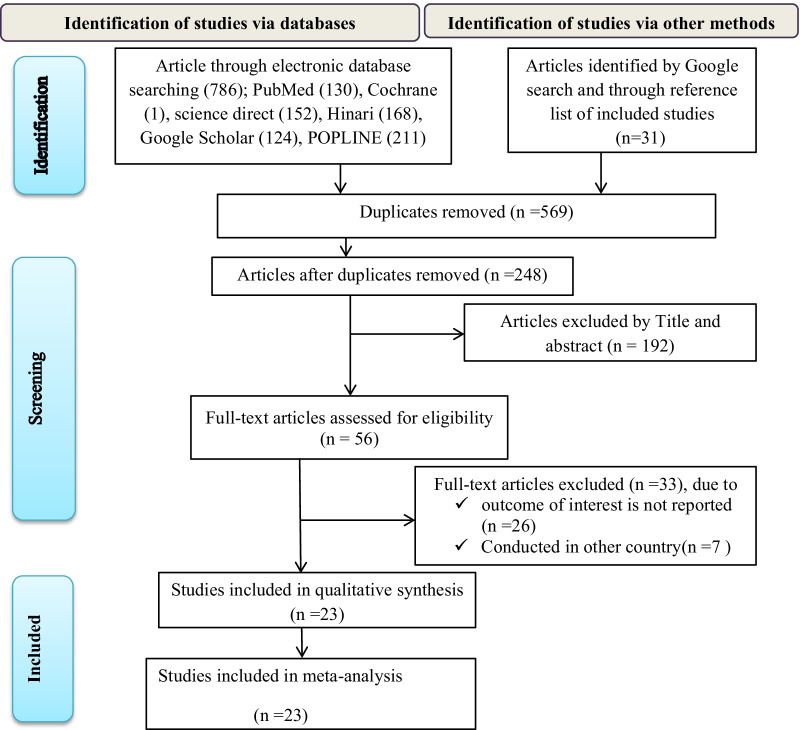
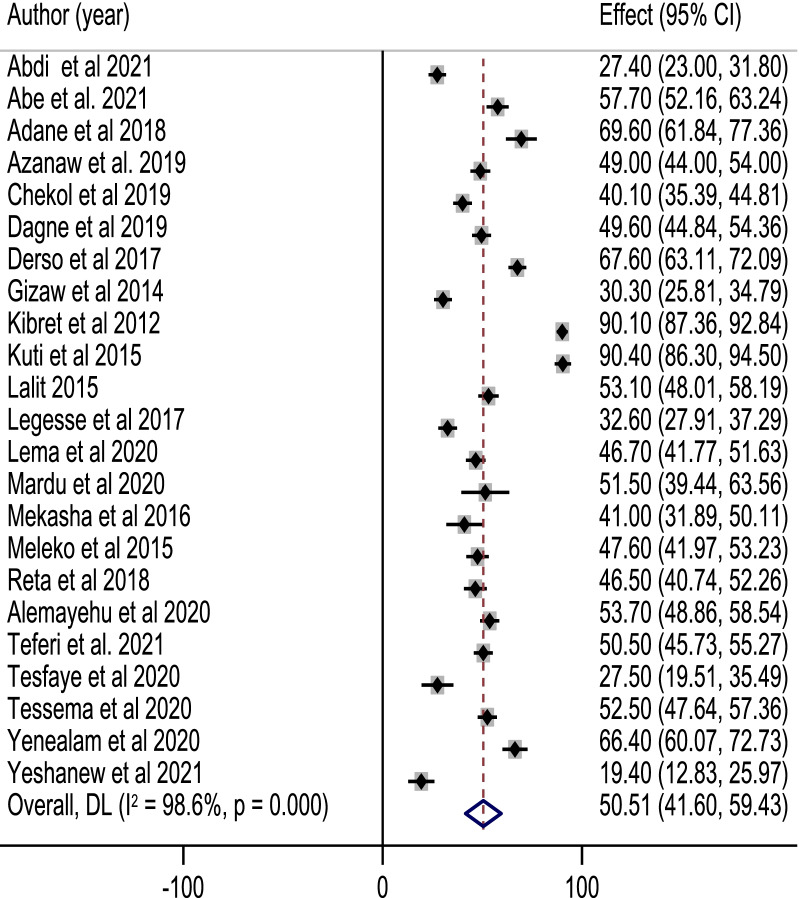
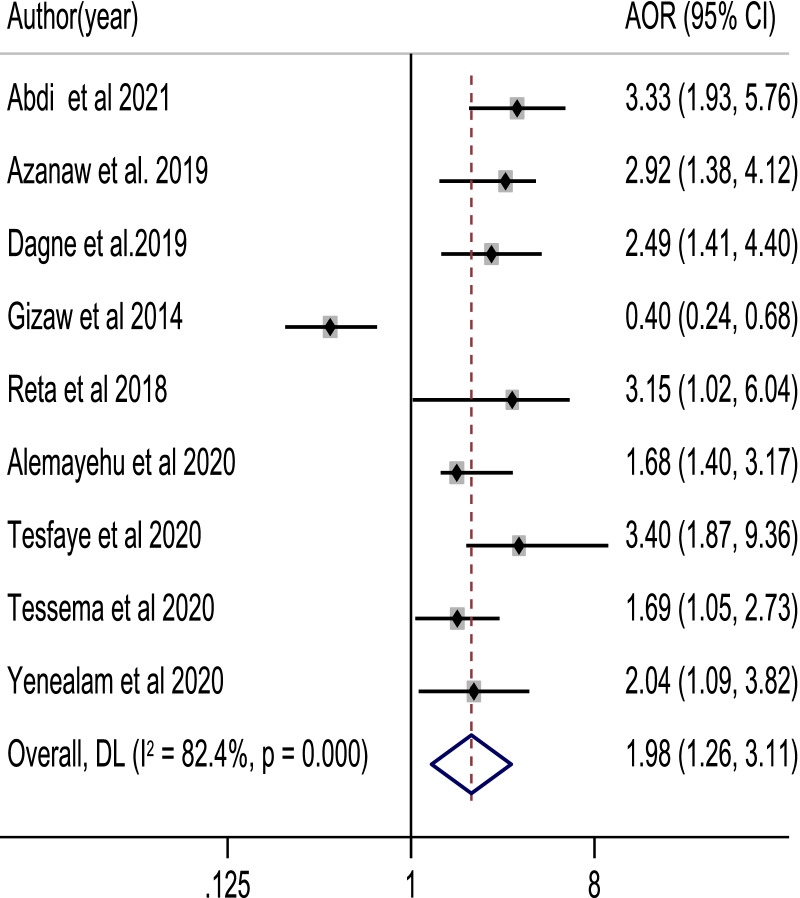
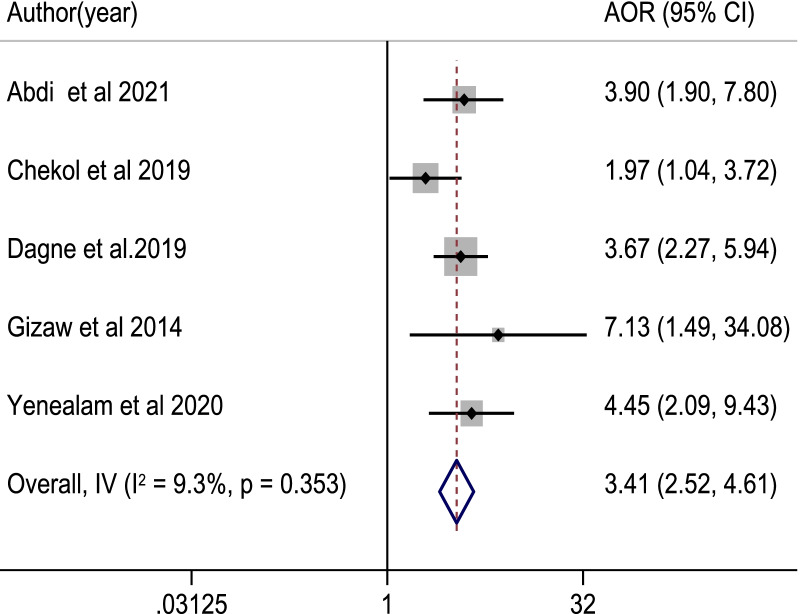
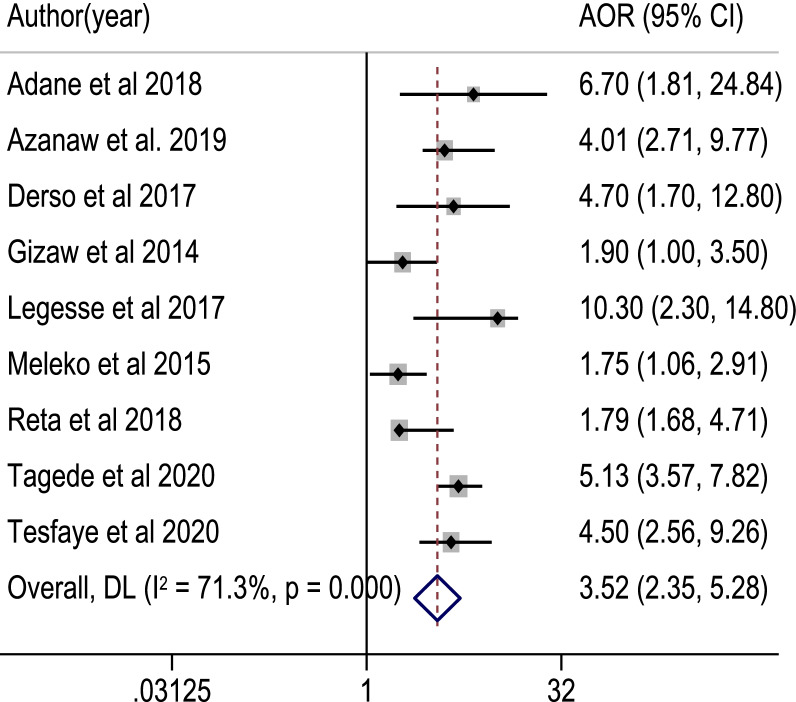
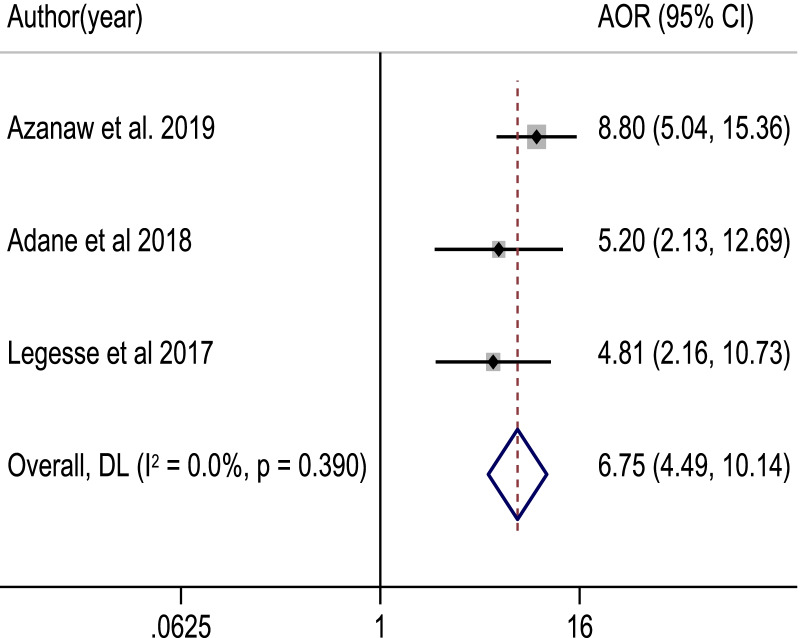
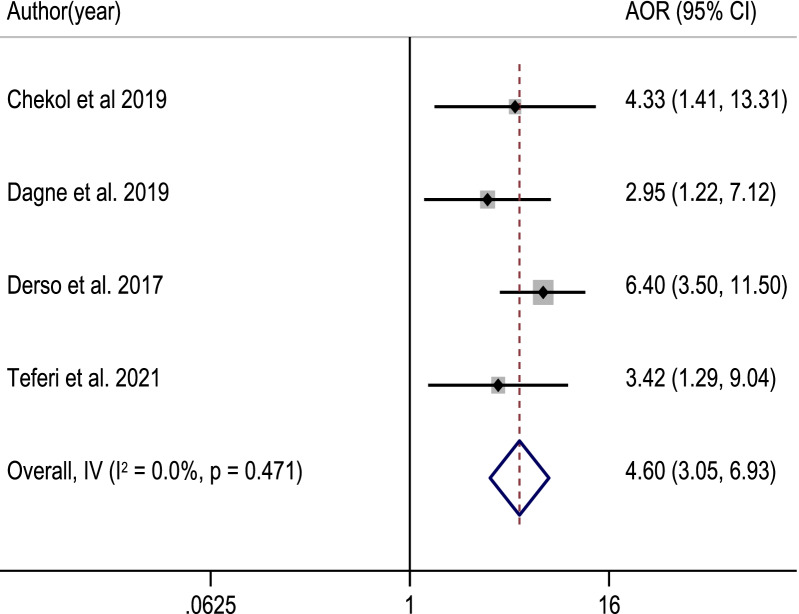
Background: Food-borne diseases are a major public health concern worldwide, particularly in low and middle-income countries (LMICs), such as Ethiopia. Poor food hygiene practices primarily exacerbate food-borne illness transmission. Prior studies on the food hygiene practices among food handlers in Ethiopia were inconsistent. Therefore, this meta-analysis and systematic review aimed to estimate the pooled proportion of good food hygiene practices and identify the determinants in Ethiopia. Methods: The preferred reporting items for systematic review and meta-analysis (PRISMA) instruments were used, and a systematic search was performed in the PubMed/MEDLINE, POPLINE, HINARI, Science Direct, Cochrane Library databases, and Google Scholar were systematically last searched on the 24th February 2022 for relevant articles. Only the observational studies that reported the proportion of good food hygiene practices and their associated factors among food handlers were included. The quality of the included studies was assessed by two independent authors. Articles with unclear methodologies and did not report the overall proportions of good food hygiene practice were excluded. The effect estimates for pooled proportion and pooled odds ratio (POR) along with a 95% confidence interval (CI) were determined conducting using DerSimonian–Laird's random effect model. Results: Among 817 retrieved studies, 23 eligible articles with a total sample size of 7153 study participants were included in the meta-analysis. The pooled proportion of good food hygiene practices among food handlers was 50.5% [95% CI: (41.6, 59.4%]; I2 = 98.7%, p value = 0.001]. Food handlers with formal education (POR = 4.60, 95% CI: 3.05, 6.93), good knowledge (POR = 1.98, 95% CI: 1.26, 3.11), training (POR = 3.52, 95% CI: 2.35, 5.28), and a positive attitude (POR = 3.41, 95% CI: 2.52, 4.61) about food hygiene components, as well as regular medical checkups (POR = 6.75, 95% CI: 4.49) were significantly associated with good food hygiene practice. Conclusions: Only half of Ethiopia's food handlers had good food hygiene practice. Implication of the study: The key elements of effective food hygiene practice that will aid in the development of feasible interventions to increase food handler compliance with food hygiene components have been identified.
Overview
The claims and statistics of this paper haven’t been checked yet.
Free: it reads the open-access text and checks the first 5 claims that cite a source we can check. Create a free account to check every claim.
Integrity signals
Registry
Cites
Statistics
Figures
Verification
Claims the paper makes
The claims and statistics of this paper haven’t been checked yet.
Free: it reads the open-access text and checks the first 5 claims that cite a source we can check. Create a free account to check every claim.
Claims other papers make about this one
Each is checked against this paper’s own text: does it say what the citing paper says it does?
The source backs part of the claim, not all of it — or backs it for a different population, condition or comparison.
In the citing paper
“According to studies, food handlers who receive frequent training, have formal education, and possess a solid understanding of food hygiene are more likely to follow the correct food safety practices [11].”
From A systematic review and meta-analysis of household food safety and hygiene practices and their determinants in Africa (2025) · cites this paper as [11]
Experimental — accuracy not yet measured
Self-check
Percentages, sums and reported differences re-computed from the paper’s own numbers.
The self-check needs the paper’s full text.
Citations
Cites
The Cochrane Collaboration's tool for assessing risk of bias in randomised trials
Higgins, J. P. T., Altman, D. G., Gotzsche, P. C., Juni, P., Moher, D., Oxman, A. D., Savovic, J., Schulz, K. F., Weeks, L., Sterne, J. A. C., et al. (2011) · BMJ · doi:10.1136/bmj.d5928 · Cited by 33,817
Dermyshi, E., Wang, Y., Yan, C., Hong, W., Qiu, G., Gong, X., & Zhang, T. (2017) · Neonatology · doi:10.1159/000454668 · Cited by 24,451
Havelaar, A. H., Kirk, M. D., Torgerson, P. R., Gibb, H. J., Hald, T., Lake, R. J., Praet, N., Bellinger, D. C., de Silva, N. R., Gargouri, N., et al. (2015) · PLoS Medicine · doi:10.1371/journal.pmed.1001923 · Cited by 2,067
Methodological guidance for the conduct of mixed methods systematic reviews
Stern, C., Lizarondo, L., Carrier, J., Godfrey, C., Rieger, K., Salmond, S., Apóstolo, J., Kirkpatrick, P., & Loveday, H. (2020) · JBI Evidence Synthesis · doi:10.11124/jbisrir-d-19-00169 · Cited by 700 · cited 1×
“Data extraction was performed using the JBI data extraction format [39, 40].”
MethodCallejón, R. M., Rodríguez-Naranjo, M. I., Ubeda, C., Hornedo-Ortega, R., Garcia-Parrilla, M. C., & Troncoso, A. M. (2015) · Foodborne Pathogens and Disease · doi:10.1089/fpd.2014.1821 · Cited by 636 · cited 1×
“According to the World Health Organization, food borne diseases affect up to 30% of the population in rich nations each year, while up to 2 million people die in low- and middle-income countries (LMICs) [5, 7, 8].”
BackgroundFood Safety in Low and Middle Income Countries
Grace, D. (2015) · International Journal of Environmental Research and Public Health · doi:10.3390/ijerph120910490 · Cited by 544 · cited 1×
“Diarrheal diseases, mostly caused by microbial infections found in food or water, continue to be the major cause of illness and death globally [5, 6].”
BackgroundA review of food safety and food hygiene training studies in the commercial sector
Egan, M. B., Raats, M. M., Grubb, S. M., Eves, A., Lumbers, M. L., Dean, M. S., & Adams, M. R. (2007) · Food Control · doi:10.1016/j.foodcont.2006.08.001 · Cited by 321
Knowledge, attitudes and practices of food handlers in food safety: An integrative review
Zanin, L. M., da Cunha, D. T., de Rosso, V. V., Capriles, V. D., & Stedefeldt, E. (2017) · Food Research International · doi:10.1016/j.foodres.2017.07.042 · Cited by 296 · cited 2×
“This finding of good knowledge levels among food handlers to have good hygiene practices was supported by research from Ethiopia [70], Brazil [24], and in the British [71].”
Resultda Cunha, D. T., Stedefeldt, E., & de Rosso, V. V. (2014) · Food Control · doi:10.1016/j.foodcont.2014.03.012 · Cited by 233
Al-Shabib, N. A., Mosilhey, S. H., & Husain, F. M. (2016) · Food Control · doi:10.1016/j.foodcont.2015.05.002 · Cited by 216
Research works printed but not linked: 15
- Biran A Curtis V Gautam OP Greenland K Islam MS Schmidt WP Sijbesma C Sumpter C Torondel B Background paper on measuring WASH and food hygiene practices–definition of goals to be tackled post-2015 by the Joint Monitoring Programme London Sch Hyg Trop Med 2012 2012 81
- Ayana Z Yohannis M Abera Z Food-borne bacterial diseases in Ethiopia Acad J Nutr 2015 4 1 62 76
- Kassani A Shaterian M Sharifirad G Menatid R Abbastabar H Ebrahimipour M The prevalence of some intestinal parasites in food-handlers of Asian and African countries: a meta-analysis Arch Hyg Sci 2015 4 1 49 56
- Wadilo F Solomon F Arota A Abraham Y Intestinal parasitic infection and associated factors among food handlers in South Ethiopia: a case of Wolaita Sodo town J Pharm Altern Med 2016 12 5 10
- Motarjemi Y Lelieveld H Food safety management: a practical guide for the food industry 2013 Cambridge Academic Press
- Lee HK Abdul Halim H Thong KL Chai LC Assessment of food safety knowledge, attitude, self-reported practices, and microbiological hand hygiene of food handlers Int J Environ Res Public Health 2017 14 1 14
- Tesfaye A Tegene Y Assessment of food hygiene and safety practices among street food vendors and its associated factors in urban areas of Shashemane, West Arsi Zone, Oromia Ethiopia, 2019 J Biomed Res Environ Sci 2020 6 2 001 5
- Lalit I, Brkti G, Dejen Y. Magnitude of hygienic practices and its associated factors of food handlers working in selected food and drinking establishments in Mekelle town, northern Ethiopia. Int Food Res J. 2015;22(6):2650–6.
- Legesse D Tilahun M Agedew E Haftu D Food handling practices and associated factors among food handlers in arba Minch town public food establishments in Gamo Gofa Zone, Southern Ethiopia Epidemiology (Sunnyvale) 2017 7 302 2161 1165
- Mekasha T Neela S Kumela D Food safety knowledge, practice and attitude of food handlers in traditional hotels of Jimma Town, Southern Ethiopia Annals Food Science and Technology 2016 17 2 507 517
- Meleko A Henok A Tefera W Lamaro T Assessment of the sanitary conditions of catering establishments and food safety knowledge and practices of food handlers in Addis Ababa University Students’ Cafeteria Science 2015 3 5 733 743
- Gizaw Z Gebrehiwot M Teka Z Food safety practice and associated factors of food handlers working in substandard food establishments in Gondar Town Northwest Ethiopia Int J Food Sci Nutr Diet 2014 3 7 138 146
- Abe S Arero G Food handler’s safety practices and related factors in the public food establishments in Batu Town, Central Oromia, Ethiopia Health 2021 2 1 1 8
- Teferi SC A review on food hygiene knowledge, practice and food safety in Ethiopia Sci J Food Sci Nutr 2020 5 1 023 29
- Lestantyo D Husodo AH Iravati S Shaluhiyah Z Safe food handling knowledge, attitude and practice of food handlers in the hospital kitchen Int J Public Health Sci 2017 6 4 324 330
Cited by
Desye, B., Tesfaye, A. H., Daba, C., & Berihun, G. (2023) · PLoS ONE · doi:10.1371/journal.pone.0287996 · Cited by 76
“This finding is supported by studies conducted in Ghana and Ethiopia, which suggested that the provisions of training positively influence the hygienic practices of street food vendors [19, 22, 23, 38].”
ResultFekadu, Y., Kinde, M. Z., Dagnaw, G. G., Dessalegn, B., Dejene, H., & Gessese, A. T. (2024) · BioMed Research International · doi:10.1155/2024/2675894 · Cited by 50
“According to [26], a pooled proportion of good food hygiene practices among food handlers in Ethiopia was 50.5% from studies conducted until February 24, 2022.”
BackgroundInfluentialThe Rise of Non-typhoidal Salmonella Infections in India: Causes, Symptoms, and Prevention
Dudhane, R. A., Bankar, N. J., Shelke, Y. P., & Badge, A. K. (2023) · Cureus · doi:10.7759/cureus.46699 · Cited by 35
“Inadequate food safety standards and oversight, poor sanitation and hygiene practices, and others all contribute to the spread of the disease [4].”
BackgroundGebre, G. G., Legesse, T., & Fikadu, A. A. (2023) · Heliyon · doi:10.1016/j.heliyon.2023.e17301 · Cited by 21
Begum, M., Alam, M. J., Parikh, P., & Steur, H. D. (2024) · Food Control · doi:10.1016/j.foodcont.2024.111094 · Cited by 30
Food Safety Behaviours among Food Handlers in Different Food Service Establishments in Montenegro
Labovic, S. B., Joksimović, I., Galić, I., Knežević, M., & Mimović, M. (2023) · International Journal of Environmental Research and Public Health · doi:10.3390/ijerph20020997 · Cited by 34
“The reason for the different results could be related to differences in experience and training of food handlers [42,43].”
ResultEngdaw, G. T., Tesfaye, A. H., & Worede, E. A. (2023) · Heliyon · doi:10.1016/j.heliyon.2023.e15043 · Cited by 26
Berglund, Z., Şimşek, Ş., & Feng, Y. (2024) · Foods · doi:10.3390/foods13050794 · Cited by 32
Bantie, G. M., Woya, A. A., Ayalew, C. A., Mitiku, K. W., Wubetu, G. A., Aynalem, Z. B., Ayalew, A. F., Ayenew, G. M., Akenie, B. B., Berneh, A. A., et al. (2023) · Heliyon · doi:10.1016/j.heliyon.2023.e22965 · Cited by 26
“Furthermore, vendors with good knowledge were more likely to conduct good food safety and hygiene practices than those with poor knowledge [28 – 32].”
BackgroundResultGirmay, A. M., Mengesha, S. D., Weldetinsae, A., Alemu, Z. A., Dinssa, D. A., Wagari, B., Weldegebriel, M. G., Serte, M. G., Alemayehu, T. A., Kenea, M. A., et al. (2022) · Discover Food · doi:10.1007/s44187-022-00037-1 · Cited by 21
Kanaan, M. H. G., Salim, I. D., Tarek, A. M., & Abdullah, S. S. (2023) · International Journal of One Health · doi:10.14202/ijoh.2023.150-158 · Cited by 40
Shi, K., & You, T. (2025) · Frontiers in Medicine · doi:10.3389/fmed.2025.1588507 · Cited by 29
“The transmission and mortality of Salmonella are closely linked to factors such as poor environmental sanitation, inadequate personal hygiene, malnutrition, and HIV infection (9, 10).”
Tuglo, L. S., Mishra, S., Mohapatra, R. K., Kortei, N. K., Nsor‐Atindana, J., Mulugeta, H., Lu, Q., Kwabla, M. P., Patu, A. T., Chaudhuri, T., et al. (2023) · Scientific Reports · doi:10.1038/s41598-023-46150-8 · Cited by 17
“…, educational level 6,8,10 , knowledge of food hygiene 8 , average monthly income 6 and registration of food handlers and their medical fitness 6,8,10 are associated with good FHPs. Systematic reviews and meta-analyses conducted in Ethiopia revealed that the pooled good FHPs among food handlers…”
BackgroundResultInfluentialMulat, M., Birri, D. J., Kibret, T., Alemu, W., Geteneh, A., & Mihret, W. (2024) · Environmental Health Insights · doi:10.1177/11786302241288855 · Cited by 19
“1,15,16 17-19 By understanding these factors and their implications, interventions can be tailored to enhance food safety practices among food handlers, thereby reducing the risk of foodborne illnesses and promoting public health.”
BackgroundPrevalence and Multidrug Resistance in Non-Typhoidal Salmonella in India: A 20-Year Outlook
Sahu, A. A., Sephalika, S., Mohakud, N. K., & Sahu, B. R. (2025) · Acta Microbiologica Hellenica · doi:10.3390/amh70010006 · Cited by 11
Girma, F., Yazew, T., Bedada, D., Daba, A., & Kuyu, C. G. (2024) · Heliyon · doi:10.1016/j.heliyon.2024.e40938 · Cited by 15
Atalay, Y. A., Gebeyehu, N. A., & Gelaw, K. A. (2025) · Primary Health Care Research & Development · doi:10.1017/s146342362500009x · Cited by 13
“In contrast, a meta-analysis performed in Ethiopia and Ghana found a significant association (Zenbaba et al., 2022; Tuglo et al., 2023).”
Rutaro, K., Hawumba, J. F., Nakimuli, J., Mulindwa, J., Malinga, G. M., & Baingana, R. K. (2024) · Heliyon · doi:10.1016/j.heliyon.2024.e25614 · Cited by 24
“…M13, M14 and M15 dealt in live grasshoppers, while for HHs M16 and M17, the grasshoppers had already undergone the first stage of processing by the time the data collectors arrived at the HHs. K. Rutaro et al. practices, such as not washing hands after handling waste or after taking a break [35].”
BackgroundAbdilahi, M. M., Kiruja, J., Ismail, A. S., Ahmed, S. H., Nooh, F., Ahmed, A. S., & Kulmie, A. R. (2025) · BMC Public Health · doi:10.1186/s12889-025-21617-7 · Cited by 14
“Another systematic reviews and meta-analyses conducted in Ethiopia showed that the pooled good food hygiene practices among food handlers ranged between 48.36% and 50.5% [11, 12].”
InfluentialAdefrash, K., Sharew, B., Amare, W., & Shibabaw, A. (2024) · Health Science Reports · doi:10.1002/hsr2.2199 · Cited by 6
Yosef, D. K., Tesfa, T., Mekonnen, G. K., Bogale, K., & Ahmed, M. (2025) · Discover Food · doi:10.1007/s44187-025-00281-1 · Cited by 23
“This finding revealed that still there are a significant number of traditional food handlers working in food establishments in the region [27].”
Zewude, L. D., Mengistie, E., & Ejeso, A. (2025) · PLoS ONE · doi:10.1371/journal.pone.0336784 · Cited by 12
Assessment of Food Safety and Practices in Nutrition Services: Case Study of Al-Ahsa Hospitals
Alqurashi, R. M., & Al-Humud, A. I. (2025) · Healthcare · doi:10.3390/healthcare13141723 · Cited by 4
“…to food service establishments, and epidemiological data suggest that mortality rates from hospital-related foodborne outbreaks are three times higher than those in other settings [16,17] In Saudi Arabia, between 2017 and 2023, a total of 42,079 infectious foodborne illness cases were reported.”
Good Practices: Conception and Implementation Through the Halal Food Supply Chain
Saeed, T. A. (2023) · Springer eBooks · doi:10.1007/978-3-031-41459-6_15 · Cited by 9
Soboksa, N. E., Hareru, H. E., Nxusani, Z. N., Nedzingahe, V., & Mbhenyane, X. G. (2025) · BMC Nutrition · doi:10.1186/s40795-025-01190-3 · Cited by 4
“According to studies, food handlers who receive frequent training, have formal education, and possess a solid understanding of food hygiene are more likely to follow the correct food safety practices [11].”
Mulatu, E., Hamedy, A., Amenu, K., Moje, N., Asrade, B., Waktole, H., & Megersa, B. (2026) · Discover Food · doi:10.1007/s44187-026-00931-y · Cited by 3
“Poor food hygiene practices mainly worsen food safety and increase foodborne illness transmission [47].”
Gemede, H. F., & Yazew, T. (2023) · Journal of Food Quality · doi:10.1155/2023/2232505 · Cited by 4
Jannah, A. A., Suryani, D., & Sukesi, T. W. (2023) · Jurnal Penelitian Pendidikan IPA · doi:10.29303/jppipa.v9ispecialissue.6161 · Cited by 3
“These outcomes align with prior research indicating that higher levels of education are frequently associated with greater adherence to food safety guidelines (Ma, Chen, Yan, Wu, and Zhang, 2019; Madaki and Bavorova, 2019; Negassa, Ashuro, and Soboksa, 2022; Zenbaba et al., 2022).”
ResultFenta, L., & Tadesse, K. (2025) · Italian Journal of Food Safety · doi:10.4081/ijfs.2025.12836 · Cited by 2
“However, in the findings of Tadele et al. (2022) and Zenbaba et al. (2022) in Ethiopia in the same year, the pooled result was higher than the current pooled finding conducted in the Amhara region in the year 2022 (Tadele et al. , 2022; Zenbaba et al. , 2022).”
Ketema, S., Areche, F. O., Alejo, O. V. P., Montesinos, C. C. Z., Rivera, T. J. C., Huaman, C. W. T., Flores, D. D. C., Camayo-Lapa, B. F., Roque, M. S. P., Sumarriva-Bustinza, L. A., et al. (2023) · Current Research in Nutrition and Food Science Journal · doi:10.12944/crnfsj.11.2.05 · Cited by 3
Abdela, A. A., Dessu, S., Kolola, T., & Aboma, M. (2024) · Research Square · doi:10.21203/rs.3.rs-3449543/v1 · Cited by 2
Kebbi, R., Haven-Tang, C. L., Redmond, E. C., & Evans, E. W. (2025) · Food Control · doi:10.1016/j.foodcont.2025.111863 · Cited by 1
Amin, M. B., Islam, M. S., Khan, M. S. I., Zaman, F. B., Khaleduzzaman, M., Anika, M. R., Sara, S. S. R., Kabir, S., Hridi, N. J., Seyam, M. M. R., et al. (2026) · BMJ Public Health · doi:10.1136/bmjph-2025-003865 · Cited by 1
“10 Furthermore, research suggests that even formal food safety inspections may not be sufficient to eliminate risk if food handlers lack appropriate training or supervision, which can perpetuate unsafe food practices.”
Syam, D. M., & Bungawati, A. (2024) · Healthcare in Low-resource Settings · doi:10.4081/hls.2024.13109 · Cited by 10
“34,35 Another study concluded that community-led WASH interventions positively impact social factors, particularly for primary caregivers.”
Food Safety Knowledge, Attitudes, and Practices Among Food Handlers in Jeddah, Saudi Arabia
Alghafari, W. T. (2023) · Current Nutrition & Food Science · doi:10.2174/1573401319666230818091537 · Cited by 2
Ojurongbe, T. A., Adedoja, A., Abe, F. B., Afolabi, H. A., Bashiru, K. A., & Ojurongbe, O. D. (2023) · Pan African Journal of Life Sciences · doi:10.36108/pajols/3202/70.0220
-, H. D., & -, I. N. T. C. (2024) · International Journal For Multidisciplinary Research · doi:10.36948/ijfmr.2024.v06i03.19731
“In contrast to research by Zenbaba et al. (2022) on Ethiopian food handlers, none of them had a medical examination.”
ResultLin, K. S., Hlaing, T., & Win, H. H. (2025) · Health Informatics - An International Journal · doi:10.5121/hiij.2025.14101
Desisa, B. A., & Mitiku, B. A. (2025) · International Journal of Food Science · doi:10.1155/ijfo/3064650
Yayeh, B. M., & Liu, K. F.-R. (2025) · International Journal of Environmental Health Research · doi:10.1080/09603123.2025.2605167
“Inadequate sanitation, limited access to clean water, and poor food handling practices are major drivers of this public health problem (World Health Organization 2020; Zenbaba et al. 2022).”
Zambrano, J. A. V., & Muñoz, I. E. I. (2026) · Revista Científica Multidisciplinar G-nerando · doi:10.60100/rcmg.v7i1.951
Chaidoutis, E. A., Chatzimpyrou, O., Keramydas, D., Papalexis, P., Giannari, M., Pitiriga, V. C., Koutsiari, F., Sergentanis, T. Ν., Tzavara, C., Thymara, E., et al. (2026) · Cureus · doi:10.7759/cureus.103025
“Administrative-level behaviours may not translate into on-the-ground practices [113,114].”
Villamayor, U. S., & Santander, N. S. (2025) · Latin american journal of applied engineering. · doi:10.69681/lajae.v8i1.39
Girma, A., Wondie, S. G., Dereje, R., Ayelew, E., & Alemayehu, B. (2026) · Health Science Reports · doi:10.1002/hsr2.71847
“%) of food handlers in Ethiopia demonstrated adequate food hygiene practices, with significant regional variations observed among food handlers [20].”
InfluentialZhang, Y., Ba, W.-J., Gan, J., Yang, Y.-J., Zuo, J., Li, Y., Li, Z.-Q., Li, Z.-P., Yu, J.-J., Liao, A.-M., et al. (2026) · Scientific Reports · doi:10.1038/s41598-026-48236-5 · Cited by 1
“Internal factors influence the food safety practice include food handlers’ knowledge, psychological factors, and sociodemographic 47,48 .”
Abdela, A. A., Dessu, S., kolola, T., & Aboma, M. (2026) · International Journal of Public Health · doi:10.3389/ijph.2026.1609008 · Cited by 1
Metadata
- Authors
- Zenbaba, D., Sahiledengle, B., Nugusu, F., Beressa, G., Desta, F., Atlaw, D., & Chattu, V. K.
- Affiliations
- Madda Walabu University (ET)
- Datta Meghe Institute of Higher Education and Research (IN)
- Corresponding author
- Zenbaba, Demisu
- ORCID
- Venue
- Tropical Medicine and Health
- Published
- 2022-05-19
- Volume
- 50
- Issue
- 1
- Pages
- 34-34
- ISSN
- 1348-8945 (ISSN-L)
- 1349-4147
- PMC
- PMC9118835
- OpenAlex
- W4280503060
- Semantic Scholar
- 89d79e3ce3abed0205d2fd1d2277c216228b29a3
- Cited by
- 46
- References
- 55
- Citations by year
- 2026: 7 · 2025: 14 · 2024: 10 · 2023: 14 · 2022: 1
- FWCI
- 0.89
- Type
- journal article
- Language
- en
- Open access
- gold
- doi.org
- Licence
- cc-by
- creativecommons.org/licenses/by/4.0 (tdm)
- creativecommons.org/licenses/by/4.0 (vor)
- Locations
- Tropical Medicine and Health (publishedVersion, cc-by)
- PubMed Central (publishedVersion, cc-by)
- PubMed (publishedVersion)
- DOAJ (DOAJ: Directory of Open Access Journals) (submittedVersion)
- Topics
- Life Sciences › Agricultural and Biological Sciences › Food Science › Food Safety and Hygiene
- Life Sciences › Agricultural and Biological Sciences › Food Science › Salmonella and Campylobacter epidemiology
- Health Sciences › Nursing › Nutrition and Dietetics › Nutrition, Health and Food Behavior
- Keywords
- food hygiene practices, food handlers, food poisoning, food handler training, food handler knowledge, formal education, medical check-ups, Ethiopia
About these checks
Registry, retraction, Cites and statistics results are computed, not judged, with one exception: a printed reference that no index lists is read once by a model before it counts as a citation error. Claims are extracted by a model and kept only when their quote appears verbatim in the text; each cited source is then checked, with a model’s help, for whether it says what the claim relies on. Those verdicts can be wrong — read the claim’s quote and the cited source before relying on one.
Statistics and arithmetic are recomputed, not judged.
Confidence bands are shown only for fields calibrated on our annotated test set. None is calibrated yet, so no band is shown.
What counts as a claim ›How we measure confidence ›How we check this ›
Are you an author, or do you see a problem with this page? Request a review
Data sources
Bibliographic data: Semantic Scholar, OpenAlex, Crossref.
Contains information from the Semantic Scholar Academic Graph Datasets, made available under the ODC Attribution License (ODC-BY 1.0).
Semantic Scholar’s data is described in: Kinney, R., et al. (2023). The Semantic Scholar Open Data Platform. arXiv:2301.10140.
