

A Social Capital Perspective on the Mentoring of Undergraduate Life Science Researchers: An Empirical Study of Undergraduate–Postgraduate–Faculty Triads
Open accessThe DOI matches its Crossref record; 59 of the 60 references it cites were found in a registry or an index.
Abstract
Undergraduate researchers at research universities are often mentored by graduate students or postdoctoral researchers (referred to collectively as "postgraduates") and faculty, creating a mentoring triad structure. Triads differ based on whether the undergraduate, postgraduate, and faculty member interact with one another about the undergraduate's research. Using a social capital theory framework, we hypothesized that different triad structures provide undergraduates with varying resources (e.g., information, advice, psychosocial support) from the postgraduates and/or faculty, which would affect the undergraduates' research outcomes. To test this, we collected data from a national sample of undergraduate life science researchers about their mentoring triad structure and a range of outcomes associated with research experiences, such as perceived gains in their abilities to think and work like scientists, science identity, and intentions to enroll in a PhD program. Undergraduates mentored by postgraduates alone reported positive outcomes, indicating that postgraduates can be effective mentors. However, undergraduates who interacted directly with faculty realized greater outcomes, suggesting that faculty interaction is important for undergraduates to realize the full benefits of research. The "closed triad," in which undergraduates, postgraduates, and faculty all interact directly, appeared to be uniquely beneficial; these undergraduates reported the highest gains in thinking and working like a scientist.
Overview
The claims and statistics of this paper haven’t been checked yet.
Free: it reads the open-access text and checks the first 5 claims that cite a source we can check. Create a free account to check every claim.
Integrity signals
Registry
Cites
Statistics
Figures

Verification
Claims the paper makes
The claims and statistics of this paper haven’t been checked yet.
Free: it reads the open-access text and checks the first 5 claims that cite a source we can check. Create a free account to check every claim.
Claims other papers make about this one
Each is checked against this paper’s own text: does it say what the citing paper says it does?
The source backs part of the claim, not all of it — or backs it for a different population, condition or comparison.
In the citing paper
“In fact, undergraduate researchers in closed triads consistently report more positive cognitive, affective, and behavioral outcomes than undergraduate researchers in open triads (Aikens et al., 2016).”
From Race and Gender Differences in Undergraduate Research Mentoring Structures and Research Outcomes (2017) · cites this paper as Aikens et al., 2016
Experimental — accuracy not yet measuredThe source backs part of the claim, not all of it — or backs it for a different population, condition or comparison.
In the citing paper
“This means that, even though URM and white students reported similar levels of rapport with their faculty mentors, URM students interacted more frequently with their faculty mentors than white students, which increased URM students’ odds of being in the more beneficial closed triad (Aikens et al., 2016).”
From Race and Gender Differences in Undergraduate Research Mentoring Structures and Research Outcomes (2017) · cites this paper as Aikens et al., 2016
Experimental — accuracy not yet measuredThe source backs part of the claim, not all of it — or backs it for a different population, condition or comparison.
In the citing paper
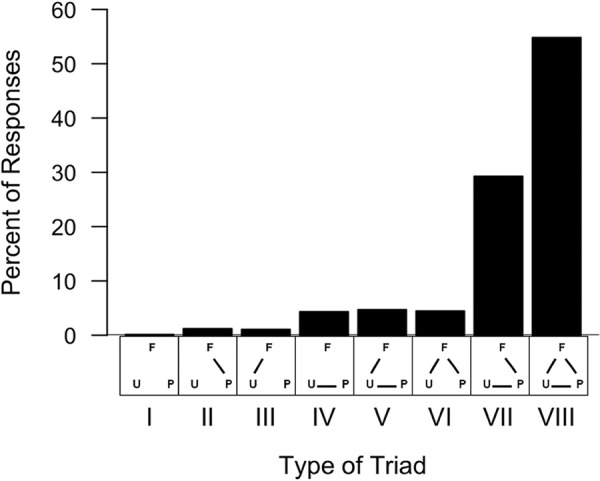
“since these triads are the most commonly observed, accounting for 83% of all responses (n = 699; Aikens et al., 2016).”
From Race and Gender Differences in Undergraduate Research Mentoring Structures and Research Outcomes (2017) · cites this paper as Aikens et al., 2016
Experimental — accuracy not yet measuredThe source backs part of the claim, not all of it — or backs it for a different population, condition or comparison.
In the citing paper
“This indicates that, even though female undergraduate researchers reported similar levels of rapport with their faculty mentors as their male counterparts, they were more likely than men to participate in an open triad than the more beneficial closed triad (Aikens et al., 2016), due in part to interacting less frequently with faculty than did men.”
From Race and Gender Differences in Undergraduate Research Mentoring Structures and Research Outcomes (2017) · cites this paper as Aikens et al., 2016
Experimental — accuracy not yet measuredThe cited source says what the claim attributes to it.
In the citing paper
“This creates a mentoring triad structure, of which there are two common forms (Figure 1): an open triad with undergraduate–postgraduate and postgraduate–faculty relationships, or ties, but no undergraduate–faculty tie, and a closed triad with ties among all three members (Aikens et al., 2016).”
From Race and Gender Differences in Undergraduate Research Mentoring Structures and Research Outcomes (2017) · cites this paper as Aikens et al., 2016
3 more claims about this paper
Create a free account to see every claim other papers make about this one.
Self-check
Percentages, sums and reported differences re-computed from the paper’s own numbers.
The self-check needs the paper’s full text.
Citations
Cites
R: A Language and Environment for Statistical Computing
R Core Team (2025) · doi:10.32614/r.manuals · Cited by 352,181
Statistical Power Analysis for the Behavioral Sciences
Muller, K. (1989) · Technometrics · doi:10.1080/00401706.1989.10488618 · Cited by 99,167
Faul, F., Erdfelder, E., Lang, A.-G., & Buchner, A. (2007) · Behavior Research Methods · doi:10.3758/bf03193146 · Cited by 65,971 · cited 3×
“A post hoc power analysis, using G*Power (Faul et al., 2007) indicated that, to achieve an 80% chance of correctly rejecting the null hypothesis with an α = 0.”
MethodInfluentialGranovetter, M. S. (1973) · American Journal of Sociology · doi:10.1086/225469 · Cited by 40,491
Economic Action and Social Structure: The Problem of Embeddedness
Granovetter, M. (1985) · American Journal of Sociology · doi:10.1086/228311 · Cited by 28,745 · cited 2×
“, athletic teams) demonstrates that closure facilitates trust (Granovetter, 1985; Coleman, 1988; Burt, 2000, 2001) and norm setting (Coleman, 1990).”
BackgroundSocial Capital in the Creation of Human Capital
Coleman, J. S. (1988) · American Journal of Sociology · doi:10.1086/228943 · Cited by 26,975
Modern Applied Statistics with S
Venables, W. N., & Ripley, B. D. (2002) · Statistics and Computing · doi:10.1007/978-0-387-21706-2 · Cited by 24,305
Simultaneous Inference in General Parametric Models
Hothorn, T., Bretz, F., & Westfall, P. (2008) · Biometrical Journal · doi:10.1002/bimj.200810425 · Cited by 13,847 · cited 2×
“05 by using a single-step p-value adjustment (Hothorn et al., 2008).”
MethodGamst, F. C. (1991) · Anthropology of Work Review · doi:10.1525/awr.1991.12.3.19 · Cited by 7,932
Social Capital: A Theory of Social Structure and Action
Lin, N. (2001) · doi:10.1017/cbo9780511815447 · Cited by 4,535 · cited 2×
“A person’s social ties are considered assets, because they may provide access to helpful resources, such as information about a job opening or influence through a letter of recommendation (Lin, 2001).”
Background
Research works printed but not linked: 7
- Adedokun OA Zhang D Carleton Parker L Bessenbacher A Childress A Daniels Burgess W Understanding how undergraduate research experiences influence student aspirations for research careers and graduate education J Coll Sci Teach 2012 42 82 90
- American Association for the Advancement of Science Vision and Change in Undergraduate Biology Education. A Call to Action 2011 Washington, DC
- Fox J Weisberg S An R Companion to Applied Regression 2011 2nd ed. Thousand Oaks, CA Sage
- Hunter A-B Weston TJ Laursen SL Thiry H URSSA: evaluating student gains from undergraduate research in the sciences Counc Undergrad Res Q 2009 29 15 19
- Pascarella ET Terenzini PT How College Affects Students, vol. 2 2005 San Francisco, CA Jossey-Bass
- President’s Council of Advisors on Science and Technology Engage to Excel: Producing One Million Additional College Graduates with Degrees in Science, Technology, Engineering, and Mathematics 2012 Washington, DC U.S. Government Office of Science and Technology
- Whiteside U Pantelone DW Hunter-Reel D Eland J Kleiber B Larimer M Initial suggestions for supervising and mentoring undergraduate research assistants at large research universities Int J Teach Learn High Educ 2007 19 325 330
Cited by
Atkins, K., Dougan, B. M., Dromgold-Sermen, M. S., Potter, H., Sathy, V., & Panter, A. T. (2020) · International Journal of STEM Education · doi:10.1186/s40594-020-00242-3 · Cited by 227
“…life sciences researchers found that students with a direct relationship to a faculty mentor, compared to those whose relationships to faculty were mediated by postgraduate researchers (graduate students or postdoctoral scholars), had increased scientific identity (Aikens et al., 2016).”
BackgroundRace and Gender Differences in Undergraduate Research Mentoring Structures and Research Outcomes
Aikens, M. L., Robertson, M. M., Sadselia, S., Watkins, K., Evans, M., Runyon, C. R., Eby, L. T., & Dolan, E. L. (2017) · CBE—Life Sciences Education · doi:10.1187/cbe.16-07-0211 · Cited by 126
“DISCUSSION Previous research on mentoring triads demonstrated that undergraduate researchers in different types of mentoring triads realized different outcomes (Aikens et al., 2016).”
BackgroundMethodResultInfluentialSelf-citationFactors that predict life sciences student persistence in undergraduate research experiences
Cooper, K. M., Gin, L. E., Akeeh, B., Clark, C. E., Hunter, J., Roderick, T. B., Elliott, D. B., Gutierrez, L. A., Mello, R. M., Pfeiffer, L. D., et al. (2019) · PLoS ONE · doi:10.1371/journal.pone.0220186 · Cited by 134
Academic reform and sustainability of Islamic higher education in Indonesia
Suyadi, S., Nuryana, Z., Sutrisno, & Baidi (2021) · International Journal of Educational Development · doi:10.1016/j.ijedudev.2021.102534 · Cited by 258
Limeri, L. B., Asif, M. Z., Bridges, B. H. T., Esparza, D., Tuma, T. T., Sanders, D., Morrison, A. J., Rao, P., Harsh, J. A., Maltese, A. V., et al. (2019) · CBE—Life Sciences Education · doi:10.1187/cbe.19-02-0036 · Cited by 129
“…from this study and our prior research indicate that it is important that faculty mentors remain engaged in mentoring undergraduate researchers to provide high-level direction, feedback, and support and to maximize undergraduate researchers’ outcomes (Aikens et al., 2016, 2017; Joshi et al., 2019).”
BackgroundResultSelf-citation
Metadata
- Authors
- Aikens, M. L., Sadselia, S., Watkins, K., Evans, M., Eby, L. T., & Dolan, E. L.
- Affiliations
- University of New Hampshire (US)
- University of Georgia (US)
- University of North Carolina at Chapel Hill (US)
- The University of Texas at Austin (US)
- Corresponding author
- Aikens, Melissa L.
- Venue
- CBE—Life Sciences Education
- Published
- 2016-06
- Volume
- 15
- Issue
- 2
- Pages
- ar16
- ISSN
- 1931-7913 (ISSN-L)
- PMC
- PMC4909338
- OpenAlex
- W2352905392
- Cited by
- 139
- References
- 60
- Citations by year
- 2026: 12 · 2025: 13 · 2024: 26 · 2023: 16 · 2022: 16 · 2021: 13 · 2020: 18 · 2019: 11 · 2018: 9 · 2017: 4 · 2016: 1
- FWCI
- 13.10
- Type
- journal article
- Language
- en
- Open access
- hybrid
- doi.org
- Licence
- cc-by-nc-sa
- Locations
- CBE—Life Sciences Education (publishedVersion, cc-by-nc-sa)
- PubMed Central (publishedVersion, cc-by-nc-sa)
- PubMed (publishedVersion)
- Carolina Digital Repository (University of North Carolina at Chapel Hill) (submittedVersion)
- UNC Libraries
- Funders
- National Science Foundation (1250917)
- Topics
- Social Sciences › Education › Mentoring and Academic Development
- Social Sciences › Psychology › Applied Psychology › Career Development and Diversity
- Social Sciences › Education › Doctoral Education Challenges and Solutions
- Keywords
- undergraduate research mentoring, social capital theory, faculty mentoring, science identity, psychosocial support, research universities
- MeSH terms
- Mentoring, Biological Science Disciplines, Educational Measurement, Faculty, Female, Humans, Male, Research Personnel, Students, Universities, Models, Educational, Empirical Research, Social Capital
About these checks
Registry, retraction, Cites and statistics results are computed, not judged, with one exception: a printed reference that no index lists is read once by a model before it counts as a citation error. Claims are extracted by a model and kept only when their quote appears verbatim in the text; each cited source is then checked, with a model’s help, for whether it says what the claim relies on. Those verdicts can be wrong — read the claim’s quote and the cited source before relying on one.
Statistics and arithmetic are recomputed, not judged.
Confidence bands are shown only for fields calibrated on our annotated test set. None is calibrated yet, so no band is shown.
What counts as a claim ›How we measure confidence ›How we check this ›
Are you an author, or do you see a problem with this page? Request a review
How to cite
Cite CoChat for the checks on this page, and the paper for its own findings.
- This page
- CoChat. (2026). Citation check: A Social Capital Perspective on the Mentoring of Undergraduate Life Science Researchers: An Empirical Study of Undergraduate–Postgraduate–Faculty Triads. https://app.cochat.ai/papers/10.1187/cbe.15-10-0208
- The paper
- Aikens, M. L., Sadselia, S., Watkins, K., Evans, M., Eby, L. T., & Dolan, E. L. (2016). A Social Capital Perspective on the Mentoring of Undergraduate Life Science Researchers: An Empirical Study of Undergraduate–Postgraduate–Faculty Triads. CBE—Life Sciences Education. https://doi.org/10.1187/cbe.15-10-0208
Data sources
Bibliographic data: Semantic Scholar, OpenAlex, Crossref.
Contains information from the Semantic Scholar Academic Graph Datasets, made available under the ODC Attribution License (ODC-BY 1.0).
Semantic Scholar’s data is described in: Kinney, R., et al. (2023). The Semantic Scholar Open Data Platform. arXiv:2301.10140.
