

Angiopoietin-like protein 3 governs LDL-cholesterol levels through endothelial lipase-dependent VLDL clearance
Open accessThe DOI matches its Crossref record; 67 of the 69 references it cites were found in a registry or an index.
Abstract
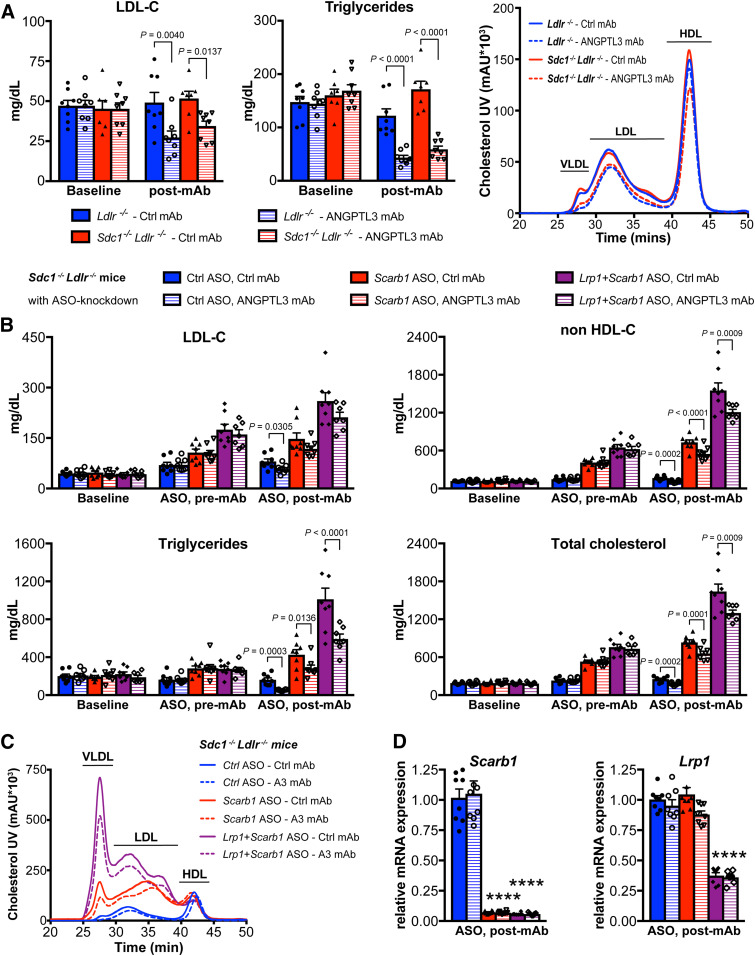
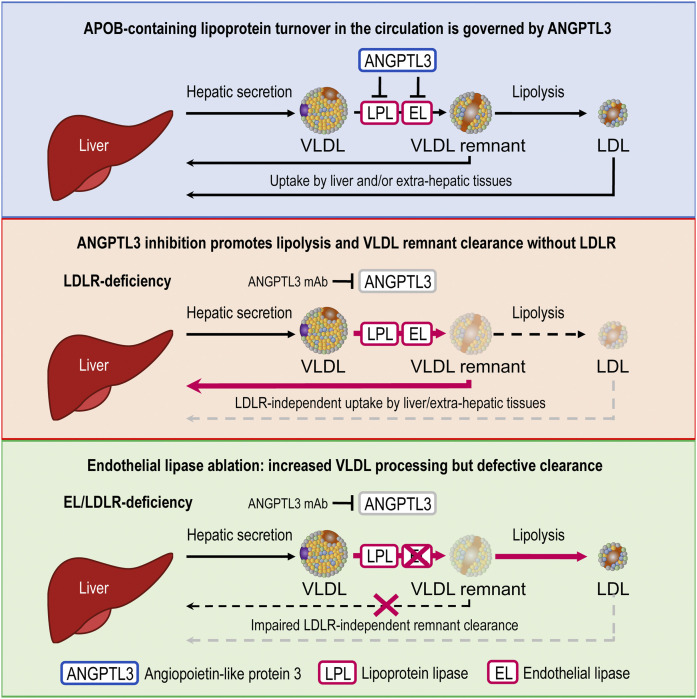
Angiopoietin-like protein (ANGPTL)3 regulates plasma lipids by inhibiting LPL and endothelial lipase (EL). ANGPTL3 inactivation lowers LDL-C independently of the classical LDLR-mediated pathway and represents a promising therapeutic approach for individuals with homozygous familial hypercholesterolemia due to LDLR mutations. Yet, how ANGPTL3 regulates LDL-C levels is unknown. Here, we demonstrate in hyperlipidemic humans and mice that ANGPTL3 controls VLDL catabolism upstream of LDL. Using kinetic, lipidomic, and biophysical studies, we show that ANGPTL3 inhibition reduces VLDL-lipid content and size, generating remnant particles that are efficiently removed from the circulation. This suggests that ANGPTL3 inhibition lowers LDL-C by limiting LDL particle production. Mechanistically, we discovered that EL is a key mediator of ANGPTL3's novel pathway. Our experiments revealed that, although dispensable in the presence of LDLR, EL-mediated processing of VLDL becomes critical for LDLR-independent particle clearance. In the absence of EL and LDLR, ANGPTL3 inhibition perturbed VLDL catabolism, promoted accumulation of atypical remnants, and failed to reduce LDL-C. Taken together, we uncover ANGPTL3 at the helm of a novel EL-dependent pathway that lowers LDL-C in the absence of LDLR.
Overview
The claims and statistics of this paper haven’t been checked yet.
Free: it reads the open-access text and checks the first 5 claims that cite a source we can check. Create a free account to check every claim.
Integrity signals
Registry
Cites
Statistics
Figures
Verification
Claims the paper makes
The claims and statistics of this paper haven’t been checked yet.
Free: it reads the open-access text and checks the first 5 claims that cite a source we can check. Create a free account to check every claim.
Claims other papers make about this one
Each is checked against this paper’s own text: does it say what the citing paper says it does?
The cited source says what the claim attributes to it.
In the citing paper
“In contrast, ANGPTL3 inhibition accelerates triglyceride-rich lipoprotein processing and reduces LDL precursors while enhancing HDL catabolism, accounting for concurrent LDL-C reduction and modest HDL-C decrease (Zhang, 2021; Chen et al., 2024; Adam et al., 2020; Wang et al., 2015; Yasuda et al., 2010; Hooper and Burnett, 2013).”
From Efficacy and safety of small interfering RNA (siRNA) therapies for hypertriglyceridemia and mixed dyslipidemia: an updated systematic review and meta-analysis (2026) · cites this paper as Adam et al., 2020
The cited source says what the claim attributes to it.
In the citing paper
“It is of particular interest that, contrary to other lipid-lowering drugs, such as PCSK9 inhibitors,21,22 the lipid lowering effect of ANGPTL3 inhibition by evinacumab seems to be independent of the presence of residual LDLR activity, supporting the data obtained in animal models,6,10 as well as in a pilot clinical trial.9”
From ANGPTL3 Inhibition With Evinacumab Results in Faster Clearance of IDL and LDL apoB in Patients With Homozygous Familial Hypercholesterolemia—Brief Report (2021) · cites this paper as [10]
The cited source says what the claim attributes to it.
In the citing paper
“Extensive studies in animal models suggest that the LDL-C lowering effect of evinacumab is not dependent on a number of other receptors or ligands, such as apolipoprotein E, LDLR-related protein 1, and syndecan 1, which are known to affect LDL or its precursors,6 and SR-BI.10”
From ANGPTL3 Inhibition With Evinacumab Results in Faster Clearance of IDL and LDL apoB in Patients With Homozygous Familial Hypercholesterolemia—Brief Report (2021) · cites this paper as [10]
The cited source says what the claim attributes to it.
In the citing paper
“Recent reports of studies in mice suggest that EL is required for ANGPTL3 inhibition to reduce LDL-C levels in absence of a functional LDLR.10,11”
From ANGPTL3 Inhibition With Evinacumab Results in Faster Clearance of IDL and LDL apoB in Patients With Homozygous Familial Hypercholesterolemia—Brief Report (2021) · cites this paper as [10]
The cited source says what the claim attributes to it.
In the citing paper
“These studies, in mice lacking both LDLR and EL, support the importance of the ANGPTL3/EL pathway in mediating VLDL remnant particle clearance and LDL-C lowering.10”
From ANGPTL3 Inhibition With Evinacumab Results in Faster Clearance of IDL and LDL apoB in Patients With Homozygous Familial Hypercholesterolemia—Brief Report (2021) · cites this paper as [10]
3 more claims about this paper
Create a free account to see every claim other papers make about this one.
Self-check
Percentages, sums and reported differences re-computed from the paper’s own numbers.
The self-check needs the paper’s full text.
Citations
Cites
Moderated estimation of fold change and dispersion for RNA-seq data with DESeq2
Love, M. I., Huber, W., & Anders, S. (2014) · Genome Biology · doi:10.1186/s13059-014-0550-8 · Cited by 95,106 · cited 2×
“Differentially expressed genes were identified by DESeq2 (37) package and significantly perturbed genes were defined with fold changes no less than 1.”
InfluentialThe metabolic and molecular bases of inherited disease
Chen, Y.-T. (2001) · Medical Entomology and Zoology · Cited by 6,928
Efficient Bayesian mixed-model analysis increases association power in large cohorts
Loh, P.-R., Tucker, G., Bulik-Sullivan, B. K., Vilhjálmsson, B. J., Finucane, H. K., Salem, R. M., Chasman, D. I., Ridker, P. M., Neale, B. M., Berger, B., et al. (2015) · Nature Genetics · doi:10.1038/ng.3190 · Cited by 1,507 · cited 1×
“The association was tested using BOLT under linear mixed model (30).”
Loss-of-Function Mutations in APOC3, Triglycerides, and Coronary Disease
The TG and HDL Working Group of the Exome Sequencing Project, N. H. (2014) · New England Journal of Medicine · doi:10.1056/nejmoa1307095 · Cited by 1,071
Piedrahita, J. A., Zhang, S. H., Hagaman, J. R., Oliver, P. M., & Maeda, N. (1992) · Proceedings of the National Academy of Sciences · doi:10.1073/pnas.89.10.4471 · Cited by 944 · cited 1×
“Apoe mice were from JAX (#002052) (27).”
Loss-of-Function Mutations in APOC3 and Risk of Ischemic Vascular Disease
Jørgensen, A. B., Frikke-Schmidt, R., Nordestgaard, B. G., & Tybjærg-Hansen, A. (2014) · New England Journal of Medicine · doi:10.1056/nejmoa1308027 · Cited by 919 · cited 1×
“ANGPTL3 inhibition even operates differently than APOC3 or ANGPTL4 blockade, which also activate LPL and promote TG hydrolysis, however have only minor effects on cholesterol reduction (60-62).”
Genetic and Pharmacologic Inactivation of ANGPTL3 and Cardiovascular Disease
Dewey, F. E., Gusarova, V., Dunbar, R. L., O’Dushlaine, C., Schurmann, C., Gottesman, O., McCarthy, S., Van Hout, C. V., Bruse, S., Dansky, H. M., et al. (2017) · New England Journal of Medicine · doi:10.1056/nejmoa1612790 · Cited by 885
Self-citationExome Sequencing, ANGPTL3 Mutations, and Familial Combined Hypolipidemia
Musunuru, K., Pirruccello, J. P., Do, R., Peloso, G. M., Guiducci, C., Sougnez, C., Garimella, K. V., Fisher, S., Abreu, J., Barry, A. J., et al. (2010) · New England Journal of Medicine · doi:10.1056/nejmoa1002926 · Cited by 754 · cited 4×
“Pharmacological inhibition of ANGPTL3 replicates the phenotype of individuals with ANGPTL3 LOF mutations (6, 7) and lowers plasma lipids in mice, monkeys, and humans (9–11).”
InfluentialSelf-citationKowal, R. C., Herz, J., Goldstein, J. L., Esser, V, & Brown, M. S. (1989) · Proceedings of the National Academy of Sciences · doi:10.1073/pnas.86.15.5810 · Cited by 595 · cited 1×
“To overcome this, we performed studies in mice deficient for APOE, whose absence impedes normal VLDL uptake and afforded us a larger window to detect potential changes in evinacumab-driven VLDL clearance (44, 45).”
High-throughput engineering of the mouse genome coupled with high-resolution expression analysis
Valenzuela, D. M., Murphy, A. J., Frendewey, D., Gale, N. W., Economides, A. N., Auerbach, W., Poueymirou, W. T., Adams, N. C., Rojas, J., Yasenchak, J., et al. (2003) · Nature Biotechnology · doi:10.1038/nbt822 · Cited by 584
Self-citation
Cited by
Ginsberg, H. N., Packard, C. J., Chapman, M. J., Borén, J., Aguilar-Salinas, C. A., Averna, M., Ference, B. A., Gaudet, D., Hegele, R. A., Kersten, S., et al. (2021) · European Heart Journal · doi:10.1093/eurheartj/ehab551 · Cited by 979
“76 The preceding discussion illustrates the difficulty inherent in defining remnants.”
BackgroundEvinacumab in Patients with Refractory Hypercholesterolemia
Rosenson, R. S., Burgess, L. J., Ebenbichler, C. F., Baum, S. J., Stroes, E. S. G., Ali, S., Khilla, N., Hamlin, R., Pordy, R., Dong, Y., et al. (2020) · New England Journal of Medicine · doi:10.1056/nejmoa2031049 · Cited by 302
Hepatokines and metabolism: Deciphering communication from the liver
Jensen-Cody, S. O., & Potthoff, M. J. (2021) · Molecular Metabolism · doi:10.1016/j.molmet.2020.101138 · Cited by 252
“Furthermore, inhibition of ANGPTL3 reduces VLDL lipid content and size in an endothelial lipase-dependent manner [41].”
BackgroundInhibition of ASGR1 decreases lipid levels by promoting cholesterol excretion
Wang, J.-Q., Li, L.-L., Hu, A., Deng, G., Wei, J., Li, Y.-F., Liu, Y.-B., Lu, X.-Y., Qiu, Z.-P., Shi, X.-J., et al. (2022) · Nature · doi:10.1038/s41586-022-05006-3 · Cited by 188
Regulation of lipoprotein metabolism by ANGPTL3, ANGPTL4, and ANGPTL8
Sylvers-Davie, K. L., & Davies, B. S. J. (2021) · American Journal of Physiology-Endocrinology and Metabolism · doi:10.1152/ajpendo.00195.2021 · Cited by 154
Addressing dyslipidemic risk beyond LDL-cholesterol
Tall, A. R., Thomas, D. G., Gonzalez-Cabodevilla, A. G., & Goldberg, I. J. (2022) · Journal of Clinical Investigation · doi:10.1172/jci148559 · Cited by 150
“Two recent studies (113, 114) have shown that in the absence of LDLRs, VLDL/LDL-lowering effects of ANGPTL3 inhibition are mediated through increased LIPG activity.”
BackgroundInfluentialRosenson, R. S., Gaudet, D., Ballantyne, C. M., Baum, S. J., Bergeron, J., Kershaw, E. E., Moriarty, P. M., Rubba, P., Whitcomb, D. C., Banerjee, P., et al. (2023) · Nature Medicine · doi:10.1038/s41591-023-02222-w · Cited by 140
Self-citationReeskamp, L. F., Millar, J. S., Wu, L., Jansen, H., van Harskamp, D., Schierbeek, H., Gipe, D. A., Rader, D. J., Dallinga-Thie, G. M., Hovingh, G. K., et al. (2021) · Arteriosclerosis, Thrombosis, and Vascular Biology · doi:10.1161/atvbaha.120.315204 · Cited by 109
Watts, G. F., Schwabe, C., Scott, R., Gladding, P. A., Sullivan, D., Baker, J., Clifton, P., Hamilton, J., Given, B., Melquist, S., et al. (2023) · Nature Medicine · doi:10.1038/s41591-023-02494-2 · Cited by 105
The Importance of Lipoprotein Lipase Regulation in Atherosclerosis
Kumari, A., Kristensen, K. K., Ploug, M., & Winther, A.-M. L. (2021) · Biomedicines · doi:10.3390/biomedicines9070782 · Cited by 117
Kersten, S. (2021) · Current Opinion in Lipidology · doi:10.1097/mol.0000000000000789 · Cited by 83
Ginsberg, H. N., & Goldberg, I. J. (2023) · Arteriosclerosis, Thrombosis, and Vascular Biology · doi:10.1161/atvbaha.122.317966 · Cited by 80
Evinacumab in homozygous familial hypercholesterolaemia: long-term safety and efficacy
Gaudet, D., Greber‐Platzer, S., Reeskamp, L. F., Iannuzzo, G., Rosenson, R. S., Saheb, S., Stefanutti, C., Stroes, E. S. G., Wiegman, A., Turner, T. A., et al. (2024) · European Heart Journal · doi:10.1093/eurheartj/ehae325 · Cited by 93
“32 Conversely, vupanorsen, an N -acetyl galactosa-mine–conjugated antisense oligonucleotide, selectively inhibits hepatic translation of angiopoietin-like 3 mRNA, preventing hepatic synthesis and secretion of the angiopoietin-like 3 protein.”
BackgroundSelf-citationAngiopoietin-Like Protein 3 (ANGPTL3) Modulates Lipoprotein Metabolism and Dyslipidemia
Chen, P., Gao, W.-Y., Liou, J.-W., Lin, C.-Y., Wu, M., & Yen, J.-H. (2021) · International Journal of Molecular Sciences · doi:10.3390/ijms22147310 · Cited by 84
“How can inhibition of ANGPTL3 lead to reduced plasma LDL-C levels? One possibility is that inhibition of ANGPTL3 promotes VLDL clearance or decreases VLDL secretion [24], thereby reducing the conversion of VLDL to LDL, resulting in decreased LDL-C levels.”
BackgroundLipid Lowering Drugs: Present Status and Future Developments
Ruscica, M., Ferri, N., Santos, R. D., Sirtori, C. R., & Corsini, A. (2021) · Current Atherosclerosis Reports · doi:10.1007/s11883-021-00918-3 · Cited by 73
New Therapies for Lowering Triglyceride-Rich Lipoproteins
Rosenson, R. S., Shaik, A., & Song, W. (2021) · Journal of the American College of Cardiology · doi:10.1016/j.jacc.2021.08.051 · Cited by 62
Beyond statins: New pharmacological targets to decrease LDL-cholesterol and cardiovascular events
Raschi, E., Casula, M., Cicero, A. F. G., Corsini, A., Borghi, C., & Catapano, A. (2023) · Pharmacology & Therapeutics · doi:10.1016/j.pharmthera.2023.108507 · Cited by 59
Endothelial lipase mediates efficient lipolysis of triglyceride-rich lipoproteins
Khetarpal, S. A., Vitali, C., Levin, M. G., Klarin, D. M., Park, J., Pampana, A., Millar, J. S., Kuwano, T., Dhavamani, S., Subbaiah, P. V., et al. (2021) · PLoS Genetics · doi:10.1371/journal.pgen.1009802 · Cited by 68
Lipoprotein metabolism in familial hypercholesterolemia
Chemello, K., García‐Nafría, J., Gallo, A., Martín, C., Lambert, G. C., & Blom, D. J. (2021) · Journal of Lipid Research · doi:10.1016/j.jlr.2021.100062 · Cited by 65
“LDL-C decreases independently from LDLR activity as the production of LDL particles is reduced (123).”
BackgroundTriglyceride-Rich Lipoproteins and Remnant Cholesterol in Cardiovascular Disease
Heo, J. H., & Jo, S.-H. (2023) · Journal of Korean Medical Science · doi:10.3346/jkms.2023.38.e295 · Cited by 58
Therapeutic RNA-silencing oligonucleotides in metabolic diseases
Goga, A., & Stoffel, M. (2022) · Nature Reviews Drug Discovery · doi:10.1038/s41573-022-00407-5 · Cited by 58
ANGPTL3 inhibition, dyslipidemia, and cardiovascular diseases
Luo, F., Das, A., Khetarpal, S. A., Fang, Z., Zelniker, T. A., Rosenson, R. S., & Qamar, A. (2024) · Trends in Cardiovascular Medicine · doi:10.1016/j.tcm.2023.01.008 · Cited by 58
Hepatokines and Non-Alcoholic Fatty Liver Disease: Linking Liver Pathophysiology to Metabolism
Kim, T. H., Hong, D.-G., & Yang, Y. M. (2021) · Biomedicines · doi:10.3390/biomedicines9121903 · Cited by 63
“an endothelial lipase-dependent manner [15,32].”
Harada-Shiba, M., Ali, S., Gipe, D. A., Gasparino, E., Son, V., Zhang, Y., Pordy, R., & Catapano, A. L. (2020) · Atherosclerosis · doi:10.1016/j.atherosclerosis.2020.10.013 · Cited by 52
Balasubramaniam, D., Schroeder, O., Russell, A. M., Fitchett, J. R., Austin, A. K., Beyer, T. P., Chen, Y., Day, J. W., Ehsani, M. E., Heng, A. R., et al. (2022) · Journal of Lipid Research · doi:10.1016/j.jlr.2022.100198 · Cited by 56
“centrations through an EL-dependent clearance mechanism (78).”
Lee, H., Akhmedov, A. T., & Chen, C. (2022) · Frontiers in Cardiovascular Medicine · doi:10.3389/fcvm.2022.993633 · Cited by 61
Existing and emerging therapies for the treatment of familial hypercholesterolemia
Rosenson, R. S. (2021) · Journal of Lipid Research · doi:10.1016/j.jlr.2021.100060 · Cited by 53
“remnant particles from the circulation (67).”
ANGPTL3 as a Drug Target in Hyperlipidemia and Atherosclerosis
Mohamed, F., Mansfield, B. S., & Raal, F. J. (2022) · Current Atherosclerosis Reports · doi:10.1007/s11883-022-01071-1 · Cited by 48
Chen, J., Fang, Z., Luo, Q., Wang, X., Warda, M., Das, A., Oldoni, F., & Luo, F. (2024) · Lipids in Health and Disease · doi:10.1186/s12944-023-01993-y · Cited by 47
“Studies have shown that ANGPTL3 inhibitors can lower plasma lipids through both LDLR-dependent and LDLR-inde-pendent pathways [80], but the exact underlying mechanisms are still unknown.”
BackgroundTargeting the vasculature in cardiometabolic disease
Boutagy, N. E., Singh, A. K., & Sessa, W. C. (2022) · Journal of Clinical Investigation · doi:10.1172/jci148556 · Cited by 46
Pregnancy Toxemia in Ewes: A Review of Molecular Metabolic Mechanisms and Management Strategies
Ji, X., Liu, N., Wang, Y., Ding, K., Huang, S., & Zhang, C. (2023) · Metabolites · doi:10.3390/metabo13020149 · Cited by 51
“In addition, ANGPTL3 controlled very low-density lipoprotein catabolism in a mouse model of hyperlipidemia [85].”
Severe hypertriglyceridemia: Existing and emerging therapies
Malick, W. A., Do, R., & Rosenson, R. S. (2023) · Pharmacology & Therapeutics · doi:10.1016/j.pharmthera.2023.108544 · Cited by 40
The Regulation of Triacylglycerol Metabolism and Lipoprotein Lipase Activity
Wen, Y., Chen, Y., & Konrad, R. J. (2022) · Advanced Biology · doi:10.1002/adbi.202200093 · Cited by 54
Pirillo, A., Catapano, A. L., & Norata, G. D. (2021) · Current Atherosclerosis Reports · doi:10.1007/s11883-021-00972-x · Cited by 46
Hussain, A., Sun, C., Selvin, E., Nambi, V., Coresh, J., Jia, X., Ballantyne, C. M., & Hoogeveen, R. C. (2021) · European Journal of Preventive Cardiology · doi:10.1093/eurjpc/zwaa152 · Cited by 43
“A recent study in hyperlipidaemic patients showed that ANGPTL3 controls VLDL catabolism upstream of LDL and that ANGPTL3 inhibition lowered LDL-C levels by limiting LDL particle production.(42) ANGPTL3-mediated delayed VLDL catabolism and increased LDL-C (due to increased LDL particle production and delayed clearance)…”
BackgroundAdvances in Dyslipidaemia Treatments: Focusing on ApoC3 and ANGPTL3 Inhibitors
Tomlinson, B., Wu, Q., Zhong, Y.-M., & Li, Y. (2024) · Journal of Lipid and Atherosclerosis · doi:10.12997/jla.2024.13.1.2 · Cited by 47
“12,16,17 The reduced-function N396S mutation in LIPG results in a large increase in HDL-C and a much smaller increase in LDL-C and this was associated with a significant reduction in CAD in a recent Mendelian randomization study.”
BackgroundClinical Trial Design for Triglyceride-Rich Lipoprotein-Lowering Therapies
Malick, W. A., Waksman, O., Do, R., Koenig, W., Pradhan, A. D., Stroes, E. S. G., & Rosenson, R. S. (2023) · Journal of the American College of Cardiology · doi:10.1016/j.jacc.2023.02.034 · Cited by 35
Gaudet, D., Gonciarz, M. D., Xi Zhong, S. H. E. N., Leohr, J. K., Beyer, T. P., Day, J. W., Mullins, G. R., Zhen, Y., Hartley, M., Larouche, M., et al. (2025) · Nature Medicine · doi:10.1038/s41591-025-03830-4 · Cited by 41
Lowering low-density lipoprotein cholesterol: from mechanisms to therapies
Luo, J., Wang, J.-K., & Song, B.-L. (2022) · Life Metabolism · doi:10.1093/lifemeta/loac004 · Cited by 36
Raal, F. J., Rosenson, R. S., Reeskamp, L. F., Kastelein, J. J. P., Rubba, P., Duell, P. B., Koseki, M., Stroes, E., Ali, S., Banerjee, P., et al. (2023) · JACC: Advances · doi:10.1016/j.jacadv.2023.100648 · Cited by 34
Self-citationANGPTL3 Deficiency and Risk of Hepatic Steatosis
D’Erasmo, L., Martino, M. D., Neufeld, T., Fraum, T. J., Kang, C. J., Burks, K. H., Costanzo, A. D., Minicocci, I., Bini, S., Maranghi, M., et al. (2023) · Circulation · doi:10.1161/circulationaha.123.065866 · Cited by 37
“39 One possibility suggested by these findings is that patients with FHBL2 do not accumulate excess liver fat through compensatory reductions in the synthesis of triglycerides by hepatocytes.”
BackgroundGene editing for dyslipidemias: New tools to “cut” lipids
Stankov, S. G., & Cuchel, M. (2023) · Atherosclerosis · doi:10.1016/j.atherosclerosis.2023.01.010 · Cited by 37
Evinacumab and Cardiovascular Outcome in Patients With Homozygous Familial Hypercholesterolemia
Béliard, S., Saheb, S., Litzler-Renault, S., Vimont, A., Valéro, R., Bruckert, É., Farnier, M., & Gallo, A. (2024) · Arteriosclerosis Thrombosis and Vascular Biology · doi:10.1161/atvbaha.123.320609 · Cited by 34
Angiopoietin-like 3 inhibition of endothelial lipase is not modulated by angiopoietin-like 8
Sylvers-Davie, K. L., Segura-Roman, A., Salvi, A. M., Schache, K. J., & Davies, B. S. J. (2021) · Journal of Lipid Research · doi:10.1016/j.jlr.2021.100112 · Cited by 36
“remnant particles and may thus modulate the conversion of VLDL remnants to LDL (10).”
BackgroundInfluentialLipoproteins as Markers for Monitoring Cancer Progression
Maran, L., Hamid, A. F. A., & Hamid, S. B. S. (2021) · Journal of Lipids · doi:10.1155/2021/8180424 · Cited by 35
Advances in nucleic acid-targeted therapies for cardiovascular disease prevention
Makhmudova, U., Steinhagen‐Thiessen, E., Volpe, M., & Landmesser, U. (2024) · Cardiovascular Research · doi:10.1093/cvr/cvae136 · Cited by 35
Stefanutti, C., Chan, D. C., Giacomo, S. D., Morozzi, C., & Watts, G. F. (2022) · Pharmaceuticals · doi:10.3390/ph15111389 · Cited by 31
“While the precise mechanistic action of evinacumab on LDL metabolism remains uncertain [12,15,16], several recent clinical trials have demonstrated that evinacumab can effectively lower plasma LDL-C levels in patients with HoFH with a safe and well-tolerated profile [14,17–19].”
BackgroundInfluentialHomozygous Familial Hypercholesterolemia Treatment: New Developments
Blom, D. J., Marais, A. D., & Raal, F. J. (2025) · Current Atherosclerosis Reports · doi:10.1007/s11883-024-01269-5 · Cited by 31
“This results in enhanced lipolysis with increased production of smaller VLDL-remnants and IDL particles, uptake of these particles via LDLR-independ-ent mechanisms and less generation of LDL in the circulation [56].”
Inhibition of angiopoietin-like 3 for the management of severe hypercholesterolemia
Mohamed, F., Botha, T. C., & Raal, F. J. (2021) · Current Opinion in Lipidology · doi:10.1097/mol.0000000000000755 · Cited by 29
Zimerman, A., Wiviott, S. D., Park, J., Murphy, S. A., Ran, X., Bramson, C., Curto, M., Ramos, V., Jevne, A., Kuder, J., et al. (2024) · European Journal of Preventive Cardiology · doi:10.1093/eurjpc/zwae090 · Cited by 29
Effect of ANGPTL3 Inhibition With Solbinsiran in Preclinical and Early Human Studies
Ray, K. K., Linnebjerg, H., Michael, L. F., Shen, X. P., Ma, X., Lim, S., Zhen, Y., Dudek, H., Abrams, M., Saxena, U. H., et al. (2025) · Journal of the American College of Cardiology · doi:10.1016/j.jacc.2025.03.005 · Cited by 32
Wiegman, A., Bourbon, M., Freiberger, T., Gidding, S. S., Greber‐Platzer, S., Grošelj, U., Holven, K. B., Hudgins, L. C., Humphries, S. E., Hutten, B. A., et al. (2026) · European Heart Journal · doi:10.1093/eurheartj/ehag382 · Cited by 32
Advancements in the Treatment of Homozygous Familial Hypercholesterolemia
Bajaj, A., & Cuchel, M. (2022) · Journal of Atherosclerosis and Thrombosis · doi:10.5551/jat.rv17065 · Cited by 32
Blood lipids after COVID-19 infection
Durrington, P. N. (2023) · The Lancet Diabetes & Endocrinology · doi:10.1016/s2213-8587(22)00389-8 · Cited by 29
Residual lipid risk in atherosclerotic cardiovascular disease
Nordestgaard, B. G., & Hegele, R. A. (2026) · European Heart Journal · doi:10.1093/eurheartj/ehag087 · Cited by 33
Dijk, W., Filippo, M. D., Kooijman, S., van Eenige, R., Rimbert, A., Caillaud, A., Thedrez, A., Arnaud, L., Pronk, A. C. M., Garçon, D., et al. (2022) · Circulation · doi:10.1161/circulationaha.121.057978 · Cited by 30
GALNT2 regulates ANGPTL3 cleavage in cells and in vivo of mice
Li, X., Zhang, Y., Zhang, M., & Wang, Y. (2020) · Scientific Reports · doi:10.1038/s41598-020-73388-3 · Cited by 26
Hyperlipidemia in cardiovascular health and digestion
Singh, A. S. C. (2022) · Elsevier eBooks · doi:10.1016/b978-0-12-821232-5.00005-7 · Cited by 33
New algorithms for treating homozygous familial hypercholesterolemia
Tromp, T. R., & Cuchel, M. (2022) · Current Opinion in Lipidology · doi:10.1097/mol.0000000000000853 · Cited by 27
“Although its precise role in affecting LDL-C levels is still uncertain, ANGPTL3 is a knowninhibitorof lipoprotein lipaseandendothelial lipase and inhibition of ANGPTL3 by mAbs, in turn, promotescatabolismof largeVLDLparticlesandleads to faster clearance of their remnants by non LDLRmediated pathways [33,34].”
BackgroundRemnant cholesterol as a new lipid-lowering target to reduce cardiovascular events
Raggi, P., Becciu, M. L., & Navarese, E. P. (2024) · Current Opinion in Lipidology · doi:10.1097/mol.0000000000000921 · Cited by 27
“ANGPTL3 inhibits LPL and endothelial lipase, leading to higher TRL levels and reduced efficiency in TRL clearance [39 Evinacumab has been assessed in a phase 3 clinical trial for treatment of homozygous familial hypercholesterolemia (HoFH) [40 The trial evinacumab (15 mg/kg every 4 weeks) or…”
BackgroundLipolytic enzymes and free fatty acids at the endothelial interface
Goldberg, I. J., Cabodevilla, A. G., Samovski, D., Cifarelli, V., Basu, D., & Abumrad, N. A. (2021) · Atherosclerosis · doi:10.1016/j.atherosclerosis.2021.05.018 · Cited by 25
Molecular Regulation and Therapeutic Targeting of VLDL Production in Cardiometabolic Disease
Burks, K. H., Stitziel, N. O., & Davidson, N. O. (2024) · Cellular and Molecular Gastroenterology and Hepatology · doi:10.1016/j.jcmgh.2024.101409 · Cited by 27
Landfors, F., Chorell, E., & Kersten, S. (2022) · Journal of Lipid Research · doi:10.1016/j.jlr.2022.100313 · Cited by 25
“that in the absence of LDLR, the lowering of plasma LDL-C by ANGPTL3 deficiency is dependent on EL (44, 45).”
BackgroundKounatidis, D. C., Tentolouris, N., Vallianou, N. G., Mourouzis, I. S., Karampela, Ι., Stratigou, T., Rebelos, E., Kouveletsou, M., Stamatopoulos, V., Tsaroucha, E., et al. (2024) · Metabolites · doi:10.3390/metabo14070388 · Cited by 26
“This mechanism results in significant LDL-C reductions independent of the LDL-R activity [16].”
BackgroundEvinacumab: Mechanism of action, clinical, and translational science
Dingman, R., Bihorel, S., Gusarova, V., Mendell, J., & Pordy, R. (2024) · Clinical and Translational Science · doi:10.1111/cts.13836 · Cited by 23
“14,17 The EL was originally discovered as an enzyme that regulates high-density lipoprotein metabolism; 24 however, recently EL was shown to be involved in catabolism of apoliopoprotein B-containing lipoproteins, VLDL and LDL. 18,25 In healthy adults, VLDL are secreted by hepatocytes into circulation and undergo lipol…”
BackgroundInfluentialSelf-citationBallantyne, C. M., & Norata, G. D. (2025) · European Heart Journal · doi:10.1093/eurheartj/ehaf606 · Cited by 26
New Therapeutic Approaches to the Treatment of Dyslipidemia 1: ApoC-III and ANGPTL3
Kim, J. Y., & Kim, N. H. (2023) · Journal of Lipid and Atherosclerosis · doi:10.12997/jla.2023.12.1.23 · Cited by 23
Angiopoietin-like 3: An important protein in regulating lipoprotein levels
Burks, K. H., Basu, D., Goldberg, I. J., & Stitziel, N. O. (2022) · Best Practice & Research Clinical Endocrinology & Metabolism · doi:10.1016/j.beem.2022.101688 · Cited by 23
Albuquerque, E. L., Fulco, U. L., Caetano, E. W. S., & Freire, V. N. (2020) · Cambridge University Press eBooks · doi:10.1017/9781108774956.011 · Cited by 21
Unravelling lipoprotein metabolism with stable isotopes: tracing the flow
Ying, Q., Chan, D. C., Barrett, P. H. R., & Watts, G. F. (2021) · Metabolism · doi:10.1016/j.metabol.2021.154887 · Cited by 21
Cruz‐Bautista, I., Huerta‐Chagoya, A., Moreno-Macías, H., Rodríguez-Guillén, R., Ordóñez-Sánchez, M. L., Segura-Kato, Y., Mehta, R., Almeda‐Valdés, P., Gómez-Munguía, L., Chávez, X. R.-D., et al. (2021) · Lipids in Health and Disease · doi:10.1186/s12944-021-01436-6 · Cited by 23
Genetic and Metabolic Determinants of Plasma Levels of ANGPTL8
Oldoni, F., Bass, K., Kozlitina, J., Hudson, H., Shihanian, L. M., Gusarova, V., Cohen, J. C., & Hobbs, H. H. (2021) · The Journal of Clinical Endocrinology & Metabolism · doi:10.1210/clinem/dgab120 · Cited by 21
Self-citationAngiopoietin-like proteins and postprandial partitioning of fatty acids
DiDonna, N., Chen, Y. Q., & Konrad, R. J. (2021) · Current Opinion in Lipidology · doi:10.1097/mol.0000000000000798 · Cited by 21
“The anti-ANGPTL3 monoclonal antibody Evinacumab (Regeneron, Tarrytown, New York, USA) was recently approved for treating familial homozygous hypercholesterolemia and markedly decreases LDL and triglycerides; however, it also lowers HDL and Copyright © 2021 Wolters Kluwer H 44 www.co-lipidology.com requires high dosage…”
BackgroundInfluentialRecent advances in the management and implementation of care for familial hypercholesterolaemia
Lan, N. S. R., Bajaj, A., Watts, G. F., & Cuchel, M. (2023) · Pharmacological Research · doi:10.1016/j.phrs.2023.106857 · Cited by 23
Burks, K. H., Xie, Y., Gildea, M. A., Jung, I., Mukherjee, S. K., Lee, P. C., Pudupakkam, U., Wagoner, R., Patel, V., Santana, K., et al. (2024) · Journal of Lipid Research · doi:10.1016/j.jlr.2024.100500 · Cited by 20
“…particles more closely resembling LDL than VLDL. Additionally, our experiments do not address key questions related to the effects of ANGPTL3 deficiency on circulating lipoproteins, including the important contributions of endothelial lipase to LDLR-independent LDL lowering (43 – 45).”
BackgroundChan, D. C., & Watts, G. F. (2024) · Current Atherosclerosis Reports · doi:10.1007/s11883-024-01254-y · Cited by 24
“There are kinetic data showing that evinacumab can decrease VLDL production and increase intermediate-density lipoprotein (IDL) clearance in patients with homozygous FH through both EL-dependent and independent mechanism [ 60 , 61 ].”
Role of the angiopoietin-like protein family in the progression of NAFLD
Su, X., Xu, Q., Li, Z., Ren, Y., Jiao, Q., Wang, L., & Wang, Y. (2024) · Heliyon · doi:10.1016/j.heliyon.2024.e27739 · Cited by 21
“The FLD binds to integrin α v β 3 receptors and is involved in processes such as angiogenesis [64].”
BackgroundTarugi, P., Bertolini, S., Calandra, S., Arca, M., Angelico, F., Casula, M., Cefalu, A. B., D’Erasmo, L., Fortunato, G., Filardi, P. P., et al. (2024) · Nutrition Metabolism and Cardiovascular Diseases · doi:10.1016/j.numecd.2024.05.002 · Cited by 20
Transcriptomic Therapy for Dyslipidemias Utilizing Nucleic Acids Targeted at ANGPTL3
Watts, G. F., Raal, F. J., & Chan, D. C. (2021) · Future Cardiology · doi:10.2217/fca-2021-0096 · Cited by 18
A Tale of Two New Targets for Hypertriglyceridaemia: Which Choice of Therapy?
Ward, N. C., Chan, D. C., & Watts, G. F. (2022) · BioDrugs · doi:10.1007/s40259-022-00520-2 · Cited by 21
“Kinetic data suggest that evinacumab can decrease VLD-apoB-100 production and increase IDL-apoB-100 clearance in patients with homozygous familial hypercholesterolaemia (FH) [70].”
BackgroundMormone, A., Tortorella, G., Esposito, F., Caturano, A., Marrone, A., Cozzolino, D., Galiero, R., Marfella, R., Sasso, F. C., & Rinaldi, L. (2024) · Biomedicines · doi:10.3390/biomedicines12020432 · Cited by 20
“Adam et al. [96] studied the inhibition process mediated by ANGPTL3 on LPL and endothelial lipase.”
BackgroundBeyond the Usual Suspects: Expanding on Mutations and Detection for Familial Hypercholesterolemia
Ibrahim, S., Defesche, J. C., & Kastelein, J. J. P. (2021) · Expert Review of Molecular Diagnostics · doi:10.1080/14737159.2021.1953985 · Cited by 17
“lowers LDL-C independently of the classical LDL-R mediated pathway [61].”
BackgroundCurrent Diagnosis and Management of Familial Hypobetalipoproteinemia 1
Wakabayashi, T., Takahashi, M., Okazaki, H., Okazaki, S., Yokote, K., Tada, H., Ogura, M., Ishigaki, Y., Yamashita, S., & Harada‐Shiba, M. (2024) · Journal of Atherosclerosis and Thrombosis · doi:10.5551/jat.rv22018 · Cited by 16
Stefanutti, C., Chan, D. C., Zeppa, G., & Watts, G. F. (2024) · Journal of clinical lipidology · doi:10.1016/j.jacl.2024.05.006 · Cited by 17
Chitosan-Based Nanoparticles Targeted Delivery System: In Treatment Approach for Dyslipidemia
Herdiana, Y., Levita, J., & Jiranusornkul, S. (2025) · International Journal of Nanomedicine · doi:10.2147/ijn.s517492 · Cited by 17
“113 Some treatments, such as monoclonal antibodies targeting ANGPTL3 (like evinacumab), effectively reduce LDL-C and triglycerides, especially in people with HoFH, who do not respond well to other treatments.”
Targeting angiopoietin‐like 3 in atherosclerosis: From bench to bedside
Ling, P., Zheng, X., Luo, S., Ge, J., Xu, S., & Weng, J. (2021) · Diabetes Obesity and Metabolism · doi:10.1111/dom.14450 · Cited by 16
“Adam et al.(70) reported that ANGPTL3 inhibition decreased LDL-C levels by limiting the production of LDL particles irrespective of residual LDL-R activity, but by activating EL activity.”
BackgroundInfluentialFamilial hypercholesterolemia – treatment update in children, systematic review
Ziółkowska, S., Kijek, N., Zendran, I., Szuster, E., & Barg, E. (2022) · Pediatric Endocrinology Diabetes and Metabolism · doi:10.5114/pedm.2022.116112 · Cited by 15
Familial Hypercholesterolemia: Challenges for a High-Risk Population
Choi, D., Malick, W. A., Köenig, W., Rader, D. J., & Rosenson, R. S. (2023) · Journal of the American College of Cardiology · doi:10.1016/j.jacc.2023.02.038 · Cited by 16
Vahdat‐Lasemi, F., Farhoudi, L., Hosseinikhah, S. M., Santos, R. D., & Sahebkar, A. (2025) · Atherosclerosis · doi:10.1016/j.atherosclerosis.2025.119235 · Cited by 14
Evinacumab: a new option in the treatment of homozygous familial hypercholesterolemia
Pirillo, A., & Catapano, A. L. (2022) · Expert Opinion on Biological Therapy · doi:10.1080/14712598.2022.2090242 · Cited by 16
Lin, C.-Y., Chen, P., Hsu, H., Gao, W.-Y., Wu, M., & Yen, J.-H. (2022) · International Journal of Molecular Sciences · doi:10.3390/ijms232012485 · Cited by 14
“The N-terminal coiled-coil region of ANGPTL3 is known to be a potent inhibitory domain for attenuation of LPL and endothelial lipase (EL) activity [15].”
BackgroundInhibition of Angiopoietin-Like Protein 3 or 3/8 Complex and ApoC-III in Severe Hypertriglyceridemia
Larouche, M., Khoury, É., Brisson, D., & Gaudet, D. (2023) · Current Atherosclerosis Reports · doi:10.1007/s11883-023-01179-y · Cited by 15
“The inhibition of ANGPTL3 reduces VLDL-lipid content and size and creates VLDL remnants that are quickly cleared from the blood-stream by endothelial lipase (EL) [30].”
Recent progress in gene therapy for familial hypercholesterolemia treatment
Luo, Y., Hou, Y., Zhao, W., & Yang, B. (2024) · iScience · doi:10.1016/j.isci.2024.110641 · Cited by 15
Rosenson, R. S., Rader, D. J., Ali, S., Banerjee, P., McGinniss, J., & Pordy, R. (2025) · Cardiovascular Drugs and Therapy · doi:10.1007/s10557-024-07567-z · Cited by 13
“In the absence of LDLR , endothelial lipase de-repression by ANGTPL3 inhibition leads to extensive remodeling of VLDL and the preferential removal of VLDL remnants from circulation via hepatic remnant receptors [10].”
InfluentialSelf-citationEndothelial Lipase Modulates Paraoxonase 1 Content and Arylesterase Activity of HDL
Schilcher, I., Stadler, J. T., Lechleitner, M., Hrzenjak, A., Berghold, A., Pregartner, G., Lhomme, M., Holzer, M., Korbelius, M., Reichmann, F., et al. (2021) · International Journal of Molecular Sciences · doi:10.3390/ijms22020719 · Cited by 15
Novel therapeutic targets and agents for pediatric dyslipidemia
Sunil, B., Foster, C., Wilson, D. P., & Ashraf, A. P. (2021) · Therapeutic Advances in Endocrinology and Metabolism · doi:10.1177/20420188211058323 · Cited by 15
Schaltenberg, N., John, C., Heine, M., Haumann, F., Rinninger, F., Scheja, L., Heeren, J., & Worthmann, A. (2021) · Frontiers in Cardiovascular Medicine · doi:10.3389/fcvm.2021.628235 · Cited by 14
“Besides its role for HDL metabolism, EL has recently been shown to be involved in verylow-density lipoprotein (VLDL) processing and concomitant LDL-C lowering in response to angiopoietin-like 3 inhibition (32).”
BackgroundRosenson, R. S., George, R. T., Sanchez, R. J., Zhao, X.-Q., Ponda, M. P., Waldron, A., & Pordy, R. (2025) · Journal of Clinical Lipidology · doi:10.1016/j.jacl.2025.07.005 · Cited by 11
A New Modality in Dyslipidemia Treatment: Antisense Oligonucleotide Therapy
Kim, K., & Choi, S. H. (2022) · Journal of Lipid and Atherosclerosis · doi:10.12997/jla.2022.11.3.250 · Cited by 11
Hermel, M., Lieberman, M., Slipczuk, L. N., Rana, J. S., & Virani, S. S. (2023) · Pharmaceutics · doi:10.3390/pharmaceutics15020459 · Cited by 12
“By inhibiting lipoprotein degradation, ANGPTL3 regulates plasma lipid levels [64].”
Background
Metadata
- Authors
- Adam, R. C., Mintah, I. J., Alexa-Braun, C. A., Shihanian, L. M., Lee, J. S., Banerjee, P., Hamon, S. C., Kim, H. I., Cohen, J. C., Hobbs, H. H., Van Hout, C., Gromada, J., Murphy, A. J., Yancopoulos, G. D., Sleeman, M. W., & Gusarova, V.
- Affiliations
- Regeneron (United States) (US)
- The University of Texas Southwestern Medical Center (US)
- Howard Hughes Medical Institute (US)
- Corresponding author
- Gusarova, Viktoria
- ORCID
- Venue
- Journal of Lipid Research
- Publisher
- Elsevier BV
- Published
- 2020-09
- Volume
- 61
- Issue
- 9
- Pages
- 1271-1286
- ISSN
- 0022-2275 (ISSN-L)
- PMC
- PMC7469887
- OpenAlex
- W3041635484
- Cited by
- 208
- References
- 69
- Citations by year
- 2026: 34 · 2025: 28 · 2024: 36 · 2023: 29 · 2022: 33 · 2021: 42 · 2020: 6
- FWCI
- 17.00
- Type
- journal article
- Language
- en
- Open access
- hybrid
- doi.org
- Licence
- cc-by
- www.elsevier.com/tdm/userlicense/1.0/ (tdm)
- creativecommons.org/licenses/by/4.0/ (vor, 80 d)
- Locations
- Journal of Lipid Research (publishedVersion, cc-by)
- PubMed Central (publishedVersion, cc-by)
- PubMed (publishedVersion)
- DOAJ (DOAJ: Directory of Open Access Journals) (submittedVersion, cc-by-sa)
- Funders
- National Heart, Lung, and Blood Institute (P01HL020948)
- Topics
- Health Sciences › Medicine › Cardiology and Cardiovascular Medicine › Lipid metabolism and disorders
- Health Sciences › Medicine › Cardiology and Cardiovascular Medicine › Lipoproteins and Cardiovascular Health
- Life Sciences › Biochemistry, Genetics and Molecular Biology › Biochemistry › Cholesterol and Lipid Metabolism
- Keywords
- ANGPTL3, endothelial lipase, VLDL clearance, LDL cholesterol, VLDL remnants, hypercholesterolemia, lipoprotein metabolism, lipidomics
- MeSH terms
- Angiopoietin-like Proteins, Angiopoietin-Like Protein 3, Animals, Female, Humans, Lipase, Cholesterol, LDL, Lipoproteins, VLDL, Male, Receptors, LDL, Mice
About these checks
Registry, retraction, Cites and statistics results are computed, not judged, with one exception: a printed reference that no index lists is read once by a model before it counts as a citation error. Claims are extracted by a model and kept only when their quote appears verbatim in the text; each cited source is then checked, with a model’s help, for whether it says what the claim relies on. Those verdicts can be wrong — read the claim’s quote and the cited source before relying on one.
Statistics and arithmetic are recomputed, not judged.
Confidence bands are shown only for fields calibrated on our annotated test set. None is calibrated yet, so no band is shown.
What counts as a claim ›How we measure confidence ›How we check this ›
Are you an author, or do you see a problem with this page? Request a review
Data sources
Bibliographic data: Semantic Scholar, OpenAlex, Crossref.
Contains information from the Semantic Scholar Academic Graph Datasets, made available under the ODC Attribution License (ODC-BY 1.0).
Semantic Scholar’s data is described in: Kinney, R., et al. (2023). The Semantic Scholar Open Data Platform. arXiv:2301.10140.
