

Angiopoietin-like protein 3 governs LDL-cholesterol levels through endothelial lipase-dependent VLDL clearance
Open accessThe DOI matches its Crossref record; 67 of the 69 references it cites were found in a registry or an index.
Abstract
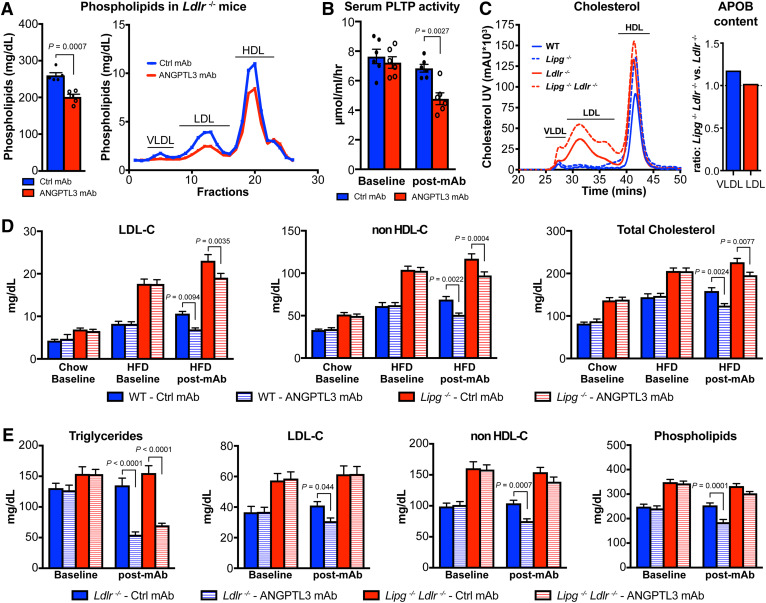
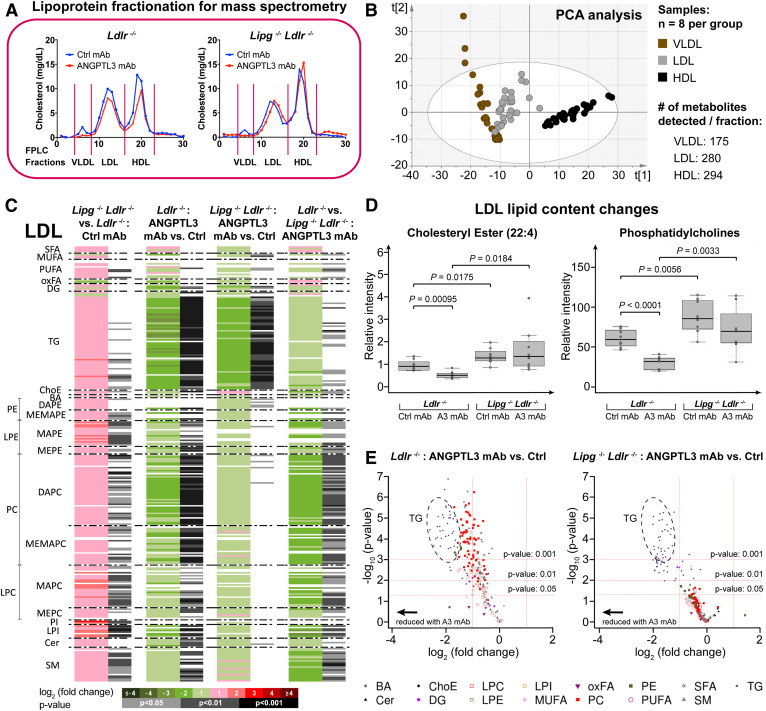
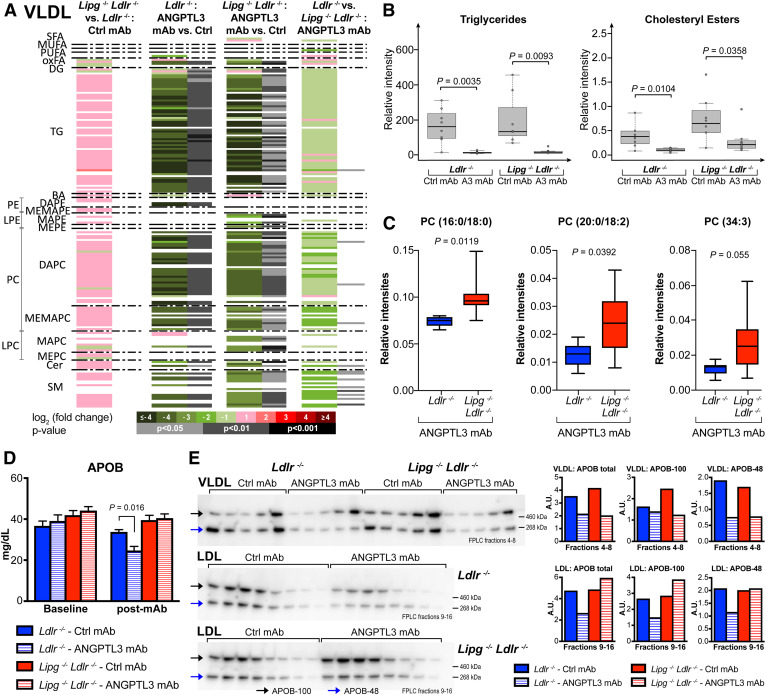
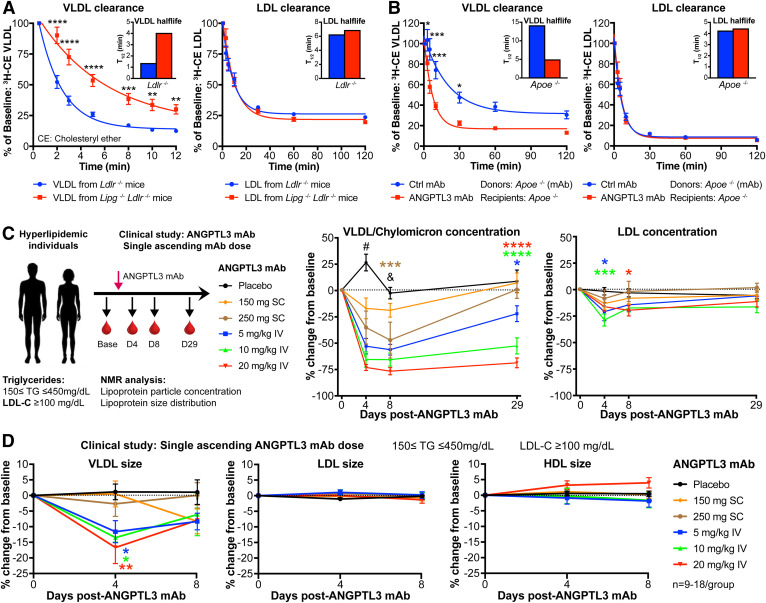
Angiopoietin-like protein (ANGPTL)3 regulates plasma lipids by inhibiting LPL and endothelial lipase (EL). ANGPTL3 inactivation lowers LDL-C independently of the classical LDLR-mediated pathway and represents a promising therapeutic approach for individuals with homozygous familial hypercholesterolemia due to LDLR mutations. Yet, how ANGPTL3 regulates LDL-C levels is unknown. Here, we demonstrate in hyperlipidemic humans and mice that ANGPTL3 controls VLDL catabolism upstream of LDL. Using kinetic, lipidomic, and biophysical studies, we show that ANGPTL3 inhibition reduces VLDL-lipid content and size, generating remnant particles that are efficiently removed from the circulation. This suggests that ANGPTL3 inhibition lowers LDL-C by limiting LDL particle production. Mechanistically, we discovered that EL is a key mediator of ANGPTL3's novel pathway. Our experiments revealed that, although dispensable in the presence of LDLR, EL-mediated processing of VLDL becomes critical for LDLR-independent particle clearance. In the absence of EL and LDLR, ANGPTL3 inhibition perturbed VLDL catabolism, promoted accumulation of atypical remnants, and failed to reduce LDL-C. Taken together, we uncover ANGPTL3 at the helm of a novel EL-dependent pathway that lowers LDL-C in the absence of LDLR.
Overview
The claims and statistics of this paper haven’t been checked yet.
Free: it reads the open-access text and checks the first 5 claims that cite a source we can check. Create a free account to check every claim.
Integrity signals
Registry
Cites
Statistics
Figures
Verification
Claims the paper makes
The claims and statistics of this paper haven’t been checked yet.
Free: it reads the open-access text and checks the first 5 claims that cite a source we can check. Create a free account to check every claim.
Claims other papers make about this one
Each is checked against this paper’s own text: does it say what the citing paper says it does?
The cited source says what the claim attributes to it.
In the citing paper
“In contrast, ANGPTL3 inhibition accelerates triglyceride-rich lipoprotein processing and reduces LDL precursors while enhancing HDL catabolism, accounting for concurrent LDL-C reduction and modest HDL-C decrease (Zhang, 2021; Chen et al., 2024; Adam et al., 2020; Wang et al., 2015; Yasuda et al., 2010; Hooper and Burnett, 2013).”
From Efficacy and safety of small interfering RNA (siRNA) therapies for hypertriglyceridemia and mixed dyslipidemia: an updated systematic review and meta-analysis (2026) · cites this paper as Adam et al., 2020
The cited source says what the claim attributes to it.
In the citing paper
“It is of particular interest that, contrary to other lipid-lowering drugs, such as PCSK9 inhibitors,21,22 the lipid lowering effect of ANGPTL3 inhibition by evinacumab seems to be independent of the presence of residual LDLR activity, supporting the data obtained in animal models,6,10 as well as in a pilot clinical trial.9”
From ANGPTL3 Inhibition With Evinacumab Results in Faster Clearance of IDL and LDL apoB in Patients With Homozygous Familial Hypercholesterolemia—Brief Report (2021) · cites this paper as [10]
The cited source says what the claim attributes to it.
In the citing paper
“Extensive studies in animal models suggest that the LDL-C lowering effect of evinacumab is not dependent on a number of other receptors or ligands, such as apolipoprotein E, LDLR-related protein 1, and syndecan 1, which are known to affect LDL or its precursors,6 and SR-BI.10”
From ANGPTL3 Inhibition With Evinacumab Results in Faster Clearance of IDL and LDL apoB in Patients With Homozygous Familial Hypercholesterolemia—Brief Report (2021) · cites this paper as [10]
The cited source says what the claim attributes to it.
In the citing paper
“Recent reports of studies in mice suggest that EL is required for ANGPTL3 inhibition to reduce LDL-C levels in absence of a functional LDLR.10,11”
From ANGPTL3 Inhibition With Evinacumab Results in Faster Clearance of IDL and LDL apoB in Patients With Homozygous Familial Hypercholesterolemia—Brief Report (2021) · cites this paper as [10]
The cited source says what the claim attributes to it.
In the citing paper
“These studies, in mice lacking both LDLR and EL, support the importance of the ANGPTL3/EL pathway in mediating VLDL remnant particle clearance and LDL-C lowering.10”
From ANGPTL3 Inhibition With Evinacumab Results in Faster Clearance of IDL and LDL apoB in Patients With Homozygous Familial Hypercholesterolemia—Brief Report (2021) · cites this paper as [10]
3 more claims about this paper
Create a free account to see every claim other papers make about this one.
Self-check
Percentages, sums and reported differences re-computed from the paper’s own numbers.
The self-check needs the paper’s full text.
Citations
Cites
Moderated estimation of fold change and dispersion for RNA-seq data with DESeq2
Love, M. I., Huber, W., & Anders, S. (2014) · Genome Biology · doi:10.1186/s13059-014-0550-8 · Cited by 95,106 · cited 2×
“Differentially expressed genes were identified by DESeq2 (37) package and significantly perturbed genes were defined with fold changes no less than 1.”
InfluentialThe metabolic and molecular bases of inherited disease
Chen, Y.-T. (2001) · Medical Entomology and Zoology · Cited by 6,928
Efficient Bayesian mixed-model analysis increases association power in large cohorts
Loh, P.-R., Tucker, G., Bulik-Sullivan, B. K., Vilhjálmsson, B. J., Finucane, H. K., Salem, R. M., Chasman, D. I., Ridker, P. M., Neale, B. M., Berger, B., et al. (2015) · Nature Genetics · doi:10.1038/ng.3190 · Cited by 1,507 · cited 1×
“The association was tested using BOLT under linear mixed model (30).”
Loss-of-Function Mutations in APOC3, Triglycerides, and Coronary Disease
The TG and HDL Working Group of the Exome Sequencing Project, N. H. (2014) · New England Journal of Medicine · doi:10.1056/nejmoa1307095 · Cited by 1,071
Piedrahita, J. A., Zhang, S. H., Hagaman, J. R., Oliver, P. M., & Maeda, N. (1992) · Proceedings of the National Academy of Sciences · doi:10.1073/pnas.89.10.4471 · Cited by 944 · cited 1×
“Apoe mice were from JAX (#002052) (27).”
Loss-of-Function Mutations in APOC3 and Risk of Ischemic Vascular Disease
Jørgensen, A. B., Frikke-Schmidt, R., Nordestgaard, B. G., & Tybjærg-Hansen, A. (2014) · New England Journal of Medicine · doi:10.1056/nejmoa1308027 · Cited by 919 · cited 1×
“ANGPTL3 inhibition even operates differently than APOC3 or ANGPTL4 blockade, which also activate LPL and promote TG hydrolysis, however have only minor effects on cholesterol reduction (60-62).”
Genetic and Pharmacologic Inactivation of ANGPTL3 and Cardiovascular Disease
Dewey, F. E., Gusarova, V., Dunbar, R. L., O’Dushlaine, C., Schurmann, C., Gottesman, O., McCarthy, S., Van Hout, C. V., Bruse, S., Dansky, H. M., et al. (2017) · New England Journal of Medicine · doi:10.1056/nejmoa1612790 · Cited by 885
Self-citationExome Sequencing, ANGPTL3 Mutations, and Familial Combined Hypolipidemia
Musunuru, K., Pirruccello, J. P., Do, R., Peloso, G. M., Guiducci, C., Sougnez, C., Garimella, K. V., Fisher, S., Abreu, J., Barry, A. J., et al. (2010) · New England Journal of Medicine · doi:10.1056/nejmoa1002926 · Cited by 754 · cited 4×
“Pharmacological inhibition of ANGPTL3 replicates the phenotype of individuals with ANGPTL3 LOF mutations (6, 7) and lowers plasma lipids in mice, monkeys, and humans (9–11).”
InfluentialSelf-citationKowal, R. C., Herz, J., Goldstein, J. L., Esser, V, & Brown, M. S. (1989) · Proceedings of the National Academy of Sciences · doi:10.1073/pnas.86.15.5810 · Cited by 595 · cited 1×
“To overcome this, we performed studies in mice deficient for APOE, whose absence impedes normal VLDL uptake and afforded us a larger window to detect potential changes in evinacumab-driven VLDL clearance (44, 45).”
High-throughput engineering of the mouse genome coupled with high-resolution expression analysis
Valenzuela, D. M., Murphy, A. J., Frendewey, D., Gale, N. W., Economides, A. N., Auerbach, W., Poueymirou, W. T., Adams, N. C., Rojas, J., Yasenchak, J., et al. (2003) · Nature Biotechnology · doi:10.1038/nbt822 · Cited by 584
Self-citation
Cited by
Items 101–200 of 210
Bellosta, S., Rossi, C., Alieva, A. S., Catapano, A. L., Corsini, A., & Baragetti, A. (2023) · Cardiovascular Drugs and Therapy · doi:10.1007/s10557-021-07293-w · Cited by 10
“In addition, Angptl3 RNA silencing reduced VLDL size and lipid content [82] and did not provide robust LDL-C lowering in mice with genetic deficiency of endothelial lipase [83].”
BackgroundEvinacumab for the treatment of homozygous familial hypercholesterolemia
Gao, Y.-L., Zhang, B., & Yang, J. (2022) · Expert Review of Clinical Pharmacology · doi:10.1080/17512433.2022.2047934 · Cited by 10
Gu, J., Kuznik, A., Quon, P., Chauhan, A., Sravya, T. S., & Raal, F. J. (2023) · European Journal of Preventive Cardiology · doi:10.1093/eurjpc/zwad203 · Cited by 10
RNA interference-based therapies for the control of atherosclerosis risk factors
Kettunen, S., Ruotsalainen, A., & Ylä‐Herttuala, S. (2022) · Current Opinion in Cardiology · doi:10.1097/hco.0000000000000972 · Cited by 13
ANGPTL3: A Breakthrough Target in Treatment for Dyslipidemia and Atherosclerosis
Fukami, H., & Oike, Y. (2025) · Journal of Atherosclerosis and Thrombosis · doi:10.5551/jat.rv22038 · Cited by 10
Familial Hypercholesterolemia: Pitfalls and Challenges in Diagnosis and Treatment
Arnold, N., & Köenig, W. (2023) · Reviews in Cardiovascular Medicine · doi:10.31083/j.rcm2408236 · Cited by 15
“Although the role of ANGPTL3 in lowering LDL-C is still not completely understood one might suggest, that ANGPTL3 inhibition enhances fractional catabolic rate of large VLDL thereby reducing LDL-C through faster clearance of their remnants by non-LDL-R-mediated pathways [97].”
BackgroundValiakou, V., Eliadis, P., Karamichali, E., Tsitsilonis, O., Koskinas, J. S., Georgopoulou, U., & Foka, P. (2021) · International Journal of Molecular Sciences · doi:10.3390/ijms22157961 · Cited by 11
“ANGPTL-3 alone has been reported to regulate low-density lipoprotein (LDL) levels via inhibition of endothelial lipase (LIPG) activity [30].”
BackgroundPu, X., Sale, M. E., Yang, F., Zhang, Y., Davis, J. D., & Al-Huniti, N. H. (2021) · CPT Pharmacometrics & Systems Pharmacology · doi:10.1002/psp4.12711 · Cited by 10
Management of Mild-to-Moderate Hypertriglyceridemia
Pulipati, V. P., Brinton, E. A., & Hatipoğlu, B. (2022) · Endocrine Practice · doi:10.1016/j.eprac.2022.07.003 · Cited by 12
Watts, G. F., Zadeh, S. S. T., & Chan, D. C. (2024) · European Heart Journal · doi:10.1093/eurheartj/ehae321 · Cited by 9
Evolving ANGPTL-based lipid-lowering strategies and beyond
Ng, D. S. (2021) · Current Opinion in Lipidology · doi:10.1097/mol.0000000000000764 · Cited by 9
Santos, R. D., & Cuchel, M. (2024) · Circulation · doi:10.1161/circulationaha.123.067241 · Cited by 9
Srivastava, R. A. K. (2023) · Nutrition Metabolism and Cardiovascular Diseases · doi:10.1016/j.numecd.2023.08.010 · Cited by 9
Leander, K., Chen, Y., Vikström, M., Silveira, A. M. V., Fisher, R. M., Konrad, R. J., & Hooft, F. M. V. (2025) · Arteriosclerosis Thrombosis and Vascular Biology · doi:10.1161/atvbaha.124.321308 · Cited by 9
“27–29 Taken together, the results from the present study provide further support for the idea that ANGPTL3 and ANGPTL3/8 participate in distinct metabolic pathways involved in the regulation of lipoprotein concentrations.”
Khoury, É., Croteau, L., Lauzière, A., & Gaudet, D. (2022) · Future Cardiology · doi:10.2217/fca-2021-0149 · Cited by 8
Evinacumab for Homozygous Familial Hypercholesterolemia
Luo, F., Das, A., & Fang, Z. (2021) · New England Journal of Medicine · doi:10.1056/nejmc2033612 · Cited by 8
Potential of Phage Display Antibody Technology for Cardiovascular Disease Immunotherapy
Yeoh, S. G., Sum, J.-S., Lai, J. Y., Isa, W. Y. H. W., & Lim, T. S. (2021) · Journal of Cardiovascular Translational Research · doi:10.1007/s12265-021-10169-x · Cited by 8
Managing of dyslipidaemia characterized by accumulation of triglyceride-rich lipoproteins
Visser, J., van Zwol, W., & Kuivenhoven, J. A. (2022) · Current Atherosclerosis Reports · doi:10.1007/s11883-022-00979-y · Cited by 7
Yang, S., Su, X., Lai, M., Liu, X., & Cheng, Y. (2025) · Frontiers in Bioscience-Landmark · doi:10.31083/fbl25862 · Cited by 8
“Meanwhile, ANGPTL3, as a hepatic-specific factor, was confirmed to inversely increase the endocytosis process of circulating VLDL-containing TGs into white adipocytes under feeding conditions rather than into oxidative cells [52].”
Use of apheresis in the age of new therapies for familial hypercholesterolaemia
Thompson, G. R. (2021) · Current Opinion in Lipidology · doi:10.1097/mol.0000000000000784 · Cited by 7
“Evinacumab appears to act by enhancing the clearance of apoB-containing particles via a mechanism that is independent of the LDL receptor [51] and that involves activation of endothelial lipase [52].”
BackgroundSotin, T., Ge, X., Schönke, M., Vince, L., Thouzeau, A., Frey, S., Lorant, V., Krul, L., Pronk, A. C. M., Lalai, R. A., et al. (2025) · Cardiovascular Research · doi:10.1093/cvr/cvaf097 · Cited by 6
Degoricija, V., Klobučar, I., Potočnjak, I., Terešak, S. D., Vidović, L., Pregartner, G., Berghold, A., Habisch, H., Madl, T., & Frank, S. (2022) · Biomolecules · doi:10.3390/biom12101542 · Cited by 6
“Upon secretion, circulating VLDL particles undergo progressive processing mediated by serum lipases and neutral lipid transfer/exchange proteins, resulting in the depletion of TG and PL and concomitant conversion of VLDL to intermediate-density lipoprotein (IDL) and LDL [9,15,16].”
BackgroundLi, B., Khan, H., Shaikh, F., Zamzam, A., Abdin, R., & Qadura, M. (2024) · Journal of Cardiovascular Translational Research · doi:10.1007/s12265-024-10574-y · Cited by 6
“First, biomarker-based data was not considered as input features, and this information can have an important impact on PAD prognosis as demonstrated by our study and other groups [27, 28, 64–66].”
Treatment of Homozygous Familial Hypercholesterolemia
Cegla, J., Walji, S., Barton, L., Neuwirth, C. K. Y., & Thompson, G. R. (2025) · JACC Advances · doi:10.1016/j.jacadv.2025.101708 · Cited by 9
New therapeutic approaches for the treatment of hypertriglyceridemia
Gouni‐Berthold, I., & Schwarz, J. (2022) · Herz · doi:10.1007/s00059-022-05113-x · Cited by 6
“Moreover, it has been shown that ANGPTL3 inhibition decreases LDL-C concentrations via an LDLR-independent mechanism that has not been clearly defined but is likely mediated by the limiting LDL particle production [31] through EL activation [32].”
BackgroundIdentifying the Lipidomic Effects of a Rare Loss-of-Function Deletion in ANGPTL3
Blackburn, N. B., Meikle, P. J., Peralta, J. M., Kumar, S., Leandro, A. C., Bellinger, M. A., Giles, C., Huynh, K., Mahaney, M. C., Göring, H. H. H., et al. (2021) · Circulation Genomic and Precision Medicine · doi:10.1161/circgen.120.003232 · Cited by 7
Chan, D. C., Ying, Q., & Watts, G. F. (2021) · Current Opinion in Lipidology · doi:10.1097/mol.0000000000000795 · Cited by 6
Silbernagel, G., Higbie, H., Meininger, T., Lemen, D., Li, H., Chen, Y., Wen, Y., Zhen, Y., Qian, Y., Korovianskaia, P., et al. (2025) · Atherosclerosis · doi:10.1016/j.atherosclerosis.2025.120485 · Cited by 6
ANGPTL3 and residual atherosclerotic risk: from lipid metabolism to therapeutic targeting
Weng, S., Ding, C., Lin, J., & Chai, D. (2026) · Frontiers in Endocrinology · doi:10.3389/fendo.2025.1706091 · Cited by 7
Klobučar, I., Klobučar, L., Lechleitner, M., Trbušić, M., Pregartner, G., Berghold, A., Habisch, H., Madl, T., Frank, S., & Degoricija, V. (2023) · International Journal of Molecular Sciences · doi:10.3390/ijms241310681 · Cited by 6
“This is accompanied by the generation of VLDL remnants that are catabolized independently of low-density lipoprotein (LDL) receptors, resulting in reduced LDL production and decreased LDL serum levels [19,20].”
BackgroundInfluentialCorrelation between the serum FABP4, ANGPTL3, and ANGPTL4 levels and coronary artery disease
Zhao, Z., Fu, Y., Lian, H., Liu, Y., Liu, J., Sun, L., & Zhang, Y. (2024) · Clinical Cardiology · doi:10.1002/clc.24246 · Cited by 6
“19 Some animal studies have also confirmed that targeted inhibition of ANGPTL3 can increase the activity of LPL and EL, and reduce the plasma levels of TG, LDL ‐”
BackgroundProof-of-concept study for liver-directed miQURE technology in a dyslipidemic mouse model
Zancanella, V., Vallès, A., Liefhebber, J. M. P., Paerels, L., Vendrell‐Tornero, C., Wattimury, H., van der Zon, T., van Rooijen, K., Golinska, M. A., Grevelink, T., et al. (2023) · Molecular Therapy — Nucleic Acids · doi:10.1016/j.omtn.2023.04.004 · Cited by 5
“ANGPTL3 prevents the hydrolysis of TG in VLDL and, consequently, VLDL clearance by inhibiting lipoprotein lipase (LPL) activity while promoting HDL remodeling by reducing endothelial lipase activity.(33,52) Consequently, loss-of-function ANGPTL3 variants and inhibition of ANGPTL3 using evinacumab are associated with l…”
BackgroundNovel Insights of ANGPTL-3 on Modulating Cholesterol Efflux Capacity Induced by HDL Particle
Lai, M., Jiang, X., Wang, B., Cheng, Y., & Su, X. (2023) · Current Molecular Medicine · doi:10.2174/1566524023666230418104400 · Cited by 6
Gao, Y., Bai, Y., Mu, X., & Pang, X. (2026) · Frontiers in Pharmacology · doi:10.3389/fphar.2026.1736821 · Cited by 4
Genetics in the diagnosis and treatment of cardiovascular diseases
Bliden, K. P., Singh, S. T., Shanoada, R., Kalia, I., Tantry, U. S., Zimmerman, A., Babu, A. D., Raghavakurup, L., Stude, T., Sidorski, D., et al. (2024) · Journal of Translational Genetics and Genomics · doi:10.20517/jtgg.2023.59 · Cited by 5
Walker, S. G., Chen, Y., Sylvers-Davie, K. L., Dou, A., Zhen, Y., Qian, Y., Wen, Y., Ehsani, M. E., Smith, S. A., Thapa, R., et al. (2025) · JCI Insight · doi:10.1172/jci.insight.197827 · Cited by 4
Wang, Y.-H., Chen, Y.-S., Wang, S., Jin, B.-Y., Han, X.-Y., & Hua, C.-J. (2025) · Frontiers in Cardiovascular Medicine · doi:10.3389/fcvm.2025.1562707 · Cited by 4
Evinacumab in patients aged 5–17 years with homozygous familial hypercholesterolemia
Rosenson, R. S., Brinton, E. A., Gaudet, D., Raal, F. J., Baker-Smith, C. M., Moriarty, P. M., Greber‐Platzer, S., Bergeron, J., McCrindle, B. W., Waldron, A., et al. (2025) · Atherosclerosis · doi:10.1016/j.atherosclerosis.2025.120627 · Cited by 7
Peng, D., Wang, L., Pi, L., XU, Y., Chen, J. L., Wu, Y., Wang, N., Chen, X., Qi, S., Feng, S. J., et al. (2026) · JAMA Cardiology · doi:10.1001/jamacardio.2025.4878 · Cited by 5
Adjunctive pharmacological strategies for residual risk reduction after myocardial revascularisation
Oshima, A., Serruys, P. W. J. C., Garg, S., McEvoy, J. W., Wood, D., Doenst, T., Taggart, D. P., Puskas, J. D., Shajahan, A., Sharif, F., et al. (2026) · EuroIntervention · doi:10.4244/eij-d-25-00598 · Cited by 5
Ginsberg, H. N., & Bornfeldt, K. (2026) · Circulation Research · doi:10.1161/circresaha.125.327267 · Cited by 4
“…may be more beneficial than APOC3 inhibition because it would result in reductions in both triglyceride levels secondary to increased LPL activity and LDL-C lowering through a mechanism that is independent of LDLR and involves EL and HSPGs. 138,139 Loss of ANGPTL3 also hampers VLDL secretion.”
Emerging therapies for refractory hypercholesterolemia: a narrative review
Pawlos, A., Khoury, É., & Gaudet, D. (2024) · Future Cardiology · doi:10.1080/14796678.2024.2367860 · Cited by 5
Current status and challenges of multi-omics research using animal models of atherosclerosis
Mitić, T., Georgescu, A., Alexandru, N., Davies, M. J., Vindis, C., Novella, S., Gerdts, E., Kararigas, G., Wettinger, S. B., Formosa, M. M., et al. (2025) · Journal of Molecular and Cellular Cardiology Plus · doi:10.1016/j.jmccpl.2025.100476 · Cited by 14
“…HDL lipid species composition was analysed in Ldlr (cid:0) / (cid:0) and Lipg (cid:0) / (cid:0) Ldlr (cid:0) / (cid:0) mice treated with or without evinacumab, in a study aiming to unravel the impact of endothelial lipase on angiopoietin-like protein 3 regulation of LDL-cholesterol levels [247].”
Angiopoietin-like protein 3 inhibitors and contemporary unmet needs in lipid management
Ying, Q., Chan, D. C., & Watts, G. F. (2021) · Current Opinion in Lipidology · doi:10.1097/mol.0000000000000747 · Cited by 4
White, O., Aligabi, Z., Burks, K. H., Tang, J., Stitziel, N. O., Goldberg, I. J., Remaley, A. T., & Lucero, D. (2025) · doi:10.1101/2025.03.02.640965 · Cited by 4
Future of angiopoietin-like protein 3 inhibitors as a therapeutic agent
Marston, N., & Zimerman, A. (2025) · Current Opinion in Lipidology · doi:10.1097/mol.0000000000001013 · Cited by 3
Versatile Functions of Hepatic Lipase in Lipoprotein Metabolism
Dijk, W., Rimbert, A., Sotin, T., May, C. L., & Cariou, B. (2025) · Arteriosclerosis Thrombosis and Vascular Biology · doi:10.1161/atvbaha.125.323051 · Cited by 4
Durrington, P. N., Bashir, B., & Soran, H. (2026) · Springer eBooks · doi:10.1007/978-3-031-96019-2_35 · Cited by 3
Watts, G. F., Scott, R., Sullivan, D., BAKER, J., Clifton, P. M., Hamilton, J., Given, B. D., Melquist, S., Zhou, R., Gaudet, D., et al. (2026) · Nature Medicine · doi:10.1038/s41591-026-04307-8 · Cited by 3
de Medeiros, S. F., & Maciel, G. A. R. (2026) · Metabolites · doi:10.3390/metabo16060393 · Cited by 4
Hu, D., Mao, L., Tang, X., Jin, C., Guo, X., Luo, Q., Kuang, J., Zhang, T., Liu, R., Yuan, S., et al. (2020) · Clinica Chimica Acta · doi:10.1016/j.cca.2020.12.013 · Cited by 5
In Silico Description of the Direct Inhibition Mechanism of Endothelial Lipase by ANGPTL3
Montavoci, L., Mariem, O. B., Saporiti, S., Laurenzi, T., Palazzolo, L., Ossoli, A., Guerrini, U., Calabresi, L., & Eberini, I. (2024) · International Journal of Molecular Sciences · doi:10.3390/ijms25063555 · Cited by 4
Evinacumab bei Patienten mit therapierefraktärer Hypercholesterinämie
Windler, E. E. T., & Nitschmann, S. (2021) · Der Internist · doi:10.1007/s00108-021-01044-7 · Cited by 3
Inhibition of ANGPTL3 as a Target for Treating Dyslipidemias
Watts, G. F., Chan, D. C., & Raal, F. J. (2023) · Elsevier eBooks · doi:10.1016/b978-0-323-88286-6.00027-3 · Cited by 3
Low LDL Cholesterol Is Not an Independent Risk Factor for Hepatic Steatosis
Mchenry, S. A., Awad, A., Kozlitina, J., Stitziel, N. O., & Davidson, N. O. (2023) · Digestive Diseases and Sciences · doi:10.1007/s10620-023-07980-8 · Cited by 3
Klose, G., Gouni‐Berthold, I., & März, W. (2023) · Die Innere Medizin · doi:10.1007/s00108-023-01524-y · Cited by 2
Alkhairy, A., Xiang, P., Khoo, J. K., Taylor, C. M., & Francis, G. A. (2025) · JACC Case Reports · doi:10.1016/j.jaccas.2025.104648 · Cited by 2
Inhibition of angiopoietin-like protein 3 as a target for managing hypertriglyceridemia
Corral, P., Nardelli, N., & Schreier, L. E. (2025) · Current Opinion in Endocrinology Diabetes and Obesity · doi:10.1097/med.0000000000000950 · Cited by 3
Wulff, A. B., Varbo, A., Nordestgaard, A. G., & Nordestgaard, B. G. (2026) · Expert Opinion on Therapeutic Targets · doi:10.1080/14728222.2026.2639678 · Cited by 2
Effects of fenofibrate on angiopoietin-like 3/4/8 proteins and apolipoprotein A5
Yang, Y., Smith, S. A., Chen, Y. Q., Li, H., Zhen, E. Y., Sloan, J. H., Siegel, R. W., Qian, Y., Wen, Y., Jung, H., et al. (2026) · Journal of Lipid Research · doi:10.1016/j.jlr.2026.101050 · Cited by 2
Hepatic Lipoprotein Production, Cardiometabolic Phenotypes, and Subtypes of Steatotic Liver Disease
Davidson, N. O. (2026) · Circulation Research · doi:10.1161/circresaha.126.327269 · Cited by 2
Hypertriglyceridaemia and its multifaceted mechanisms driving atherosclerotic cardiovascular disease
Li, X., Xu, L., Li, J., Luo, Y., Shen, H., & Zhang, D. (2026) · Lipids in Health and Disease · doi:10.1186/s12944-026-02983-6 · Cited by 3
“In LDLR knockout mice, ANGPTL3 inhibition effectively lowers LDL-C levels, demonstrating that this pathway is independent of the LDLR [94].”
Arca, M., Björnson, E., D’Erasmo, L., Costanzo, A. D., Bini, S., Minicocci, I., Tramontano, D., Covino, S., Ciarlo, G., Lombardi, M., et al. (2026) · Journal of Internal Medicine · doi:10.1111/joim.70124 · Cited by 2
Bitencourt, I. C., Zimerman, A., & Marston, N. (2026) · Current Atherosclerosis Reports · doi:10.1007/s11883-026-01441-z · Cited by 2
“In addition, EL decreases LDL particle production and facilitates LDL uptake independently of the LDLR [4, 17 ].”
InfluentialProduction and Metabolism of Triglyceride-Rich Lipoproteins: Impact of Diabetes
Pirillo, A., Norata, G. D., & Catapano, A. L. (2023) · Contemporary diabetes · doi:10.1007/978-3-031-26681-2_7 · Cited by 3
Муратович, Н. А., & Витальевна, К. К. (2024) · Cardiovascular & Haematological Disorders - Drug Targets · doi:10.2174/011871529x305291240715112812 · Cited by 2
Toroghi, M. K., Bosley, J., Powell, L. M., Zhang, Y., Yang, F., Pu, X., Davis, J. D., & Al-Huniti, N. H. (2021) · CPT Pharmacometrics & Systems Pharmacology · doi:10.1002/psp4.12694 · Cited by 2
Gaudet, D. (2023) · Elsevier eBooks · doi:10.1016/b978-0-323-88286-6.00035-2 · Cited by 2
Lipoprotein profile and metabolic fine-mapping of genetic lipid risk lociPreprint
Suhre, K., AL-Ishaq, R. K., Belkadi, A., Habib, T., Halama, A., Stephan, N., Thareja, G., Zaghlool, S. B., Fauman, E. B., & Najafi-Shoushtari, S. H. (2022) · medRxiv · doi:10.1101/2022.06.12.22276286 · Cited by 3
Zhang, P., Wang, K., Hu, T., Xu, M., You, X., Chen, M., Tang, X. L., Hu, H., Jiang, Y., Zhao, W., et al. (2024) · The FASEB Journal · doi:10.1096/fj.202301564rr · Cited by 1
“His 55 ) in NT-ANGPTL3 plays a critical role in LPL inhibition, 13 the region outside the SE1 domain is necessary for the inhibitory effect of NT-ANGPTL3 on LPL. 87 Our molecular docking data showed that F1519-D95aA binds to the sites inside and outside the SE1 domain of ANGPTL3.”
BackgroundInfluentialChemogenetic activation of hepatic G12 signaling ameliorates hepatic steatosis and obesity
Arai, K., Ono, Y., Hirai, N., Sugiura, Y., Kaneko, K., Matsuda, S., Iio, K., Kajino, K., Saitoh, T., Wei, F., et al. (2024) · Biochimica et Biophysica Acta (BBA) - Molecular Basis of Disease · doi:10.1016/j.bbadis.2024.167566 · Cited by 1
Ecin, S. M., & Okur, T. (2024) · Acta Medica · doi:10.32552/2024.actamedica.1041 · Cited by 1
Hirano, T., Hayashi, T., Sugita, H., Tamasawa, A., Ohara, M., Terasaki, M., Ito, Y., Yamagishi, S.-I., & Mori, Y. (2025) · Journal of Atherosclerosis and Thrombosis · doi:10.5551/jat.65941 · Cited by 2
“ANGPTL3 inhibits EL, which is believed to contribute to elevations in both LDL-C and HDL-C levels 5, 36) .”
Evinacumab Improved the Homozygous Familial Hypercholesterolemia Lipid Metabolism: A Case Report
Matsuda, T., Osaki, Y., Matsumoto, N., Nakajima, R., Murayama, Y., Sugano, Y., IWASAKI, H. O., Mathis, B. J., Sekiya, M., & Shimano, H. (2025) · Journal of Atherosclerosis and Thrombosis · doi:10.5551/jat.65925 · Cited by 1
“Notably, in LDLR-deficient models, EL inactivation abolished the LDL-C-lowering effect of ANGPTL3 inhibition 13, 21) while EL overexpression enhanced LDL-C reduction 22) , suggesting a role for EL in mediating this effect.”
Breaking barriers: Innovative therapies for managing homozygous familial hypercholesterolemia
Huang, S.-J., Huang, P. H., Song, N.-N., Jia, X.-H., Gao, H., Lu, Z., & Wen, X. (2025) · Experimental and Molecular Pathology · doi:10.1016/j.yexmp.2025.105003 · Cited by 1
Brisson, D., Wiegman, A., Waldron, A., Kainth, P., Raal, F. J., & Gaudet, D. (2026) · American Journal of Preventive Cardiology · doi:10.1016/j.ajpc.2025.101395 · Cited by 2
“Evinacumab is a recombinant human monoclonal antibody (mAb) inhibiting angiopoietin-like protein 3 (ANGPTL3), a circulating protein synthesized in the liver with pleiotropic modulating effects on lipid-lipoprotein metabolism [7,8].”
Meghashree, N., B, K. C., & Shivaraj, D. R. (2026) · Journal of Lipid and Atherosclerosis · doi:10.12997/jla.2026.15.1.72 · Cited by 1
“65 Zodasiran, an short interfering RNA (siRNA) treatment aimed at ANGPTL3 mRNA, has shown promising results in the phase 2 ARCHES-2 trial, with reductions of ~71% in ANGPTL3, 59% in triglycerides, and 32% in LDL cholesterol.”
Hou, Y., Zhang, X., Sun, X., Qin, Q., Jia, M., Su, X., & Chen, Y. (2026) · Arteriosclerosis Thrombosis and Vascular Biology · doi:10.1161/atvbaha.125.324122 · Cited by 1
Krishnamurthy, S. S., Buzatto, A. Z., Campkin, C., Müller, H.-P., Wiesner, D., Weishaupt, J. H., Klose, V., Wiesenfarth, M., Elmas, Z., Herrmann, C., et al. (2026) · BMC Medicine · doi:10.1186/s12916-026-04749-4 · Cited by 2
“…to the same extent it does in humans: in fact, ANGPTL-3 deficiency in humans markedly reduces VLDL-ApoB production (impacting LDL-C pre-cursors) and reduces cholesterol and triglycerides, while in mice, it primarily accelerates VLDL-TG clearance, mainly affecting triglyceride levels [116, 117].”
Vitali, C., Banerjee, P., Pordy, R. C., Ehmann, P. J., Rosenson, R. S., & Rader, D. J. (2026) · Journal of Lipid Research · doi:10.1016/j.jlr.2026.101020 · Cited by 2
“Evinacumab, a monoclonal antibody against ANGPTL3, reduces plasma triglyceride levels as well as low-density lipoprotein cholesterol levels (18, 19).”
InfluentialSelf-citationPathophysiology and pharmacotherapy of cardiovascular complications in metabolic syndrome
Dhalla, N. S., Patel, C. A., Beladiya, J., Mehta, A. A., & Gandhi, T. R. (2026) · Journal of Molecular and Cellular Cardiology · doi:10.1016/j.yjmcc.2026.04.007 · Cited by 1
Hou, Y., Luo, Y., Chen, J., Shang, X., Chang, Y., Zhang, X., Ding, Y., Zhao, W., Ding, C., Feng, X., et al. (2026) · Molecular Therapy · doi:10.1016/j.ymthe.2026.07.036 · Cited by 1
Longer-term efficacy and safety of zodasiran in patients with mixed hyperlipidaemia
Rosenson, R. S., Gaudet, D., Ballantyne, C. M., Nicholls, S. J., Lucas, K. J., Leeper, N. J., Zhou, R., Aiyer, L., Hellawell, J. L., & Watts, G. F. (2026) · European Journal of Preventive Cardiology · doi:10.1093/eurjpc/zwag376 · Cited by 2
Wiggins, B. S. (2021) · Journal of Cardiovascular Pharmacology · doi:10.1097/fjc.0000000000001132 · Cited by 2
Statine: Nebenwirkungen – alternative Therapieoptionen
Makhmudova, U., & Weingärtner, O. (2024) · Die Kardiologie · doi:10.1007/s12181-024-00669-w · Cited by 1
Hypertriglyceridemia: diagnostic issues, therapeutic strategies
Bakaleiko, V. V., Reutova, O. V., Алиева, М. С., Baratashvili, G. G., Kostareva, A. A., & Alieva, A. S. (2024) · Russian Journal for Personalized Medicine · doi:10.18705/2782-3806-20244-3-194-205 · Cited by 1
Walsh, J. P. (2022) · Trends in Cardiovascular Medicine · doi:10.1016/j.tcm.2022.01.007
Klose, G., Gouni‐Berthold, I., & März, W. (2022) · Journal für Klinische Endokrinologie und Stoffwechsel · doi:10.1007/s41969-022-00178-9
Aghasizadeh, M., Ghanei, M., Ghoflchi, S., Asadiyan‐Sohan, P., Haghani, M., Kazemi, T., Esmaily, H., Avan, A., Ferns, G. A., Miri‐Moghaddam, E., et al. (2023) · Biochemical Genetics · doi:10.1007/s10528-023-10533-3
“It also directly affects the liver and regulates the secretion of hepatocellular lipoprotein, which is different from its previous role (Musunuru et al. 2010; Robciuc et al. 2013; Adam et al. 2020).”
Larouche, M., & Gaudet, D. (2024) · Archives des Maladies du Coeur et des Vaisseaux - Pratique · doi:10.1016/j.amcp.2024.01.009
APOC3 inhibitors and their effects to hypertriglyceridemia and atherosclerosis
Plengpanich, W. (2024) · Chulalongkorn Medical Journal · doi:10.56808/2673-060x.5391
Inhibitors ANGPTL3 and their effects to hyperlipidemia and atherosclerosis
Plengpanich, W. (2024) · Chulalongkorn Medical Journal · doi:10.56808/2673-060x.5385
Adding a New Piece to the ASGR1 Puzzle: ANGPTL3
García‐Arcos, I. (2024) · Arteriosclerosis Thrombosis and Vascular Biology · doi:10.1161/atvbaha.124.321882
Zhang, S., Fan, L., Zhang, L., Fan, F., Jia, J., Zhang, Y., & Li, J. (2025) · Research Square · doi:10.21203/rs.3.rs-6624447/v1
Kataoka, Y., Murai, K., Nicholls, S. J., Tomishima, Y., Iwai, T., Sawada, K., Matama, H., Honda, S., Takagi, K., Fujino, M., et al. (2025) · CJC Open · doi:10.1016/j.cjco.2025.06.006
Zhang, S., Zhao, J., Xie, X., Li, L., Chen, J., Liu, H., & Wang, J. (2025) · Journal of Medicinal Chemistry · doi:10.1021/acs.jmedchem.5c00732 · Cited by 1
Cruz-Bautista, I., Huerta‐Chagoya, A., Moreno-Macías, H., Rodríguez-Guillén, R., Ordóñez-Sánchez, M. L., Segura-Kato, Y., Mehta, R., Almeda-Valdés, P., Gómez-Munguía, L., Chávez, X. R.-D., et al. (2021) · Figshare · doi:10.6084/m9.figshare.14037373
Cruz-Bautista, I., Huerta‐Chagoya, A., Moreno-Macías, H., Rodríguez-Guillén, R., Ordóñez-Sánchez, M. L., Segura-Kato, Y., Mehta, R., Almeda-Valdés, P., Gómez-Munguía, L., Chávez, X. R.-D., et al. (2021) · Figshare · doi:10.6084/m9.figshare.14037370
PCSK9 Inhibition and Coronary Artery Disease in Mice
Xiong, T. (2023) · MacSphere (McMaster University) · doi:10.71548/14044 · Cited by 1
Metadata
- Authors
- Adam, R. C., Mintah, I. J., Alexa-Braun, C. A., Shihanian, L. M., Lee, J. S., Banerjee, P., Hamon, S. C., Kim, H. I., Cohen, J. C., Hobbs, H. H., Van Hout, C., Gromada, J., Murphy, A. J., Yancopoulos, G. D., Sleeman, M. W., & Gusarova, V.
- Affiliations
- Regeneron (United States) (US)
- The University of Texas Southwestern Medical Center (US)
- Howard Hughes Medical Institute (US)
- Corresponding author
- Gusarova, Viktoria
- ORCID
- Venue
- Journal of Lipid Research
- Publisher
- Elsevier BV
- Published
- 2020-09
- Volume
- 61
- Issue
- 9
- Pages
- 1271-1286
- ISSN
- 0022-2275 (ISSN-L)
- PMC
- PMC7469887
- OpenAlex
- W3041635484
- Cited by
- 208
- References
- 69
- Citations by year
- 2026: 34 · 2025: 28 · 2024: 36 · 2023: 29 · 2022: 33 · 2021: 42 · 2020: 6
- FWCI
- 17.00
- Type
- journal article
- Language
- en
- Open access
- hybrid
- doi.org
- Licence
- cc-by
- www.elsevier.com/tdm/userlicense/1.0/ (tdm)
- creativecommons.org/licenses/by/4.0/ (vor, 80 d)
- Locations
- Journal of Lipid Research (publishedVersion, cc-by)
- PubMed Central (publishedVersion, cc-by)
- PubMed (publishedVersion)
- DOAJ (DOAJ: Directory of Open Access Journals) (submittedVersion, cc-by-sa)
- Funders
- National Heart, Lung, and Blood Institute (P01HL020948)
- Topics
- Health Sciences › Medicine › Cardiology and Cardiovascular Medicine › Lipid metabolism and disorders
- Health Sciences › Medicine › Cardiology and Cardiovascular Medicine › Lipoproteins and Cardiovascular Health
- Life Sciences › Biochemistry, Genetics and Molecular Biology › Biochemistry › Cholesterol and Lipid Metabolism
- Keywords
- ANGPTL3, endothelial lipase, VLDL clearance, LDL cholesterol, VLDL remnants, hypercholesterolemia, lipoprotein metabolism, lipidomics
- MeSH terms
- Angiopoietin-like Proteins, Angiopoietin-Like Protein 3, Animals, Female, Humans, Lipase, Cholesterol, LDL, Lipoproteins, VLDL, Male, Receptors, LDL, Mice
About these checks
Registry, retraction, Cites and statistics results are computed, not judged, with one exception: a printed reference that no index lists is read once by a model before it counts as a citation error. Claims are extracted by a model and kept only when their quote appears verbatim in the text; each cited source is then checked, with a model’s help, for whether it says what the claim relies on. Those verdicts can be wrong — read the claim’s quote and the cited source before relying on one.
Statistics and arithmetic are recomputed, not judged.
Confidence bands are shown only for fields calibrated on our annotated test set. None is calibrated yet, so no band is shown.
What counts as a claim ›How we measure confidence ›How we check this ›
Are you an author, or do you see a problem with this page? Request a review
Data sources
Bibliographic data: Semantic Scholar, OpenAlex, Crossref.
Contains information from the Semantic Scholar Academic Graph Datasets, made available under the ODC Attribution License (ODC-BY 1.0).
Semantic Scholar’s data is described in: Kinney, R., et al. (2023). The Semantic Scholar Open Data Platform. arXiv:2301.10140.
