

Recommendations From the 2023 International Evidence-based Guideline for the Assessment and Management of Polycystic Ovary Syndrome
Open accessThe DOI matches its Crossref record; 13 of the 13 references it cites were found in a registry or an index; 10 of the 23 sources its claims cite were checked for support.
Abstract
Study Question: What is the recommended assessment and management of those with polycystic ovary syndrome (PCOS), based on the best available evidence, clinical expertise, and consumer preference? Summary Answer: International evidence-based guidelines address prioritized questions and outcomes and include 254 recommendations and practice points, to promote consistent, evidence-based care and improve the experience and health outcomes in PCOS. What is Known Already: The 2018 International PCOS Guideline was independently evaluated as high quality and integrated multidisciplinary and consumer perspectives from six continents; it is now used in 196 countries and is widely cited. It was based on best available, but generally very low to low quality, evidence. It applied robust methodological processes and addressed shared priorities. The guideline transitioned from consensus based to evidence-based diagnostic criteria and enhanced accuracy of diagnosis, whilst promoting consistency of care. However, diagnosis is still delayed, the needs of those with PCOS are not being adequately met, evidence quality was low and evidence-practice gaps persist. Study Design, Size, Duration: The 2023 International Evidence-based Guideline update reengaged the 2018 network across professional societies and consumer organizations with multidisciplinary experts and women with PCOS directly involved at all stages. Extensive evidence synthesis was completed. Appraisal of Guidelines for Research and Evaluation-II (AGREEII)-compliant processes were followed. The Grading of Recommendations, Assessment, Development, and Evaluation (GRADE) framework was applied across evidence quality, feasibility, acceptability, cost, implementation and ultimately recommendation strength and diversity and inclusion were considered throughout. Participants/Materials, Setting, Methods: This summary should be read in conjunction with the full Guideline for detailed participants and methods. Governance included a six-continent international advisory and management committee, five guideline development groups, and paediatric, consumer, and translation committees. Extensive consumer engagement and guideline experts informed the update scope and priorities. Engaged international society-nominated panels included paediatrics, endocrinology, gynaecology, primary care, reproductive endocrinology, obstetrics, psychiatry, psychology, dietetics, exercise physiology, obesity care, public health and other experts, alongside consumers, project management, evidence synthesis, statisticians and translation experts. Thirty-nine professional and consumer organizations covering 71 countries engaged in the process. Twenty meetings and five face-to-face forums over 12 months addressed 58 prioritized clinical questions involving 52 systematic and 3 narrative reviews. Evidence-based recommendations were developed and approved via consensus across five guideline panels, modified based on international feedback and peer review, independently reviewed for methodological rigour, and approved by the Australian Government National Health and Medical Research Council (NHMRC). Main Results and the Role of Chance: The evidence in the assessment and management of PCOS has generally improved in the past five years, but remains of low to moderate quality. The technical evidence report and analyses (∼6000 pages) underpins 77 evidence-based and 54 consensus recommendations, with 123 practice points. Key updates include: i) further refinement of individual diagnostic criteria, a simplified diagnostic algorithm and inclusion of anti-Müllerian hormone (AMH) levels as an alternative to ultrasound in adults only; ii) strengthening recognition of broader features of PCOS including metabolic risk factors, cardiovascular disease, sleep apnea, very high prevalence of psychological features, and high risk status for adverse outcomes during pregnancy; iii) emphasizing the poorly recognized, diverse burden of disease and the need for greater healthcare professional education, evidence-based patient information, improved models of care and shared decision making to improve patient experience, alongside greater research; iv) maintained emphasis on healthy lifestyle, emotional wellbeing and quality of life, with awareness and consideration of weight stigma; and v) emphasizing evidence-based medical therapy and cheaper and safer fertility management. Limitations, Reasons for Caution: Overall, recommendations are strengthened and evidence is improved, but remain generally low to moderate quality. Significantly greater research is now needed in this neglected, yet common condition. Regional health system variation was considered and acknowledged, with a further process for guideline and translation resource adaptation provided. Wider Implications of the Findings: The 2023 International Guideline for the Assessment and Management of PCOS provides clinicians and patients with clear advice on best practice, based on the best available evidence, expert multidisciplinary input and consumer preferences. Research recommendations have been generated and a comprehensive multifaceted dissemination and translation programme supports the Guideline with an integrated evaluation program. Study Funding/Competing Interest(s): This effort was primarily funded by the Australian Government via the National Health Medical Research Council (NHMRC) (APP1171592), supported by a partnership with American Society for Reproductive Medicine, Endocrine Society, European Society for Human Reproduction and Embryology, and the European Society for Endocrinology. The Commonwealth Government of Australia also supported Guideline translation through the Medical Research Future Fund (MRFCRI000266). HJT and AM are funded by NHMRC fellowships. JT is funded by a Royal Australasian College of Physicians (RACP) fellowship. Guideline development group members were volunteers. Travel expenses were covered by the sponsoring organizations. Disclosures of interest were strictly managed according to NHMRC policy and are available with the full guideline, technical evidence report, peer review and responses (www.monash.edu/medicine/mchri/pcos). Of named authors HJT, CTT, AD, LM, LR, JBoyle, AM have no conflicts of interest to declare. JL declares grant from Ferring and Merck; consulting fees from Ferring and Titus Health Care; speaker's fees from Ferring; unpaid consultancy for Ferring, Roche Diagnostics and Ansh Labs; and sits on advisory boards for Ferring, Roche Diagnostics, Ansh Labs, and Gedeon Richter. TP declares a grant from Roche; consulting fees from Gedeon Richter and Organon; speaker's fees from Gedeon Richter and Exeltis; travel support from Gedeon Richter and Exeltis; unpaid consultancy for Roche Diagnostics; and sits on advisory boards for Roche Diagnostics. MC declares travels support from Merck; and sits on an advisory board for Merck. JBoivin declares grants from Merck Serono Ltd.; consulting fees from Ferring B.V; speaker's fees from Ferring Arzneimittell GmbH; travel support from Organon; and sits on an advisory board for the Office of Health Economics. RJN has received speaker's fees from Merck and sits on an advisory board for Ferring. AJoham has received speaker's fees from Novo Nordisk and Boehringer Ingelheim. The guideline was peer reviewed by special interest groups across our 39 partner and collaborating organizations, was independently methodologically assessed against AGREEII criteria and was approved by all members of the guideline development groups and by the NHMRC.
Overview
CoChat Summary
TL;DR
The 2023 International Evidence-based Guideline update provides 254 recommendations and practice points for PCOS assessment and management, including 77 evidence-based and 54 consensus recommendations with 123 practice points. It updates diagnosis—including AMH as an alternative to ultrasound in adults only—and emphasizes metabolic, cardiovascular, psychological, lifestyle, and fertility care.
Key findings
- PCOS prevalence is reported as 10% to 13% globally using Rotterdam criteria; prevalence is broadly similar across world regions but may be higher in South East Asian and Eastern Mediterranean regions.
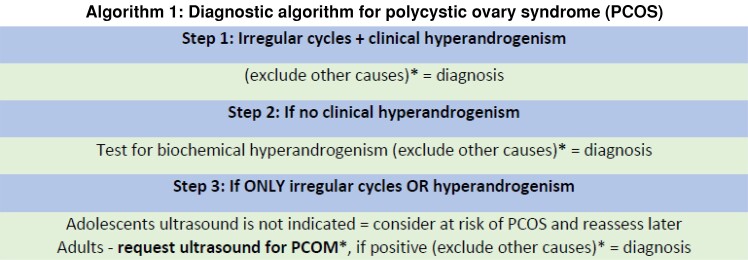
- Diagnostic updates include maintaining the 2018 criteria (two of clinical/biochemical hyperandrogenism, ovulatory dysfunction, and polycystic ovarian morphology), with serum AMH now usable instead of ultrasound in adults only; AMH should not be used as a single test or in adolescents, and ultrasound/AMH are not needed when irregular cycles and hyperandrogenism are present.
- Women with PCOS are recognized as at increased risk of impaired glucose tolerance/type 2 diabetes, cardiovascular disease, obstructive sleep apnoea, endometrial hyperplasia/cancer, and pregnancy complications; depression and anxiety are highly prevalent and screening is recommended; lifestyle management is core, with no single diet or exercise type shown superior.
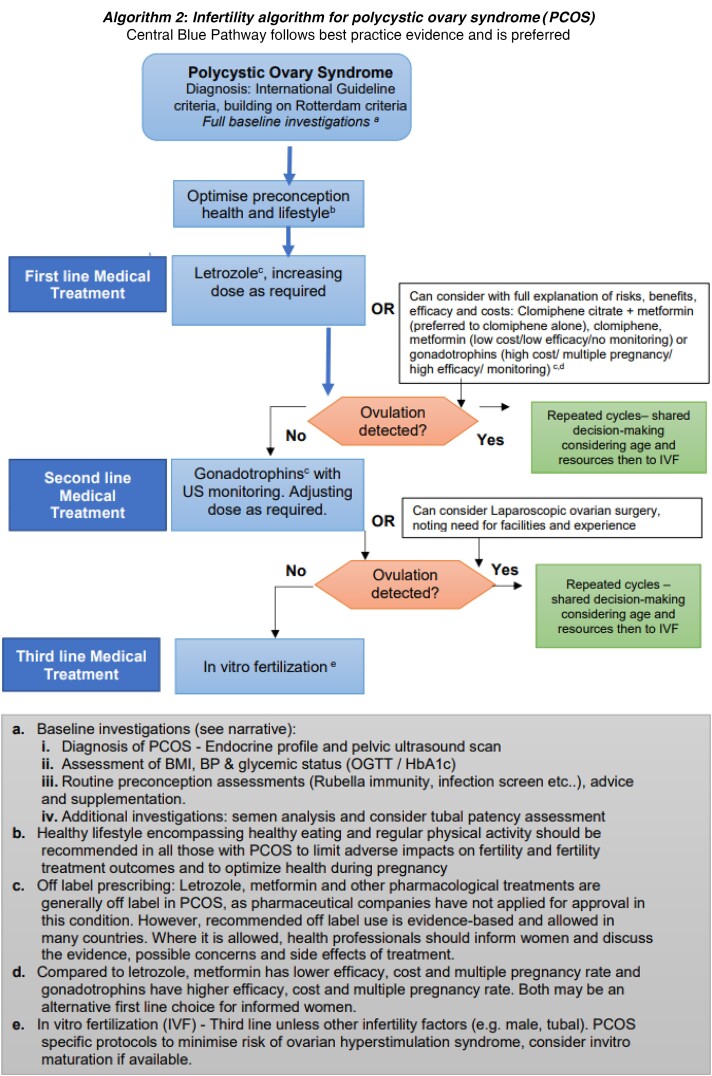
- For anovulatory infertility with no other infertility factors, letrozole should be first-line ovulation induction; clomiphene with metformin is an alternative; gonadotrophins or laparoscopic ovarian surgery are second-line; IVF is third-line; metformin in pregnancy has not been shown to prevent gestational diabetes, late miscarriage, hypertension in pregnancy, preeclampsia, or macrosomia/birthweight ≥4000 g.
Methods
- The update reengaged the 2018 network: 39 professional and consumer organizations covering 71 countries; governance included a six-continent international advisory and management committee, five guideline development groups with 56 members, and paediatric, consumer, and translation committees; 20 meetings and five face-to-face forums over 12 months.
- Evidence synthesis addressed 58 prioritized clinical questions in the abstract (the Methods section reports fifty-five) involving 52 systematic and 3 narrative reviews; AGREE-II-compliant processes and the GRADE framework were applied across evidence quality, feasibility, acceptability, cost, implementation, and recommendation strength, with diversity and inclusion considered throughout.
- Recommendations were categorized as evidence-based, consensus, or practice points; a technical evidence report and analyses (~6000 pages) underpins 77 evidence-based and 54 consensus recommendations with 123 practice points, approved by the Australian NHMRC.
Limitations
- Stated: evidence in PCOS assessment and management has generally improved but remains low to moderate quality; recommendations are strengthened yet still generally low to moderate quality; significantly greater research is needed; regional health system variation was considered and acknowledged with a further adaptation process.
- Stated: several areas have limited evidence—AMH should not yet be used in adolescents, there are no definitive ultrasound PCOM criteria in adolescents, PCOS-specific evidence is limited for COCPs, anti-androgens, and inositol, and long-term offspring effects of metformin exposure remain unclear.
- Evident: this article is a summary of the guideline; the full technical report and GRADE profiles are not included, so detailed evidence per recommendation cannot be assessed here, and several recommendations are consensus-based due to insufficient PCOS evidence, with some medications used off-label.
Model-written summary. Check it against the paper before relying on it.
Integrity signals
Registry
Cites
Statistics
Figures
Verification
Claims the paper makes
9 Valid · 64 Not valid · 1 Not checked · 61 Own results and interpretations
The sources with a verdict support this claim; the rest weren’t checked yet, have no full text we could read, or their verdicts aren’t rated yet.
In the paper
“clinical presentation is heterogeneous with reproductive, metabolic, and psychological features (1, 2).”
§ Recommendations From the 2023 International Evidence-based Guideline for the Assessment and Management of Polycystic Ovary Syndrome > Introduction
What the sources say
- Supportedcites [1] Teede, 2010, Polycystic ovary syndrome: a complex condition with psychological, reproductive and metabolic manifestations that impacts on health across the lifespan, BMC Med source
The Introduction’s “Clinical features of PCOS” section explicitly describes PCOS as heterogeneous and says its presentation includes psychological, reproductive, and metabolic features. Appendix 1 also lists features in each of those three categories. (LLM, conf=0.95)
- Not checked — no full text of the sourcecites [2] Azziz, 2016, Polycystic ovary syndrome, Nat Rev Dis Primers source
plain- Asserted: passes — The authors put it forward as true.
- Checkable: passes — It can be checked against evidence.
- Load-bearing: unclear — It is unclear whether the paper’s conclusions depend on it.
- Based: passes — The paper gives a reason why it holds.
- Supported
The sources with a verdict support this claim; the rest weren’t checked yet, have no full text we could read, or their verdicts aren’t rated yet.
In the paper
“Women internationally experience delayed diagnosis and dissatisfaction with care (3-5).”
§ Recommendations From the 2023 International Evidence-based Guideline for the Assessment and Management of Polycystic Ovary Syndrome > Introduction
What the sources say
- Supportedcites [3] Gibson-Helm, 2017, Delayed diagnosis and lack of information associated with dissatisfaction in women with polycystic ovary syndrome, J Clin Endo & Metab source
The Discussion (Summary of findings) reports that, across world regions, very few women with PCOS were satisfied with their diagnosis experience or the information provided at diagnosis. This supports the citing sentence’s reference to dissatisfaction with care in the context of delayed diagnosis. (LLM, conf=0.92)
- Not checked — no full text of the sourcecites [4] Dokras, 2017, Gaps in knowledge among physicians regarding diagnostic criteria and management of polycystic ovary syndrome, Fertil Steril source
- Not checked — no full text of the sourcecites [5] Teede, 2014, Polycystic ovary syndrome: perceptions and attitudes of women and primary health care physicians on features of PCOS and renaming the syndrome, J Clin Endocrinol Metab source
plain- Asserted: passes — The authors put it forward as true.
- Checkable: passes — It can be checked against evidence.
- Load-bearing: unclear — It is unclear whether the paper’s conclusions depend on it.
- Based: passes — The paper gives a reason why it holds.
- Supported
The sources with a verdict support this claim; the rest weren’t checked yet, have no full text we could read, or their verdicts aren’t rated yet.
In the paper
“Women internationally experience delayed diagnosis and dissatisfaction with care (3-5).”
§ Recommendations From the 2023 International Evidence-based Guideline for the Assessment and Management of Polycystic Ovary Syndrome > Introduction
What the sources say
- Supportedcites [3] Gibson-Helm, 2017, Delayed diagnosis and lack of information associated with dissatisfaction in women with polycystic ovary syndrome, J Clin Endo & Metab source
The Conclusions state that delayed diagnosis is common among women with PCOS worldwide. The Discussion’s “Diagnosis experience” section also reports that diagnosis took at least a year for many women in each world region studied. (LLM, conf=0.94)
- Not checked — no full text of the sourcecites [4] Dokras, 2017, Gaps in knowledge among physicians regarding diagnostic criteria and management of polycystic ovary syndrome, Fertil Steril source
- Not checked — no full text of the sourcecites [5] Teede, 2014, Polycystic ovary syndrome: perceptions and attitudes of women and primary health care physicians on features of PCOS and renaming the syndrome, J Clin Endocrinol Metab source
plain- Asserted: passes — The authors put it forward as true.
- Checkable: passes — It can be checked against evidence.
- Load-bearing: passes — The paper’s conclusions depend on it.
- Based: passes — The paper gives a reason why it holds.
- Supported
The paper states this without a source or data behind it here, so there is nothing to check it against. The quote shows it is in the paper.
In the paper
“Symptoms of depression and anxiety are significantly increased and should be screened for in all women with PCOS, with psychological assessment and therapy as indicated.”
§ Recommendations From the 2023 International Evidence-based Guideline for the Assessment and Management of Polycystic Ovary Syndrome > Discussion
plainstates an association- Asserted: passes — The authors put it forward as true.
- Checkable: passes — It can be checked against evidence.
- Load-bearing: passes — The paper’s conclusions depend on it.
- Based: unclear — It is unclear why the paper says it holds.
A result the paper states — it cites no source for it, so there is none to check. The quote shows it is in the paper.
In the paper
“high risk status for adverse outcomes during pregnancy”
§ Recommendations From the 2023 International Evidence-based Guideline for the Assessment and Management of Polycystic Ovary Syndrome > Abstract > Main Results and the Role of Chance
plainstates an association- Asserted: passes — The authors put it forward as true.
- Checkable: passes — It can be checked against evidence.
- Load-bearing: passes — The paper’s conclusions depend on it.
- Based: passes — The paper gives a reason why it holds.
50 more claims
Create a free account to see all 135 claims and every source verdict.
- Probably not a substantial claim. 68
- It may state two separate claims as one. 31
Claims other papers make about this one
Each is checked against this paper’s own text: does it say what the citing paper says it does?
The cited source doesn’t support the claim as written.
In the citing paper
“No benefits on hirsutism are to be expected [161].”
From Precision obesity medicine: A phenotype-guided framework for pharmacologic therapy across the lifespan (2025) · cites this paper as [161]
Checked by a reasoning model — may be wrong.
Experimental — accuracy not yet measuredThe source backs part of the claim, not all of it — or backs it for a different population, condition or comparison.
In the citing paper
“Weight loss is recommended for people with PCOS and BMI ≥ 25, as it has been shown to improve both reproductive and metabolic outcomes [161].”
From Precision obesity medicine: A phenotype-guided framework for pharmacologic therapy across the lifespan (2025) · cites this paper as [161]
Experimental — accuracy not yet measuredThe source backs part of the claim, not all of it — or backs it for a different population, condition or comparison.
In the citing paper
“It can also be used for irregular menstrual cycles, to improve pregnancy rates [161].”
From Precision obesity medicine: A phenotype-guided framework for pharmacologic therapy across the lifespan (2025) · cites this paper as [161]
Experimental — accuracy not yet measuredThe source backs part of the claim, not all of it — or backs it for a different population, condition or comparison.
In the citing paper
“Obesity is more prevalent among females with PCOS than in the general population; it contributes to the development of PCOS and worsens [161] its clinical features”
From Precision obesity medicine: A phenotype-guided framework for pharmacologic therapy across the lifespan (2025) · cites this paper as [161]
Experimental — accuracy not yet measuredThe source backs part of the claim, not all of it — or backs it for a different population, condition or comparison.
In the citing paper
“Metformin is recommended in adults with PCOS and a BMI ≥ 25 to improve insulin resistance, glucose and lipid profiles, but not for weight loss [161].”
From Precision obesity medicine: A phenotype-guided framework for pharmacologic therapy across the lifespan (2025) · cites this paper as [161]
Experimental — accuracy not yet measured
11 more claims about this paper
Create a free account to see every claim other papers make about this one.
Self-check
Percentages, sums and reported differences re-computed from the paper’s own numbers.
Each contradiction between two passages listed here was confirmed by an independent check.
Rated minor: it would not touch a result — a value no result rests on, a p-value that stays on the same side of the significance level, or a conflict that is clerical, resolved elsewhere in the paper, or outside its own findings.
In the paper
§ Recommendations From the 2023 International Evidence-based Guideline for the Assessment and Management of Polycystic Ovary Syndrome > Abstract > Participants/Materials, Setting, Methods
“Twenty meetings and five face-to-face forums over 12 months addressed 58 prioritized clinical questions involving 52 systematic and 3 narrative reviews.”
§ Recommendations From the 2023 International Evidence-based Guideline for the Assessment and Management of Polycystic Ovary Syndrome > Materials and Methods
“With international meetings over 12 months fifty-five prioritized clinical questions involved 52 systematic and three narrative reviews, generating evidence-based and consensus recommendations with accompanying practice points.”
Citations
Cites
AGREE II: advancing guideline development, reporting and evaluation in health care
Brouwers, M. C., Kho, M. E., Browman, G. P., Burgers, J. S., Cluzeau, F., Feder, G., Fervers, B., Graham, I. D., Grimshaw, J., Hanna, S. E., et al. (2010) · Canadian Medical Association Journal · doi:10.1503/cmaj.090449 · Cited by 3,790 · cited 2×
“10-12 Evidence synthesis methods are outlined in the full guideline and followed best practice 9,13,14 Guideline recommendations are presented by category, terms used, evidence quality and Grading of Recommendations, Assessment, Development, and Evaluation (GRADE) framework considerations.”
MethodAzziz, R., Carmina, E., Chen, Z., Dunaif, A., Laven, J. S. E., Legro, R. S., Lizneva, D., Natterson-Horowtiz, B., Teede, H. J., & Yildiz, B. O. (2016) · Nature Reviews Disease Primers · doi:10.1038/nrdp.2016.57 · Cited by 2,005 · cited 4×
“The 5 GDGs covered: (1) Screening, diagnostic and risk assessment and life stage; (2) Psychological features and models of care; (3) Lifestyle management; (4) Management of nonfertility features; and (5) Assessment and management of infertility.”
BackgroundMethodInfluentialSelf-citationTeede, H. J., Misso, M. L., Costello, M. F., Dokras, A., Laven, J., Moran, L., Piltonen, T., Norman, R. J., & the International PCOS Network (2018) · Clinical Endocrinology · doi:10.1111/cen.13795 · Cited by 1,823
Self-citationTeede, H. J., Misso, M. L., Costello, M. F., Dokras, A., Laven, J., Moran, L., Piltonen, T., Norman, R. J., International PCOS Network, Andersen, M., et al. (2018) · Human Reproduction · doi:10.1093/humrep/dey256 · Cited by 1,593
Self-citationTeede, H., Deeks, A., & Moran, L. (2010) · BMC Medicine · doi:10.1186/1741-7015-8-41 · Cited by 1,565 · cited 3×
“The 5 GDGs covered: (1) Screening, diagnostic and risk assessment and life stage; (2) Psychological features and models of care; (3) Lifestyle management; (4) Management of nonfertility features; and (5) Assessment and management of infertility.”
Self-citationGibson-Helm, M., Teede, H., Dunaif, A., & Dokras, A. (2016) · The Journal of Clinical Endocrinology & Metabolism · doi:10.1210/jc.2016-2963 · Cited by 428 · cited 3×
“The 5 GDGs covered: (1) Screening, diagnostic and risk assessment and life stage; (2) Psychological features and models of care; (3) Lifestyle management; (4) Management of nonfertility features; and (5) Assessment and management of infertility.”
BackgroundSelf-citationDokras, A., Saini, S., Gibson-Helm, M., Schulkin, J., Cooney, L., & Teede, H. (2017) · Fertility and Sterility · doi:10.1016/j.fertnstert.2017.04.011 · Cited by 218 · cited 2×
“The 5 GDGs covered: (1) Screening, diagnostic and risk assessment and life stage; (2) Psychological features and models of care; (3) Lifestyle management; (4) Management of nonfertility features; and (5) Assessment and management of infertility.”
BackgroundSelf-citationMol, B. W., Lai, S., Rahim, A., Bordewijk, E. M., Wang, R., van Eekelen, R., Gurrin, L. C., Thornton, J. G., van Wely, M., & Li, W. (2023) · Research Integrity and Peer Review · doi:10.1186/s41073-023-00130-8 · Cited by 154
A checklist to assess Trustworthiness in RAndomised Controlled Trials (TRACT checklist)
Mol, B. W., Lai, S., Rahim, A., Bordewijk, E. M., Wang, R., Eekelen, R. V., Gurrin, L. C., Thornton, J. G., Wely, M. V., & Li, W. (2023) · doi:10.21203/rs.3.rs-2119486/v1 · Cited by 149
Teede, H., Gibson-Helm, M., Norman, R. J., & Boyle, J. (2014) · The Journal of Clinical Endocrinology & Metabolism · doi:10.1210/jc.2013-2978 · Cited by 93 · cited 2×
“The 5 GDGs covered: (1) Screening, diagnostic and risk assessment and life stage; (2) Psychological features and models of care; (3) Lifestyle management; (4) Management of nonfertility features; and (5) Assessment and management of infertility.”
BackgroundSelf-citation
Cited by
Items 301–400 of 911
Liu, J., Cai, Y., Li, J., & Zhang, X. (2025) · PLoS ONE · doi:10.1371/journal.pone.0329090 · Cited by 8
Ghobrial, S., Krysiak, R. G., Goldstein, T., Patsch, A., Paternostro, C., Heinzl, F., Marculescu, R., & Ott, J. (2025) · Frontiers in Endocrinology · doi:10.3389/fendo.2025.1674795 · Cited by 3
“PCOM is de fi ned by a follicle number per ovary (FNPO) >20 in at least one ovary and/or an ovarian volume ≥ 10 ml or follicle number per section (FNPS) ≥ 10 in either ovary, which is consistent with international recommendations (21).”
InfluentialReproductive History and Cardio-Metabolic Risk in the Postmenopausal Age
Cucinella, L., Odone, A., & Nappi, R. E. (2025) · Seminars in Reproductive Medicine · doi:10.1055/s-0045-1811965 · Cited by 5
Yang, Q., Benny, P. A., Lee, J. J. N., Nadjaja, D. N., Sashidharan, S. P., Yong, E., Choolani, M. A., Chew, S., Li, L., Wong, P. C., et al. (2025) · Human Reproduction Open · doi:10.1093/hropen/hoaf062 · Cited by 3
Burns, K. A., Stuckey, A. W., Wilson, S. G., Watts, G. F., & Stuckey, B. G. A. (2025) · Frontiers in Endocrinology · doi:10.3389/fendo.2025.1572427 · Cited by 8
“The Androstenedione has been considered of little diagnostic or clinical utility in PCOS (43 – 45), though the fi ndings herein dispute that view.”
Hu, X., Zhu, M., Zhou, Q., Li, Z., Luo, L., Liang, W., Chen, S., Pu, X., & Du, J. (2025) · Drug Design Development and Therapy · doi:10.2147/dddt.s574929 · Cited by 5
“14 This discrepancy underscores the strong impact of diagnostic frameworks—particularly the inclusion of polycystic ovary morphology (PCOM)—on epidemiological estimates.”
Athamneh, A. A., Farfoura, M. E., Khaleel, A., & Connie, T. (2025) · Genes · doi:10.3390/genes17010028 · Cited by 3
“Our machine learning framework contributes to personalized PCOS medicine by identifying transcriptomic signatures that could support patient stratification beyond conventional phenotyping [68].”
Wu, X., Yi, W., & Liu, X. (2026) · Biomedicines · doi:10.3390/biomedicines14010213 · Cited by 8
“It is clinically defined by at least two of the following: (1) oligo-anovulation, (2) hyper-androgenism (clinical or biochemical), and (3) polycystic ovary morphology or increased anti-Müllerian hormone levels [4].”
InfluentialPolycystic Ovarian Syndrome and the Long-Term Risk of Arrhythmias
Reinert, M. S., Ryde, H. V., Sørensen, L. M., Johansen, S. E., Svendsen, P. F., Køber, L., Fosbøl, E. L., & Havers‐Borgersen, E. (2026) · Circulation · doi:10.1161/circulationaha.125.078039 · Cited by 6
Tiwari, S., Shukla, A., & Sharma, A. K. (2026) · Intelligence-Based Medicine · doi:10.1016/j.ibmed.2026.100358 · Cited by 3
Liu, S., Wang, R., Yu, W., Shi, C., Wang, X., Liu, A., & Zhang, L. (2026) · Nutrients · doi:10.3390/nu18060964 · Cited by 6
Hu, S., Shen, Q., Li, Z., He, T., Luo, Y., Tu, P., Yan, C., & Lei, J. (2026) · Reproductive Biology and Endocrinology · doi:10.1186/s12958-026-01563-8 · Cited by 6
Incretin-Based Anti-obesity Medications in Polycystic Ovary Syndrome: The Evidence Map
Jensterle, M., & Janež, A. (2026) · Drugs · doi:10.1007/s40265-026-02325-x · Cited by 6
“Women with PCOS have a two-to four-fold higher prevalence of OSAS, driven by visceral adiposity, hyperandrogenism, insulin resistance, low-grade inflammation, and upper-airway anatomical susceptibility [8].”
InfluentialWu, P., Chew-Graham, C. A., Heera-Shergill, N., & Heald, A. H. (2026) · BMJ · doi:10.1136/bmj.s893 · Cited by 4
From PCOS to PMOS: inclusion of the adolescent voice in setting clinical and research priorities
Cree, M. G., Bagga, I., Phimphasone‐Brady, P., et al. (2026) · The Lancet Child & Adolescent Health · doi:10.1016/s2352-4642(26)00129-x · Cited by 3
Self-citationZhao, Y., Xiong, S., Liu, T., Shu, J., Zhu, T., Li, S., Zhong, M., Zhao, S., Huang, X., & Liu, S. (2024) · Frontiers in Endocrinology · doi:10.3389/fendo.2024.1355703 · Cited by 7
Risk Factors for Incident Polycystic Ovary Syndrome Diagnosis
Christ, J. P., Yu, O., Barton, B. E., Schulze‐Rath, R., Grafton, J. R., Cronkite, D., Covey, J., Kelley, A., Holden, E., Hilpert, J., et al. (2024) · Journal of Women s Health · doi:10.1089/jwh.2023.0741 · Cited by 8
Sacca, L., Okwaraji, G., Densley, S., Marciniak, A., Knecht, M. K., Wilson, C., Pilitsis, J. G., & Hopkins, D. K. (2024) · SAGE Open Medicine · doi:10.1177/20503121241262158 · Cited by 5
“39 Pregnant females exhibit higher vulnerability to PCOS complications, including difficulty in conceiving, having a miscarriage, hypertensive disorders, gestational diabetes, and premature birth.”
BackgroundRobeva, R. N., Andonova, S., Todorov, T., Feyzullova, A., Elenkova, A. P., Кirilov, G., Savov, A. S., Zacharieva, S., & Тодорова, А. (2024) · Biomedicines · doi:10.3390/biomedicines12071528 · Cited by 5
Merhi, Z. O. (2024) · F&S Reports · doi:10.1016/j.xfre.2024.12.003 · Cited by 12
Zhao, F.-L., Wen, D., Zeng, L., Wang, R., Wang, D., Xu, H., Li, R., & Chi, H. (2025) · Reproductive Biology and Endocrinology · doi:10.1186/s12958-025-01347-6 · Cited by 6
Mladenov, V., Radanova, M. A., Galcheva, S., & Iotova, V. (2025) · Applied Sciences · doi:10.3390/app15052772 · Cited by 3
Special Issue “New Challenges and Perspectives in Polycystic Ovary Syndrome”
Parker, J., & Hofstee, P. (2025) · International Journal of Molecular Sciences · doi:10.3390/ijms26062665 · Cited by 3
Brauchmann, J., Laudenbach, L., Kapp, P., Grummich, K., Lischka, J., Vanersa, N., Rocha, E. P. A. A., Ernst, G., Meerpohl, J. J., Tannen, A., et al. (2025) · Obesity Reviews · doi:10.1111/obr.13945 · Cited by 6
Du, M., & Ge, H. (2025) · Medicine · doi:10.1097/md.0000000000042481 · Cited by 5
“[20] ; aged 20 to 35 years; infertile for at least 1 year; undergoing IVF/ICSI for infertility; and consenting to pregnancy monitoring and delivery at our hospital.”
Etrusco, A., D’Amato, A., Agrifoglio, V., Laganà, A. S., Andrisani, A., Cantatore, C., Caringella, A. M., FRANCISCIS, P. D., & Riemma, G. (2025) · European Journal of Obstetrics & Gynecology and Reproductive Biology · doi:10.1016/j.ejogrb.2025.114531 · Cited by 3
Vieyra, E., Silva, C., Linares, R., Rosas, G., Espinoza, J.-A., Chaparro, A., Calderón, R., de la Peña, B., & Morales‐Ledesma, L. (2025) · Molecules · doi:10.3390/molecules30163407 · Cited by 6
Hanassab, S., Southern, J., Olabode, A. V., Laponogov, I., Bronstein, M. M., Comninos, A. N., Heinis, T., Abbara, A., Izzi‐Engbeaya, C. N., Veselkov, K., et al. (2025) · npj Women s Health · doi:10.1038/s44294-025-00117-4 · Cited by 4
Lifestyle Medicine’s Role in Common Hormonal Disorders: A Case-Based Discussion
Gulati, M. (2024) · American Journal of Lifestyle Medicine · doi:10.1177/15598276241242012 · Cited by 5
Jiang, L., Sun, Y., Pan, P., Li, L., Yang, D., Huang, J., & Li, Y. (2024) · Frontiers in Endocrinology · doi:10.3389/fendo.2024.1348771 · Cited by 4
Practise Updates: Diagnosis and Management of Idiopathic Hirsutism
Khare, V. R., Sinha, B., Sengupta, N., Chatterjee, S., Maji, D., Majumder, A., Guha, P., Datta, S., Hawelia, D. K., Bhattacharyya, S., et al. (2024) · Indian Journal of Endocrinology and Metabolism · doi:10.4103/ijem.ijem_2_24 · Cited by 8
“[8] IH is also common among certain ethnicities like the women of the Mediterranean region.”
BackgroundOliveira, T. F., Oliveira, T. F., dos Reis, F. M., et al. (2024) · Archives of Dermatological Research · doi:10.1007/s00403-024-03206-7 · Cited by 3
Signs of Potential Androgen Excess Across the Lifespan in a US-based Digital Cohort Study
Wolf, A. T., Wang, Z., Onnela, J.-P. “., Baird, D. D., Jukic, A. M. Z., Curry, C. L., Fischer‐Colbrie, T., Williams, M. A., Hauser, R. B., Coull, B. A., et al. (2024) · The Journal of Clinical Endocrinology & Metabolism · doi:10.1210/clinem/dgae674 · Cited by 3
“As AE is one of the diagnostic criteria of PCOS (clinical or bio-chemical hyperandrogenism, oligo and/or anovulation, and polycystic ovaries on transvaginal or transabdominal ultrasound) (42, 43), signs of potential AE were indeed more prevalent in those with PCOS.”
Ormoni steroidei surrenalici: deidroepiandrosterone e deidroepiandrosterone-solfato
Dorizzi, R. M., del GdS-EMM, A. N., & BRESCIA, V. (2024) · La Rivista Italiana della Medicina di Laboratorio - Italian Journal of Laboratory Medicine · doi:10.23736/s1825-859x.24.00262-7 · Cited by 3
Wang, R., Qi, S., Wang, Q., Lang, J., Pang, C., & Wang, K. (2025) · BMC Endocrine Disorders · doi:10.1186/s12902-024-01827-7 · Cited by 6
Li, X., Min, M., Duan, F., Ruan, X., & Xu, L. (2025) · BMC Women s Health · doi:10.1186/s12905-025-03648-9 · Cited by 3
“However, according to the recommendations of the 2023 International Evidence-based Guideline for the Assessment and Management of Polycystic Ovary Syndrome [47], upper abdominal ultrasound is not a routine procedure for PCOS patients.”
Disparities in the Diagnosis and Management of Polycystic Ovarian Syndrome in Adolescents
Waldrop, S., Buenaventura, M., Reyes, K. J. C., & Stanford, F. C. (2025) · Endocrinology and Metabolism Clinics of North America · doi:10.1016/j.ecl.2025.02.016 · Cited by 4
Gleason, E. G., Levine, L. D., Lee, I. T., Koelper, N., Amaro, A., & Dokras, A. (2025) · Fertility and Sterility · doi:10.1016/j.fertnstert.2025.04.009 · Cited by 3
Self-citationThe emerging roles of N6-methyladenosine (m6A) deregulation in polycystic ovary syndrome
Jiang, L., Xiao, J., Xie, L., Zheng, F., Ge, F., Zhao, X. Y., Qiang, R., Fang, J., Liu, Z., Xu, Z., et al. (2025) · Journal of Ovarian Research · doi:10.1186/s13048-025-01690-7 · Cited by 5
The hyperemic response to exercise is blunted in females with polycystic ovary syndrome
Huckins, W., Delage, S. I., Berbrier, D. E., Skolnik, D. A., Keightley, H. S. A., & Usselman, C. W. (2025) · American Journal of Physiology-Regulatory, Integrative and Comparative Physiology · doi:10.1152/ajpregu.00263.2024 · Cited by 4
Rosenfield, R. L., Martin, K. A., Chang, R. J., Ehrmann, D. A., Løbo, R. A., & PUGEAT, M. M. (2024) · The Journal of Clinical Endocrinology & Metabolism · doi:10.1210/clinem/dgae368 · Cited by 3
SoK: Intelligent Detection for Polycystic Ovary Syndrome(PCOS)Preprint
Li, M., He, Z. S., Nie, L., Shi, L., Lin, M., Li, M., Cheng, Y., Liu, H., & Xue, L. (2024) · medRxiv · doi:10.1101/2024.12.25.24319623 · Cited by 3
Zhu, J., Wang, J., Jin, Z.-Y., Li, D., Qi, S., Han, S., Chang, S.-Y., Yan, J., Kang, J., & Quan, L. (2024) · Biochemical Pharmacology · doi:10.1016/j.bcp.2024.116517 · Cited by 3
Bhatia, D. S., Sharma, D., Shah, K., Alam, P., & Dewangan, H. K. (2025) · Journal of Reproductive Immunology · doi:10.1016/j.jri.2025.104532 · Cited by 2
Emanuel, R. H. K., Docherty, P. D., Lunt, H., & Campbell, R. E. (2025) · Physical and Engineering Sciences in Medicine · doi:10.1007/s13246-025-01539-9 · Cited by 3
Wu, J., Pan, Y., Lu, Y., Qian, J., Zhang, J., Xue, Y., Xiao, C., Qiu, Y., Xie, M., & Li, S. (2025) · Scientific Reports · doi:10.1038/s41598-025-98869-1 · Cited by 5
“Metformin and pioglitazone are commonly prescribed for insulin resistance and type 2 diabetes 58,63,64 , although it has been used clinically for decades and the gut is the site of important adverse effects during metformin therapy, which often completely limits the dose or use of metformin 65 .”
Vágvölgyi, A., Vedelek, V., Keller, N., Szöllősi, D., Lada, S., Nemes, A., Kempler, P., Menyhárt, A., Baczkó, I., Várkonyi, T. T., et al. (2025) · Frontiers in Endocrinology · doi:10.3389/fendo.2025.1548587 · Cited by 2
Liang, Y., Zhang, Q., & Lou, Z. (2025) · Frontiers in Endocrinology · doi:10.3389/fendo.2025.1545508 · Cited by 4
Fu, M., Zhu, X., Chen, J., Guan, J., Ding, H., Gao, Q., & Qin, S. (2025) · American Journal of Translational Research · doi:10.62347/pgyy9493 · Cited by 3
Wang, Z., Teng, X., Liu, Y., Shen, Y., Ma, L., & Chen, Y. X. (2025) · BMC Endocrine Disorders · doi:10.1186/s12902-025-01975-4 · Cited by 3
Cebada, A. B., Nattero‐Chávez, L., de la Villa, E. D. L. C., Tobar, A. Q., Quiñones, S. D. L., Avendaño, B. D., Fiers, T., Jean-Marc, K., Luque‐Ramírez, M., & Escobar-Morreale, H. F. (2025) · Human Reproduction Open · doi:10.1093/hropen/hoaf048 · Cited by 4
The Evolving Role of Anti-Müllerian Hormone Measurements in Clinical Practice
Zhang, X. S., & Noguez, J. H. (2025) · The Journal of Applied Laboratory Medicine · doi:10.1093/jalm/jfaf096 · Cited by 3
Understanding Dysmenorrhea in Individuals with Polycystic Ovary Morphology (PCOM)
Romeo, P., Freger, S., McGowan, K., & Leonardi, M. (2025) · Journal of Endometriosis and Uterine Disorders · doi:10.1016/j.jeud.2025.100131 · Cited by 2
Adolescent hyperandrogenism: diagnostic challenges and therapeutic approaches
Concepción‐Zavaleta, M. J., Fuentes‐Mendoza, J. M., Zavaleta‐Gutiérrez, F. E., Arias-Cantor, B. Y., Figueredo-Rueda, M. V., Arroyo, J., & Paz‐Ibarra, J. (2025) · World Journal of Pediatrics · doi:10.1007/s12519-025-00972-w · Cited by 4
“Current international guidelines strongly recommend against routine pelvic ultrasound for PCOS diagnosis in adolescents, particularly within 8 years post-menarche [18, 44].”
InfluentialCavalcante, D. C. B., Scandolara, T. B., Kogure, G. S., Rodrigues, C. G., Verruma, C. G., de Moraes, M. O., dos Reis, R. M., Cavalcante, M. B., & Furtado, C. L. M. (2025) · Revista Brasileira Ginecologia e Obstetrícia · doi:10.61622/rbgo/2025rbgo56 · Cited by 7
Effects of Genistein on polycystic ovary syndrome of rats: a systematic review and meta-analysis
Su, P., Xu, Z., Pang, L., Chen, Y., Dong, J., & Sun, Y. (2025) · BMC Endocrine Disorders · doi:10.1186/s12902-025-02035-7 · Cited by 4
“The global prevalence of PCOS is estimated to range from 10 to 13% [1].”
Safdar, I., Vettese, R., Hinz, H., Brink, H. V., Brennand, E. A., Dumanski, S. M., Yamamoto, J. M., & Benham, J. L. (2025) · Diabetes Technology and Obesity Medicine · doi:10.1177/29986702251388042 · Cited by 3
Üçgül, E., Menekşe, B., Demirci, H., & Çakal, E. (2025) · Journal of Endocrinological Investigation · doi:10.1007/s40618-025-02761-8 · Cited by 2
Russo, M., Porcaro, G., Aragona, C., Bilotta, G., Liberto, M. D., & Unfer, V. (2025) · Nutrients · doi:10.3390/nu17233695 · Cited by 2
“Endorsement of FAI reliability published in ESHRE updated guidelines 2023 [2] and cut-off value of 4.5 reported by van Keizerswaard et al., 2022 [25].”
InfluentialLiu, L., Liu, B., Li, M., & Qin, L. (2025) · Journal of Ovarian Research · doi:10.1186/s13048-025-01884-z · Cited by 2
“Polycystic Ovary Syndrome (PCOS) is a prevalent endocrine disorder in women of reproductive age, with a worldwide prevalence of 12–13% [24].”
Wang, G., Guan, M., Li, R., He, T., Luo, L., Hu, S., Wang, B., Liu, D., & Lei, J. (2025) · Mindfulness · doi:10.1007/s12671-025-02717-2 · Cited by 4
“Beyond the physiological burden, PCOS carries a significant psychological toll, profoundly impacting patients’ quality of life (H. J. Teede et al., 2023a, 2023b).”
InfluentialAtmaca, L., Chauhan, S., Najaf, S. S., Elmadani, M., Al-Jawarneh, M., Soloh, A., Zsuzsanna, V., Vitrai, J., & Prémusz, V. (2026) · Frontiers in Sports and Active Living · doi:10.3389/fspor.2025.1686566 · Cited by 7
Nowak, J., Jabczyk, M., Borszcz, J., Jagielski, P., & Zubelewicz‐Szkodzińska, B. (2026) · Frontiers in Endocrinology · doi:10.3389/fendo.2025.1756679 · Cited by 3
Herndon, J. S., McNeil, J. A., Winter, S., & Chang, A. Y. (2026) · The Journal of Clinical Endocrinology & Metabolism · doi:10.1210/clinem/dgag032 · Cited by 1
Evaluation and management of chest pain from cardiovascular causes in female patients
Diercks, D., Cao, M., McHugh, M. C., Kibbey, C., & Farooqi, S. (2026) · BMJ · doi:10.1136/bmj-2025-086177 · Cited by 3
Research priorities for polycystic ovary syndrome
Channon, S., Coulman, E., Morman, R., Andrews, C., Morgan, F., Watson, J., Hounsome, J. C., Teede, H. J., Rees, D. A., Frcog, A. B. M., et al. (2026) · The Lancet Obstetrics Gynaecology & Women s Health · doi:10.1016/s3050-5038(26)00018-x · Cited by 3
Self-citationXu, Q., Qiu, S., Wang, L., Liu, Y., Lu, Y., Wu, L., & Zhang, J. (2026) · Molecular Human Reproduction · doi:10.1093/molehr/gaag005 · Cited by 3
Li, X., Chen, H., Li, P., Wang, M., Wu, D., Liu, J., & Chen, W. (2026) · Frontiers in Endocrinology · doi:10.3389/fendo.2026.1720242 · Cited by 2
Female infertility and long-term cardiovascular risk: a systematic review and meta-analysis
Polymeropoulou, C., Mili, N., Armeni, E., Siliogka, E., Augoulea, A., & Lambrinoudaki, I. V. (2026) · Endocrine · doi:10.1007/s12020-025-04543-x · Cited by 3
“Conditions such as PCOS, metabolic syndrome and endometriosis are highly prevalent among women with infer - tility and are themselves associated with adverse cardiomet - abolic profiles [ 43 , 44 ].”
Mao, D., Wei, Y., Wang, C., & Tao, J. (2026) · Archives of Gynecology and Obstetrics · doi:10.1007/s00404-026-08344-z · Cited by 3
Li, X., Xu, S., Xie, L., Kuang, H., Liu, J., & Li, Y. (2026) · Frontiers in Endocrinology · doi:10.3389/fendo.2026.1726938 · Cited by 2
“…Evidence-Based Guidelines report marked variation in care and low-to-moderate certainty of evidence for many interventions, highlighting the need for further rigorous evaluation of adjunctive, patient-centered strategies that may address metabolic risk and psychological well-being (6, 17).”
Du, C., Deng, L., Ran, J., Wang, Y., Tang, D., Liu, L., Liu, L., Wang, C. H., Ayis, S. A., Chen, L., et al. (2026) · Tropical Medicine & International Health · doi:10.1111/tmi.70110 · Cited by 2
Early pregnancy biomarkers of inflammation and metabolic regulation in polycystic ovary syndrome
Alesi, S., Mason, T., Ellery, S. J., Rassie, K. L., Neven, A. C. H., Belsti, Y., Jona, E., O'Reilly, S. L., Simmons, D., Teede, H., et al. (2026) · The Journal of Clinical Endocrinology & Metabolism · doi:10.1210/clinem/dgag098 · Cited by 1
Self-citationSocial deprivation, race, and metabolic syndrome in patients with polycystic ovary syndrome
Lee, I. T., King, S., Sealy, N. R. Z., Rees, J., Mumford, S. L., Hinkle, S. N., & Dokras, A. (2026) · Journal of the Endocrine Society · doi:10.1210/jendso/bvag063 · Cited by 2
Self-citationBanerjee, M., Dutta, S., & Dasgupta, S. (2026) · Diabetes Obesity and Metabolism · doi:10.1111/dom.70853 · Cited by 4
Rajit, D., McDonald, S. J., Du, L., Teede, H. J., & Enticott, J. (2026) · Journal of Clinical Epidemiology · doi:10.1016/j.jclinepi.2026.112349 · Cited by 2
Self-citationSong, E., Fang, Y., Li, X., Fu, W., He, H., Gao, Z., Tian, X., & Gao, B. (2026) · Frontiers in Nutrition · doi:10.3389/fnut.2026.1809416 · Cited by 4
“For current practice, the most defensible use of GLP-1RAs is as a time-bounded metabolic optimization strategy in women with meaningful obesity/insulin-resistance burden, with reproductive endpoints interpreted as potential downstream gains rather than guaranteed direct eects (17, 111, 112, 124).”
InfluentialVasavan, T., Getreu, N., Rutter, E., Biggs, R., Woolley, T., Timpson, A., & O’Neill, H. C. (2023) · Clinical Chemistry and Laboratory Medicine (CCLM) · doi:10.1515/cclm-2023-1072 · Cited by 3
“Depending on the guidance followed, low or high serum concentrations of E2 or T may be used to diagnose conditions such as hypogonadism and polycystic ovary syndrome respectively [4, 5].”
Polycystic Ovary Syndrome: Updated Recommendations of the International Science-Based Guide 2023
Иванова, А. Ю., & Mokhort, T. (2024) · Репродуктивное здоровье Восточная Европа · doi:10.34883/pi.2024.14.1.011 · Cited by 4
New aspects in the diagnosis and treatment of polycystic ovary syndrome
Efimenko, V. V., Викторович, Х. М., Gasanova, A. M., Martirosian, N. S., Кузина, И. А., Валерьевна, Г. Е., Эдуардовна, Т. М., & Petunina, N. A. (2024) · Meditsinskiy sovet = Medical Council · doi:10.21518/ms2024-205 · Cited by 4
Lou, A. H., Thoni, A. J., Shandi, N., Zhi-feng, Y., Nassar, B. A., & Elnenaei, M. O. (2024) · Clinical Biochemistry · doi:10.1016/j.clinbiochem.2024.110777 · Cited by 2
Liu, H., Liu, Y., Wei, C., Zhang, S., & Xu, Y. (2024) · Irish Journal of Medical Science (1971 -) · doi:10.1007/s11845-024-03760-z · Cited by 2
Sucu, S. T., & Keskin, H. L. (2024) · Medical Journal of Western Black Sea · doi:10.29058/mjwbs.1485822 · Cited by 2
Orosz, M., Borics, F., Rátonyi, D., Krasznai, Z. T., Vida, B., Herman, T., Csehely, S., Jakab, A., Lukács, L., Lampé, R., et al. (2024) · Journal of Clinical Medicine · doi:10.3390/jcm13185602 · Cited by 3
“According to recent recommendations [20], letrozole is recommended as the first-line treatment for women with anovulatory infertility.”
BackgroundMethodPkhaladze, L., Kamenov, Z. A., Nordio, M., Myers, S. H., & Unfer, V. (2024) · Gynecologic and Obstetric Investigation · doi:10.1159/000541287 · Cited by 2
Li, J., Hu, J., & Zhang, Q. (2024) · World Journal of Psychiatry · doi:10.5498/wjp.v14.i11.1623 · Cited by 4
Khomami, M. B. (2024) · Journal of Midwifery & Women s Health · doi:10.1111/jmwh.13706 · Cited by 3
Visfatin and VEGF levels are not increased in adolescent girls with polycystic ovary syndrome
Skrzyńska, K., Zachurzok, A., Pietrusik, A., Jakubowska-Kowal, K. M., & Gawlik, A. (2024) · Frontiers in Endocrinology · doi:10.3389/fendo.2024.1488249 · Cited by 5
Extracting Features and Sentiment from Text Posts and Comments Relating to Polycystic Ovary Syndrome
Emanuel, R. H. K., Docherty, P. D., Lunt, H., Campbell, R. E., & Möeller, K. (2024) · IFAC-PapersOnLine · doi:10.1016/j.ifacol.2024.11.005 · Cited by 2
Mitsunami, M., Kazemi, M., Nichols, A. R., Mínguez‐Alarcón, L., Fitz, V. W., Souter, I. C., Hauser, R. B., & Chavarro, J. E. (2025) · Nutrients · doi:10.3390/nu17030382 · Cited by 3
Sydora, B. C., Wilke, M. S., Ghosh, M., & Vine, D. F. (2025) · International Journal of Women s Health · doi:10.2147/ijwh.s504439 · Cited by 2
Kolańska, K., Zerbib, E., Dabi, Y., Chabbert‐Buffet, N., d’Argent, E. M., Favier, A., Ferrier, C., Touboul, C., Hamamah, S., & Daraï, É. (2025) · Reproductive BioMedicine Online · doi:10.1016/j.rbmo.2025.104957 · Cited by 4
Li, J., Dai, T., Liu, Y., Li, Y., Chen, T., Chen, X., & Li, J. (2025) · BMC Pregnancy and Childbirth · doi:10.1186/s12884-025-07455-w · Cited by 4
“According to the Rotterdam criteria, at least two conditions must be met for the diagnosis of PCOS: irregular ovulation, clinical or biochemical hyperandrogen, and polycystic ovary morphology [12].”
Magueresse, P. P. L., Navarro, P. M., & Carvajal, B. (2025) · Revista Colombiana de Obstetricia y Ginecología · doi:10.18597/rcog.4249 · Cited by 14
Ran, B., Liu, C., He, Y., Ma, L., & Wang, F. (2025) · Frontiers in Reproductive Health · doi:10.3389/frph.2025.1519249 · Cited by 2
Al-Qudah, A.-A., Al‐Hanaktah, M., & Albadaineh, R. (2025) · Journal of obstetrics and gynaecology research · doi:10.1111/jog.16296 · Cited by 3
Hu, S., Lalonde-Bester, S., Salem, J., Koshy, S., Vine, D. F., Harrison, T. G., Yamamoto, J. M., & Benham, J. L. (2025) · Human Reproduction · doi:10.1093/humrep/deaf094 · Cited by 2
Li, H., & Zhao, X. (2025) · Frontiers in Endocrinology · doi:10.3389/fendo.2025.1602622 · Cited by 2
Basnet, J., Rezq, S., Huffman, A. M., Asala, T. E., Cardozo, L. L. Y., & Romero, D. G. (2025) · Endocrinology · doi:10.1210/endocr/bqaf091 · Cited by 3
EndoBridge 2024: pearls and highlights
Yıldız, B. O., Armeni, E., Balodimou, C., Biondi, B., Ciudin, A., Frühbeck, G., Fuleihan, G. E., Geer, E. B., Gillard, P., Gordon, C. M., et al. (2025) · HORMONES · doi:10.1007/s42000-025-00708-5 · Cited by 4
“Treatment decisions should be tailored to each woman’s specific needs and pref - erences, considering factors such as age, menopausal status, and overall health [90].”
Metadata
- Authors
- Teede, H. J., Tay, C. T., Laven, J. J. E., Dokras, A., Moran, L. J., Piltonen, T. T., Costello, M. F., Boivin, J., Redman, L. M., Boyle, J. A., Norman, R. J., Mousa, A., & Joham, A. E.
- Affiliations
- Monash Health (AU)
- National Health and Medical Research Council Centre for Research Excellence in Women's Health in Reproductive Life , Melbourne, Victoria , Australia
- University of Pennsylvania (US)
- Oulu University Hospital (FI)
- UNSW Sydney (AU)
- Cardiff University (GB)
- Pennington Biomedical Research Center (US)
- Eastern Health (AU)
- National Health and Medical Research Council (AU)
- Corresponding author
- Teede, Helena J
- ORCID
- Venue
- The Journal of Clinical Endocrinology & Metabolism
- Publisher
- The Endocrine Society
- Published
- 2023-08-15
- Volume
- 108
- Issue
- 10
- Pages
- 2447-2469
- ISSN
- 0021-972X (ISSN-L)
- 1945-7197
- PMC
- PMC10505534
- OpenAlex
- W4385799520
- Cited by
- 946
- References
- 12
- Citations by year
- 2026: 375 · 2025: 320 · 2024: 215 · 2023: 36
- FWCI
- 226.69
- Type
- journal article
- Language
- en
- Open access
- hybrid
- doi.org
- Licence
- Locations
- The Journal of Clinical Endocrinology & Metabolism (publishedVersion, cc-by-nc)
- PubMed Central (publishedVersion, cc-by-nc)
- PubMed (publishedVersion)
- University of Birmingham Research Portal (University of Birmingham) (submittedVersion, other-oa)
- Funders
- National Health Medical Research Council (APP1171592)
- European Society of Human Reproduction and Embryology
- European Society for Endocrinology
- Medical Research Future Fund (MRFCRI000266)
- Topics
- Health Sciences › Medicine › Reproductive Medicine › Ovarian function and disorders
- Health Sciences › Medicine › Public Health, Environmental and Occupational Health › Clinical practice guidelines implementation
- Health Sciences › Medicine › Reproductive Medicine › Endometriosis Research and Treatment
- Keywords
- polycystic ovary syndrome, PCOS diagnosis, PCOS management, clinical guidelines, customer engagement, knowledge-practice gap, diagnostic criteria, reproductive outcomes, insulin resistance, hyperandrogenism, endometrial cancer risk, cardiovascular risk, mental health, quality of life, shared decision-making, patient-centered care, guideline development, AGREE II
- MeSH terms
- Adult, Australia, Child, Female, Humans, Infertility, Female, Polycystic Ovary Syndrome, Pregnancy, Quality of Life, Risk Factors, Practice Guidelines as Topic
About these checks
Registry, retraction, Cites and statistics results are computed, not judged, with one exception: a printed reference that no index lists is read once by a model before it counts as a citation error. Claims are extracted by a model and kept only when their quote appears verbatim in the text; each cited source is then checked, with a model’s help, for whether it says what the claim relies on. Those verdicts can be wrong — read the claim’s quote and the cited source before relying on one.
The claim verdicts this report counts are experimental: their accuracy is not yet measured.
A language model drew the claims from the paper on 2026-10-10, under version 3 of the claim definition (model deepseek-v4.1-flash, prompt extract-v3).
A second model labelled each claim on 2026-10-10 (model jev-1.13-20260917, definition revision gold-guideline-v0.2).
Cited sources are checked with a language model’s help (gpt-6-sol).
Statistics and arithmetic are recomputed, not judged.
Confidence bands are shown only for fields calibrated on our annotated test set. None is calibrated yet, so no band is shown.
What counts as a claim ›How we measure confidence ›How we check this ›
Are you an author, or do you see a problem with this page? Request a review
Data sources
Bibliographic data: Semantic Scholar, OpenAlex, Crossref.
Contains information from the Semantic Scholar Academic Graph Datasets, made available under the ODC Attribution License (ODC-BY 1.0).
Semantic Scholar’s data is described in: Kinney, R., et al. (2023). The Semantic Scholar Open Data Platform. arXiv:2301.10140.
