

Recommendations From the 2023 International Evidence-based Guideline for the Assessment and Management of Polycystic Ovary Syndrome
Open accessThe DOI matches its Crossref record; 13 of the 13 references it cites were found in a registry or an index; 10 of the 23 sources its claims cite were checked for support.
Abstract
Study Question: What is the recommended assessment and management of those with polycystic ovary syndrome (PCOS), based on the best available evidence, clinical expertise, and consumer preference? Summary Answer: International evidence-based guidelines address prioritized questions and outcomes and include 254 recommendations and practice points, to promote consistent, evidence-based care and improve the experience and health outcomes in PCOS. What is Known Already: The 2018 International PCOS Guideline was independently evaluated as high quality and integrated multidisciplinary and consumer perspectives from six continents; it is now used in 196 countries and is widely cited. It was based on best available, but generally very low to low quality, evidence. It applied robust methodological processes and addressed shared priorities. The guideline transitioned from consensus based to evidence-based diagnostic criteria and enhanced accuracy of diagnosis, whilst promoting consistency of care. However, diagnosis is still delayed, the needs of those with PCOS are not being adequately met, evidence quality was low and evidence-practice gaps persist. Study Design, Size, Duration: The 2023 International Evidence-based Guideline update reengaged the 2018 network across professional societies and consumer organizations with multidisciplinary experts and women with PCOS directly involved at all stages. Extensive evidence synthesis was completed. Appraisal of Guidelines for Research and Evaluation-II (AGREEII)-compliant processes were followed. The Grading of Recommendations, Assessment, Development, and Evaluation (GRADE) framework was applied across evidence quality, feasibility, acceptability, cost, implementation and ultimately recommendation strength and diversity and inclusion were considered throughout. Participants/Materials, Setting, Methods: This summary should be read in conjunction with the full Guideline for detailed participants and methods. Governance included a six-continent international advisory and management committee, five guideline development groups, and paediatric, consumer, and translation committees. Extensive consumer engagement and guideline experts informed the update scope and priorities. Engaged international society-nominated panels included paediatrics, endocrinology, gynaecology, primary care, reproductive endocrinology, obstetrics, psychiatry, psychology, dietetics, exercise physiology, obesity care, public health and other experts, alongside consumers, project management, evidence synthesis, statisticians and translation experts. Thirty-nine professional and consumer organizations covering 71 countries engaged in the process. Twenty meetings and five face-to-face forums over 12 months addressed 58 prioritized clinical questions involving 52 systematic and 3 narrative reviews. Evidence-based recommendations were developed and approved via consensus across five guideline panels, modified based on international feedback and peer review, independently reviewed for methodological rigour, and approved by the Australian Government National Health and Medical Research Council (NHMRC). Main Results and the Role of Chance: The evidence in the assessment and management of PCOS has generally improved in the past five years, but remains of low to moderate quality. The technical evidence report and analyses (∼6000 pages) underpins 77 evidence-based and 54 consensus recommendations, with 123 practice points. Key updates include: i) further refinement of individual diagnostic criteria, a simplified diagnostic algorithm and inclusion of anti-Müllerian hormone (AMH) levels as an alternative to ultrasound in adults only; ii) strengthening recognition of broader features of PCOS including metabolic risk factors, cardiovascular disease, sleep apnea, very high prevalence of psychological features, and high risk status for adverse outcomes during pregnancy; iii) emphasizing the poorly recognized, diverse burden of disease and the need for greater healthcare professional education, evidence-based patient information, improved models of care and shared decision making to improve patient experience, alongside greater research; iv) maintained emphasis on healthy lifestyle, emotional wellbeing and quality of life, with awareness and consideration of weight stigma; and v) emphasizing evidence-based medical therapy and cheaper and safer fertility management. Limitations, Reasons for Caution: Overall, recommendations are strengthened and evidence is improved, but remain generally low to moderate quality. Significantly greater research is now needed in this neglected, yet common condition. Regional health system variation was considered and acknowledged, with a further process for guideline and translation resource adaptation provided. Wider Implications of the Findings: The 2023 International Guideline for the Assessment and Management of PCOS provides clinicians and patients with clear advice on best practice, based on the best available evidence, expert multidisciplinary input and consumer preferences. Research recommendations have been generated and a comprehensive multifaceted dissemination and translation programme supports the Guideline with an integrated evaluation program. Study Funding/Competing Interest(s): This effort was primarily funded by the Australian Government via the National Health Medical Research Council (NHMRC) (APP1171592), supported by a partnership with American Society for Reproductive Medicine, Endocrine Society, European Society for Human Reproduction and Embryology, and the European Society for Endocrinology. The Commonwealth Government of Australia also supported Guideline translation through the Medical Research Future Fund (MRFCRI000266). HJT and AM are funded by NHMRC fellowships. JT is funded by a Royal Australasian College of Physicians (RACP) fellowship. Guideline development group members were volunteers. Travel expenses were covered by the sponsoring organizations. Disclosures of interest were strictly managed according to NHMRC policy and are available with the full guideline, technical evidence report, peer review and responses (www.monash.edu/medicine/mchri/pcos). Of named authors HJT, CTT, AD, LM, LR, JBoyle, AM have no conflicts of interest to declare. JL declares grant from Ferring and Merck; consulting fees from Ferring and Titus Health Care; speaker's fees from Ferring; unpaid consultancy for Ferring, Roche Diagnostics and Ansh Labs; and sits on advisory boards for Ferring, Roche Diagnostics, Ansh Labs, and Gedeon Richter. TP declares a grant from Roche; consulting fees from Gedeon Richter and Organon; speaker's fees from Gedeon Richter and Exeltis; travel support from Gedeon Richter and Exeltis; unpaid consultancy for Roche Diagnostics; and sits on advisory boards for Roche Diagnostics. MC declares travels support from Merck; and sits on an advisory board for Merck. JBoivin declares grants from Merck Serono Ltd.; consulting fees from Ferring B.V; speaker's fees from Ferring Arzneimittell GmbH; travel support from Organon; and sits on an advisory board for the Office of Health Economics. RJN has received speaker's fees from Merck and sits on an advisory board for Ferring. AJoham has received speaker's fees from Novo Nordisk and Boehringer Ingelheim. The guideline was peer reviewed by special interest groups across our 39 partner and collaborating organizations, was independently methodologically assessed against AGREEII criteria and was approved by all members of the guideline development groups and by the NHMRC.
Overview
CoChat Summary
TL;DR
The 2023 International Evidence-based Guideline update provides 254 recommendations and practice points for PCOS assessment and management, including 77 evidence-based and 54 consensus recommendations with 123 practice points. It updates diagnosis—including AMH as an alternative to ultrasound in adults only—and emphasizes metabolic, cardiovascular, psychological, lifestyle, and fertility care.
Key findings
- PCOS prevalence is reported as 10% to 13% globally using Rotterdam criteria; prevalence is broadly similar across world regions but may be higher in South East Asian and Eastern Mediterranean regions.
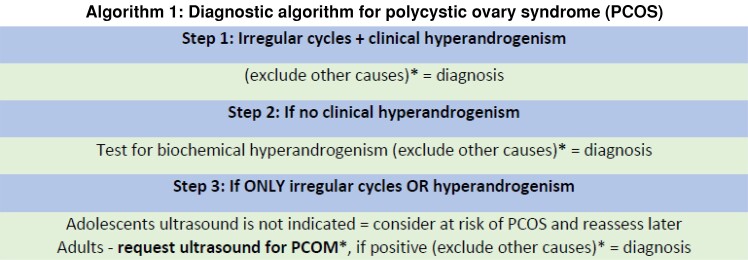
- Diagnostic updates include maintaining the 2018 criteria (two of clinical/biochemical hyperandrogenism, ovulatory dysfunction, and polycystic ovarian morphology), with serum AMH now usable instead of ultrasound in adults only; AMH should not be used as a single test or in adolescents, and ultrasound/AMH are not needed when irregular cycles and hyperandrogenism are present.
- Women with PCOS are recognized as at increased risk of impaired glucose tolerance/type 2 diabetes, cardiovascular disease, obstructive sleep apnoea, endometrial hyperplasia/cancer, and pregnancy complications; depression and anxiety are highly prevalent and screening is recommended; lifestyle management is core, with no single diet or exercise type shown superior.
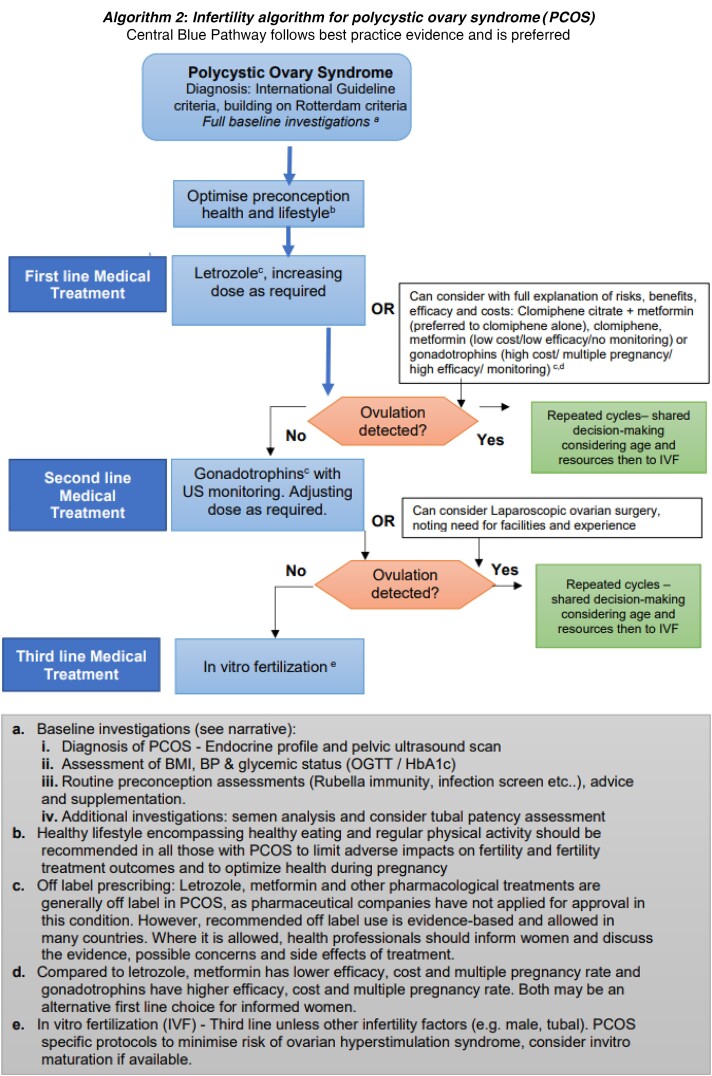
- For anovulatory infertility with no other infertility factors, letrozole should be first-line ovulation induction; clomiphene with metformin is an alternative; gonadotrophins or laparoscopic ovarian surgery are second-line; IVF is third-line; metformin in pregnancy has not been shown to prevent gestational diabetes, late miscarriage, hypertension in pregnancy, preeclampsia, or macrosomia/birthweight ≥4000 g.
Methods
- The update reengaged the 2018 network: 39 professional and consumer organizations covering 71 countries; governance included a six-continent international advisory and management committee, five guideline development groups with 56 members, and paediatric, consumer, and translation committees; 20 meetings and five face-to-face forums over 12 months.
- Evidence synthesis addressed 58 prioritized clinical questions in the abstract (the Methods section reports fifty-five) involving 52 systematic and 3 narrative reviews; AGREE-II-compliant processes and the GRADE framework were applied across evidence quality, feasibility, acceptability, cost, implementation, and recommendation strength, with diversity and inclusion considered throughout.
- Recommendations were categorized as evidence-based, consensus, or practice points; a technical evidence report and analyses (~6000 pages) underpins 77 evidence-based and 54 consensus recommendations with 123 practice points, approved by the Australian NHMRC.
Limitations
- Stated: evidence in PCOS assessment and management has generally improved but remains low to moderate quality; recommendations are strengthened yet still generally low to moderate quality; significantly greater research is needed; regional health system variation was considered and acknowledged with a further adaptation process.
- Stated: several areas have limited evidence—AMH should not yet be used in adolescents, there are no definitive ultrasound PCOM criteria in adolescents, PCOS-specific evidence is limited for COCPs, anti-androgens, and inositol, and long-term offspring effects of metformin exposure remain unclear.
- Evident: this article is a summary of the guideline; the full technical report and GRADE profiles are not included, so detailed evidence per recommendation cannot be assessed here, and several recommendations are consensus-based due to insufficient PCOS evidence, with some medications used off-label.
Model-written summary. Check it against the paper before relying on it.
Integrity signals
Registry
Cites
Statistics
Figures
Verification
Claims the paper makes
9 Valid · 64 Not valid · 1 Not checked · 61 Own results and interpretations
The sources with a verdict support this claim; the rest weren’t checked yet, have no full text we could read, or their verdicts aren’t rated yet.
In the paper
“clinical presentation is heterogeneous with reproductive, metabolic, and psychological features (1, 2).”
§ Recommendations From the 2023 International Evidence-based Guideline for the Assessment and Management of Polycystic Ovary Syndrome > Introduction
What the sources say
- Supportedcites [1] Teede, 2010, Polycystic ovary syndrome: a complex condition with psychological, reproductive and metabolic manifestations that impacts on health across the lifespan, BMC Med source
The Introduction’s “Clinical features of PCOS” section explicitly describes PCOS as heterogeneous and says its presentation includes psychological, reproductive, and metabolic features. Appendix 1 also lists features in each of those three categories. (LLM, conf=0.95)
- Not checked — no full text of the sourcecites [2] Azziz, 2016, Polycystic ovary syndrome, Nat Rev Dis Primers source
plain- Asserted: passes — The authors put it forward as true.
- Checkable: passes — It can be checked against evidence.
- Load-bearing: unclear — It is unclear whether the paper’s conclusions depend on it.
- Based: passes — The paper gives a reason why it holds.
- Supported
The sources with a verdict support this claim; the rest weren’t checked yet, have no full text we could read, or their verdicts aren’t rated yet.
In the paper
“Women internationally experience delayed diagnosis and dissatisfaction with care (3-5).”
§ Recommendations From the 2023 International Evidence-based Guideline for the Assessment and Management of Polycystic Ovary Syndrome > Introduction
What the sources say
- Supportedcites [3] Gibson-Helm, 2017, Delayed diagnosis and lack of information associated with dissatisfaction in women with polycystic ovary syndrome, J Clin Endo & Metab source
The Discussion (Summary of findings) reports that, across world regions, very few women with PCOS were satisfied with their diagnosis experience or the information provided at diagnosis. This supports the citing sentence’s reference to dissatisfaction with care in the context of delayed diagnosis. (LLM, conf=0.92)
- Not checked — no full text of the sourcecites [4] Dokras, 2017, Gaps in knowledge among physicians regarding diagnostic criteria and management of polycystic ovary syndrome, Fertil Steril source
- Not checked — no full text of the sourcecites [5] Teede, 2014, Polycystic ovary syndrome: perceptions and attitudes of women and primary health care physicians on features of PCOS and renaming the syndrome, J Clin Endocrinol Metab source
plain- Asserted: passes — The authors put it forward as true.
- Checkable: passes — It can be checked against evidence.
- Load-bearing: unclear — It is unclear whether the paper’s conclusions depend on it.
- Based: passes — The paper gives a reason why it holds.
- Supported
The sources with a verdict support this claim; the rest weren’t checked yet, have no full text we could read, or their verdicts aren’t rated yet.
In the paper
“Women internationally experience delayed diagnosis and dissatisfaction with care (3-5).”
§ Recommendations From the 2023 International Evidence-based Guideline for the Assessment and Management of Polycystic Ovary Syndrome > Introduction
What the sources say
- Supportedcites [3] Gibson-Helm, 2017, Delayed diagnosis and lack of information associated with dissatisfaction in women with polycystic ovary syndrome, J Clin Endo & Metab source
The Conclusions state that delayed diagnosis is common among women with PCOS worldwide. The Discussion’s “Diagnosis experience” section also reports that diagnosis took at least a year for many women in each world region studied. (LLM, conf=0.94)
- Not checked — no full text of the sourcecites [4] Dokras, 2017, Gaps in knowledge among physicians regarding diagnostic criteria and management of polycystic ovary syndrome, Fertil Steril source
- Not checked — no full text of the sourcecites [5] Teede, 2014, Polycystic ovary syndrome: perceptions and attitudes of women and primary health care physicians on features of PCOS and renaming the syndrome, J Clin Endocrinol Metab source
plain- Asserted: passes — The authors put it forward as true.
- Checkable: passes — It can be checked against evidence.
- Load-bearing: passes — The paper’s conclusions depend on it.
- Based: passes — The paper gives a reason why it holds.
- Supported
The paper states this without a source or data behind it here, so there is nothing to check it against. The quote shows it is in the paper.
In the paper
“Symptoms of depression and anxiety are significantly increased and should be screened for in all women with PCOS, with psychological assessment and therapy as indicated.”
§ Recommendations From the 2023 International Evidence-based Guideline for the Assessment and Management of Polycystic Ovary Syndrome > Discussion
plainstates an association- Asserted: passes — The authors put it forward as true.
- Checkable: passes — It can be checked against evidence.
- Load-bearing: passes — The paper’s conclusions depend on it.
- Based: unclear — It is unclear why the paper says it holds.
A result the paper states — it cites no source for it, so there is none to check. The quote shows it is in the paper.
In the paper
“high risk status for adverse outcomes during pregnancy”
§ Recommendations From the 2023 International Evidence-based Guideline for the Assessment and Management of Polycystic Ovary Syndrome > Abstract > Main Results and the Role of Chance
plainstates an association- Asserted: passes — The authors put it forward as true.
- Checkable: passes — It can be checked against evidence.
- Load-bearing: passes — The paper’s conclusions depend on it.
- Based: passes — The paper gives a reason why it holds.
50 more claims
Create a free account to see all 135 claims and every source verdict.
- Probably not a substantial claim. 68
- It may state two separate claims as one. 31
Claims other papers make about this one
Each is checked against this paper’s own text: does it say what the citing paper says it does?
The cited source doesn’t support the claim as written.
In the citing paper
“No benefits on hirsutism are to be expected [161].”
From Precision obesity medicine: A phenotype-guided framework for pharmacologic therapy across the lifespan (2025) · cites this paper as [161]
Checked by a reasoning model — may be wrong.
Experimental — accuracy not yet measuredThe source backs part of the claim, not all of it — or backs it for a different population, condition or comparison.
In the citing paper
“Weight loss is recommended for people with PCOS and BMI ≥ 25, as it has been shown to improve both reproductive and metabolic outcomes [161].”
From Precision obesity medicine: A phenotype-guided framework for pharmacologic therapy across the lifespan (2025) · cites this paper as [161]
Experimental — accuracy not yet measuredThe source backs part of the claim, not all of it — or backs it for a different population, condition or comparison.
In the citing paper
“It can also be used for irregular menstrual cycles, to improve pregnancy rates [161].”
From Precision obesity medicine: A phenotype-guided framework for pharmacologic therapy across the lifespan (2025) · cites this paper as [161]
Experimental — accuracy not yet measuredThe source backs part of the claim, not all of it — or backs it for a different population, condition or comparison.
In the citing paper
“Obesity is more prevalent among females with PCOS than in the general population; it contributes to the development of PCOS and worsens [161] its clinical features”
From Precision obesity medicine: A phenotype-guided framework for pharmacologic therapy across the lifespan (2025) · cites this paper as [161]
Experimental — accuracy not yet measuredThe source backs part of the claim, not all of it — or backs it for a different population, condition or comparison.
In the citing paper
“Metformin is recommended in adults with PCOS and a BMI ≥ 25 to improve insulin resistance, glucose and lipid profiles, but not for weight loss [161].”
From Precision obesity medicine: A phenotype-guided framework for pharmacologic therapy across the lifespan (2025) · cites this paper as [161]
Experimental — accuracy not yet measured
11 more claims about this paper
Create a free account to see every claim other papers make about this one.
Self-check
Percentages, sums and reported differences re-computed from the paper’s own numbers.
Each contradiction between two passages listed here was confirmed by an independent check.
Rated minor: it would not touch a result — a value no result rests on, a p-value that stays on the same side of the significance level, or a conflict that is clerical, resolved elsewhere in the paper, or outside its own findings.
In the paper
§ Recommendations From the 2023 International Evidence-based Guideline for the Assessment and Management of Polycystic Ovary Syndrome > Abstract > Participants/Materials, Setting, Methods
“Twenty meetings and five face-to-face forums over 12 months addressed 58 prioritized clinical questions involving 52 systematic and 3 narrative reviews.”
§ Recommendations From the 2023 International Evidence-based Guideline for the Assessment and Management of Polycystic Ovary Syndrome > Materials and Methods
“With international meetings over 12 months fifty-five prioritized clinical questions involved 52 systematic and three narrative reviews, generating evidence-based and consensus recommendations with accompanying practice points.”
Citations
Cites
AGREE II: advancing guideline development, reporting and evaluation in health care
Brouwers, M. C., Kho, M. E., Browman, G. P., Burgers, J. S., Cluzeau, F., Feder, G., Fervers, B., Graham, I. D., Grimshaw, J., Hanna, S. E., et al. (2010) · Canadian Medical Association Journal · doi:10.1503/cmaj.090449 · Cited by 3,790 · cited 2×
“10-12 Evidence synthesis methods are outlined in the full guideline and followed best practice 9,13,14 Guideline recommendations are presented by category, terms used, evidence quality and Grading of Recommendations, Assessment, Development, and Evaluation (GRADE) framework considerations.”
MethodAzziz, R., Carmina, E., Chen, Z., Dunaif, A., Laven, J. S. E., Legro, R. S., Lizneva, D., Natterson-Horowtiz, B., Teede, H. J., & Yildiz, B. O. (2016) · Nature Reviews Disease Primers · doi:10.1038/nrdp.2016.57 · Cited by 2,005 · cited 4×
“The 5 GDGs covered: (1) Screening, diagnostic and risk assessment and life stage; (2) Psychological features and models of care; (3) Lifestyle management; (4) Management of nonfertility features; and (5) Assessment and management of infertility.”
BackgroundMethodInfluentialSelf-citationTeede, H. J., Misso, M. L., Costello, M. F., Dokras, A., Laven, J., Moran, L., Piltonen, T., Norman, R. J., & the International PCOS Network (2018) · Clinical Endocrinology · doi:10.1111/cen.13795 · Cited by 1,823
Self-citationTeede, H. J., Misso, M. L., Costello, M. F., Dokras, A., Laven, J., Moran, L., Piltonen, T., Norman, R. J., International PCOS Network, Andersen, M., et al. (2018) · Human Reproduction · doi:10.1093/humrep/dey256 · Cited by 1,593
Self-citationTeede, H., Deeks, A., & Moran, L. (2010) · BMC Medicine · doi:10.1186/1741-7015-8-41 · Cited by 1,565 · cited 3×
“The 5 GDGs covered: (1) Screening, diagnostic and risk assessment and life stage; (2) Psychological features and models of care; (3) Lifestyle management; (4) Management of nonfertility features; and (5) Assessment and management of infertility.”
Self-citationGibson-Helm, M., Teede, H., Dunaif, A., & Dokras, A. (2016) · The Journal of Clinical Endocrinology & Metabolism · doi:10.1210/jc.2016-2963 · Cited by 428 · cited 3×
“The 5 GDGs covered: (1) Screening, diagnostic and risk assessment and life stage; (2) Psychological features and models of care; (3) Lifestyle management; (4) Management of nonfertility features; and (5) Assessment and management of infertility.”
BackgroundSelf-citationDokras, A., Saini, S., Gibson-Helm, M., Schulkin, J., Cooney, L., & Teede, H. (2017) · Fertility and Sterility · doi:10.1016/j.fertnstert.2017.04.011 · Cited by 218 · cited 2×
“The 5 GDGs covered: (1) Screening, diagnostic and risk assessment and life stage; (2) Psychological features and models of care; (3) Lifestyle management; (4) Management of nonfertility features; and (5) Assessment and management of infertility.”
BackgroundSelf-citationMol, B. W., Lai, S., Rahim, A., Bordewijk, E. M., Wang, R., van Eekelen, R., Gurrin, L. C., Thornton, J. G., van Wely, M., & Li, W. (2023) · Research Integrity and Peer Review · doi:10.1186/s41073-023-00130-8 · Cited by 154
A checklist to assess Trustworthiness in RAndomised Controlled Trials (TRACT checklist)
Mol, B. W., Lai, S., Rahim, A., Bordewijk, E. M., Wang, R., Eekelen, R. V., Gurrin, L. C., Thornton, J. G., Wely, M. V., & Li, W. (2023) · doi:10.21203/rs.3.rs-2119486/v1 · Cited by 149
Teede, H., Gibson-Helm, M., Norman, R. J., & Boyle, J. (2014) · The Journal of Clinical Endocrinology & Metabolism · doi:10.1210/jc.2013-2978 · Cited by 93 · cited 2×
“The 5 GDGs covered: (1) Screening, diagnostic and risk assessment and life stage; (2) Psychological features and models of care; (3) Lifestyle management; (4) Management of nonfertility features; and (5) Assessment and management of infertility.”
BackgroundSelf-citation
Cited by
Items 601–700 of 911
Polycystic Ovary Syndrome Across Racial and Ethnic Groups
Hallisey, S. M., Ogbejesi, C., & Engmann, L. (2025) · Springer eBooks · doi:10.1007/978-3-031-96356-8_5
Anti-Müllerian Hormone (AMH) in adult women
Sonigo, C., Dumont, A., Peigné, M., et al. (2025) · Elsevier eBooks · doi:10.1016/b978-0-443-13825-6.00258-2
Ultraschallanatomie – Teil 1: Ovar
Anetsberger, D., Bader, S., Mocker, A., Titzmann, A., Weidenthaler, F., Cupisti, S., Schneider, M. O., & Pontones, C. A. (2025) · Frauenheilkunde up2date · doi:10.1055/a-2444-3469
Kontrazeption und dermatologische Erkrankungen
Koppenhagen, P., & Kiesel, L. (2025) · Journal für Gynäkologische Endokrinologie/Schweiz · doi:10.1007/s41975-025-00410-0
Hiperandrogenismo e hiperplasia suprarrenal congénita
Andrés, B. C., & Martín, M. B. R. (2025) · Pediatría Integral · doi:10.63149/j.pedint.55
Salehpour, S., Hosseini, S., & Zarisfi, Z. (2025) · Obstetrics and gynecology. · doi:10.5772/intechopen.1011168
Severe Hyperandrogenism Secondary to Polycystic Ovarian Syndrome in a Gender-diverse Adolescent
Schneider, D., Scully, K. J., Quintos, J. B., & Millington, K. (2025) · JCEM Case Reports · doi:10.1210/jcemcr/luaf186
Louis, F., Pillai, A., & Jampala, M. (2025) · International Journal of Infertility & Fetal Medicine · doi:10.5005/jp-journals-10016-1377
Xu, Y., Si, Y., Li, N., Wang, R., Hua, M., Xiu, L., Zhao, H., & Ren, Q. (2025) · Frontiers in Nutrition · doi:10.3389/fnut.2025.1644496 · Cited by 1
Feng, Y., Chen, Y., & Feng, Q. (2025) · Research Square · doi:10.21203/rs.3.rs-7509311/v1
Tarletta, M., Iraci, G. S., Mengual, R., Carlo, M. D., Melgarejo, B., Babini, A., Baez, K. A. M., Ramos, N., Marconetto, A., Rosato, O. D., et al. (2025) · Revista de la Facultad de Ciencias Médicas de Córdoba · doi:10.31053/1853.0605.v82.n3.46920 · Cited by 1
Fang, Y., Zhao, X., Wang, C., Liu, C., Liang, Y., & Yang, X. (2025) · International Journal of Women s Health · doi:10.2147/ijwh.s542581
“2 While ovulation induction (OI) is an essential approach to manage anovulation-related infertility in PCOS patients, 3 these neuroendocrine disturbances may unexpectedly increase the risk of poor ovarian response (POR) during OI.”
Antinuclear Antibodies in Polycystic Ovary Syndrome: A Systematic Review of Observational Studies
Kwiatkowski, J., Akpang, N., Zaborowska, Ł., & Ludwin, A. (2025) · International Journal of Molecular Sciences · doi:10.3390/ijms26199493 · Cited by 1
“In the reproductive-age female population, prevalence generally ranges from 8% to 13% depending on diagnostic criteria, with up to 70% of cases remaining undiagnosed [2,3].”
Yıldırım, M., Kahraman, N. Ç., Simsek, M., Numan, O., Üçok, B. S., Bulan, D. D., & Üstün, Y. E. (2025) · American Journal of Reproductive Immunology · doi:10.1111/aji.70171
“The diagnosis is based on the 2023 international evidence-based guideline criteria based on the 2003 Rotterdam criteria [13].”
Treatment Options for Polycystic Ovary Syndrome
Cai, J., Lü, N., & Ma, J. (2025) · Obstetrics and gynecology. · doi:10.5772/intechopen.1012822 · Cited by 1
Wisz, D., Huzarski, F. M., Tryniecka, K. A., Turek, K. M., Worosz, W., & Zań, A. (2025) · International Journal of Innovative Technologies in Social Science · doi:10.31435/ijitss.3(47).2025.3940
Chancen und Risiken für die Haut
Koppenhagen, P., & Kiesel, L. (2025) · Deutsche Dermatologie · doi:10.1007/s15011-025-7087-x
Bukowiec, M., Szałata, K., Sikorska, L. M., Pudło, P., Koman, A. M., Czekalska, M., Worosz, W., Łabuzińska, L., Ćwil, A., & Asztabski, M. (2025) · International Journal of Innovative Technologies in Social Science · doi:10.31435/ijitss.3(47).2025.3839
«Metabolic health» and endothelial function in women with polycystic ovary syndrome
Tsar’kova, A. V., Balan, V. E., Orazov, M. R., Тихомирова, Е. В., Orlova, S. A., Сергеевна, Ж. А., & Titchenko, Y. P. (2025) · Russian Bulletin of Obstetrician-Gynecologist · doi:10.17116/rosakush20252505127
Sengupta, P., & Dutta, S. (2025) · Hormone Molecular Biology and Clinical Investigation · doi:10.1515/hmbci-2025-0060
PCOS in der Adoleszenz – Vorgaben der deutschsprachigen Leitlinie für die Betreuung in der Jugend
Goeckenjan, M., & Sowa, E. (2025) · Die Gynäkologie · doi:10.1007/s00129-025-05428-w
Maseroli, E., Alfaroli, C., Cirillo, M., & Vignozzi, L. (2025) · L Endocrinologo · doi:10.1007/s40619-025-01720-y
Feng, Y., Wu, L., Liu, J., & Feng, Y. (2025) · Frontiers in Reproductive Health · doi:10.3389/frph.2025.1600995 · Cited by 2
Wynne, C. S., Reynolds, C. A., Berzansky, I., Chavarro, J. E., Chakraborty, P., & Charlton, B. M. (2025) · LGBT Health · doi:10.1177/23258292251387271 · Cited by 1
Wright, P. J., Corbett, C. F., & Wang, K. (2025) · Advances in Public Health · doi:10.1155/adph/3876104
“Women with PCOS are encouraged to be active most days of the week and accumulate at least 150 min of moderate-to-vigorous aerobic activity per week plus perform RE on at least 2 days per week [10, 13, 15].”
Gunkov, S. V., Косей, Н. В., & Regeda, S. I. (2025) · One Health and Nutrition Problems of Ukraine · doi:10.33273/2663-9726-2025-63-2-63-78
The role of metformin in the treatment of women with metabolic disorders
Urbanovych, A., & Sidelnyk, N. Y. (2025) · INTERNATIONAL JOURNAL OF ENDOCRINOLOGY (Ukraine) · doi:10.22141/2224-0721.21.7.2025.1644
Smith, T. L., Faubion, S. S., Karam, J., Kling, J. M., Cole, K., Enders, F., & Kapoor, E. (2025) · Reproductive Biology and Endocrinology · doi:10.1186/s12958-025-01481-1
Sulu, C., Pervaz, I., Gürer, T., Yildiz, D., Tas, A. C., Demir, A. N., Şahin, S., Özkaya, H. M., Konukoğlu, D., Tüten, A., et al. (2025) · Frontiers in Endocrinology · doi:10.3389/fendo.2025.1722978 · Cited by 2
Mu, L., Shen, Y., Wang, G., Liu, C., Yang, H., Li, W., Mol, B. W., Li, X., Dong, X., & Jiang, J. (2025) · medRxiv · doi:10.1101/2025.11.25.25341030
Mondéjar, M. D. M., López-Ruiz, I., Quiles, J., Suárez, L. S., Sanz, O. R., Pravio, J. R., Bernabéu, R. Á., Brik, M., Brejano, M. G., Elvar, J. R. H., et al. (2025) · REC CardioClinics · doi:10.1016/j.rccl.2025.10.005 · Cited by 1
Connecting polycystic ovary syndrome and pilonidal disease in adolescents: State of the art review
Yung, N. K., Towers, G., Wani, A., Caty, M. G., Cowles, R. A., Solomon, D. G., & Vash‐Margita, A. (2025) · Best Practice & Research Clinical Obstetrics & Gynaecology · doi:10.1016/j.bpobgyn.2025.102691
Yazdchi, K., Ansaripour, S., Eghtedar, S., Heydari, Z., Farnia, V., Alikhani, M., Salem, S., Brüh, A. B., Bahmani, D. S., & Brand, S. (2025) · Journal of Psychiatry and Brain Science · doi:10.20900/jpbs.20250018
Qiu, L., Zhong, M., Tu, Y., Mo, H., & Li, L. (2025) · International Journal of Women s Health · doi:10.2147/ijwh.s553265
“19 It is characterized by infertility, irregular menstruation, acne, and hirsutism due to elevated androgens, and it often leads to insulin resistance 20 and obesity.”
Clinical Presentation of Polycystic Ovary Syndrome
Sidana, S. (2025) · BENTHAM SCIENCE PUBLISHERS eBooks · doi:10.2174/9798898810931125010009
Current Available Pharmacological Intervention for PCOS-II
Baba, M. S. (2025) · BENTHAM SCIENCE PUBLISHERS eBooks · doi:10.2174/9798898810962125010006 · Cited by 1
Paediatric Virilizing Ovarian Tumors: A Systematic Review
Ravindra, S., Samal, S. K., Dhananjaya, M. S., Lila, A. R., & Sarathi, V. (2025) · Clinical Endocrinology · doi:10.1111/cen.70066 · Cited by 1
Chen, J., Lin, C., Peng, J., Xu, W., Azziz, R., Lin, M., & Zhao, X. (2025) · Journal of Ovarian Research · doi:10.1186/s13048-025-01900-2 · Cited by 1
“…total testosterone; BIOT: bioavailable testosterone; SHBG: sex hormone-binding globulin; WM: weighted median; IVW: inverse variance weighted; P h : P for heterogeneity adsorption and biochemical degradation by blood vessels, thus only free testosterone exhibits biological activity in the body [9].”
InfluentialKirwan, R., Peele, L., Nuckols, G., Kohlhoff, G., Cabre, H. E., Olenick, A., & Steele, J. (2025) · medRxiv · doi:10.64898/2025.12.03.25341536
Antiandrogens and insulin sensitizers in PCOS management
Lello, S., Fagotti, A., Colonna, L., Lella, G. D., Vignali, M., & Capozzi, A. (2025) · Minerva Obstetrics and Gynecology · doi:10.23736/s2724-606x.25.05822-1 · Cited by 3
Gu, M., Ruan, X., Li, Y., Jia, C., & Dai, Y. (2025) · Gynecological Endocrinology · doi:10.1080/09513590.2025.2594876
“According to the Rotterdam criteria, the diagnosis is based on at least two of the following features: infrequent or absent ovulation, clinical or biochemical hyperandrogenism, and polycystic ovarian morphology [2].”
InfluentialWangange, S. M. P., Bosenge-Nguma, J.-D., O’yandjo, A. M., Lobo, A. M., & Mboloko, J. E. (2025) · Open Journal of Obstetrics and Gynecology · doi:10.4236/ojog.2025.1512168
Polycystic ovarian syndrome-affecting quality of life and awaiting cure
Mathur, S. (2025) · International Journal of Research in Medical Sciences · doi:10.18203/2320-6012.ijrms20254105
Lai, L., Wu, Z., Zhao, J., Li, J., Wu, B. W. Y., Yang, H., Xu, N., & Yi, W. (2025) · Brain and Behavior · doi:10.1002/brb3.71129
“These comorbidities may increase psychological stress in patients (Teede et al. 2023 ).”
Wan, Y., Wu, X., & Ou, Y. (2025) · Medicine · doi:10.1097/md.0000000000046303
“[33] Analyzing its internal mechanism, we may consider the following reasons: Comprehensive nursing mode can improve patients’ physical and mental state from multiple dimensions, understand patients’ health status and needs, and adjust nursing plans according to evaluation results.”
Mustari, M., Kamrul-Hasan, A. B. M., Tanni, A. Z., Ahammed, A., Raunak, A. I. B., Afsana, F., Pathan, M. F., Saifuddin, M., Rahman, M. M., Akter, N., et al. (2025) · Bangladesh Journal of Endocrinology and Metabolism · doi:10.4103/bjem.bjem_38_25
Young, J. (2025) · EMC - Gynécologie · doi:10.1016/s0246-1064(24)47746-3
Lim, C. Y. S., Loke, K. Y., Varughese, S. M., Lee, Y. S., & Ng, N. B. H. (2025) · Obesity Reviews · doi:10.1111/obr.70072 · Cited by 3
“Based on the latest 2023 international evidence-based criteria, pelvic ultrasound or AMH are no longer needed for diagnosis in the presence of irregular menstrual cycles and hyperandrogenism [14].”
InfluentialOrłowa, A., Turlej, K., Oparcik, A., Kurczoba, L., Baranowska, A., Pakuła, A., Cieślak, M., Patrzykąt, K. M., Szyszka, K., & Pawłowska, J. (2025) · International Journal of Innovative Technologies in Social Science · doi:10.31435/ijitss.4(48).2025.4472
Селюкова, Н. Ю., Lurin, I. A., Tyzhnenko, T., & Misiura, K. V. (2025) · INTERNATIONAL JOURNAL OF ENDOCRINOLOGY (Ukraine) · doi:10.22141/2224-0721.21.8.2025.1661
Jouffroy, M., Plu‐Bureau, G., & Mounier‐Véhier, C. (2025) · médecine/sciences · doi:10.1051/medsci/2025224
AlWatban, L. H., Sayed, A. K., Alwatban, R., Alwatban, M., & Alyousefi, N. A. (2026) · Journal of Clinical Medicine · doi:10.3390/jcm15020607
Fertility in Polycystic Ovary Syndrome—The Spark and the Fire!
Shah, D., & Rasool, S. (2025) · Fertility & Reproduction · doi:10.1142/s2661318225300053
Holmskov, M., Christensen, J., Larsen, M. F., Christiansen, A.-E., & Nielsen, R. E. (2026) · International Journal of Bipolar Disorders · doi:10.1186/s40345-026-00411-3
Polycystic ovary syndrome and cardiovascular disease risk
Друк, И. В., Друк, И. В., & Мамедов, М. Н. (2026) · Rational Pharmacotherapy in Cardiology · doi:10.20996/1819-6446-2025-3183
Study of the ovarian function and gyneco-obstetrical profile of patients with an HNF1B abnormality
Cartault, A., Paret, C., Garczynski, C., et al. (2026) · European Journal of Obstetrics & Gynecology and Reproductive Biology · doi:10.1016/j.ejogrb.2026.114961
Dumont, T., Peeva, M., & Masri, M. E. (2026) · Best Practice & Research Clinical Obstetrics & Gynaecology · doi:10.1016/j.bpobgyn.2026.102702 · Cited by 3
Hormonal and metabolic profiles in teenagers and young adults with polycystic ovary syndrome (PCOS)
Bareja, A., Adamczyk, A., Seman, A., Kacalska‐Janssen, O., Jach, R., & Piróg, M. M. (2026) · Endocrine · doi:10.1007/s12020-025-04487-2
“Therefore, current guidelines advice reassessment of diagnostic criteria of PCOS at or before full reproductive maturity – at least 8 years since menarche for adolescents who have features of PCOS, but do not meet diagnostic criteria [ 19 ].”
Bulbuli, A. (2025) · Indian Journal of Physical Therapy and Research · doi:10.4103/ijptr.ijptr_95_25
Prevention of Pregnancy Complications in PCOS With Myo-inositol Supplementation
Huang, P., Fu, T., & Chang, C. (2026) · JAMA · doi:10.1001/jama.2025.22968
Herbert, S., Squires, A. P., Gilligan, C., & Woolf, K. (2026) · Women s Health · doi:10.1177/17455057251414294 · Cited by 1
Zou, Y., Peng, J., Peishuang, L. I., Xu, L., Peng, X., & Liang, R. (2026) · Medicine · doi:10.1097/md.0000000000046939
“[8] This observation forms the rationale for our study.”
Intermittent Fasting as a Nonpharmacologic Strategy to Manage Polycystic Ovary Syndrome
Devins, M. (2026) · Nursing for Women s Health · doi:10.1016/j.nwh.2025.10.003
Shoham, Z., Weisman, A. R., & Yaron, Y. (2026) · Journal of IVF-Worldwide · doi:10.46989/001c.147524 · Cited by 3
Mazurkiewicz, A., Bednarczyk, N., Bednarczyk, R., Binkowski, R. K., Kurek, A., Krajewska, N., Lejman, A., Sidor, H., Wołosik, M., & Zysiak, S. (2026) · International Journal of Innovative Technologies in Social Science · doi:10.31435/ijitss.1(49).2026.4691
Derkach, K. V., Pechalnova, A. S., Morina, I. Y., Fedorchuk, I. V., Zorina, I. I., Nagornyuk, K. Y., Romanova, I. V., & Shpakov, A. O. (2026) · Reviews on Clinical Pharmacology and Drug Therapy · doi:10.17816/rcf694205
Wang, L., Liu, R., Yang, Z., Pan, J., & Huang, H. (2026) · Reproductive and Developmental Medicine · doi:10.1097/rd9.0000000000000159
Zhen, X., Zhu, L., Guan, L., Wei, C., Li, D., Li, Y. Q., Xiang, S., & Lian, F. (2026) · Journal of Ovarian Research · doi:10.1186/s13048-026-02016-x · Cited by 1
“Currently, clinical management of PCOS primarily relies on lifestyle modifications and symptomatic treatment as first-line strategies [38].”
Síndrome dos Ovários Policísticos: Uma revisão de literatura
Pacheco, K. K. D. S., Novaes, C. P., Oliveira, D. S., Novaes, D. P., Costa, E. S., Fernandes, E. S. F., & Longuiniere, A. C. F. D. L. (2026) · Research Society and Development · doi:10.33448/rsd-v15i2.50631
Natarajan, M., Shweatha, H. E., & Nataraj, R. (2026) · Frontiers in Endocrinology · doi:10.3389/fendo.2026.1766838 · Cited by 1
Li, P., Lu, Y., Wang, Y., Weng, A., & Liang, X. (2026) · BMC Complementary Medicine and Therapies · doi:10.1186/s12906-026-05295-5 · Cited by 2
Miscarriages: Epidemiology, diagnosis, and management
MEKINIAN, A., & Abisror, N. (2026) · Elsevier eBooks · doi:10.1016/b978-0-443-13825-6.00357-5
Karatoprak, K., Saygılı, E. S., Bostan, H., & Karakılıç, E. (2026) · Biomarkers in Medicine · doi:10.1080/17520363.2026.2631622
Le syndrome des ovaires polykystiques : quelles connaissances chez les médecins généralistes ?
Robert-Rambaud, P., Thubert, T., Fréour, T., & Chaillot, M. (2026) · Gynécologie Obstétrique Fertilité & Sénologie · doi:10.1016/j.gofs.2026.02.005
Hypertension in Women Across the Life Cycle: Unique Aspects and Challenges
Bond, R. M., Purewal, V. S., Cameron, N. A., Tobb, K., Adedinsewo, D. A., Isiadinso, I., & Phillips, K. A. (2026) · Current Hypertension Reports · doi:10.1007/s11906-026-01362-x · Cited by 6
Douglas, C. C., Hashmi, A., Mclain, A., & Arentson‐Lantz, E. J. (2026) · Therapeutic Advances in Reproductive Health · doi:10.1177/26334941261426089 · Cited by 2
“2,5,6 9 However, studies assessing the long-term health outcomes in women with PCOS are limited 10 although there is some evidence to suggest that some comorbidities persist.”
Das polyzystische Ovarsyndrom (PCOS) – mehr als Insulinresistenz und Androgene
Reger-Tan, S., Lee-Barkey, Y. H., Klose, J. M., & Stratmann, B. (2026) · Diabetologie und Stoffwechsel · doi:10.1055/a-2595-2031
Kumari, K., Chaitanya, M. V. N. L., Kalia, S., Patle, D., Singh, S., & Mazumder, A. (2026) · Reproductive Sciences · doi:10.1007/s43032-026-02061-3
Evaluating the PCOS risk algorithm (PriskA): a pilot study
van der Ham, K., Sillman, J., Hund, M., Mang, A., Louwers, Y. V., & Laven, J. S. E. (2026) · Journal of Ovarian Research · doi:10.1186/s13048-026-02037-6
Self-citationZhao, S., Zou, Y., Wang, Z., Ye, L., Chen, Y., Cao, Z., Xu, X., Gao, A., Ying, X., Chen, M., et al. (2026) · Obesity Surgery · doi:10.1007/s11695-026-08547-y
Silva, L. F. D. C., Silva, W. D. S., Gonçalves, S. M. N., et al. (2026) · RECIMA21 - Revista Científica Multidisciplinar · doi:10.47820/recima21.v7i3.7367
Satani, K., Sanghani, J., & Kumar, P. G. (2026) · Cureus · doi:10.7759/cureus.104468
Wegrzynowicz, A. K., Banerjee, S., Grimes, E., Huddleston, R., Jaimes, F. L., Cooney, L. G., & Stanic, A. K. (2026) · Biology of Reproduction · doi:10.1093/biolre/ioag051 · Cited by 5
Koshy, R. R., Kumar, A. A., Maliyil, B. T., Regie, R., Jairaj, S., & Satish, M. T. (2026) · Middle East Fertility Society Journal · doi:10.1186/s43043-026-00316-2 · Cited by 2
Hypoadiponectinemia does not enhance anxiety-like behaviour in a lean PCOS-like mouse model
Samad, M., Ek, J. C., Kataoka, J., Lindgren, E., Ohlsson, C., Asterholm, I. W., Stener‐Victorin, E., & Benrick, A. (2026) · Scientific Reports · doi:10.1038/s41598-026-69143-9
Benham, J. L., Cannon, S., Cadogan, K., Botkin, H. C., Dolatabadi, S., Stafl, L., & Yamamoto, J. M. (2026) · Canadian Journal of Diabetes · doi:10.1016/j.jcjd.2026.03.003
Rajit, D., McDonald, S. J., Mousa, A., Tay, C. T., Du, L., Teede, H. J., & Enticott, J. (2026) · Journal of Clinical Epidemiology · doi:10.1016/j.jclinepi.2026.112228
Self-citationDiagnosis of Polycystic Ovary Syndrome With Predictive Modeling of Select Clinical Features
Evans, A. T., Rehani, E., Smith, B., Hong, M. D., Lewin, Z., Hiroshige, K., Spandorfer, S. D., Hajirasouliha, I., Lujan, M. E., & Hoeger, K. M. (2026) · O&G Open · doi:10.1097/og9.0000000000000161
“3,16 However, effective and consistent counting requires a trained sonographer or clinician, introducing significant interindividual variability resulting from the subjective nature of the assessment.”
« Selective estrogen receptor modulators » (SERM)
Kolańska, K., Touboul, C., & Chabbert‐Buffet, N. (2026) · EMC - Gynécologie · doi:10.1016/s0246-1064(25)50247-5
Fartushok, T. V., Fartushok, N. V., Беседін, О. В., & Isayeva, K. (2026) · PROBLEMS OF ENDOCRINE PATHOLOGY · doi:10.21856/j-pep.2026.1.04
Özoğlu, M., Aladağ, F. Y., & Küçükkaya, B. (2026) · Balkan Sağlık Bilimleri Dergisi · doi:10.61830/balkansbd.1848091 · Cited by 3
Klevedal, C., Cengiz, Y., Bixo, M., & Türkmen, Ş. (2026) · Obesity Surgery · doi:10.1007/s11695-026-08625-1 · Cited by 1
“The most optimal threshold to use remains in question; the most recent guideline recommend a threshold of ≥ 4 to 6, depending on ethnic - ity, but this may result in the overdiagnosis of the condition as compared to the traditionally used threshold of ≥ 8 [ 22].”
Italian Expert Consensus on Women’s Nutrition Across the Life Course: A Modified Delphi Study
Sarno, L., Colacurci, D., Guida, M., Nappi, R. E., & A.G.U.I. (2026) · Nutrients · doi:10.3390/nu18071053 · Cited by 2
Die deutsche S2k-Leitlinie zum PCOS – gibt es Unterschiede zur internationalen Leitlinie?
Segerer, S. E., & Sonntag, B. (2026) · Gynäkologische Endokrinologie · doi:10.1007/s10304-026-00683-z
Kaur, B., Kumari, A., Mahey, R., Khan, M. A., Jayraj, A. K., & Malhotra, N. (2026) · Journal of Human Reproductive Sciences · doi:10.4103/jhrs.jhrs_276_25 · Cited by 1
Sharma, P., Tripathi, M. K., Kumar, V., Jain, M., & Halder, A. (2026) · Journal of Human Reproductive Sciences · doi:10.4103/jhrs.jhrs_195_25
“[19] Biochemical hyperandrogenism was determined through elevated total testosterone (T) levels according to laboratory criteria.”
Zhu, X., Xu, W., & Lu, A.-F. (2026) · Reproductive Toxicology · doi:10.1016/j.reprotox.2026.109233 · Cited by 1
An Insight into Machine Learning and Deep Learning Approaches for PCOD/PCOS Detection
Aishwarya, T., Inchara, M., Shankar, I. N., et al. (2025) · International Conference on Emerging Computation and Information Technologies (ICECIT) · doi:10.1109/icecit67774.2025.11451044
“PCOS, a polycystic ovary disease with hormonal and ovarian dysfunction and hyperandrogenism [4], is frequently associated with infertility as well as increased risks of heart disease and diabetes among women [5][6].”
Erkal, N., & Mayir, Y. A. (2026) · Clinical and Experimental Obstetrics & Gynecology · doi:10.31083/ceog46000
Graca, S., Dallaway, A., Alloh, F. T., Randeva, H. S., Kite, C., & Kyrou, I. (2026) · Frontiers in Digital Health · doi:10.3389/fdgth.2025.1700018 · Cited by 1
Metadata
- Authors
- Teede, H. J., Tay, C. T., Laven, J. J. E., Dokras, A., Moran, L. J., Piltonen, T. T., Costello, M. F., Boivin, J., Redman, L. M., Boyle, J. A., Norman, R. J., Mousa, A., & Joham, A. E.
- Affiliations
- Monash Health (AU)
- National Health and Medical Research Council Centre for Research Excellence in Women's Health in Reproductive Life , Melbourne, Victoria , Australia
- University of Pennsylvania (US)
- Oulu University Hospital (FI)
- UNSW Sydney (AU)
- Cardiff University (GB)
- Pennington Biomedical Research Center (US)
- Eastern Health (AU)
- National Health and Medical Research Council (AU)
- Corresponding author
- Teede, Helena J
- ORCID
- Venue
- The Journal of Clinical Endocrinology & Metabolism
- Publisher
- The Endocrine Society
- Published
- 2023-08-15
- Volume
- 108
- Issue
- 10
- Pages
- 2447-2469
- ISSN
- 0021-972X (ISSN-L)
- 1945-7197
- PMC
- PMC10505534
- OpenAlex
- W4385799520
- Cited by
- 946
- References
- 12
- Citations by year
- 2026: 375 · 2025: 320 · 2024: 215 · 2023: 36
- FWCI
- 226.69
- Type
- journal article
- Language
- en
- Open access
- hybrid
- doi.org
- Licence
- Locations
- The Journal of Clinical Endocrinology & Metabolism (publishedVersion, cc-by-nc)
- PubMed Central (publishedVersion, cc-by-nc)
- PubMed (publishedVersion)
- University of Birmingham Research Portal (University of Birmingham) (submittedVersion, other-oa)
- Funders
- National Health Medical Research Council (APP1171592)
- European Society of Human Reproduction and Embryology
- European Society for Endocrinology
- Medical Research Future Fund (MRFCRI000266)
- Topics
- Health Sciences › Medicine › Reproductive Medicine › Ovarian function and disorders
- Health Sciences › Medicine › Public Health, Environmental and Occupational Health › Clinical practice guidelines implementation
- Health Sciences › Medicine › Reproductive Medicine › Endometriosis Research and Treatment
- Keywords
- polycystic ovary syndrome, PCOS diagnosis, PCOS management, clinical guidelines, customer engagement, knowledge-practice gap, diagnostic criteria, reproductive outcomes, insulin resistance, hyperandrogenism, endometrial cancer risk, cardiovascular risk, mental health, quality of life, shared decision-making, patient-centered care, guideline development, AGREE II
- MeSH terms
- Adult, Australia, Child, Female, Humans, Infertility, Female, Polycystic Ovary Syndrome, Pregnancy, Quality of Life, Risk Factors, Practice Guidelines as Topic
About these checks
Registry, retraction, Cites and statistics results are computed, not judged, with one exception: a printed reference that no index lists is read once by a model before it counts as a citation error. Claims are extracted by a model and kept only when their quote appears verbatim in the text; each cited source is then checked, with a model’s help, for whether it says what the claim relies on. Those verdicts can be wrong — read the claim’s quote and the cited source before relying on one.
The claim verdicts this report counts are experimental: their accuracy is not yet measured.
A language model drew the claims from the paper on 2026-10-10, under version 3 of the claim definition (model deepseek-v4.1-flash, prompt extract-v3).
A second model labelled each claim on 2026-10-10 (model jev-1.13-20260917, definition revision gold-guideline-v0.2).
Cited sources are checked with a language model’s help (gpt-6-sol).
Statistics and arithmetic are recomputed, not judged.
Confidence bands are shown only for fields calibrated on our annotated test set. None is calibrated yet, so no band is shown.
What counts as a claim ›How we measure confidence ›How we check this ›
Are you an author, or do you see a problem with this page? Request a review
Data sources
Bibliographic data: Semantic Scholar, OpenAlex, Crossref.
Contains information from the Semantic Scholar Academic Graph Datasets, made available under the ODC Attribution License (ODC-BY 1.0).
Semantic Scholar’s data is described in: Kinney, R., et al. (2023). The Semantic Scholar Open Data Platform. arXiv:2301.10140.
