

The Monocarboxylate Transporter 8 Linked to Human Psychomotor Retardation Is Highly Expressed in Thyroid Hormone-Sensitive Neuron Populations
The DOI matches its Crossref record; 61 of the 61 references it cites were found in a registry or an index.
Abstract
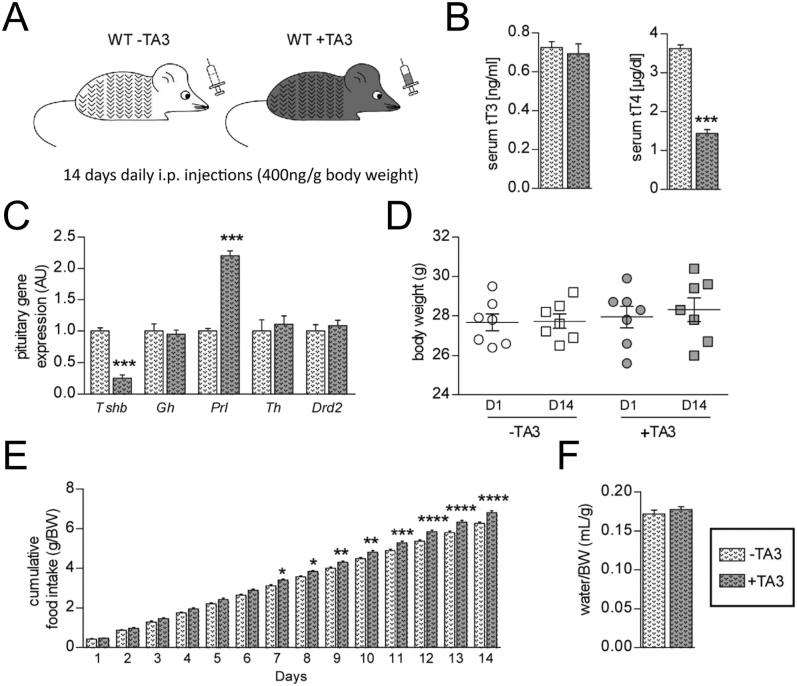
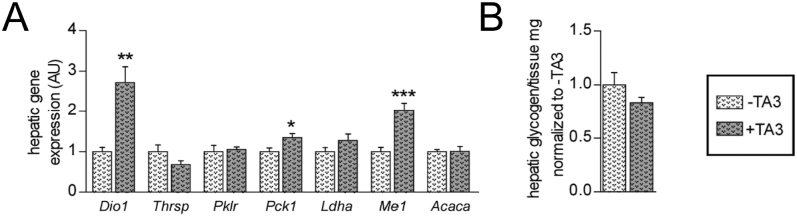
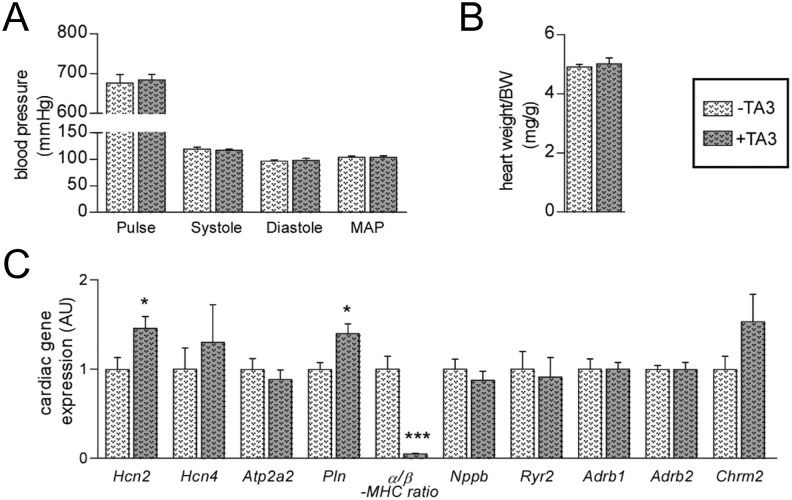
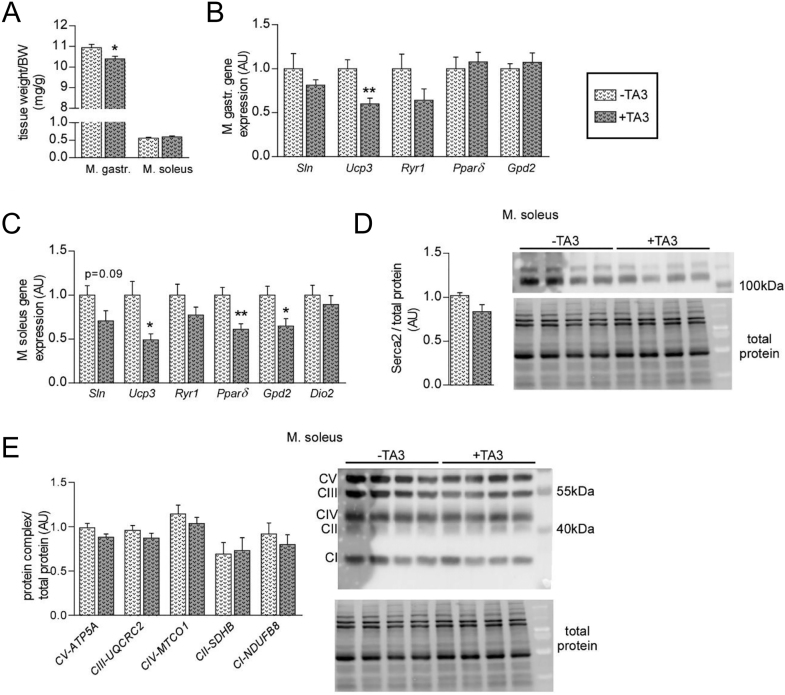
OBJECTIVE: Thyroid hormones regulate cardiovascular functions and energy homeostasis, including thermogenesis, through binding to nuclear thyroid hormone receptors. The thyroid hormone analog 3,3',5-triiodothyroacetic acid (TRIAC) has recently emerged as a therapeutic candidate for thyroid hormone transporter deficiencies (Allan-Herndon-Dudley syndrome) or thyroid hormone resistance β. Although TRIAC shows promise for these conditions, a comprehensive characterization focusing on heart and body temperature regulation has not been systematically performed in mice. METHODS: As this knowledge is critical for determining its safety profile and therapeutic advantages over conventional thyroid hormone therapy, we administered TRIAC to wild-type mice for 14 days and assessed molecular (real-time PCR, western blot, and immunoassays) and physiological (infrared thermography and blood pressure) responses. RESULTS: TRIAC treatment reduced circulating thyroxine levels and induced robust upregulation of hepatic thyroid hormone-responsive genes, including Dio1 and Me1, demonstrating classical thyromimetic activity. However, cardiovascular analysis revealed normal blood pressure and heart rate, and there were no signs of cardiac hypertrophy despite specific molecular changes in cardiac gene expression. At the metabolic level, we surprisingly did not observe any effect on brown fat thermogenesis or body temperature, while in muscle, Ucp3 and Gpd2 were reduced. CONCLUSION: Taken together, our comparative in vivo analysis demonstrates variable TRIAC responsiveness across tissues. Under defined conditions, the drug produces defined metabolic responses while avoiding classical hyperthyroid manifestations, such as tachycardia or hyperthermia, thus supporting its potential therapeutic use in thyroid hormone resistance conditions.
Overview
The claims and statistics of this paper haven’t been checked yet.
Free: it reads the open-access text and checks the first 5 claims that cite a source we can check. Create a free account to check every claim.
Integrity signals
Registry
Cites
Statistics
Figures
Verification
Claims the paper makes
The claims and statistics of this paper haven’t been checked yet.
Free: it reads the open-access text and checks the first 5 claims that cite a source we can check. Create a free account to check every claim.
Claims other papers make about this one
Each is checked against this paper’s own text: does it say what the citing paper says it does?
In the citing paper
“the MCT8 transporter, which is preferentially expressed in neurons including hypophysiotropic TRH neurons (51, 139), and tanycytes (139), has preferential affinity for T 3 (139)”
From Central regulation of hypothalamic-pituitary-thyroid axis under physiological and pathophysiological conditions (2014) · cites this paper as [139]
Self-check
Percentages, sums and reported differences re-computed from the paper’s own numbers.
The self-check needs the paper’s full text.
Citations
Cites
Physiological and Molecular Basis of Thyroid Hormone Action
Yen, P. M. (2001) · Physiological Reviews · doi:10.1152/physrev.2001.81.3.1097 · Cited by 2,011
Bianco, A. C., Salvatore, D., Gereben, B., Berry, M. J., & Larsen, P. R. (2002) · Endocrine Reviews · doi:10.1210/edrv.23.1.0455 · Cited by 1,853
The Syndromes of Resistance to Thyroid Hormone*
REFETOFF, S., WEISS, R. E., & USALA, S. J. (1993) · Endocrine Reviews · doi:10.1210/edrv-14-3-348 · Cited by 873 · cited 1×
“Finally, like patients with the syndrome of resistance to TH, who suffer from learning disorders and mental retardation (23), genetically engineered mice in which a T3 binding mutation was introduced into the TH receptor locus displayed learning deficits together with reduced BDNF (brain-derived neurotrophic factor) i…”
BackgroundIdentification of monocarboxylate transporter 8 as a specific thyroid hormone transporter
Friesema, E. C. H., Ganguly, S., Abdalla, A., Fox, J. E. M., Halestrap, A. P., & Visser, T. J. (2003) · Journal of Biological Chemistry · doi:10.1074/jbc.m300909200 · Cited by 725 · cited 1×
“expressed in brain and other TH-responsive tissues (11).”
BackgroundSelf-citationFriesema, E. C., Grueters, A., Biebermann, H., Krude, H., von Moers, A., Reeser, M., Barrett, T. G., Mancilla, E. E., Svensson, J., Kester, M. H., et al. (2004) · The Lancet · doi:10.1016/s0140-6736(04)17226-7 · Cited by 709 · cited 4×
“tional MCT8 transporter exhibit markedly elevated T3 levels (12, 13).”
BackgroundSelf-citationDumitrescu, A. M., Liao, X.-H., Best, T. B., Brockmann, K., & Refetoff, S. (2004) · The American Journal of Human Genetics · doi:10.1086/380999 · Cited by 706
The role of thyroid hormones in prenatal and neonatal neurological development--current perspectives
Porterfield, S. P. (1993) · Endocrine Reviews · doi:10.1210/er.14.1.94 · Cited by 672
Follicular cells of the thyroid gland require Pax8 gene function
Mansouri, A., Chowdhury, K., & Gruss, P. (1998) · Nature Genetics · doi:10.1038/ng0598-87 · Cited by 622
Maternal thyroid hormones early in pregnancy and fetal brain development
Escobar, G. M. D., Obregón, M. J., & Rey, F. E. D. (2004) · Best Practice & Research Clinical Endocrinology & Metabolism · doi:10.1016/j.beem.2004.03.012 · Cited by 585 · cited 1×
“Consequently, brain development is more severely affected than under conditions of congenital hypothyroidism (3).”
BackgroundMolecular Basis of Thyroid Hormone-Dependent Brain Development*
Oppenheimer, J. H., & Schwartz, H. L. (1997) · Endocrine Reviews · doi:10.1210/edrv.18.4.0309 · Cited by 517
Cited by
Items 201–267 of 267
Alevyzaki, A., Markova, B., Angelis, M. D., Müller, T. D., Chandrasekar, A., Müller-Fielitz, H., Schwaninger, M., Boelen, A., Führer-Sakel, D., Mayerl, S. E., et al. (2025) · Thyroid · doi:10.1089/thy.2025.0089 · Cited by 8
Self-citationSjöberg, S., Eriksson, M., Werner, S., Bjellerup, P., & Nordin, C. (2011) · Scandinavian Journal of Clinical and Laboratory Investigation · doi:10.3109/00365513.2010.541931 · Cited by 7
“In addition, a transporter specifi c for T4, OATP1C1 (belonging to the organic anion transporter polypeptide family), is expressed in capillaries throughout the brain suggesting that it may be involved in the transport of T4 across the blood-brain barrier [14].”
BackgroundThe Hypothalamic–Pituitary–Thyroid Axis as a Target for Environmental Chemicals
Cooper, R. L., & Zorrilla, L. M. (2017) · Elsevier eBooks · doi:10.1016/b978-0-12-801238-3.66101-9 · Cited by 8
Brûlé, E., Silander, T. L., Wang, Y., Zhou, X., Bąk, B., Groeneweg, S., & Bernard, D. J. (2022) · Endocrinology · doi:10.1210/endocr/bqac092 · Cited by 6
Kubota, M., Yakuwa, A., Terashima, H., & Hoshino, H. (2022) · Brain and Development · doi:10.1016/j.braindev.2022.07.007 · Cited by 7
Shinkov, A. D., Borisova, A.-M. I., Kovacheva, R. D., Vlahov, Y., Dakovska, L. N., Atanassova, I. D., Petkova, P. L., Aslanova, N., & Vukov, M. (2014) · Folia Medica · doi:10.2478/folmed-2014-0004 · Cited by 7
MCT8: From gene to disease and therapeutic approach
Kersseboom, S., & Visser, T. J. (2011) · Annales d Endocrinologie · doi:10.1016/j.ando.2011.03.003 · Cited by 9
Self-citationGermain, D. L. S. (2010) · Elsevier eBooks · doi:10.1016/b978-1-4160-5583-9.00075-7 · Cited by 8
Kotsopoulou, I., Vyas, A. K., Cory, M. J., Chan, C. S., Jagarapu, J., Gill, S., Mudduluru, M., & Angelis, D. (2022) · Journal of Perinatology · doi:10.1038/s41372-022-01559-3 · Cited by 7
Przybylska-Piech, A. S., Diedrich, V., & Herwig, A. (2024) · PLoS ONE · doi:10.1371/journal.pone.0309591 · Cited by 6
“In mice, mct8 is highly expressed in THsensi-tive brain regions, such as in the cerebral cortex, hippocampus, and also in the hypothalamus [72].”
BackgroundGroeneweg, S., van Geest, F. S., Martín, M., Dias, M., Frazer, J., Medina‐Gómez, C., Sterenborg, R. B. T. M., Wang, H., Dolcetta‐Capuzzo, A., de Rooij, L. J., et al. (2025) · Nature Communications · doi:10.1038/s41467-025-56628-w · Cited by 6
“MCT8 is a transmembrane transporter that is crucial for transport of the thyroid hormones triio-dothyronine (T3) and thyroxine (T4) into several tissues, including the brain 6 – 10 .”
Identification of Human TRIAC Transmembrane Transporters
Becker, P. C., Güth-Steffens, M., Lazarow, K., Sonntag, N., Braun, D., Masfaka, S., Renko, K., Schomburg, L., Köhrle, J., von Kries, J. P., et al. (2024) · Thyroid · doi:10.1089/thy.2023.0592 · Cited by 7
Durmuş, B., Başer, H., & Çakır, B. (2021) · Ankara Medical Journal · doi:10.5505/amj.2021.47542 · Cited by 5
Heterogeneous Clinical Characteristics of Allan-Herndon-Dudley Syndrome with SLC16A2 Mutations
Han, J. Y., Lee, S., Woo, H., Kim, S. Y., Kim, H., Lim, B. C., Hwang, H. Y., Choi, J., Kim, K. J., & Chae, J. (2021) · Annals of Child Neurology · doi:10.26815/acn.2021.00423 · Cited by 4
“…of AHDS has been understood as resistance to thyroid hormones in the brain due to the deficiency of the thyroid hormone transporter, MCT8, which plays a key role in transporting thyroid hormones across the blood–brain barrier and into neuronal and glial cells in developing brains [13].”
Chaker, L., & Peeters, R. P. (2022) · Elsevier eBooks · doi:10.1016/b978-0-323-99899-4.00015-9 · Cited by 9
Hu, Y., Falize, K., van Trotsenburg, A. S. P., Hennekam, R. C. M., Fliers, E., Bruinstroop, E., & Boelen, A. (2023) · European Thyroid Journal · doi:10.1530/etj-23-0077 · Cited by 6
Kameda, Y. (2023) · The Journal of Comparative Neurology · doi:10.1002/cne.25555 · Cited by 4
Kundu, S., & Ray, A. K. (2010) · DOAJ (DOAJ: Directory of Open Access Journals) · Cited by 5
Nanomedicines for Delivery Across the Blood–Brain Barrier
Lalatsa, A., Das, D., & Osouli-Bostanabad, K. (2024) · Springer eBooks · doi:10.1007/978-3-031-59478-6_11 · Cited by 2
MCT8 Deficiency in Infancy: Opportunities for Early Diagnosis and Screening
Dubinski, I., Debor, B., Petrova, S., Schiergens, K. A., Weigand, H., & Schmidt, H. (2025) · International Journal of Neonatal Screening · doi:10.3390/ijns11030066 · Cited by 3
Las hormonas tiroideas en el desarrollo del cerebro
Carrasco, J. R. B. (2010) · Dialnet (Universidad de la Rioja) · Cited by 6
Groeneweg, S., van Geest, F. S., Abacı, A., Alcantud, A., Ambegaonkar, G., Armour, C. M., Bakhtiani, P. A., Bârcă, D., Bertini, E., van Beynum, I. M., et al. (2021) · Yearbook of pediatric endocrinology · doi:10.1530/ey.18.3.13 · Cited by 2
Thyroid Hormone in Neural Tissue
Lechan, R. M., Fekete, C., & Toni, R. (2009) · Elsevier eBooks · doi:10.1016/b978-008088783-8.00039-5 · Cited by 5
MULTI-TEMPLATE HOMOLOGY MODELING OF HUMAN MCT8 PROTEIN.
Shaji, D. (2017) · International Journal of Advanced Research · doi:10.21474/ijar01/4811 · Cited by 2
“At present, no treatment is available for Allan-Herndon-Dudley syndrome (AHDS) 1, 2, 3, 4 .”
MethodHormones and adult neurogenesis in mammals
Richardson, S. J., Almeida, O. F. X., & DEMENEIX, B. A. (2007) · Expert Review of Endocrinology & Metabolism · doi:10.1586/17446651.2.2.261 · Cited by 2
Thyroid Hormones and Thyromimetics
Malm, J., & Grover, G. J. (2010) · Wiley eBooks · doi:10.1002/0471266949.bmc052.pub2 · Cited by 2
Membrane transporters for thyroid hormone
Friesema, E. C. H., Jansen, J., & Visser, T. J. (2005) · Current Opinion in Endocrinology & Diabetes · doi:10.1097/01.med.0000178272.01741.54 · Cited by 2
Self-citationGlial Origins of Inherited White Matter Disorders
Sevagamoorthy, A., Vanderver, A. L., Fraser, J. L., & Orthmann‐Murphy, J. L. (2024) · Cold Spring Harbor Perspectives in Biology · doi:10.1101/cshperspect.a041457 · Cited by 3
Deiodination and Peripheral Metabolism of Thyroid Hormone
Dentice, M., & Salvatore, D. (2019) · Springer eBooks · doi:10.1007/978-3-319-72102-6_5 · Cited by 2
Torres‐Vergara, P., Rivera, R., Escudero, C., & Penny, J. I. (2023) · Advances in experimental medicine and biology · doi:10.1007/978-3-031-32554-0_7 · Cited by 1
Azhan, A., Cumberland, A. L., Chincarini, G., Barresi, M., Hale, N., Rowitch, D. H., Wong, F., Walker, D. W., & Tolcos, M. (2025) · Neuroscience · doi:10.1016/j.neuroscience.2025.12.068 · Cited by 1
Alcaide-Martin, A., Jaber, R., Boelen, A., Heuer, H., & Mayerl, S. E. (2026) · Frontiers in Endocrinology · doi:10.3389/fendo.2026.1781214 · Cited by 1
“While the expression of both Mct8 and Oatp1c1 was shown before in pyramidal neurons in the murine cerebral cortex and hippocampus (6, 7, 10, 34, 36), information about their distribution in GABAergic interneurons in mice is scarce.”
Self-citationSittig, L. J., & Redei, E. E. (2011) · Expert Review of Endocrinology & Metabolism · doi:10.1586/eem.11.64 · Cited by 1
Lee, K.-H. (2007) · Journal of Animal Science and Technology · doi:10.5187/jast.2007.49.3.309 · Cited by 1
Hypothyroidism: diagnosis and screening, genetic influences, and treatment options
Torres-Manzo, A. P., Cano-Europa, E., Blas-Valdivia, V., Franco-Colín, M., & Ortiz-Butrón, R. (2014) · Clinical and Experimental Medical Sciences · doi:10.12988/cems.2014.3129 · Cited by 1
“This transporter is widely distributed in human liver, kidney, adrenal, ovary, thyroid, and particularly brain tissues, where it is the most important T3 transporter in the neurons; particularly neurons of the cerebral cortex, cerebellum, choroid plexus, and in the capillaries and tanycytes lining the third ventricle…”
BackgroundNutrient Sensors Regulating Peptides
Çakır, I., & Nillni, E. A. (2018) · Springer eBooks · doi:10.1007/978-3-319-89506-2_6 · Cited by 1
Role of Thyrotropin-Releasing Hormone in the Regulation of the Thyroid Axis
Hollenberg, A. N. (2009) · Elsevier eBooks · doi:10.1016/b978-1-4160-4745-2.00006-7 · Cited by 1
The Role of Thyroid Modulation by Methylmercury in Developmental Neurotoxicity
Mori, K., & Yoshida, K. (2012) · Springer eBooks · doi:10.1007/978-1-4614-2383-6_7 · Cited by 1
Genetic Influences on Thyroid Function Tests
van der Deure, W. M., Medici, M., Peeters, R. P., & Visser, T. J. (2010) · Endocrine updates · doi:10.1007/978-1-4419-1485-9_2 · Cited by 2
“To predict the phenotype of patients with MCT10 mutations, it would be highly interesting to study MCT10 knockout mice, although it should be realized that MCT8 knockout mice do not show any neurological abnormality in sharp contrast with the clinical condition of patients with MCT8 mutations [101–103].”
ResultSelf-citationCharacterizing Thyroid-Depression Interactions: An Interdisciplinary Approach
Xu, T. (2010) · Biochemistry and Molecular Biology Education · Cited by 1
Studien zum Transport von Schilddrüsenhormonen durch Membrantransporter der MCT- und LAT-Familie
Kinne, A. (2011) · Universitätsbibliothek der FU Berlin Hochschulschriftenstelle u. Dokumentenserver · doi:10.17169/refubium-15773 · Cited by 1
Cho, S. W., & Park, Y. J. (2012) · Journal of Korean Thyroid Association · doi:10.11106/jkta.2012.5.2.83
Capelo, L. P. (2009) · Digital Library of Theses and Dissertations (Universidade de São Paulo) · doi:10.11606/t.42.2009.tde-06042009-160228
Thyroid hormone and development: the importance of transporters and deiodinases
Visser, W. (2010) · EUR Research Repository (Erasmus University Rotterdam)
Sánchez, C. A. (2009) · REMERI - Red Mexicana de Repositorios Institucionales
Hypothyroidism Caused by a Mutant Thyroid Hormone Receptor α1
Sjogren, M. H. (2008)
Schweizer, U., Braun, D., & Krause, G. (2013) · Experimental and Clinical Endocrinology & Diabetes · doi:10.1055/s-0033-1336706
Thyroid Hormone Metabolism and Transport
Germain, D. L. S., & Hernández, A. (2015) · Elsevier eBooks · doi:10.1016/b978-0-323-18907-1.00076-7 · Cited by 2
Deficit in Thyroid Hormone Transporters and Brain Development
Suzuki, T., & Abe, T. (2016) · Contemporary clinical neuroscience · doi:10.1007/978-1-4939-3737-0_11
Environmental contaminants and related systems that have implications for reproduction
Woodruff, T. J., Janssen, S. J., Guillette, L. J., & Giudice, L. C. (2010) · Cambridge University Press eBooks · doi:10.1017/cbo9780511674686.014
Fakultet, F., & Turk, B. (2015)
IMPAIRED SENSITIVITY TO THYROID HORMONE: Defects of Transport,
Dumitrescu, A. M., & Refetoff, S. (2015)
Hormonal Regulation of Cerebellar Development and Its Disorders
Koibuchi, N. (2017) · Contemporary clinical neuroscience · doi:10.1007/978-3-319-59749-2_11
TH Metabolism and Active TH Metabolites in the Heart
Saponaro, F., & Zucchi, R. (2020) · Springer eBooks · doi:10.1007/978-3-030-36871-5_8 · Cited by 1
Bernal, J. (2009) · Faculty Opinions – Post-Publication Peer Review of the Biomedical Literature · doi:10.3410/f.1163441.625163
Hormonal Regulation of Cerebellar Development and Its Disorders
Koibuchi, N. (2023) · Contemporary clinical neuroscience · doi:10.1007/978-3-031-23104-9_14
Postnatal cerebellar development in a mouse
Velikov, I., Spasov, R., Morfov, S., Mihailova, V., Stoyanova, I. I., & Tonchev, A. B. (2023) · Varna Medical Forum · doi:10.14748/vmf.v12i1.8757
Perioperative Care of a Child With Allan-Herndon-Dudley Syndrome
Khan, W. N., Heng, R., & Tobias, J. D. (2024) · International Journal of Clinical Pediatrics · doi:10.14740/ijcp535
Cellular Transporters for Thyroid Hormones
Bernal, J. (2024) · BENTHAM SCIENCE PUBLISHERS eBooks · doi:10.2174/9789815274226124010010
Altered Dopamine Metabolism and Response to Treatment with Levodopa/Carbidopa in MCT8 Deficiency
Bruschi, F., Vaia, Y., Antonello, C. E., Spada, M., Porta, F., Marinaccio, C., Carducci, C., Opladen, T., Sartorelli, J., Zibordi, F., et al. (2025) · Movement Disorders · doi:10.1002/mds.70093
“2,4,5 Among these, movement disorders (MDs) have been frequently reported.”
Targeting PGC-1α axis rescues aberrant development from thyroid hormone defect in brain organoids
Bottani, E., Ciarpella, F., Lucidi, B., Pedrotti, G., Santanatoglia, C., Rossi, E., Cappellozza, E., Tomi, E. D., Dolci, S., Malerba, G., et al. (2025) · Pharmacological Research · doi:10.1016/j.phrs.2025.108071 · Cited by 1
Vasilopoulou, E. (2010) · University of Birmingham Institutional Research Archive (University of Birmingham)
Régulation saisonnière de la plasticité cellulaire de l'hypothalamus mediobasal chez la brebis
Chevillard, P. (2022) · theses.fr (ABES) · doi:10.70675/6d5212ddzd1fcz4605z9e7az0c9212990874
Alcaide-Martin, A., Budeus, B., Bauer, R., Boelen, A., Schwaninger, M., Führer, D., Heuer, H., & Mayerl, S. E. (2026) · Experimental Neurology · doi:10.1016/j.expneurol.2026.115962
Self-citationHerrmann, B., Adam, L., Oelkrug, R., & Mittag, J. (2026) · European Thyroid Journal · doi:10.1530/etj-26-0102
Self-citationGrundlagen der parakrinen, autokrinen und intrakrinen Regulation endokriner Organe
Köhrle, J. (2006) · Springer eBooks · doi:10.1007/3-540-28782-5_1 · Cited by 1
Metadata
- Authors
- Heuer, H., Maier, M. K., Iden, S., Mittag, J., Friesema, E. C. H., Visser, T. J., & Bauer, K.
- Affiliations
- Max Planck Society (DE)
- Erasmus MC (NL)
- Corresponding author
- Heuer, Heike
- Venue
- Endocrinology
- Publisher
- The Endocrine Society
- Published
- 2005-04-01
- Volume
- 146
- Issue
- 4
- Pages
- 1701-1706
- ISSN
- 0013-7227 (ISSN-L)
- 1945-7170
- PMC
- PMC13386237
- OpenAlex
- W2062347722
- Cited by
- 269
- References
- 31
- Citations by year
- 2026: 3 · 2025: 7 · 2024: 10 · 2023: 9 · 2022: 8 · 2021: 5 · 2020: 4 · 2019: 13 · 2018: 5 · 2017: 12 · 2016: 13 · 2015: 20 · 2014: 15 · 2013: 9 · 2012: 14
- FWCI
- 11.65
- Type
- journal article
- Language
- en
- Open access
- closed
- Locations
- Endocrinology (publishedVersion)
- PubMed (publishedVersion)
- EUR Research Repository (Erasmus University Rotterdam) (publishedVersion)
- EUR Research Repository (Erasmus University Rotterdam) (submittedVersion)
- Max Planck Institute for Plasma Physics (submittedVersion)
- MPG.PuRe (Max Planck Society) (submittedVersion)
- Funders
- Deutsche Forschungsgemeinschaft (424957847, SPP1629, TRR296)
- Topics
- Health Sciences › Medicine › Endocrinology, Diabetes and Metabolism › Thyroid Disorders and Treatments
- Health Sciences › Medicine › Oncology › Drug Transport and Resistance Mechanisms
- Physical Sciences › Environmental Science › Health, Toxicology and Mutagenesis › Chemical Analysis and Environmental Impact
- Keywords
- triac, Allan-Herndon-Dudley syndrome, MCT8, thyroid hormone receptor, DIO1, ME1, brown fat thermogenesis, thermoregulation, blood pressure, cardiac hypertrophy, muscle thermogenesis, UCP3, GPD2
- MeSH terms
- Iodothyronine Deiodinase Type II, Animals, Brain, Carrier Proteins, Female, Humans, Iodide Peroxidase, Male, Neurons, Psychomotor Disorders, RNA, Messenger, Thyroid Hormones, Monocarboxylic Acid Transporters, Organic Cation Transport Proteins, Symporters, Mice
About these checks
Registry, retraction, Cites and statistics results are computed, not judged, with one exception: a printed reference that no index lists is read once by a model before it counts as a citation error. Claims are extracted by a model and kept only when their quote appears verbatim in the text; each cited source is then checked, with a model’s help, for whether it says what the claim relies on. Those verdicts can be wrong — read the claim’s quote and the cited source before relying on one.
Statistics and arithmetic are recomputed, not judged.
Confidence bands are shown only for fields calibrated on our annotated test set. None is calibrated yet, so no band is shown.
What counts as a claim ›How we measure confidence ›How we check this ›
Are you an author, or do you see a problem with this page? Request a review
Data sources
Bibliographic data: Semantic Scholar, OpenAlex, Crossref.
Contains information from the Semantic Scholar Academic Graph Datasets, made available under the ODC Attribution License (ODC-BY 1.0).
Semantic Scholar’s data is described in: Kinney, R., et al. (2023). The Semantic Scholar Open Data Platform. arXiv:2301.10140.
