

The Monocarboxylate Transporter 8 Linked to Human Psychomotor Retardation Is Highly Expressed in Thyroid Hormone-Sensitive Neuron Populations
The DOI matches its Crossref record; 61 of the 61 references it cites were found in a registry or an index.
Abstract
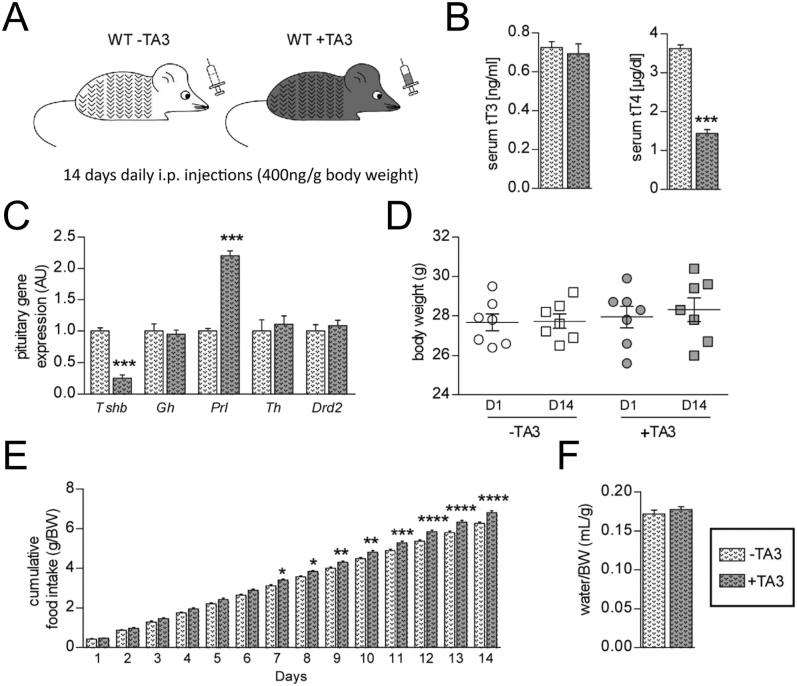
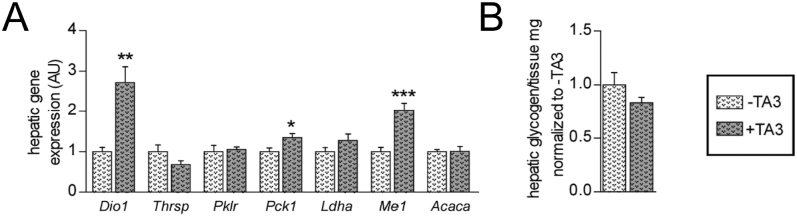
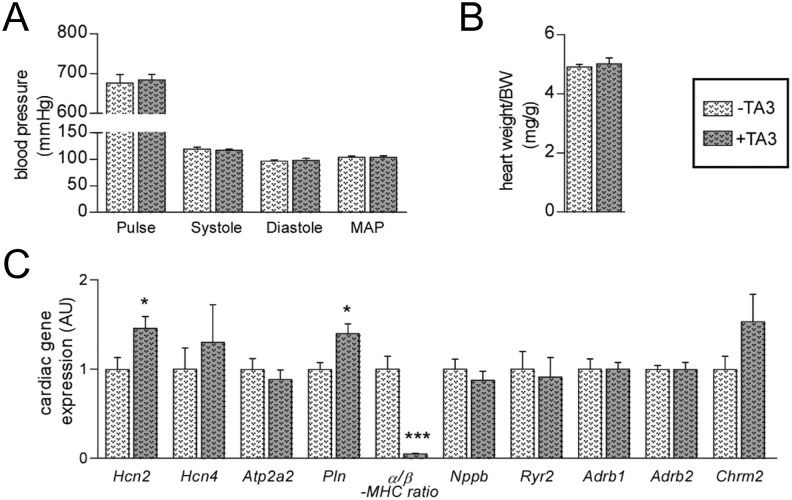
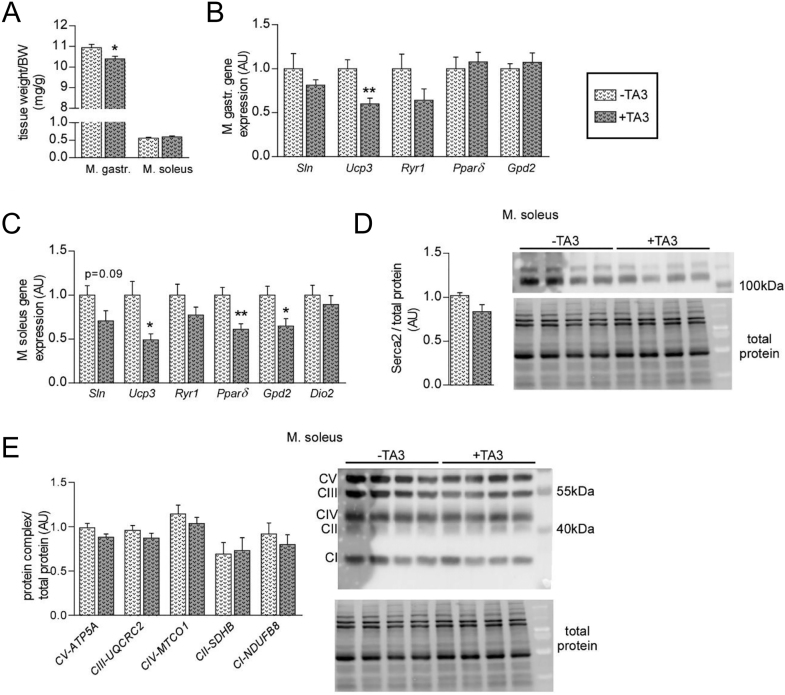
OBJECTIVE: Thyroid hormones regulate cardiovascular functions and energy homeostasis, including thermogenesis, through binding to nuclear thyroid hormone receptors. The thyroid hormone analog 3,3',5-triiodothyroacetic acid (TRIAC) has recently emerged as a therapeutic candidate for thyroid hormone transporter deficiencies (Allan-Herndon-Dudley syndrome) or thyroid hormone resistance β. Although TRIAC shows promise for these conditions, a comprehensive characterization focusing on heart and body temperature regulation has not been systematically performed in mice. METHODS: As this knowledge is critical for determining its safety profile and therapeutic advantages over conventional thyroid hormone therapy, we administered TRIAC to wild-type mice for 14 days and assessed molecular (real-time PCR, western blot, and immunoassays) and physiological (infrared thermography and blood pressure) responses. RESULTS: TRIAC treatment reduced circulating thyroxine levels and induced robust upregulation of hepatic thyroid hormone-responsive genes, including Dio1 and Me1, demonstrating classical thyromimetic activity. However, cardiovascular analysis revealed normal blood pressure and heart rate, and there were no signs of cardiac hypertrophy despite specific molecular changes in cardiac gene expression. At the metabolic level, we surprisingly did not observe any effect on brown fat thermogenesis or body temperature, while in muscle, Ucp3 and Gpd2 were reduced. CONCLUSION: Taken together, our comparative in vivo analysis demonstrates variable TRIAC responsiveness across tissues. Under defined conditions, the drug produces defined metabolic responses while avoiding classical hyperthyroid manifestations, such as tachycardia or hyperthermia, thus supporting its potential therapeutic use in thyroid hormone resistance conditions.
Overview
The claims and statistics of this paper haven’t been checked yet.
Free: it reads the open-access text and checks the first 5 claims that cite a source we can check. Create a free account to check every claim.
Integrity signals
Registry
Cites
Statistics
Figures
Verification
Claims the paper makes
The claims and statistics of this paper haven’t been checked yet.
Free: it reads the open-access text and checks the first 5 claims that cite a source we can check. Create a free account to check every claim.
Claims other papers make about this one
Each is checked against this paper’s own text: does it say what the citing paper says it does?
In the citing paper
“the MCT8 transporter, which is preferentially expressed in neurons including hypophysiotropic TRH neurons (51, 139), and tanycytes (139), has preferential affinity for T 3 (139)”
From Central regulation of hypothalamic-pituitary-thyroid axis under physiological and pathophysiological conditions (2014) · cites this paper as [139]
Self-check
Percentages, sums and reported differences re-computed from the paper’s own numbers.
The self-check needs the paper’s full text.
Citations
Cites
Physiological and Molecular Basis of Thyroid Hormone Action
Yen, P. M. (2001) · Physiological Reviews · doi:10.1152/physrev.2001.81.3.1097 · Cited by 2,011
Bianco, A. C., Salvatore, D., Gereben, B., Berry, M. J., & Larsen, P. R. (2002) · Endocrine Reviews · doi:10.1210/edrv.23.1.0455 · Cited by 1,853
The Syndromes of Resistance to Thyroid Hormone*
REFETOFF, S., WEISS, R. E., & USALA, S. J. (1993) · Endocrine Reviews · doi:10.1210/edrv-14-3-348 · Cited by 873 · cited 1×
“Finally, like patients with the syndrome of resistance to TH, who suffer from learning disorders and mental retardation (23), genetically engineered mice in which a T3 binding mutation was introduced into the TH receptor locus displayed learning deficits together with reduced BDNF (brain-derived neurotrophic factor) i…”
BackgroundIdentification of monocarboxylate transporter 8 as a specific thyroid hormone transporter
Friesema, E. C. H., Ganguly, S., Abdalla, A., Fox, J. E. M., Halestrap, A. P., & Visser, T. J. (2003) · Journal of Biological Chemistry · doi:10.1074/jbc.m300909200 · Cited by 725 · cited 1×
“expressed in brain and other TH-responsive tissues (11).”
BackgroundSelf-citationFriesema, E. C., Grueters, A., Biebermann, H., Krude, H., von Moers, A., Reeser, M., Barrett, T. G., Mancilla, E. E., Svensson, J., Kester, M. H., et al. (2004) · The Lancet · doi:10.1016/s0140-6736(04)17226-7 · Cited by 709 · cited 4×
“tional MCT8 transporter exhibit markedly elevated T3 levels (12, 13).”
BackgroundSelf-citationDumitrescu, A. M., Liao, X.-H., Best, T. B., Brockmann, K., & Refetoff, S. (2004) · The American Journal of Human Genetics · doi:10.1086/380999 · Cited by 706
The role of thyroid hormones in prenatal and neonatal neurological development--current perspectives
Porterfield, S. P. (1993) · Endocrine Reviews · doi:10.1210/er.14.1.94 · Cited by 672
Follicular cells of the thyroid gland require Pax8 gene function
Mansouri, A., Chowdhury, K., & Gruss, P. (1998) · Nature Genetics · doi:10.1038/ng0598-87 · Cited by 622
Maternal thyroid hormones early in pregnancy and fetal brain development
Escobar, G. M. D., Obregón, M. J., & Rey, F. E. D. (2004) · Best Practice & Research Clinical Endocrinology & Metabolism · doi:10.1016/j.beem.2004.03.012 · Cited by 585 · cited 1×
“Consequently, brain development is more severely affected than under conditions of congenital hypothyroidism (3).”
BackgroundMolecular Basis of Thyroid Hormone-Dependent Brain Development*
Oppenheimer, J. H., & Schwartz, H. L. (1997) · Endocrine Reviews · doi:10.1210/edrv.18.4.0309 · Cited by 517
Cited by
Items 101–200 of 267
Perinatal TCDD exposure alters developmental neuroendocrine system
Ahmed, R. G. (2011) · Food and Chemical Toxicology · doi:10.1016/j.fct.2011.03.008 · Cited by 102
“, 2005; Grandjean and Landrigan, 2006; Brouillette and Quirion, 2008), even at background environmental levels (Darras, 2008), via the availability of TH transporters (Friesema et al., 2005, 2010; Heuer et al., 2005; Nunez et al., 2008).”
BackgroundRole of the Thyroid System in Myelination and Neural Connectivity
Calzà, L., Fernández, M., & Giardino, L. (2015) · Comprehensive physiology · doi:10.1002/cphy.c140035 · Cited by 74
Expression of Thyroid Hormone Transporters in the Human Hypothalamus
Alkemade, A., Friesema, E. C. H., Kalsbeek, A., Swaab, D. F., Visser, T. J., & Fliers, E. (2011) · The Journal of Clinical Endocrinology & Metabolism · doi:10.1210/jc.2010-2750 · Cited by 55
“In the mouse brain, Mct8 is expressed in neurons, brain capillaries, and choroid plexus (5).”
BackgroundSelf-citationFUCHS, O., PFARR, N., POHLENZ, J., & SCHMIDT, H. (2009) · Developmental Medicine & Child Neurology · doi:10.1111/j.1469-8749.2008.03125.x · Cited by 55
Hypothalamic Thyroid Hormone in Energy Balance Regulation
Herwig, A., Ross, A. W., Nilaweera, K. N., Morgan, P. J., & Barrett, P. (2008) · Obesity Facts · doi:10.1159/000123428 · Cited by 54
Tissue-Specific Expression of Monocarboxylate Transporters during Fasting in Mice
Schutkowski, A., Wege, N., Stangl, G. I., & König, B. (2014) · PLoS ONE · doi:10.1371/journal.pone.0112118 · Cited by 53
“However, other studies showed that hyper- or hypothyroid states did not modulate MCT8 transcript level in hypothalamus [56,57].”
BackgroundKalló, I., Mohácsik, P., Vida, B., Zeöld, A., Bardóczi, Z., Zavacki, A. M., Farkas, E., Kádár, A., Hrabovszky, E., Arrojo e Drigo, R., et al. (2012) · PLoS ONE · doi:10.1371/journal.pone.0037860 · Cited by 52
“This transporter is considered to be the predominant, neuronal T3 transporter, and mutations thereof in humans are characterized by a severe neurologic phenotype; [21,22,44].”
BackgroundTanycytes and the Control of Thyrotropin-Releasing Hormone Flux Into Portal Capillaries
Rodríguez-Rodríguez, A., Lazcano, I., Sánchez‐Jaramillo, E., Uribe, R. M., Jaimes-Hoy, L., Joseph‐Bravo, P., & Charli, J. (2019) · Frontiers in Endocrinology · doi:10.3389/fendo.2019.00401 · Cited by 53
“In the ME, the transporters MCT8 and OATP1c1 are present in tanycyte processes (94, 95).”
BackgroundStructure and Function of Thyroid Hormone Plasma Membrane Transporters
Schweizer, U., Johannes, J., Bayer, D., & Braun, D. (2014) · European Thyroid Journal · doi:10.1159/000367858 · Cited by 49
Sawano, E., Takahashi, M., Negishi, T., & Tashiro, T. (2013) · International Journal of Developmental Neuroscience · doi:10.1016/j.ijdevneu.2013.09.007 · Cited by 52
“Hippocampal neurons exhibit high expression levels of both TH receptors (Bradley et al., 1992) and the monocarboxylate transporter 8 (MCT8; slc16a2) (Heuer et al., 2005) identified as a specific TH transporter in the brain (Friesema et al., 2003).”
BackgroundHerck, S. L. J. V., Delbaere, J., Bourgeois, N. M. A., McAllan, B. M., Richardson, S. J., & Darras, V. (2015) · General and Comparative Endocrinology · doi:10.1016/j.ygcen.2015.02.021 · Cited by 48
“We found MCT8 to be exclusively expressed at the embryonic blood–CSF barrier, whereas in rodents and adult humans MCT8 mRNA and protein are found both in the choroid plexus and in the endothelial cells of the brain capillaries (GrijotaMartinez et al., 2011; Heuer et al., 2005; Roberts et al., 2008b).”
Backgroundde Vrieze, E., van de Wiel, S. M. W., Zethof, J., Flik, G., Klaren, P. H. M., & Arjona, F. J. (2014) · Endocrinology · doi:10.1210/en.2013-1962 · Cited by 53
Regulation of Brain Development by Thyroid Hormone and its Modulation by Environmental Chemicals
Koibuchi, N., & Iwasaki, T. (2006) · Endocrine Journal · doi:10.1507/endocrj.kr-69 · Cited by 51
“T3 is then transferred to neurons or oligodendrocytes possibly through monocarboxylate transporter 8 (MCT8) [10], where it bind to the TR expressed in these cell types to regulate transcription of target genes.”
BackgroundMuzzio, A. M., Noyes, P. D., Stapleton, H. M., & Lema, S. C. (2013) · Comparative Biochemistry and Physiology Part A Molecular & Integrative Physiology · doi:10.1016/j.cbpa.2013.09.019 · Cited by 54
Non-Neuronal Cells in the Hypothalamic Adaptation to Metabolic Signals
Freire‐Regatillo, A., Argente-Arizón, P., Argente, J., García‐Segura, L. M., & Chowen, J. A. (2017) · Frontiers in Endocrinology · doi:10.3389/fendo.2017.00051 · Cited by 51
Decreased static and increased dynamic global signal topography in major depressive disorder
Han, S., Wang, X., He, Z., Sheng, W., Zou, Q., Li, L., Yang, Y., Guo, X., Fan, Y., Guo, J., et al. (2019) · Progress in Neuro-Psychopharmacology and Biological Psychiatry · doi:10.1016/j.pnpbp.2019.109665 · Cited by 48
Expression Profiling of Solute Carrier Gene Families at the Blood-CSF Barrier
Ho, H. T. B., Dahlin, A., & Wang, J. (2012) · Frontiers in Pharmacology · doi:10.3389/fphar.2012.00154 · Cited by 46
“It should be noted that MCT8 and OATP1C1 are also expressed at the BBB (Sugiyama et al., 2003; Heuer et al., 2005; Dahlin et al., 2009).”
BackgroundInfluentialCapelo, L. P., Beber, E. H., Fonseca, T. L., & Gouveia, C. H. A. (2009) · Thyroid · doi:10.1089/thy.2008.0120 · Cited by 45
“A recent study demonstrated that MCT8 plays an important role in the central nervous system development, by transporting TH into neurons (28).”
Interference of a Mutant Thyroid Hormone Receptor α1 with Hepatic Glucose Metabolism
Vujovic, M., Nordström, K., Gauthier, K., Flamant, F., Visser, T. J., Vennström, B., & Mittag, J. (2009) · Endocrinology · doi:10.1210/en.2008-1085 · Cited by 44
“Similar results were obtained for the TH transporter MCT8, which was in agreement with previous observations in the brain (21).”
ResultSelf-citationThyroid hormones and the central nervous system of mammals (Review)
Liegro, I. D. (2008) · Molecular Medicine Reports · doi:10.3892/mmr.1.3.279 · Cited by 50
“In the murine central nervous system (CNS), MCT8 is present in a number of neuronal populations of both the cerebral and cerebellar cortex, hypothalamus, striatum and hippocampus (140).”
Spatiotemporal Changes of Cerebral Monocarboxylate Transporter 8 Expression
Wilpert, N., Krueger, M., Opitz, R., Sebinger, D., Paisdzior, S., Mages, B., Schulz, A., Spranger, J., Wirth, E. K., Stachelscheid, H., et al. (2020) · Thyroid · doi:10.1089/thy.2019.0544 · Cited by 52
“Heuer et al. have first described pronounced Mct8 expression in TH-sensitive neuronal populations in postnatal murine brains (20).”
Iodine and Thyroid Maternal and Fetal Metabolism during Pregnancy
Mégier, C., Dumery, G., & Luton, D. (2023) · Metabolites · doi:10.3390/metabo13050633 · Cited by 52
Faustino, L. C., & Ortiga-Carvalho, T. M. (2014) · Frontiers in Endocrinology · doi:10.3389/fendo.2014.00075 · Cited by 43
“Finally, TH metabolism and transport, which are mediated mainly by deiodinases (21) and monocarboxylate transporters (22, 23), respectively, have also been shown to be important for cerebellar function.”
BackgroundGeysens, S., Ferrán, J. L., Herck, S. L. J. V., Tylżanowski, P., Puelles, L., & Darras, V. (2012) · Neuroscience · doi:10.1016/j.neuroscience.2012.06.057 · Cited by 43
Thyroid Hormone and Skeletal Development
Gouveia, C. H. D. A., Miranda-Rodrigues, M., Martins, G. M., & Neofiti-Papi, B. (2018) · Vitamins and hormones · doi:10.1016/bs.vh.2017.06.002 · Cited by 47
Thyroid hormone transporters in the brain
Suzuki, T., & Abe, T. (2008) · The Cerebellum · doi:10.1007/s12311-008-0029-9 · Cited by 44
“This severe phenotype is explained partly by the recent reports that MCT8 is expressed specifically in thyroid hormone sensitive neuronal populations (54,59,60).”
BackgroundTissue thyroid hormone metabolism is differentially regulated during illness in mice
Boelen, A., van der Spek, A. H., Bloise, F., de Vries, E. M., Surovtseva, O. V., van Beeren, M., Ackermans, M. T., Kwakkel, J., & Fliers, E. (2017) · Journal of Endocrinology · doi:10.1530/joe-16-0483 · Cited by 35
Thyroid Hormone Transporters and Resistance
Visser, T. J. (2013) · Endocrine Development · doi:10.1159/000343695 · Cited by 35
Self-citationWittmann, G., Szabon, J., Mohácsik, P., Nouriel, S. S., Gereben, B., Fekete, C., & Lechan, R. M. (2015) · Endocrinology · doi:10.1210/en.2014-1830 · Cited by 35
“4 types (25-30), and are indispensable for TH entry into the brain via the blood-brain and/or blood1 cerebrospinal fluid barrier (24, 31-34).”
BackgroundMethodMCT8 deficiency in Purkinje cells disrupts embryonic chicken cerebellar development
Delbaere, J., Vancamp, P., Herck, S. L. J. V., Bourgeois, N. M. A., Green, M. J., Wingate, R. J. T., & Darras, V. (2016) · Journal of Endocrinology · doi:10.1530/joe-16-0323 · Cited by 39
Thyroid Hormone Transporters in Pregnancy and Fetal Development
Chen, Z., Meima, M. E., Peeters, R. P., & Visser, W. E. (2022) · International Journal of Molecular Sciences · doi:10.3390/ijms232315113 · Cited by 38
“In the human fetal brain, MCT10 mRNA is expressed in the cerebral cortex with comparable expression levels throughout gestation and in adults [17].”
BackgroundEndocrinology of Fetal Development
Dattani, M., Hindmarsh, P. C., & Fisher, D. A. (2011) · Elsevier eBooks · doi:10.1016/b978-1-4377-0324-5.00022-5 · Cited by 35
Sánchez, E., Singru, P. S., Fekete, C., & Lechan, R. M. (2008) · Endocrinology · doi:10.1210/en.2007-1697 · Cited by 34
Vancamp, P., & Darras, V. M. (2018) · General and Comparative Endocrinology · doi:10.1016/j.ygcen.2017.11.023 · Cited by 33
Braun, D., Lelios, I., Krause, G., & Schweizer, U. (2013) · Endocrinology · doi:10.1210/en.2012-2197 · Cited by 34
Monocarboxylate Transporter 10 Functions as a Thyroid Hormone Transporter in Chondrocytes
Abe, S., Namba, N., Abe, M., Fujiwara, M., Aikawa, T., Kogo, M., & Ozono, K. (2012) · Endocrinology · doi:10.1210/en.2011-1713 · Cited by 34
Physiology of the Blood–Brain Barrier and Mechanisms of Transport Across the BBB
Lalatsa, A., & Butt, A. M. (2018) · Elsevier eBooks · doi:10.1016/b978-0-12-812218-1.00003-8 · Cited by 52
Sánchez, E., Singru, P. S., Wittmann, G., Nouriel, S. S., Barrett, P., Fekete, C., & Lechan, R. M. (2010) · Endocrinology · doi:10.1210/en.2010-0279 · Cited by 30
Regulators of thyroid hormone availability and action in embryonic chicken brain development
Herck, S. L. J. V., Geysens, S., Delbaere, J., & Darras, V. (2013) · General and Comparative Endocrinology · doi:10.1016/j.ygcen.2013.05.003 · Cited by 31
“It has been found at the blood–brain-barrier (BBB) and choroid plexus, in tanycytes of the third ventricle, in cerebellar Purkinje cells and in neurons of the cortex, striatum, hypothalamus, amygdala and hippocampus (Heuer et al., 2005).”
BackgroundTissue thyroid hormones and thyronamines
Accorroni, A., Saponaro, F., & Zucchi, R. (2016) · Heart Failure Reviews · doi:10.1007/s10741-016-9553-8 · Cited by 29
Directing Traffic: Halogen‐Bond‐Mediated Membrane Transport
Govindaraj, V., Ungati, H., Jakka, S. R., Bose, S., & Mugesh, G. (2019) · Chemistry - A European Journal · doi:10.1002/chem.201902243 · Cited by 34
Braun, D., & Schweizer, U. (2015) · Endocrinology · doi:10.1210/en.2015-1393 · Cited by 32
Sabatino, L., Lapi, D., & Seppia, C. D. (2024) · Biomolecules · doi:10.3390/biom14020198 · Cited by 35
Luongo, C., Butruille, L., Sébillot, A., Blay, K. L., Schwaninger, M., Heuer, H., DEMENEIX, B. A., & Remaud, S. (2021) · Stem Cell Reports · doi:10.1016/j.stemcr.2020.12.009 · Cited by 29
“It is well established that OATP1C1 cooperates with MCT8 to facilitate TH transport across the blood-brain barrier (BBB) and/or the blood-cerebrospinal fluid barrier into the rodent brain.”
BackgroundSelf-citationZung, A., Visser, T. J., Uitterlinden, A. G., Rivadeneira, F., & Friesema, E. C. H. (2011) · European Journal of Endocrinology · doi:10.1530/eje-11-0358 · Cited by 29
Self-citationCellular Uptake of Thyroid Hormones
Visser, T. J. (2016) · MDText.com, Inc. eBooks · Cited by 29
Self-citationNucera, C., Muzzi, P., Tiveron, C., Farsetti, A., Regina, F. L., Foglio, B., Shih, S., Moretti, F., Pietra, L. D., Mancini, F., et al. (2009) · Journal of Cellular and Molecular Medicine · doi:10.1111/j.1582-4934.2009.00947.x · Cited by 26
“MCT8, MCT10, OATP1C1) that facilitate cellular uptake and/or efflux of the iodothyronines [3, 5, 55, 58, 60, 82–87].”
BackgroundThyroid hormone and the developing hypothalamus
Alkemade, A. (2015) · Frontiers in Neuroanatomy · doi:10.3389/fnana.2015.00015 · Cited by 30
“MCT8 is also expressed in the human as well as the rodent choroid plexus (Heuer et al., 2005; Friesema et al., 2012).”
BackgroundImpaired Sensitivity to Thyroid Hormone: Defects of Transport, Metabolism and Action
Dumitrescu, A. M., & Refetoff, S. (2015) · Cited by 32
Increased/Targeted Brain (Pro)Drug Delivery via Utilization of Solute Carriers (SLCs)
Huttunen, J., Adla, S. K., Markowicz-Piasecka, M., & Huttunen, K. M. (2022) · Pharmaceutics · doi:10.3390/pharmaceutics14061234 · Cited by 28
Hormonal regulation of the arcuate nucleus melanocortin system
Coppola, A. M., & Diano, S. (2007) · Frontiers in bioscience · doi:10.2741/2331 · Cited by 30
“In the latter, MCT8 was also found in tanycytes lining the third ventricle (67).”
BackgroundThe Challenges and Complexities of Thyroid Hormone Replacement
Kansagra, S. M., McCudden, C. R., & Willis, M. S. (2010) · Laboratory Medicine · doi:10.1309/lmb39th2fzgndgim · Cited by 34
Thyroid Hormone Transporters in the Brain
Braun, D., Wirth, E. K., & Schweizer, U. (2010) · Reviews in the Neurosciences · doi:10.1515/revneuro.2010.21.3.173 · Cited by 31
Effects of thyroid hormone transporters MCT8 and MCT10 on nuclear activity of T3
van Mullem, A. A., van Gucht, A. L. M., Visser, W. E., Meima, M. E., Peeters, R. P., & Visser, T. J. (2016) · Molecular and Cellular Endocrinology · doi:10.1016/j.mce.2016.07.037 · Cited by 27
“MCT8 is expressed in neurons and at the blood-brain barrier (Heuer et al., 2005; Roberts et al., 2008; Alkemade et al., 2005; Friesema et al., 2006b; Ceballos et al., 2009; Heuer, 2007; Braun et al., 2011).”
Self-citationOligodendroglial Lineage Cells in Thyroid Hormone-Deprived Conditions
Kim, M. J., & Petratos, S. (2019) · Stem Cells International · doi:10.1155/2019/5496891 · Cited by 24
Anık, A., Kersseboom, S., Demir, K., Çatlı, G., Yiş, U., Böber, E., van Mullem, A. A., van Heerebeek, R., Kurul, S. H., Abacı, A., et al. (2014) · Hormone Research in Paediatrics · doi:10.1159/000365191 · Cited by 27
Self-citationMann, D. R., & Plant, T. M. (2010) · Brain Research · doi:10.1016/j.brainres.2010.09.082 · Cited by 25
“…through the lipid bilayer of the cell membrane, evidence developed over the last decade has shown that a group of high affinity transporters are involved in facilitating the movement of these hormones into target cells (Hennemann et al., 2001; Abe et al., 2002; Bernal, 2005; Heuer et al., 2005).”
BackgroundBraun, D., & Schweizer, U. (2016) · Endocrinology · doi:10.1210/en.2016-1530 · Cited by 30
Zebrafish – An emerging model to explore thyroid hormone transporters and psychomotor retardation
Zada, D., Blitz, E., & Appelbaum, L. (2017) · Molecular and Cellular Endocrinology · doi:10.1016/j.mce.2017.03.004 · Cited by 24
Visser, T. J. (2007) · Hormone Research in Paediatrics · doi:10.1159/000110469 · Cited by 27
Self-citationGurnell, M., Visser, T. J., Beck-Peccoz, P., & Chatterjee, K. (2010) · Elsevier eBooks · doi:10.1016/b978-1-4160-5583-9.00094-0 · Cited by 29
Self-citationDistribution of Monocarboxylate Transporters in Brain and Choroid Plexus Epithelium
Ueno, M., Chiba, Y., Murakami, R., Miyai, Y., Matsumoto, K., Wakamatsu, K., Takebayashi, G., Uemura, N., & Yanase, K. (2023) · Pharmaceutics · doi:10.3390/pharmaceutics15082062 · Cited by 28
“In contrast, in mouse brains, MCT8 mRNA was expressed predominantly in neurons and also in CP [60].”
Nillni, E. A. (2016) · Molecular and Cellular Endocrinology · doi:10.1016/j.mce.2016.09.002 · Cited by 23
Monocarboxylate Transporter 8 in Neuronal Cell Growth
James, S. R., Franklyn, J. A., Reaves, B. J., Smith, V. E., Chan, S., Barrett, T. G., Kilby, M. D., & McCabe, C. J. (2008) · Endocrinology · doi:10.1210/en.2008-1031 · Cited by 25
“Given that MCT8 is expressed in murine neurons (12) and that serum T3 concentrations are elevated in patients with Allan-Herndon-Dudley syndrome associated with MCT8 mutations, it has been proposed that MCT8 has a critical role in neural development.”
BackgroundThe tricyclic antidepressant desipramine inhibits T3 import into primary neurons
Roth, S., Kinne, A., & Schweizer, U. (2010) · Neuroscience Letters · doi:10.1016/j.neulet.2010.04.055 · Cited by 23
Prenatal thyroxine treatment disparately affects peripheral and amygdala thyroid hormone levels
Shukla, P. K., Sittig, L. J., Andrus, B. M., Schaffer, D. J., Batra, K. K., & Redei, E. E. (2009) · Psychoneuroendocrinology · doi:10.1016/j.psyneuen.2009.10.019 · Cited by 19
“The nonessential nature of Dio2 also suggests that the primary regulators of T3 action are the molecules MCT-8 and Dio3, which transport T3 into the neuron, and metabolize it there (Heuer et al., 2005).”
Hypoxia Stabilizes Type 2 Deiodinase Activity in Rat Astrocytes
Lamirand, A., MERCIER, G., Ramaugé, M., Pierre, M., & Courtin, F. (2007) · Endocrinology · doi:10.1210/en.2007-0625 · Cited by 20
Ono, E., Ariga, M., Oshima, S., Hayakawa, M., Imai, M., Ochiai, Y., Mochizuki, H., Namba, N., Ozono, K., & Miyata, I. (2016) · Clinical Pediatric Endocrinology · doi:10.1297/cpe.25.23 · Cited by 19
Regulation of Thyroid Hormone Gatekeepers by Thyrotropin in Tanycytes
Chandrasekar, A., Schmidtlein, P. M., Neve, V., Rivagorda, M., Spiecker, F., Gauthier, K. C., Prévot, V., Schwaninger, M., & Müller‐Fielitz, H. (2023) · Thyroid · doi:10.1089/thy.2023.0375 · Cited by 22
“These findings are consistent with previous studies conducted in various species such as mice, 10,11,33,34 rats, 35 hamsters, 36 and birds.”
Role of Monocarboxylate Anion Transporter 8 (MCT8) in Thyroid Hormone Transport: Answers from Mice
Bernal, J. (2006) · Endocrinology · doi:10.1210/en.2006-0695 · Cited by 17
“However, MCT8 is expressed in neurons and, therefore, neuronal uptake of T3 is likely to be impaired in the patients (9).”
BackgroundErratum: Thyroid hormone transporters—functions and clinical implications
Bernal, J., Guadaño‐Ferraz, A., & Morte, B. (2015) · Nature Reviews Endocrinology · doi:10.1038/nrendo.2015.113 · Cited by 18
Wang, T., Wang, Y., Montero‐Pedrazuela, A., Prensa, L., Guadaño‐Ferraz, A., & Rausell, E. (2023) · International Journal of Molecular Sciences · doi:10.3390/ijms24119643 · Cited by 19
“Previous in situ hybridization studies have demonstrated mRNA expression of Mct8 in the adult mouse basal ganglia [39,40], but there is no reference to specific cell types.”
BackgroundThe Ups and Downs of Thyrotropin-Releasing Hormone
Vella, K. R., & Hollenberg, A. N. (2009) · Endocrinology · doi:10.1210/en.2009-0261 · Cited by 19
Understanding the Hypothalamus-Pituitary-Thyroid Axis in Mct8 Deficiency
Müller, J., & Heuer, H. (2012) · European Thyroid Journal · doi:10.1159/000339474 · Cited by 16
Self-citationRoshanbin, S., Lindberg, F. A., Lekholm, E., Eriksson, M. M., Perland, E., Åhlund, J., Raine, A., & Fredriksson, R. (2016) · BMC Neuroscience · doi:10.1186/s12868-016-0274-7 · Cited by 17
“The Slc16a9 expression data are only found in the Allen Brain Atlas, whereas Slc16a2 and Slc16a10 have been studied to a greater extent.”
Jiao, F., Qiao, K., Jiang, Y., Li, S., Zhao, J., & Gui, W. (2019) · Environmental Pollution · doi:10.1016/j.envpol.2019.113328 · Cited by 17
Therapeutic applications of thyroid hormone analogues
Visser, W. E. (2020) · Annales d Endocrinologie · doi:10.1016/j.ando.2020.03.004 · Cited by 17
“[5] Heuer H, Maier MK, Iden S, Mittag J, Friesema EC, Visser TJ, et al.”
BackgroundThe Elemental Importance of Sufficient Iodine Intake: A Trace Is Not Enough
Visser, T. J. (2006) · Endocrinology · doi:10.1210/en.2006-0203 · Cited by 24
“and neurons in the local regulation of T3 levels in the brain (14, 15).”
BackgroundSelf-citationDelbaere, J., Herck, S. L. J. V., Bourgeois, N. M. A., Vancamp, P., Yang, S., Wingate, R. J. T., & Darras, V. (2015) · The Cerebellum · doi:10.1007/s12311-015-0744-y · Cited by 17
“Together with the choroid plexus results, this suggests that the hypothesised model for T3 availability to neurons in the mammalian brain [41] cannot be generalised, but instead should be further refined according to the species.”
BackgroundThyroid hormone transporters in the human
Karapanou, O., & Papadimitriou, A. (2011) · HORMONES · doi:10.14310/horm.2002.1318 · Cited by 17
Tissue-specific effects of mutations in the thyroid hormone transporter MCT8
Kersseboom, S., & Visser, T. J. (2011) · Arquivos Brasileiros de Endocrinologia & Metabologia · doi:10.1590/s0004-27302011000100001 · Cited by 14
“The lack of effect of Mct8 inactivation on brain uptake of T4, which is also a substrate for MCT8, may be explained by assuming that T4 is largely transported across the BBB and BCF by OATP1C1 (7,13).”
BackgroundSelf-citationThyroid hormone action in adult neurogliogenic niches: the known and unknown
Valcárcel-Hernández, V., Mayerl, S. E., Guadaño‐Ferraz, A., & Remaud, S. (2024) · Frontiers in Endocrinology · doi:10.3389/fendo.2024.1347802 · Cited by 17
Thyroid dysfunction in pregnancy
Galofré, J. C., & Davies, T. F. (2007) · Endocrinología y Nutrición · doi:10.1016/s1575-0922(07)71501-2 · Cited by 20
Emamnejad, R., Dass, M., Mahlis, M., Bozkurt, S., Ye, S., Pagnin, M., Theotokis, P., Grigoriadis, N., & Petratos, S. (2022) · Frontiers in Pharmacology · doi:10.3389/fphar.2022.934971 · Cited by 14
“…in the brain and is highly expressed by neuronal populations of the cerebral and cerebellar cortex, hippocampus, striatum, and hypothalamus (Heuer et al., 2005); however, functional studies performed in Xenopus laevis oocytes elucidated its importance in TH transport (Friesema et al.,…”
BackgroundEvolution and functional divergence of monocarboxylate transporter genes in vertebrates
Liu, Q., Dou, S., Wang, G., Li, Z., & Feng, Y. (2008) · Gene · doi:10.1016/j.gene.2008.07.003 · Cited by 14
Endocrinology of Fetal Development
Dattani, M., & Gevers, E. F. (2016) · Elsevier eBooks · doi:10.1016/b978-0-323-29738-7.00022-8 · Cited by 28
Reis, L. T. C., de Souza, J. S., Herai, R. H., Cunha, E. D. B. B., Soares, J. R. P., El-Bachá, R. D. S., da Silva, V. D. A., Romano, M. A., Romano, R. M., Chiamolera, M. I., et al. (2021) · Environmental Toxicology · doi:10.1002/tox.23102 · Cited by 13
“developing cerebellum, as demonstrated in pregnant rats induced to hyperthyroidism during gestation and breastfeeding, implying in cerebellar neuron growth retardation in the offspring.(45) The hormone T4 is the major product of the thyroid gland despite”
BackgroundResultCollision of Basic and Applied Approaches to Risk Assessment of Thyroid Toxicants
Zoeller, R. T. (2006) · Annals of the New York Academy of Sciences · doi:10.1196/annals.1371.077 · Cited by 13
Lalatsa, A., Schätzlein, A. G., & Uchegbu, I. F. (2012) · Royal Society of Chemistry eBooks · doi:10.1039/9781849735292-00329 · Cited by 13
SLC16A2 mutations in two Japanese patients with Allan–Herndon–Dudley syndrome
Yamamoto, T., Shimojima, K. Y., Umemura, A., Uematsu, M., Nakayama, T., & Inoue, K. (2014) · Human Genome Variation · doi:10.1038/hgv.2014.10 · Cited by 11
Rego, T., Gómez‐Lado, C., Cabanas, P., Santos, F. S., Barros, F., Castro-Feijóo, L., Conde, J. B., & Gago, M. C. (2017) · HORMONES · doi:10.14310/horm.2002.1733 · Cited by 13
Rolaki, A., Pistollato, F., Munn, S., & Bal‐Price, A. (2019) · OECD series on adverse outcome pathways · doi:10.1787/7ca86a34-en · Cited by 28
Crofton, K. M., Gilbert, M. E., Friedman, K. P., DEMENEIX, B. A., Marty, M. S., & Zoeller, R. T. (2019) · OECD series on adverse outcome pathways · doi:10.1787/ea5aa069-en · Cited by 31
Dierichs, N., Piersma, A. H., Peeters, R. P., Visser, W. E., Meima, M. E., & Hessel, E. V. S. (2025) · Critical Reviews in Toxicology · doi:10.1080/10408444.2025.2461076 · Cited by 12
“Generally, patients with MCT8 deficiency have motor-and intellectual disability, showing poor head control, and absence of speech, independent sitting, and walking (Friesema et al. 2004; Heuer et al. 2005; Visser WE et al. 2013; Groeneweg, van Geest, Abaci, et al. 2020).”
Gurnell, M., Visser, T. J., Beck-Peccoz, P., & Chatterjee, K. (2015) · Elsevier eBooks · doi:10.1016/b978-0-323-18907-1.00095-0 · Cited by 11
Self-citationGarcía-Aldea, Á., Guillén-Yunta, M., Valcárcel-Hernández, V., Montero‐Pedrazuela, A., Guadaño‐Ferraz, A., & Bárez‐López, S. (2024) · European Thyroid Journal · doi:10.1530/etj-23-0241 · Cited by 9
“MCT8 has been found to be highly expressed in the anterior olfactory nucleus and in the granular cell layer of the mouse OB (72).”
BackgroundImpact of endocrine-disrupting chemicals on thyroid function and brain development
Ibhazehiebo, K., & Koibuchi, N. (2014) · Expert Review of Endocrinology & Metabolism · doi:10.1586/17446651.2014.950227 · Cited by 10
“T3 is then transported to neurons or oligodendrocytes possibly via monocarboxylate transporter (MCT) 8 [14], and then binds to the nuclear TH receptor (TR) expressed in these cell types to regulate transcription of its target genes.”
BackgroundAge effect on thyroid hormone brain response in male mice
Kerp, H., Engels, K., Kramer, F., Doycheva, D., Hönes, G. S., Zwanziger, D., Moeller, L. C., Heuer, H., & Führer, D. (2019) · Endocrine · doi:10.1007/s12020-019-02078-6 · Cited by 11
Self-citationThyroid Hormones and Brain Development
Bernal, J. (2009) · Elsevier eBooks · doi:10.1016/b978-008088783-8.00063-2 · Cited by 9
Thyroid hormone signaling in the hypothalamus
Alkemade, A., Visser, T. J., & Fliers, E. (2008) · Current Opinion in Endocrinology Diabetes and Obesity · doi:10.1097/med.0b013e32830eb887 · Cited by 8
Self-citation
Metadata
- Authors
- Heuer, H., Maier, M. K., Iden, S., Mittag, J., Friesema, E. C. H., Visser, T. J., & Bauer, K.
- Affiliations
- Max Planck Society (DE)
- Erasmus MC (NL)
- Corresponding author
- Heuer, Heike
- Venue
- Endocrinology
- Publisher
- The Endocrine Society
- Published
- 2005-04-01
- Volume
- 146
- Issue
- 4
- Pages
- 1701-1706
- ISSN
- 0013-7227 (ISSN-L)
- 1945-7170
- PMC
- PMC13386237
- OpenAlex
- W2062347722
- Cited by
- 269
- References
- 31
- Citations by year
- 2026: 3 · 2025: 7 · 2024: 10 · 2023: 9 · 2022: 8 · 2021: 5 · 2020: 4 · 2019: 13 · 2018: 5 · 2017: 12 · 2016: 13 · 2015: 20 · 2014: 15 · 2013: 9 · 2012: 14
- FWCI
- 11.65
- Type
- journal article
- Language
- en
- Open access
- closed
- Locations
- Endocrinology (publishedVersion)
- PubMed (publishedVersion)
- EUR Research Repository (Erasmus University Rotterdam) (publishedVersion)
- EUR Research Repository (Erasmus University Rotterdam) (submittedVersion)
- Max Planck Institute for Plasma Physics (submittedVersion)
- MPG.PuRe (Max Planck Society) (submittedVersion)
- Funders
- Deutsche Forschungsgemeinschaft (424957847, SPP1629, TRR296)
- Topics
- Health Sciences › Medicine › Endocrinology, Diabetes and Metabolism › Thyroid Disorders and Treatments
- Health Sciences › Medicine › Oncology › Drug Transport and Resistance Mechanisms
- Physical Sciences › Environmental Science › Health, Toxicology and Mutagenesis › Chemical Analysis and Environmental Impact
- Keywords
- triac, Allan-Herndon-Dudley syndrome, MCT8, thyroid hormone receptor, DIO1, ME1, brown fat thermogenesis, thermoregulation, blood pressure, cardiac hypertrophy, muscle thermogenesis, UCP3, GPD2
- MeSH terms
- Iodothyronine Deiodinase Type II, Animals, Brain, Carrier Proteins, Female, Humans, Iodide Peroxidase, Male, Neurons, Psychomotor Disorders, RNA, Messenger, Thyroid Hormones, Monocarboxylic Acid Transporters, Organic Cation Transport Proteins, Symporters, Mice
About these checks
Registry, retraction, Cites and statistics results are computed, not judged, with one exception: a printed reference that no index lists is read once by a model before it counts as a citation error. Claims are extracted by a model and kept only when their quote appears verbatim in the text; each cited source is then checked, with a model’s help, for whether it says what the claim relies on. Those verdicts can be wrong — read the claim’s quote and the cited source before relying on one.
Statistics and arithmetic are recomputed, not judged.
Confidence bands are shown only for fields calibrated on our annotated test set. None is calibrated yet, so no band is shown.
What counts as a claim ›How we measure confidence ›How we check this ›
Are you an author, or do you see a problem with this page? Request a review
Data sources
Bibliographic data: Semantic Scholar, OpenAlex, Crossref.
Contains information from the Semantic Scholar Academic Graph Datasets, made available under the ODC Attribution License (ODC-BY 1.0).
Semantic Scholar’s data is described in: Kinney, R., et al. (2023). The Semantic Scholar Open Data Platform. arXiv:2301.10140.
