

The DOI matches its Crossref record; 44 of the 46 references it cites were found in a registry or an index.
Link Between Increased Satiety Gut Hormones and Reduced Food Reward After Gastric Bypass Surgery for Obesity
Open accessAbstract
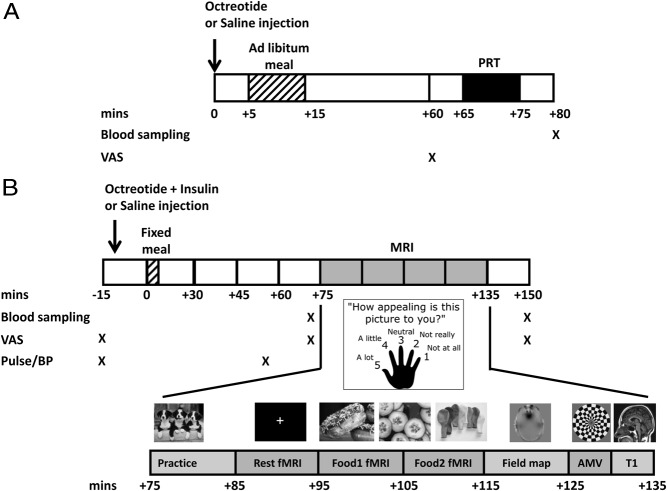
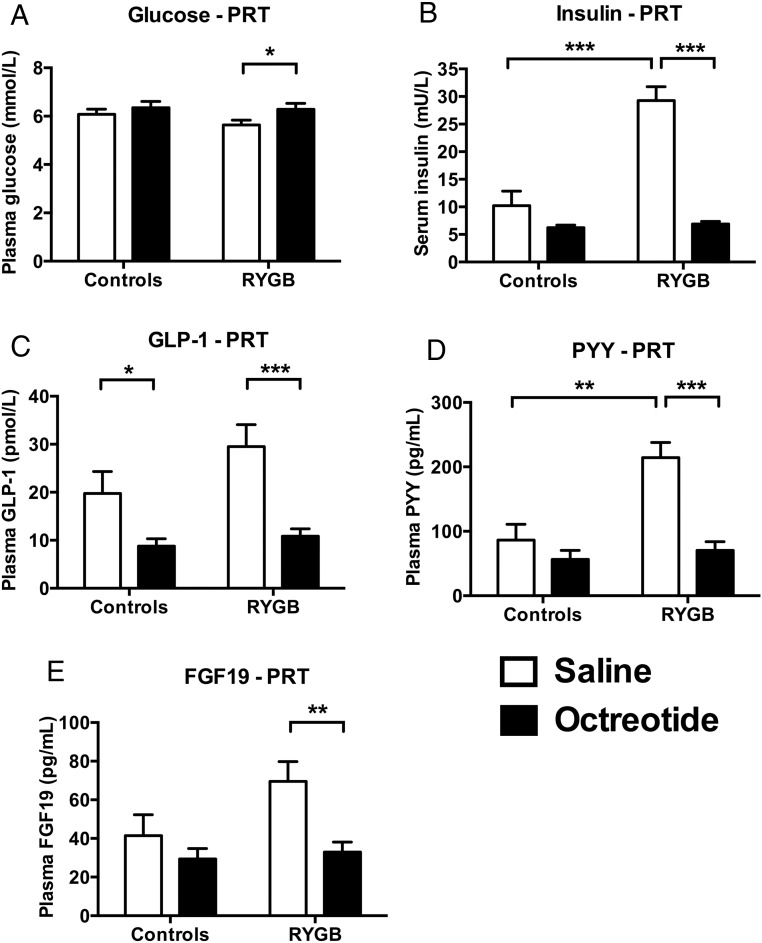
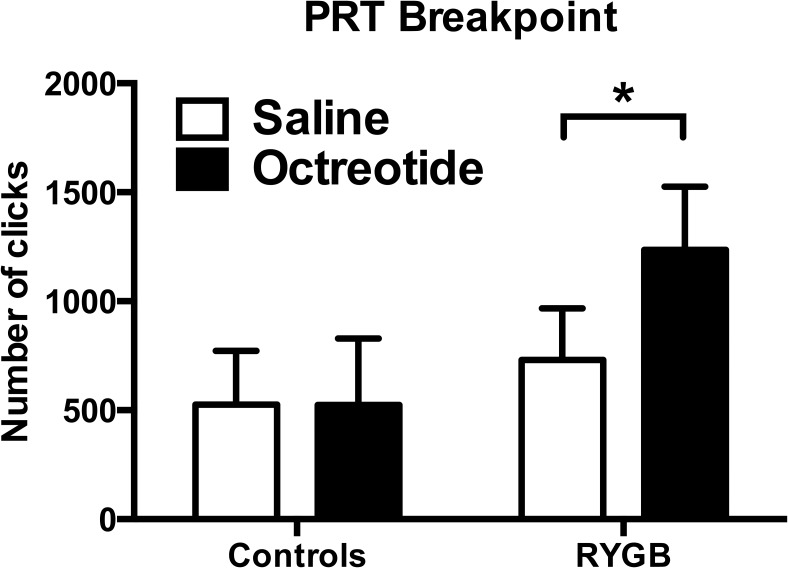
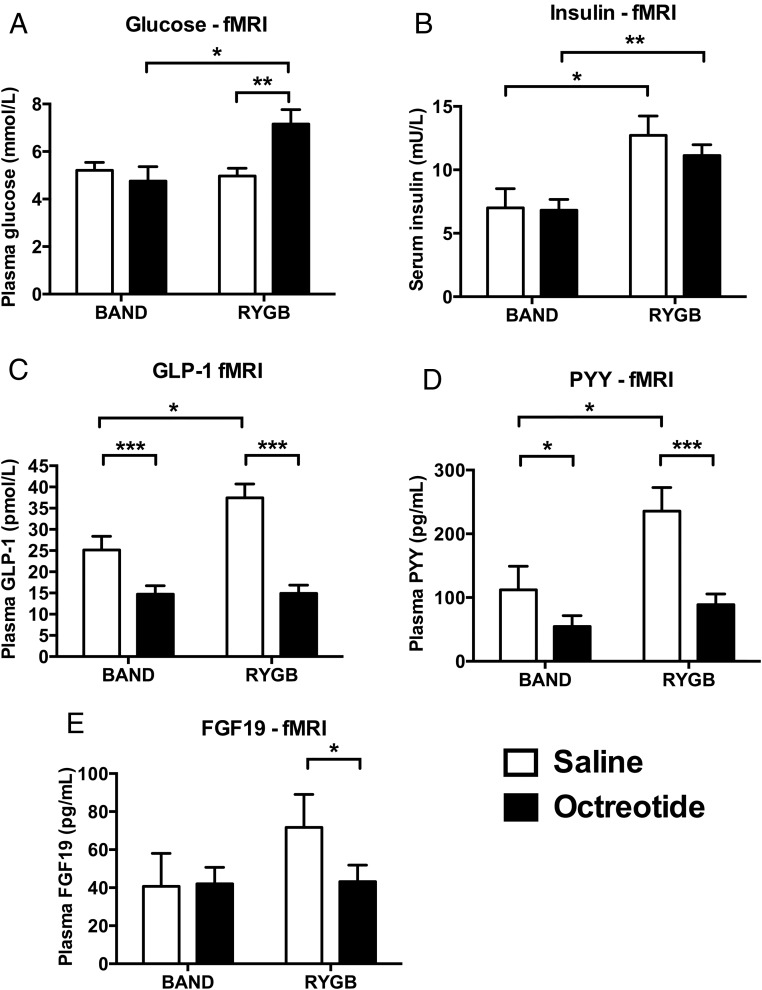
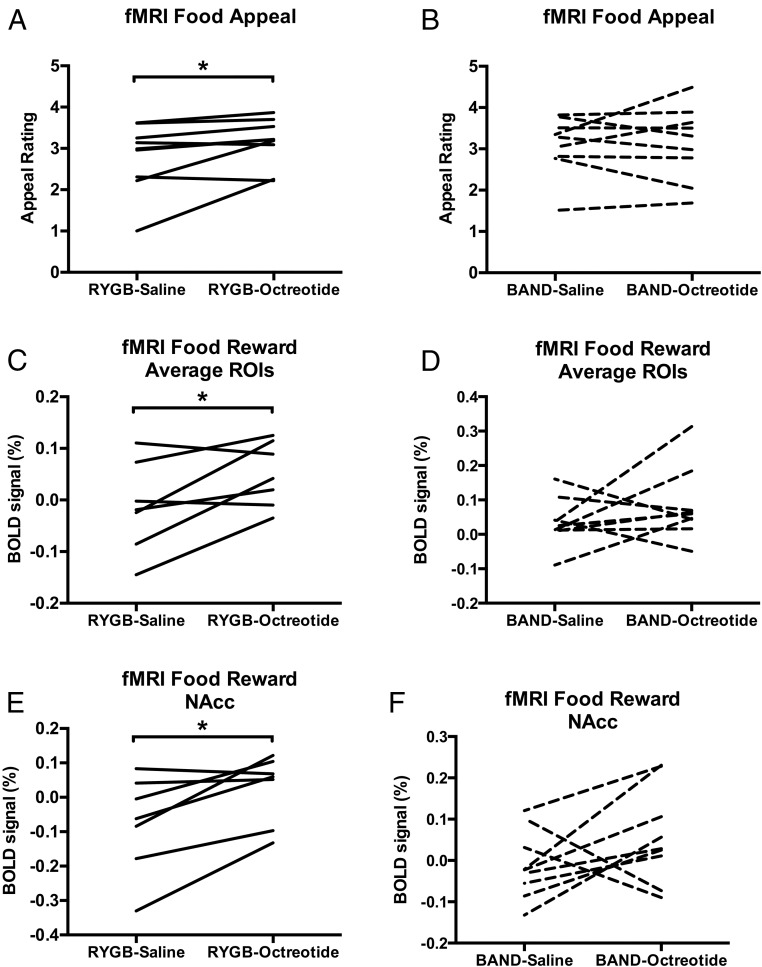
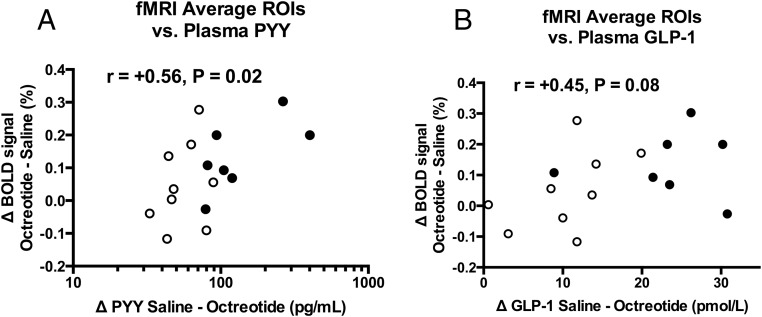
CONTEXT: Roux-en-Y gastric bypass (RYGB) surgery is an effective long-term intervention for weight loss maintenance, reducing appetite, and also food reward, via unclear mechanisms. OBJECTIVE: To investigate the role of elevated satiety gut hormones after RYGB, we examined food hedonic-reward responses after their acute post-prandial suppression. DESIGN: These were randomized, placebo-controlled, double-blind, crossover experimental medicine studies. PATIENTS: Two groups, more than 5 months after RYGB for obesity (n = 7-11), compared with nonobese controls (n = 10), or patients after gastric banding (BAND) surgery (n = 9) participated in the studies. INTERVENTION: Studies were performed after acute administration of the somatostatin analog octreotide or saline. In one study, patients after RYGB, and nonobese controls, performed a behavioral progressive ratio task for chocolate sweets. In another study, patients after RYGB, and controls after BAND surgery, performed a functional magnetic resonance imaging food picture evaluation task. MAIN OUTCOME MEASURES: Octreotide increased both appetitive food reward (breakpoint) in the progressive ratio task (n = 9), and food appeal (n = 9) and reward system blood oxygen level-dependent signal (n = 7) in the functional magnetic resonance imaging task, in the RYGB group, but not in the control groups. RESULTS: Octreotide suppressed postprandial plasma peptide YY, glucagon-like peptide-1, and fibroblast growth factor-19 after RYGB. The reduction in plasma peptide YY with octreotide positively correlated with the increase in brain reward system blood oxygen level-dependent signal in RYGB/BAND subjects, with a similar trend for glucagon-like peptide-1. CONCLUSIONS: Enhanced satiety gut hormone responses after RYGB may be a causative mechanism by which anatomical alterations of the gut in obesity surgery modify behavioral and brain reward responses to food.
Overview
The claims and statistics of this paper haven’t been checked yet.
Run the check — free, no account needed. It reads the open-access text and checks the sources it cites.
Integrity signals
Registry
Cites
Statistics
Figures
Verification
Claims the paper makes
The claims and statistics of this paper haven’t been checked yet.
Run the check — free, no account needed. It reads the open-access text and checks the sources it cites.
Claims other papers make about this one
Each is checked against this paper’s own text: does it say what the citing paper says it does?
The check wasn’t confident either way, so it gives no verdict — never disputed.
In the citing paper
“Some research has also suggested that, compared to normal-weight control groups, those who have obesity have higher levels of reward-based eating (45, 48–51).”
From Behavioral Interventions to Attenuate Driven Overeating and Weight Regain After Bariatric Surgery (2022) · cites this paper as [51]
Experimental — accuracy not yet measured
Self-check
Percentages, sums and reported differences re-computed from the paper’s own numbers.
The self-check needs the paper’s full text.
Citations
Cites
Bariatric Surgery and Long-term Cardiovascular Events
Sjöström, L., Peltonen, M., Jacobson, P., Sjöström, C. D., Karason, K., Wedel, H., Ahlin, S., Anveden, Å., Bengtsson, C., Bergmark, G., et al. (2012) · JAMA · doi:10.1001/jama.2011.1914 · Cited by 1,656
Roux, C. W. L., Aylwin, S. J. B., Batterham, R. L., Borg, C. M., Coyle, F., Prasad, V., Shurey, S., Ghatei, M. A., Patel, A. G., & Bloom, S. R. (2006) · Annals of Surgery · doi:10.1097/01.sla.0000183349.16877.84 · Cited by 985
FXR is a molecular target for the effects of vertical sleeve gastrectomy
Ryan, K. K., Tremaroli, V., Clemmensen, C., Kovatcheva-Datchary, P., Myronovych, A., Karns, R., Wilson-Pérez, H. E., Sandoval, D. A., Kohli, R., Bäckhed, F., et al. (2014) · Nature · doi:10.1038/nature13135 · Cited by 931
Gut hormones as mediators of appetite and weight loss after Roux-en-Y gastric bypass
le Roux, C. W., Welbourn, R., Werling, M., Osborne, A., Kokkinos, A., Laurenius, A., Lönroth, H., Fändriks, L., Ghatei, M. A., Bloom, S. R., et al. (2007) · Annals of Surgery · doi:10.1097/sla.0b013e3180caa3e3 · Cited by 741
PYY modulation of cortical and hypothalamic brain areas predicts feeding behaviour in humans
Batterham, R. L., Ffytche, D. H., Rosenthal, J., Zelaya, F. O., Barker, G. J., Withers, D. J., & Williams, S. (2007) · Nature · doi:10.1038/nature06212 · Cited by 489
GLP-1 Receptor Activation Modulates Appetite- and Reward-Related Brain Areas in Humans
van Bloemendaal, L., IJzerman, R. G., ten Kulve, J. S., Barkhof, F., Konrad, R. J., Drent, M. L., Veltman, D. J., & Diamant, M. (2014) · Diabetes · doi:10.2337/db14-0849 · Cited by 427
Dickson, S. L., Shirazi, R. H., Hansson, C., Bergquist, F., Nissbrandt, H., & Skibicka, K. P. (2012) · The Journal of Neuroscience · doi:10.1523/jneurosci.6326-11.2012 · Cited by 414
Pournaras, D. J., Glicksman, C., Vincent, R. P., Kuganolipava, S., Alaghband-Zadeh, J., Mahon, D., Bekker, J. H. R., Ghatei, M. A., Bloom, S. R., Walters, J. R. F., et al. (2012) · Endocrinology · doi:10.1210/en.2011-2145 · Cited by 383
Peptide YY3–36 and Glucagon-Like Peptide-17–36 Inhibit Food Intake Additively
Neary, N. M., Small, C. J., Druce, M. R., Park, A. J., Ellis, S. M., Semjonous, N. M., Dakin, C. L., Filipsson, K., Wang, F., Kent, A. S., et al. (2005) · Endocrinology · doi:10.1210/en.2005-0237 · Cited by 371
Mechanisms underlying weight loss after bariatric surgery
Miras, A. D., & le Roux, C. W. (2013) · Nature Reviews Gastroenterology & Hepatology · doi:10.1038/nrgastro.2013.119 · Cited by 360
Self-citationSilva, A. D., Salem, V., Long, C. J., Makwana, A., Newbould, R. D., Rabiner, E. A., Ghatei, M. A., Bloom, S. R., Matthews, P. M., Beaver, J. D., et al. (2011) · Cell Metabolism · doi:10.1016/j.cmet.2011.09.010 · Cited by 358
Murdaugh, D. L., Cox, J. E., Cook, E. W., & Weller, R. E. (2011) · NeuroImage · doi:10.1016/j.neuroimage.2011.10.071 · Cited by 341
Olbers, T., Bj??rkman, S., Lindroos, A., Maleckas, A., L??nn, L., Sj??str??m, L., & L??nroth, H. (2006) · Annals of Surgery · doi:10.1097/01.sla.0000218085.25902.f8 · Cited by 340
Scholtz, S., Miras, A. D., Chhina, N., Prechtl, C. G., Sleeth, M., Daud, N. M., Ismail, N. A., Durighel, G., Ahmed, A. R., Olbers, T., et al. (2013) · Gut · doi:10.1136/gutjnl-2013-305008 · Cited by 293
Self-citationWilson, H., Chambers, A. P., Ryan, K. K., Li, B., Sandoval, D. A., Stoffers, D. A., Drucker, D. J., Pérez–Tilve, D., & Seeley, R. J. (2013) · Diabetes · doi:10.2337/db12-1498 · Cited by 291
All Bariatric Surgeries Are Not Created Equal: Insights from Mechanistic Comparisons
Stefater, M. A., Wilson, H., Chambers, A. P., Sandoval, D. A., & Seeley, R. J. (2012) · Endocrine Reviews · doi:10.1210/er.2011-1044 · Cited by 289
Lawrence, N. S., Hinton, E. C., Parkinson, J. A., & Lawrence, A. D. (2012) · NeuroImage · doi:10.1016/j.neuroimage.2012.06.070 · Cited by 242
Circulating glucose levels modulate neural control of desire for high-calorie foods in humans
Page, K. A., Seo, D., Belfort-DeAguiar, R., Lacadie, C., Dzuira, J., Naik, S., Amarnath, S., Constable, R. T., Sherwin, R. S., & Sinha, R. (2011) · Journal of Clinical Investigation · doi:10.1172/jci57873 · Cited by 212
Circulating fibroblast growth factors as metabolic regulators--a critical appraisal.
Angelin, B., Larsson, T., & Rudling, M. (2012) · Cell Metabolism · doi:10.1016/j.cmet.2012.11.001 · Cited by 210
Insulin, leptin, and food reward: update 2008
Figlewicz, D. P., & Benoit, S. C. (2008) · American Journal of Physiology-Regulatory, Integrative and Comparative Physiology · doi:10.1152/ajpregu.90725.2008 · Cited by 205
Ryan, K. K., Kohli, R., Gutierrez-Aguilar, R., Gaitonde, S. G., Woods, S. C., & Seeley, R. J. (2013) · Endocrinology · doi:10.1210/en.2012-1891 · Cited by 185
Mokadem, M., Zechner, J. F., Margolskee, R. F., Drucker, D. J., & Aguirre, V. (2013) · Molecular Metabolism · doi:10.1016/j.molmet.2013.11.010 · Cited by 181
GLP-1 receptor signaling is not required for reduced body weight after RYGB in rodents
Ye, J., Hao, Z., Mumphrey, M. B., Townsend, R. L., Patterson, L. M., Stylopoulos, N., Münzberg, H., Morrison, C. D., Drucker, D. J., & Berthoud, H. (2014) · American Journal of Physiology-Regulatory, Integrative and Comparative Physiology · doi:10.1152/ajpregu.00491.2013 · Cited by 174
Miras, A. D., Jackson, R. N., Jackson, S. N., Goldstone, A. P., Olbers, T., Hackenberg, T., Spector, A. C., & le Roux, C. W. (2012) · The American Journal of Clinical Nutrition · doi:10.3945/ajcn.112.036921 · Cited by 162
Self-citationOchner, C. N., Stice, E. M., Hutchins, E., Afifi, L., Geliebter, A., Hirsch, J., & Teixeira, J. A. (2012) · Neuroscience · doi:10.1016/j.neuroscience.2012.02.030 · Cited by 161
Insulin Modulates Food-Related Activity in the Central Nervous System
Guthoff, M., Grichisch, Y., Canova, C., Tschritter, O., Veit, R., Hallschmid, M., Häring, H., Preissl, H. T., Hennige, A. M., & Fritsche, A. (2009) · The Journal of Clinical Endocrinology & Metabolism · doi:10.1210/jc.2009-1677 · Cited by 157
Diet and Gastrointestinal Bypass–Induced Weight Loss
Chandarana, K., Gelegen, Ç., Karra, E., Choudhury, A. I., Drew, M. E., Fauveau, V., Viollet, B., Andréelli, F., Withers, D. J., & Batterham, R. L. (2011) · Diabetes · doi:10.2337/db10-0566 · Cited by 148
Goldstone, A. P., Prechtl, C. G., Scholtz, S., Miras, A. D., Chhina, N., Durighel, G., Deliran, S. S., Beckmann, C. F., Ghatei, M. A., Ashby, D. R., et al. (2014) · American Journal of Clinical Nutrition · doi:10.3945/ajcn.113.075291 · Cited by 147
Self-citationDifferential Changes in Dietary Habits after Gastric Bypass Versus Gastric Banding Operations
Ernst, B., Thurnheer, M., Wilms, B., & Schultes, B. (2008) · Obesity Surgery · doi:10.1007/s11695-008-9769-3 · Cited by 133
Food reinforcement, energy intake, and macronutrient choice
Epstein, L. H., Carr, K. A., Lin, H. C., & Fletcher, K. D. (2011) · American Journal of Clinical Nutrition · doi:10.3945/ajcn.110.010314 · Cited by 130
Kullmann, S., Frank, S., Heni, M., Ketterer, C., Veit, R., Häring, H.-U., Fritsche, A., & Preissl, H. (2013) · Neuroendocrinology · doi:10.1159/000341406 · Cited by 110
Mathes, C. M., & Spector, A. C. (2012) · Physiology & Behavior · doi:10.1016/j.physbeh.2012.02.013 · Cited by 102
Bose, M., Machineni, S., Oliván, B., Teixeira, J., McGinty, J. J., Bawa, B., Koshy, N., Colarusso, A., & Laferrère, B. (2010) · Obesity · doi:10.1038/oby.2009.473 · Cited by 102
Fletcher, P. C., Napolitano, A., Skeggs, A. L., Miller, S. R., Delafont, B., Cambridge, V. C., de Wit, S., Nathan, P. J., Brooke, A. C., O’Rahilly, S., et al. (2010) · Journal of Neuroscience · doi:10.1523/jneurosci.3323-10.2010 · Cited by 75
Food reward in the obese and after weight loss induced by calorie restriction and bariatric surgery
Berthoud, H., Zheng, H., & Shin, A. C. (2012) · Annals of the New York Academy of Sciences · doi:10.1111/j.1749-6632.2012.06573.x · Cited by 67
Long‐term results of octreotide‐therapy in severe dumping syndrome
Vecht, J., Lamers, C., & Masclee, A. (1999) · Clinical Endocrinology · doi:10.1046/j.1365-2265.1999.00819.x · Cited by 61
Obesity, Gut Hormones, and Bariatric Surgery
Pournaras, D. J., & le Roux, C. W. (2009) · World Journal of Surgery · doi:10.1007/s00268-009-0080-9 · Cited by 58
Stengel, A., Goebel, M., Wang, L., Rivier, J., Kobelt, P., Mönnikes, H., & Taché, Y. (2010) · Physiology & Behavior · doi:10.1016/j.physbeh.2010.09.009 · Cited by 54
Fenske, W. K., Bueter, M., Miras, A. D., Ghatei, M. A., Bloom, S. R., & le Roux, C. W. (2011) · International Journal of Obesity · doi:10.1038/ijo.2011.126 · Cited by 52
Self-citationPatriti, A., Facchiano, E., GULL, N., Aisa, M. C., & Annetti, C. (2006) · Annals of Surgery · doi:10.1097/01.sla.0000250941.44516.b3 · Cited by 43
Bariatric Surgery and Long-term Cardiovascular Events
Behrns, K. E. (2012) · Yearbook of Surgery · doi:10.1016/j.ysur.2012.02.028 · Cited by 19
Vugt, D. A. V., Krzemien, A. A., Alsaadi, H., Frank, T. C., & Reid, R. L. (2014) · Brain Research · doi:10.1016/j.brainres.2014.02.037 · Cited by 17
Diet and Gastrointestinal Bypass–Induced Weight Loss: The Roles of Ghrelin and Peptide YY
Ruth, M. (2011) · Yearbook of Endocrinology · doi:10.1016/j.yend.2011.05.030 · Cited by 7
Insulin Modulates Food-Related Activity in the Central Nervous System
Guthoff, M., Grichisch, Y., Canova, C., Tschritter, O., Veit, R., Hallschmid, M., Häring, H., Preissl, H. T., Hennige, A. M., & Fritsche, A. (2010) · Endocrine Reviews · doi:10.1210/edrv.31.1.9989 · Cited by 5
Cited by
Sorted by citations
Steinert, R. E., Feinle-Bisset, C., Asarian, L., Horowitz, M., Beglinger, C., & Geary, N. (2017) · Physiological Reviews · doi:10.1152/physrev.00031.2014 · Cited by 578
Pharmacotherapy of obesity: available medications and drugs under investigation.
Pilitsi, E., Farr, O. M., Polyzos, S. A., Perakakis, N., Nolen-Doerr, E., Papathanasiou, A.-E., & Mantzoros, C. S. (2019) · Metabolism · doi:10.1016/j.metabol.2018.10.010 · Cited by 248
Byrne, C. S., Chambers, E. S., Alhabeeb, H., Chhina, N., Morrison, D. J., Preston, T., Tedford, C., Fitzpatrick, J., Irani, C., Busza, A., et al. (2016) · The American Journal of Clinical Nutrition · doi:10.3945/ajcn.115.126706 · Cited by 201
Self-citationFood Intake and Eating Behavior After Bariatric Surgery
Al‐Najim, W., Docherty, N. G., & le Roux, C. W. (2018) · Physiological Reviews · doi:10.1152/physrev.00021.2017 · Cited by 185
Mechanisms of Weight Loss After Obesity Surgery
Akalestou, E., Miras, A. D., Rutter, G. A., & le Roux, C. W. (2022) · Endocrine Reviews · doi:10.1210/endrev/bnab022 · Cited by 136
Self-citation
Metadata
- Authors
- Goldstone, A. P., Miras, A. D., Scholtz, S., Jackson, S., Neff, K. J., Pénicaud, L., Geoghegan, J., Chhina, N., Durighel, G., Bell, J. D., Meillon, S., & le Roux, C. W.
- Affiliations
- Centre National de la Recherche Scientifique (FR)
- University College Dublin (IE)
- Corresponding author
- Goldstone, Anthony P.
- ORCID
- Venue
- The Journal of Clinical Endocrinology & Metabolism
- Publisher
- The Endocrine Society
- Published
- 2016-02
- Volume
- 101
- Issue
- 2
- Pages
- 599-609
- ISSN
- 0021-972X (ISSN-L)
- 1945-7197
- PMC
- PMC4880130
- OpenAlex
- W2177986650
- Cited by
- 121
- References
- 46
- Citations by year
- 2026: 8 · 2025: 6 · 2024: 6 · 2023: 12 · 2022: 12 · 2021: 16 · 2020: 14 · 2019: 8 · 2018: 18 · 2017: 12 · 2016: 8
- FWCI
- 13.10
- Type
- journal article
- Language
- en
- Open access
- hybrid
- doi.org
- Licence
- cc-by
- Locations
- The Journal of Clinical Endocrinology & Metabolism (publishedVersion, cc-by)
- PubMed Central (publishedVersion, cc-by)
- PubMed (publishedVersion)
- WestminsterResearch (University of Westminster) (acceptedVersion)
- WestminsterResearch (University of Westminster) (acceptedVersion, cc-by)
- HAL (submittedVersion)
- Spiral (Imperial College London) (submittedVersion, cc-by)
- Funders
- Wellcome Trust (087745/Z/08/Z)
- Imperial College Healthcare Charity
- National Institute for Health and Care Research
- Imperial College London
- Imperial College Healthcare NHS Trust
- Science Foundation Ireland (12/YI/B2480)
- Medical Research Council
- NIHR Imperial Biomedical Research Centre
- Topics
- Health Sciences › Medicine › Surgery › Bariatric Surgery and Outcomes
- Life Sciences › Neuroscience › Endocrine and Autonomic Systems › Regulation of Appetite and Obesity
- Health Sciences › Medicine › Pharmacology (medical) › Pharmacology and Obesity Treatment
- Keywords
- Roux-en-Y gastric bypass, bariatric surgery, food reward, octreotide, somatostatin analogues, peptide YY, glucagon-like peptide-1, FGF19, brain reward system, gastric banding
- MeSH terms
- Adult, Appetite, Cacao, Double-Blind Method, Female, Food, Gastrointestinal Hormones, Humans, Magnetic Resonance Imaging, Male, Middle Aged, Obesity, Oxygen, Photic Stimulation, Reward, Satiation, Octreotide, Gastric Bypass, Cross-Over Studies
About these checks
Registry, retraction, Cites and statistics results are computed, not judged, with one exception: a printed reference that no index lists is read once by a model before it counts as a citation error. Claims are extracted by a model and kept only when their quote appears verbatim in the text; each cited source is then checked, with a model’s help, for whether it says what the claim relies on. Those verdicts can be wrong — read the claim’s quote and the cited source before relying on one.
Statistics and arithmetic are recomputed, not judged.
Confidence bands are shown only for fields calibrated on our annotated test set. None is calibrated yet, so no band is shown.
What counts as a claim ›How we measure confidence ›How we check this ›
Are you an author, or do you see a problem with this page? Request a review
