

The DOI matches its Crossref record; 28 of the 28 references it cites were found in a registry or an index.
Hypothyroidism prevalence in the United States: a retrospective study combining National Health and Nutrition Examination Survey and claims data, 2009-2019.
Open accessAbstract
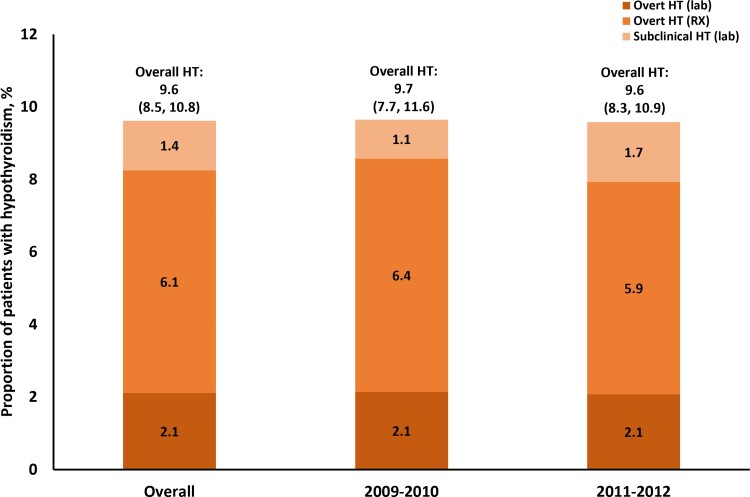
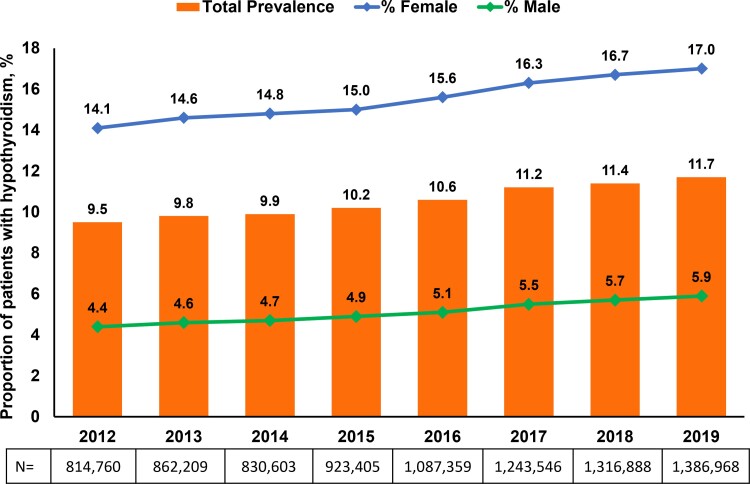
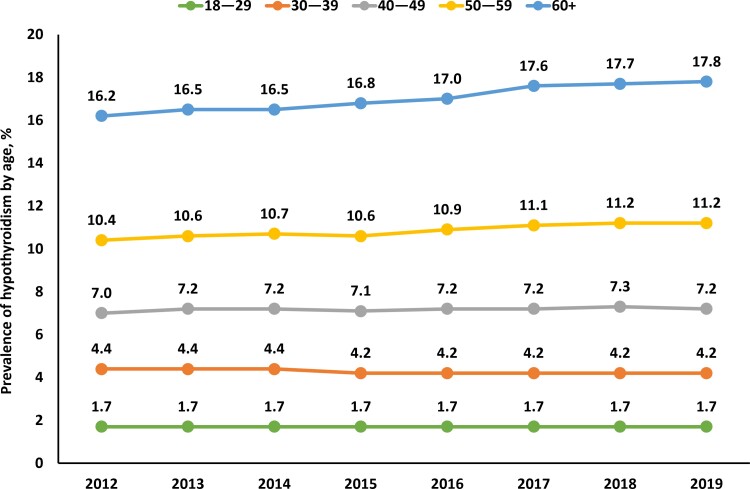
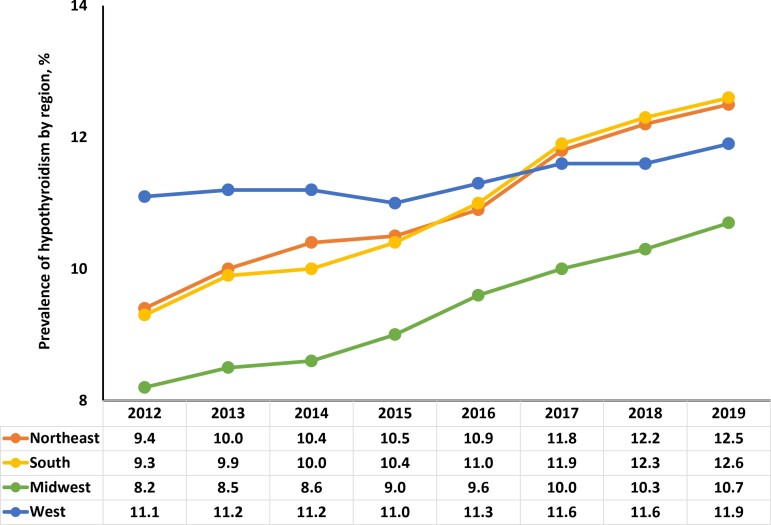
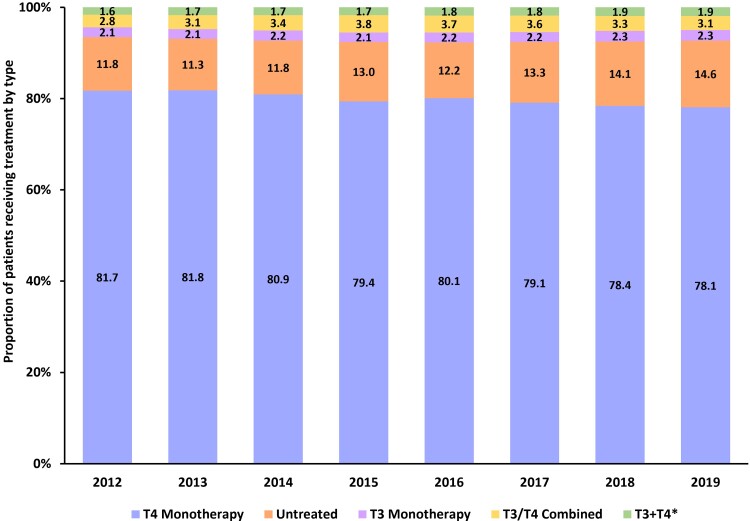
Previous estimates determined prevalence of hypothyroidism (HT) to be 4.6% of the US population. This study aimed to update estimates of HT prevalence in the United States by retrospective analysis of 2 datasets. Data on HT type (overt or subclinical HT) and treatment were collected from the 2009-2010 and 2011-2012 National Health and Nutrition Examination Survey (NHANES) cycles. From the Optum administrative claims database, medical and pharmacy claims were collected between January 1, 2012, and December 31, 2019. Patients were defined as having HT if, per given year, they had >1 prescription for HT treatment, >1 claim indicating an HT diagnosis, or thyroid-stimulating hormone levels >4.0 mIU/L (NHANES arm). For both studies, treatment was defined as any evidence of synthetic or natural thyroid hormone replacement, identified by pharmacy claims or patient surveys. Data are reported as percentage of patients with HT and treatments received. Between 2009 and 2012, HT prevalence remained around 9.6% of the US population. The administrative claims dataset showed that HT prevalence grew from 9.5% in 2012 to 11.7% in 2019 and that >78% of patients received thyroxine (T4) monotherapy. Similarly, the NHANES dataset showed that T4 replacement therapy was the most common treatment for HT. From 2012-2019, patients with untreated HT grew from 11.8% to 14.4%. The prevalence of HT in the United States has steadily increased since 2009. Likewise, the percentage of hypothyroid-diagnosed patients not receiving treatment also increased, suggesting that the increased prevalence may be due to increased cases of subclinical HT.
Overview
The claims and statistics of this paper haven’t been checked yet.
Run the check — free, no account needed. It reads the open-access text and checks the sources it cites.
Integrity signals
Registry
Cites
Statistics
Figures
Verification
Claims the paper makes
The claims and statistics of this paper haven’t been checked yet.
Run the check — free, no account needed. It reads the open-access text and checks the sources it cites.
Claims other papers make about this one
Each is checked against this paper’s own text: does it say what the citing paper says it does?
The source backs part of the claim, not all of it — or backs it for a different population, condition or comparison.
In the citing paper
“Hypothyroidism is more frequent in Asian and White individuals compared with Black individuals, 21,22 whichmaybeduetoenvironmentalfactors(eg,areas with inadequate nutritional iodine levels), genetic factors, or both ( Box ). 22-25”
From Hypothyroidism: A Review (2025) · cites this paper as [21]
Experimental — accuracy not yet measuredIn the citing paper
“prevalence in the USA increased from 9.5% (2012) to 11.7% (2019), with over 78% receiving LT4 alone (9)”
Self-check
Percentages, sums and reported differences re-computed from the paper’s own numbers.
The self-check needs the paper’s full text.
Citations
Cites
Home visits: a strategy to improve newborn survival - Authors' reply
(2008) · Americanae (AECID Library) · doi:10.1016/s0140 · Cited by 22,524
Heart Disease and Stroke Statistics—2021 Update: A Report From the American Heart Association
Virani, S. S., Alonso, A., Aparicio, H. J., Benjamin, E. J., Bittencourt, M. S., Callaway, C. W., Carson, A. P., Chamberlain, A. M., Cheng, S., Delling, F. N., et al. (2021) · Circulation · doi:10.1161/cir.0000000000000950 · Cited by 5,784
Hollowell, J. G., Staehling, N. W., Flanders, W. D., Hannon, W. H., Gunter, E. W., Spencer, C. A., & Braverman, L. E. (2002) · The Journal of Clinical Endocrinology & Metabolism · doi:10.1210/jc.87.2.489 · Cited by 4,279
The incidence of thyroid disorders in the community: a twenty-year follow-up of the Whickham Survey
Vanderpump, M. P. J., Tunbrldge, W. M. G., French, J. M., Appleton, D., Bates, D., Clark, F., Evans, J. G., Hasan, D. M., Rodgers, H., Tunbridge, F., et al. (1995) · Clinical Endocrinology · doi:10.1111/j.1365-2265.1995.tb01894.x · Cited by 2,432 · cited 1×
“A wait-and-see strategy is most common among patients with subclinical HT, as up to 4% of patients may go on to develop overt HT [2, 4, 5].”
BackgroundTransmission of SARS-COV-2 Infections in Households — Tennessee and Wisconsin, April–September 2020
Grijalva, C. G., Rolfes, M. A. R., Zhu, Y., McLean, H. Q., Hanson, K. E., Belongia, E. A., Halasa, N., Kim, A., Reed, C., Fry, A. M., et al. (2020) · MMWR Morbidity and Mortality Weekly Report · doi:10.15585/mmwr.mm6944e1 · Cited by 1,609
Garber, J. R., Cobin, R. H., Gharib, H., Hennessey, J. V., Klein, I., Mechanick, J. I., Pessah-Pollack, R., Singer, P. A., & Woeber, K. A. (2012) · Endocrine Practice · doi:10.4158/ep12280.gl · Cited by 1,567
Chaker, L., Bianco, A. C., Jonklaas, J., & Peeters, R. P. (2017) · The Lancet · doi:10.1016/s0140-6736(17)30703-1 · Cited by 1,159
2013 ETA Guideline: Management of Subclinical Hypothyroidism
Pearce, S. H. S., Brabant, G., Duntas, L. H., Monzani, F., Peeters, R. P., Razvi, S., & Wemeau, J.-L. (2013) · European Thyroid Journal · doi:10.1159/000356507 · Cited by 877
Hypertension Prevalence Among Adults Aged 18 and Over: United States, 2017-2018.
Ostchega, Y., Fryar, C. D., Nwankwo, T., & Nguyễn, D. (2020) · PubMed · Cited by 497
Optimal recall periods for patient-reported outcomes: challenges and potential solutions
Stull, D. E., Leidy, N. K., Parasuraman, B. M., & Chassany, O. (2009) · Current Medical Research and Opinion · doi:10.1185/03007990902774765 · Cited by 415 · cited 1×
“Likewise, data obtained from patient surveys rely on patient perspectives and memory and are, as a result, subject to recall bias, which could affect survey outcomes [31].”
Background
Research works printed but not linked: 2
- [3]Patil N, Rehman A, Jialal I. Hypothyroidism. Accessed August 4, 2021. https://www.ncbi.nlm.nih.gov/books/NBK519536/
- [9]National Institute for Healthcare and Excellence. Thyroid disease: assessment and management. NICE Guideline. 2019. 31829541
Cited by
Sorted by citations
Chaker, L., & Papaleontiou, M. (2025) · JAMA · doi:10.1001/jama.2025.13559 · Cited by 63
Hypothyroidism, lipids, and lipidomics
Jonklaas, J. (2023) · Endocrine · doi:10.1007/s12020-023-03420-9 · Cited by 41
“In a recent study using both NHANES data and the Optum administrative claims database, 1.4% (3,500,678) of survey participants in the United States had untreated subclinical hypothyroidism [12].”
MethodResultInfluentialEpidemiologic changes in thyroid disease
Acosta, G. J., Ospina, N. S., & Brito, J. P. (2024) · Current Opinion in Endocrinology Diabetes and Obesity · doi:10.1097/med.0000000000000877 · Cited by 28
Casula, S., Ettleson, M. D., & Bianco, A. C. (2023) · Endocrine Practice · doi:10.1016/j.eprac.2023.04.003 · Cited by 19
Ahmad, A., Serry, Z. M. H., Elghaffar, H. A. A., Ghazi, H. A., & Elgayar, S. L. (2023) · Complementary Therapies in Clinical Practice · doi:10.1016/j.ctcp.2023.101795 · Cited by 18
Thyroid Hormone Homeostasis in Levothyroxine-treated Patients: Findings From ELSA-Brasil
Penna, G. C., Bensenor, I. M., Bianco, A. C., & Ettleson, M. D. (2024) · The Journal of Clinical Endocrinology & Metabolism · doi:10.1210/clinem/dgae139 · Cited by 16
Jang, H., Calder, L., Choi, J. W., Kwon, B., Pearce, E. N., & Shin, H. (2024) · Chemosphere · doi:10.1016/j.chemosphere.2025.144098 · Cited by 16
Appropriateness of Levothyroxine Prescription: A Multicenter Retrospective Study
Ayala, I. N., Jacome, C. S., Toro-Tobón, D., Golembiewski, E. H., García-Bautista, A., Hidalgo, J., Cordova-Madera, S., Anbari, R. A., Jessica Sohn, R., Ospina, N. S., et al. (2023) · The Journal of Clinical Endocrinology & Metabolism · doi:10.1210/clinem/dgad517 · Cited by 15
Zhang, Y., Mustieles, V., Korevaar, T. I. M., Martin, L. J., Sun, Y., Bibi, Z., Torres, N., Coburn-Sanderson, A., First, O., Souter, I. C., et al. (2024) · Environmental Pollution · doi:10.1016/j.envpol.2024.123513 · Cited by 13
Chandrupatla, S. R., Rumalla, K. C., & Singh, J. A. (2023) · The Journal of Arthroplasty · doi:10.1016/j.arth.2023.11.005 · Cited by 10
Goulmamine, S., Chew, S., & Aninye, I. O. (2024) · International Journal of Environmental Research and Public Health · doi:10.3390/ijerph21101339 · Cited by 9
Iglesias, P. (2025) · Endocrine Practice · doi:10.1016/j.eprac.2025.02.004 · Cited by 8
Autoimmune Thyroid Disease in the United States: Population Prevalence, Diagnosis Rates, and Trends
Dillon, C. F., Weisman, M. H., Leung, A. M., Brent, G. A., & Miller, F. W. (2025) · Journal of the Endocrine Society · doi:10.1210/jendso/bvaf120 · Cited by 9
Lawand, J. J., Ghali, A. N., Casanova, C. B. M., Papakostas, E., Alkhelaifi, K. A., Zikria, B. A., Khan, A. Z., & Abboud, J. A. (2024) · Journal of Shoulder and Elbow Surgery · doi:10.1016/j.jse.2024.10.015 · Cited by 8
Revealing the genetic complexity of hypothyroidism: integrating complementary association methods
Zucker, R., Kovalerchik, M., Stern, A., Kaufman, H., & Michal Linial, B. (2024) · Frontiers in Genetics · doi:10.3389/fgene.2024.1409226 · Cited by 7
Tessnow, A. H., Gigliotti, B. J., Perkins, J. M., Schneiderman, C. P., Pinsky, B. W., Guo, D., Barger, B., Singh, V., Flores, O. A., & Wyne, K. L. (2024) · Endocrine Practice · doi:10.1016/j.eprac.2024.12.004 · Cited by 7
Association between risk factors and major cancers: explainable machine learning approach
Huang, X., Ren, S., Mao, X., Chen, S., Chen, E., He, Y., & Jiang, Y. (2025) · JMIR Cancer · doi:10.2196/62833 · Cited by 6
“Acquired hypothyroidism is observed in 10.71% of MIMIC-III patients and 4.6% of US adults [35].”
InfluentialPremawardhana, L. D., Taylor, P. N., Okosieme, O. E., Adlan, M. A., Obuobie, E. K., & Dayan, C. M. (2023) · Frontiers in Endocrinology · doi:10.3389/fendo.2023.1282608 · Cited by 6
“…of (a) the rising prevalence of hypothyroidism partly accounted for by lower thresholds for starting LT4 in an aging population (7, 8) — prevalence in the USA increased from 9.5% (2012) to 11.7% (2019), with over 78% receiving LT4 alone (9), and (b) a signi fi cant proportion of endocrinologists (51”
BackgroundInfluentialEffect of Yoga Therapy on Hypothyroidism: A Systematic Review
Bhandari, R. B., & Mahto, P. K. (2024) · Annals of Neurosciences · doi:10.1177/09727531241282516 · Cited by 8
Hossen, M. S., Islam, M. M., Das, A., Ripon, M. A. R., Amin, M. T., Basher, M. A., & Rashid, M. M. O. (2025) · Health Science Reports · doi:10.1002/hsr2.70329 · Cited by 6
Shared Decisionmaking in the Treatment of Hypothyroidism
Bianco, A. C. (2025) · Clinical Endocrinology · doi:10.1111/cen.15228 · Cited by 5
Extrahepatic manifestation of metabolic dysfunction-associated steatotic liver disease
Shenoy, A., Ahmed, A., & Kim, D. (2025) · Metabolism and Target Organ Damage · doi:10.20517/mtod.2025.73 · Cited by 4
Hypothyroidism in Adult Women: The Utility of Targeted vs Universal Thyroid Screening
Godbole, N. P., Koester, M., & Marcus, E. N. (2023) · International Journal of Women s Health · doi:10.2147/ijwh.s397129 · Cited by 4
Liothyronine (LT3) prescribing in England: Are cost constraints inhibiting guideline implementation?
Heald, A. H., Premawardhana, L. D. K. E., Taylor, P. N., Depesina, D., Chaudhury, N., Okosieme, O. E., Stedman, M., & Dayan, C. M. (2024) · Clinical Endocrinology · doi:10.1111/cen.15061 · Cited by 4
Wu, J., Jia, C., Zhang, Z., Hou, Z., & Cui, Y. (2024) · PLoS ONE · doi:10.1371/journal.pone.0303169 · Cited by 4
“Previous studies showed that the prevalence of hypothyroidism to be 11.7% and the prevalence of hyperthyroidism to be 2.5% in the U.S. population [3,4].”
BackgroundInfluentialAdelson, R. P., Garikipati, A., Zhou, Y., Ciobanu, M., Tawara, K., Barnes, G., Singh, N. P., Mao, Q., & Das, R. (2024) · Diagnostics · doi:10.3390/diagnostics14111152 · Cited by 4
“HT occurs in about 12% of adults with T2D [13,14] which is similar to the estimated 11.7% HT prevalence in the general adult population [12].”
BackgroundResultInfluentialLiu, L., Zhang, H., Chen, X., Liu, Z., Zhao, H.-Y., Ma, S., Zhao, M., Shen, P., Sun, Y., Lin, H., et al. (2025) · Frontiers in Endocrinology · doi:10.3389/fendo.2025.1640086 · Cited by 4
Soliman, A. R., Ahmed, R. M., Meligi, A. A. H. E., Abo-Zeid, A. G., Amer, M. A., Atef, A., Yousry, A., Saleh, A. A., Fahmy, E. M., Makar, W., et al. (2025) · The Egyptian Journal of Internal Medicine · doi:10.1186/s43162-025-00513-x · Cited by 3
“The prevalence of hypothyroidism is growing [9, 10].”
Arabian, R., & Vintimilla, A. (2025) · Journal of Multimorbidity and Comorbidity · doi:10.1177/26335565251371254 · Cited by 3
“25 – 29 This approach was selected due to the retrospective nature of the study and the lack of available matched controls within the clinic ’ s electronic records system.”
A systematic literature review of CVID reveals pervasive detrimental noninfectious manifestations
Ducasa, G. M., Marsh, R. A., Mojebi, A., Ho, H.-E., Cunningham‐Rundles, C., Satter, L. F., Hsieh, E. W. Y., Savic, S., Cabañero-Navalón, M. D., Balastegui-Martín, H., et al. (2025) · Journal of Human Immunity · doi:10.70962/jhi.20250157 · Cited by 3
“Hypothyroidism was observed at a median frequency of 6.9%, while estimates of the prevalence of hypothyroidism in the general U.S. population are 10–12% (115).”
InfluentialMersha, B. H., Abdissa, S. G., Alemneh, T. A., Kebede, N., Tsega, Y., Nigussie, S., & Bayou, F. D. (2024) · BMC Cardiovascular Disorders · doi:10.1186/s12872-024-04212-3 · Cited by 3
“The pattern of cardiac abnormalities is differing from study to study; most complications are reversible with a timely treatment [5, 6].”
BackgroundKnowledge gaps about the diagnosis and treatment of hypothyroidism: an international patient survey
Perros, P., Poots, A. J., Nagy, E. V., Papini, E., Hay, H. A., Abad-Madroñero, J., Tallett, A. J., Lakwijk, P., & Hegedűs, L. D. (2025) · Frontiers in Endocrinology · doi:10.3389/fendo.2025.1663497 · Cited by 3
Levothyroxine Prescription Error: A Case Report
Valentine, M. J., Kramer, H. D., Kim, J., Pettinelli, N. J., & Beers, R. J. (2023) · Cureus · doi:10.7759/cureus.44787 · Cited by 3
“7% of the population with more than 78% of cases receiving thyroxine (T4) monotherapy [1].”
BackgroundIs the acquired hypothyroidism a risk factor for developing psychiatric disorders?
Brizuela, N. O., Peraza, A. V., Ángel, D. S.-D., García-Martínez, Y., Pacheco-Rosado, J., Pérez‐Sánchez, G., & Sánchez-Huerta, K. (2024) · Frontiers in Psychiatry · doi:10.3389/fpsyt.2024.1429255 · Cited by 3
Ramírez, M., Bianco, A. C., & Ettleson, M. D. (2024) · Journal of the Endocrine Society · doi:10.1210/jendso/bvae204 · Cited by 3
“Hypothyroidism (HT) is defined by low thyroid hormone levels and affects around 30 million adults in the United States [1].”
Interspecies Blastocyst Complementation and the Genesis of Chimeric Solid Human Organs
Bigliardi, E., Shetty, A. V., Low, W. C., & Steer, C. J. (2025) · Genes · doi:10.3390/genes16020215 · Cited by 4
“More recent data analysis suggests that just over 10% of the U.S. population suffers from this disorder [87].”
Lu, Q., Mao, Z., Chen, Y., & Zhou, K. (2025) · Ecotoxicology and Environmental Safety · doi:10.1016/j.ecoenv.2025.118337 · Cited by 2
Rethinking strategies for solving thyroid dysfunction at the heart of cardiovascular disease
Rajagopalan, V., Ojamaa, K., & Gerdes, A. M. (2025) · Molecular Medicine · doi:10.1186/s10020-025-01351-x · Cited by 2
Concomitant use of levothyroxine and interacting medications in U.S. ambulatory care visits
Dempsey, A. L., Wang, G. H., Ospina, N. S., & Vouri, S. M. (2023) · Journal of the American Pharmacists Association · doi:10.1016/j.japh.2023.06.008 · Cited by 2
Nuevas formulaciones de levotiroxina en el tratamiento del hipotiroidismo
Iglesias, P. (2023) · Endocrinología Diabetes y Nutrición · doi:10.1016/j.endinu.2023.11.001 · Cited by 3
Khan, M. M. H., Yadav, P. P., Arowolo, S., Saidu, A., Olaniyi, S. A., Kaur, P. J., Chandrasekaran, S. H., Varghese, J. J., Omeh, C. K., Vijayakumar, R., et al. (2024) · Cureus · doi:10.7759/cureus.64531 · Cited by 2
“The prevalence of hypothyroidism is high in the general population mainly in women and elderly individuals [2,3].”
BackgroundLee, K., Park, J., Lee, M., Lee, H., Son, Y., Kim, H. J., Kang, J., Choi, Y., Rhee, S. Y., Rahmati, M., et al. (2024) · Heliyon · doi:10.1016/j.heliyon.2024.e39401 · Cited by 2
“The prevalence of hypothyroidism continued to rise from 2012 to 2019, aligning with our research findings [9].”
BackgroundInfluentialLi, J., Long, S., Liu, B., Hong, S., Yu, S., Li, Y., Wu, D., & Xiao, H. (2025) · Journal of the Endocrine Society · doi:10.1210/jendso/bvaf108 · Cited by 2
Brewer, P. L., D’Agata, A. L., Roberts, M. B., Saquib, N., Schnatz, P. F., Manson, J. E., Eaton, C. B., & Sullivan, M. C. (2023) · Journal of Developmental Origins of Health and Disease · doi:10.1017/s2040174423000120 · Cited by 2
Khosravi, M., Azizi, R., Fallahzadeh, H., & Mirzaei, M. (2024) · PubMed Central · doi:10.30476/ijms.2023.99865.3208 · Cited by 1
“7, 14 Comparison of the annual incidence in our study (2.5/1000) with the reported incidence in the Isfahan and Tehran studies (respectively: overt hypothyroidism: 1.9 and 2, subclinical hypothyroidism: 20.6 and 7.62) suggests the presence of a substantial number of undiagnosed subclinical cases.”
ResultInfluentialTrivedi, H. V., Wale, S. A., Warhade, S. A., & Maske, J. P. (2025) · International Ayurvedic Medical Journal · doi:10.46607/iamj4613022025 · Cited by 1
Meydan, Y., Ling, K., Lawrence, P., & Wang, E. D. (2025) · Journal of Orthopaedic Reports · doi:10.1016/j.jorep.2025.100724 · Cited by 1
Eldeiry, L. S., Attanasio, R., Hegedűs, L. D., Negro, R., Papini, E., Perros, P., Gharib, H., Nagy, E. V., Žarković, M., & Garber, J. R. (2025) · AACE Endocrinology and Diabetes · doi:10.1016/j.aed.2025.10.019 · Cited by 1
Hypothyroidism in adult spinal deformity
Chu, T., Ali, M. M., Murugan, V., Lin, N., Dilsaver, D. B., Pedersen, E. A., & Akbik, O. S. (2026) · Spine Deformity · doi:10.1007/s43390-025-01269-8 · Cited by 1
“More recent literature indicates that rates of hypothyroidism have increased from 9.5% in 2012 to 11.7% in 2019 [1].”
InfluentialZhuang, W.-K., Hu, X., An, Y.-J., Liu, D.-L., & Li, H.-L. (2026) · Frontiers in Endocrinology · doi:10.3389/fendo.2026.1704228 · Cited by 1
Clinical insights into levothyroxine overdose: A systematic review
Ata, F., Khan, H. A., Kashif, A., Khan, A. A., Fawad, R., Younas, H. W., Ahmed, D. B. A., & Javed, H. (2026) · World Journal of Methodology · doi:10.5662/wjm.v16.i2.111025 · Cited by 1
The unseen impact of subclinical hypothyroidism on lipid profile and cardiovascular risk
Mawlood, M. S. (2026) · Biochemistry and Biophysics Reports · doi:10.1016/j.bbrep.2026.102605 · Cited by 2
“These factors may interact with mild thyroid dysfunction to produce heterogeneous metabolic phenotypes, further explaining the variability reported in previous studies [31,41,42].”
Bagherian, N., Mehran, L., Abdi, H., Masoumi, S., Tohidi, M., Honarvar, M., Amouzegar, A., & Azizi, F. (2026) · Journal of Diabetes & Metabolic Disorders · doi:10.1007/s40200-026-01939-y · Cited by 1
“However, other studies, including NHANES (United States) [ 36], and the Busselton study (Australia) [47 ], have demonstrated an age-related increase in TSH levels accompanied by a higher prevalence of hypothyroidism.”
InfluentialChen, Q., Guang, Y., Jun, H., Feng, Y., & Jie, X. (2026) · HORMONES · doi:10.1007/s42000-026-00807-x · Cited by 1
Singal, M., Mahmoud, A. A., & Phatak, P. D. (2024) · Expert Review of Hematology · doi:10.1080/17474086.2024.2337950 · Cited by 1
“Recent NHANES data estimates the prevalence of hypothyroidism in the US based on lab diagnosis at 2.1% and based on prescription data as 6.1%, which has remained stable over the years [30].”
MethodInfluentialDoes Selenium Supplementation Prevent Hypothyroidism in Hashimoto Thyroiditis?
McAninch, E. A. (2024) · Clinical Thyroidology · doi:10.1089/ct.2024;36.119-122 · Cited by 1
Untreated Primary Hypothyroidism Manifesting as Cardiac Tamponade
Badhey, N., Salvaji, T., & Badhey, H. (2024) · Cureus · doi:10.7759/cureus.61169 · Cited by 1
“The total prevalence of the condition and the prevalence of untreated hypothyroidism are increasing [2].”
BackgroundEffects of a Vegetarian Diet on the Development of Thyroid Disorders
Prudencio-Brunello, C. M., Palencia, R. M. D., Yangzom, D.-K., Boddapati, P., & Nair, A. (2024) · Cureus · doi:10.7759/cureus.71360 · Cited by 1
“The prevalence of hyperthyroidism is approximately 1.3% but increases to 4-5% in older women [5].”
BackgroundInfluentialMustafa, M., White, C., Harris, E., Tawfellos, G., Oredegbe, A.-A., & Torosoff, M. T. (2024) · Clinical Research in Cardiology · doi:10.1007/s00392-024-02568-2 · Cited by 1
THE PREVALENCE OF METABOLIC DISORDERS AND HYPERTENSION IN WOMEN DURING PERIMENOPAUSE AND MENOPAUSE.
Smiljić, S., Sapic, S., Nestorović, V., Milanović, Z., Dejanović, M., & Karanović, A. (2025) · Journal of Hypertension · doi:10.1097/01.hjh.0001117996.03279.7f · Cited by 1
Kucheriava, M. V., & Mankovskyi, G. B. (2023) · INTERNATIONAL JOURNAL OF ENDOCRINOLOGY (Ukraine) · doi:10.22141/2224-0721.19.3.2023.1266
Hypothyroidism: An Underestimated Issue
McAninch, E. A. (2023) · Clinical Thyroidology · doi:10.1089/ct.2023;35.264-267
“Given the high prevalence of hypothyroidism in our population (5), this”
Functional Insights into Hypothyroidism Etiology through Complementary Genetic Association MethodsPreprint
Zucker, R., Kovalerchik, M., Stern, A., Kaufman, H., & Michal Linial, B. (2023) · Research Square · doi:10.21203/rs.3.rs-3658051/v1
Stijgend gebruik van levothyroxine in België
Boets, L., den Bruel, A. V., haecht, C. V., Cornelis, K., Debbaut, B., Ntahonganyira, R.-M., Flamaing, J., Stokx, J., & Decallonne, B. (2024) · Tijdschrift voor Geneeskunde · doi:10.47671/tvg.79.23.122
High Mortality of Myxedema Coma in the United States
McAninch, E. A. (2024) · Clinical Thyroidology · doi:10.1089/ct.2024;36.110-113
New formulations of levothyroxine in the treatment of hypothyroidism
Iglesias, P. (2024) · Endocrinología Diabetes y Nutrición (English ed ) · doi:10.1016/j.endien.2024.03.009
Dissecting shared genetic architecture between hypothyroidism and immune-related diseasesPreprint
Li, S., & Gong, M. (2024) · medRxiv · doi:10.1101/2024.04.02.24305135 · Cited by 1
Zhang, X., & Lee, V. C. S. (2024) · IntechOpen eBooks · doi:10.5772/intechopen.1004546
Done, J. Z., Gabrielson, A. T., Gabre-Kidan, A. A., Mathur, A., & Morris, L. F. (2024) · Journal of Gastrointestinal Surgery · doi:10.1016/j.gassur.2024.06.020
Personality Traits and Patient Satisfaction in Hypothyroidism
McAninch, E. A. (2024) · Clinical Thyroidology · doi:10.1089/ct.2024;36.272-275
Jang, H., Calder, L., Choi, J. W., Kwon, B., Pearce, E. N., & Shin, H. (2024) · SSRN Electronic Journal · doi:10.2139/ssrn.4901997
Dementia Due to Other Medical Conditions
Sofko, C. A., & Naman, K. (2024) · Oxford University Press eBooks · doi:10.1093/med/9780197690024.003.0014
Mbuyi, J., Bhana, S., & Daya, R. (2024) · Journal of Endocrinology Metabolism and Diabetes of South Africa · doi:10.1080/16089677.2024.2392977 · Cited by 2
8188 Pituitary hyperplasia resulting from primary hypothyroidism: A case report
Aziz, M., Manolas, M. I., Tabatabaie, V., & Rincón, L. (2024) · Journal of the Endocrine Society · doi:10.1210/jendso/bvae163.1304
Ali, Z., Abdulridha, M. K., & Alzajaji, Q. B. (2024) · Al Mustansiriyah Journal of Pharmaceutical Sciences · doi:10.32947/ajps.v24i4.1089
Deng, Z., Davison, K., Cartier, M. S., MacNeil, A., & Fuller‐Thomson, E. (2025) · Archives of Gerontology and Geriatrics Plus · doi:10.1016/j.aggp.2025.100129
Namulanda, G., Condon, S. K., Palmer, T. L., Ellis, E., Yip, F. Y., Reh, C. M., & Breysse, P. N. (2025) · Environmental Epidemiology · doi:10.1097/ee9.0000000000000368
“Some health outcomes, e.g., thyroid diseases, may be better identified using both diagnosis codes and prescription information, 56 while others, e.g., hyperlipidemia, hypercholesterolemia, and high tri-glycerides, may be best captured using laboratory test results in addition to diagnosis codes or…”
Kashul, S. V., & Хухліна, О. С. (2025) · Reports of Vinnytsia National Medical University · doi:10.31393/reports-vnmedical-2025-29(1)-10 · Cited by 1
Chen, Y., Wildman, B., Rehan, M., Mishra, S., Khan, S., Afreen, L. H., & Hassan, Q. (2025) · bioRxiv (Cold Spring Harbor Laboratory) · doi:10.1101/2025.04.14.647401
Violante-Ortiz, R., Fernández-Ordóñez, N., Gallifa, E. N., Molina, E. E. H., Cárdenas, J. E. G., Reyna‐Beltrán, E., Hernández, D. C., Martínez, L. S. D., Grijalva, I. N. B., & Sánchez, J. M. B. (2025) · Cureus · doi:10.7759/cureus.82923
“In the United States, the Third National Health and Nutrition Examination Survey (NHANES III) reported a prevalence of 4.3% [4], although more recent studies indicate lower rates due to variations in study methodology [5].”
InfluentialHoermann, R., & Dietrich, J. W. (2025) · Springer eBooks · doi:10.1007/978-981-96-3682-2_1
Patterns of Inequity in the Diagnosis and Treatment of Hypothyroidism
Brenta, G. (2025) · Clinical Thyroidology · doi:10.1089/ct.2025;37.204-207
Weitzner, Y., Xu, P., Jain, A., Spirollari, E., Vazquez, S. M., Subah, G., Sacknovitz, A., Alsaeed, R., Elmashad, A., Ramakrishnan, P., et al. (2025) · Interventional Neuroradiology · doi:10.1177/15910199251341379
Tabakoğlu, N. T., Ay, A., Alkanlı, N., & Çelik, M. (2025) · Current Issues in Molecular Biology · doi:10.3390/cimb47100794
Cosmo, C. D., Pignata, L., Bagattini, B., Agretti, P., Marco, G. D., Ferrarini, E., Santini, F., Montanelli, L., & Tonacchera, M. (2025) · Journal of Endocrinological Investigation · doi:10.1007/s40618-025-02718-x
Kretli-Souza, D., Gomes, B. H., Selvatici‐Tolentino, L., Damasceno, Y. O., Peixoto-Dias, A. F., Iost, A. F., Oliveira, L. B. F., Brunetto, E. L., Guarnieri, L. D. O., Garcia, R. A. P., et al. (2025) · American Journal of Physiology-Renal Physiology · doi:10.1152/ajprenal.00241.2025
Hypothyroidism and Degenerative Spine Disease: A Literature Review
Murugan, V., Chu, T., Ali, M. M., & Akbik, O. S. (2025) · The Journal of Spinal Surgery · doi:10.4103/joss.joss_24_25
POYRAZER, M., Mühürdaroğlu, A. M., Çelik, M. E., Gökbulut, P., & Fırat, S. N. (2025) · doi:10.2196/preprints.90401
Naran, P., Daya, R., Roux, M., & Bayat, Z. (2026) · Journal of Endocrinology Metabolism and Diabetes of South Africa · doi:10.1080/16089677.2025.2590258
Chandrupatla, S. R., Rumalla, K. C., & Singh, J. A. (2026) · Journal of Experimental Orthopaedics · doi:10.1002/jeo2.70413
“The prevalence of hypothyroidism is increasing in the United States, and its treatment success may be decreasing [45].”
InfluentialRoh, M., Yum, S., Joo, G., Jang, J., & Im, H. (2026) · Frontiers in Public Health · doi:10.3389/fpubh.2026.1747762
Wen, J., Hu, J., & Zou, G. (2026) · Journal of Diabetes & Metabolic Disorders · doi:10.1007/s40200-026-01931-6
Trager, R. J., Makineni, P. S., & Wright, D. S. (2026) · Health Science Reports · doi:10.1002/hsr2.72161
“%) is corroborated by data from 2019, which similarly found that 76.2% of patients with AT were female [4].”
InfluentialCurrent status of hypothyroidism control in Guangzhou area, China: a cross-sectional survey
Chen, B., Wang, S., Huang, Y.-L., Liu, D., Chen, R., Zhang, H., Wang, W., Zhou, Q., Lie, L., Ran, J., et al. (2026) · BMC Endocrine Disorders · doi:10.1186/s12902-026-02214-0
“The prevalence of hypothyroidism in the United States increased from 9.5% in 2012 to 11.7% in 2019, indicating a steady rise in the prevalence of hypothyroidism [3].”
InfluentialHasani, M. A., Salman, R. D., & Shari, F. H. (2026) · European Journal of Clinical and Experimental Medicine · doi:10.15584/ejcem.2026.1.22
Distribution of Outpatient Visits Among Adults With Hypothyroidism: NAMCS 2010-2019
Ramírez, M., Bianco, A. C., Laiteerapong, N., & Ettleson, M. D. (2026) · AACE Endocrinology and Diabetes · doi:10.1016/j.aed.2026.04.005
Defining Features of Gabriele‐de Vries Syndrome in Adults: A Case Report and Literature Review
Hollingsworth, E. W., & Xiao, C. (2026) · American Journal of Medical Genetics Part A · doi:10.1002/ajmg.a.70179
“(Wyne et al. 2022); heart malformations (0.97”
InfluentialТимуровна, С. Ш., & Inoyatova, N. A. (2023) · Eurasian Scientific and Medical Journal Sino · doi:10.54538/2707-5265-2023-4-4-25-31
Liu, M. (2026) · Elsevier eBooks · doi:10.1016/b978-0-443-21917-7.00027-6
Fanciulli, G., Baldazzi, G., Manfrini, I., Pagani, A., Tessari, M., & Zamboni, P. (2026) · Phlebology The Journal of Venous Disease · doi:10.1177/02683555261458150
Metadata
- Authors
- Wyne, K. L., Nair, L., Schneiderman, C. P., Pinsky, B., Antunez Flores, O., Guo, D., Barger, B., & Tessnow, A. H.
- Affiliations
- The Ohio State University Wexner Medical Center (US)
- AbbVie (United States) (US)
- AbbVie, Inc. , Chicago, IL , USA
- Division of Endocrinology, Diabetes, and Metabolism, University of Texas Southwestern Medical Center , Dallas, TX , USA
- Venue
- Journal of the Endocrine Society
- Publisher
- The Endocrine Society
- Published
- 2022-11-10
- Volume
- 7
- Issue
- 1
- Pages
- bvac172-bvac172
- ISSN
- 2472-1972 (ISSN-L)
- PMC
- PMC9706417
- OpenAlex
- W4308881891
- Cited by
- 111
- References
- 28
- Citations by year
- 2026: 28 · 2025: 34 · 2024: 34 · 2023: 15
- FWCI
- 15.38
- Type
- journal article
- Language
- en
- Open access
- gold
- doi.org
- Licence
- Locations
- Journal of the Endocrine Society (publishedVersion, cc-by-nc-nd)
- PubMed Central (publishedVersion, cc-by-nc-nd)
- PubMed (publishedVersion)
- Funders
- AbbVie
- Topics
- Health Sciences › Medicine › Endocrinology, Diabetes and Metabolism › Thyroid Disorders and Treatments
- Health Sciences › Medicine › Surgery › Thyroid and Parathyroid Surgery
- Health Sciences › Medicine › Endocrinology, Diabetes and Metabolism › Thyroid Cancer Diagnosis and Treatment
- Keywords
- hypothyroidism, prevalence, subclinical hypothyroidism, overt hypothyroidism, thyroid hormone replacement, levothyroxine monotherapy, untreated hypothyroidism, thyroid-stimulating hormone, United States
About these checks
Registry, retraction, Cites and statistics results are computed, not judged, with one exception: a printed reference that no index lists is read once by a model before it counts as a citation error. Claims are extracted by a model and kept only when their quote appears verbatim in the text; each cited source is then checked, with a model’s help, for whether it says what the claim relies on. Those verdicts can be wrong — read the claim’s quote and the cited source before relying on one.
Statistics and arithmetic are recomputed, not judged.
Confidence bands are shown only for fields calibrated on our annotated test set. None is calibrated yet, so no band is shown.
What counts as a claim ›How we measure confidence ›How we check this ›
Are you an author, or do you see a problem with this page? Request a review
