

Twenty-seven-year time trends in dementia incidence in Europe and the United States: The Alzheimer Cohorts Consortium
Open accessThe DOI matches its Crossref record, with a small difference in title or year; 33 of the 33 references it cites were found in a registry or an index.
Abstract
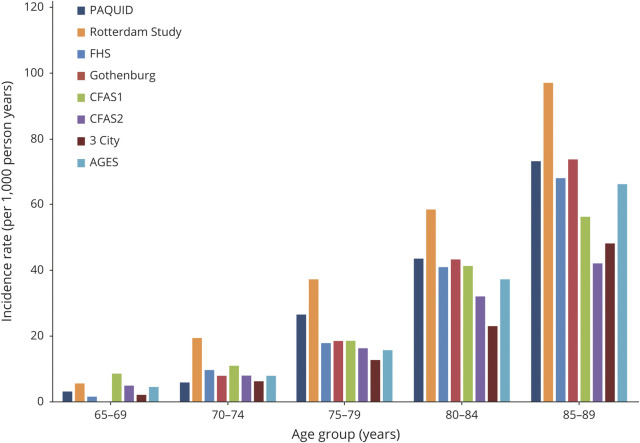
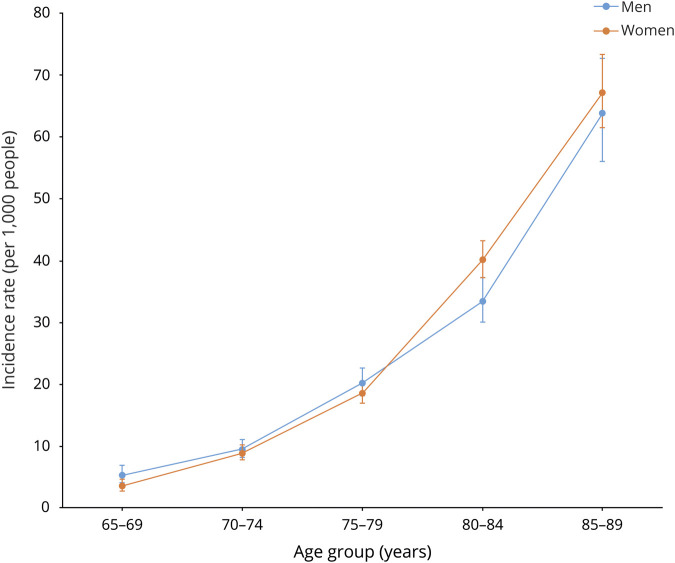
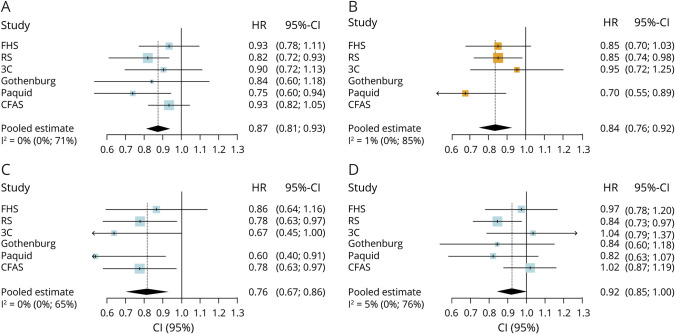
OBJECTIVE: To determine changes in the incidence of dementia between 1988 and 2015. METHODS: This analysis was performed in aggregated data from individuals >65 years of age in 7 population-based cohort studies in the United States and Europe from the Alzheimer Cohort Consortium. First, we calculated age- and sex-specific incidence rates for all-cause dementia, and then defined nonoverlapping 5-year epochs within each study to determine trends in incidence. Estimates of change per 10-year interval were pooled and results are presented combined and stratified by sex. RESULTS: Of 49,202 individuals, 4,253 (8.6%) developed dementia. The incidence rate of dementia increased with age, similarly for women and men, ranging from about 4 per 1,000 person-years in individuals aged 65-69 years to 65 per 1,000 person-years for those aged 85-89 years. The incidence rate of dementia declined by 13% per calendar decade (95% confidence interval [CI], 7%-19%), consistently across studies, and somewhat more pronouncedly in men than in women (24% [95% CI 14%-32%] vs 8% [0%-15%]). CONCLUSION: The incidence rate of dementia in Europe and North America has declined by 13% per decade over the past 25 years, consistently across studies. Incidence is similar for men and women, although declines were somewhat more profound in men. These observations call for sustained efforts to finding the causes for this decline, as well as determining their validity in geographically and ethnically diverse populations.
Overview
The claims and statistics of this paper haven’t been checked yet.
Free: it reads the open-access text and checks the first 5 claims that cite a source we can check. Create a free account to check every claim.
Integrity signals
Registry
Cites
Statistics
Figures
Verification
Claims the paper makes
The claims and statistics of this paper haven’t been checked yet.
Free: it reads the open-access text and checks the first 5 claims that cite a source we can check. Create a free account to check every claim.
Claims other papers make about this one
Each is checked against this paper’s own text: does it say what the citing paper says it does?
The source backs part of the claim, not all of it — or backs it for a different population, condition or comparison.
In the citing paper
“Where these have examined the relationship with deprivation, the decline is primarily in those in socio-economically advantaged areas.(15)”
From Dementia prevention, intervention, and care: 2024 report of the Lancet standing Commission (2024) · cites this paper as [15]
Experimental — accuracy not yet measuredThe source backs part of the claim, not all of it — or backs it for a different population, condition or comparison.
In the citing paper
“The Lancet Commission on Dementia Prevention, Intervention, and Care suggested that lifestyle modifications may already have an influence on dementia risk decades before the onset of dementia.3-8”
From Awareness of dementia risk reduction among current and future healthcare professionals: A survey study (2021) · cites this paper as [6]
Experimental — accuracy not yet measuredThe source backs part of the claim, not all of it — or backs it for a different population, condition or comparison.
In the citing paper
“Another key issue is that air pollution levels have been dropping over time in many areas of the world, and dementia incidence, as well, appears to have declined in North America and Europe in recent decades (Satizabal et al. 2016; Wolters et al. 2020).”
From Exposure to Air Pollution in Relation to Risk of Dementia and Related Outcomes: An Updated Systematic Review of the Epidemiological Literature (2021) · cites this paper as Wolters et al. 2020
Experimental — accuracy not yet measuredThe cited source says what the claim attributes to it.
In the citing paper
“Data from some HICs suggest a decline in age-specific incidence rates (15)”
From Dementia prevention, intervention, and care: 2024 report of the Lancet standing Commission (2024) · cites this paper as [15]
The cited source says what the claim attributes to it.
In the citing paper
“Evidence suggests that dementia incidence in Europe and the US has declined over the past 25 years, but declines were less in women than in men.61”
From Sex differences in cognitive decline among US adults (2021) · cites this paper as [61]
Self-check
Percentages, sums and reported differences re-computed from the paper’s own numbers.
The self-check needs the paper’s full text.
Citations
Cites
McKhann, G. M., Knopman, D. S., Chertkow, H., Hyman, B. T., Jack, C. R., Kawas, C. H., Klunk, W. E., Koroshetz, W. J., Manly, J. J., Mayeux, R., et al. (2011) · Alzheimer's & Dementia · doi:10.1016/j.jalz.2011.03.005 · Cited by 18,657
Vos, T., Abajobir, A. A., Abate, K. H., Abbafati, C., Abbas, K. M., Abd-Allah, F., Abdulkader, R. S., Abdulle, A. M., Abebo, T. A., Abera, S. F., et al. (2017) · The Lancet · doi:10.1016/s0140-6736(17)32154-2 · Cited by 13,220
Vos, T., Barber, R. M., Bell, B., Bertozzi-Villa, A., Biryukov, S., Bolliger, I., Charlson, F., Davis, A., Degenhardt, L., Dicker, D., et al. (2015) · The Lancet · doi:10.1016/s0140-6736(15)60692-4 · Cited by 6,414
Self-citationAging, natural death, and the compression of morbidity
Fries, J. F. (1980) · New England Journal of Medicine · doi:10.1056/nejm198007173030304 · Cited by 3,356
The Robust Inference for the Cox Proportional Hazards Model
Lin, D. Y., & Wei, L. J. (1989) · Journal of the American Statistical Association · doi:10.1080/01621459.1989.10478874 · Cited by 2,695
Zhou, B., Bentham, J., Di Cesare, M., Bixby, H., Danaei, G., Cowan, M. J., Paciorek, C. J., Singh, G., Hajifathalian, K., Bennett, J. E., et al. (2017) · The Lancet · doi:10.1016/s0140-6736(16)31919-5 · Cited by 2,579
Epidemiological approaches to heart disease: the Framingham study
Dawber, T. R., Meadors, G. F., & Moore, F. E. (1951) · American Journal of Public Health and the Nations Health · doi:10.2105/ajph.41.3.279 · Cited by 2,148
The Rotterdam Study: objectives and design update
Hofman, A., Breteler, M. M. B., van Duijn, C. M., Krestin, G. P., Pols, H. A., Stricker, B. H. C., Tiemeier, H., Uitterlinden, A. G., Vingerling, J. R., & Witteman, J. C. M. (2007) · European Journal of Epidemiology · doi:10.1007/s10654-007-9199-x · Cited by 1,395
Matthews, F. E., Arthur, A., Barnes, L. E., Bond, J., Jagger, C., Robinson, L., & Brayne, C. (2013) · The Lancet · doi:10.1016/s0140-6736(13)61570-6 · Cited by 1,155
Self-citation
Research works printed but not linked: 3
- 2. Alzheimer’s Disease International. Policy Brief for G8 Heads of Government: The Global Impact of Dementia 2013–2050 [online]. Available at: alz.co.uk/research/G8-policy-brief. Accessed May 20, 2019.
- 3. WHO. First WHO Ministerial Conference on Global Action Against Dementia [Internet]. Available at: hoint/mental_health/neurology/dementia/ministerial_conference_2015_report/en/(2015). Accessed February 25, 2018.
- 23. Alzheimer's Disease International. World Alzheimer Report 2015 [Internet]. Available at: alzcouk/research/world-report-2015. Accessed February 26, 2018.
Cited by
Items 101–200 of 525
Umoh, I. O., Reis, H. J., & de Oliveira, A. C. P. (2024) · International Journal of Molecular Sciences · doi:10.3390/ijms25053044 · Cited by 31
“This number increases drastically to 65 per 1000 for people aged 85–89 years [91].”
BackgroundInsights into the pathological basis of dementia from population‐based neuropathology studies
Wharton, S. B., Simpson, J. E., Ince, P. G., Richardson, C. D., Merrick, R. L., Matthews, F. E., Brayne, C., & CFAS (2023) · Neuropathology and Applied Neurobiology · doi:10.1111/nan.12923 · Cited by 30
“This significant trend was confirmed by a combined analysis of several studies across highincome countries.(14) However, a neuropathology cohort was not developed for CFAS II, so that the neuropathological basis of this change in dementia incidence has not been defined.”
ResultSelf-citationWalsh, S., Wallace, L. M. K., Kuhn, I. L., Mytton, O. T., Lafortune, L., Wills, W., Mukadam, N., & Brayne, C. (2023) · The Journal of Prevention of Alzheimer s Disease · doi:10.14283/jpad.2023.57 · Cited by 30
“Observational data have suggested that incidence has reduced in high-income countries (6), and have pointed to potentially modifiable risk and protective factors (7).”
BackgroundSelf-citationRacial/ethnic disparities in dementia incidence, outcomes, and health‐care utilization
Lusk, J. B., Ford, C. B., Clark, A. G., Greiner, M. A., Johnson, K. G., Goetz, M., Kaufman, B. G., Mantri, S., Xian, Y., O’Brien, R., et al. (2022) · Alzheimer s & Dementia · doi:10.1002/alz.12891 · Cited by 28
Risk of Dementia During Antihypertensive Drug Therapy in the Elderly
Rea, F., Corrao, G., & Mancia, G. (2024) · Journal of the American College of Cardiology · doi:10.1016/j.jacc.2024.01.030 · Cited by 28
Hallam, B., Petersen, I., Cooper, C., Avgerinou, C., & Walters, K. R. (2022) · Clinical Epidemiology · doi:10.2147/clep.s350396 · Cited by 28
“Recording of memory concern is more in alignment with trends in dementia incidence, which has declined by 13% per decade over the past 25 years.(29) The earlier that primary care can recognise and identify people with memory problems, the earlier dementia prevention strategies can be provided (eg aerobic exercise, die…”
Yeo, B. S. Y., Gao, E. Y., Tan, B. K. J., Ong, B. D. C., Cho, R. W. Y., Lim, C. Y., Man, R. E. K., Fenwick, E., Gupta, P., Chen, C., et al. (2025) · Alzheimer s & Dementia · doi:10.1002/alz.14465 · Cited by 24
Kempermann, G. (2022) · Frontiers in Psychology · doi:10.3389/fpsyg.2022.841393 · Cited by 26
Kjaergaard, A. D., Ellervik, C., Witte, D. R., Nordestgaard, B. G., Frikke‐Schmidt, R., & Bojesen, S. E. (2022) · European Journal of Epidemiology · doi:10.1007/s10654-022-00923-z · Cited by 25
Vargese, S. S., Jylhä, M. K., Raitanen, J. A., Enroth, L., Halonen, P., & Aaltonen, M. S. (2023) · BMC Geriatrics · doi:10.1186/s12877-023-03980-5 · Cited by 26
Mattke, S., Loh, W. K., Yuen, K., & Yoong, J. (2023) · Alzheimer s & Dementia · doi:10.1002/alz.13348 · Cited by 25
Daly, T. P. (2023) · Cerebral Circulation - Cognition and Behavior · doi:10.1016/j.cccb.2023.100193 · Cited by 28
“This focus on delivering multi-domain interventions to individuals is paradoxical because the most convincing data on falling rates of dementia and modifiable risk factors comes not from the study of individuals but rather from studying populations [11,13].”
BackgroundMechanisms of interventions targeting modifiable factors for dementia risk reduction
Matton, A., Stephen, R., Daniilidou, M., Barbera, M., Alanko, V., Ballin, M., Ford, J. K., Hemiö, K., Lehtisalo, J., Rocha, S. L., et al. (2025) · Molecular Neurodegeneration · doi:10.1186/s13024-025-00845-w · Cited by 26
“Despite recent evidence of a decreasing trend in incidence of dementia in high-income countries [1], more than 150 million people globally are estimated to be affected by 2050 [2] pre-dominantly in low-middle-income countries.”
Vargese, S. S., Halonen, P., Raitanen, J. A., Forma, L., Jylhä, M. K., & Aaltonen, M. S. (2021) · Aging Clinical and Experimental Research · doi:10.1007/s40520-021-01867-2 · Cited by 25
Jessen, F., Kramberger, M. G., Angioni, D., Aarsland, D., Balasa, M., Bennys, K., Boada, M., Boban, M., Chincarini, A., Exalto, L. G., et al. (2024) · The Journal of Prevention of Alzheimer s Disease · doi:10.14283/jpad.2024.153 · Cited by 28
Belessiotis‐Richards, C., Livingston, G., Marston, L., & Mukadam, N. (2021) · International Journal of Geriatric Psychiatry · doi:10.1002/gps.5661 · Cited by 23
“Many high‐income countries (HICs) have reported a decline in age‐specific dementia incidence, leading to increasing interest in the role of potentially modifiable risk factors for dementia.(3) The 2017 Lancet Commission on dementia prevention, intervention and care calculated that targeting nine established potentiall…”
BackgroundKorhonen, K., Tarkiainen, L., Leinonen, T., Einiö, E. K., & Martikainen, P. (2022) · The British Journal of Psychiatry · doi:10.1192/bjp.2021.217 · Cited by 24
Palliative Care in Early Dementia
de Sola-Smith, K., Gilissen, J., van der Steen, J. T., Mayan, I., den Block, L. V., Ritchie, C. S., & Hunt, L. J. (2024) · Journal of Pain and Symptom Management · doi:10.1016/j.jpainsymman.2024.05.028 · Cited by 24
Bohlken, J., Riedel-Heller, S. G., Steininger, G., Kostev, K., & Michalowsky, B. (2021) · Journal of Alzheimer s Disease · doi:10.3233/jad-201385 · Cited by 24
“Another recent study by Wolters et al. [10] summarized the European and U.S. cohorts from the Alzheimer Cohorts Consortium and found that the incidence rate for dementia had decreased by 13% over the 10-year period.”
Blum, S., & Conen, D. (2022) · Canadian Journal of Cardiology · doi:10.1016/j.cjca.2022.10.013 · Cited by 27
Honey as a Neuroprotective Agent: Molecular Perspectives on Its Role in Alzheimer’s Disease
Navarro‐Hortal, M. D., Romero‐Márquez, J. M., Ansary, J., Hinojosa-Nogueira, D., Montalbán‐Hernández, C., Varela‐López, A., & Quiles, J. L. (2025) · Nutrients · doi:10.3390/nu17162577 · Cited by 21
The expression of ‘policy’ in palliative care: A critical review
Whitelaw, S., Bell, A., & Clark, D. (2022) · Health Policy · doi:10.1016/j.healthpol.2022.06.010 · Cited by 25
Changing Story of the Dementia Epidemic
Stallard, P. J. E., Ukraintseva, S. V., & Doraiswamy, P. M. (2025) · JAMA · doi:10.1001/jama.2025.1897 · Cited by 25
The plasma derived exosomal miRNA-483-5p/502-5p serve as potential MCI biomarkers in aging
Liu, T., Li, N., Pu, J., Zhang, C., Xu, K., Wang, W., Liu, L., Gao, L., Xu, X., & Tan, J. (2024) · Experimental Gerontology · doi:10.1016/j.exger.2023.112355 · Cited by 21
Wang, S., Wu, L., Xie, Y., Ge, S., Wu, Y., Chen, L., Yi, L., Yang, J., Duan, F., & Huang, L. (2024) · Journal of Ethnopharmacology · doi:10.1016/j.jep.2024.118412 · Cited by 23
D'Amore, F. M., Moscatelli, M. E. M., Malvaso, A., D’Antonio, F., Rodini, M., Panigutti, M., Mirino, P., Carlesimo, G. A., Guariglia, C., & Caligiore, D. (2024) · Journal of the Neurological Sciences · doi:10.1016/j.jns.2024.123361 · Cited by 24
“Alzheimer's disease (AD) is the most common neurodegenerative disorder, marked by a progressive decline in memory, language, and cognitive functions [1,2].”
Bassil, D. T., Zheng, B., Su, B., Kafetsouli, D., Udeh‐Momoh, C. T., Tzoulaki, I., Ahmadi‐Abhari, S., Muller, D. C., Ríboli, E., & Middleton, L. T. (2024) · The Journal of Prevention of Alzheimer s Disease · doi:10.14283/jpad.2024.135 · Cited by 21
Chronic kidney disease and dementia: an epidemiological perspective
Ikram, M. A. (2025) · Nature Reviews Nephrology · doi:10.1038/s41581-025-00967-w · Cited by 21
Self-citationRomero‐Márquez, J. M., Navarro‐Hortal, M. D., Orantes, F. J., Esteban-Muñoz, A., Pérez-Oleaga, C. M., Battino, M. A., Sánchez‐González, C., Rivas‐García, L., Giampieri, F., Quiles, J. L., et al. (2023) · Antioxidants · doi:10.3390/antiox12020404 · Cited by 21
Brück, C. C., Wolters, F. J., Ikram, M. A., & de Kok, I. M. C. M. (2023) · Alzheimer s & Dementia · doi:10.1002/alz.13019 · Cited by 21
Self-citationDzwiza-Ohlsen, E. N., & Kempermann, G. (2023) · Frontiers in Psychology · doi:10.3389/fpsyg.2023.1174424 · Cited by 19
Year-by-Year Blood Pressure Variability From Midlife to Death and Lifetime Dementia Risk
den Brok, M. G. H. E., van Dalen, J. W., Marcum, Z. A., Busschers, W. B., van Middelaar, T., Hilkens, N. A., Klijn, C. J. M., van Charante, E. P. M., van Gool, W. A., Crane, P. K., et al. (2023) · JAMA Network Open · doi:10.1001/jamanetworkopen.2023.40249 · Cited by 21
Régy, M., Dugravot, A., Sabia, S., Helmer, C., Tzourio, C., Hanseeuw, B. J., Singh‐Manoux, A., & Dumurgier, J. (2024) · The Lancet Healthy Longevity · doi:10.1016/s2666-7568(24)00066-7 · Cited by 18
Self-citationOutdoor nighttime light exposure (light pollution) is associated with Alzheimer’s disease
Voigt, R. M., Ouyang, B., & Keshavarzian, A. (2024) · Frontiers in Neuroscience · doi:10.3389/fnins.2024.1378498 · Cited by 22
Dementia in Sub-Saharan Africa: Risk factors, public perception, and management approaches
Alemayehu, Z. G., Ayalew, B. D., Sime, B. L., Bonger, T. D., Zewdie, Y. A., Keraga, A. S., Nida, H. W., Sharew, T. M., Woldeselassie, B. G., Melaku, M. Y., et al. (2025) · Journal of Medicine Surgery and Public Health · doi:10.1016/j.glmedi.2025.100204 · Cited by 22
Adult atopic eczema and the risk of dementia: A population-based cohort study
Magyari, A., Ye, M., Margolis, D. J., McCulloch, C. E., Cummings, S. R., Yaffe, K. S., Langan, S., & Abuabara, K. (2022) · Journal of the American Academy of Dermatology · doi:10.1016/j.jaad.2022.03.049 · Cited by 19
Walsh, S., Wallace, L., Mukadam, N., Mytton, O., Lafortune, L., Wills, W., & Brayne, C. (2023) · Public Health · doi:10.1016/j.puhe.2023.09.019 · Cited by 17
“Age-speci fi c incidence of dementia has declined in high-income countries, 19 likely due to improvements in population health in the latter half of the 20th Century.”
BackgroundSelf-citationLindert, J., Paul, K. C., Lachman, M. E., Ritz, B. R., & Seeman, T. E. (2021) · Social Psychiatry and Psychiatric Epidemiology · doi:10.1007/s00127-021-02089-7 · Cited by 20
“To accomplish this goal, we sought to [1] assess declines in EM and EF among men and women in the MIDUS cohort; [2] delineate variations of decline by level of social stress.”
BackgroundInfluentialAgreement of cerebrospinal fluid biomarkers and amyloid-PET in a multicenter study
Guillén, N., Contador, J., Buongiorno, M., Álvarez, I., Cullell, N., Alcolea, D. A., Lleó, A., Fortea, J., Piñol‐Ripoll, G., Carnes, A., et al. (2023) · European Archives of Psychiatry and Clinical Neuroscience · doi:10.1007/s00406-023-01701-y · Cited by 17
Moody, E., McDougall, H., Weeks, L. E., Belliveau, A. C., Bilski, P., Macdonald, M., Williams, L., Khanna, I., Jamieson, H., Bradbury, K., et al. (2024) · International Journal of Nursing Studies · doi:10.1016/j.ijnurstu.2024.104838 · Cited by 20
de Krom, F. J. W., Sivananthan, S., Alkhotany, F., Celen, M., Hol, I. E., Houben, K. J. G., Sivananthan, P., Koekebakker, H., & Deckers, K. (2021) · Journal of Public Health Research · doi:10.4081/jphr.2021.1961 · Cited by 16
Observational studies in Alzheimer disease: bridging preclinical studies and clinical trials
Brenowitz, W. D., & Yaffe, K. S. (2022) · Nature Reviews Neurology · doi:10.1038/s41582-022-00733-7 · Cited by 18
Ilić, I., Jakovljevic, V. L., Mačužić, I. Ž., Ravić‐Nikolić, A., Ilić, M., Šorak, M., & Milicic, V. M. (2024) · Medicina · doi:10.3390/medicina60111783 · Cited by 18
Syndapin-2 mediated transcytosis of amyloid-β across the blood–brain barrier
Leite, D. M., Seifi, M., Ruiz‐Pérez, L., Nguemo, F., Plomann, M., Swinny, J. D., & Battaglia, G. (2022) · Brain Communications · doi:10.1093/braincomms/fcac039 · Cited by 16
Wetterberg, H., Najar, J., Sterner, T. R., Rydén, L., Falk, H., Sacuiu, S. F., Kern, S., Zettergren, A., & Skoog, I. G. (2023) · The Journals of Gerontology Series A · doi:10.1093/gerona/glad071 · Cited by 16
Self-citationAssessment of innovative living and care arrangements for persons with dementia: a systematic review
Speckemeier, C., Niemann, A., Weitzel, M., Abels, C., Höfer, K., Walendzik, A., Wasem, J., & Neusser, S. (2023) · BMC Geriatrics · doi:10.1186/s12877-023-04187-4 · Cited by 16
“Although age-specific incidence rates have declined over the past 25 years [2], the number of persons with dementia is projected to rise in the coming years due to a steadily increasing life expectancy [3, 4].”
BackgroundKwon, H. S., Jeong, Y. W., Kim, S. H., Park, K. H., Seo, S. W., Na, H. R., Koh, S., Shim, Y., Park, M. H., Chin, J., et al. (2022) · Journal of Clinical Medicine · doi:10.3390/jcm11030819 · Cited by 16
Wei, J., Lohman, M. C., Brown, M. J., Hardin, J. W., Xu, H., Yang, C., Merchant, A. T., Miller, M. C., & Friedman, D. B. (2024) · Journal of the American Geriatrics Society · doi:10.1111/jgs.19109 · Cited by 20
“1,2 With no cure available for the most common forms of dementia, there is an urgent need for effective prevention strategies based on established risk factors, such as physical inactivity, a well-established risk factor for dementia.”
Sorrentino, M., Fiorilla, C., Mercogliano, M., Esposito, F., Stilo, I., Affinito, G., Moccia, M., Lavorgna, L., Salvatore, E., Maida, E., et al. (2024) · Frontiers in Neurology · doi:10.3389/fneur.2024.1474336 · Cited by 15
Angrisani, M., Nichols, E., Meijer, E., Gross, A. L., Ehrlich, J. R., Varghese, M., Langa, K. M., Dey, A., Adar, S. D., & Lee, J. (2024) · BMJ Public Health · doi:10.1136/bmjph-2024-001362 · Cited by 15
Ribeiro, F. S., Duarte, Y. A. D. O., Santos, J. L. F., & Leist, A. K. (2021) · BMC Geriatrics · doi:10.1186/s12877-021-02542-x · Cited by 19
Probing the Pre-diagnostic Phase of Parkinson's Disease in Population-Based Studies
Dommershuijsen, L. J., Boon, A. J. W., & Ikram, M. K. (2021) · Frontiers in Neurology · doi:10.3389/fneur.2021.702502 · Cited by 17
“Good examples of harmonization of measurements and data sharing include the Parkinson’s Progression Markers Initiative (PPMI) (20, 84), including more than 30 centers across different countries, the Global Parkinson’s Genetics Program (GP2), including 150,000 volunteers around the world (85), and the Alzheimers Cohort…”
BackgroundSelf-citationHeger, I., van Boxtel, M., Deckers, K., Bosma, H., Verhey, F., & Köhler, S. (2024) · International Psychogeriatrics · doi:10.1017/s1041610223000819 · Cited by 14
Bratsberg, B., Fjell, A. M., Røgeberg, O. J., Skirbekk, V., & Walhovd, K. B. (2024) · Proceedings of the National Academy of Sciences · doi:10.1073/pnas.2412017121 · Cited by 18
X‐chromosome-wide association study for Alzheimer’s disease
Borgne, J. L., Gomez, L., Heikkinen, S., Amin, N., Ahmad, S., Choi, S. H., Bis, J. C., Grenier‐Boley, B., Rodriguez, O. G., Kleineidam, L., et al. (2024) · Molecular Psychiatry · doi:10.1038/s41380-024-02838-5 · Cited by 14
Self-citationAhmad, S., Carey, I. M., Harris, T. J., Cook, D. G., DeWilde, S., & Strachan, D. P. (2021) · BMC Geriatrics · doi:10.1186/s12877-021-02306-7 · Cited by 17
Leahy, T. P., Simpson, A., Sammon, C., Ballard, C. G., & Gsteiger, S. (2023) · BMJ Open · doi:10.1136/bmjopen-2023-075800 · Cited by 15
The Effect of Sex and Wealth on Population Attributable Risk Factors for Dementia in South Africa
Bobrow, K., Hoang, T. D. M., Barnes, D. E., Gardner, R. C., Allen, I. E., & Yaffe, K. S. (2021) · Frontiers in Neurology · doi:10.3389/fneur.2021.766705 · Cited by 14
The need for a better global dementia response
Wallace, L. M. K., & Brayne, C. (2021) · The Lancet Neurology · doi:10.1016/s1474-4422(21)00459-2 · Cited by 14
Self-citationGabelle, A., Guéry, M., Doutriaux, A., & Bettayeb, K. (2023) · The Journal of Prevention of Alzheimer s Disease · doi:10.14283/jpad.2023.22 · Cited by 14
Lee, H., Kim, H., Kim, B., Han, K., Kwak, S., Park, C. S., Rhee, T., Park, J., Lee, H., & Kim, Y.-J. (2023) · Clinical Research in Cardiology · doi:10.1007/s00392-023-02322-0 · Cited by 13
Bernini, S., Conti, S., Perdixi, E., Jesuthasan, N., Costa, A. C., Severgnini, M., Ramusino, M. C., & Prinelli, F. (2024) · The journal of nutrition health & aging · doi:10.1016/j.jnha.2024.100040 · Cited by 13
“…comes from repeated cohort studies comparing data between birth cohorts, which have observed a decline in dementia incidence in high-income countries, suggesting a role of certain social determinantsdependentonthecontextinwhichpeoplegrowsupandlive in influencing health even in later life [15 – 17].”
Khan, A. H., Ijaz, E., Ubaid, B., Eddaki, I., Edhi, M., Shah, M. N., & Perry, G. L. (2024) · Current Alzheimer Research · doi:10.2174/0115672050338833240924113200 · Cited by 14
Nitschke, I., Moede, C., Köenig, A., Sobotta, B. A. J., Hopfenmüller, W., & Jockusch, J. (2025) · Journal of Clinical Medicine · doi:10.3390/jcm14082723 · Cited by 16
Generational Differences in Age-Specific Dementia Prevalence Rates
Dou, X., Lenzen, S., Connelly, L. B., & Lin, R. (2025) · JAMA Network Open · doi:10.1001/jamanetworkopen.2025.13384 · Cited by 13
Primary headaches increase the risk of dementias: An 8-year nationwide cohort study
Kim, S., Park, S. M., Cho, H., & Park, J. W. (2022) · PLoS ONE · doi:10.1371/journal.pone.0273220 · Cited by 13
de la Salud, O. P. (2023) · Pan American Health Organization eBooks · doi:10.37774/9789275326657 · Cited by 22
Oh, J., Lee, H. S., Jeon, S., Seok, J., Yoo, T.-K., Park, W. C., & Yoon, C. I. (2022) · Cancer Research and Treatment · doi:10.4143/crt.2022.272 · Cited by 12
“gradually with increasing age [5,6], and this slowly debilitating disease remains irreversible and incurable.”
Muñoz-García, M. I., Martínez‐González, M. Á., Razquín, C., Fernández‐Matarrubia, M., Guillén‐Grima, F., & Toledo, E. (2021) · European Journal of Clinical Nutrition · doi:10.1038/s41430-021-00922-5 · Cited by 13
“Funding The SUN Project has received funding from the Spanish Government-Instituto de Salud Carlos III, and the European Regional Development Fund (FEDER) (RD 06/0045, CIBER-OBN, Grants PI10/02658, PI10/02293, PI13/00615, PI14/01668, PI14/01798, PI14/ 01764, PI17/01795, and G03/140), the Navarra Regional Government (2…”
BackgroundA multi-expert ensemble system for predicting Alzheimer transition using clinical features
Merone, M., D’Addario, S. L., Mirino, P., Bertino, F., Guariglia, C., Ventura, R., Capirchio, A., Baldassarre, G., Silvetti, M., & Caligiore, D. (2022) · Brain Informatics · doi:10.1186/s40708-022-00168-2 · Cited by 13
“1 Introduction Alzheimer’s disease (AD) is the most worldwide diffused neurodegenerative disorder affecting elders [1, 2].”
BackgroundIncidence of dementia over a period of 20 years in a Norwegian population
Johnsen, B., Martinaityte, I., Wilsgaard, T., & Schirmer, H. (2023) · Alzheimer s & Dementia Diagnosis Assessment & Disease Monitoring · doi:10.1002/dad2.12479 · Cited by 14
Exploring English policymakers' attitudes towards dementia risk reduction: A qualitative study
Walsh, S., Roscoe, H., Mathie, E., Wallace, L. M. K., Govia, I., & Brayne, C. (2023) · International Journal of Geriatric Psychiatry · doi:10.1002/gps.6009 · Cited by 12
Self-citationJonson, M., Sigström, R., Hedna, K., Sterner, T. R., Falk, H., Wetterberg, H., Fässberg, M. M., Wærn, M., & Skoog, I. G. (2021) · Psychological Medicine · doi:10.1017/s0033291721004335 · Cited by 13
Self-citationSubjective Cognitive Decline in Women with Features Suggestive of Prodromal Parkinson's Disease
Flores‐Torres, M. H., Bjørnevik, K., Hung, A. Y., Healy, B. C., Schwarzschild, M. A., Blacker, D., & Ascherio, A. (2023) · Movement Disorders · doi:10.1002/mds.29503 · Cited by 13
Self-citationMyrskylä, M., Hale, J. M., Schneider, D. C., & Mehta, N. K. (2024) · The Journals of Gerontology Series A · doi:10.1093/gerona/glae154 · Cited by 13
He, D., Liu, M., Tang, Y., Tian, X., Zhou, L., Chen, Y., & Liu, X. (2025) · Frontiers in Public Health · doi:10.3389/fpubh.2024.1516267 · Cited by 13
Mapping the Numbers of Dementia in Brazil: A Delphi Consensus Study
Aliberti, M. J. R., Suemoto, C. K., Laks, J., Caramelli, P., Brucki, S. M. D., Farina, N., Apolinário, D., Camargos, E. F., d’Orsi, E., Alves, G. S., et al. (2025) · International Journal of Geriatric Psychiatry · doi:10.1002/gps.70055 · Cited by 11
Khaing, K., Dolja‐Gore, X., Dizon, J., Fang, X., Tian, Z., Fu, C., Barker, D., Zhou, Q. X., Nair, B., Byles, J., et al. (2025) · The Journals of Gerontology Series A · doi:10.1093/gerona/glaf087 · Cited by 15
“Interestingly, the evidence from the last 3 decades highlights a reduction in the incidence of dementia in North America and Europe, which might be explained by higher education and better management of vascular risk factors (2).”
Ageing populations: new challenges in longevity
Callaway, J., Strozza, C., Christensen, K., Doblhammer, G., Rau, R., & Søgaard, J. (2025) · BMC Public Health · doi:10.1186/s12889-025-25531-w · Cited by 17
Bressan, V., Hansen, H., Koldby, K., Andersen, K. D., Snijder, A., Tageo, V., Allegretti, N., Porcu, F., Marsillas, S., García, A., et al. (2021) · Health Policy · doi:10.1016/j.healthpol.2021.05.012 · Cited by 13
Bennett, H., Kingston, A., Lourida, I., Robinson, L. A., Corner, L., Brayne, C., Matthews, F. E., & Jagger, C. (2022) · PLoS Medicine · doi:10.1371/journal.pmed.1003936 · Cited by 11
Self-citationFink, A., Dörre, A., Demuth, I., & Doblhammer, G. (2022) · BMC Neurology · doi:10.1186/s12883-022-02682-6 · Cited by 12
“The Alzheimer Cohorts Consortium recently reported a 13% decline per decade in dementia incidence [31], which corresponds to a 1% reduction per year.”
BackgroundResultLi, Y., Menon, G., Long, J. J., Chen, Y., Metoyer, G. T., Wu, W., Crews, D. C., Purnell, T. S., Thorpe, R. J., Hill, C. V., et al. (2024) · Journal of the American Society of Nephrology · doi:10.1681/asn.0000000000000359 · Cited by 10
Understanding Health Beliefs and Health Behaviors in Older Adults at Risk for Alzheimer’s Disease
Zakrzewski, J. J., Davis, J. D., Gemelli, Z. T., & Korthauer, L. E. (2024) · Journal of Alzheimer s Disease · doi:10.3233/jad-230977 · Cited by 11
Sagris, D., Ntaios, G., Buckley, B. J. R., Harrison, S. L., Underhill, P., Lane, D. A., & Lip, G. Y. H. (2023) · European Journal of Internal Medicine · doi:10.1016/j.ejim.2023.10.033 · Cited by 10
Zubiagirre, U., Ibarrondo, O., Larrañaga, I., Soto‐Gordoa, M., Mar‐Barrutia, L., & Mar, J. (2024) · BMC Geriatrics · doi:10.1186/s12877-024-04770-3 · Cited by 10
Googling Alzheimer Disease: An Infodemiological and Ecological Study
Piamonte, B. L. C., Anlacan, V. M. M., Jamora, R. D. G., & Espiritu, A. I. (2021) · Dementia and Geriatric Cognitive Disorders Extra · doi:10.1159/000520692 · Cited by 11
Levy, G., & Levin, B. L. (2022) · Frontiers in Public Health · doi:10.3389/fpubh.2022.774668 · Cited by 10
“This is reinforced by declines in the incidence of aging-related diseases in a timeframe inconsistent with broad genetic changes in the population, as observed for ischemic heart disease starting in the 1960s, when education efforts were directed at smoking and diet (141), as well as for dementia and Alzheimer’s disea…”
BackgroundMavrodaris, A., Lafortune, L., & Brayne, C. (2022) · The Lancet Healthy Longevity · doi:10.1016/s2666-7568(22)00145-3 · Cited by 10
Self-citationLow, A., Tsvetanov, K. A., Ntailianis, G., Prats‐Sedano, M. A., McKiernan, E. F., Carter, S. F., Stefaniak, J. D., Nannoni, S., Su, L., McKeever, A., et al. (2025) · Alzheimer s & Dementia · doi:10.1002/alz.70756 · Cited by 9
Ohara, T., Minohara, T., Nakazawa, T., Oishi, E., Furuta, Y., Sakata, S., Honda, T., SHIBATA, M., Hata, J., Nakao, T., et al. (2025) · Alzheimer s Research & Therapy · doi:10.1186/s13195-025-01909-1 · Cited by 10
Demnitz‐King, H., Banerjee, S., Cooper, C., Kenten, C., Phillips, R., Zabihi, S., Birks, Y. F., Brayne, C., Browning, S., Carroll, C., et al. (2026) · Nature Reviews Neurology · doi:10.1038/s41582-025-01173-9 · Cited by 9
Self-citationWomen’s midlife: the front line of Alzheimer prevention
Mosconi, L. (2026) · Journal of Clinical Investigation · doi:10.1172/jci199832 · Cited by 9
Thomas, M. D., Calmasini, C., Šeblová, D., Lapham, S., Peters, K. D., Prescott, C. A., Mangurian, C. V., Glymour, M. M., & Manly, J. J. (2022) · Alzheimer Disease & Associated Disorders · doi:10.1097/wad.0000000000000519 · Cited by 11
Temporal Dementia and Cognitive Impairment Trends in the Very Old in the 21st Century
Weidung, B., Lövheim, H., Littbrand, H., Wahlin, J., Olofsson, B., & Gustafson, Y. (2023) · Journal of Alzheimer s Disease · doi:10.3233/jad-220915 · Cited by 12
Hsieh, C.-J., Chiou, J., Chen, T., Chen, Y., & Chen, J. (2023) · Journal of the Formosan Medical Association · doi:10.1016/j.jfma.2023.03.005 · Cited by 9
Educational Needs for Coaching Judo in Older Adults: The EdJCO Focus Groups
Palumbo, F., Ciaccioni, S., Guidotti, F., Forte, R., Galea, E., Sacripanti, A., Lampe, N., Lampe, Š., Jelušić, T., Bradić, S., et al. (2023) · Sports · doi:10.3390/sports11080143 · Cited by 13
Genes, environment, and African ancestry in cardiometabolic disorders
Doumatey, A. P., Bentley, A. R., Akinyemi, R., Olanrewaju, T. O., Adeyemo, A., & Rotimi, C. N. (2023) · Trends in Endocrinology and Metabolism · doi:10.1016/j.tem.2023.07.007 · Cited by 9
Gandhi, G. R., Hillary, V. E., Athesh, K., Ramos, M. L. C. D. C., Krauss, G. P. D. O., Jothi, G., Sridharan, G., RENGARAJU, S., Hariharan, G., Vasconcelos, A. B. S., et al. (2023) · Mini-Reviews in Medicinal Chemistry · doi:10.2174/1389557523666230907093441 · Cited by 9
Galle, S. A., Licher, S., Milders, M. M., Deijen, J. B., Scherder, E., Drent, M. L., Ikram, M. A., & van Duijn, C. M. (2021) · Journal of Alzheimer s Disease · doi:10.3233/jad-200371 · Cited by 9
Self-citation
Metadata
- Authors
- Wolters, F. J., Chibnik, L. B., Waziry, R., Anderson, R., Berr, C., Beiser, A., Bis, J. C., Blacker, D., Bos, D., Brayne, C., Dartigues, J.-F., Darweesh, S. K. L., Davis-Plourde, K. L., de Wolf, F., Debette, S., Dufouil, C., Fornage, M., Goudsmit, J., Grasset, L., Gudnason, V., Hadjichrysanthou, C., Helmer, C., Ikram, M. A., Ikram, M. K., Joas, E., Kern, S., Kuller, L. H., Launer, L., Lopez, O. L., Matthews, F. E., McRae-McKee, K., Meirelles, O., Mosley, T. H., Pase, M. P., Psaty, B. M., Satizabal, C. L., Seshadri, S., Skoog, I., Stephan, B. C. M., Wetterberg, H., Wong, M. M., Zettergren, A., & Hofman, A.
- Affiliations
- Harvard University (US)
- Boston University (US)
- From the Department of Epidemiology (F.J.W., L.B.C., R.W., D. Blacker, D. Bos, J.G., A.H.), Harvard T.H. Chan School of Public Health, Boston, MA; Departments of Epidemiology (F.J.W., D. Bos, S.K.L.D., M.A.I., M.K.I., A.H.), Radiology and Nuclear Medicine (D. Bos), and Neurology (M.K.I.), Erasmus MC, Rotterdam, the Netherlands; Department of Neurology (L.B.C.), Massachusetts General Hospital, Boston; Department of Infectious Disease Epidemiology (R.A., F.d.W., C. Hadjichrysanthou, K.M.-M., M.M.W.),...
- ORCID
- Wolters, Frank J.
- Chibnik, Lori B.
- Waziry, Reem
- Anderson, Roy
- Berr, Claudine
- Beiser, Alexa
- Bis, Joshua C.
- Blacker, Deborah
- Brayne, Carol
- Dartigues, Jean-François
- Darweesh, Sirwan K.L.
- Dufouil, Carole
- Fornage, Myriam
- Grasset, Leslie
- Gudnason, Vilmundur
- Hadjichrysanthou, Christoforos
- Helmer, Catherine
- Ikram, M. Arfan
- Joas, Erik
- Kern, Silke
- Kuller, Lewis H.
- Launer, Lenore
- Matthews, Fiona E.
- Meirelles, Osorio
- Mosley, Thomas H.
- Pase, Matthew P.
- Psaty, Bruce M.
- Satizabal, Claudia L.
- Seshadri, Sudha
- Skoog, Ingmar
- Stephan, Blossom C.M.
- Wetterberg, Hanna
- Zettergren, Anna
- Hofman, Albert
- Venue
- Neurology
- Published
- 2020-08-04
- Volume
- 95
- Issue
- 5
- Pages
- e519-e531
- ISSN
- 0028-3878 (ISSN-L)
- 1526-632X
- PMC
- PMC7455342
- OpenAlex
- W3082444018
- Semantic Scholar
- be78bfa099e4c4a4dbe1129266725de4e5e7851d
- Cited by
- 489
- References
- 33
- Citations by year
- 2026: 57 · 2025: 108 · 2024: 90 · 2023: 85 · 2022: 85 · 2021: 54 · 2020: 9
- FWCI
- 42.49
- Type
- journal article
- Language
- en
- Open access
- hybrid
- doi.org
- Licence
- cc-by-nc-nd
- Locations
- Neurology (publishedVersion, cc-by-nc-nd)
- PubMed Central (publishedVersion, cc-by-nc-nd)
- PubMed (publishedVersion)
- EUR Research Repository (Erasmus University Rotterdam) (publishedVersion, other-oa)
- Repository@Nottingham (University of Nottingham) (acceptedVersion, other-oa)
- HAL (submittedVersion, cc-by-nc-nd)
- Repository@Hull (Worktribe) (University of Hull) (submittedVersion, cc-by-nc-nd)
- Repository@Nottingham (University of Nottingham) (submittedVersion, cc-by-nc-nd)
- Opin vísindi (Opin vísindi) (submittedVersion, cc-by-nc-sa)
- EUR Research Repository (Erasmus University Rotterdam) (submittedVersion, other-oa)
- RePub (Erasmus University Rotterdam) (submittedVersion, other-oa)
- Opin vísindi (Opin vísindi) (submittedVersion, other-oa)
- Oskar-Bordeaux (Universite de Bordeaux) (submittedVersion, cc-by-nc-nd)
- Spiral (Imperial College London) (submittedVersion, other-oa)
- Newcastle University ePrints (Newcastle Univesity) (cc-by-nc-nd)
- Funders
- Alzheimer's Association (IIRG-09-131338, AG033040, NS017950, AG033193, 2008-1229, ZEN‐01‐3151)
- GlaxoSmithKline
- Sanofi
- Yale University
- Västra Götalandsregionen
- Stiftelsen för Gamla Tjänarinnor
- National Institute for Health and Care Research (G9901400)
- European Commission (FP7 ICT, 601055, HORIZON2020, ICT-2011, 2007e2013, FP7/2007e2013, FP7‐ICT‐2011, 667375)
- Agence Nationale de la Recherche (06‐PNRA‐005, ANR‐06‐PNRA‐005, COGINUT ANR-06-PNRA-005, ANR-06-PNRA-0005, 2009-2012, ANR-07-LVIE-0003)
- Institut National de la Santé et de la Recherche Médicale (2009-2012)
- ZonMw
- Erasmus Universiteit Rotterdam
- Forskningsrådet för Arbetsliv och Socialvetenskap (2003-0234, 2006-0596, ZEN-01-3151, 2010-0870, 2006-0020, 2001-2646, 2008-1229, 2004-0150, 2013-2496, 2013-2300, 2008-1111, 2012-1138, 2004-0145)
- VSNU Vereniging van Universiteiten
- Fondation pour la Recherche Médicale
- Ministerie van Onderwijs, Cultuur en Wetenschap
- Nederlandse Organisatie voor Wetenschappelijk Onderzoek
- Hjärnfonden
- Vetenskapsrådet (2013–8,717, 2010-0870, 2012‐1138, 2013-2300, 2013‐2496, 2015-02830, 2015-02830, 2013-8717, 2012–5,041)
- Fondation de France
- Konung Gustaf V:s och Drottning Victorias Frimurarestiftelse
- Université de Bordeaux
- Forskningsrådet om Hälsa, Arbetsliv och Välfärd (2013-8717, 2008-1111, 2003‐0234, 2013‐2496, 2004‐0150, 2013‐2300, 2008‐1229, 2006-0596, 2006‐0020, 2004-0145, 2010-0870, 2013-1202, 2012‐1138, 2001‐2646, ZEN-01-3151)
- Mutuelle Générale de l'Education Nationale
- Hjartavernd (HHSN271201200022C, N01-AG-1-2100)
- Ipsen
- Janssen Prevention Center
- National Institutes of Health (n01ag12100-57-0-2, n01hc25195-41-0-1)
- Novartis Pharma
- Medical Research Council (G06010220, G9901400, MR/R015600/1)
- National Institute on Aging (AG-008122, AG049505, U01AG049505, N01-AG12100, AG054076, N01-HC-25195, U01AG052409, AG052409, R01AG054076, R01AG049607, AG033193, NS017950, R01AG033040, AG058589, AG 033040, AG059421, R01AG033193, RF1AG059421, R01AG008122, HHSN271201200022C, P30AG062421, P30AG066546)
- National Heart, Lung, and Blood Institute (HC25195, HL-105756, N01‐HC25195, HHSN268201500001I, HHSN268201500001C, U01HL130114, N01-HC, N01-HC-25195 and HHSN268201500001I, NS100605, AG033040, NS017950, AG033193)
- National Institute on Drug Abuse (HHSN271201200022C)
- National Eye Institute
- National Institute on Deafness and Other Communication Disorders (HHSN268201500001I)
- National Institute of Neurological Disorders and Stroke (UH2NS100605, UH3NS100605, R01NS017950)
- Janssen Pharmaceuticals
- H2020 European Research Council (678543)
- FP7 Information and Communication Technologies
- Topics
- Health Sciences › Medicine › Psychiatry and Mental health › Dementia and Cognitive Impairment Research
- Life Sciences › Neuroscience › Cellular and Molecular Neuroscience › Alzheimer's disease research and treatments
- Social Sciences › Psychology › Experimental and Cognitive Psychology › Cognitive Abilities and Testing
- Keywords
- dementia incidence, temporal trends, Alzheimer's disease, older adults, sex differences, age-specific incidence, population-based cohort, Europe, United States
- MeSH terms
- Aged, Aged, 80 and over, Dementia, Europe, Female, Humans, Male, United States, Cohort Studies, Incidence, Age Distribution, Sex Distribution
About these checks
Registry, retraction, Cites and statistics results are computed, not judged, with one exception: a printed reference that no index lists is read once by a model before it counts as a citation error. Claims are extracted by a model and kept only when their quote appears verbatim in the text; each cited source is then checked, with a model’s help, for whether it says what the claim relies on. Those verdicts can be wrong — read the claim’s quote and the cited source before relying on one.
Statistics and arithmetic are recomputed, not judged.
Confidence bands are shown only for fields calibrated on our annotated test set. None is calibrated yet, so no band is shown.
What counts as a claim ›How we measure confidence ›How we check this ›
Are you an author, or do you see a problem with this page? Request a review
Data sources
Bibliographic data: Semantic Scholar, OpenAlex, Crossref.
Contains information from the Semantic Scholar Academic Graph Datasets, made available under the ODC Attribution License (ODC-BY 1.0).
Semantic Scholar’s data is described in: Kinney, R., et al. (2023). The Semantic Scholar Open Data Platform. arXiv:2301.10140.
