

Twenty-seven-year time trends in dementia incidence in Europe and the United States: The Alzheimer Cohorts Consortium
Open accessThe DOI matches its Crossref record, with a small difference in title or year; 33 of the 33 references it cites were found in a registry or an index.
Abstract
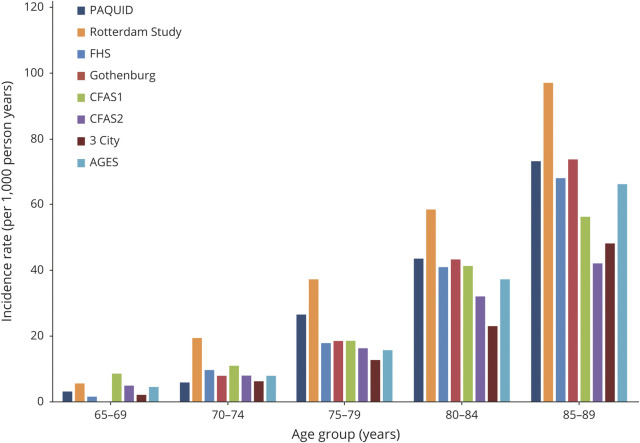
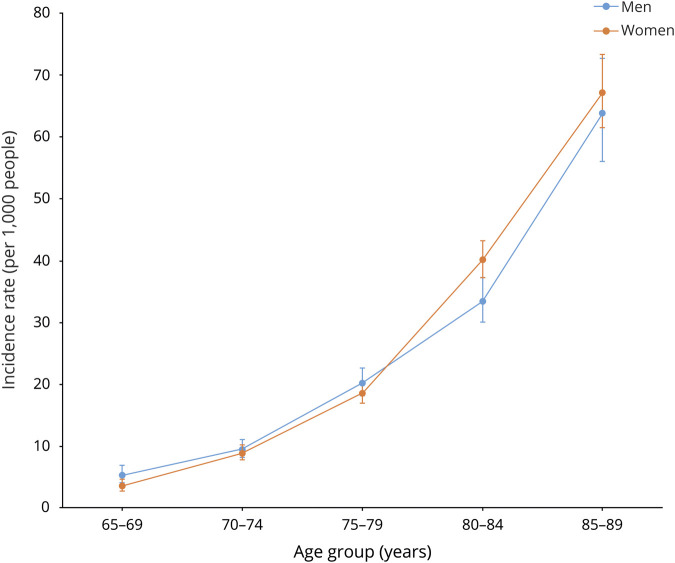
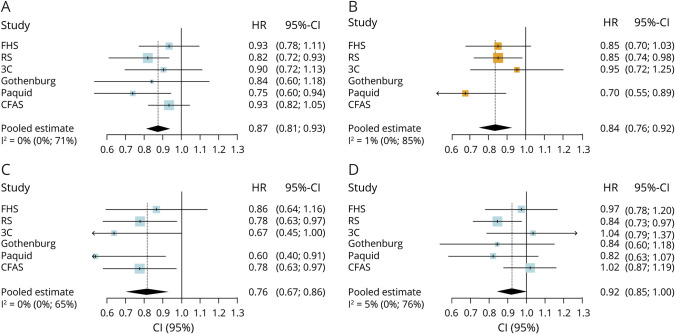
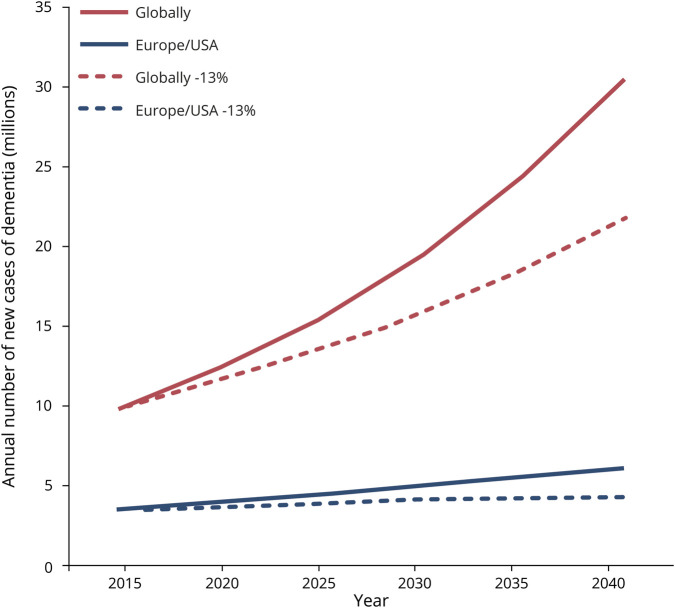
OBJECTIVE: To determine changes in the incidence of dementia between 1988 and 2015. METHODS: This analysis was performed in aggregated data from individuals >65 years of age in 7 population-based cohort studies in the United States and Europe from the Alzheimer Cohort Consortium. First, we calculated age- and sex-specific incidence rates for all-cause dementia, and then defined nonoverlapping 5-year epochs within each study to determine trends in incidence. Estimates of change per 10-year interval were pooled and results are presented combined and stratified by sex. RESULTS: Of 49,202 individuals, 4,253 (8.6%) developed dementia. The incidence rate of dementia increased with age, similarly for women and men, ranging from about 4 per 1,000 person-years in individuals aged 65-69 years to 65 per 1,000 person-years for those aged 85-89 years. The incidence rate of dementia declined by 13% per calendar decade (95% confidence interval [CI], 7%-19%), consistently across studies, and somewhat more pronouncedly in men than in women (24% [95% CI 14%-32%] vs 8% [0%-15%]). CONCLUSION: The incidence rate of dementia in Europe and North America has declined by 13% per decade over the past 25 years, consistently across studies. Incidence is similar for men and women, although declines were somewhat more profound in men. These observations call for sustained efforts to finding the causes for this decline, as well as determining their validity in geographically and ethnically diverse populations.
Overview
The claims and statistics of this paper haven’t been checked yet.
Free: it reads the open-access text and checks the first 5 claims that cite a source we can check. Create a free account to check every claim.
Integrity signals
Registry
Cites
Statistics
Figures
Verification
Claims the paper makes
The claims and statistics of this paper haven’t been checked yet.
Free: it reads the open-access text and checks the first 5 claims that cite a source we can check. Create a free account to check every claim.
Claims other papers make about this one
Each is checked against this paper’s own text: does it say what the citing paper says it does?
The source backs part of the claim, not all of it — or backs it for a different population, condition or comparison.
In the citing paper
“Where these have examined the relationship with deprivation, the decline is primarily in those in socio-economically advantaged areas.(15)”
From Dementia prevention, intervention, and care: 2024 report of the Lancet standing Commission (2024) · cites this paper as [15]
Experimental — accuracy not yet measuredThe source backs part of the claim, not all of it — or backs it for a different population, condition or comparison.
In the citing paper
“The Lancet Commission on Dementia Prevention, Intervention, and Care suggested that lifestyle modifications may already have an influence on dementia risk decades before the onset of dementia.3-8”
From Awareness of dementia risk reduction among current and future healthcare professionals: A survey study (2021) · cites this paper as [6]
Experimental — accuracy not yet measuredThe source backs part of the claim, not all of it — or backs it for a different population, condition or comparison.
In the citing paper
“Another key issue is that air pollution levels have been dropping over time in many areas of the world, and dementia incidence, as well, appears to have declined in North America and Europe in recent decades (Satizabal et al. 2016; Wolters et al. 2020).”
From Exposure to Air Pollution in Relation to Risk of Dementia and Related Outcomes: An Updated Systematic Review of the Epidemiological Literature (2021) · cites this paper as Wolters et al. 2020
Experimental — accuracy not yet measuredThe cited source says what the claim attributes to it.
In the citing paper
“Data from some HICs suggest a decline in age-specific incidence rates (15)”
From Dementia prevention, intervention, and care: 2024 report of the Lancet standing Commission (2024) · cites this paper as [15]
The cited source says what the claim attributes to it.
In the citing paper
“Evidence suggests that dementia incidence in Europe and the US has declined over the past 25 years, but declines were less in women than in men.61”
From Sex differences in cognitive decline among US adults (2021) · cites this paper as [61]
Self-check
Percentages, sums and reported differences re-computed from the paper’s own numbers.
The self-check needs the paper’s full text.
Citations
Cites
McKhann, G. M., Knopman, D. S., Chertkow, H., Hyman, B. T., Jack, C. R., Kawas, C. H., Klunk, W. E., Koroshetz, W. J., Manly, J. J., Mayeux, R., et al. (2011) · Alzheimer's & Dementia · doi:10.1016/j.jalz.2011.03.005 · Cited by 18,657
Vos, T., Abajobir, A. A., Abate, K. H., Abbafati, C., Abbas, K. M., Abd-Allah, F., Abdulkader, R. S., Abdulle, A. M., Abebo, T. A., Abera, S. F., et al. (2017) · The Lancet · doi:10.1016/s0140-6736(17)32154-2 · Cited by 13,220
Vos, T., Barber, R. M., Bell, B., Bertozzi-Villa, A., Biryukov, S., Bolliger, I., Charlson, F., Davis, A., Degenhardt, L., Dicker, D., et al. (2015) · The Lancet · doi:10.1016/s0140-6736(15)60692-4 · Cited by 6,414
Self-citationAging, natural death, and the compression of morbidity
Fries, J. F. (1980) · New England Journal of Medicine · doi:10.1056/nejm198007173030304 · Cited by 3,356
The Robust Inference for the Cox Proportional Hazards Model
Lin, D. Y., & Wei, L. J. (1989) · Journal of the American Statistical Association · doi:10.1080/01621459.1989.10478874 · Cited by 2,695
Zhou, B., Bentham, J., Di Cesare, M., Bixby, H., Danaei, G., Cowan, M. J., Paciorek, C. J., Singh, G., Hajifathalian, K., Bennett, J. E., et al. (2017) · The Lancet · doi:10.1016/s0140-6736(16)31919-5 · Cited by 2,579
Epidemiological approaches to heart disease: the Framingham study
Dawber, T. R., Meadors, G. F., & Moore, F. E. (1951) · American Journal of Public Health and the Nations Health · doi:10.2105/ajph.41.3.279 · Cited by 2,148
The Rotterdam Study: objectives and design update
Hofman, A., Breteler, M. M. B., van Duijn, C. M., Krestin, G. P., Pols, H. A., Stricker, B. H. C., Tiemeier, H., Uitterlinden, A. G., Vingerling, J. R., & Witteman, J. C. M. (2007) · European Journal of Epidemiology · doi:10.1007/s10654-007-9199-x · Cited by 1,395
Matthews, F. E., Arthur, A., Barnes, L. E., Bond, J., Jagger, C., Robinson, L., & Brayne, C. (2013) · The Lancet · doi:10.1016/s0140-6736(13)61570-6 · Cited by 1,155
Self-citation
Research works printed but not linked: 3
- 2. Alzheimer’s Disease International. Policy Brief for G8 Heads of Government: The Global Impact of Dementia 2013–2050 [online]. Available at: alz.co.uk/research/G8-policy-brief. Accessed May 20, 2019.
- 3. WHO. First WHO Ministerial Conference on Global Action Against Dementia [Internet]. Available at: hoint/mental_health/neurology/dementia/ministerial_conference_2015_report/en/(2015). Accessed February 25, 2018.
- 23. Alzheimer's Disease International. World Alzheimer Report 2015 [Internet]. Available at: alzcouk/research/world-report-2015. Accessed February 26, 2018.
Cited by
Items 201–300 of 525
Freudenberg‐Hua, Y., Makhnevich, A., Li, W., Liu, Y., Qiu, M., Marziliano, A. M., Carney, M. T., GREENWALD, B. S., Kane, J. M., Diefenbach, M. A., et al. (2022) · Frontiers in Medicine · doi:10.3389/fmed.2022.841326 · Cited by 9
Brayne, C., & Wu, Y. (2022) · American Journal of Alzheimer s Disease & Other Dementias® · doi:10.1177/15333175221104347 · Cited by 12
“The CFAS data are also involved in the recent Alzheimer Cohort Consortium (ACC), which harmonised data on dementia incidence across ageing cohorts and suggested a decreasing incidence rate in Europe and North America.41”
Self-citationDementia in Latin America and the Caribbean: Prevalence, Incidence, Impact, and Trends over Time
Pan American Health Organization (2023) · Pan American Health Organization eBooks · doi:10.37774/9789275126653 · Cited by 25
Ramos, A. A., Bertola, L., da Mata, F. A. F., Barbosa, M. G., Boaventura, V., Machado, L., Lima‐Costa, M. F., & Ferri, C. P. (2024) · Social Psychiatry and Psychiatric Epidemiology · doi:10.1007/s00127-024-02734-x · Cited by 9
Kawaguchi, K., Maeda, M., Murata, F., Nakashima, Y., & Fukuda, H. (2025) · Age and Ageing · doi:10.1093/ageing/afaf058 · Cited by 8
Sindi, S., Yerramalla, M. S., Barbera, M., Thunborg, C., Li, Y., Jönsson, L., Mangialasche, F., Qiu, C., & Kivipelto, M. (2025) · Cerebral Circulation - Cognition and Behavior · doi:10.1016/j.cccb.2025.100385 · Cited by 13
“The aggregated data from seven population-based cohort studies in the USA and Europe (The Alzheimer Cohort Consortium) demonstrated that dementia incidence rates in Europe and North America have declined by ⁓13 % per decade over the past 25 years [40].”
Life Purpose Lowers Risk for Cognitive Impairment in a United States Population-Based Cohort
Howard, N. C., Gerasimov, E. S., Wingo, T. S., & Wingo, A. P. (2025) · American Journal of Geriatric Psychiatry · doi:10.1016/j.jagp.2025.05.009 · Cited by 8
He, Y., Ding, K., Tan, W., Ke, Y.-F., Hou, C., Jia, F., & Wang, S.-B. (2024) · American Journal of Geriatric Psychiatry · doi:10.1016/j.jagp.2024.01.228 · Cited by 10
Ding, M., Wennberg, A. M. V., Engström, G., & Modig, K. (2024) · Alzheimer s & Dementia · doi:10.1002/alz.14389 · Cited by 8
Genetic Counselling Improves the Molecular Characterisation of Dementing Disorders
Zampatti, S., Ragazzo, M., Peconi, C., Luciano, S., Gambardella, S., Caputo, V., Strafella, C., Cascella, R., Caltagirone, C., & Giardina, E. (2021) · Journal of Personalized Medicine · doi:10.3390/jpm11060474 · Cited by 8
Tipping Points – Do the Prognostic Values of Multimorbidity and Functional Status Vary with Age?
Thygesen, L. C., Christensen, K., Rørth, M. R., Sørensen, H. T., Vandenbroucke, J. P., & Westendorp, R. G. (2021) · Clinical Epidemiology · doi:10.2147/clep.s325348 · Cited by 8
Nishita, Y., Makizako, H., Jeong, S., Otsuka, R., Kim, H., Obuchi, S. P., Fujiwara, Y., Ohara, Y., Awata, S., Yamada, M., et al. (2022) · Archives of Gerontology and Geriatrics · doi:10.1016/j.archger.2022.104718 · Cited by 10
Hershey, M. S., Sotos‐Prieto, M., Andrieu, S., Hofman, A., Magiatis, P., Martínez‐González, M. Á., Yannakoulia, M., Kales, S. N., & Scarmeas, N. (2022) · The Journal of Prevention of Alzheimer s Disease · doi:10.14283/jpad.2022.99 · Cited by 9
Self-citationPereira, W. A. B., de Oliveira, I. R., Werner, F., dos Santos, L. T., Furtado, P. S., Brigagão, R. V., Mayer, A. J. S., & Cerdeira, C. D. (2023) · Research Society and Development · doi:10.33448/rsd-v12i5.31673 · Cited by 16
Blandi, L., Bertuccio, P., Amorosi, A., Clemens, T., Brand, H., & Odone, A. (2023) · Public Health · doi:10.1016/j.puhe.2023.06.036 · Cited by 8
Trends in the incidence of dementia in people with hypertension in the UK 2000 to 2021
Adesuyan, M., Jani, Y. H., Alsugeir, D. M., Howard, R. J., Wong, I. C. K., Wei, L., & Brauer, R. (2023) · Alzheimer s & Dementia Diagnosis Assessment & Disease Monitoring · doi:10.1002/dad2.12466 · Cited by 14
Variability in Alzheimer’s disease mortality from European vital statistics, 2012–2020
Zuin, M., Brombo, G., Polastri, M., Romagnoli, T., Cervellati, C., & Zuliani, G. (2024) · International Journal of Geriatric Psychiatry · doi:10.1002/gps.6068 · Cited by 8
Mortamais, M., Gutierrez, L. A., de Hoogh, K., Benmarhnia, T., Helmer, C., Tzourio, C., Dartigues, J., Letellier, N., Jacquemin, B., & Berr, C. (2020) · Alzheimer s & Dementia · doi:10.1002/alz.041059 · Cited by 8
Self-citationThe plasticity of late‐onset dementia: A nationwide cohort study in Denmark
Hegelund, E. R., Mehta, A. J., Mortensen, L. H., & Westendorp, R. G. J. (2021) · Alzheimer s & Dementia · doi:10.1002/alz.12469 · Cited by 9
Pavlik, V. N., for the CONCORD-AD investigators, Burnham, S. C., Kass, J. S., Helmer, C., Palmqvist, S., Vassilaki, M., Dartigues, J., Hansson, O., Masters, C. L., et al. (2021) · Journal of Alzheimer s Disease · doi:10.3233/jad-210525 · Cited by 9
Self-citationElsworthy, R. J., Dunleavy, C., Whitham, M., & Aldred, S. (2022) · Aging and Health Research · doi:10.1016/j.ahr.2022.100093 · Cited by 9
Monitoring Patients With Dementia: Insight Into Global Trends, Innovations, and Future Directions
Kwon, H. S., & Koh, S. (2024) · Journal of Clinical Neurology · doi:10.3988/jcn.2024.0016 · Cited by 9
Sex differences in dementia risk: considering underlying medical conditions
Rotstein, A., Kodesh, A., Beeri, M. S., & Levine, S. Z. (2025) · Alzheimer s Research & Therapy · doi:10.1186/s13195-025-01843-2 · Cited by 7
Sex in the medical machine: How algorithms can entrench bioessentialism in precision medicine
Ichikawa, K., Boulicault, M., Thinius, A., DiMarco, M., Murchland, A. R., Maldonado, B., Higgins, A. S., & Richardson, S. S. (2025) · Big Data & Society · doi:10.1177/20539517251381674 · Cited by 7
“Likewise, a growing literature also supports the theory that known, modi fi able risk factors of AD are patterned by gender/sex and gendered experiences (Dekhtyar et al., 2015; Sindi et al., 2021; Wolters et al., 2020), including gender identity (Brady et al., 2024).”
de Miguel‐Díez, J., López‐de‐Andrés, A., Jiménez‐García, R., Hernández‐Barrera, V., Carabantes-Alarcón, D., Zamorano‐León, J. J., Omaña-Palanco, R., González‐Barcala, F. J., & Cuadrado‐Corrales, N. (2023) · Respiratory Medicine · doi:10.1016/j.rmed.2023.107223 · Cited by 7
Wang, N., Zhang, Q., Li, P., Guo, L., Wu, X., & Tu, Q. (2024) · Brain and Behavior · doi:10.1002/brb3.70170 · Cited by 7
Chew, J. L., Zeng, Z., Tan, T. H. B., Chew, P., Ali, N. B., Wang, H., Ong, M., Raymond, R., Pek, K., Wang, D., et al. (2024) · International Journal of Environmental Research and Public Health · doi:10.3390/ijerph22010042 · Cited by 8
“On the other hand, age-specific dementia incidence is decreasing in some countries [3], a trend that may be attributed to improvements in modifiable risk factors, including lifestyle changes [4].”
Butler, H. M., Keller, E., McCrorey, M. K., Keceli, G., Combs, C. K., Kayed, R., Namakkal-S, R., Paolocci, N., Wolf, B. J., Wold, L. E., et al. (2025) · Communications Biology · doi:10.1038/s42003-025-07701-z · Cited by 7
Fan, Y., Chou, C., Bintoro, B. S., Pan, W., & Bai, C. (2022) · Frontiers in Nutrition · doi:10.3389/fnut.2022.791929 · Cited by 7
“The incidence and prevalence of dementia and Alzheimer’s disease (AD) have increased in recent years (1, 2), leading to critical socioeconomic burdens (3, 4) that will inevitably worsen in the future as the population ages (5, 6).”
BackgroundVarkey, B. P., Joseph, J., Haokip, H. R., Sharma, S. K., Mathews, E., Ameen, S., Narasimha, V. L., Dhandapani, M., & Grover, S. (2022) · Indian Journal of Psychological Medicine · doi:10.1177/02537176221130252 · Cited by 7
Cognitive activity at work and the risk of dementia
Martin‐Bassols, N., de New, S. C., Johnston, D. W., & Shields, M. A. (2023) · Health Economics · doi:10.1002/hec.4679 · Cited by 8
Bransby, L., Yassi, N., Rosenich, E., Buckley, R. F., Li, Q., Maruff, P. T., Pase, M. P., & Lim, Y. Y. (2024) · Neurobiology of Aging · doi:10.1016/j.neurobiolaging.2024.02.015 · Cited by 7
“The incidence of Alzheimer ’ s disease (AD) dementia and all-cause dementia is estimated to be reducing by 16% and 13% respectively per decade in high income countries (Wolters et al., 2020).”
Self-citationPredictors of cognitive change in cognitively healthy older women in Panama: the PARI-HD study
Oviedo, D. C., Tratner, A. E., Rodríguez-Araña, S., Villarreal, A. E., Rangel, G. A., Carreira, M. B., & Britton, G. B. (2024) · Frontiers in Global Women s Health · doi:10.3389/fgwh.2024.1353657 · Cited by 8
“Nonetheless, the overall estimated prevalence for dementia is higher for women than men (5), although sex differences in the incidence of dementia are less clear, and may vary across geographical regions (21, 22).”
BackgroundMind the Metabolic Gap: Bridging Migraine and Alzheimer's disease through Brain Insulin Resistance
Moro, L. D., Pirovano, E., & Rota, E. (2024) · Aging and Disease · doi:10.14336/ad.2024.0351 · Cited by 12
“AD is the most common form of dementia in developed countries and its prevalence is on the increase, due to population aging [5].”
Kenning, G., & Visser, M. (2021) · Dementia · doi:10.1177/1471301221997309 · Cited by 7
The health status: the ignored risk factor in dementia incidence. NEDICES cohort
Bermejo-Pareja, F., de la Cámara, A. G., del Ser, T., Contador, I., Llamas-Velasco, S., López-Arrieta, J. M., Martín-Arriscado, C., Hernández-Gallego, J., Vega, S., & Benito‐León, J. (2022) · Aging Clinical and Experimental Research · doi:10.1007/s40520-021-02045-0 · Cited by 7
“Many scientific studies describe a decrease in the incidence of dementia and Alzheimer disease (AD), mainly in affluent countries, during the last decades [1, 2]; nevertheless, the cause of this decline is not well known.”
BackgroundDementia is Associated With Inferior Outcomes Following Emergency General Surgery
Verma, A., Branche, C., Chervu, N. L., Sakowitz, S., Bakhtiyar, S. S., Hadaya, J., & Benharash, P. (2023) · The American Surgeon™ · doi:10.1177/00031348231175447 · Cited by 6
Cohort Profile: Dementia Risk Prediction Project (DRPP)
Krefman, A. E., Stephen, J. J., Carolan, P., Sedaghat, S., Mansolf, M. A., Soumaré, A., Gross, A. L., Aiello, A. E., Singh‐Manoux, A., Ikram, M. A., et al. (2024) · International Journal of Epidemiology · doi:10.1093/ije/dyae012 · Cited by 6
Self-citationUnderdetection of neurocognitive disorders in Southern Italy: Evidence from the Salento region
Vilella, D., Urso, D., Valguarnera, A., Volpe, G., Gnoni, V., Rollo, E., Giugno, A., Caggiula, M., Coluccia, B., Mauro, A., et al. (2025) · The Journal of Prevention of Alzheimer s Disease · doi:10.1016/j.tjpad.2025.100295 · Cited by 6
“We obtained sex-age specific pooled incidence rates for MaNCD by meta-analysing published cohort studies using data from Wolters et al. [16].”
Gao, Y., Zhang, P., Yang, H., Li, S., Su, H., & Zhang, Q. (2025) · BMC Geriatrics · doi:10.1186/s12877-025-06465-9 · Cited by 7
Towards Establishing Quality Standards on Human Rights for Services in Dementia Care
Panagiotidou, N., Dhooper, J., Funk, M., Drew, N., Seeher, K. M., Dua, T., & Orrell, M. W. (2024) · International Journal of Older People Nursing · doi:10.1111/opn.12643 · Cited by 7
Amorim, M. D. S. D. N., Rates, E. R. D., Vitoria, D. A. C. M. I., Filho, J. F. S. D., dos Santos, C. C., Santos‐Oliveira, R., Gaspar, R. S., Sanches, J. R., Pinto, B., Paes, A. M. D. A., et al. (2024) · ACS Omega · doi:10.1021/acsomega.4c05869 · Cited by 6
Decomposing Racial and Ethnic Disparities in Risk and Protective Factors of Dementia in the U.S.
Ferdows, N., & Aranda, M. (2025) · Clinical Gerontologist · doi:10.1080/07317115.2025.2534651 · Cited by 8
“…(Bancks et al., 2019) and dementia incidence and prevalence has declined in the last couple of decades (Derby et al., 2017; Satizabal et al., 2016; Wolters et al., 2020), the number of Americans aged 65 and older with Alzheimer’s dementia is projected to increase from 6.2 million in 2021 to 12.7…”
InfluentialIncidence of dementia among individuals 70 years and older in Norway: A HUNT study
Molvik, I., Strand, B. H., Rokstad, A. M. M., Aakhus, E., Aam, S., Bergh, S., Brækhus, A., Engedal, K., Gjøra, L., Kjelvik, G., et al. (2025) · Journal of Alzheimer s Disease · doi:10.1177/13872877251371242 · Cited by 6
Self-citationBressan, V., Snijder, A., Hansen, H., Koldby, K., Andersen, K. D., Allegretti, N., Porcu, F., Marsillas, S., García, A., & Palese, A. (2022) · International Journal of Environmental Research and Public Health · doi:10.3390/ijerph191610335 · Cited by 6
Inoriza, J. M., Carreras, M., Coderch, J., Garriga, O. T., Sáez, M., & Garre‐Olmo, J. (2023) · Journal of Alzheimer s Disease · doi:10.3233/jad-221220 · Cited by 6
Degeneration Directory: a multi-omics web resource for degenerative diseases
Yan, H., Lu, C., Lan, C., Wang, S., Zhang, W., He, Z., Hu, J., Ai, J., Liu, G., Ma, S., et al. (2023) · Protein & Cell · doi:10.1093/procel/pwad066 · Cited by 6
Decline in incidence and prevalence of dementia: An analysis of outpatient claims data
Michalowsky, B., Hoffmann, W., Riedel-Heller, S. G., Kohring, C., Teipel, S. J., Akmatov, M. K., Bohlken, J., & Holstiege, J. (2025) · Deutsches Ärzteblatt international · doi:10.3238/arztebl.m2025.0090 · Cited by 11
Stanciu, G. D., Ababei, D. C., Rusu, R.-N., Bild, V., & Tamba, B.-I. (2022) · Pharmaceutics · doi:10.3390/pharmaceutics14061270 · Cited by 7
Lee, S., Lee, Y., & Chiu, E. (2023) · Medicine · doi:10.1097/md.0000000000034093 · Cited by 8
Decreasing trend in the incidence and prevalence of dementia: a systematic review
Mayer, F., Remoli, G., Bacigalupo, I., Palazzesi, I., Piscopo, P., Bellomo, G., Canevelli, M., Corbo, M., Vanacore, N., & Lacorte, E. (2021) · Minerva Medica · doi:10.23736/s0026-4806.21.07454-1 · Cited by 6
Overton, M., Pihlsgård, M., & Elmståhl, S. (2022) · Alzheimer s & Dementia Translational Research & Clinical Interventions · doi:10.1002/trc2.12260 · Cited by 7
Updating estimated trends in dementia incidence: evidence of increases in England
Nichols, E., & Lee, J. (2023) · The Lancet Public Health · doi:10.1016/s2468-2667(23)00222-0 · Cited by 5
Brück, C. C., de Nijs, K., Ikram, M. A., Wolters, F. J., & de Kok, I. M. C. M. (2025) · European Journal of Epidemiology · doi:10.1007/s10654-025-01283-0 · Cited by 6
Self-citationPrevalence and co-occurrence of dementia risk factors in Denmark: A nationwide study
Janbek, J., Laursen, T. M., Jørgensen, K., Mb, J., Eliasen, M., Christensen, A. I., Walsh, S., Sommerlad, A., Brayne, C., & Waldemar, G. (2025) · The Journal of Prevention of Alzheimer s Disease · doi:10.1016/j.tjpad.2025.100365 · Cited by 5
“Recent evidence shows that dementia incidence rates have declined in Europe and the United States over the past 25 years [1], which may be due to various lifestyle interventions and policies.”
Self-citationAnti-Amyloid Therapies for Alzheimer’s Disease: Not the Way Forward
Bocti, C., & Bergman, H. (2025) · Canadian Geriatrics Journal · doi:10.5770/cgj.28.888 · Cited by 6
Oye-Somefun, A., Mirzadeh, P., Gao-Kang, J., Rotondi, M. A., Kuk, J. L., Tamim, H., & Ardern, C. I. (2026) · PLoS ONE · doi:10.1371/journal.pone.0343621 · Cited by 8
“Epidemiological studies have shown that regular movement behaviours could lower the risk of cardiovascular disease including chronic inflammation [17–19] and are effective at lowering the risk of dementia and cognitive decline in older adult populations [20].”
The principles of Population-Level Approaches to Dementia Risk Reduction (PLADRR)
Walsh, S., Röhr, S., Migeot, J., Bodryzlova, Y., Ma’u, E., Salemme, S., Marshall, C. R., Daly, T. P., Cheung, G., Stephan, B. C. M., et al. (2026) · PLoS Medicine · doi:10.1371/journal.pmed.1005059 · Cited by 7
Self-citationBarriers to brain health behaviours: results from the Five Lives Brain Health Ireland Survey
Dukelow, T., Vassilev, P., Lawrence, E. G., Jacobson, L., Koychev, I. G., Muhammed, K., & Kennelly, S. (2023) · Frontiers in Psychology · doi:10.3389/fpsyg.2023.1101514 · Cited by 9
Garcia‐Argibay, M., Hiyoshi, A., & Montgomery, S. (2023) · BMJ Open · doi:10.1136/bmjopen-2023-074110 · Cited by 8
Carr, R. H., Eom, G. D., & Brown, E. E. (2024) · Journal of Alzheimer s Disease · doi:10.3233/jad-230904 · Cited by 6
Alzheimer’s Disease: Engaging with an Unstable Category
Daly, T. P., & Keuck, L. (2024) · Springer eBooks · doi:10.1007/978-94-017-8706-2_113-1 · Cited by 8
Ren, P., Liao, M., Zhou, L., Rong, H., Zhong, H., li, L., Xiao, T., Li, F., Zeng, J., & Chen, X. (2024) · Geriatric Nursing · doi:10.1016/j.gerinurse.2024.09.025 · Cited by 5
Chen, G., McKay, N. S., Gordon, B. A., Joseph‐Mathurin, N., Liu, J., Schindler, S. E., Hassenstab, J. J., Doering, S., Aschenbrenner, A. J., Wang, Q., et al. (2025) · Journal of Alzheimer s Disease · doi:10.1177/13872877251352202 · Cited by 6
Kim, H., Park, J., Kim, Y. S., & Park, J. (2020) · International Journal of Geriatric Psychiatry · doi:10.1002/gps.5458 · Cited by 5
Epidemiology of dementia onset captured in Canadian primary care electronic medical records
Pham, A. N., Voaklander, D. C., Wagg, A., & Drummond, N. (2021) · Family Practice · doi:10.1093/fampra/cmab056 · Cited by 5
Chover‐Sierra, E., Pérez‐Ros, P., Julían-Rochina, I., Long, C. O., & Cauli, O. (2022) · Healthcare · doi:10.3390/healthcare10040656 · Cited by 7
Jacqmin‐Gadda, H., Philipps, V., Guillet, F., Tzourio, C., Helmer, C., & Joly, P. (2023) · European Journal of Epidemiology · doi:10.1007/s10654-023-00974-w · Cited by 5
Self-citationA Protein Assembly Hypothesis for Population-Specific Decrease in Dementia with Time
Serwer, P., & Wright, E. T. (2021) · Biophysica · doi:10.3390/biophysica1010002 · Cited by 5
Oprea, V. D., Marinescu, M. C., Popazu, C., Sârbu, F., Onose, G., & Romila, A. (2022) · Diagnostics · doi:10.3390/diagnostics12122994 · Cited by 6
Liu, J., Li, S., Yan, X., Li, J., Sun, Q., Mei, H., & Rao, H. (2023) · Research in Gerontological Nursing · doi:10.3928/19404921-20230405-01 · Cited by 6
Morita, A., Fujiwara, T., Murayama, H., Machida, M., Inoue, S., & Shobugawa, Y. (2023) · The Journals of Gerontology Series A · doi:10.1093/gerona/glad269 · Cited by 6
Dementia Prevention: A Global Challenge in Urgent Need of Solutions
Price, G. J., Udeh‐Momoh, C. T., Kivipelto, M., & Middleton, L. T. (2022) · The Journal of Prevention of Alzheimer s Disease · doi:10.14283/jpad.2022.10 · Cited by 5
“Age-specific incidence rates for dementia have fallen by an estimated 13% per decade since 1988 in the United States and Europe (1).”
BackgroundChaaya, M., Assaad, S., Darwish, H., Haber, M., Khoury, R., Saab, D., El Asmar, K., & Hajjar, R. (2025) · Frontiers in Dementia · doi:10.3389/frdem.2024.1494719 · Cited by 4
Estimating the impact of risk factor reduction on dementia prevalence in New Zealand
Ma’u, E., Mukadam, N., Livingston, G., Walsh, S., Röhr, S., Brayne, C., Cheung, G., & Cullum, S. J. (2025) · Alzheimer s & Dementia · doi:10.1002/alz.70440 · Cited by 5
Self-citationCunliffe, G., Tan, L. Y., Jung, S., Turner, J., & Gigg, J. (2025) · Communications Biology · doi:10.1038/s42003-025-08546-2 · Cited by 5
Sedighi, M., Shahabi, M. H., Amanollahi, A., Alam, K., Shemehsavar, S., Shirzadi, Z., Sabatini, S., Khatoonabadi, A. R., Prina, M., Hosseini, A. A., et al. (2026) · Alzheimer s & Dementia · doi:10.1002/alz.71109 · Cited by 4
Self-citationMeirelles, O., Arnette, A., Gudnason, V. G., & Launer, L. J. (2024) · European Journal of Epidemiology · doi:10.1007/s10654-023-01087-0 · Cited by 4
Self-citationMittal, A., Arora, I., Jayaram, R., Yashwanth, G., & Rangarajan, S. K. (2024) · Journal of Psychiatry Spectrum · doi:10.4103/jopsys.jopsys_35_24 · Cited by 6
Closing the gap in dementia research by community-based cohort studies in the Chinese population
Zhou, X., Xiao, Z., Wu, W., Chen, Y., Yuan, C., Leng, Y., Yao, Y., Zhao, Q., Hofman, A., Brunner, E. J., et al. (2025) · The Lancet Regional Health - Western Pacific · doi:10.1016/j.lanwpc.2025.101465 · Cited by 7
“74 Although data from Western populations indicate that dementia incidence rates are decreasing, 75 SAS also highlighted an increasing trend of dementia prevalence and incidence, and a decreasing trend of dementia mortality across 20 years in a cohort with older adults living in urban Shanghai.”
Looking at the periphery—new hypothesis to look for new targets for Alzheimer’s disease therapy
Ávila, J., Pérez, M., Ávila‐Villanueva, M., Santa‐María, I., & Hernández, F. (2023) · Exploration of Neuroprotective Therapy · doi:10.37349/ent.2023.00044 · Cited by 4
A dementia ellátása a háziorvosi gyakorlatban
Zsuffa, J. A., Kalabay, L., Katz, S., Kamondi, A., Csukly, G., & Horvath, A. A. (2023) · Orvosi Hetilap · doi:10.1556/650.2023.32816 · Cited by 9
Rognoni, T., Fernández‐Matarrubia, M., Martínez‐González, M. Á., Salas‐Salvadó, J., Corella, D., Castañer, O., Martínez, J. A., Alonso‐Gómez, Á. M., Gómez‐Gracia, E., Vioqué, J., et al. (2023) · Journal of Alzheimer s Disease · doi:10.3233/jad-230105 · Cited by 4
Parfenov, V. A., Bogolepova, A. N., & Mkhitaryan, E. A. (2024) · S S Korsakov Journal of Neurology and Psychiatry · doi:10.17116/jnevro202412406162 · Cited by 4
The deprivation cascade hypothesis of dementia
Daly, T. P. (2025) · Aging and Health Research · doi:10.1016/j.ahr.2024.100219 · Cited by 4
Scoping review of dementia primary prevention policies in England: do they balance reach and agency?
Walsh, S., Birch, J. M., Merrick, R. L., Wallace, L. M. K., Kuhn, I. L., Clare, L., Mytton, O. T., Lafortune, L., Wills, W., & Brayne, C. (2025) · BMJ Public Health · doi:10.1136/bmjph-2025-002631 · Cited by 4
Self-citationSpijker, J., Calazans, J. A., Trias‐Llimós, S., Rentería, E., & Doblhammer, G. (2025) · Scientific Reports · doi:10.1038/s41598-025-10079-x · Cited by 4
Kamsvaag, B., Bergh, S., Benth, J. Š., Selbæk, G., Tevik, K., & Helvik, A. (2021) · Aging & Mental Health · doi:10.1080/13607863.2021.1950618 · Cited by 5
“It affects up to 50 million people worldwide (Patterson, 2018), and despite decreasing incidence rates (Wolters et al., 2020), the total number of cases is projected to increase threefold by 2050 due to a rapidly aging population (Patterson, 2018).”
BackgroundEstimation of dementia prevalence at the local level in the United States
Bennett, E. E., Kwan, A., Gianattasio, K. Z., Engelman, B., Dowling, N. M., & Power, M. C. (2021) · Alzheimer s & Dementia Translational Research & Clinical Interventions · doi:10.1002/trc2.12237 · Cited by 7
Miller, S. M., Wilson, L. E., Greiner, M. A., Pritchard, J. E., Zhang, T., Kaye, D. R., Cohen, H. J., Becher, R. D., Maerz, L. L., & Dinan, M. A. (2022) · Journal of Geriatric Oncology · doi:10.1016/j.jgo.2021.12.012 · Cited by 4
Hyle, E. P., Foote, J. H. A., Shebl, F. M., Qian, Y., Reddy, K. P., Mukerji, S. S., Wattananimitgul, N., Viswanathan, A., Schwamm, L. H., Pandya, A., et al. (2022) · BMJ Open · doi:10.1136/bmjopen-2021-056546 · Cited by 4
Ishioka, Y., Masui, Y., Nakagawa, T., Ogawa, M., Inagaki, H., Yasumoto, S., Ikebe, K., Kamide, K., Arai, Y., Ishizaki, T., et al. (2023) · Acta Psychologica · doi:10.1016/j.actpsy.2023.103844 · Cited by 4
da Saúde, O. P.-A. (2023) · Pan American Health Organization eBooks · doi:10.37774/9789275726655 · Cited by 8
Ethics, evidence, and the environment in dementia risk reduction
Daly, T. P. (2022) · The Lancet Healthy Longevity · doi:10.1016/s2666-7568(22)00028-9 · Cited by 4
Associations Between Prostate Cancer and Dementia: A Nationwide Study in Sweden
Crump, C., Stattin, P. E., Brooks, J. D., Sundquist, J., Wei, J., Sieh, W., & Sundquist, K. (2025) · European Urology Oncology · doi:10.1016/j.euo.2025.04.001 · Cited by 3
Saiz-Vázquez, O., Landa, S. U., & Puente-Martínez, A. (2025) · Kidney & Blood Pressure Research · doi:10.1159/000546395 · Cited by 4
The need for dengue and chikungunya awareness among mental health professionals in Europe
Lucchese, G., & Stufano, A. (2025) · Frontiers in Psychiatry · doi:10.3389/fpsyt.2025.1672597 · Cited by 3
Tian, F., Zhao, J., Chen, L., Wei, S., & Lin, H. (2025) · Annals of Neurology · doi:10.1002/ana.78060 · Cited by 3
“Mounting evidence has highlighted the signi fi cant causal role of education in protecting against dementia, 42,43 and the Lancet Commission on Dementia Prevention has also indicated that 7% of dementia cases could be avoided by addressing low education levels.”
Yubero, R., Cobos, R. G., García-Arcelay, E., Algaba, A., Rebollo, P., Mauriño, J., & Arroyo, R. (2025) · Frontiers in Neurology · doi:10.3389/fneur.2025.1522340 · Cited by 3
Kassar, O., Makhlouf, H. A., Mansour, M. E. M., & Sartorius, A. (2025) · International Psychogeriatrics · doi:10.1016/j.inpsyc.2025.100159 · Cited by 3
Metadata
- Authors
- Wolters, F. J., Chibnik, L. B., Waziry, R., Anderson, R., Berr, C., Beiser, A., Bis, J. C., Blacker, D., Bos, D., Brayne, C., Dartigues, J.-F., Darweesh, S. K. L., Davis-Plourde, K. L., de Wolf, F., Debette, S., Dufouil, C., Fornage, M., Goudsmit, J., Grasset, L., Gudnason, V., Hadjichrysanthou, C., Helmer, C., Ikram, M. A., Ikram, M. K., Joas, E., Kern, S., Kuller, L. H., Launer, L., Lopez, O. L., Matthews, F. E., McRae-McKee, K., Meirelles, O., Mosley, T. H., Pase, M. P., Psaty, B. M., Satizabal, C. L., Seshadri, S., Skoog, I., Stephan, B. C. M., Wetterberg, H., Wong, M. M., Zettergren, A., & Hofman, A.
- Affiliations
- Harvard University (US)
- Boston University (US)
- From the Department of Epidemiology (F.J.W., L.B.C., R.W., D. Blacker, D. Bos, J.G., A.H.), Harvard T.H. Chan School of Public Health, Boston, MA; Departments of Epidemiology (F.J.W., D. Bos, S.K.L.D., M.A.I., M.K.I., A.H.), Radiology and Nuclear Medicine (D. Bos), and Neurology (M.K.I.), Erasmus MC, Rotterdam, the Netherlands; Department of Neurology (L.B.C.), Massachusetts General Hospital, Boston; Department of Infectious Disease Epidemiology (R.A., F.d.W., C. Hadjichrysanthou, K.M.-M., M.M.W.),...
- ORCID
- Wolters, Frank J.
- Chibnik, Lori B.
- Waziry, Reem
- Anderson, Roy
- Berr, Claudine
- Beiser, Alexa
- Bis, Joshua C.
- Blacker, Deborah
- Brayne, Carol
- Dartigues, Jean-François
- Darweesh, Sirwan K.L.
- Dufouil, Carole
- Fornage, Myriam
- Grasset, Leslie
- Gudnason, Vilmundur
- Hadjichrysanthou, Christoforos
- Helmer, Catherine
- Ikram, M. Arfan
- Joas, Erik
- Kern, Silke
- Kuller, Lewis H.
- Launer, Lenore
- Matthews, Fiona E.
- Meirelles, Osorio
- Mosley, Thomas H.
- Pase, Matthew P.
- Psaty, Bruce M.
- Satizabal, Claudia L.
- Seshadri, Sudha
- Skoog, Ingmar
- Stephan, Blossom C.M.
- Wetterberg, Hanna
- Zettergren, Anna
- Hofman, Albert
- Venue
- Neurology
- Published
- 2020-08-04
- Volume
- 95
- Issue
- 5
- Pages
- e519-e531
- ISSN
- 0028-3878 (ISSN-L)
- 1526-632X
- PMC
- PMC7455342
- OpenAlex
- W3082444018
- Semantic Scholar
- be78bfa099e4c4a4dbe1129266725de4e5e7851d
- Cited by
- 489
- References
- 33
- Citations by year
- 2026: 57 · 2025: 108 · 2024: 90 · 2023: 85 · 2022: 85 · 2021: 54 · 2020: 9
- FWCI
- 42.49
- Type
- journal article
- Language
- en
- Open access
- hybrid
- doi.org
- Licence
- cc-by-nc-nd
- Locations
- Neurology (publishedVersion, cc-by-nc-nd)
- PubMed Central (publishedVersion, cc-by-nc-nd)
- PubMed (publishedVersion)
- EUR Research Repository (Erasmus University Rotterdam) (publishedVersion, other-oa)
- Repository@Nottingham (University of Nottingham) (acceptedVersion, other-oa)
- HAL (submittedVersion, cc-by-nc-nd)
- Repository@Hull (Worktribe) (University of Hull) (submittedVersion, cc-by-nc-nd)
- Repository@Nottingham (University of Nottingham) (submittedVersion, cc-by-nc-nd)
- Opin vísindi (Opin vísindi) (submittedVersion, cc-by-nc-sa)
- EUR Research Repository (Erasmus University Rotterdam) (submittedVersion, other-oa)
- RePub (Erasmus University Rotterdam) (submittedVersion, other-oa)
- Opin vísindi (Opin vísindi) (submittedVersion, other-oa)
- Oskar-Bordeaux (Universite de Bordeaux) (submittedVersion, cc-by-nc-nd)
- Spiral (Imperial College London) (submittedVersion, other-oa)
- Newcastle University ePrints (Newcastle Univesity) (cc-by-nc-nd)
- Funders
- Alzheimer's Association (IIRG-09-131338, AG033040, NS017950, AG033193, 2008-1229, ZEN‐01‐3151)
- GlaxoSmithKline
- Sanofi
- Yale University
- Västra Götalandsregionen
- Stiftelsen för Gamla Tjänarinnor
- National Institute for Health and Care Research (G9901400)
- European Commission (FP7 ICT, 601055, HORIZON2020, ICT-2011, 2007e2013, FP7/2007e2013, FP7‐ICT‐2011, 667375)
- Agence Nationale de la Recherche (06‐PNRA‐005, ANR‐06‐PNRA‐005, COGINUT ANR-06-PNRA-005, ANR-06-PNRA-0005, 2009-2012, ANR-07-LVIE-0003)
- Institut National de la Santé et de la Recherche Médicale (2009-2012)
- ZonMw
- Erasmus Universiteit Rotterdam
- Forskningsrådet för Arbetsliv och Socialvetenskap (2003-0234, 2006-0596, ZEN-01-3151, 2010-0870, 2006-0020, 2001-2646, 2008-1229, 2004-0150, 2013-2496, 2013-2300, 2008-1111, 2012-1138, 2004-0145)
- VSNU Vereniging van Universiteiten
- Fondation pour la Recherche Médicale
- Ministerie van Onderwijs, Cultuur en Wetenschap
- Nederlandse Organisatie voor Wetenschappelijk Onderzoek
- Hjärnfonden
- Vetenskapsrådet (2013–8,717, 2010-0870, 2012‐1138, 2013-2300, 2013‐2496, 2015-02830, 2015-02830, 2013-8717, 2012–5,041)
- Fondation de France
- Konung Gustaf V:s och Drottning Victorias Frimurarestiftelse
- Université de Bordeaux
- Forskningsrådet om Hälsa, Arbetsliv och Välfärd (2013-8717, 2008-1111, 2003‐0234, 2013‐2496, 2004‐0150, 2013‐2300, 2008‐1229, 2006-0596, 2006‐0020, 2004-0145, 2010-0870, 2013-1202, 2012‐1138, 2001‐2646, ZEN-01-3151)
- Mutuelle Générale de l'Education Nationale
- Hjartavernd (HHSN271201200022C, N01-AG-1-2100)
- Ipsen
- Janssen Prevention Center
- National Institutes of Health (n01ag12100-57-0-2, n01hc25195-41-0-1)
- Novartis Pharma
- Medical Research Council (G06010220, G9901400, MR/R015600/1)
- National Institute on Aging (AG-008122, AG049505, U01AG049505, N01-AG12100, AG054076, N01-HC-25195, U01AG052409, AG052409, R01AG054076, R01AG049607, AG033193, NS017950, R01AG033040, AG058589, AG 033040, AG059421, R01AG033193, RF1AG059421, R01AG008122, HHSN271201200022C, P30AG062421, P30AG066546)
- National Heart, Lung, and Blood Institute (HC25195, HL-105756, N01‐HC25195, HHSN268201500001I, HHSN268201500001C, U01HL130114, N01-HC, N01-HC-25195 and HHSN268201500001I, NS100605, AG033040, NS017950, AG033193)
- National Institute on Drug Abuse (HHSN271201200022C)
- National Eye Institute
- National Institute on Deafness and Other Communication Disorders (HHSN268201500001I)
- National Institute of Neurological Disorders and Stroke (UH2NS100605, UH3NS100605, R01NS017950)
- Janssen Pharmaceuticals
- H2020 European Research Council (678543)
- FP7 Information and Communication Technologies
- Topics
- Health Sciences › Medicine › Psychiatry and Mental health › Dementia and Cognitive Impairment Research
- Life Sciences › Neuroscience › Cellular and Molecular Neuroscience › Alzheimer's disease research and treatments
- Social Sciences › Psychology › Experimental and Cognitive Psychology › Cognitive Abilities and Testing
- Keywords
- dementia incidence, temporal trends, Alzheimer's disease, older adults, sex differences, age-specific incidence, population-based cohort, Europe, United States
- MeSH terms
- Aged, Aged, 80 and over, Dementia, Europe, Female, Humans, Male, United States, Cohort Studies, Incidence, Age Distribution, Sex Distribution
About these checks
Registry, retraction, Cites and statistics results are computed, not judged, with one exception: a printed reference that no index lists is read once by a model before it counts as a citation error. Claims are extracted by a model and kept only when their quote appears verbatim in the text; each cited source is then checked, with a model’s help, for whether it says what the claim relies on. Those verdicts can be wrong — read the claim’s quote and the cited source before relying on one.
Statistics and arithmetic are recomputed, not judged.
Confidence bands are shown only for fields calibrated on our annotated test set. None is calibrated yet, so no band is shown.
What counts as a claim ›How we measure confidence ›How we check this ›
Are you an author, or do you see a problem with this page? Request a review
Data sources
Bibliographic data: Semantic Scholar, OpenAlex, Crossref.
Contains information from the Semantic Scholar Academic Graph Datasets, made available under the ODC Attribution License (ODC-BY 1.0).
Semantic Scholar’s data is described in: Kinney, R., et al. (2023). The Semantic Scholar Open Data Platform. arXiv:2301.10140.
