

Plasma Neurofilament Light for Prediction of Disease Progression in Familial Frontotemporal Lobar Degeneration
Open accessThe DOI matches its Crossref record; 48 of the 50 references it cites were found in a registry or an index.
Abstract
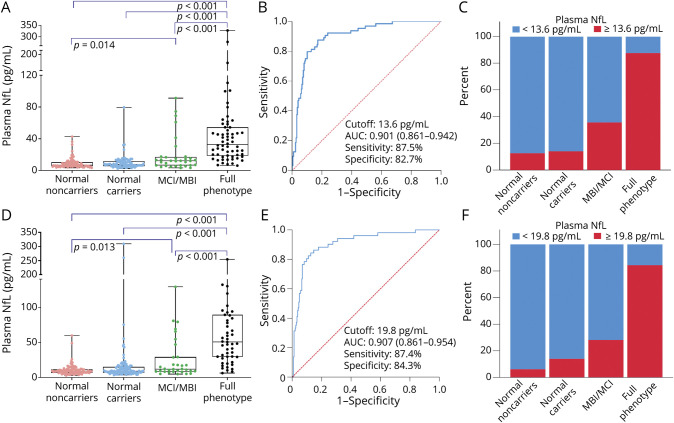
OBJECTIVE: We tested the hypothesis that plasma neurofilament light chain (NfL) identifies asymptomatic carriers of familial frontotemporal lobar degeneration (FTLD)-causing mutations at risk of disease progression. METHODS: mutation carriers and noncarriers from the same families were classified by disease severity (asymptomatic, prodromal, and full phenotype) using the CDR Dementia Staging Instrument plus behavior and language domains from the National Alzheimer's Disease Coordinating Center FTLD module (CDR+NACC-FTLD). Linear mixed-effect models related NfL to clinical variables. RESULTS: = 0.035). Plasma NfL discriminated symptomatic from asymptomatic mutation carriers or those with prodromal disease (original cutoff: 13.6 pg/mL, 87.5% sensitivity, 82.7% specificity; validation cutoff: 19.8 pg/mL, 87.4% sensitivity, 84.3% specificity). Higher baseline NfL correlated with worse longitudinal CDR+NACC-FTLD sum of boxes scores, neuropsychological function, and atrophy, regardless of genotype or disease severity, including asymptomatic mutation carriers. CONCLUSIONS: Plasma NfL identifies asymptomatic carriers of FTLD-causing mutations at short-term risk of disease progression and is a potential tool to select participants for prevention clinical trials. TRIAL REGISTRATION INFORMATION: ClinicalTrials.gov Identifier: NCT02372773 and NCT02365922. CLASSIFICATION OF EVIDENCE: This study provides Class I evidence that in carriers of FTLD-causing mutations, elevation of plasma NfL predicts short-term risk of clinical progression.
Overview
The claims and statistics of this paper haven’t been checked yet.
Free: it reads the open-access text and checks the first 5 claims that cite a source we can check. Create a free account to check every claim.
Integrity signals
Registry
Cites
Statistics
Figures
![Figure 5 Prediction of Clinical Progression by Plasma NfL in Familial Frontotemporal Lobar Degeneration (A–C) Original (Longitudinal Evaluation of Familial Frontotemporal Dementia Subjects [LEFFTDS]/Advancing Research and Treatment in Frontotemporal Lobar Degeneration [ARTFL) cohort. (D–F) Validation (Genetic Frontotemporal Dementia Initiative [GENFI]) cohort. Figure shows the results of models using data from all genotypes in each severity group. In the original cohort, patients with high (red; ≥13.6 pg/mL) baseline plasma neurofilament light chain (NfL) showed worse clinical scores at 2 years compared to patients with low (blue; <13.6 pg/mL) NfL, which was supported by NfL level–by–time interaction. This differential predictive effect by NfL level was observed regardless of disease severity, including asymptomatic carriers. Similar results were observed in the validation cohort with a cut point value of 19.8 pg/mL. CDR+NACC-FTLDsb = CDR Dementia Staging Instrument plus Behavior and Language domains from the National Alzheimer's Disease Coordinating Center Frontotemporal Lobar Degeneration module sum of boxes score. *Between-group contrast at that time point, p < 0.05.](https://figures.cochat.ai/paper-figures/e0d7ed2d5baf4fe9b22bcf982152e93f/plasma-neurofilament-light-for-prediction-of-disease-progression-in-familial-figure-5.jpg)
Verification
Claims the paper makes
The claims and statistics of this paper haven’t been checked yet.
Free: it reads the open-access text and checks the first 5 claims that cite a source we can check. Create a free account to check every claim.
Claims other papers make about this one
Each is checked against this paper’s own text: does it say what the citing paper says it does?
The cited source says what the claim attributes to it.
In the citing paper
“NfL has been shown to predict future clinical progression during the prodromal stages of genetic frontotemporal lobar degeneration.51”
From Advances and controversies in frontotemporal dementia: diagnosis, biomarkers, and therapeutic considerations (2022) · cites this paper as [51]
Self-check
Percentages, sums and reported differences re-computed from the paper’s own numbers.
The self-check needs the paper’s full text.
Citations
Cites
Controlling the False Discovery Rate: A Practical and Powerful Approach to Multiple Testing
Benjamini, Y., & Hochberg, Y. (1995) · Journal of the Royal Statistical Society Series B: Statistical Methodology · doi:10.1111/j.2517-6161.1995.tb02031.x · Cited by 109,482 · cited 1×
“Model results were corrected for multiple comparisons across dependent variables for a given disease severity level using false discovery rate.(34) Analyses were done with SPSS Statistics software, version 26 (IBM, Armonk, NY) and GraphPad Prism, version 8.”
MethodKok, J. S., Berg, I. J., & Scherder, E. J. A. (2013) · Dementia and Geriatric Cognitive Disorders Extra · doi:10.1159/000353441 · Cited by 20,589
Amyloid oligomers exacerbate tau pathology in a mouse model of tauopathy
Selenica, M.-L. B., Brownlow, M., Jimenez, J. P., Lee, D. C., Pena, G., Dickey, C. A., Gordon, M. N., & Morgan, D. (2013) · Neurodegenerative Diseases · doi:10.1159/000337230 · Cited by 10,359
Validity of the Trail Making Test as an Indicator of Organic Brain Damage
Reitan, R. M. (1958) · Perceptual and Motor Skills · doi:10.2466/pms.1958.8.3.271 · Cited by 7,928
The Neuropsychiatric Inventory: Comprehensive assessment of psychopathology in dementia
Cummings, J. L., Mega, M., Gray, K., Rosenberg-Thompson, S., Carusi, D. A., & Gornbein, J. (1994) · Neurology · doi:10.1212/wnl.44.12.2308 · Cited by 7,568
DeJesus-Hernandez, M., Mackenzie, I. R., Boeve, B. F., Boxer, A. L., Baker, M., Rutherford, N. J., Nicholson, A. M., Finch, N. A., Flynn, H., Adamson, J., et al. (2011) · Neuron · doi:10.1016/j.neuron.2011.09.011 · Cited by 4,936
Self-citationAssociation of missense and 5′-splice-site mutations in tau with the inherited dementia FTDP-17
Hutton, M., Lendon, C. L., Rizzu, P., Baker, M., Froelich, S., Houlden, H., Pickering-Brown, S., Chakraverty, S., Isaacs, A., Grover, A., et al. (1998) · Nature · doi:10.1038/31508 · Cited by 3,498 · cited 1×
“About 20% to 30% of FTLD cases are familial, and ≈60% of those are caused by autosomal dominant mutations in 3 genes(3): chromosome 9 open reading frame 72 (C9orf72),(4) progranulin (GRN),(5) and microtubule-associated protein tau (MAPT).(6) Several therapies are poised to begin clinical trials for familial FTLD (fFTL…”
BackgroundMeasurement of Functional Activities in Older Adults in the Community
Pfeffer, R. I., Kurosaki, T. T., Harrah, C. H., Chance, J. M., & Filos, S. (1982) · Journal of Gerontology · doi:10.1093/geronj/37.3.323 · Cited by 2,972
The clinical global impressions scale: applying a research tool in clinical practice.
Busner, J., & Targum, S. D. (2007) · PubMed Central · Cited by 2,817
Mutations in progranulin cause tau-negative frontotemporal dementia linked to chromosome 17
Baker, M., Mackenzie, I. R., Pickering-Brown, S. M., Gass, J., Rademakers, R., Lindholm, C., Snowden, J., Adamson, J., Sadovnick, A. D., Rollinson, S., et al. (2006) · Nature · doi:10.1038/nature05016 · Cited by 2,058
Self-citation
Research works printed but not linked: 4
- Schwab R, England A. Projection Technique for Evaluating Surgery in Parkinson's Disease. London; ES Livingston; 1969.
- Delis DC, Kramer JH, Kaplan E, Ober BA. California Verbal Learning Test–Adult Version-Manual. San Antonio; Psychological Corp; 2000.
- ALLFTLD Study. ARTFL-LEFFTDS Longitudinal Frontotemporal Lobar Degeneration: A Multisite Research Consortium [online]. Available at: allftd.org/. Accessed May 5, 2020.
- Food and Drug Administration. Early Alzheimer's Disease: Developing Drugs for Treatment. Guidance for Industry: Silver Spring, MD: US Department of Health and Human Services, Center for Drug Evaluation and Research; 2018.
Cited by
Boeve, B. F., Boxer, A. L., Kumfor, F., Pijnenburg, Y., & Rohrer, J. D. (2022) · The Lancet Neurology · doi:10.1016/s1474-4422(21)00341-0 · Cited by 218
Self-citationFrontotemporal lobar degeneration
Grossman, M., Seeley, W. W., Boxer, A. L., Hillis, A. E., Knopman, D. S., Ljubenov, P. A., Miller, B., Piguet, O., Rademakers, R., Whitwell, J. L., et al. (2023) · Nature Reviews Disease Primers · doi:10.1038/s41572-023-00447-0 · Cited by 178
Self-citationNeurofilament Light Chain as Biomarker for Amyotrophic Lateral Sclerosis and Frontotemporal Dementia
Verde, F., Otto, M., & Silani, V. (2021) · Frontiers in Neuroscience · doi:10.3389/fnins.2021.679199 · Cited by 152
“The early investigation of Rosengren et al. (1996) already reported higher CSF NFL levels in ALS patients showing signs of UMN in comparison with those with LMN signs only.”
ResultSelf-citationTemporal order of clinical and biomarker changes in familial frontotemporal dementia
Staffaroni, A. M., Quintana, M., Wendelberger, B., Heuer, H. W., Russell, L. L., Cobigo, Y., Wolf, A., Goh, S.-Y. M., Petrucelli, L., Gendron, T. F., et al. (2022) · Nature Medicine · doi:10.1038/s41591-022-01942-9 · Cited by 140
Self-citationBlood Biomarkers in Neurodegenerative Diseases: Implications for the Clinical Neurologist
Alcolea, D. A., Beeri, M. S., Rojas, J. C., Gardner, R. C., & Lleó, A. (2023) · Neurology · doi:10.1212/wnl.0000000000207193 · Cited by 133
Self-citationBiomarker-guided decision making in clinical drug development for neurodegenerative disorders
Cummings, J. L., Teunissen, C. E., Fiske, B. K., Ber, I. L., Wildsmith, K. R., Schöll, M., Dunn, B., & Scheltens, P. (2025) · Nature Reviews Drug Discovery · doi:10.1038/s41573-025-01165-w · Cited by 91
“In asymptomatic genetic FTD, NfL increase accurately discriminates individuals who progress to prodromal FTD from those who do not, representing a valuable prognostic marker 132–135 .”
TDP-43 nuclear loss in FTD/ALS causes widespread alternative polyadenylation changes
Zeng, Y., Lovchykova, A., Akiyama, T., Rayner, S. L., Jawahar, V. M., Liu, C., Sianto, O., Guo, C., Calliari, A., Prudencio, M., et al. (2025) · Nature Neuroscience · doi:10.1038/s41593-025-02049-3 · Cited by 82
“TDP-43 KD also shifted polyA site usage from proximal to distal in another FTD/ALS-linked gene, SFPQ (Fig.”
InfluentialSelf-citationTruffi, M., Garofalo, M., Ricciardi, A., Ramusino, M. C., Perini, G., Scaranzin, S., Gastaldi, M., Albasini, S., Costa, A. C., Chiavetta, V., et al. (2023) · Scientific Reports · doi:10.1038/s41598-023-29704-8 · Cited by 79
Peet, B. T., Spina, S., Mundada, N., & La Joie, R. (2021) · Neurotherapeutics · doi:10.1007/s13311-021-01101-x · Cited by 74
From Recognition to Remedy: The Significance of Biomarkers in Neurodegenerative Disease Pathology
Toader, C., Dobrin, N., Brehar, F.-M., Popa, C., Covache-Busuioc, R.-A., Glavan, L.-A., Costin, H. P., Bratu, B.-G., Corlatescu, A.-D., Popa, A. A., et al. (2023) · International Journal of Molecular Sciences · doi:10.3390/ijms242216119 · Cited by 75
Gendron, T. F., Heckman, M. G., White, L. J., Veire, A. M., Pedraza, O., Burch, A. R., Bozoki, A. C., Dickerson, B. C., Domoto-Reilly, K., Foroud, T., et al. (2022) · Cell Reports Medicine · doi:10.1016/j.xcrm.2022.100607 · Cited by 70
“Years of education 16 (12, 22) 16 (10, 22) 16 (6, 26) 16 (10, 24) 16 (12, 21) 16 (12, 26) 16 (12, 24) 16 (9, 20) 16 (12, 20) 16 (12, 18)”
Self-citationSaracino, D., Dorgham, K., Camuzat, A., Rinaldi, D., Rametti-Lacroux, A., Houot, M., Clot, F., Martin-Hardy, P., Jornea, L., Azuar, C., et al. (2021) · Journal of Neurology, Neurosurgery & Psychiatry · doi:10.1136/jnnp-2021-326914 · Cited by 55
“14 21 These individuals might be in an earlier preclinical stage than the former PS, before the emergence of prodromal symptoms, thus underlining the usefulness of long preclinical follow-ups.”
Conceptual framework for the definition of preclinical and prodromal frontotemporal dementia
Benussi, A., Alberici, A., Samra, K., Russell, L. L., Greaves, C. V., Bocchetta, M., Ducharme, S., Finger, E. C., Fumagalli, G., Galimberti, D., et al. (2021) · Alzheimer s & Dementia · doi:10.1002/alz.12485 · Cited by 68
Self-citationBenatar, M. G., Wuu, J., Huey, E. D., McMillan, C. T., Petersen, R. C., Postuma, R. B., McHutchison, C. A., Dratch, L., Arias, J. J., Crawley, A., et al. (2024) · Nature Reviews Neurology · doi:10.1038/s41582-024-00961-z · Cited by 63
Self-citationA data-driven disease progression model of fluid biomarkers in genetic frontotemporal dementia
van der Ende, E. L., Bron, E. E., Poos, J. M., Jiskoot, L. C., Panman, J. L., Papma, J. M., Meeter, L. H., Dopper, E. G. P., Wilke, C., Synofzik, M., et al. (2022) · Brain · doi:10.1093/brain/awab382 · Cited by 58
“56 59-62 This might be reflected in a more gradual change of fluid biomarkers, 63 which would explain the relatively large number of presymptomatic C9orf72 mutation carriers with high disease stages and complicates discriminating presymptomatic from symptomatic carriers based on biomarker data.”
Self-citationAdvances in treatment of frontotemporal dementia
Magrath Guimet, N., Zapata-Restrepo, L. M., & Miller, B. L. (2022) · The Journal of Neuropsychiatry and Clinical Neurosciences · doi:10.1176/appi.neuropsych.21060166 · Cited by 52
Self-citationBlood inflammation relates to neuroinflammation and survival in frontotemporal lobar degeneration
Malpetti, M., Swann, P., Tsvetanov, K. A., Chouliaras, L., Strauss, A., Chikaura, T., Murley, A. G., Ashton, N. J., Barker, P. J., Jones, P. S., et al. (2024) · Brain · doi:10.1093/brain/awae269 · Cited by 52
Self-citationBiomarker discovery and development for frontotemporal dementia and amyotrophic lateral sclerosis
Katzeff, J. S., Bright, F., Phan, K., Kril, J. J., Ittner, L. M., Kassiou, M., Hodges, J. R., Piguet, O., Kiernan, M. C., Halliday, G. M., et al. (2022) · Brain · doi:10.1093/brain/awac077 · Cited by 48
“with plasma NfL elevation occurring in asymptomatic frontotemporal dementia mutation carriers preceding disease onset.(69) NfL levels in serumcorrelate to those inCSF.”
BackgroundDistinguishing Frontotemporal Lobar Degeneration Tau From TDP-43 Using Plasma Biomarkers
Cousins, K. A. Q., Shaw, L. M., Chen-Plotkin, A., Wolk, D. A., Van Deerlin, V. M., Lee, E. B., McMillan, C. T., Grossman, M., & Irwin, D. J. (2022) · JAMA Neurology · doi:10.1001/jamaneurol.2022.3265 · Cited by 45
Self-citationNovel blood‐based proteomic signatures across multiple neurodegenerative diseases
Durcan, R., Heslegrave, A., Swann, P., Goddard, J., Chouliaras, L., Murley, A. G., Savulich, G., Bevan-Jones, W. R., Swann, O., Ashton, N. J., et al. (2025) · Alzheimer s & Dementia · doi:10.1002/alz.70116 · Cited by 44
“Significant inflammatory predictors of survival included IL1 β , CD276, CXCL10 (IP-10), S100A12, IL17A, TREM2, and CD40, among others.”
Self-citationDaponte, A., Koros, C., Skarlis, C., Siozios, D., Rentzos, M., Papageorgiou, S. G., & Anagnostouli, M. C. (2025) · International Journal of Molecular Sciences · doi:10.3390/ijms26199739 · Cited by 42
“However, statistical differences among the subtypes’ NfL levels were not observed [142].”
Neurodevelopmental effects of genetic frontotemporal dementia in young adult mutation carriers
Finger, E. C., Malik, R., Bocchetta, M., Coleman, K. K. L., Graff, C., Borroni, B., Masellis, M., Laforce, R. J., Greaves, C. V., Russell, L. L., et al. (2022) · Brain · doi:10.1093/brain/awac446 · Cited by 40
“…atrophy in young adult GRN mutation carriers fit with recent data from large international cohorts that indicate changes in brain volume and NfL levels start within a few years’ proximity to overt conversion to symptomatic genetic FTD, 6,7,56,57 in which the average age of diagnosis is ∼ 61 years.”
BackgroundResultSelf-citationDevarakonda, S., Basha, S., Pithakumar, A., Thoshna, L. B., Mukunda, D. C., Rodrigues, J., Ameera, K., Biswas, S., Pai, A. R., Belurkar, S., et al. (2024) · Ageing Research Reviews · doi:10.1016/j.arr.2024.102566 · Cited by 37
Prodromal frontotemporal dementia: clinical features and predictors of progression
Benussi, A., Ashton, N. J., Karikari, T. K., Alberici, A., Saraceno, C., Ghidoni, R., Benussi, L., Zetterberg, H., Blennow, K., & Borroni, B. (2021) · Alzheimer's Research & Therapy · doi:10.1186/s13195-021-00932-2 · Cited by 26
“Moreover, a few studies in subjects with genetic prodromal FTD have shown that concentrations of neurofilament light (NfL), a marker of neurodegeneration [10–14] and FTD severity [12, 15– 17], may be related to disease progression and conversion to dementia [18, 19].”
BackgroundSelf-citationSattler, R., Traynor, B. J., Robertson, J., Bosch, L. V. D., Barmada, S. J., Svendsen, C. N., Disney, M. D., Gendron, T. F., Wong, P. C., Turner, M. R., et al. (2023) · Neurology and Therapy · doi:10.1007/s40120-023-00548-8 · Cited by 34
Self-citationBiomarkers in frontotemporal dementia: Current landscape and future directions
Gifford, A., Praschan, N. C., Newhouse, A. L., & Chemali, Z. N. (2023) · Biomarkers in Neuropsychiatry · doi:10.1016/j.bionps.2023.100065 · Cited by 33
Giannini, L. A. A., Seelaar, H., van der Ende, E. L., Poos, J. M., Jiskoot, L. C., Dopper, E. G. P., Pijnenburg, Y. A. L., Willemse, E. A. J., Vermunt, L., Teunissen, C. E., et al. (2023) · Neurology · doi:10.1212/wnl.0000000000207581 · Cited by 33
Presymptomatic amyotrophic lateral sclerosis: from characterization to prevention
Benatar, M., Turner, M. R., & Wuu, J. (2023) · Current Opinion in Neurology · doi:10.1097/wco.0000000000001168 · Cited by 31
Neurofilaments Light Chain in Neurodegenerative Dementias: A Review of Imaging Correlates
Gallingani, C., Carbone, C., Tondelli, M., & Zamboni, G. (2024) · Brain Sciences · doi:10.3390/brainsci14030272 · Cited by 32
“A more recent study supports these findings, showing a correlation between baseline plasma NfLs and fronto-temporal brain atrophy on a 2-year follow-up, in asymptomatic and symptomatic mutation carriers [70].”
ResultTsoy, E., Joie, R. L., VandeVrede, L. A., Rojas, J. C., Yballa, C., Chan, B., Lago, A. L., Rodriguez, A., Goode, C. A., Erlhoff, S. J., et al. (2024) · Alzheimer s & Dementia · doi:10.1002/alz.13686 · Cited by 31
“In our sample, baseline plasma pTau181, NfL, GFAP, and TabCAT-BHA were significant predictors of future functional decline and increases in disease severity across SCI, MCI, and dementia groups (Table 4, Figure 3).”
BackgroundSelf-citationPresence of Preoperative Neurodegeneration Biofluid Markers in Patients with Postoperative Delirium
Leung, J. M., Rojas, J. C., Tang, C., Chan, B., Lario‐Lago, A., Boxer, A. L., Do, Q., Kramer, J. H., Du, Z., Du, P., et al. (2023) · Anesthesiology · doi:10.1097/aln.0000000000004666 · Cited by 30
Self-citationCasaletto, K. B., Kornack, J., Paolillo, E. W., Rojas, J. C., VandeBunte, A. M., Staffaroni, A. S., Lee, S. Y., Heuer, H. W., Forsberg, L. K., Ramos, E. M., et al. (2022) · JAMA Neurology · doi:10.1001/jamaneurol.2022.4178 · Cited by 27
Self-citationFluid biomarkers for neurodegenerative diseases: a comprehensive update
Valletta, M., Briel, N., Yuksekel, I., Barboure, M. C., Coward, A. R., Houwer, J. F. H. D., Fawad, A., González-Mayoral, A., Iaccarino, G., Martínez‐Dubarbie, F., et al. (2025) · Alzheimer s Research & Therapy · doi:10.1186/s13195-025-01919-z · Cited by 26
Frontotemporal dementia. How to deal with its diagnostic complexity?
Antonioni, A., Raho, E. M., Granieri, E., & Koch, G. (2025) · Expert Review of Neurotherapeutics · doi:10.1080/14737175.2025.2461758 · Cited by 25
Blood-Based Biomarkers in Frontotemporal Dementia: A Narrative Review
Liampas, I., Kyriakoulopoulou, P., Karakoida, V., Kavvoura, P. A., Sgantzos, M. N., Bogdanos, D. P., Stamati, P., Dardiotis, E., & Siokas, V. (2024) · International Journal of Molecular Sciences · doi:10.3390/ijms252111838 · Cited by 25
“…rates of increase compared to other genetic subgroups ( MAPT , C9orf72 ) [44,50–54, Of note, NfL has been measured elevated in cases of prodromal FTD compared to HC [57–59], enhancing the diagnostic accuracy of the proposed criteria for prodromal disease (at a cut-off value of 8.53 pg/mL) [60].”
BackgroundInfluentialSaloner, R., Staffaroni, A. M., Dammer, E. B., Johnson, E. C. B., Paolillo, E. W., Wise, A., Heuer, H. W., Forsberg, L. K., Lario-Lago, A., Webb, J. D., et al. (2025) · Nature Aging · doi:10.1038/s43587-025-00878-2 · Cited by 13
“CSF ALLFTD samples were analyzed for NfL using Quanterix Simoa, as previously described 4 .”
Self-citationSogorb‐Esteve, A., Weiner, S., Simrén, J., Swift, I. J., Bocchetta, M., Todd, E. G., Cash, D. M., Bouzigues, A., Russell, L. L., Foster, P. H., et al. (2025) · Science Translational Medicine · doi:10.1126/scitranslmed.adm9654 · Cited by 23
Self-citationComparison of clinical rating scales in genetic frontotemporal dementia within the GENFI cohort
Peakman, G., Russell, L. L., Convery, R. S., Nicholas, J. M., Swieten, J. C. V., Jiskoot, L. C., Moreno, F., Sánchez‐Valle, R., Laforce, R. J., Graff, C., et al. (2021) · Journal of Neurology Neurosurgery & Psychiatry · doi:10.1136/jnnp-2021-326868 · Cited by 23
Self-citationSinger, W., Schmeichel, A. M., Sletten, D. M., Gehrking, T. L., Gehrking, J. A., Trejo‐Lopez, J. A., Suarez, M. D., Anderson, J. K., Bass, P. H., Lesnick, T. G., et al. (2023) · Clinical Autonomic Research · doi:10.1007/s10286-023-00974-6 · Cited by 22
Pathologic and cognitive correlates of plasma biomarkers in neurodegenerative disease
Cousins, K. A. Q., Phillips, J. S., Das, S. R., O’Brien, K. S., Tropea, T. F., Chen‐Plotkin, A. S., Shaw, L. M. J., Nasrallah, I. M., Mechanic-Hamilton, D. J., McMillan, C. T., et al. (2024) · Alzheimer s & Dementia · doi:10.1002/alz.13777 · Cited by 22
Self-citationSheth, U., Öijerstedt, L., Heckman, M. G., White, L. J., Heuer, H. W., Lario Lago, A., Forsberg, L. K., Faber, K. M., Foroud, T. M., Rademakers, R., et al. (2025) · Molecular Neurodegeneration · doi:10.1186/s13024-025-00821-4 · Cited by 20
Self-citationThe role of neurofilament light in genetic frontotemporal lobar degeneration
Zetterberg, H., Teunissen, C., van Swieten, J., Kuhle, J., Boxer, A., Rohrer, J. D., Mitic, L., Nicholson, A. M., Pearlman, R., McCaughey, S. M., et al. (2022) · Brain Communications · doi:10.1093/braincomms/fcac310 · Cited by 19
Self-citationAdvances in the treatment and management of frontotemporal dementia
Benussi, A., & Borroni, B. (2023) · Expert Review of Neurotherapeutics · doi:10.1080/14737175.2023.2228491 · Cited by 19
Self-citationNeurofilaments in neurologic disorders and beyond
Mak, G. K., Menon, S., & Lu, J. (2022) · Journal of the Neurological Sciences · doi:10.1016/j.jns.2022.120380 · Cited by 19
Sex differences in the clinical manifestation of autosomal dominant frontotemporal dementia
Memel, M., Staffaroni, A. M., Illán‐Gala, I., Castro, J. G., Kornak, J., Tartaglia, M. C., Saloner, R., VandeBunte, A. M., Paolillo, E. W., Cadwallader, C. J., et al. (2025) · Alzheimer s & Dementia · doi:10.1002/alz.14630 · Cited by 17
“Specifically, we examined sex differences in longitudinal trajectories of cognition, function, and plasma neurofilament light (NfL) concentration, one of the most robust prognostic biomarker for FTLD 11–14 .”
BackgroundSelf-citationAsken, B. M., Ljubenkov, P. A., Staffaroni, A. M., Casaletto, K. B., Vandevrede, L., Cobigo, Y., Rojas-Rodriguez, J. C., Rankin, K. P., Kornak, J., Heuer, H., et al. (2023) · Journal of Neurology, Neurosurgery & Psychiatry · doi:10.1136/jnnp-2022-330866 · Cited by 16
Self-citationData‐driven staging of genetic frontotemporal dementia using multi‐modal MRI
McCarthy, J., Borroni, B., Sánchez‐Valle, R., Moreno, F., Laforce, R. J., Graff, C., Synofzik, M., Galimberti, D., Rowe, J. B., Masellis, M., et al. (2022) · Human Brain Mapping · doi:10.1002/hbm.25727 · Cited by 16
Self-citationRajbanshi, B., Araujo, I. P. Q. C., VandeVrede, L. A., Ljubenkov, P. A., Staffaroni, A. M., Heuer, H. W., Lago, A. L., Ramos, E. M., Petrucelli, L., Gendron, T. F., et al. (2025) · Alzheimer s & Dementia Diagnosis Assessment & Disease Monitoring · doi:10.1002/dad2.70078 · Cited by 15
Self-citationGene-Specific Effects on Brain Volume and Cognition of TMEM106B in Frontotemporal Lobar Degeneration
Vandebergh, M., Ramos, E. M., Corriveau‐Lecavalier, N., Ramanan, V. K., Kornak, J., Mester, C. T., Kolander, T. W., Brushaber, D. E., Staffaroni, A. M., Geschwind, D. H., et al. (2024) · Neurology · doi:10.1212/wnl.0000000000209832 · Cited by 14
Self-citationAltered plasma protein profiles in genetic FTD – a GENFI study
Ullgren, A., Öijerstedt, L., Olofsson, J., Bergström, S., Remnestål, J., Swieten, J. C. V., Jiskoot, L. C., Seelaar, H., Borroni, B., Sánchez‐Valle, R., et al. (2023) · Molecular Neurodegeneration · doi:10.1186/s13024-023-00677-6 · Cited by 14
“…identified glial fibrillary acidic protein (GFAP), tau and NEFL as possible plasma-based biomarkers, where GFAP is elevated in symptomatic GRN mutation carriers, tau is elevated in sporadic FTD and in symptomatic MAPT mutation carriers, and NEFL is elevated in both genetic and sporadic FTD [5–7].”
BackgroundSelf-citationGottshall, J. L., Agyemang, A. A., O'Neil, M. E., Wei, G., Presson, A. P., Hewins, B., Fisher, D., Mithani, S., Shahim, P., Pugh, M. J., et al. (2022) · Brain Injury · doi:10.1080/02699052.2022.2037711 · Cited by 14
Smith, D. M., Aggarwal, G., Niehoff, M. L., Jones, S. A., Banerjee, S., Farr, S. A., & Nguyen, A. D. (2024) · Molecular Neurobiology · doi:10.1007/s12035-024-04190-9 · Cited by 13
“Additionally, in asymptomatic GRN mutation carriers, high plasma NfL is predictive of disease conversion and progression during the subsequent two-year period [19].”
Khrouf, W., Saracino, D., Rucheton, B., Houot, M., Clot, F., Rinaldi, D., Vítor, J., Huynh, M., Heng, E., Schlemmer, D., et al. (2023) · Neurobiology of Disease · doi:10.1016/j.nbd.2023.106108 · Cited by 12
Hsiao‐Nakamoto, J., Chiu, C., VandeVrede, L. A., Ravi, R., Vandenberg, B., Groot, J. D., Tsogtbaatar, B., Fang, M., Auger, P., Gould, N. S., et al. (2024) · bioRxiv (Cold Spring Harbor Laboratory) · doi:10.1101/2024.02.09.579529 · Cited by 13
Self-citationDisease-modifying effects of TMEM106B in genetic frontotemporal dementia: a longitudinal GENFI study
Mirza, S. S., Pasternak, M. M., Paterson, A. D., Rogaeva, E. A., Tartaglia, M. C., Mitchell, S. B., Black, S. E., Freedman, M., Tang‐Wai, D. F., Bouzigues, A., et al. (2025) · Brain · doi:10.1093/brain/awaf019 · Cited by 11
Self-citationMcInvale, J. J., Canoll, P., & Hargus, G. (2024) · Brain Pathology · doi:10.1111/bpa.13231 · Cited by 10
“…v e l s b ec o m e d i s t i n g u i s h a b l e f r o m h e a l t h y c on t r o l s i mm e d i a t e l y p r ece d i n g s y m p t o m on s e t [ 176 ] C S F l e v e l s c o rr e l a t e w i t h d e g r ee o f w h i t e m a tt e r a t r oph y [ 173 ] C 9 o r f 72 h e xa nu c l e o t i d e r e p…”
BackgroundBorrego‐Écija, S., Juncà‐Parella, J., Vandebergh, M., Pérez‐Millan, A., Balasa, M., Lladó, A., Bouzigues, A., Russell, L. L., Foster, P. H., Ferry‐Bolder, E., et al. (2024) · Neurology · doi:10.1212/wnl.0000000000209944 · Cited by 11
Self-citationDefining the presymptomatic phase of frontotemporal dementia
Russell, L. L., & Rohrer, J. D. (2023) · Current Opinion in Neurology · doi:10.1097/wco.0000000000001174 · Cited by 12
Self-citationAl‐Shaikh, R. H., Jansen‐West, K. R., Strongosky, A. J., Parrales, Z., Dunmore, J. A., Song, Y., Gendron, T. F., Guevara, J. C., Teive, H. A. G., Dulski, J., et al. (2025) · International Journal of Molecular Sciences · doi:10.3390/ijms26115070 · Cited by 9
Self-citationBourbouli, M., Paraskevas, G. P., Rentzos, M., Mathioudakis, L., Zouvelou, V., Bougea, A. M., Tychalas, A., Kimiskidis, V. Κ., Constantinides, V. C., Zafeiris, S., et al. (2021) · Brain Sciences · doi:10.3390/brainsci11091239 · Cited by 9
Brain Metabolic Profile in Presymptomatic GRN Carriers Throughout a 5-Year Follow-up
Saracino, D., Sellami, L., Boniface, H., Houot, M., Pélégrini‐Issac, M., Funkiewiez, A., Rinaldi, D., Locatelli, M., Azuar, C., Causse-Lemercier, V., et al. (2022) · Neurology · doi:10.1212/wnl.0000000000201439 · Cited by 9
“NfL concentrations were interpreted according to reference values and expected rates of change previously established in controls andGRN carriers.(15,16)”
MethodEarly Alzheimer’s Disease Screening Approach Using Plasma Biomarkers
Álvarez‐Sánchez, L., Peña‐Bautista, C., Ferré‐González, L., Cubas-Núñez, L., Balaguer, Á., Casanova-Estruch, B., Baquero, M., & Cháfer‐Pericás, C. (2023) · International Journal of Molecular Sciences · doi:10.3390/ijms241814151 · Cited by 9
“For plasma NfL, the highest l vels were found in FTD patients as in previous studies [44,45].”
ResultPeck, A., Dadi, A., Yavarow, Z., Alfano, L. N., Anderson, D. J., Arkin, M. R., Chou, T., D'Ambrosio, E. S., Díaz‐Manera, J., Dudley, J. P., et al. (2025) · Neurobiology of Disease · doi:10.1016/j.nbd.2025.106861 · Cited by 8
“Additionally, nearly 10 % of non-mutation carriers and asymptomatic FTD mutation carriers have similarly elevated levels of this biomarker, in part because other disorders, such as certain psychiatric conditions, are also associated with NfL proliferation (Rojas et al., 2021).”
Self-citationNevler, N., Cho, S., Cousins, K. A. Q., Ash, S., Olm, C. A., Shellikeri, S., Agmon, G., Gonzalez-Recober, C., Xie, S. X., Barker, M. S., et al. (2024) · Neurology · doi:10.1212/wnl.0000000000207926 · Cited by 7
Self-citationQuantitative spinal cord imaging: Early ALS diagnosis and monitoring of disease progression
Khamaysa, M., Mendili, M. M. E., Marchand‐Pauvert, V., Querin, G., & Pradat, P. (2024) · Revue Neurologique · doi:10.1016/j.neurol.2024.10.005 · Cited by 7
Network Connectivity Alterations across the MAPT Mutation Clinical Spectrum
Zhang, L., Flagan, T., Häkkinen, S., Chu, S. A., Brown, J. A., Lee, A. J., Pasquini, L., Mandelli, M. L., Gorno‐Tempini, M. L., Sturm, V. E., et al. (2023) · Annals of Neurology · doi:10.1002/ana.26738 · Cited by 7
Self-citationÁlvarez‐Sánchez, L., Ferré‐González, L., Peña‐Bautista, C., Balaguer, Á., Amengual, J. L., Baquero, M., Cubas-Núñez, L., Casanova, B., & Cháfer‐Pericás, C. (2025) · European Journal of Clinical Investigation · doi:10.1111/eci.70034 · Cited by 7
Walia, N., Eratne, D., Loi, S. M., Li, Q.-X., Varghese, S., Malpas, C. B., Walterfang, M., Evans, A. H., Parker, S., Collins, S. J., et al. (2021) · Journal of the Neurological Sciences · doi:10.1016/j.jns.2021.120088 · Cited by 7
Saracino, D., & Ber, I. L. (2022) · Revue Neurologique · doi:10.1016/j.neurol.2022.03.007 · Cited by 7
“NfL levels and their annualized rates of change increase during or just before the prodromal phase [47,77,79], thus allowing to identify those who are at risk of short-term progression to clinical disease, in the subsequent 2 to 5 years [78].”
BackgroundDesign considerations for C9orf72 disease prevention trials
Benatar, M. G., Staffaroni, A. M., Wuu, J., McDermott, M. P., Quintana, M., Swidler, J., Andersen, G., Huey, E. D., Turner, M. R., Macklin, E. A., et al. (2025) · Brain · doi:10.1093/brain/awaf290 · Cited by 6
Self-citationChong, J. S. X., Tan, Y. J., Koh, A. J., Ting, S. K. S., Kandiah, N., Ng, A. S. L., & Zhou, J. H. (2024) · Journal of Alzheimer s Disease · doi:10.3233/jad-231251 · Cited by 6
Distinct proteomic CSF profiles in genetic frontotemporal lobar degeneration
Houwer, J. F. H. D., Dopper, E. G. P., van Buuren, R., Stokkel, M. E., de Boer, L., Swartenbroekx, T., Boesjes, P., Rajicic, A., Sogorb‐Esteve, A., Bouzigues, A., et al. (2025) · Brain · doi:10.1093/brain/awaf457 · Cited by 5
“This allowed us to uncover a strong connection between immune pathways and MAPT , adding an important dimension to the current proteomic landscape in FTLD.”
InfluentialSelf-citationTablante, J., Casaletto, K. B., VandeVrede, L., Mamuyac, E., Gao, L., Esteban, J. S., Guevarra, A., Johnson, J., Rios, M., Martinez, L., et al. (2025) · Alzheimer s & Dementia · doi:10.1002/alz.70991 · Cited by 5
“Furthermore, although it has been well established that NfL predicts progression in several disease processes, 60,61 Strengths of our study included the exploration of bilingualism’s effects in a large, well-characterized, longitudinal cohort that included participants with different…”
Bourdage, R., Franzen, S., Palisson, J., Maillet, D., Belin, C., Joly, C., Papma, J. M., Garcin, B., & Narme, P. (2025) · Archives of Clinical Neuropsychology · doi:10.1093/arclin/acaf012 · Cited by 5
Ingannato, A., Bagnoli, S., Mazzeo, S., Bessi, V., Matà, S., Mastio, M. D., Lombardi, G., Ferrari, C., Sorbi, S., & Nacmias, B. (2021) · Frontiers in Neuroscience · doi:10.3389/fnins.2021.695049 · Cited by 5
Self-citationQuantifying multimodal longitudinal brain changes in presymptomatic C9orf72 disease
Saracino, D., Cipriano, L., Houot, M., Querin, G., Rinaldi, D., Rametti‐Lacroux, A., Wallon, D., Gérardin, E., Couratier, P., Boncoeur, M., et al. (2025) · Alzheimer s & Dementia · doi:10.1002/alz.70902 · Cited by 4
Liu, E., Jones, S. L., Light, V., Teunissen, C. E., Bouzigues, A., Russell, L. L., Foster, P. H., Ferry‐Bolder, E., Swieten, J. C. V., Jiskoot, L. C., et al. (2025) · Journal of Alzheimer s Disease · doi:10.1177/13872877251352103 · Cited by 4
Self-citationFlagan, T., Chu, S. A., Häkkinen, S., Zhang, L., McFall, D. J., Rohrer, J. D., Brown, J. A., Lee, A. J., Fernhoff, K., Pasquini, L., et al. (2025) · Annals of Clinical and Translational Neurology · doi:10.1002/acn3.70170 · Cited by 3
“NfL concentrations are linked to greater symptom severity and predict increased likelihood of future clinical decline in asymptomatic FTD variant carriers [16].”
Self-citationOlzinski, M., Downer, J. D., Cobigo, Y., Rajbanshi, B., Li, J., Loureiro, J., Worringer, K. A., Heuer, H. W., Ljubenkov, P. A., VandeVrede, L. A., et al. (2026) · JAMA Neurology · doi:10.1001/jamaneurol.2026.1927 · Cited by 2
Self-citationPlasma Proteomic Changes in GRN and C9orf72 Frontotemporal Dementia
Simrén, J., Benedet, A. L., Molfetta, G. D., Pola, I., Tan, K., Cantoni, V., Libri, I., Rivolta, J., Ghidoni, R., Zetterberg, H., et al. (2026) · European Journal of Neurology · doi:10.1111/ene.70704 · Cited by 2
“…an important tool in the armamentarium of FTD-related biomarkers, and the increases seen in the pre-symptomatic and early symptomatic phase of genetic FTD [21] supports its use to estimate disease stage and potentially also as a response marker in trials, as seen with tofersen in SOD1 - ALS [22].”
Self-citationSodium selenate as a therapeutic for tauopathies: A hypothesis paper
Dilcher, R., Malpas, C. B., Walterfang, M., Velakoulis, D., O'Brien, T. J., & Vivash, L. E. (2022) · Frontiers in Aging Neuroscience · doi:10.3389/fnagi.2022.915460 · Cited by 2
“For instance, FTLD-tau is caused by the microtubule-associated tau gene, MAPT, while FTLD-TDP is associated with either C9orf72 or GRN mutations (Irwin et al., 2015).”
BackgroundInfluentialVítor, J., Saracino, D., Ströer, S., Camuzat, A., Dorgham, K., Clot, F., Martin-Hardy, P., Pasquier, F., Guedj, E., & Ber, I. L. (2023) · Journal of Alzheimer s Disease · doi:10.3233/jad-230315 · Cited by 2
Kim, G. H., Kim, J., Choi, W., Kim, Y. K., Lee, K. H., Jang, J., Kim, J. G., Ryu, H. J., Yang, S.-J., Jang, H., et al. (2024) · Dementia and Neurocognitive Disorders · doi:10.12779/dnd.2024.23.2.75 · Cited by 2
“31,34 Furthermore, the consortium has piloted mobile-phone-based applications, 33 aiming to enhance clinical trial efficiency and broaden research participation opportunities.”
BackgroundClinicopathological and prognostic correlations of plasma biomarkers in neurodegenerative diseasesPreprint
Malpetti, M., Chouliaras, L., Murley, A. G., Swann, P., Coyle-Gilchrist, I. T. S., Bevan-Jones, W. R., Savulich, G., Perquin, M. N., Wiggins, J., Bowns, L., et al. (2025) · medRxiv · doi:10.64898/2025.12.07.25341788 · Cited by 2
Self-citationSenescence and Neurodegenerative Disorders: Beyond Alzheimer’s and Parkinson’s
Tiwari, I., Chauhan, P., Singh, A., & Sharma, N. K. (2025) · Springer eBooks · doi:10.1007/978-981-96-1041-9_7 · Cited by 1
Wolff, A. W., Feneberg, E., Shakhtour, J., Steiger, K., Schmid, R. M., Haller, B., Reinhardt, N., Middelhoff, M. A., Schult, D., & Lingor, P. (2026) · PLoS ONE · doi:10.1371/journal.pone.0340182 · Cited by 1
“…NfL predicted the phenoconversion of pre-symptomatic gene mutation carriers for familial frontotemporal lobar degeneration, the second most common cause of dementia before the age of 60 [25], or familial amyotrophic lateral sclerosis up to 12 months before the development of first symptoms [26,27].”
Ullgren, A., Rydell, M. T., Bergström, S., Öijerstedt, L., Olofsson, J., Bouzigues, A., Russell, L. L., Foster, P. H., Ferry‐Bolder, E., Swieten, J. C. V., et al. (2026) · Journal of Neural Transmission · doi:10.1007/s00702-026-03118-y · Cited by 1
Self-citationmRNA profiling of caspase-3 and neurofilament light chain in Lennox-Gastaut Syndrome
Gupta, S. K., Nizami, F. M., Dubey, A. K., Kalita, J., Singh, A. P., & Neyaz, Z. (2026) · Epilepsy Research · doi:10.1016/j.eplepsyres.2026.107822 · Cited by 1
Bouzigues, A., Grassi, M., Cantoni, V., Premi, E., Bellini, S., Binetti, G. G., Logroscino, G., Russell, L. L., Ferry‐Bolder, E., Foster, P. H., et al. (2026) · The Lancet Neurology · doi:10.1016/s1474-4422(26)00197-3 · Cited by 1
Self-citationBenussi, A., Bracca, V., Premi, E., Cantoni, V., Palacino, F., Saccavini, A., Cotelli, M. S., Binetti, G. G., Manenti, R., Alberici, A., et al. (2026) · Alzheimer s & Dementia · doi:10.1002/alz.71722 · Cited by 1
Self-citationFluid and Imaging Markers of Frontotemporal Lobar Degeneration
Prinse, F., Houwer, J. F. H. D., Dopper, E. G. P., & Seelaar, H. (2025) · Springer eBooks · doi:10.1007/978-3-031-80849-4_9 · Cited by 1
Executive Function Deficits in Genetic Frontotemporal Dementia: Results From the GENFI Study
Russell, L. L., Bouzigues, A., Convery, R. S., Foster, P. H., Ferry‐Bolder, E., Cash, D. M., Swieten, J. C. V., Jiskoot, L. C., Seelaar, H., Moreno, F., et al. (2025) · Neurology Genetics · doi:10.1212/nxg.0000000000200248 · Cited by 1
Self-citationNeurofilament-Leichtketten als Biomarker für familiäre FTLD
(2021) · Fortschritte der Neurologie · Psychiatrie · doi:10.1055/a-1543-4453
Neurofilament-Leichtketten als Biomarker für familiäre FTLD
Klein, F. (2022) · Neurologie up2date · doi:10.1055/a-1721-5326
Serum neurofilaments light chain as a diagnostic marker of multiple sclerosis
Kamenskikh, E. M., Alifirova, V. M., Pashkovskaya, D. V., Titova, M. A., Koroleva, E. S., Levchuk, L. A., & Ivanova, S. А. (2023) · Russian neurological Journal · doi:10.30629/2658-7947-2023-28-5-35-39
Wolff, A. W., Demleitner, A. F., Feneberg, E., & Lingor, P. (2024) · Der Nervenarzt · doi:10.1007/s00115-024-01654-0
Soleimani‐Meigooni, D. N., & Rabinovici, G. D. (2025) · Cambridge University Press eBooks · doi:10.1017/9781108985055.006
Additional file 1 of Altered plasma protein profiles in genetic FTD – a GENFI study
Ullgren, A., Öijerstedt, L., Olofsson, J., Bergström, S., Remnestål, J., Swieten, J. C. V., Jiskoot, L. C., Seelaar, H., Borroni, B., Sánchez‐Valle, R., et al. (2024) · Figshare · doi:10.6084/m9.figshare.26640538
Self-citationDefining the stages of frontotemporal dementia
Samra, K. (2025) · UCL Discovery (University College London)
Metadata
- Authors
- Rojas, J. C., Wang, P., Staffaroni, A. M., Heller, C., Cobigo, Y., Wolf, A., Goh, S.-Y. M., Ljubenkov, P. A., Heuer, H. W., Fong, J. C., Taylor, J. B., Veras, E., Song, L., Jeromin, A., Hanlon, D., Yu, L., Khinikar, A., Sivasankaran, R., Kieloch, A., Valentin, M.-A., Karydas, A. M., Mitic, L. L., Pearlman, R., Kornak, J., Kramer, J. H., Miller, B. L., Kantarci, K., Knopman, D. S., Graff-Radford, N., Petrucelli, L., Rademakers, R., Irwin, D. J., Grossman, M., Ramos, E. M., Coppola, G., Mendez, M. F., Bordelon, Y., Dickerson, B. C., Ghoshal, N., Huey, E. D., Mackenzie, I. R., Appleby, B. S., Domoto-Reilly, K., Hsiung, G.-Y. R., Toga, A. W., Weintraub, S., Kaufer, D. I., Kerwin, D., Litvan, I., Onyike, C. U., Pantelyat, A., Roberson, E. D., Tartaglia, M. C., Foroud, T., Chen, W., Czerkowicz, J., Graham, D. L., van Swieten, J. C., Borroni, B., Sanchez-Valle, R., Moreno, F., Laforce, R., Graff, C., Synofzik, M., Galimberti, D., Rowe, J. B., Masellis, M., Finger, E., Vandenberghe, R., de Mendonça, A., Tagliavini, F., Santana, I., Ducharme, S., Butler, C. R., Gerhard, A., Levin, J., Danek, A., Otto, M., Sorbi, S., Cash, D. M., Convery, R. S., Bocchetta, M., Foiani, M., Greaves, C. V., Peakman, G., Russell, L., Swift, I., Todd, E., Rohrer, J. D., Boeve, B. F., Rosen, H. J., Boxer, A. L., & consortia, O. B. O. T. A. A. G.
- Affiliations
- Northwestern University (US)
- University of California, San Francisco (US)
- From the University of California, San Francisco (J.C.R., P.W., A.M.S., Y.C., A.W., S.-Y.M.G., P.A.L., H.W.H., J.C.F., J.B.T., A.M.K., L.L.M., J.K., J.H.K., B.L.M., H.J.S., A.L.B.); UK Dementia Research Centre (C.H., D.M.C., R.S.C., M.B., M.F., C.V.G., G.P., L.R., I.S., E.T., J.D.R.), UCL Institute of Neurology, Queen Square, London; Quanterix Corp (E.V., L.S., A.J., D.H.), Lexington; Novartis Institutes for Biomedical Research Inc (L.Y., A. Khinikar, R.S.), Cambridge, MA; Novartis Pharma AG (A....
- Novartis (Switzerland) (CH)
- Corresponding author
- Rojas, Julio C.
- ORCID
- Rojas, Julio C.
- Wang, Ping
- Staffaroni, Adam M.
- Heller, Carolin
- Cobigo, Yann
- Wolf, Amy
- Ljubenkov, Peter A.
- Heuer, Hilary W.
- Fong, Jamie C.
- Veras, Eliseo
- Song, Linan
- Hanlon, David
- Yu, Lili
- Sivasankaran, Rajeev
- Mitic, Laura L.
- Pearlman, Rodney
- Kornak, John
- Kramer, Joel H.
- Miller, Bruce L.
- Kantarci, Kejal
- Knopman, David S.
- Petrucelli, Leonard
- Rademakers, Rosa
- Irwin, David J.
- Grossman, Murray
- Ramos, Eliana Marisa
- Coppola, Giovanni
- Mendez, Mario F.
- Bordelon, Yvette
- Dickerson, Bradford C.
- Ghoshal, Nupur
- Huey, Edward D.
- Mackenzie, Ian R.
- Appleby, Brian S.
- Hsiung, Ging-Yuek R.
- Toga, Arthur W.
- Kaufer, Daniel I.
- Kerwin, Diana
- Litvan, Irene
- Onyike, Chiadikaobi U.
- Pantelyat, Alexander
- Roberson, Erik D.
- Tartaglia, Maria C.
- Foroud, Tatiana
- Chen, Weiping
- Graham, Danielle L.
- Borroni, Barbara
- Laforce, Robert
- Graff, Caroline
- Synofzik, Matthis
- Galimberti, Daniela
- Rowe, James B.
- Masellis, Mario
- Finger, Elizabeth
- Vandenberghe, Rik
- Tagliavini, Fabrizio
- Santana, Isabel
- Ducharme, Simon
- Gerhard, Alexander
- Levin, Johannes
- Danek, Adrian
- Otto, Markus
- Sorbi, Sandro
- Cash, David M.
- Convery, Rhian S.
- Bocchetta, Martina
- Foiani, Martha
- Greaves, Caroline V.
- Peakman, Georgia
- Russell, Lucy
- Swift, Imogen
- Todd, Emily
- Rohrer, Jonathan D.
- Boeve, Bradley F.
- Rosen, Howard J.
- Boxer, Adam L.
- Venue
- Neurology
- Published
- 2021-05-04
- Volume
- 96
- Issue
- 18
- Pages
- e2296-e2312
- ISSN
- 0028-3878 (ISSN-L)
- 1526-632X
- PMC
- PMC8166434
- OpenAlex
- W3147351247
- Semantic Scholar
- a825a94ada674acf28e503f934891afa44fdc26e
- Cited by
- 106
- References
- 50
- Citations by year
- 2026: 15 · 2025: 25 · 2024: 19 · 2023: 21 · 2022: 15 · 2021: 11
- FWCI
- 11.83
- Type
- journal article
- Language
- en
- Open access
- bronze
- doi.org
- Locations
- Neurology (publishedVersion)
- PubMed Central (publishedVersion, cc-by)
- PubMed (publishedVersion)
- Brunel University Research Archive (BURA) (Brunel University London) (submittedVersion, cc-by)
- eScholarship (California Digital Library) (submittedVersion, cc-by)
- Institutional Research Information System (Università degli Studi di Trento) (submittedVersion, cc-by)
- Lirias (submittedVersion, other-oa)
- Spiral (Imperial College London) (submittedVersion, other-oa)
- Archivio Istituzionale della Ricerca (Universita Degli Studi Di Milano) (submittedVersion, other-oa)
- UCL Discovery (University College London) (submittedVersion)
- Open access LMU (Ludwid Maxmilian's Universitat Munchen) (submittedVersion, cc-by)
- eScholarship (California Digital Library) (submittedVersion)
- Institutional Research Information System (Università degli Studi di Brescia) (submittedVersion)
- DZNE Pub (submittedVersion, other-oa)
- IUScholarWorks (Indiana University) (submittedVersion, cc-by)
- Purdue University Indianapolis (Indiana University) (submittedVersion, cc-by)
- Apollo (University of Cambridge) (submittedVersion)
- Zenodo (CERN European Organization for Nuclear Research) (submittedVersion, public-domain)
- Apollo
- DRYAD (public-domain)
- Funders
- Larry L. Hillblom Foundation (2018-A-025-FEL)
- Eli Lilly and Company
- Pfizer
- AstraZeneca
- Biogen
- BrightFocus Foundation
- University of Pennsylvania
- Wellcome Trust (103838/Z/14/Z)
- Little Family Foundation
- EU Joint Programme – Neurodegenerative Disease Research (2019-02248, 739510)
- Ionis Pharmaceuticals
- Brain Research UK (202021-32)
- National Brain Appeal (RCN 290173)
- Alzheimer's Society (AS-JF-19a-004-517)
- TauRx Pharmaceuticals
- Alzheimer Society
- National Institute for Health and Care Research (BRC1215-20014, BRC149/NS/MH)
- Wolfson Foundation
- Deutsche Forschungsgemeinschaft (EXC 2145, EXC 2145SyNergy, 390857198)
- Cambridge University Hospitals (146281)
- Eisai
- Karolinska Institutet
- Stockholms Läns Landsting
- Vetenskapsrådet (2018-, 2015-02926, 2018-02754)
- UK Dementia Research Institute
- National Institutes of Health (AG016976, NS092089)
- Genentech
- Avid Radiopharmaceuticals
- Canadian Institutes of Health Research
- Medical Research Council (MR/M023664/1, MR/T046015/1, MR/M008525/1, MR/M009041/1)
- Alzheimer Society of B.C.
- NIHR Cambridge Biomedical Research Centre
- National Institute on Aging (AG 016976, K23AG059888, K23AG059891, U01AG016976, K23AG061253, R01AG062268, P01AG066597, U24 AG21886, NS092089, U01AG045390, AG045390, AG021886, K24AG045333, U19AG063911, P01AG019724, P30AG066507, P30AG062422, U24AG021886)
- National Institute of Mental Health (R01MH120794)
- National Institute of Neurological Disorders and Stroke (U01NS102035, U54NS092089)
- Janssen Pharmaceuticals
- Topics
- Health Sciences › Medicine › Psychiatry and Mental health › Dementia and Cognitive Impairment Research
- Health Sciences › Medicine › Clinical Neurology › Amyotrophic Lateral Sclerosis Research
- Life Sciences › Neuroscience › Cellular and Molecular Neuroscience › Alzheimer's disease research and treatments
- Keywords
- plasma neurofilament light chain, familial frontotemporal lobar degeneration, asymptomatic mutation carriers, disease progression prediction, biomarkers, neurodegeneration
- MeSH terms
- Adult, Aged, Aged, 80 and over, Female, Humans, Magnetic Resonance Imaging, Male, Middle Aged, Predictive Value of Tests, Cohort Studies, Biomarkers, Neurofilament Proteins, Disease Progression, Young Adult, Frontotemporal Lobar Degeneration
About these checks
Registry, retraction, Cites and statistics results are computed, not judged, with one exception: a printed reference that no index lists is read once by a model before it counts as a citation error. Claims are extracted by a model and kept only when their quote appears verbatim in the text; each cited source is then checked, with a model’s help, for whether it says what the claim relies on. Those verdicts can be wrong — read the claim’s quote and the cited source before relying on one.
Statistics and arithmetic are recomputed, not judged.
Confidence bands are shown only for fields calibrated on our annotated test set. None is calibrated yet, so no band is shown.
What counts as a claim ›How we measure confidence ›How we check this ›
Are you an author, or do you see a problem with this page? Request a review
Data sources
Bibliographic data: Semantic Scholar, OpenAlex, Crossref.
Contains information from the Semantic Scholar Academic Graph Datasets, made available under the ODC Attribution License (ODC-BY 1.0).
Semantic Scholar’s data is described in: Kinney, R., et al. (2023). The Semantic Scholar Open Data Platform. arXiv:2301.10140.
