

Plasma Neurofilament Light for Prediction of Disease Progression in Familial Frontotemporal Lobar Degeneration
Open accessThe DOI matches its Crossref record; 48 of the 50 references it cites were found in a registry or an index.
Abstract
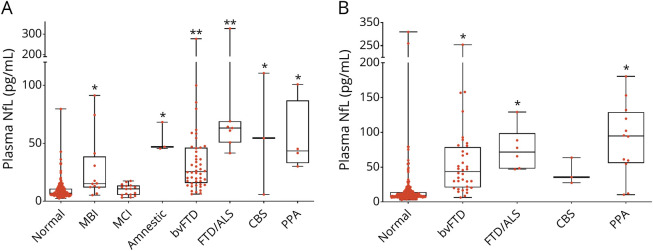
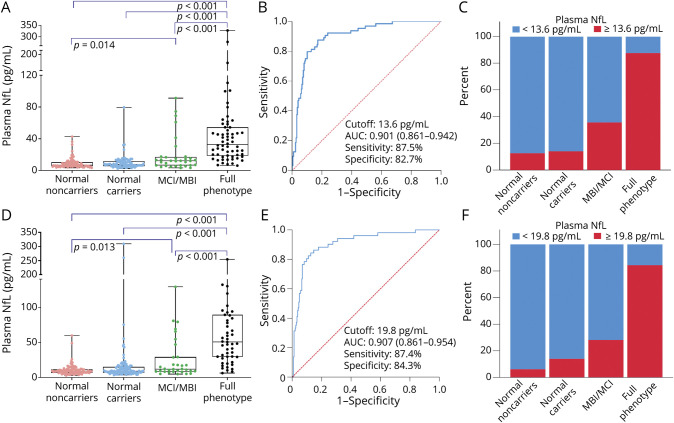
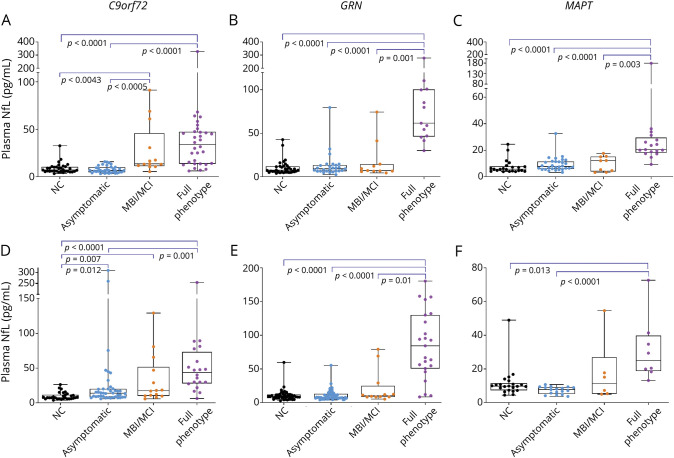
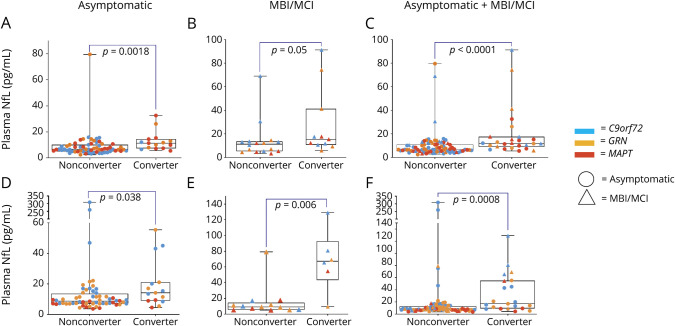
OBJECTIVE: We tested the hypothesis that plasma neurofilament light chain (NfL) identifies asymptomatic carriers of familial frontotemporal lobar degeneration (FTLD)-causing mutations at risk of disease progression. METHODS: mutation carriers and noncarriers from the same families were classified by disease severity (asymptomatic, prodromal, and full phenotype) using the CDR Dementia Staging Instrument plus behavior and language domains from the National Alzheimer's Disease Coordinating Center FTLD module (CDR+NACC-FTLD). Linear mixed-effect models related NfL to clinical variables. RESULTS: = 0.035). Plasma NfL discriminated symptomatic from asymptomatic mutation carriers or those with prodromal disease (original cutoff: 13.6 pg/mL, 87.5% sensitivity, 82.7% specificity; validation cutoff: 19.8 pg/mL, 87.4% sensitivity, 84.3% specificity). Higher baseline NfL correlated with worse longitudinal CDR+NACC-FTLD sum of boxes scores, neuropsychological function, and atrophy, regardless of genotype or disease severity, including asymptomatic mutation carriers. CONCLUSIONS: Plasma NfL identifies asymptomatic carriers of FTLD-causing mutations at short-term risk of disease progression and is a potential tool to select participants for prevention clinical trials. TRIAL REGISTRATION INFORMATION: ClinicalTrials.gov Identifier: NCT02372773 and NCT02365922. CLASSIFICATION OF EVIDENCE: This study provides Class I evidence that in carriers of FTLD-causing mutations, elevation of plasma NfL predicts short-term risk of clinical progression.
Overview
The claims and statistics of this paper haven’t been checked yet.
Free: it reads the open-access text and checks the first 5 claims that cite a source we can check. Create a free account to check every claim.
Integrity signals
Registry
Cites
Statistics
Figures
![Figure 5 Prediction of Clinical Progression by Plasma NfL in Familial Frontotemporal Lobar Degeneration (A–C) Original (Longitudinal Evaluation of Familial Frontotemporal Dementia Subjects [LEFFTDS]/Advancing Research and Treatment in Frontotemporal Lobar Degeneration [ARTFL) cohort. (D–F) Validation (Genetic Frontotemporal Dementia Initiative [GENFI]) cohort. Figure shows the results of models using data from all genotypes in each severity group. In the original cohort, patients with high (red; ≥13.6 pg/mL) baseline plasma neurofilament light chain (NfL) showed worse clinical scores at 2 years compared to patients with low (blue; <13.6 pg/mL) NfL, which was supported by NfL level–by–time interaction. This differential predictive effect by NfL level was observed regardless of disease severity, including asymptomatic carriers. Similar results were observed in the validation cohort with a cut point value of 19.8 pg/mL. CDR+NACC-FTLDsb = CDR Dementia Staging Instrument plus Behavior and Language domains from the National Alzheimer's Disease Coordinating Center Frontotemporal Lobar Degeneration module sum of boxes score. *Between-group contrast at that time point, p < 0.05.](https://figures.cochat.ai/paper-figures/e0d7ed2d5baf4fe9b22bcf982152e93f/plasma-neurofilament-light-for-prediction-of-disease-progression-in-familial-figure-5.jpg)
Verification
Claims the paper makes
The claims and statistics of this paper haven’t been checked yet.
Free: it reads the open-access text and checks the first 5 claims that cite a source we can check. Create a free account to check every claim.
Claims other papers make about this one
Each is checked against this paper’s own text: does it say what the citing paper says it does?
The cited source says what the claim attributes to it.
In the citing paper
“NfL has been shown to predict future clinical progression during the prodromal stages of genetic frontotemporal lobar degeneration.51”
From Advances and controversies in frontotemporal dementia: diagnosis, biomarkers, and therapeutic considerations (2022) · cites this paper as [51]
Self-check
Percentages, sums and reported differences re-computed from the paper’s own numbers.
The self-check needs the paper’s full text.
Citations
Cites
Controlling the False Discovery Rate: A Practical and Powerful Approach to Multiple Testing
Benjamini, Y., & Hochberg, Y. (1995) · Journal of the Royal Statistical Society Series B: Statistical Methodology · doi:10.1111/j.2517-6161.1995.tb02031.x · Cited by 109,482 · cited 1×
“Model results were corrected for multiple comparisons across dependent variables for a given disease severity level using false discovery rate.(34) Analyses were done with SPSS Statistics software, version 26 (IBM, Armonk, NY) and GraphPad Prism, version 8.”
MethodKok, J. S., Berg, I. J., & Scherder, E. J. A. (2013) · Dementia and Geriatric Cognitive Disorders Extra · doi:10.1159/000353441 · Cited by 20,589
Amyloid oligomers exacerbate tau pathology in a mouse model of tauopathy
Selenica, M.-L. B., Brownlow, M., Jimenez, J. P., Lee, D. C., Pena, G., Dickey, C. A., Gordon, M. N., & Morgan, D. (2013) · Neurodegenerative Diseases · doi:10.1159/000337230 · Cited by 10,359
Validity of the Trail Making Test as an Indicator of Organic Brain Damage
Reitan, R. M. (1958) · Perceptual and Motor Skills · doi:10.2466/pms.1958.8.3.271 · Cited by 7,928
The Neuropsychiatric Inventory: Comprehensive assessment of psychopathology in dementia
Cummings, J. L., Mega, M., Gray, K., Rosenberg-Thompson, S., Carusi, D. A., & Gornbein, J. (1994) · Neurology · doi:10.1212/wnl.44.12.2308 · Cited by 7,568
DeJesus-Hernandez, M., Mackenzie, I. R., Boeve, B. F., Boxer, A. L., Baker, M., Rutherford, N. J., Nicholson, A. M., Finch, N. A., Flynn, H., Adamson, J., et al. (2011) · Neuron · doi:10.1016/j.neuron.2011.09.011 · Cited by 4,936
Self-citationAssociation of missense and 5′-splice-site mutations in tau with the inherited dementia FTDP-17
Hutton, M., Lendon, C. L., Rizzu, P., Baker, M., Froelich, S., Houlden, H., Pickering-Brown, S., Chakraverty, S., Isaacs, A., Grover, A., et al. (1998) · Nature · doi:10.1038/31508 · Cited by 3,498 · cited 1×
“About 20% to 30% of FTLD cases are familial, and ≈60% of those are caused by autosomal dominant mutations in 3 genes(3): chromosome 9 open reading frame 72 (C9orf72),(4) progranulin (GRN),(5) and microtubule-associated protein tau (MAPT).(6) Several therapies are poised to begin clinical trials for familial FTLD (fFTL…”
BackgroundMeasurement of Functional Activities in Older Adults in the Community
Pfeffer, R. I., Kurosaki, T. T., Harrah, C. H., Chance, J. M., & Filos, S. (1982) · Journal of Gerontology · doi:10.1093/geronj/37.3.323 · Cited by 2,972
The clinical global impressions scale: applying a research tool in clinical practice.
Busner, J., & Targum, S. D. (2007) · PubMed Central · Cited by 2,817
Mutations in progranulin cause tau-negative frontotemporal dementia linked to chromosome 17
Baker, M., Mackenzie, I. R., Pickering-Brown, S. M., Gass, J., Rademakers, R., Lindholm, C., Snowden, J., Adamson, J., Sadovnick, A. D., Rollinson, S., et al. (2006) · Nature · doi:10.1038/nature05016 · Cited by 2,058
Self-citationRecent Developments in Parkinson's Disease
Hurtig, H. I. (1987) · Neurology · doi:10.1212/wnl.37.5.893 · Cited by 1,920
Biomarkers for Alzheimer's disease: current status and prospects for the future
Blennow, K., & Zetterberg, H. (2018) · Journal of Internal Medicine · doi:10.1111/joim.12816 · Cited by 1,000 · cited 1×
“Blood-based biomarkers are uniquely valuable for therapeutic development because they are easily obtainable and relatively inexpensive.(1) Frontotemporal lobar degeneration (FTLD) produces behavioral, cognitive, language, and motor deficits that impair the quality of life of patients and caregivers more severely than…”
BackgroundDominantly Inherited Alzheimer Network, Preische, O., Schultz, S. A., Apel, A., Kuhle, J., Kaeser, S. A., Barro, C., Gräber, S., Kuder-Buletta, E., LaFougere, C., et al. (2019) · Nature Medicine · doi:10.1038/s41591-018-0304-3 · Cited by 927
Self-citationAdvancing Research and Treatment for Frontotemporal Lobar Degeneration (ARTFL) investigators, Thijssen, E. H., La Joie, R., Wolf, A., Strom, A., Wang, P., Iaccarino, L., Bourakova, V., Cobigo, Y., Heuer, H., et al. (2020) · Nature Medicine · doi:10.1038/s41591-020-0762-2 · Cited by 761 · cited 1×
“Future projects should aim at identifying and deploying specific markers of disease activity and severity in FTLD, and we have previously reported the comparative diagnostic value of plasma NfL vs plasma p-tau in FTLD and Alzheimer disease.(41) On the basis of work in dominantly inherited Alzheimer disease,(42) longit…”
BackgroundSelf-citationIdentification of common variants influencing risk of the tauopathy progressive supranuclear palsy
PSP Genetics Study Group, Höglinger, G. U., Melhem, N. M., Dickson, D. W., Sleiman, P. M. A., Wang, L.-S., Klei, L., Rademakers, R., de Silva, R., Litvan, I., et al. (2011) · Nature Genetics · doi:10.1038/ng.859 · Cited by 603
Self-citationNeurofilament light chain: A prognostic biomarker in amyotrophic lateral sclerosis
Lu, C.-H., Macdonald-Wallis, C., Gray, E., Pearce, N., Petzold, A., Norgren, N., Giovannoni, G., Fratta, P., Sidle, K., Fish, M., et al. (2015) · Neurology · doi:10.1212/wnl.0000000000001642 · Cited by 563
Rohrer, J. D., Nicholas, J. M., Cash, D. M., van Swieten, J., Dopper, E., Jiskoot, L., van Minkelen, R., Rombouts, S. A., Cardoso, M. J., Clegg, S., et al. (2015) · The Lancet Neurology · doi:10.1016/s1474-4422(14)70324-2 · Cited by 538 · cited 1×
“gov NCT02365922)(19) and the Genetic Frontotemporal Dementia Initiative (GENFI).(20)”
BackgroundSelf-citationRosengren, L. E., Karlsson, J., Karlsson, J., Persson, L. I., & Wikkelsø, C. (1996) · Journal of Neurochemistry · doi:10.1046/j.1471-4159.1996.67052013.x · Cited by 499
Development of methodology for conducting clinical trials in frontotemporal lobar degeneration
Knopman, D. S., Kramer, J. H., Boeve, B. F., Caselli, R. J., Graff-Radford, N. R., Mendez, M. F., Miller, B. L., & Mercaldo, N. (2008) · Brain · doi:10.1093/brain/awn234 · Cited by 442 · cited 1×
“appropriate for FTLD patients and superior to relying on the clinical phenotype or the traditional Clinical Dementia Rating, because the CDR+NACC-FTLD includes measures of behavioral and language impairment.(37) We found baseline NfL concentrations in asymptomatic and MBI/MCI mutation carriers best predicted changes i…”
MethodSelf-citationBacioglu, M., Maia, L. F., Preische, O., Schelle, J., Apel, A., Kaeser, S. A., Schweighauser, M., Eninger, T., Lambert, M., Pilotto, A., et al. (2016) · Neuron · doi:10.1016/j.neuron.2016.05.018 · Cited by 435
Serum neurofilament light chain protein is a measure of disease intensity in frontotemporal dementia
Rohrer, J. D., Woollacott, I. O. C., Dick, K. M., Brotherhood, E., Gordon, E., Fellows, A., Toombs, J., Druyeh, R., Cardoso, M. J., Ourselin, S., et al. (2016) · Neurology · doi:10.1212/wnl.0000000000003154 · Cited by 432
Self-citationAxonal damage in relapsing multiple sclerosis is markedly reduced by natalizumab
Gunnarsson, M., Malmeström, C., Axelsson, M., Sundström, P., Dahle, C., Vrethem, M., Olsson, T., Piehl, F., Norgren, N., Rosengren, L., et al. (2011) · Annals of Neurology · doi:10.1002/ana.22247 · Cited by 345 · cited 1×
“13,14 CSF NfL concentrations normalize on e ff ective treatment in multiple sclerosis 15 and spinal muscle atrophy, 16 suggesting that NfL is sensitive to treatment e ff ects.”
BackgroundNeurofilament light chain: a biomarker for genetic frontotemporal dementia
Meeter, L. H., Dopper, E. G., Jiskoot, L. C., Sanchez‐Valle, R., Graff, C., Benussi, L., Ghidoni, R., Pijnenburg, Y. A., Borroni, B., Galimberti, D., et al. (2016) · Annals of Clinical and Translational Neurology · doi:10.1002/acn3.325 · Cited by 263
Self-citationKerr, I. B. (2005) · Psychiatry · doi:10.1383/psyt.4.5.28.65105 · Cited by 256
Possin, K. L., Laluz, V. R., Alcantar, O. Z., Miller, B. L., & Kramer, J. H. (2011) · Neuropsychologia · doi:10.1016/j.neuropsychologia.2010.10.026 · Cited by 249
Self-citationScherling, C. S., Hall, T., Berisha, F., Klepac, K., Karydas, A., Coppola, G., Kramer, J. H., Rabinovici, G., Ahlijanian, M., Miller, B. L., et al. (2014) · Annals of Neurology · doi:10.1002/ana.24052 · Cited by 249
Self-citationCsaky, K., Ferris, F., Chew, E. Y., Nair, P., Cheetham, J. K., & Duncan, J. L. (2017) · Investigative Opthalmology & Visual Science · doi:10.1167/iovs.17-22339 · Cited by 231 · cited 1×
“Such an approach was previously used for drugs to treat macular degeneration that were approved for marketing by using optical coherence tomography measurements as endpoints that are highly predictive of future declines in visual acuity.(40)”
MethodPlasma neurofilament light chain predicts progression in progressive supranuclear palsy
Rojas, J. C., Karydas, A., Bang, J., Tsai, R. M., Blennow, K., Liman, V., Kramer, J. H., Rosen, H., Miller, B. L., Zetterberg, H., et al. (2016) · Annals of Clinical and Translational Neurology · doi:10.1002/acn3.290 · Cited by 206 · cited 7×
“These results suggest a role for plasma NfL as a prognostic biomarker in f-FTLD.”
ResultInfluentialSelf-citationGenetics of Frontotemporal Dementia
Olszewska, D. A., Lonergan, R., Fallon, E., & Lynch, T. (2016) · Current Neurology and Neuroscience Reports · doi:10.1007/s11910-016-0707-9 · Cited by 194
Appendix B: Unified Parkinson's Disease Rating Scale
(2015) · Deep Brain Stimulation Management · doi:10.1017/cbo9781316026625.016 · Cited by 185
Plasma glial fibrillary acidic protein is raised in progranulin-associated frontotemporal dementia
Heller, C., Foiani, M. S., Moore, K., Convery, R., Bocchetta, M., Neason, M., Cash, D. M., Thomas, D., Greaves, C. V., Woollacott, I. O., et al. (2020) · Journal of Neurology, Neurosurgery & Psychiatry · doi:10.1136/jnnp-2019-321954 · Cited by 182
Self-citationCytoskeleton proteins in CSF distinguish frontotemporal dementia from AD
Sjögren, M., Rosengren, L., Minthon, L., Davidsson, P., Blennow, K., & Wallin, A. (2000) · Neurology · doi:10.1212/wnl.54.10.1960 · Cited by 181
van der Ende, E. L., Meeter, L. H., Poos, J. M., Panman, J. L., Jiskoot, L. C., Dopper, E. G. P., Papma, J. M., de Jong, F. J., Verberk, I. M. W., Teunissen, C., et al. (2019) · The Lancet Neurology · doi:10.1016/s1474-4422(19)30354-0 · Cited by 181 · cited 9×
“These results suggest a role for plasma NfL as a prognostic biomarker in f-FTLD.”
ResultInfluentialSelf-citationHirono, N., Mori, E., Ikejiri, Y., Imamura, T., Shimomura, T., Hashimoto, M., Yamashita, H., & Ikeda, M. (1997) · Brain and nerve · Cited by 169
Miyagawa, T., Brushaber, D., Syrjanen, J., Kremers, W., Fields, J., Forsberg, L. K., Heuer, H. W., Knopman, D., Kornak, J., Boxer, A., et al. (2020) · Alzheimer's & Dementia · doi:10.1002/alz.12033 · Cited by 165 · cited 3×
“5), and dementia or full phenotype (≥1).(21) Model results were corrected for multiple comparisons across dependent variables for a given disease severity level using false discovery rate.”
BackgroundMethodInfluentialSelf-citationPottier, C., Zhou, X., Perkerson, R. B., Baker, M., Jenkins, G. D., Serie, D. J., Ghidoni, R., Benussi, L., Binetti, G., López de Munain, A., et al. (2018) · The Lancet Neurology · doi:10.1016/s1474-4422(18)30126-1 · Cited by 131
Self-citationCSF neurofilament proteins in the differential diagnosis of dementia
de Jong, D., Jansen, R. W. M. M., Pijnenburg, Y. A. L., van Geel, W. J. A., Borm, G. F., Kremer, H. P. H., & Verbeek, M. M. (2007) · Journal of Neurology, Neurosurgery & Psychiatry · doi:10.1136/jnnp.2006.107326 · Cited by 120
International FTD-Genomics Consortium (IFGC), Yokoyama, J. S., Karch, C. M., Fan, C. C., Bonham, L. W., Kouri, N., Ross, O. A., Rademakers, R., Kim, J., Wang, Y., et al. (2017) · Acta Neuropathologica · doi:10.1007/s00401-017-1693-y · Cited by 112 · cited 1×
“The analyses, however, did not examine other potential genetic risk factors such as polymorphisms within MAPT , 43 TMEM106B , 44 or EGFR 45 that have been identi fi ed as potential modulators of FTLD risk.”
BackgroundSelf-citationLiu, S., Jin, Y. J., Shi, Z., Huo, Y. R., Guan, Y., Liu, M., Liu, S., & Ji, Y. (2016) · Aging & Mental Health · doi:10.1080/13607863.2016.1146871 · Cited by 94
A tensor based morphometry study of longitudinal gray matter contraction in FTD
Brambati, S. M., Renda, N. C., Rankin, K. P., Rosen, H. J., Seeley, W. W., Ashburner, J., Weiner, M. W., Miller, B. L., & Gorno-Tempini, M. L. (2007) · NeuroImage · doi:10.1016/j.neuroimage.2007.01.028 · Cited by 89 · cited 7×
“These results suggest a role for plasma NfL as a prognostic biomarker in f-FTLD.”
BackgroundInfluentialSelf-citationPijnenburg, Y. A. L., Janssen, J. C., Schoonenboom, N. S. M., Petzold, A., Mulder, C., Stigbrand, T., Norgren, N., Heijst, H., Hack, C. E., Scheltens, P., et al. (2007) · Dementia and Geriatric Cognitive Disorders · doi:10.1159/000099473 · Cited by 82 · cited 7×
“These results suggest a role for plasma NfL as a prognostic biomarker in f-FTLD.”
ResultInfluentialRamos, E. M., Dokuru, D. R., Van Berlo, V., Wojta, K., Wang, Q., Huang, A. Y., Deverasetty, S., Qin, Y., van Blitterswijk, M., Jackson, J., et al. (2020) · Alzheimer's & Dementia · doi:10.1002/alz.12011 · Cited by 80 · cited 1×
“Genetic screening was conducted to identify FTLD-causing mutations in the C9orf72, GRN, and MAPT genes and APOE polymorphisms as described previously.(22,31)”
MethodSelf-citationBoeve, B., Bove, J., Brannelly, P., Brushaber, D., Coppola, G., Dever, R., Dheel, C., Dickerson, B., Dickinson, S., Faber, K., et al. (2020) · Alzheimer's & Dementia · doi:10.1016/j.jalz.2019.06.4947 · Cited by 61 · cited 1×
“ARTFL enrolled participants who met research criteria for an FTLD syndrome and asymptomatic individuals with a family history of an FTLD syndrome, regardless of whether an FTLD-causing mutation had been identified in the family.(19) On evaluation, some participants with a family history of FTLD were determined to have…”
BackgroundSelf-citationNeurofilaments and tau in CSF in an infant with SMA type 1 treated with nusinersen
Winter, B., Guenther, R., Ludolph, A. C., Hermann, A., Otto, M., & Wurster, C. D. (2019) · Journal of Neurology, Neurosurgery & Psychiatry · doi:10.1136/jnnp-2018-320033 · Cited by 50
Self-citationCerebrospinal fluid biomarkers predict frontotemporal dementia trajectory
Ljubenkov, P. A., Staffaroni, A. M., Rojas, J. C., Allen, I. E., Wang, P., Heuer, H., Karydas, A., Kornak, J., Cobigo, Y., Seeley, W. W., et al. (2018) · Annals of Clinical and Translational Neurology · doi:10.1002/acn3.643 · Cited by 49
Self-citationHeuer, H. W., Wang, P., Rascovsky, K., Wolf, A., Appleby, B., Bove, J., Bordelon, Y., Brannelly, P., Brushaber, D. E., Caso, C., et al. (2020) · Alzheimer's & Dementia · doi:10.1002/alz.12046 · Cited by 43 · cited 1×
“However, 1 study reported a higher cutoff (33 pg/mL)(17) that may be explained by the inclusion of older controls and sporadic cases compared to the familial cases reported here.(36)”
ResultSelf-citationIndividualized atrophy scores predict dementia onset in familial frontotemporal lobar degeneration
Staffaroni, A. M., Cobigo, Y., Goh, S. M., Kornak, J., Bajorek, L., Chiang, K., Appleby, B., Bove, J., Bordelon, Y., Brannelly, P., et al. (2020) · Alzheimer's & Dementia · doi:10.1016/j.jalz.2019.04.007 · Cited by 40 · cited 1×
“For associations with gray matter volumes, total intracranial volume was an additional control variable.(32) Linear mixed models tested the ability of baseline log plasma NfL to predict change in clinical variables.”
MethodSelf-citationTherapeutic trial design for frontotemporal dementia and related disorders
Desmarais, P., Rohrer, J. D., Nguyen, Q. D., Herrmann, N., Stuss, D. T., Lang, A. E., Boxer, A. L., Dickerson, B. C., Rosen, H., van Swieten, J. C., et al. (2019) · Journal of Neurology, Neurosurgery & Psychiatry · doi:10.1136/jnnp-2018-318603 · Cited by 33 · cited 2×
“A variety of therapies that target the underlying pathologic proteins encoded by the 3 FTLDcausing genes studied here are entering clinical trials for fFTLD.(7) The ultimate goal for these therapies is to prevent disease onset in mutation carriers.”
BackgroundSelf-citation
Research works printed but not linked: 4
- Schwab R, England A. Projection Technique for Evaluating Surgery in Parkinson's Disease. London; ES Livingston; 1969.
- Delis DC, Kramer JH, Kaplan E, Ober BA. California Verbal Learning Test–Adult Version-Manual. San Antonio; Psychological Corp; 2000.
- ALLFTLD Study. ARTFL-LEFFTDS Longitudinal Frontotemporal Lobar Degeneration: A Multisite Research Consortium [online]. Available at: allftd.org/. Accessed May 5, 2020.
- Food and Drug Administration. Early Alzheimer's Disease: Developing Drugs for Treatment. Guidance for Industry: Silver Spring, MD: US Department of Health and Human Services, Center for Drug Evaluation and Research; 2018.
Cited by
Boeve, B. F., Boxer, A. L., Kumfor, F., Pijnenburg, Y., & Rohrer, J. D. (2022) · The Lancet Neurology · doi:10.1016/s1474-4422(21)00341-0 · Cited by 218
Self-citationFrontotemporal lobar degeneration
Grossman, M., Seeley, W. W., Boxer, A. L., Hillis, A. E., Knopman, D. S., Ljubenov, P. A., Miller, B., Piguet, O., Rademakers, R., Whitwell, J. L., et al. (2023) · Nature Reviews Disease Primers · doi:10.1038/s41572-023-00447-0 · Cited by 178
Self-citationNeurofilament Light Chain as Biomarker for Amyotrophic Lateral Sclerosis and Frontotemporal Dementia
Verde, F., Otto, M., & Silani, V. (2021) · Frontiers in Neuroscience · doi:10.3389/fnins.2021.679199 · Cited by 152
“The early investigation of Rosengren et al. (1996) already reported higher CSF NFL levels in ALS patients showing signs of UMN in comparison with those with LMN signs only.”
ResultSelf-citationTemporal order of clinical and biomarker changes in familial frontotemporal dementia
Staffaroni, A. M., Quintana, M., Wendelberger, B., Heuer, H. W., Russell, L. L., Cobigo, Y., Wolf, A., Goh, S.-Y. M., Petrucelli, L., Gendron, T. F., et al. (2022) · Nature Medicine · doi:10.1038/s41591-022-01942-9 · Cited by 140
Self-citationBlood Biomarkers in Neurodegenerative Diseases: Implications for the Clinical Neurologist
Alcolea, D. A., Beeri, M. S., Rojas, J. C., Gardner, R. C., & Lleó, A. (2023) · Neurology · doi:10.1212/wnl.0000000000207193 · Cited by 133
Self-citation
Metadata
- Authors
- Rojas, J. C., Wang, P., Staffaroni, A. M., Heller, C., Cobigo, Y., Wolf, A., Goh, S.-Y. M., Ljubenkov, P. A., Heuer, H. W., Fong, J. C., Taylor, J. B., Veras, E., Song, L., Jeromin, A., Hanlon, D., Yu, L., Khinikar, A., Sivasankaran, R., Kieloch, A., Valentin, M.-A., Karydas, A. M., Mitic, L. L., Pearlman, R., Kornak, J., Kramer, J. H., Miller, B. L., Kantarci, K., Knopman, D. S., Graff-Radford, N., Petrucelli, L., Rademakers, R., Irwin, D. J., Grossman, M., Ramos, E. M., Coppola, G., Mendez, M. F., Bordelon, Y., Dickerson, B. C., Ghoshal, N., Huey, E. D., Mackenzie, I. R., Appleby, B. S., Domoto-Reilly, K., Hsiung, G.-Y. R., Toga, A. W., Weintraub, S., Kaufer, D. I., Kerwin, D., Litvan, I., Onyike, C. U., Pantelyat, A., Roberson, E. D., Tartaglia, M. C., Foroud, T., Chen, W., Czerkowicz, J., Graham, D. L., van Swieten, J. C., Borroni, B., Sanchez-Valle, R., Moreno, F., Laforce, R., Graff, C., Synofzik, M., Galimberti, D., Rowe, J. B., Masellis, M., Finger, E., Vandenberghe, R., de Mendonça, A., Tagliavini, F., Santana, I., Ducharme, S., Butler, C. R., Gerhard, A., Levin, J., Danek, A., Otto, M., Sorbi, S., Cash, D. M., Convery, R. S., Bocchetta, M., Foiani, M., Greaves, C. V., Peakman, G., Russell, L., Swift, I., Todd, E., Rohrer, J. D., Boeve, B. F., Rosen, H. J., Boxer, A. L., & consortia, O. B. O. T. A. A. G.
- Affiliations
- Northwestern University (US)
- University of California, San Francisco (US)
- From the University of California, San Francisco (J.C.R., P.W., A.M.S., Y.C., A.W., S.-Y.M.G., P.A.L., H.W.H., J.C.F., J.B.T., A.M.K., L.L.M., J.K., J.H.K., B.L.M., H.J.S., A.L.B.); UK Dementia Research Centre (C.H., D.M.C., R.S.C., M.B., M.F., C.V.G., G.P., L.R., I.S., E.T., J.D.R.), UCL Institute of Neurology, Queen Square, London; Quanterix Corp (E.V., L.S., A.J., D.H.), Lexington; Novartis Institutes for Biomedical Research Inc (L.Y., A. Khinikar, R.S.), Cambridge, MA; Novartis Pharma AG (A....
- Novartis (Switzerland) (CH)
- Corresponding author
- Rojas, Julio C.
- ORCID
- Rojas, Julio C.
- Wang, Ping
- Staffaroni, Adam M.
- Heller, Carolin
- Cobigo, Yann
- Wolf, Amy
- Ljubenkov, Peter A.
- Heuer, Hilary W.
- Fong, Jamie C.
- Veras, Eliseo
- Song, Linan
- Hanlon, David
- Yu, Lili
- Sivasankaran, Rajeev
- Mitic, Laura L.
- Pearlman, Rodney
- Kornak, John
- Kramer, Joel H.
- Miller, Bruce L.
- Kantarci, Kejal
- Knopman, David S.
- Petrucelli, Leonard
- Rademakers, Rosa
- Irwin, David J.
- Grossman, Murray
- Ramos, Eliana Marisa
- Coppola, Giovanni
- Mendez, Mario F.
- Bordelon, Yvette
- Dickerson, Bradford C.
- Ghoshal, Nupur
- Huey, Edward D.
- Mackenzie, Ian R.
- Appleby, Brian S.
- Hsiung, Ging-Yuek R.
- Toga, Arthur W.
- Kaufer, Daniel I.
- Kerwin, Diana
- Litvan, Irene
- Onyike, Chiadikaobi U.
- Pantelyat, Alexander
- Roberson, Erik D.
- Tartaglia, Maria C.
- Foroud, Tatiana
- Chen, Weiping
- Graham, Danielle L.
- Borroni, Barbara
- Laforce, Robert
- Graff, Caroline
- Synofzik, Matthis
- Galimberti, Daniela
- Rowe, James B.
- Masellis, Mario
- Finger, Elizabeth
- Vandenberghe, Rik
- Tagliavini, Fabrizio
- Santana, Isabel
- Ducharme, Simon
- Gerhard, Alexander
- Levin, Johannes
- Danek, Adrian
- Otto, Markus
- Sorbi, Sandro
- Cash, David M.
- Convery, Rhian S.
- Bocchetta, Martina
- Foiani, Martha
- Greaves, Caroline V.
- Peakman, Georgia
- Russell, Lucy
- Swift, Imogen
- Todd, Emily
- Rohrer, Jonathan D.
- Boeve, Bradley F.
- Rosen, Howard J.
- Boxer, Adam L.
- Venue
- Neurology
- Published
- 2021-05-04
- Volume
- 96
- Issue
- 18
- Pages
- e2296-e2312
- ISSN
- 0028-3878 (ISSN-L)
- 1526-632X
- PMC
- PMC8166434
- OpenAlex
- W3147351247
- Semantic Scholar
- a825a94ada674acf28e503f934891afa44fdc26e
- Cited by
- 106
- References
- 50
- Citations by year
- 2026: 15 · 2025: 25 · 2024: 19 · 2023: 21 · 2022: 15 · 2021: 11
- FWCI
- 11.83
- Type
- journal article
- Language
- en
- Open access
- bronze
- doi.org
- Locations
- Neurology (publishedVersion)
- PubMed Central (publishedVersion, cc-by)
- PubMed (publishedVersion)
- Brunel University Research Archive (BURA) (Brunel University London) (submittedVersion, cc-by)
- eScholarship (California Digital Library) (submittedVersion, cc-by)
- Institutional Research Information System (Università degli Studi di Trento) (submittedVersion, cc-by)
- Lirias (submittedVersion, other-oa)
- Spiral (Imperial College London) (submittedVersion, other-oa)
- Archivio Istituzionale della Ricerca (Universita Degli Studi Di Milano) (submittedVersion, other-oa)
- UCL Discovery (University College London) (submittedVersion)
- Open access LMU (Ludwid Maxmilian's Universitat Munchen) (submittedVersion, cc-by)
- eScholarship (California Digital Library) (submittedVersion)
- Institutional Research Information System (Università degli Studi di Brescia) (submittedVersion)
- DZNE Pub (submittedVersion, other-oa)
- IUScholarWorks (Indiana University) (submittedVersion, cc-by)
- Purdue University Indianapolis (Indiana University) (submittedVersion, cc-by)
- Apollo (University of Cambridge) (submittedVersion)
- Zenodo (CERN European Organization for Nuclear Research) (submittedVersion, public-domain)
- Apollo
- DRYAD (public-domain)
- Funders
- Larry L. Hillblom Foundation (2018-A-025-FEL)
- Eli Lilly and Company
- Pfizer
- AstraZeneca
- Biogen
- BrightFocus Foundation
- University of Pennsylvania
- Wellcome Trust (103838/Z/14/Z)
- Little Family Foundation
- EU Joint Programme – Neurodegenerative Disease Research (2019-02248, 739510)
- Ionis Pharmaceuticals
- Brain Research UK (202021-32)
- National Brain Appeal (RCN 290173)
- Alzheimer's Society (AS-JF-19a-004-517)
- TauRx Pharmaceuticals
- Alzheimer Society
- National Institute for Health and Care Research (BRC1215-20014, BRC149/NS/MH)
- Wolfson Foundation
- Deutsche Forschungsgemeinschaft (EXC 2145, EXC 2145SyNergy, 390857198)
- Cambridge University Hospitals (146281)
- Eisai
- Karolinska Institutet
- Stockholms Läns Landsting
- Vetenskapsrådet (2018-, 2015-02926, 2018-02754)
- UK Dementia Research Institute
- National Institutes of Health (AG016976, NS092089)
- Genentech
- Avid Radiopharmaceuticals
- Canadian Institutes of Health Research
- Medical Research Council (MR/M023664/1, MR/T046015/1, MR/M008525/1, MR/M009041/1)
- Alzheimer Society of B.C.
- NIHR Cambridge Biomedical Research Centre
- National Institute on Aging (AG 016976, K23AG059888, K23AG059891, U01AG016976, K23AG061253, R01AG062268, P01AG066597, U24 AG21886, NS092089, U01AG045390, AG045390, AG021886, K24AG045333, U19AG063911, P01AG019724, P30AG066507, P30AG062422, U24AG021886)
- National Institute of Mental Health (R01MH120794)
- National Institute of Neurological Disorders and Stroke (U01NS102035, U54NS092089)
- Janssen Pharmaceuticals
- Topics
- Health Sciences › Medicine › Psychiatry and Mental health › Dementia and Cognitive Impairment Research
- Health Sciences › Medicine › Clinical Neurology › Amyotrophic Lateral Sclerosis Research
- Life Sciences › Neuroscience › Cellular and Molecular Neuroscience › Alzheimer's disease research and treatments
- Keywords
- plasma neurofilament light chain, familial frontotemporal lobar degeneration, asymptomatic mutation carriers, disease progression prediction, biomarkers, neurodegeneration
- MeSH terms
- Adult, Aged, Aged, 80 and over, Female, Humans, Magnetic Resonance Imaging, Male, Middle Aged, Predictive Value of Tests, Cohort Studies, Biomarkers, Neurofilament Proteins, Disease Progression, Young Adult, Frontotemporal Lobar Degeneration
About these checks
Registry, retraction, Cites and statistics results are computed, not judged, with one exception: a printed reference that no index lists is read once by a model before it counts as a citation error. Claims are extracted by a model and kept only when their quote appears verbatim in the text; each cited source is then checked, with a model’s help, for whether it says what the claim relies on. Those verdicts can be wrong — read the claim’s quote and the cited source before relying on one.
Statistics and arithmetic are recomputed, not judged.
Confidence bands are shown only for fields calibrated on our annotated test set. None is calibrated yet, so no band is shown.
What counts as a claim ›How we measure confidence ›How we check this ›
Are you an author, or do you see a problem with this page? Request a review
Data sources
Bibliographic data: Semantic Scholar, OpenAlex, Crossref.
Contains information from the Semantic Scholar Academic Graph Datasets, made available under the ODC Attribution License (ODC-BY 1.0).
Semantic Scholar’s data is described in: Kinney, R., et al. (2023). The Semantic Scholar Open Data Platform. arXiv:2301.10140.
