

The DOI matches its Crossref record; 111 of the 114 references it cites were found in a registry or an index.
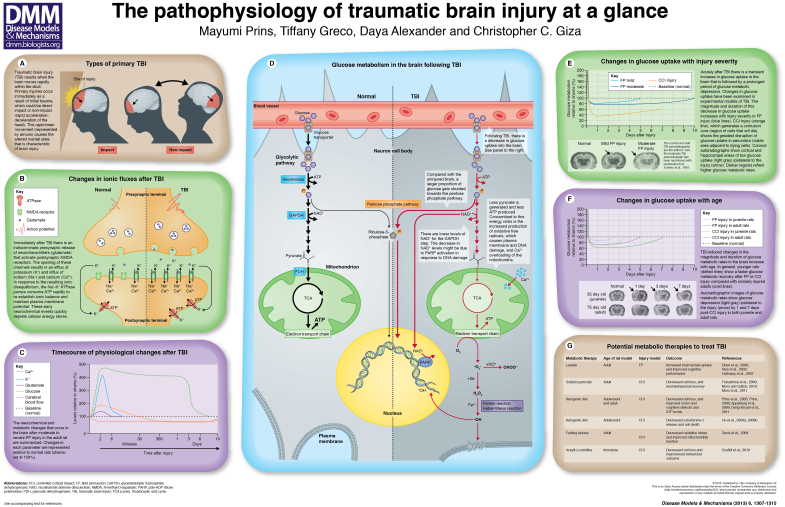
The pathophysiology of traumatic brain injury at a glance
Open accessAbstract
Summary: Traumatic brain injury (TBI) is defined as an impact, penetration or rapid movement of the brain within the skull that results in altered mental state. TBI occurs more than any other disease, including breast cancer, AIDS, Parkinson’s disease and multiple sclerosis, and affects all age groups and both genders. In the US and Europe, the magnitude of this epidemic has drawn national attention owing to the publicity received by injured athletes and military personnel. This increased public awareness has uncovered a number of unanswered questions concerning TBI, and we are increasingly aware of the lack of treatment options for a crisis that affects millions. Although each case of TBI is unique and affected individuals display different degrees of injury, different regional patterns of injury and different recovery profiles, this review and accompanying poster aim to illustrate some of the common underlying neurochemical and metabolic responses to TBI. Recognition of these recurrent features could allow elucidation of potential therapeutic targets for early intervention.
Overview
The claims and statistics of this paper haven’t been checked yet.
Run the check — free, no account needed. It reads the open-access text and checks the sources it cites.
Integrity signals
Registry
Cites
Statistics
Figures
Verification
Claims the paper makes
The claims and statistics of this paper haven’t been checked yet.
Run the check — free, no account needed. It reads the open-access text and checks the sources it cites.
Claims other papers make about this one
Each is checked against this paper’s own text: does it say what the citing paper says it does?
The check wasn’t confident either way, so it gives no verdict — never disputed.
In the citing paper
“We counted brainstem neurons in a blinded manner using the same stereological procedures as previously described.9”
From Damage to Arousal-Promoting Brainstem Neurons with Traumatic Brain Injury (2016) · cites this paper as [9]
Experimental — accuracy not yet measuredThe check wasn’t confident either way, so it gives no verdict — never disputed.
In the citing paper
“Additional factors that may protect the brainstem include lower metabolic requirements and a blood supply less likely to be damaged by direct traumatic forces.9”
From Damage to Arousal-Promoting Brainstem Neurons with Traumatic Brain Injury (2016) · cites this paper as [9]
Experimental — accuracy not yet measured
Self-check
Percentages, sums and reported differences re-computed from the paper’s own numbers.
The self-check needs the paper’s full text.
Citations
Cites
National Center for Injury Prevention and Control (U.S.). Division of Injury Response., Faul, M., Wald, M. M., Wu, L., & Coronado, V. G. (2010) · doi:10.15620/cdc.5571 · Cited by 3,494
Langlois, J., Rutland-Brown, W., & Thomas, K. (2006) · PsycEXTRA Dataset · doi:10.1037/e721222007-001 · Cited by 3,003
Chronic traumatic encephalopathy in athletes: Progressive tauopathy after repetitive head injury
McKee, A. C., Cantu, R. C., Nowinski, C. J., Hedley-Whyte, E. T., Gavett, B. E., Budson, A. E., Santini, V. E., Lee, H.-S., Kubilus, C. A., & Stern, R. A. (2009) · Journal of Neuropathology & Experimental Neurology · doi:10.1097/nen.0b013e3181a9d503 · Cited by 2,295
Brain Metabolism during Fasting*
Owen, O. E., Morgan, A. P., Kemp, H. G., Sullivan, J. M., Herrera, M. G., & Cahill, G. F. (1967) · Journal of Clinical Investigation · doi:10.1172/jci105650 · Cited by 1,662
A new model of diffuse brain injury in rats
Marmarou, A., Foda, M. A. A.-E., van den Brink, W., Campbell, J., Kita, H., & Demetriadou, K. (1994) · Journal of neurosurgery · doi:10.3171/jns.1994.80.2.0291 · Cited by 1,244
Katayama, Y., Becker, D. P., Tamura, T., & Hovda, D. A. (1990) · Journal of neurosurgery · doi:10.3171/jns.1990.73.6.0889 · Cited by 1,091
Veech, R. L. (2004) · Prostaglandins Leukotrienes and Essential Fatty Acids · doi:10.1016/j.plefa.2003.09.007 · Cited by 779
Free Radical Pathways in CNS Injury
LEWÉN, A., MATZ, P., & CHAN, P. H. (2000) · Journal of Neurotrauma · doi:10.1089/neu.2000.17.871 · Cited by 759
Bergsneider, M., Hovda, D. A., Shalmon, E., Kelly, D. F., Vespa, P. M., Martin, N. A., Phelps, M. E., McArthur, D. L., Caron, M., Kraus, J. F., et al. (1997) · Journal of neurosurgery · doi:10.3171/jns.1997.86.2.0241 · Cited by 639
Yoshino, A., Hovda, D. A., Kawamata, T., Katayama, Y., & Becker, D. P. (1991) · Brain Research · doi:10.1016/0006-8993(91)90755-k · Cited by 592
Oxidative stress caused by mitochondrial calcium overload
Peng, T., & Jou, M. (2010) · Annals of the New York Academy of Sciences · doi:10.1111/j.1749-6632.2010.05634.x · Cited by 569
NADPH oxidase is the primary source of superoxide induced by NMDA receptor activation
Brennan, A. M., Suh, S. W., Won, S. J., Narasimhan, P., Kauppinen, T. M., Lee, H., Edling, Y., Chan, P. H., & Swanson, R. A. (2009) · Nature Neuroscience · doi:10.1038/nn.2334 · Cited by 538
Mitochondrial Dysfunction and Calcium Perturbation Induced by Traumatic Brain Injury
Xiong, Y., GU, Q., Peterson, P. L., Muizelaar, J. P., & Lee, C. P. (1997) · Journal of Neurotrauma · doi:10.1089/neu.1997.14.23 · Cited by 447
NAD + Depletion Is Necessary and Sufficient forPoly(ADP-Ribose) Polymerase-1-Mediated Neuronal Death
Alano, C. C., Garnier, P., Ying, W., Higashi, Y., Kauppinen, T. M., & Swanson, R. A. (2010) · The Journal of Neuroscience · doi:10.1523/jneurosci.5552-09.2010 · Cited by 439
Ketone Bodies, Potential Therapeutic Uses
Veech, R. L., Chance, B., Kashiwaya, Y., Lardy, H. A., & Cahill, G. F. (2001) · IUBMB Life · doi:10.1080/152165401753311780 · Cited by 427
Sheline, C. T., Behrens, M. M., & Choi, D. W. (2000) · Journal of Neuroscience · doi:10.1523/jneurosci.20-09-03139.2000 · Cited by 369
Singh, I. N., Sullivan, P. G., Deng, Y., Mbye, L. H., & Hall, E. D. (2006) · Journal of Cerebral Blood Flow & Metabolism · doi:10.1038/sj.jcbfm.9600297 · Cited by 367
Cyclosporin A Attenuates Acute Mitochondrial Dysfunction Following Traumatic Brain Injury
Sullivan, P. G., Thompson, M. B., & Scheff, S. W. (1999) · Experimental Neurology · doi:10.1006/exnr.1999.7197 · Cited by 350
Vespa, P. M., Boonyaputthikul, R., McArthur, D. L., Miller, C., Etchepare, M., Bergsneider, M., Glenn, T. C., Martin, N. A., & Hovda, D. A. (2006) · Critical Care Medicine · doi:10.1097/01.ccm.0000201875.12245.6f · Cited by 343
Fineman, I., Hovda, D. A., Smith, M. L., Yoshino, A., & Becker, D. P. (1993) · Brain Research · doi:10.1016/0006-8993(93)90064-t · Cited by 287
Bergsneider, M. D., Hovda, D. A., Lee, S. M., Kelly, D. F., McArthur, D. L., Vespa, P. M., Lee, J. H., Huang, S., Martin, N. A., Phelps, M. E., et al. (2000) · Journal of Neurotrauma · doi:10.1089/neu.2000.17.389 · Cited by 278
Traumatic Brain Injury as a Risk Factor for Alzheimer's Disease: A Review
Lye, T. C., & Shores, E. A. (2000) · Neuropsychology Review · doi:10.1023/a:1009068804787 · Cited by 259
Blast‐related mild traumatic brain injury: mechanisms of injury and impact on clinical care
Elder, G. A., & Cristian, A. (2009) · Mount Sinai Journal of Medicine A Journal of Translational and Personalized Medicine · doi:10.1002/msj.20098 · Cited by 256
Oxidative Stress Following Traumatic Brain Injury in Rats
Tyurin, V. A., Tyurina, Y. Y., Borisenko, G. G., Соколова, Т. В., Ritov, V. B., Quinn, P. J., Rose, M. E., Kochanek, P. M., Graham, S. H., & Kagan, V. E. (2000) · Journal of Neurochemistry · doi:10.1046/j.1471-4159.2000.0752178.x · Cited by 249
Kawamata, T., Katayama, Y., Hovda, D. A., Yoshino, A., & Becker, D. P. (1992) · Journal of Cerebral Blood Flow & Metabolism · doi:10.1038/jcbfm.1992.3 · Cited by 247
Hovda, D. A., Yoshino, A., Kawamata, T., Katayama, Y., & Becker, D. P. (1991) · Brain Research · doi:10.1016/0006-8993(91)91429-5 · Cited by 241
Prins, M. L., Hales, A., Reger, M. L., Giza, C. C., & Hovda, D. A. (2010) · Developmental Neuroscience · doi:10.1159/000316800 · Cited by 237
Self-citationBrain Hydroxyl Radical Generation in Acute Experimental Head Injury
Hall, E. D., Andrus, P. K., & Yonkers, P. A. (1993) · Journal of Neurochemistry · doi:10.1111/j.1471-4159.1993.tb03189.x · Cited by 229
Hall, E. D., & Braughler, J. M. (1993) · PubMed · Cited by 219
Glucose metabolism in the developing brain
Vannucci, R. C., & Vannucci, S. J. (2000) · Seminars in Perinatology · doi:10.1053/sp.2000.6361 · Cited by 219
Mechanisms underlying the loss of mitochondrial membrane potential in glutamate excitotoxicity
Abramov, A. Y., & Duchen, M. R. (2008) · Biochimica et Biophysica Acta (BBA) - Bioenergetics · doi:10.1016/j.bbabio.2008.04.017 · Cited by 213
Vergun, O. V., Keelan, J., Khodorov, B. I., & Duchen, M. R. (1999) · The Journal of Physiology · doi:10.1111/j.1469-7793.1999.0451m.x · Cited by 206
Kreis, R., & Ross, B. D. (1992) · Radiology · doi:10.1148/radiology.184.1.1319074 · Cited by 199
Age-dependent reduction of cortical contusion volume by ketones after traumatic brain injury
Prins, M. L., Fujima, L. S., & Hovda, D. A. (2005) · Journal of Neuroscience Research · doi:10.1002/jnr.20633 · Cited by 194
Self-citationWada, K., Chatzipanteli, K., Kraydieh, S., Busto, R., & Dietrich, W. D. (1998) · Neurosurgery · doi:10.1097/00006123-199812000-00096 · Cited by 186
Sullivan, P. G., Keller, J. N., Mattson, M. P., & Scheff, S. W. (1998) · Journal of Neurotrauma · doi:10.1089/neu.1998.15.789 · Cited by 186
Alterations in Regional Cerebral Blood Flow following Brain Injury in the Rat
Yamakami, I., & McIntosh, T. K. (1991) · Journal of Cerebral Blood Flow & Metabolism · doi:10.1038/jcbfm.1991.117 · Cited by 174
Metabolism of Ketone Bodies by the Brain
Sokoloff, L. (1973) · Annual Review of Medicine · doi:10.1146/annurev.me.24.020173.001415 · Cited by 170
Clark, R. S. B., Kochanek, P. M., Schwarz, M. A., Schiding, J. K., Turner, D. S., Chen, M., Carlos, T. M., & Watkins, S. C. (1996) · Pediatric Research · doi:10.1203/00006450-199605000-00007 · Cited by 164
The Consequences of Traumatic Brain Injury on Cerebral Blood Flow and Autoregulation: A Review
Golding, E. M., Robertson, C. S., & Bryan, R. M. (1999) · Clinical and Experimental Hypertension · doi:10.3109/10641969909068668 · Cited by 152
Fasting is neuroprotective following traumatic brain injury
Davis, L. M., Pauly, J. R., Readnower, R. D., Rho, J. M., & Sullivan, P. G. (2008) · Journal of Neuroscience Research · doi:10.1002/jnr.21628 · Cited by 149
Duan, Y., Gross, R. A., & Sheu, S. (2007) · The Journal of Physiology · doi:10.1113/jphysiol.2007.145409 · Cited by 148
Nuclear Poly(ADP-ribose) Polymerase-1 Rapidly Triggers Mitochondrial Dysfunction
Cipriani, G., Rapizzi, E., Vannacci, A., Rizzuto, R., Moroni, F., & Chiarugi, A. (2005) · Journal of Biological Chemistry · doi:10.1074/jbc.m414526200 · Cited by 148
Appelberg, K. S., Hovda, D. A., & Prins, M. L. (2009) · Journal of Neurotrauma · doi:10.1089/neu.2008.0664 · Cited by 141
Self-citationLactate administration attenuates cognitive deficits following traumatic brain injury
Rice, A. C., Zsoldos, R., Chen, T., Wilson, M. S., Alessandri, B., Hamm, R. J., & Bullock, M. R. (2002) · Brain Research · doi:10.1016/s0006-8993(01)03299-1 · Cited by 139
Hutson, C. B., Lazo, C. R., Mortazavi, F., Giza, C. C., Hovda, D. A., & Chesselet, M. (2011) · Journal of Neurotrauma · doi:10.1089/neu.2010.1723 · Cited by 133
Self-citationOsteen, C. L., Moore, A. H., Prins, M., & Hovda, D. (2001) · Journal of Neurotrauma · doi:10.1089/08977150150502587 · Cited by 131
Self-citationEnergy metabolism, ion homeostasis, and cell damage in the brain
Katsura, K., Kristián, T., & Siesjö, B. K. (1994) · Biochemical Society Transactions · doi:10.1042/bst0220991 · Cited by 128
LaPlaca, M. C., Zhang, J., Raghupathi, R., Li, J., Smith, F. M., Bareyre, F. M., Snyder, S. H., Graham, D. I., & McIntosh, T. K. (2001) · Journal of Neurotrauma · doi:10.1089/089771501750170912 · Cited by 127
Hall, E. D., Andrus, P. K., Althaus, J. S., & Voigtlander, P. F. V. (1993) · Journal of Neuroscience Research · doi:10.1002/jnr.490340111 · Cited by 127
Regional ketone body utilization by rat brain in starvation and diabetes
Hawkins, R. A., Mans, A. M., & Davis, D. W. (1986) · American Journal of Physiology-Endocrinology and Metabolism · doi:10.1152/ajpendo.1986.250.2.e169 · Cited by 126
Neuroprotection by Acetyl-L-Carnitine after Traumatic Injury to the Immature Rat Brain
Scafidi, S., Racz, J. L., Hazelton, J. L., McKenna, M. C., & Fiskum, G. M. (2010) · Developmental Neuroscience · doi:10.1159/000323178 · Cited by 125
Sun, D. A., Deshpande, L. S., Sombati, S., Baranova, A., Wilson, M. S., Hamm, R. J., & DeLorenzo, R. J. (2008) · European Journal of Neuroscience · doi:10.1111/j.1460-9568.2008.06156.x · Cited by 118
Namjoshi, D., Good, C. A., Cheng, W. H., Panenka, W. J., Richards, D., Cripton, P. A., & Wellington, C. L. (2013) · Disease Models & Mechanisms · doi:10.1242/dmm.011320 · Cited by 118
Vagnozzi, R., Marmarou, A., Tavazzi, B., Signoretti, S., Pierro, D. D., Bolgia, F. D., Amorini, A. M., Fazzina, G., SHERKAT, S., & Lazzarino, G. (1999) · Journal of Neurotrauma · doi:10.1089/neu.1999.16.903 · Cited by 115
Hattori, N., Huang, S., Wu, H.-M., Yeh, E., Glenn, T. C., Vespa, P. M., McArthur, D. L., Phelps, M. E., Hovda, D. A., & Bergsneider, M. (2003) · PubMed · Cited by 115
Bartnik‐Olson, B., Sutton, R. L., Fukushima, M., Harris, N. G., Hovda, D. A., & Lee, S. M. (2005) · Journal of Neurotrauma · doi:10.1089/neu.2005.22.1052 · Cited by 112
Robertson, C. (2004) · Journal of Bioenergetics and Biomembranes · doi:10.1023/b:jobb.0000041769.06954.e4 · Cited by 105
Thomas, S., Prins, M. L., Samii, M., & Hovda, D. A. (2000) · Journal of Neurotrauma · doi:10.1089/089771500415409 · Cited by 105
Self-citationDeng‐Bryant, Y., Prins, M. L., Hovda, D. A., & Harris, N. G. (2011) · Journal of Neurotrauma · doi:10.1089/neu.2011.1822 · Cited by 104
Self-citationMitochondrial dysfunction early after traumatic brain injury in immature rats
Robertson, C., Saraswati, M., & Fiskum, G. M. (2007) · Journal of Neurochemistry · doi:10.1111/j.1471-4159.2007.04489.x · Cited by 100
Early Cerebrovascular Response to Head Injury in Immature and Mature Rats
GRUNDL, P. D., BIAGAS, K. V., Kochanek, P. M., Schiding, J. K., Barmada, M. A., & Nemoto, E. M. (1994) · Journal of Neurotrauma · doi:10.1089/neu.1994.11.135 · Cited by 99
Effect of lactate therapy upon cognitive deficits after traumatic brain injury in the rat
Holloway, R., Zhou, Z., Harvey, H. B., Levasseur, J. E., Rice, A. C., Sun, D., Hamm, R. J., & Bullock, M. R. (2007) · Acta Neurochirurgica · doi:10.1007/s00701-007-1241-y · Cited by 99
Satchell, M. A., Zhang, X., Kochanek, P. M., Dixon, C. E., Jenkins, L. W., Melick, J. A., Szabó, C., & Clark, R. S. B. (2003) · Journal of Neurochemistry · doi:10.1046/j.1471-4159.2003.01707.x · Cited by 99
Post-traumatic selective stimulation of glycolysis
Andersen, B. J., & Marmarou, A. (1992) · Brain Research · doi:10.1016/0006-8993(92)91205-s · Cited by 97
Oxidative Stress–Dependent Release of Mitochondrial Cytochrome c after Traumatic Brain Injury
Lewén, A., Fujimura, M., Sugawara, T., Matz, P. G., Copin, J., & Chan, P. H. (2001) · Journal of Cerebral Blood Flow & Metabolism · doi:10.1097/00004647-200108000-00003 · Cited by 96
Lewén, A., & Hillered, L. (1998) · Journal of Neurotrauma · doi:10.1089/neu.1998.15.521 · Cited by 95
Age-Dependent Differences in Glutathione Peroxidase Activity after Traumatic Brain Injury
Fan, P., Yamauchi, T., Noble‐Haeusslein, L. J., & Ferriero, D. M. (2003) · Journal of Neurotrauma · doi:10.1089/089771503765355513 · Cited by 88
Prins, M. L., & Hovda, D. A. (2009) · Journal of Neurotrauma · doi:10.1089/neu.2008.0769 · Cited by 82
Self-citationMarklund, N., Clausen, F., Lewander, T., & Hillered, L. (2001) · Journal of Neurotrauma · doi:10.1089/089771501317095250 · Cited by 82
Dahlquist, G., & Persson, B. (1976) · Pediatric Research · doi:10.1203/00006450-197611000-00002 · Cited by 76
An introduction to oxygen free radicals
Kerr, M. E., Bender, C. M., & Monti, E. J. (1996) · Heart & Lung · doi:10.1016/s0147-9563(96)80030-6 · Cited by 74
Hu, Z., Wang, H., Qiao, L., Yan, W. X., Tan, Q., & Yin, H.-X. (2009) · Brain Injury · doi:10.1080/02699050902788469 · Cited by 73
α-phenyl-tert-butyl-nitrone inhibits free radical release in brain concussion
Sen, S., Goldman, H., Morehead, M. H., Murphy, S., & Phillis, J. W. (1994) · Free Radical Biology and Medicine · doi:10.1016/0891-5849(94)90183-x · Cited by 72
Endothelial cell activation following moderate traumatic brain injury
Balabanov, R. D., Goldman, H., Murphy, S., Pellizzon, G. G., Owen, C. R., Rafols, J. A., & Dore‐Duffy, P. (2001) · Neurological Research · doi:10.1179/016164101101198514 · Cited by 70
Rao, A. M., Dog⫧an, A., Hatcher, J. F., & Dempsey, R. J. (1998) · Brain Research · doi:10.1016/s0006-8993(98)00183-8 · Cited by 68
Glut1 Glucose Transporter Activity in Human Brain Injury
Cornford, E. M., Hyman, S., Cornford, M. E., & Caron, M. (1996) · Journal of Neurotrauma · doi:10.1089/neu.1996.13.523 · Cited by 68
Hu, Z., Wang, H. D., Jin, W., & Yin, H. X. (2009) · PubMed · Cited by 67
Brain lactate uptake increases at the site of impact after traumatic brain injury
Chen, T., Qian, Y. Z., Rice, A. C., Zhu, J., Di, X., & Bullock, R. M. (2000) · Brain Research · doi:10.1016/s0006-8993(00)01992-2 · Cited by 63
Metabolic Changes Following Cortical Contusion: Relationships to Edema and Morphological Changes
Sutton, R. L., Hovda, D. A., Adelson, P. D., Benzel, E. C., & Becker, D. P. (1994) · Springer eBooks · doi:10.1007/978-3-7091-9334-1_122 · Cited by 62
Deshpande, L. S., Sun, D. A., Sombati, S., Baranova, A., Wilson, M. S., Attkisson, E., Hamm, R. J., & DeLorenzo, R. J. (2008) · Neuroscience Letters · doi:10.1016/j.neulet.2008.05.113 · Cited by 62
Oxidative Stress in Brain According to Traumatic Brain Injury Intensity
Petronilho, F. C., Feier, G., de Souza, B., Inácio, C. G., Constantino, L. D. S., Walz, R., Quevedo, J., & Dal‐Pizzol, F. (2009) · Journal of Surgical Research · doi:10.1016/j.jss.2009.04.031 · Cited by 60
Chen, S.-F., Richards, H., Śmielewski, P., Johnström, P., Salvador, R., Pickard, J., & Harris, N. (2004) · Journal of Cerebral Blood Flow and Metabolism · doi:10.1097/01.wcb.0000129415.34520.47 · Cited by 59
The Role of Free Radicals in Traumatic Brain Injury
O’Connell, K. M., & Littleton‐Kearney, M. T. (2012) · Biological Research For Nursing · doi:10.1177/1099800411431823 · Cited by 58
Brain substrate utilisation during acute hypoglycaemia
Wahren, J., Ekberg, K., Fernqvist‐Forbes, E., & Nair, S. (1999) · Diabetologia · doi:10.1007/s001250051231 · Cited by 56
O’Connell, M. T., Seal, A., Nortje, J., Al-Rawi, P. G., Coles, J., Fryer, T. D., Menon, D. K., Pickard, J. D., & Hutchinson, P. J. (2006) · Springer eBooks · doi:10.1007/3-211-32318-x_35 · Cited by 56
Sodium pyruvate protects against H2O2 mediated apoptosis in human neuroblastoma cell line-SK-N-MC
Jagtap, J. C., Chandele, A., Chopde, B. A., & Shastry, P. (2003) · Journal of Chemical Neuroanatomy · doi:10.1016/s0891-0618(03)00037-1 · Cited by 56
Sports-related concussions in pediatrics
Cohen, J. S., Gioia, G. A., Atabaki, S. M., & Teach, S. J. (2009) · Current Opinion in Pediatrics · doi:10.1097/mop.0b013e32832b1195 · Cited by 55
Hovda, D. A., Yoshino, A., Kawamata, T., Katayama, Y., Fineman, I., & Becker, D. P. (1990) · Springer eBooks · doi:10.1007/978-3-7091-9115-6_112 · Cited by 55
Bates, T. E., Almeida, Á., Heales, S., & Clark, J. B. (2007) · Developmental Neuroscience · doi:10.1159/000112126 · Cited by 55
Uncoupling of Cerebral Blood Flow and Metabolism after Cerebral Contusion in the Rat
Richards, H. K., Šimac, S., Piechnik, S. K., & Pickard, J. D. (2001) · Journal of Cerebral Blood Flow & Metabolism · doi:10.1097/00004647-200107000-00002 · Cited by 54
Prins, M. L., & Hovda, D. A. (2001) · Journal of Neurotrauma · doi:10.1089/089771501750055758 · Cited by 52
Self-citationZeng, J., Liu, J., Yang, G., Kelly, M. J. S., James, T. L., & Litt, L. L. (2007) · Anesthesiology · doi:10.1097/01.anes.0000281898.01966.1e · Cited by 51
Fukushima, M., Lee, S. M., Moro, N., Hovda, D., & Sutton, R. L. (2009) · Journal of Neurotrauma · doi:10.1089/neu.2008.0771 · Cited by 50
Murphy, P., Duckett, S. G., & Sillito, A. M. (2000) · Journal of Neuroscience · doi:10.1523/jneurosci.20-02-00845.2000 · Cited by 50
Beneficial Effects of Sodium or Ethyl Pyruvate after Traumatic Brain Injury in the Rat
Moro, N., & Sutton, R. L. (2010) · Experimental Neurology · doi:10.1016/j.expneurol.2010.07.013 · Cited by 49
Xing, G., Ren, M., Watson, W. A., O’Neil, J. T., & Verma, A. M. (2009) · Neuroscience Letters · doi:10.1016/j.neulet.2009.01.047 · Cited by 47
Worley, G., Hoffman, J. M., Paine, S., Kalman, S. L., Claerhout, S. J., Boyko, O. B., Kandt, R. S., dos Santos, C. C., Hanson, M. W., Oakes, W. J., et al. (1995) · Developmental Medicine & Child Neurology · doi:10.1111/j.1469-8749.1995.tb11994.x · Cited by 40
Hovda, D. A., Villabianca, J. R., Chugani, H. T., & Phelps, M. E. (1996) · Journal of Cerebral Blood Flow & Metabolism · doi:10.1097/00004647-199601000-00016 · Cited by 38
Postnatal developmental regulation of Bcl‐2 family proteins in brain mitochondria
Soane, L., Siegel, Z. T. G., Schuh, R. A., & Fiskum, G. M. (2007) · Journal of Neuroscience Research · doi:10.1002/jnr.21584 · Cited by 36
Diet, ketones, and neurotrauma
Prins, M. L. (2008) · Epilepsia · doi:10.1111/j.1528-1167.2008.01852.x · Cited by 35
Self-citationSharma, R. (2000) · Toxicology · doi:10.1016/s0300-483x(00)00328-0 · Cited by 35
Sodium pyruvate reduces hypoxic–ischemic injury to neonatal rat brain
Pan, R., Rong, Z., She, Y., Cao, Y. Y., Chang, L.-W., & Lee, W. (2012) · Pediatric Research · doi:10.1038/pr.2012.107 · Cited by 34
Frenzel, J., Richter, J. P., & Eschrich, K. (2005) · Glia · doi:10.1002/glia.20244 · Cited by 33
The time course and regional variations of lipid peroxidation after diffuse brain injury in rats
Hsiang, J. N. K., Wang, J. Y., Ip, S. M., Ng, H., Stadlin, A., Yu, L., & Poon, W. S. (1997) · Acta Neurochirurgica · doi:10.1007/bf01808884 · Cited by 33
Izumi, Y., & Zorumski, C. F. (2010) · Neuroscience Letters · doi:10.1016/j.neulet.2010.04.078 · Cited by 30
Prieto, R., Tavazzi, B., Taya, K., Barrios, L., Amorini, A. M., Pietro, V. D., Pascual, J. M., Marmarou, A., & Marmarou, C. R. (2011) · Brain Research · doi:10.1016/j.brainres.2011.06.006 · Cited by 25
Moro, N., Ghavim, S. S., Hovda, D. A., & Sutton, R. L. (2011) · Neuroscience Letters · doi:10.1016/j.neulet.2011.01.029 · Cited by 24
Chan, A. S. L., Law, P., Loh, H. H., Ho, P. N. N., Wu, W., Chan, J. S. C., & Wong, Y. H. (2003) · Journal of Neurochemistry · doi:10.1046/j.1471-4159.2003.02040.x · Cited by 16
Oxypurinol inhibits free radical release from the cerebral cortex of closed head injured rats
Sen, S., Goldman, H., Morehead, M. H., Murphy, S., & Phillis, J. W. (1993) · Neuroscience Letters · doi:10.1016/0304-3940(93)90574-5 · Cited by 16
Uptake of ketone bodies by rat brain in vivo
Hawkins, R. A. (1971) · Biochemical Journal · doi:10.1042/bj1210017pa · Cited by 15
Research works printed but not linked: 1
- Hovda, 1994, Long-term changes in metabolic rates for glucose following mild, moderate and severe concussive head injuries in adult rats, J. Neurosci., 20, 845
Cited by
Sorted by citations
Recent Advances in Pathophysiology of Traumatic Brain Injury
Kaur, P., & Sharma, S. (2017) · Current Neuropharmacology · doi:10.2174/1570159x15666170613083606 · Cited by 471
“Phosphatidylserine translocation includes distinct however gradual membrane breakdown together with nuclear membranes disintegration, DNA-fragmentation, and chromatin condensation [117].”
InfluentialHenderson, T. A., & Morries, L. D. (2015) · Neuropsychiatric Disease and Treatment · doi:10.2147/ndt.s78182 · Cited by 432
“This energy crisis promotes the increased concentration of free radicals, due to increased pentose phosphate metabolism, reduced mitochondrial function, and impaired free radical scavenger mechanisms.(19) The consequences of increased free radicals can be far-reaching including propagation of additional free radicals,…”
Bidirectional Microglia–Neuron Communication in Health and Disease
Szepesi, Z., Manouchehrian, O., Bachiller, S., & Deierborg, T. (2018) · Frontiers in Cellular Neuroscience · doi:10.3389/fncel.2018.00323 · Cited by 459
“The primary injury of TBIs, caused by trauma to the head which for example might stretch, compress or tear blood vessels and axons, is not the only reason why patients die or are disabled (Prins et al., 2013).”
BackgroundThe synapse in traumatic brain injury
Jamjoom, A. A. B., Rhodes, J. K. J., Andrews, P., & Grant, S. G. N. (2020) · Brain · doi:10.1093/brain/awaa321 · Cited by 260
“The mechanical injury (primary insult) causes instantaneous tissue damage, which is followed by multiple secondary injury processes (Prins et al., 2013).”
BackgroundThe NLRP3 inflammasome in traumatic brain injury: potential as a biomarker and therapeutic target
O’Brien, W. T., Pham, L., Symons, G. F., Monif, M., Shultz, S. R., & McDonald, S. J. (2020) · Journal of Neuroinflammation · doi:10.1186/s12974-020-01778-5 · Cited by 233
Metadata
- Authors
- Prins, M., Greco, T., Alexander, D., & Giza, C. C.
- Affiliations
- University of California, Los Angeles (US)
- Corresponding author
- Prins, Mayumi
- Venue
- Disease Models & Mechanisms
- Publisher
- The Company of Biologists
- Published
- 2013-01-01
- Volume
- 6
- Issue
- 6
- Pages
- 1307-15
- ISSN
- 1754-8403 (ISSN-L)
- 1754-8411
- PMC
- PMC3820255
- OpenAlex
- W2141923055
- Cited by
- 426
- References
- 114
- Citations by year
- 2026: 7 · 2025: 29 · 2024: 37 · 2023: 40 · 2022: 41 · 2021: 55 · 2020: 55 · 2019: 40 · 2018: 46 · 2017: 27 · 2016: 14 · 2015: 24 · 2014: 8 · 2013: 3
- FWCI
- 10.37
- Type
- journal article
- Language
- en
- Open access
- gold
- doi.org
- Locations
- Disease Models & Mechanisms (publishedVersion, cc-by)
- Europe PMC (PubMed Central) (publishedVersion, other-oa)
- PubMed Central (publishedVersion, cc-by)
- PubMed (publishedVersion)
- DOAJ (DOAJ: Directory of Open Access Journals) (submittedVersion, cc-by-sa)
- Funders
- National Institute of Neurological Disorders and Stroke (NS-058489, P01NS058489)
- Topics
- Health Sciences › Medicine › Clinical Neurology › Traumatic Brain Injury and Neurovascular Disturbances
- Health Sciences › Medicine › Clinical Neurology › Traumatic Brain Injury Research
- Physical Sciences › Engineering › Biomedical Engineering › Automotive and Human Injury Biomechanics
- Keywords
- traumatic brain injury, pathophysiology, brain metabolism, altered mental status, injury patterns, recovery profiles, therapeutic target, TBI epidemiology
- MeSH terms
- Brain, Brain Injuries, Free Radicals, Glucose, Humans, Mitochondria
About these checks
Registry, retraction, Cites and statistics results are computed, not judged, with one exception: a printed reference that no index lists is read once by a model before it counts as a citation error. Claims are extracted by a model and kept only when their quote appears verbatim in the text; each cited source is then checked, with a model’s help, for whether it says what the claim relies on. Those verdicts can be wrong — read the claim’s quote and the cited source before relying on one.
Statistics and arithmetic are recomputed, not judged.
Confidence bands are shown only for fields calibrated on our annotated test set. None is calibrated yet, so no band is shown.
What counts as a claim ›How we measure confidence ›How we check this ›
Are you an author, or do you see a problem with this page? Request a review
