

The DOI matches its Crossref record; 52 of the 52 references it cites were found in a registry or an index.
Premature aging in telomerase-deficient zebrafish
Open accessAbstract
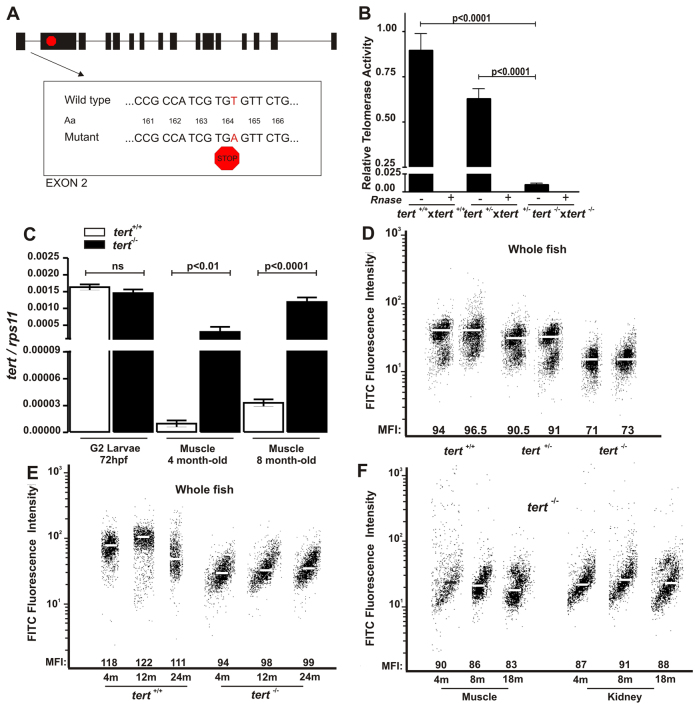
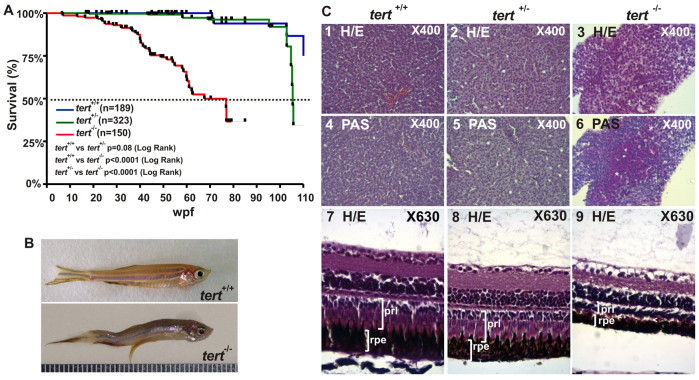
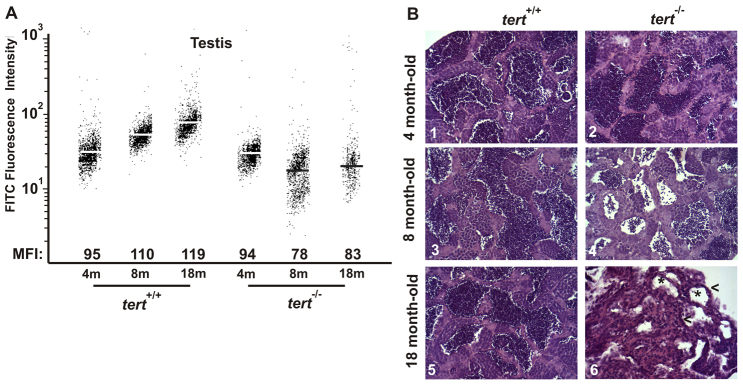
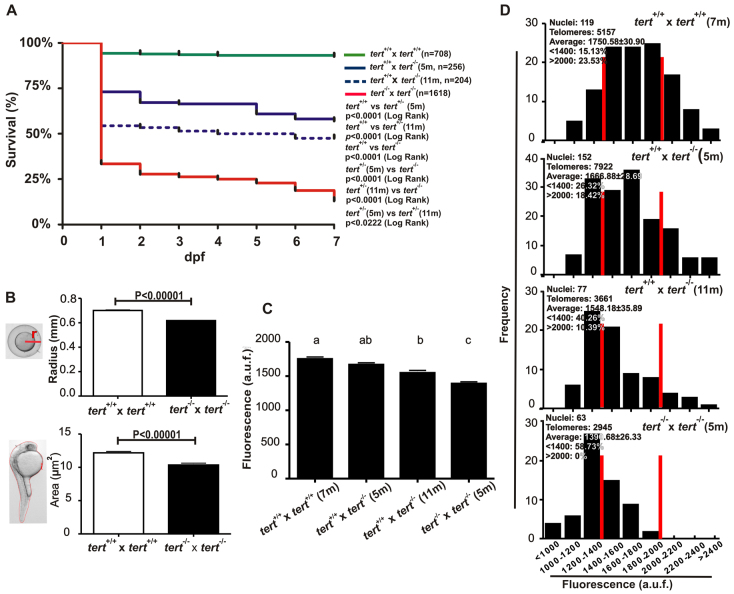
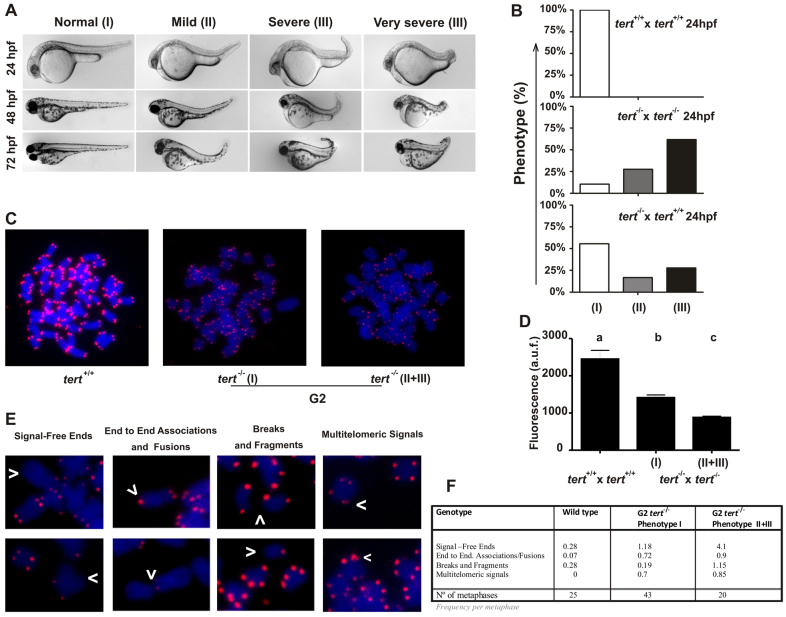
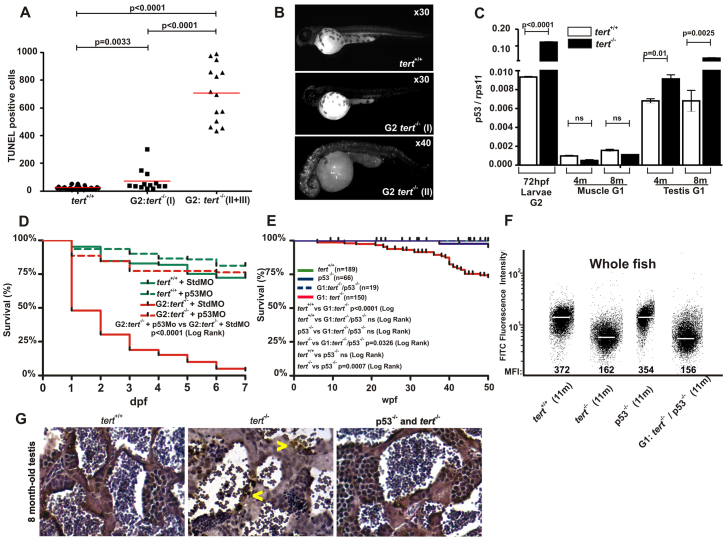
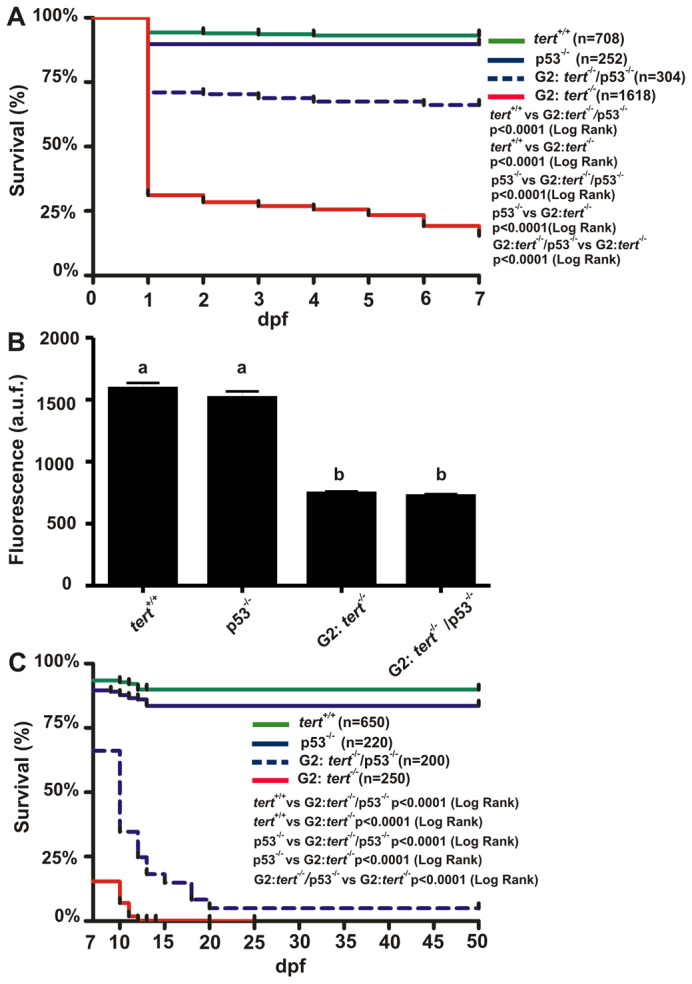
Summary: The study of telomere biology is crucial to the understanding of aging and cancer. In the pursuit of greater knowledge in the field of human telomere biology, the mouse has been used extensively as a model. However, there are fundamental differences between mouse and human cells. Therefore, additional models are required. In light of this, we have characterized telomerase-deficient zebrafish (Danio rerio) as the second vertebrate model for human telomerase-driven diseases. We found that telomerase-deficient zebrafish show p53-dependent premature aging and reduced lifespan in the first generation, as occurs in humans but not in mice, probably reflecting the similar telomere length in fish and humans. Among these aging symptoms, spinal curvature, liver and retina degeneration, and infertility were the most remarkable. Although the second-generation embryos died in early developmental stages, restoration of telomerase activity rescued telomere length and survival, indicating that telomerase dosage is crucial. Importantly, this model also reproduces the disease anticipation observed in humans with dyskeratosis congenita (DC). Thus, telomerase haploinsufficiency leads to anticipation phenomenon in longevity, which is related to telomere shortening and, specifically, with the proportion of short telomeres. Furthermore, p53 was induced by telomere attrition, leading to growth arrest and apoptosis. Importantly, genetic inhibition of p53 rescued the adverse effects of telomere loss, indicating that the molecular mechanisms induced by telomere shortening are conserved from fish to mammals. The partial rescue of telomere length and longevity by restoration of telomerase activity, together with the feasibility of the zebrafish for high-throughput chemical screening, both point to the usefulness of this model for the discovery of new drugs able to reactivate telomerase in individuals with DC.
Overview
The claims and statistics of this paper haven’t been checked yet.
Run the check — free, no account needed. It reads the open-access text and checks the sources it cites.
Integrity signals
Registry
Cites
Statistics
Figures
Verification
Claims the paper makes
The claims and statistics of this paper haven’t been checked yet.
Run the check — free, no account needed. It reads the open-access text and checks the sources it cites.
Claims other papers make about this one
Each is checked against this paper’s own text: does it say what the citing paper says it does?
The source backs part of the claim, not all of it — or backs it for a different population, condition or comparison.
In the citing paper
“Similar observations have been made in zebrafish and killifish186,187.”
From Telomere dysfunction in ageing and age-related diseases (2022) · cites this paper as [186]
Experimental — accuracy not yet measured
Self-check
Percentages, sums and reported differences re-computed from the paper’s own numbers.
The self-check needs the paper’s full text.
Citations
Cites
The zebrafish book : a guide for the laboratory use of zebrafish (Danio rerio)
Westerfield, M. (1995) · Medical Entomology and Zoology · Cited by 6,813
Structure and function of telomeres
Blackburn, E. H. (1991) · Nature · doi:10.1038/350569a0 · Cited by 3,596
Telomere Shortening and Tumor Formation by Mouse Cells Lacking Telomerase RNA
Blasco, M. A., Lee, H.-W., Hande, M. P., Samper, E., Lansdorp, P. M., DePinho, R. A., & Greider, C. W. (1997) · Cell · doi:10.1016/s0092-8674(01)80006-4 · Cited by 2,108
Telomeres and human disease: ageing, cancer and beyond
Blasco, M. A. (2005) · Nature Reviews Genetics · doi:10.1038/nrg1656 · Cited by 1,434
In vivo drug discovery in the zebrafish
Zon, L. I., & Peterson, R. T. (2005) · Nature Reviews Drug Discovery · doi:10.1038/nrd1606 · Cited by 1,352
Essential role of mouse telomerase in highly proliferative organs
Lee, H.-W., Blasco, M. A., Gottlieb, G. J., Horner, J. W., Greider, C. W., & DePinho, R. A. (1998) · Nature · doi:10.1038/33345 · Cited by 1,270 · cited 10×
“By contrast, telomere shortening and genome instability in lategeneration telomerase-deficient mice, as well as in humans, is associated with germ cell depletion in the testis (Hemann et al., 2001; Lee et al., 1998).”
InfluentialA telomerase component is defective in the human disease dyskeratosis congenita
Mitchell, J. R., Wood, E., & Collins, K. (1999) · Nature · doi:10.1038/990141 · Cited by 1,168
Mammalian Telomeres Resemble Fragile Sites and Require TRF1 for Efficient Replication
Sfeir, A., Kosiyatrakul, S. T., Hockemeyer, D., MacRae, S. L., Karlseder, J., Schildkraut, C. L., & de Lange, T. (2009) · Cell · doi:10.1016/j.cell.2009.06.021 · Cited by 990
Chin, L., Artandi, S. E., Shen, Q., Tam, A., Lee, S.-L., Gottlieb, G. J., Greider, C. W., & DePinho, R. A. (1999) · Cell · doi:10.1016/s0092-8674(00)80762-x · Cited by 979 · cited 3×
“In addition, p53 deficiency rescues the adverse effects of telomere loss (Chin et al., 1999; Flores and Blasco, 2009).”
Telomerase reactivation reverses tissue degeneration in aged telomerase-deficient mice
Jaskelioff, M., Muller, F. L., Paik, J.-H., Thomas, E., Jiang, S., Adams, A. C., Sahin, E., Kost-Alimova, M., Protopopov, A., Cadiñanos, J., et al. (2011) · Nature · doi:10.1038/nature09603 · Cited by 857 · cited 1×
“Interestingly, the reintroduction of the tert gene in tertdeficient zebrafish with inherited short telomeres prevented further telomere shortening and organism mortality, as also occurs in mice (Bernardes de Jesus et al., 2012; Jaskelioff et al., 2011; Samper et al., 2001).”
Calado, R. T., & Young, N. S. (2009) · New England Journal of Medicine · doi:10.1056/nejmra0903373 · Cited by 814
tp53 mutant zebrafish develop malignant peripheral nerve sheath tumors
Berghmans, S., Murphey, R. D., Wienholds, E., Neuberg, D. S., Kutok, J. L., Fletcher, C. D. �., Morris, J. P., Liu, T. X., Schulte‐Merker, S., Kanki, J. P., et al. (2005) · Proceedings of the National Academy of Sciences · doi:10.1073/pnas.0406252102 · Cited by 607
Bernardes de Jesus, B., Vera, E., Schneeberger, K., Tejera, A. M., Ayuso, E., Bosch, F., & Blasco, M. A. (2012) · EMBO Molecular Medicine · doi:10.1002/emmm.201200245 · Cited by 548
Disease states associated with telomerase deficiency appear earlier in mice with short telomeres
Herrera, E., Samper, E., Martín‐Caballero, J., Flores, J. M., Lee, H., & Blasco, M. A. (1999) · The EMBO Journal · doi:10.1093/emboj/18.11.2950 · Cited by 471 · cited 4×
“Only when the telomeres become critically short in later generations (G5 and G6) do telomerasedeficient mice show prominent premature aging symptoms, including impaired spermatogenesis and loss of fertility, bone marrow failure, atrophy of the small intestine, and immunosenescence-related disease (Herrera et al., 1999…”
InfluentialVulliamy, T., Marrone, A., Szydlo, R., Walne, A., Mason, P. J., & Dokal, I. (2004) · Nature Genetics · doi:10.1038/ng1346 · Cited by 461
Armanios, M., Chen, J.-L., Chang, Y.-P. C., Brodsky, R. A., Hawkins, A., Griffin, C. A., Eshleman, J. R., Cohen, A. R., Chakravarti, A., Hamosh, A., et al. (2005) · Proceedings of the National Academy of Sciences · doi:10.1073/pnas.0508124102 · Cited by 452
Effects of Telomerase and Telomere Length on Epidermal Stem Cell Behavior
Flores, I., Cayuela, M. L., & Blasco, M. A. (2005) · Science · doi:10.1126/science.1115025 · Cited by 448
Self-citationGoing against the grain: chemotaxis and infection in Vibrio cholerae
Butler, S. M., & Camilli, A. (2005) · Nature Reviews Microbiology · doi:10.1038/nrmicro1207 · Cited by 397
Martínez, P., Thanasoula, M., Muñoz, P., Liao, C., Tejera, Á. M., McNees, C. J., Flores, J. M., Fernández-Capetillo, Ó., Tarsounas, M., & Blasco, M. A. (2009) · Genes & Development · doi:10.1101/gad.543509 · Cited by 385
Telomerase-deficient mice with short telomeres are resistant to skin tumorigenesis
González-Suárez, E., Samper, E., Flores, J. M., & Blasco, M. A. (2000) · Nature Genetics · doi:10.1038/79089 · Cited by 347
Canela, A., Vera, E., Klatt, P., & Blasco, M. A. (2007) · Proceedings of the National Academy of Sciences · doi:10.1073/pnas.0609367104 · Cited by 347
Leri, A., Franco, S., Zacheo, A., Barlucchi, L., Chimenti, S., Limana, F., Nadal‐Ginard, B., Kajstura, J., Anversa, P., & Blasco, M. A. (2003) · The EMBO Journal · doi:10.1093/emboj/cdg013 · Cited by 313
Cohn, M., & Blackburn, E. H. (1995) · Science · doi:10.1126/science.7618104 · Cited by 298
Nonradioactive detection of telomerase activity using the telomeric repeat amplification protocol
Herbert, B., Hochreiter, A. E., Wright, W. E., & Shay, J. W. (2006) · Nature Protocols · doi:10.1038/nprot.2006.239 · Cited by 269
Life spans and senescent phenotypes in two strains of Zebrafish (Danio rerio)
Gerhard, G. S., Kauffman, E. J., Wang, X., Stewart, R., Moore, J. L., Kasales, C. J., Demidenko, E., & Cheng, K. C. (2002) · Experimental Gerontology · doi:10.1016/s0531-5565(02)00088-8 · Cited by 266
Samper, E., Flores, J. M., & Blasco, M. A. (2001) · The EMBO Reports · doi:10.1093/embo-reports/kve174 · Cited by 263 · cited 1×
“Interestingly, the reintroduction of the tert gene in tertdeficient zebrafish with inherited short telomeres prevented further telomere shortening and organism mortality, as also occurs in mice (Bernardes de Jesus et al., 2012; Jaskelioff et al., 2011; Samper et al., 2001).”
The telomerase reverse transcriptase is limiting and necessary for telomerase function in vivo
Liu, Y., Snow, B. E., Hande, M. P., Yeung, D., Erdmann, N. J., Wakeham, A., Itie, A., Siderovski, D. P., Lansdorp, P. M., Robinson, M. O., et al. (2000) · Current Biology · doi:10.1016/s0960-9822(00)00805-8 · Cited by 244
The Rate of Increase of Short Telomeres Predicts Longevity in Mammals
Vera, E., de Jesus, B. B., Foronda, M., Flores, J. M., & Blasco, M. A. (2012) · Cell Reports · doi:10.1016/j.celrep.2012.08.023 · Cited by 228
Fitzgerald, M. S., Říha, K., Gao, F., Ren, S., McKnight, T. D., & Shippen, D. E. (1999) · Proceedings of the National Academy of Sciences · doi:10.1073/pnas.96.26.14813 · Cited by 210
Dyskeratosis congenita, stem cells and telomeres
Kirwan, M., & Dokal, I. (2009) · Biochimica et Biophysica Acta (BBA) - Molecular Basis of Disease · doi:10.1016/j.bbadis.2009.01.010 · Cited by 180
Behaviour of Telomere and Telomerase during Aging and Regeneration in Zebrafish
Anchelin, M., Murcia, L., Alcaraz‐Pérez, F., García-Navarro, E. M., & Cayuela, M. L. (2011) · PLoS ONE · doi:10.1371/journal.pone.0016955 · Cited by 174
Self-citationThe Identification of Zebrafish Mutants Showing Alterations in Senescence-Associated Biomarkers
Kishi, S., Bayliss, P. E., Uchiyama, J., Koshimizu, E., Qi, J., Nanjappa, P., Imamura, S., Islam, A., Neuberg, D. S., Amsterdam, A., et al. (2008) · PLoS Genetics · doi:10.1371/journal.pgen.1000152 · Cited by 173
Telomere Dysfunction Triggers Developmentally Regulated Germ Cell Apoptosis
Hemann, M. T., Rudolph, K. L., Strong, M. A., DePinho, R. A., Chin, L., & Greider, C. W. (2001) · Molecular Biology of the Cell · doi:10.1091/mbc.12.7.2023 · Cited by 162
Telomerase Is Required for Zebrafish Lifespan
Henriques, C. M., Carneiro, M. C., Tenente, I. M., Jacinto, A., & Ferreira, M. G. (2013) · PLoS Genetics · doi:10.1371/journal.pgen.1003214 · Cited by 133
Wicky, C., Villeneuve, A. M., Lauper, N., Codourey, L., Tobler, H., & Müller, F. (1996) · Proceedings of the National Academy of Sciences · doi:10.1073/pnas.93.17.8983 · Cited by 120
Kishi, S., Slack, B. E., Uchiyama, J., & Zhdanova, I. V. (2009) · Gerontology · doi:10.1159/000228892 · Cited by 111
Chiang, Y. J., Hemann, M. T., Hathcock, K. S., Tessarollo, L., Feigenbaum, L., Hahn, W. C., & Hodes, R. J. (2004) · Molecular and Cellular Biology · doi:10.1128/mcb.24.16.7024-7031.2004 · Cited by 107
Presence of telomeric G‐strand tails in the telomerase catalytic subunit TERT knockout mice
Yuan, X., Ishibashi, S., Hatakeyama, S., Saito, M., Nakayama, J., Nikaido, R., Haruyama, T., Watanabe, Y., Iwata, H., Iida, M., et al. (1999) · Genes to Cells · doi:10.1046/j.1365-2443.1999.00284.x · Cited by 105
Many ways to telomere dysfunction: in vivo studies using mouse models
Goytisolo, F. A., & Blasco, M. A. (2002) · Oncogene · doi:10.1038/sj.onc.1205085 · Cited by 96
Structure and Function of the Smallest Vertebrate Telomerase RNA from Teleost Fish
Xie, M., Mosig, A., Qi, X., Li, Y., Stadler, P. F., & Chen, J. J. ‐. (2007) · Journal of Biological Chemistry · doi:10.1074/jbc.m708032200 · Cited by 85
Flores, I., & Blasco, M. A. (2009) · PLoS ONE · doi:10.1371/journal.pone.0004934 · Cited by 83
Knudson, M., Kulkarni, S., Ballas, Z. K., Bessler, M., & Goldman, F. (2005) · Blood · doi:10.1182/blood-2004-04-1673 · Cited by 82
A call to fins! Zebrafish as a gerontological model
Gerhard, G. S., & Cheng, K. C. (2002) · Aging Cell · doi:10.1046/j.1474-9728.2002.00012.x · Cited by 73
Pereboom, T. C., van Weele, L. J., Bondt, A., & MacInnes, A. W. (2011) · Blood · doi:10.1182/blood-2011-04-351460 · Cited by 69
Telomeres and the DNA damage response: why the fox is guarding the henhouse
Maser, R. S., & DePinho, R. A. (2004) · DNA repair · doi:10.1016/j.dnarep.2004.05.009 · Cited by 69
Imamura, S., Uchiyama, J., Koshimizu, E., Hanai, J.-I., Raftopoulou, C., Murphey, R. D., Bayliss, P. E., Imai, Y., Burns, C. E., Masutomi, K., et al. (2008) · PLoS ONE · doi:10.1371/journal.pone.0003364 · Cited by 58
Zhang, Y., Morimoto, K., Danilova, N., Zhang, B., & Lin, S. (2012) · PLoS ONE · doi:10.1371/journal.pone.0030188 · Cited by 46
High incidence of rapid telomere loss in telomerase-deficient Caenorhabditis elegans
Cheung, I. (2006) · Nucleic Acids Research · doi:10.1093/nar/gkj417 · Cited by 36
Lau, B. W.-M., Wong, A., Tsao, G. S., So, K., & Yip, H. K.-F. (2007) · Journal of Molecular Neuroscience · doi:10.1007/s12031-007-0072-x · Cited by 35
Telomere biology of the chicken: A model for aging research
Swanberg, S. E., O’Hare, T. H., Robb, E. A., Robinson, C. M., Chang, H., & Delany, M. E. (2010) · Experimental Gerontology · doi:10.1016/j.exger.2010.04.002 · Cited by 32
Lee, C., & Smith, A. (2004) · Methods in cell biology · doi:10.1016/s0091-679x(04)77013-2 · Cited by 12
POT of gold: modeling dyskeratosis congenita in the mouse: Figure 1.Preprint
Autexier, C. (2008) · Genes & Development · doi:10.1101/gad.1695808 · Cited by 9
Cited by
Sorted by citations
Blackburn, E. H., Epel, E. S., & Lin, J. (2015) · Science · doi:10.1126/science.aab3389 · Cited by 1,596
Telomere dysfunction in ageing and age-related diseases
Rossiello, F., Jurk, D., Passos, J. F., & d’Adda di Fagagna, F. (2022) · Nature Cell Biology · doi:10.1038/s41556-022-00842-x · Cited by 754
A Platform for Rapid Exploration of Aging and Diseases in a Naturally Short-Lived Vertebrate
Harel, I., Benayoun, B. A., Machado, B., Singh, P. P., Hu, C.-K., Pech, M. F., Valenzano, D. R., Zhang, E., Sharp, S. C., Artandi, S. E., et al. (2015) · Cell · doi:10.1016/j.cell.2015.01.038 · Cited by 232
The short-lived African turquoise killifish: an emerging experimental model for ageing
Kim, Y., Nam, H. G., & Valenzano, D. R. (2016) · Disease Models & Mechanisms · doi:10.1242/dmm.023226 · Cited by 146
Telomeres and telomerase as therapeutic targets to prevent and treat age-related diseases
Bär, C., & Blasco, M. A. (2016) · F1000Research · doi:10.12688/f1000research.7020.1 · Cited by 117
Metadata
- Authors
- Anchelin, M., Alcaraz-Pérez, F., Martínez, C. M., Bernabé-García, M., Mulero, V., & Cayuela, M. L.
- Affiliations
- Hospital Universitario Virgen de la Arrixaca (ES)
- University Hospital Virgen de la Arrixaca, Murcia, Spain;
- University of Murcia, Murcia, Spain
- Corresponding author
- Cayuela, María L.
- Venue
- Disease Models & Mechanisms
- Publisher
- The Company of Biologists
- Published
- 2013-01-01
- Volume
- 6
- Issue
- 5
- Pages
- 1101-12
- ISSN
- 1754-8403 (ISSN-L)
- 1754-8411
- PMC
- PMC3759330
- OpenAlex
- W2112857608
- Cited by
- 114
- References
- 52
- Citations by year
- 2026: 4 · 2025: 12 · 2024: 11 · 2023: 9 · 2022: 12 · 2021: 7 · 2020: 13 · 2019: 10 · 2018: 11 · 2017: 7 · 2016: 6 · 2015: 8 · 2014: 2 · 2013: 2
- FWCI
- 4.18
- Type
- journal article
- Language
- en
- Open access
- gold
- doi.org
- Locations
- Disease Models & Mechanisms (publishedVersion, cc-by)
- Europe PMC (PubMed Central) (publishedVersion, cc-by)
- PubMed Central (publishedVersion, cc-by)
- PubMed (publishedVersion)
- Hispana (publishedVersion, cc-by)
- DOAJ (DOAJ: Directory of Open Access Journals) (submittedVersion, cc-by-sa)
- Funders
- Ministerio de Ciencia e Innovación
- Fundación para la Formación e Investigación Sanitarias de la Región de Murcia
- Topics
- Life Sciences › Biochemistry, Genetics and Molecular Biology › Cell Biology › Telomeres, Telomerase, and Senescence
- Life Sciences › Biochemistry, Genetics and Molecular Biology › Aging › Genetics, Aging, and Longevity in Model Organisms
- Life Sciences › Biochemistry, Genetics and Molecular Biology › Cell Biology › Zebrafish Biomedical Research Applications
- Keywords
- telomerase deficiency, premature aging, zebrafish, p53, dyskeratosis congenita, telomere shortening, lifespan, telomerase reactivation, apoptosis, spinal curvature, infertility
- MeSH terms
- Animals, Breeding, Chromosome Aberrations, Humans, Longevity, Male, Mutation, Testis, Zebrafish, Tumor Suppressor Protein p53, Telomere, Apoptosis, Telomerase, Aging, Premature, Zebrafish Proteins, Mice, Telomere Shortening
About these checks
Registry, retraction, Cites and statistics results are computed, not judged, with one exception: a printed reference that no index lists is read once by a model before it counts as a citation error. Claims are extracted by a model and kept only when their quote appears verbatim in the text; each cited source is then checked, with a model’s help, for whether it says what the claim relies on. Those verdicts can be wrong — read the claim’s quote and the cited source before relying on one.
Statistics and arithmetic are recomputed, not judged.
Confidence bands are shown only for fields calibrated on our annotated test set. None is calibrated yet, so no band is shown.
What counts as a claim ›How we measure confidence ›How we check this ›
Are you an author, or do you see a problem with this page? Request a review
