

Not Too Late: Improving Academic Outcomes among Adolescents
The DOI matches its Crossref record; 62 of the 74 references it cites were found in a registry or an index; 2 of the 20 sources its claims cite were checked for support.
Abstract
Improving academic outcomes for economically disadvantaged students has proven challenging, particularly for children at older ages. We present two large-scale randomized controlled trials of a high-dosage tutoring program delivered to secondary school students in Chicago. One innovation is to use paraprofessional tutors to hold down cost, thereby increasing scalability. Participating in math tutoring increases math test scores by 0.18 to 0.40 standard deviations, and increases math and nonmath course grades. These effects persist into future years. The data are consistent with increased personalization of instruction as a mechanism. The benefit-cost ratio is comparable to many successful early childhood programs. (JEL H75, I21, I24, I26, I32, J13, J15)
Overview
CoChat Summary
TL;DR
Two large randomized trials of Saga Education’s in-school, high-dosage math tutoring for Chicago public high school students found substantial gains in math test scores and grades, with effects persisting into 11th grade. The authors argue that intensive tutoring can improve adolescent academic outcomes at a cost of $3,500–$4,300 per participant per year, with benefit-cost ratios comparable to model early-childhood programs.
Key findings
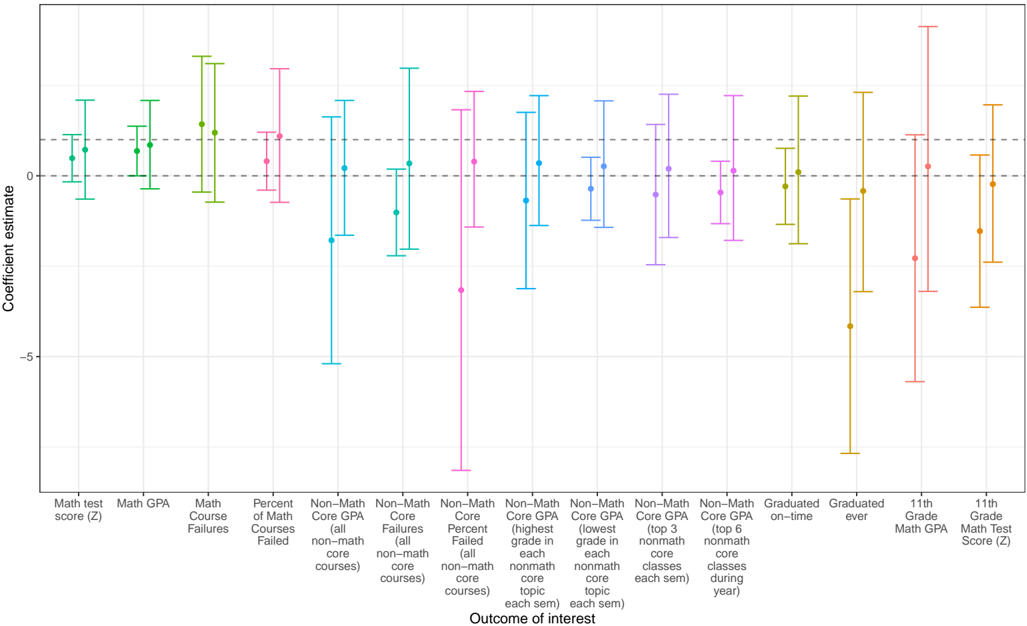
- In study 1, the treatment-on-the-treated (TOT) effect after one year was +0.16 SD on standardized math tests, +0.56 points on math GPA (control complier mean 1.63), and a 49% decline in math course failures. In study 2, TOT effects were +0.37 SD on math tests, +0.42 points on math GPA (CCM 1.79), and a 44% decline in math course failures. Pooled year-1 TOT effects were +0.26 SD on math tests, +0.52 math GPA points (CCM 1.67), and a 47% decline in math course failures.
- Pooled 11th-grade outcomes showed TOT effects of +0.22 SD on math tests and +0.18 math GPA points. The TOT estimate for on-time high school graduation was +1.9 percentage points relative to a CCM of 77.2%, but imprecise: the standard error of 3.4 percentage points means declines as large as −4.8 points or gains as large as +8.6 points cannot be ruled out.
- Mechanism tests found no detectable effects on adult supports, grit, conscientiousness, locus of control, or social networks, and no evidence that classroom management was a key driver. There were gains in liking math and caring about math grades, and suggestive evidence consistent with personalization/floor effects.
- Estimated benefit-cost ratios were 2.1–2.6 in study 1 and 4.9–6.0 in study 2, with per-participant costs of $3,500–$4,300 per year.
Methods
- Two large-scale randomized controlled trials in Chicago Public Schools. Study 1 randomized 2,633 rising 9th/10th grade male students in summer 2013 across 12 CPS high schools; study 2 randomized 2,710 students (2,645 unique) in summer 2014 across 15 schools, including 9th/10th grade girls in seven schools. Randomization was conditional on school-by-grade blocks.
- The intervention was Saga Education’s in-school tutoring: one class period daily, two students per tutor, up to 140 contact hours per year, using Saga’s Algebra curriculum. Study 1 provided up to two years of intervention; study 2 ran for one year. Data included CPS administrative records, Saga attendance and internal assessments, Chicago Police arrest data, and two waves of in-person ISR surveys with researcher-administered math tests.
- Analysis estimated intent-to-treat (ITT) and treatment-on-the-treated (TOT) effects using randomization as an instrument for participation, with randomization-block fixed effects, baseline controls, permutation tests, false discovery rate q-values, and robustness checks using multiple imputation and quantile regression.
Limitations
- The paper states that graduation estimates are imprecise: the TOT estimate is +1.9 percentage points with a standard error of 3.4 percentage points, so effects ranging from −4.8 to +8.6 points cannot be ruled out.
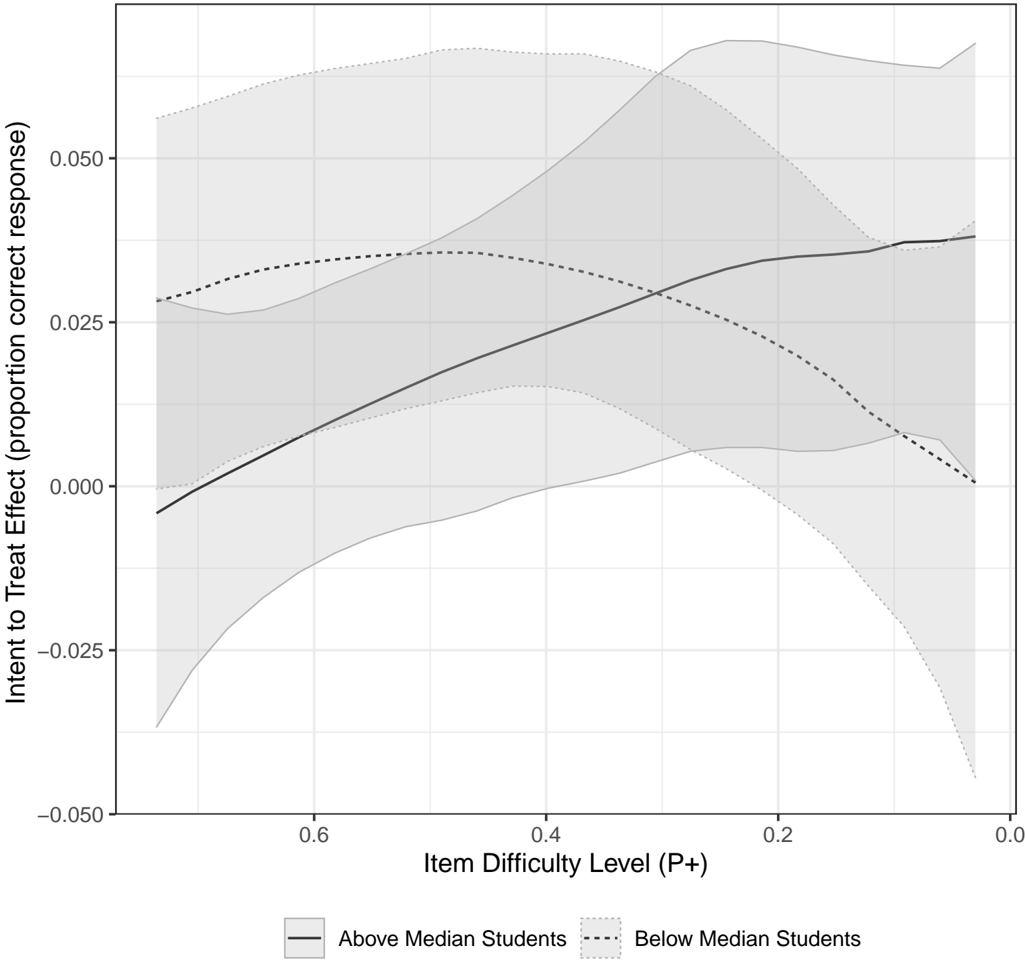
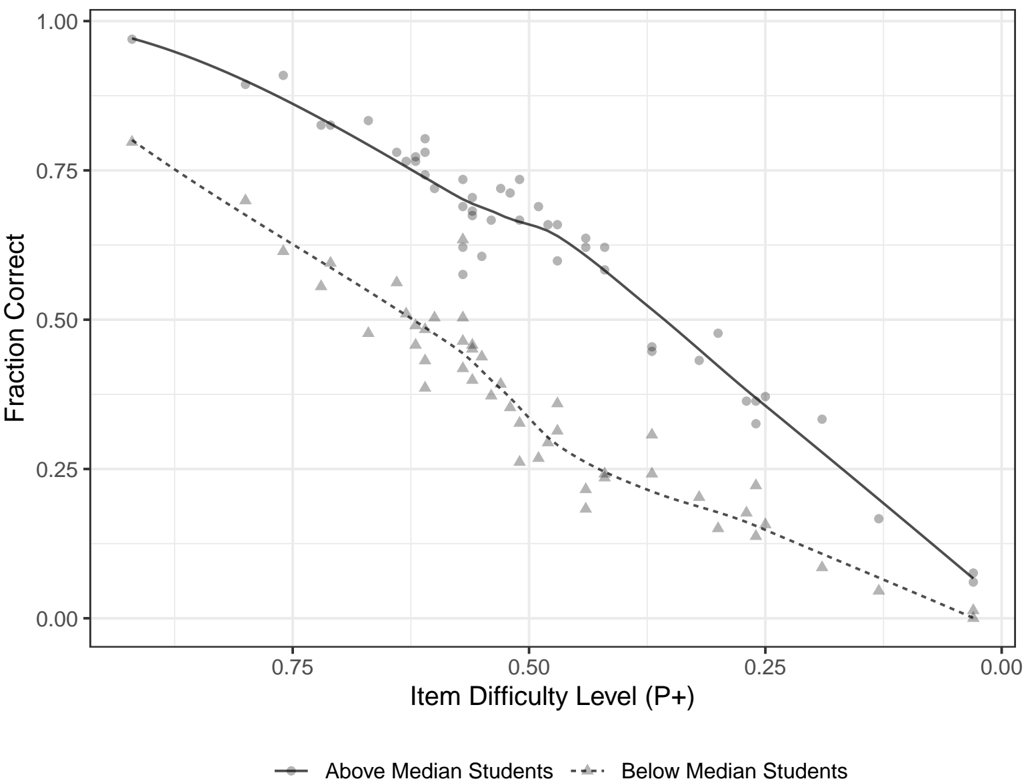
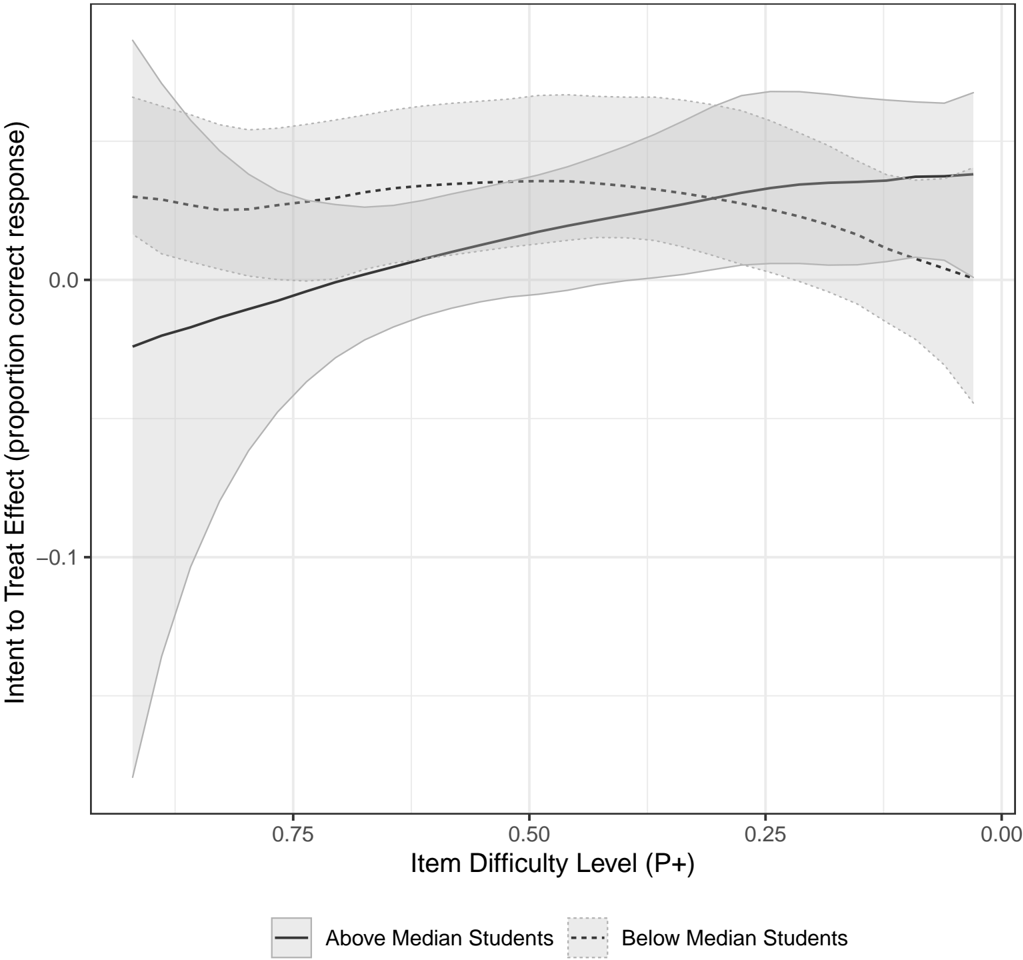
- The paper states that floor effects on CPS math tests complicate interpretation of heterogeneity and personalization; item-level tests are underpowered (p=.53), and the authors cannot directly document the instructional-level mechanism because they lack direct measures of the academic level at which tutors or classroom teachers target instruction.
- Post-randomization data have missingness (e.g., study 1 attendance 4.4% for controls vs. 6.2% for treatment; grades 14.6% vs. 14.8%; test scores 29.8% vs. 29.5%), though treatment-control differences are not statistically significant. The provided text is an NBER working paper and states it has not been peer-reviewed.
Model-written summary. Check it against the paper before relying on it.
Integrity signals
Registry
Cites
Statistics
Figures
Verification
Claims the paper makes
2 Valid · 3 Not valid · 15 Not checked · 215 Own results and interpretations
Every source the paper cites for this claim was checked and supports it.
In the paper
“We do not know how many tutors it would be possible to hire before effectiveness declines, but over this range there is little difference between tutors at the top vs. bottom of Saga's ranked hiring list (Davis et al., 2017).”
What the sources say
- Supportedcites Davis et al., 2017 matched to “The Economics of Scale-Up” (2017) source
Section 4.3 (p. 24) states that even nonparametrically 'we see little evidence for a downward sloping relationship between tutor rank-order and tutor value-added, at least over the range of program operations that we can test with these data,' and that the estimated slope is 'essentially flat' (95% CI -0.004 to 0.003). The same page adds that 'tutor quality winds up not varying much over the scale of tutors studied here,' and p. 25 notes the provider's predicted quality is 'mostly all noise' within the hired set. The citing sentence's hedge about not knowing how many tutors could be hired before effectiveness declines matches the paper's own restriction to the tested range. (Note: the paper does document large heterogeneity in value-added across tutors overall, but not aligned with rank.) (LLM, conf=0.90)
plain- Asserted: passes — The authors put it forward as true.
- Checkable: passes — It can be checked against evidence.
- Load-bearing: unclear — It is unclear whether the paper’s conclusions depend on it.
- Based: passes — The paper gives a reason why it holds.
- Supported
A result the paper reports from its own data — it cites no other source for it, so there is none to check. The quote shows it is in the paper.
In the paper
“percentage of courses failed in non-math classes are cut by 23% (-0.056/0.22).”
plainstates a cause- Asserted: passes — The authors put it forward as true.
- Checkable: passes — It can be checked against evidence.
- Load-bearing: passes — The paper’s conclusions depend on it.
- Based: passes — The paper gives a reason why it holds.
- Rests on an assumption not shown here.
A result the paper reports from its own data — it cites no other source for it, so there is none to check. The quote shows it is in the paper.
In the paper
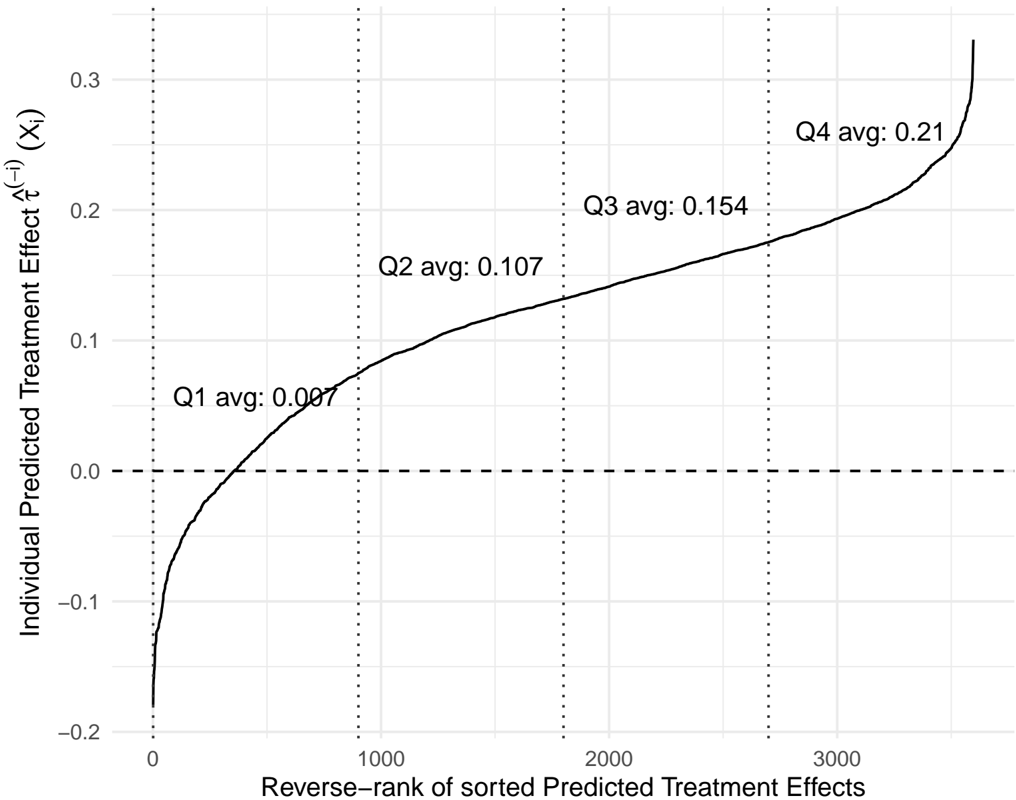
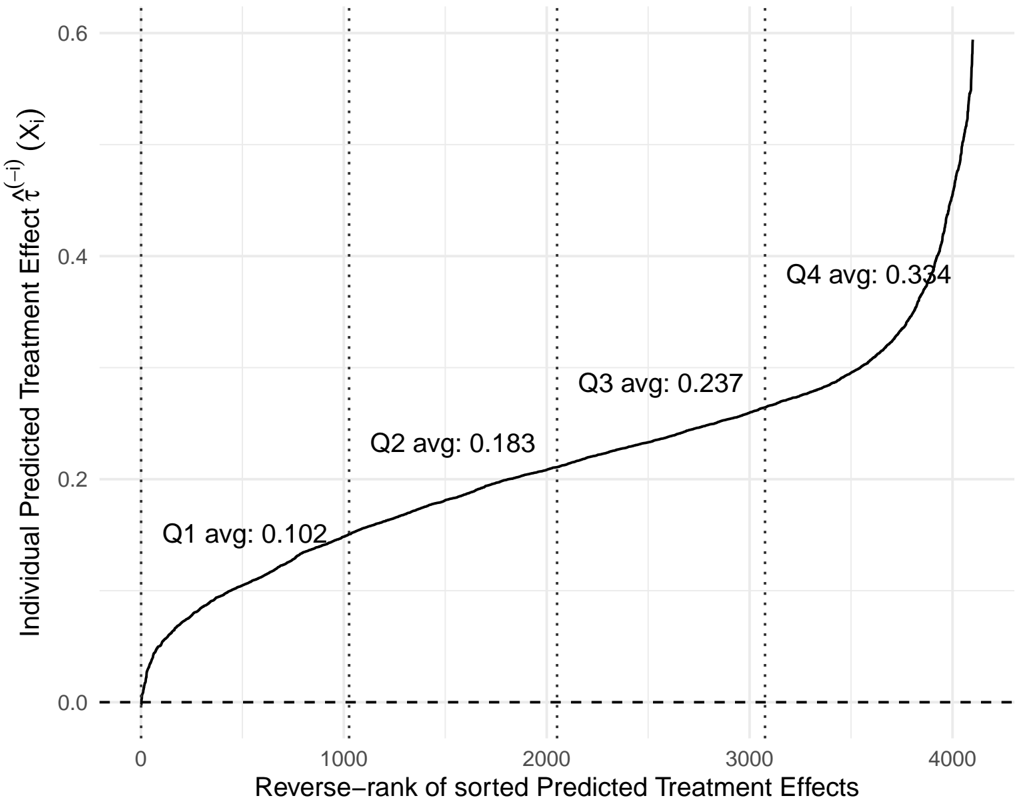
“This gives us another way to see that a sizable share of students are estimated to have PTE's that are close to zero or even negative with respect to math test scores.”
hedged- Asserted: passes — The authors put it forward as true.
- Checkable: passes — It can be checked against evidence.
- Load-bearing: unclear — It is unclear whether the paper’s conclusions depend on it.
- Based: passes — The paper gives a reason why it holds.
A result the paper reports from its own data — it cites no other source for it, so there is none to check. The quote shows it is in the paper.
In the paper
“In-person observations we conducted of the Saga program suggest students were spending approximately 90% of their time on math.”
hedged- Asserted: passes — The authors put it forward as true.
- Checkable: passes — It can be checked against evidence.
- Load-bearing: unclear — It is unclear whether the paper’s conclusions depend on it.
- Based: passes — The paper gives a reason why it holds.
A result the paper reports from its own data — it cites no other source for it, so there is none to check. The quote shows it is in the paper.
In the paper
“We find that the difference in impacts on academic outcomes are not statistically significant across highdisruption and low-disruption schools.”
plain- Asserted: passes — The authors put it forward as true.
- Checkable: passes — It can be checked against evidence.
- Load-bearing: passes — The paper’s conclusions depend on it.
- Based: passes — The paper gives a reason why it holds.
69 more claims
Create a free account to see all 235 claims and to verify the 1 reference still open.
- Probably not a substantial claim. 70
- It may state two separate claims as one. 80
- The quote only partly states this claim. 62
Self-check
Percentages, sums and reported differences re-computed from the paper’s own numbers.
Each contradiction between two passages listed here was confirmed by an independent check.
Rated minor: it would not touch a result — a value no result rests on, a p-value that stays on the same side of the significance level, or a conflict that is clerical, resolved elsewhere in the paper, or outside its own findings.
In the paper
§ Table 18: (Appendix) Year 1 Effect Estimates - Female Students Only
“Non-math GPA refers to all non math courses, not just core subjects.”
§ Non-Math Core Courses
“Non-math GPA refers to all non math courses in core subject areas (English, Science, Social Science).”
Citations
Cites
Controlling the False Discovery Rate: A Practical and Powerful Approach to Multiple Testing
Benjamini, Y., & Hochberg, Y. (1995) · Journal of the Royal Statistical Society Series B: Statistical Methodology · doi:10.1111/j.2517-6161.1995.tb02031.x · Cited by 109,482
Greedy function approximation: A gradient boosting machine
Friedman, J. H. (2001) · The Annals of Statistics · doi:10.1214/aos/1013203451 · Cited by 30,731
An Introduction to the Bootstrap
Efron, B., & Tibshirani, R. J. (1993) · doi:10.1007/978-1-4899-4541-9 · Cited by 21,230
Regularization and Variable Selection Via the Elastic Net
Zou, H., & Hastie, T. (2005) · Journal of the Royal Statistical Society Series B: Statistical Methodology · doi:10.1111/j.1467-9868.2005.00503.x · Cited by 20,957
Mostly Harmless Econometrics: An Empiricist's Companion
Angrist, J. D., & Pischke, J.-S. (2009) · doi:10.1515/9781400829828 · Cited by 9,467
School readiness and later achievement.
Duncan, G. J., Dowsett, C. J., Claessens, A., Magnuson, K., Huston, A. C., Klebanov, P., Pagani, L. S., Feinstein, L., Engel, M., Brooks-Gunn, J., et al. (2007) · Developmental Psychology · doi:10.1037/0012-1649.43.6.1428 · Cited by 5,439
Teachers, Schools, and Academic Achievement
Rivkin, S. G., Hanushek, E. A., & Kain, J. F. (2005) · Econometrica · doi:10.1111/j.1468-0262.2005.00584.x · Cited by 4,501
Identification of Causal Effects Using Instrumental Variables
Angrist, J. D., Imbens, G. W., & Rubin, D. B. (1996) · Journal of the American Statistical Association · doi:10.1080/01621459.1996.10476902 · Cited by 4,230
The 2 Sigma Problem: The Search for Methods of Group Instruction as Effective as One-to-One Tutoring
BLOOM, B. S. (1984) · Educational Researcher · doi:10.3102/0013189x013006004 · Cited by 2,734
The Role of Cognitive Skills in Economic Development
Hanushek, E. A., & Woessmann, L. (2008) · Journal of Economic Literature · doi:10.1257/jel.46.3.607 · Cited by 2,435
Research works printed but not linked: 5
- Gordon, Robert, Thomas J. Kane, and Douglas O. Staiger. 2006. Identifying Effective Teachers Using Performance on the Job. Washington, DC: Brookings Institution Press.
- Heckman, James J. 2013. Giving Kids a Fair Chance. Cambridge, MA: MIT Press.
- Kraft Matthew A, 2021, AERA Open, 7, 1
- Krueger, Alan B. 2003. "Inequality, Too Much of a Good Thing." In Inequality in America: What Role for Human Capital Policies? Edited by James J. Heckman and Alan B. Krueger, 1-76. Cambridge, MA: MIT Press.
- Pedregosa Fabian, 2011, Journal of Machine Learning Research, 12, 2825
Cited by
Measuring the Impacts of Teachers II: Teacher Value-Added and Student Outcomes in Adulthood
Chetty, R., Friedman, J. N., & Rockoff, J. E. (2014) · American Economic Review · doi:10.1257/aer.104.9.2633 · Cited by 1,717
Experimental evidence on learning using low-tech when school is out
Angrist, N., Bergman, P., & Matsheng, M. (2022) · Nature Human Behaviour · doi:10.1038/s41562-022-01381-z · Cited by 105
Zooming to Class? Experimental Evidence on College Students’ Online Learning during COVID-19
Kofoed, M. S., Gebhart, L., Gilmore, D., & Moschitto, R. (2024) · American Economic Review: Insights · doi:10.1257/aeri.20230077 · Cited by 125
Nickow, A., Oreopoulos, P., & Quan, V. (2024) · American Educational Research Journal · doi:10.3102/00028312231208687 · Cited by 82
Online tutoring works: Experimental evidence from a program with vulnerable children
Gortazar, L., Hupkau, C., & Roldán-Monés, A. (2024) · Journal of Public Economics · doi:10.1016/j.jpubeco.2024.105082 · Cited by 95
Human-tutor Coaching Technology (HTCT): Automated Discourse Analytics in a Coached Tutoring Model
Booth, B. M., Jacobs, J., Bush, J. B., Milne, B., Fischaber, T., & D’Mello, S. K. (2024) · International Conference on Learning Analytics and Knowledge (LAK) · doi:10.1145/3636555.3636937 · Cited by 25
The (Lack of) Anticipatory Effects of the Social Safety Net on Human Capital Investment
Deshpande, M., & Dizon-Ross, R. (2023) · American Economic Review · doi:10.1257/aer.20230010 · Cited by 22
A scalable approach to high-impact tutoring for young readers
Cortes, K. E., Kortecamp, K., Loeb, S., & Robinson, C. D. (2024) · Learning and Instruction · doi:10.1016/j.learninstruc.2024.102021 · Cited by 23
Liu, A., & Min, S. (2025) · AERA Open · doi:10.1177/23328584251374595 · Cited by 36
The Inequity of Opt-in Educational Resources and an Intervention to Increase Equitable Access
Robinson, C. D., Bisht, B., & Loeb, S. (2025) · Educational Researcher · doi:10.3102/0013189x251331518 · Cited by 13
Adolescent development and the math gender gap
Borra, C., Iacovou, M., & Sevilla, A. (2023) · European Economic Review · doi:10.1016/j.euroecorev.2023.104542 · Cited by 10
de Ree, J., Maggioni, M. A., Paulle, B., Rossignoli, D., Ruijs, N. M., & Walentek, D. (2023) · Economics of Education Review · doi:10.1016/j.econedurev.2023.102383 · Cited by 24
Do Tutors Learn from Equity Training and Can Generative AI Assess It?
Thomas, D. R., Borchers, C., Kakarla, S., Lin, J., Bhushan, S., Guo, B., Gatz, E., & Koedinger, K. R. (2025) · International Conference on Learning Analytics and Knowledge (LAK) · doi:10.1145/3706468.3706531 · Cited by 12
The (Lack of) Anticipatory Effects of the Social Safety Net on Human Capital Investment
Deshpande, M., & Dizon-Ross, R. (2023) · National Bureau of Economic Research · doi:10.3386/w31512 · Cited by 9
Long‐term effects of an online math tool on U.S. adolescents' achievement
Feng, M., Brezack, N., Huang, C., & Collins, K. (2025) · British Journal of Educational Technology · doi:10.1111/bjet.13579 · Cited by 7
de Ree, J., Maggioni, M. A., Paulle, B., et al. (2021) · doi:10.31235/osf.io/qepc2 · Cited by 6
“3 See e.g. Guryan et al. (2023) and Kraft (2015), as well as Nickow et al. (2020) and Pellegrini et al. (2021) for overviews of experimental research.”
An Astonishing Regularity in Student Learning RatePreprint
Koedinger, K. R., Carvalho, P. F., Liu, R., et al. (2023) · doi:10.31234/osf.io/pxsfh · Cited by 6
The Last Mile of Monetary Policy: Inattention, Reminders, and the Refinancing Channel
Byrne, S., Devine, K., King, M., McCarthy, Y., & Palmer, C. (2023) · National Bureau of Economic Research · doi:10.3386/w31043 · Cited by 25
Cortes, K. E., Kortecamp, K., Loeb, S., & Robinson, C. D. (2024) · National Bureau of Economic Research · doi:10.3386/w32039 · Cited by 8
Human Tutoring Improves the Impact of AI Tutor Use on Learning Outcomes
Gurung, A., Lin, J., Gutterman, J., Thomas, D. R., Houk, A., Gupta, S., Brunskill, E., Branstetter, L., Aleven, V. A. W. M. M., & Koedinger, K. R. (2025) · Lecture notes in computer science · doi:10.1007/978-3-031-98459-4_28 · Cited by 7
Artificial Intelligence in Education: Computer-Assisted Learning and AI-guided Tutors
Sevilla, A., Ruiz, P. C., Rello, L., & Sanz, I. (2025) · Italian Economic Journal · doi:10.1007/s40797-025-00354-1 · Cited by 18
Cort, W. D., & Witte, K. D. (2024) · Higher Education · doi:10.1007/s10734-024-01358-z · Cited by 6
Computer-assisted learning in the real world: How Khan Academy influences student math learning
Eames, T., Brunskill, E., Yamkovenko, B., Weatherholtz, K., & Oreopoulos, P. (2026) · Proceedings of the National Academy of Sciences · doi:10.1073/pnas.2507708123 · Cited by 13
United States: The Size and Variation of the Pandemic Learning Losses
Hanushek, E. A., & Strauss, B. H. (2024) · Evaluating education: Normative systems and institutional practices · doi:10.1007/978-3-031-69284-0_13 · Cited by 25
Lenard, M., & Silliman, M. (2025) · The Economic Journal · doi:10.1093/ej/ueaf013 · Cited by 6
Presidential Address: Investing in Children to Address the Child Mental Health Crisis
Currie, J. L. (2025) · American Economic Review · doi:10.1257/aer.115.5.1369 · Cited by 12
Addressing Post-Pandemic Adolescent Health in Schools
Desai, N. A., Holliday, S., & Braun-Courville, D. K. (2024) · Pediatric Clinics of North America · doi:10.1016/j.pcl.2024.05.001 · Cited by 5
High dosage tutoring in pre-vocational secondary education: Experimental evidence from AmsterdamPreprint
de Ree, J., Maggioni, M. A., Paulle, B., Rossignoli, D., & Walentek, D. (2021) · SocArXiv (OSF Preprints) · doi:10.31235/osf.io/r56um · Cited by 6
Minea-Pic, A. (2023) · OECD education working papers · doi:10.1787/a69c5909-en · Cited by 20
Funding adequacy and the community college
Romano, R. M., & Palmer, J. C. (2023) · New Directions for Community Colleges · doi:10.1002/cc.20595 · Cited by 3
Catching up after COVID-19: do school programs for remediating pandemic-related learning loss work?
de Bruijn, A. G. M., & Meeter, M. (2023) · Frontiers in Education · doi:10.3389/feduc.2023.1298171 · Cited by 8
The Scaling Dynamics and Causal Effects of a District-Operated Tutoring ProgramPreprint
Kraft, M. A., Edwards, D. S., & Cannata, M. A. (2025) · SSRN Electronic Journal · doi:10.2139/ssrn.5116286 · Cited by 9
Cortes, K. E., & Loeb, S. (2023) · AEA Randomized Controlled Trials · doi:10.1257/rct.10810 · Cited by 2
Recovering lost learning opportunities in Ukraine: Key education policy strategies
OECD (2023) · OECD policy responses on the impacts of the war in Ukraine · doi:10.1787/c10085eb-en · Cited by 62
Investing in Children to Address the Child Mental Health Crisis
Currie, J. (2025) · National Bureau of Economic Research · doi:10.3386/w33632 · Cited by 8
The importance of a helping hand in education and in life
Gallego, F., Oreopoulos, P., & Spencer, N. (2025) · Journal of the Economic Science Association · doi:10.1017/esa.2024.2 · Cited by 2
Feng, M., Brezack, N., & Heffernan, N. T. (2025) · ACM Conference on Learning @ Scale (L@S) · doi:10.1145/3698205.3733947 · Cited by 1
Sense-Making with an AI-Enhanced Coaching Tool: A Think-Aloud Study
Sawaya, S., & D’Mello, S. K. (2025) · Lecture notes in computer science · doi:10.1007/978-3-031-98420-4_4 · Cited by 3
Jindra, C., & Sachse, K. A. (2025) · Multivariate Behavioral Research · doi:10.1080/00273171.2025.2561942 · Cited by 1
“…tutored, for instance, due to within-household substitution with other forms of support, evidence from RCTs points toward positive, though potentially heterogenous, effects (for example Behrman et al., 2024; Guryan et al., 2023; Harper & Schmidt, 2016; Nickow et al., 2024; Wijekumar et al., 2014).”
Ready, D. D., McCormick, S., & Shmoys, R. J. (2026) · Journal of Education for Students Placed at Risk (JESPAR) · doi:10.1080/10824669.2026.2615787 · Cited by 6
Anger, S., Christoph, B., Galkiewicz, A., Margaryan, S., Sandner, M., & Siedler, T. (2026) · European Economic Review · doi:10.1016/j.euroecorev.2026.105362 · Cited by 3
Perceived Effectiveness of Tutorial Program in Improving Mathematics Academic Performance
Mariño, E. M., & Saluria, R. A. (2024) · Journal of interdisciplinary perspectives · doi:10.69569/jip.2024.0632 · Cited by 2
Gunnes, T., Kirkebøen, L. J., Lindenskov, L., & Rønning, M. (2025) · Scandinavian Journal of Economics · doi:10.1111/sjoe.12581 · Cited by 2
Adolescence Development and the Math Gender GapPreprint
Borra, C., Iacovou, M., & Sevilla, A. (2022) · SSRN Electronic Journal · doi:10.2139/ssrn.4122090 · Cited by 1
Childhood Exposure to Violence and Nurturing Relationships: The Long-Run Effects on Black Men
Aliprantis, D., & Tauber, K. N. (2023) · Working paper · doi:10.26509/frbc-wp-202316 · Cited by 2
Sustained Effects of Small-Group Instruction in MathematicsPreprint
Finseraas, H., Nyhus, O. H., Salvanes, K. V., & Sandsør, A. M. J. (2024) · SSRN Electronic Journal · doi:10.2139/ssrn.4783701 · Cited by 1
Can Technology Facilitate Scale? Evidence from a Randomized Evaluation of High Dosage TutoringPreprint
Bhatt, M. P., Guryan, J., Khan, S., LaForest‐Tucker, M., & Mishra, B. (2024) · Social Science Research Network · doi:10.2139/ssrn.4851784 · Cited by 22
Self-citationCortes, K. E., & Loeb, S. (2023) · AEA Randomized Controlled Trials · doi:10.1257/rct.10810-1.0
OECD (2023) · Les réponses de l’OCDE face aux conséquences de la guerre en Ukraine · doi:10.1787/eea81bd9-fr
The (Lack of) Anticipatory Effects of the Social Safety Net on Human Capital InvestmentPreprint
Deshpande, M., & Dizon-Ross, R. (2023) · SSRN Electronic Journal · doi:10.2139/ssrn.4529488
Testing Above the Limit: Drinking Water Contamination and Test Scores
Marcus, M. (2023) · National Bureau of Economic Research · doi:10.3386/w31564
Help boys, but first do no harm
Schanzenbach, D. W. (2024) · Journal of Policy Analysis and Management · doi:10.1002/pam.22578
Lenard, M., & Silliman, M. (2024) · SSRN Electronic Journal · doi:10.2139/ssrn.4820823
Lenard, M., & Silliman, M. (2024) · SSRN Electronic Journal · doi:10.2139/ssrn.4827107
Improving instrumental variable estimators with poststratification
Pashley, N. E., Keele, L. J., & Miratrix, L. W. (2024) · Journal of the Royal Statistical Society Series A (Statistics in Society) · doi:10.1093/jrsssa/qnae073 · Cited by 3
Undervisning som utvecklar elevers förmåga att förstå likvärdiga bråk
Sveider, C., Thorsten, A., & Samuelsson, J. (2024) · Forskning om undervisning och lärande · doi:10.61998/forskul.v12i3.26656 · Cited by 1
Cramer, J., Yazilitas, D., Bruynzeel, A., Romp, S., Smeets, I., & Bruyckere, P. D. (2024) · Cogent Education · doi:10.1080/2331186x.2024.2408834 · Cited by 2
The Effect of Extended Education on Educational Quality and Inequality: An Event Study ApproachPreprint
Diris, R., & Fairley, K. (2024) · SSRN Electronic Journal · doi:10.2139/ssrn.5062349 · Cited by 1
Testing above the limit: Drinking water contamination and test scores
Marcus, M. (2025) · Journal of Public Economics · doi:10.1016/j.jpubeco.2025.105313 · Cited by 1
Take HEART: Experimental evidence on enhanced advising and postsecondary progress
Hemelt, S. W., Mange, B., & Raynor, S. (2025) · Economics of Education Review · doi:10.1016/j.econedurev.2025.102652
Factors Affecting the Performance of Students in the National Achievement Test
Reyno, R., & Guzman, R. (2025) · Journal of interdisciplinary perspectives · doi:10.69569/jip.2025.255
Do children's time preferences predict future school outcomes?
Wu, B., Feng, S., Zhang, Y., & Han, Y. (2025) · China Economic Review · doi:10.1016/j.chieco.2025.102490
Dupa, J., & BANTULO, J. S. (2025) · Psychology and Education A Multidisciplinary Journal · doi:10.70838/pemj.440102
Hidalgo‐Hidalgo, M., & Iturbe-Ormaetxe, I. (2025) · Springer eBooks · doi:10.1007/978-3-031-90911-5_13
Tutoring the Tutors: Piloting Online Modules for Tutor Training
Kwok, A., Bartanen, B., Kwok, M., Macfarlane, K. O., & Weinstein, T. L. (2025) · Teachers College Record The Voice of Scholarship in Education · doi:10.1177/01614681251389032
Qin, Z., Li, Q., & Li, X. (2025) · BMC Public Health · doi:10.1186/s12889-025-25176-9
White, S. L. K., Groom-Thomas, L., Lu, A., & Loeb, S. (2026) · Education Finance and Policy · doi:10.1162/edfp.a.434
Hsieh, H., Gormley, D., Robinson, C. D., & Loeb, S. (2026) · Education Sciences · doi:10.3390/educsci16010142 · Cited by 5
“…by addressing two major challenges of classroom teaching: the diverse academic levels and needs of students and the inability to provide students with the attention and human relationship they need for motivation and engagement (Guryan et al., 2023; Roorda et al., 2017; Scales et al., 2020).”
Accelerating Opportunity: The Effects of Instructionally Supported Detracking
Dee, T. S., & Huffaker, E. (2026) · American Educational Research Journal · doi:10.3102/00028312251408539 · Cited by 4
“Guryan et al. (2023) estimated 0.16–0.37 SD end-of-year test score effects from a high-impact tutoring program that cost ~$3,800 in 2013.”
InfluentialXu, C., Lin, J., Zhang, Y., Wu, T., Aleven, V. A. W. M. M., & Koedinger, K. R. (2026) · IEEE Transactions on Learning Technologies · doi:10.1109/tlt.2026.3665740 · Cited by 2
The Impact of Tutor Gender Match on Girls’ STEM Interest, Engagement, and Performance
Bleiberg, J. F., Robinson, C. D., Bennett, E., & Loeb, S. (2026) · American Educational Research Journal · doi:10.3102/00028312261417332 · Cited by 3
“Saga is one of the few secondary school tutoring providers with robust Tutor Gender Match and Girl’s Stem Interest evidence of the program’s success (Bhatt et al., 2024; Guryan et al., 2023).”
InfluentialBird, K., & Castleman, B. (2026) · AEA Papers and Proceedings · doi:10.1257/pandp.20261101
Murphy, S., & Wescher, L. (2026) · Journal of Higher Education Theory and Practice · doi:10.33423/v5n6tm07
Educational Support and Student Outcomes: Evidence from a Preventive School-Based Program
Balbo, J., Contini, D., Costabella, L. M., & Pronzato, C. (2026) · Springer eBooks · doi:10.1007/978-3-032-30665-4_51
MOKDAD, A. H., Dwyer‐Lindgren, L., & MURRAY, C. J. L. (2026) · Milbank Quarterly · doi:10.1111/1468-0009.70109
Agasisti, T., Longobardi, S., Masci, C., & Soncin, M. (2026) · Education Economics · doi:10.1080/09645292.2026.2731046
Long-term impacts of youth mentoring and therapy: Experimental evidence from Chicago
Abdul-Razzak, N., Domash, B., Hallberg, K., & Poehls, C. P. (2026) · Journal of Public Economics · doi:10.1016/j.jpubeco.2026.105771 · Cited by 6
Dosage and Dialogue: Understanding Human Support in Hybrid Human-AI Math Tutoring
Gao, G., Gurung, A., Thomas, D. R., Kamikazi, M. C. A., Borchers, C., Gatz, E., Gupta, S., Fancsali, S. E., RITTER, S., Branstetter, L., et al. (2026) · Lecture notes in computer science · doi:10.1007/978-3-032-37979-5_15
Metadata
- Authors
- Guryan, J., Ludwig, J., Bhatt, M. P., Cook, P. J., Davis, J. M. V., Dodge, K., Farkas, G., Fryer, R. G., Mayer, S., Pollack, H., Steinberg, L., & Stoddard, G.
- Affiliations
- Northwestern University (US)
- University of Chicago (US)
- Duke University (US)
- University of Oregon (US)
- University of California, Irvine (US)
- Harvard University (US)
- Temple University (US)
- ORCID
- Venue
- American Economic Review
- Publisher
- American Economic Association
- Published
- 2023-03-01
- Volume
- 113
- Issue
- 3
- Pages
- 738-765
- ISSN
- 0002-8282 (ISSN-L)
- OpenAlex
- W3135190335
- Cited by
- 77
- References
- 74
- Citations by year
- 2026: 18 · 2025: 24 · 2024: 17 · 2023: 15
- FWCI
- 56.32
- Type
- journal article
- Language
- en
- Open access
- closed
- Locations
- American Economic Review (publishedVersion)
- RePEc: Research Papers in Economics (submittedVersion)
- Topics
- Social Sciences › Education › School Choice and Performance
- Social Sciences › Education › Global Educational Reforms and Inequalities
- Social Sciences › Education › Early Childhood Education and Development
- Keywords
- academic tutoring, low-income students, adolescents, high school students, mathematics scores, course grades, scalability, benefit-cost ratio, late intervention, Chicago
About these checks
Registry, retraction, Cites and statistics results are computed, not judged, with one exception: a printed reference that no index lists is read once by a model before it counts as a citation error. Claims are extracted by a model and kept only when their quote appears verbatim in the text; each cited source is then checked, with a model’s help, for whether it says what the claim relies on. Those verdicts can be wrong — read the claim’s quote and the cited source before relying on one.
The claim verdicts this report counts are experimental: their accuracy is not yet measured.
A language model drew the claims from the paper on 2026-10-10, under version 3 of the claim definition (model deepseek-v4.1-flash, prompt extract-v3).
A second model labelled each claim on 2026-10-10 (model jev-1.13-20260917, definition revision gold-guideline-v0.2).
Cited sources are checked with a language model’s help (qwen3.8-omni-flash).
Statistics and arithmetic are recomputed, not judged.
Confidence bands are shown only for fields calibrated on our annotated test set. None is calibrated yet, so no band is shown.
What counts as a claim ›How we measure confidence ›How we check this ›
Are you an author, or do you see a problem with this page? Request a review
Data sources
Bibliographic data: Semantic Scholar, OpenAlex, Crossref.
Contains information from the Semantic Scholar Academic Graph Datasets, made available under the ODC Attribution License (ODC-BY 1.0).
Semantic Scholar’s data is described in: Kinney, R., et al. (2023). The Semantic Scholar Open Data Platform. arXiv:2301.10140.
