

The DOI matches its Crossref record; 7 of the 7 references it cites were found in a registry or an index.
Helminth parasites and immune regulation
Abstract
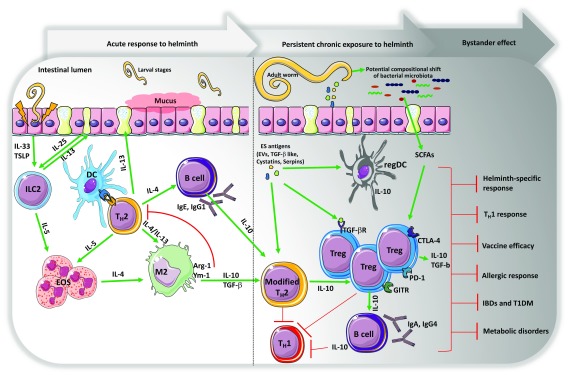
Helminth parasites are complex metazoans that belong to different taxonomic families but that collectively share the capacity to downregulate the host immune response directed toward themselves (parasite-specific immunoregulation). During long-standing chronic infection, these helminths appear able to suppress immune responses to bystander pathogens/antigens and atopic, autoimmune, and metabolic disorders. Helminth-induced immunoregulation occurs through the induction of regulatory T cells or Th2-type cells (or both). However, secreted or excreted parasite metabolites, proteins, or extracellular vesicles (or a combination of these) may also directly induce signaling pathways in host cells. Therefore, the focus of this review will be to highlight recent advances in understanding the immune responses to helminth infection, emphasizing the strategies/molecules and some of the mechanisms used by helminth parasites to modulate the immune response of their hosts.
Overview
The claims and statistics of this paper haven’t been checked yet.
Run the check — free, no account needed. It reads the open-access text and checks the sources it cites.
Integrity signals
Registry
Cites
Statistics
Figures
Verification
Claims the paper makes
The claims and statistics of this paper haven’t been checked yet.
Run the check — free, no account needed. It reads the open-access text and checks the sources it cites.
Claims other papers make about this one
Each is checked against this paper’s own text: does it say what the citing paper says it does?
In the citing paper
“These antimicrobial peptides specifically target potentially harmful bacteria, such as Escherichia coli, Enterococcus faecium, and Staphylococcus aureus.”
From Parasites and allergies: a complex bidirectional relationship from evolutionary origins to modern therapeutics (2026) · cites this paper as Gazzinelli-Guimaraes and Nutman 2018
In the citing paper
“These molecules are part of the parasite's excretory-secretory products (ESP), which include lectins and cystatins produced by species such as Ascaris suum and Heligmosomoides polygyrus.”
From Parasites and allergies: a complex bidirectional relationship from evolutionary origins to modern therapeutics (2026) · cites this paper as Gazzinelli-Guimaraes and Nutman 2018
In the citing paper
“By inhibiting the overgrowth of these harmful bacteria, helminths help maintain a balanced microbiota composition that may support overall immune tolerance and potentially reduce the risk of allergic inflammation”
From Parasites and allergies: a complex bidirectional relationship from evolutionary origins to modern therapeutics (2026) · cites this paper as Gazzinelli-Guimaraes and Nutman 2018
Self-check
Percentages, sums and reported differences re-computed from the paper’s own numbers.
The self-check needs the paper’s full text.
Citations
Cites
Diversity and dialogue in immunity to helminths
Allen, J. E., & Maizels, R. M. (2011) · Nature reviews. Immunology · doi:10.1038/nri2992 · Cited by 831
Buck, A. H., Coakley, G., Simbari, F., McSorley, H. J., Quintana, J. F., Le Bihan, T., Kumar, S., Abreu-Goodger, C., Lear, M., Harcus, Y., et al. (2014) · Nature Communications · doi:10.1038/ncomms6488 · Cited by 770
Grainger, J. R., Smith, K. A., Hewitson, J. P., McSorley, H. J., Harcus, Y., Filbey, K. J., Finney, C. A. M., Greenwood, E. J. D., Knox, D. P., Wilson, M. S., et al. (2010) · Journal of Experimental Medicine · doi:10.1084/jem.20101074 · Cited by 469
Coakley, G., McCaskill, J. L., Borger, J. G., Simbari, F., Robertson, E., Millar, M., Harcus, Y., McSorley, H. J., Maizels, R. M., & Buck, A. H. (2017) · Cell Reports · doi:10.1016/j.celrep.2017.05.001 · Cited by 219
HpARI protein secreted by a helminth parasite suppresses interleukin-33
Osbourn, M., Soares, D. C., Vacca, F., Cohen, E. S., Scott, I. C., Gregory, W. F., Smyth, D. J., Toivakka, M., Kemter, A. M., le Bihan, T., et al. (2017) · Immunity · doi:10.1016/j.immuni.2017.09.015 · Cited by 178
Hookworm recombinant protein promotes regulatory T cell responses that suppress experimental asthma
Navarro, S., Pickering, D. A., Ferreira, I. B., Jones, L., Ryan, S., Troy, S., Leech, A., Hotez, P. J., Zhan, B., Laha, T., et al. (2016) · Science Translational Medicine · doi:10.1126/scitranslmed.aaf8807 · Cited by 139
TGF-β mimic proteins form an extended gene family in the murine parasite Heligmosomoides polygyrus
Smyth, D. J., Harcus, Y., White, M. P. J., Gregory, W. F., Nahler, J., Stephens, I., Toke-Bjolgerud, E., Hewitson, J. P., Ivens, A., McSorley, H. J., et al. (2018) · International Journal for Parasitology · doi:10.1016/j.ijpara.2017.12.004 · Cited by 66
Research works printed but not linked: 111
- P Hotez, 2008, Helminth infections: the great neglected tropical diseases., J Clin Invest., 118, 1311-21, 10.1172/JCI34261 · DOI
- T Nutman, 2015, Looking beyond the induction of Th2 responses to explain immunomodulation by helminths., Parasite Immunol., 37, 304-13, 10.1111/pim.12194 · DOI
- R Maizels, 2016, Regulation of the host immune system by helminth parasites., J Allergy Clin Immunol., 138, 666-75, 10.1016/j.jaci.2016.07.007 · DOI · Paper page
- W Harnett, 2008, Lymphocyte hyporesponsiveness during filarial nematode infection., Parasite Immunol., 30, 447-53, 10.1111/j.1365-3024.2008.01045.x · DOI
- S Babu, 2016, Helminth-Tuberculosis Co-infection: An Immunologic Perspective., Trends Immunol., 37, 597-607, 10.1016/j.it.2016.07.005 · DOI · Paper page
- S Metenou, 2012, Interferon regulatory factor modulation underlies the bystander suppression of malaria antigen-driven IL-12 and IFN-γ in filaria-malaria co-infection., Eur J Immunol., 42, 641-50, 10.1002/eji.201141991 · DOI
- E Sabin, 1996, Impairment of tetanus toxoid-specific Th1-like immune responses in humans infected with Schistosoma mansoni., J Infect Dis., 173, 269-72, 10.1093/infdis/173.1.269 · DOI · Paper page
- P Cooper, 1998, Impaired tetanus-specific cellular and humoral responses following tetanus vaccination in human onchocerciasis: a possible role for interleukin-10., J Infect Dis., 178, 1133-8, 10.1086/515661 · DOI
- E Daniłowicz-Luebert, 2011, Modulation of specific and allergy-related immune responses by helminths., J Biomed Biotechnol., 2011, 821578, 10.1155/2011/821578 · DOI
- K Erb, 2009, Can helminths or helminth-derived products be used in humans to prevent or treat allergic diseases?, Trends Immunol., 30, 75-82, 10.1016/j.it.2008.11.005 · DOI
- H McSorley, 2011, Suppression of inflammatory immune responses in celiac disease by experimental hookworm infection., PLoS One., 6, e24092, 10.1371/journal.pone.0024092 · DOI
- P Zaccone, 2013, Helminth mediated modulation of Type 1 diabetes (T1D)., Int J Parasitol., 43, 311-8, 10.1016/j.ijpara.2012.12.004 · DOI
- Z Chen, 2016, Th2 and eosinophil responses suppress inflammatory arthritis., Nat Commun., 7, 11596, 10.1038/ncomms11596 · DOI
- P Hotez, 2014, The global burden of disease study 2010: Interpretation and implications for the neglected tropical diseases., PLoS Negl Trop Dis., 8, e2865, 10.1371/journal.pntd.0002865 · DOI
- R Spillmann, 1975, Pulmonary ascariasis in tropical communities., Am J Trop Med Hyg., 24, 791-800, 10.4269/ajtmh.1975.24.791 · DOI
- P BEAVER, 1958, Pulmonary ascariasis resembling eosinophilic lung; autopsy report with description of larvae in the bronchioles., Am J Trop Med Hyg., 7, 100-11, 10.4269/ajtmh.1958.7.100 · DOI
- C Dold, 2011, Ascaris and ascariasis., Microbes Infect., 13, 632-7, 10.1016/j.micinf.2010.09.012 · DOI
- W LOFFLER, 1956, Transient lung infiltrations with blood eosinophilia., Int Arch Allergy Appl Immunol., 8, 54-9, 10.1159/000228268 · DOI
- P Gazzinelli-Guimarães, 2013, Parasitological and immunological aspects of early Ascaris spp. infection in mice., Int J Parasitol., 43, 697-706, 10.1016/j.ijpara.2013.02.009 · DOI
- D Nogueira, 2016, Multiple exposures to ascaris suum induce tissue injury and mixed Th2/Th17 immune response in mice., PLoS Negl Trop Dis., 10, e0004382, 10.1371/journal.pntd.0004382 · DOI
- H Midttun, 2018, Ascaris Suum Infection Downregulates Inflammatory Pathways in the Pig Intestine In Vivo and in Human Dendritic Cells In Vitro., J Infect Dis., 217, 310-9, 10.1093/infdis/jix585 · DOI
- J Paterson, 2002, Modulation of a heterologous immune response by the products of Ascaris suum., Infect Immun., 70, 6058-67, 10.1128/IAI.70.11.6058-6067.2002 · DOI
- J Urban, 1998, IL-13, IL-4Ralpha, and Stat6 are required for the expulsion of the gastrointestinal nematode parasite Nippostrongylus brasiliensis., Immunity., 8, 255-64, 10.1016/S1074-7613(00)80477-X · DOI
- M Camberis, 2003, Animal model of Nippostrongylus brasiliensis and Heligmosomoides polygyrus., Curr Protoc Immunol., Chapter 19, Unit 19.12, 10.1002/0471142735.im1912s55 · DOI
- D Sorobetea, 2018, Immunity to gastrointestinal nematode infections., Mucosal Immunol., 11, 304-15, 10.1038/mi.2017.113 · DOI
- R Maizels, 2009, Regulation of pathogenesis and immunity in helminth infections., J Exp Med., 206, 2059-66, 10.1084/jem.20091903 · DOI
- A Cortés, 2017, Th2 and Th1 Responses: Clear and Hidden Sides of Immunity Against Intestinal Helminths., Trends Parasitol., 33, 678-93, 10.1016/j.pt.2017.05.004 · DOI
- V Salazar-Castañon, 2014, Helminth parasites alter protection against Plasmodium infection., Biomed Res Int., 2014, 913696, 10.1155/2014/913696 · DOI
- J von Moltke, 2016, Tuft-cell-derived IL-25 regulates an intestinal ILC2-epithelial response circuit., Nature., 529, 221-5, 10.1038/nature16161 · DOI · Paper page
- F Gerbe, 2016, Intestinal epithelial tuft cells initiate type 2 mucosal immunity to helminth parasites., Nature., 529, 226-30, 10.1038/nature16527 · DOI
- R Grencis, 2016, Tuft cells: a new flavor in innate epithelial immunity., Trends Parasitol., 32, 583-5, 10.1016/j.pt.2016.04.016 · DOI
- P Gazzinelli-Guimarães, 2016, Allergic Sensitization Underlies Hyperreactive Antigen-Specific CD4+ T Cell Responses in Coincident Filarial Infection., J Immunol., 197, 2772-9, 10.4049/jimmunol.1600829 · DOI · Paper page
- S Babu, 2014, Immunology of lymphatic filariasis., Parasite Immunol., 36, 338-46, 10.1111/pim.12081 · DOI · Paper page
- E Pearce, 2002, The immunobiology of schistosomiasis., Nat Rev Immunol., 2, 499-511, 10.1038/nri843 · DOI
- C King, 1992, Immunologic tolerance in lymphatic filariasis. Diminished parasite-specific T and B lymphocyte precursor frequency in the microfilaremic state., J Clin Invest., 89, 1403-10, 10.1172/JCI115729 · DOI
- R Maizels, 2003, Immune regulation by helminth parasites: cellular and molecular mechanisms., Nat Rev Immunol., 3, 733-44, 10.1038/nri1183 · DOI
- S Metenou, 2013, Regulatory T cell subsets in filarial infection and their function., Front Immunol., 4, 305, 10.3389/fimmu.2013.00305 · DOI
- S Metenou, 2014, Highly heterogeneous, activated, and short-lived regulatory T cells during chronic filarial infection., Eur J Immunol., 44, 2036-47, 10.1002/eji.201444452 · DOI
- S Babu, 2009, Alternatively activated and immunoregulatory monocytes in human filarial infections., J Infect Dis., 199, 1827-37, 10.1086/599090 · DOI
- N O'Regan, 2014, Brugia malayi microfilariae induce a regulatory monocyte/macrophage phenotype that suppresses innate and adaptive immune responses., PLoS Negl Trop Dis., 8, e3206, 10.1371/journal.pntd.0003206 · DOI
- L Passos, 2017, Regulatory monocytes in helminth infections: insights from the modulation during human hookworm infection., BMC Infect Dis., 17, 253, 10.1186/s12879-017-2366-0 · DOI
- T Nutman, 2001, Regulation of the immune response in lymphatic filariasis: perspectives on acute and chronic infection with Wuchereria bancrofti in South India., Parasite Immunol., 23, 389-99, 10.1046/j.1365-3024.2001.00399.x · DOI
- C King, 1993, Cytokine control of parasite-specific anergy in human lymphatic filariasis. Preferential induction of a regulatory T helper type 2 lymphocyte subset., J Clin Invest., 92, 1667-73, 10.1172/JCI116752 · DOI
- M Taylor, 2005, Removal of regulatory T cell activity reverses hyporesponsiveness and leads to filarial parasite clearance in vivo., J Immunol., 174, 4924-33, 10.4049/jimmunol.174.8.4924 · DOI · Paper page
- S Mahanty, 1995, Immunoregulation in human lymphatic filariasis: The role of interleukin 10., Parasite Immunol., 17, 385-92, 10.1111/j.1365-3024.1995.tb00906.x · DOI
- J Satoguina, 2005, T regulatory-1 cells induce IgG4 production by B cells: role of IL-10., J Immunol., 174, 4718-26, 10.4049/jimmunol.174.8.4718 · DOI
- E Ottesen, 1977, Specific cellular immune unresponsiveness in human filariasis., Immunology., 33, 413-21
- W Piessens, 1980, Immune responses in human infections with Brugia malayi: specific cellular unresponsiveness to filarial antigens., J Clin Invest., 65, 172-9, 10.1172/JCI109648 · DOI
- T Nutman, 1987, Parasite-specific anergy in human filariasis. Insights after analysis of parasite antigen-driven lymphokine production., J Clin Invest., 79, 1516-23, 10.1172/JCI112982 · DOI
- R Semnani, 2006, Filaria-induced monocyte dysfunction and its reversal following treatment., Infect Immun., 74, 4409-17, 10.1128/IAI.01106-05 · DOI
- R Semnani, 2004, Filaria-induced immune evasion: suppression by the infective stage of Brugia malayi at the earliest host-parasite interface., J Immunol., 172, 6229-38, 10.4049/jimmunol.172.10.6229 · DOI
- S Metenou, 2010, At homeostasis filarial infections have expanded adaptive T regulatory but not classical Th2 cells., J Immunol., 184, 5375-82, 10.4049/jimmunol.0904067 · DOI
- C King, 1991, Regulation of the immune response in lymphatic filariasis and onchocerciasis., Immunol Today., 12, A54-8, 10.1016/S0167-5699(05)80016-7 · DOI
- N Henry, 2001, Onchocerciasis in a nonendemic population: clinical and immunologic assessment before treatment and at the time of presumed cure., J Infect Dis., 183, 512-6, 10.1086/318088 · DOI
- H Smits, 2007, Chronic helminth infections modulate allergen-specific immune responses: Protection against development of allergic disorders?, Ann Med., 39, 428-39, 10.1080/07853890701436765 · DOI
- P Salgame, 2013, Effect of helminth-induced immunity on infections with microbial pathogens., Nat Immunol., 14, 1118-26, 10.1038/ni.2736 · DOI
- P Gazzinelli-Guimarães, 2017, Concomitant helminth infection downmodulates the Vaccinia virus-specific immune response and potentiates virus-associated pathology., Int J Parasitol., 47, 1-10, 10.1016/j.ijpara.2016.08.007 · DOI
- J Gabrie, 2016, Immune Profile of Honduran Schoolchildren with Intestinal Parasites: The Skewed Response against Geohelminths., J Parasitol Res., 2016, 1769585, 10.1155/2016/1769585 · DOI
- S Metenou, 2011, Filarial infection suppresses malaria-specific multifunctional Th1 and Th17 responses in malaria and filarial coinfections., J Immunol., 186, 4725-33, 10.4049/jimmunol.1003778 · DOI
- S Metenou, 2012, Impact of filarial infections on coincident intracellular pathogens: Mycobacterium tuberculosis and Plasmodium falciparum., Curr Opin HIV AIDS., 7, 231-8, 10.1097/COH.0b013e3283522c3d · DOI
- J Hewitson, 2009, Helminth immunoregulation: the role of parasite secreted proteins in modulating host immunity., Mol Biochem Parasitol., 167, 1-11, 10.1016/j.molbiopara.2009.04.008 · DOI
- H McSorley, 2013, Immunomodulation by helminth parasites: defining mechanisms and mediators., Int J Parasitol., 43, 301-10, 10.1016/j.ijpara.2012.11.011 · DOI
- Z Wu, 2017, Parasite-Derived Proteins for the Treatment of Allergies and Autoimmune Diseases., Front Microbiol., 8, 2164, 10.3389/fmicb.2017.02164 · DOI
- G Coakley, 2016, Host parasite communications-Messages from helminths for the immune system: Parasite communication and cell-cell interactions., Mol Biochem Parasitol., 208, 33-40, 10.1016/j.molbiopara.2016.06.003 · DOI
- G Coakley, 2015, Exosomes and Other Extracellular Vesicles: The New Communicators in Parasite Infections., Trends Parasitol., 31, 477-89, 10.1016/j.pt.2015.06.009 · DOI
- F Riaz, 2017, Exosome-like vesicles of helminths: implication of pathogenesis and vaccine development., Ann Transl Med., 5, 175, 10.21037/atm.2017.03.45 · DOI
- J Schorey, 2015, Exosomes and other extracellular vesicles in host-pathogen interactions., EMBO Rep., 16, 24-43, 10.15252/embr.201439363 · DOI
- R Eichenberger, 2018, Immunobiology of parasitic worm extracellular vesicles., Immunol Cell Biol., 96, 704-713, 10.1111/imcb.12171 · DOI
- M Zamanian, 2015, Release of Small RNA-containing Exosome-like Vesicles from the Human Filarial Parasite Brugia malayi., PLoS Negl Trop Dis., 9, e0004069, 10.1371/journal.pntd.0004069 · DOI
- J Sotillo, 2016, Extracellular vesicles secreted by Schistosoma mansoni contain protein vaccine candidates., Int J Parasitol., 46, 1-5, 10.1016/j.ijpara.2015.09.002 · DOI
- R Shears, 2018, Extracellular vesicles induce protective immunity against Trichuris muris., Parasite Immunol., 40, e12536, 10.1111/pim.12536 · DOI
- R Eichenberger, 2018, Hookworm Secreted Extracellular Vesicles Interact With Host Cells and Prevent Inducible Colitis in Mice., Front Immunol., 9, 850, 10.3389/fimmu.2018.00850 · DOI · Paper page
- M Siles-Lucas, 2015, Exosome-transported microRNAs of helminth origin: new tools for allergic and autoimmune diseases therapy?, Parasite Immunol., 37, 208-14, 10.1111/pim.12182 · DOI
- B Lambrecht, 2017, The immunology of the allergy epidemic and the hygiene hypothesis., Nat Immunol., 18, 1076-83, 10.1038/ni.3829 · DOI
- I Hagel, 2007, Infection by Ascaris lumbricoides and bronchial hyper reactivity: an outstanding association in Venezuelan school children from endemic areas., Acta Trop., 103, 231-41, 10.1016/j.actatropica.2007.06.010 · DOI
- M Wördemann, 2008, Association of atopy, asthma, allergic rhinoconjunctivitis, atopic dermatitis and intestinal helminth infections in Cuban children., Trop Med Int Health., 13, 180-6, 10.1111/j.1365-3156.2007.01988.x · DOI
- A van den Biggelaar, 2000, Decreased atopy in children infected with Schistosoma haematobium: a role for parasite-induced interleukin-10., Lancet., 356, 1723-7, 10.1016/S0140-6736(00)03206-2 · DOI
- S van der Werff, 2013, Deworming is not a risk factor for the development of atopic diseases: a longitudinal study in Cuban school children., Clin Exp Allergy., 43, 665-71, 10.1111/cea.12129 · DOI
- J Leonardi-Bee, 2006, Asthma and current intestinal parasite infection: systematic review and meta-analysis., Am J Respir Crit Care Med., 174, 514-23, 10.1164/rccm.200603-331OC · DOI · Paper page
- P Cooper, 2003, Allergic symptoms, atopy, and geohelminth infections in a rural area of Ecuador., Am J Respir Crit Care Med., 168, 313-7, 10.1164/rccm.200211-1320OC · DOI
- P Endara, 2010, Long-term periodic anthelmintic treatments are associated with increased allergen skin reactivity., Clin Exp Allergy., 40, 1669-77, 10.1111/j.1365-2222.2010.03559.x · DOI
- M Yazdanbakhsh, 2005, The role of helminth infections in protection from atopic disorders., Curr Opin Allergy Clin Immunol., 5, 386-91, 10.1097/01.all.0000182541.52971.eb · DOI
- E Mitre, 2008, CD4+ (and not CD25+) T cells are the predominant interleukin-10-producing cells in the circulation of filaria-infected patients., J Infect Dis., 197, 94-101, 10.1086/524301 · DOI
- D Larson, 2012, Chronic helminth infection reduces basophil responsiveness in an IL-10-dependent manner., J Immunol., 188, 4188-99, 10.4049/jimmunol.1101859 · DOI
- D Larson, 2012, Helminth infection is associated with decreased basophil responsiveness in human beings., J Allergy Clin Immunol., 130, 270-2, 10.1016/j.jaci.2012.04.017 · DOI
- L Hussaarts, 2011, Regulatory B-cell induction by helminths: implications for allergic disease., J Allergy Clin Immunol., 128, 733-9, 10.1016/j.jaci.2011.05.012 · DOI · Paper page
- F Tian, 2015, B10 cells induced by Schistosoma japonicum soluble egg antigens modulated regulatory T cells and cytokine production of T cells., Parasitol Res., 114, 3827-34, 10.1007/s00436-015-4613-x · DOI
- C Johnston, 2017, A structurally distinct TGF-β mimic from an intestinal helminth parasite potently induces regulatory T cells., Nat Commun., 8, 1741, 10.1038/s41467-017-01886-6 · DOI · Paper page
- N Gomez-Escobar, 1998, A novel member of the transforming growth factor-beta (TGF-beta) superfamily from the filarial nematodes Brugia malayi and B. pahangi., Exp Parasitol., 88, 200-9, 10.1006/expr.1998.4248 · DOI
- R Maizels, 2001, Immune evasion genes from filarial nematodes., Int J Parasitol., 31, 889-98, 10.1016/S0020-7519(01)00213-2 · DOI
- M Zaiss, 2015, The Intestinal Microbiota Contributes to the Ability of Helminths to Modulate Allergic Inflammation., Immunity., 43, 998-1010, 10.1016/j.immuni.2015.09.012 · DOI · Paper page
- D Wesemann, 2016, The Microbiome, Timing, and Barrier Function in the Context of Allergic Disease., Immunity., 44, 728-38, 10.1016/j.immuni.2016.02.002 · DOI
- K McCoy, 2015, New developments providing mechanistic insight into the impact of the microbiota on allergic disease., Clin Immunol., 159, 170-6, 10.1016/j.clim.2015.05.007 · DOI
- L Reynolds, 2015, Cohabitation in the Intestine: Interactions among Helminth Parasites, Bacterial Microbiota, and Host Immunity., J Immunol., 195, 4059-66, 10.4049/jimmunol.1501432 · DOI · Paper page
- G Cançado, 2011, Hookworm products ameliorate dextran sodium sulfate-induced colitis in BALB/c mice., Inflamm Bowel Dis., 17, 2275-86, 10.1002/ibd.21629 · DOI
- I Ferreira, 2013, Hookworm excretory/secretory products induce interleukin-4 (IL-4)+ IL-10+ CD4+ T cell responses and suppress pathology in a mouse model of colitis., Infect Immun., 81, 2104-11, 10.1128/IAI.00563-12 · DOI
- X Yang, 2014, Excretory/secretory products from Trichinella spiralis adult worms ameliorate DSS-induced colitis in mice., PLoS One., 9, e96454, 10.1371/journal.pone.0096454 · DOI
- L Wang, 2017, Exosomes Derived from Dendritic Cells Treated with Schistosoma japonicum Soluble Egg Antigen Attenuate DSS-Induced Colitis., Front Pharmacol., 8, 651, 10.3389/fphar.2017.00651 · DOI
- V Khatri, 2015, Brugia malayi abundant larval transcript 2 protein treatment attenuates experimentally-induced colitis in mice., Indian J Exp Biol., 53, 732-9
- V Khatri, 2015, Brugia malayi cystatin therapeutically ameliorates dextran sulfate sodium-induced colitis in mice., J Dig Dis., 16, 585-94, 10.1111/1751-2980.12290 · DOI
- R Summers, 2005, Trichuris suis therapy for active ulcerative colitis: a randomized controlled trial., Gastroenterology., 128, 825-32, 10.1053/j.gastro.2005.01.005 · DOI · Paper page
- J Croese, 2015, Experimental hookworm infection and gluten microchallenge promote tolerance in celiac disease., J Allergy Clin Immunol., 135, 508-16, 10.1016/j.jaci.2014.07.022 · DOI
- A Daveson, 2011, Effect of hookworm infection on wheat challenge in celiac disease--a randomised double-blinded placebo controlled trial., PLoS One., 6, e17366, 10.1371/journal.pone.0017366 · DOI · Paper page
- T Smallwood, 2017, Helminth Immunomodulation in Autoimmune Disease., Front Immunol., 8, 453, 10.3389/fimmu.2017.00453 · DOI
- R Summers, 2003, Trichuris suis seems to be safe and possibly effective in the treatment of inflammatory bowel disease., Am J Gastroenterol., 98, 2034-41, 10.1111/j.1572-0241.2003.07660.x · DOI
- M Hübner, 2012, Helminth protection against autoimmune diabetes in nonobese diabetic mice is independent of a type 2 immune shift and requires TGF-β., J Immunol., 188, 559-68, 10.4049/jimmunol.1100335 · DOI
- M Lund, 2014, Secreted proteins from the helminth Fasciola hepatica inhibit the initiation of autoreactive T cell responses and prevent diabetes in the NOD mouse., PLoS One., 9, e86289, 10.1371/journal.pone.0086289 · DOI
- P Zaccone, 2012, Helminth infection and type 1 diabetes., Rev Diabet Stud., 9, 272-86, 10.1900/RDS.2012.9.272 · DOI
- C Tang, 2018, Schistosoma Infection and Schistosoma-Derived Products Modulate the Immune Responses Associated with Protection against Type 2 Diabetes., Front Immunol., 8, 1990, 10.3389/fimmu.2017.01990 · DOI
- A Wiria, 2015, Infection with soil-transmitted helminths is associated with increased insulin sensitivity., PLoS One., 10, e0127746, 10.1371/journal.pone.0127746 · DOI
- L Hussaarts, 2015, Chronic helminth infection and helminth-derived egg antigens promote adipose tissue M2 macrophages and improve insulin sensitivity in obese mice., FASEB J., 29, 3027-39, 10.1096/fj.14-266239 · DOI
Cited by
Sorted by citations
Dirofilaria immitis could be a risk factor for the development of allergic diseases in humans.
Montoya-Alonso, J. A., Morchón, R., Matos, J. I., Falcón-Cordón, Y., Costa-Rodriguez, N., & Carretón, E. (2020) · Animals · doi:10.3390/ani10101847 · Cited by 7
Packi, K., Świerczewski, D., Klimczak, S., Ochab, D., Gałęziewska, J., Gromek, P., Kruczkowska, W., Płuciennik, E., Kałuzińska-Kołat, Ż., & Kołat, D. (2026) · Antonie van Leeuwenhoek · doi:10.1007/s10482-026-02425-4
Metadata
- Authors
- Gazzinelli-Guimaraes, P. H., & Nutman, T. B.
- Venue
- F1000Research
- Publisher
- F1000 Research Ltd
- Published
- 2018-10-23
- Volume
- 7
- Pages
- 1685
- ISSN
- 2046-1402
- PMC
- PMC6206608
- Cited by
- 145
- References
- 7
- Language
- en
- Funders
- Division of Intramural Research of the National Institutes of Health
About these checks
Registry, retraction, Cites and statistics results are computed, not judged, with one exception: a printed reference that no index lists is read once by a model before it counts as a citation error. Claims are extracted by a model and kept only when their quote appears verbatim in the text; each cited source is then checked, with a model’s help, for whether it says what the claim relies on. Those verdicts can be wrong — read the claim’s quote and the cited source before relying on one.
Statistics and arithmetic are recomputed, not judged.
Confidence bands are shown only for fields calibrated on our annotated test set. None is calibrated yet, so no band is shown.
What counts as a claim ›How we measure confidence ›How we check this ›
Are you an author, or do you see a problem with this page? Request a review
